

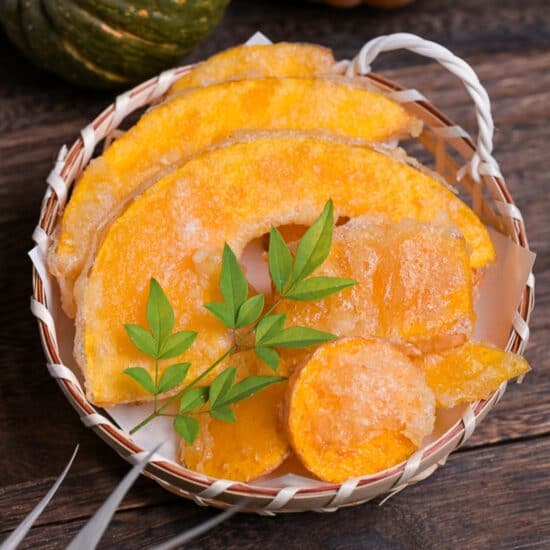


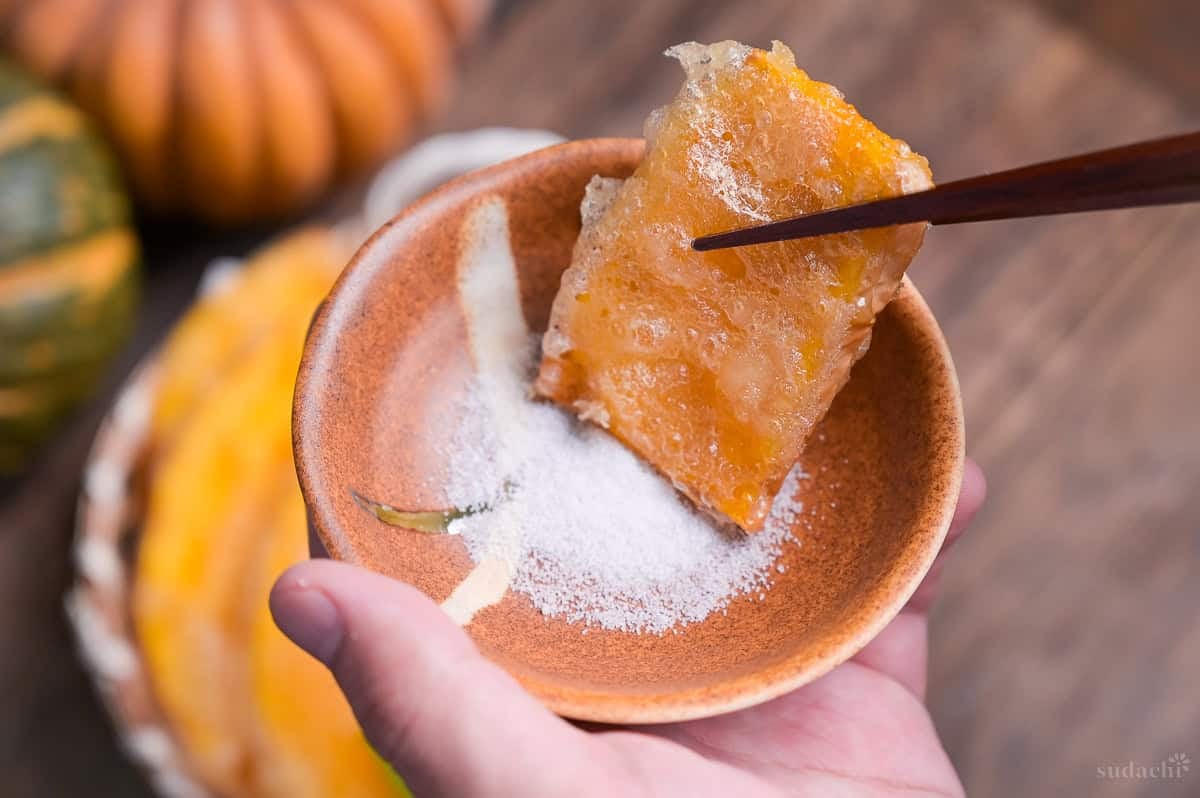
Take one bite of the hot, freshly fried piece and the crisp coating cracks open to reveal a soft, fluffy interior. A moment later the gentle natural sweetness of the kabocha fills your mouth.
All it needs is a pinch of salt. The vegetable itself has so much flavor that nothing else is required. You can dip it in tentsuyu, pile it over a tempura donburi, or scatter it on top of udon soup.
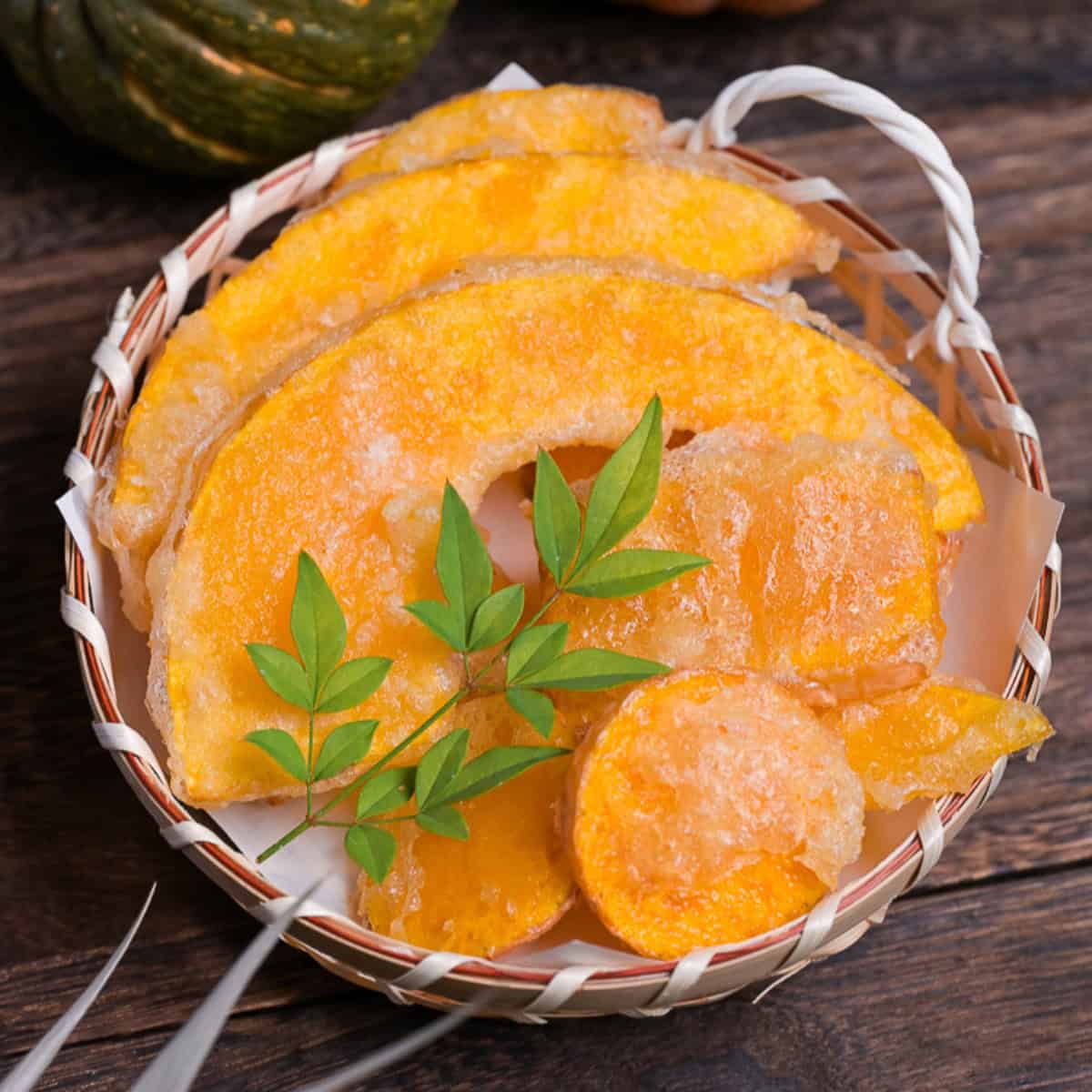
Kabocha Tempura
Recipe Snapshot
- What is it? Kabocha tempura is a vegetable tempura, skin-on squash wedges in a light batter. It lands on izakaya platters and in tempura counter courses, with salt or a dashi-based dipping sauce.
- Flavor profile: Bite in and the dry, brittle shell shatters, and the flesh underneath crumbles apart. Steam carries a chestnut sweetness, and only the rim of skin keeps a faint chew.
- Why this recipe works: 7 to 8mm wedges go into 170°C (338°F) oil and cook through with no pre-cooking. The unwashed cut face grips batter without dusting flour, and skin-side down keeps them whole.
- How to make it: You cut the squash while the batter water and flour chill, dip them in cold batter, and fry under 3 minutes a batch in a deep pot. Rack, salt, done.
- What to expect: Prep runs about 35 minutes, 30 of them hands-off while the batter chills. Frying adds about 15, roughly 50 in all. The one catch is color. Pull the wedges while still pale.
What Is Kabocha Tempura?
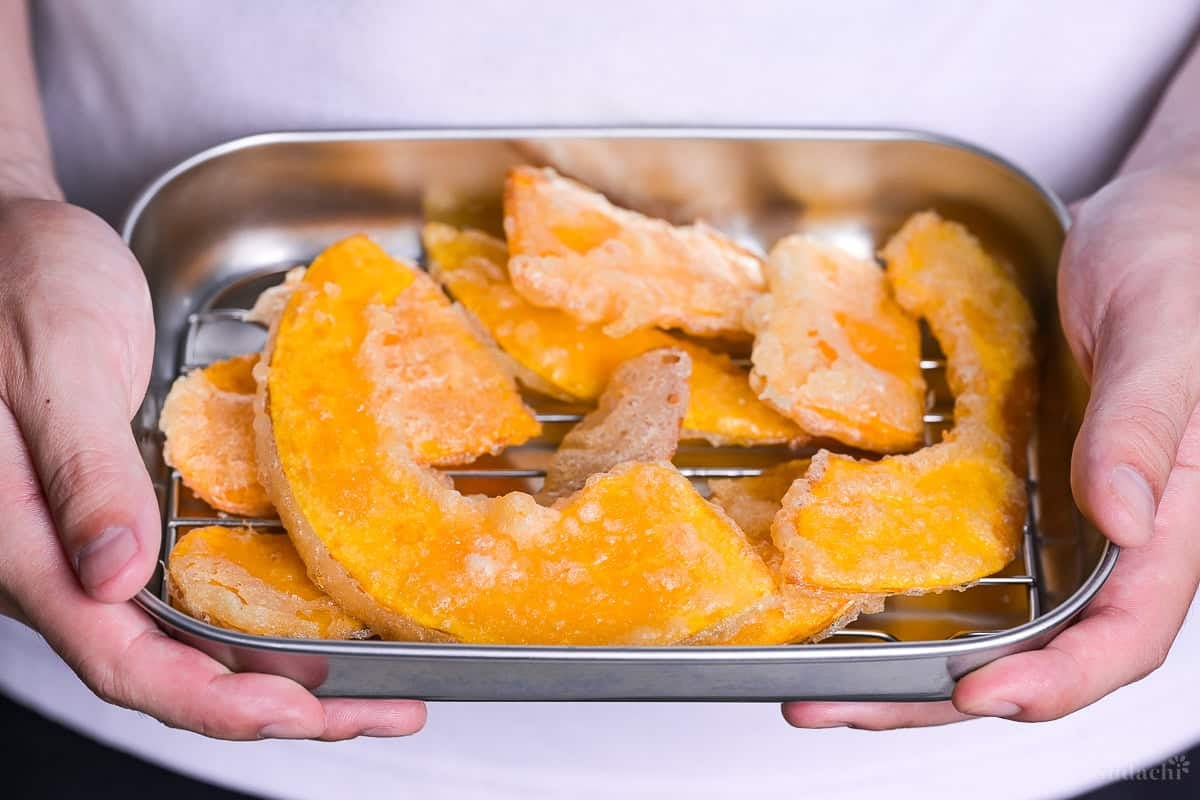
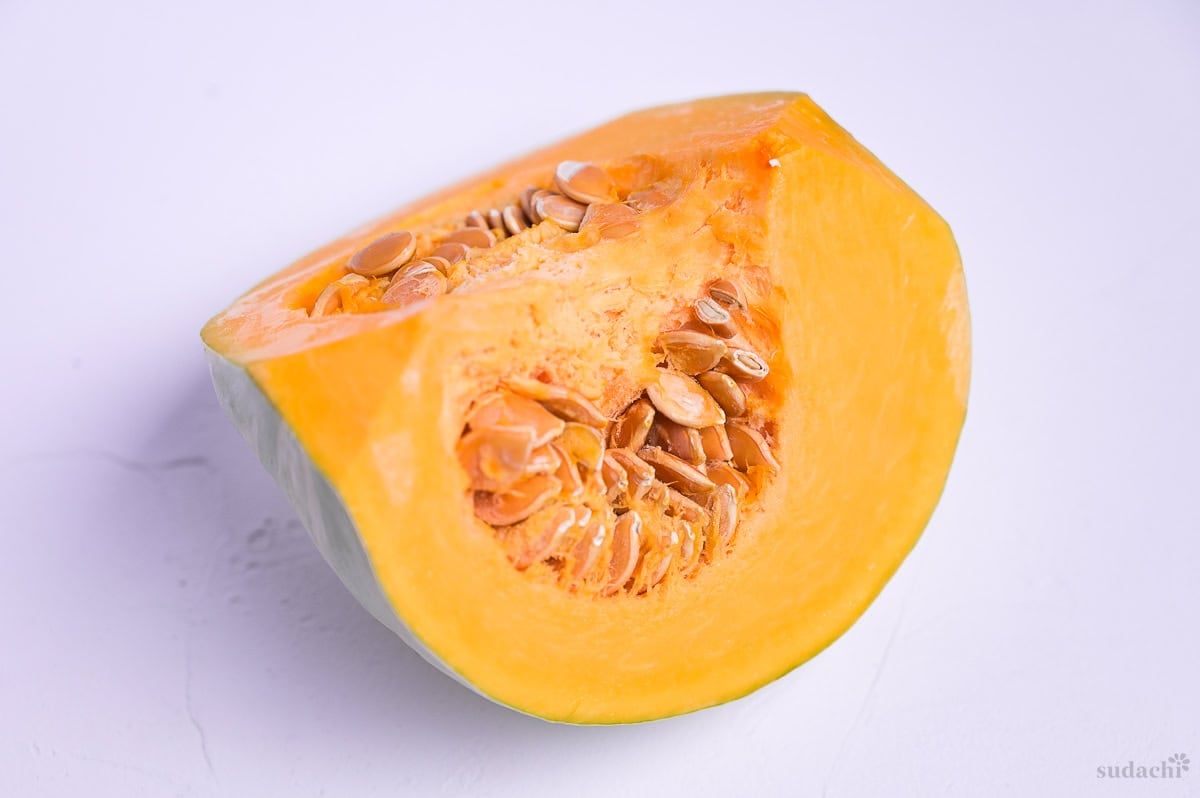
Kabocha tempura is a Japanese vegetable tempura made by slicing kabocha squash with the skin on and frying it in a cold batter. Its heart is the squash’s own warm, floury sweetness. The kabocha itself is a different fruit from what English speakers call a pumpkin.
The English word pumpkin usually means the big orange fruit carved for Halloween lanterns. Japanese kabocha tempura uses a different variety, often called chestnut kabocha. It has a bumpy, deep-green skin that is thin enough to eat once cooked, dense orange flesh with little water, and a natural sweetness that intensifies after harvest. The flesh becomes nicely fluffy inside while the skin turns crisp. The big watery lantern pumpkins stay stringy and wet even when fried, so they do not work. At your grocery store you will probably see it labeled as kabocha squash or Japanese pumpkin.
The name kabocha is thought to come from the Portuguese word Camboja for Cambodia. The squash arrived in Japan in the mid-16th century aboard Portuguese ships and was also called nankin, and people in the Kansai region still use that name today. The first variety that reached Japan was the Japanese kabocha, which had more water and milder sweetness. The sweet, fluffy Western kabocha we use now only became a household staple in the 20th century. The tempura frying style itself spread from Edo-period (1603-1868) street stalls, so kabocha tempura is really an old frying method paired with a newer squash.
I use the same batter base as my other tempura recipes. I replace some of the water with sparkling water, swap part of the cake flour for cornstarch, and use only the egg yolk. The sparkling water keeps the batter light, and the cornstarch gives a crisp bite. I limit it to yolk because a whole egg with this amount of flour would make the coating too thick. Many Japanese home cooks simply mix cold water, cake flour, and a whole egg. I still choose this version because I want a light, crisp shell that lets the fluffy sweetness of the kabocha stand out.
Kabocha Tempura Ingredients
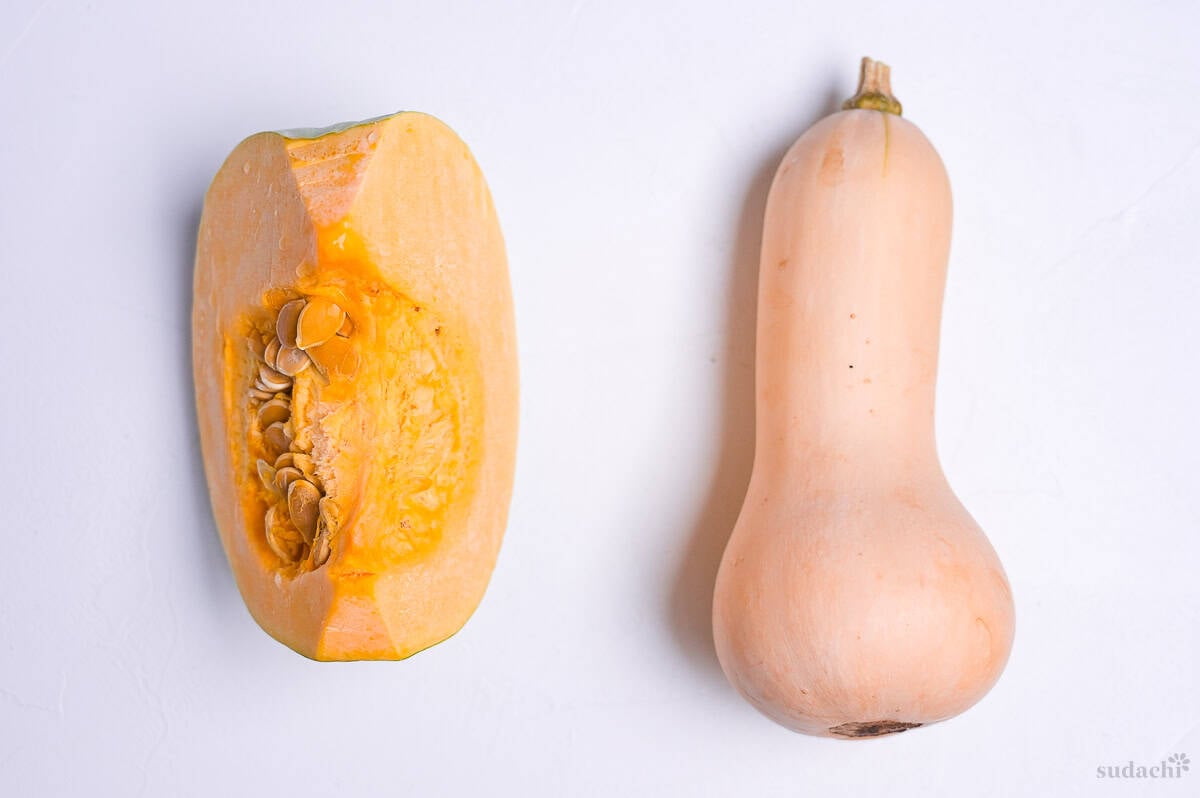
- Kabocha: Any Asian grocer carries it whole and in cut wedges. Korean stores label the same squash 단호박 (danhobak), and in autumn it turns up in the winter squash bin at regular supermarkets too. Sweetness builds after harvest, so pick the fruit that has had time to ripen. A whole kabocha feels heavy for its size and has a dry, corky stem. On a cut piece, look at the cut face. Deep orange and dry-looking is the one you want.
- Butternut squash: If no kabocha turns up, use butternut instead. I left the skin on and fried the same way. It holds more water than kabocha, and that water stays inside after frying. The flavor is different to kabocha, but it’s an excellent substitute with its own character.
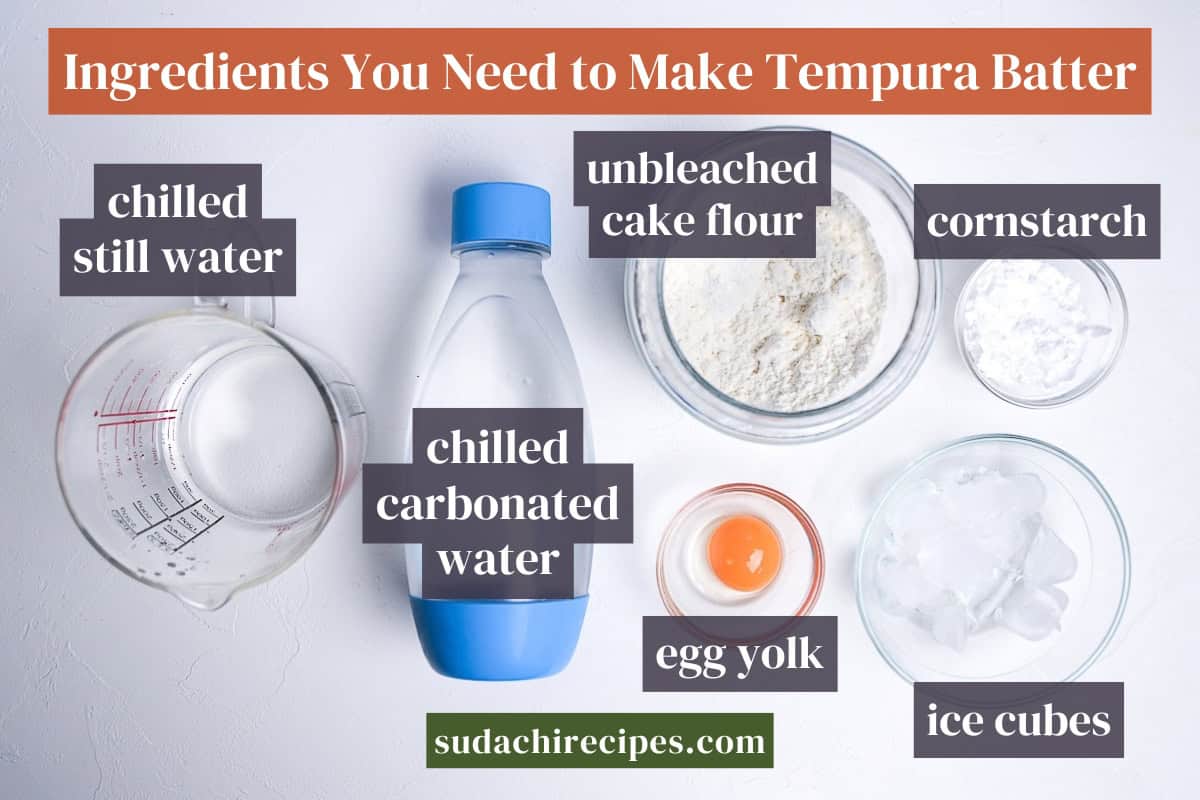
- Cake flour: Buy the unchlorinated kind. Chlorinated flour holds on to water, so the oil moves in before the batter has given up its water, and the crust comes out heavy. In the US, look for unbleached on the bag. UK and Australian plain flour is not chlorinated to begin with, so it works as is.
- Sparkling water: Plain carbonated water, nothing flavored and nothing sweetened. Anything carrying flavoring or sweetener, tonic water included, leaves that taste in the batter. The fizz starts going the moment you open the bottle and you only need a little, so the smallest bottle is plenty.
Substitution Ideas
- Kabocha → Buttercup squash or red kuri squash: Both are the same species as kabocha, with flesh about as dense and skin you can eat once it has been fried. Cut them and fry them exactly the same way.
- Cake flour → All-purpose flour: If all-purpose is what you have, it works in a pinch. The batter comes out a touch heavier as is, so nudge the cornstarch share up a little.
- Cake flour and cornstarch → Tempura batter mix: A store-bought mix already has the starch, the egg powder and the leavening blended into it, so cold water alone makes a batter and a bit of overmixing will not wreck it. The flavor leans toward the mix and away from a batter you blended yourself.
- Egg yolk → Japanese mayonnaise: With no yolk, use ½ tablespoon of Japanese mayonnaise. Of the swaps here it lands closest to a batter made with yolk.
- Egg yolk → Egg white, or a beaten small egg: With no mayonnaise either, use 1 egg white, or half a beaten small egg. Both make more batter than the mayonnaise does, so expect leftovers.
- Egg yolk → No egg at all: Leave the yolk out and build the batter from the cold water and the dry ingredients. My egg-free tempura batter recipe walks through it.
- Sparkling water → Cold water: The same amount of plain cold water makes a batter. Without the bubbles it does not come out quite as light, so chill everything harder to make up for it.
Substitutions that I don’t recommend:
- Carving pumpkin instead of kabocha: There is far too much water in that flesh, and the batter goes soft from the inside while it fries.
- Bread flour instead of cake flour: Too much protein. The crust turns tough and oily.
Have trouble finding Japanese ingredients? Check out my ultimate guide to Japanese ingredient substitutes!
How to Make My Kabocha Tempura
Before you start (Mise en place):
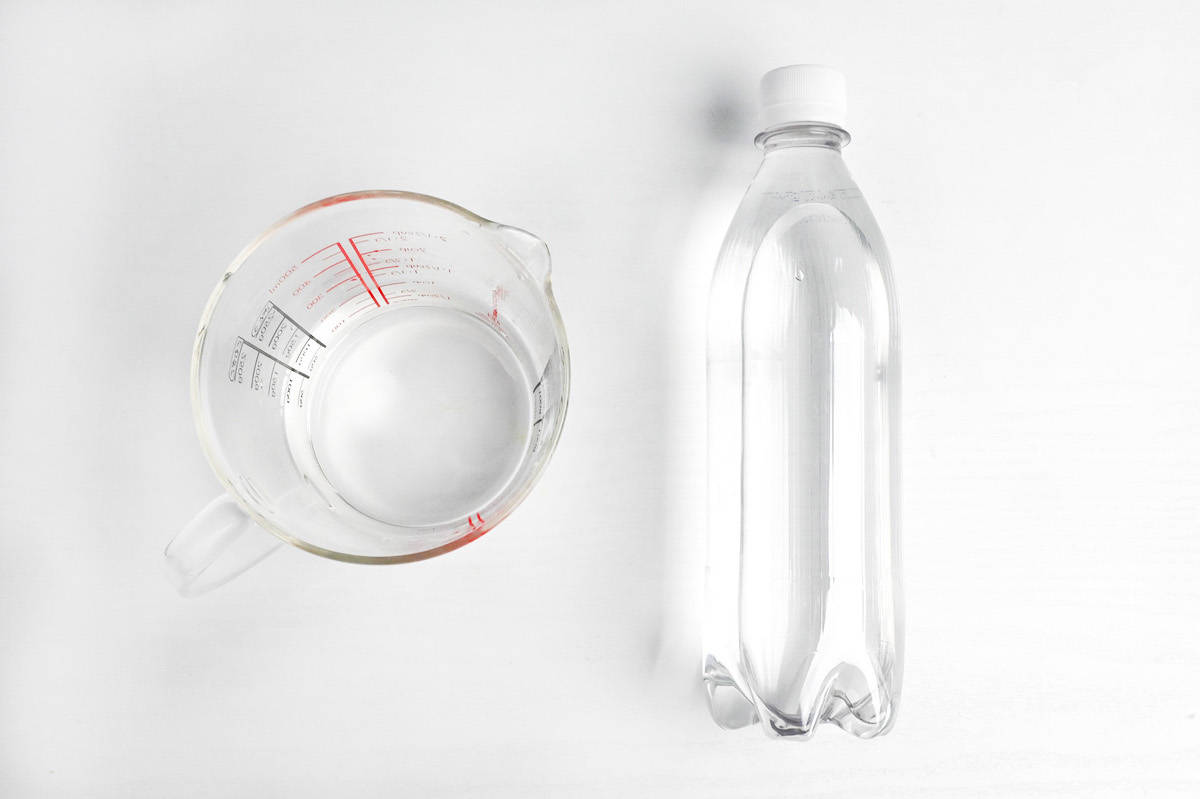
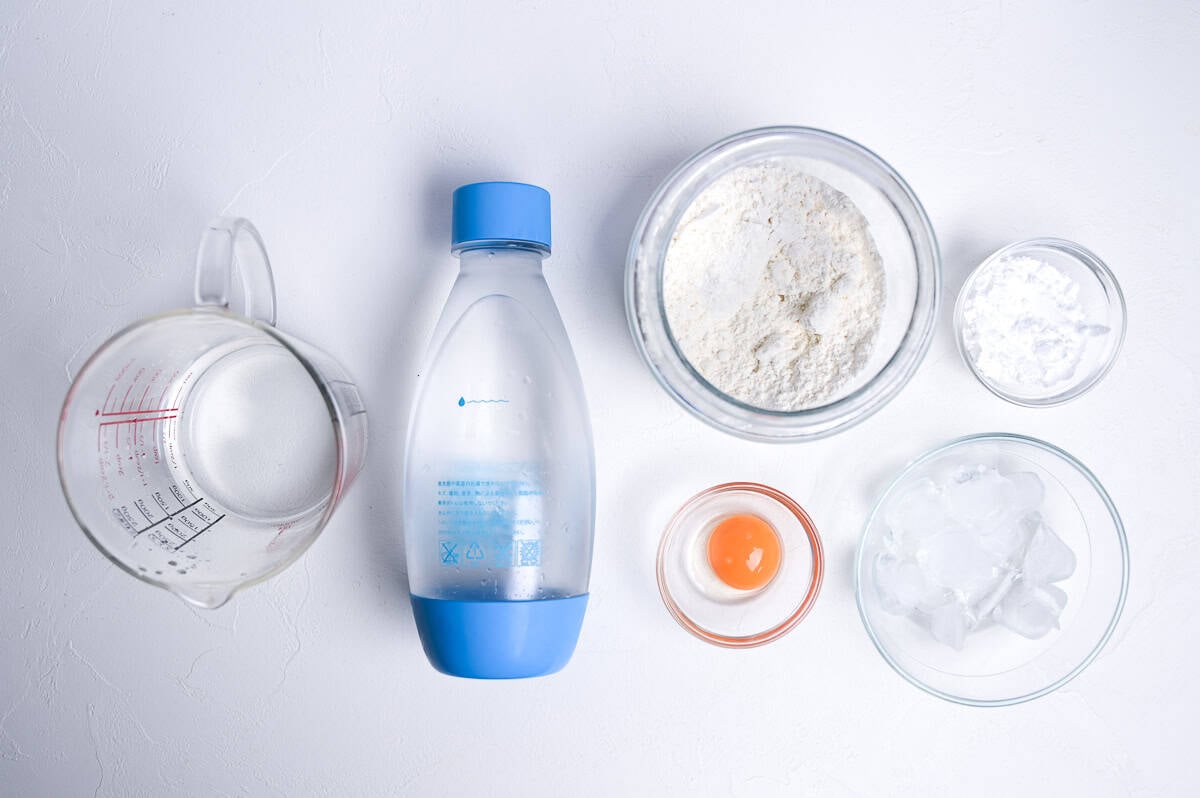
- Measure the batter water into a jug and chill it for 30 minutes along with the unopened bottle of sparkling water. The bubbles start leaving the second you break the seal, so leave the cap on until you mix.
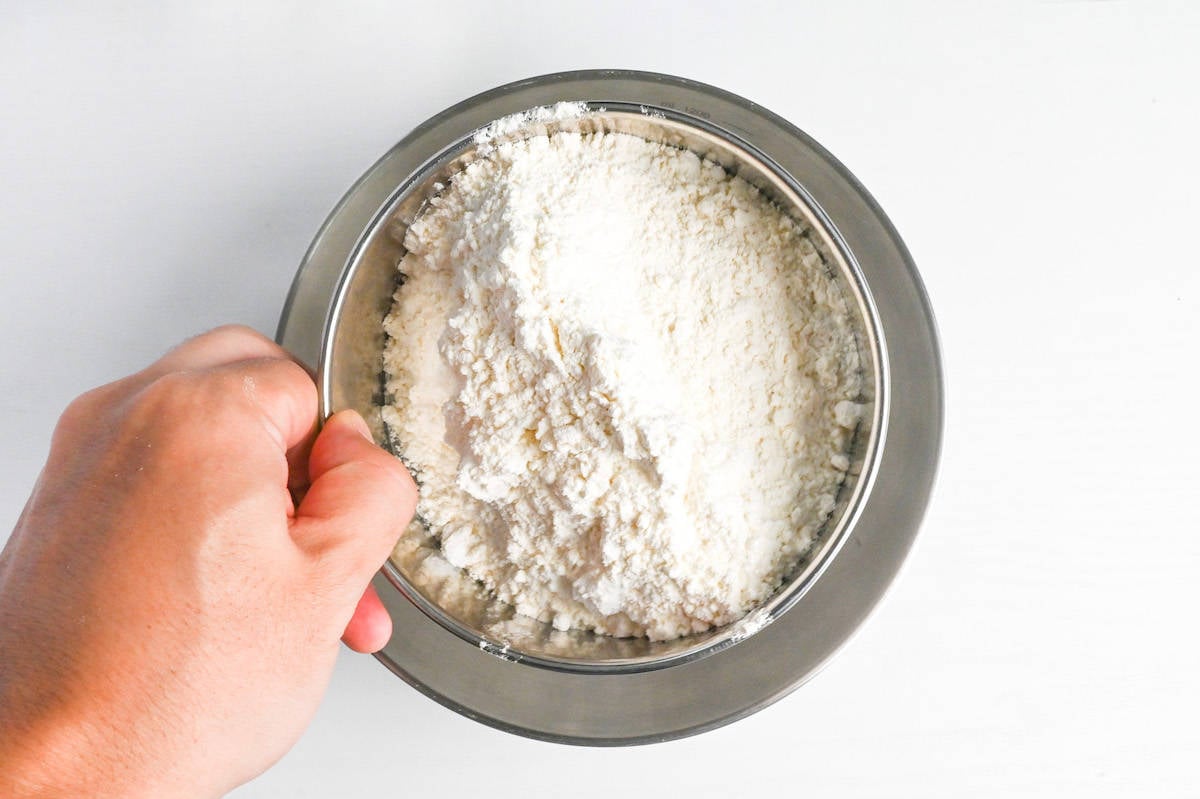
- Sift the cake flour and the cornstarch into a bowl from about 20cm up, stir them together, and chill them for 30 minutes in the fridge or the freezer. Sifting from a height works air into the flour and gives you a lighter crust. Chilling both the water and the flour keeps the batter from turning sticky.
- If you bought a whole kabocha, start by quartering it. You will only need one-quarter for this recipe. Use the rest in another recipe like kabocha korokke or kabocha soup.
- Everything from prepping the squash to getting the oil heating happens inside that 30 minutes.
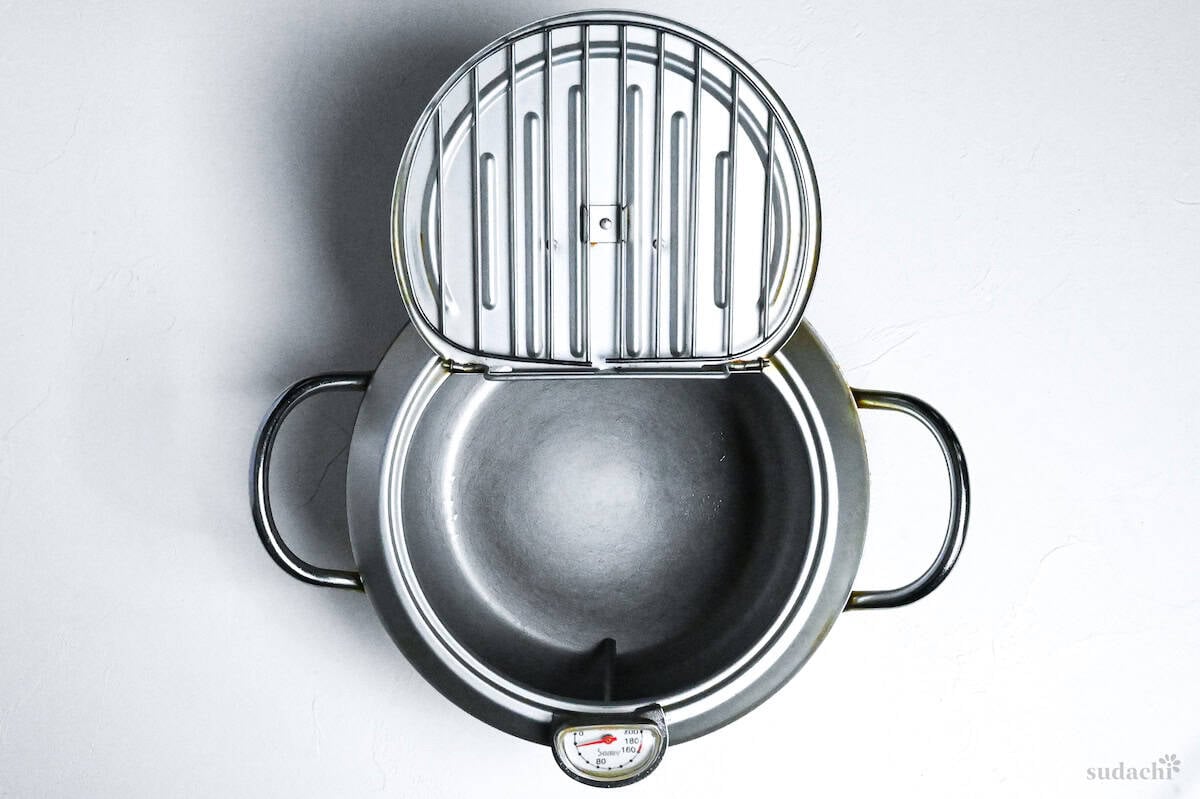
To develop this recipe, I used a tempura pot with a thermometer and draining rack.
i. Scoop the seeds and the stringy pulp out with a spoon, cleanly, all the way to the edges. Pulp left behind turns into a mushy patch right there.
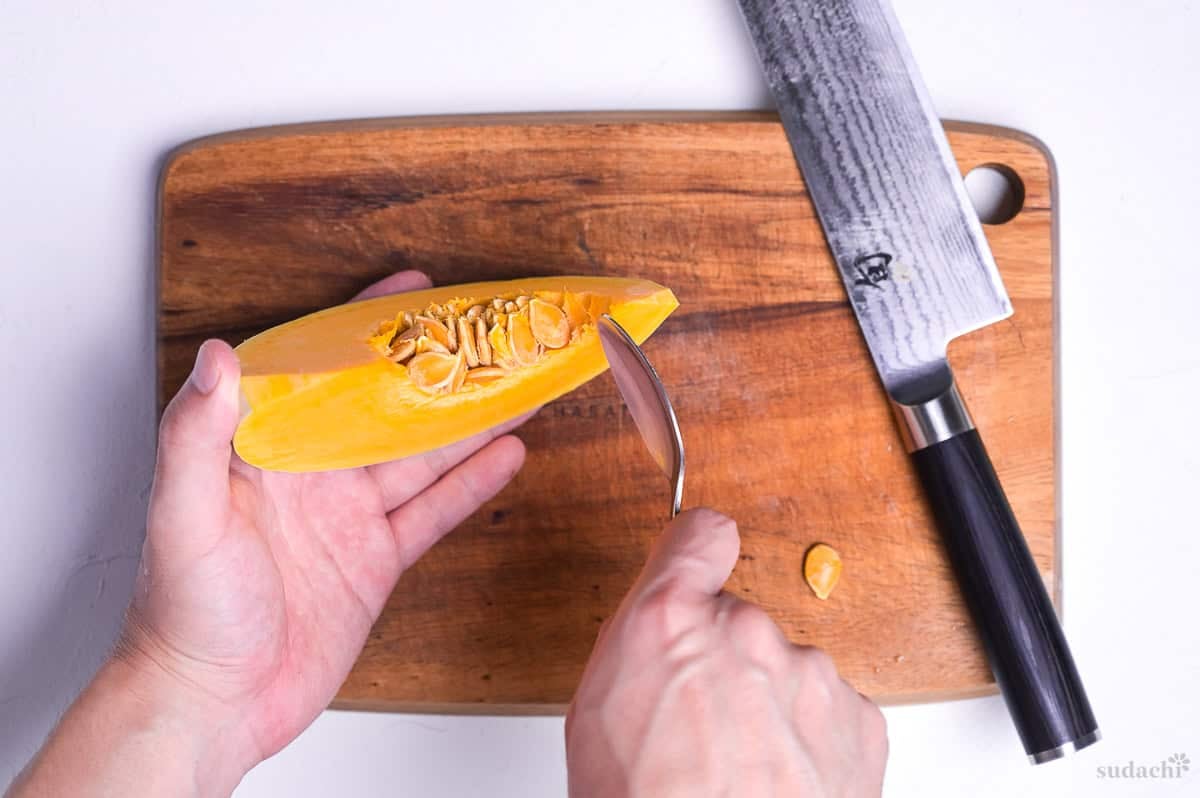
Leave the skin on, it keeps the wedge from breaking up in the oil.
ii. If yours has tough skin, peel it in stripes or shave off just the bruised bumps.
i. Cut your piece of squash in half again, lengthwise. Lay it skin side down on the board. Kabocha is hard and round and it rolls, so keep your fingers away from the blade and rock the knife back and forth while pressing down.
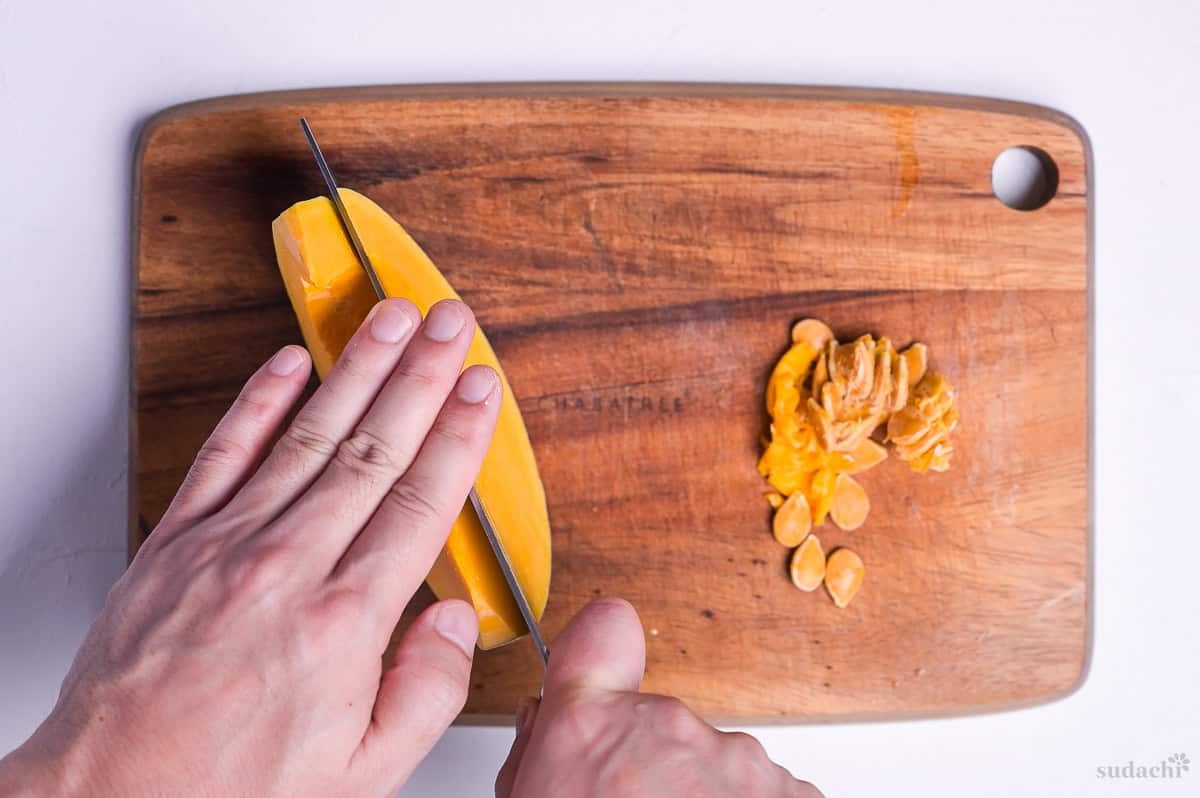
ii. Cut wedges 7 to 8mm thick along the fibers.
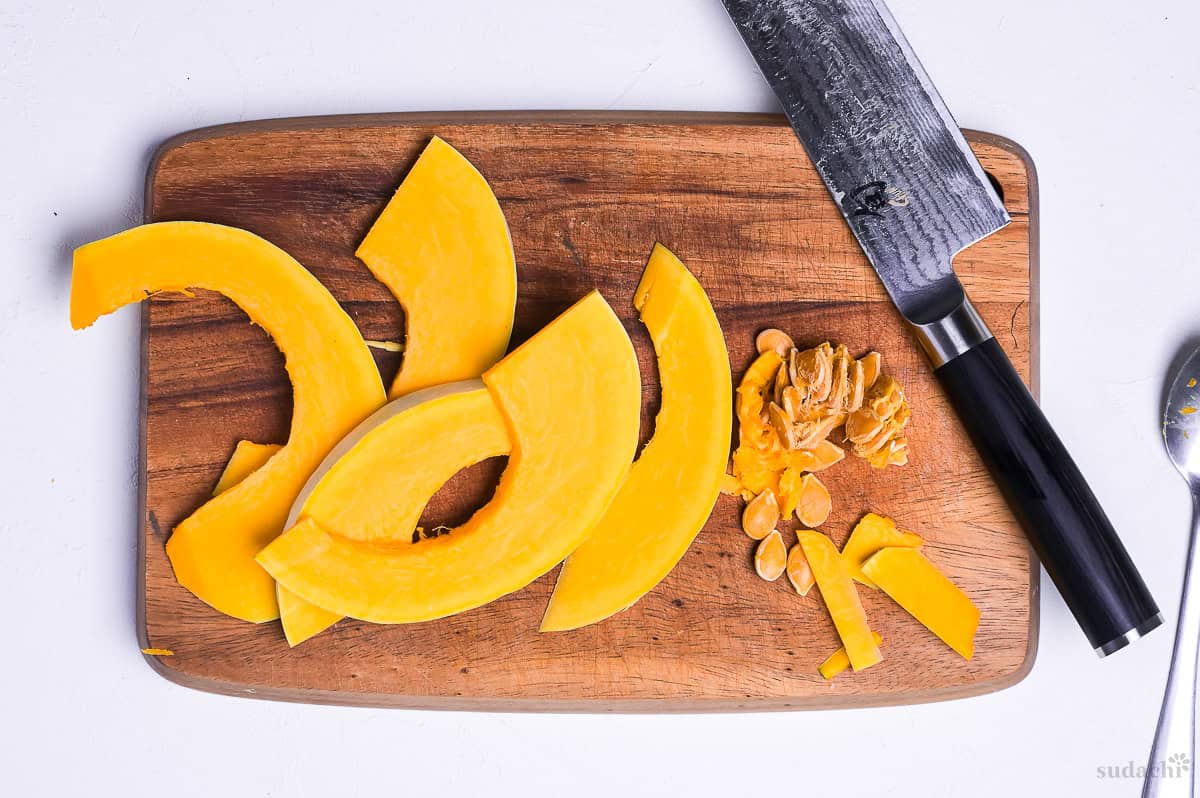
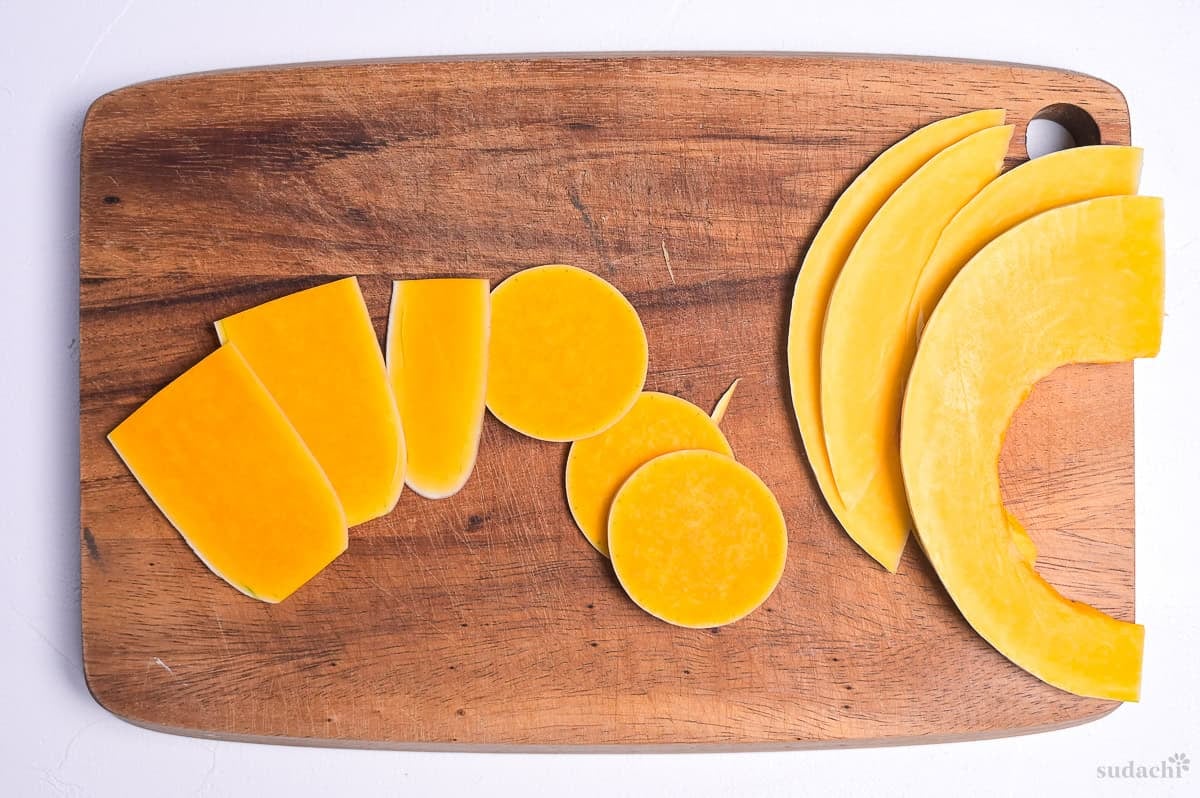
The fibers run lengthwise, stem to base. Wedges cut with them hold their shape best in the oil.
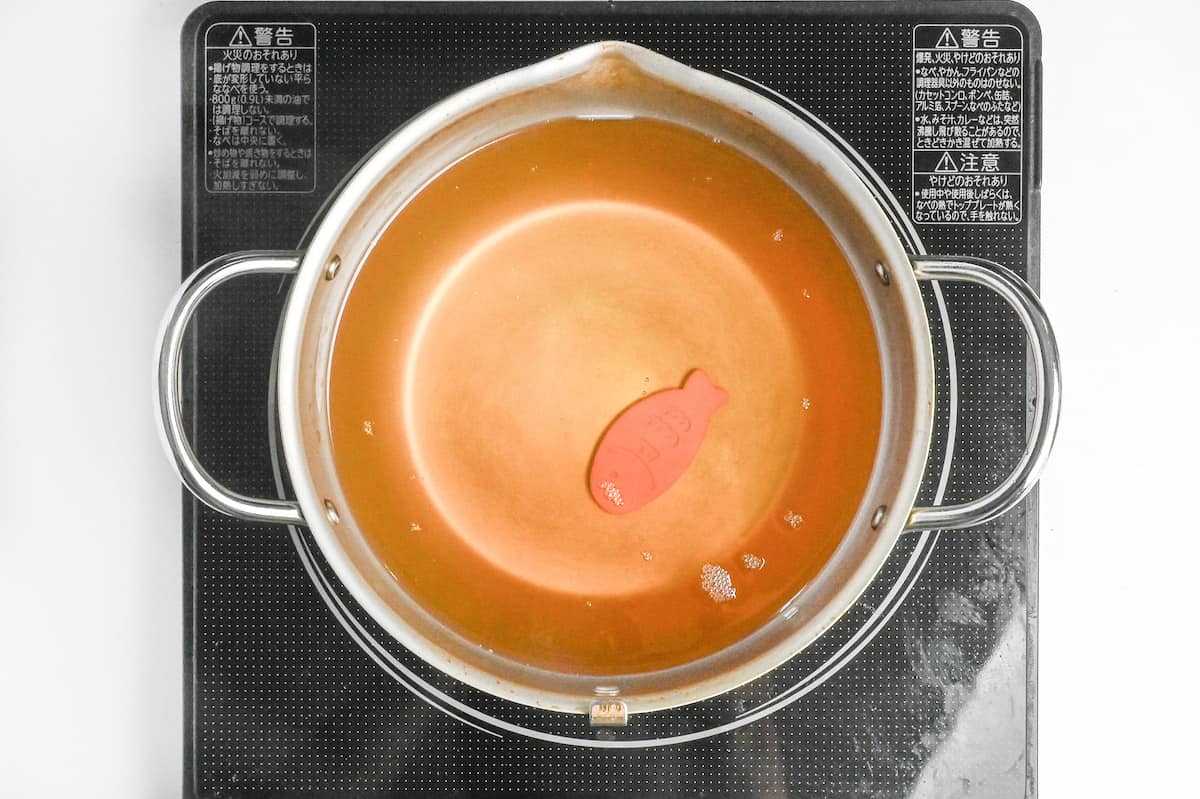
i. Fill a pot at least 10cm deep and about 24cm across with frying oil 5cm deep or more, and heat it to 170°C (338°F).
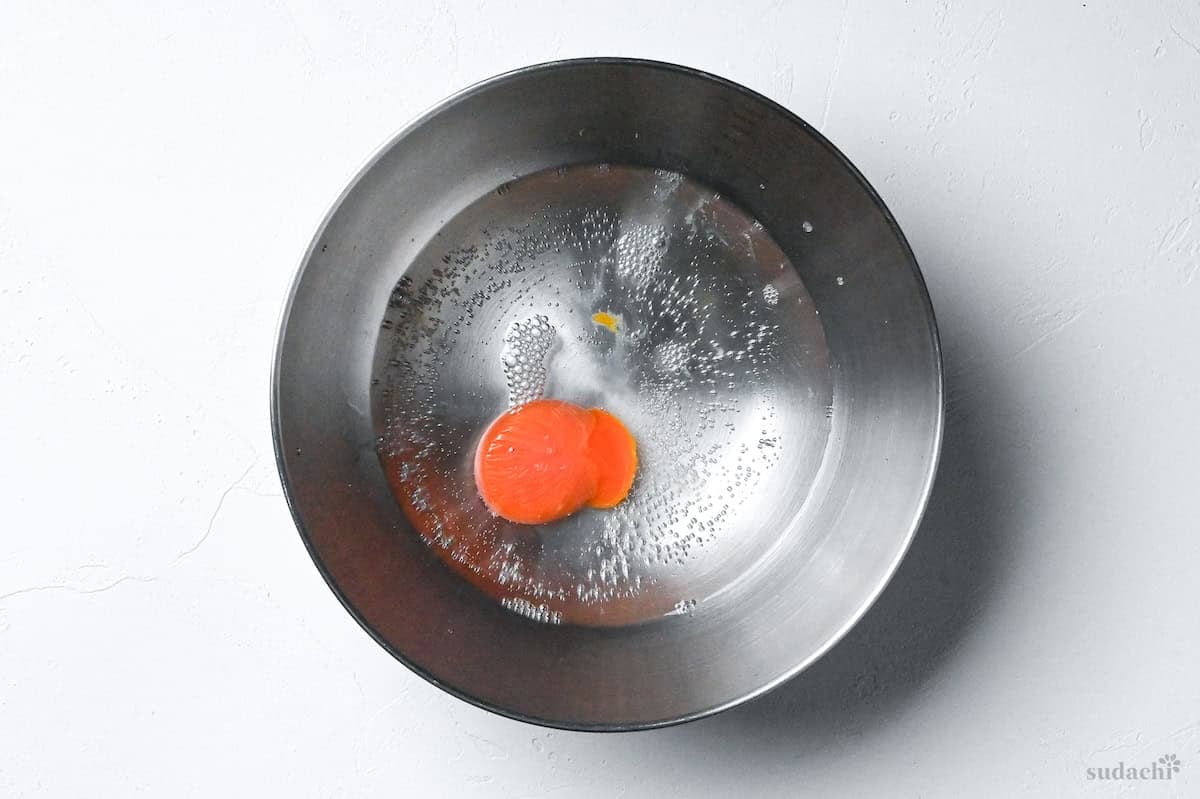
ii. Stir the egg yolk into a splash of the chilled water, then add the rest of the cold water and the sparkling water.
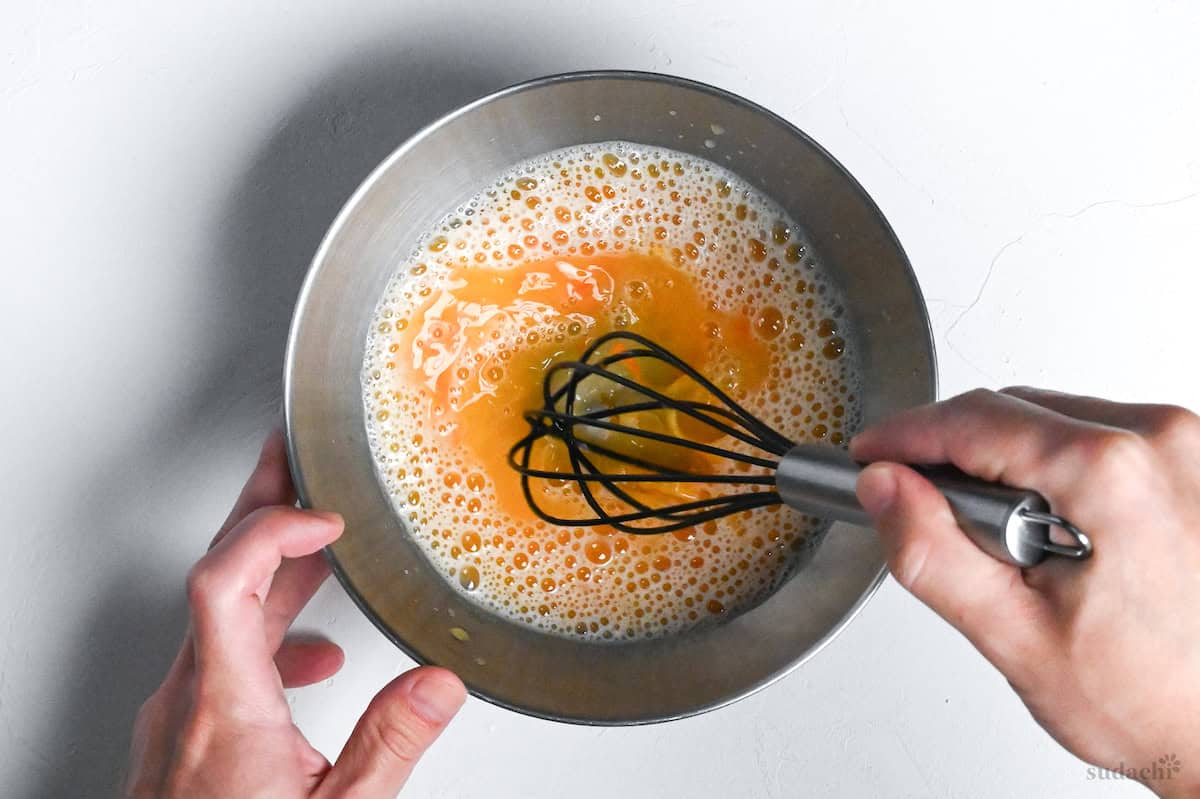
iii. Add the chilled flour in thirds, folding gently with chopsticks in a cross. No whisking, no overmixing. More mixing means heavier batter, so leave the lumps alone.
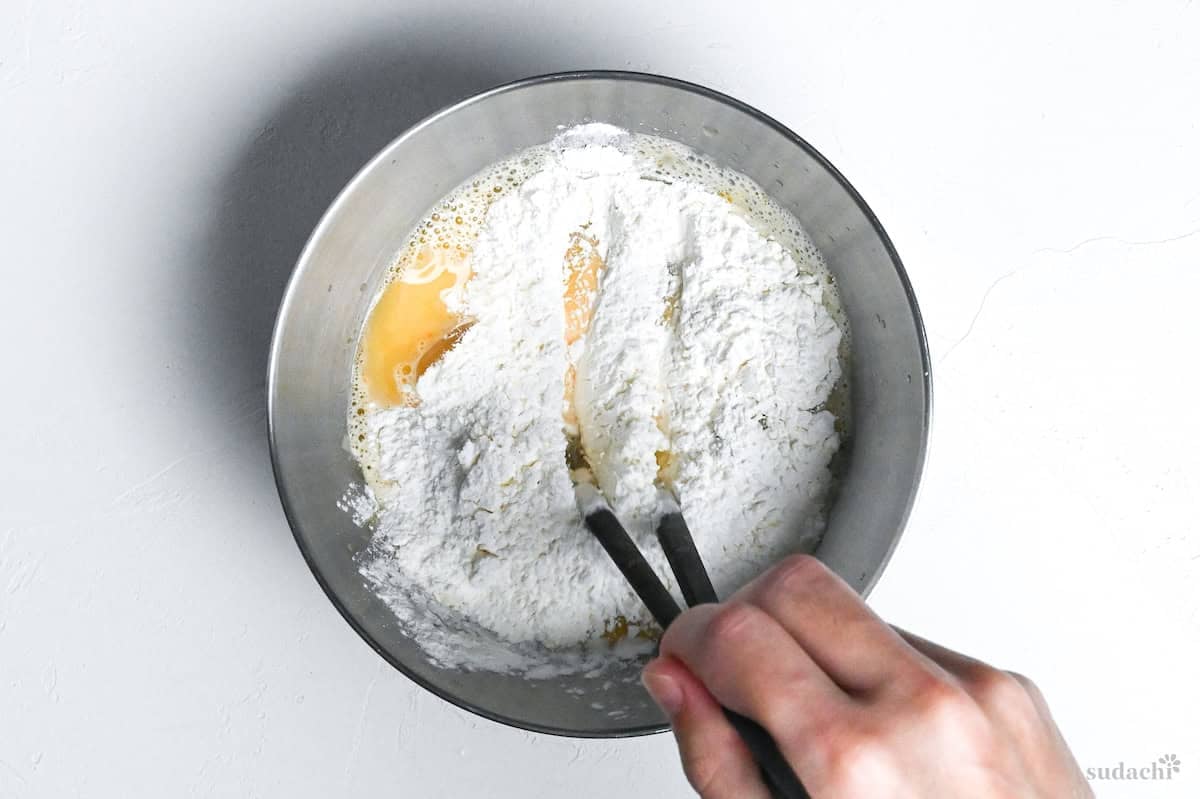
iv. Drop in ice if you want it colder still.

v. Drop a bead of batter into the oil. If it sinks to the bottom and comes straight back up, you are around 170°C (338°F).
Avoid bleached or chlorinated cake flour as it changes the texture. Also avoid self-rising/self-raising flour, whole wheat pastry flour, and gluten-free cake flour blends. These are different products. For UK/AU readers, plain flour works (protein is a touch higher but the result is close). See flour guide for details.

i. Dust the kabocha with a thin coating of flour.
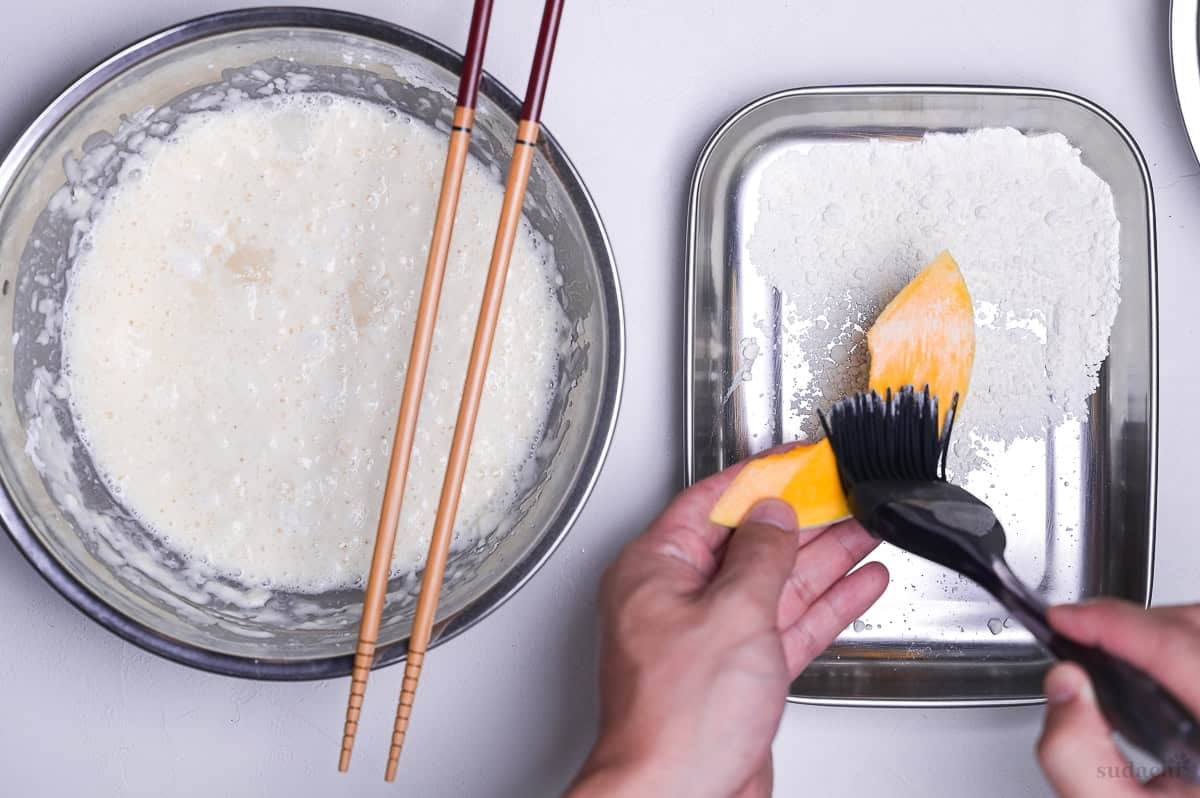
ii. Run a wedge through the batter.
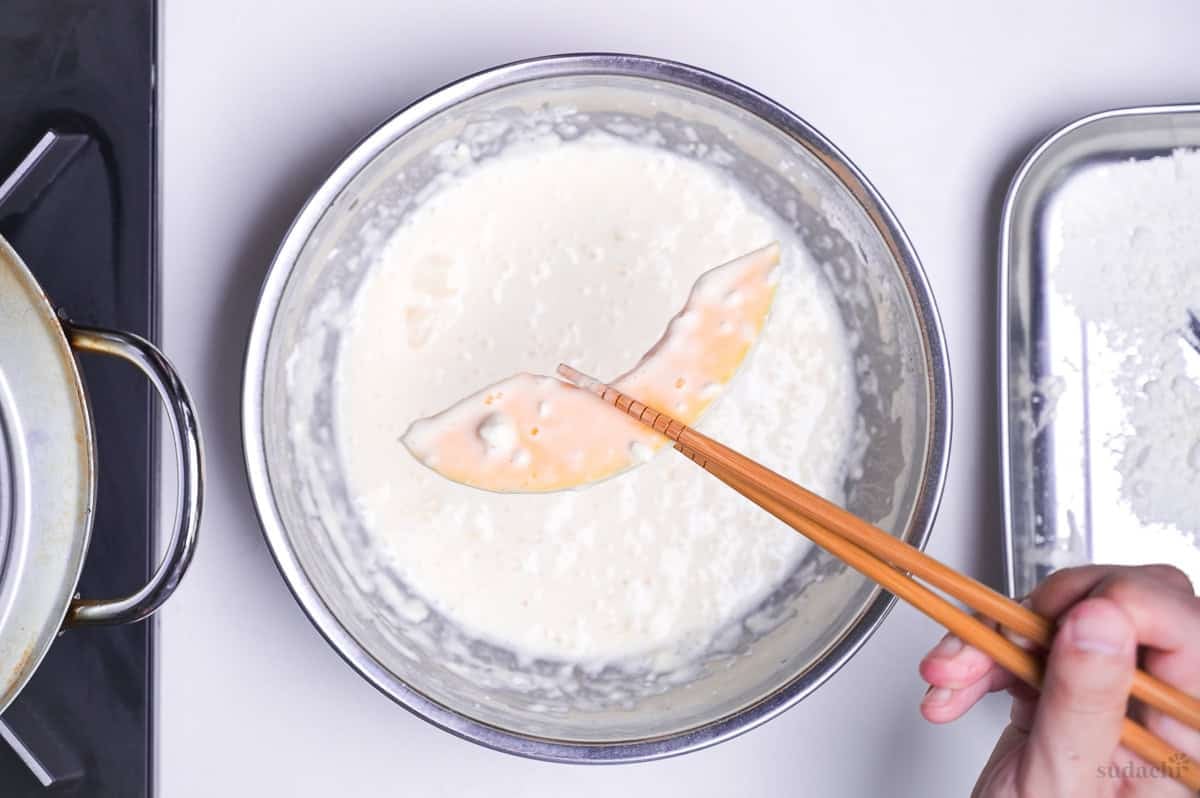
iii. Lower it into the oil gently.
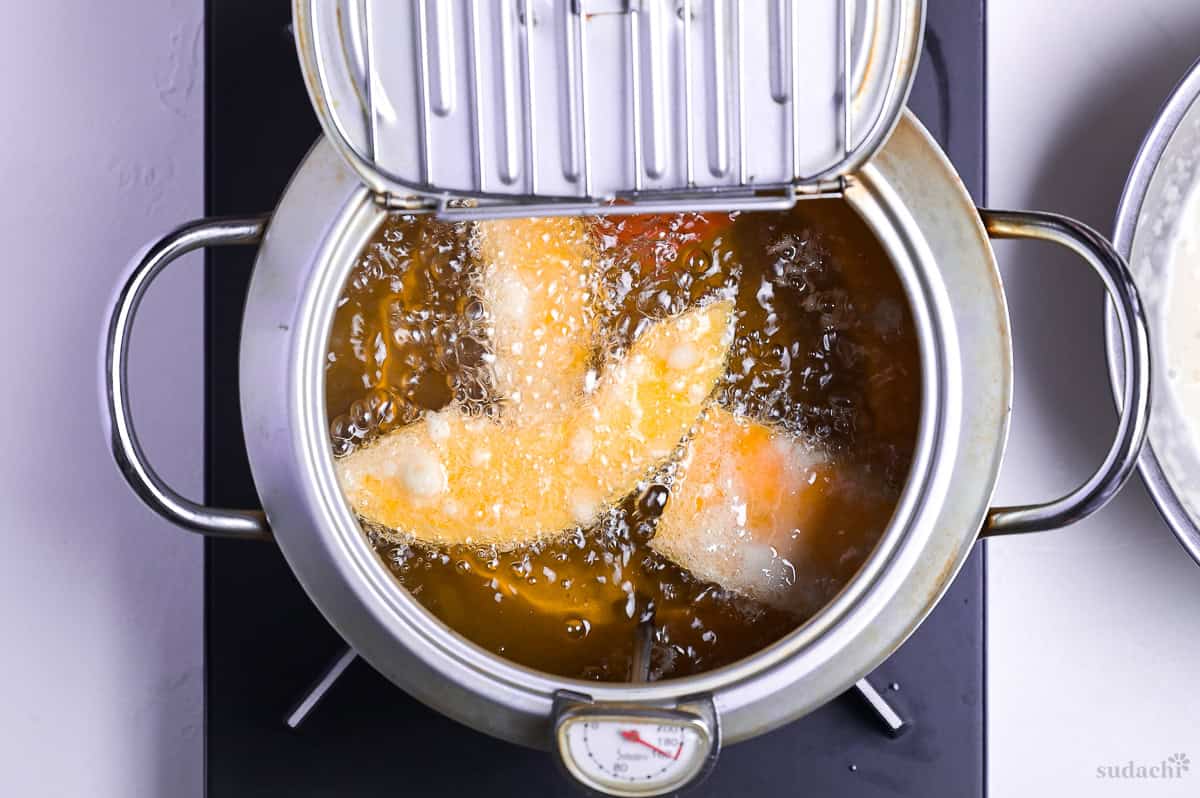
Fill no more than a third of the oil surface at a time. In a 24cm pot that is 5 or 6 wedges. Crowd it and the oil temperature drops, and you get a heavy coating that has soaked up oil without taking any color.
i. Leave them alone for about a minute, and turn them once the surface has set. Fry 2 minutes 30 seconds to 3 minutes in total. Turn them just once, and no poking while they cook.
iii. Stop at pale gold. Kabocha carries a lot of sugar, so chase the color and you will burn them.
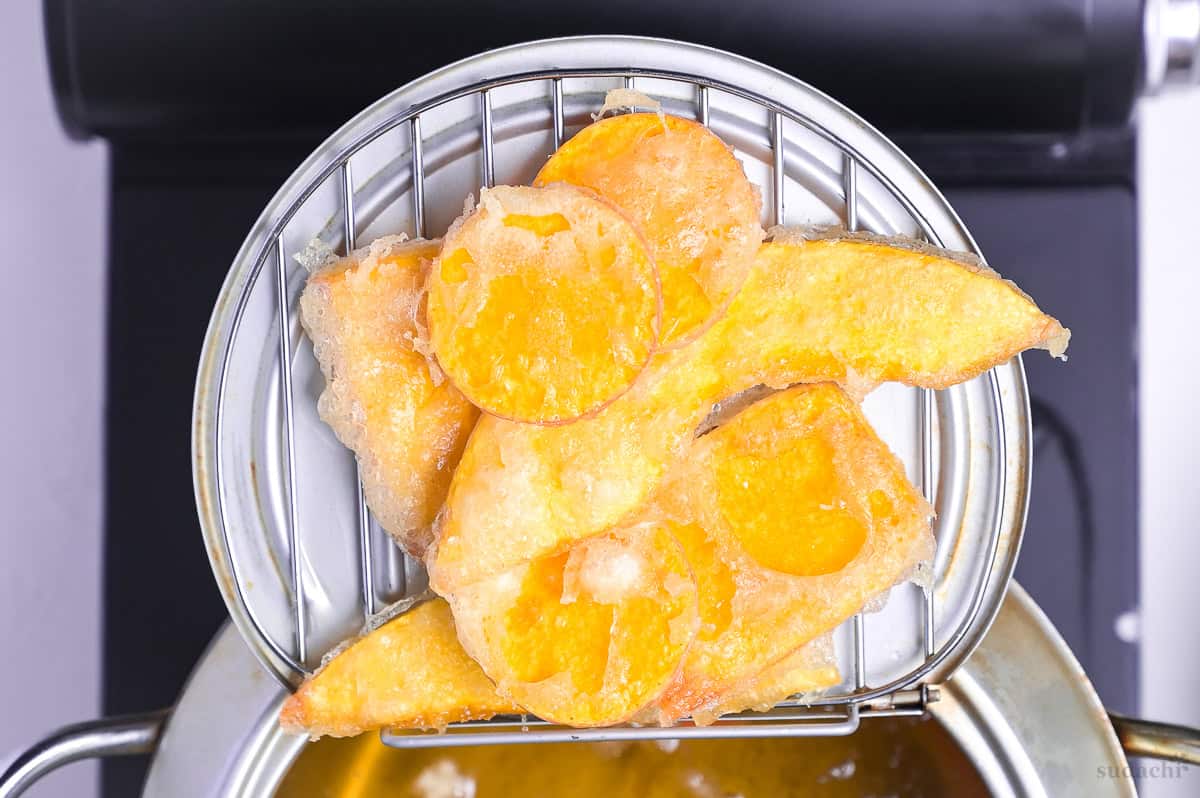
Note: Read 3 things before you lift them out. The big bubbles break into small ones and then thin out. They feel light when you lift them and sound higher-pitched. A bamboo skewer slides straight through.
Kabocha pectin actually firms up between 60°C and 80°C (140°F and 176°F). A 7 to 8mm wedge goes into 170°C oil so it never sits in that band, moving straight past 90°C (194°F) instead. No parboiling, no microwave.
i. Lift them onto a wire rack, spaced out so they never touch, and let the extra oil run off.
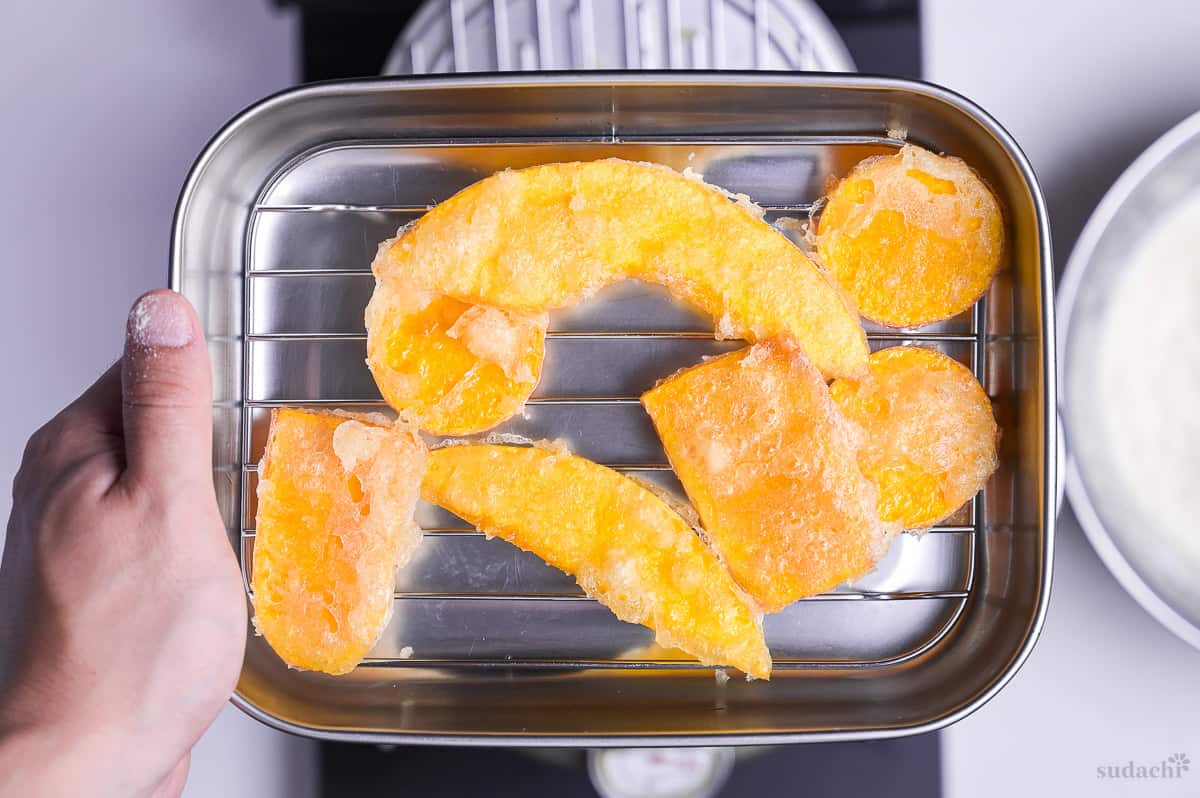
ii. Salt them while they are still hot from the oil, and serve right away.
Batter takes on oil as it cools rather than at the moment it leaves the pot. Water leaving the crust opens gaps, and the falling temperature draws oil into them. Stack the pieces and trapped steam fills those gaps with water instead, which is the fastest way to lose the crisp.

Tips for the Best Kabocha Tempura
- Take a thin slice off the top and the bottom first if you bought it whole. A round kabocha rolls the second a knife touches it. Shave a little off the stem end and the base so you have 2 flat faces, stand it on one of them, and split it down the middle. Cut each half lengthwise again and you have your quarters.
- Mix the batter beside the oil, right before the first piece goes in. Batter that sits in the bowl warms up and tightens, and it comes out heavy. Light the burner first, then start combining the flour and the water so you finish mixing just as the oil reaches 170°C (338°F).
- Skim the burnt specks between batches. Stray bits of batter left behind in the oil blacken fast, and they stick to the coating of the next piece you lower in. Lift the floating debris out with a mesh skimmer every time a batch comes out.
- Save the leftover batter for after the kabocha is out of the pot. This recipe makes more batter than the squash uses up, so run shiso leaves or shishito peppers through what is left and fry those. Wet things go in last so their steam does not soften the crust on the pieces you fried earlier.
Split the hard fruit and keep the oil clean before you start, and the frying itself comes down to watching bubbles and color.
Storage & Meal Prep
Fridge: Not recommended. The thin crust soaks up water overnight, and the cold firms the flesh fastest.
Freezer: Cool completely on a rack, wrap each piece, and bag it for the freezer. Eat within a month.
Meal prep: Clear the seeds and pulp ahead. Batter cannot wait, since mixing turns it sticky and heavy.
Reheating: From frozen, air fryer 5 minutes at 180°C (356°F). Avoid microwaving, it steams it soft.
What to Serve With Kabocha Tempura
- Stovetop Short-Grain Rice
- Traditional Miso Soup
- Cucumber Sunomono (Japanese Cucumber Salad)
- Spinach Ohitashi (Blanched Spinach in Dashi)
Kabocha Tempura Troubleshooting
Either there was moisture on the cut face, or the piece got moved before the coating set. Batter has nothing to grip on a wet face, and touching a piece with chopsticks too early tears the coating open right there. With the next wedge, blot the cut face dry with a paper towel if it is wet, before you dip it, then leave it alone for about a minute once it is in the oil.
The wedges fried in oil that had dropped below temperature. The more pieces you lower in at once, the further the oil falls, and oil moves in before the water has left the batter. For the next batch, drop a bead of batter in and wait until it sinks and comes straight back up, then fill no more than a third of the surface. Lay what comes out on a rack with space between the pieces, and put nothing on top of them.
Either pulp was left inside, or the fruit never had enough time to ripen after harvest. A patch of pulp left behind turns mushy in the oil. Scrape the remaining wedges clean with a spoon, right out to the edge, before they go in. Frying cannot add sweetness the fruit never built, so eat this batch with salt rather than a dipping sauce and you taste what sweetness is there much more clearly.
More Japanese Kabocha Recipes
- Crispy Kabocha Korokke
- Silky Kabocha Squash Soup
- Curry Hot Pot with Kabocha
- Spiced Kabocha Loaf Cake
The sweetness that comes up out of the oil was in the fruit all along, and it turns up in other shapes across my Japanese kabocha recipe collection.
Did You Try This Recipe?
I would love to hear your thoughts!
💬 Leave a review and ⭐️ rating in the comments below. 📷 I also love to see your photos – submit them here!
Kabocha Tempura (Japanese Squash Tempura)

Ingredients
Kabocha
- ¼ kabocha squash about 300g
Tempura Batter
- 5 tbsp water
- 3 tbsp carbonated water unsweetened and unflavored
- 15 g cornstarch
- 75 g unbleached cake flour or all-purpose flour (plain flour in UK/AU) plus extra for dusting
- 1 egg yolk ½ tbsp Japanese mayonnaise also works
- 2 ice cubes optional
Frying Oil
- cooking oil neutral with high-smoke point
To Finish
- salt a fine-grained salt preferred
The ingredient brands and tools I trust are in my Japanese pantry guide and my cooking tools guide.
Can’t find certain Japanese ingredients? See my substitution guide here.
Instructions
- Chill your tempura batter ingredients in advance, liquids sealed in the fridge, sifted dry ingredients together in a bowl in the freezer.

- Thoroughly scoop out the seeds and stringy pulp of ¼ kabocha squash.
- Place your cutting board on top of a damp tea towel to prevent slipping, and the kabocha skin-side down on the board. Cut wedges about 7-8mm thick by pressing the knife on the top of the flesh and rocking the blade back and forth until it cuts all the way through. Keep your fingers flat across the top of the blade while you cut.
- Pour cooking oil into your pot about 10cm deep. Heat to 170 °C (338 °F).

- Pour 5 tbsp water and 3 tbsp carbonated water into a bowl. Add 1 egg yolk and whisk until combined.
- Once your oil is heated, add 15 g cornstarch and 75 g unbleached cake flour to the water and egg mixture one-third at a time. Draw crosses through the batter with chopsticks instead of mixing. It's okay if the batter has lumps. Add 2 ice cubes to keep it extra cold.
- Brush the surface of the kabocha wedges with flour.
- Run each wedge briefly through the batter and carefully place them in the hot oil.
- Fry in batches, being careful not to overcrowd the pot. I usually stick to 6 wedges at a time in a 24cm pot. Fry for 2 ½-3 minutes each, turning halfway through.
- Once pale and crisp, rest on a wire rack for a few minutes to drain excess oil and sprinkle with a pinch of salt from a height.
- Serve with salt for dipping and enjoy!

Leave a rating and a comment