Kabocha Tempura (Japanese Squash Tempura)
Ingredients
Kabocha
- ¼ kabocha squash about 300g
Tempura Batter
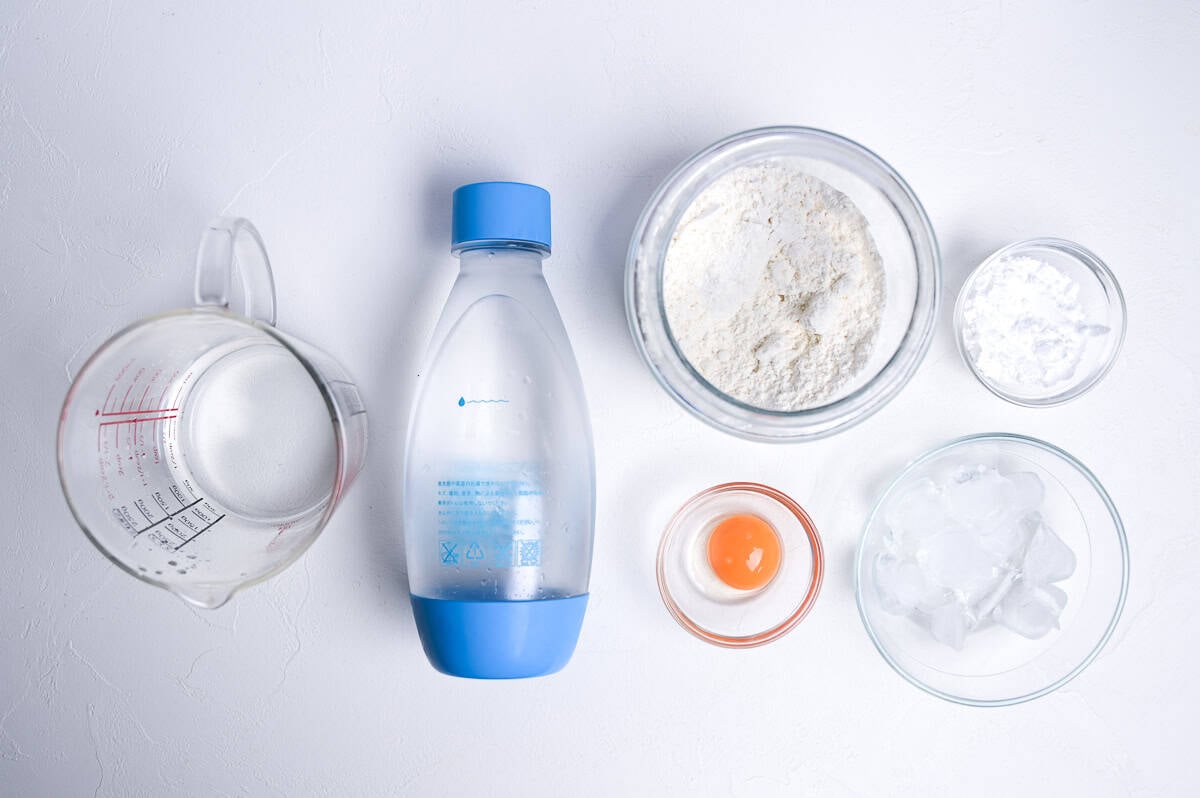
- 5 tbsp water
- 3 tbsp carbonated water unsweetened and unflavored
- 15 g cornstarch
- 75 g unbleached cake flour or all-purpose flour (plain flour in UK/AU) plus extra for dusting
- 1 egg yolk ½ tbsp Japanese mayonnaise also works
- 2 ice cubes optional
Frying Oil
- cooking oil neutral with high-smoke point
To Finish
- salt a fine-grained salt preferred
Instructions
- Chill your tempura batter ingredients in advance, liquids sealed in the fridge, sifted dry ingredients together in a bowl in the freezer.
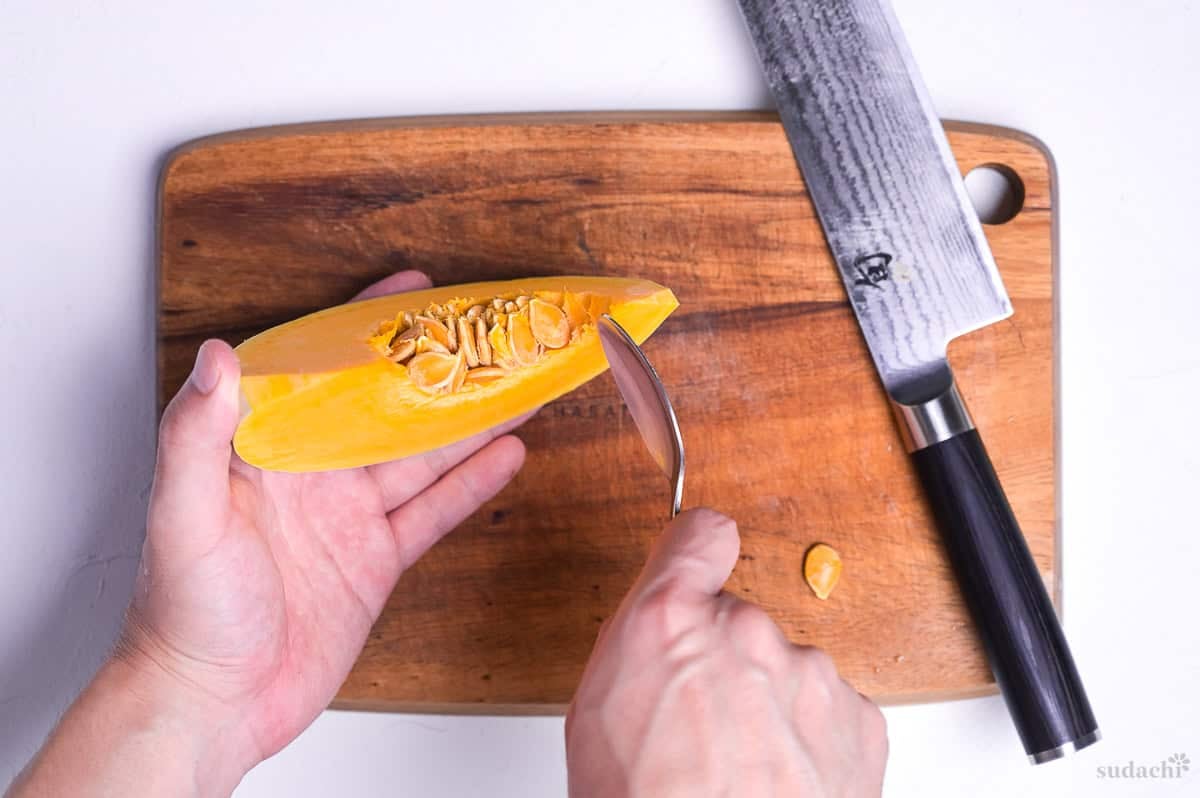
- Thoroughly scoop out the seeds and stringy pulp of ¼ kabocha squash.
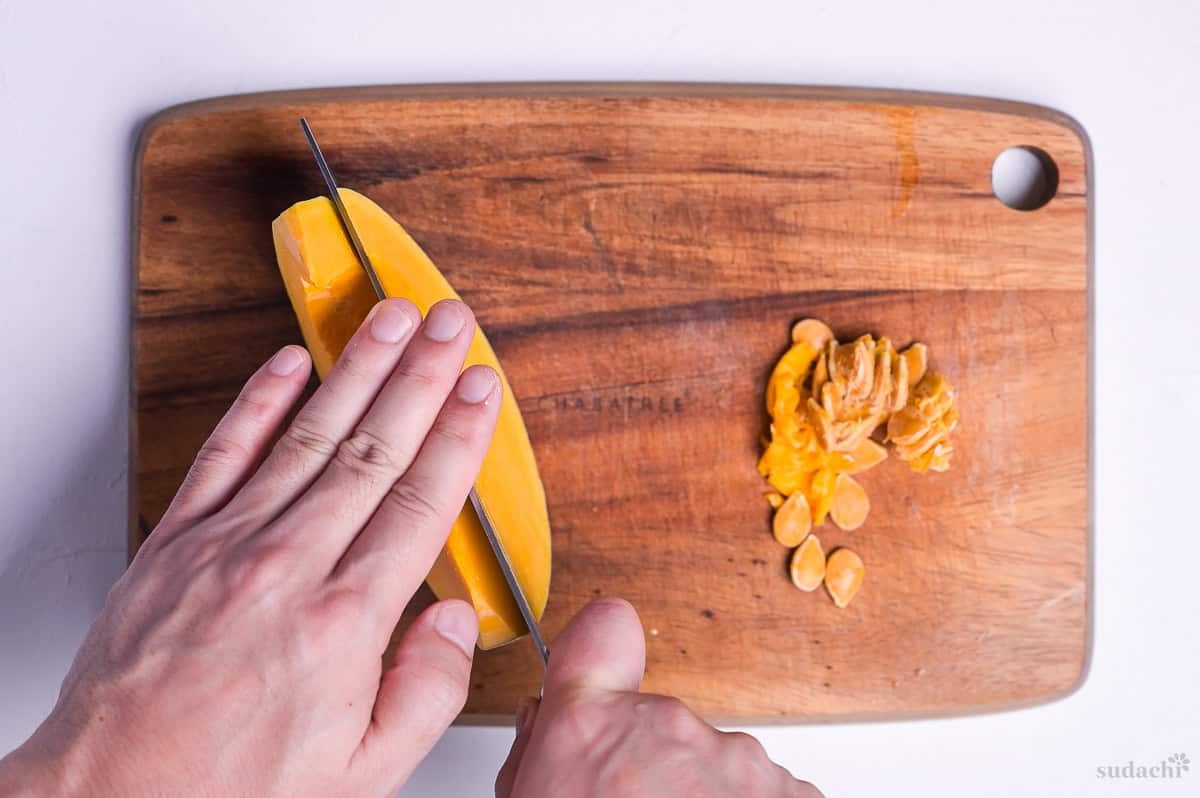
- Place your cutting board on top of a damp tea towel to prevent slipping, and the kabocha skin-side down on the board. Cut wedges about 7-8mm thick by pressing the knife on the top of the flesh and rocking the blade back and forth until it cuts all the way through. Keep your fingers flat across the top of the blade while you cut.
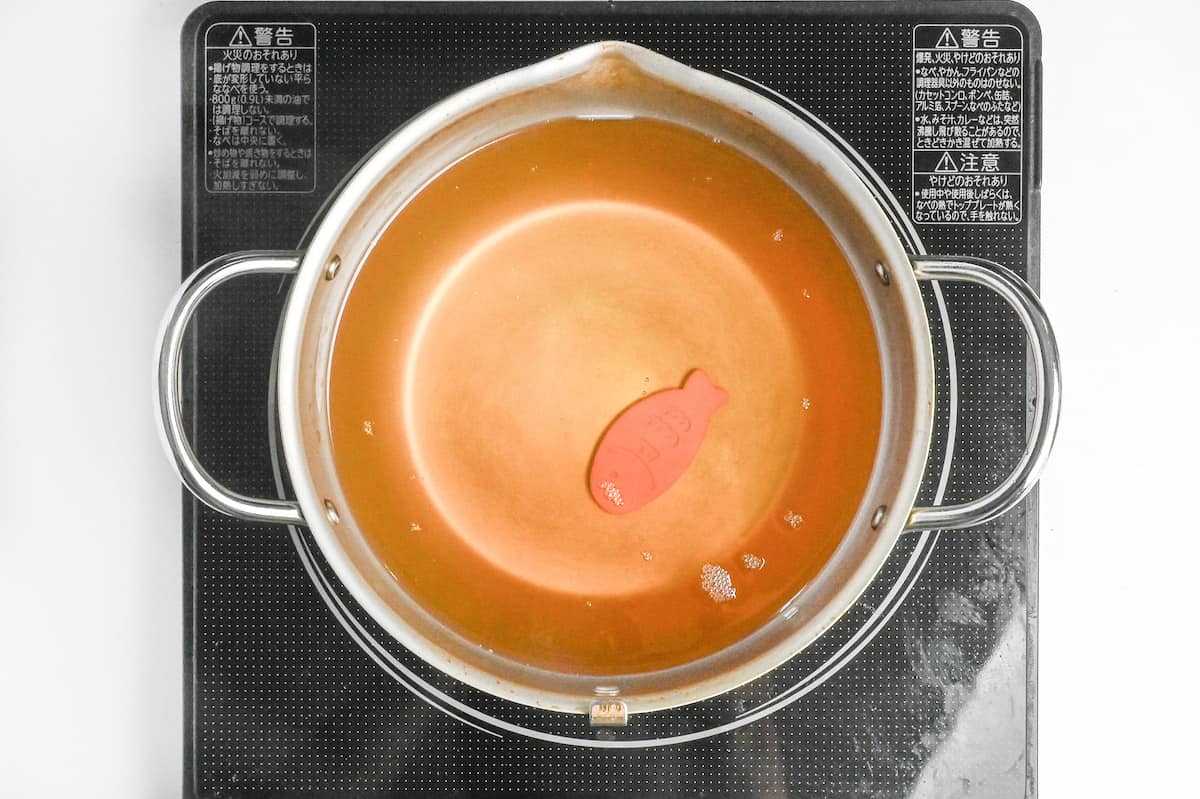
- Pour cooking oil into your pot about 10cm deep. Heat to 170 °C (338 °F).
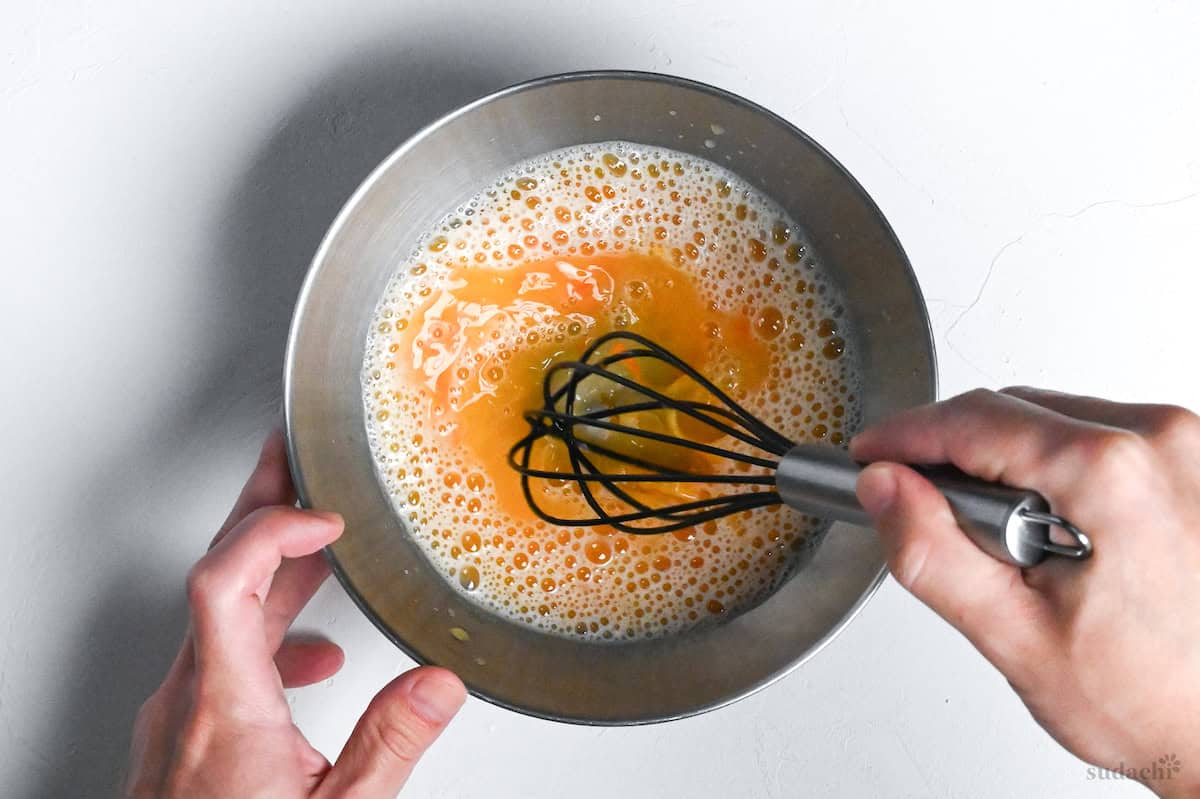
- Pour 5 tbsp water and 3 tbsp carbonated water into a bowl. Add 1 egg yolk and whisk until combined.
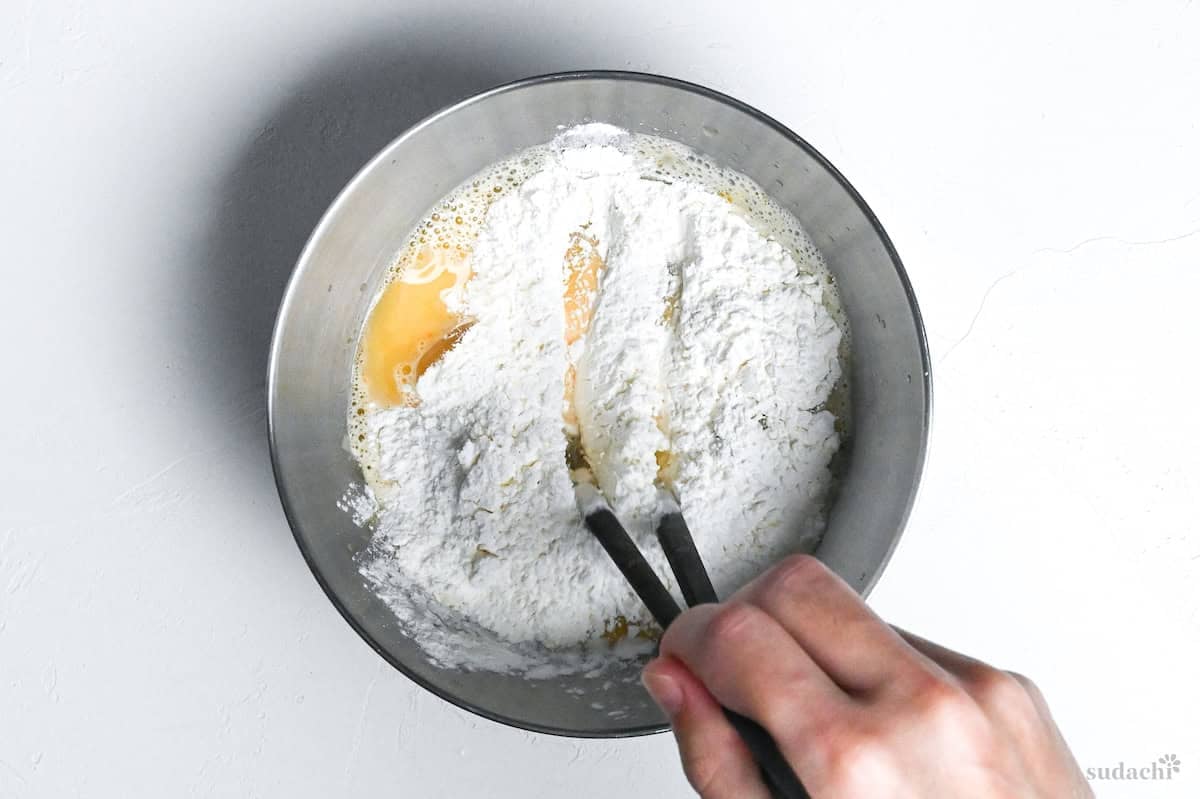
- Once your oil is heated, add 15 g cornstarch and 75 g unbleached cake flour to the water and egg mixture one-third at a time. Draw crosses through the batter with chopsticks instead of mixing. It's okay if the batter has lumps. Add 2 ice cubes to keep it extra cold.
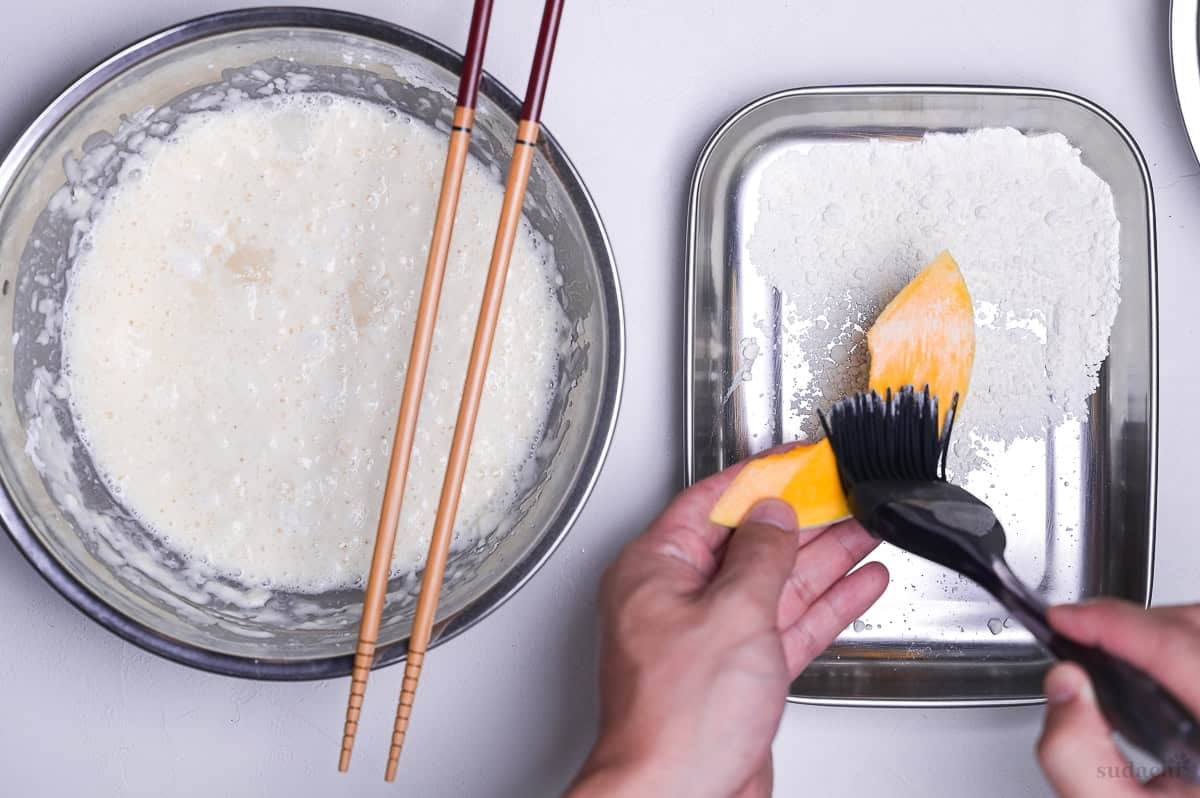
- Brush the surface of the kabocha wedges with flour.
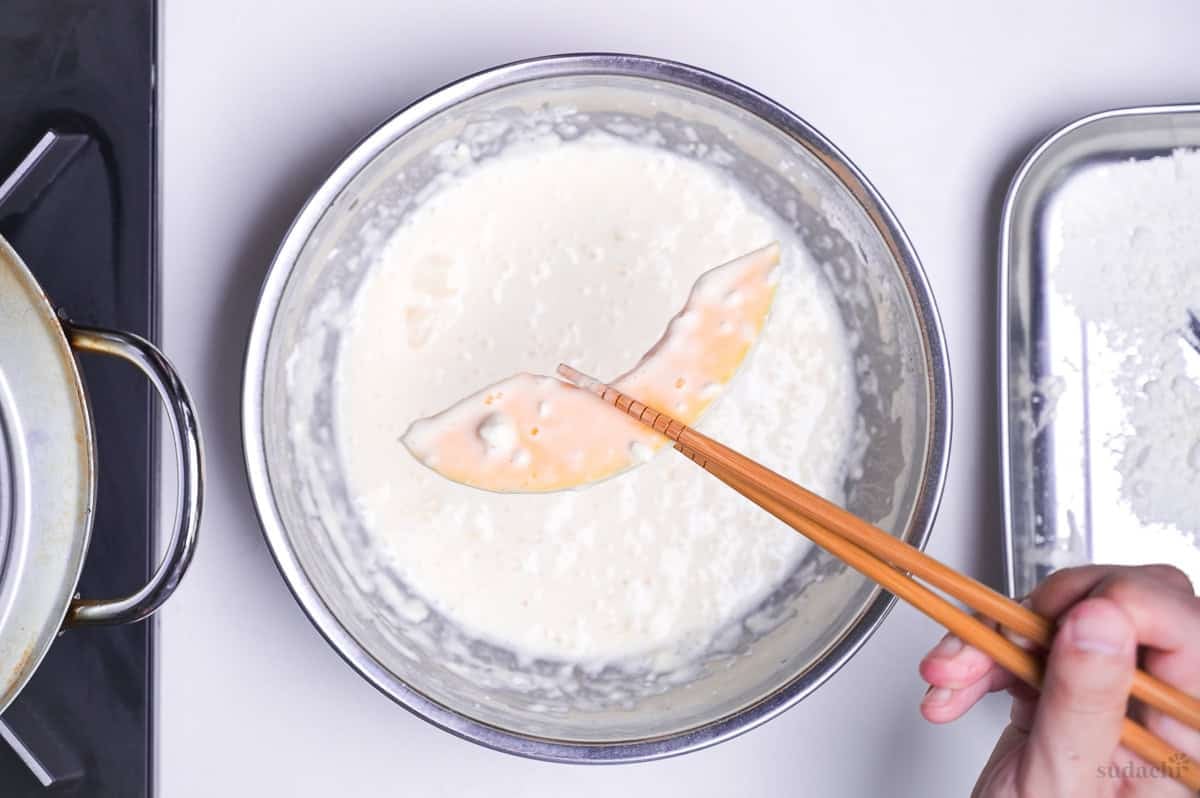
- Run each wedge briefly through the batter and carefully place them in the hot oil.
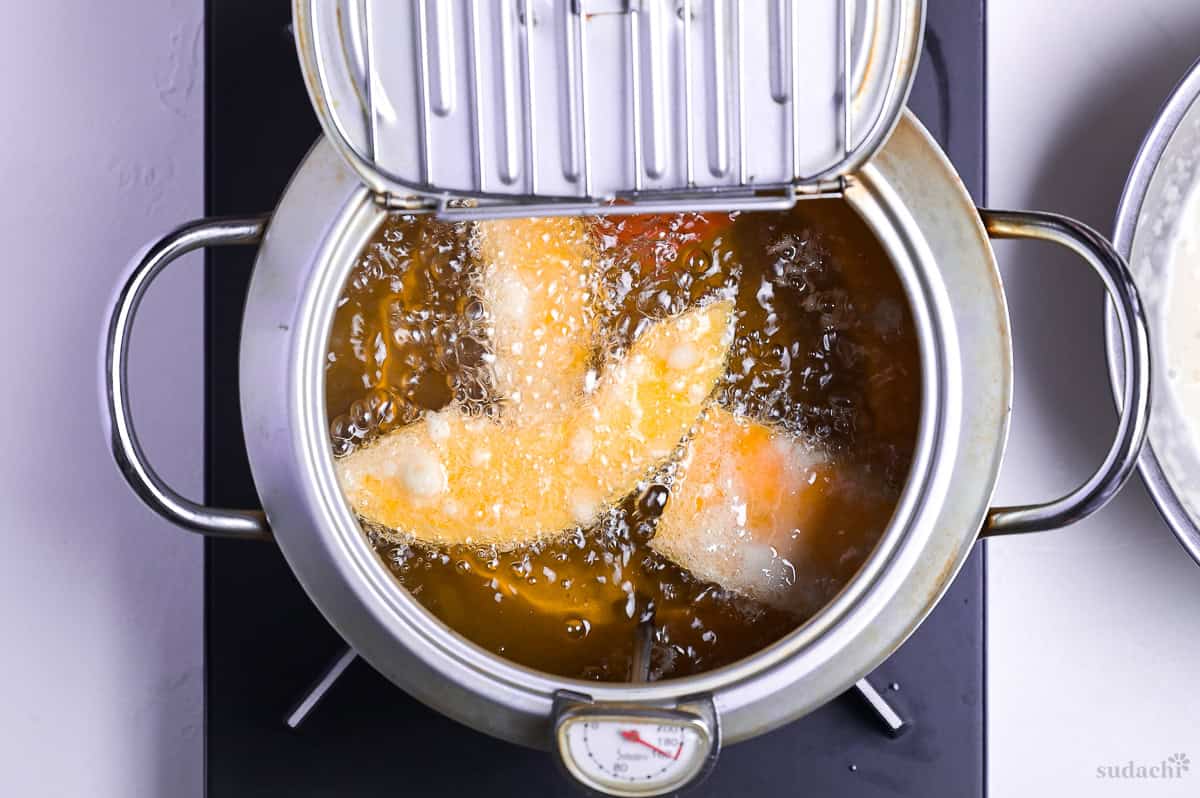
- Fry in batches, being careful not to overcrowd the pot. I usually stick to 6 wedges at a time in a 24cm pot. Fry for 2 ½-3 minutes each, turning halfway through.
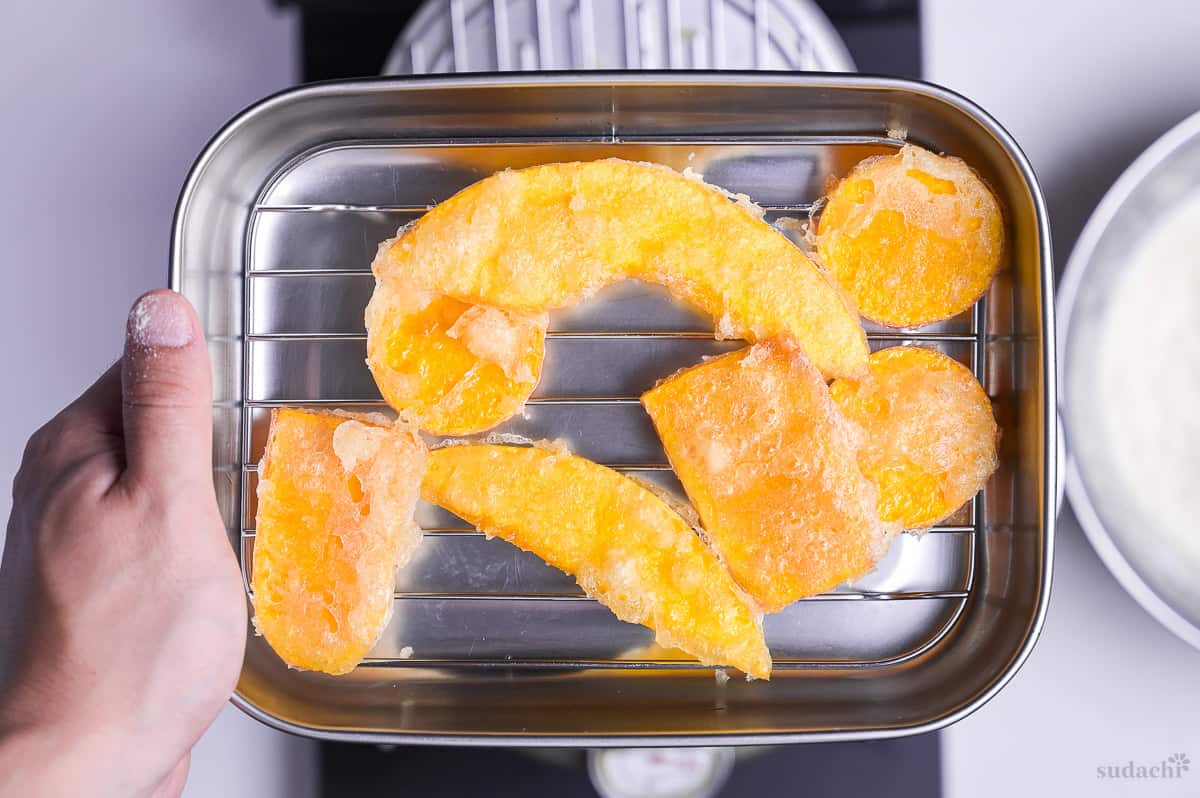
- Once pale and crisp, rest on a wire rack for a few minutes to drain excess oil and sprinkle with a pinch of salt from a height.
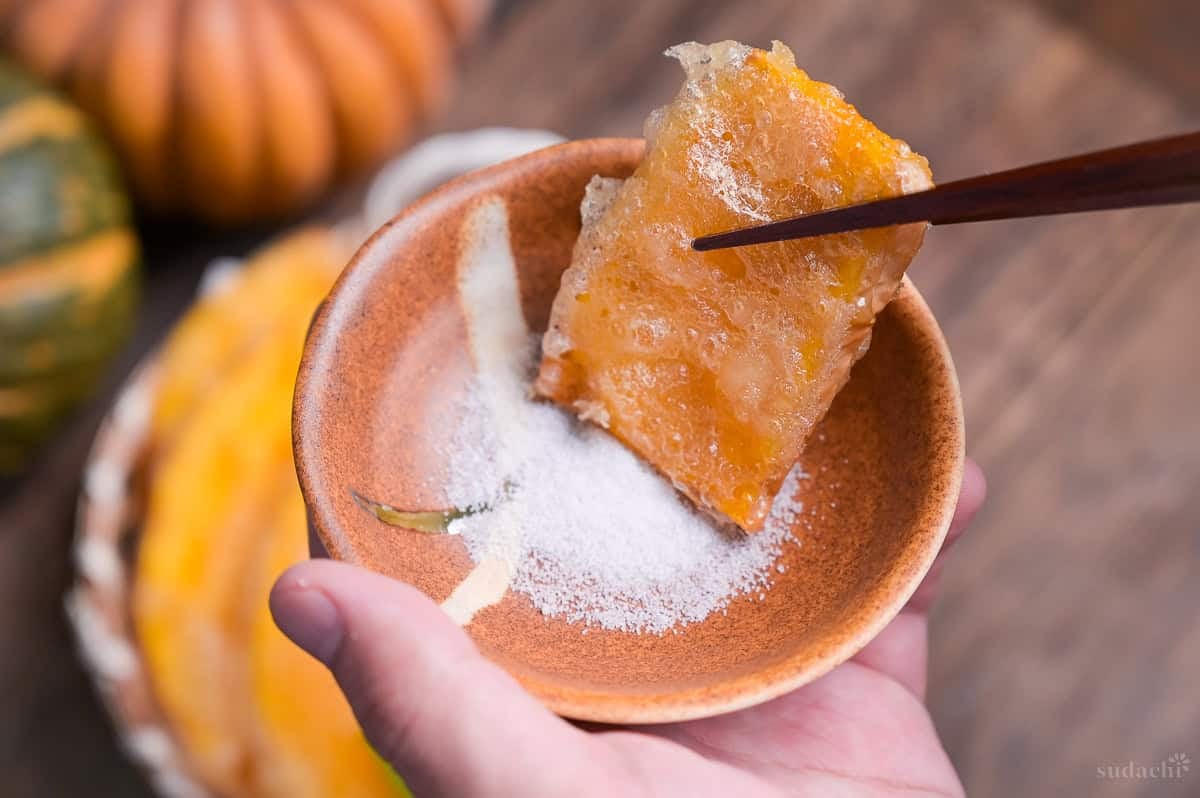
- Serve with salt for dipping and enjoy!
Notes
Scrape the pulp out to the rim: Any pulp left behind turns to mush in the oil and leaves a wet patch under the coating. Run the edge of a spoon over it until no strands show.
Cold batter, minimal mixing: Chilling the water and the flour and stirring as little as you can keeps the batter from turning sticky. The more you mix, the heavier the finished coating.
Judge the lift by the bubbles and the feel: Kabocha is high in sugar and will scorch if you wait for a deep color. Moisture also varies from squash to squash, so treat the frying time as a guide.
Never stack them on the rack: The coating soaks up oil while it cools, more than at the moment it leaves the pot. Stacked pieces trap steam, and the crispness is the first thing to go.
Frying with all-purpose flour: The coating comes out a little heavier as it is. Raise the proportion of cornstarch slightly.
Frying butternut squash: Leave the skin on, cut it to the same thickness and fry it. It holds more water than kabocha, but makes great tempura.
Full Recipe QR Code↑↑