

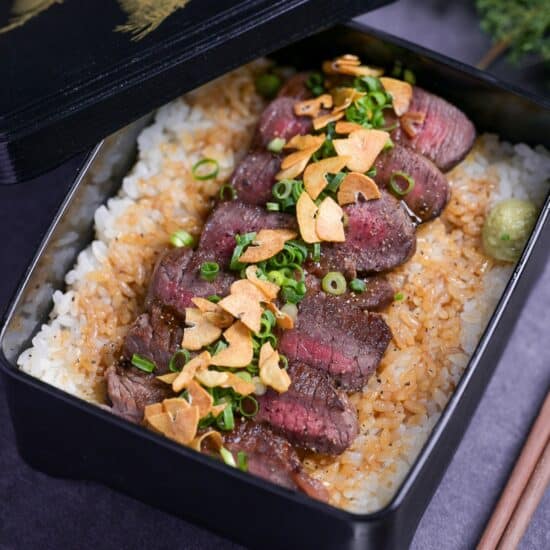


Featured Comment
I have cooked many of your recipes and they have all been delicious, but this may be the best one yet. Thanks for sharing.
★★★★★
– Howard
I bought a slab of beef steak on sale with no plan at all. Then I spotted the lacquer box left from the unaju I made the other day, and steak over rice in the box became the plan. Honestly, that is the only reason this recipe exists.
So relax about the box. Steak on rice in that lacquer box is steak ju, no matter the grade of the meat, no wagyu, no occasion. It got real depth after a few rounds of tweaking, and I will walk you through it.
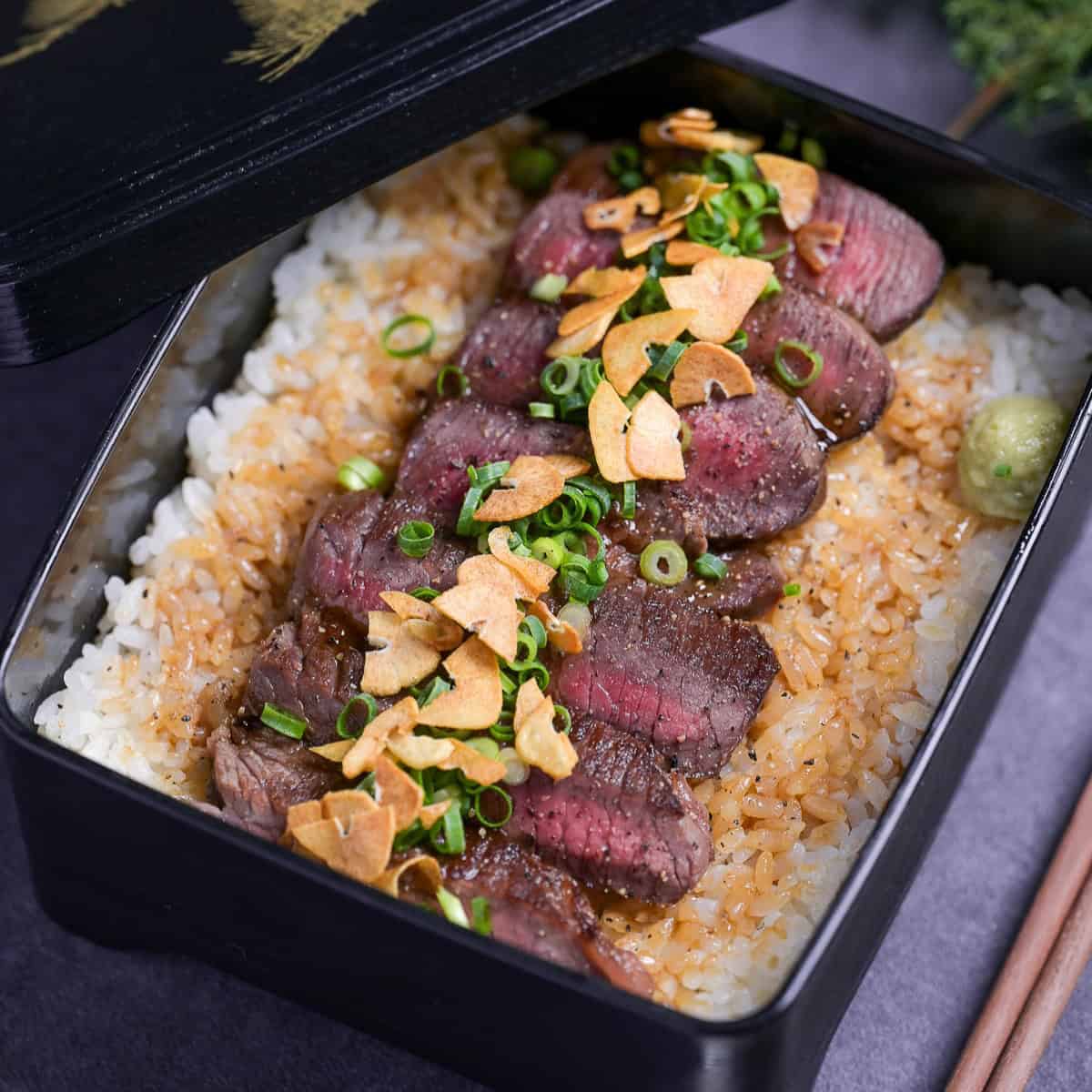
Beef steak ju
Recipe Snapshot
- What is it? A creative Japanese rice bowl of seared steak sliced over plain hot rice in a jubako lacquer box, the same vessel borrowed from unaju. Swapping that box for a bowl is all that turns it back into a steak donburi, and it carries no meat-grade rule, so any tender cut belongs in it.
- Flavor profile: A glossy, butter-mounted soy tare built on red wine and the rested meat juices, deeply savory with a wafu-yoshoku edge, set against neutral rice and cut at the table by sharp wasabi.
- Why you will love this recipe: It gives you the lacquer-box treat at home without wagyu or any special sourcing, because the deglazed fond and the butter monte do the heavy lifting that turns a thin beef-bowl broth into a tare that clings to every slice.
- Must-haves: Japanese short-grain rice kept plain, a tender steak cut around 2 to 3cm, and a soy-mirin-red wine tare finished with unsalted butter.
- Skill level: Easy. Stovetop work in a single pan, but you have to pull the steak at rare to medium-rare and deglaze the fond rather than boil the meat in liquid.
Summarize & Save this content on:
What Is Beef Steak Ju?
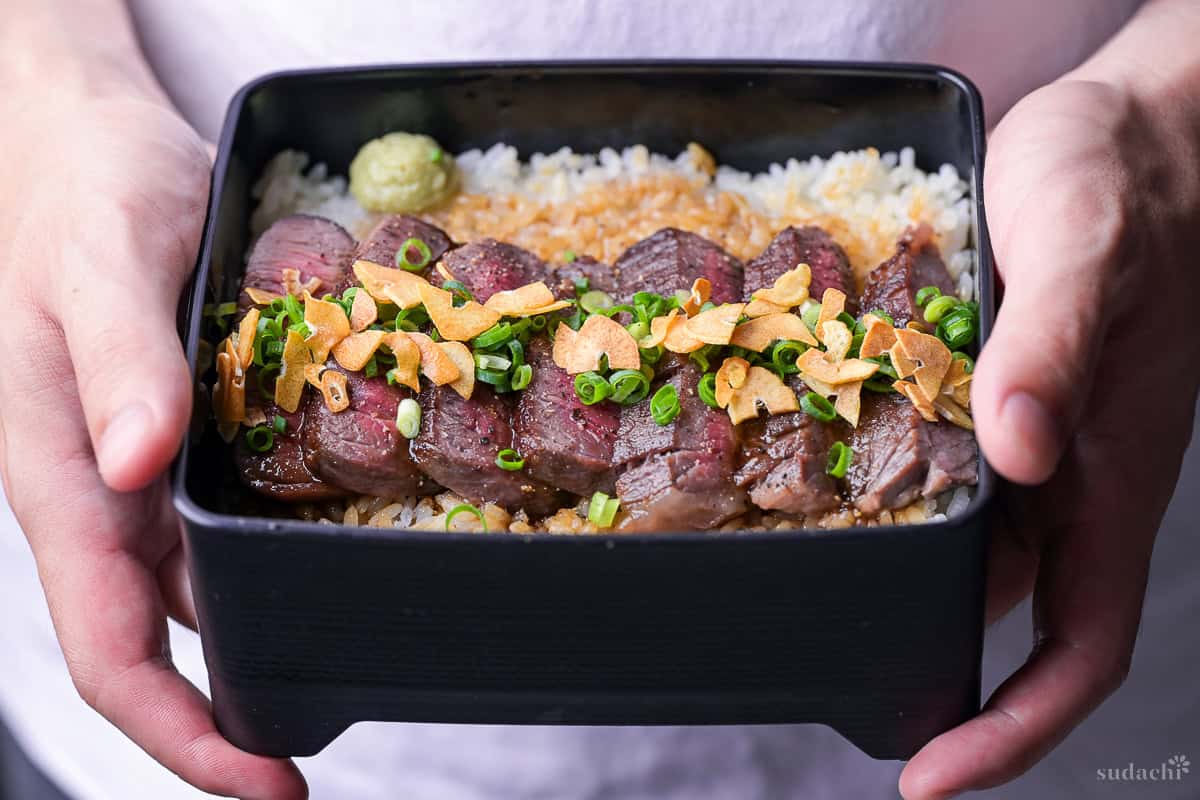
Beef steak ju (ステーキ重) is sliced steak fanned over hot rice, served in a jubako (重箱), the Japanese lidded lacquer box. The name tells you almost nothing about the meat and everything about the box. Ju (重) means the box. Don (丼) means a bowl. Same dish, different vessel, and the box is the only real difference between steak ju and a steak donburi.
The box itself is borrowed. It comes straight out of unaju culture, the same lacquer box that holds grilled eel over rice, and steak ju simply moved into it. As a named dish it is young and a little undefined, a creative rice bowl rather than something handed down with rules attached. In Japan you will also find it dressed up. Specialty shops and gift catalogs put A4 and A5 wagyu in that box and sell it as a small luxury, a treat for a good day. That register is real, and I am not going to pretend it away. But none of that lives in the box. The box does not require it.
In my version, the box is just a box I happened to have. I once ate a proper steak ju as a traveler, in Takayama, the local Hida beef sliced over rice, and that is the only time I have eaten one in the wild.
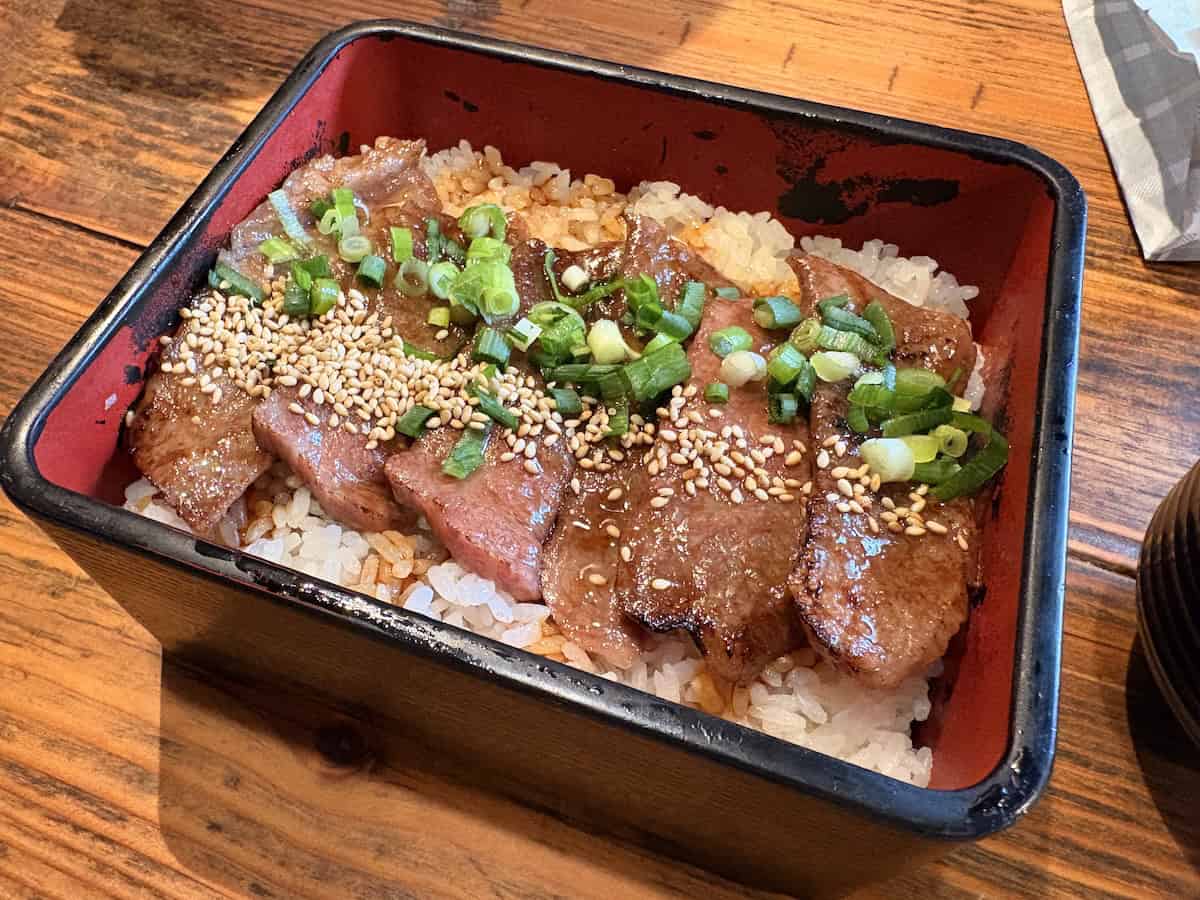
What I make at home is a different animal. It is reasonably priced Australian beef that was on sale, slid into the jubako I had left over from making unaju, because steak in a box with a bit of character felt good. To me steak ju is exactly that loose. Rice, a steak on top, a box with some charm to it, and you have made one.
Beef Steak Ju Ingredients
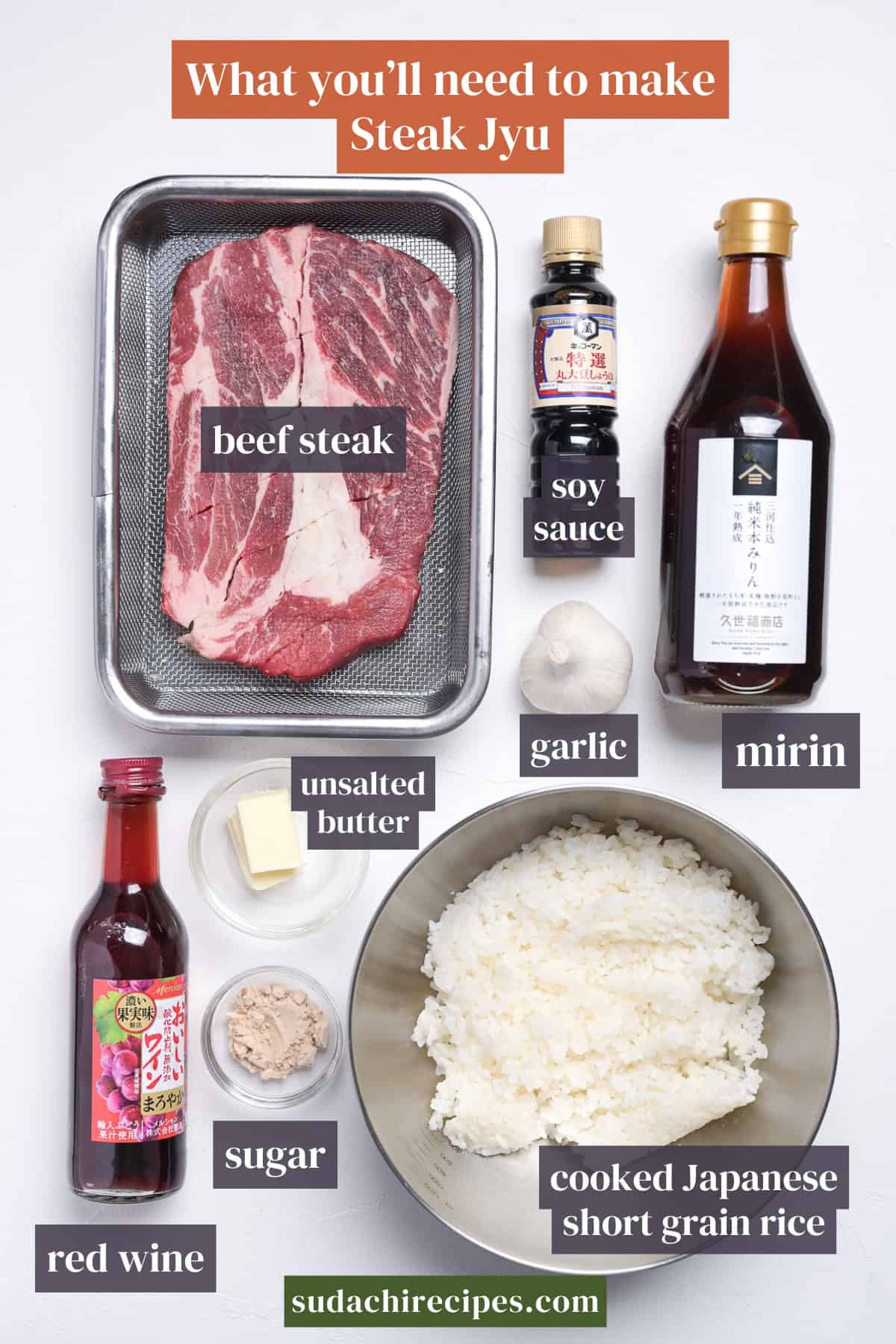
- Plain white rice: Hot, freshly cooked, Japanese short-grain (or medium-grain Calrose), and seasoned with nothing at all. No sushi vinegar, no salt, no oil stirred through it.
- Beef steak, cut on the thicker side, plus salt: The first time I made this it was Aussie beef that happened to be on sale, and that is genuinely how I landed on it, not some verdict that lean beats marbled. I have made it with wagyu too, on the second go. Both work. Buy the steak you can actually buy, because the steak itself is already the luxury here.
- Unsalted butter: Swirled in at the very end to mount the sauce. In a lot of dishes butter is a nice extra. Here it matters more than that. It is what turns a thin reduction into something glossy that clings to every slice, and skipping it leaves the tare feeling unfinished.
Substitutions, Variations, and How to Customize
Here is the honest version. With this one, most of it is load-bearing. The rice, the soy tare, the meat juices folded back into the pan, the butter at the end, I lean on all of them, and pulling any of them changes what you taste.
Substitutions:
- Beef steak → ribeye, striploin, or wagyu: Any tender steak cut around 2 to 3cm works. If you want the melting, fatty experience, reach for ribeye or wagyu. If you want a leaner, meatier chew, sirloin or Aussie beef gives you that. I genuinely do not rank either above the other.
- Garlic chips → skip them: This is the bendable one. Drop the chips entirely and the dish still stands. You lose a little crunch and a toasted note on top.
Have trouble finding Japanese ingredients? Check out my ultimate guide to Japanese ingredient substitutes!
Variations:
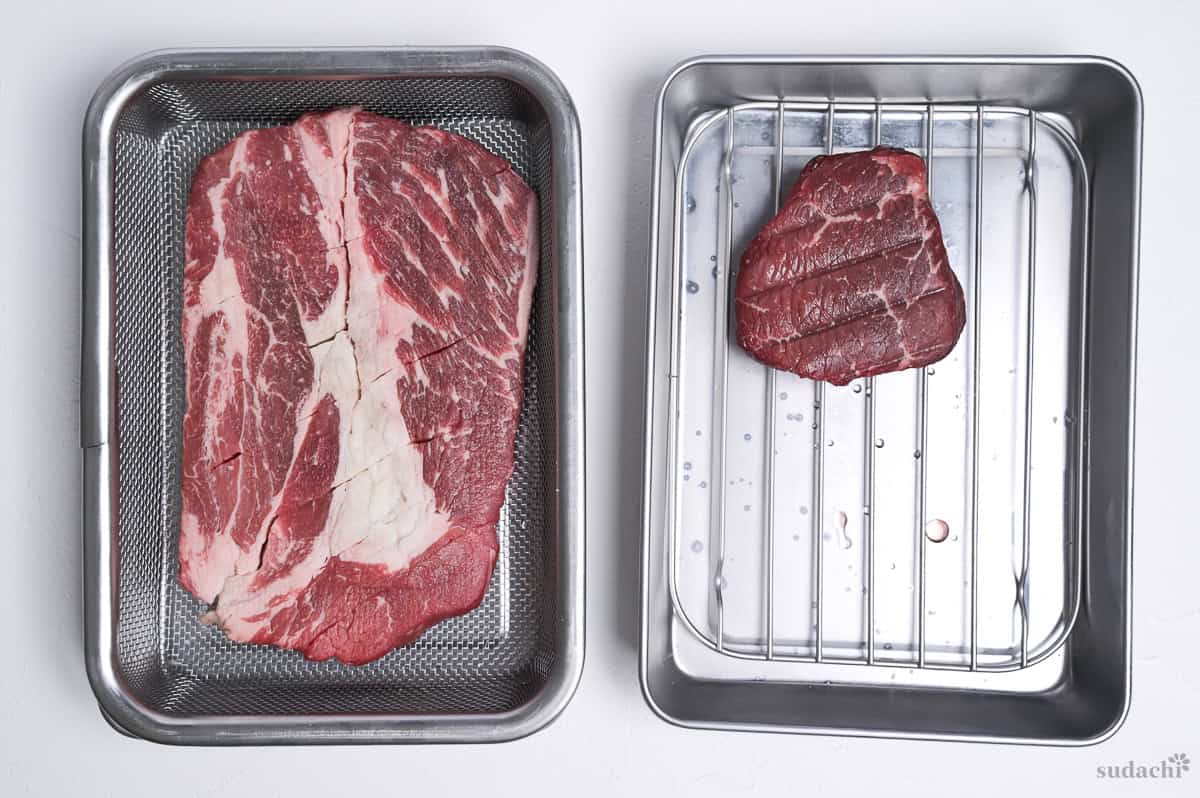
- Dry brine, by the cut: This is the part of the dish I have gone back and forth on the most. The world is split. Some people say dry brine every steak, full stop, others say never bother, which tells me there is no clean answer. My own landing, after making this a few times, is that it depends on the meat. On fine, marbled beef like wagyu I leave the salt off until the pan. On lean but meaty beef, salting a day ahead does real work. So I use it like a tool, not a rule. The how and the why of that sits in the instructions.
- Wagyu version: Swap in well-marbled wagyu and you get the melt-in-the-mouth steak ju you see in the shops. Skip the dry brine here, slice it thin, and eat it fast while it is still rare, because hot rice can keep cooking the meat from below.
How to Customize:
- An onsen egg on top: A soft yolk over the slices turns the whole thing richer and gives you a second sauce that pools into the rice.
- More heat at the table: A bit of sansho or extra black pepper alongside the wasabi gives you a hitsumabushi-style move, plain first, then change the flavor partway through.
- Soup or salad on the side: I keep the box rich and let something light sit next to it, a clear soup or a sharp little salad, so the meal breathes.
How to Make My Beef Steak Ju
Before you start (Mise en place):
- The day before, if you want, salt the beef and dry brine it. Set it on a rack inside a container and leave it uncovered in the fridge overnight. This is optional, and it is the one prep step that depends on your cut. From my experience, lean, meaty beef steak loves it. Marbled wagyu ribeye does not in my opinion.
- Cook the rice and keep it hot.
- Slice the garlic thin. Have the soy sauce, mirin, red wine, sugar, and butter measured and within reach, because once the steak is resting the sauce comes together fast.
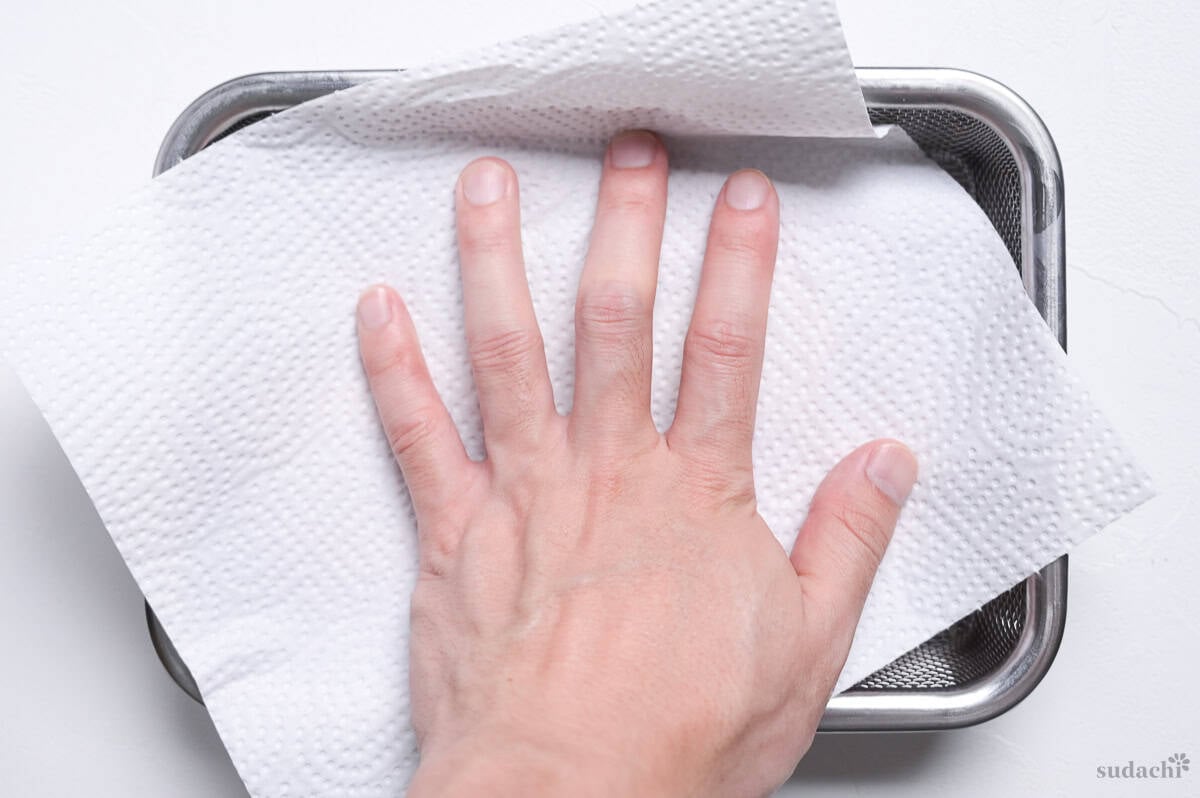
- Right before searing, blot the steak completely dry with a paper towel. A wet surface steams instead of browning.
On lean, meaty beef steak, salting a day ahead does real work. On finely marbled wagyu, like ribeye, I just do not like it. I have made it both ways, and I prefer the texture when I leave the salt off and season at the pan instead. That is a personal preference, not a rule. So on lean beef, I salt the day before, and on wagyu I’d wait for the pan.
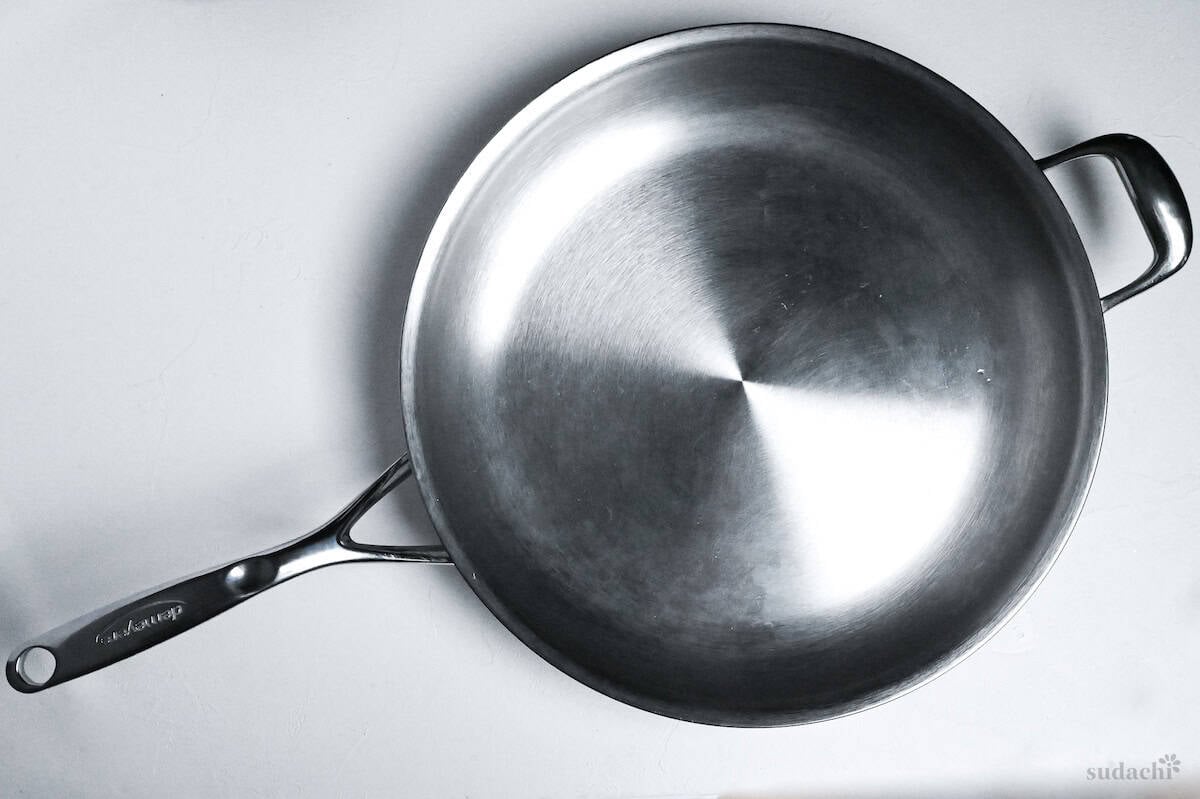
To develop this steak ju recipe, I used a 32cm stainless steel frying pan.
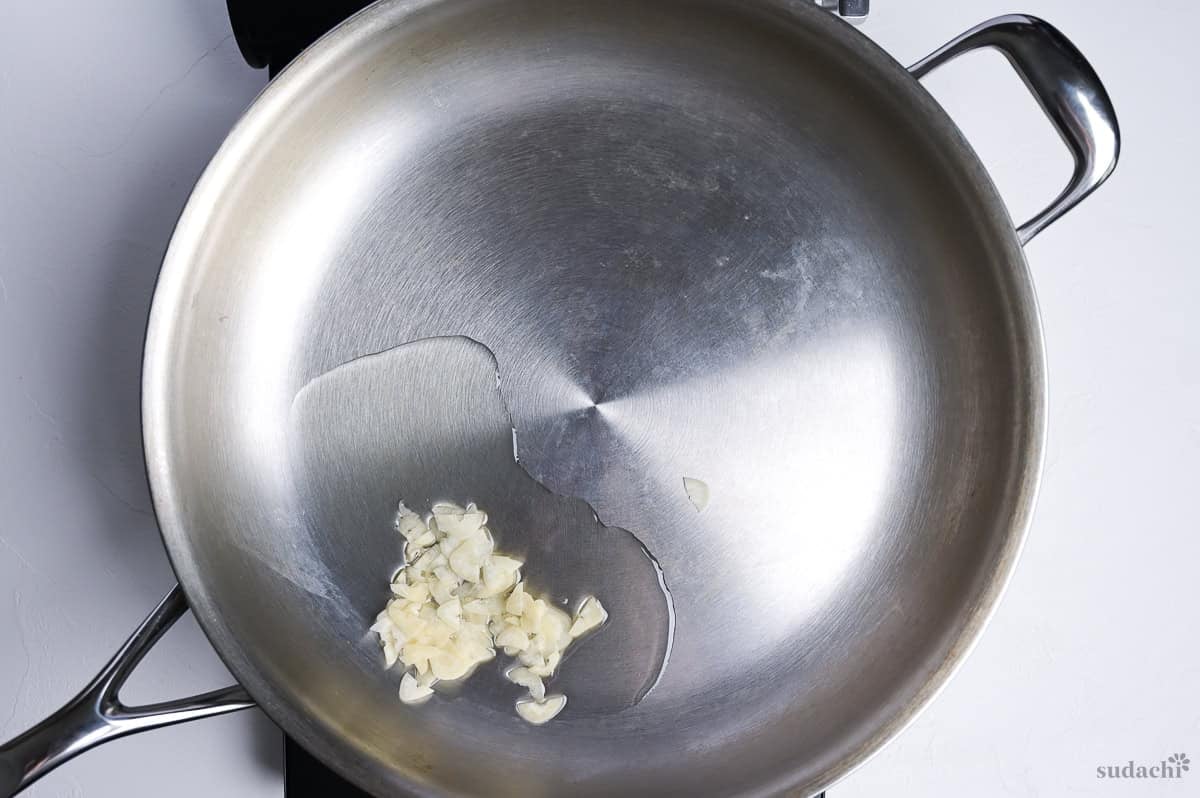
i. Put the cooking oil in a cold pan with the sliced garlic and set it over low heat. Starting cold lets the garlic give up its flavor slowly instead of scorching.
ii. As each slice turns pale gold, lift it out and set it aside. These are your garlic chips for the top.
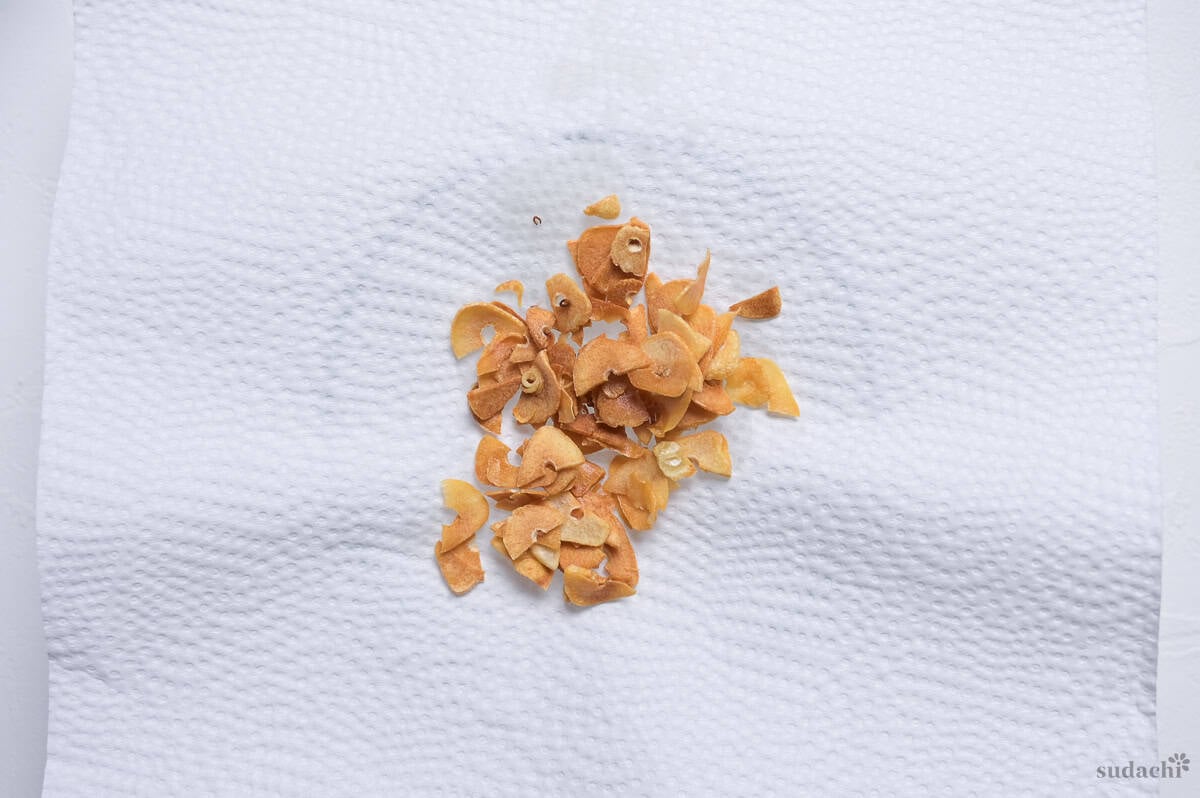
iii. Leave the perfumed oil in the pan. That is what you sear the steak in.
i. Turn the heat to high under the same pan. Lay the blotted steak in gently.
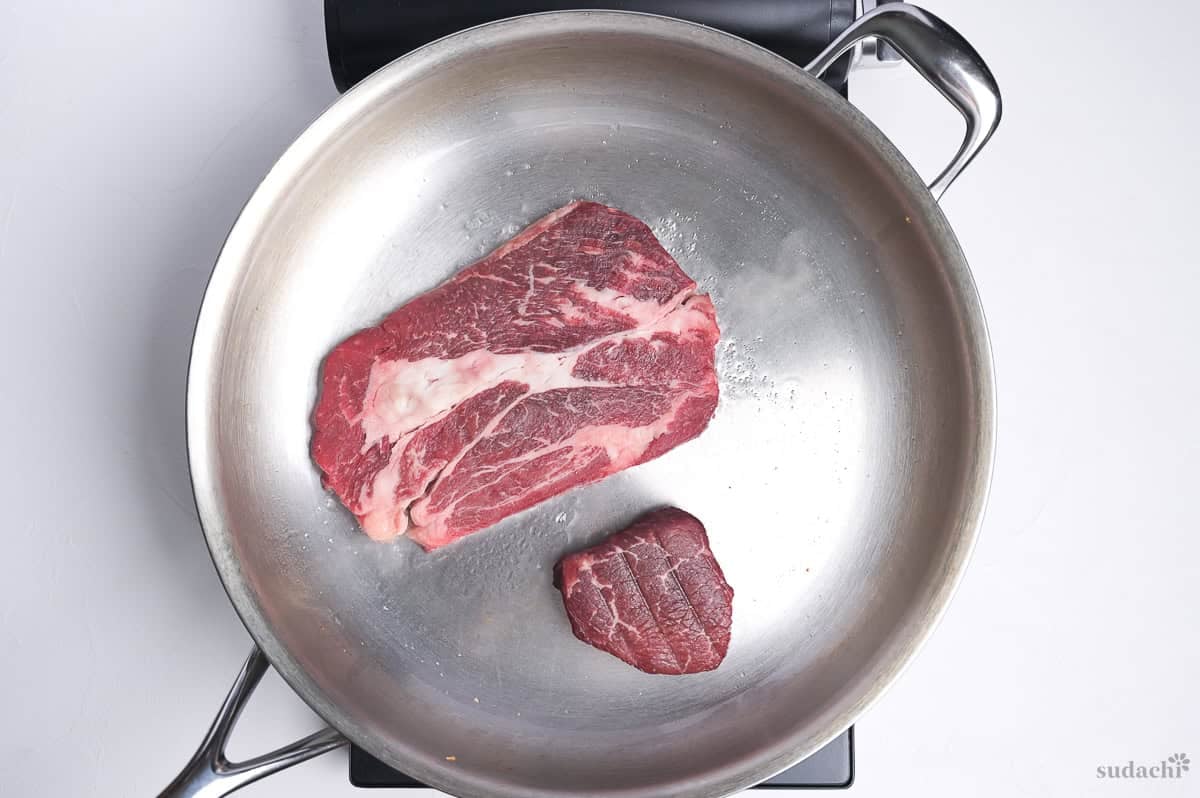
ii. Flip it every 30 seconds and keep going for about 4 minutes total, roughly 8 turns. Frequent flipping builds an even cook and a deep crust at the same time.
The 4-minute mark suits steak on the thinner side of 2 to 3cm. Closer to 3cm and 4 minutes will likely leave the center cold, so give it longer.
i. Turn off the heat, move the steak to a rack, and let it rest for 5 minutes.
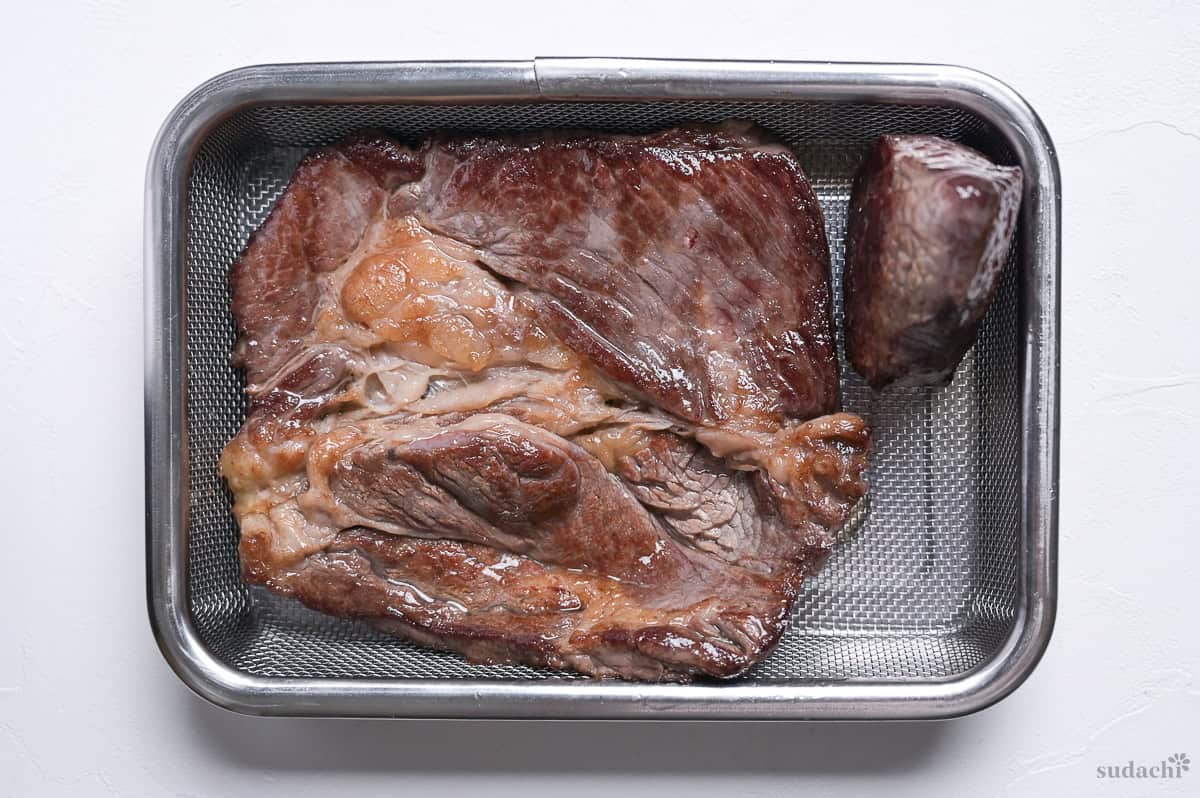
ii. Whatever juice drips onto the plate, keep it.
i. Put the pan back over medium heat and add the saved meat juices, the red wine, and the mirin. Add the sugar and stir as the sauce bubbles, cooking the alcohol off. Scrape up anything stuck to the pan.
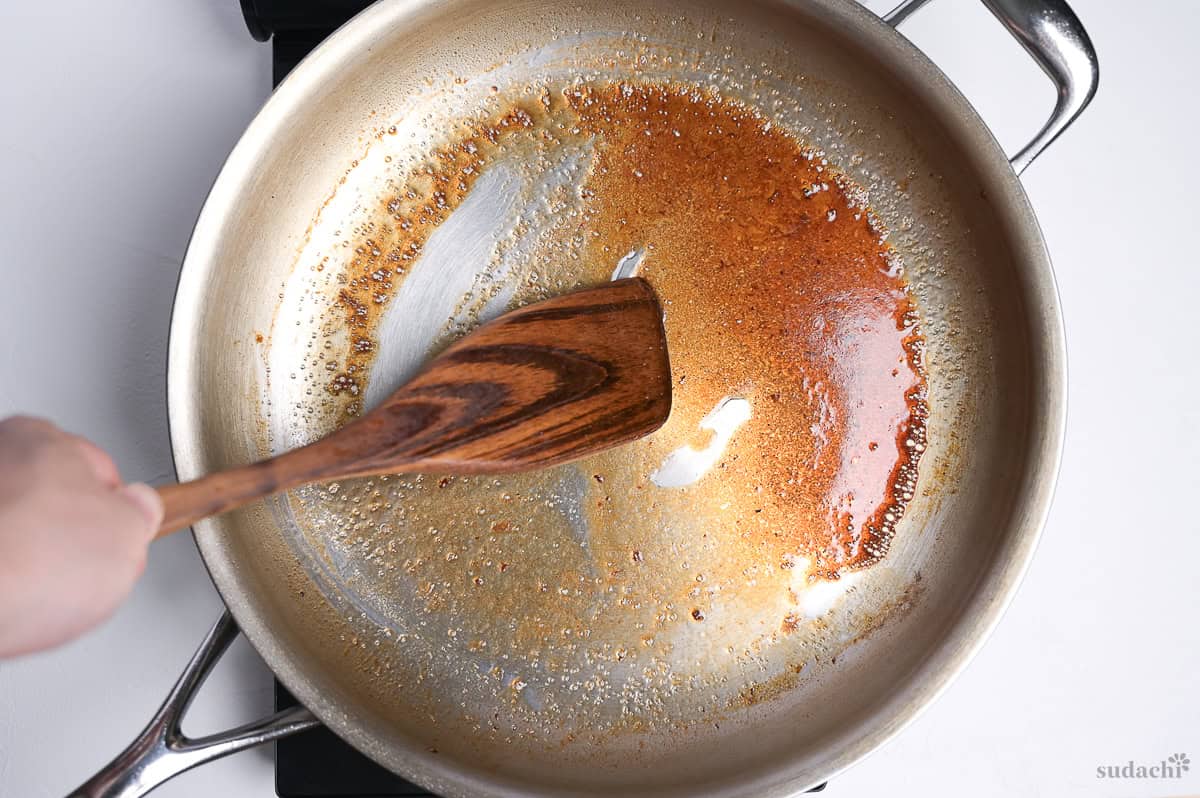
ii. After about a minute, turn off the heat. Pour the soy down the side of the pan.
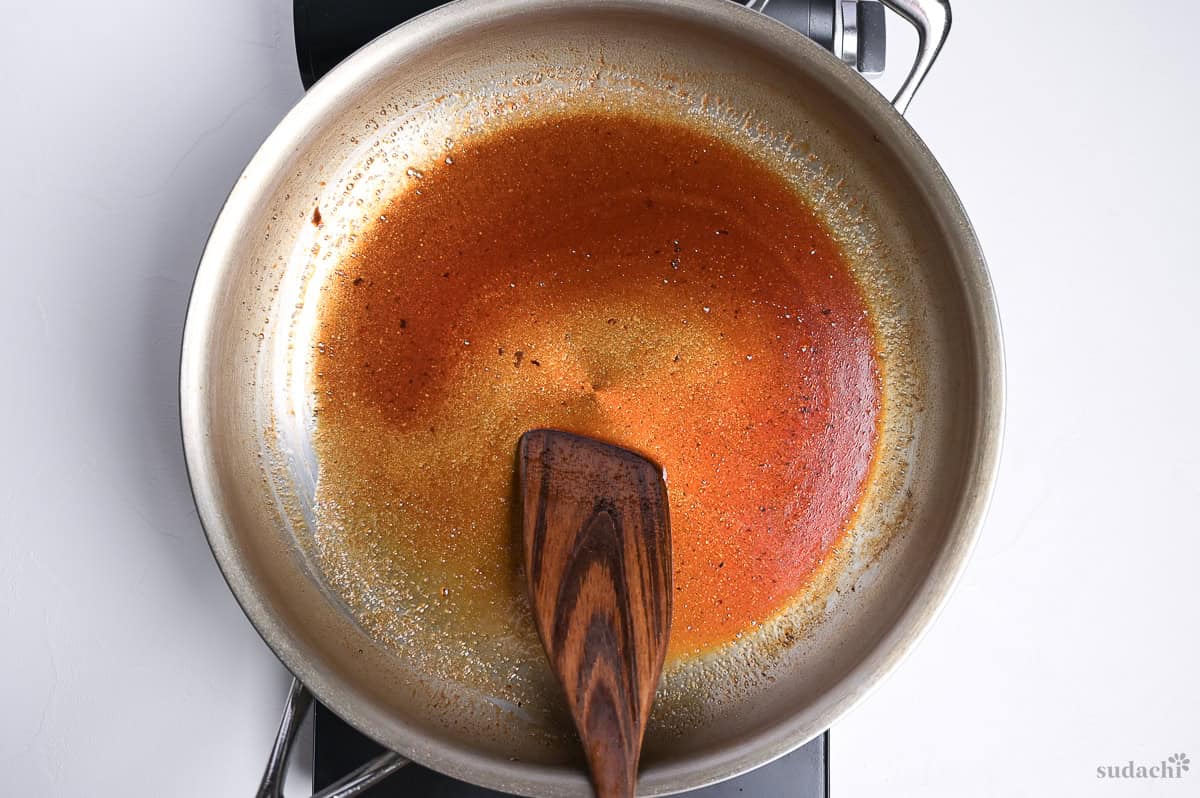
iii. Then swirl in the butter until the sauce turns glossy and just thick enough to coat a spoon. Remember it tightens more as it cools.
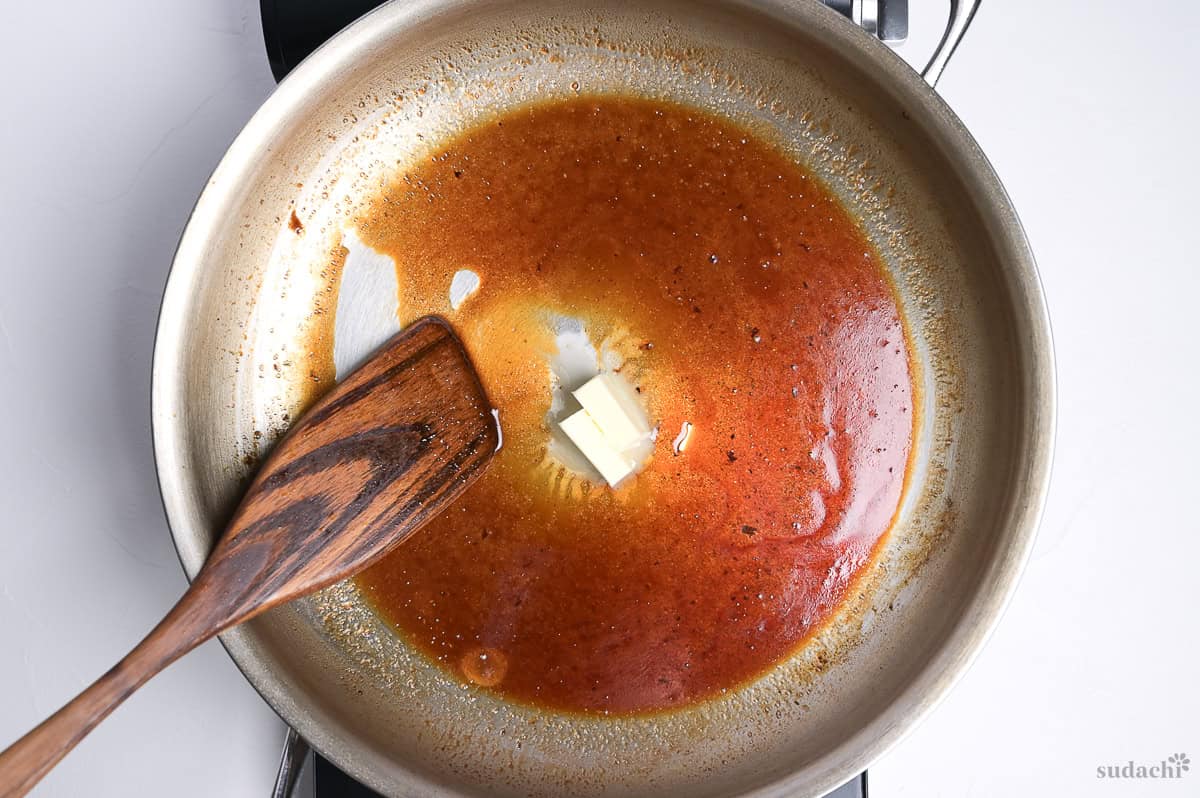
Lifting the browned fond and the rested juices off the pan and folding them back into the sauce, so all that seared flavor ends up in the tare instead of left behind on the metal. The butter at the end is the second half of it. Off the heat, it emulsifies the sauce into something that clings to each slice rather than running off into the rice.
i. Slice the rested steak against the grain, on the thin side, so each piece stays tender.
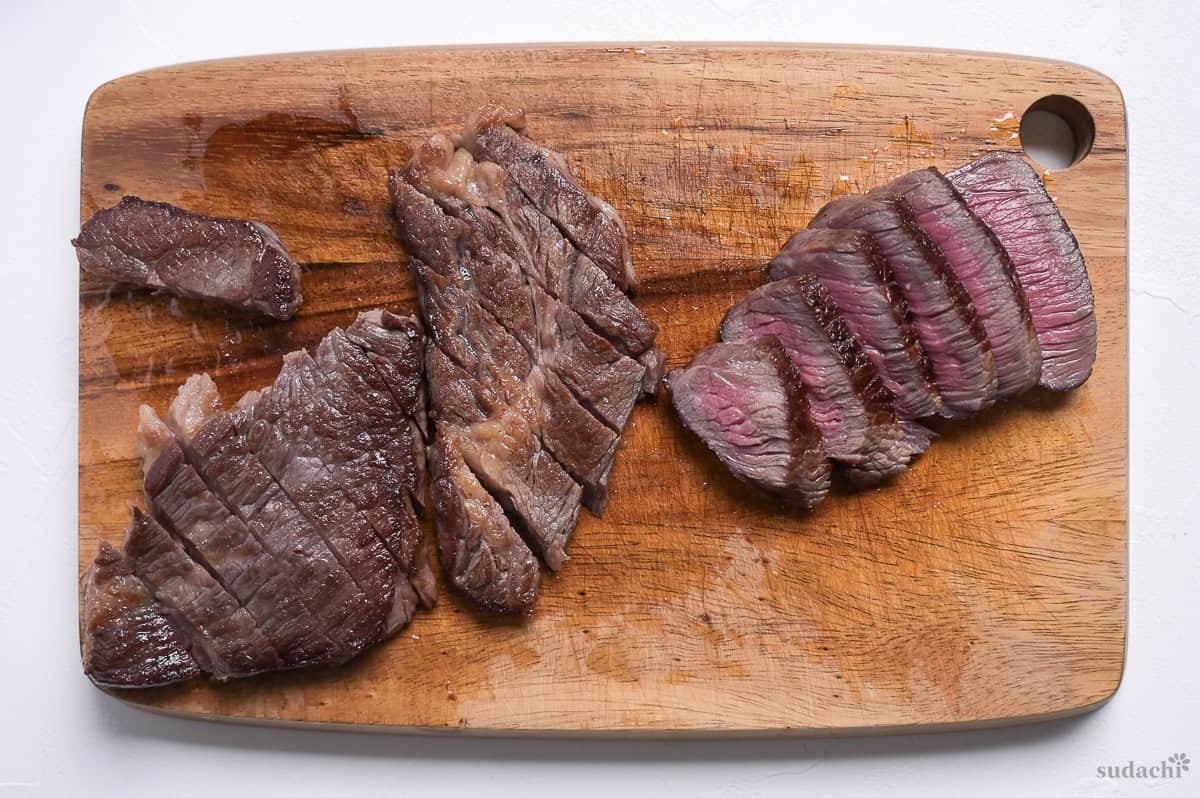
ii. Pack the hot rice into the jubako. Spoon half the tare over the rice first.
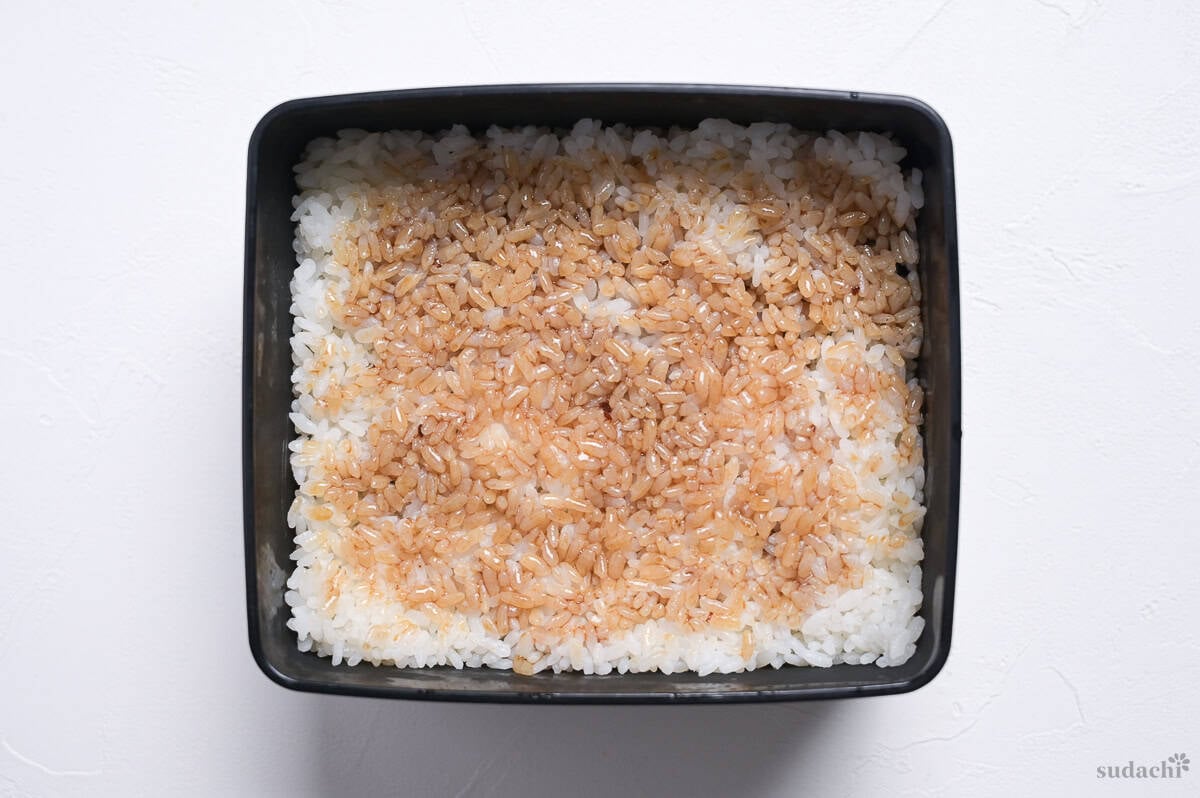
The lacquer box itself comes from unaju, grilled eel over rice, but the 2-pass saucing is just practical. A base layer of tare goes under the meat so the rice underneath picks up flavor, the steak is laid in, then the finishing sauce goes over the top. Splitting it this way seasons the rice through without drowning it all at once.
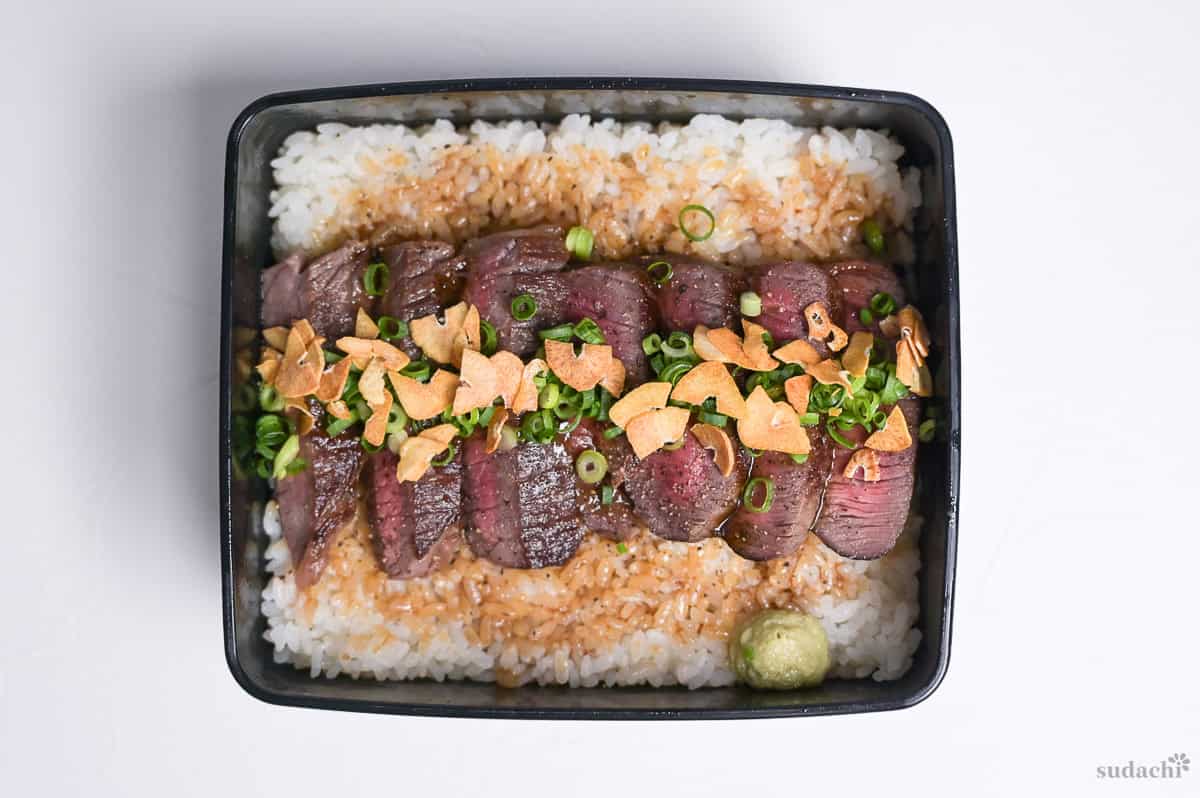
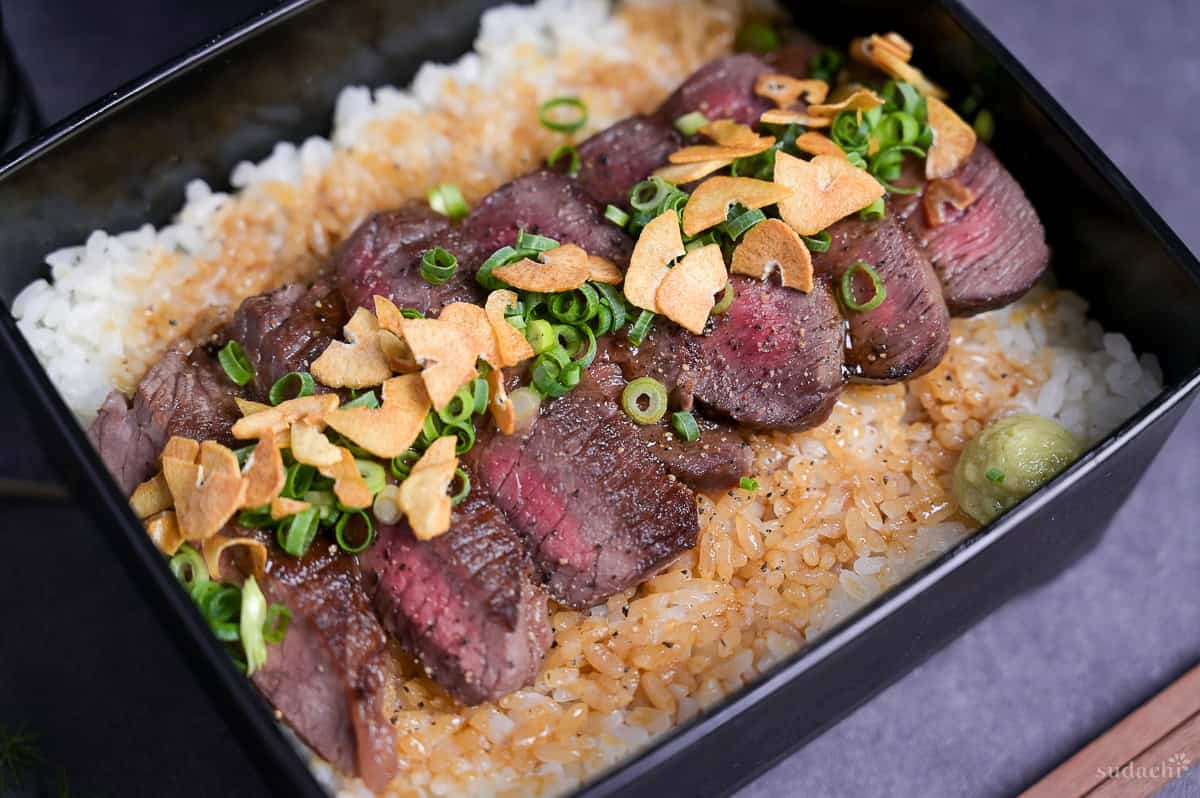
iii. Lay the steak slices on top, then pour the rest of the tare over the meat. Finish with cracked black pepper, a little wasabi paste, the garlic chips, and chopped green onions.

Essential Tips & Tricks
- Stop the tare while it still flows, because it thickens as it cools. Pull it off the heat right before you add the soy sauce and butter. The sauce should just about coat a spoon, not look thick in the pan. The sauce keeps tightening after the burner is off, so what looks slightly loose now is right on the rice later.
- Keep the red juice that drips while the steak rests, it is flavor. That is the umami pressed out of the meat as it relaxes, and tipping it back into the pan is the one move that deepens the whole sauce. Pour it into the tare while you build it and the depth jumps in a way you cannot fake with more soy.
- Let the dry brine decide your timing, not the clock on the counter. The usual advice is to leave steak out until it hits room temperature, but the real question is whether you salted it ahead. If you dry brine, salt it the day before and leave it uncovered in the fridge overnight, then blot it dry and go straight to the pan from cold. If you skip the brine, take it from the fridge, blot it, and sear. Either way the surface starts dry, which is what you actually need for a crust.
Get the tare off the heat at the right moment and the rest of this dish carries itself.
Storage & Meal Prep
Fridge: Not recommended.
Freezer: Not recommended.
Meal prep: Some components can be prepared in advance. Slice the garlic, measure out the sauce ingredients, and have the rice ready to go. If your beef steak is lean, salt it the night before.
What to Serve With This Recipe
Beef Steak Ju Troubleshooting
The 4-minute mark is a guide, not a law, and thickness is what throws it off. A steak closer to 3cm needs longer or the middle stays cold, while a thinner cut hits the same 4 minutes and goes grey past the edges.
You reduced it a step too far. The giveaway is the bubbling, when small fast bubbles turn into slow, heavy, lava-like blooms, the sauce is already past the line and will tighten and turn salty as it cools. Take it off the heat right before adding the soy sauce. The sauce should look a touch loose in the pan. If you have already overshot, loosen it with a splash of the reserved meat juice or a little water before you spoon it on.
Cutting into a steak straight off the heat lets all the juice the muscle is still holding pour out instead of settling back in. Move it to a rack and leave it for 5 minutes before slicing, and keep whatever drips during the rest, because that goes back into the tare. The slices will hold their juice and the sauce gets the rest.
More Japanese Beef Recipes
Still hungry for steak over rice? Dig into my Japanese beef recipe collection for your next bowl.
Did You Try This Recipe?
I would love to hear your thoughts!
💬 Leave a review and ⭐️ rating in the comments below. 📷 I also love to see your photos – submit them here!
Beef Steak Ju (Japanese-Style Beef Steak Rice Box)

Ingredients
Steak
- 450 g beef steaks a tender cut around 2 to 3cm thick, ribeye, striploin, or wagyu give the melting
- salt about 1% of the beef weight
- ½ tbsp cooking oil neutral with a high smoke point
- 2 cloves garlic sliced thin for the chips
Sauce
- 1½ tbsp red wine low to medium tannin with good fruit and acidity, a Pinot Noir, Merlot, or Syrah
- 1½ tbsp mirin
- 1½ tbsp Japanese soy sauce (koikuchi shoyu)
- 1 tsp sugar
- 1 tbsp unsalted butter
To serve (plus optional toppings)
- 2 portions cooked Japanese short-grain rice hot and freshly cooked, seasoned with nothing at all
- finely chopped green onions
- ground black pepper
- wasabi paste added at the table, not in the pan
The ingredient brands and tools I trust are in my Japanese pantry guide and my cooking tools guide.
Can’t find certain Japanese ingredients? See my substitution guide here.
Instructions
- Optional step: If your 450 g beef steaks are lean, sprinkle all over with salt and place on a wire rack over a container. Refrigerate uncovered to dry brine it. I suggest skipping this step if you use marbled wagyu.

- Pour ½ tbsp cooking oil into a large cold pan. Thinly slice 2 cloves garlic and place them in the oil. Heat on low and cook until the garlic is golden all over.
- As each piece of garlic crisps up, lift it out of the pan and place it on a piece of kitchen paper. Be careful not to let the garlic turn dark or burn.
- Blot the surface of the beef steak with kitchen paper so that no surface moisture remains. Once all of the garlic is out of the pan, increase the heat to high and place the steak inside. Flip it every 30 seconds for about 4 minutes, 8 times in total. This timing is based on a 2-3cm thick steak, adjust according to the thickness.
- Transfer the seared steak to a wire rack over a container to catch the drips.
- Reduce the heat to medium, and deglaze the pan with 1½ tbsp red wine and 1½ tbsp mirin. Add 1 tsp sugar and any beef juices accumulated in the container. Mix well with a spatula, scraping the bottom of the pan as you go.
- After the sauce has been bubbling for about 1 minute, turn off the heat and pour 1½ tbsp Japanese soy sauce (koikuchi shoyu) down the edge into the pan. Mix well, then stir in 1 tbsp unsalted butter until glossy.
- Slice the beef into strips against the grain.
- Divide 2 portions cooked Japanese short-grain rice into serving boxes and brush with half of the sauce.
- Fan the sliced beef through the center of the rice and top with finely chopped green onions and the crispy garlic chips from earlier. Sprinkle with ground black pepper and serve with a blob of wasabi paste. Enjoy!

I have cooked many of your recipes and they have all been delicious, but this may be the best one yet. Thanks for sharing.
Hi Howard,
Thank you so much for cooking so many of my recipes! Glad the steak don rose to the top! 🙂
Yuto