

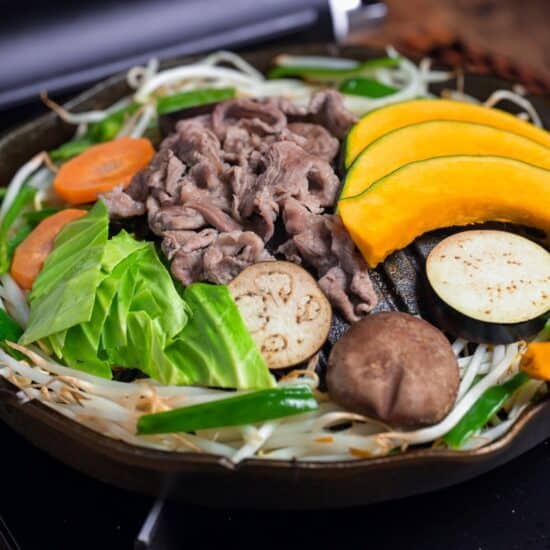


That Hokkaido lamb barbecue keeps crossing your mind for a reason. The good news? You can make it at home. But the real discovery here isn’t the lamb, it’s the sauce.
This is the kind of sauce that outlasts whatever you pair it with. It works with any meat, any grill, any night of the week. And once you’ve made it, you’ll find excuses to use it.
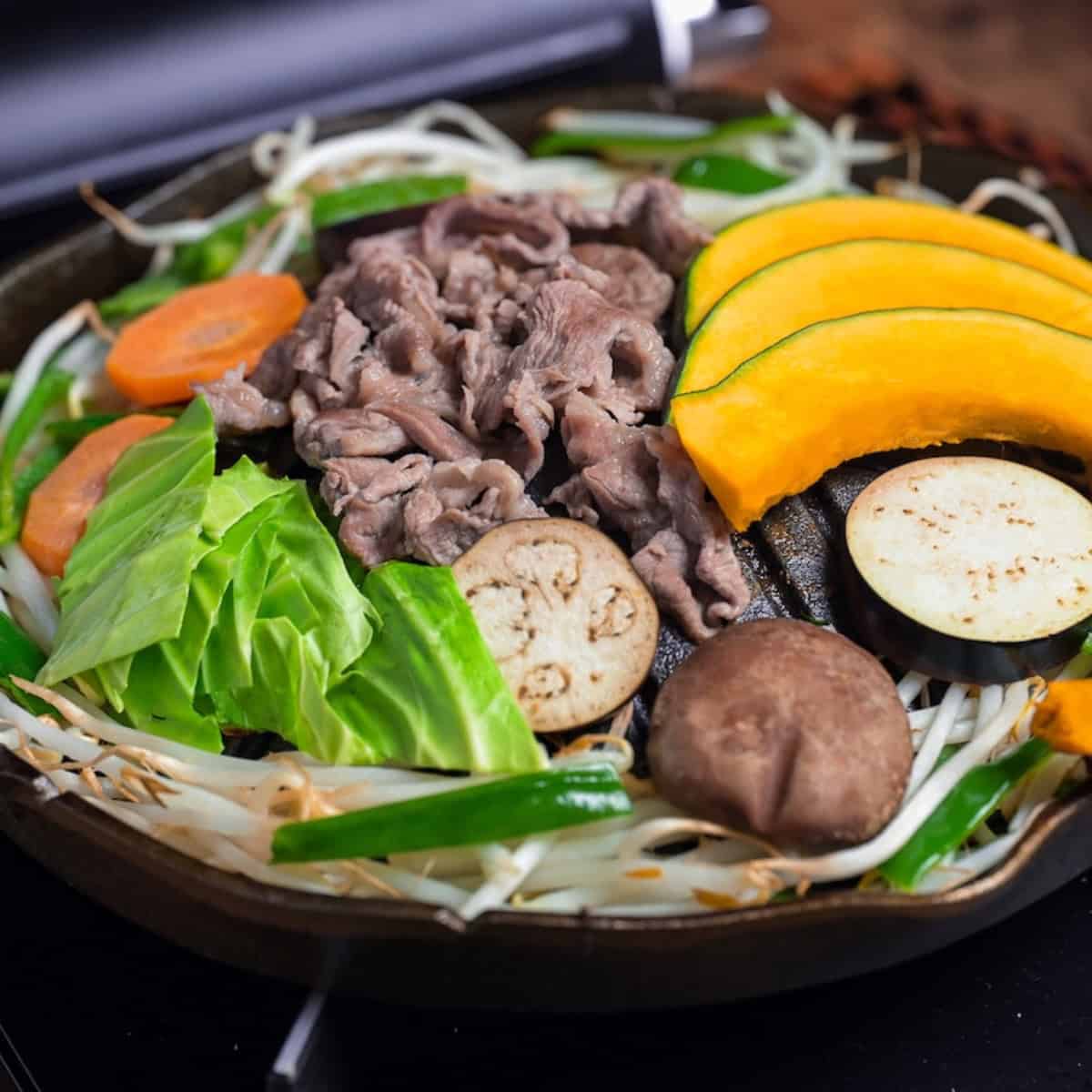
Jingisukan
Recipe Snapshot
- What is it? Hokkaido’s signature tabletop lamb grilling dish. Thinly sliced lamb seared over high heat, then dipped in a fruit-and-soy tare.
- Flavor profile: The sauce layers apple and pineapple sweetness against soy sauce and red wine acidity, while ginger and garlic aromatics counterbalance lamb’s fatty richness.
- Why you’ll love this recipe: The sauce is built from scratch, no bottled tare needed. A frying pan or cast iron skillet replaces the traditional convex Jingisukan grill without losing the sear-then-dip format.
- Must-haves: Thinly sliced lamb shoulder, fresh apple, food processor or blender.
- Skill Level: Straightforward: the sauce is a single blend-and-simmer step, and the grilling follows a two-stage sequence.
Summarize & Save this content on:
What is Jingisukan?
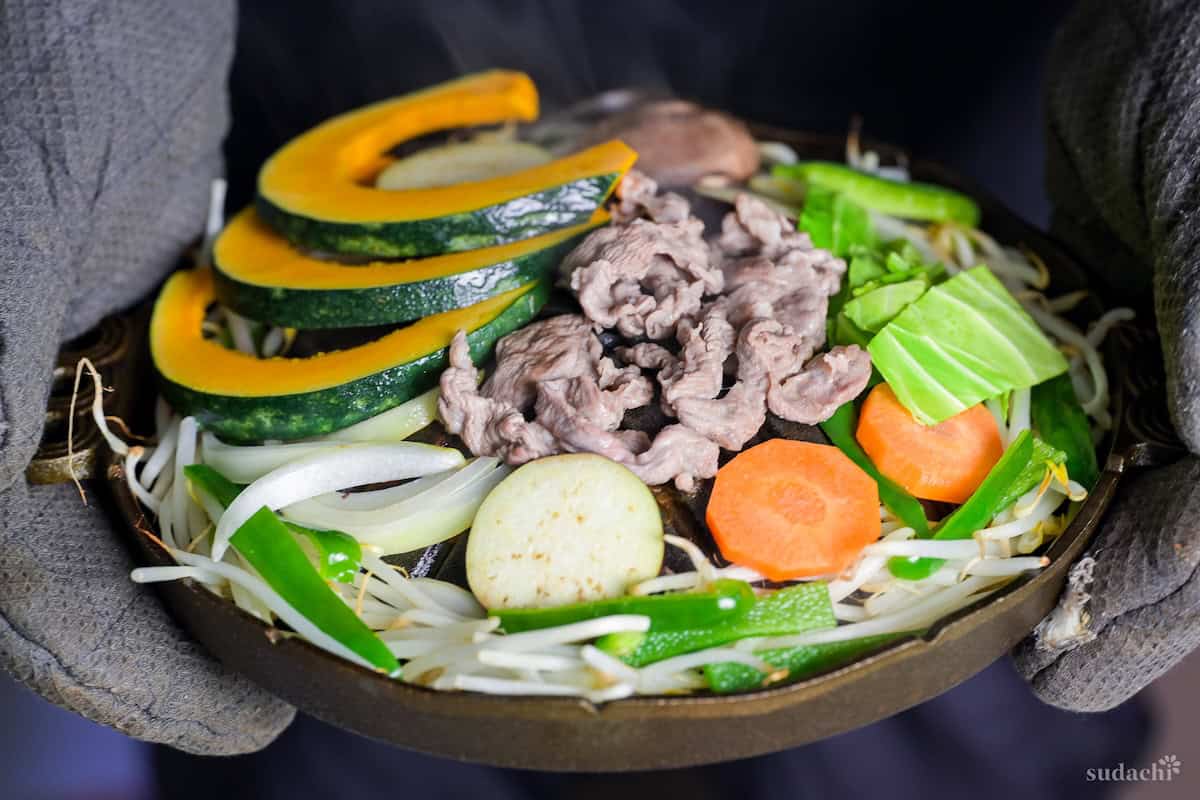
Jingisukan (ジンギスカン) is a Hokkaido’s regional dish in which thin-sliced lamb is seared on the domed apex of a purpose-built convex iron pan with vegetables arranged in the trough below to catch rendered fat, then dipped in a sweet-savory sauce (or marinated).
The dish traces to the early Shōwa period, when sheep originally raised for wool under a Taishō-era government self-sufficiency program were redirected toward the table after synthetic fibers collapsed demand. The name references Genghis Khan, a symbolic, rather than culinary, link to Mongolia. By the 1950s, commercial bottled sauce helped jingisukan spread into Hokkaido households, and in 2004 it was designated a Hokkaido Heritage item.
Today jingisukan is inseparable from Hokkaido identity, eaten alongside regional delicacies like miso ramen, butadon, and ishikari nabe, and distinct from the beef-focused yakiniku tradition found across the rest of Japan.
Jingisukan Ingredients
What You’ll Need for Jingisukan
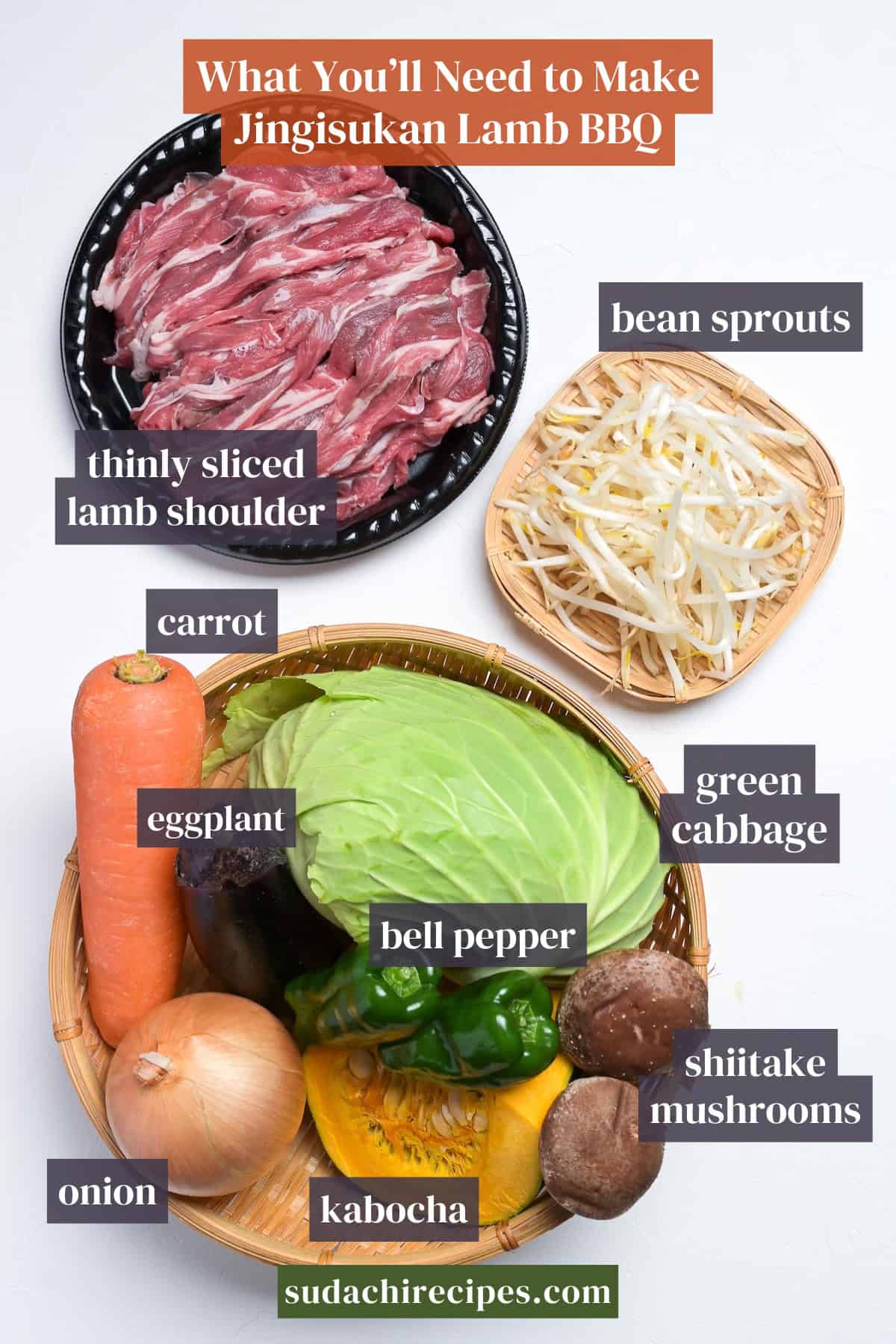
- Sliced lamb: Lamb shoulder is the classic Jingisukan cut. It has just enough fat running through it to stay juicy and self-baste on a screaming-hot grill. Ask your butcher to slice it about 2 mm thin, or semi-freeze the shoulder at home and slice it yourself with a sharp knife.
- Vegetables: Think of the vegetable list as a starting point, not a strict rule. Anything that tastes good grilled works here. That said, bean sprouts are the one I’d call essential: they soak up rendered lamb fat in the trough and turn into something way more flavorful than a bean sprout has any right to be. Start denser vegetables like kabocha, carrot, and onion first since they need more time, then add quick-cooking ones like cabbage, bean sprouts, and bell pepper toward the end.
What You’ll Need for The Sauce
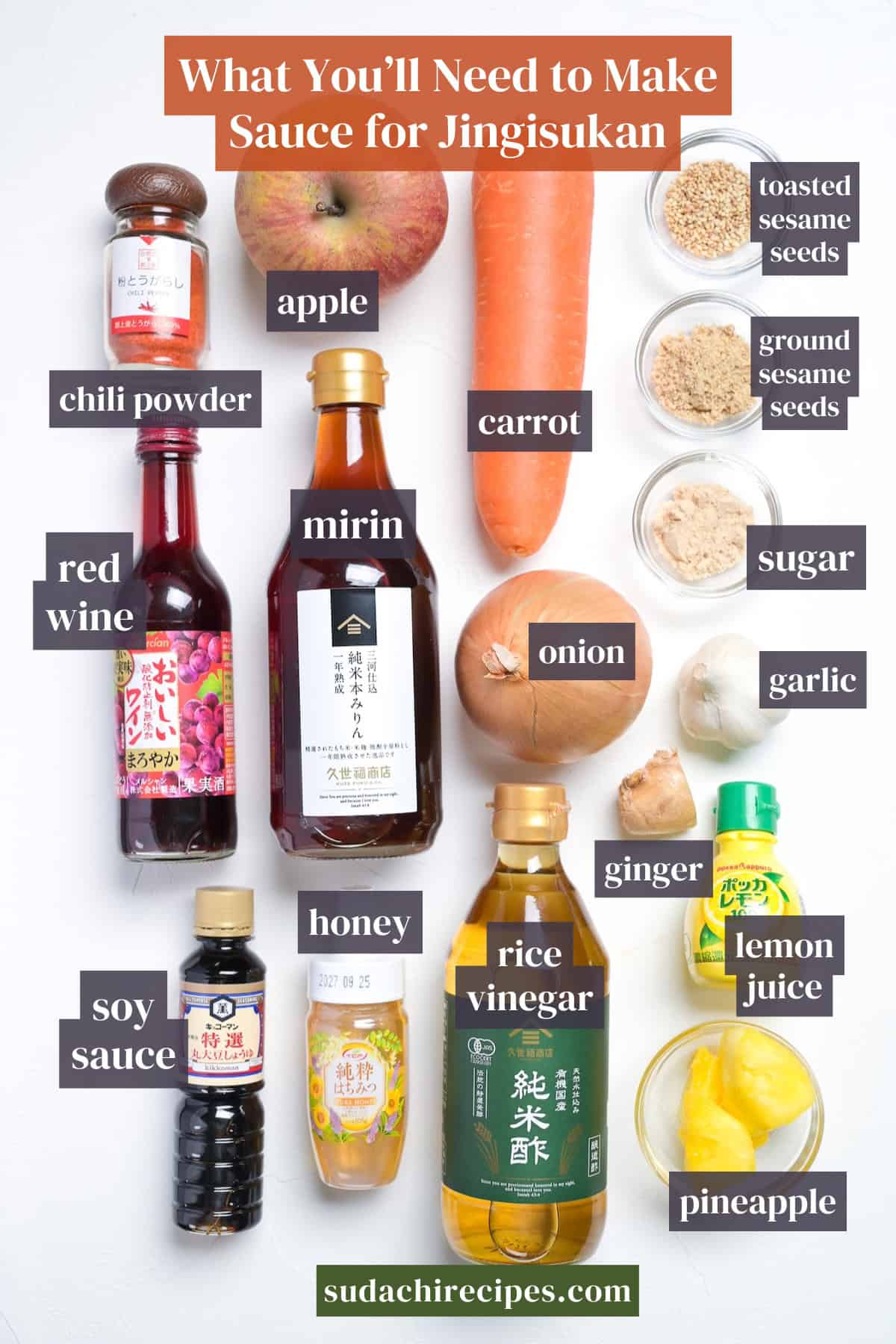
- Soy sauce & mirin: You can swap the fruits in the sauce without any issues, but soy sauce and mirin are the non-negotiable backbone.
Substitution Ideas
- Lamb shoulder → Lamb leg works just as well. Just ask the butcher to slice it thin.
- Lamb → Mutton is the closest swap and still technically Jingisukan, but mutton has a stronger, gamier flavor.
- Lamb → Beef, pork, chicken thigh will give you a tasty grill night, but I’ll be honest, it won’t really be Jingisukan anymore since the whole dish is built around lamb’s unique flavor.
- Apple → Asian pear gives the sauce the similar natural sweetness and body, and it’s what a lot of Japanese home cooks actually use.
- Pineapple → Kiwi fruit brings a similar enzyme-driven tenderizing effect and fruity brightness. Just use a small amount since it’s a bit more intense than pineapple.
- Red wine → Sake is a natural swap that keeps the sauce tasting Japanese.
- Rice vinegar → Apple cider vinegar is the easiest substitute, just use the same amount.
- Fresh shiitake mushrooms → Any fresh mushroom you like will work.
- Kabocha squash → Butternut squash or sweet potato, sliced thin, will caramelize beautifully.
- Eggplant → Zucchini is the easiest swap if eggplant isn’t your thing.
- Vegetables (seasonal swaps) → Corn on the cob sliced into rounds, asparagus, or napa cabbage are all popular variations in Hokkaido, feel free to mix them in based on what looks good at the store.
Have trouble finding Japanese ingredients? Check out my ultimate guide to Japanese ingredient substitutes!
How to Make My Genghis Khan
I developed this recipe using a traditional jingisukan nabe, a dome-shaped cast iron grill pan where lamb sears on the raised center while rendered fat flows down into a trough, braising the vegetables in rich drippings. The same grills are available online.
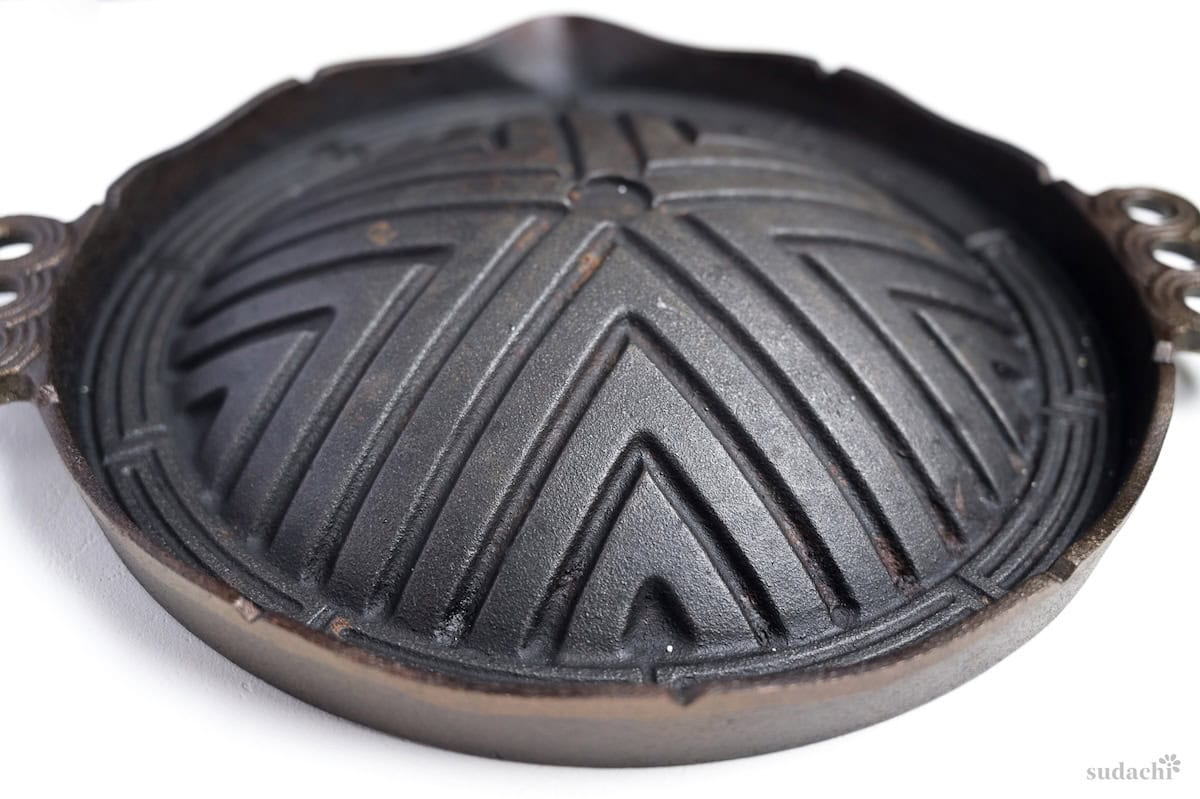
If you don’t have one, a cast iron/carbon steel skillet is your best substitute. Its heavy thermal mass holds heat steady for strong browning.
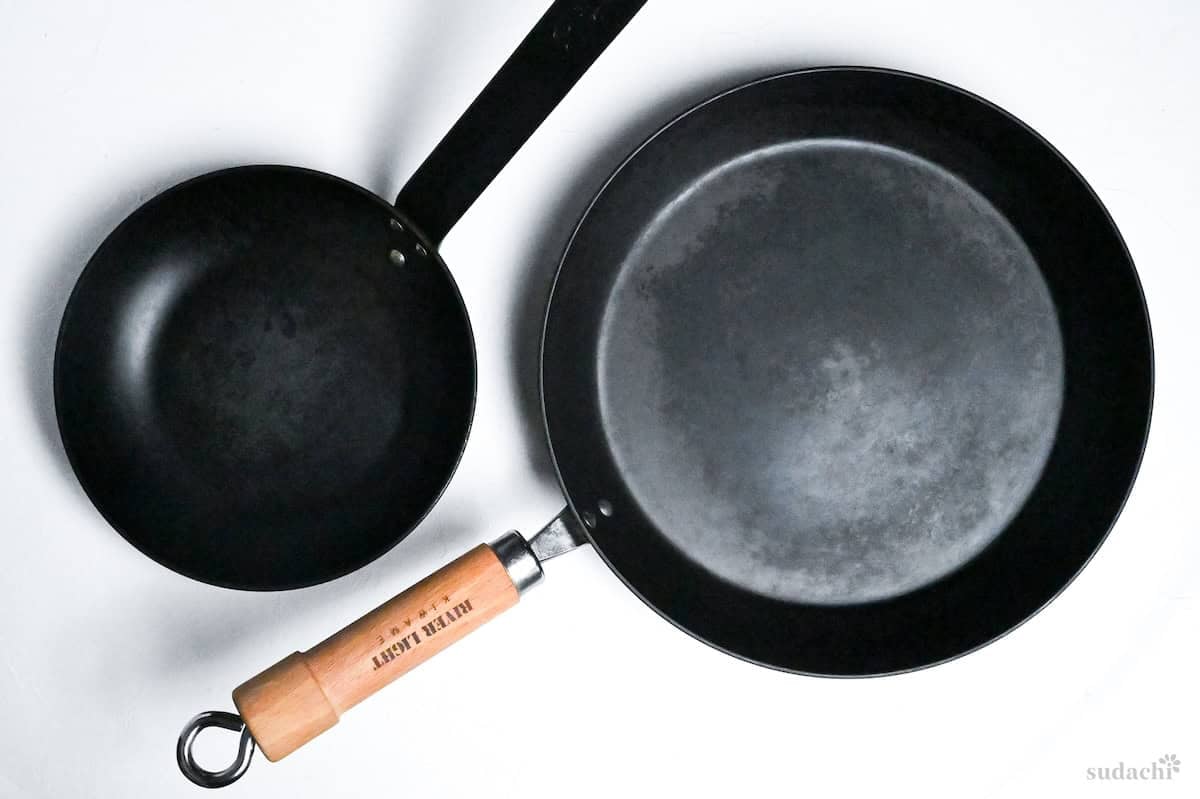
A ridged grill pan also works well because the ridges lift meat above pooled fat, partially mimicking the dome’s drainage. With any flat pan, cook lamb and vegetables in stages and avoid crowding to prevent steaming.
i. Roughly chop apple, carrot, onion, and pineapple into small chunks.
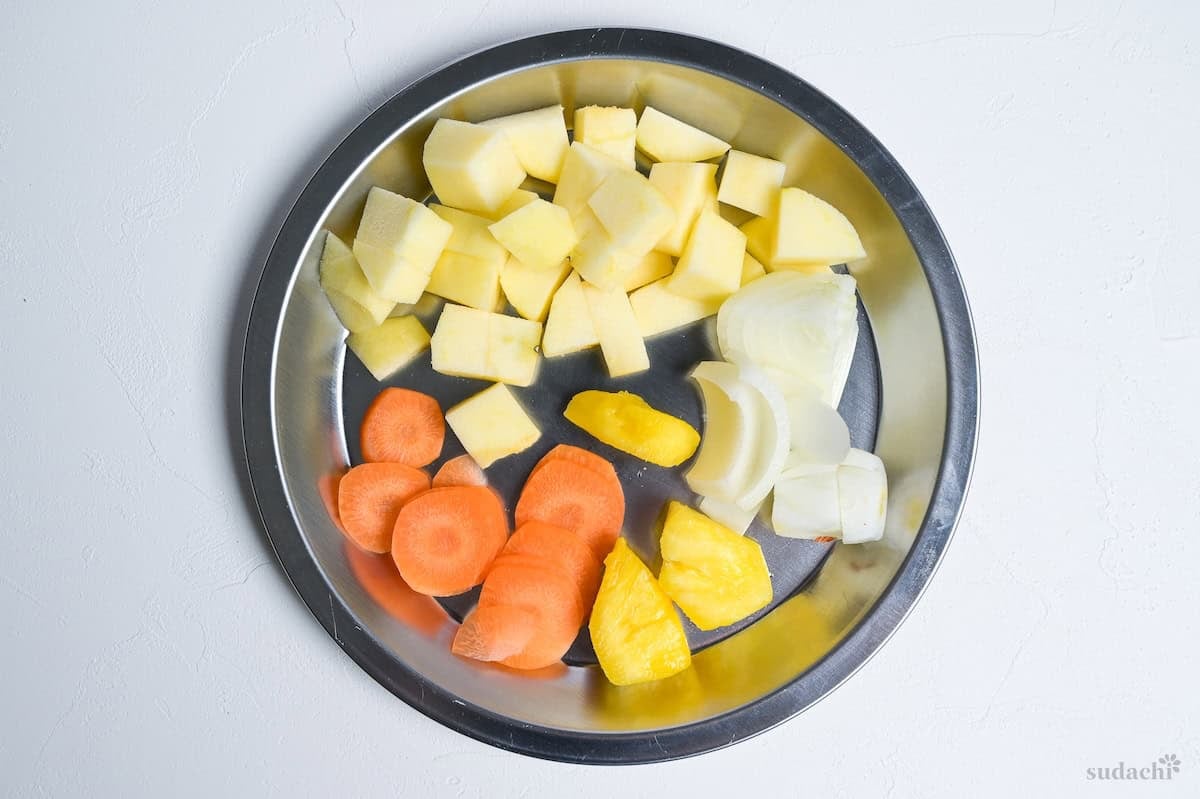
ii. Drop them into a food processor. Add the lemon juice, honey, chili powder, garlic, ginger, ground sesame seeds, and rice vinegar. Pulse everything until smooth with no large pieces remaining.
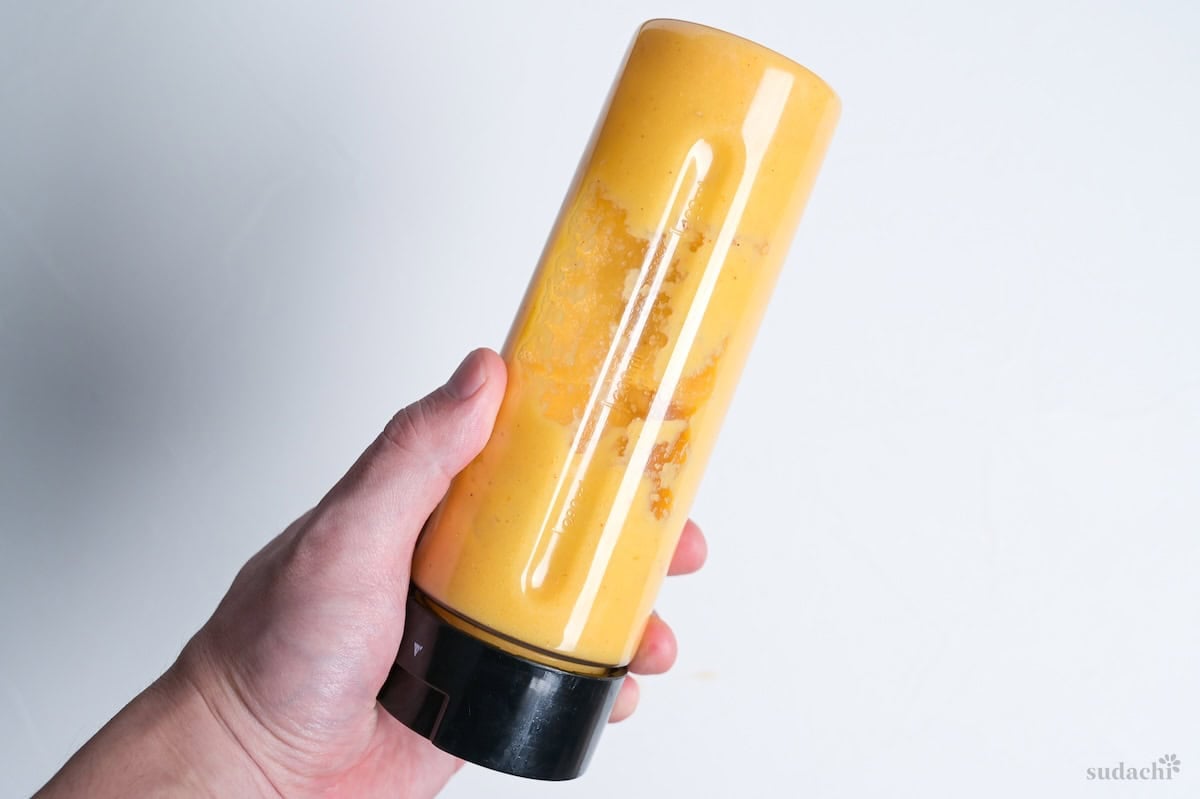
These fruits aren’t random. Apple provides mellow sweetness and body, while pineapple contains bromelain (a natural enzyme that gently tenderizes the lamb’s surface). Together with ginger and garlic, they also help balance lamb’s natural richness and gamey flavor.
iii. Pour Japanese soy sauce, water, red wine, light brown sugar, mirin, and toasted white sesame seeds into a small saucepan, then scrape in the blended fruit mixture.
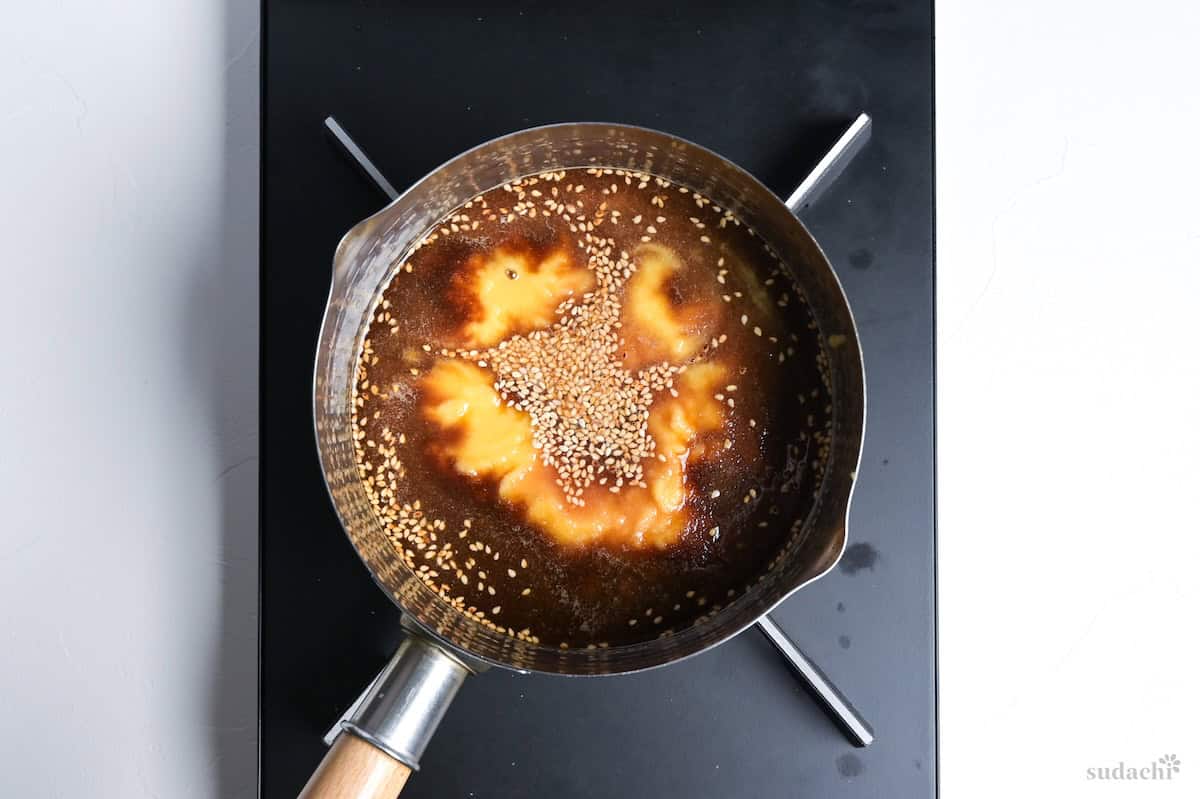
iv. Bring everything to a boil over medium heat, stirring continuously to keep the sugars from scorching. Once bubbling, reduce to medium-low and simmer for 3 minutes.
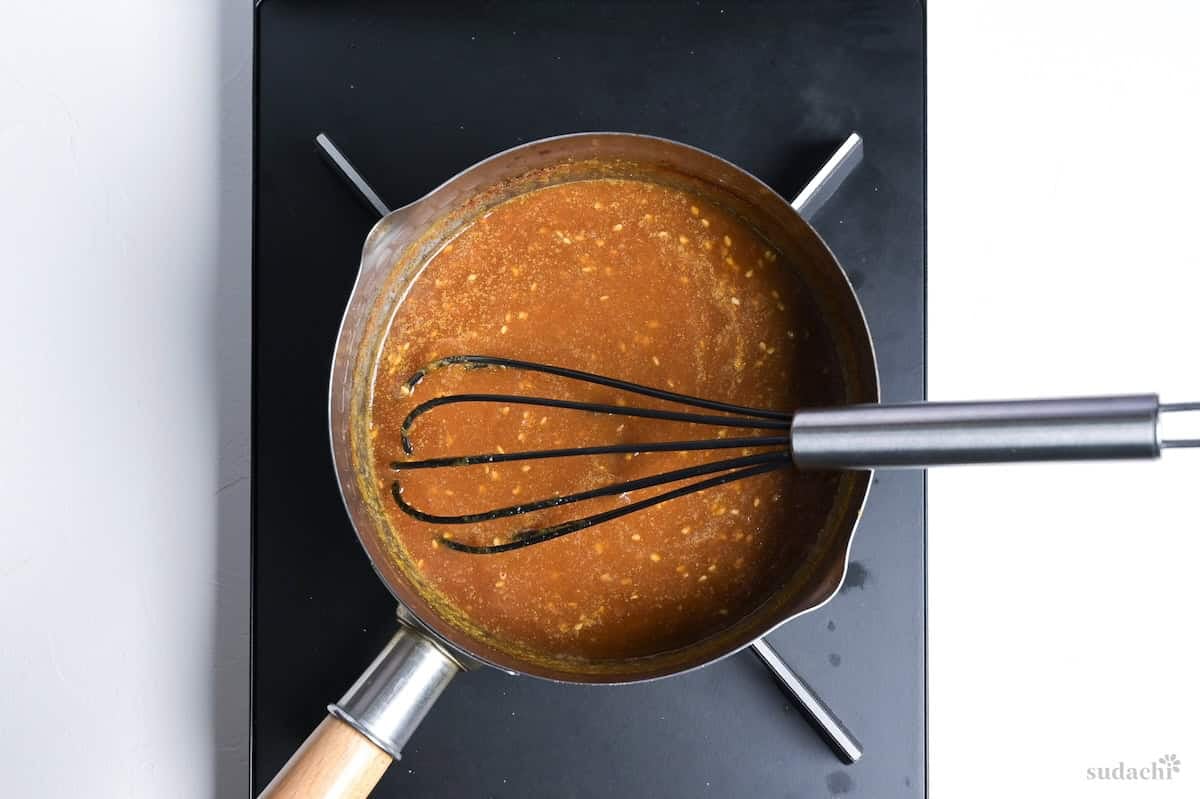
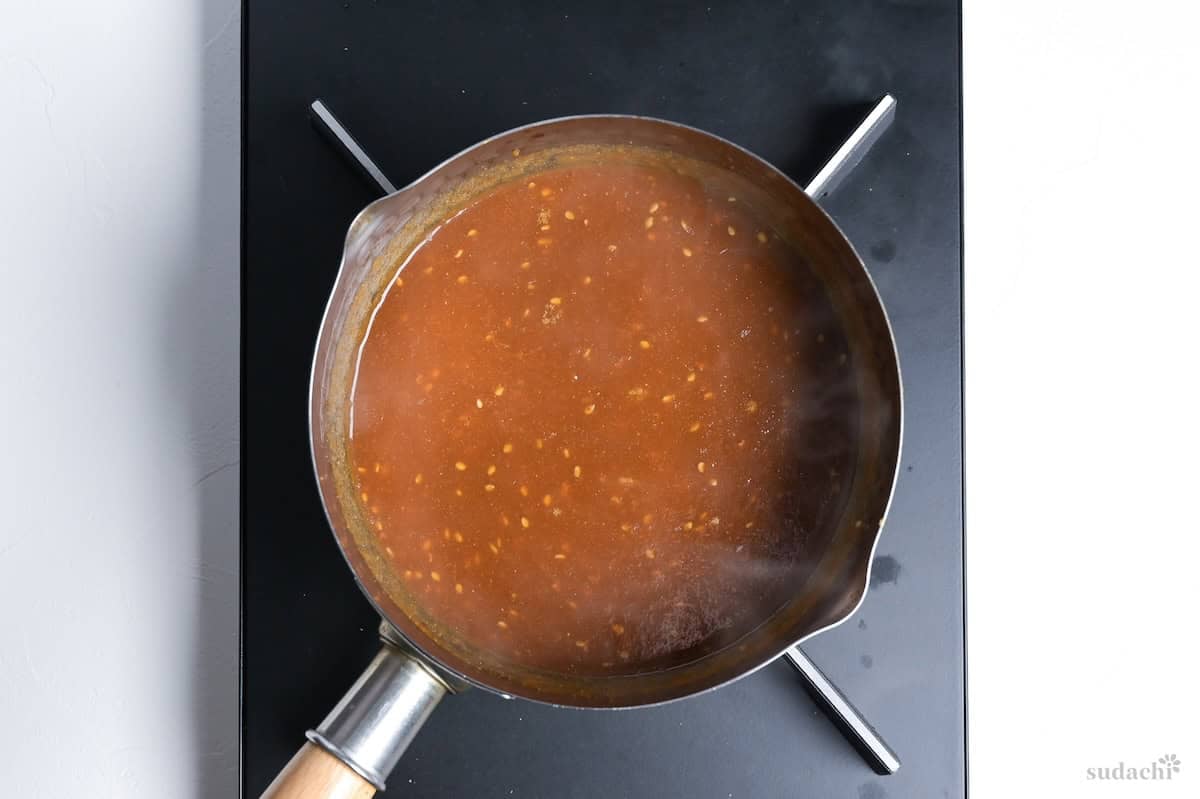
v. Remove the tare from the heat and let it cool completely, then refrigerate until serving if time allows.
i. Cut your vegetables into bite-sized pieces that will cook through quickly alongside the lamb:
- Slice onions into wedges.
- Roughly cut cabbage/peppers.
- Thinly slice kabocha squash.
- Cut carrot and eggplant into thin rounds.
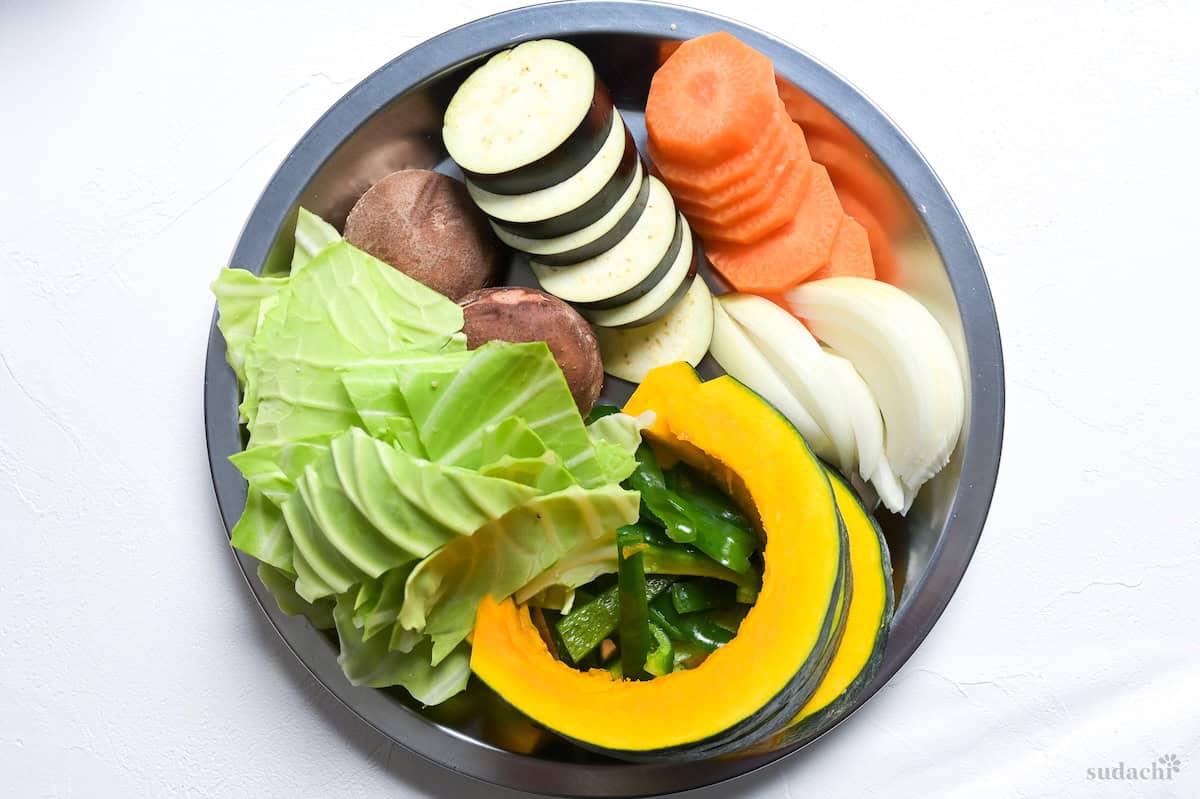
ii. Set your grill over medium-high heat and let it get properly hot, a solid 3 to 4 minutes at minimum. Hold your palm a few inches above the surface; when you feel strong, radiating heat, you’re there.
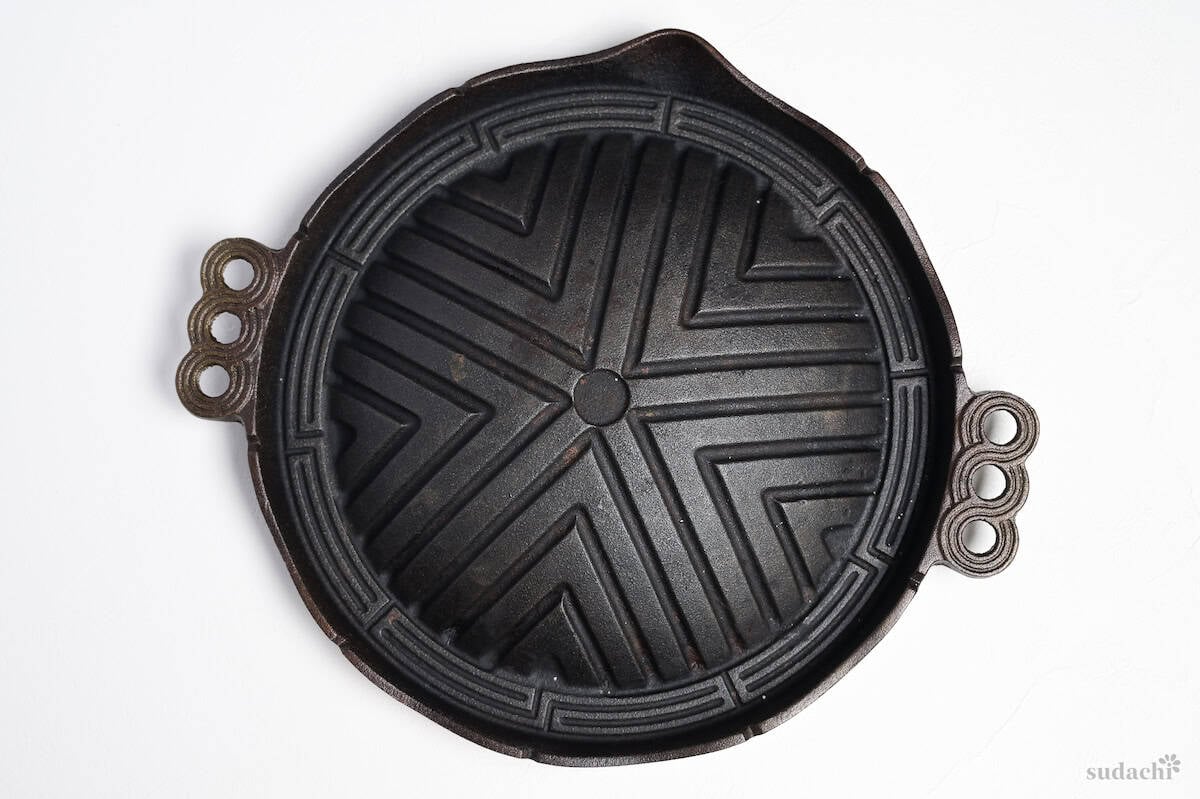
i. Lay your first round of lamb slices across the hottest part of the cooking surface (on a jingisukan grill, that’s the dome’s peak).
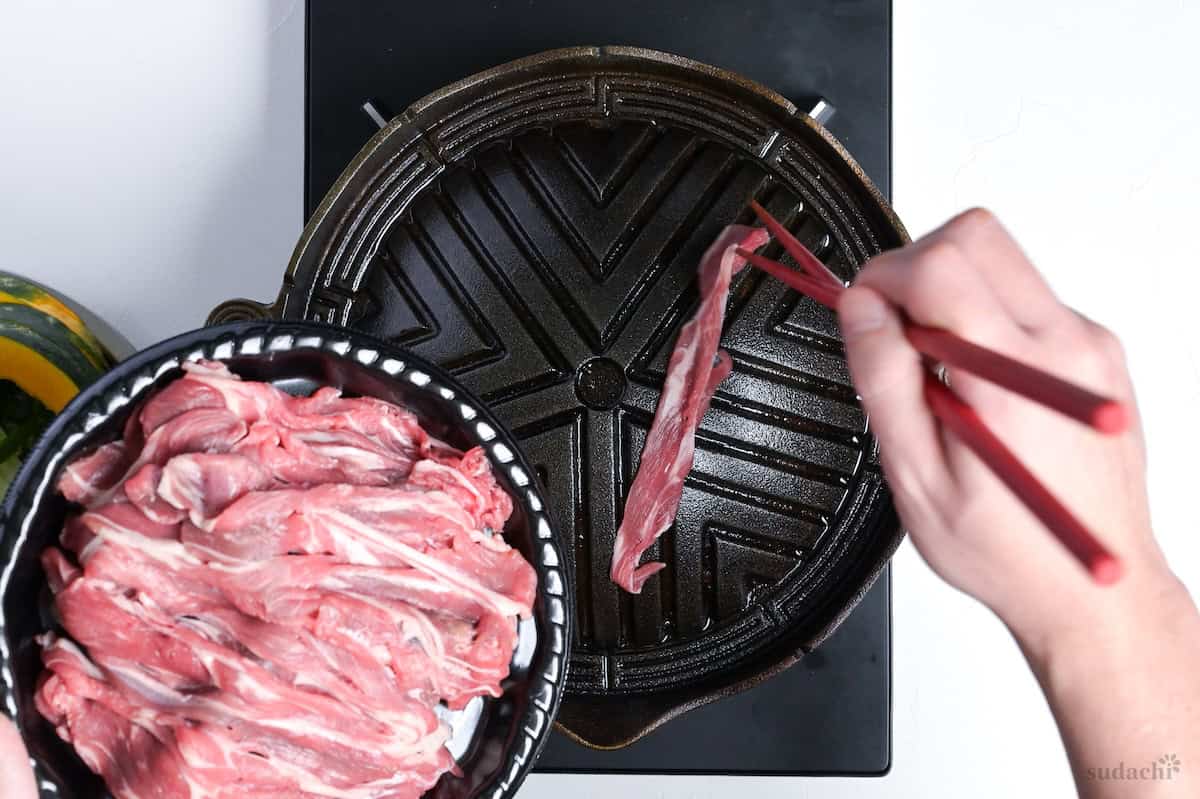
ii. Season simply with salt and pepper.
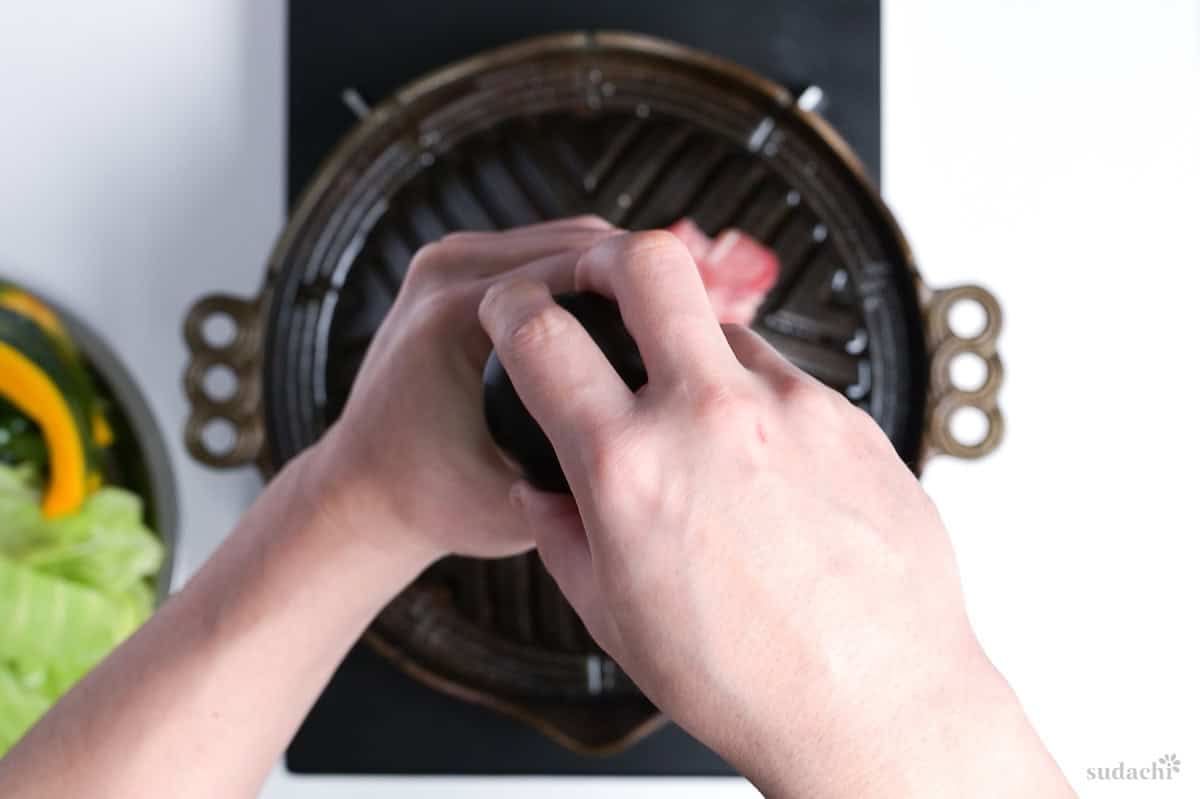
iii. Listen for an immediate, assertive sizzle the moment the meat hits metal.
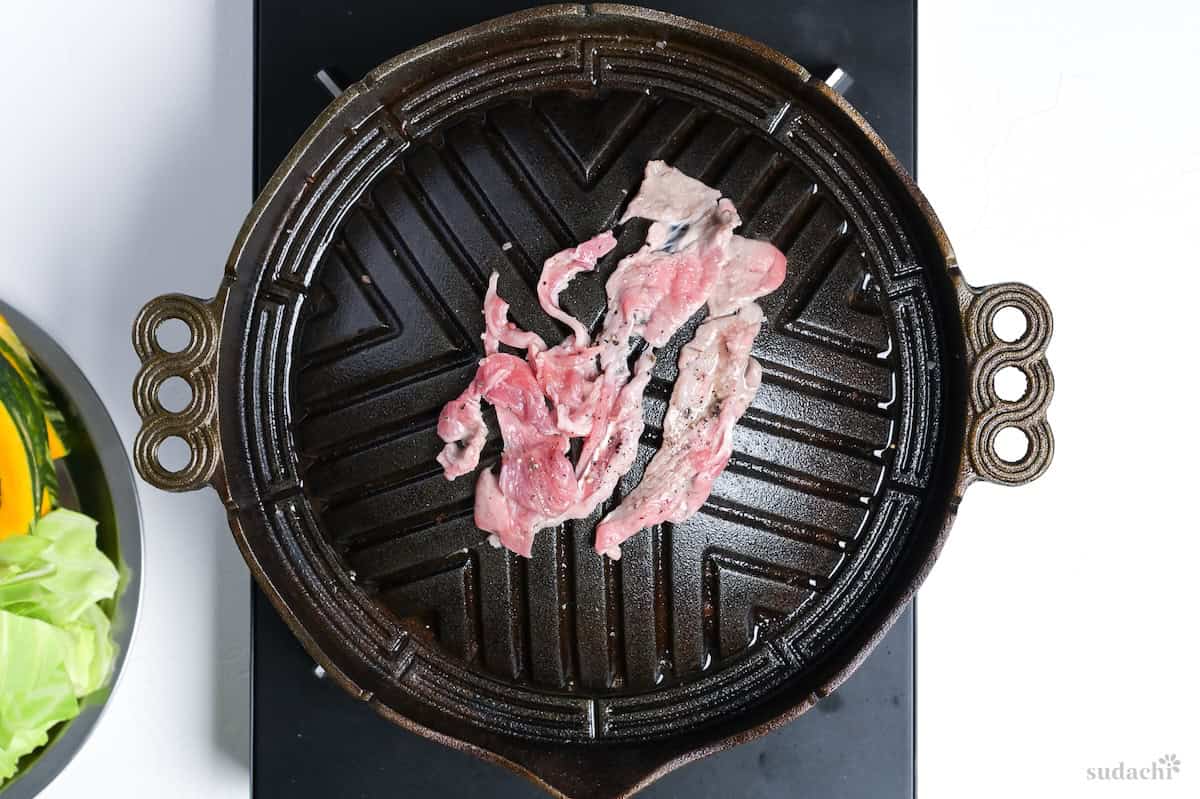
As the lamb’s fat melts, it liquefies and travels across the surface, laying down a layer of flavor-rich tallow. On a domed grill, gravity channels this fat into the trough where vegetables will eventually braise in it. That’s the entire design principle behind the grill’s shape.
This first batch serves a dual purpose: it launches the Maillard browning on the lamb while rendering fat that coats the entire cooking surface, essentially seasoning the grill for everything that follows.
iv. Once the underside develops a golden-brown crust (roughly 20 to 30 seconds) flip each slice and sear the other side just until the edges lose their raw translucency while the center stays distinctly pink. Pull the meat immediately. For this first round, eat the lamb as-is with just its salt and pepper seasoning.
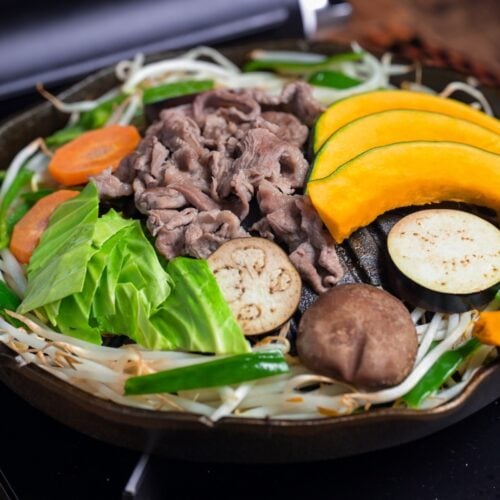
i. Place a fresh round of lamb slices on the hottest zone and arrange your prepared vegetables around the lower edges or in the trough. On a jingisukan grill, the dome’s center gets the lamb while vegetables nestle into the moat where rendered fat and juices have been pooling.
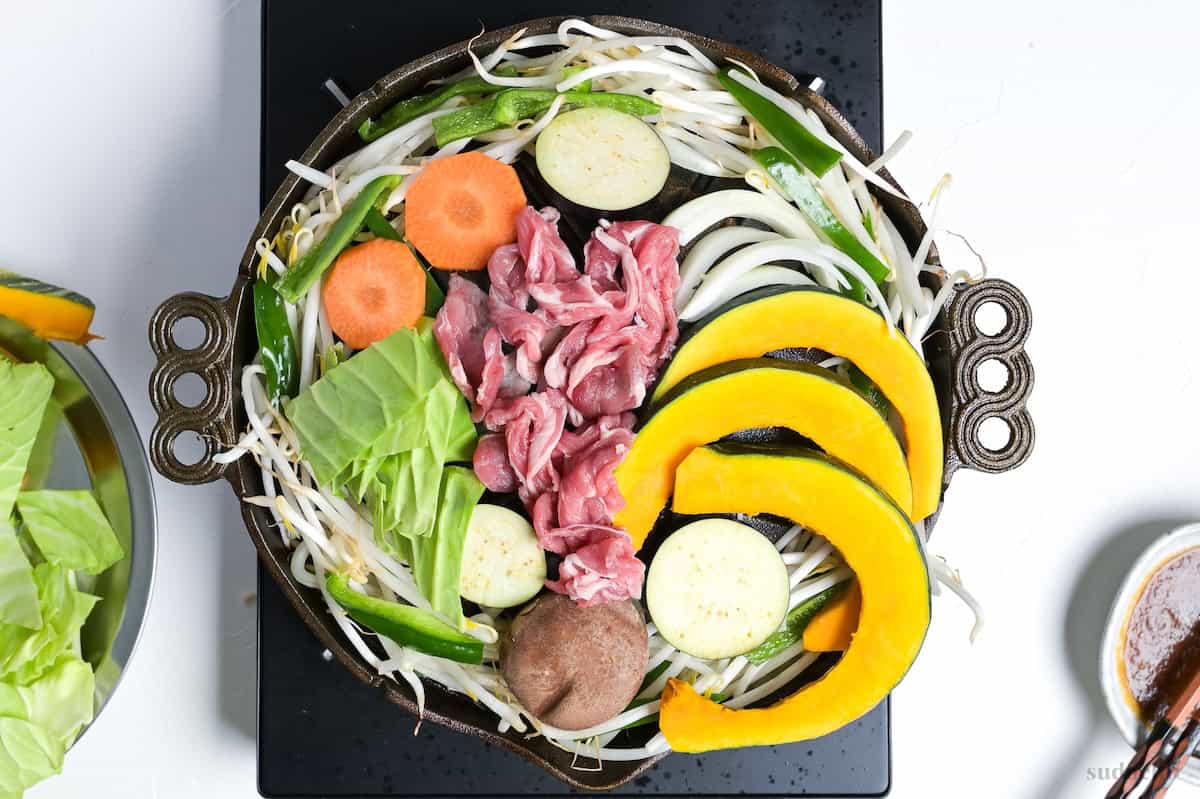
On a flat pan, push the vegetables to the sides and let them cook in the accumulated drippings. As each new batch of lamb renders more fat, the vegetables absorb it.
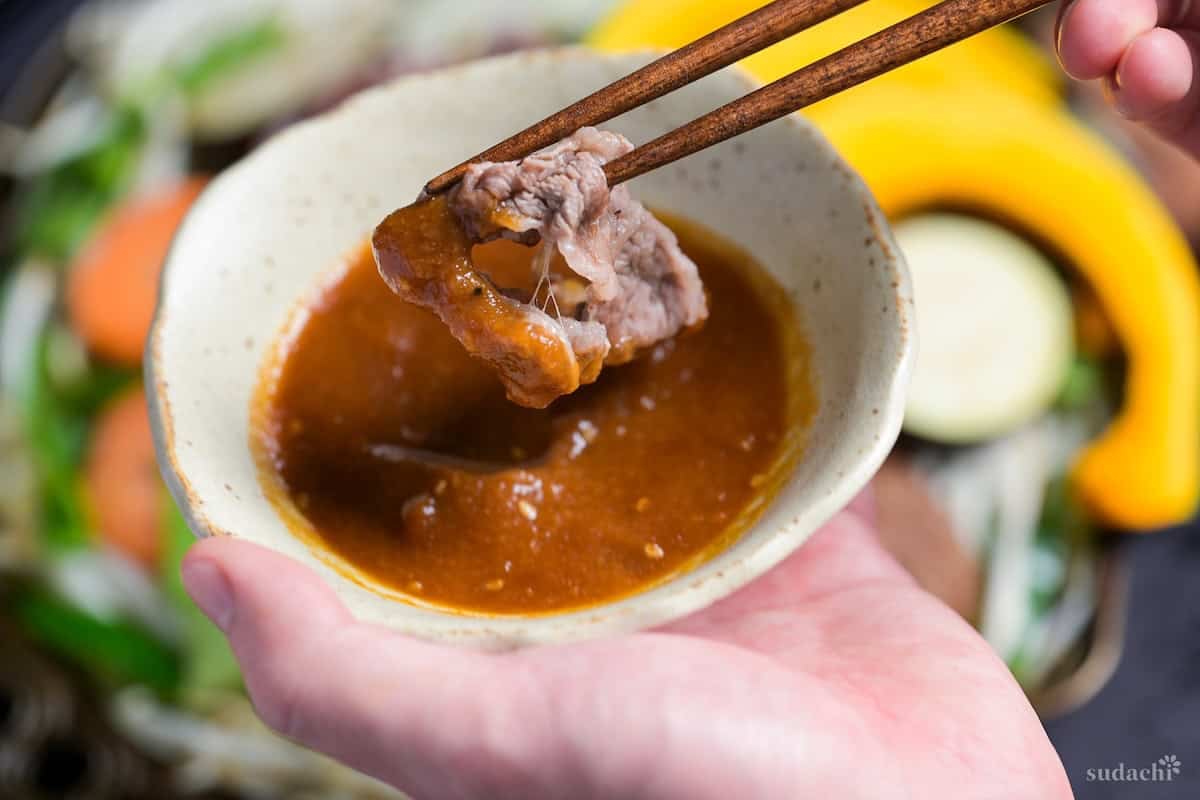
i. Transfer each round of seared lamb and glistening vegetables to your plate and dip them into the chilled tare. The cool, fruity brightness of the sauce against hot, smoky meat is the heart of the jingisukan experience.
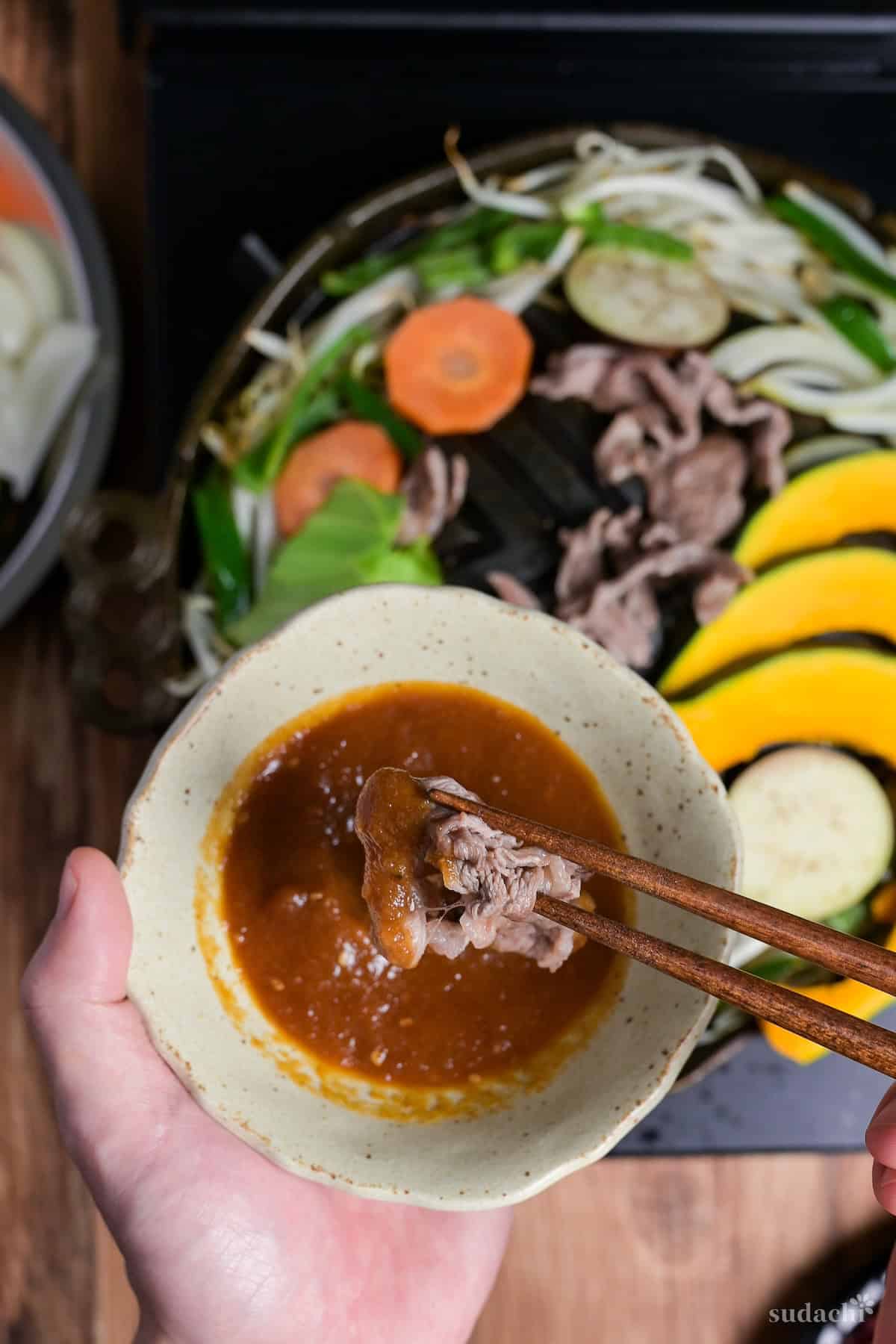
Keep the grill running and continue adding ingredients in small batches. This is a communal, cook-at-the-table meal, where the cooking itself is part of the fun. Pace yourself, because the residual drippings on the grill concentrate with every batch, meaning later rounds of vegetables will taste richer and more deeply seasoned than the first.
If you follow the default recipe, it will yield 2-3 main servings, or 4-5 if you add increase lamb and vegetables amount.

Essential Tips & Tricks
- Preheat your grill or skillet properly. Cast iron needs a solid 3 to 4 minutes to heat through evenly, and thin-sliced lamb demands surface temperatures well above 140°C (285°F).
- Cook the lamb in small batches of 4 to 6 slices at a time. Every slice releases moisture as it hits the heat, and overcrowding traps that steam between the meat and the surface, dropping the temperature below the browning threshold.
- Slice the lamb to a consistent 2 to 3 mm thickness using the semi-frozen technique. Uniform slices cook evenly in 20 to 30 seconds per side, giving you a seared exterior and juicy pink center.
With these simple tips in mind, you’re set for success every time you make jingisukan at home.
Storage & Meal Prep
Fridge: Store leftover cooked lamb and vegetables in an airtight container for up to 1 day, but expect the meat to lose its juicy sear and the vegetables to turn soft and oily as fat solidifies around them. The tare keeps well for up to 3 days refrigerated.
Freezer: Not recommended.
Meal Prep: The tare (sauce) is your best make-ahead component. Blend and simmer it up to 3 days before serving for the most developed flavor. You can also slice the lamb and prep the vegetables a day ahead (store separately, tightly wrapped).
Reheating: Jingisukan is best cooked fresh in small batches, and leftover cooked lamb will never fully recover its original texture. If you do have leftovers, reheat briefly in a hot skillet for 30 to 45 seconds per side.
What to Serve With This Recipe
Jingisukan FAQ
Not at all. Despite the Genghis Khan name, jingisukan is a Japanese dish originating in Hokkaido, said to be inspired by regional Chinese cuisine. It uses a dome-shaped grill, thin-sliced lamb, and a fruit-and-soy tare. What’s called “Mongolian BBQ” in Western countries is actually a Taiwanese invention from the 1950s that involves stir-frying on a large flat griddle. The only real overlap is the association with sheep meat and the name.
Absolutely. A cast iron skillet or ridged grill pan works well. The main adaptation is cooking in stages: sear the lamb first on high heat, remove it, then cook the vegetables in the rendered fat. This manually replicates the dome grill’s separation of a hot searing zone and a gentler braising zone. Just make sure the pan is screaming hot before the first slice goes down.
Yes. Jingisukan is broadly divided into two styles: atozuke (後漬け), where raw lamb is grilled and then dipped into a sauce, and sakizuke (先漬け), where the lamb is marinated in a soy-based tare before grilling. The atozuke style is associated with Sapporo’s restaurant scene, while sakizuke is the tradition in Takikawa City, home of the famous Matsuo Jingisukan. In Hokkaido supermarkets, you’ll typically find both options side by side in the lamb section. Neither is more “correct” than the other. My recipe uses the atozuke (dip-after) approach because grilling unseasoned lamb produces a cleaner, more intense sear, and the cool, fruity tare provides a bright contrast you don’t get when the sauce is already cooked into the meat.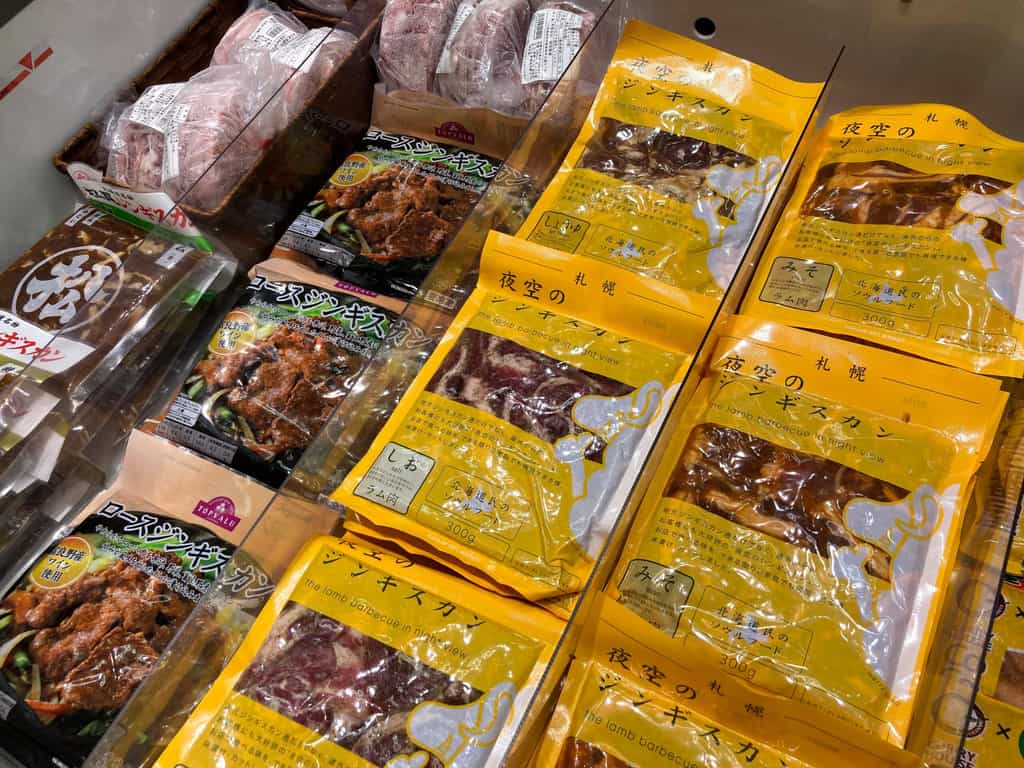
More Regional Japanese Recipes
Hungry for more? Explore my easy Japanese recipe collection to find your next favorite dishes!
Did You Try This Recipe?
I would love to hear your thoughts!
💬 Leave a review and ⭐️ rating in the comments below. 📷 I also love to see your photos – submit them here!
Jingisukan (Hokkaido Style Lamb BBQ)

Equipment
Ingredients
Jingisukan Sauce
- 75 g apple peeled, roughly chopped
- 15 g carrot peeled, roughly chopped
- 25 g onion roughly chopped
- 15 g pineapple or kiwi fruit
- 1 clove garlic
- 5 g ginger root fresh, peeled
- 1 tsp lemon juice
- ½ tsp honey
- ½ tsp chili powder cayenne pepper
- ⅛ tsp unseasoned rice vinegar (komezu) or apple cider vinegar
- 3 tbsp Japanese soy sauce (koikuchi shoyu)
- 1 tbsp water
- 1 tbsp red wine or sake
- ½ tsp light brown sugar
- ½ tsp mirin
- ½ tsp ground sesame seeds
- 1 tsp toasted white sesame seeds
Jingisukan (Main ingredients suggestion)
- 250 g lamb shoulder thinly sliced, about 2 mm
- salt and pepper to taste
- 30 g carrot peeled, sliced into rounds
- 50 g onion cut into wedges
- 50 g eggplant sliced into rounds, skin on, or zucchini
- 2 fresh shiitake mushroom stem removed, or any fresh mushroom
- 50 g kabocha squash thinly sliced, skin on, or butternut squash
- 100 g bean sprouts
- 50 g green cabbage roughly chopped
- 50 g bell pepper cut into strips
The ingredient brands and tools I trust are in my Japanese pantry guide and my cooking tools guide.
Can’t find certain Japanese ingredients? See my substitution guide here.
Instructions
Jingisukan Sauce
- Roughly cut 75 g apple, 15 g carrot, 25 g onion and 15 g pineapple into small chunks and place them in a food processor.

- Add 1 tsp lemon juice, ½ tsp honey, ½ tsp chili powder, 1 clove garlic, 5 g ginger root, ½ tsp ground sesame seeds and ⅛ tsp unseasoned rice vinegar (komezu) to the food processor, then blend everything together until no more large chunks remain.
- Take a small saucepan and add 3 tbsp Japanese soy sauce (koikuchi shoyu), 1 tbsp water, 1 tbsp red wine, ½ tsp light brown sugar, ½ tsp mirin, 1 tsp toasted white sesame seeds along with the contents of the food processor.
- Place the pan on the stove and bring the sauce to a boil while stirring continuously to prevent burning.
- Once boiling, reduce the heat to medium-low and simmer for 3 minutes. Then, remove the pan from the heat and allow the sauce to cool down. If you have time, place it in the fridge until serving.
Jingisukan
- Heat the pan/grill on a medium heat. Once hot, place a few slices of lamb in the center and sprinkle with a pinch of salt a pepper. If using a frying pan, move the lamb around the pan to season the surface.
- Flip the lamb and cook on the other side. Once cooked, remove from the pan. (You can eat it now or save it for later.)
- Add more lamb, then the vegetables, starting with hardier vegetables like kabocha, carrot and onion first as they take longer to cook. As they shrink, make space and add the eggplant and mushrooms, then finally the cabbage, bell peppers and bean sprouts. Make sure all the vegetables are touching the fat and juices from the lamb to flavor them, flip occasionally for even cooking. Grill in batches if there isn't enough space.
- When the meat and vegetables are cooked, dip the ingredients in the homemade sauce and enjoy with rice. Continue to cook in batches until all of your ingredients are used up. Enjoy!


Hi
Where can I buy the Jingisukan meat in Tokyo (specifically in Yokohama)?
Thank you
C
Hi C,
I’m not sure specifically as I don’t live near Tokyo/Yokohama but I bought the lamb for jingisukan at Aeon supermarket. If you don’t live near Aeon, try any large supermarket (it will be near the beef/yakiniku meats) or butcher. Hope that helps!
Best wishes,
Yuto
In 1970-71 we were stationed at Chitose. We ate jingisukan at Namachan’s Restaurant. Never lamb, always beef. Cooked on a domed cast iron grill over a gas flame. We cooked it ourselves. Rubbed beef suet over the grill& quick grilled meat & veggies. It was delicious!
Thank you for sharing your experience, Jingisukan is well known for being a lamb dish but it is certainly delicious with beef too!
As a high school exchange student, I got to spend time on Hokkaido. For years, I have searched for a recipe for a wonderful dish “Genghis Kahn” we had several times while there.
I am delighted to find this recipe and will be trying it soon. I do remember that after grilling the meat, we quickly dipped the piping hot meat into a small bowl of beaten egg. It was delicious!! Is that also a usual “after cooking” dip, or something the local restaurants did? Thanks!
Hi Kelly,
So glad you found the recipe and that it brought back those Hokkaido memories! The egg dip isn’t really the traditional way to eat Jingiskan across Hokkaido, but it’s a “hidden” beloved style that took off thanks to certain famous spots. The “sukiyaki style” dip was created by Matsuo Jingisukan, the pioneers of marinated version, and it’s become a connoisseur’s way to enjoy it. Hope you love making it at home!
Yuto