

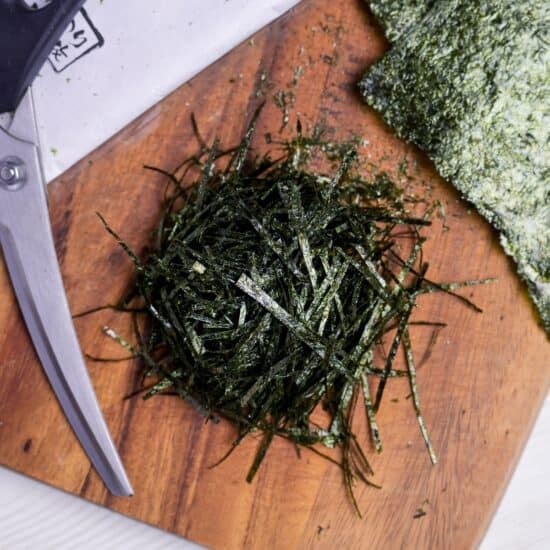


Put a small mound of shredded nori on a bowl of oyakodon, and the whole bowl shifts. Leave it off, and the balance goes quietly flat. The briny aroma, the crisp threads, the savory depth underneath: nothing else on the shelf does that one job.
I live in Japan, so I just buy a bag. If you are reading this somewhere that bag is hard to find, the next 5 minutes at your counter are the whole answer.
The one thing that decides clean shredded nori is moisture. A dry, crisp sheet shears into neat threads. A damp one tears, sticks to the blade, and chews like rubber.
- You can make it from a regular sheet. Re-crisp a plain sheet of yaki nori, stack a few, fold, and cut with sharp scissors.
- If the nori has gone soft, a few seconds over a dry pan or a flame bring the crispness back. That is the difference between threads and rubber.
- The everyday size is about 2mm wide and 3 to 4 cm long. Go thinner for chirashizushi, wider for bowls and salads.
- Outside Japan a small bag of pre-shredded nori often runs between $8 to $15 and can be hard to find, so a sheet you already own is the practical route.
- Aonori is a different plant, not a substitute. Crumbled nori, momi nori, is the closest stand-in when you cannot cut threads.
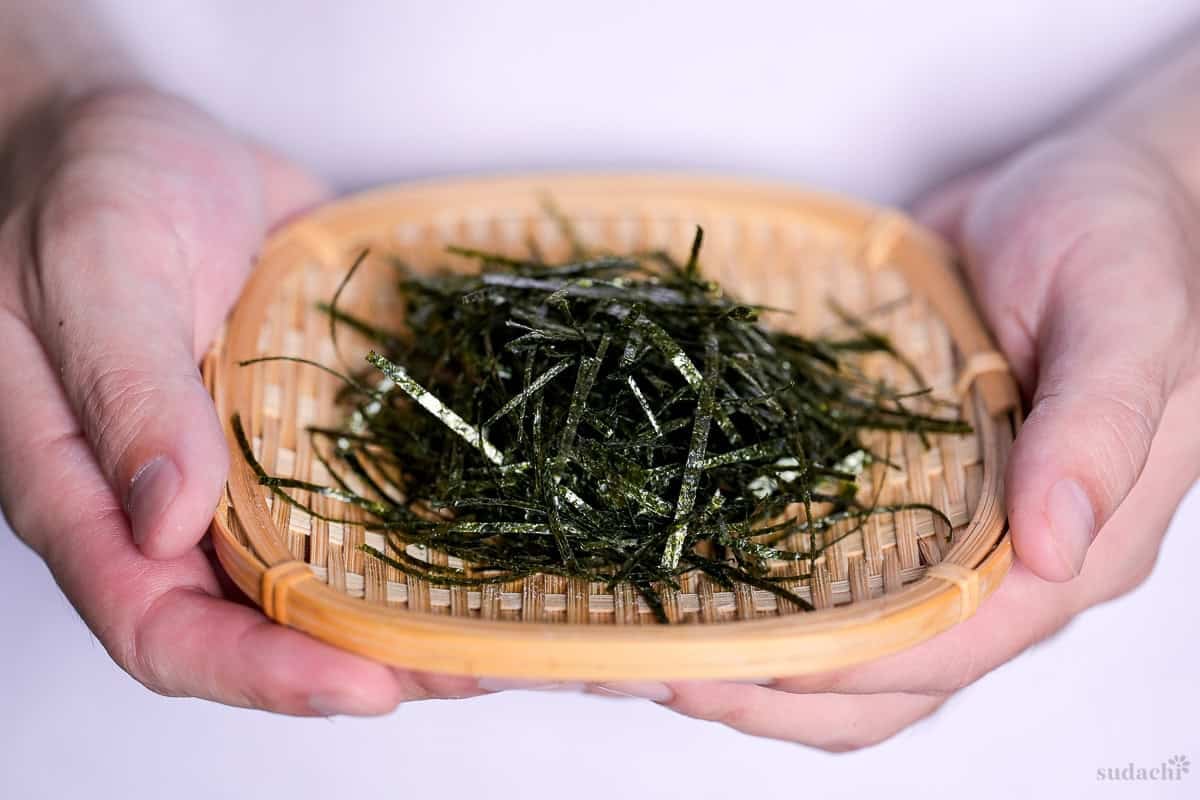
What Kizami Nori Is (And What It Is Not)
Kizami nori is plain roasted nori, the same sheets you wrap around sushi, cut into thin strips. The seaweed is a red algae, pressed into sheets and fire-finished until it holds at around 2% moisture. That low moisture is what lets it snap and shred cleanly, and it is the reason this guide keeps coming back to keeping the sheet dry. The standard cut is about 2mm wide. You will also see 1mm for chirashizushi and 5mm for rice bowls and salads, but 2mm is the width most bags hold.
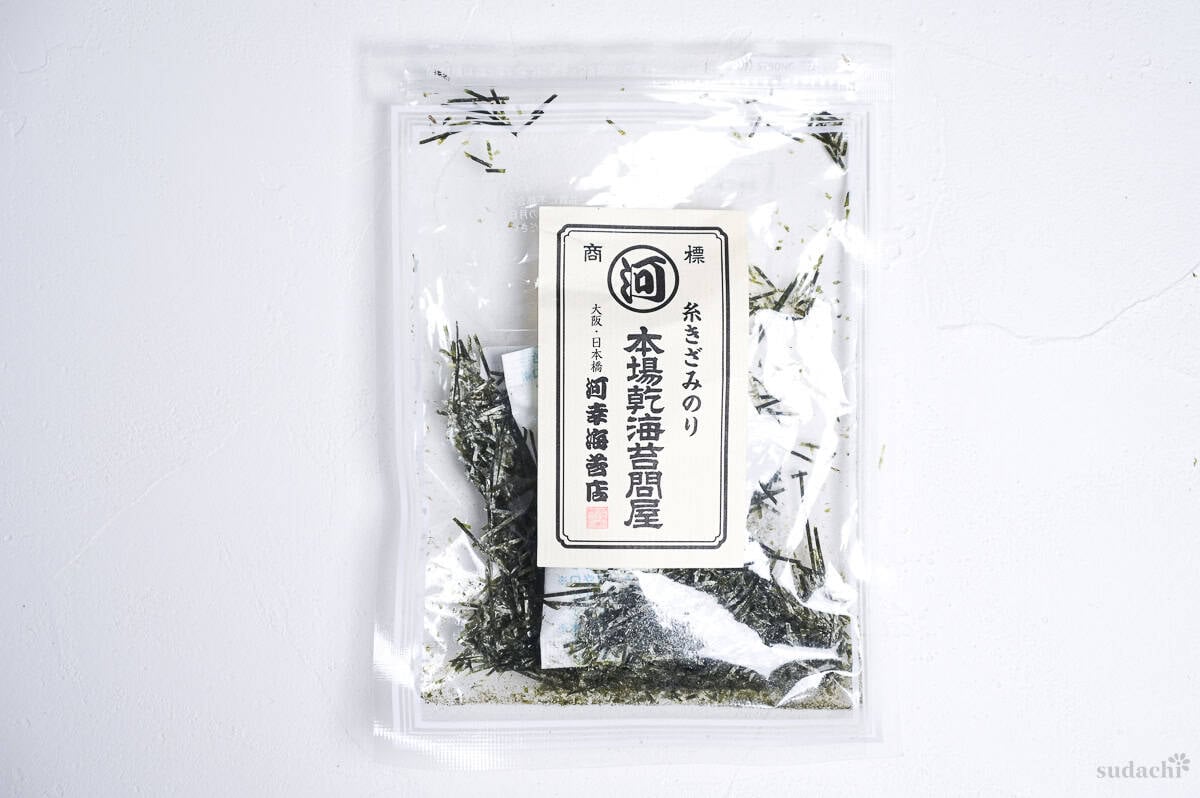
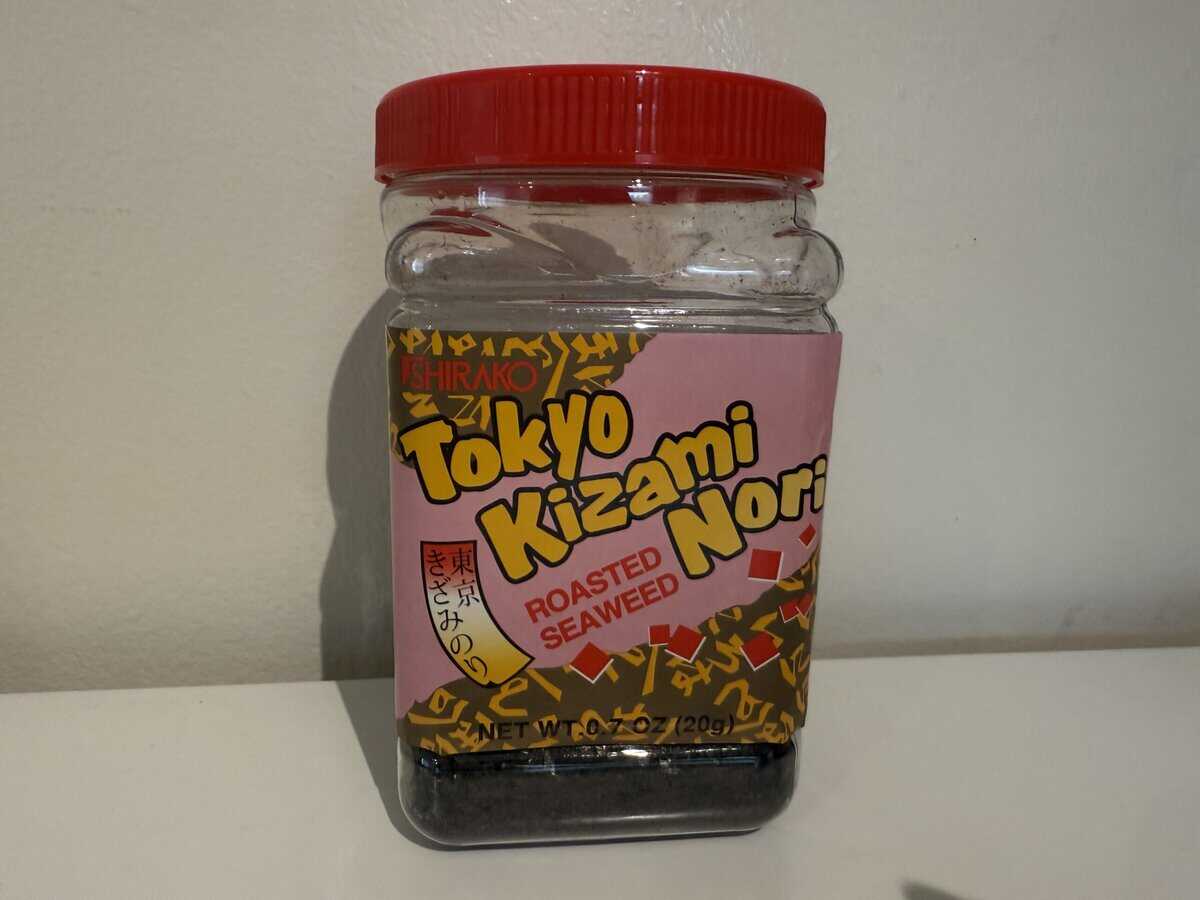
Three things sit near it on the shelf and get mixed up with it.
- Momi nori is the same roasted nori, torn into irregular flakes instead of cut into threads. The flavor is nearly identical, so it works as a stand-in when the fine-thread look does not matter. It just reads rougher and chunkier on the plate.
- Ajitsuke nori is glazed with soy sauce, mirin, and sugar. It is the glossy snack nori you eat straight with rice. On a dashi-based dish like soba or ochazuke it double-seasons and muddies the balance, so reach for plain nori instead.
- Aonori is not sheet nori at all. It is a different green algae, sold as a powder or fine flakes, grassy where kizami nori is briny. The common line “use kizami nori instead of aonori” quietly swaps two unrelated plants. If you need a green powder for okonomiyaki or yakisoba and cannot find aonori, look for aosa, also called sea lettuce, rather than shredded nori.
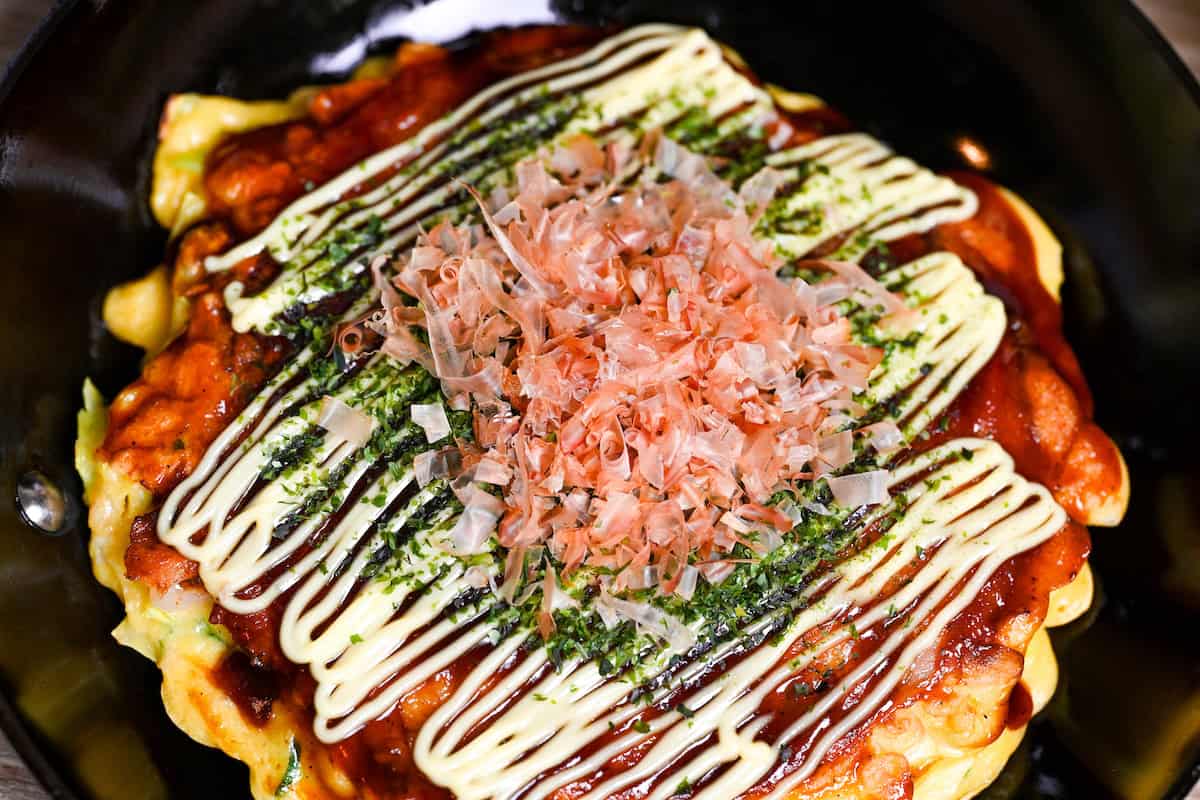
One more that gets folded in: furikake is a finished seasoning blend, usually bonito flakes, sesame, sugar, and salt. It is also its own thing, not a substitute for plain shredded nori.
How to Make Kizami Nori from a Sheet
Making kizami nori is less about knife skills and more about one thing: keeping the nori dry. Get that right and the rest is a single cut. Here is the order that works.
Dry nori is brittle in a very specific way. At around 2% moisture it is glassy, and a sharp blade splits it the way it splits a thin pane of glass, clean and in one stroke. The seaweed is full of a water-loving compound called porphyran, so the moment the sheet meets humid air it softens, turns leathery, then rubbery. Now the blade stretches and drags instead of cutting, and you get the long, chewy strips that hang off your chopsticks.
The fix is never a sharper knife or a steadier hand. It is a drier sheet. Everything below is really just about getting the nori back to that crisp, glassy state before you cut.
i. An open pack of nori has almost always softened a little, even when it looks fine. Before you cut, bring the crispness back. Lay the sheet in a dry pan over low heat, or pass it over a flame, for a few seconds a side, keeping it moving so it does not scorch.
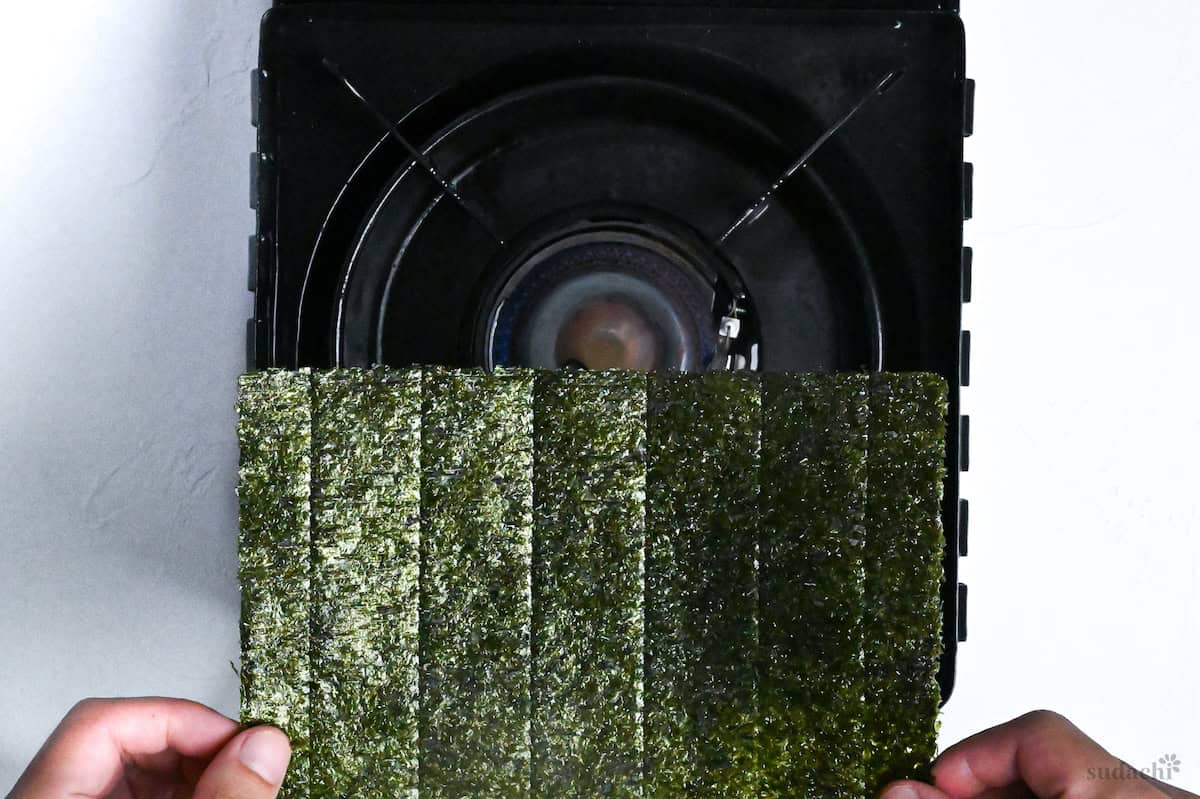
ii. Think gentle warmth, around 160°C (320°F), not a hard toast. You will smell it lift, a toasty, sea-air smell, and that is your signal it is ready. Be careful not to let it brown or burn.
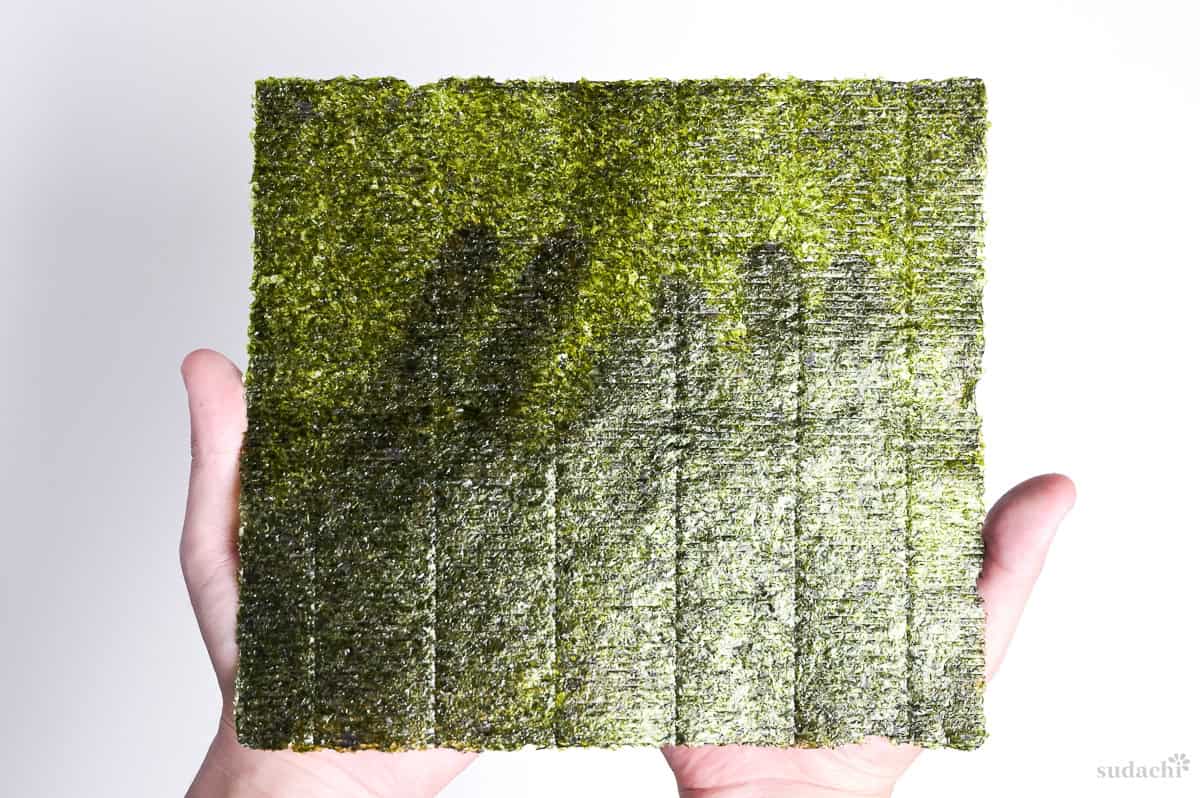
i. Once the sheet is crisp, fold once to cut into two.
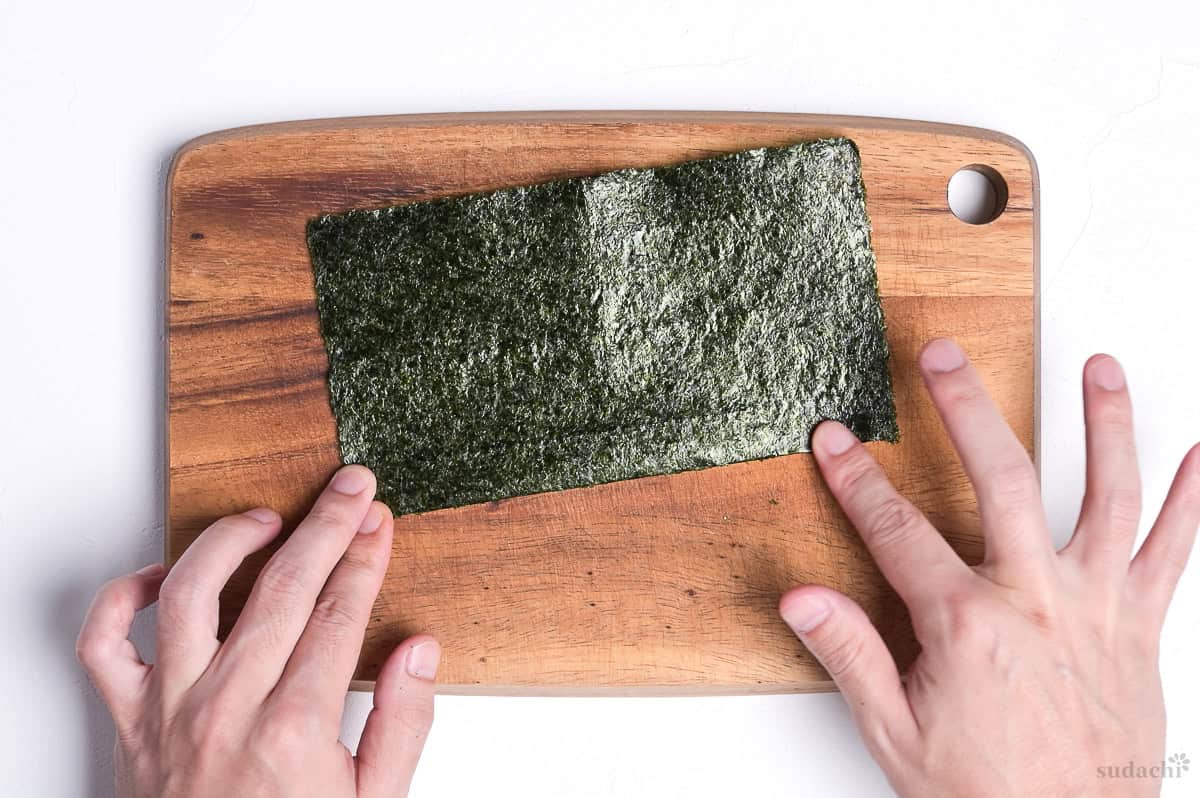
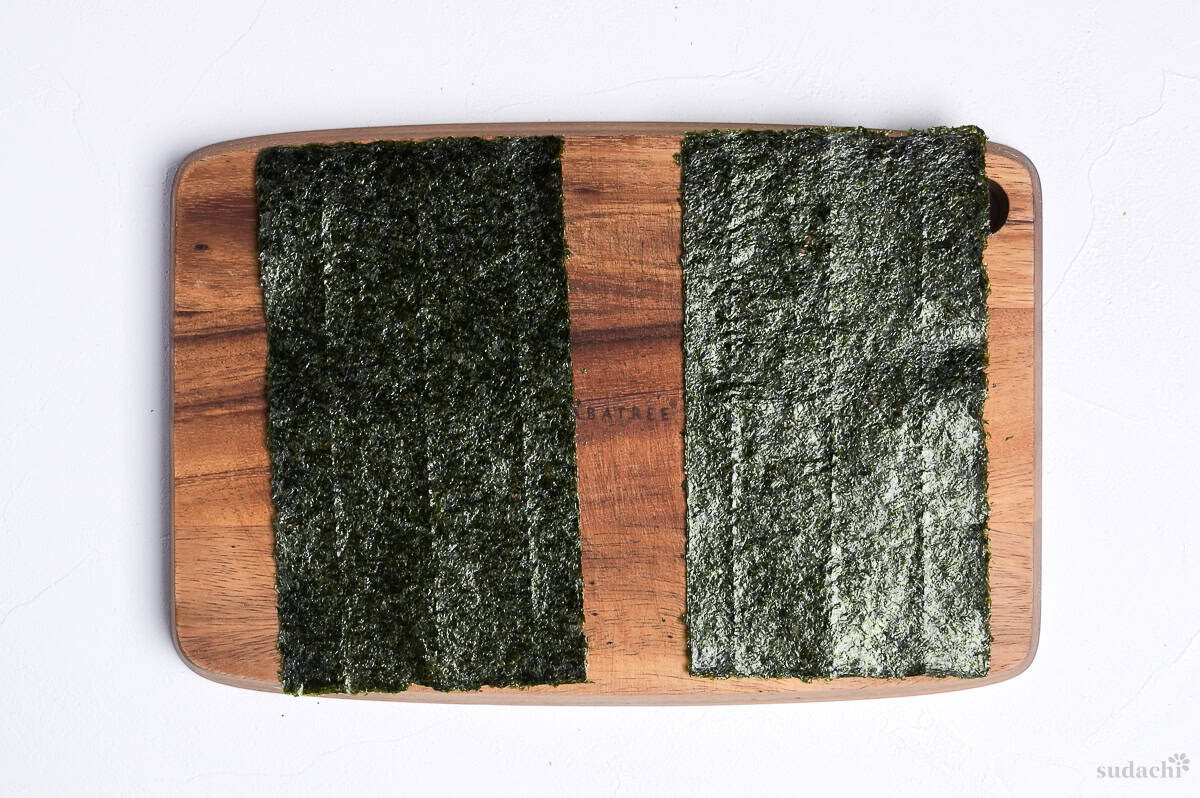
ii. Fold them again or cut to make 4 squares.
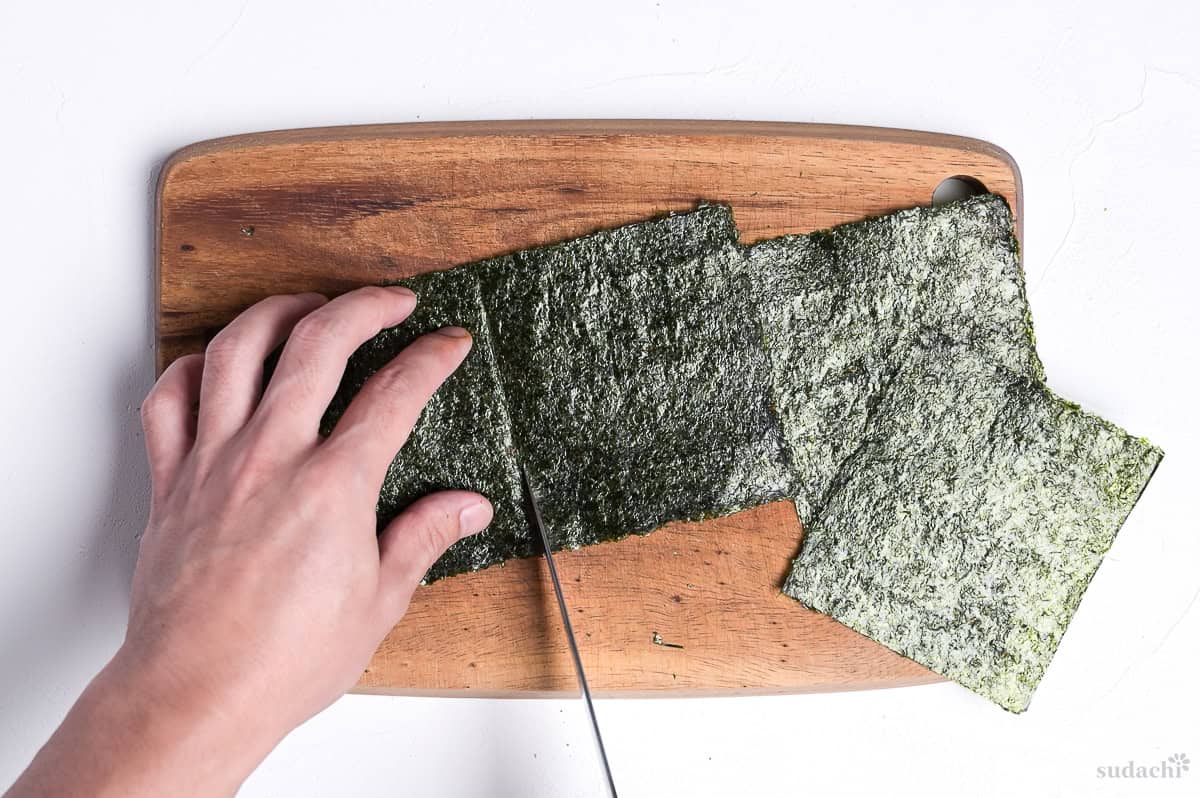
iii. Do the same again to make 8 smaller rectangles.
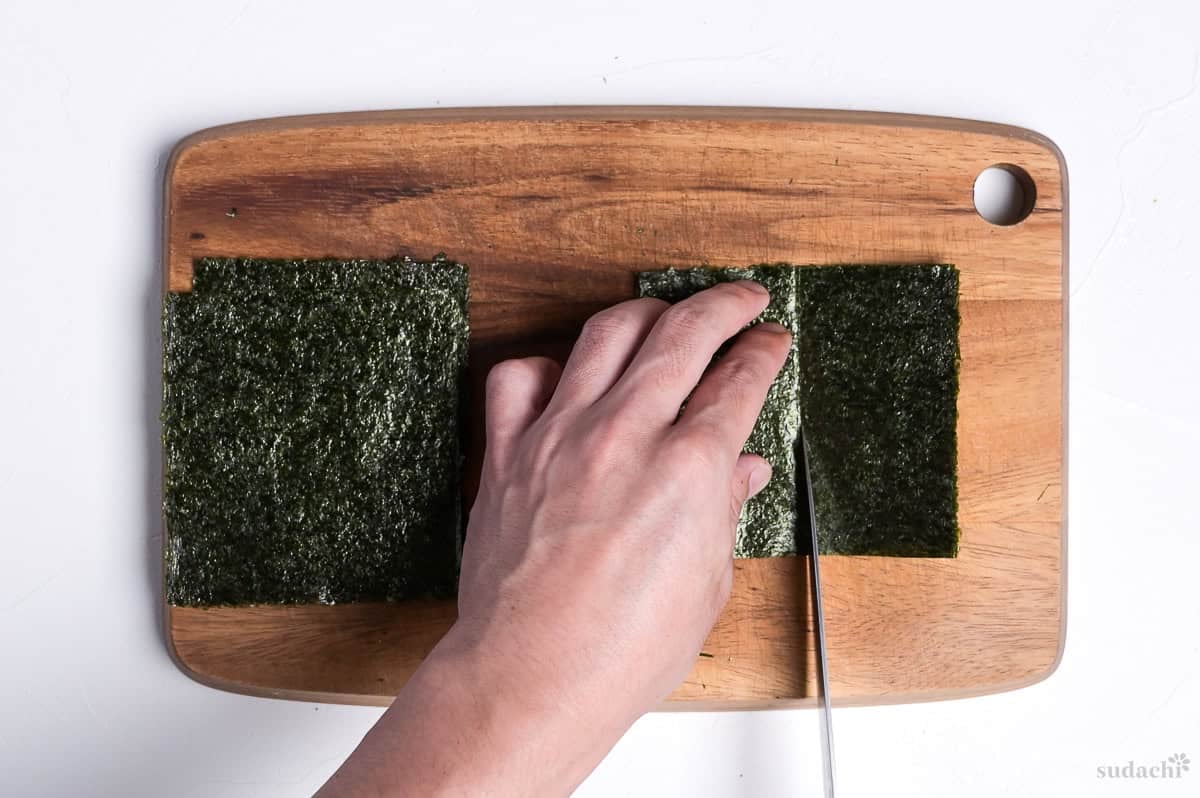
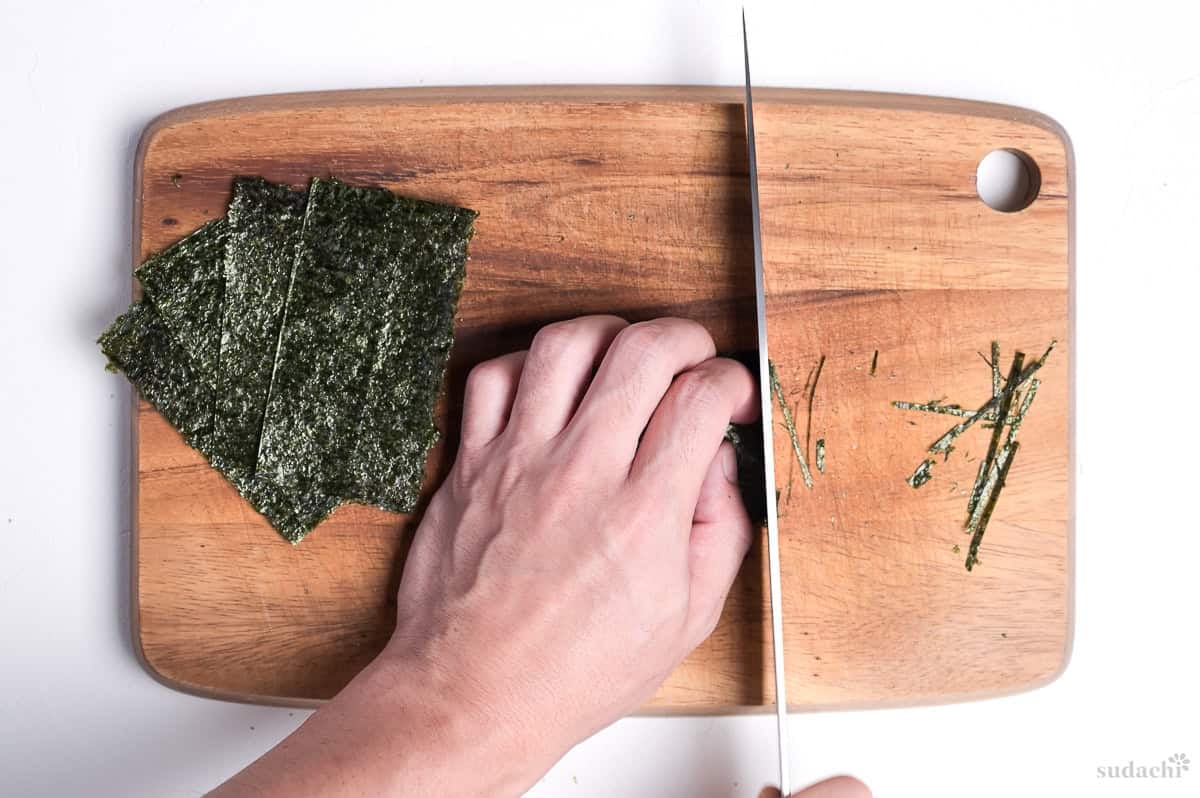
i. Stack 2-4 rectangles, then cut from one edge with the longest part of your scissor blade, one decisive snip at a time (recommended).
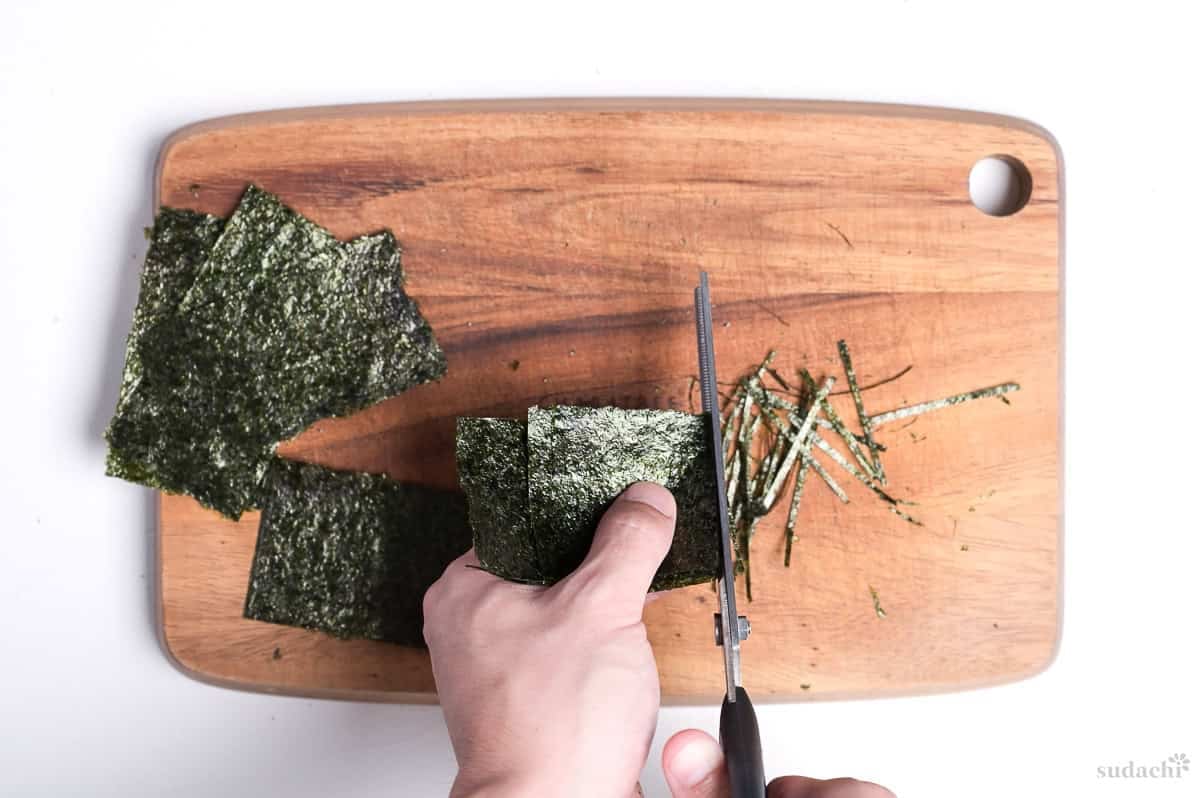
ii. Alternatively, you can do the same with a sharp knife, but I found scissors way is easier, neater, and more consistent.
You do not need a special tool. You need a sharp one.
- Sharp kitchen scissors are the right tool for almost every kitchen outside Japan. Use the longest part of the blade, on a crisp sheet, with single snips. This is what I would hand anyone starting out.
- A sharp knife works if the sheet is bone dry. Stack 2 or 3 sheets, use a wood or rubber board, and push the blade straight down rather than slicing back and forth. Any trace of moisture and it tears.
- A dedicated 5-blade nori cutter cuts 5 threads at once and gives very even widths. They run about $10 to $15 online. Worth it only if you make this often, since the blades are short and dust collects between them over time.
- Skip the food processor and the mandoline. They turn nori into dust and uneven scraps.
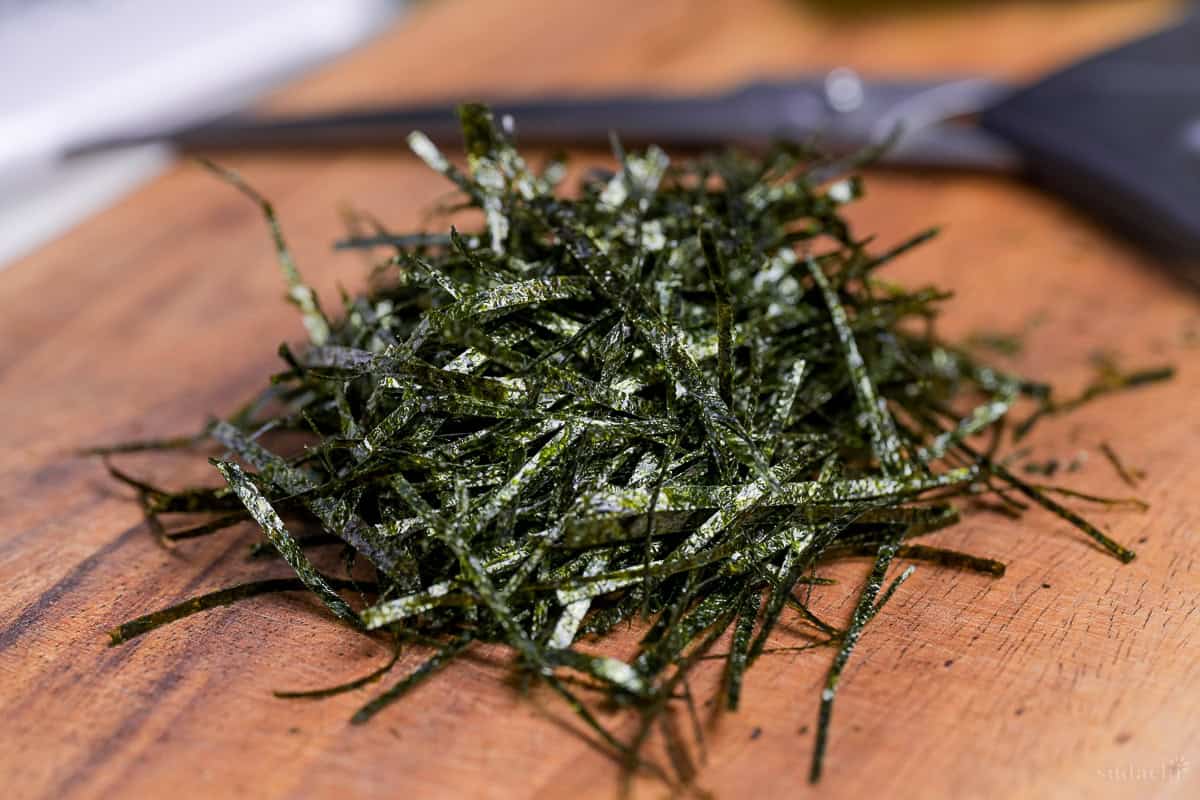
The default is about 2mm wide, the width most bags use. Drop to 1mm when the nori is the delicate finish on chirashizushi. Open up to 5mm when you want it to keep some presence on a rice bowl or a salad. None of these is more correct than the others. They are matched to the dish.
How to Store It So It Stays Crisp
Once it is cut, the enemy is the same as before: humidity.
- At room temperature: Keep it in an airtight jar or zip bag with a silica gel packet, the one saved from the nori package, in a cool, dry cupboard. It stays crisp for weeks this way.
- In the fridge or freezer: Fine for longer storage, but a cold pack picks up condensation. Let it come back to room temperature before you open it, or the moisture rushes straight in.
- If it softens anyway: Give it the same few seconds over a dry pan you would give a fresh sheet, and the crispness comes back.
Kizami Nori FAQ
No. It is plain roasted nori with nothing added. The sweet, salty version is ajitsuke nori, a different product meant to be eaten straight with rice.
No. They are different seaweeds with different flavors, so one cannot stand in for the other without changing the dish. If you need a green powder and cannot find aonori, reach for aosa.
Crumbled nori, momi nori, is the closest stand-in. It carries almost the same flavor and aroma, so it works on soba, ochazuke, donburi, and salads. The one place it falls short is when you want fine, even threads for presentation.
I really don’t think so. Sharp kitchen scissors handle it. A 5-blade nori cutter is a nice upgrade if you find yourself making this every week, but you do not need one for clean threads.
More Japanese Ingredient Articles
How to Cut Kizami Nori (Shredded Nori) from a Sheet at Home

Ingredients
- 1 sheet roasted seaweed for sushi (nori)
The ingredient brands and tools I trust are in my Japanese pantry guide and my cooking tools guide.
Can’t find certain Japanese ingredients? See my substitution guide here.
Instructions
- Dry 1 sheet roasted seaweed for sushi (nori) either in a dry frying pan over a low heat (no oil), or pass it back and forth over an open flame (like a gas burner) until crisp. Be careful not to let it brown or burn.

- Fold it in half, and tear or cut along the seam. Cut each piece in half, then half again until you have 8 small rectangles.

- Stack 2-4 rectangles, then use sharp kitchen scissors to cut about 2mm thin strips.
- Alternatively, cut them with a long, sharp knife. (This method is more prone to tearing and uneven cuts, depending on your knife and skills.)
- Store in an airtight container or zip bag with a silica gel packet. Use as a topping on your favorite Japanese recipes, enjoy!


Leave a rating and a comment