

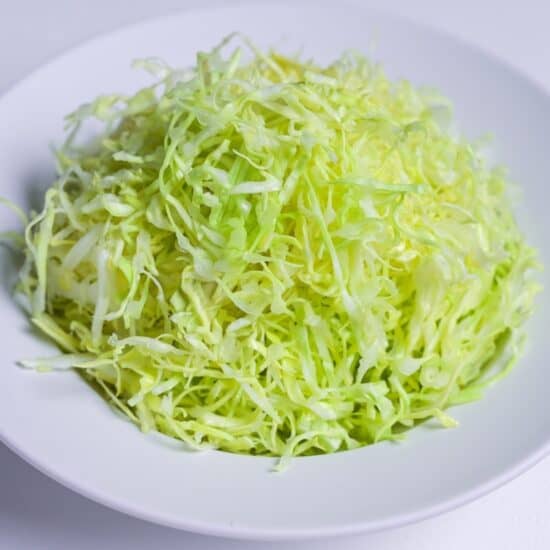


Why does the “plain” cabbage beside karaage or shogayaki feel oddly perfect, and why does homemade shreds turn limp? The difference starts before you even cut.
Japanese meals rarely center on a single plate, so this plain cabbage quietly does important work. Adding fresh color and vegetables to the spread. Once you know the technique, it’s surprisingly easy.
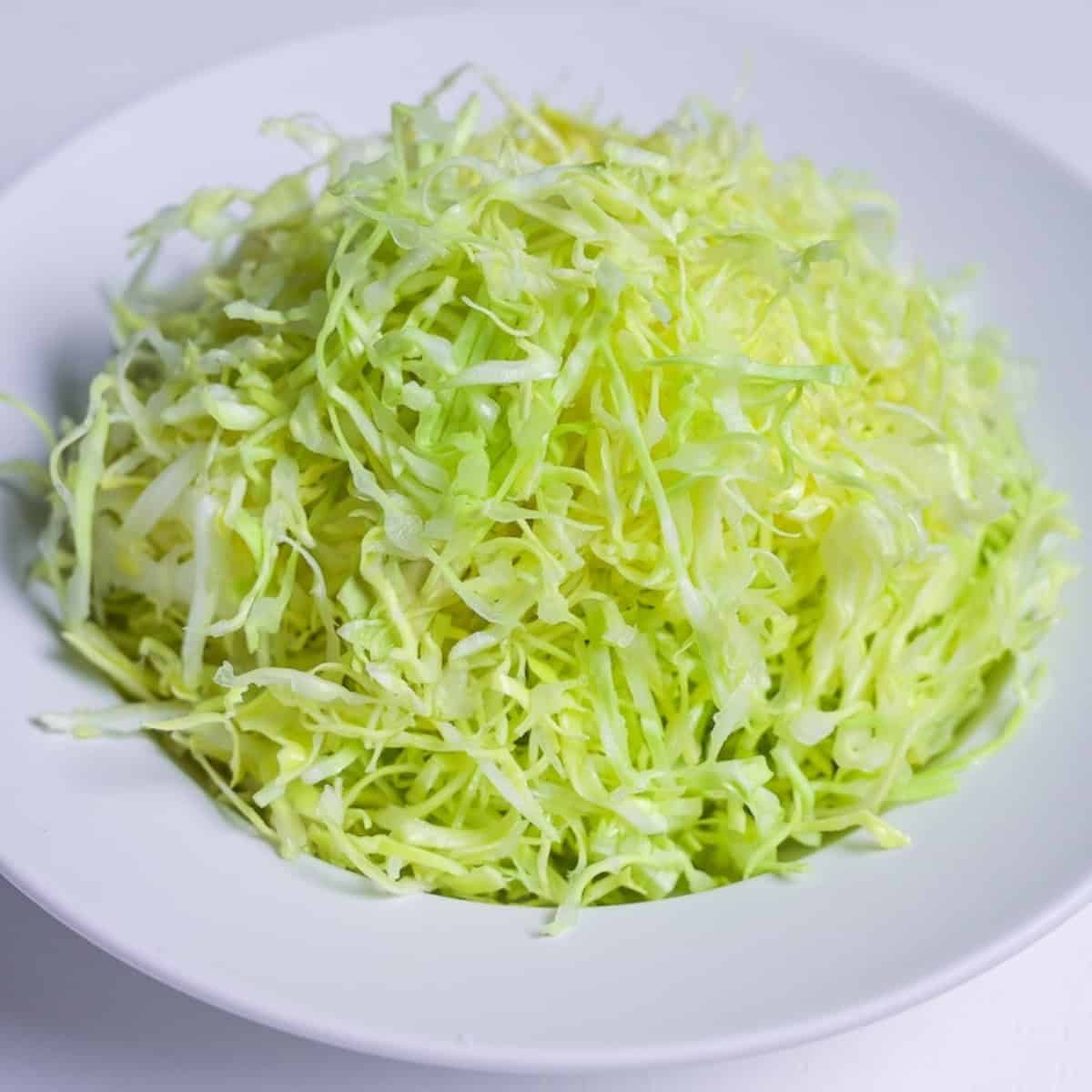
Japanese Shredded Cabbage
Recipe Snapshot
- What is it? Kyabetsu no sengiri, the ultra-thin, raw shredded cabbage served as a cool side dish alongside tonkatsu, karaage, and other fried mains in Japanese teishoku (set meal) dining. A knife-technique-driven prep, not a salad recipe.
- Why you’ll love this recipe: If your homemade katsu dinner looks almost right but something’s off, this is the missing piece. You’ll learn which leaves to pick (hint: it’s a green-and-white mix), how to slice against the grain for that feathery softness instead of chunky strips, and the ice-water trick that locks in the crunch.
- Skill Level: Easy! The technique is accessible, but precision improves with practice.
- Suitable for Meal Prep? Yes!
Summarize & Save this content on:
What is Japanese Shredded Cabbage?
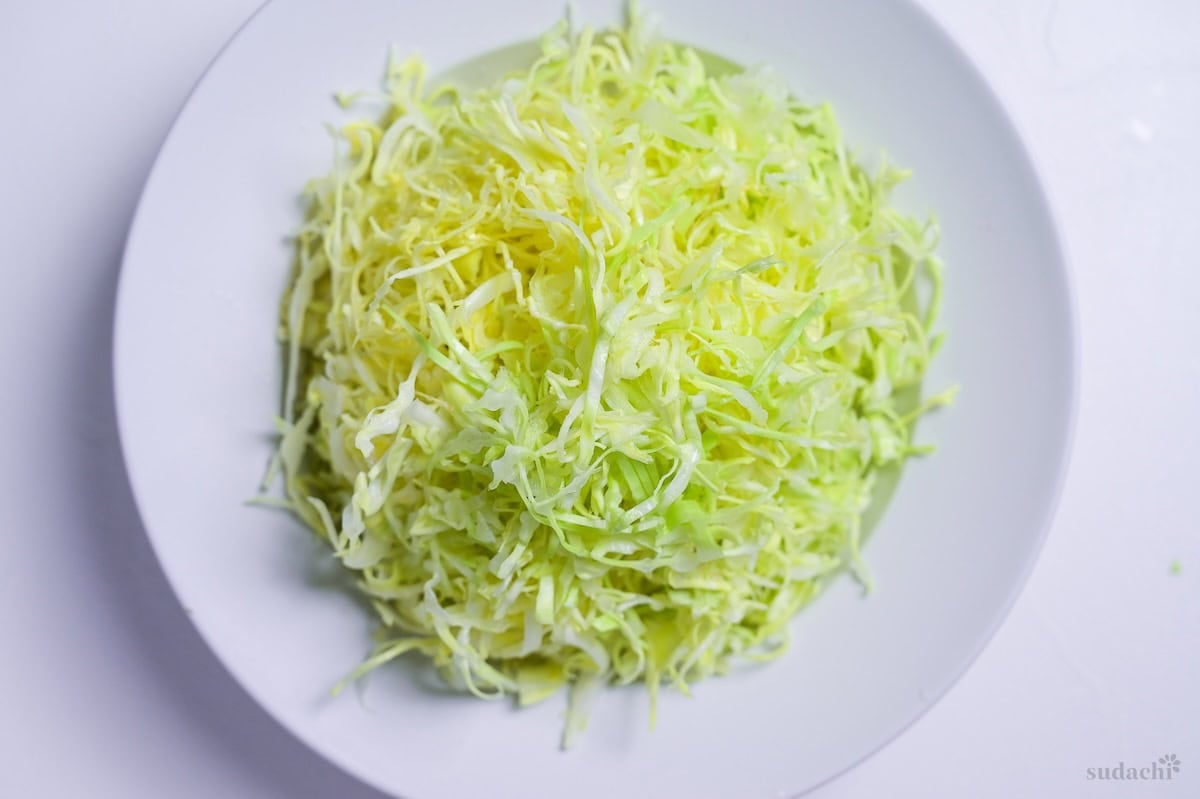
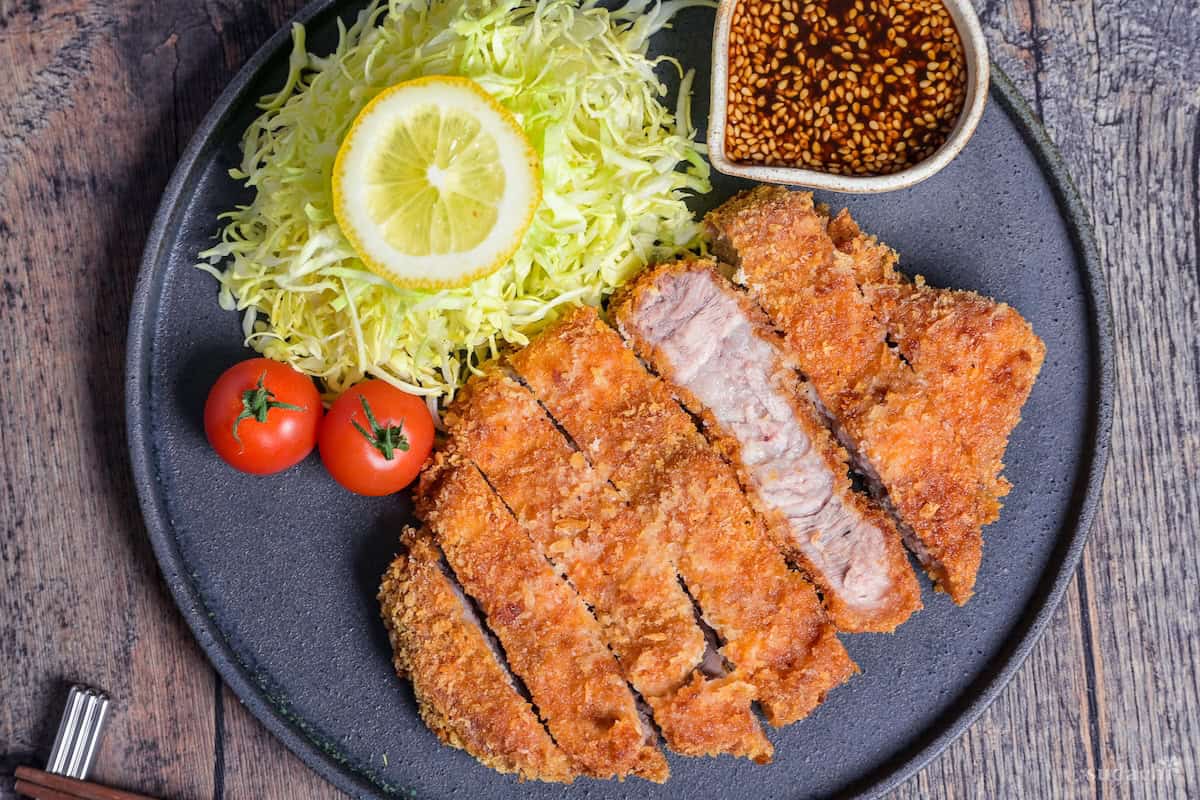
Japanese shredded cabbage, known as kyabetsu no sengiri (キャベツの千切り), is a raw cabbage side dish prepared using the sengiri cutting technique, an ultra-fine julienne that produces thin, feathery strips rather than the chunky shreds you might associate with Western coleslaw.
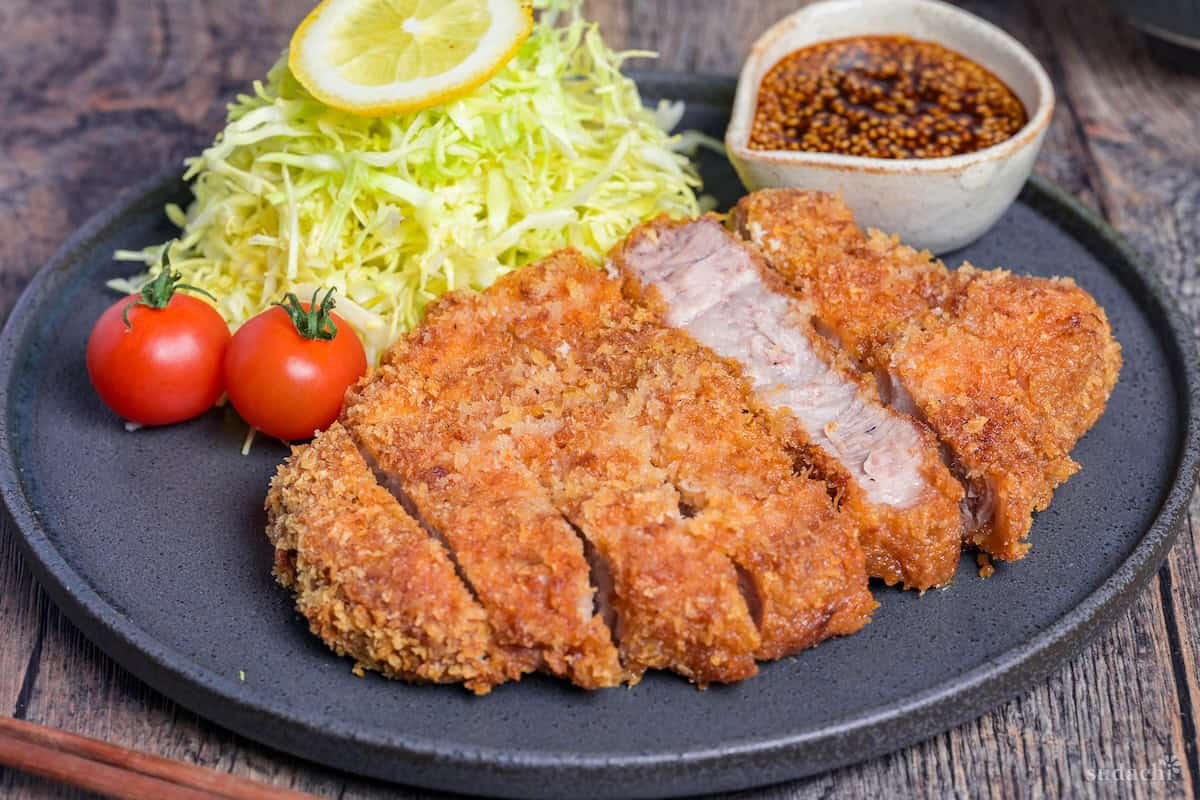
This style of shredded cabbage is a defining side dish in Japan’s yōshoku (Western-influenced Japanese) dining tradition. You’ll find it piled high next to tonkatsu, korokke, menchi katsu, and virtually all categories of Japanese fried foods. Unlike coleslaw, Japanese shredded cabbage is served bare or with a light drizzle of dressings, keeping each strand crisp and letting the diner season it bite by bite.
How to Choose the Best Cabbage
For teishoku-style Japanese shredded cabbage, the “ideal cabbage” isn’t about a special brand, it’s about structure and water pressure (turgor). You’ll get the fluffiest, crispiest senkiri (ultra-fine julienne) when the head is tight, dense, and heavy, with crisp leaves that feel “puffed” and springy.
- Pick it up: choose a head that feels surprisingly heavy for its size (dense leaf layers = better shred).
- Look at the leaves: outer leaves should be glossy, firm, and crisp, not floppy.
- Check the core (whole cabbage): a short, tight core is ideal, a long, protruding core often signals aging.
- If buying a cut wedge: the cut face should be flat, moist, and bright, with no browning, drying, or raised core.
- Avoid: light heads, obvious gaps between leaves, wrinkly/soft outer leaves, strong “old cabbage” smell.
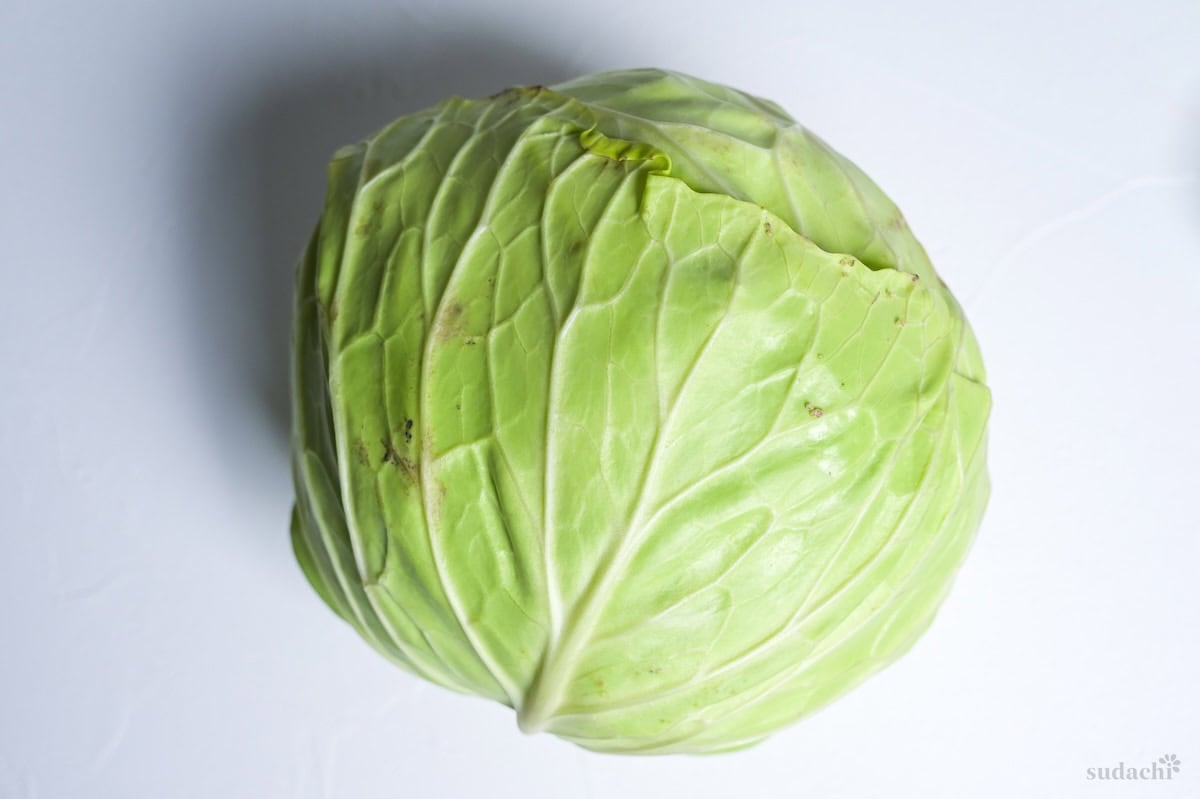
Here is the rough guideline for cabbage varieties:
| Cabbage Type | Notes | Rating |
|---|---|---|
| Taiwanese / Asian flat cabbage (Asian grocery stores) | Closest match to Japanese cabbage. Thin, sweet, tender leaves shred into fluffy strips effortlessly. Your top pick if you have access. | ★★★★★ |
| Pointed cabbage (sweetheart / hispi / Spitzkohl) | Sweet, thin leaves with a loose head. Easy to peel and shred finely. Common across the UK and Germany year-round. | ★★★★★ |
| Savoy cabbage | Crinkled leaves are far more tender than standard green cabbage. Shreds look slightly uneven, but the softness and bite are close. Reliable backup. | ★★★★☆ |
| Standard green cabbage | Tough, thick leaves and fibrous ribs. Works if you remove the central vein. | ★★★★☆ |
| Red cabbage | Stiff leaves, peppery bite, and anthocyanin pigment that bleeds with acid. Fine as a small color accent. | ★★☆☆☆ |
| Napa cabbage | Different species entirely. Too watery and delicate. | ★☆☆☆☆ |
TL;DR: Asian flat cabbage from an Asian market is your best bet. In Europe, pointed (sweetheart) cabbage is just as good and easier to find. Savoy is a solid plan B. Standard green/white cabbage works in a pinch too.
How to Make Japanese Shredded Cabbage
i. Start by rinsing the entire cabbage under cool running water, turning it so the stream reaches every fold and crease. If dirt clings to the root end, a quick scrub with a vegetable brush loosens it without bruising the leaves.
Washing the head before you cut is the key move here. Once you shred, all that exposed surface area becomes a magnet for water, leaching out flavor and nutrients faster than you’d expect
i. Pull off the first two or three outer leaves and set them aside. They’ve been shielding the head during transport and tend to be tougher, sometimes blemished. Don’t toss them, though. Those sturdy leaves are perfect for stir-fries, soups, or even okonomiyaki where a little extra chew works in your favor.
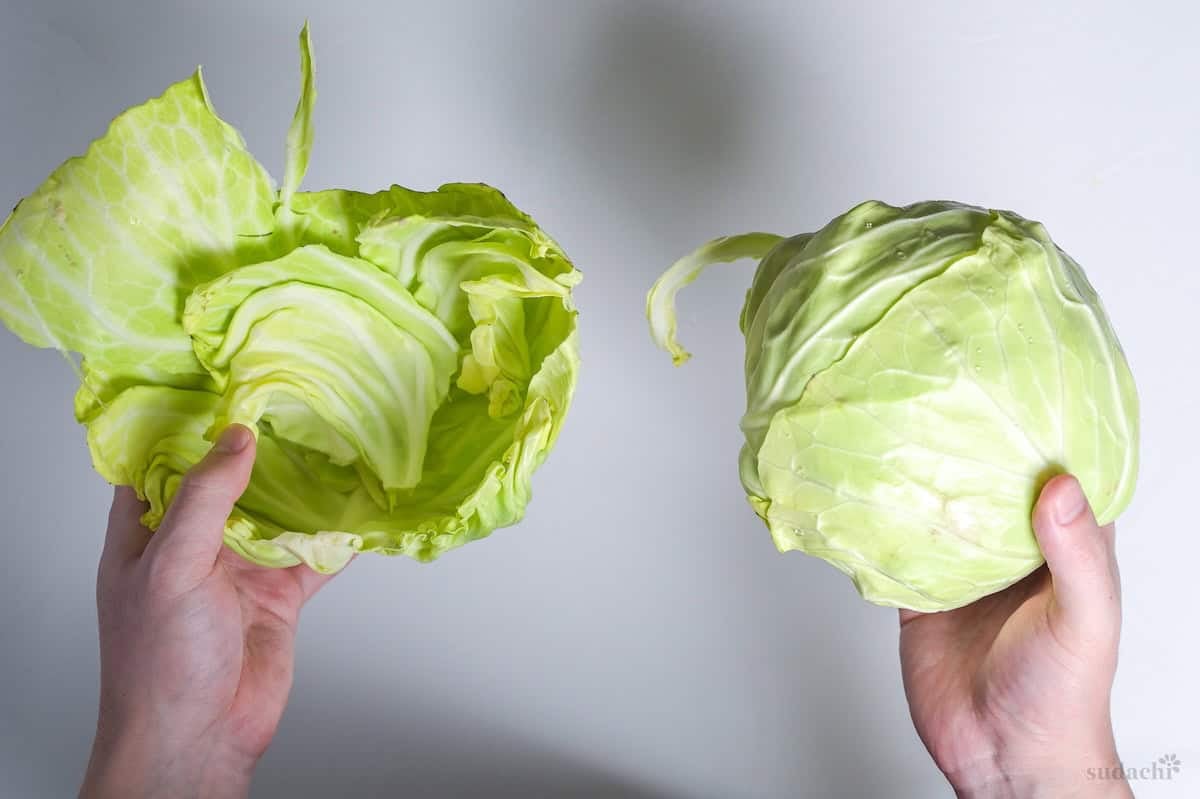
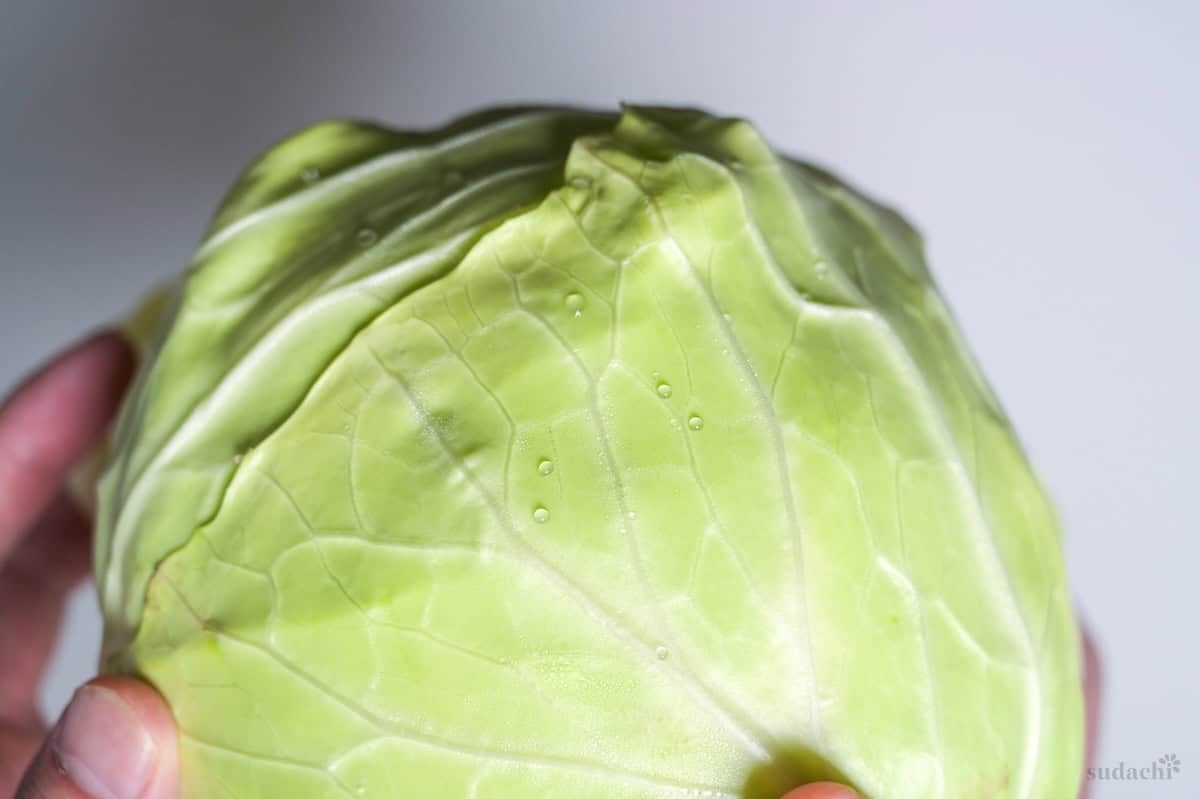
ii. As you pull deeper, you’ll notice the inner leaves release a faint, sweet moisture. That’s the signal you’ve reached the juiciest layer, exactly what you want for the starring role in your shred.
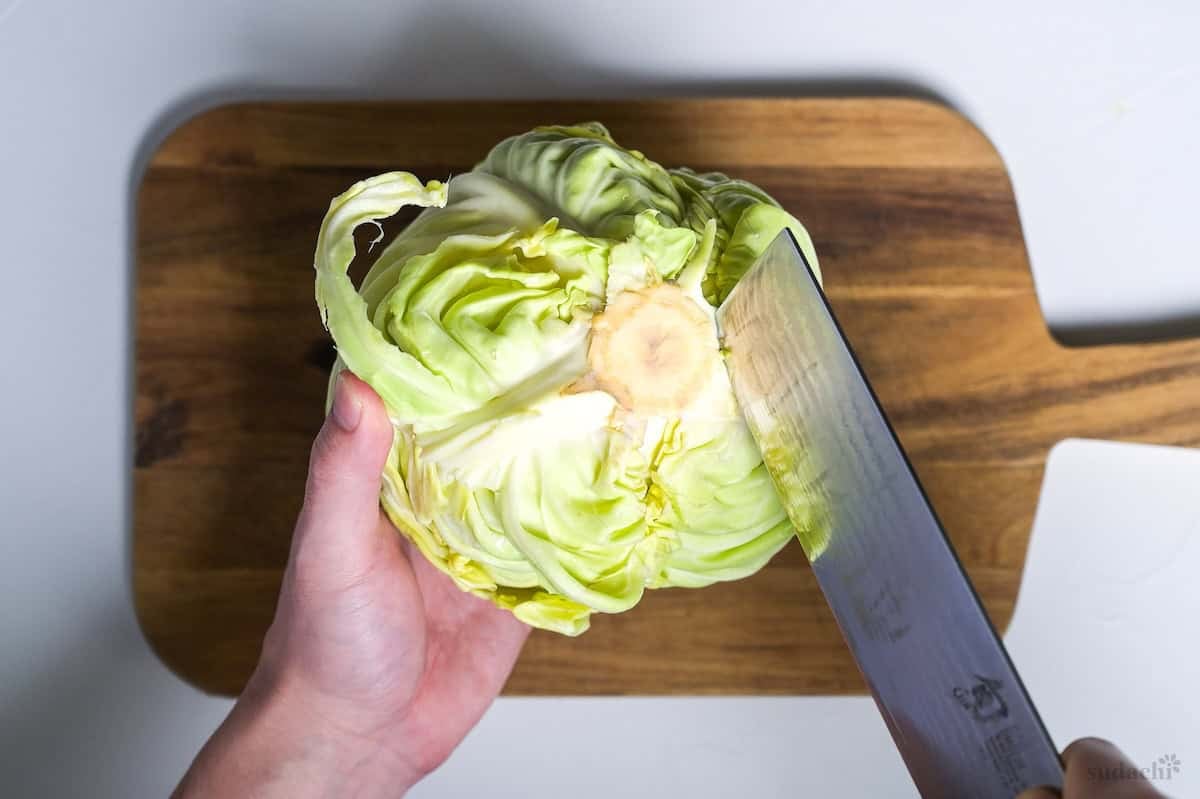
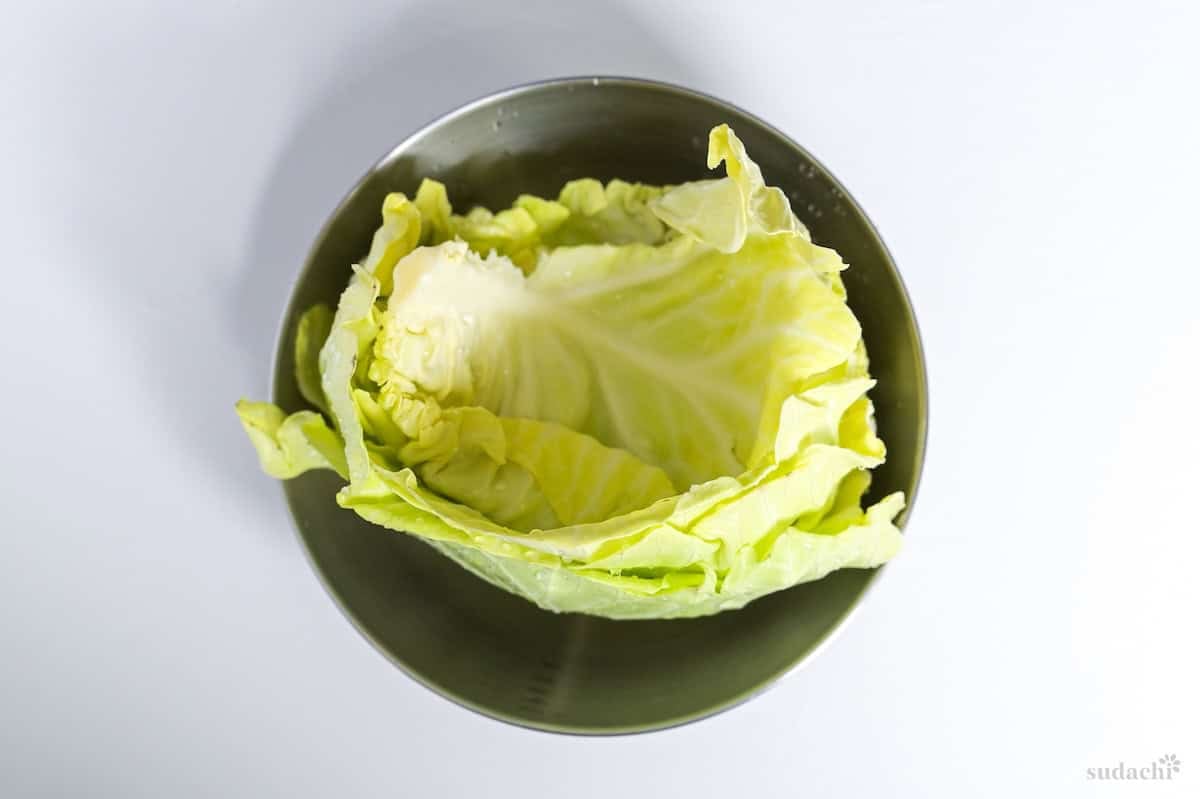
i. Flip the cabbage over so the root faces up, then slide the tip of your knife around the core in a shallow circle to loosen the base.
ii. Now peel leaves away one at a time, working gently from the outside inward.
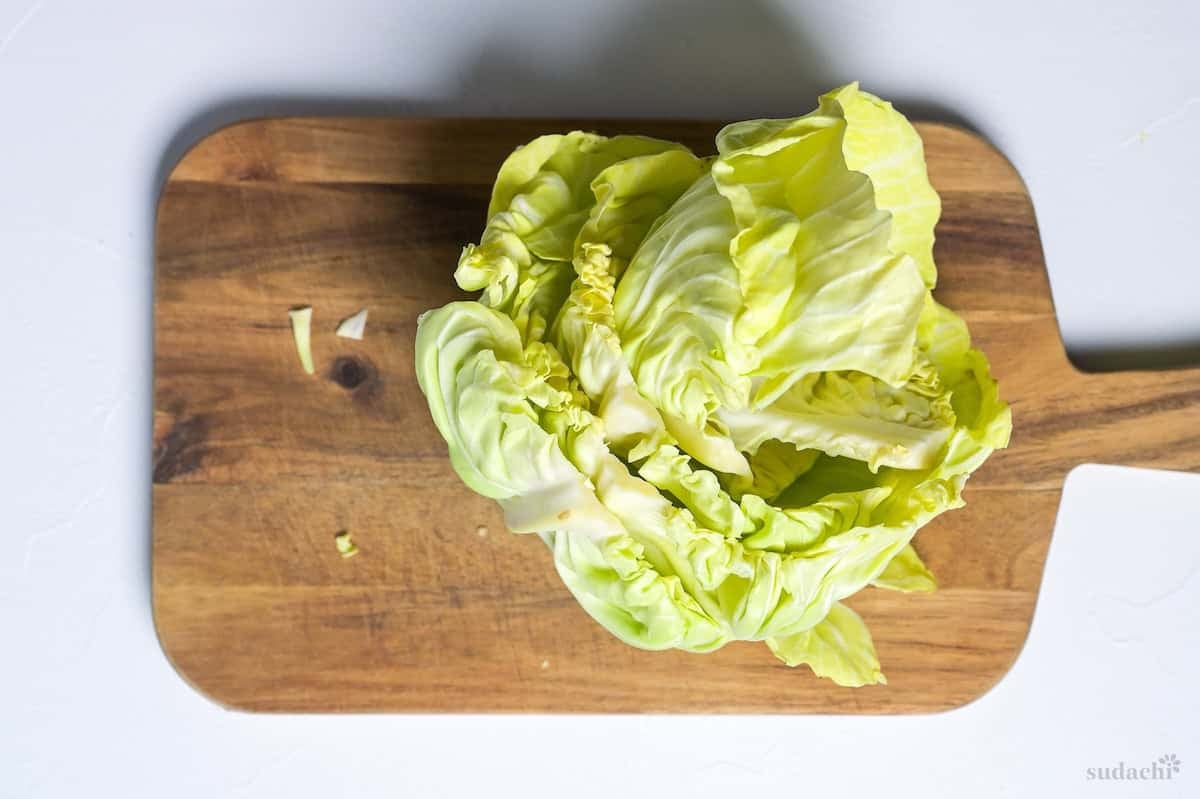
For the prettiest, most balanced shred, aim for roughly a 7:3 or 6:4 mix of outer green leaves to inner pale ones. Green leaves bring color and a pleasant, subtle bite, while the white inner leaves add sweetness and tenderness. All green can veer slightly tough, all white looks pale and lacks that appetizing “teishoku feel” you see at a tonkatsu shop. Blending them gives you the best of both worlds, visual pop and a texture that’s crisp without being coarse.
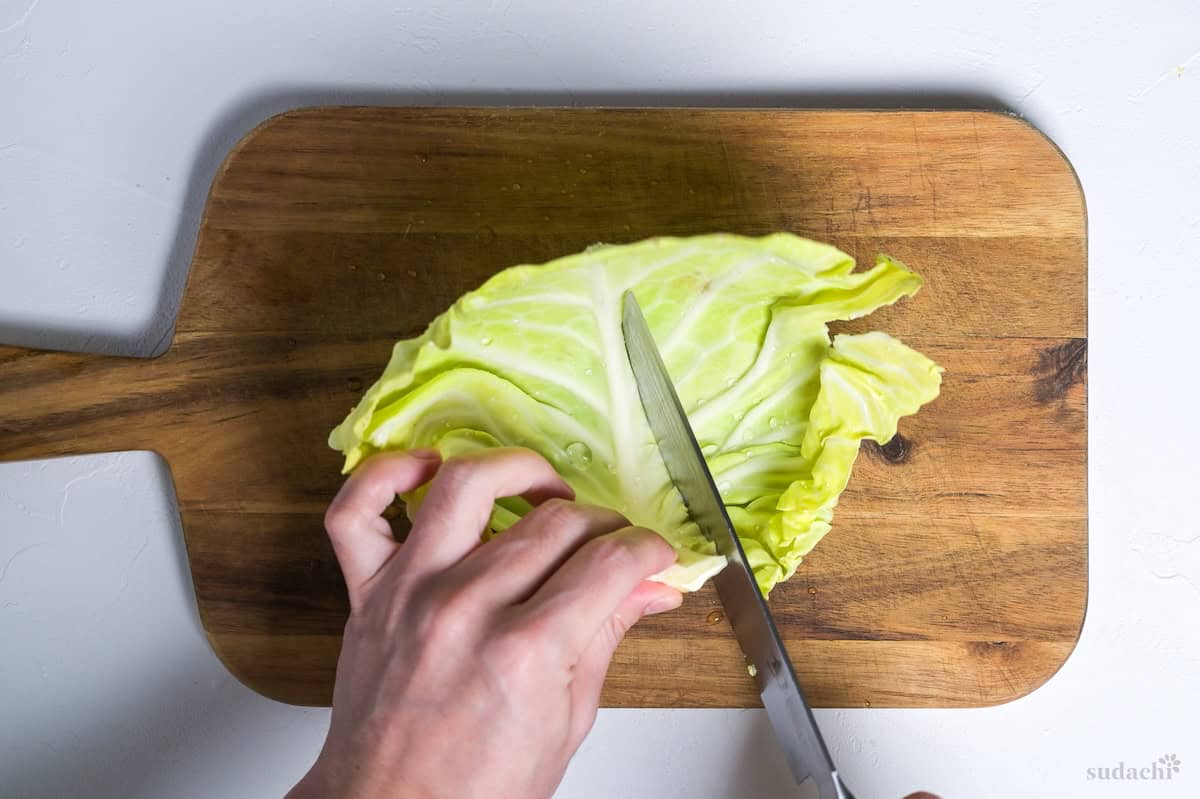
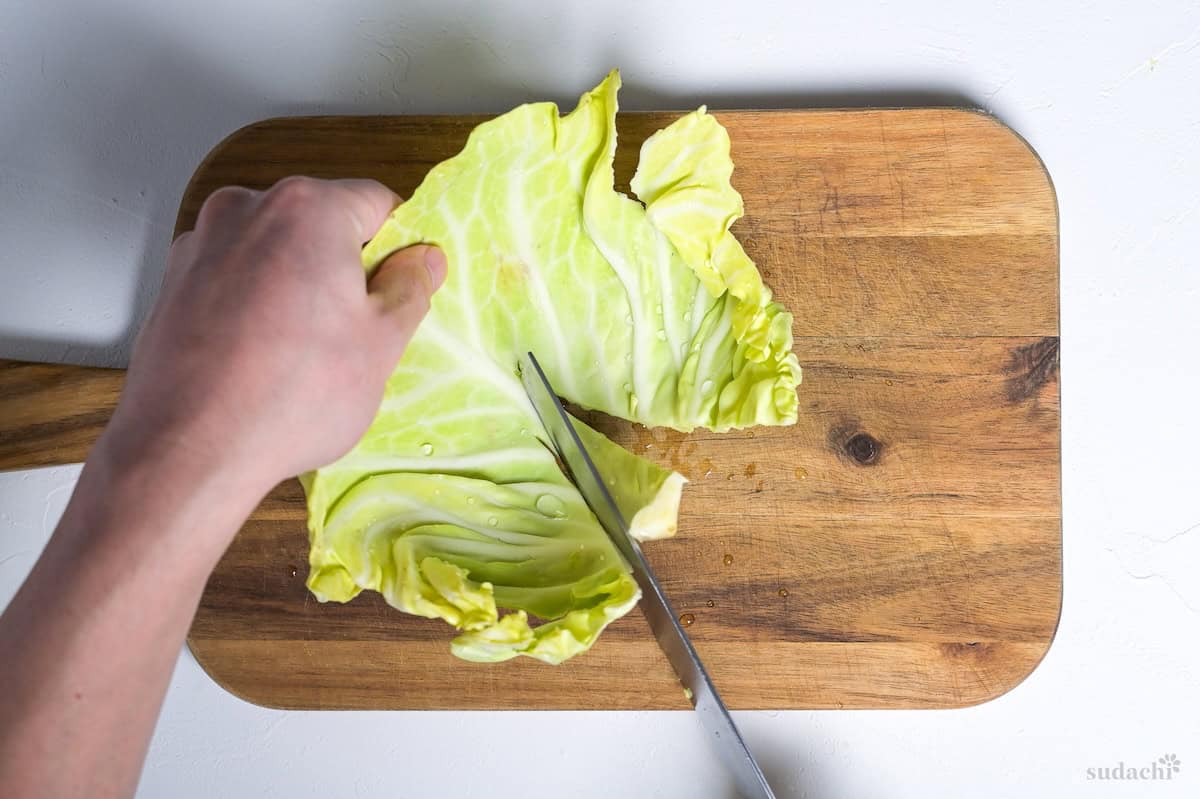
i. Lay each leaf flat and locate the thick central vein running up from the base. Using a V-shaped cut, slice along both sides of the rib to remove just the chunky portion.
ii. Leave the thinner veins toward the tip intact; they’re flexible enough to disappear into your shred.
iii. Those trimmed ribs aren’t waste either. They’re crunchy and sweet when sliced thin for stir-fries or simmered into soup stock.
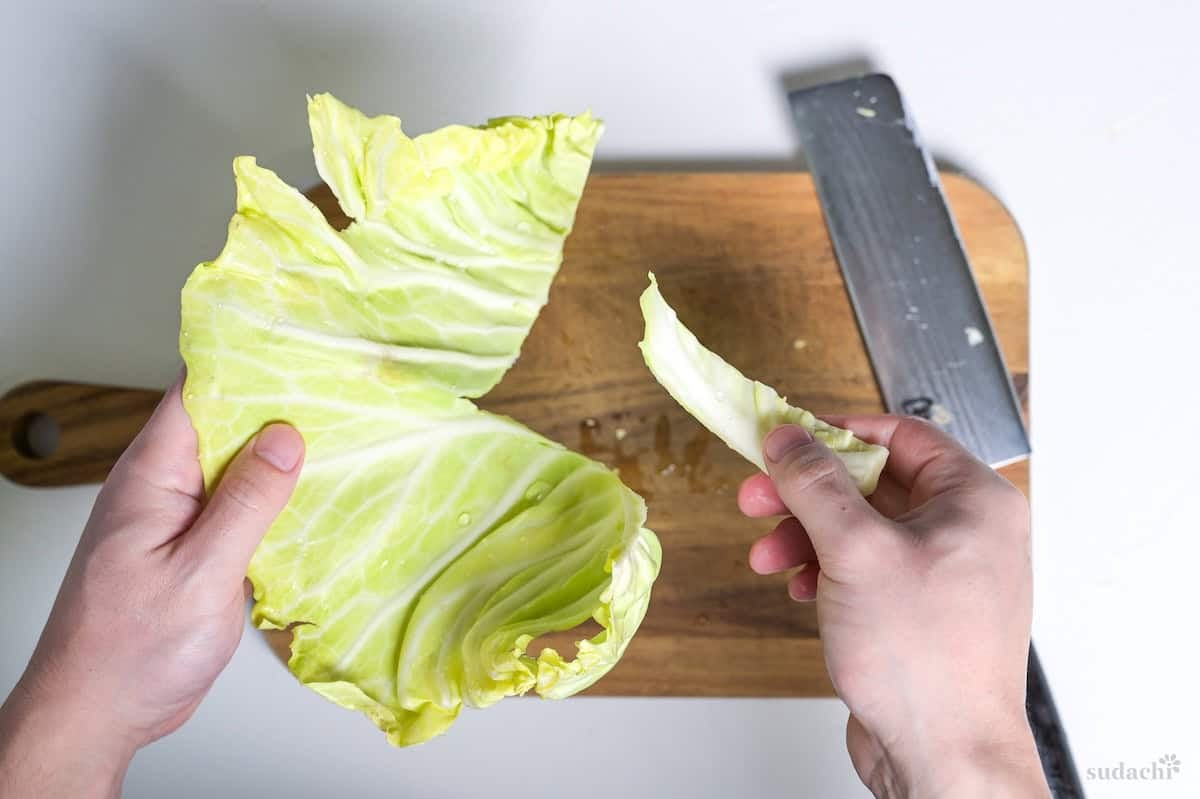
Dense ribs contain tightly packed fiber that refuses to shred into delicate ribbons. If you skip this trim, you’ll end up with stiff, woody “sticks” scattered through an otherwise feathery pile. Exactly the texture problem that makes home-shredded cabbage feel chunky compared to the restaurant version. Removing them also makes each leaf easier to roll in the next step, since there’s no rigid spine fighting you.
i. Stack one or two trimmed leaves together, placing any smaller leaf on the inside, then curl them into a loose cylinder. Imagine rolling a yoga mat, not wringing a towel.
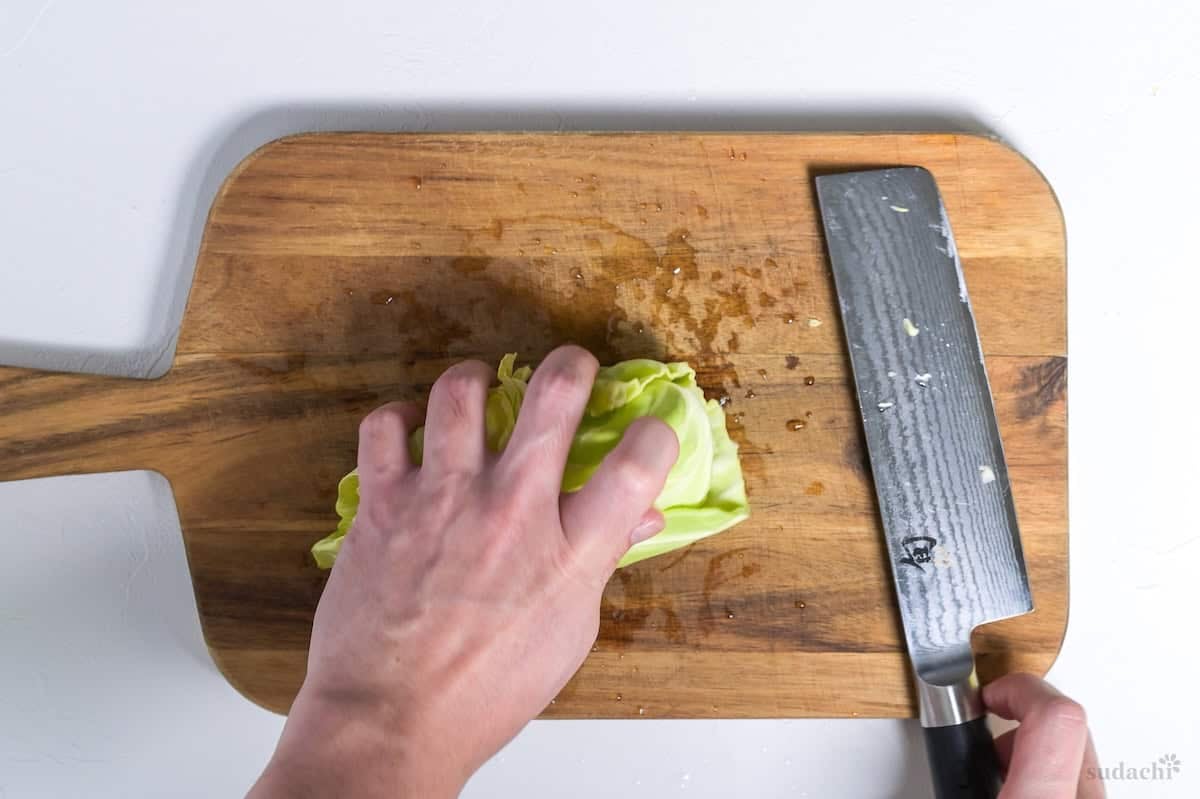
ii. You want air trapped inside that tube. Pressing too firmly crushes cell walls, squeezing out moisture and flavor before you even pick up your knife. The roll should hold its shape with just light fingertip pressure from your guide hand, feeling springy and soft rather than dense and tight.
Limit yourself to two or three leaves of similar size and thickness per roll. Overstacking makes the cylinder too bulky for your blade to pass through cleanly, which leads to uneven widths. That trapped air is what gives your finished cabbage its signature fluffiness.
i. Position your rolled bundle so the dominant veins run perpendicular to your blade. You’re cutting across the fibers, not along them. Grip the knife handle firmly with your dominant hand while your fingertips curl into a “cat’s paw” on top of the roll to guide each cut.
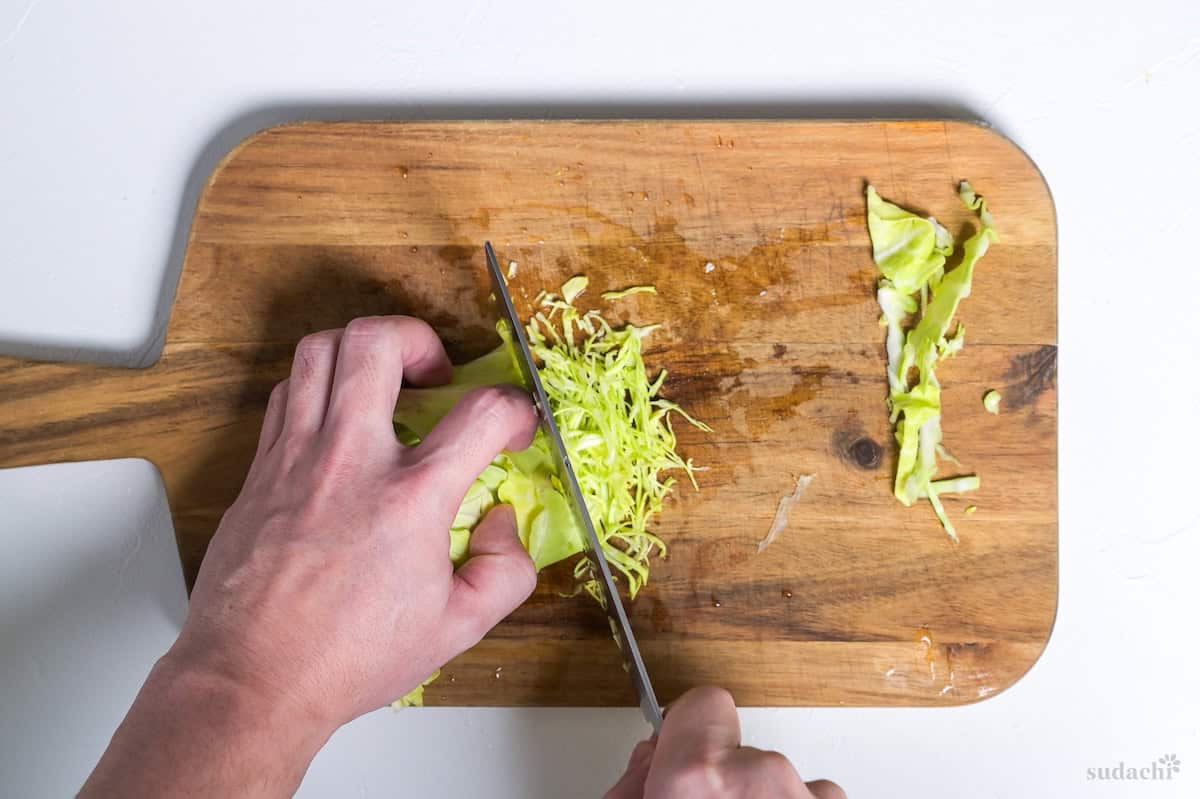
A thin, sharp blade makes all the difference here. What matters most is sharpness. A dull blade doesn’t cut fibers so much as tear and crush them, pushing moisture out and degrading both texture and aroma. If you haven’t sharpened recently, give your blade a few passes on a whetstone or honing rod before you start.
ii. Draw the blade forward or backward in a long, smooth stroke, using at least seventy to ninety percent of the cutting edge. Aim for ribbons so thin they’re almost translucent.
This is the single most impactful technique tip. Move the blade in a long, gliding stroke (forward or backward) rather than pressing straight down. A chopping motion compresses the cabbage, crushing cells and releasing free water that makes everything soggy and slightly bitter. A slicing motion lets the edge pass through cleanly, keeping cell walls intact.
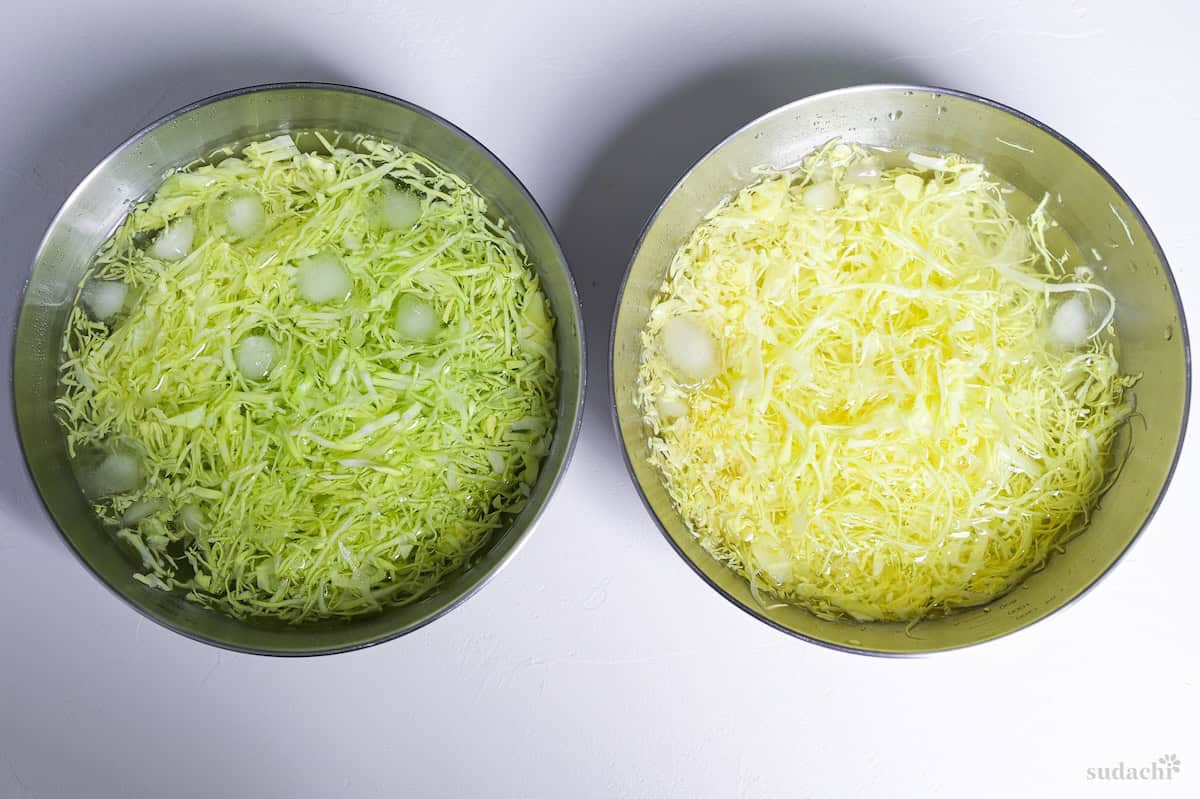
i. Slide the shredded cabbage into a bowl of ice water and let it sit for 1 minute.
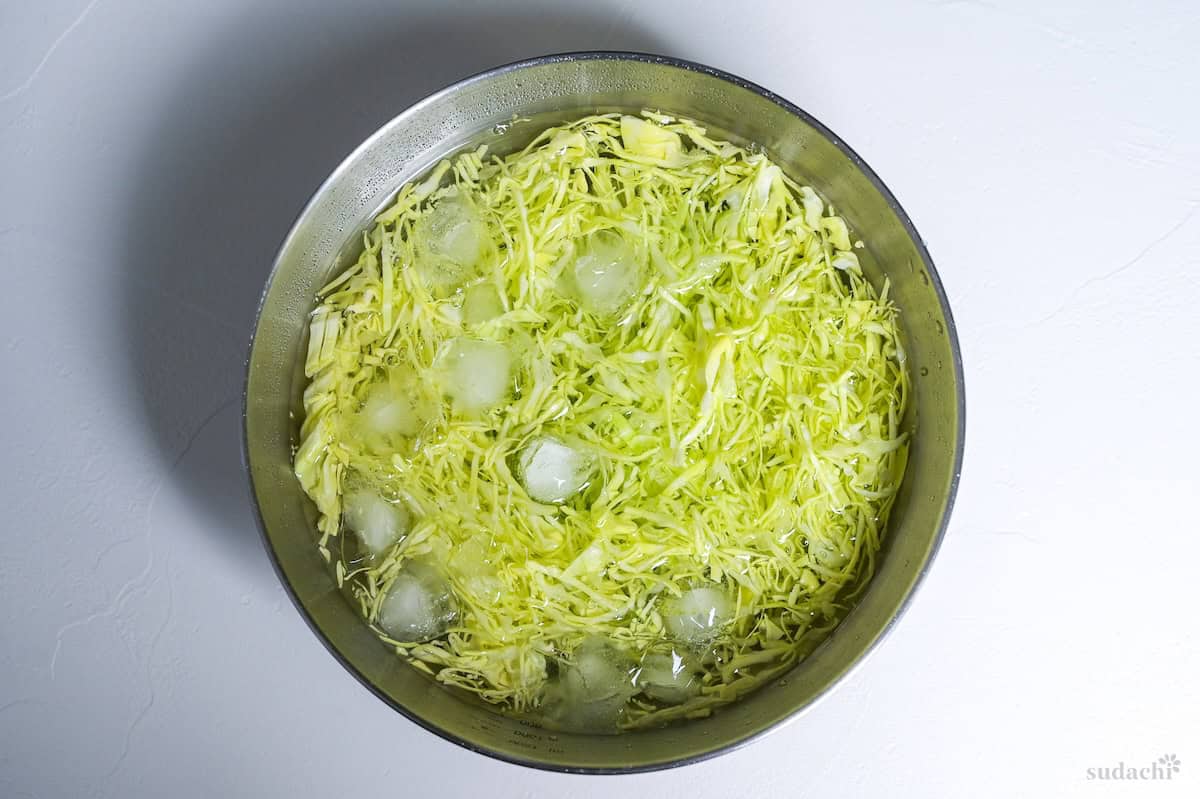
The chill is doing something wonderful beneath the surface: cold temperatures boost osmotic pressure inside each tiny cell, plumping the ribbons back up into crisp, taut strands while flushing out the faintly grassy, raw scent that can make cabbage taste “green.”
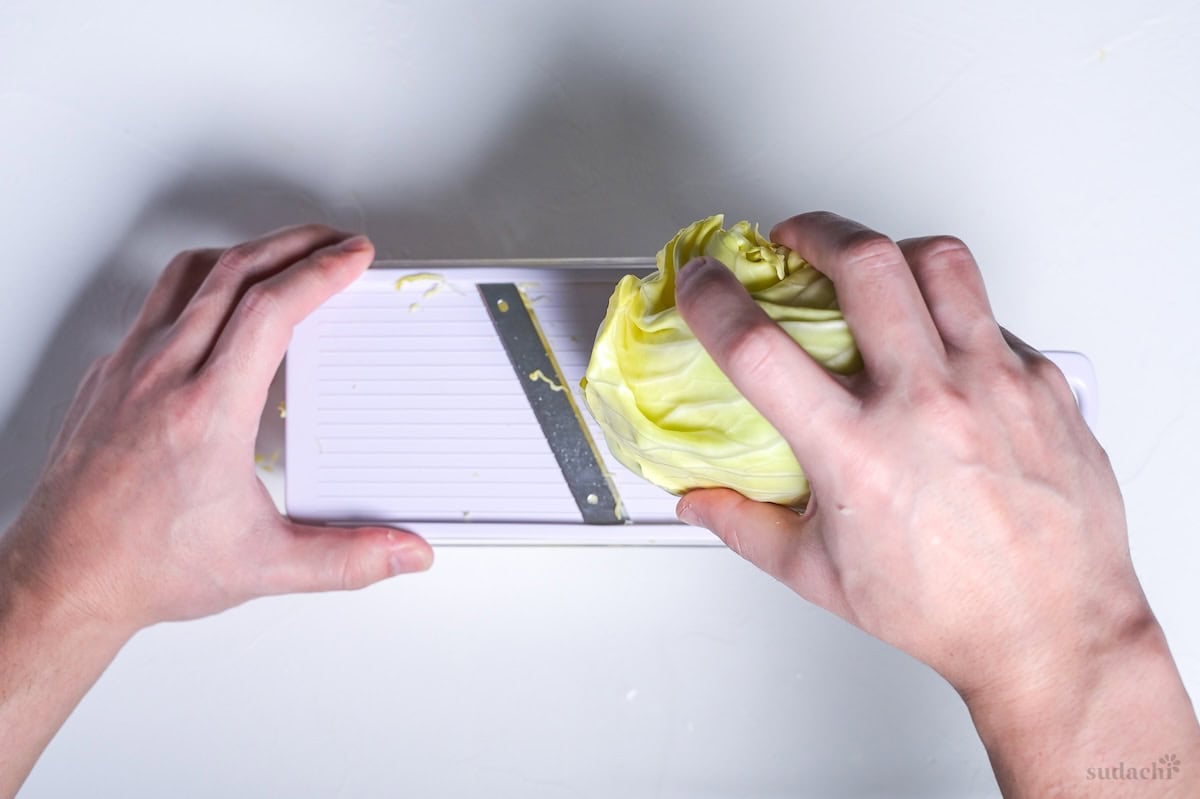
i. If your knife skills aren’t producing the paper-thin ribbons you’re after, a mandoline slicer is a genuine shortcut to restaurant results. Set the blade to the thinnest setting, hold a quarter or half head of cabbage firmly against the guard, and slide it across in smooth, even strokes.
i. Lift the cabbage from the ice bath and transfer it to a salad spinner. Give it several vigorous spins until no more water flings off the walls of the bowl. If you don’t own a spinner, spread the shreds across a clean kitchen towel, gather the corners, and shake gently.
ii. Use your fingertips or chopsticks to gently lift and separate the shreds, tossing them lightly so air works its way between the strands.
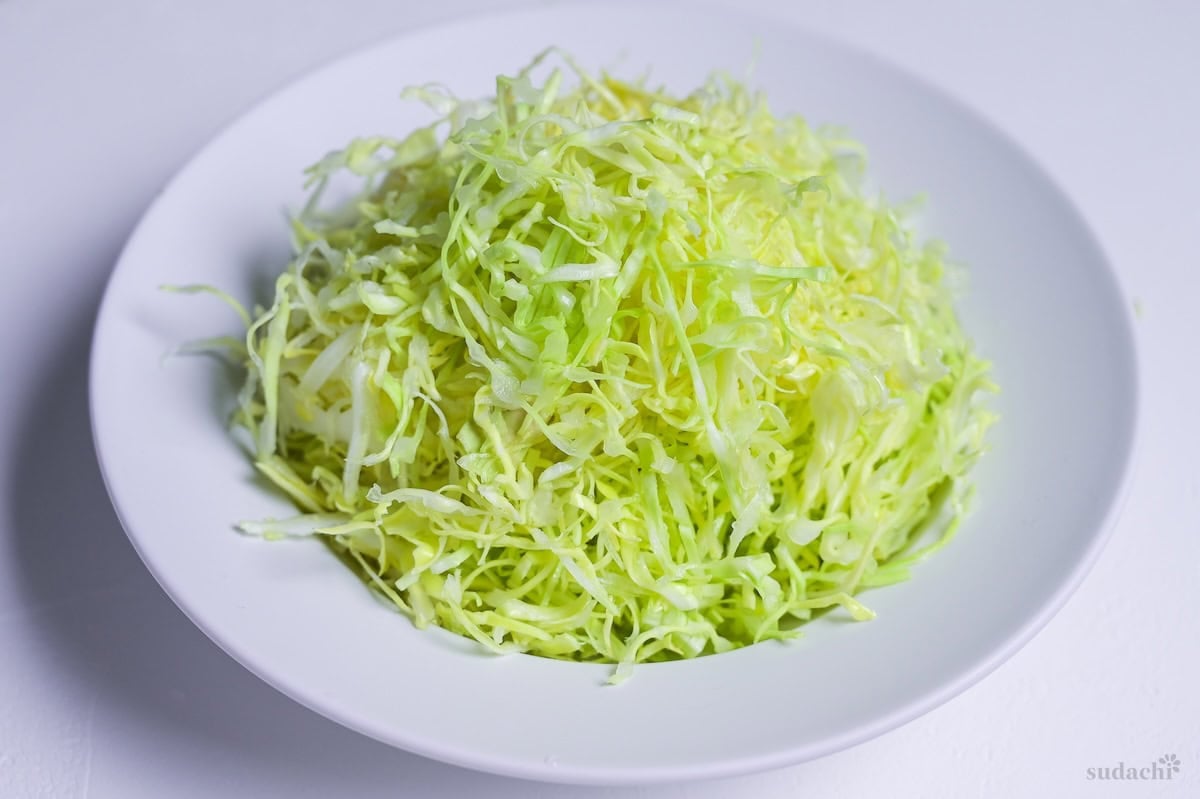
iii. Then mound the cabbage into a tall, airy dome on the plate.

Essential Tips & Tricks
- V-cut out the thick center rib before rolling, because dense fiber won’t slice thin and ruins the “feathery” bite; if you leave it in you’ll get crunchy sticks and uneven shreds.
- Use a razor-sharp knife and slice with long push-pull strokes.
- Roll leaves loosely (don’t compress) and stack only 1-2 similar leaves.
- Slice across the veins for tonkatsu-style tenderness, because cross-grain cutting shortens fibers for an easier chew. If you cut with the grain it turns stringy and “ropey” instead of fluffy.
- Soak shreds in ice water for 30-60 seconds, then spin very dry and dress at the table.
With these simple tips in mind, you’re set for success every time you make Japanese shredded cabbage.
Storage & Meal Prep
Fridge: Store undressed, very dry Japanese shredded cabbage in an airtight container lined with a paper towel (coldest part of the fridge) for up to 24 hours for best crunch. It’s still usable up to 48 hours, but the strands clump and the “fresh snap” fades.
Freezer: Not recommended.
Meal Prep: Yes, wash whole leaves, trim thick ribs, and shred up to 1 day ahead, then keep it cold, very dry, and keep dressing separate. Don’t store it sitting in water (that invites dilution/leaching), and don’t pre-dress (salt/acid trigger osmosis, leading to a watery bowl).
Cabbage Salad FAQ
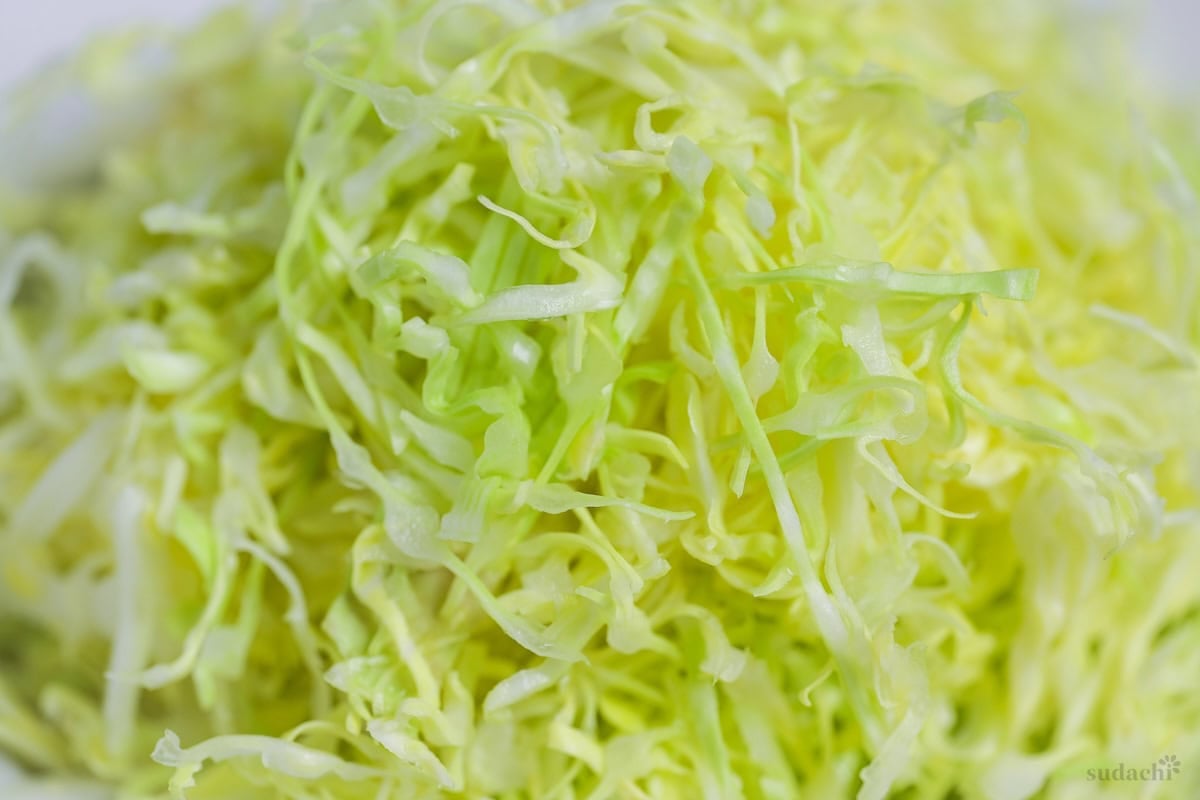
Aim for ribbon-thin strands that bend and curl easily into a fluffy mound-think “angel-hair,” not slaw. If your shreds look like short matchsticks or feel sharp and pokey on the tongue, they’re too thick and will read tough. The defining technique entity here is draw-slicing (clean slicing, not chopping) to keep strands fine and dry.
Four culprits work alone or together: a dull blade that crushes cells instead of slicing them cleanly, skipping the spin-dry step so free surface water pools at the bottom, dressing the cabbage too early so salt and acid trigger osmosis, or soaking too long in the ice bath so cells absorb excess water rather than just restoring crispness. Fix any one of those and you’ll see immediate improvement.
Not always, but a brief ice-water shock can boost crispness and mellow “green” aroma by restoring turgor, especially if your cabbage is older or your cuts aren’t ultra-thin. The catch is you must follow with strong draining/spinning; otherwise you’ll dilute dressing and get a watery bowl. If your cabbage already tastes clean and snaps lightly, you can skip the soak and just focus on drying.
Most commonly it’s a thick Japanese sesame dressing (goma) or a mayo-style dressing-both rely on emulsification so the sauce clings without flooding the plate. Many tonkatsu shops also use tonkatsu sauce as the “dressing,” since diners eat cabbage alongside sauced cutlet.
You’ll want to quarter/halve the cabbage first depending on the size of your slicer, remove the core, then place the flat cut side down against the mandoline. Slice across the leaf layers, not along them, so the wedge sits like a sideways triangle as you move it over the blade. That way you get those long, fluffy restaurant style shreds. And definitely use a guard or cut resistant glove once the piece gets small .
More Japanese Salad Recipes
- Japanese Sesame Spinach Salad
- Spinach Ohitashi
- Crispy Rice Salad with Japanese Twist
- Japanese Potato Salad
Hungry for more? Explore my Japanese salad recipe collection to find your next favorite dishes!
Did You Try This Recipe?
I would love to hear your thoughts!
💬 Leave a review and ⭐️ rating in the comments below. 📷 I also love to see your photos – submit them here!

How to Make Japanese Shredded Cabbage for Side
Ingredients
- 1 green cabbage medium head, firm and heavy for its size, Asian flat cabbage or pointed/sweetheart cabbage preferred
My recommended brands of ingredients and seasonings can be found in my Japanese pantry guide.
Can’t find certain Japanese ingredients? See my substitution guide here.
Instructions
- Take 1 green cabbage and rinse it under cold running water, turning occasionally so that the stream reaches every fold. Use a vegetable brush or damp cloth to rub off stubborn dirt.

- Peel off the outer two or three leaves. You can throw them away, or save them for stir fries or soups.
- Place the cabbage with the root side facing up, and use the tip of your knife to cut around the core to loosen the base.
- Gently peel the leaves off one at a time.
- Lay the leaves flat on a cutting board, and cut a V shape in the center to remove the chunky vein running through the middle.
- Roll 2-3 leaves into a tube and place it down on your cutting board. Thinly slice against the direction of the veins. Make sure to use a sharp knife, and draw the blade in one direction in a smooth stroke, avoid pressing down or sawing.
- Alternatively, cut using a mandoline slicer.
- Drop the shredded cabbage into a bowl of ice cold water and soak for 1 minute.
- Use a salad spinner (or a clean tea towel) to thoroughly dry the cabbage. Place a tall mound on your serving plate and dish up the rest of your meal. Enjoy with a simple dressing, or sauce from your dish. Enjoy!


Leave a rating and a comment