

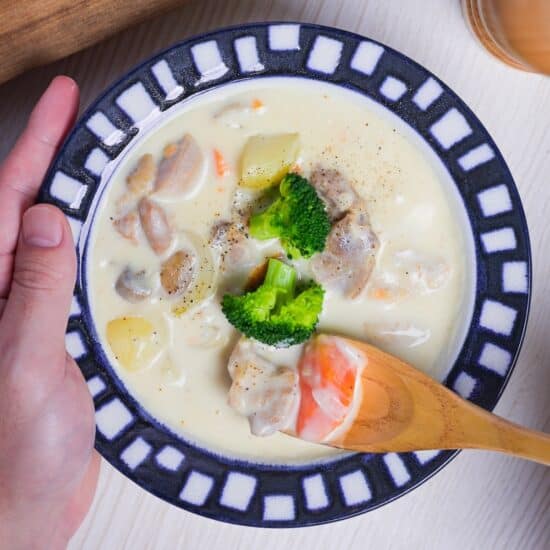


Featured Comment
OMG! I just made this dish tonight and we absolutely loved this recipe. We’ve always used the boxed mix. This recipe was so simple and so flavorful.
– @808Sharpe (from YouTube)
Japan’s coziest winter stew, kurīmu shichū usually starts with a convenient roux cube at home, just like curry rice and hayashi rice. But you can easily make it from everyday ingredients.
This from-scratch recipe borrows French technique to keep your sauce impossibly smooth, no curdling, no grainy texture, no label anxiety! Once you taste it and know how easy it is, you can’t go back to the boxed stuff.
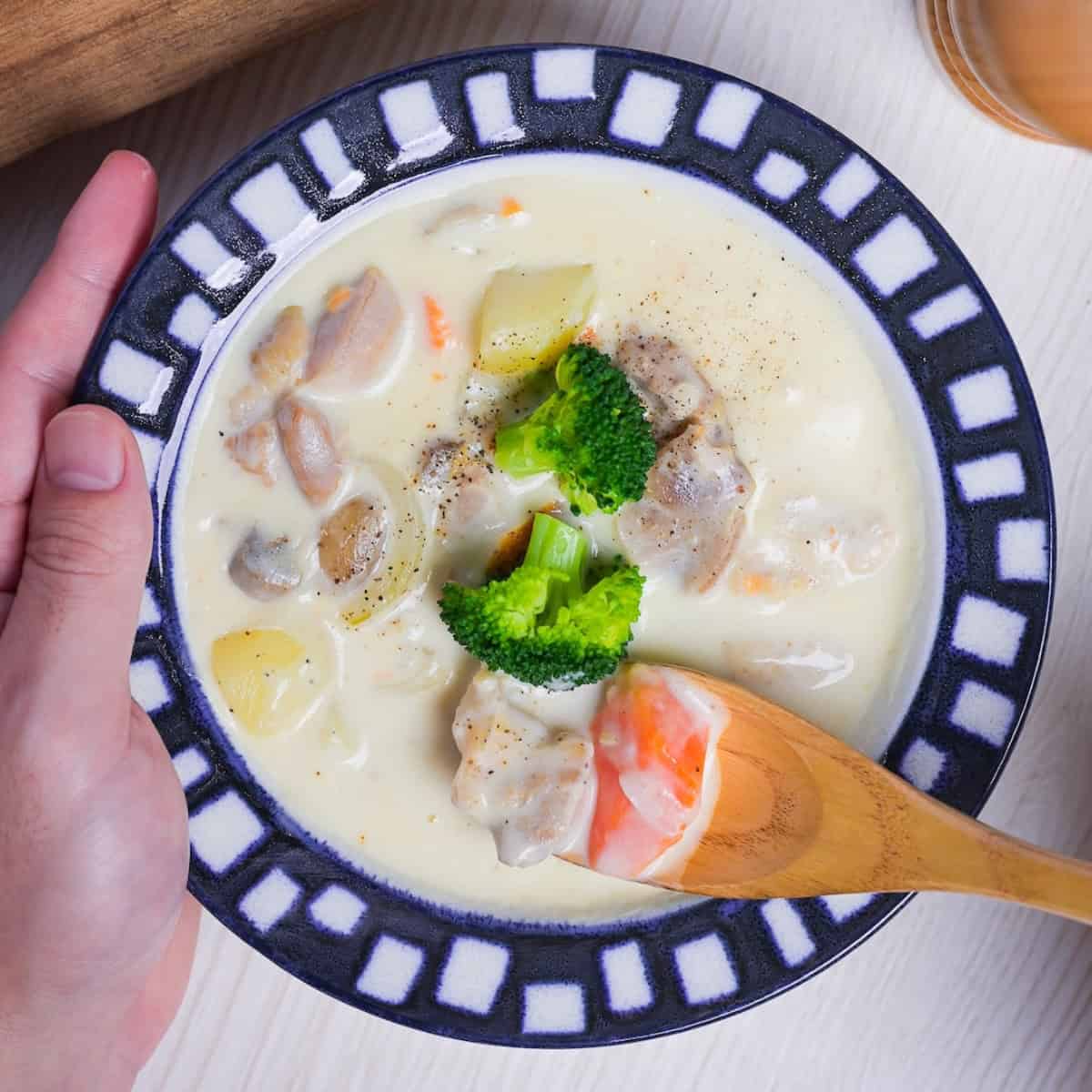
Japanese Cream Stew
Recipe Snapshot
- What is it? A cozy Japanese cream stew “white stew” bowl, tender chicken and spoon-soft veg in a velvety, snowy-white sauce.
- Flavor profile: Creamy, savory, mild (similar profile to chowder but thicker)
- Why you’ll love this recipe: From-scratch comfort without boxed roux! French-style beurre manié thickening for restaurant-grade smoothness and ingredient control.
- Must-haves: Beurre manié (unsalted butter + flour), milk + heavy cream, a pot/pan that makes gentle heat control easy
- Skill Level: Easy! It’s mostly “low and slow,” light rendering, short simmer, then a calm, controlled cream finish (no bubbling drama).
Summarize & Save this content on:
What is Japanese Cream Stew
Cream stew (クリームシチュー) is a Japanese yōshoku stew where bite-sized chicken and vegetables are simmered in a thick, white béchamel-style sauce. The signature texture comes from roux-based thickening (butter + flour). In Japan it’s best understood as everyday katei ryōri, warm, filling, and mild enough for all ages.
Cream stew is similar to beef stew because both are Western-inspired stews popular in Japanese home cooking, but it differs because the flavor profile is milky and gentle, not rich and dark. While many households rely on commercial cream stew roux blocks for consistency and speed in Japan, making it from scratch is surprisingly straightforward.
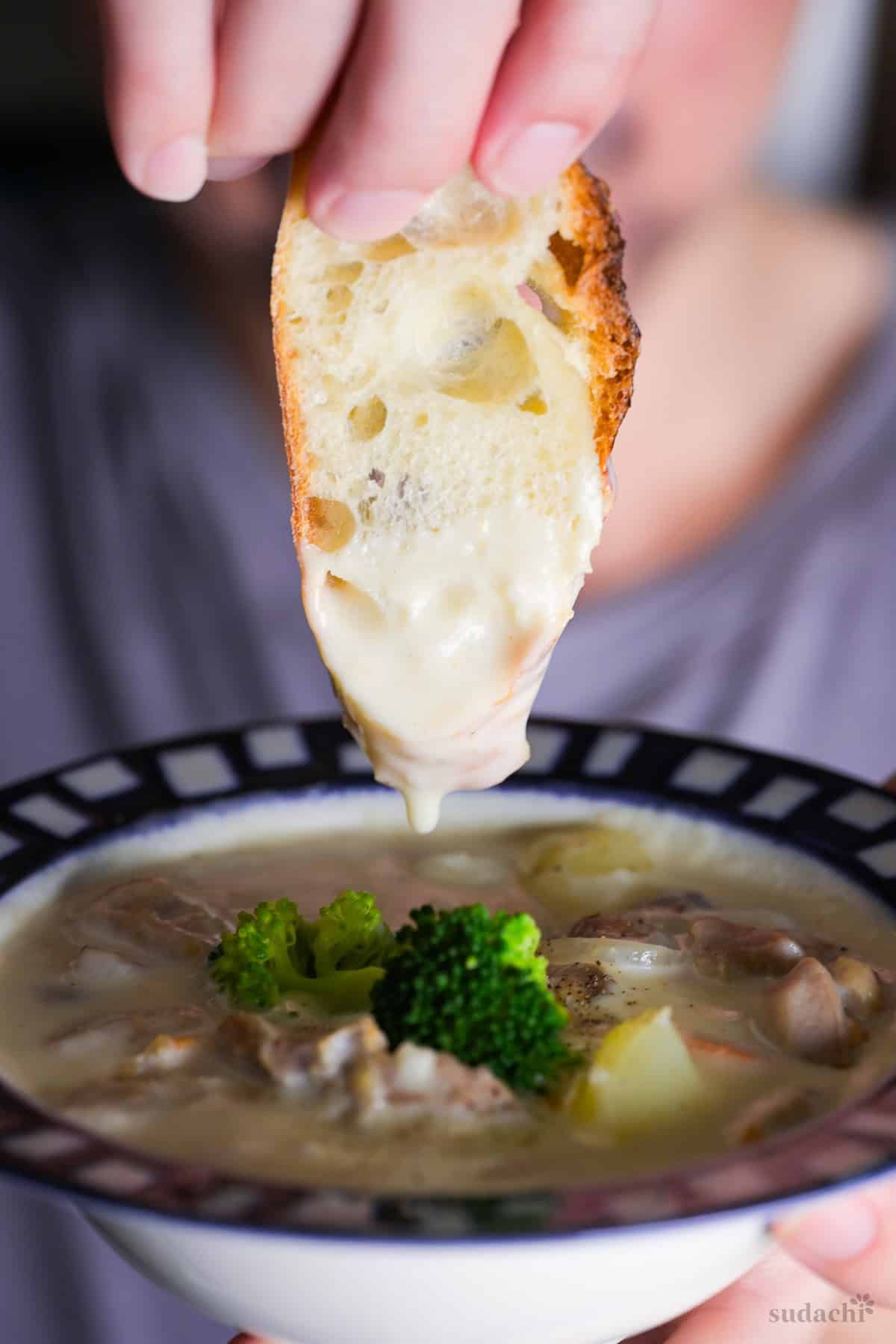
This is typically served along with steamed Japanese rice or toasted baguette.
Cream Stew Ingredients
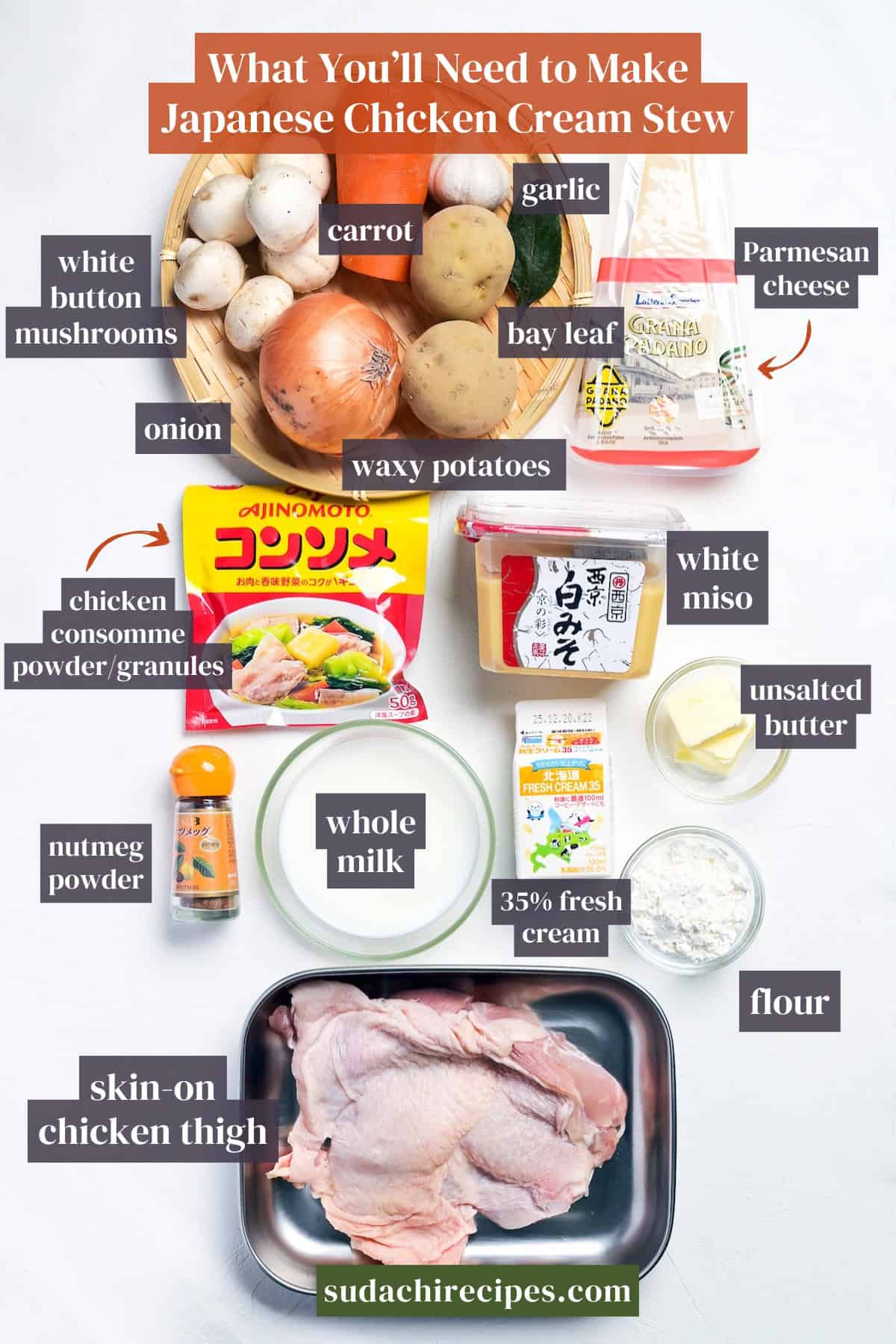
- Chicken thighs: Juicy dark-meat pieces with a bit more fat and collagen than chicken breast, so they stay tender even when simmered. You can grab boneless, skin-on thighs in the fresh meat section of regular supermarket. Ask the butcher to remove the bone if needed.
- Potatoes: Waxy or all-purpose varieties like Yukon Gold hold their shape nicely in this style of Japanese cream stew.
- Chicken bouillon powder or consommé powder: Concentrated seasoning made from dehydrated stock, herbs, and aromatics. Look for chicken bouillon/consomme granules in the soup or broth aisle of regular supermarkets. In this recipe, Western bouillon is preferred over Asian bouillon powder.
Substitution Ideas
- Flour → Rice flour (gluten-free): Rice flour is the closest swap for a roux-style thickness and keeps the stew pale and silky, just a touch lighter than wheat flour.
- Milk / cream → Soy milk: Soy milk makes the stew a bit lighter with a faint soy note, but it still works well for Japanese cream stew. Don’t let it boil, keeping the heat low heat prevents splitting.
- Milk / cream → Oat milk: Oat milk stays mild and creamy with a natural, gentle sweetness and is usually more heat-stable than soy.
- Chicken → Pork: Pork makes the stew richer and more savory than chicken, with a rounder “fat sweetness.”
- Chicken → Seafood (shrimp/scallops/salmon/white fish): Seafood turns it into a chowder-like Japanese cream stew with sweet ocean richness. Add seafood late and avoid hard boiling so it stays tender and the dairy doesn’t break.
Have trouble finding Japanese ingredients? Check out my ultimate guide to Japanese ingredient substitutes!
How to Make My Japanese White Stew
If you prefer to watch the process in action, check out my video of this cream stew recipe!
Before you start (Mise en place):
- Soften the unsalted butter to 18-22℃ (64-72°F) so it kneads easily.
- Cut chicken thigh into bite-size pieces.
- Slice onion, roll-cut potatoes and carrots to similar sizes, slice mushrooms, and mince garlic for even heat transfer.
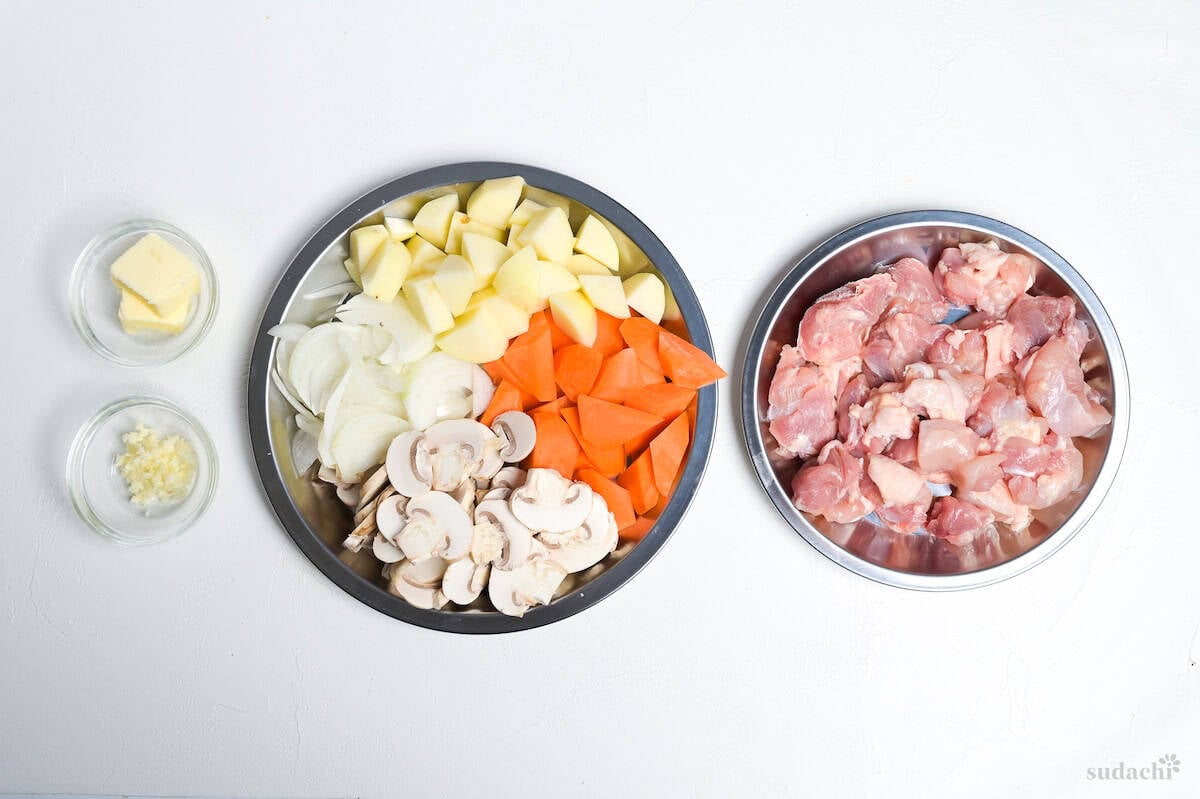
Consistent 2-3 cm pieces help everything soften together, so you don’t overcook the sauce while waiting on one stubborn chunk.
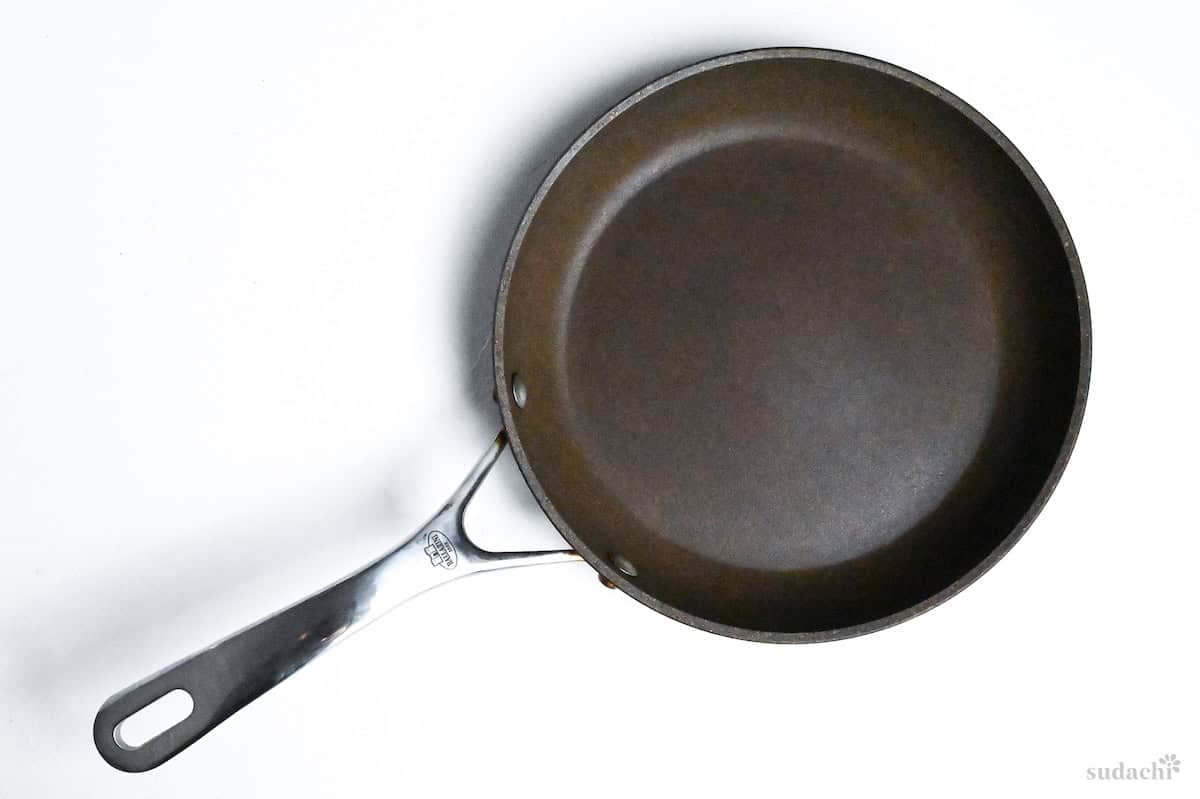
When developing this recipe, I used a 24cm nonstick skillet (Ballarini Salina). The nonstick choice is intentional! Since we’re aiming for a snow-white, restaurant-style cream stew, I wanted to control browning without excessive preheating.
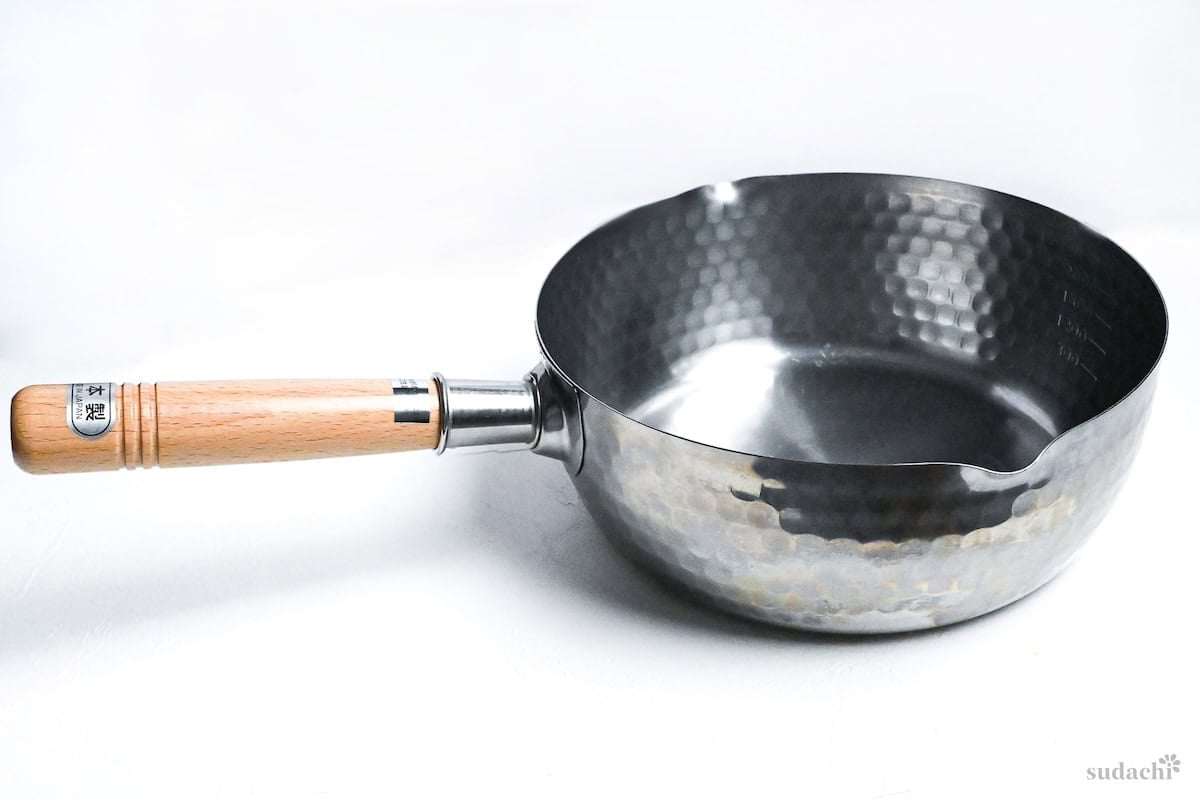
Also, 20cm stainless steel yukihira pot for simmering. An enamel Dutch oven will work perfectly here too.
i. Swirl a thin layer of neutral oil into your nonstick skillet over medium-low heat. When the oil shimmers, add the chicken pieces skin-side down if using skin-on thighs.

ii. Sprinkle with a pinch of salt and let them sit undisturbed for 2-3 minutes. You’ll hear a gentle hiss, not an aggressive sizzle. We’re rendering fat and developing the faintest golden tint, not creating a dark crust. Once the chicken shows pale beige color around the edges, give the pieces a flip and sear on the other side.
Aggressive browning creates fond (those caramelized bits) that’s too dark for cream stew’s signature snow white appearance. This light rendering step activates just enough Maillard reaction compounds for savory depth without the roasted intensity that would muddy your final color.
i. Add onion, garlic, and mushrooms with another pinch of salt, then sauté over medium-low heat until the onion turns glossy and slightly soft.
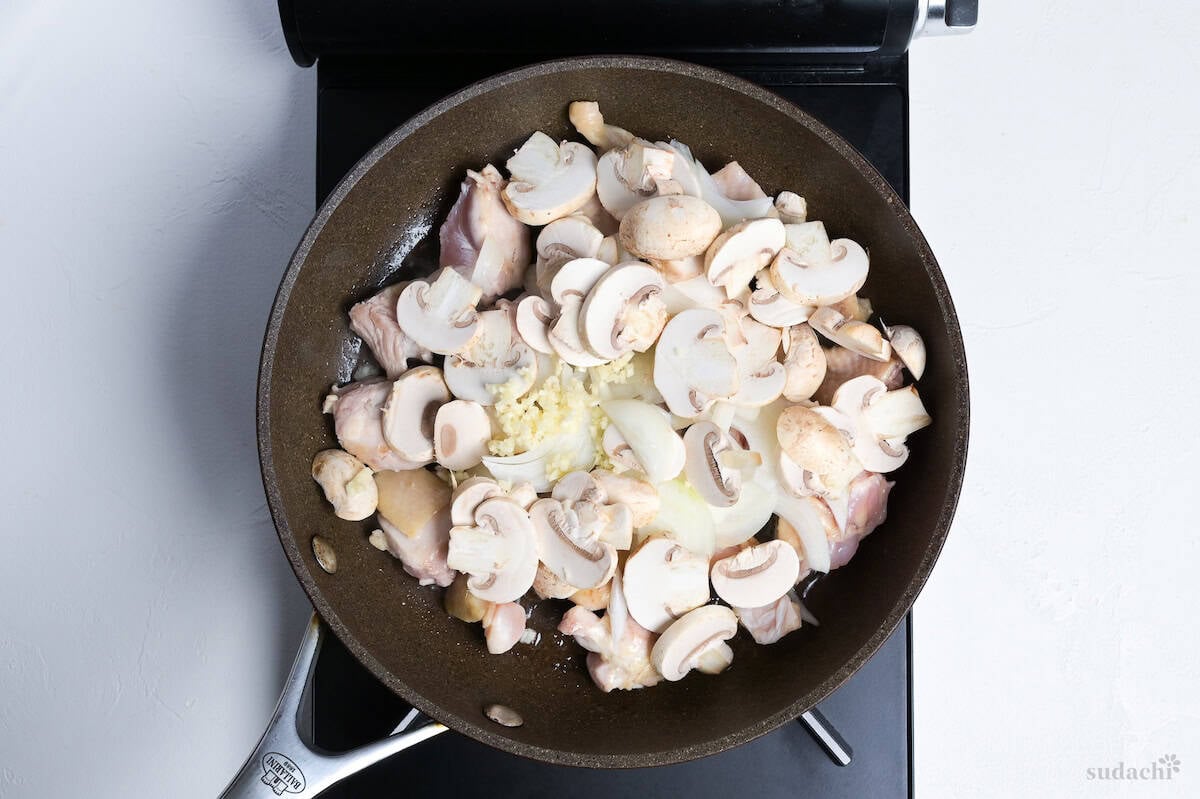
ii. Stir frequently. You’ll notice the onions turning translucent and glossy, the garlic releasing that telltale fragrance, and the mushrooms shrinking as they release their liquid.
Medium-low heat allows the onions’ natural sugars to gently caramelize without burning, while moisture evaporates slowly. The mushrooms also concentrate their umami as water evaporates. This layered flavor builds the backbone of your cream stew.
iii. When the chicken is seared all over and the onions are softened, pour in white wine. Simmer until reduced by more than half and the sharp alcohol smell softens. Keep the reduction steady, not raging, so the wine mellows instead of turning harsh.
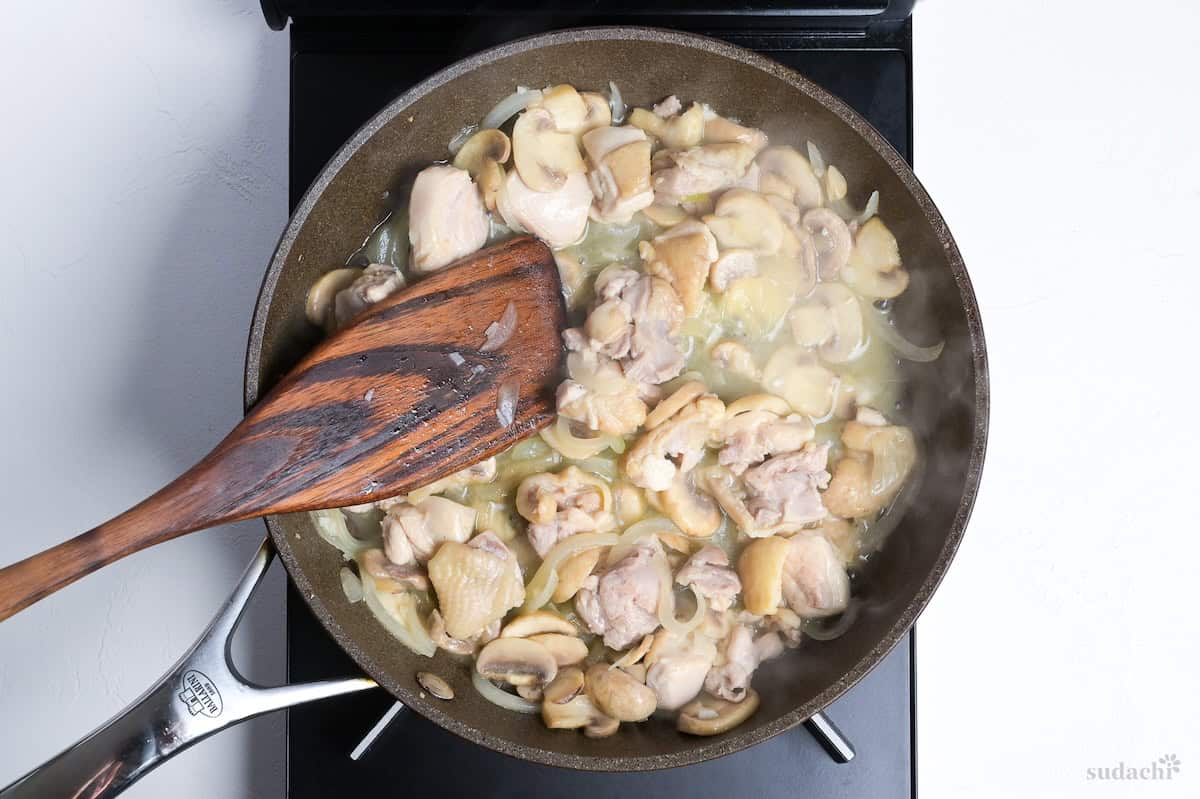
iv. Turn off the heat and set aside.
i. In a separate large pot, combine water, white wine, salt, chicken bouillon powder, and one bay leaf, then give it a mix.
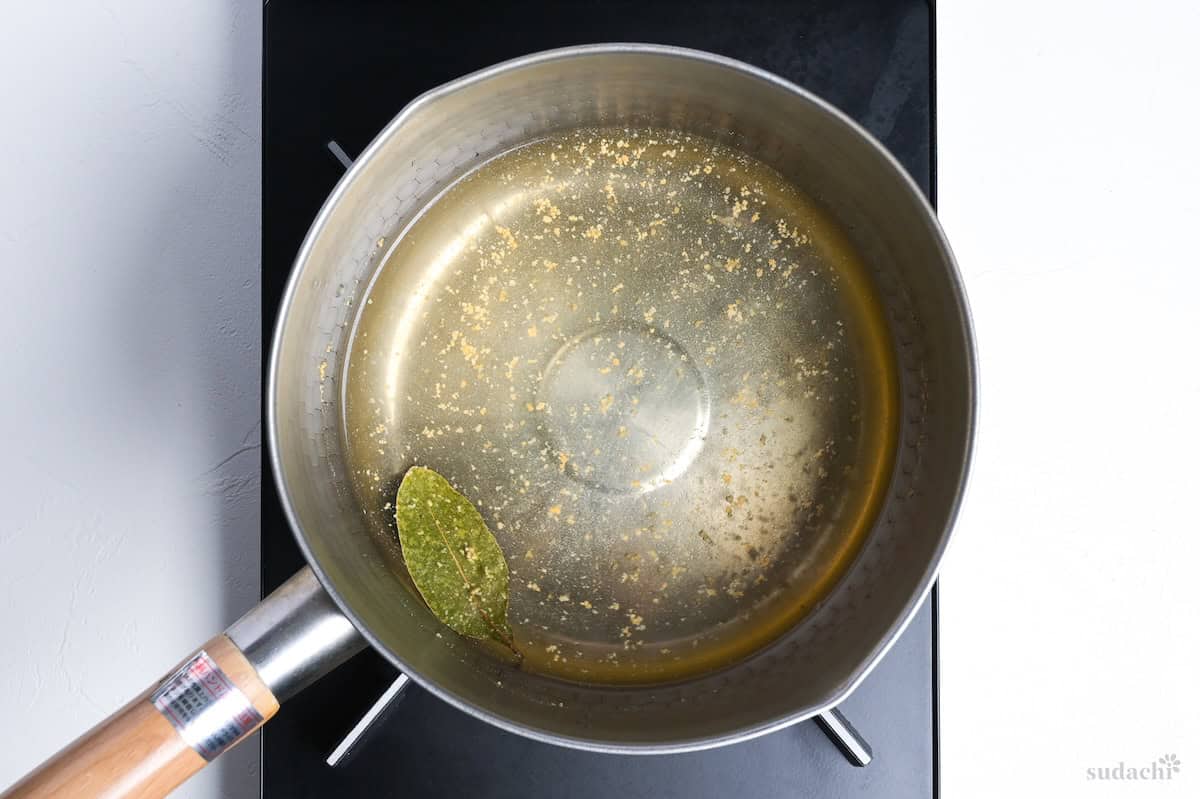
ii. Add the carrot and potato to the pot, gently bring them to a boil over medium heat and then reduce the heat to a simmer. Heating the root vegetables together with the broth helps them cook more evenly to the core, rather than over cooking the outside while the middle is still raw.
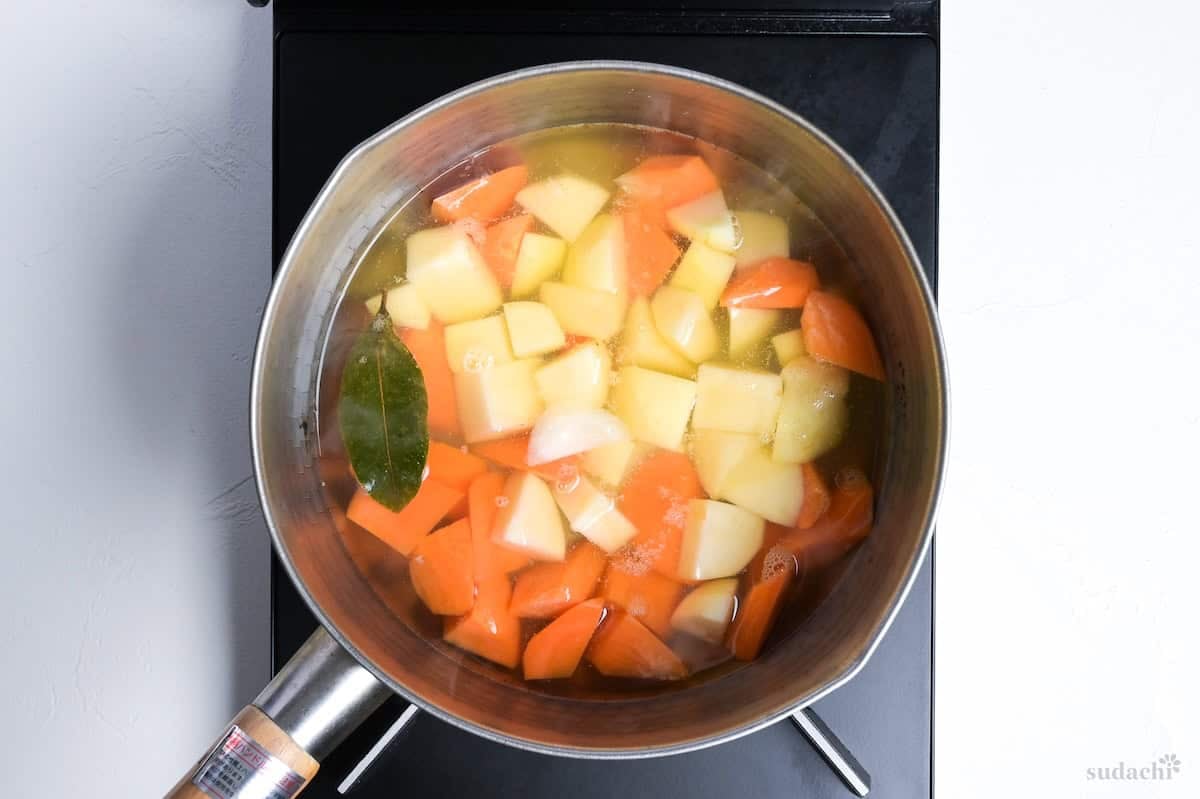
iii. Keep a gentle simmer for about 3 minutes. Gentle simmering softens vegetable pectin gradually, so the broth stays creamy instead of turning cloudy from the starch from the potatoes.
i. Slide your chicken pieces and that aromatic onion-mushroom-garlic mixture into the pot with the vegetables. Give everything a gentle stir to distribute, then cover with a lid and gently simmer.
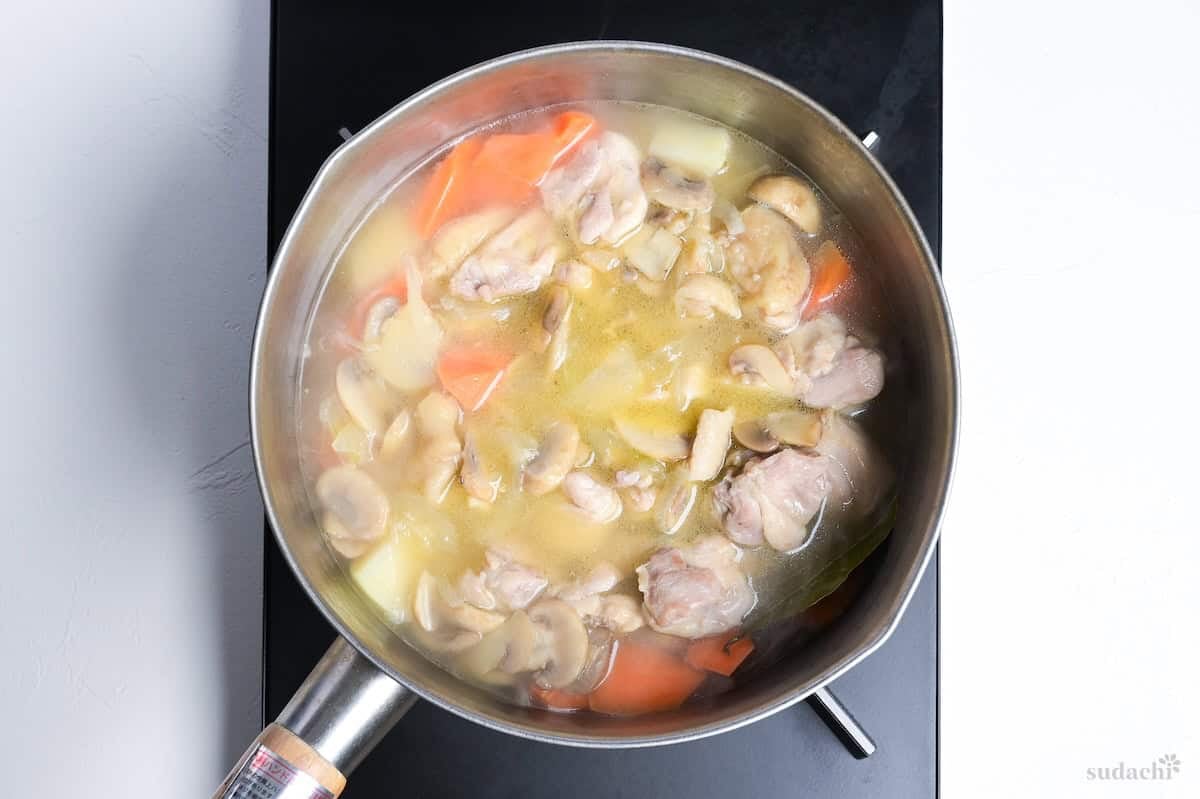
ii. Set a timer for 5 minutes.
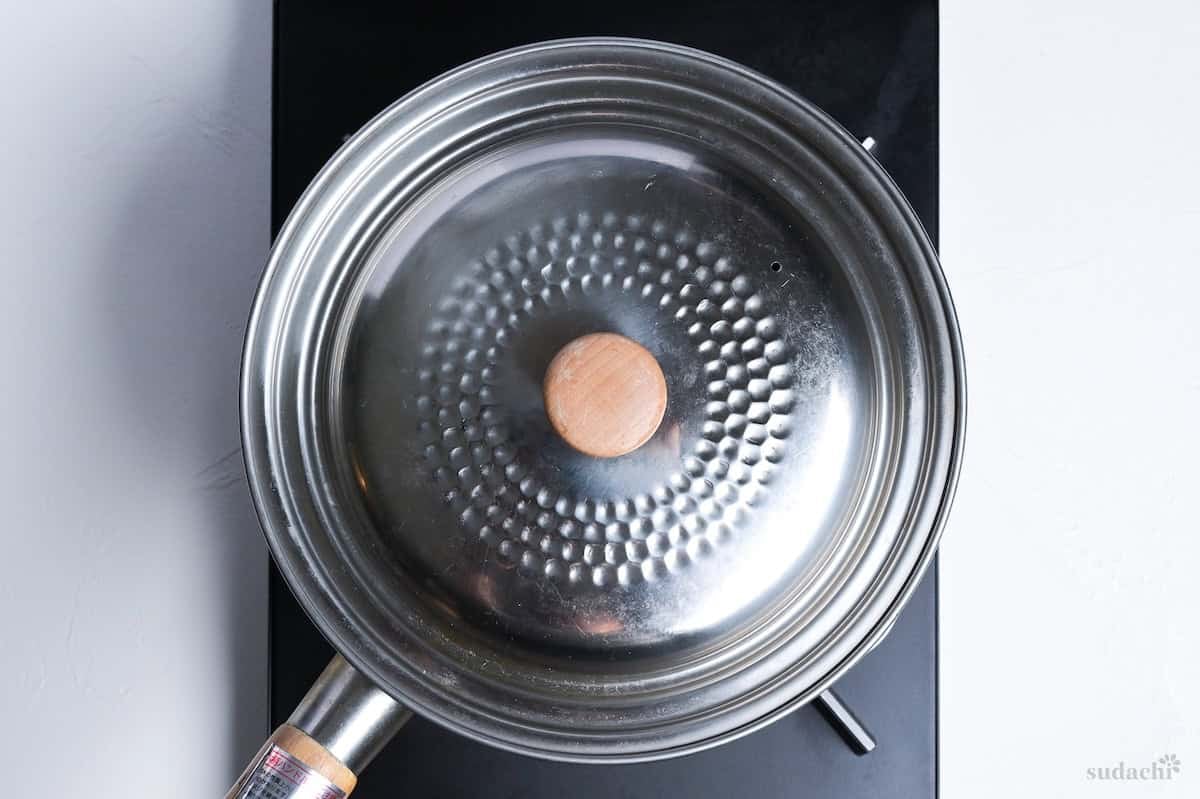
During this phase, steam builds inside the pot, gently cooking the chicken through while the vegetables soften. The covered environment keeps moisture from escaping, which matters when you’re building a sauce later. We need that liquid volume.
i. While the pot simmers, grab a small bowl and add cake (or all-purpose flour), your softened unsalted butter (it should feel like soft clay, not melted or hard), and white miso paste.
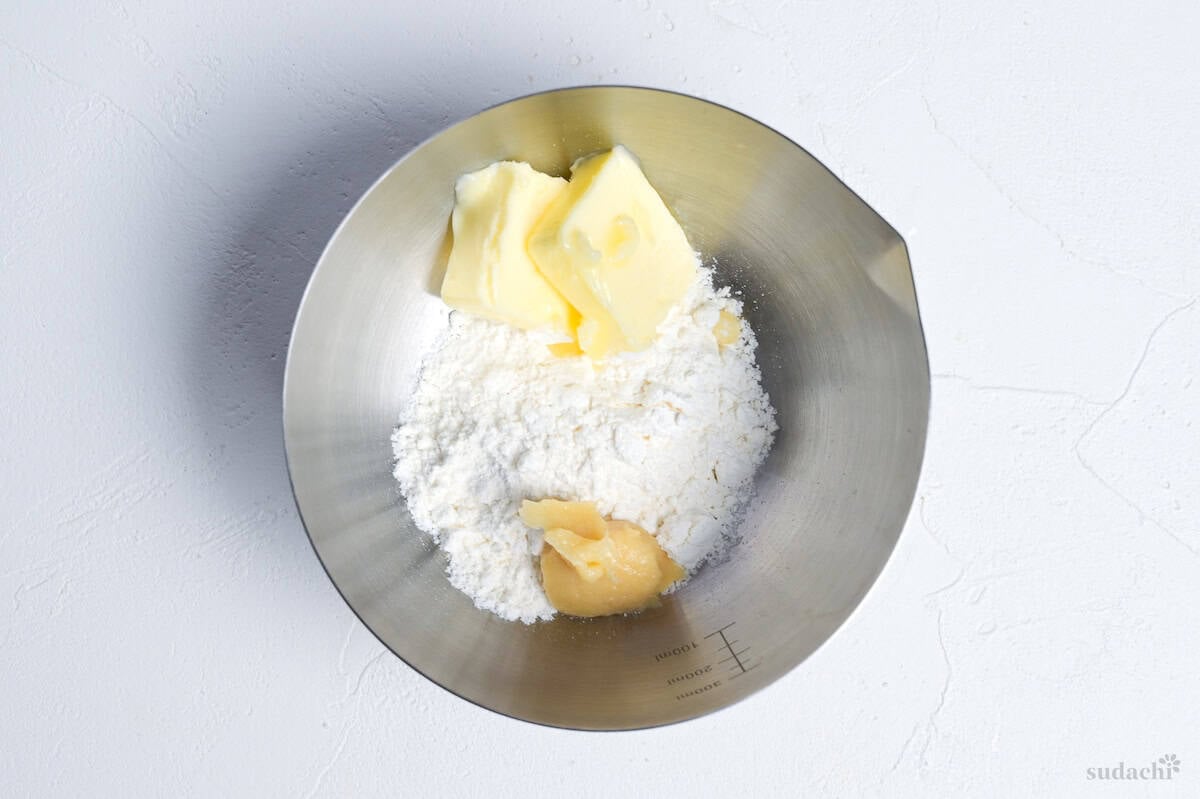
ii. Use a fork, spoon, or small spatula to work them into a smooth paste. It’ll look slightly like a tan butter cream.
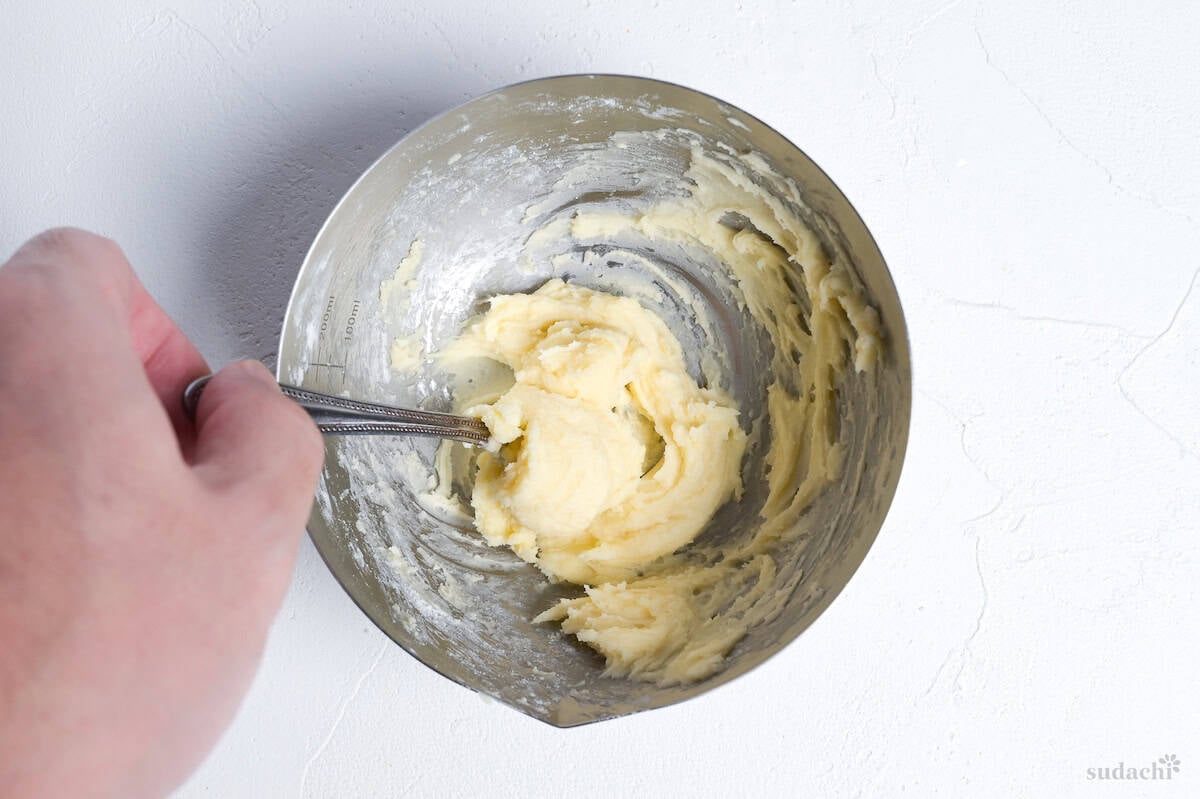
This French technique (beurre manié means “kneaded butter”) is your lump-prevention insurance. The butter coats each flour particle, preventing them from clumping when they hit hot liquid.
A bit of white miso adds just enough Japanesey complexity to make people ask, “What makes this taste so good?” without identifying the source.
i. Uncover and pierce a potato and carrot with a bamboo skewer. It should slide in with only slight resistance. This check prevents adding dairy too early, which can slow vegetable softening and increase graininess risk. If the center is hard, cover again and simmer a couple of minutes more until all pieces are fork tender.
Adding dairy to undercooked vegetables can slow their softening (calcium in milk strengthens pectin), so we make sure they’re tender first.
i. Turn the heat off and whisk in half the beurre manié until fully melted.
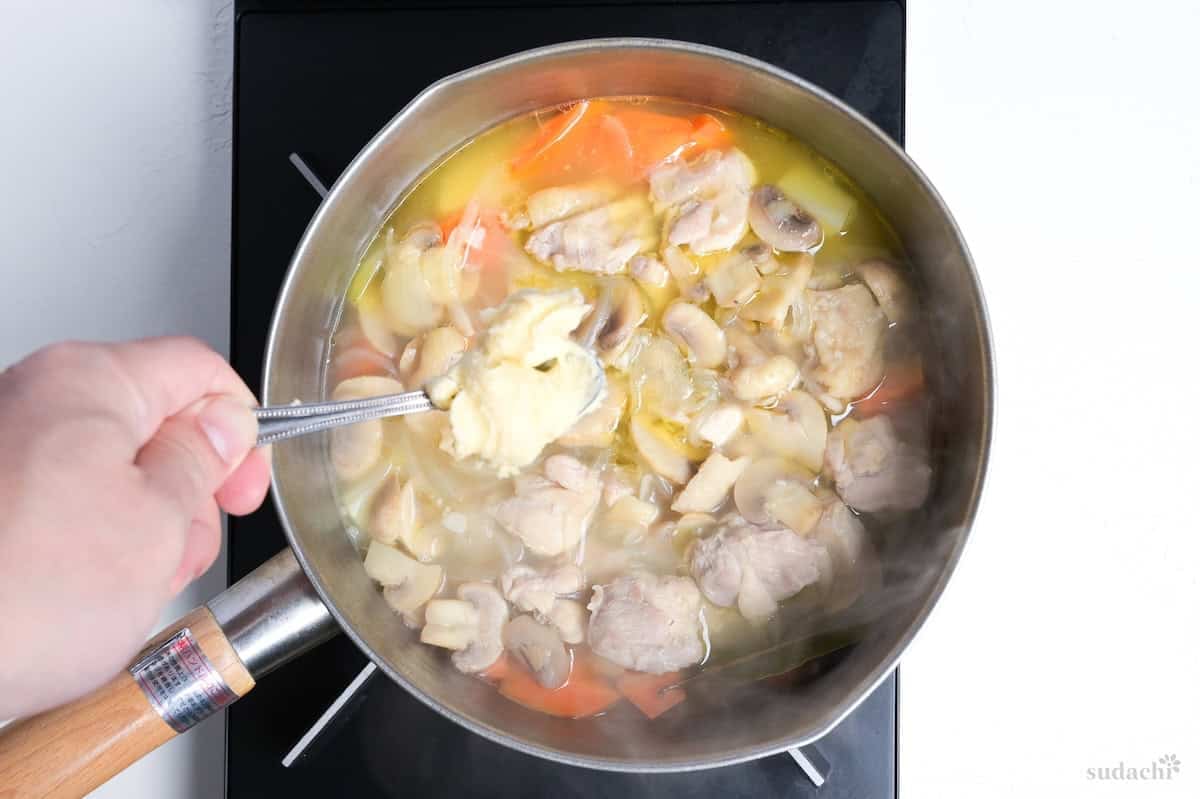
ii. Then add the rest and whisk until smooth. If lumps form, take the pot off heat and whisk hard; strain if needed.
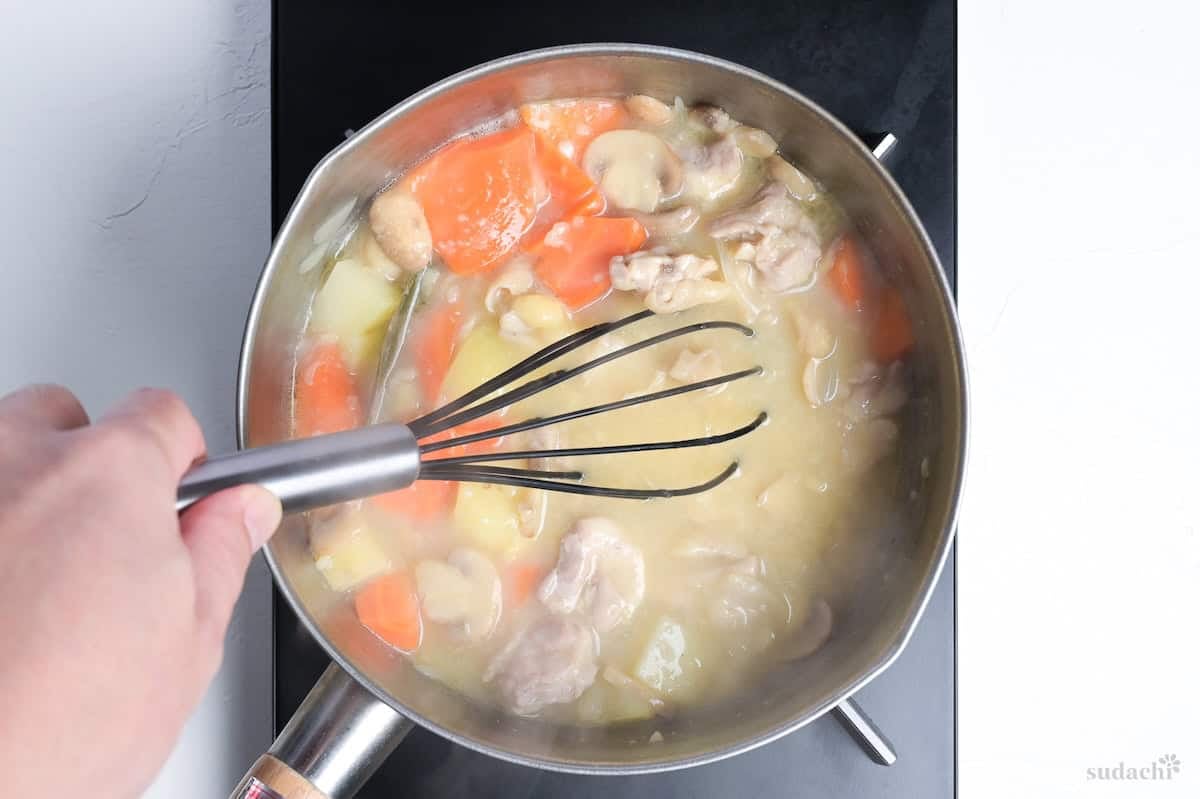
iii. Turn the heat back on gentle simmer, keep stirring for about 2 minutes. You’ll notice the sauce transforming from brothy to velvety as the starch granules swell and gelatinize.
i. Once thickened, stir in heavy cream and milk in small splashes to keep the dairy proteins stable. Warm 3 minutes on the very lowest heat and never boil.
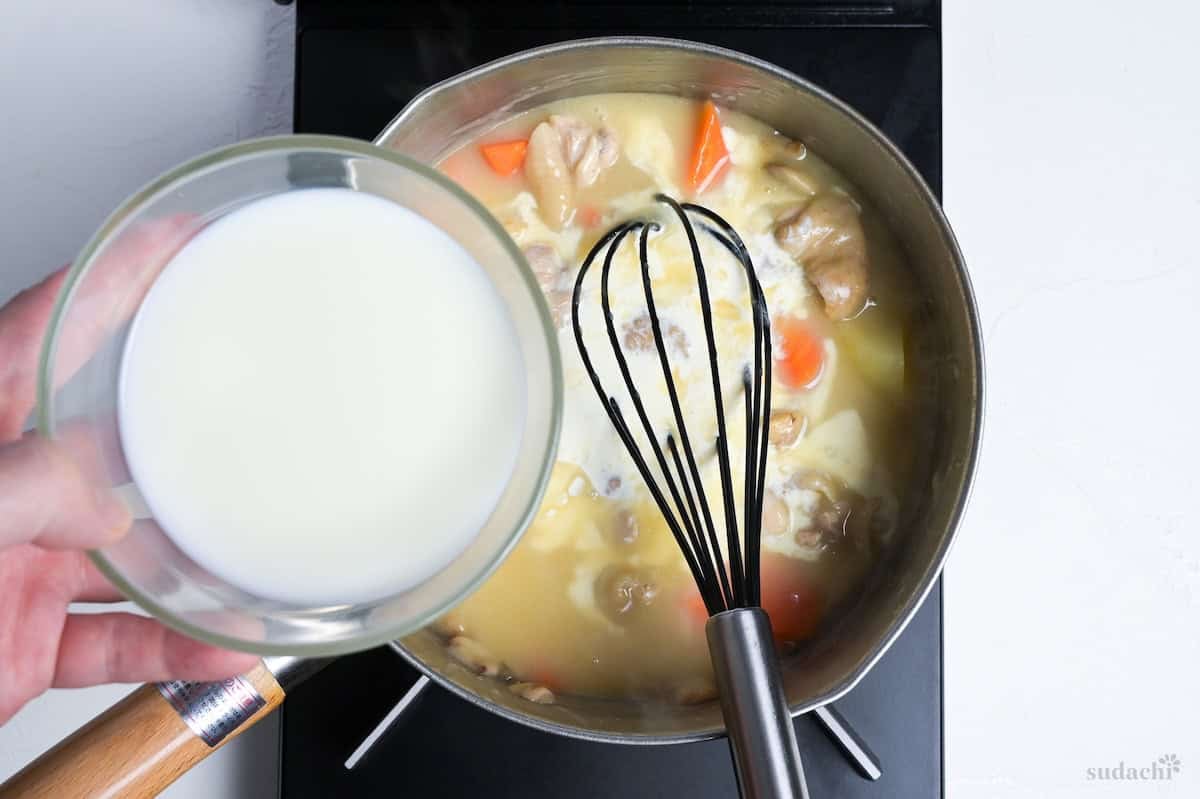
This is critical: never let the dairy boil. Add your heavy cream and whole milk in three stages, stirring after each addition until fully blended. The sauce will thin slightly as the cold dairy cools it, then thicken again as you return it to gentle heat.
Milk proteins (casein) curdle at sustained high heat, and cream’s fat can separate if boiled aggressively. The starch we’ve already added forms a protective network around fat and protein, stabilizing the emulsion, but only if we respect the temperature limits.
ii. Dip your spoon in the sauce, then run your finger across the back. If the line holds clean without the sauce running back together, you’ve achieved the ideal consistency.
i. Stir in Parmesan (or other hard cheese like Pecorino or Grana padano) and a pinch of nutmeg.
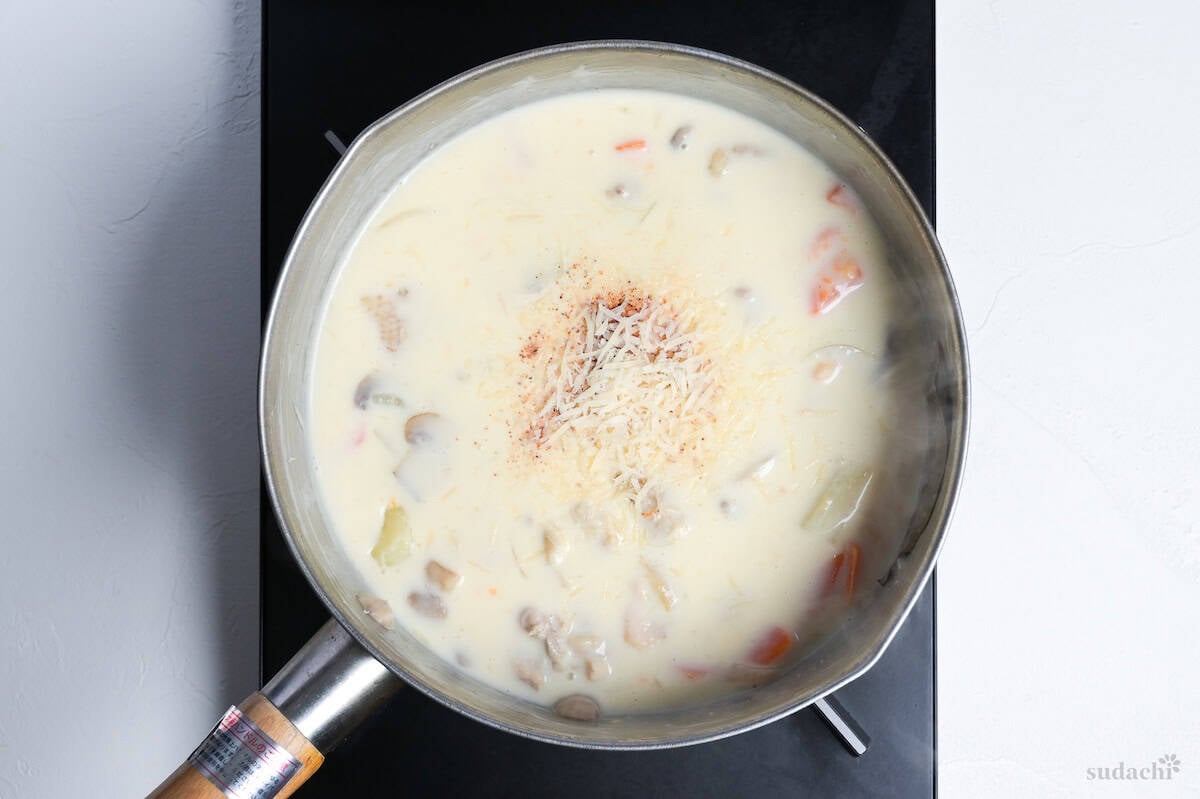
ii. Then taste and adjust salt a little at a time until it tastes savory to your liking.
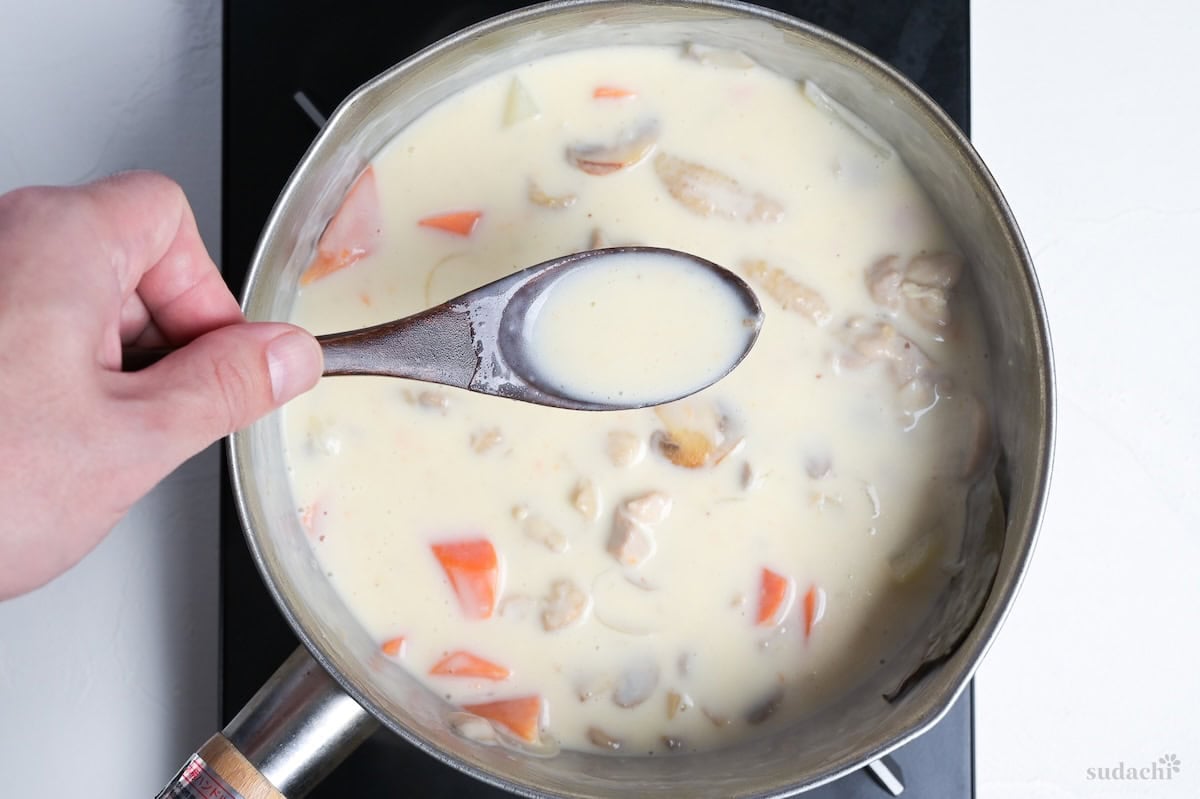
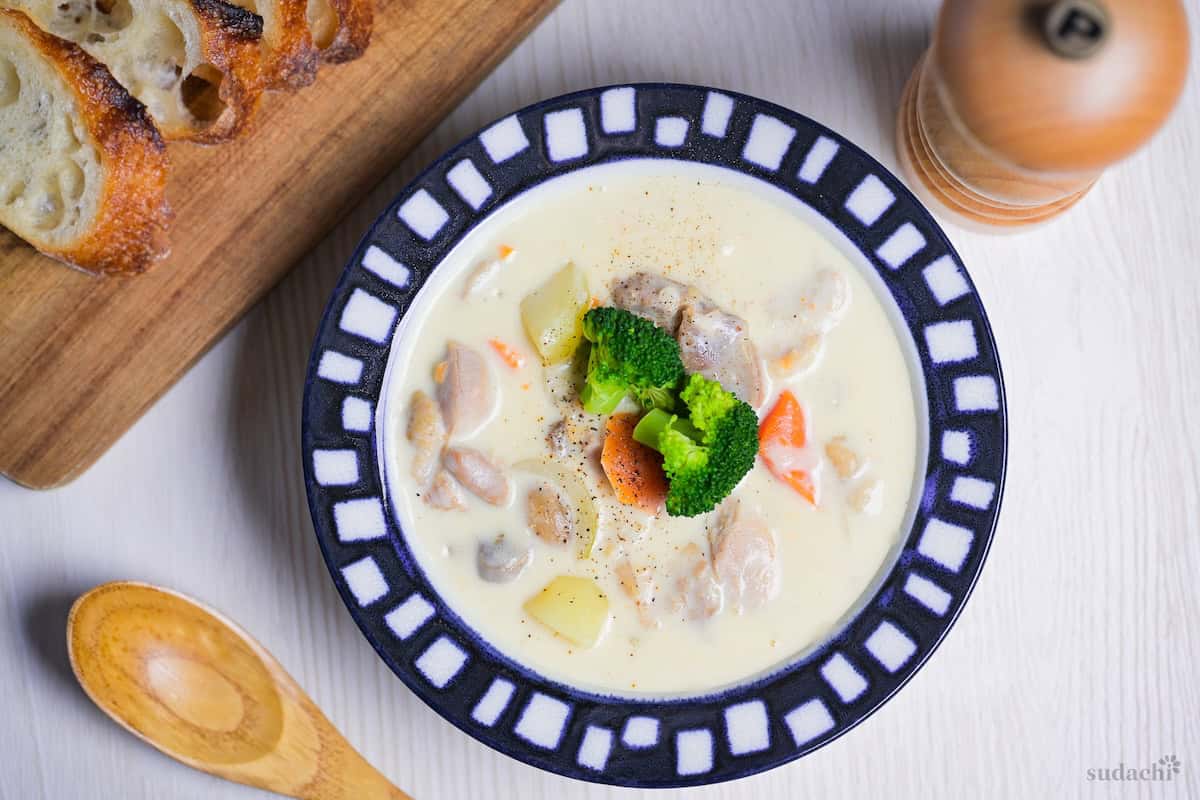
iii. Serve the stew with steamed broccoli (optional) and a pepper finish. In Japan, cream stew is often served over white rice or with crusty bread (my preference) on the side. Both soak up that luxurious sauce beautifully. Consider toasted baguette slices or fluffy short-grain rice for the best experience.
Essential Tips & Tricks
- Add your beurre manié off-heat and whisk gradually to coat every flour particle evenly. This prevents lumps from forming because flour proteins won’t gel prematurely, whereas dumping it into boiling liquid creates instant clumping.
- Keep chicken browning minimal (pale beige, not golden-brown) to preserve the stew’s signature white appearance.
- Use low heat and stir the bottom frequently once dairy is added because milk solids and starch scorch easily on hot spots. Consistent scraping prevents bitter burnt bits from ruining the gentle flavor.
With these simple tips in mind, you’re set for success every time you make Japanese cream stew.
Storage & Meal Prep
Fridge: Store in an airtight container for up to 2 days (3 days max). The stew will thicken noticeably overnight as starch molecules realign and fats solidify, but this reverses when gently reheated.
Freezer: Not so recommended. Freezing is possible for up to 1 month, but potatoes & carrots will turn spongy and grainy due to ice crystal damage.
Meal Prep: You can pre-cut onion/carrots/mushrooms/garlic and pre-mix the butter-flour-miso beurre manié, then store airtight in the fridge. Skip pre-cut potatoes and don’t add dairy ahead, both increase texture loss and separation risk.
Reheating: Reheat in a pot on low heat, stirring and scraping the bottom for even heating. Thin with a splash of milk if needed, and avoid a hard boil to prevent scorching and splitting. If microwaving, use low power in short bursts and stir between rounds and heat until steaming hot throughout.
What to Serve With This Recipe
Cream Stew FAQ
If the chicken skin or onions browned too aggressively, you created extra Maillard color that tints the sauce. Aim for a gentle sear (light gold) and “sweat” the onions until glossy, not brown. If it’s already beige, it will still taste great, focus on silky texture and balanced seasoning.
Never let the stew boil once you’ve added dairy, keep it at a bare simmer (just steaming, with only the tiniest bubbles) and stir frequently from the bottom to prevent hot spots. Remove the pot from heat entirely before adding milk and cream, then return it to the lowest flame setting. This temperature control prevents the milk proteins from aggregating into grainy curds. If slight graininess appears, immediately remove from heat and whisk vigorously-catching it early often saves the emulsion before it fully breaks.
Choose waxy or all-purpose potatoes like Yukon Gold instead of starchy Russets (which break down faster), and cut them into larger chunks rather than small dice. Start them in the simmering broth before adding dairy, since milk’s calcium can actually prevent further softening once added, so get them nearly tender first, then add your thickened sauce. If they’re still dissolving, you’re likely simmering too aggressively. Reduce to the gentlest heat where surface barely quivers.
Whole milk (3.25% fat) creates the best balance of richness and clean dairy flavor without being heavy, and its higher fat content makes it more forgiving under heat than low-fat options. Low-fat or skim milk tends to taste thin and is more prone to curdling. For the creamiest result, use whole milk for the base and add heavy cream at the end for luxurious body.
I personally always go with toasted baguettes, but yes, cream stew was specifically developed in Japan as a “rice-friendly stew,” and surveys show 66% of Japanese households serve it over or alongside steamed rice. The pairing works because rice’s mild starch absorbs the creamy sauce beautifully, similar to how curry rice functions, creating a comforting one-bowl meal.

More Japanese Chicken Recipes
Hungry for more? Explore my easy Japanese chicken recipes to find your next favorite dishes!
Did You Try This Recipe?
I would love to hear your thoughts!
💬 Leave a review and ⭐️ rating in the comments below. 📷 I also love to see your photos – submit them here!

Japanese Cream Stew (White Stew with Chicken)

Ingredients
- 1 tsp cooking oil neutral
- 300 g boneless chicken thigh skin-on or skinless
- salt for seasoning chicken
- 1 clove garlic
- ½ onion
- 5 button mushrooms white variety preferred
- 3 tbsp white wine for chicken mixture
- 300 ml water
- 3 tbsp white wine for sauce
- 1 tsp chicken bouillon powder or consomme powder
- ¼ tsp salt
- 1 bay leaf
- 2 potatoes waxy or all-purpose variety
- 150 g carrots medium sized
- 2 tbsp all-purpose flour plain flour in UK/AU
- 2 tbsp unsalted butter
- 1 tsp white miso paste
- 100 ml heavy cream I used 35% fat
- 100 ml whole milk
- ¼ head broccoli steamed separately, for optional topping
- 1 pinch nutmeg powder
- 1 tsp grated hard cheese Parmesan, Pecorino, Grana padano
- ground black pepper or white pepper, to taste
- baguette toasted, optional
The ingredient brands and tools I trust are in my Japanese pantry guide and my cooking tools guide.
Can’t find certain Japanese ingredients? See my substitution guide here.
Instructions
- Heat a non-stick pan over medium low heat and swirl in 1 tsp cooking oil. Place 300 g boneless chicken thigh with the skin side facing down and sprinkle the top with a touch of salt. Sear for 2-3 minutes on each side or until pale beige all over (no more pink, but be careful not to brown).

- Add 1 clove garlic, ½ onion and 5 button mushrooms to the pan and continue to cook over medium-low, stirring occasionally, until the onions soften and turn translucent.
- Once the onions have softened, pour in 3 tbsp white wine and simmer until reduced by half and the alcohol aroma mellows out. Once reduced, turn off the heat.
- In a separate pot, add 300 ml water, 3 tbsp white wine, 1 tsp chicken bouillon powder, ¼ tsp salt and 1 bay leaf. Mix it well, then add 2 potatoes and 150 g carrots (roughly cut into similar size pieces). Heat on medium until it reaches a boil, then reduce the heat and simmer gently for 3 minutes.
- Pour the contents of the frying pan into the pot and gently stir. Cover with a lid and simmer on low for 5 minutes.
- While you wait, place 2 tbsp all-purpose flour, 2 tbsp unsalted butter and 1 tsp white miso paste in a small bowl and mix until it forms a smooth paste. This is the beurre manié.
- Check that the root vegetables are softened to your liking, if they're still hard then cover and cook for a few minutes longer. Then, turn off the heat and whisk in half of the beurre manié.
- Mix well until fully melted, then add the other half and mix again. Use a whisk to incorporate it until smooth. Return to a low heat and stir continuously for about two minutes or until it starts to thicken.
- Pour in 100 ml heavy cream and 100 ml whole milk in small splashes while mixing. Continue to stir over the low heat until slightly thickened and warmed all the way through, then turn off the heat. The sauce is ready when it coats the back of a spoon. Finish with 1 pinch nutmeg powder and 1 tsp grated hard cheese and mix.
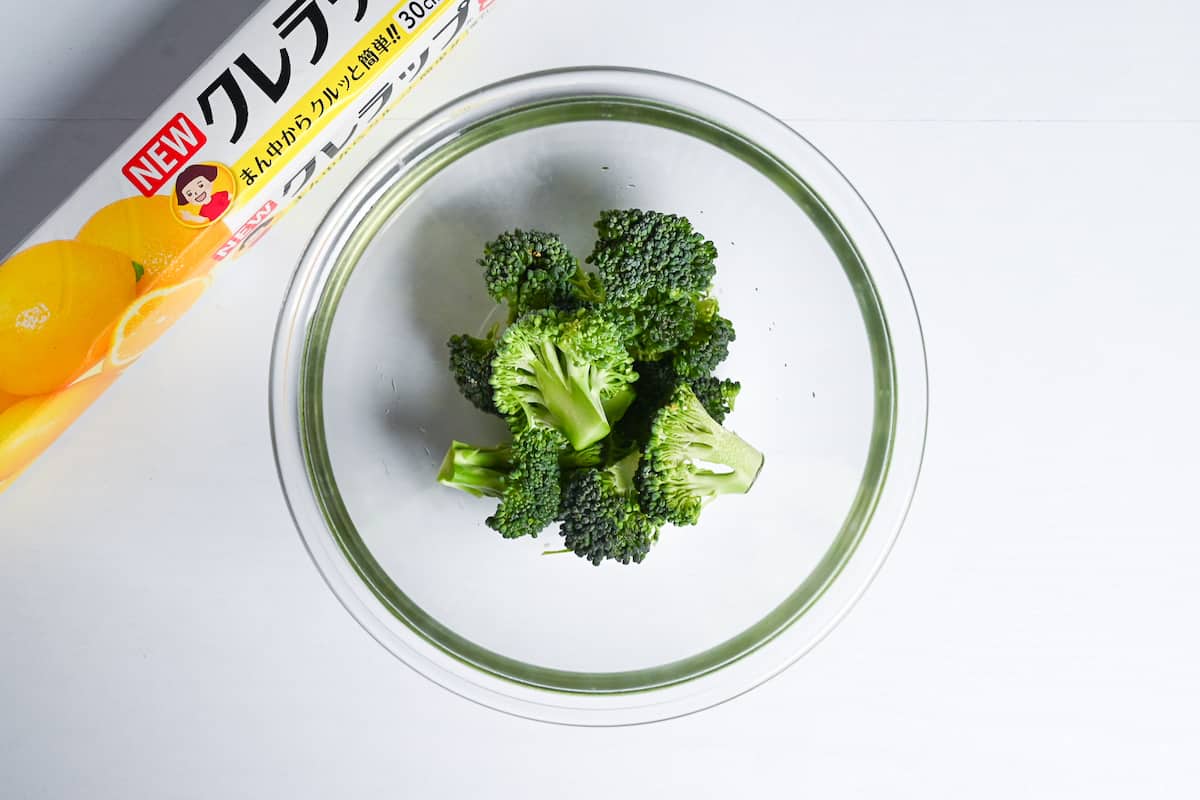
- Optional: Cut ¼ head broccoli into bitesize pieces and place them in a heatproof bowl with a splash of water. Cover with a lid, plate, or plastic wrap and microwave for 3 minutes at 600W.

- Divide into serving bowls and top with the steamed broccoli and ground black pepper to taste. Serve with warm toasted baguette or Japanese white rice, and enjoy!

I love this recipe!
Is there a substitution for the white wine?
And also what kind of cream and grated cheese?
Thank you so much!
The white wine is only a small amount so it’s okay to omit it. I like using wine in stew type dishes because the acidity brings out the other flavours. You could use the same amount of apple cider vinegar or half white grape juice if want the acidity/sweetness of the wine.
I used double cream (37%) and parmesan cheese, hope that helps!
I love this stew! It tastes chowdery and delicious, and I love that it has so many veggies as well! I forgot to buy baguette but I will next time. Thanks for the recipe!
Hi Trixy,
Thanks so much! I’m really glad it hit the spot. Hope the baguette makes it even better next time!
Yuto
Tasty and full of nutrients, a deligh!
Hi Simona,
Thank you for trying this cream stew recipe! I’m really glad you enjoyed it! 🙂
Yuto
Made this last night and it was a real hit with the family. Our family loves Japanese food but for so long I was guilty of serving up only Sushi or ‘Japanese curry’ with the store bought base.
Since finding your website, I can honestly say we now very regularly enjoy Japanese cuisine in all its diversity at the dinner table. Thanks for making Japanese cuisine accessible to us everyday family cooks.!
Hi Peter,
I’m so glad the cream stew was a hit with your family! It’s especially rewarding to know your family is exploring the diversity of Japanese cuisine together. I’ll keep sharing ideas to inspire your home cooking, and I hope you’ll continue discovering new favorites along the way! 🙂
Yuto
Worked perfectly, so delicious and impressive thank you!
Thank you so much, M! I’m glad you enjoyed it! 🙂