



Featured Comment
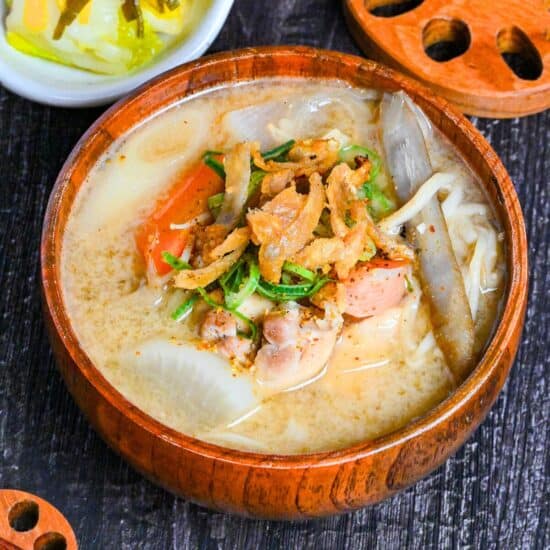
This is the new chicken soup for the soul. It’s like a warm hug from your grandmother. Who knew a simple protein swap from the usual tonjiru can create such flavours. It’s definitely going to be a weekly item from now on. We absolutely loved it!
★★★★★
– Yui
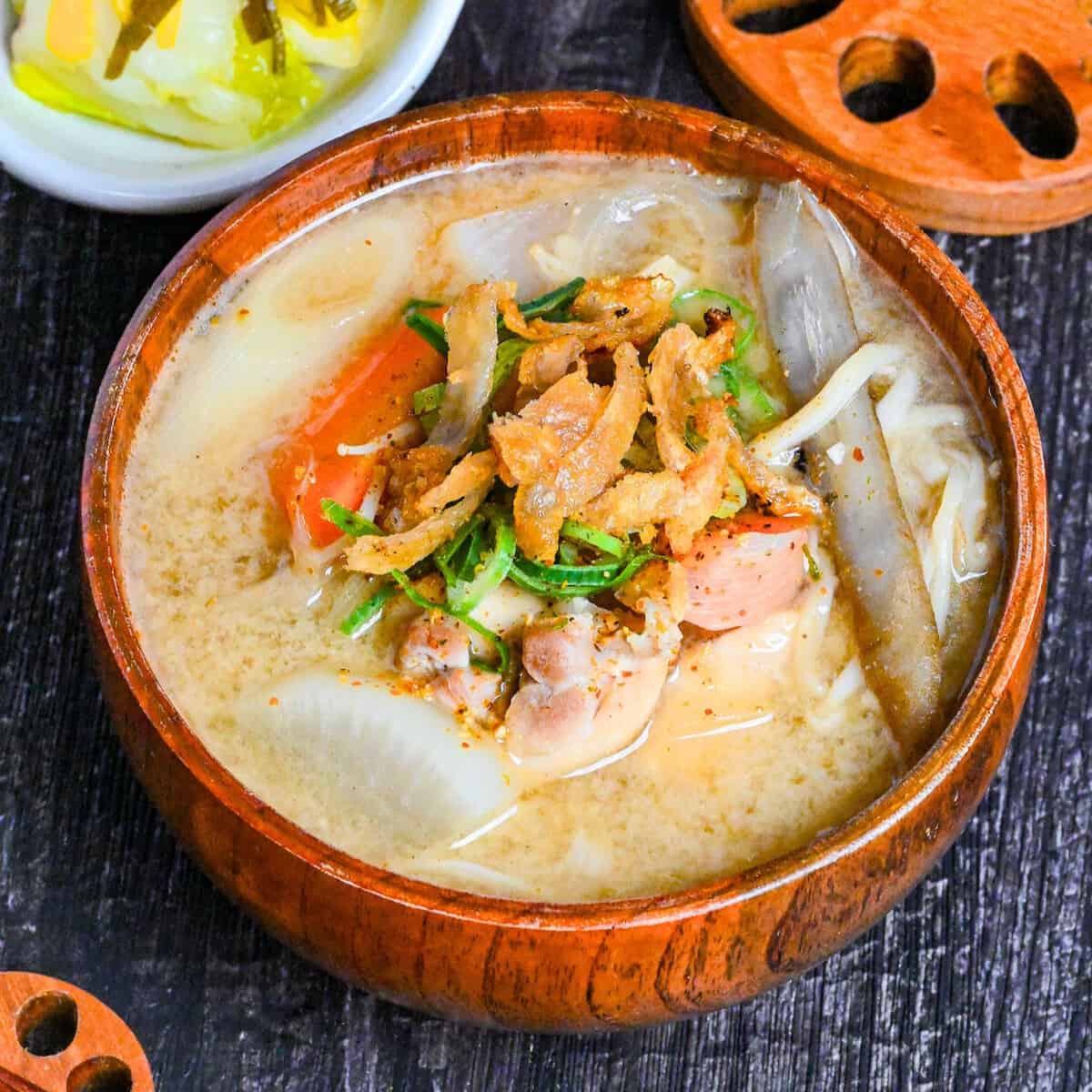
Ever wondered if chicken could match the soul-warming richness of tonjiru? It seems unlikely, yet this miso soup variation proves otherwise.
The secret’s in my “rendering” step. It creates the creamiest texture and unlocks the full potential of fermented miso aroma!
Japanese Chicken Miso Soup
Recipe Snapshot
- What is it? A hearty, tonjiru-style chicken miso soup (torijiru) loaded with root vegetables and simmered in a savory dashi broth.
- Flavor profile: Deeply savory, creamy, and earthy, characterized by the synergy of fermented miso and rendered chicken fat.
- Why you’ll love this recipe: Rendered chicken thigh fat creates the round, satisfying mouthfeel you expect from tonjiru, while dashi-miso broth and long-simmered root vegetables ensure this isn’t a thin, one-note soup. It’s dinner in a bowl.
- Must-haves: Skin-on chicken thighs (for fat rendering), awase (yellow) miso, and hearty root vegetables
- Skill Level: Easy: one-pot simmer.
- Suitable for Meal Prep? Yes! (Flavors deepen overnight as ingredients absorb the broth).
Summarize & Save this content on:
What is Chicken Miso Soup?
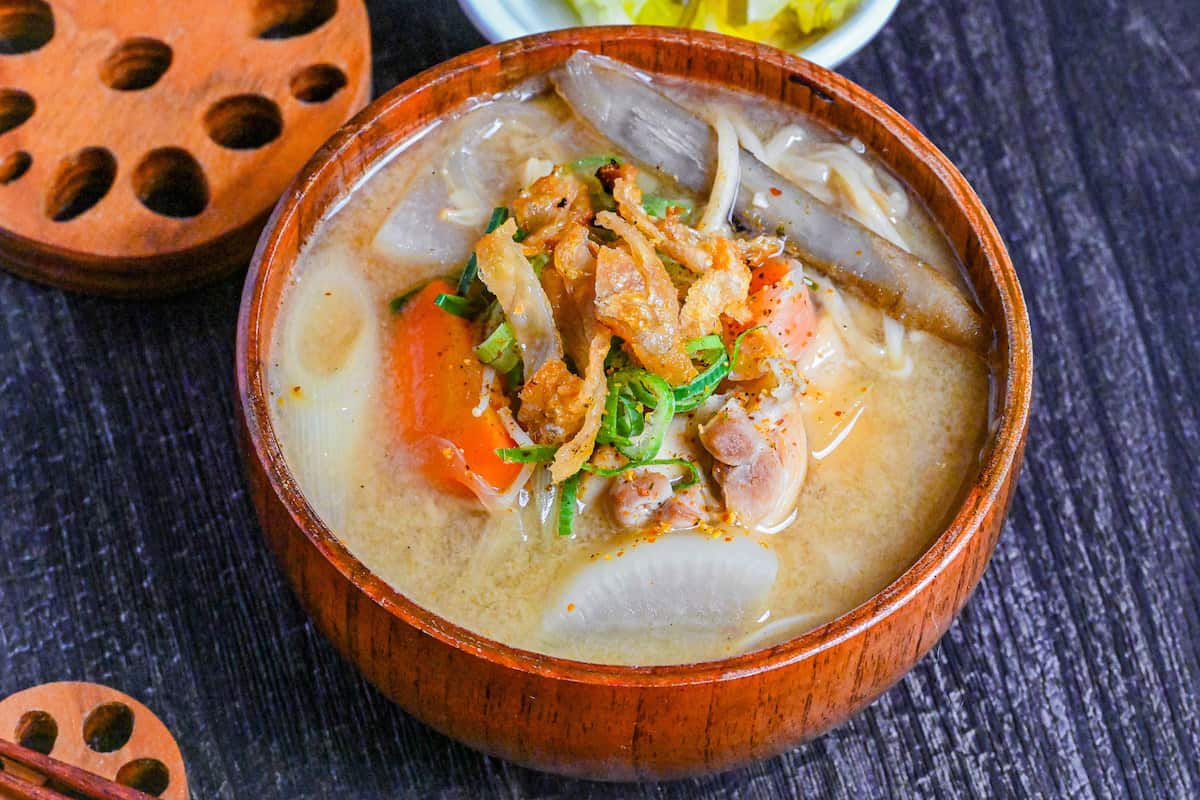
Chicken miso soup, known in Japan as Torijiru (鶏汁), is a hearty variation of standard miso soup classified as gu-dakusan (soup with many ingredients).
The dish is prepared by simmering bite-sized chicken pieces and root vegetables in a dashi broth, allowing the poultry fat to render and enrich the liquid before fermented miso paste is dissolved at the very end. This cooking process creates a savory, full-bodied soup that serves as a substantial side/main dish rather than a simple palate cleanser.
In the hierarchy of Japanese soups, Torijiru sits between a miso soup and a heavy stew. It is often compared to Tonjiru (pork soup) because both use meat to create a robust broth. However, Torijiru is becoming increasingly popular for its cleaner aftertaste and ability to highlight the rich texture of chicken without the heavier grease associated with pork belly.
Torijiru Ingredients
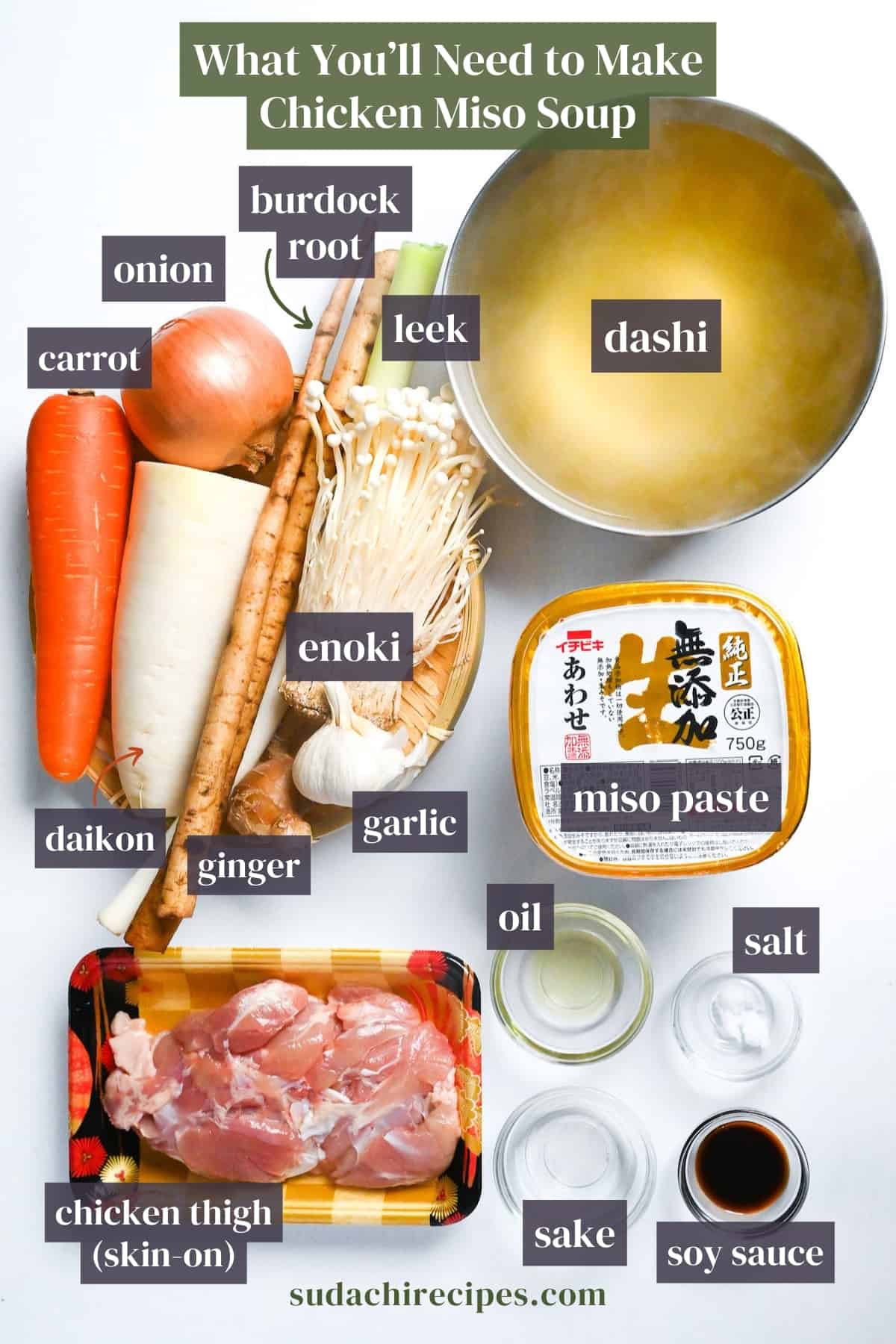
- Skin-On Chicken Thighs: Boneless, skin-on thighs are the tender “dark meat” cuts that retain their natural fat cap, making them significantly juicier than breast meat. For this specific soup, the skin is non-negotiable. It slowly renders into the broth to create a creamy, full-bodied richness that guarantees your soup won’t taste thin or watery.
- Dashi Stock: This is the backbone that makes your soup taste authentically Japanese, not just “chicken broth with miso stirred in.” If you’re comfortable making dashi from scratch with kombu and bonito flakes, go for it, but high-quality dashi packets (the kind that steep like tea) are a fantastic shortcut. Skip the instant dashi granules if you can.
- Miso Paste (Awase): Yellow miso, also called awase miso, gives you the perfect balance. If you happen to have both red (aka) and white (shiro) miso at home, you can mix them 50/50. Red miso alone will make the soup taste too intensely fermented, while white miso by itself can come across as flat or overly mild.
Substitutions & Variations
- Pork belly or shoulder works fine and turns this into a traditional tonjiru.
- Chicken broth/stock (or bone broth) is the easiest dashi shortcut. It makes the soup rounder and more “chicken-soup” than Japanese miso soup.
- Barley or rice miso are great swaps for yellow miso.
- Frozen udon noodles or cooked rice instantly turn this soup into a standalone main dish.
- Parsnips are your best supermarket bet if you can’t find burdock root (gobo). You get the similar satisfying crunch and sweetness, just without the distinct earthy scent of the traditional root.
- Mushroom of your choice can be used instead of enoki mushrooms. Go local!
- Leek (Western leek) is the best substitute for Japanese long green onion (naganegi). It keeps the gentle sweetness and savory aroma, though it’s slightly firmer, so let it simmer a bit longer to soften fully.
- For GF: check your miso label (some contain barley) and swap soy sauce for tamari.
Have trouble finding Japanese ingredients? Check out my ultimate guide to Japanese ingredient substitutes!
How to Make My Chicken Miso Soup
If you prefer to watch the process in action, check out my YouTube video of this chicken miso soup recipe!

i. Set out a pot, tongs, and either a mesh spoon/ladle and measure dashi stock and sake before you heat so this Chicken miso soup can simmer steadily once the pot is steaming.
ii. Cut all vegetables into uniform pieces for even cooking.

- Burdock Root and Japanese Leeks: Wash the leek and scrub the burdock root to clean off any dirt. Cut thin diagonal slices.
- Carrot: Slice them about 1 cm thick, and then cut those slices into half-moons.
- Daikon Radish: Go a bit thicker here, about 2 cm, and also cut into half-moons or quarters.
- Onion: Thinly sliced.
- Garlic & Ginger: Mince these finely. They’re going to add a lovely aroma to the dish.
- Enoki Mushrooms: Just remove the roots and bottom of the stems.
iii. Pull the skin off chicken thighs (no knife needed), pat the meat dry, and cut into bite-size pieces.
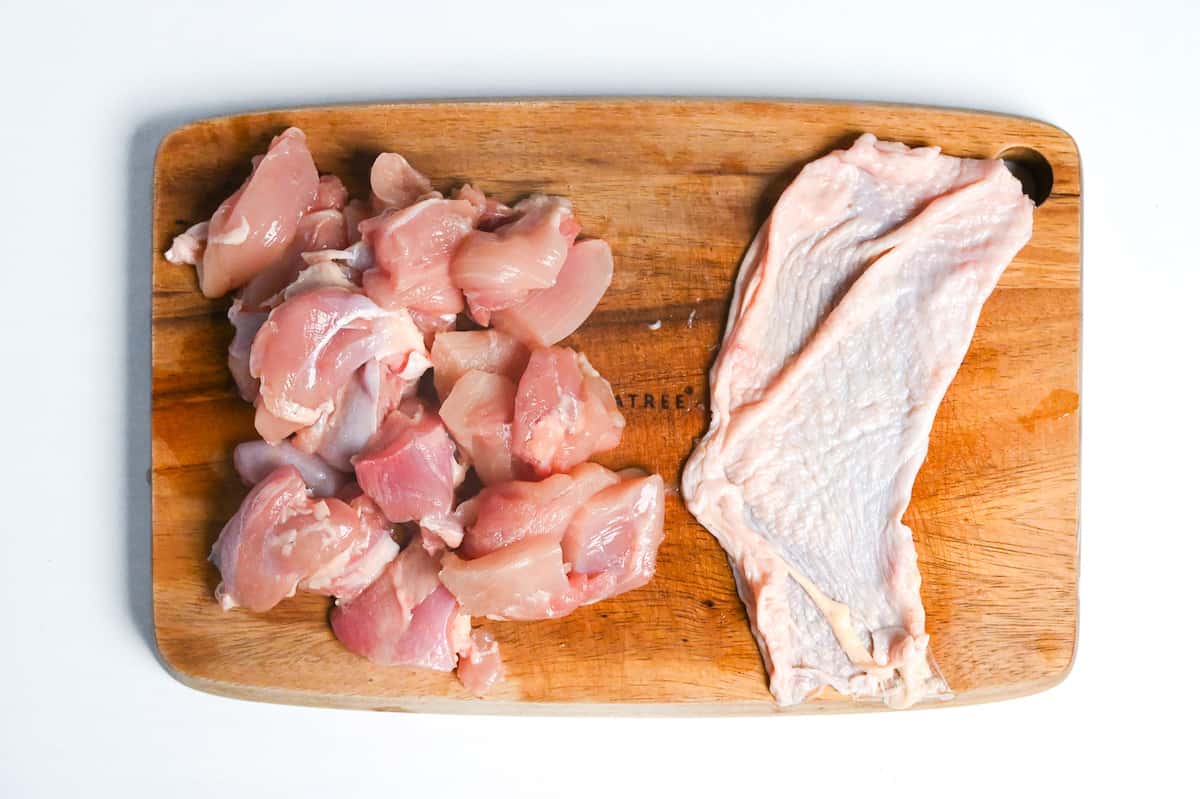
i. Add a thin film of oil to your pot and lay the chicken skin flat over low to medium-low heat. Let it slowly render until both sides turn golden and crisp, releasing its fat into the pot.
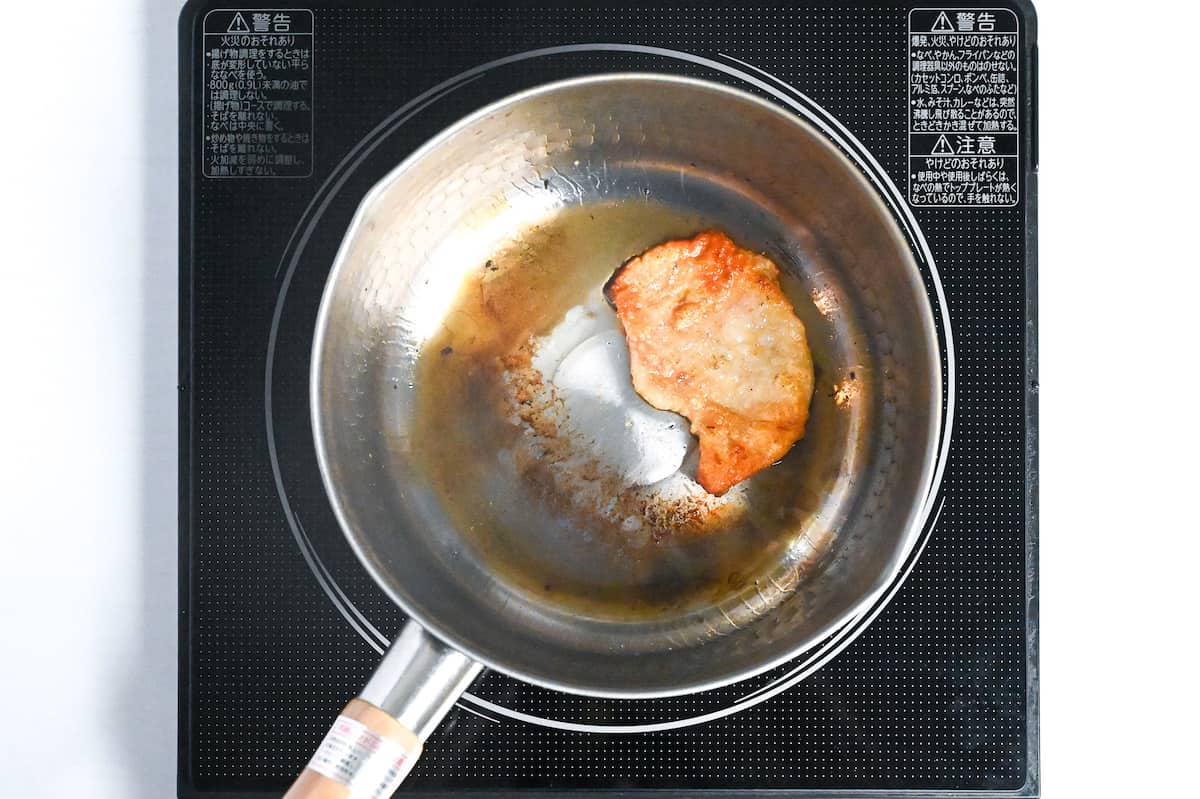
This is my secret move that separates regular chicken soup from the deeply satisfying, incredibly creamy version you’re after.
Rendered chicken fat carries flavor compounds that water-based broths simply can’t. When you cook the skin slowly, you’re extracting pure fat. I used to skip this step to save time, but after tasting the side-by-side difference, I never skip it now. The depth it adds is unmistakable.
ii. When it’s crackling-crisp, transfer the skin to paper towels.
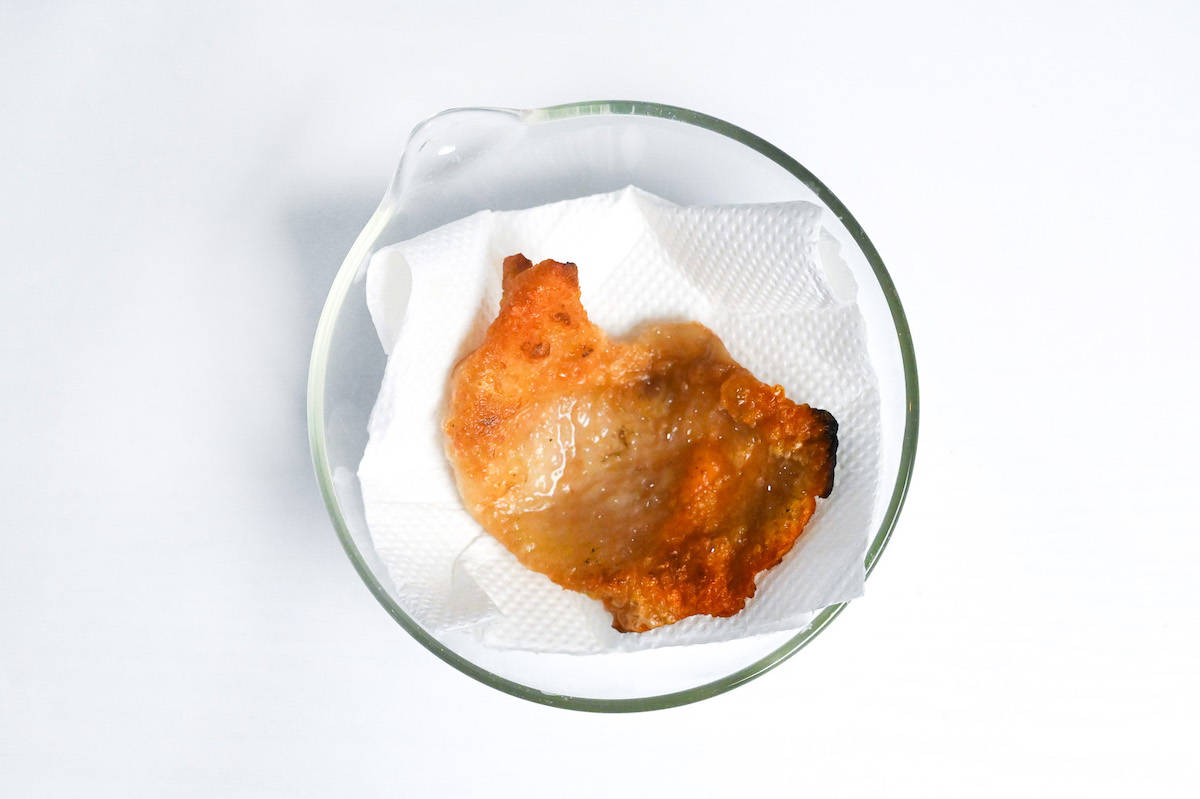
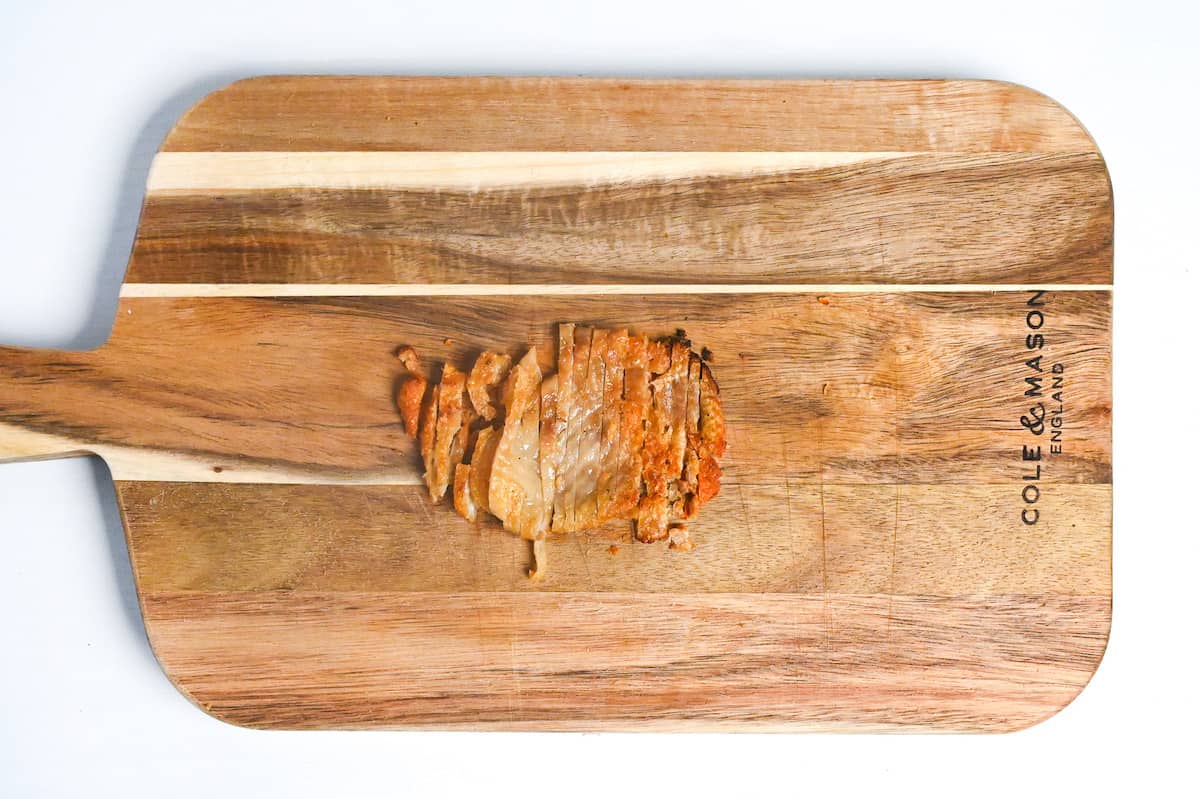
iii. Once cooled, slice it into thin strips for garnish. That textural contrast at the end is worth the extra two minutes.
i. In that same pot, now glossy with chicken fat, add your chicken pieces and cook over medium heat until they’re seared lightly on all sides.
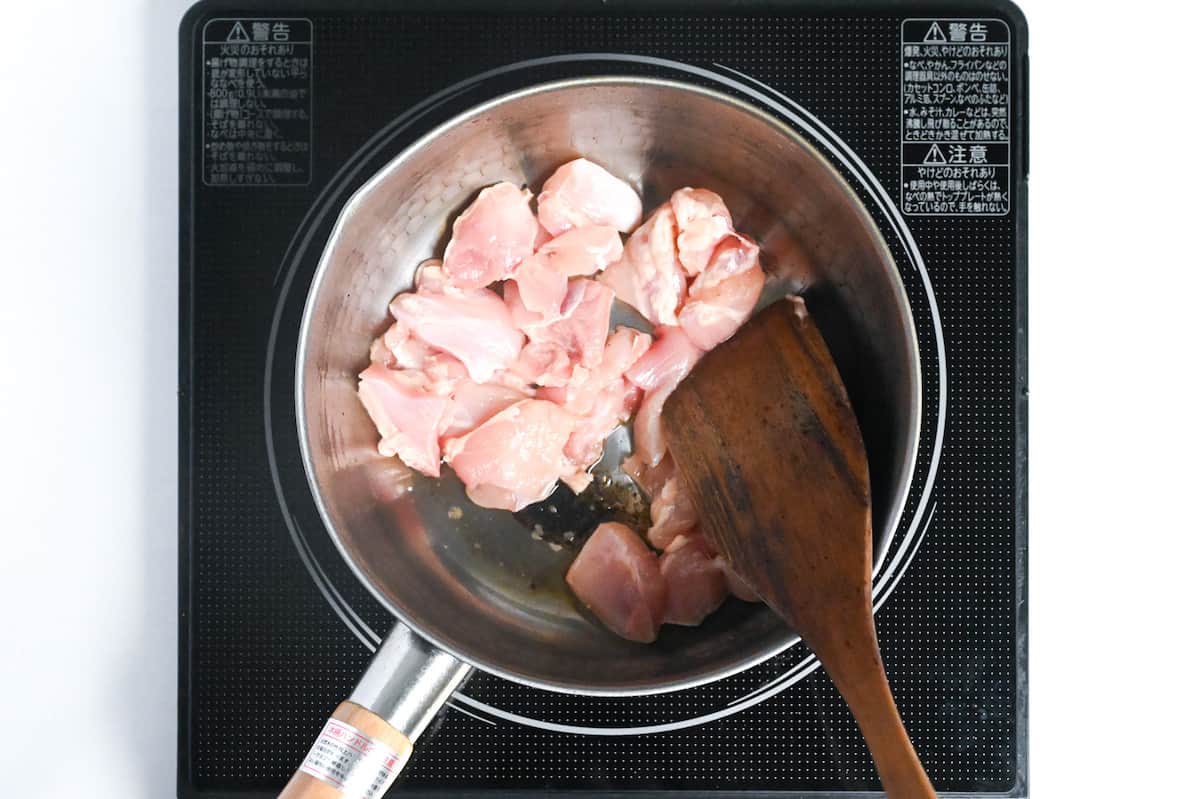
ii. Toss in the minced garlic, ginger, onion, and a pinch of salt. Stir and cook until the onion softens and releases its sweet aroma, about 3-4 minutes.
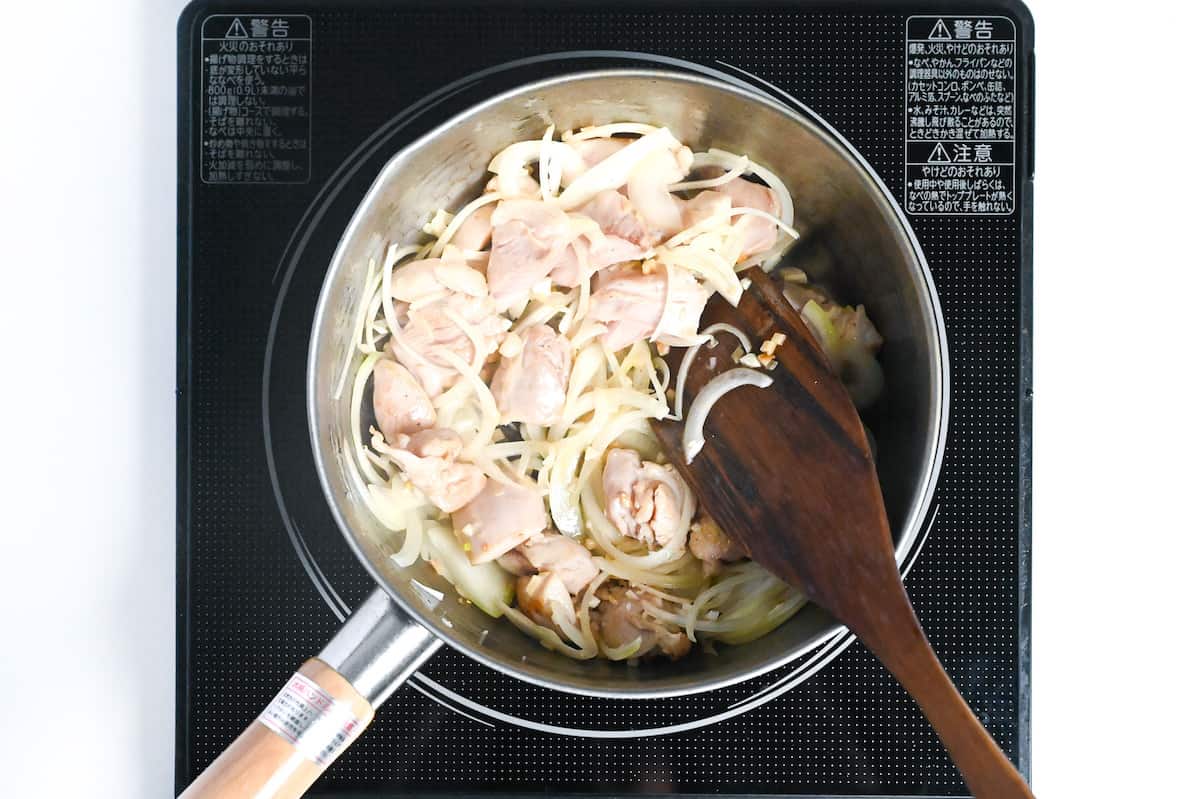
This layering of aromatics builds the flavor foundation that makes each spoonful sing.
i. Stir-fry carrots, daikon, and burdock for a minute.
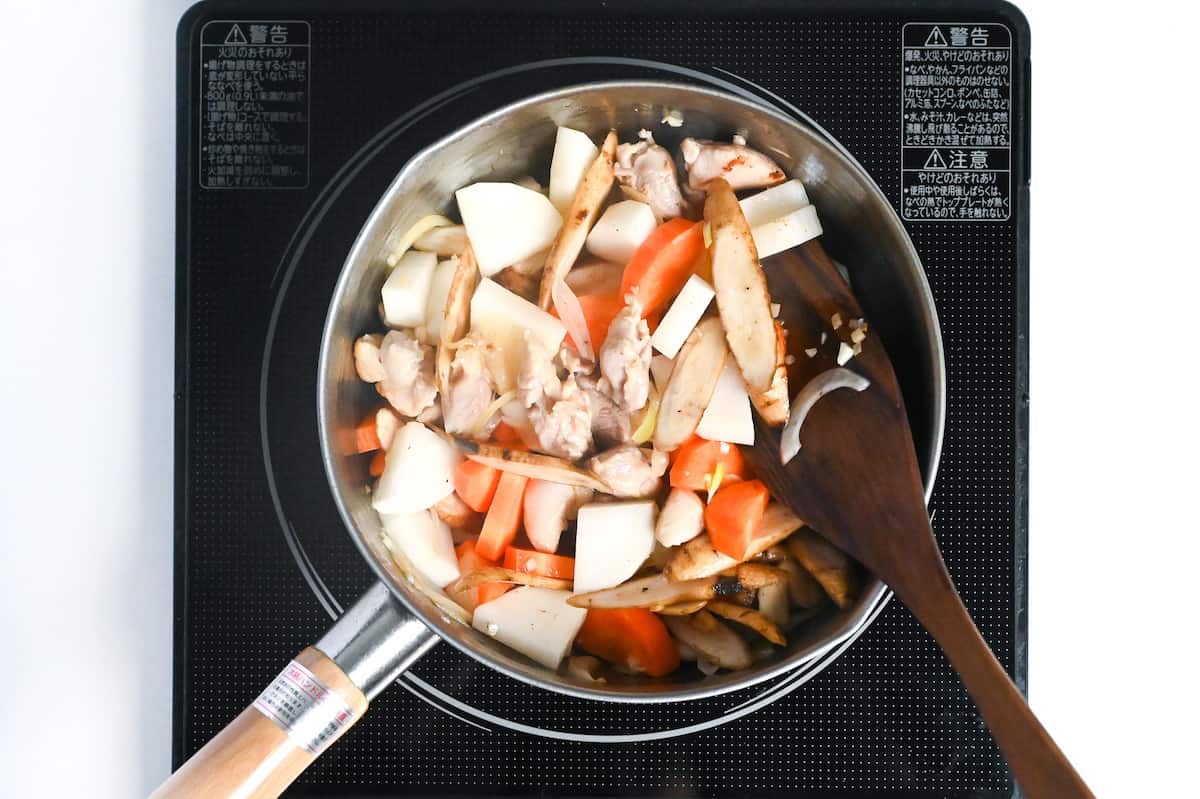
Dense vegetables like daikon and carrot need time to soften and release their natural sweetness into the broth. Stir-frying them first in that flavorful fat jump-starts the process and adds another layer of depth. Delicate enoki mushrooms go in later because they cook quickly and can turn slimy if overcooked.
ii. Then add enoki, leek, dashi stock, and sake.
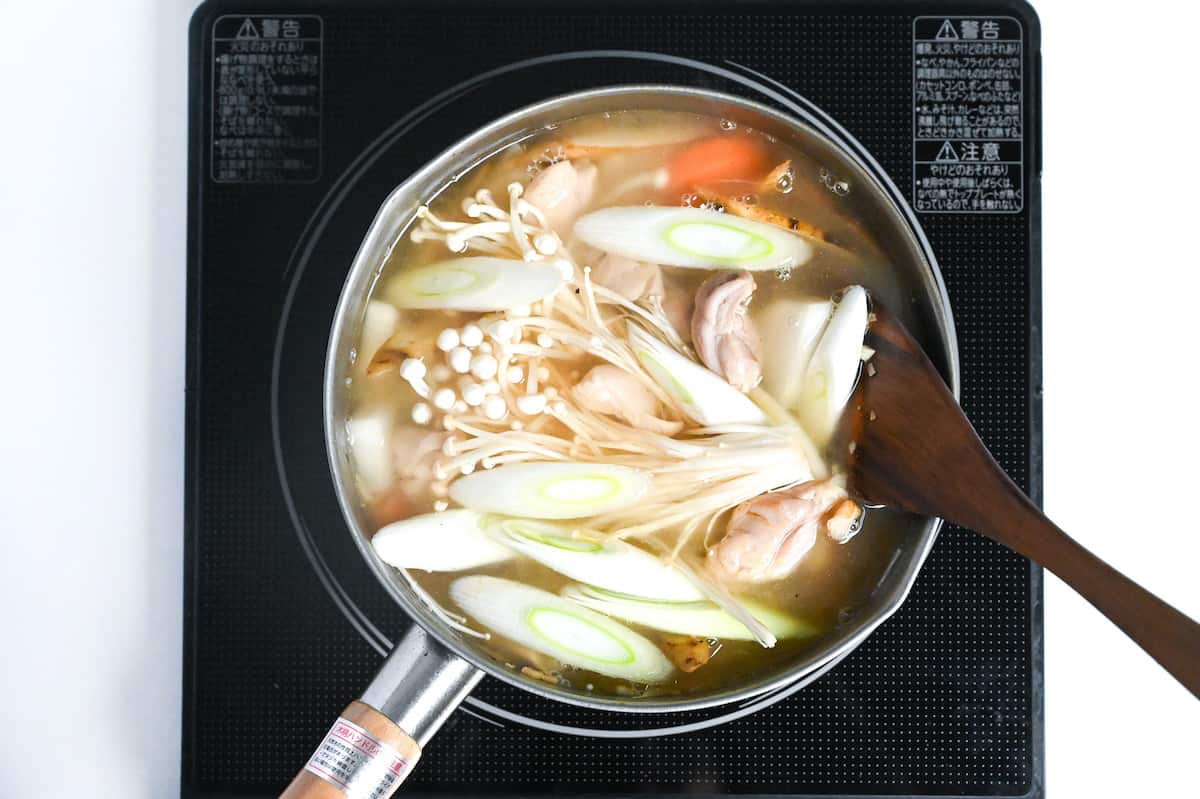
iii. Heat until bubbles ring the edge, cover, and keep a gentle simmer (below 95℃ (203°F)) until the roots are tender, 10 minutes.
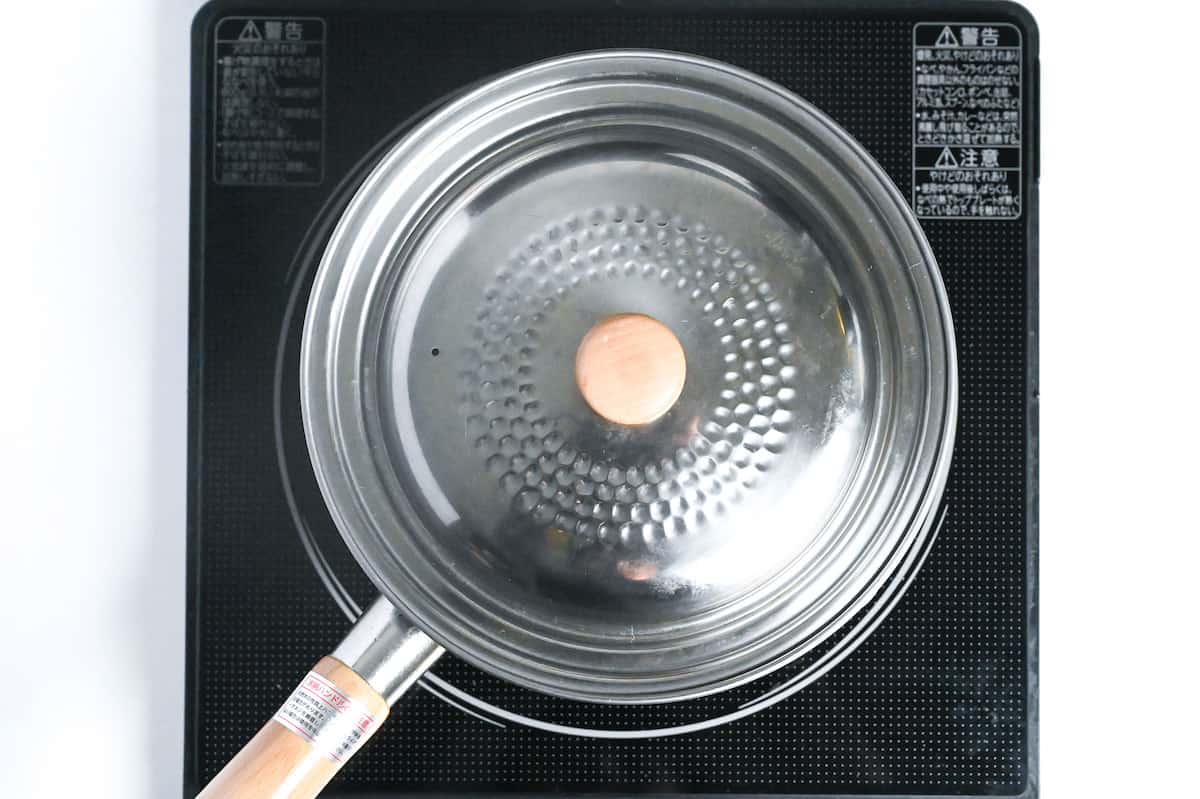
Lower the heat if it starts to boil too rapidly.
i. Turn off heat at a strong simmer, wait 10 seconds, and dissolve miso at about 75℃ (167°F) to preserve its aroma. Whisk it through with a mesh ladle (or bowl slurry), stir in soy sauce until it’s evenly dispersed.
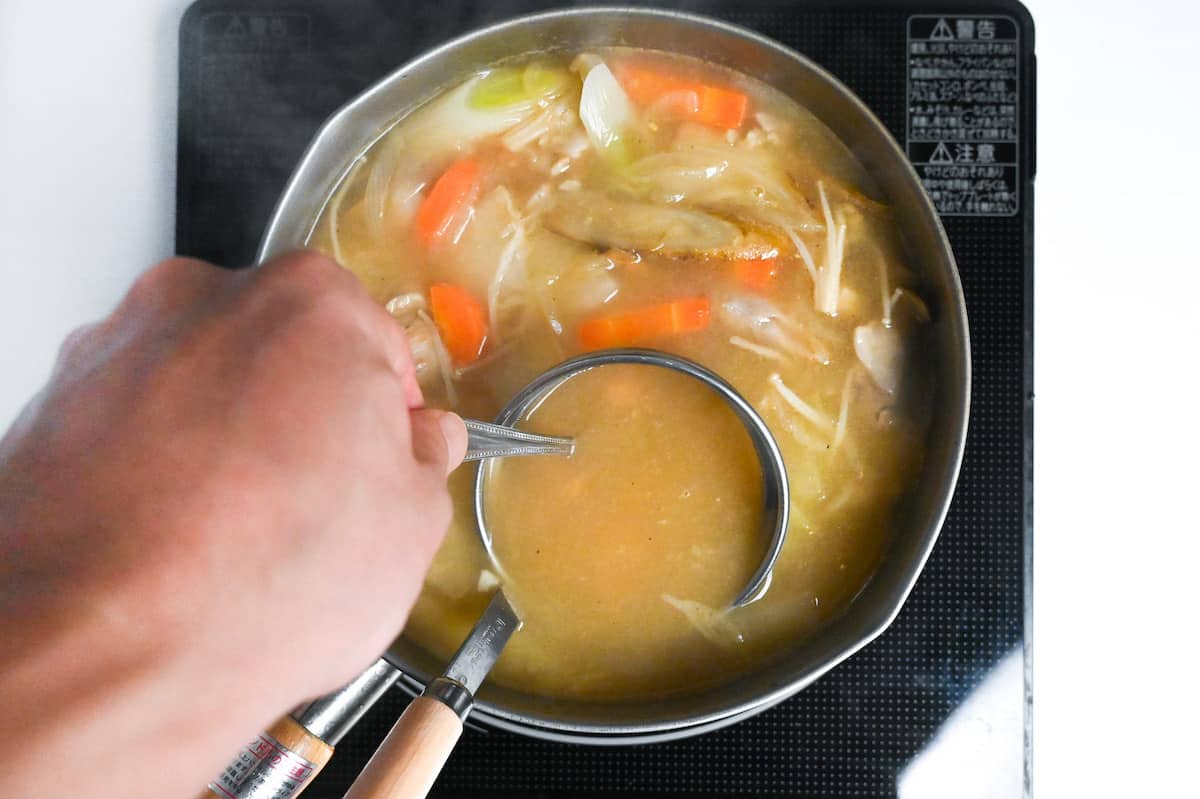
Never dump miso paste straight into the pot or you’ll get clumps and uneven seasoning. Instead, place your miso on a miso strainer, fine-mesh strainer or ladle, dip it into the hot broth, and whisk with chopsticks or a spoon until it dissolves smoothly before releasing it into the soup.
No strainer? Whisk the miso with a few tablespoons of broth in a small bowl until completely smooth, then pour it into the pot. This technique guarantees silky, evenly flavored broth in every spoonful.
ii. Then taste and add more miso if needed; if clumps remain, keep whisking until smooth.
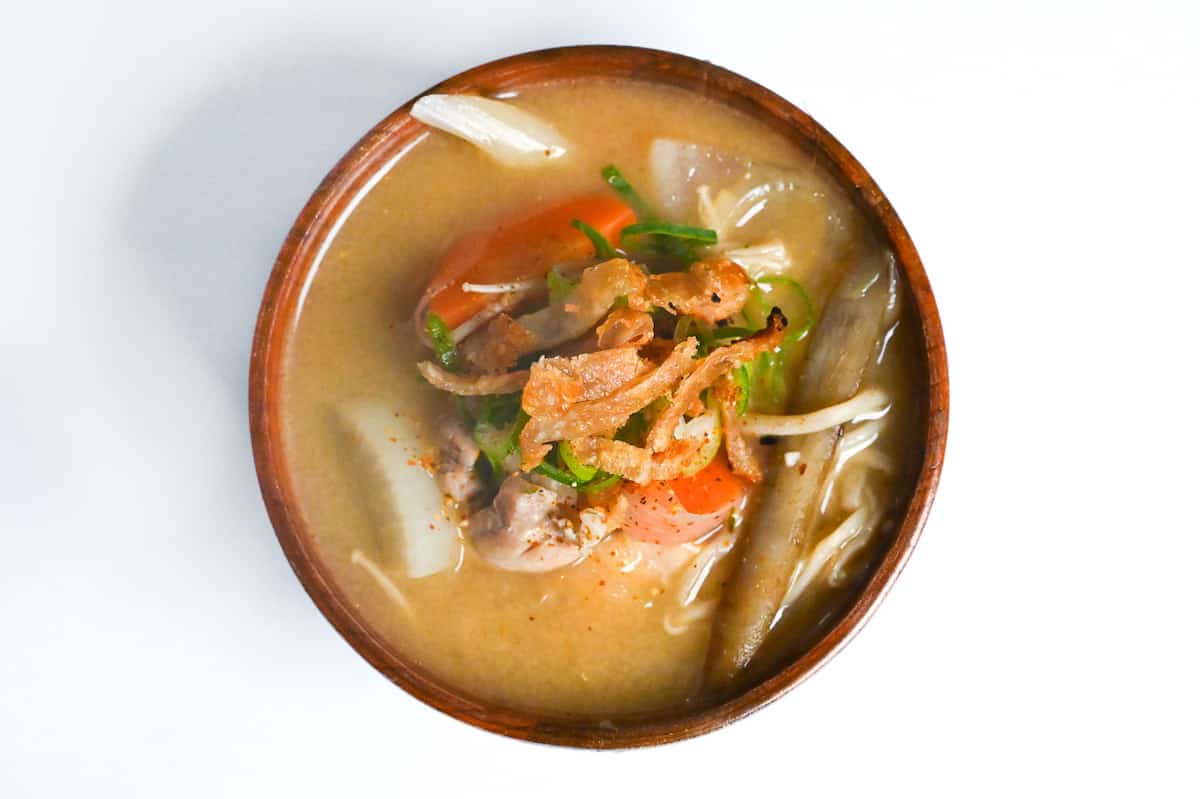
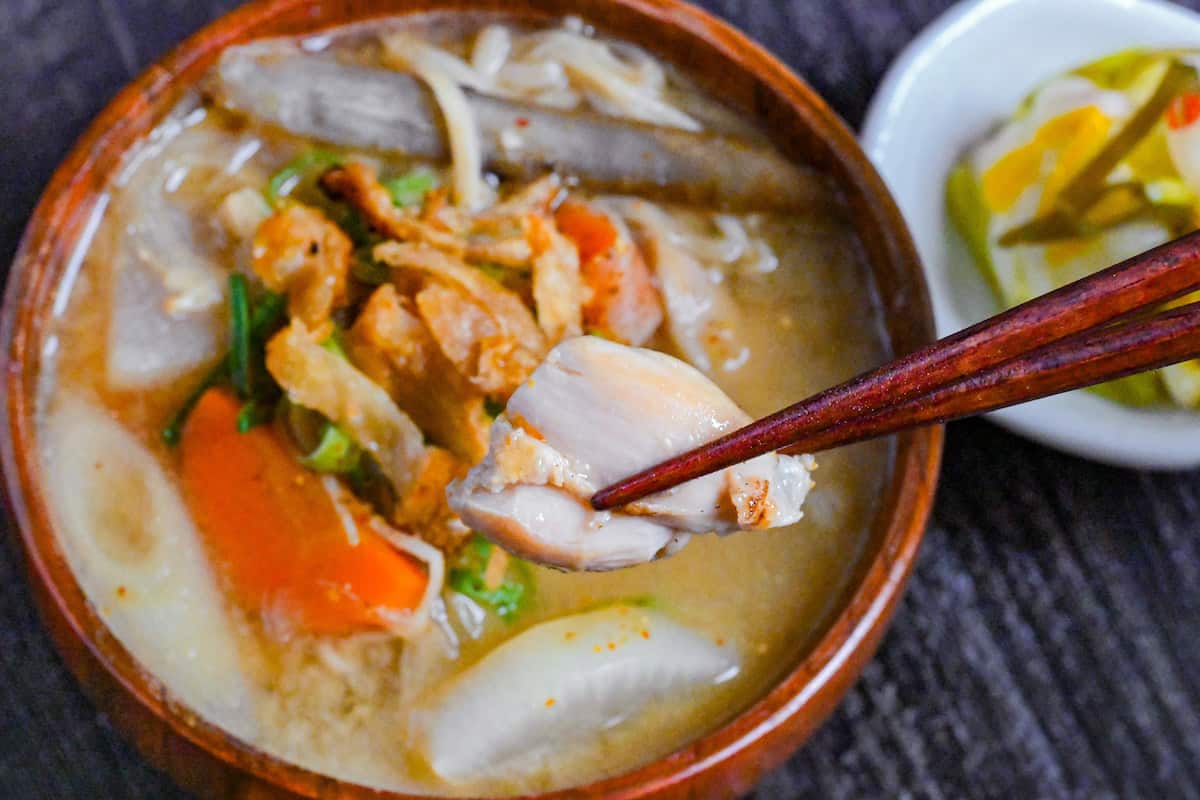
i. Serve hot, topping each bowl with green onions and crispy chicken skin strips for fresh aroma and crunch. The contrast of creamy broth, tender vegetables, and crackly skin is what makes this bowl feel restaurant-good.

Essential Tips & Tricks
- Render chicken skin low-and-slow until deeply crisp to build “abnormally rich” mouthfeel from chicken fat. Rush it and you’ll scorch the fat, or end up greasy instead of creamy.
- Add garlic, ginger, and onion after searing and cook until sweet-fragrant to build the umami base.
- Keep the pot at a gentle simmer (not a rolling boil), stirring occasionally to avoid hot spots.
- Skim the foam (aku) diligently during the vegetable simmer to remove coagulated proteins and impurities.
- Always dissolve miso off the heat using a strainer or small bowl slurry to prevent clumping and preserve its delicate aroma. Adding miso to boiling liquid volatilizes the fragrant compounds.
With these simple tips in mind, you’re set for success every time you make ultimate chicken miso soup.
Storage & Meal Prep
Fridge: Cool quickly, then refrigerate in an airtight container for 2-3 days. Store the crispy chicken skin separately because it softens from condensation. The broth will look thicker and slightly more opaque as chicken fat solidifies, which is normal.
Freezer: Not recommended to freeze the fully miso-finished soup (the miso aroma dulls and the vegetables can turn watery on thawing).
Meal Prep: You can prepare the dashi stock and chop all vegetables 1-2 days in advance to speed up cooking. For the best quality, cook the soup fresh, as reheating can overcook the chicken and diminish the aromatic punch of the miso.
Reheating: Warm gently on the stove over medium-low heat until the soup reaches about 75°C (167°F), steaming but not boiling. Avoid boiling, as high heat destroys the miso’s aroma and toughens the chicken.
What to Serve With This Recipe
- Steamed Japanese Rice (Gohan)
- Cucumber Sunomono
- Tsukemono (Japanese Pickles)
- Dashimaki Tamago
Chicken Miso Soup FAQ
For a rich-but-balanced bowl, choose awase (blended) miso. It gives depth without overpowering the chicken. White miso stays lighter and sweeter, while red miso tastes bolder and saltier. So the “right” one depends on how intense you want the fermented aroma to be. Since salt levels vary by brand, always adjust by taste at the end.
That signature richness comes from fat rendering + light emulsification: chicken fat needs time at gentle heat to disperse into the broth. If you boil aggressively, the soup can look dull and feel greasy rather than silky. Dial it back to a quiet simmer and stir to re-distribute the fat. Also make sure you actually rendered the skin long enough to build that flavorful base.
Use chicken thighs instead of breast-they have more fat and stay juicy even with gentle simmering. Keep your heat low enough that the broth barely bubbles rather than rolling boil, which causes proteins to seize up and squeeze out moisture.
More Japanese Soup Recipes
- Japanese Clear Soup (Osuimono)
- Ozoni (New Year’s Soup with Mochi)
- Corn Potage (Japanese Corn Soup)
- Kenchin Jiru (Traditional Japanese Vegetable Soup)
Want more inspiration? Explore my Japanese soup recipes to spark your next meal!
Did You Try This Recipe?
I would love to hear your thoughts!
💬 Leave a review and ⭐️ rating in the comments below. 📷 I also love to see your photos – submit them here!
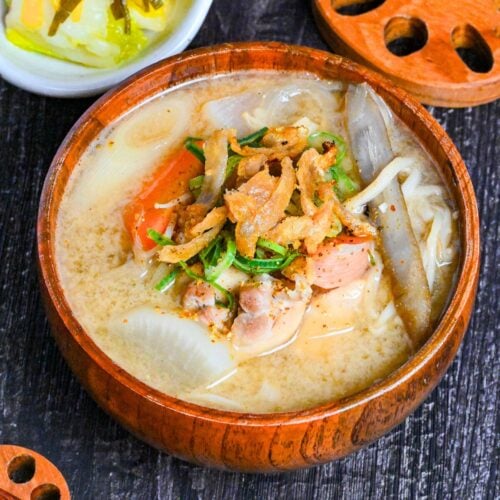
Chicken Miso Soup (Torijiru)
Ingredients
- 300 g boneless chicken thigh skin-on, essential for rich broth
- 1 tbsp cooking oil neutral
- ½ onion thinly sliced
- 1 clove garlic fresh, finely diced
- ½ tbsp ginger root fresh, finely diced
- ¼ tsp salt
- 1 burdock root (gobo) skin scrubbed, thin diagonal slices
- 1 carrot peeled, 1cm slices, halved
- ⅓ daikon radish peeled, 2cm slices, halved or quartered
- 1 bunch enoki mushrooms bottom stem/roots removed
- 1 Japanese leek (naganegi) diagonally sliced
- 1 liter dashi stock
- 1 tbsp sake
- 1 tsp Japanese soy sauce (koikuchi shoyu)
- 4 tbsp yellow miso paste (awase)
- finely chopped green onions
My recommended brands of ingredients and seasonings can be found in my Japanese pantry guide.
Can’t find certain Japanese ingredients? See my substitution guide here.
Instructions
- Before you start, cut the vegetables and aromatics according to the notes on the ingredient list.

- Peel the skin off 300 g boneless chicken thigh and cut the meat into bitesize pieces.
- Add 1 tbsp cooking oil to a large cold pot and place the chicken skin flat down, with all surface area in contact with the pan. Heat on low/medium-low slowly render the fat while the skin turns crispy. Once golden underneath, flip and repeat on the other side.
- Transfer the crispy skin to a kitchen paper-lined plate to absorb excess oil.
- In the same pot, add the chicken meat and increase the heat to medium. Sear all over until you can't see any more pink.
- Add ½ onion, 1 clove garlic, ½ tbsp ginger root and sprinkle with ¼ tsp salt. Fry until the onion is slightly softened.
- Add 1 burdock root (gobo), 1 carrot and ⅓ daikon radish. Stir fry for 2-3 minutes.
- Now add 1 bunch enoki mushrooms, 1 Japanese leek (naganegi), 1 liter dashi stock and 1 tbsp sake.
- Mix and bring to almost boiling, then lower the heat and cover with a lid. Simmer until the root vegetables are softened to your liking.
- While you wait, cut the chicken skin into thin strips.
- Turn off the heat and add 1 tsp Japanese soy sauce (koikuchi shoyu). Place 4 tbsp yellow miso paste (awase) on a mesh spoon or ladle and dip it in the broth. Whisk in the spoon until loose enough to incorporate into the rest of the soup.
- Pour into serving bowls and top with finely chopped green onions and the crispy chicken skin from earlier. Enjoy!

This is the new chicken soup for the soul. It’s like a warm hug from your grandmother. Who knew a simple protein swap from the usual tonjiru can create such flavours. My boyfriend is currently recovering from a cold so I used bone in thighs for extra nutrients. It’s definitely going to be a weekly item from now on. We absolutely loved it!
Hi Yui,
Your comment made my day! I’m really glad it hit the spot for both of you. Bone-in thighs seem amazing too! Hope it continues to bring all the cozy vibes each week! 🙂
Yuto