

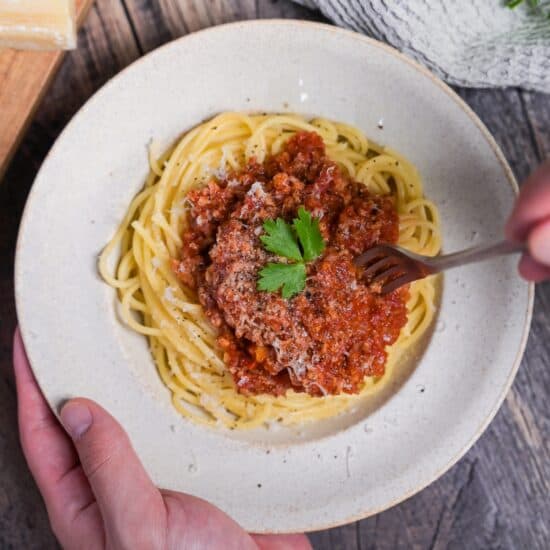


Looks a bit like bolognese sauce, but it is not. This is Japan’s tomato-leaning meat sauce spaghetti, the kind kids ask for by name and grown-ups quietly order at the kissaten counter without explaining why.
The sauce is sweet from ketchup, a little tangy from Worcestershire, and ladled over the spaghetti rather than tossed through it. Just the noon plate people keep coming back to when they want the comfort version at home.
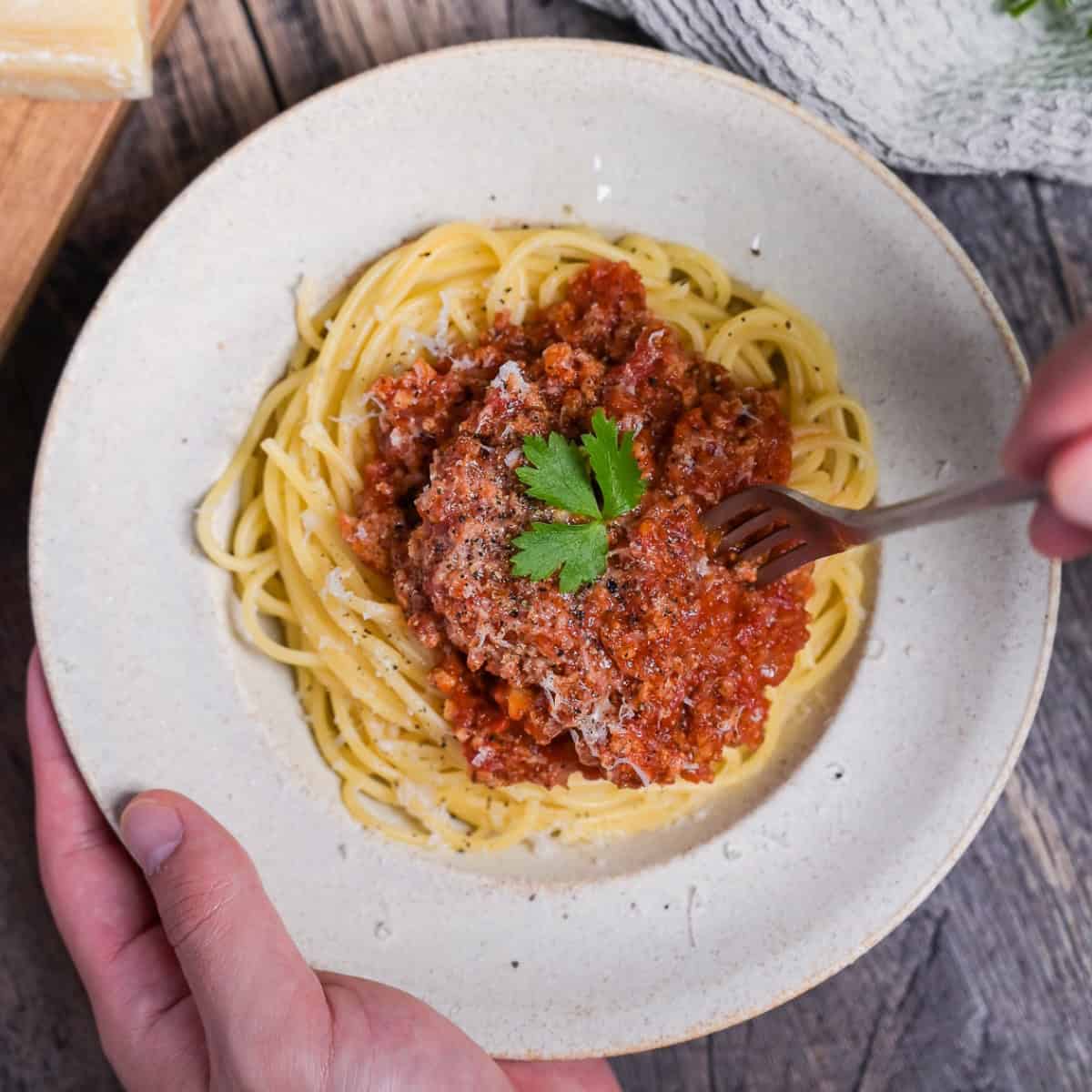
Meat sauce spaghetti
Recipe Snapshot
- What is it? A yoshoku-style spaghetti meat sauce, the second Japanese tomato-pasta category alongside napolitan, built on a sweetened ketchup-and-Worcestershire base ladled over plain spaghetti rather than tossed through it.
- Flavor profile: Sweet-tangy from the ketchup and Worcestershire trio with sugar, savory from a hard-seared fine-grind pork, mellowed by a carrot-forward base and rounded with a teaspoon of soy sauce at the end.
- Why you will love this recipe: This dish is closer to what the UK calls spaghetti bolognese than to anything actually served in Italy, with the sweetness dialed up and the meat dialed back the way Showa-era home cooks built it.
- Must-haves: A ground meat, a bottle of tomato ketchup, and a Worcestershire-style sauce.
- Skill level: Easy. Stovetop only with no special equipment.
Summarize & Save this content on:
What Is Japanese Meat Sauce Spaghetti?
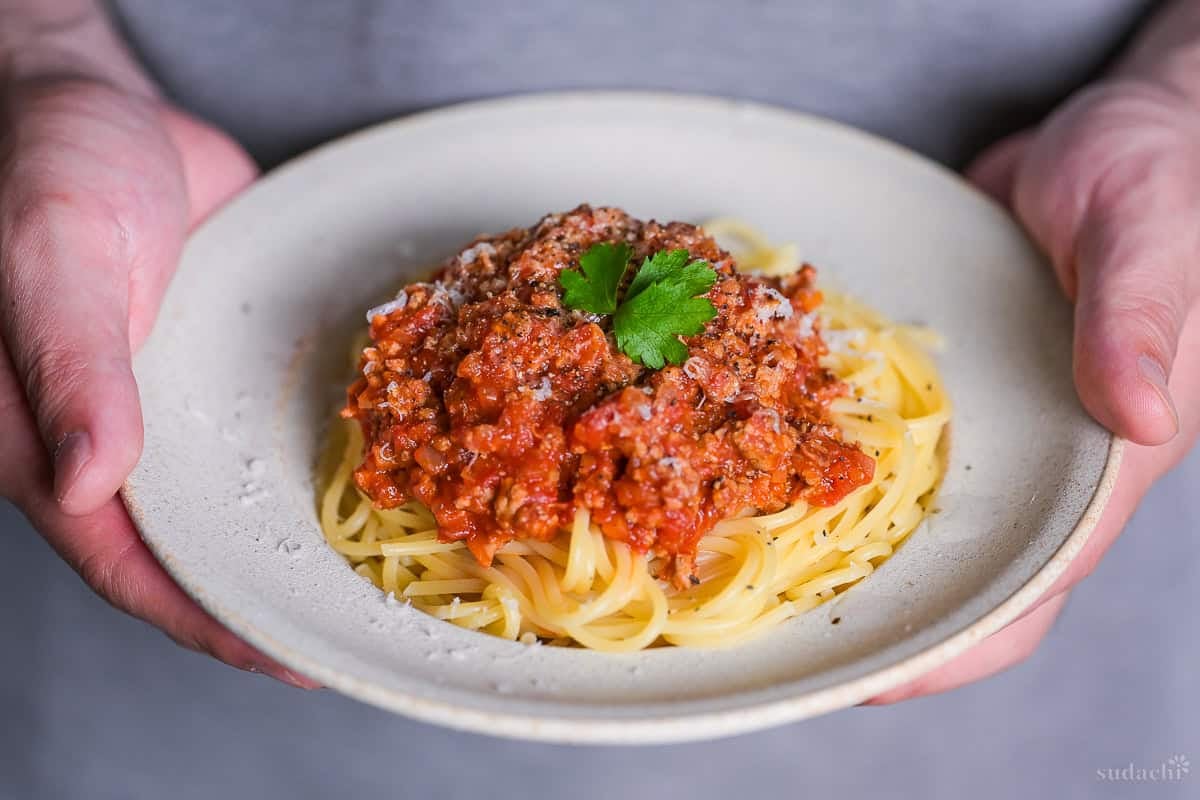
Japanese meat sauce spaghetti (ミートソーススパゲッティ) is the yoshoku tomato pasta that sits in its own lane, next to bolognese sauce and naporitan without overlapping either of them. The seasoning runs on ketchup and Worcestershire, the meat is a fine ground pork rather than coarse beef, and a ladle of finished sauce gets poured on top of the noodle mound at the table.
Hambagu and omurice moved through Showa and picked up new tricks. This dish did not. The plate that Kewpie’s 1959 canned sauce locked in is, give or take a quiet finishing move, the same plate that lands on the table now. Among the yoshoku family it is the rare member that did not quite evolve, and that preserved-archetype quality is the whole identity.
In my version, I keep that flat-line altitude on purpose. I was not a meat sauce kid at school. The lunch tray showed up, the soft noodle bag showed up, and I ate it because it was what was in front of me. The plate I cook now is the one I built later, with the sweet-tart balance dialed half a step back so a grown palate can finish a full bowl, and finished off the heat with a small pour of shoyu and a knob of butter to round the edges.
Meat Sauce Spaghetti Ingredients
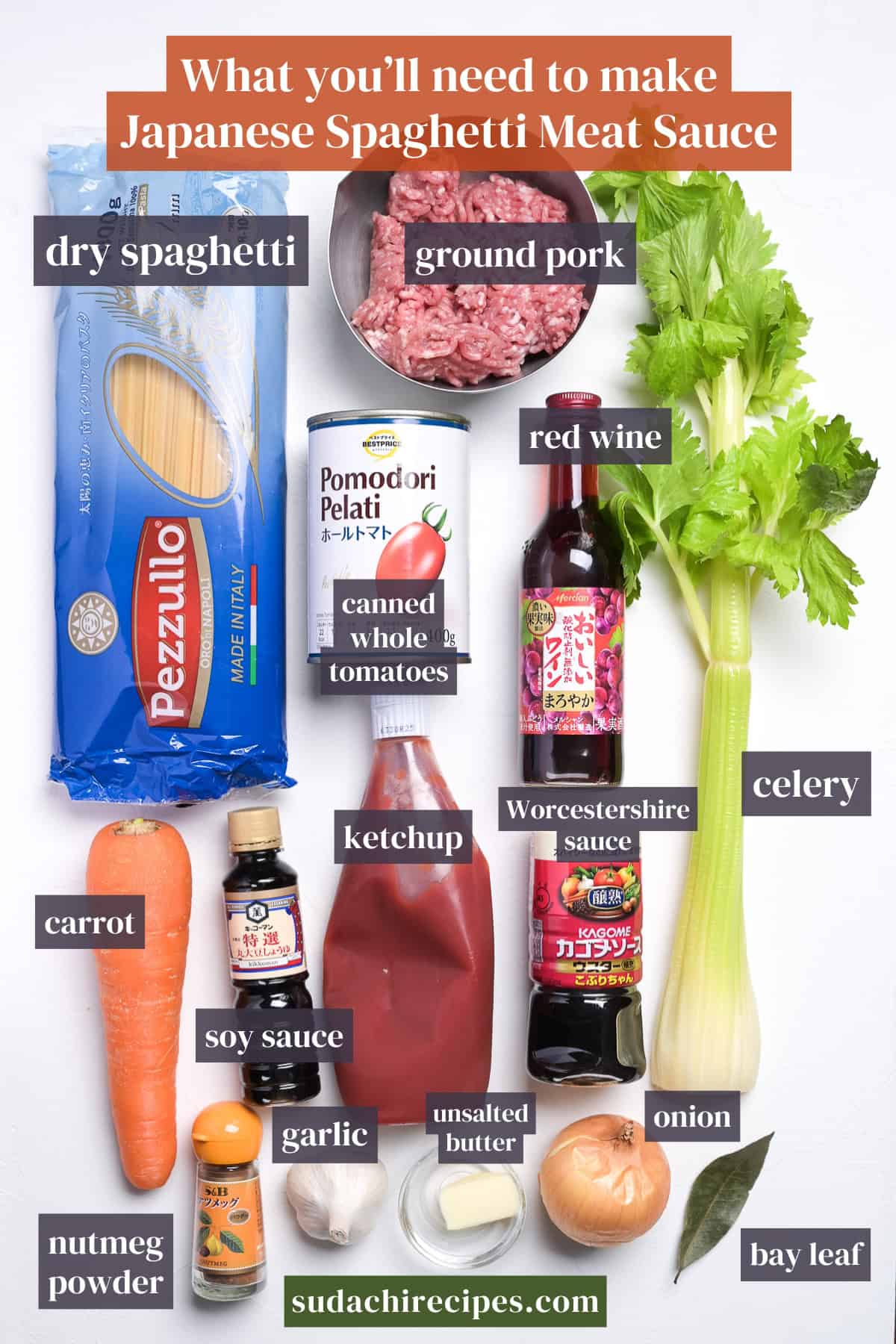
- Tomato ketchup: This is not a shortcut, it is the genre marker. The sweet-tangy line that pulls meat sauce away from bolognese and toward the Showa-era home plate starts here. Any standard ketchup at the grocery store will do the job.
- Worcestershire sauce: Worcestershire is the other half of the genre signature. Bull-Dog or Kagome is the home choice in Japan and gives you the rounded, slightly fruitier profile the sauce was tuned to. Regular Worcestershire sauce like Lea & Perrins is the easy alternative.
- Soy sauce + butter (finishing pair): Off the heat, right at the end, a small pour of soy sauce and a knob of butter go in together. The soy sauce rounds the acidity of the tomato and ketchup so the sauce stops poking your tongue. The butter pulls the whole pot glossy and softens the edges of the Worcestershire bite.
Substitutions & Variations
Here is the honest reality of this sauce. The non-negotiables are short: ground meat with some fat in it, canned tomato, ketchup, and a Worcestershire-style sauce. Everything else is flexible, and the sauce is forgiving the way weeknight comfort food has to be.
Substitutions:
- Ground pork blend → Pork/beef blend or all beef: It’s a tomato forward sauce anyway, so you don’t need to worry about it too much, but I wouldn’t recommend using ground chicken/turkey.
- Bull-Dog Worcestershire → Lea & Perrins: Use a scant pour because the acidity hits harder, and stir in a small pinch of sugar to bring the sweetness back in line.
- Canned whole tomatoes → Canned diced or crushed: Diced or crushed both work.
- Soy sauce → Tamari, or skip it: Tamari is a clean one-to-one swap and useful for gluten-free kitchens. If you have no soy sauce at all, the sauce is still good without it, you can simply add a bit of salt.
Have trouble finding Japanese ingredients? Check out my ultimate guide to Japanese ingredient substitutes!
Variations:
- Mushroom add-in: Slice up a small handful of brown or white mushrooms and toss them in right after the onion-celery-carrot stage.
- Make-ahead reheat: Cook the sauce to the end-of-simmer stage (just before the soy sauce and butter), cool it on the counter, then park it in the fridge overnight. Reheat gently the next day, stir in the soy sauce and butter at serving time, and the sauce reads deeper.
How to Make My Japanese Meat Sauce Spaghetti
Before you start (Mise en place):
- Fine-chop the onion, the celery, the carrot, and the garlic.
- Have the ketchup, the Worcestershire, the canned tomato, the bay leaf, and the nutmeg lined up next to the stove. The cook is fast once it starts.
- Pull the meat out of the fridge 10 minutes before you start so it is not stove-shocked when it hits the pan. Cold meat dumped into a hot pan steams instead of sears.
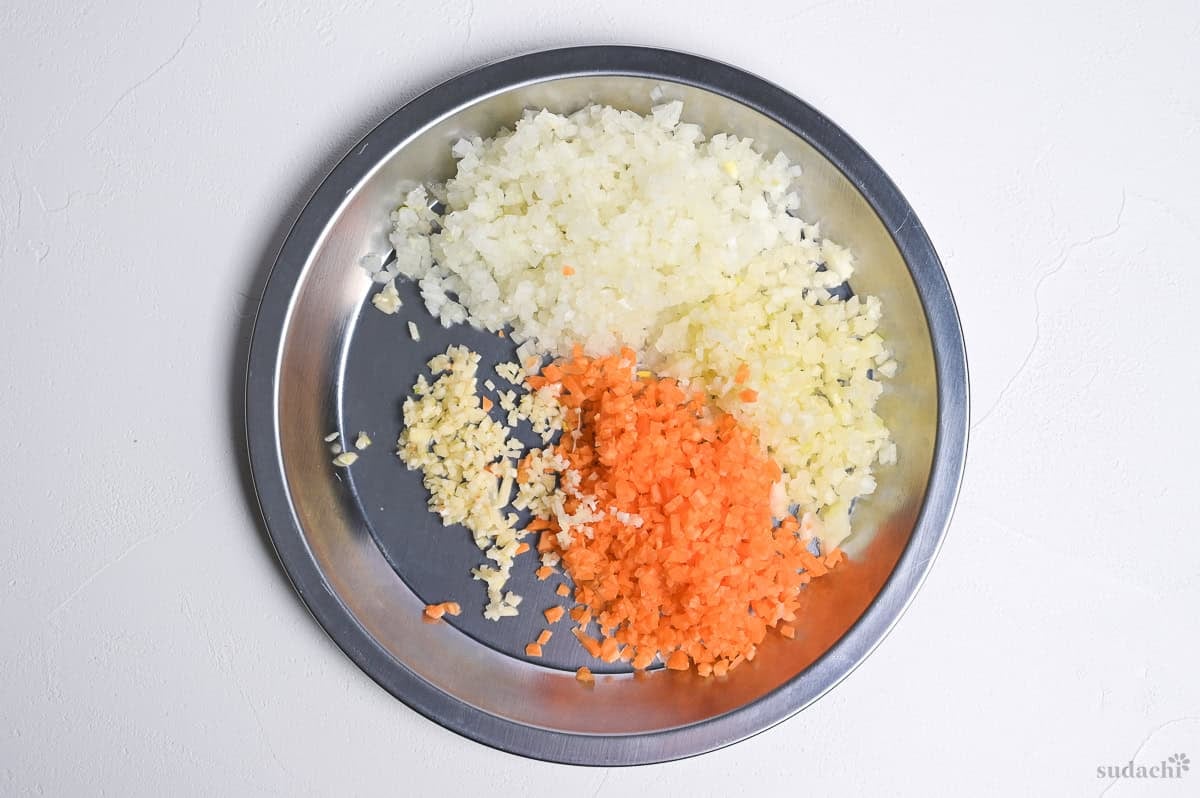
i. Set a large skillet over medium heat. Once the pan is warm, add the oil and give it a few seconds to thin out.
ii. Add the ground meat in 1 slab, press it flat with a spatula or the back of a wooden spoon, and walk away for 3 to 4 minutes. Sear it hard, you want a real brown crust on the bottom, not a gray steam-cooked tint. Resist the urge to stir.
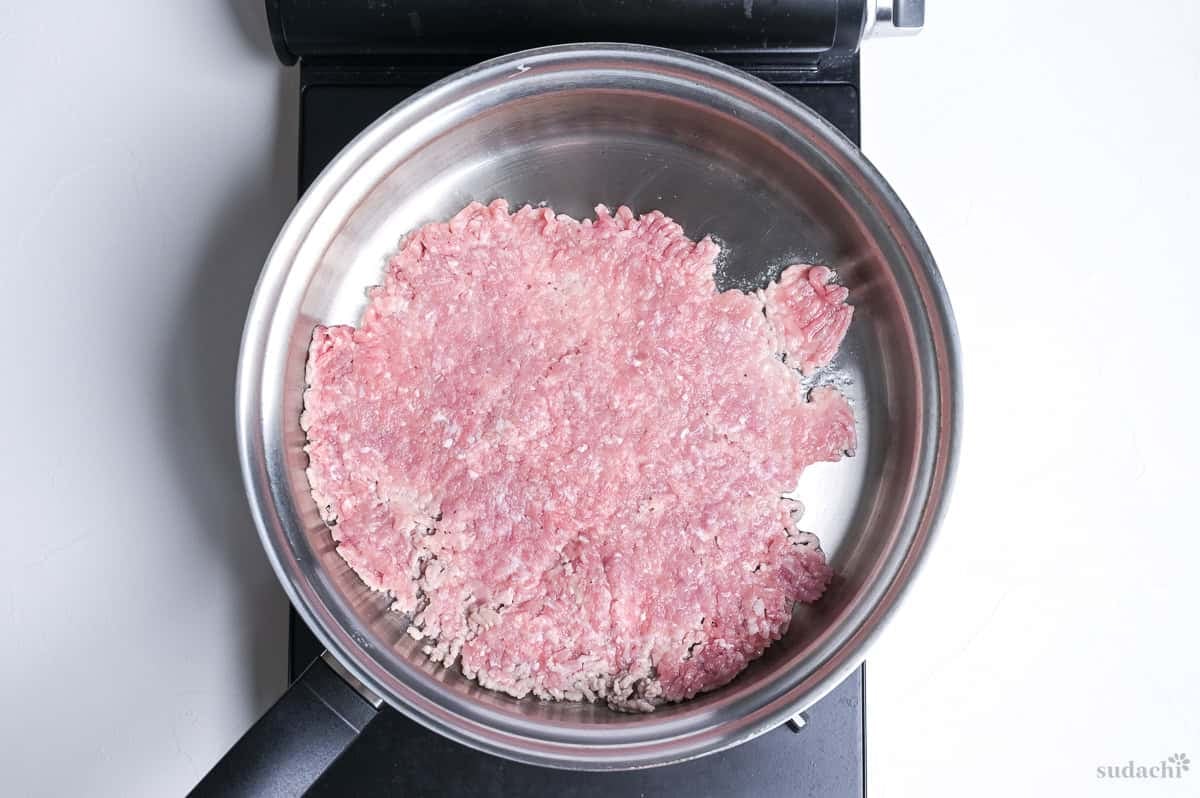
iii. Flip the slab. Press it flat again. Walk away for another 2 to 3 minutes until the second side has color too.
When you break the meat into bits right away, each bit ends up surrounded by its own moisture, and that moisture has to evaporate before any browning can happen. The meat boils inside its own juices and never gets the Maillard surface that the sauce reads as savory depth. Leaving it flat and undisturbed for 3 to 4 minutes a side gives the underside time to dry out and brown, and that brown surface is what flavors the entire sauce later.
i. Once the second side has color, add the onion, the celery, the carrot, and the garlic to the pan. Crumble the meat as you stir everything together.
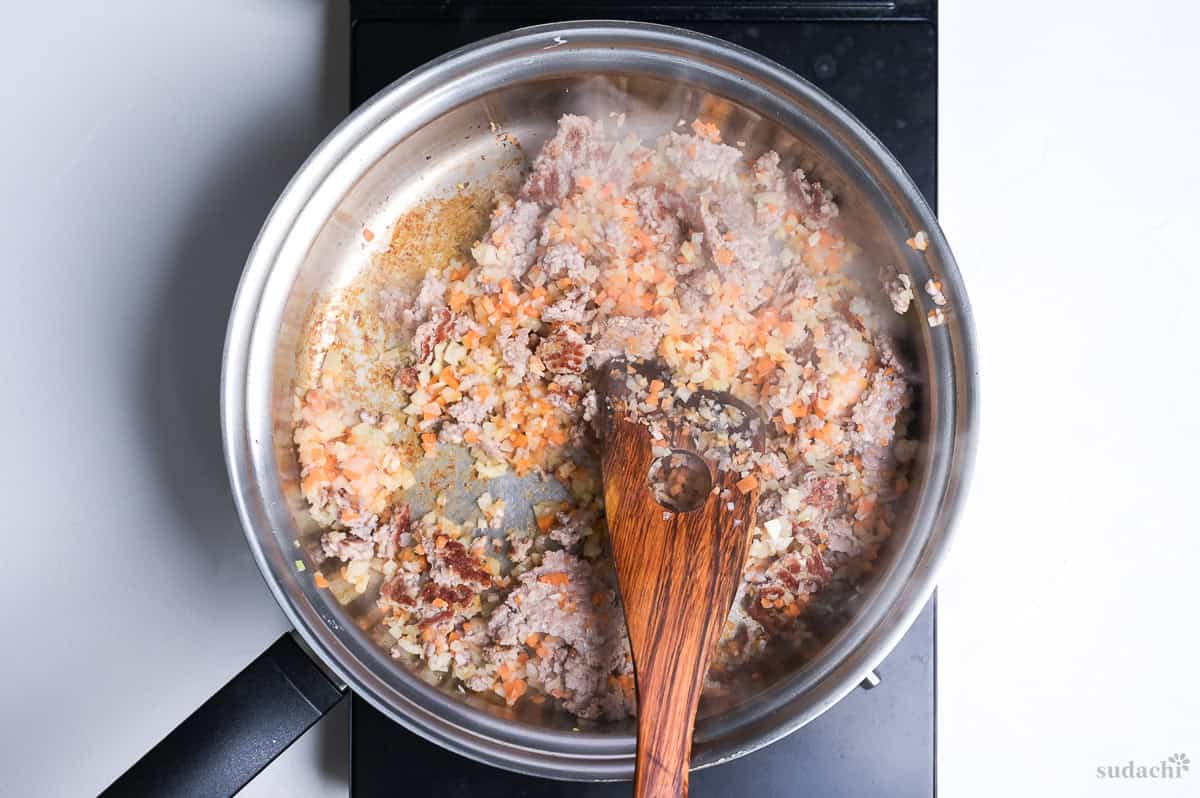
ii. Keep the heat at medium and stir occasionally. Cook for about 3 minutes until the onion has gone soft and translucent and the carrot has started to glisten in the fat.
i. Pour in the red wine and stir, scraping the brown bits off the bottom of the pan. Let it bubble for about 30 seconds until the sharp alcohol smell is gone.
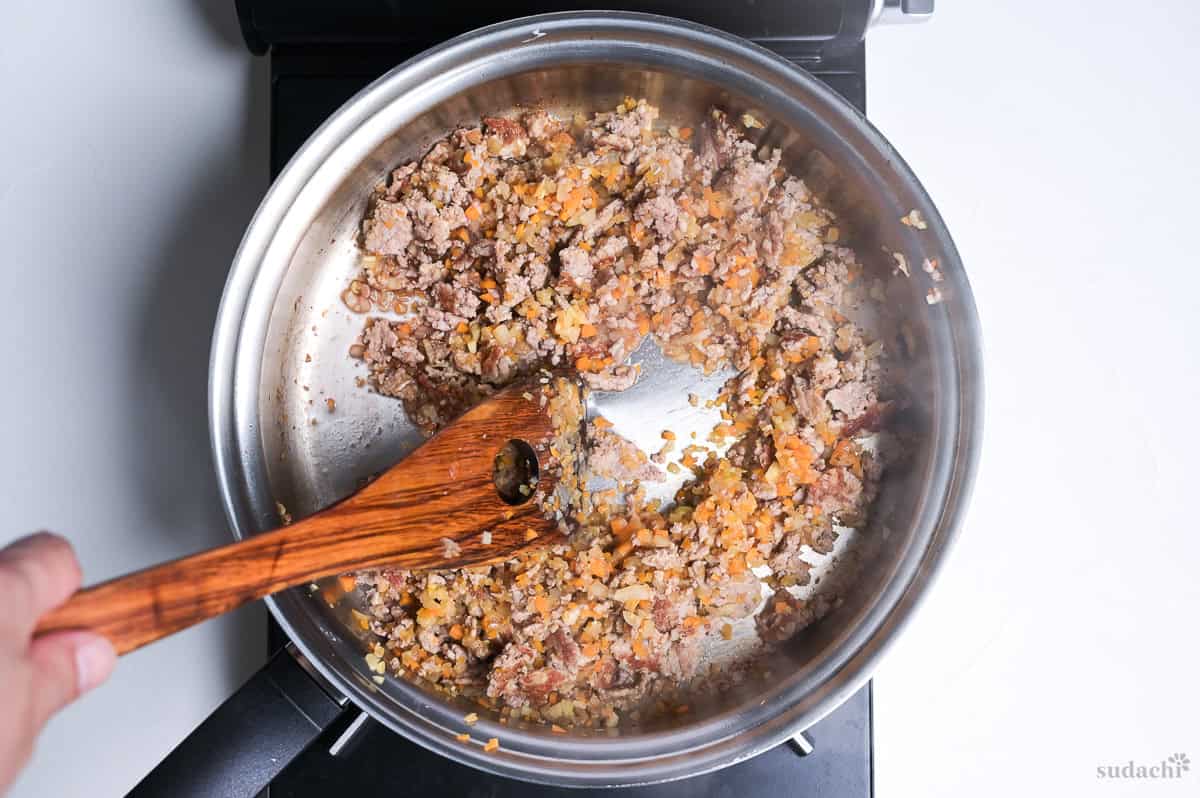
ii. Add the ketchup and the Worcestershire sauce. Stir to coat everything. Cook for 1 to 2 minutes until the pan goes mostly dry and the sugars in the ketchup start to caramelize on the surface of the meat.
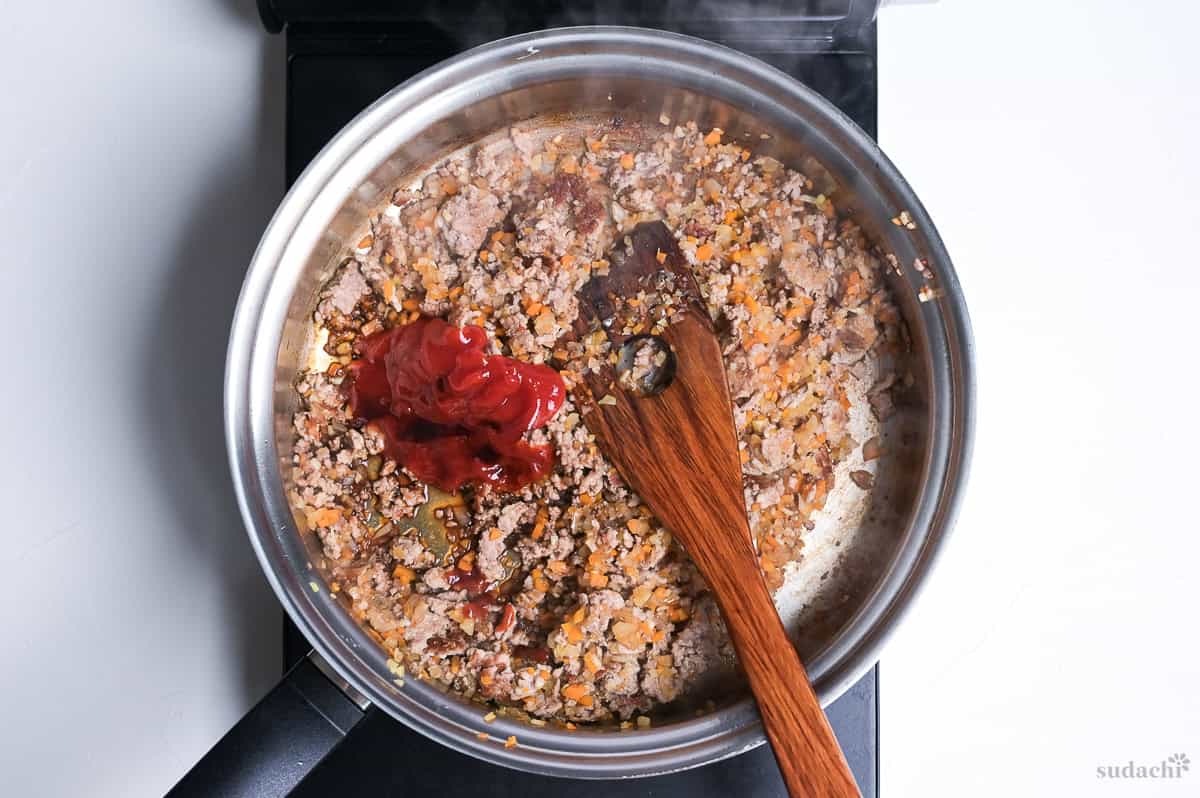
If you skip this step and dump the canned tomato in right after the ketchup goes in, the ketchup stays raw and reads sharp in the finished sauce. Letting the ketchup cook against the hot pan for a minute or 2 does 2 things at once.
The sugars caramelize and add a deeper sweet note that ketchup straight from the bottle cannot produce. The vinegar in the ketchup also cooks off slightly, which is what pulls the seasoning from candy-sharp toward rounded-savory.
i. Pour in the can of whole tomatoes. Crush the tomatoes against the side of the pan with a wooden spoon or a spatula until they break into a rough sauce.
ii. Tuck the bay leaf into the sauce. Add the pinch of nutmeg. Stir everything together.
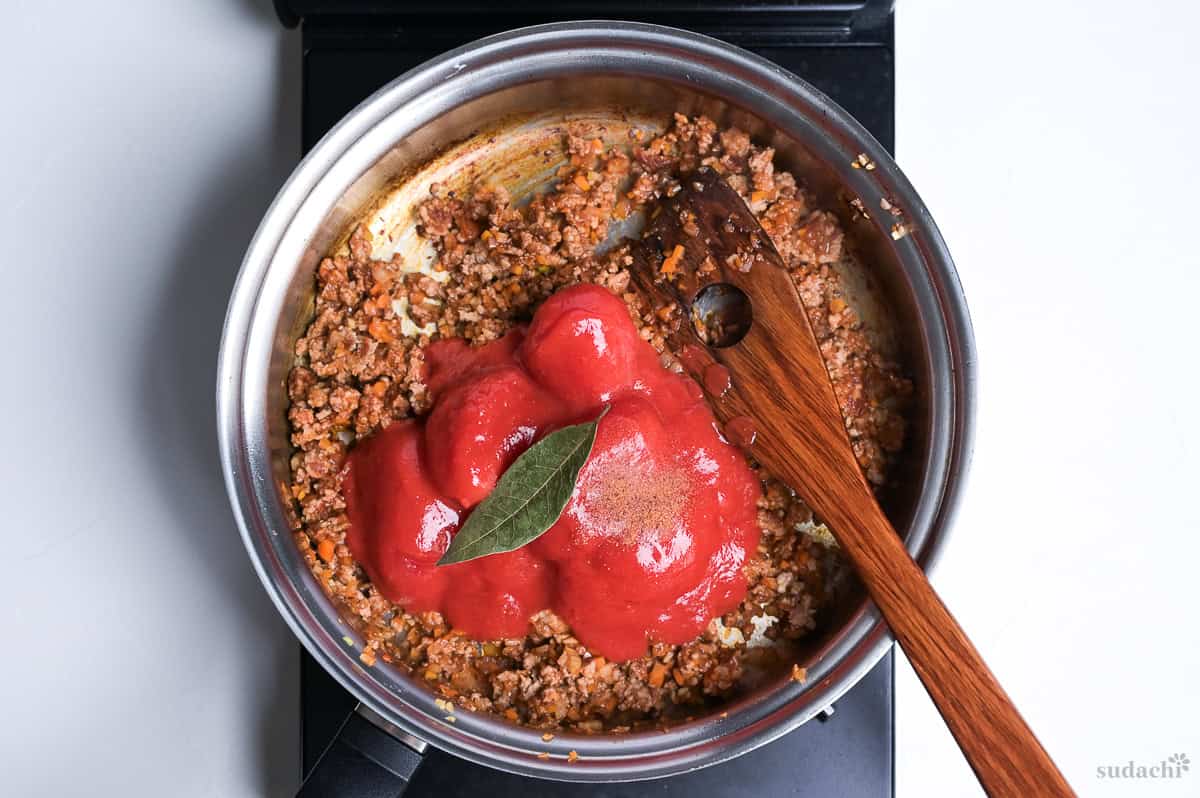
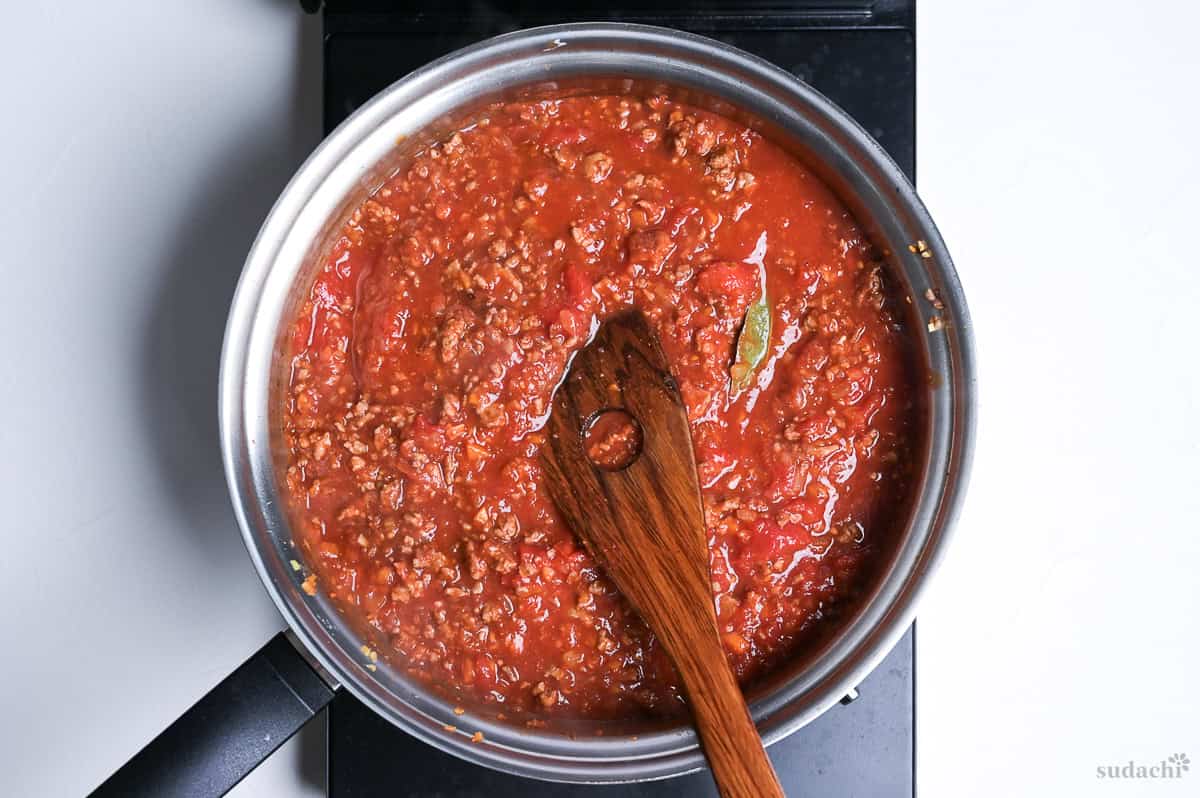
iii. Drop the heat to low and simmer uncovered. Stir every few minutes so the bottom does not catch. Cook until the sauce has reduced by about half and the surface has gone from watery to glossy, roughly 10 minutes depending on your pan and your burner.
i. While the sauce is doing its reduction, set a large pot of water on a separate burner. Bring it to a full boil and add the salt. The water should taste noticeably salty, this is the only chance the noodles have to season themselves.

ii. Drop the dried spaghetti into the boiling water. Cook for the time listed on the package, or pull it 1 to 2 minutes early if you want a slight al dente bite.
i. Once the sauce has reduced to a thickness you like (it should fall slowly off a spoon, not run off like water), kill the heat. Fish the bay leaf out and discard it.
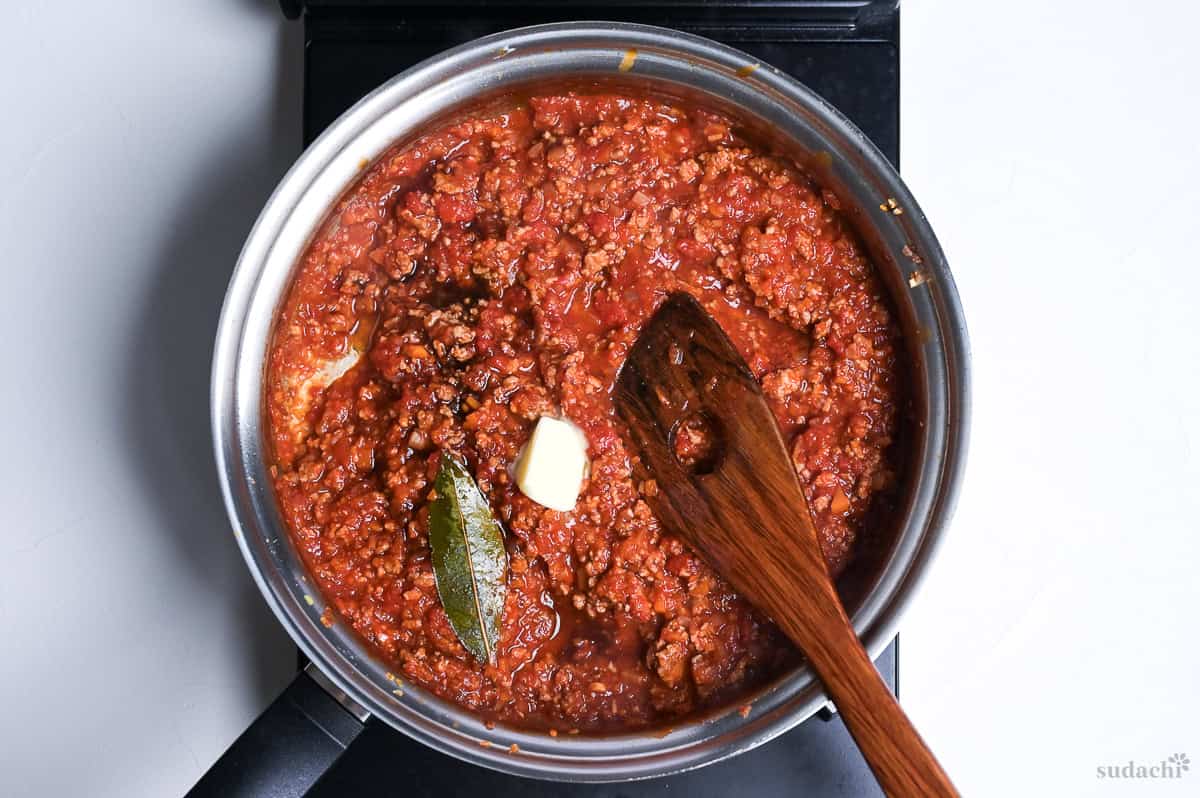
ii. Add the soy sauce and the butter. Stir until the butter has melted into the sauce and the surface goes from matte to glossy.
i. Drain the spaghetti hard. No water clinging to the noodles for this recipe, or it will pool on the plate and dilute the sauce.
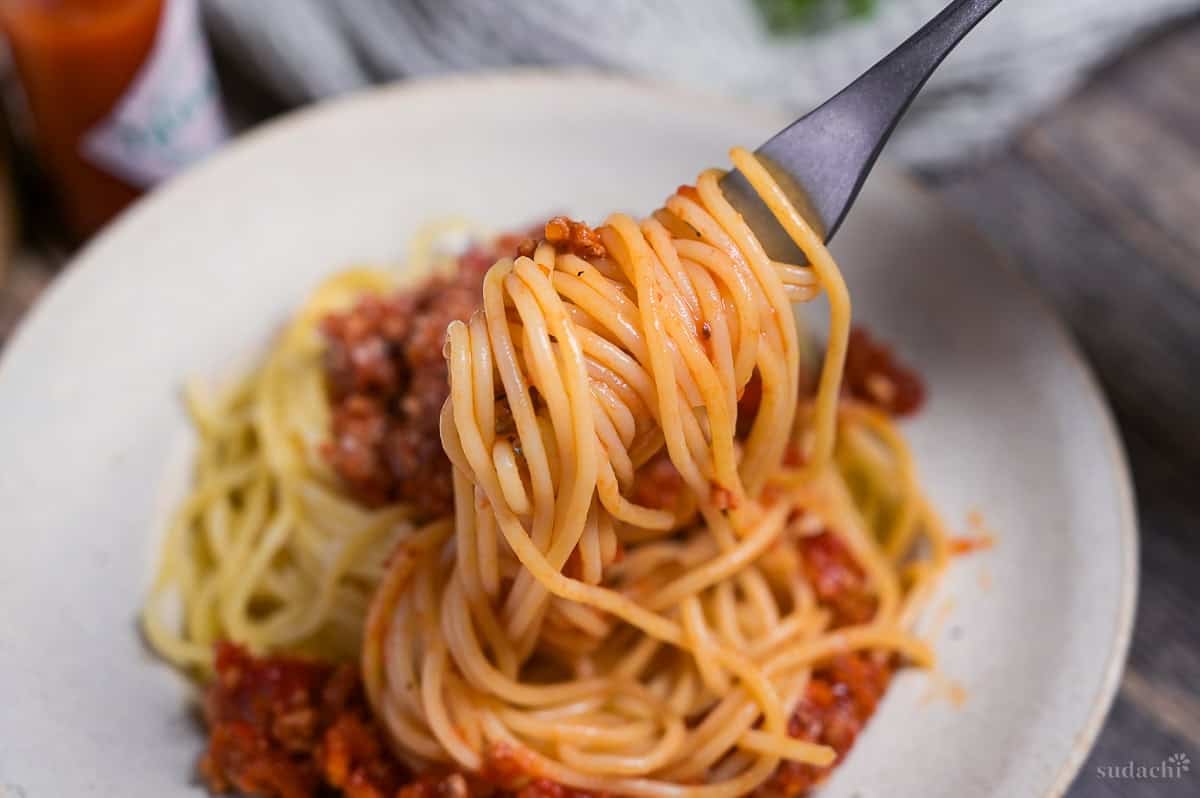
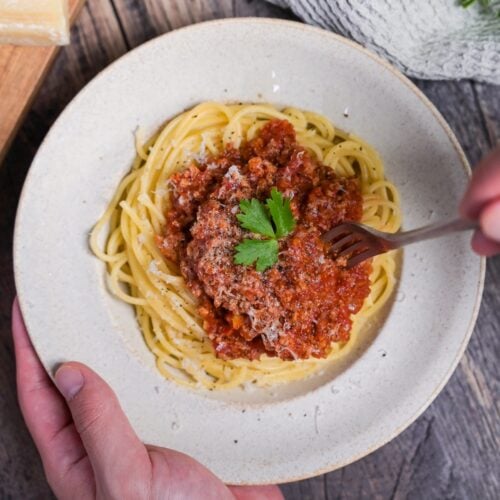
ii. Divide the spaghetti between plates, mounding it slightly in the center. Ladle an equal share of the meat sauce over the top of each mound. The sauce goes on top, not tossed through. This is the definition of Japanese meat sauce spaghetti.
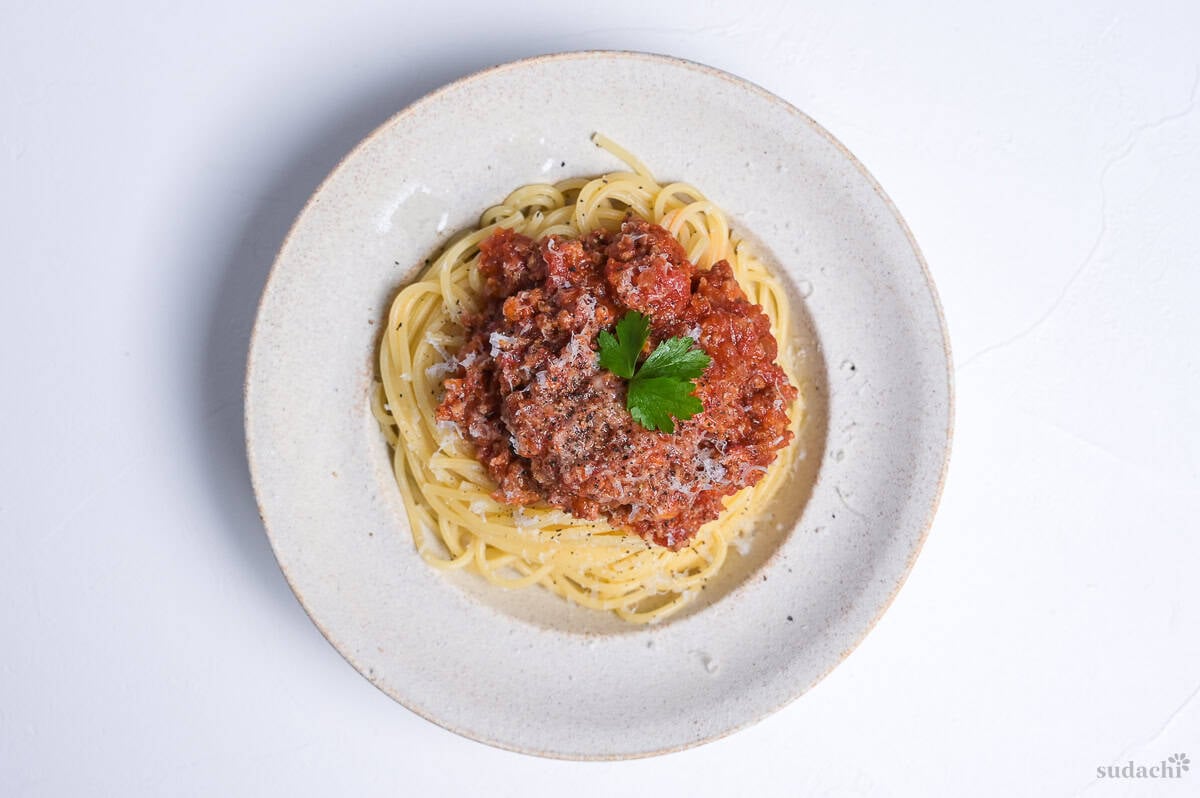
iii. Sprinkle a little grated cheese over each plate. Scatter the parsley. Finish with a hit of black pepper. Serve immediately, while the plate is still steaming and the cheese is just starting to soften on contact with the sauce.
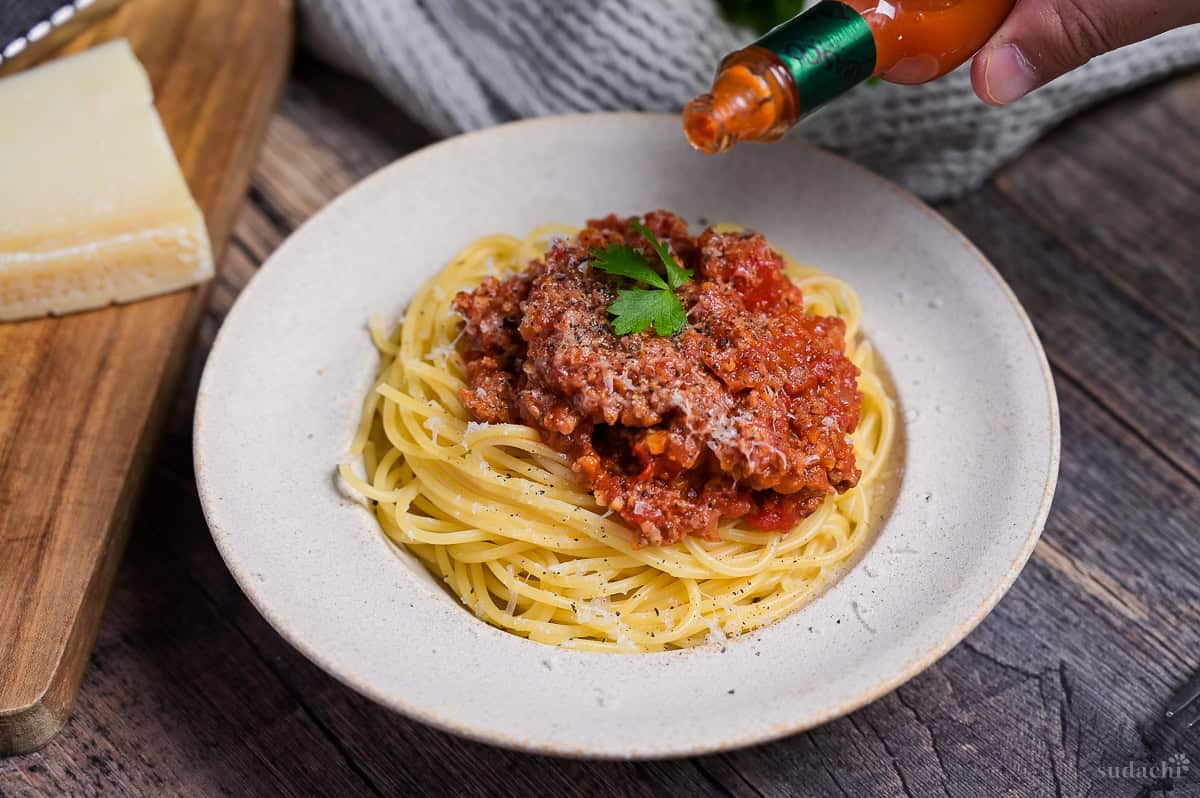
If you have a green-lid shaker of grated parmesan and a small bottle of Tabasco in the back of your pantry, put them both on the table next to the plates. Classic Japanese cafes actually set them out as standard, the way salt and pepper sit on a Western diner table. The plate is built to receive both, the parmesan amplifies the savory line and the Tabasco opens a heat lane without changing the dish’s identity. Whether to use them is the diner’s call, the host’s job is just to put them out.

Essential Tips & Tricks
- Sear the meat as 1 slab, do not crumble it yet. A flat slab pressed against a hot pan for 3 to 4 minutes a side gets a real Maillard crust on the bottom.
- Cook the ketchup against the pan for a full minute before the canned tomato goes in. Raw ketchup straight into liquid stays sharp and reads like ketchup all the way through to the plate.
- Add the soy sauce and butter off the heat, both at once. Turn off the burner first, then stir them in. The aromatic compounds in soy sauce burn off if they hit a live flame, and the butter splits instead of emulsifying.
With these simple tips in mind, you’re set for success every time you make Japanese meat sauce spaghetti.
Storage & Meal Prep
Fridge: Store the meat sauce on its own, never with the noodles already mixed in. Let the pot cool on the counter until it is just barely warm, transfer the sauce to a sealed container, and refrigerate for 3 to 4 days.
Freezer: Freeze the sauce only, never the noodles. Portion it into small containers or zip-top bags laid flat, label them with the date, and freeze for up to 1 month at peak quality.
Meal prep: The hard rule for this dish is sauce alone, noodles fresh. Build the sauce on Sunday, freeze it in 2 or 3 portions, and boil fresh spaghetti on the weeknight you want the bowl. The noodles take less than 10 minutes, and it takes less than that to heat the sauce.
Reheating: Microwave is my default for this sauce. Scoop a portion into a microwave-safe bowl, cover loosely, and heat for 1 minute, then 20-30 second bursts, stirring between each, until the sauce is steaming and the butter has come back together on the surface. The stovetop also works on low heat with a splash of water to loosen it.
What to Serve With This Recipe
Meat Sauce Spaghetti Troubleshooting
A sauce that runs off a spoon is sauce that did not reduce long enough, or that reduced with the lid on so the steam stayed trapped. Pull the lid, raise the heat to a steady low bubble, and stir every couple of minutes until the surface goes from matte to glossy and a spoon dragged across the bottom leaves a brief trail. Skip the flour or cornstarch slurry, those thicken the sauce but flatten the sweet-tangy edge that makes this dish what it is.
The loosener of choice is a touch of pasta water rather than regular tap water. A few tablespoons of starchy water from the spaghetti pot stirred into the over-reduced sauce off the heat brings it back to a glossy pour without thinning the flavor.
Soy sauce and butter both need an off-heat pan. On a live burner, the volatile compounds in the soy sauce burn off and the butter splits into oil and milk solids instead of emulsifying into the sauce. Turn off the heat first, wait 10 seconds for the pot to settle, then stir them in.
More Japanese Pasta Recipes
Hungry for more? Explore my Japanese pasta recipe collection to find your next favorite bowl.
Did You Try This Recipe?
I would love to hear your thoughts!
💬 Leave a review and ⭐️ rating in the comments below. 📷 I also love to see your photos – submit them here!
Japanese Meat Sauce Spaghetti

Ingredients
Meat sauce
- 1 tsp cooking oil neutral
- 200 g ground pork ground beef, or beef-and-pork blend (70:30)
- 100 g onion finely chopped
- 30 g carrot small dice
- 25 g celery finely chopped
- 1 garlic clove finely chopped
- 2 tbsp red wine
- 2 tbsp tomato ketchup
- 1 tbsp Worcestershire sauce
- 400 g canned tomato whole
- 1 bay leaf
- 1 pinch nutmeg powder
- ½ tsp Japanese soy sauce (koikuchi shoyu)
- 1 tbsp unsalted butter
- 1 pinch black pepper
Garnish (optional)
- 1 tsp grated parmesan cheese
- 1 tsp fresh parsley chopped
- Tabasco sauce to taste
The ingredient brands and tools I trust are in my Japanese pantry guide and my cooking tools guide.
Can’t find certain Japanese ingredients? See my substitution guide here.
Instructions
- Warm a large skillet over medium heat and add 1 tsp cooking oil. Once hot, add 200 g ground pork and press it flat into a single layer. Fry for 3-4 minutes, until the underneath develops a brown crust, then flip and repeat on the other side for 2-3 minutes.

- Add 100 g onion, 30 g carrot, 25 g celery, and 1 garlic clove. Break up the meat as you stir, until all the ingredients are evenly distributed. Cook until the onions are translucent.
- Push the ingredients to the side to make some space in the pan, then pour in 2 tbsp red wine and scrape the fond using a wooden spatula. Let the wine bubble for about 30 seconds before mixing it into the meat and vegetable mixture.
- Add 2 tbsp tomato ketchup and 1 tbsp Worcestershire sauce, and mix until everything is evenly coated. Continue to stir over the heat for 1-2 minutes to caramelize the sugars in the ketchup.
- Pour in 400 g canned tomato and use a spatula to break and crush it down. Add 1 bay leaf and 1 pinch nutmeg powder, then stir everything together.
- Reduce the heat to low and simmer uncovered until the sauce has reduced by half. Stir occasionally to prevent burning.
- While you wait, pour 2500 ml water into a large pot and bring it to a rolling boil. Add 2½ tsp salt and mix, then add 240 g dry spaghetti and boil according to the packet instructions.

- Once the meat sauce has reduced, turn off the heat and remove the bayleaf. Add ½ tsp Japanese soy sauce (koikuchi shoyu) and 1 tbsp unsalted butter, and mix them in.
- Drain the pasta and divide it between serving plates. Top with a generous helping of meat sauce, then finish with 1 tsp grated parmesan cheese, 1 pinch black pepper and 1 tsp fresh parsley. Add a few drops of Tabasco sauce for a spicy kick. Enjoy!

Really great recipe, the cinnamon and nutmeg adds depth to the meaty flavour. ❤️
Hi Stella,
Thank you so much, glad you enjoyed the recipe!
The flavor was great! It was rich, with just the right sweetness. The canned tomatoes I used didn’t have as much of a thick sauce as the ones in your pictures, so for anyone else using American canned tomatoes (which can be a little watery), I would suggest adding in something like 4oz of canned tomato sauce.
Hi Elle,
Thank you for trying the recipe. And I really appreciate for the note on the canned tomatoes you used, that’s the kind of tip that helps a lot of people cooking along! 🙂
Yuto