

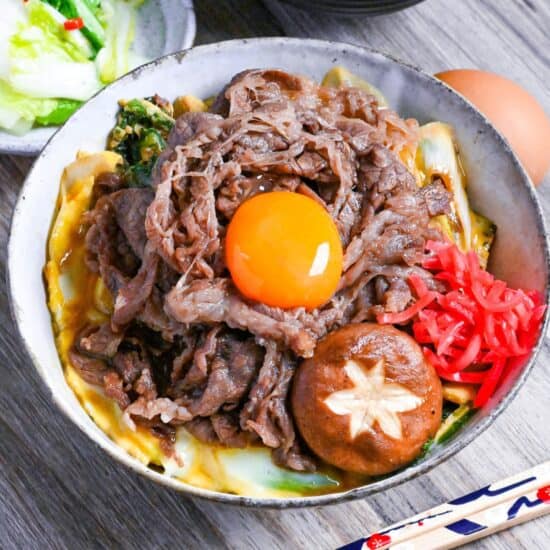


What if gyudon + oyakodon met sukiyaki, without the bubbling hot pot?
You get a glossy, sweet-soy glaze and tender beef over steaming rice, all in one donburi in 15 minutes. You don’t even need fancy wagyu to make this creative weeknight comfort.
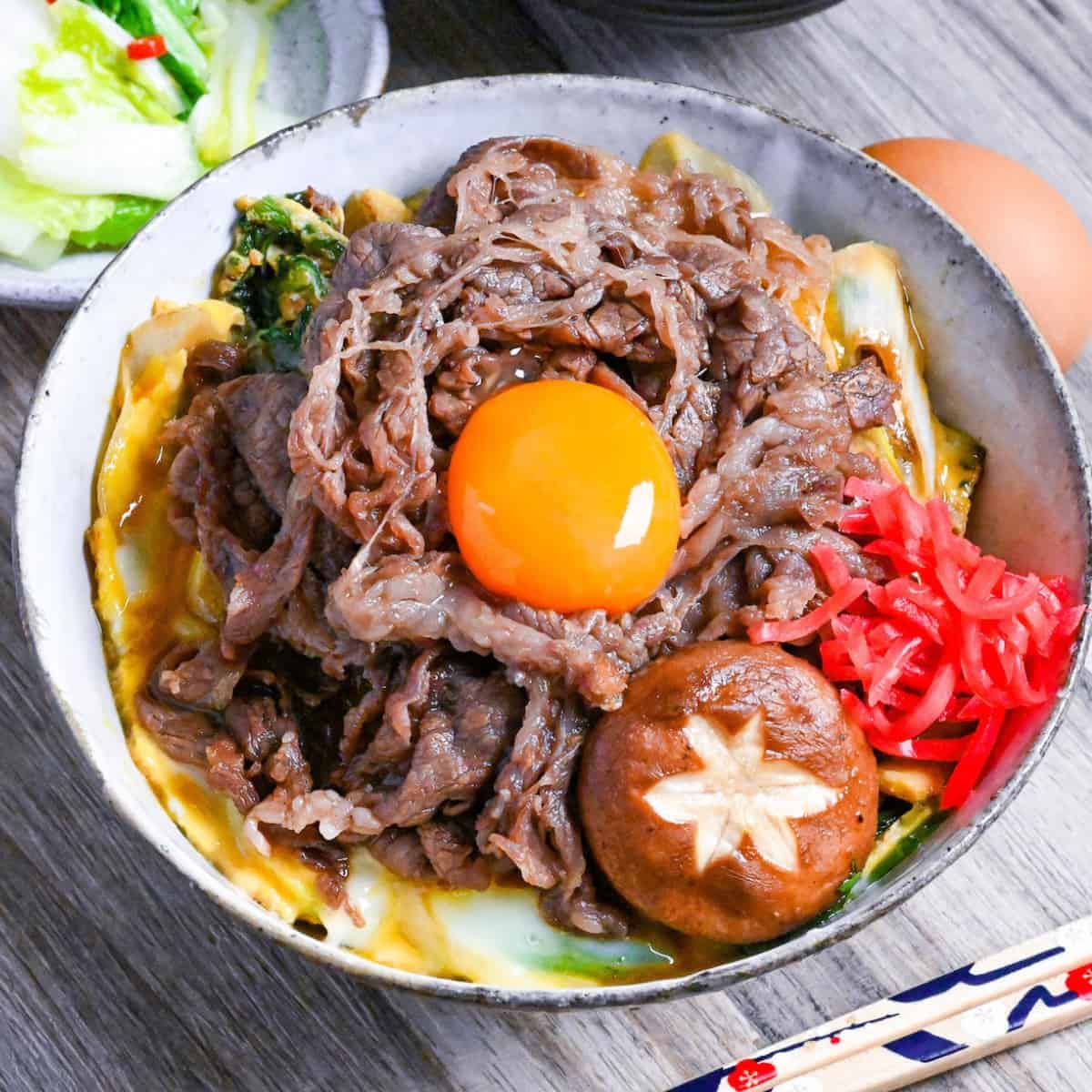
Sukiyaki don
Recipe Snapshot
- What is it? A 15-minute Japanese rice bowl (donburi) delivering sukiyaki’s signature sweet-savory warishita glaze over tender beef and simmered vegetables. No hot pot setup required.
- Flavor profile: Ama-kara (sweet-savory), dashi-boosted umami, soy-mirin gloss, mellowed by rich egg yolk.
- Why you’ll love this recipe: Captures authentic sukiyaki flavor through fast-simmered beef in a soy-sugar-mirin warishita, finished with silky egg. Special-occasion richness compressed into a weeknight-friendly bowl.
- Must-haves: Thinly sliced beef, warishita base (soy sauce + sugar + mirin + sake), wide skille.
- Skill Level: Easy! 15 minutes, one pan, minimal knife work.
Summarize & Save this content on:
What is Sukiyaki Don?
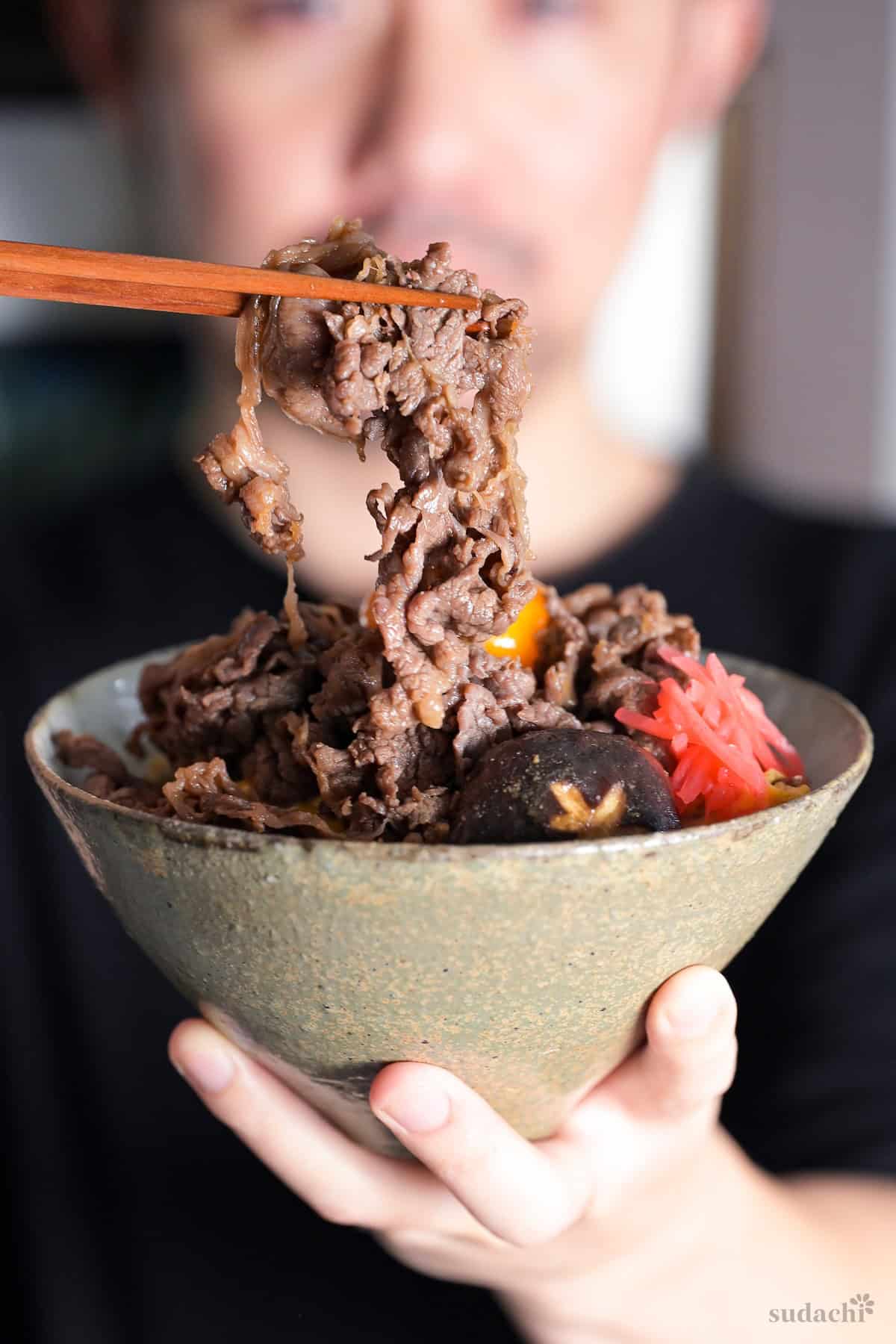
Sukiyaki don (すき焼き丼) is a Japanese rice bowl dish that belongs to the donburi family, featuring thinly sliced beef and vegetables simmered in a sweet-savory sauce called warishita (a mixture of soy sauce, sake, mirin, and sugar). The beef and aromatics cook quickly in this seasoning base, then are spooned over freshly cooked Japanese rice, allowing the flavorful liquid to soak into the grains.
My version includes a soft-set egg folded through the topping, creating a rich, cohesive texture similar to oyakodon.
The dish draws its identity from sukiyaki, Japan’s beloved hot pot where thin beef slices and vegetables simmer tableside in a shared pot. Sukiyaki don transforms that experience into a satisfying single-bowl meal, perfect for weeknight dinners when you want sukiyaki’s signature sweetness without the communal setup.
Sukiyaki Don Ingredients
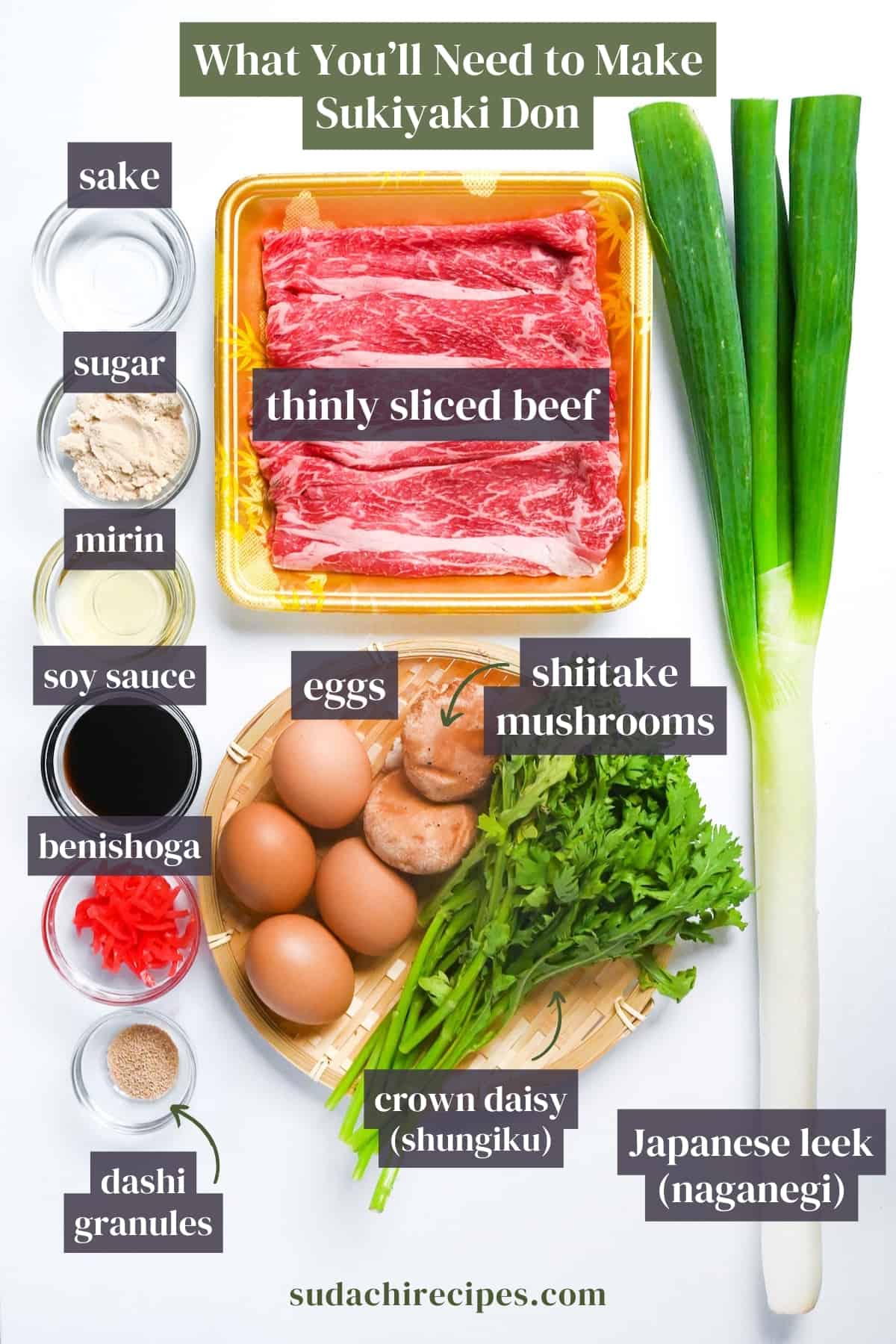
- Thinly sliced beef: This is paper-thin beef cut specifically for sukiyaki or shabu shabu. For this casual recipe, you don’t need premium Wagyu, but you do need the slices thin. It’s often sold labeled “shabu-shabu” or “sukiyaki” at Asian markets, and you can also ask the butcher to slice ribeye/chuck very thin.
- Pasteurized Eggs: Pasteurized eggs are shell eggs that’ve been gently heated to make them safer to eat raw. Because the yolks are served raw on top, pasteurized eggs are what let you do the classic creamy finish. Look for cartons labeled “pasteurized” in the regular egg case at larger supermarkets in some countries.
- Benishoga (Red Pickled Ginger): Benishoga is thin-cut ginger pickled until bright red. It’s “just a garnish,” but it’s also the reset button. Its refreshing acidity and gentle heat cut through the rich beef-and-egg combo, and I personally think this bowl needs that lift. You’ll usually find it at Japanese/Korean/Chinese markets.
Substitution Ideas
- Pork: Thinly sliced pork belly or shoulder makes a delicious swap with a slightly milder, sweeter flavor; just be sure to cook it all the way through.
- Chicken: Boneless thigh meat works best here. The dish will taste lighter, so a splash of extra dashi helps keep the umami satisfying.
- Tofu or Plant-Based: Extra-firm tofu (pan-fried until golden first) absorbs the sauce beautifully. Add extra mushrooms to make up for the missing meaty richness.
- Negi (Japanese Leek): Regular leeks are your closest match.
- Shungiku (Chrysanthemum Greens): Watercress, spinach, baby bok choy are easy stand-ins. Add them right at the end since they wilt quickly.
- Shiitake Mushrooms: Any fresh mushrooms (cremini, button, or oyster…etc) will do the job. Skipping them entirely just means a slightly less earthy sauce.
- Raw Egg: If raw egg isn’t for you, you can use a soft-boiled, poached egg, or onsen tamago for the topping.
Have trouble finding Japanese ingredients? Check out my ultimate guide to Japanese ingredient substitutes!
How to Make My Sukiyaki Don
If you prefer to watch the process in action, check out my YouTube video of this sukiyaki don recipe!

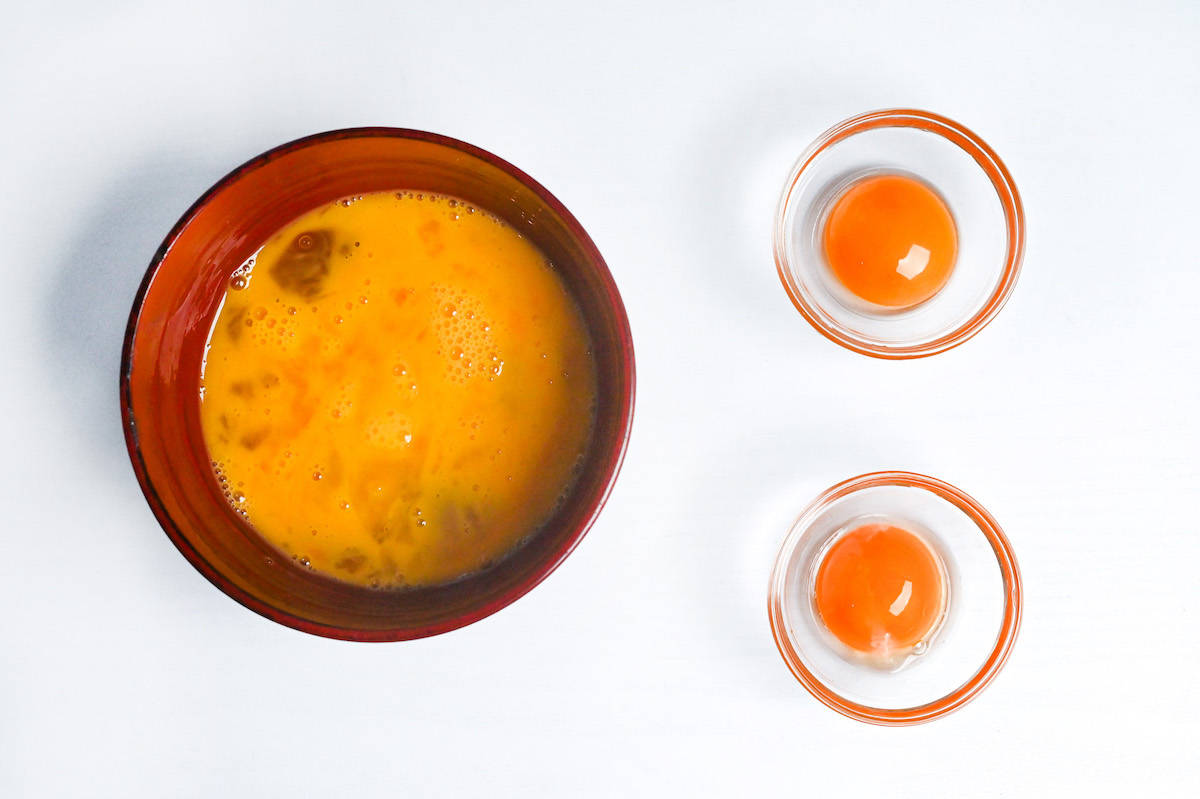
Before you start (Mise en place): Each bowl requires 2 eggs. One egg is separated, saving the yolk to garnish at the end. Be sure to use pasteurized eggs for this since it won’t be cooked. The white is whisked with another egg and then later simmered with the sauce and vegetables. Since my recipe serves 2, I saved 2 yolks, then mixed the 2 leftover whites with 2 whole eggs in a separate bowl.
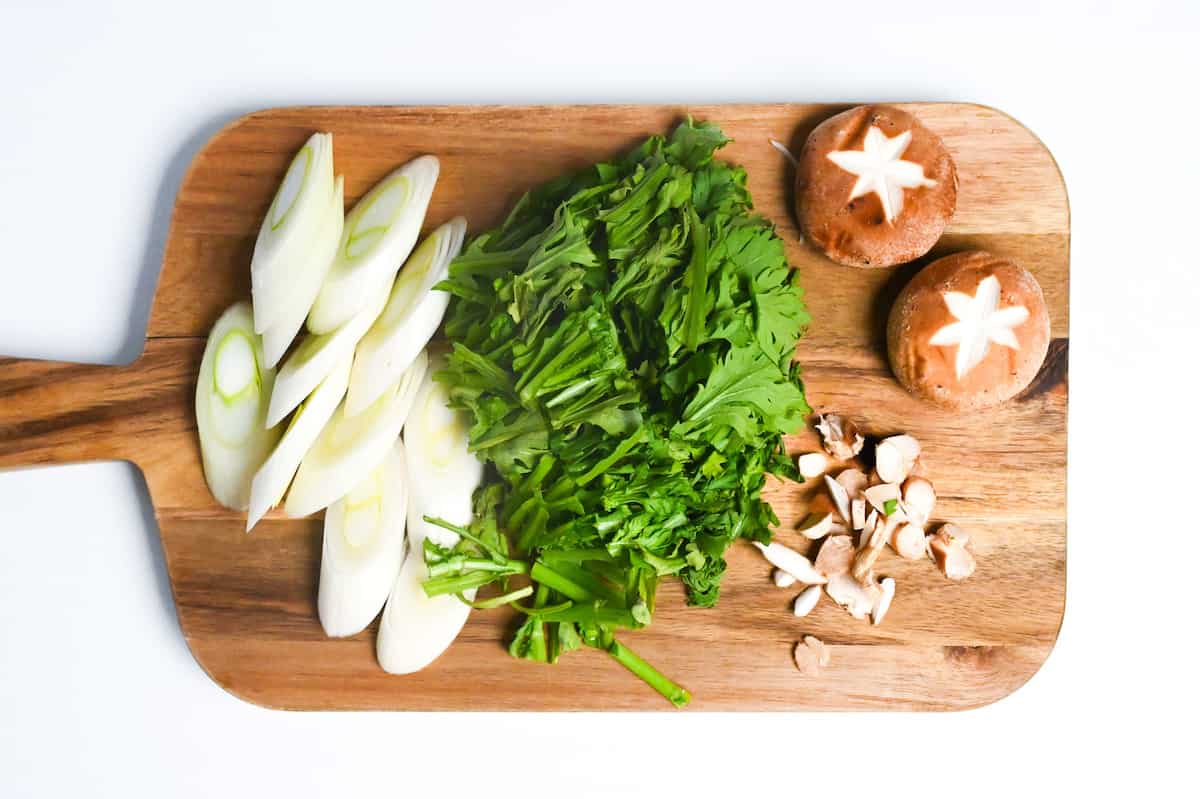
- Slice your shiitake caps away from the stems, then thinly slice those stems. They will release earthy umami into the sauce while the caps become tender, meaty bites. For an elegant touch, score a shallow star pattern into each cap.
- Cut your shungiku (chrysanthemum greens) or spinach/bok choi into 2 cm lengths (just under an inch).
- Slice a leek diagonally.
To develop this sukiyaki don recipe, I used a 26cm cast iron pan.
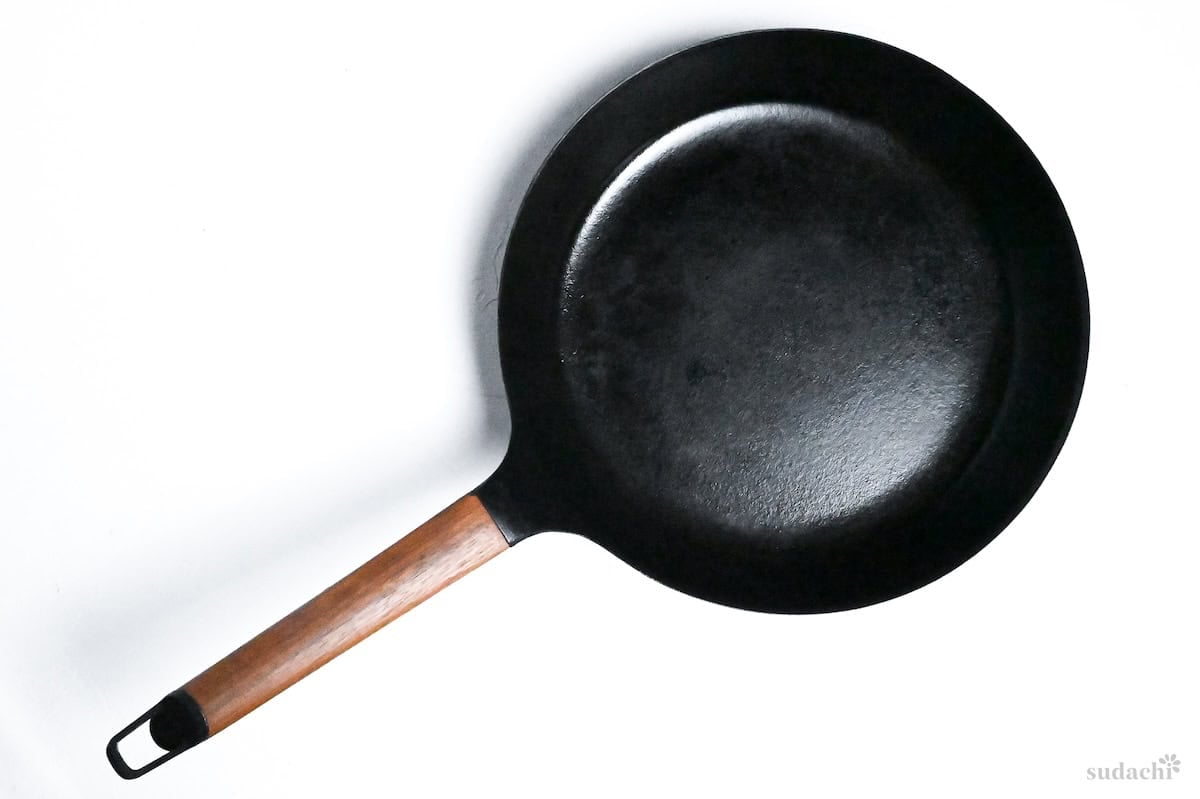
But you can use any similar sized pan or pot!
i. Stir dashi granules, soy sauce, sake, sugar, and mirin in a pan until the sugar dissolves into warishita for even sweetness.
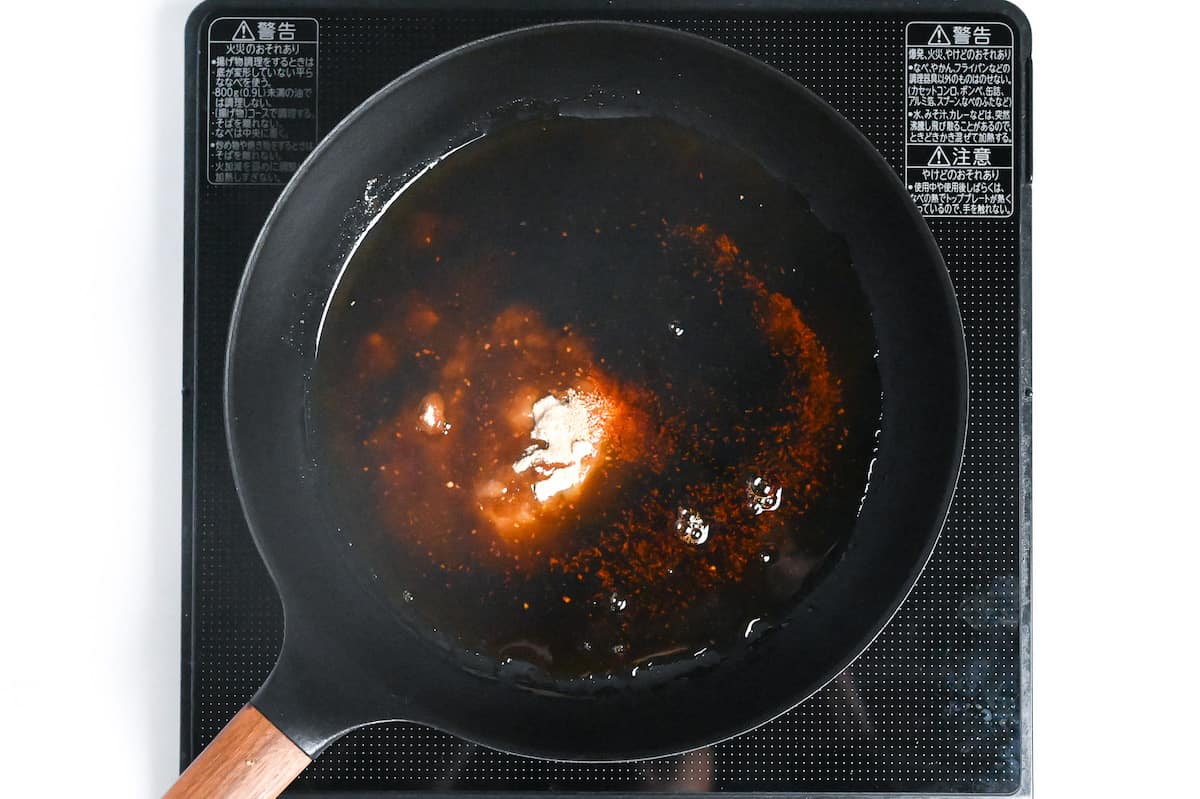
ii. Add shiitake and simmer until bubbling and fragrant.
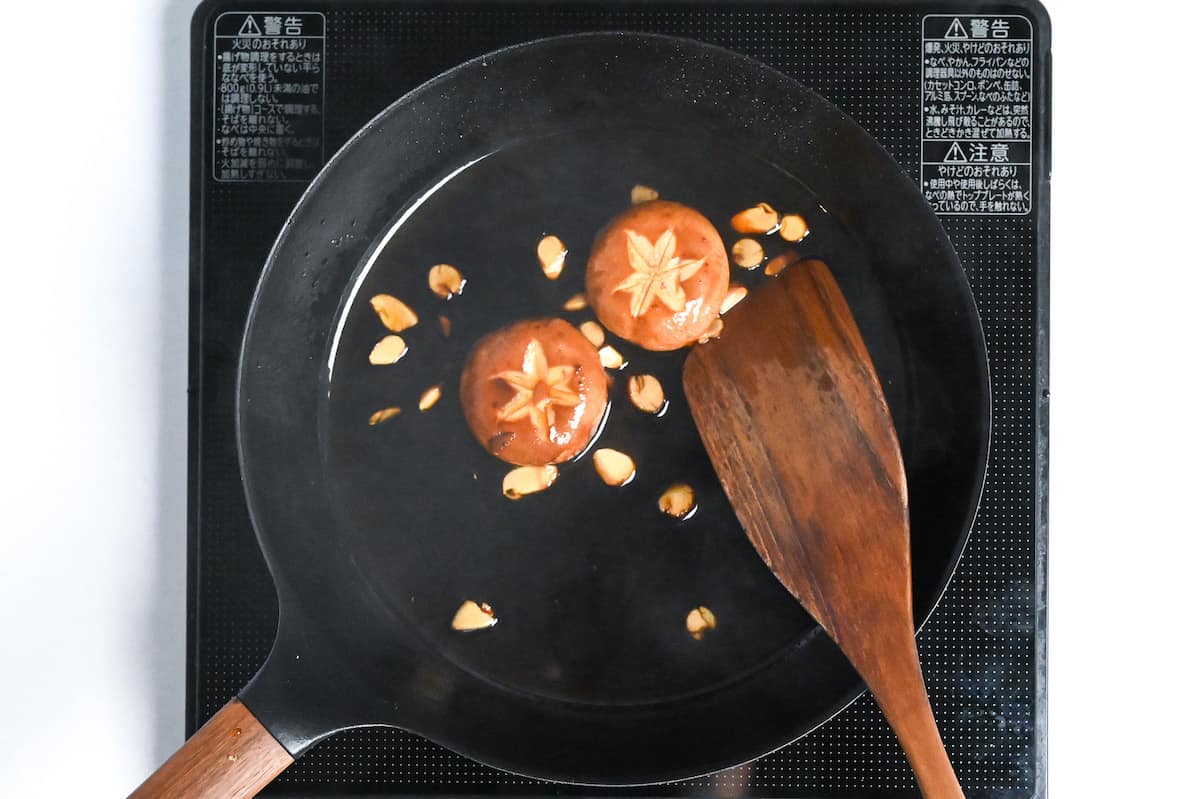
i. When the warishita bubbles and shiitake soften, add beef in a loose layer so it stays silky, not steamy.

ii. Cook over low to medium heat until just shy of your preferred doneness, then plate the beef and shiitake caps to stop protein tightening.
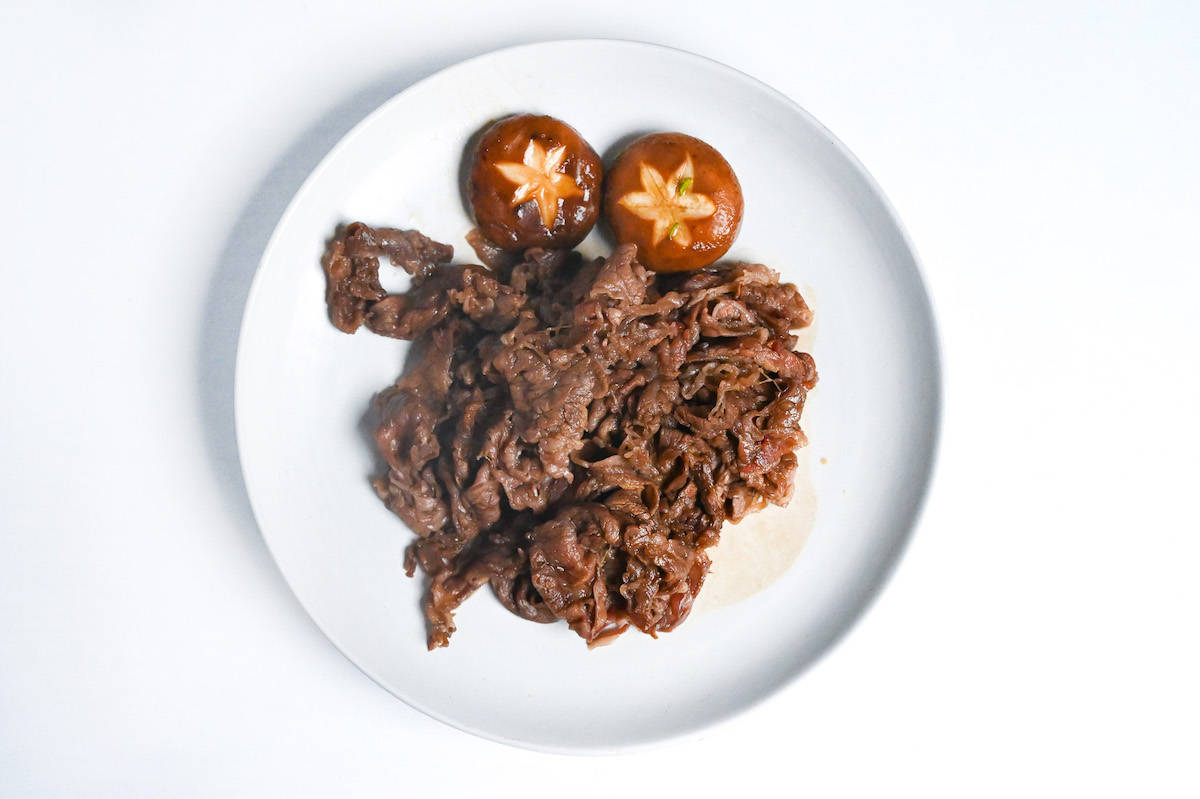
i. Add shungiku and leeks to the pan.
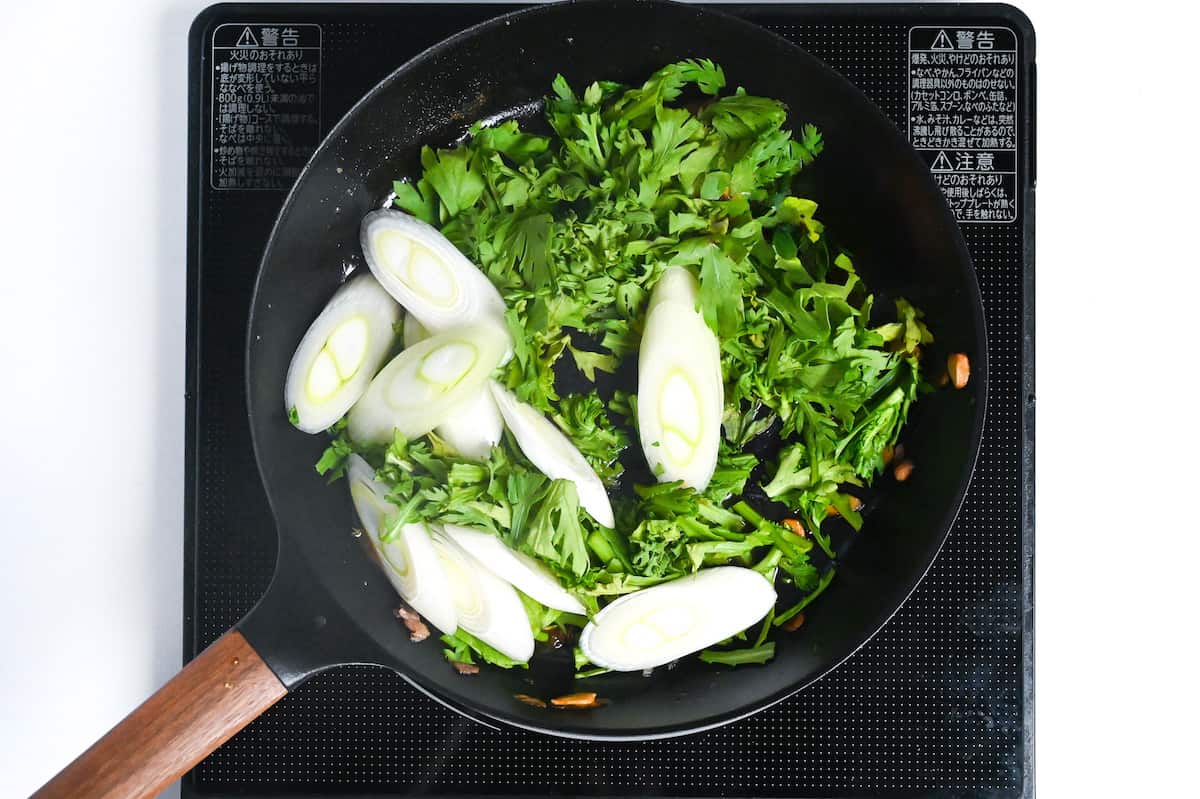
ii. And simmer until just tender and vivid green.

iii. Pour in the egg mixture, stirring gently, until set to your liking.
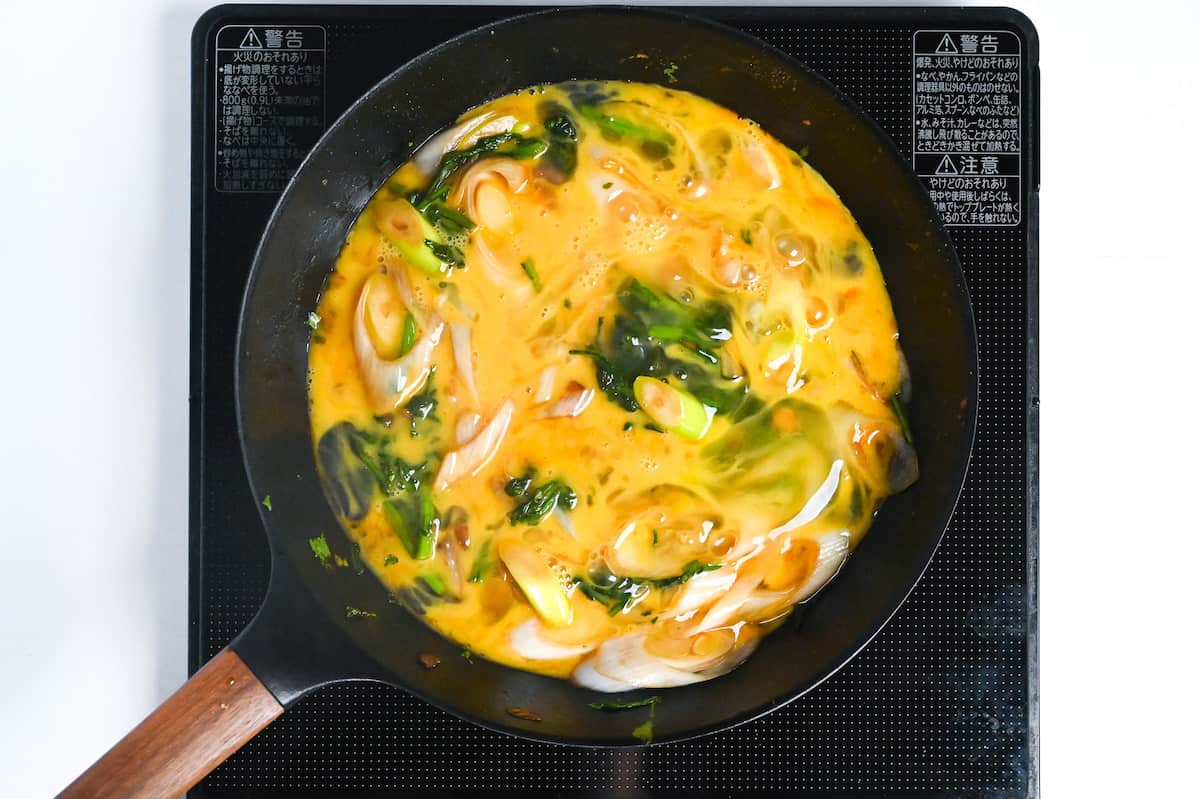
iv. Cover to steam the top if you want it firm. If it scrambles fast, take the pan off heat and stir until creamy.
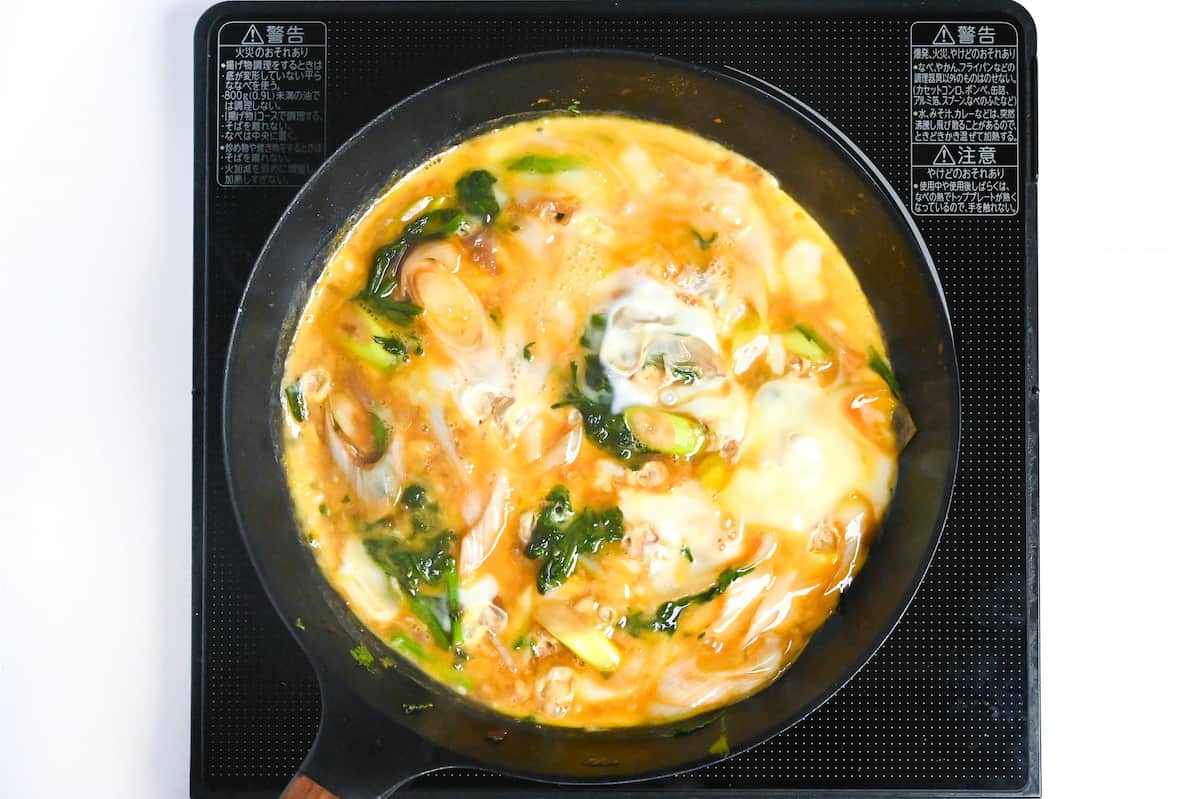
I prefer my eggs slightly underset, with glossy ribbons still visible when I turn off the heat. Carryover cooking finishes them perfectly by the time they reach the bowl. If you like your eggs fully cooked, cover the pan with a lid for 30 seconds to let steam set the top.
Watch the egg’s surface: when it shifts from wet-shiny to matte with just a few glistening patches, you’re at the sweet spot for serving.
i. Mound freshly steamed rice into your serving bowl.

ii. Spoon the egg-vegetable mixture over the rice, letting the sauce pool naturally around the edges.
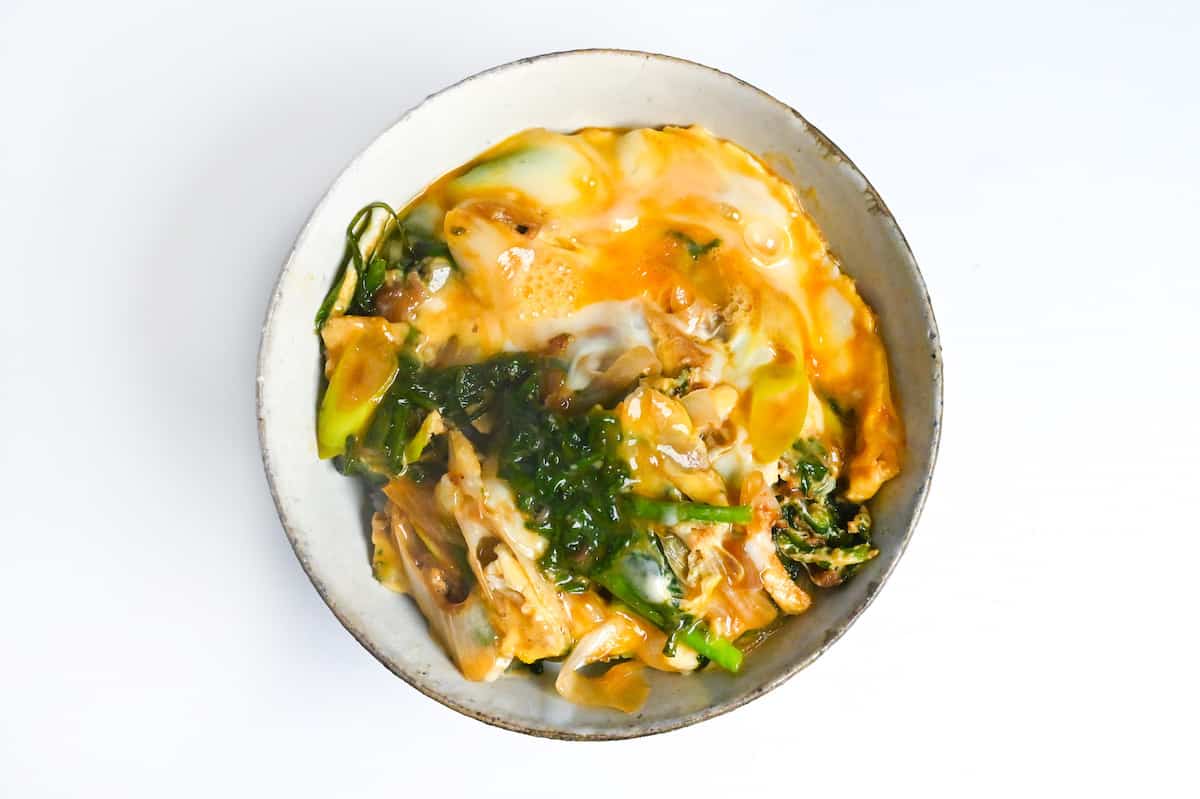
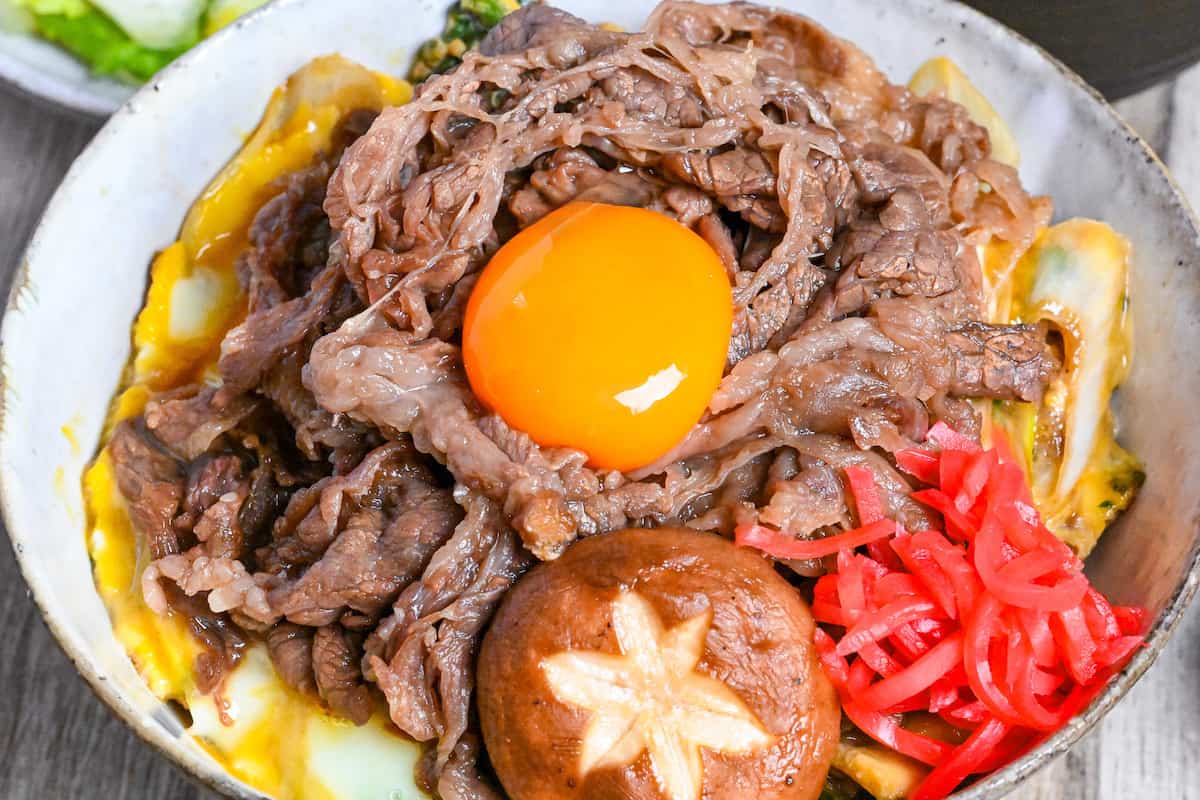
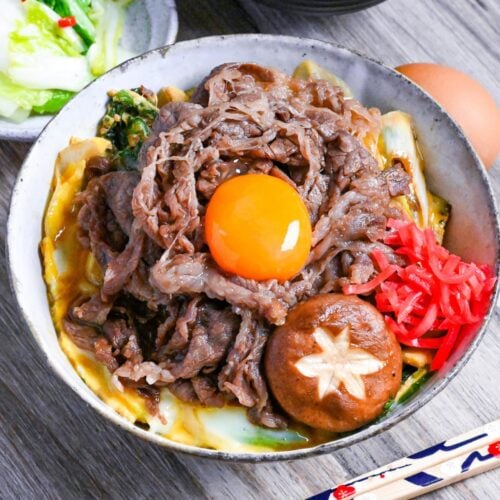
iii. Arrange the reserved beef slices on top. Tuck the shiitake caps into gaps where they’ll look inviting. Pour any remaining sauce from the pan over the beef. Finally, create a small well in the center and nestle your reserved raw egg yolk there. Add a bright tuft of beni shoga (red pickled ginger) to one side for color and a zesty, palate-cleansing bite.

iii. When you’re ready to eat, break the yolk and let it cascade through the hot toppings.
If you follow the default recipe, it will yield 2 main servings, or the egg mixture/beef can be stretched to 3 servings. Prepare 3 bowls of rice in that case.
Essential Tips & Tricks
- Keep the lid off during the final reduction to let vegetable moisture escape and concentrate your sauce into a glossy glaze.
- Cut leeks on a sharp diagonal (about 45°) to maximize surface area for browning and sauce contact.
- Use pasteurized eggs for the raw yolk garnish (or substitute a soft-cooked onsen egg) to preserve sukiyaki’s signature creamy finish.
With these simple tips in mind, you’re set for success every time you make sukiyaki don.
Storage & Meal Prep
Fridge: Store cooked eggs & vegetable mixture, and beef in separate airtight containers for up to 3 days. The sauce will gel and beef fat will solidify (both liquefy upon reheating), but keep in mind leftover greens will turn dull and slightly bitter.
Freezer: Not recommended.
Meal Prep: You can pre-mix the warishita, slice vegetables, and portion the beef 1 day ahead (keep beef chilled and separate) for a fast weeknight cook.
Reheating: Warm topping gently in a covered skillet over medium-low heat with a splash of water until steaming, about 3 minutes. Avoid high heat, which toughens the beef and scorches the sugary glaze.
What to Serve With This Recipe
FAQ
Watery sauce usually means vegetables released moisture faster than the sauce could reduce. Scoop the vegetables to one side (or onto a plate) and simmer the excess liquid lid-off for 30-60 seconds until it looks glossy and lightly coats a spoon, then return everything and toss to glaze. If you keep the lid on, condensation traps water and the sauce stays thin.
Thin beef has a tiny “tender window,” so the goal is brief heat + gentle simmer, not boiling. If it’s already getting chewy, pull the beef out immediately, finish the vegetables/eggs, then add the beef back for just 20-30 seconds to warm through (carryover heat will finish it). Avoid stirring the beef aggressively-agitation plus heat speeds protein tightening.
Look for well-marbled, thinly sliced beef labeled “sukiyaki” or “shabu-shabu” at Asian grocers, or ask your butcher to shave ribeye or chuck roll to 2-3 mm thickness. Marbling matters more than the specific cut because intramuscular fat keeps the meat juicy during quick cooking and prevents the chewy texture that lean cuts develop when briefly simmered.
More Japanese Beef Recipes
Need something satisfying for tonight? My curated list of japanese beef recipes for dinner offers delicious options that are sure to become weekly favorites.
Did You Try This Recipe?
I would love to hear your thoughts!
💬 Leave a review and ⭐️ rating in the comments below. 📷 I also love to see your photos – submit them here!
Sukiyaki Don (Sweet Simmered Beef Rice Bowl)
Ingredients
- 1 Japanese leek (naganegi) or regular leeks
- 50 g chrysanthemum greens (shungiku) or watercress/spinach/bok choi
- 2 fresh shiitake mushrooms or mushroom of your choice
- 2 pasteurized eggs for raw yolk topping
- 2 eggs for cooked egg mixture
- ¼ tsp dashi granules
- 2 tbsp Japanese soy sauce (koikuchi shoyu)
- 2 tbsp sake
- 2 tbsp mirin
- 1 ½ tbsp sugar
- 200 g thinly sliced beef shabu-shabu/sukiyaki cut
- 2 portions cooked Japanese short-grain rice
- red pickled ginger (benishoga)
My recommended brands of ingredients and seasonings can be found in my Japanese pantry guide.
Can’t find certain Japanese ingredients? See my substitution guide here.
Instructions
- Cut 1 Japanese leek (naganegi) into diagonal slices ½ inch thick and 50 g chrysanthemum greens (shungiku) into 2 inch pieces. Separate the stems and caps of 2 fresh shiitake mushrooms, thinly slice the stems and cut decorative patterns on top of the caps.

- Separate two 2 pasteurized eggs, place the yolks in a bowl and set aside to garnish the dish at the end. Pour the leftover whites into a separate bowl and crack in another 2 eggs. Whisk well and set by the stove.
- Take a cold pan and add ¼ tsp dashi granules, 2 tbsp Japanese soy sauce (koikuchi shoyu), 2 tbsp sake, 2 tbsp mirin and 1 ½ tbsp sugar. Mix well.
- Add shiitake mushrooms (both caps and stems) to the sauce and heat over medium-low, stirring occasionally.
- Once it starts to bubble and the shiitake is slightly softened, add 200 g thinly sliced beef and cook to your preferred doneness.
- Once cooked to your liking, transfer the beef and mushroom caps to a warm plate and set aside.
- Add the crown daisy and leeks to the pan and cook in the leftover sauce until slightly softened.
- Pour the egg mixture from earlier around the pan and cook to your preferred doneness.
- If you prefer your eggs well done, place a lid on to help the top steam. Once cooked through, take the pan off the heat and use a spatula to divide it into portions.
- Prepare 2 portions cooked Japanese short-grain rice in large serving bowls and top with the contents of the pan.
- Place the beef on top and garnish each bowl with a shiitake cap, egg yolk and red pickled ginger (benishoga). Enjoy!
Video

Leave a rating and a comment