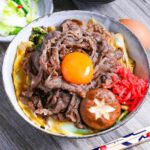
Sukiyaki Don (Sweet Simmered Beef Rice Bowl)
Ingredients
- 1 Japanese leek (naganegi) or regular leeks
- 50 g chrysanthemum greens (shungiku) or watercress/spinach/bok choi
- 2 fresh shiitake mushrooms or mushroom of your choice
- 2 pasteurized eggs for raw yolk topping
- 2 eggs for cooked egg mixture
- ¼ tsp dashi granules
- 2 tbsp Japanese soy sauce (koikuchi shoyu)
- 2 tbsp sake
- 2 tbsp mirin
- 1 ½ tbsp sugar
- 200 g thinly sliced beef shabu-shabu/sukiyaki cut
- 2 portions cooked Japanese short-grain rice
- red pickled ginger (benishoga)
Instructions
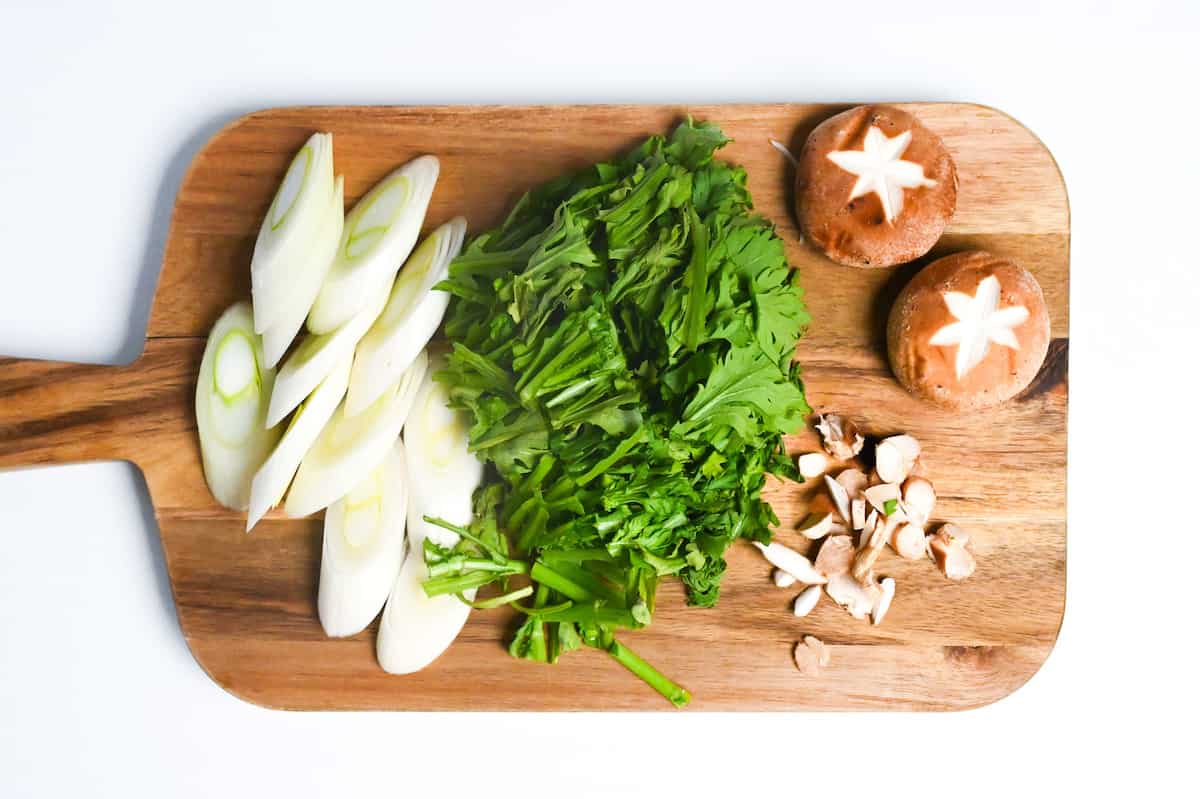
- Cut 1 Japanese leek (naganegi) into diagonal slices ½ inch thick and 50 g chrysanthemum greens (shungiku) into 2 inch pieces. Separate the stems and caps of 2 fresh shiitake mushrooms, thinly slice the stems and cut decorative patterns on top of the caps.
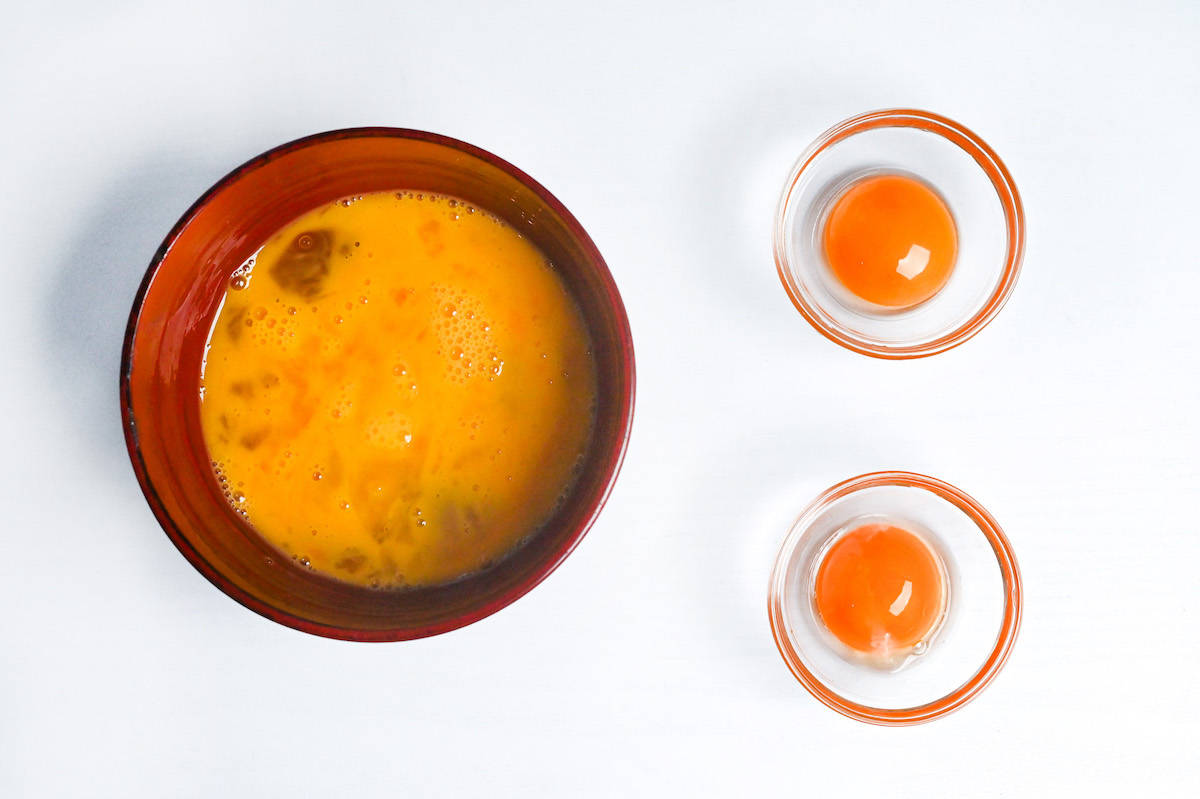
- Separate two 2 pasteurized eggs, place the yolks in a bowl and set aside to garnish the dish at the end. Pour the leftover whites into a separate bowl and crack in another 2 eggs. Whisk well and set by the stove.
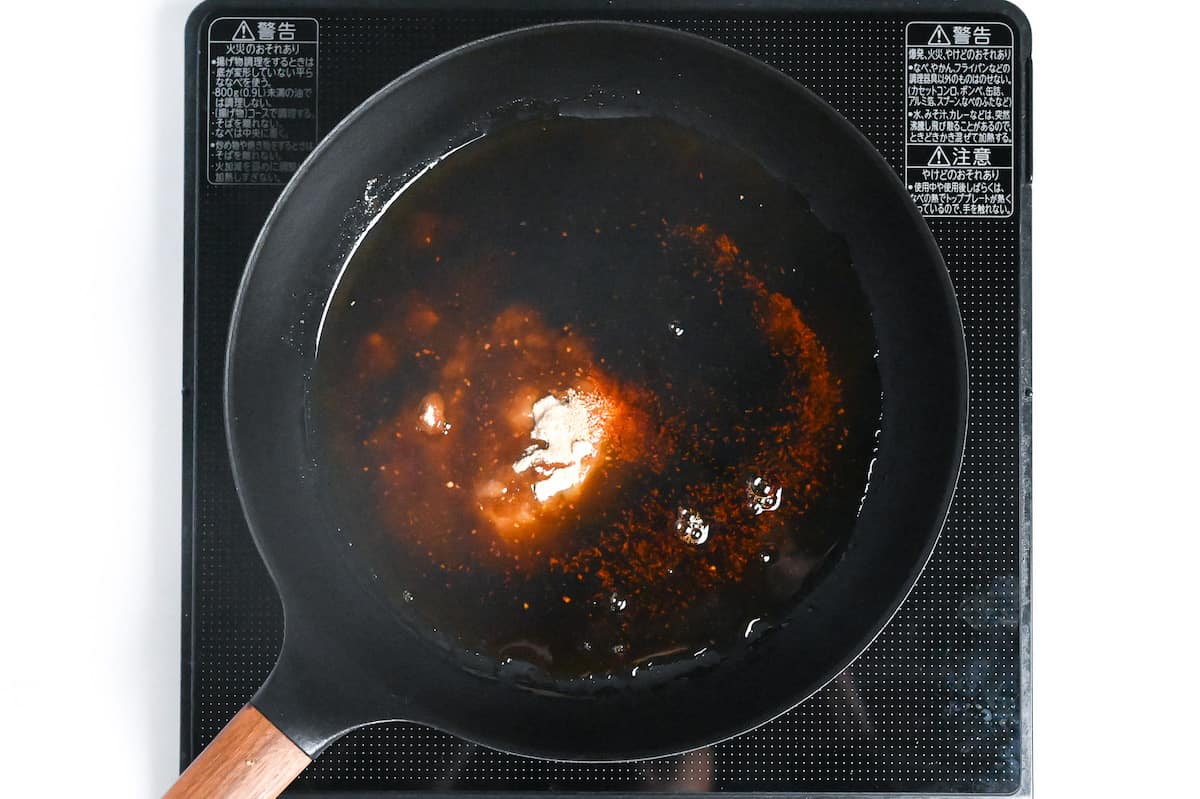
- Take a cold pan and add ¼ tsp dashi granules, 2 tbsp Japanese soy sauce (koikuchi shoyu), 2 tbsp sake, 2 tbsp mirin and 1 ½ tbsp sugar. Mix well.
- Add shiitake mushrooms (both caps and stems) to the sauce and heat over medium-low, stirring occasionally.
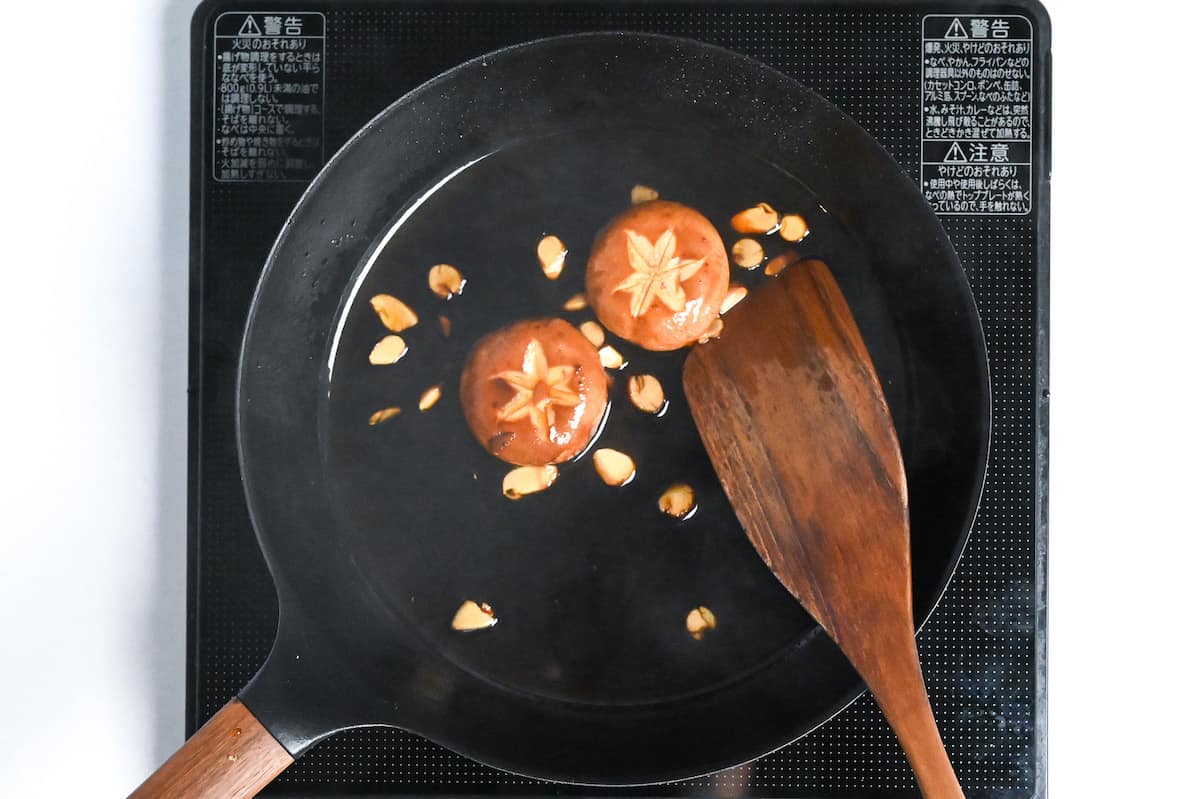
- Once it starts to bubble and the shiitake is slightly softened, add 200 g thinly sliced beef and cook to your preferred doneness.

- Once cooked to your liking, transfer the beef and mushroom caps to a warm plate and set aside.
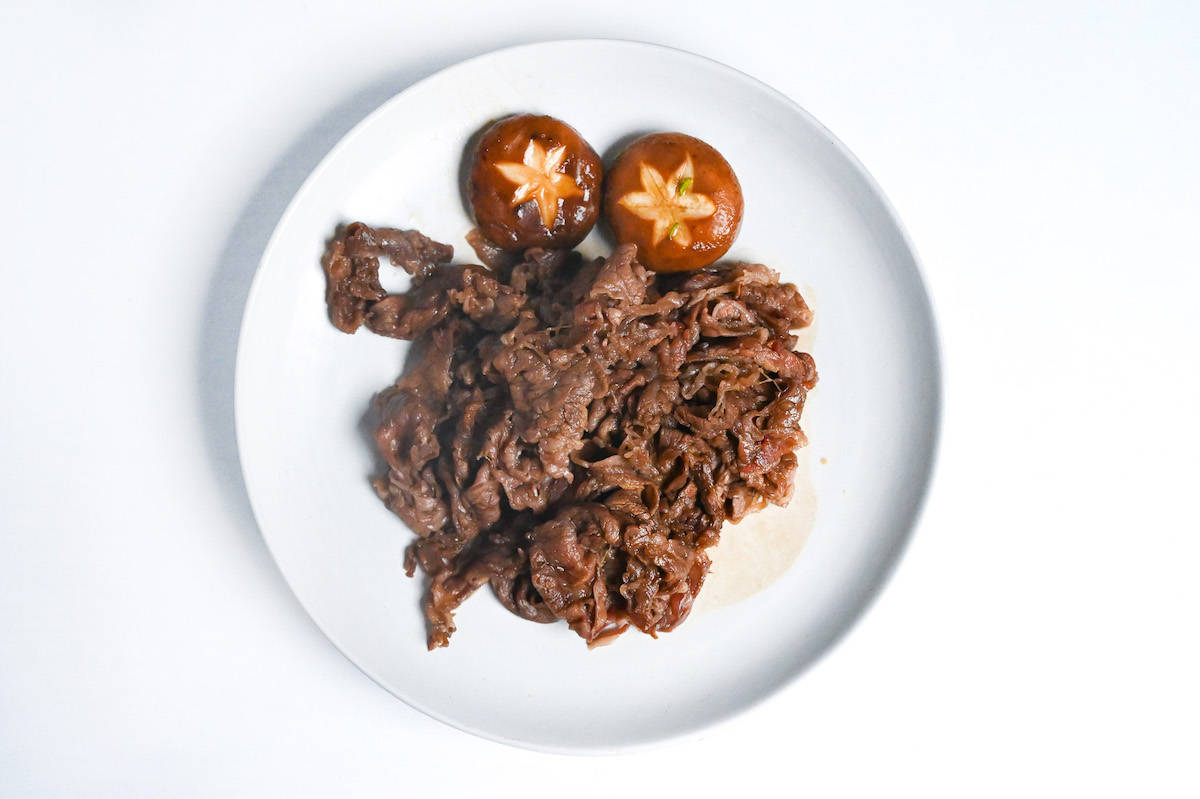
- Add the crown daisy and leeks to the pan and cook in the leftover sauce until slightly softened.

- Pour the egg mixture from earlier around the pan and cook to your preferred doneness.
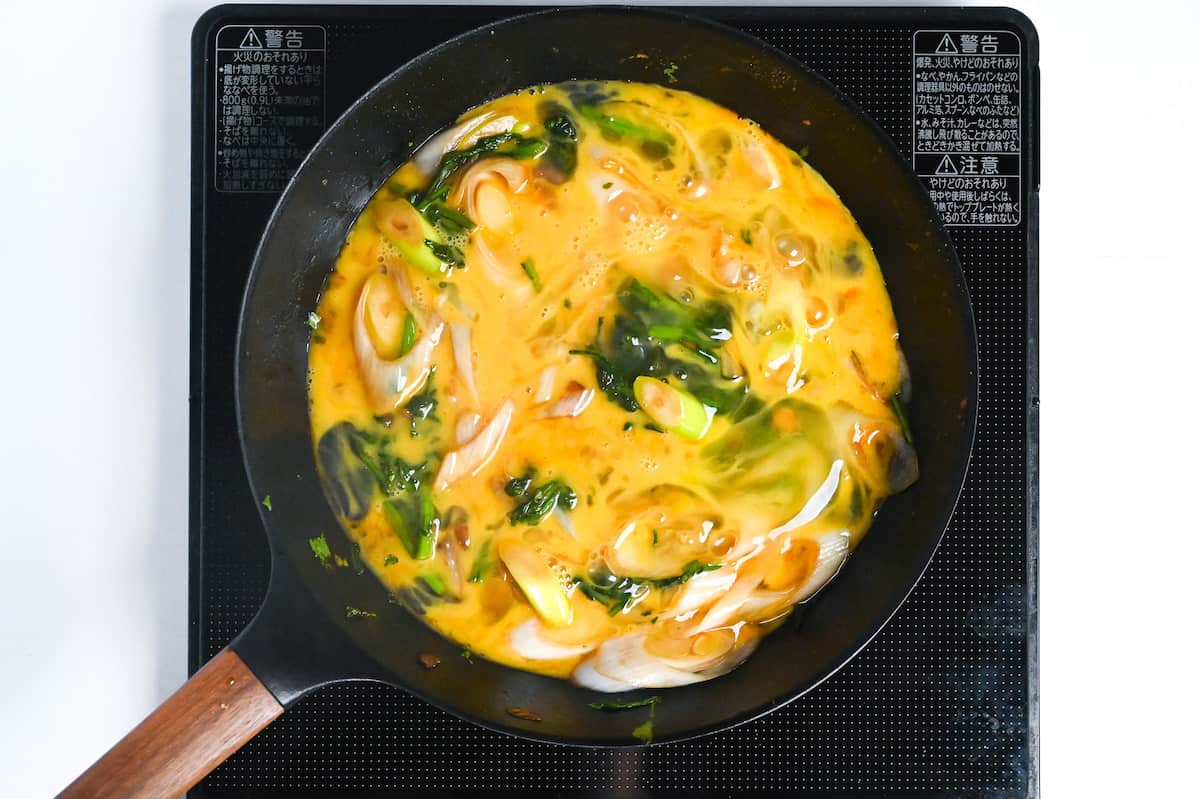
- If you prefer your eggs well done, place a lid on to help the top steam. Once cooked through, take the pan off the heat and use a spatula to divide it into portions.
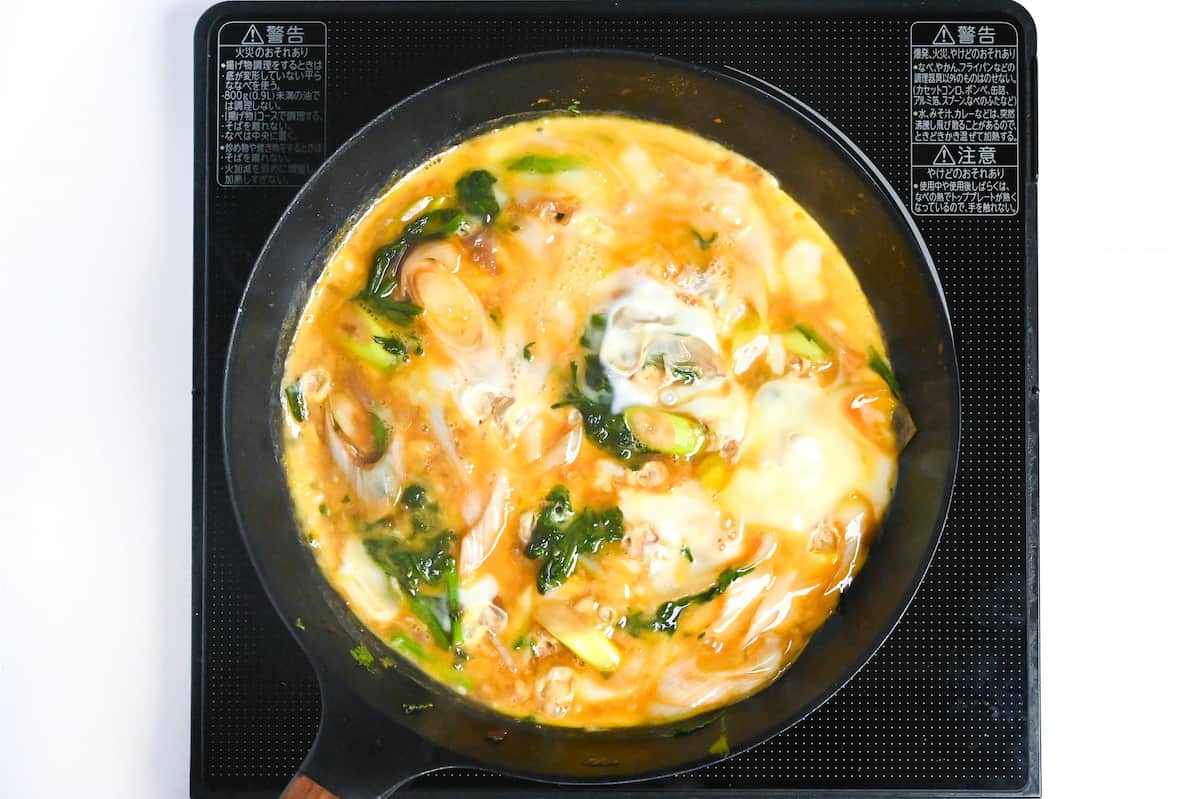
- Prepare 2 portions cooked Japanese short-grain rice in large serving bowls and top with the contents of the pan.
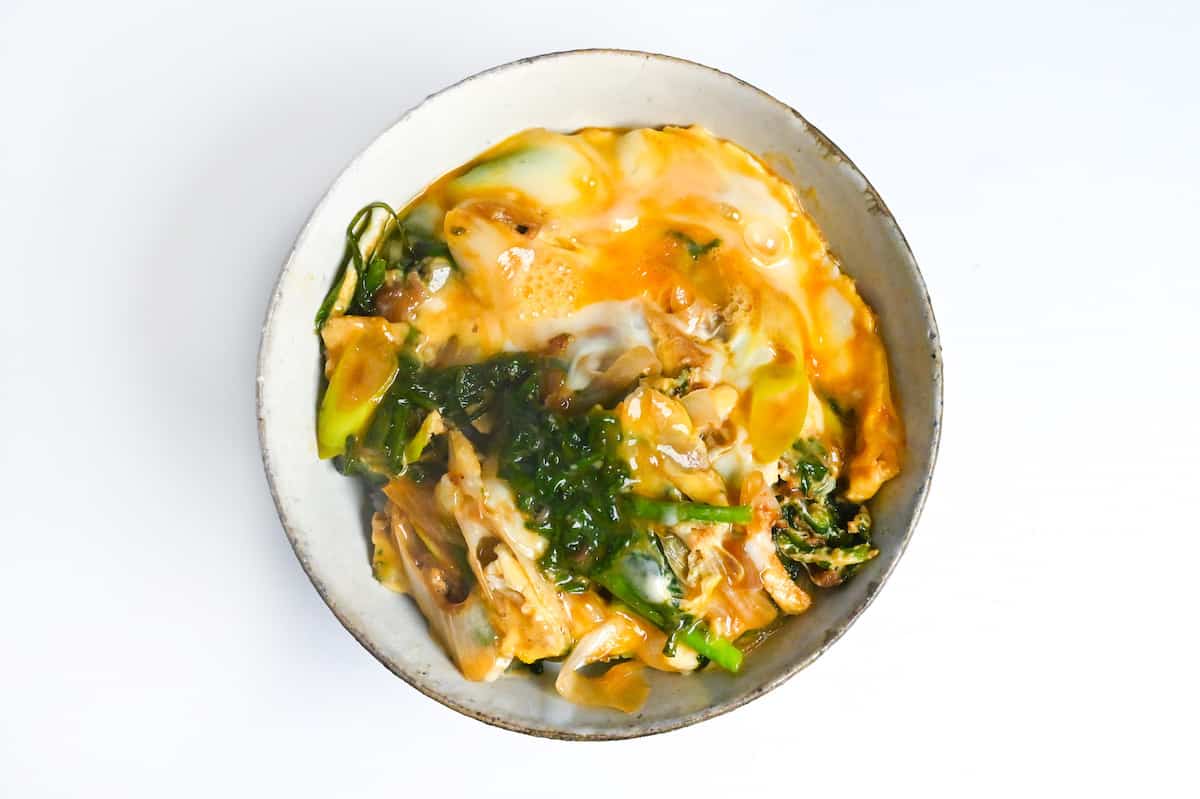
- Place the beef on top and garnish each bowl with a shiitake cap, egg yolk and red pickled ginger (benishoga). Enjoy!

Notes
For the best result, look for paper-thin "sukiyaki" or "shabu-shabu" slices (or ask a butcher for ribeye/chuck sliced very thin) because thin, marbled beef stays silky with brief heat. Thicker slices force longer cooking and turn chewy even in a tasty sauce.
Use pasteurized eggs for the raw yolk garnish to safely achieve sukiyaki's signature creamy finish. Look for cartons labeled "pasteurized," or substitute a soft-cooked onsen tamago if unavailable.
Keep the lid off during the final simmer so vegetable moisture escapes and the sauce reduces into a glossy, clingy glaze. Covering the pan traps steam and leaves you with thin, watery broth that drowns the rice.
Store topping and rice separately in airtight containers (fridge up to 3 days, freezer up to 1 month for topping only). Reheat gently in a covered skillet with a splash of water over medium-low heat to preserve tenderness and prevent the sugary glaze from scorching.
Full Recipe QR Code↑↑