



“What am I actually supposed to do with white miso?” If you have a tub of white miso sitting in the fridge and no plan for it, make saikyo yaki. That is the answer.
It leans on white miso like no other Japanese fish recipe does, and it carries Kyoto in every bite. Let me show you how to make the best version.
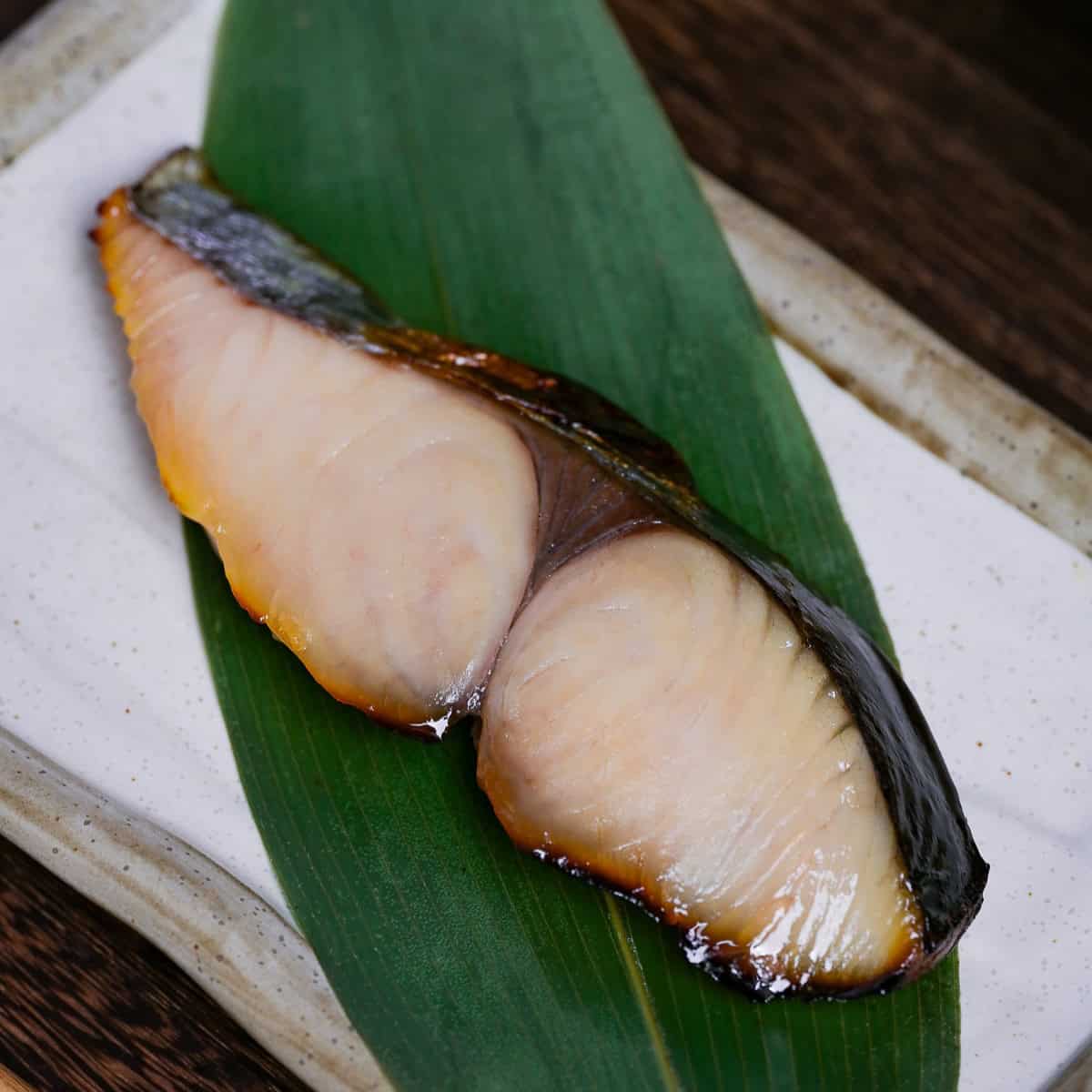
Saikyo Yaki
Recipe Snapshot
- What is it? A Kyoto grilling method where fresh fish sits in a bed of sweet white miso for a day or two, then meets low heat just long enough to build a glossy caramelized crust over flesh that has gone tender in the quietest way imaginable.
- Flavor profile: Sweet, clean, and quietly savory. The saikyo miso marinade brings depth without salt-forward aggression, the sawara flesh turns soft and almost custardy, and the final glaze lays a glassy lacquer over a small deliberate char at the edges.
- Why you will love this recipe: Two short windows of active work. The bed of sweet miso that scared you into putting it off becomes the reason your weekend eats well.
- Must-haves: Fresh fish fillets (skin on), saikyo miso, and mirin.
- Skill level: Easy to medium. No tricky knife work, no timing gymnastics on the stove. A salting, a whisking, a rinse, a gentle low-heat grill. The patience is the skill.

What is Saikyo Yaki?
Saikyo yaki (西京焼き) is a Kyoto grilling method. A piece of fish sits in a bed of sweet white miso for a day or two, then meets the heat just long enough to build a glossy caramelized crust over flesh that has gone tender in the quietest way imaginable. The miso used is not standard miso. It is a pale honey-colored paste from Kyoto that carries roughly half the salt of a regular red miso.
For this recipe I am pushing you toward sawara, the fish English menus label as Japanese Spanish mackerel, because sawara has the buttery lacy flake that lets the sweet miso read the way the dish was supposed to. The marinade is 24 to 48 hours. Everything else takes care of itself in the fridge while you sleep.
White Miso Fish Ingredients

- Spanish mackerel: I know the name makes people nervous, mackerel has a reputation for being assertive, and sawara is not that fish. Sawara is delicate, almost buttery, with a lacy flake that soaks up the sweet miso. You can absolutely make saikyo yaki with salmon, black cod, yellowtail, or a handful of other options I walk through in Substitutions.
- Saikyo miso: The pale honey-colored white miso from Kyoto. This is the single non-negotiable ingredient in the whole recipe, and it is the reason the dish tastes the way it tastes. It runs roughly half the salt of a standard miso. Look for it at any Japanese grocer, and if you cannot find it, I give you a workaround in Substitutions that holds up. Real saikyo miso is made with soybeans and rice koji and is naturally gluten free, but always check the packaging to be sure.
- Mirin: I take mirin one step further than most home cooks do. At the very end of cooking, once the fish has its small deliberate char, I brush the surface with mirin I have reduced. The reduction gives you a clear glassy gloss on the fillet.
Substitutions and Variations
Saikyo yaki is more flexible than it looks once you have the marinade dialed in. The fish, the miso, and the mirin each have swaps that still land the dish, and a few that break it.
Substitutions:
- Sawara → Black cod: The single best swap. Black cod has even more oil than sawara, so the sweet miso reads even more luxurious against the flesh, and the flake holds up beautifully to the full 48-hour marinade. If your fishmonger has black cod and you have never tried it this way, stop reading and go.
- Sawara → Salmon: The most accessible option. Salmon takes saikyo yaki well and the oil content works in your favor. Keep the marinade closer to 24 hours than 48, because salmon is a softer fish and the koji enzymes eat into the texture faster than they do with sawara.
- Sawara → Yellowtail: An excellent choice, especially in winter when yellowtail is fattier. The flavor is a little stronger than sawara, which means the sweet miso bed balances it rather than competing with it.
- Sawara → Swordfish or halibut: Both work. Neither tastes like sawara, but both hold up structurally to the marinade and both take a gorgeous char at the end. Swordfish is the meatier choice, halibut is the more elegant one. Pick based on what your fish counter has and what your mood is tonight.
- Sawara → Chilean sea bass or bream: Acceptable, in a pinch. The flavor is milder so the miso dominates a little more than it should, but you will still eat everything on the plate. Avoid mackerel and tuna entirely, they do not belong in this bed and the finished fish tastes muddy.
- Saikyo miso → White miso plus sugar: If you cannot find saikyo miso, this is the workaround that gets you closest. Blend a standard white miso with sugar at roughly 10 to 1 by weight, stir until the sugar dissolves fully into the paste, and cut the marinade time to a single overnight (white miso has more salt, so longer exposure gets aggressive). Not identical to the real thing, but you will be in the same neighborhood.
Have trouble finding Japanese ingredients? Check out my ultimate guide to Japanese ingredient substitutes!
Variations:
- Yuzu-kosho accent: A tiny smear of yuzu-kosho on the plate next to the finished fish, not on the fish itself. The heat and the citrus cut through the sweet miso in a way that turns one course into two courses on the same plate.
- Sansho finish: A light dusting of sansho pepper across the top at the moment of serving. The sansho tingle against the sweet miso is one of those flavor combinations that makes people set down their chopsticks and look at you.
- Cold leftover saikyo yaki over rice: The next day, flake yesterday’s saikyo yaki cold over a bowl of warm rice with a little shiso or green onion. This is not a compromise, this is a second dish.
- Two-fish marinade bed: Reuse the same miso bed for a second round of fish.
How to Make My Saikyo Yaki
i. Lay the sawara fillets on a plate, sprinkle them generously with fine salt on both sides, and leave them alone for at least 30 minutes. Set a timer, walk away, make a coffee, open your mail.

Salt draws moisture out of the surface of the flesh. The moisture carries with it the volatile compounds that read as “fishy” on your palate and your nose. Saikyo yaki is supposed to be elegant. Any funk breaks the whole thing. Very Kyoto of it, wouldn’t you say?
i. While the fish rests, combine the saikyo white miso, sake, mirin, and dashi granules in a small bowl and whisk them into a smooth paste with no lumps.

ii. Do not cut corners on the whisking. Lumps of dry saikyo miso in an otherwise smooth bed are tiny hot spots on cooking day.
i. When the 30 minutes are up, pull the fish out and pat every surface completely dry with paper towels. Get into the edges, the corners, the skin side.

ii. The moisture that beads up on the fillet is carrying the stuff that smells fishy. If you skip this wipe, the salting was pointless. You drew it out, now send it away.
i. In a container with a tight-fitting lid, spread a thin layer of the miso bed across the bottom on top of a sheet of cling film.

ii. Lay the fillets on top in a single layer, not overlapping.

iii. Spread more miso across the top of the fish so every surface is coated.

iv. Wrap the plastic wrap tightly before you put the lid on. That way the miso stays in full contact with the fillet from every angle, and you use the minimum amount of miso for the maximum amount of flavor.
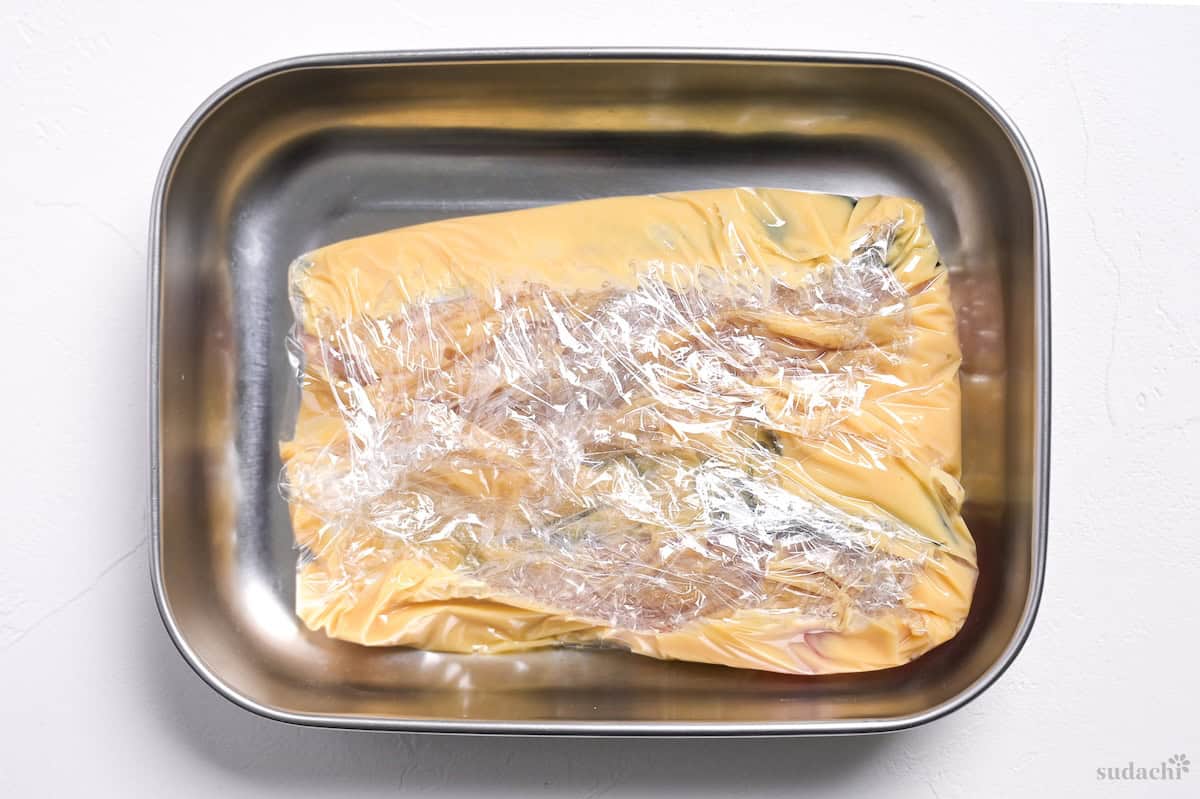
Use a container just slightly bigger than the fish so that it doesn’t get crushed.
i. Slide the container into the fridge and set your brain to something else for a day or two.
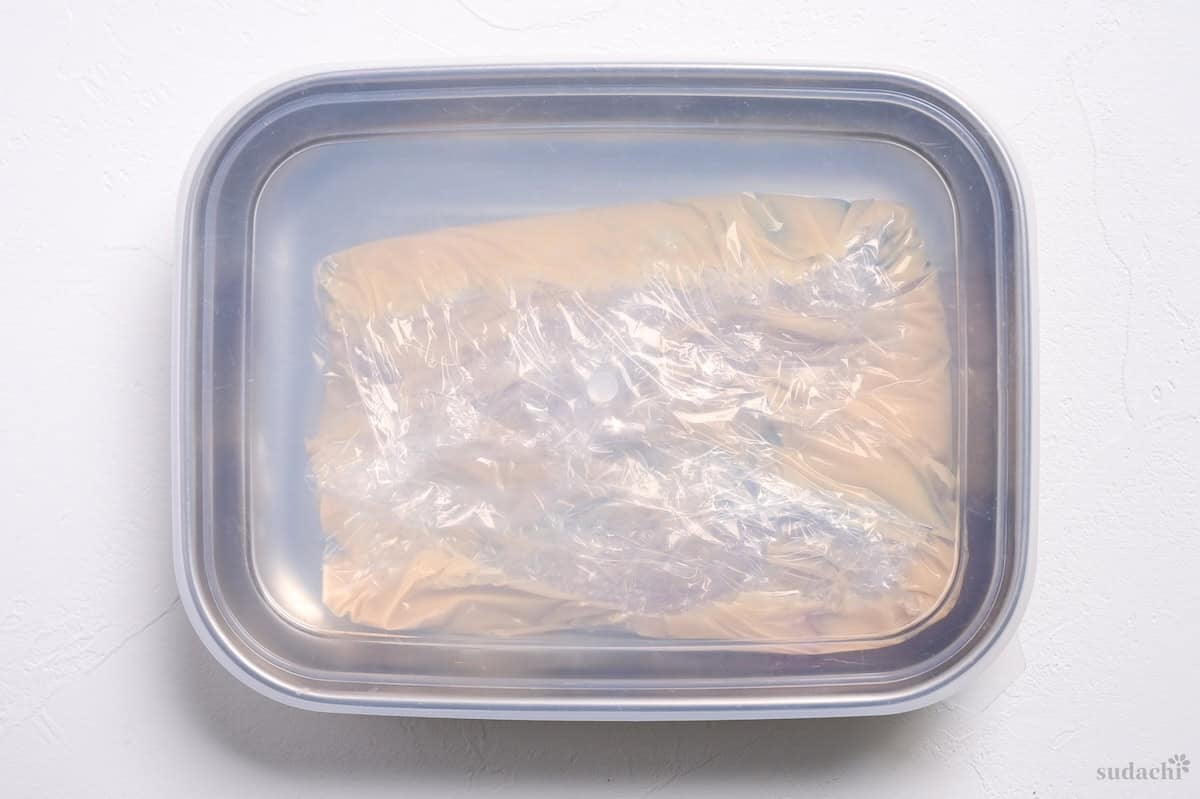
ii. My strong recommendation is 24 to 48 hours. This is not the place to cut a corner. The longer you give it, the friendlier the flavors get with each other, and the deeper they go.
The koji in saikyo miso is packed with a protease enzyme that works slowly at fridge temperatures, breaking down proteins inside the fish into free amino acids. Free amino acids are what your tongue reads as savory depth, the same family of molecules behind aged cheese, cured meat, and long-simmered dashi.
White miso is quieter than the miso you are used to and the salt is lower, so the bed needs real time to do its work (unless you sub saikyo miso with other type).
i. Pull the container out and get the miso off the fish.

ii. Rinse the fillets under cold running water.
Honestly, miso burns several levels harder than you think it does. Red, white, color does not matter, no exceptions. Cross a certain line and it burns. I am not interested in living near that line, and that is how I do it. So I marinate properly, and on cooking day, instead of wiping, I rinse the fillet lightly under cold running water.
What happens to the flavor after a rinse? That is the question, I know. But give it up to 48 hours in the bed and the flavor is already inside the fish. A quick rinse is not going to take it back. It is not that fragile.

Look at the flesh, you can see the color the miso has left behind, and that color stays there long after the water has run clear. This is how I cut the burning risk down to the floor and still serve you a saikyo yaki with real flavor in it.
iii. Pat the rinsed fillet dry with paper towels before it meets the heat.

i. Preheat your grill. Tear off a sheet of aluminum foil, crumple it into a rough ball, then open it back up so you have a sheet with peaks and valleys across the surface. Lay the foil on the grill pan.

ii. Then lay the fish on the foil, and cook low and slow, about 7 minutes per side.

The peaks and valleys reduce the actual contact area between the fish and the foil, so the skin does not stick, even with a surface that wants to glue to everything. The crumpled surface also keeps thin fish from falling through the grill grates, and the channels carry rendered fat away from directly under the fillet, so cleanup is a single balled-up sheet of foil in the bin instead of a scrubbing session over the sink.
iii. While the fish cooks, reduce some mirin for the final glaze. I do small batches in the microwave at 500W for about 20 seconds. A small saucepan works too, but we are talking about a splash of mirin here, so you don’t really need a pot for this.

i. Once the fish is cooked through, push the heat up to medium and give the skin side about 45 seconds directly on the heat. You are looking for a small glossy char right along the edges where the miso residue meets the skin.

This is char on purpose. Not char that happened by accident, char you built. You make the char, the char does not make you.
i. When both sides are glossy and the char is exactly where you want it, pull the fish off the heat and brush the surface with the reduced mirin. Work quickly, the residual heat on the fillet helps the glaze set to a glassy finish in about 10 seconds.

ii. Serve immediately, while the skin still crackles slightly when your chopsticks find the edge.


Essential Tips & Tricks
- Salt the fish and let it sit for a full 30 minutes before the miso bed ever enters the picture. The surface beads you see are carrying the compounds that read as fishy on the plate, and you need the time to let them come up.
- Give the marinade 24 to 48 hours, not a fast overnight. Saikyo miso is lower in salt and loaded with koji, so the protease enzymes need real time at fridge temperature to break proteins into the free amino acids that read as savory depth.
- Rinse the fillet under cold running water on cooking day, do not just wipe. Miso burns several levels harder than people expect because it is loaded with sugars and amino acids that caramelize fast and then flip to bitter in seconds. A quick rinse pulls the residue off so the surface never crosses that line, and the flavor has already moved inside the flesh where water cannot reach it.
With these simple tips in mind, you’re set for success every time you make saikyo yaki.
Storage Guide
Fridge: Cooked saikyo yaki keeps for 2-3 days in the fridge in an airtight container. The sweet miso layer on the surface actually acts as a mild preservative, so the fish holds its texture better than a plainly grilled fillet would.
Freezer: Cooked fillets freeze well for about a month, wrapped individually in plastic and then sealed in a freezer bag with the air pressed out. The uncooked fish in its miso bed also freezes, and the koji keeps working slowly at freezer temperatures, so the marinade stays alive. Thaw cooked fillets in the fridge overnight before the reheat, thaw uncooked marinated fish in the fridge for a full day and then rinse and cook as usual.
Reheating: Warm cooked saikyo yaki on low heat in a skillet over a sheet of parchment, about 2 minutes per side, until the surface is glossy again and the fillet is warmed through. Avoid high heat entirely during the reheat, the sugar in the miso layer burns the second time around the way a first-time miso bed never does.
What to Serve With This Recipe
Miso Fish FAQ
Saikyo yaki specifically uses saikyo miso, the pale honey-colored white miso from Kyoto, which runs about half the salt of a regular miso and close to double the rice koji. A “miso-glazed fish” made with standard red or awase miso will come out saltier, darker, and less sweet. The name of the dish is tied to the miso, not the fish.
The answer is no. Give the bed 24 to 48 hours and the flavor is already inside the flesh, not just stuck to the surface. A quick rinse pulls off the miso residue that would otherwise burn hard on the grill, and what is left is the seasoned fillet without the burn hazard. The color the marinade stamps into the flesh stays there long after the water runs clear.
Almost always one of two things. Either there was a visible clump of miso left on the surface when the fish hit the grill, or the heat was set too high from the start. Saikyo miso burns faster than people expect because it is loaded with sugars and amino acids that caramelize aggressively. Rinse the fillet lightly, cook low and slow first, and bump the heat only in the final 45 seconds to build a deliberate char on your schedule.

More Japanese Fish Recipes
- Classic Salted Salmon (Shiozake)
- Buri no Teriyaki (Yellowtail)
- Pan-Fried Teriyaki Salmon
- Saba no Shioyaki (Salted Grilled Mackerel)
Hungry for more? Explore my full collection of Japanese fish recipes and pick your next weeknight project.
Did You Try This Recipe?
I would love to hear your thoughts!
💬 Leave a review and ⭐️ rating in the comments below. 📷 I also love to see your photos – submit them here!

Saikyo Yaki (White Miso Grilled Fish)

Ingredients
Fish
- 2-4 fillets Spanish mackerel (sawara) skin on if available, or black cod, salmon, yellowtail, swordfish, halibut
- salt for the 30 minute pre-salt, to taste
Miso Bed
- 100 g saikyo white miso or 100 g regular (not saikyo) white miso paste with 10 g granulated sugar as a workaround
- 2 tbsp sake
- ½ tbsp mirin
- ⅛ tsp dashi granules
Finishing Glaze
- 1 tsp mirin reduced to a syrup before brushing, for the final glossy finish
The ingredient brands and tools I trust are in my Japanese pantry guide and my cooking tools guide.
Can’t find certain Japanese ingredients? See my substitution guide here.
Instructions
Day 1
- Sprinkle a few pinches of salt over both sides of 2-4 fillets Spanish mackerel (sawara) and rest for 30 minutes in the fridge.

- In a bowl, mix 100 g saikyo white miso, 2 tbsp sake, ½ tbsp mirin, and ⅛ tsp dashi granules until smooth.

- Line a container with a sheet of plastic wrap and spread half of the miso mixture over the top. After 30 minutes of resting, pat the fish dry with kitchen paper and lay it on top of the miso in a single layer, no overlapping.
- Spread the rest of the miso mixture over the top, then wrap tightly with the plastic wrap so all surfaces are fully coated. Cover with a lid, and store in the fridge for 24-48 hours.
Day 2
- Preheat your fish grill or broiler on low. Scrape the excess miso off of the surface of the fish, then wash under cold running water until no more miso is visible. Pat dry thoroughly with kitchen paper.
- Break off a sheet of foil and scrunch it into a ball, then open it back out and place it on the grill with the fish fillets on top. Grill on low for about 7 minutes on each side.
- Pour 1 tsp mirin into a small heatproof bowl and microwave for 20 seconds at 500W.
- Increase the grill's heat to medium and cook the skin side for about 45 seconds or until lightly charred.
- Remove from the heat, and brush with the prepared mirin until glossy all over.
- Serve immediately with rice, miso soup and pickles. Enjoy!


The whole recipe is good, of course, but I want to say particular thank you for the tip of crumpling the aluminum foil under the fish to bake. This technique was a game-changer for three reasons: 1) it helped drain excess sauce and moisture from the fish so it didn’t get soggy, 2) the fish did not stick, so it was easier to remove and serve, and 3) easy cleanup, as you promised! A cooking rack would drain the fish, but then little pieces would fall through and/or stick. Thank you!
Hi Sharon,
So glad that tip landed! That’s exactly why I love sharing those little tips! So happy the foil trick made a real difference for you. That’s what it’s all about! 🙂
Yuto