

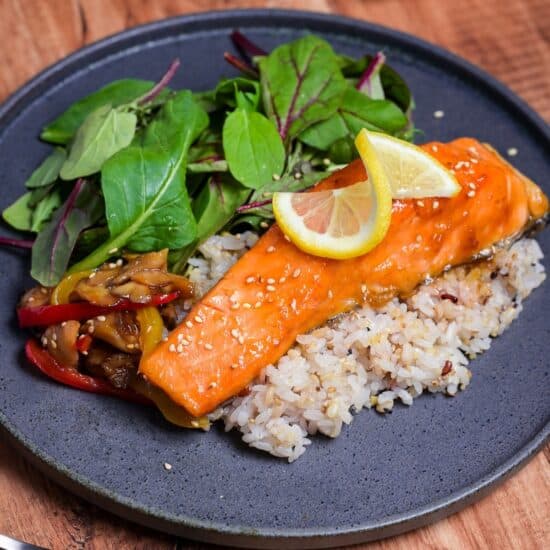


Featured Comment
Goddamn, this is the best salmon dish I’ve ever made or eaten in a restaurant. Thanks a million!
★★★★★
– Tamas
Imagine crispy-skinned salmon glazed in tangy, glossy ponzu, restaurant-bright flavor you can pull off in 20 minutes flat.
No fussy techniques, no rare ingredients, just one pan and a sauce that practically makes itself.
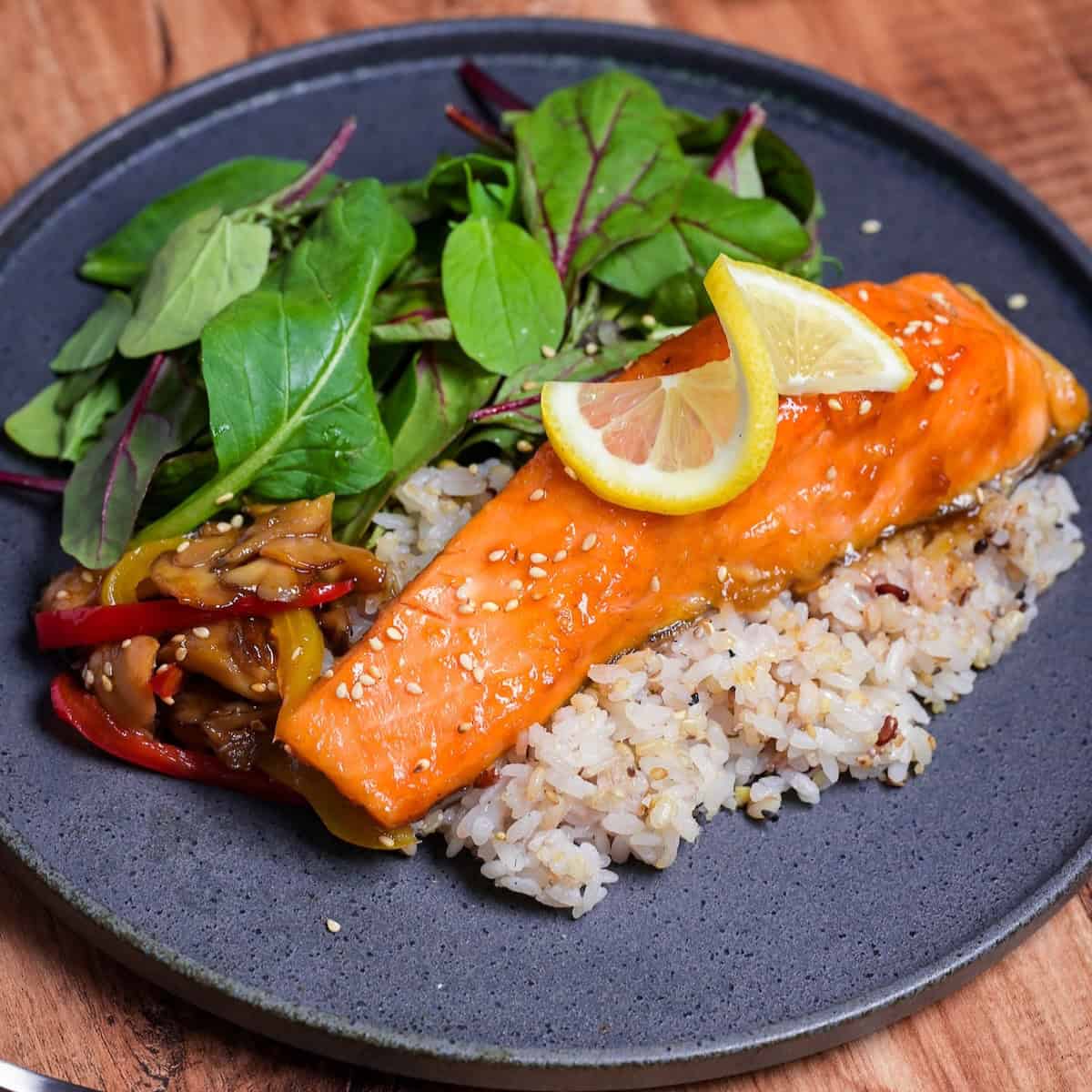
Ponzu salmon
Recipe Snapshot
- What is it? Pan-seared ponzu salmon finished with a quick butter-ponzu reduction, served as a one-plate set (rice + greens + sautéed vegetables).
- Flavor profile: Tangy ponzu acidity cuts through rich, fatty salmon while butter emulsifies into a glossy, clinging glaze.
- Why you’ll love this recipe: If your salmon rotation has stalled at teriyaki or lemon butter, this ponzu glaze delivers a restaurant-level citrus-soy finish in under 20 minutes.
- Must-haves: Ponzu sauce, potato starch (or cornstarch) for crust and sauce-thickening, butter, a nonstick or well-seasoned skillet.
- Skill Level: Easy! Straightforward pan-searing with a quick reduction glaze.
Summarize & Save this content on:
What is Ponzu Salmon?
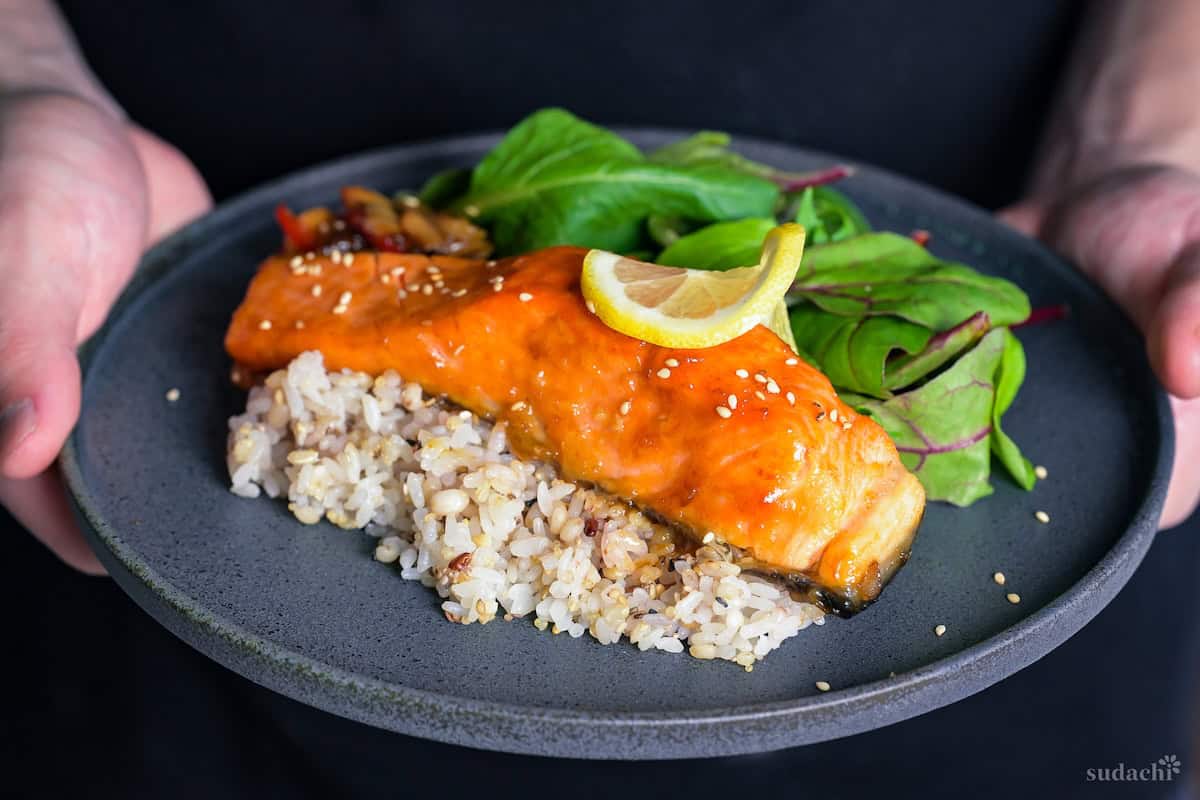
Ponzu salmon is a pan-fried salmon dish coated in a tangy ponzu shoyu (a Japanese sauce made from soy sauce and citrus juice) glaze. In my recipe, the fillets are seared until golden, then the ponzu is added to the pan where it reduces into a light, glossy coating that balances the richness of the salmon with bright acidity and umami.
It’s not a traditionally known Japanese dish, but it draws on the same citrus-soy flavor profile used in classic preparations like yūan-yaki. Think of it as a tangier, lighter cousin of teriyaki salmon with a sweet and sour fish quality. It’s versatile enough for a quick lunch with rice and miso soup.
In fact, acidity pairs extremely well with fish for a reason: a paper in Fukui Prefectural University Bulletin (No. 39, 2012) explains that acids can neutralize fishy odor compounds (such as trimethylamine) by converting them into salts. That’s why lemon-on-fish is so common, and ponzu salmon can be seen as an extension of that idea.
Ponzu Salmon Ingredients

- Ponzu sauce: This citrus-soy sauce is the star of the dish! It brings a bright, tangy flavor that makes salmon taste restaurant-level. Store-bought ponzu (like Mizkan or Kikkoman) works beautifully and saves time, but homemade lets you control the citrus punch. Find it in the Asian aisle near the soy sauce.
- Salmon Fillets: Skin-on fillets are key here! The skin crisps up golden and adds an irresistible crunch against the silky ponzu glaze. Farmed Atlantic or king salmon are forgiving and stay moist thanks to their higher fat, while wild sockeye works too but cooks faster, so watch it closely. Choose fillets about 2-3 cm thick for even cooking.
- Potato Starch (Katakuriko): A light dusting of starch before pan-frying gives the salmon a delicate, crispy coating that helps the ponzu sauce cling beautifully.
Substitution Ideas
- Sake → Dry sherry is the best easy swap and keeps the sauce clean and savory. If you don’t cook with alcohol, use water. Still delicious, just a little less aromatic.
- Salmon fillets → Steelhead trout (sometimes sold as “trout salmon”) or Arctic char are the best stand-ins and cook almost the same, just slightly milder. If your fillets are thinner than salmon, they’ll finish faster, so start checking early.
- Potato starch (katakuriko) → Cornstarch is the easiest swap and still gives you that light coating the ponzu glaze loves. Rice flour also works for extra crispness, but the crust can be a little more delicate when flipping.
- Butter → Neutral oil is the simplest swap; you’ll lose a little of the “ponzu butter” richness but keep that clean citrus pop.
- Bell pepper → Snap peas or asparagus are easy swaps that keep the plate bright and crisp.
- Maitake mushrooms → Any mushroom you enjoy will work here! Shiitake, king oyster, or even cremini all pick up the ponzu glaze nicely. Use your local favorites!
- Multigrain rice → Regular steamed Calrose rice or short-grain Japanese rice is perfectly fine.
- Baby leaf salad → Baby spinach is the easiest swap and stays mild. Arugula works too if you want a peppery contrast.
Have trouble finding Japanese ingredients? Check out my ultimate guide to Japanese ingredient substitutes!
How to Make My Ponzu Salmon
If you prefer to watch the process in action, check out my video of this ponzu salmon recipe!
i. Whisk together the ponzu, mirin, and sake in a small bowl and set it right by the stove. Having this sauce pre-mixed and within arm’s reach matters more than you’d think.

The mirin’s gentle sweetness will balance ponzu’s citrus bite, while sake rounds out any sharp edges.
i. Pat each fillet firmly on both sides with kitchen paper, pressing gently until the surface feels almost tacky rather than slick. This step is your single biggest insurance policy against pale, steamed-tasting fish.
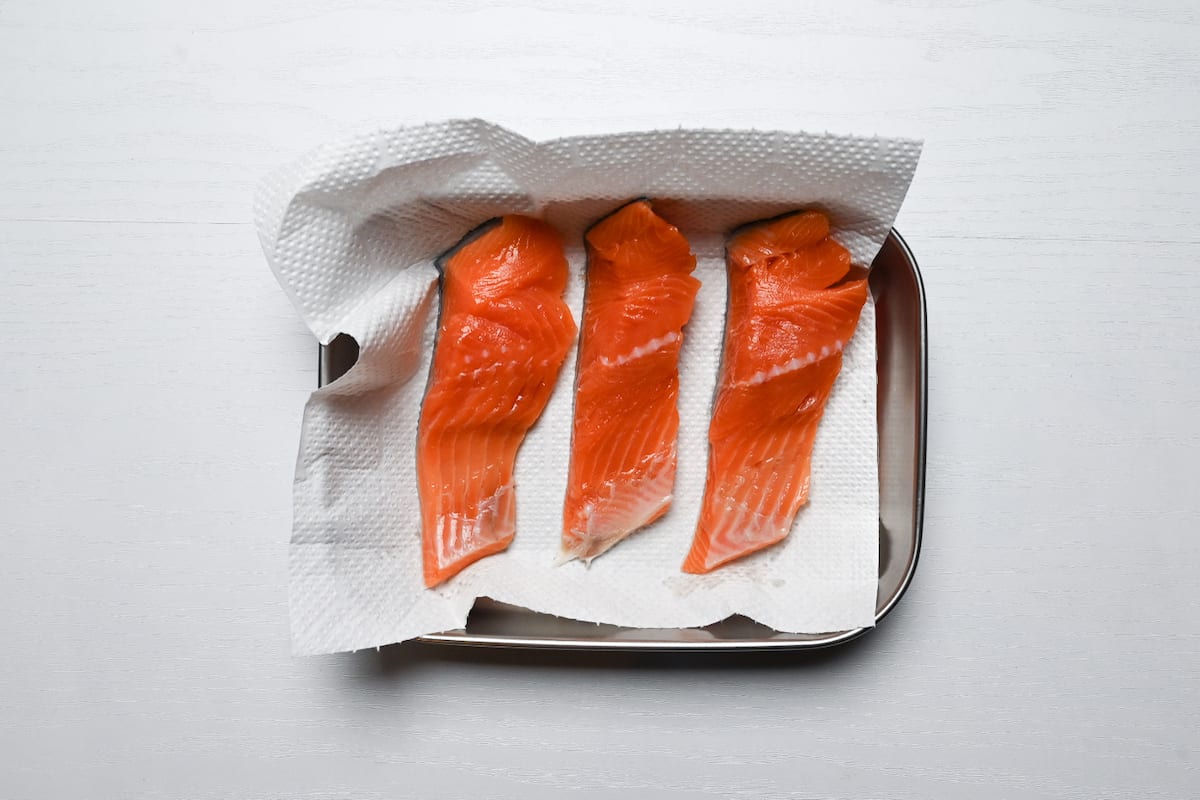
Excess surface water forces the pan temperature down to 100°C until it boils off, which means your salmon steams instead of sears. That delay produces a rubbery, pale exterior and pushes the interior toward overcooked territory before the outside ever gets golden.
i. Sprinkle a light, even pinch of salt over both sides of each fillet, then dust with potato starch. Use your fingertips or a pastry brush to press the starch gently into the surface so it adheres rather than sitting in loose patches.
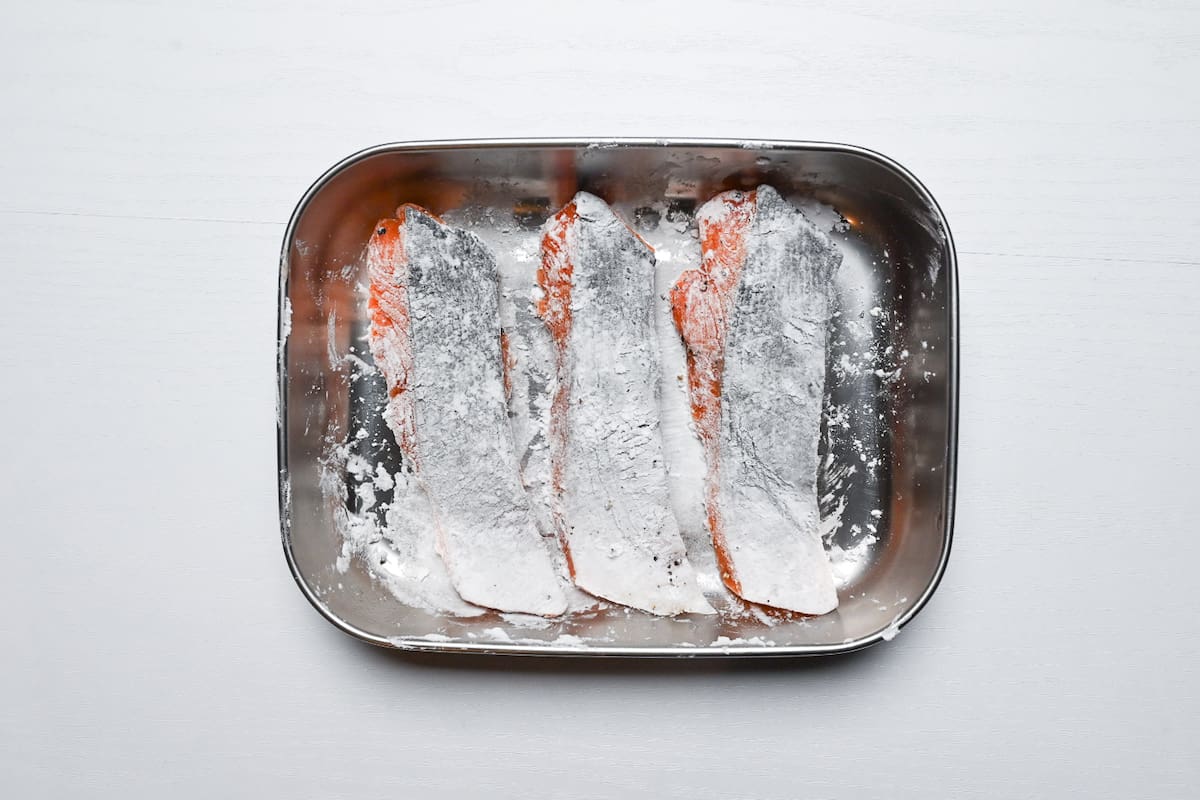
This ultra-thin layer serves double duty: it fries into a delicate, shatteringly crisp shell on contact with hot butter, and later, as the sauce hits the pan, it releases just enough starch to thicken the glaze naturally so it clings to every curve of the fish.
Potato starch produces a lighter, crispier crust than cornstarch or flour because its granules are larger and absorb less oil. If you can’t find it, cornstarch is a perfectly solid swap. You’ll get a slightly denser coating, but the sauce-thickening effect works the same way.
i. Set your pan over medium heat and drop in the butter. Let it melt fully, swirling so a thin, even film coats the surface.
ii. Lay the salmon fillets in skin-side down, and resist the urge to touch them. You should hear a confident, steady sizzle the moment they land; if it’s a quiet whisper, your pan wasn’t hot enough. Let the skin side cook undisturbed for about 4 minutes.
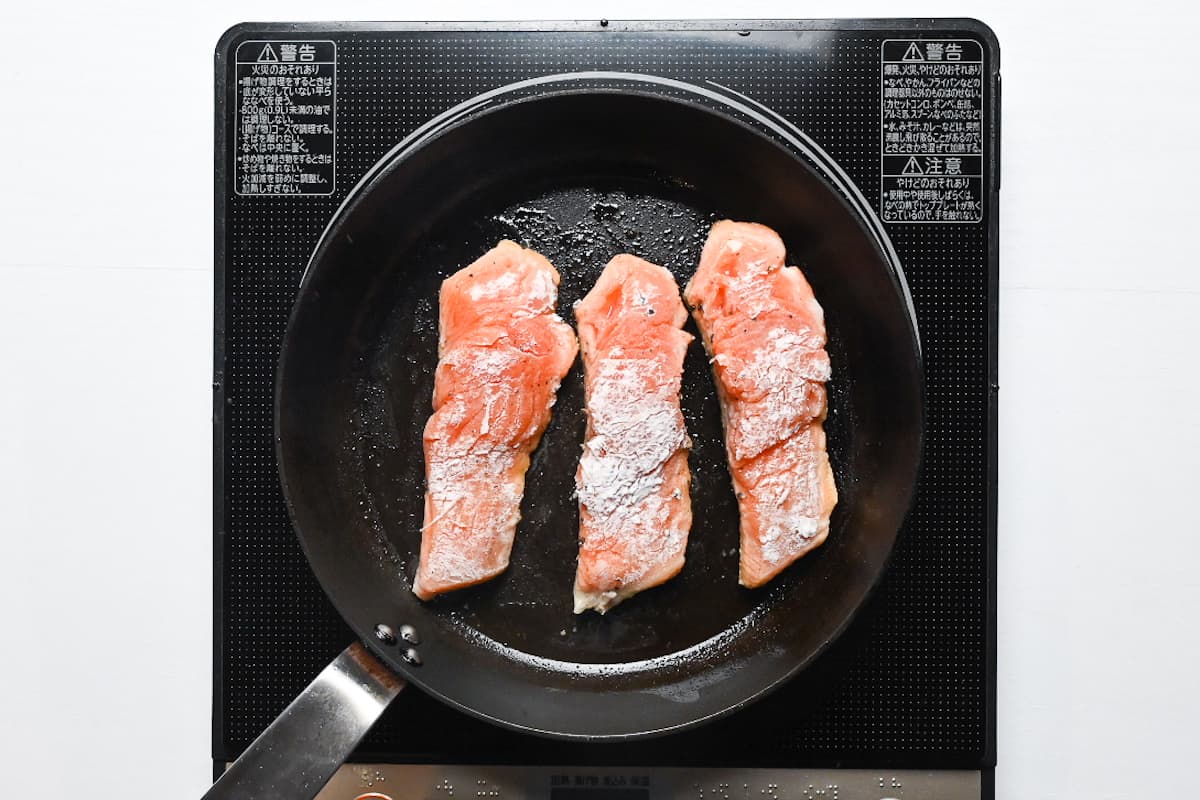
During this time, fat is rendering out of the skin, the potato starch is crisping into a golden shell, and the Maillard reaction is building layers of roasty, caramelized flavor.
iii. Slide your spatula under each fillet and flip carefully. The crust should release cleanly if it’s properly browned. Cook the flesh side for about 2 minutes, or until the salmon is just opaque through the thickest part.
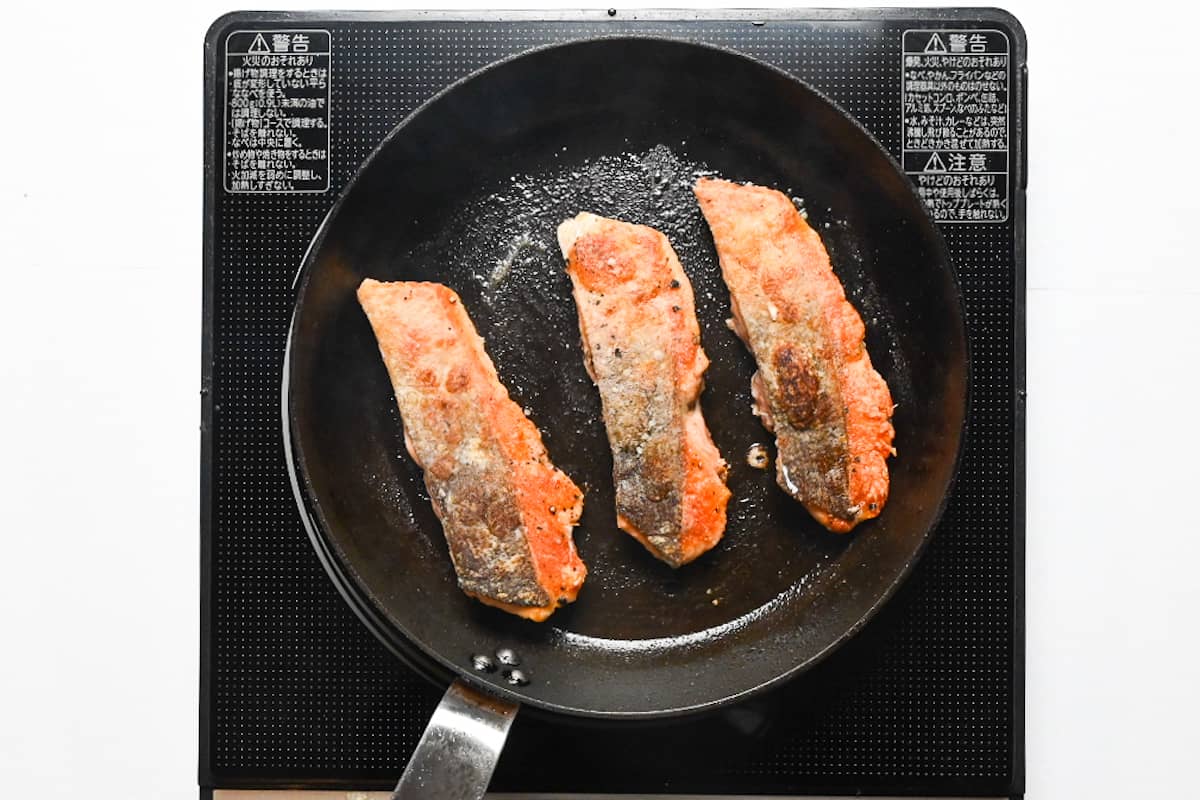
For extra-thick fillets, give it another minute, but keep a close eye: the flesh side cooks faster because the fish is already hot throughout.
iv. Once cooked, transfer the fillets to a plate and set them aside. Removing them now is deliberate-it prevents overcooking while you handle the vegetables and sauce in the same pan.
i. In the same pan (don’t wipe it out, those browned butter-and-starch bits are pure flavor), add the sliced bell peppers and mushrooms.
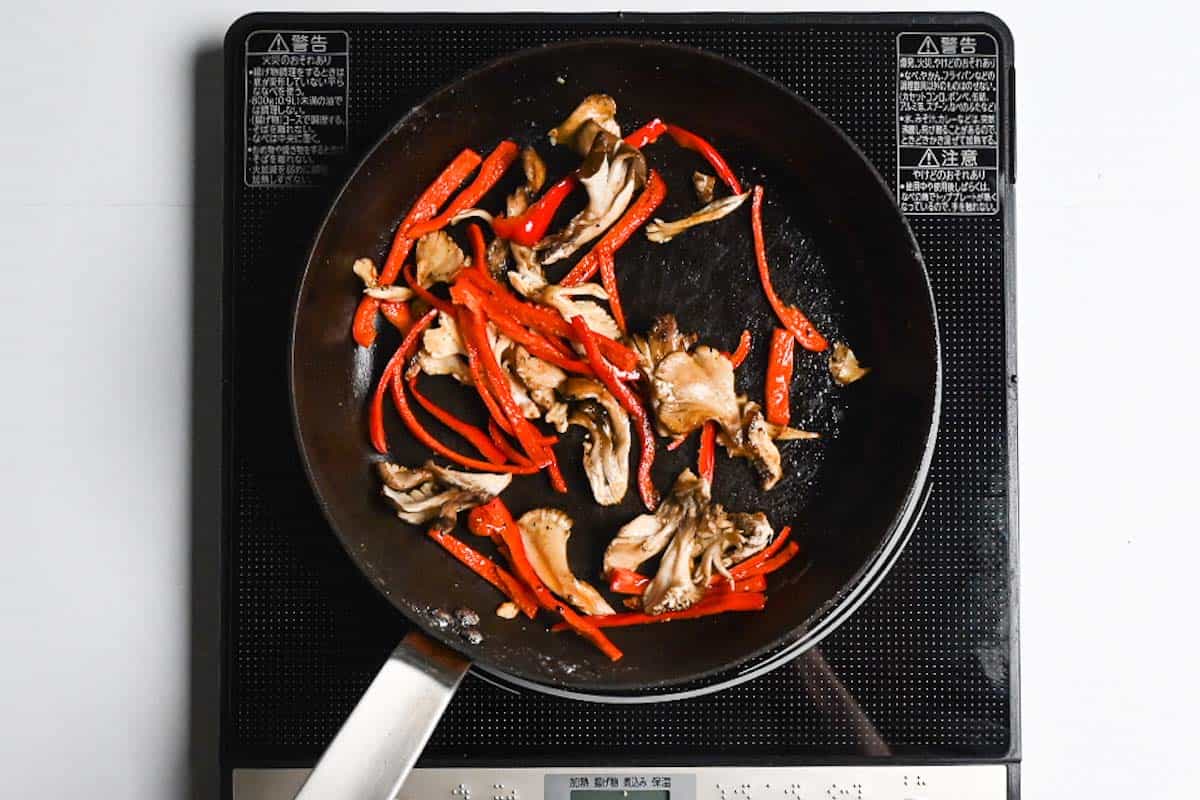
ii. Stir-fry over medium heat until the bell pepper softens just slightly at the edges and the mushroom picks up some golden color, roughly 2-3 minutes.
i. Push the vegetables to the edges of the pan and nestle the salmon fillets back in, skin-side up this time. Pour the pre-mixed ponzu sauce around the pan, not directly over the fish, and let it hit the hot surface.
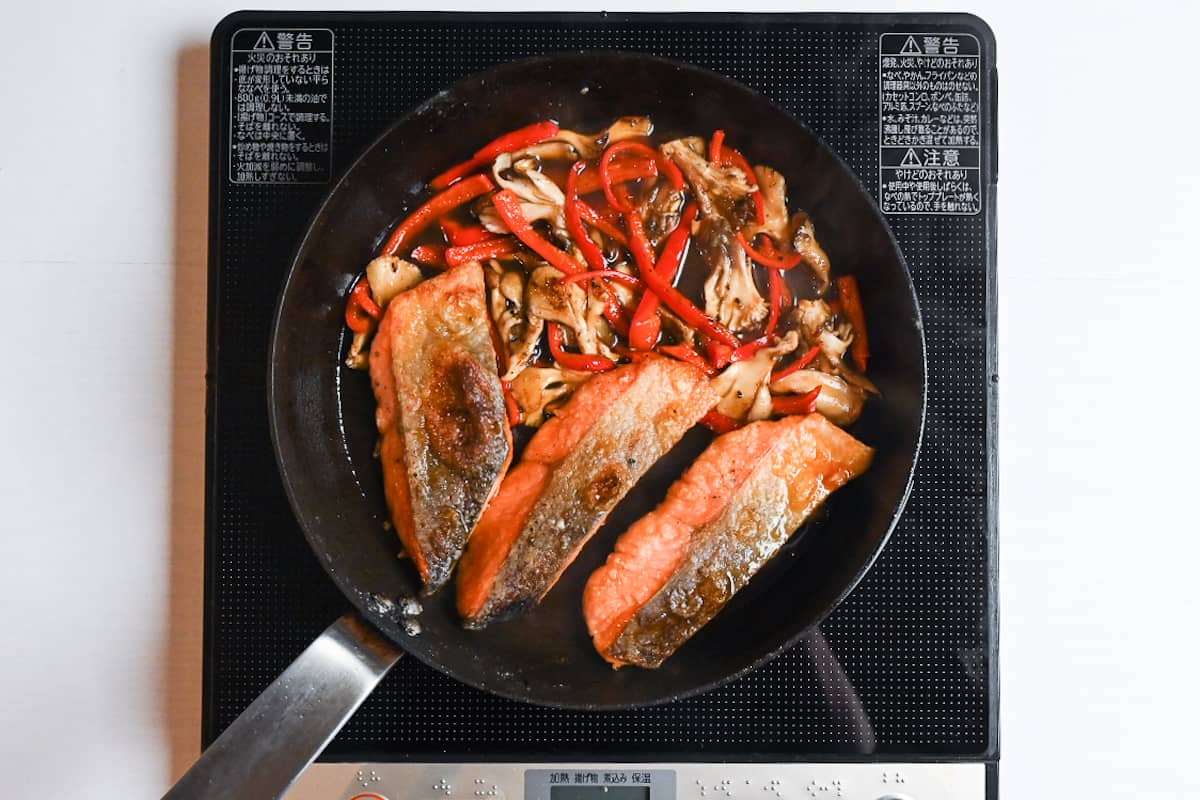
ii. Now, using a spoon, continuously baste the tops of the salmon fillets with the bubbling sauce. This layered basting builds a glossy, lacquered coat. Keep this up for about a minute, until the sauce visibly thickens and clings to the spoon in a syrupy ribbon rather than running off like water.
If the sauce gets too thick or tastes overly salty-sour, don’t panic. Splash in a tablespoon of water, swirl the pan, and it will loosen right back up.
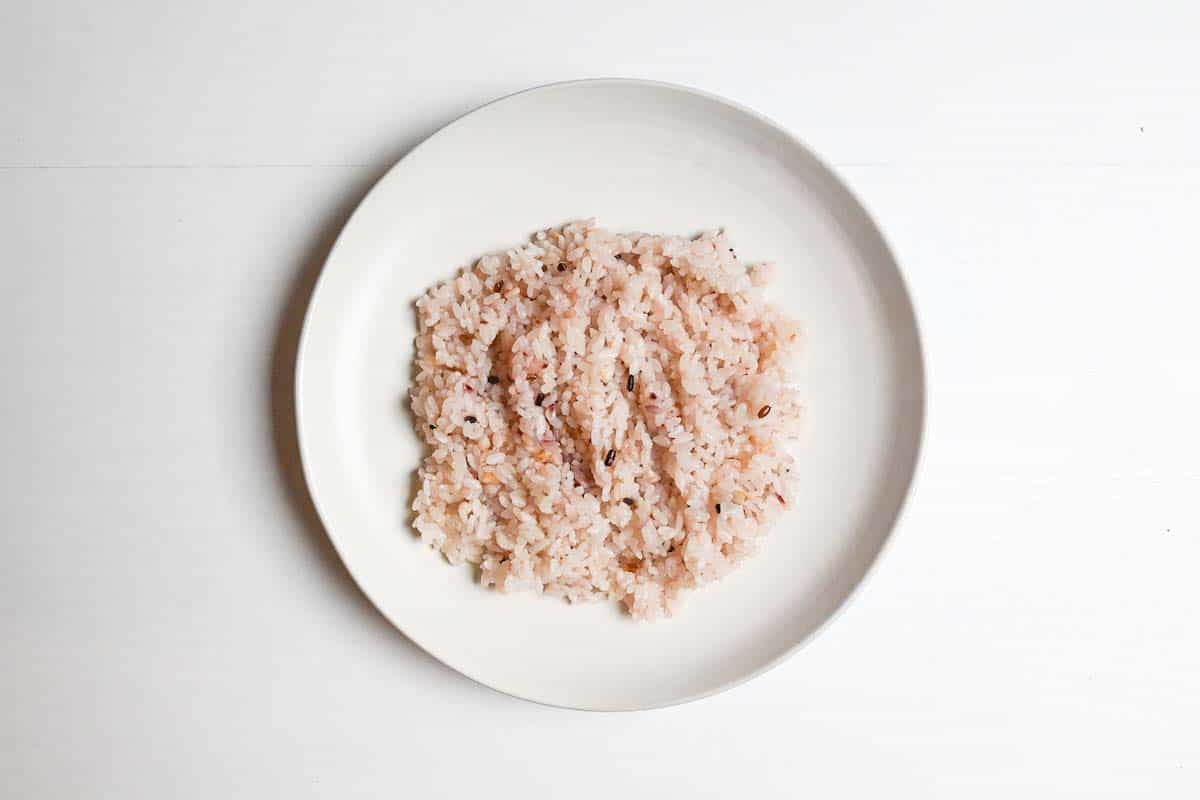
i. Start each plate with a generous mound of rice (I personally used mixed grain rice this time).
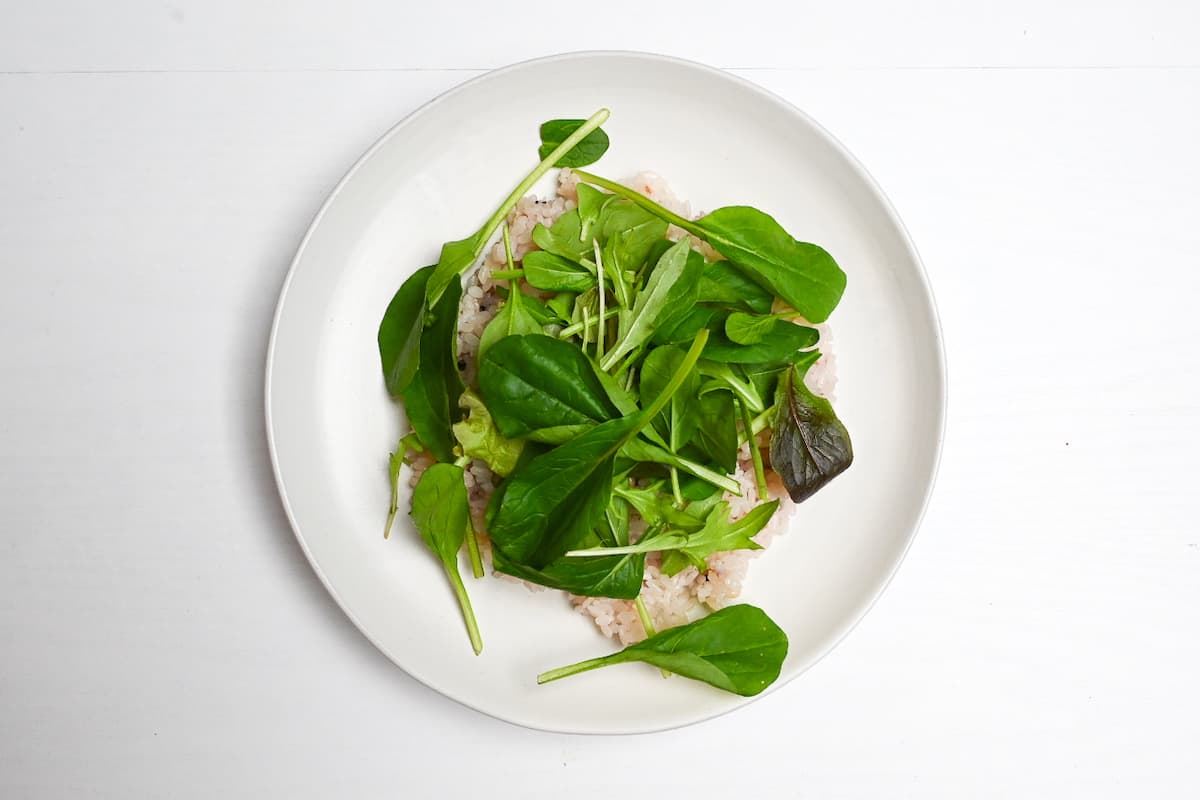
ii. Lay a handful of baby leaf greens or your preferred salad mix over the rice.
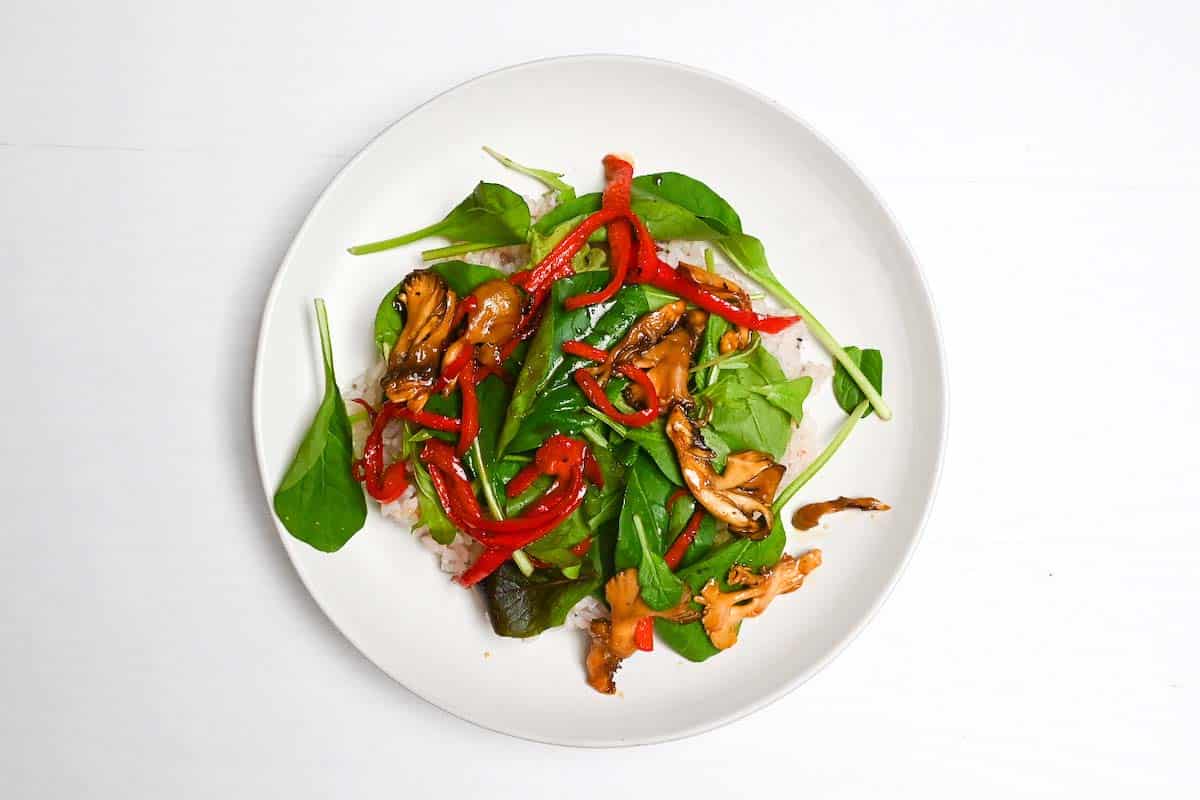
iii. Arrange the sautéed bell peppers and mushrooms over the greens, or place on the side if you prefer.
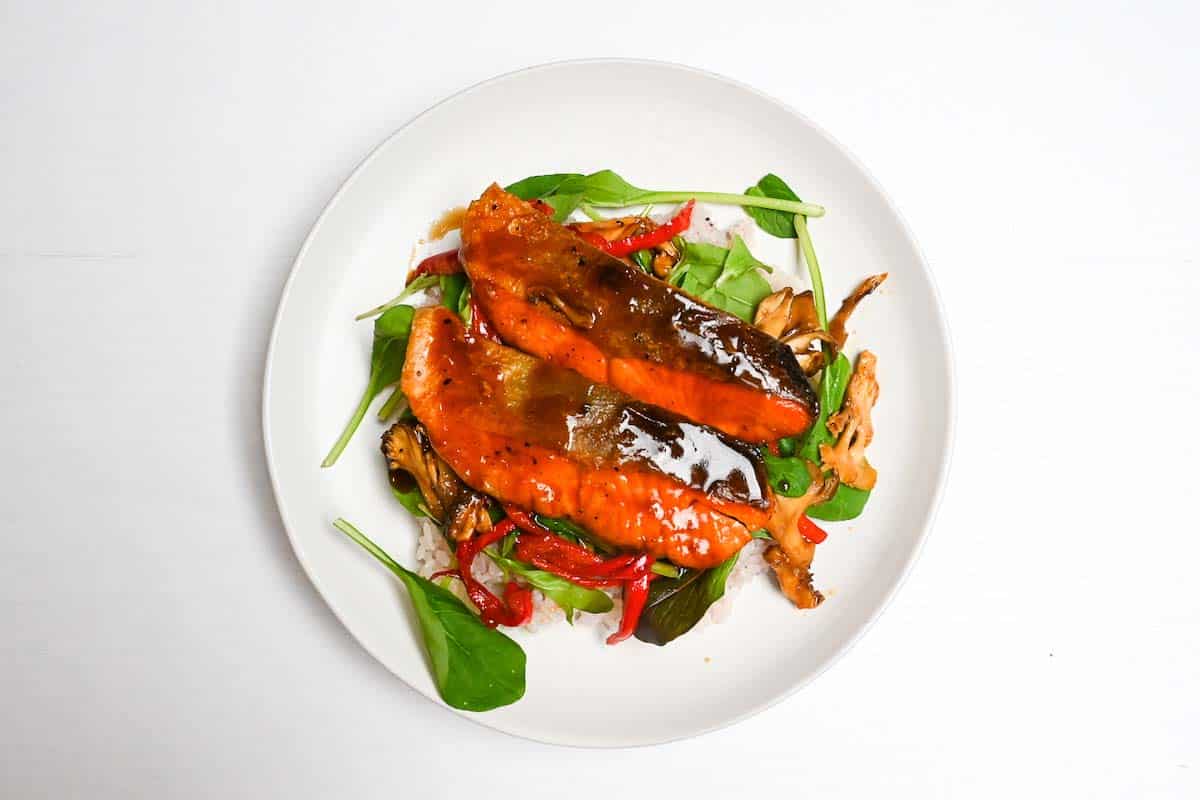
iv. Then set one or two salmon fillets on top, skin-side up so that golden crust stays intact and visible. Spoon any remaining sauce from the pan over and around the fish, letting it pool into the rice below.

Essential Tips & Tricks
- Pat the salmon thoroughly dry before coating with starch. Surface moisture must fully evaporate before browning can even begin, so a half-hearted pat means you’ll steam the fish instead of searing it.
- Dust potato starch in a thin coat and tap off excess, because it crisps and later helps the glaze cling. Overdo it and the coating turns pasty while the ponzu stays watery.
- Pour the ponzu sauce around the pan, not directly onto the fish. Pouring over the top washes away the crispy starch coating and dilutes the sear you worked to build. You can spoon the ponzu sauce over the fish after it has thickened.
With these simple tips in mind, you’re set for success every time you make ponzu salmon.
Storage & Meal Prep
Fridge: Cool within 20 minutes, then store the salmon and vegetables in a shallow airtight container for up to 2 days. Keep any extra ponzu glaze in a separate small container.
Freezer: Not recommended. Freezing causes significant moisture loss and texture breakdown in cooked salmon.
Meal Prep: Mix the ponzu-mirin-sake sauce and slice the peppers/mushrooms up to 2 days ahead, then sear the salmon fresh for the best ponzu salmon crispness and glaze cling.
Reheating: Best method is a covered skillet on low with 1-2 Tbsp water so steam heat reheats evenly, then uncover briefly to re-reduce the glaze. Avoid high heat or the sauce can caramelize/burn and the fish dries out.
What to Serve With This Recipe
FAQ
Yes, I’ve tried this recipe with both store-bought and homemade and they both turned out well. But brands vary a lot in salt and acidity. Taste your ponzu before it hits the pan. If it’s punchy, dilute with 1-2 tsp water or add a little more mirin to keep it bright, not harsh.
That’s albumin, a protein that coagulates and squeezes to the surface when muscle fibers tighten under heat. A little is normal, but heavy albumin usually means the pan was too hot or the fish cooked too long-it often correlates with drier, chalkier texture. Thorough drying, the potato starch coating, and moderate heat all help minimize it significantly.
A glaze needs evaporation. If the pan is too cool or there’s too much liquid, the sauce can’t reduce into a glossy coat. Let it bubble for 30-60 seconds while basting so it deglazes and tightens, and make sure the potato starch coating is thin and dry. If the salmon is already done, lift it out briefly, reduce the sauce, then spoon it on.

More Japanese Salmon Recipes
- Japanese Salted Breakfast Salmon
- Miso Glazed Salmon (Pan-fried)
- Salmon Onigiri
- Soy Sauce and Butter Salmon
Hungry for more? Explore my Japanese salmon recipe collection to find your next favorite dishes!
Did You Try This Recipe?
I would love to hear your thoughts!
💬 Leave a review and ⭐️ rating in the comments below. 📷 I also love to see your photos – submit them here!
Ponzu Salmon (Pan Fried)

Ingredients
- 4 tbsp ponzu sauce store-bought or homemade
- 1 tbsp sake or dry sherry/wine/water
- 1 tbsp mirin
- 2-3 salmon fillets skin-on, about 2-3 cm thick
- 1 pinch salt
- 1 tbsp potato starch (katakuriko) or cornstarch
- 1 tbsp butter or neutral oil
- 30 g bell pepper sliced
- 50 g maitake mushrooms or mushroom of your choice, sliced
- 50 g baby leaf salad
- 300 g cooked multigrain rice 150g per portion, or steamed short-grain rice
- 1 tsp toasted white sesame seeds optional
The ingredient brands and tools I trust are in my Japanese pantry guide and my cooking tools guide.
Can’t find certain Japanese ingredients? See my substitution guide here.
Instructions
- Mix 4 tbsp ponzu sauce, 1 tbsp mirin and 1 tbsp sake in a bowl and set by the stove for later.

- Pat 2-3 salmon fillets dry with kitchen paper and sprinkle both sides with 1 pinch salt.
- Sprinkle both sides of the salmon with 1 tbsp potato starch (katakuriko), pat to remove excess or use a pastry brush to spread a thin even layer.
- Heat a pan on medium and melt 1 tbsp butter. Swirl to coat the pan with a thin layer of butter, then place the salmon fillets skin-side down and fry for 4 minutes or until the skin is crispy and golden.
- Flip and fry on the other side for 2 minutes or until just cooked through. (Extra thick salmon fillets might need up to 2-3 minutes more.) Remove the salmon from the pan and set aside for now.
- Using the same pan, add 30 g bell pepper and 50 g maitake mushrooms. Add a little more butter if needed, and sauté until the vegetables are slightly softened.
- Push the peppers and mushrooms to one side of the pan and place the salmon skin side up in the empty space. Avoiding the top of the salmon, pour the ponzu sauce around the pan. Once the sauce becomes glossy and slightly thickened, baste the top of the salmon. When the sauce is thick enough to coat the back of a spoon, remove the pan from the heat.
- Divide 300 g cooked multigrain rice into equal portions and arrange 50 g baby leaf salad on the plate. Place the sautéed vegetables and salmon either on top or to the side.
- Drizzle any sauce leftover in the pan over the salmon and sprinkle with 1 tsp toasted white sesame seeds for a finishing touch. Serve immediately and enjoy!

Delicious and easy! All of your recipes are tasty
Hi Luisa,
Thank you so much for your comment! I’m glad you’ve enjoyed my recipes! 🙂
Yuto
A big thank you, Yuto, for this new salmon recipe, which looks (almost ) just as delicious as it is original. I truly appreciate the care you put into sharing your culinary creations. A wonderful discovery that I can’t wait to make again and enjoy once more!
Hi Jean-Marie,
Thank you for such a lovely comment and your picture! It’s wonderful to hear that you enjoyed it so much you’re planning to make it again! Comments like this really make my day and inspire me to keep sharing recipes.
Yuto
Goddamn, this is the best salmon dish I’ve ever made or eaten in a restaurant. Thanks a million!
Hi Tamas,
That’s an incredible compliment, thank you! I’m happy you cooked it and loved it as much as you did, really appreciate you sharing that! 🙂
Yuto
This tastes incredible… and it’s very easy to make!
Thank you so much, Brandon! I’m so happy that you enjoyed it! 🙂
Made this last night (5/25/26) and it was awesome! Wife asked, “Why another salmon recipe since you already have a great one?” Replied that I have savory already, want something with a citrus punch. Made my own ponzu. This recipe was a banger! It tops all the dinners I’ve made to date. Will go into rotation in my house! Wife says thank you!
Hi Jason,
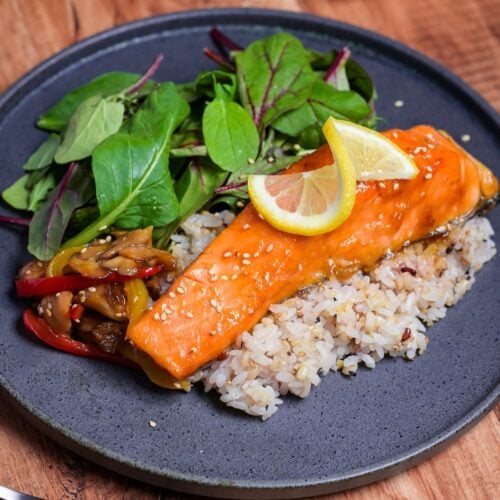
Thank you so much for trying this recipe and sharing your picture! Looks great! Hearing it tops the dinner lineup is honestly the best thing I could hear. The fact that you went the extra mile and made your own ponzu makes me so happy. So glad you both enjoyed it together! 🙂
Yuto