

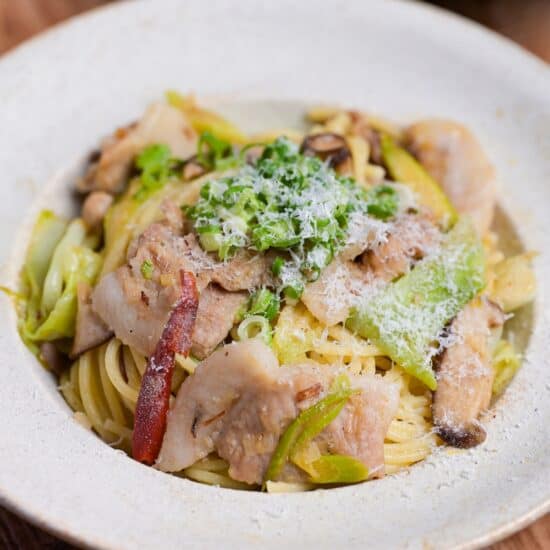


Featured Comment
I just made this for dinner and it was absolutely delicious. Thank you for sharing. 🥳
– From YouTube
Right now in Japan, negishio is on everything. Grilled meat, rice bowls (negishio butadon), and yes, now spaghetti. It is 3 plain things, leek, salt, and toasted sesame oil, and somehow a whole country cannot set its fork down.
This is that flavor, wrapped around pasta with pork. Come climb aboard.
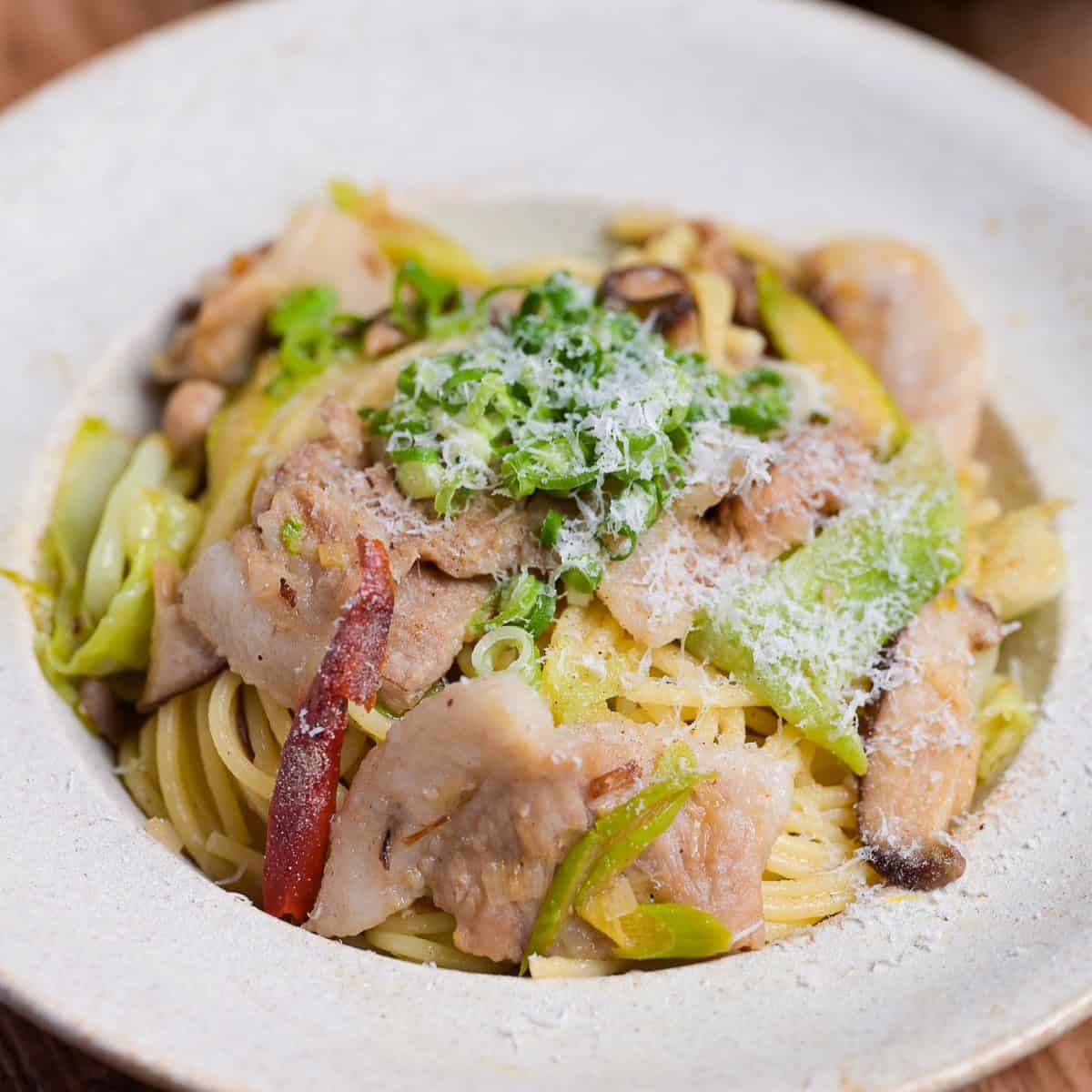
Negishio Pasta
Recipe Snapshot
- What is it? A contemporary wafū (Japanese-style) spaghetti that carries Japan’s addictive negishio flavor, leek, salt, and toasted sesame oil.
- Flavor profile: Toasted sesame oil and raw green onion up front, sweet rendered pork fat underneath, a lemon lift, and a salty savory pull that keeps you twirling.
- Why this recipe works: The pork belly goes in thick for a meaty bite, and a late shower of Parmesan pushes the savory past negishio alone, a balance I tuned over several batches.
- How to make it: 1 pan. Flavor a cold oil with garlic, green onion, and chili, sear pork belly, stir-fry cabbage and asparagus, then toss with the negishio seasoning and starchy pasta water.
- What to expect: About 30 minutes start to finish, and it serves 2. The one place to slow down is the cabbage, which turns watery if you cook it a beat too long.
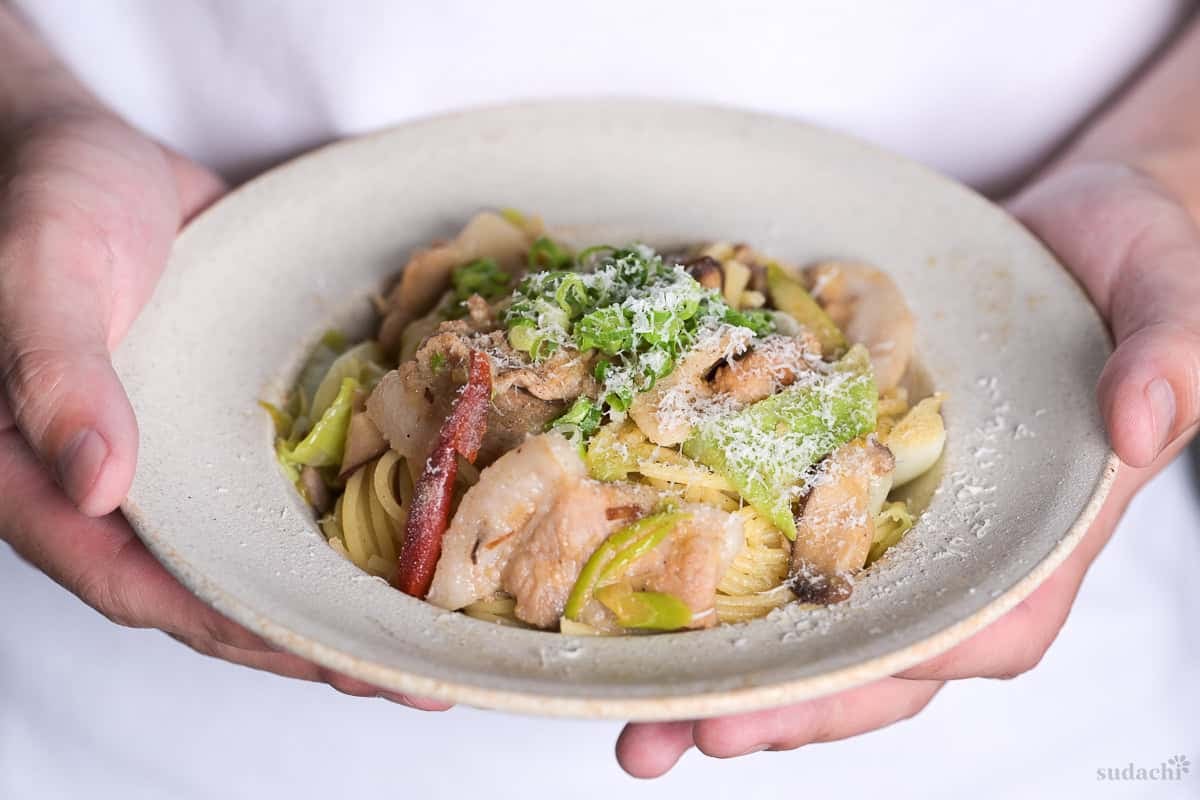
What Is Negishio Pasta?
Negishio pasta (ねぎ塩パスタ) is a wafū (Japanese-style) spaghetti built around a flavor Japan is obsessed with. And it is new. No old classic passed down the centuries, just something grown in home kitchens and recipe sites, with no restaurant to name.
So what is negishio? Japanese leek, salt, and toasted sesame oil, usually with a little garlic. It comes off the yakiniku (Japanese grilled-meat) table, the salty pile you heap onto grilled tongue and beef, a recent taste, not ancient. The onion is naga-negi (Japanese leek), a thick onion relative, sharp when raw but sweet under heat, a different creature from a thin scallion.
My own version leans into the pork. I cut the pork belly thick so you can enjoy the meaty texture instead of letting it vanish into the sauce. Cabbage and asparagus go in for body and color. And then the move nobody sees coming, a shower of grated Parmesan at the very end.
Negishio Pasta Ingredients
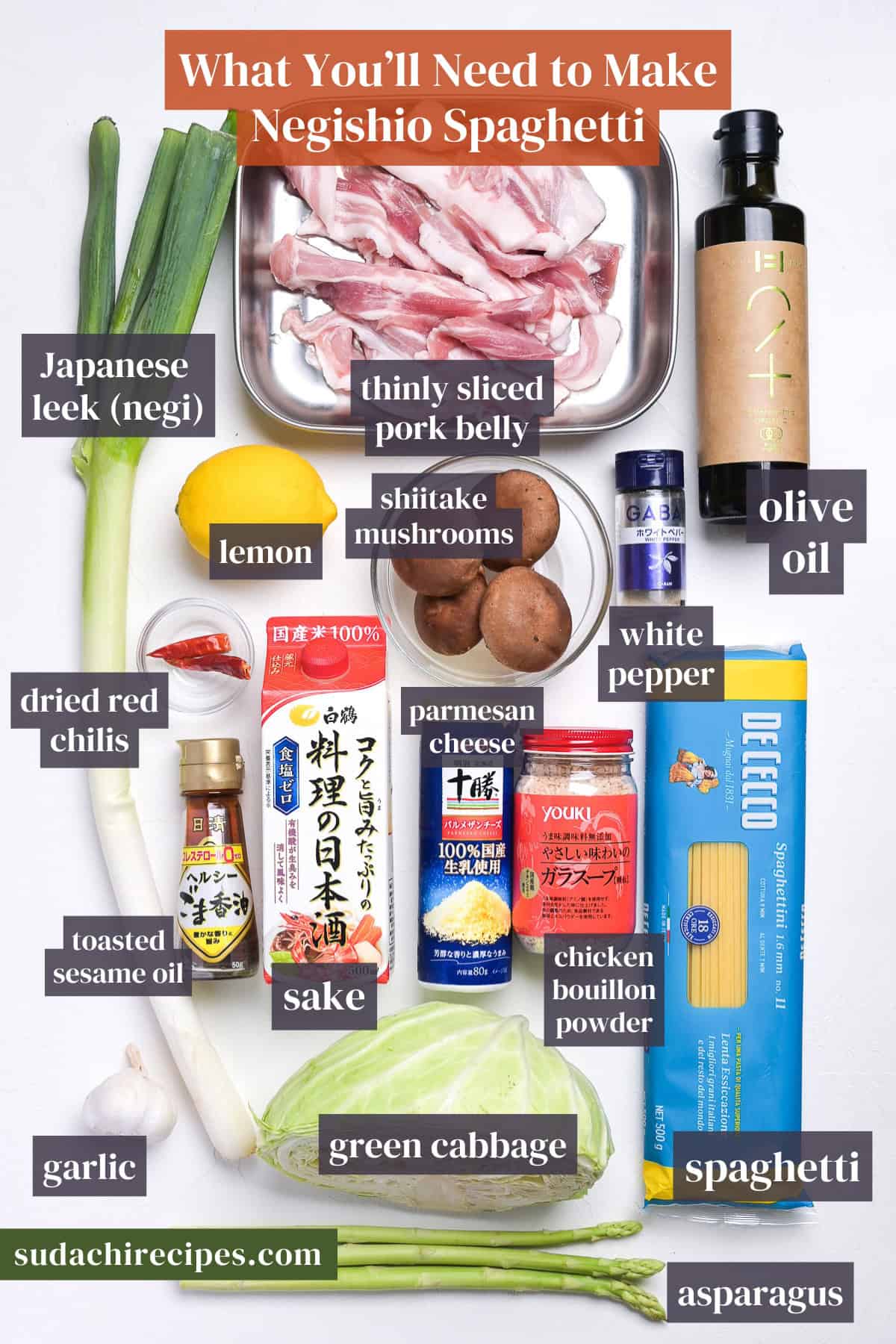
- Naga-negi (Japanese leek): This is the heart of the dish, and the first thing to know is that it is not a scallion. Naga-negi is a thick, long member of the onion family with barely a line between its white and green parts, and that white shank turns genuinely sweet when it hits heat while staying sharp when raw.
- Toasted sesame oil: The dark amber, powerful-smelling kind, and it pulls double duty, some stirred into the tare and a final drizzle at the very end.
- Pork belly: Pork belly is what I reach for, and if you can get it, get it. Other cuts work, chicken thigh included, but pork belly’s sweet fat renders out and coats every strand, and that coating is what makes this bowl. I cut it on the thick side so it’s nice and meaty.
How to Make My Negishio Pasta
Before you start (Mise en place):
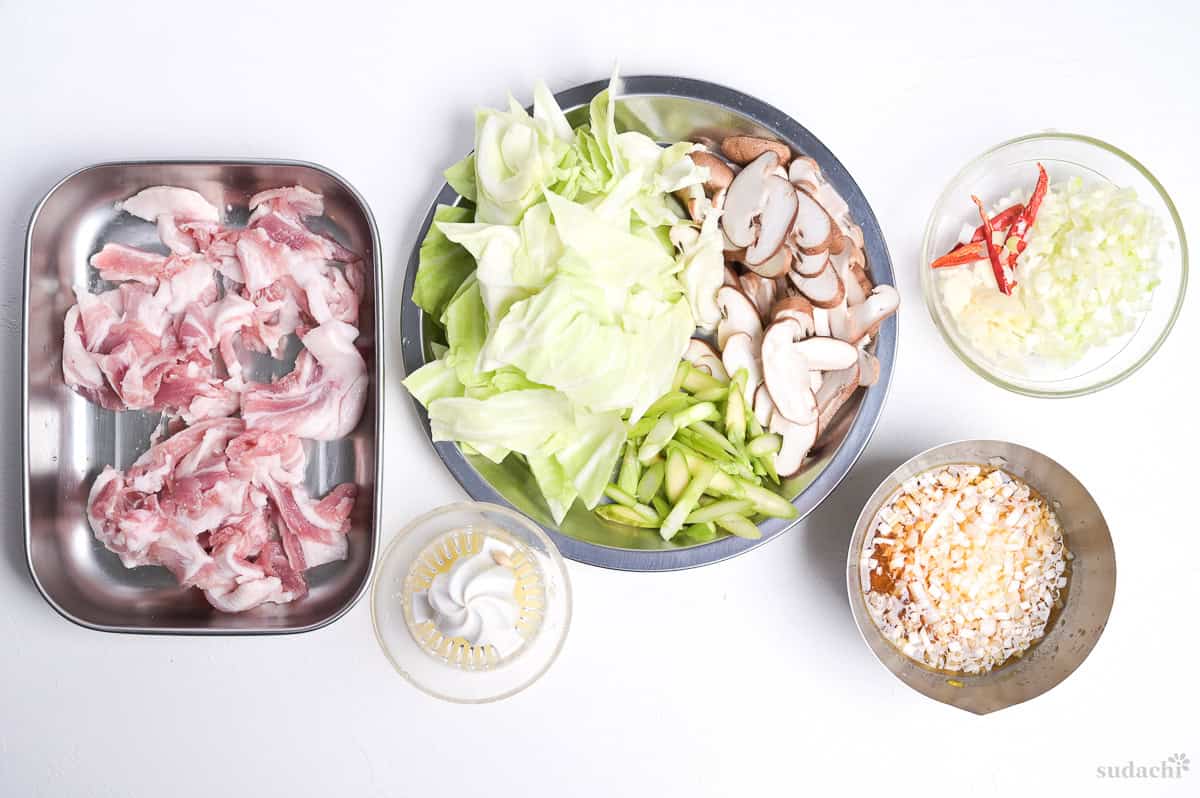
- The negishio tare: In a small bowl, stir together the minced naga-negi, a little lemon zest, the grated garlic, the toasted sesame oil, the sake, the salt, and the Asian-style chicken bouillon powder. Set it aside.
- Lemon: Squeeze the half lemon into a separate little cup and keep it well away from the tare, it goes in much later.
- Pork belly: Cut it into about 3-5mm thick pieces and salt it lightly on both sides before it hits the pan.
- Garlic and chili: Cut the cores out of the garlic cloves and slice them thin. Pull the seeds out of the dried chili.
- Vegetables: Roughly chop the cabbage into bite-size pieces. Snap the woody bottoms off the asparagus, peel the tough skin at the base, and slice the spears thin on the bias.
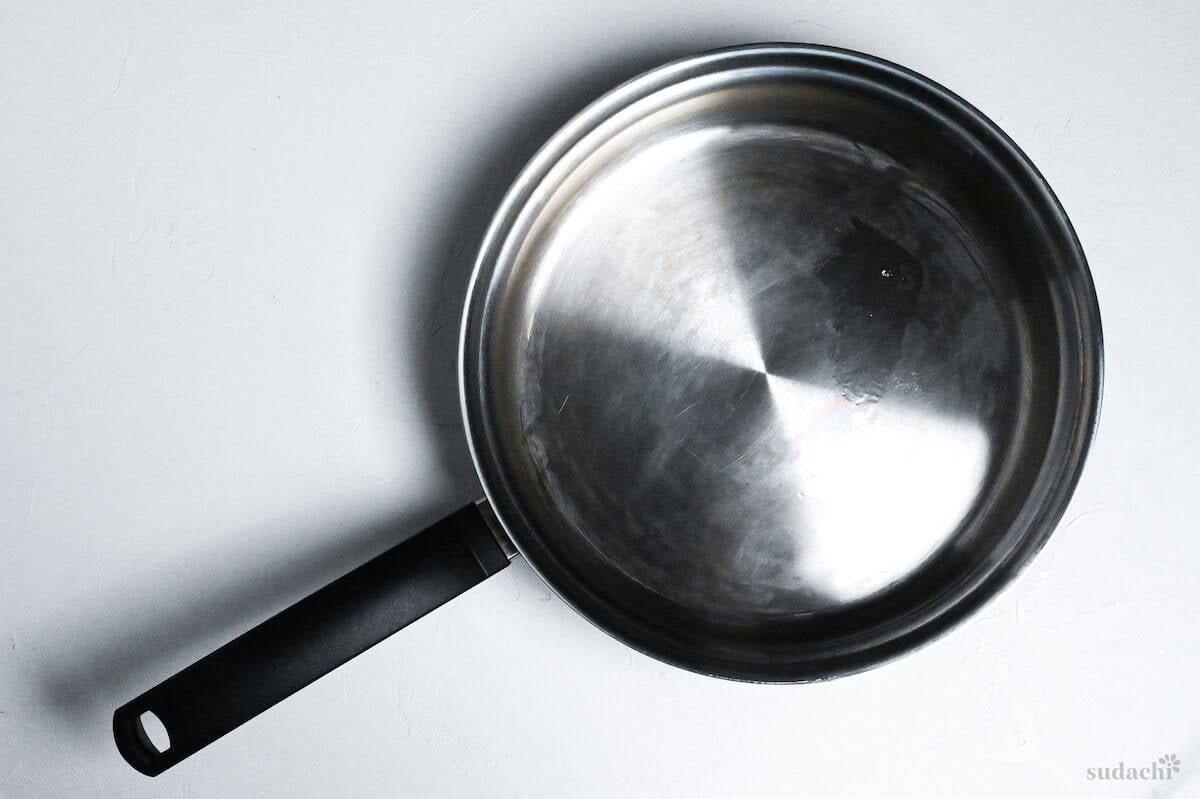
To develop this recipe, I used a 27cm stainless steel pan.
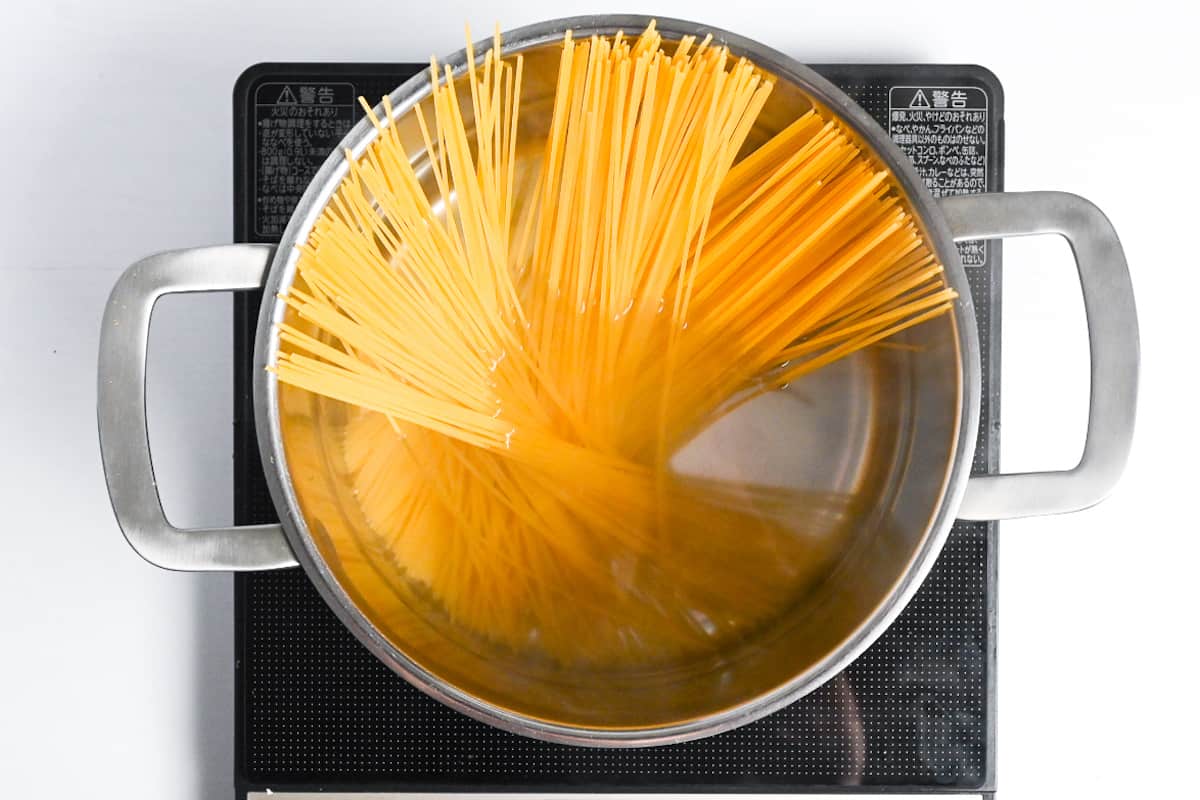
i. Bring a big pot of water to a boil, well salted (about 1 percent of water’s weight). Drop in the spaghetti and cook it toward the low end of the package time. You want it a touch underdone, because it finishes cooking in the sauce later.
i. In a cold pan, combine the olive oil, the sliced garlic, the dried chili, and the minced naga-negi. Turn the heat to low and let it come up slowly until it smells fragrant. Stop just before the garlic turns golden, a scorched clove turns the dish bitter.
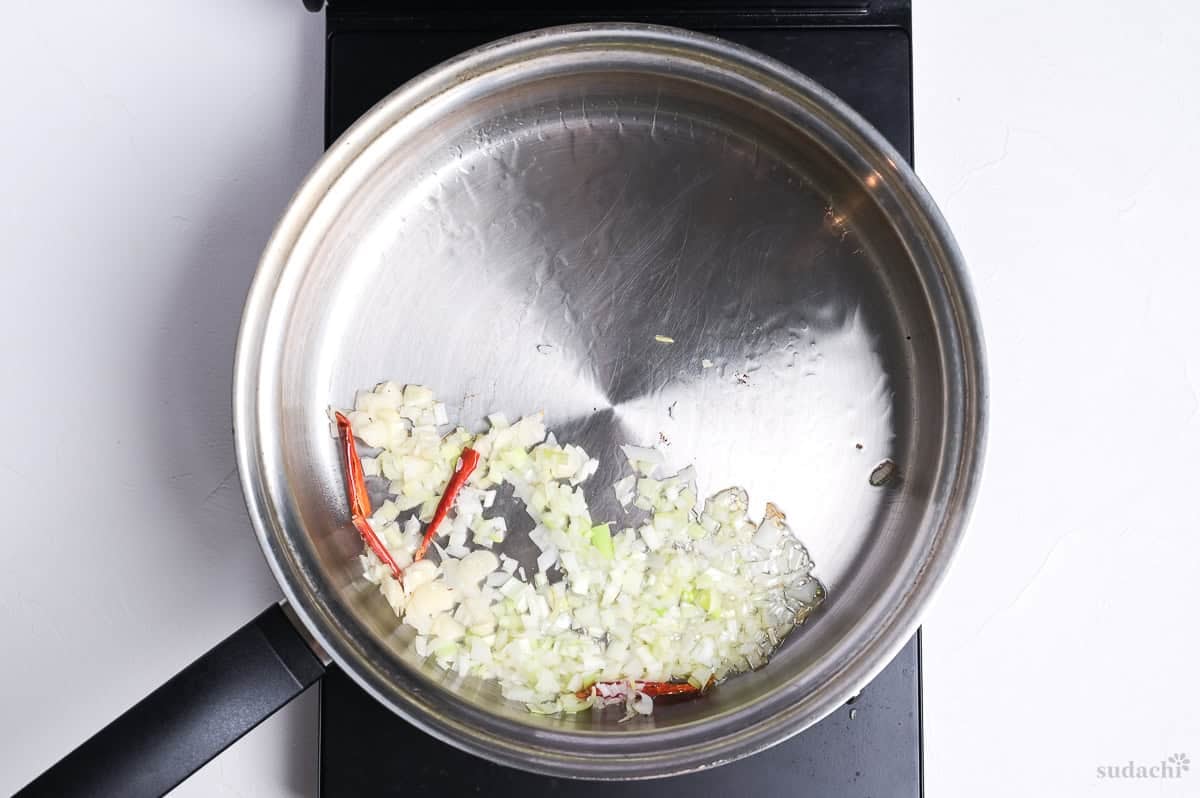
Naga-negi changes character with heat. Cooked low and slow like this, the white shank turns sweet and mellow. Left raw, it stays sharp and bright. That is why some goes in now to sweeten the oil, and a raw handful lands at the very end for the clean, oniony lift.
i. Turn the heat up to medium and spread the pork belly out across the pan. Sear it well on both sides so the fat renders out and the edges catch some color. That rendered fat is going to carry the entire sauce, so do not rush it.
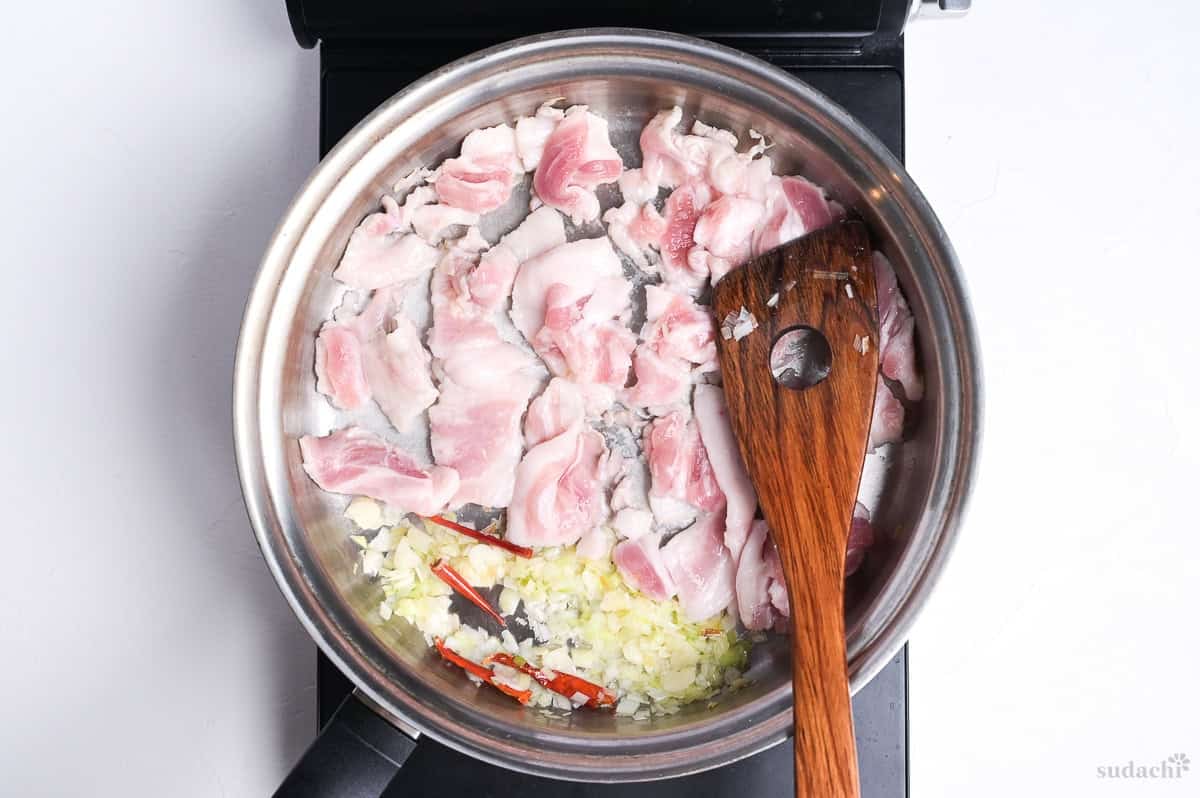
ii. Add the sliced shiitake and cook until browned, letting them drink up the pork fat.
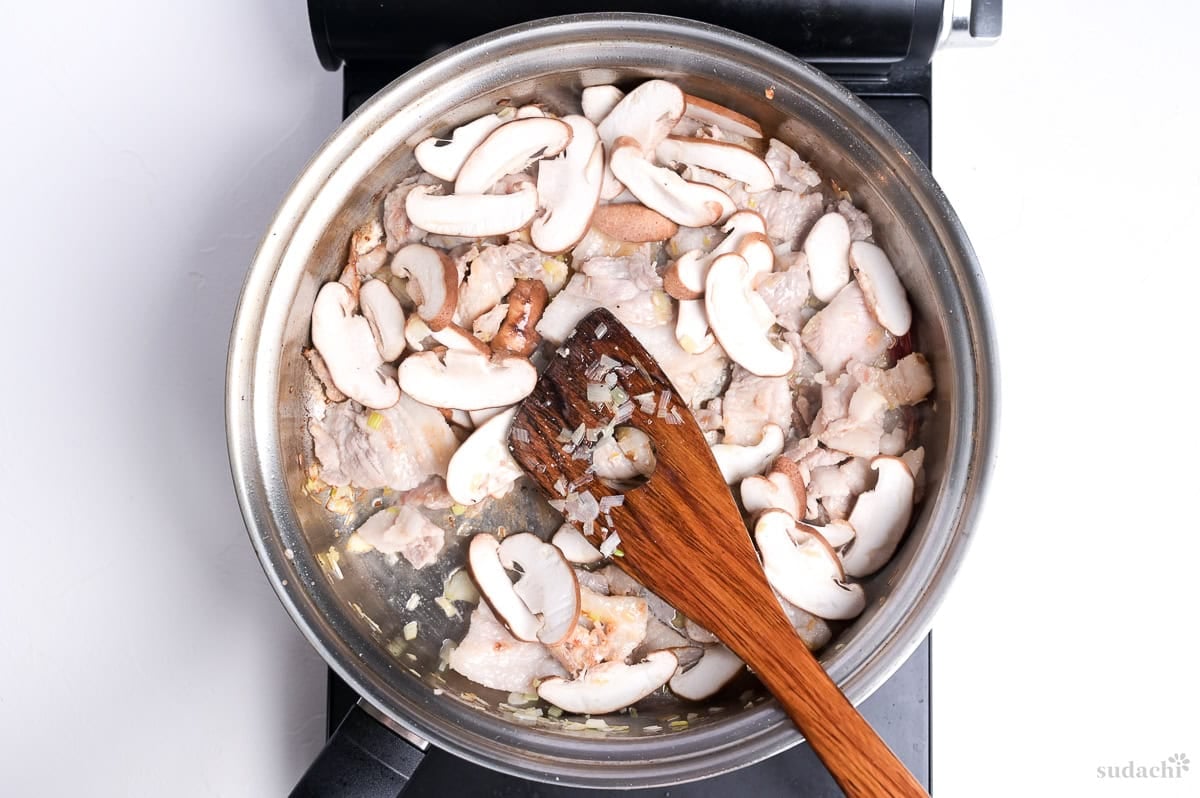
iii. Add the cabbage and stir-fry briefly.
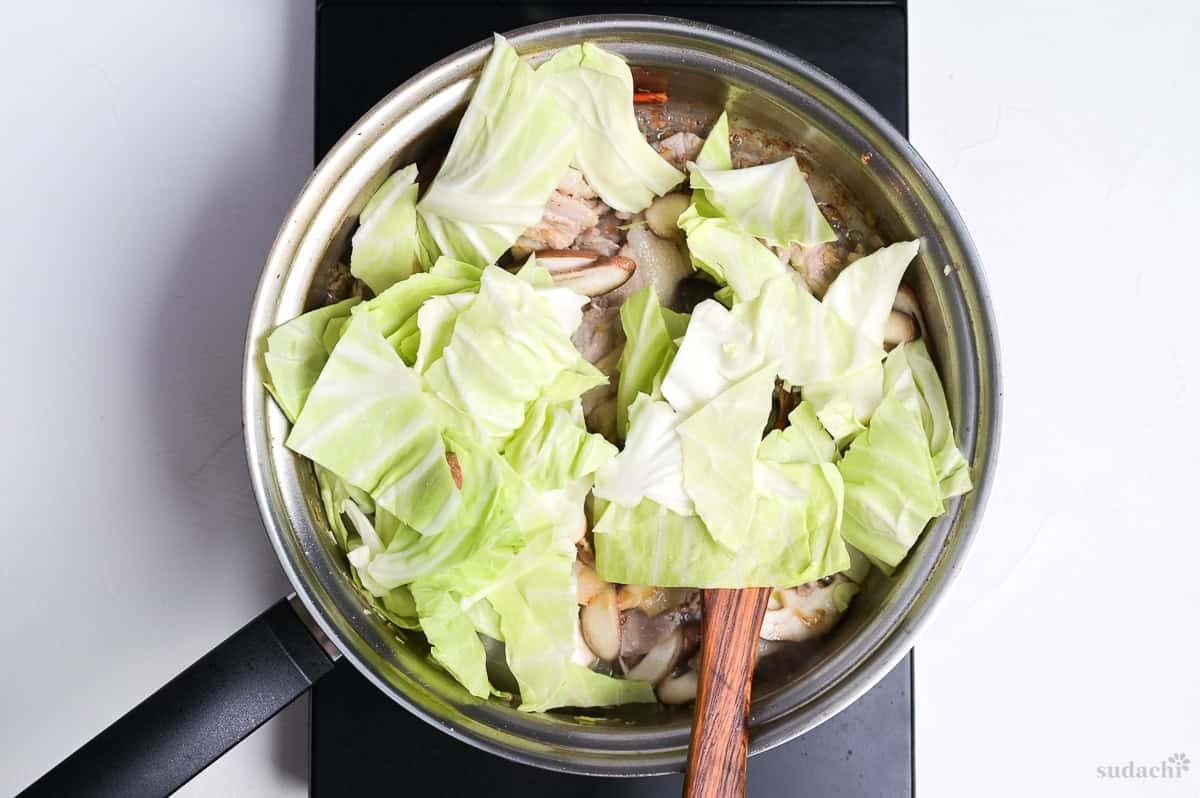
iv. The moment it starts to wilt, add the asparagus and stir-fry for just 30 to 60 seconds. Keep the vegetables lively and barely cooked.
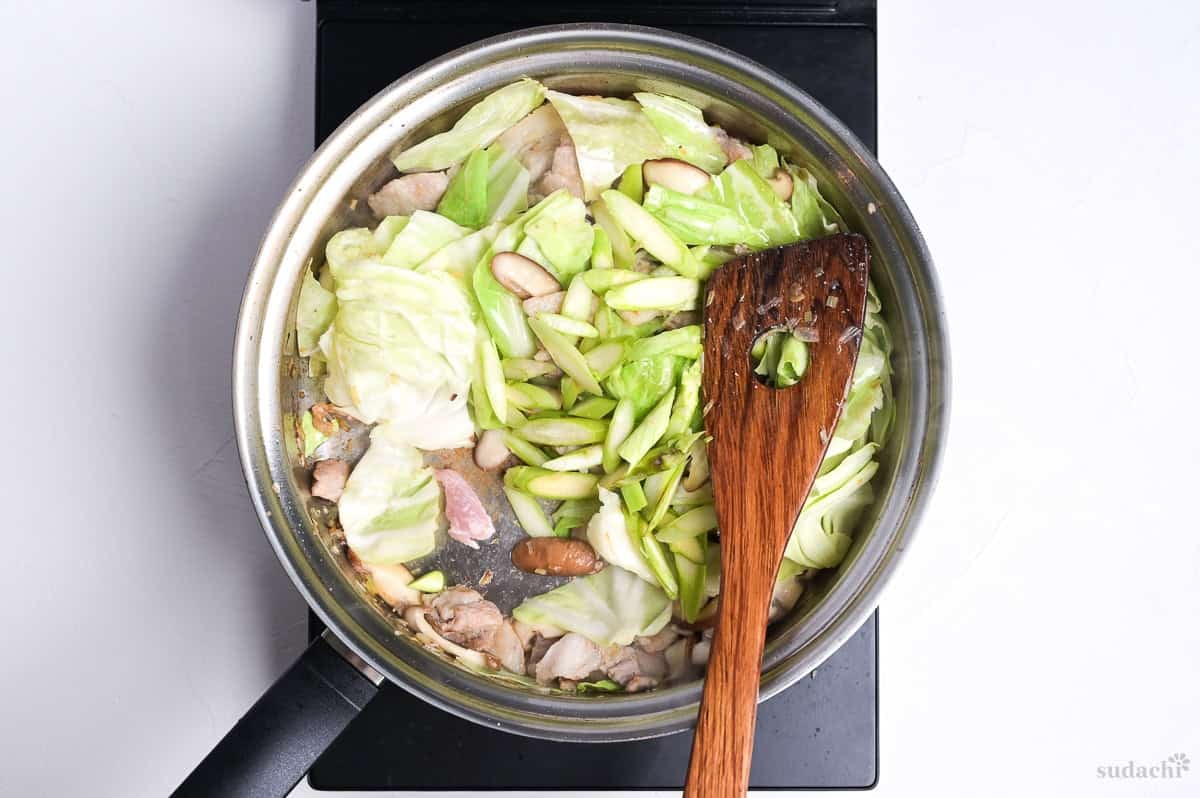
Cabbage holds a lot of water, and if you take it past just-wilted it seeps that water into the pan. A watery pan cannot pull together into a glossy sauce later, it goes thin and dull instead. Stick with the order and the timing here. In late, out fast, still with some snap left in it.
i. Add the negishio tare to the pan and toss everything to coat.
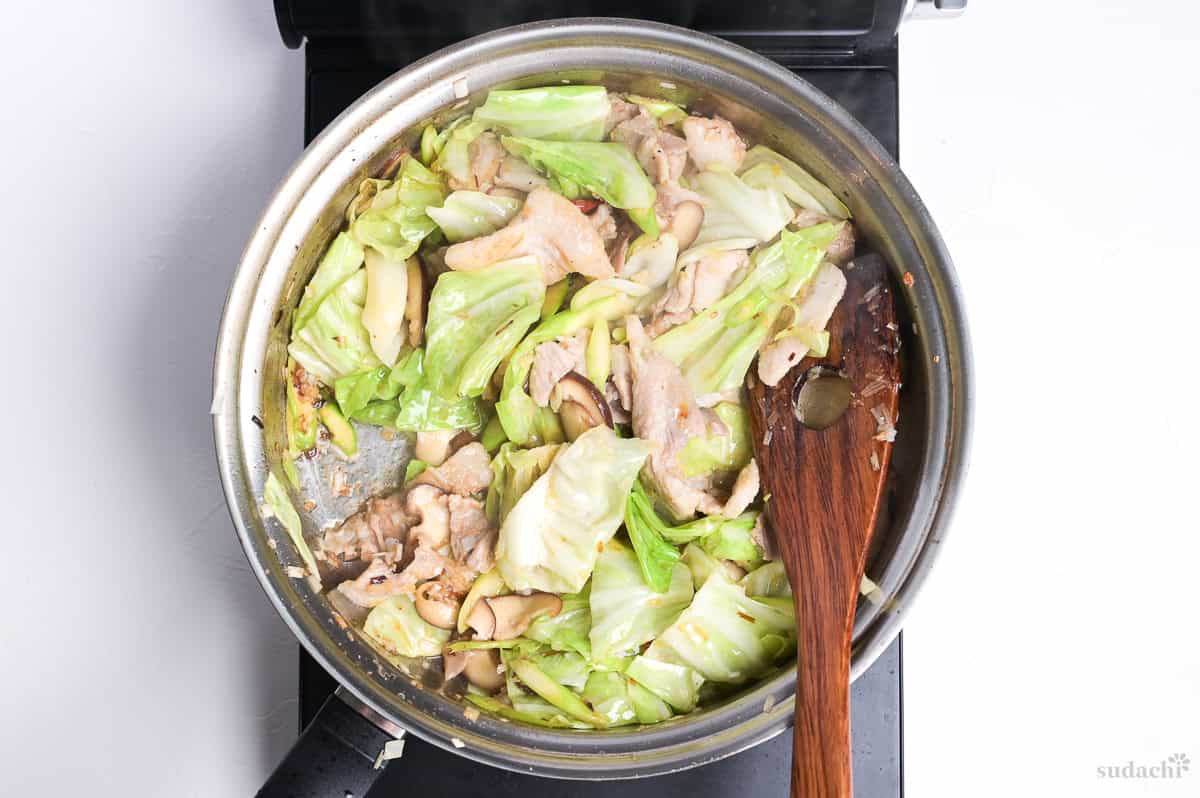
ii. Lift the cooked spaghetti straight out of the water with tongs and into the pan, letting some pasta water ride along with it. Add more pasta water as you go, aiming for roughly twice the volume of the oil in the pan, and toss hard, around 20 to 30 tosses, until the sauce turns pale, glossy, and clings to the noodles. Do not reduce it down too far.
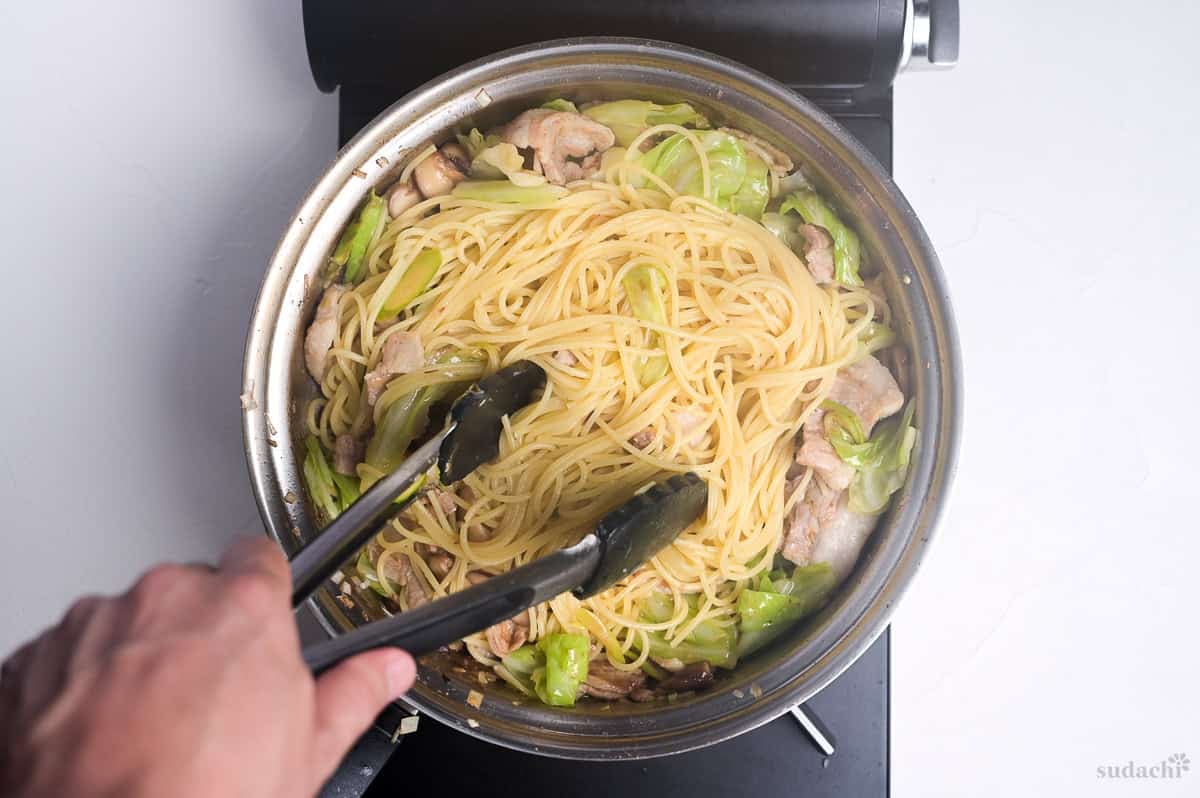
That cloudy pasta water is full of starch, and starch is what forces the sesame oil and the rendered pork fat to stop sitting in separate pools and bind into a single creamy, glossy sauce that grips every strand. Drain the pasta bone-dry and the sauce splits into oily patches. Carry the water over.
i. Remove the pan from the heat. Now drizzle in the reserved lemon juice and the final tablespoon of toasted sesame oil, and toss quickly to bring it together. Taste, and add a pinch of salt only if it needs it.
ii. Twirl the pasta into bowls. Scatter over the white pepper (or shichimi togarashi if you want a little heat), the chopped green onion, and a scant tablespoon of grated Parmesan.
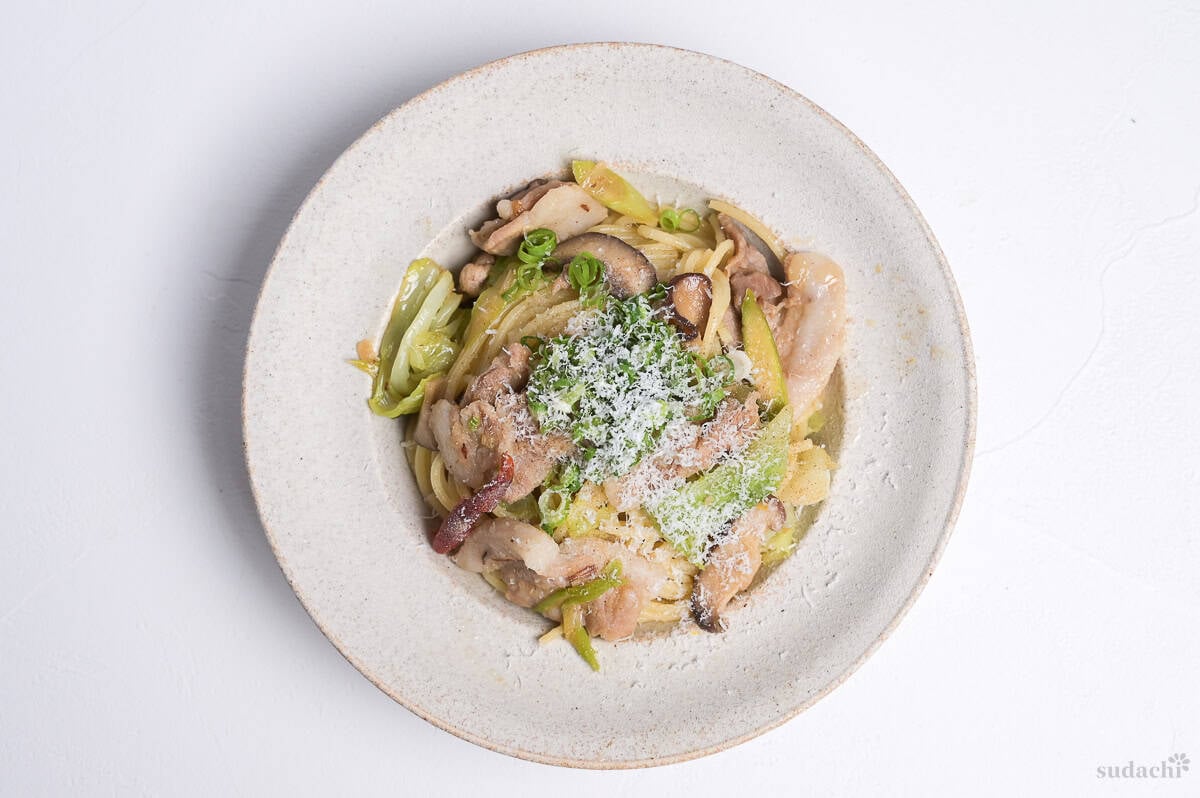
iii. Serve right away, while the sauce is still glossy and the aroma is still up.

Tips for the Best Negishio Pasta
- Go easy on the salt until the very end. The chicken stock powder and the pork belly both carry their own salt, and the pasta cooks in salted water too, so the dish stacks up saltier than you expect. Leave the tare lightly seasoned on purpose. Once the sauce is glossy and combined, taste, and add just a pinch if it truly needs it.
- Have everything within reach before the pan goes on. The finish moves fast, and the tare, the reserved lemon juice, and the raw green onion all need to go in at the right moment. A scramble for the lemon while the pan sits over heat is exactly how a glossy sauce tips back to greasy.
- Grate the Parmesan fine and add it off the heat. A fine grate melts into the warm sauce instead of sitting in clumps, and off the heat it stays creamy rather than seizing into rubbery strings. This is the one place a rough grate or a hot pan can wreck that final savory hit.
Nail these and the negishio does the rest, that green-onion-and-salt hook that keeps you twirling up the next forkful before you have swallowed the last.
Storage & Meal Prep
Fridge: This one is best the moment it is made. A small amount of leftovers keeps for 1 to 2 days, though the emulsion tightens and the negi loses its lift.
Freezer: Not suitable.
Meal prep: Make the negishio sauce and cut the vegetables up to 2-3 days ahead. Store in separate containers in the fridge until use. Boil pasta fresh so you can use the pasta water to thicken the sauce.
What to Serve With Negishio Pasta
Negishio Pasta Troubleshooting
The oil and pork fat never bound with the water, usually from too little starchy pasta water or a pan running too hot. Off the heat, add a splash more pasta water and toss hard until it turns pale and clings again. If it still sits greasy, it is likely over-reduced, so loosen it with a little more water and keep tossing.
Too much lemon juice went in, and the acidity is masking the umami underneath. Off the heat, stir in a little more chicken stock powder or a small pinch of salt to rebuild the savory base, then a few drops of sesame oil to round it back out. Next time, add the lemon slowly and taste as you go.
It cooked too long and leaked its water into the pan. If you are already there, raise the heat and toss to drive off the extra water, then bring the sauce back with a splash of pasta water and a little more sesame oil. Next time, add cabbage late and pull it fast, with some snap still in it.
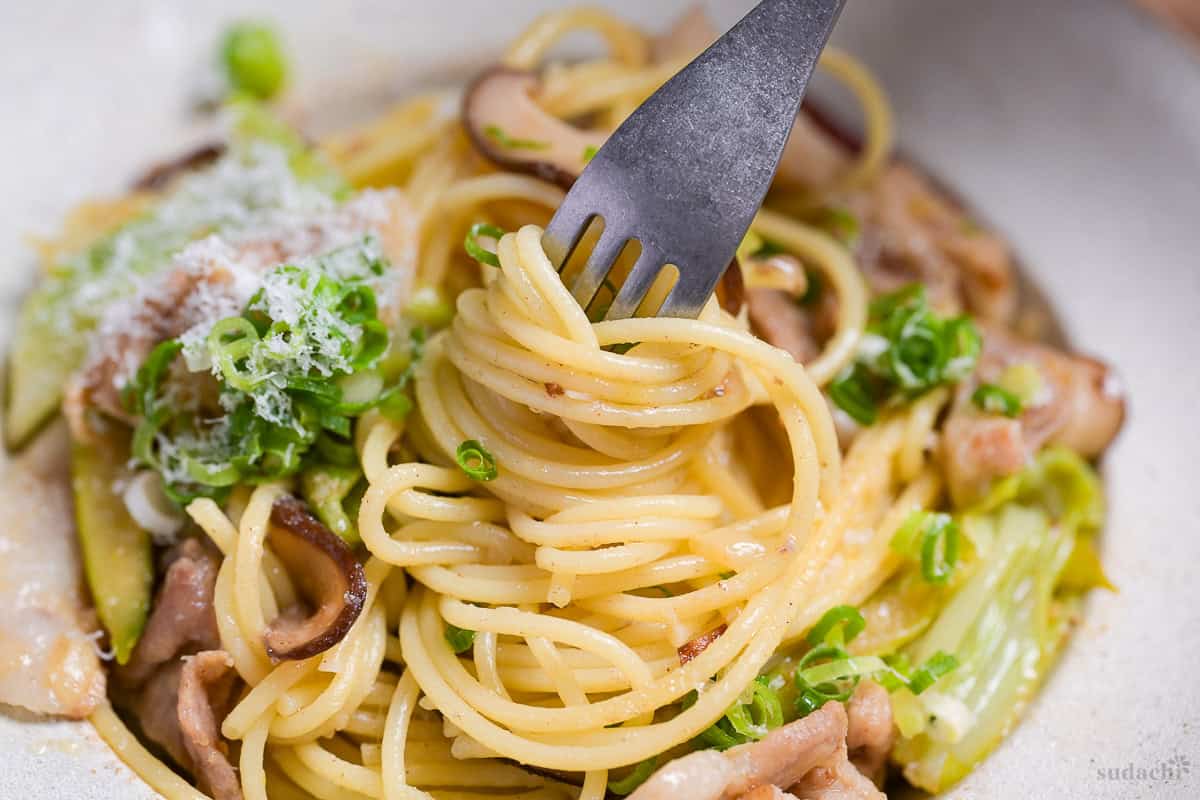
More Wafu Pasta Recipes
For more in this category, see my full collection of wafu pasta recipes.
Did You Try This Recipe?
I would love to hear your thoughts!
💬 Leave a review and ⭐️ rating in the comments below. 📷 I also love to see your photos – submit them here!
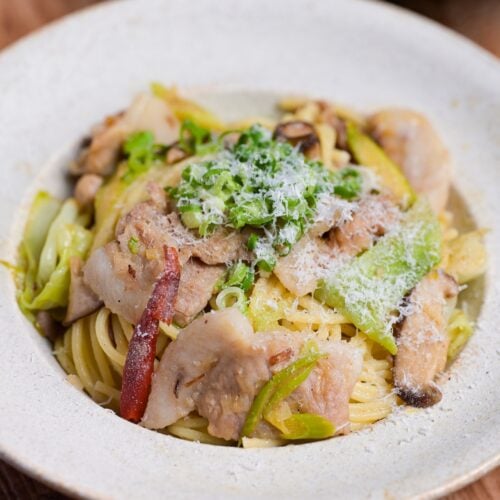
Negishio Pasta with Pork (New Wafu Spaghetti)

Ingredients
- 200 g dry spaghetti
- salt for the pasta water, about 1% against the water volume
- 300 g pork belly cut into 5 mm thick pieces
- ½ tsp salt to season the pork belly
- 1 tbsp olive oil
- 2 dried red chili peppers seeds removed
- 2 cloves garlic thinly sliced, cores removed
- ½ Japanese leek (naganegi) minced, or finely minced regular leek
- 4 shiitake mushrooms sliced
- 120 g green cabbage roughly chopped into bite-size pieces
- 3 spears asparagus thinly sliced on the bias
Salt tare (negishio dare)
- ½ Japanese leek (naganegi) minced, or finely minced regular leek
- lemon zest 1/2 worth
- 1 clove grated garlic or garlic paste
- 2 tbsp toasted sesame oil
- 2 tbsp sake
- ¼ tsp salt
- 1 tsp Chinese-style chicken bouillon powder powder or granules, not a cube
Finishing and toppings
- 1 tbsp toasted sesame oil
- lemon juice 1/2 worth
- ground white pepper to taste, or shichimi togarashi
- finely chopped green onions to taste
- grated parmesan cheese to taste
The ingredient brands and tools I trust are in my Japanese pantry guide and my cooking tools guide.
Can’t find certain Japanese ingredients? See my substitution guide here.
Instructions
- Start boiling a large pot of water for the pasta. While you wait, mix the salt tare ingredients (½ Japanese leek (naganegi), lemon zest, 1 clove grated garlic, 2 tbsp toasted sesame oil, 2 tbsp sake, ¼ tsp salt, 1 tsp Chinese-style chicken bouillon powder) in a bowl and set by the stove. Thickly cut and sprinkle 300 g pork belly with ½ tsp salt, and prepare the vegetables and aromatics according to the ingredient list notes.

- When the water is boiling, add salt about 1% of the water weight and give it a stir. Drop 200 g dry spaghetti into the water and cook it a minute less than the package time states.

- In a large cold pan, add 1 tbsp olive oil, 2 dried red chili peppers, 2 cloves garlic and ½ Japanese leek (naganegi). Place the pan on the stove and heat on low, until it smells fragrant but before the garlic changes color.
- Push the aromatics to one side and place the pork belly slices in a single layer in the pan. Increase the heat to medium and sear on both sides, allowing the fat to catch some color and render out.
- Add 4 shiitake mushrooms and fry until browned, then add 120 g green cabbage. Stir fry briefly, then just as it starts to wilt, add 3 spears asparagus and stir fry for about 30-60 seconds.
- Pour the prepared sauce into the pan and toss a few times. Then use tongs to lift the spaghetti out of the pot and straight into the pan. Mix thoroughly and add pasta water 1-2 tsp at a time, mixing between each addition until the sauce turns glossy and clings to the pasta.
- Take the pan off of the heat and drizzle with 1 tbsp toasted sesame oil and a squeeze of lemon juice. Sprinkle salt to taste if needed. Divide between serving plates and top with ground white pepper, finely chopped green onions, and grated parmesan cheese. Enjoy!

Leave a rating and a comment