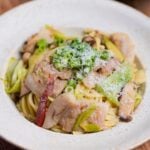
Negishio Pasta with Pork (New Wafu Spaghetti)
Ingredients
- 200 g dry spaghetti
- salt for the pasta water, about 1% against the water volume
- 300 g pork belly cut into 5 mm thick pieces
- ½ tsp salt to season the pork belly
- 1 tbsp olive oil
- 2 dried red chili peppers seeds removed
- 2 cloves garlic thinly sliced, cores removed
- ½ Japanese leek (naganegi) minced, or finely minced regular leek
- 4 shiitake mushrooms sliced
- 120 g green cabbage roughly chopped into bite-size pieces
- 3 spears asparagus thinly sliced on the bias
Salt tare (negishio dare)
- ½ Japanese leek (naganegi) minced, or finely minced regular leek
- lemon zest 1/2 worth
- 1 clove grated garlic or garlic paste
- 2 tbsp toasted sesame oil
- 2 tbsp sake
- ¼ tsp salt
- 1 tsp Chinese-style chicken bouillon powder powder or granules, not a cube
Finishing and toppings
- 1 tbsp toasted sesame oil
- lemon juice 1/2 worth
- ground white pepper to taste, or shichimi togarashi
- finely chopped green onions to taste
- grated parmesan cheese to taste
Instructions
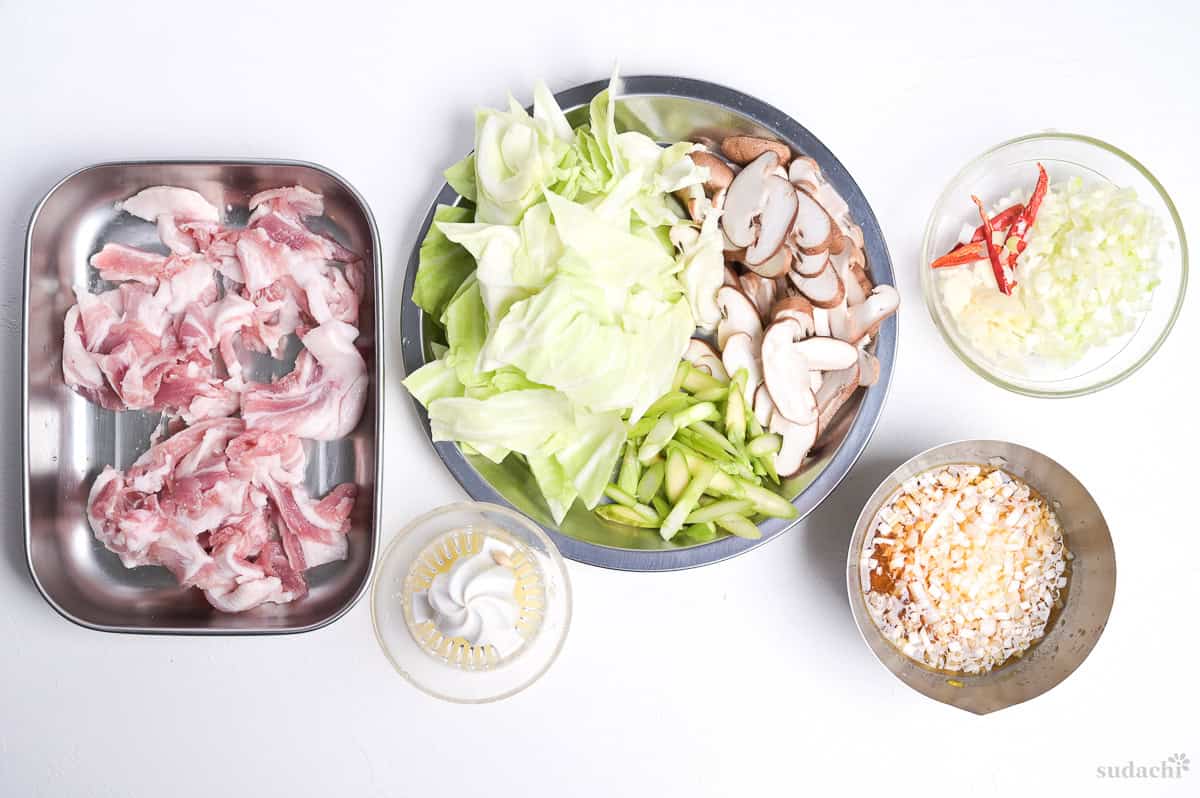
- Start boiling a large pot of water for the pasta. While you wait, mix the salt tare ingredients (½ Japanese leek (naganegi), lemon zest, 1 clove grated garlic, 2 tbsp toasted sesame oil, 2 tbsp sake, ¼ tsp salt, 1 tsp Chinese-style chicken bouillon powder) in a bowl and set by the stove. Thickly cut and sprinkle 300 g pork belly with ½ tsp salt, and prepare the vegetables and aromatics according to the ingredient list notes.
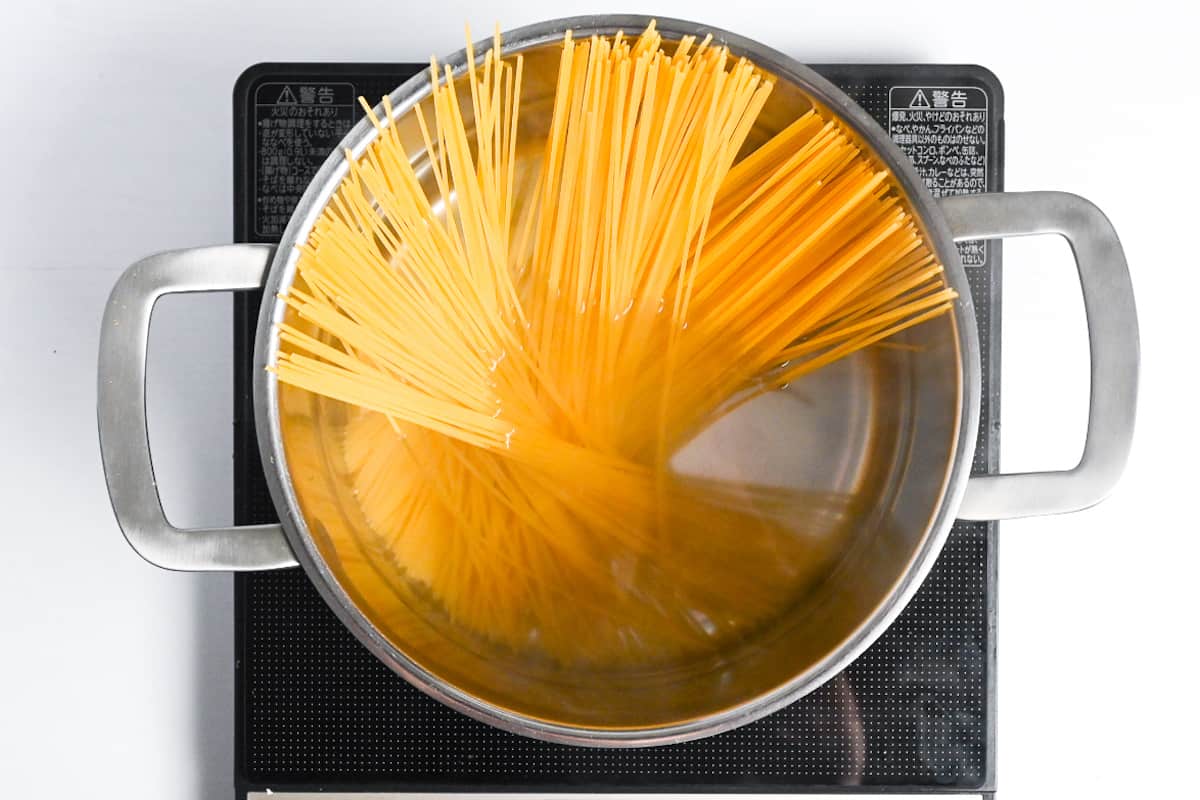
- When the water is boiling, add salt about 1% of the water weight and give it a stir. Drop 200 g dry spaghetti into the water and cook it a minute less than the package time states.
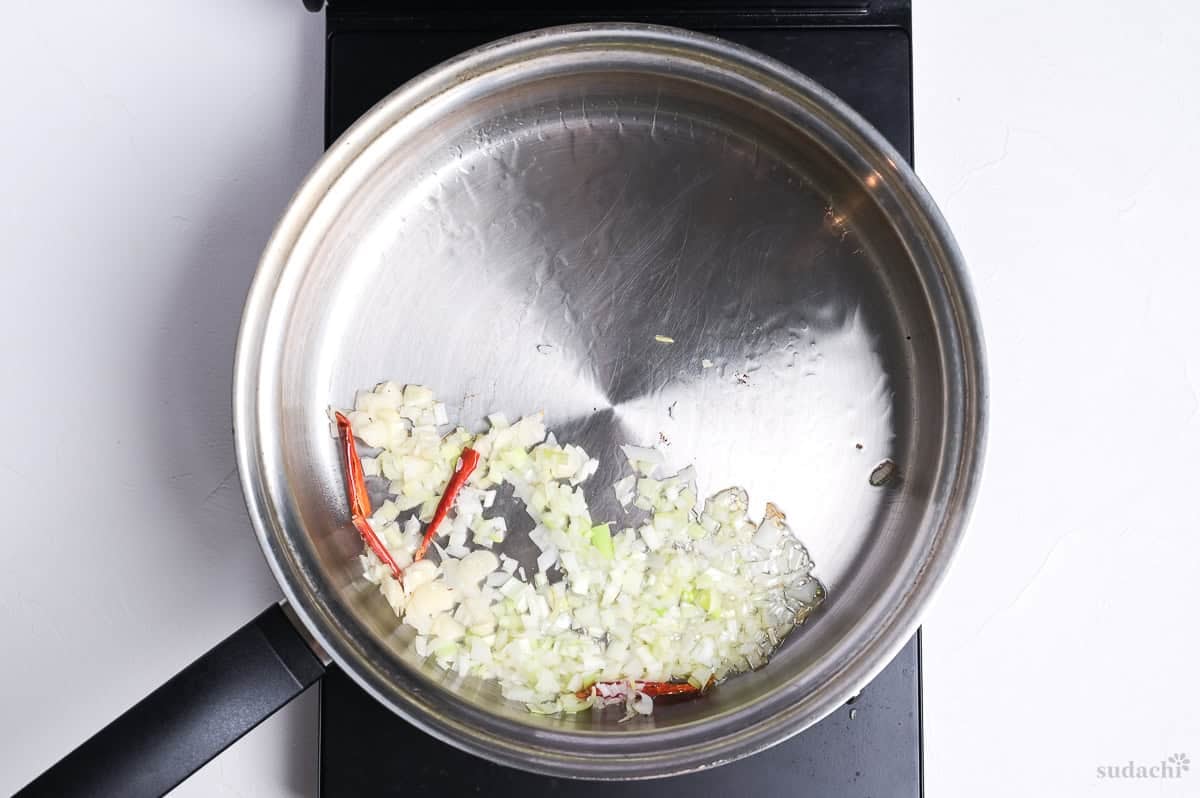
- In a large cold pan, add 1 tbsp olive oil, 2 dried red chili peppers, 2 cloves garlic and ½ Japanese leek (naganegi). Place the pan on the stove and heat on low, until it smells fragrant but before the garlic changes color.
- Push the aromatics to one side and place the pork belly slices in a single layer in the pan. Increase the heat to medium and sear on both sides, allowing the fat to catch some color and render out.
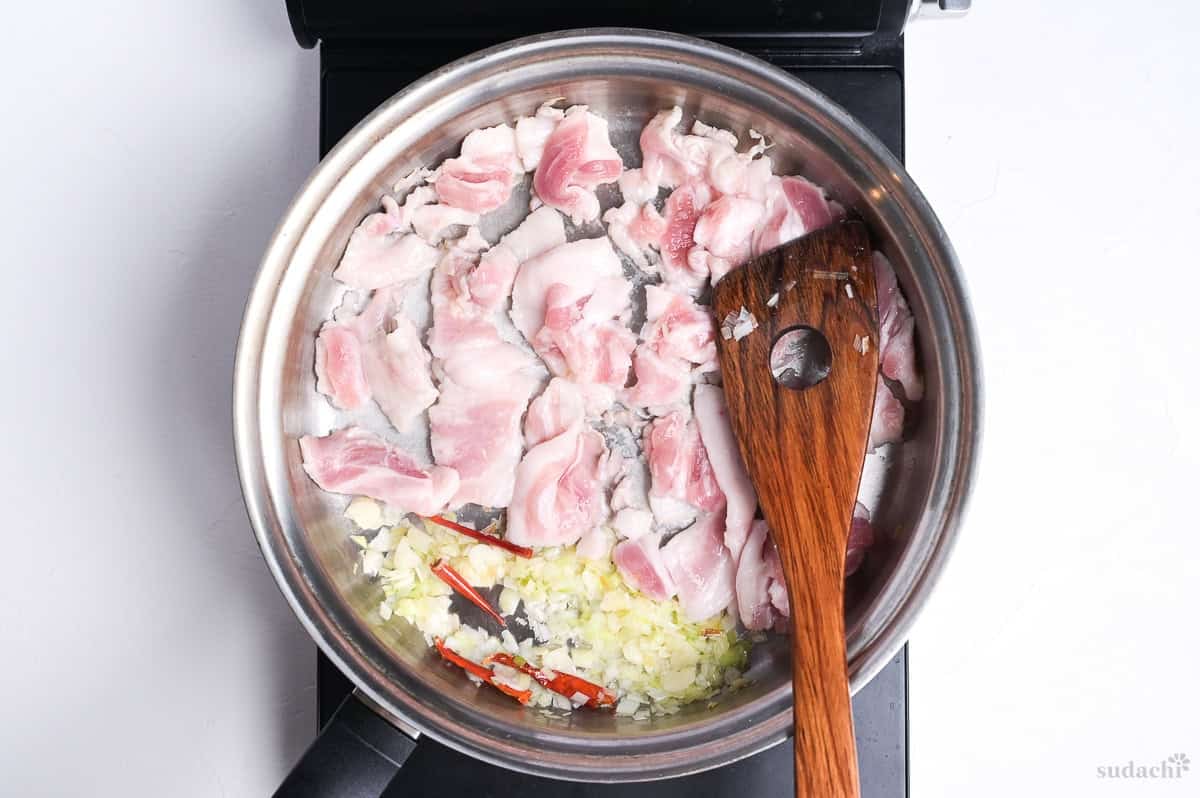
- Add 4 shiitake mushrooms and fry until browned, then add 120 g green cabbage. Stir fry briefly, then just as it starts to wilt, add 3 spears asparagus and stir fry for about 30-60 seconds.
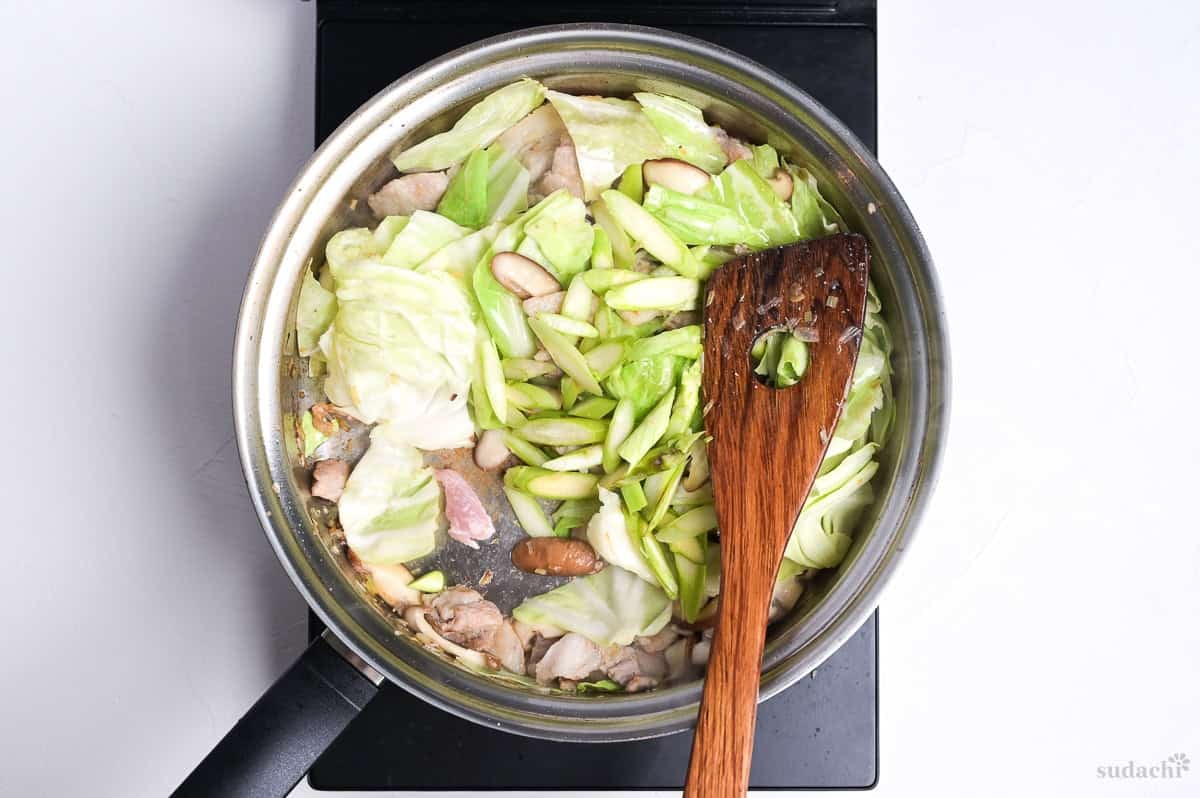
- Pour the prepared sauce into the pan and toss a few times. Then use tongs to lift the spaghetti out of the pot and straight into the pan. Mix thoroughly and add pasta water 1-2 tsp at a time, mixing between each addition until the sauce turns glossy and clings to the pasta.
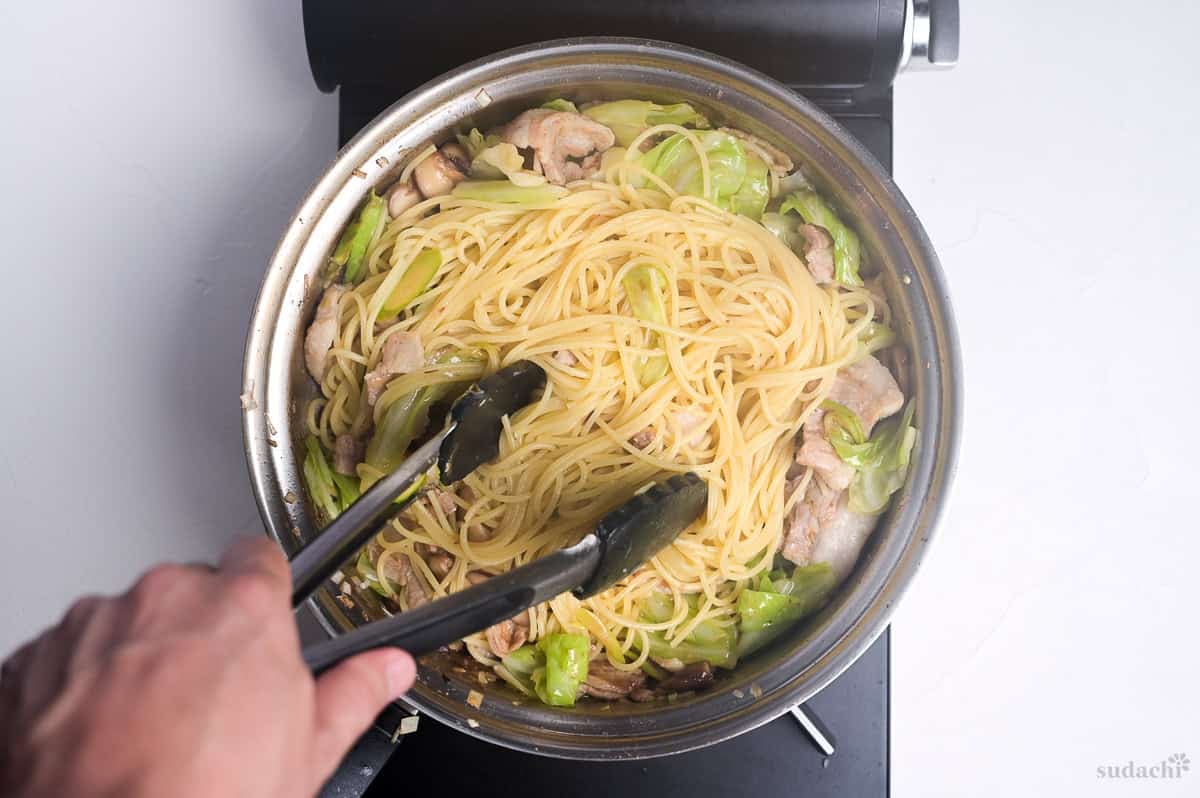
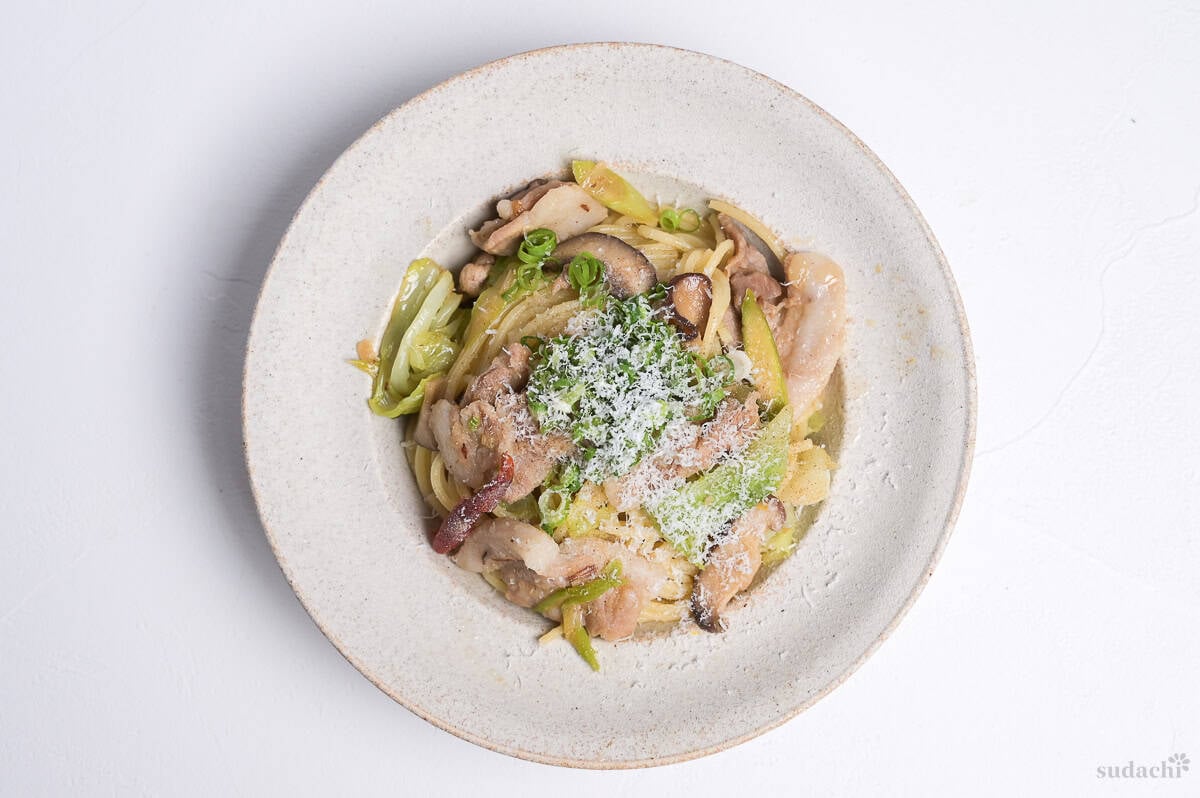
- Take the pan off of the heat and drizzle with 1 tbsp toasted sesame oil and a squeeze of lemon juice. Sprinkle salt to taste if needed. Divide between serving plates and top with ground white pepper, finely chopped green onions, and grated parmesan cheese. Enjoy!
Notes
Add lemon juice and sesame oil off the heat: Turn the burner off before the lemon juice and the finishing sesame oil go for the freshest aroma.
Carry the pasta water, do not drain dry: Lift the pasta over with tongs so starchy water rides along. That starch is what binds the sesame oil and pork fat into a glossy sauce. Drained bone-dry, it splits into oily patches.
Sauce turned oily and split: Off the heat, add a splash more pasta water and toss hard until it turns pale and clings again. If it still sits greasy, it is over-reduced, so loosen with a little more water and keep tossing.
Do not overcook the cabbage: Add it late and pull it fast, with some snap left in it. Past just-wilted, cabbage dumps its water into the pan and the sauce goes thin and dull instead of glossy.
Full Recipe QR Code↑↑