



The urge hits, I buy a box of 6 packets. I make 1, maybe 2, and then I forget I ever bought the thing. That is what I did the last time.
The 6 was the problem, not the bowl. So I built the mix myself, and I did not expect it to be this easy. 5 dry ingredients, hot water instead of brewed tea, and no need to buy the box anymore.
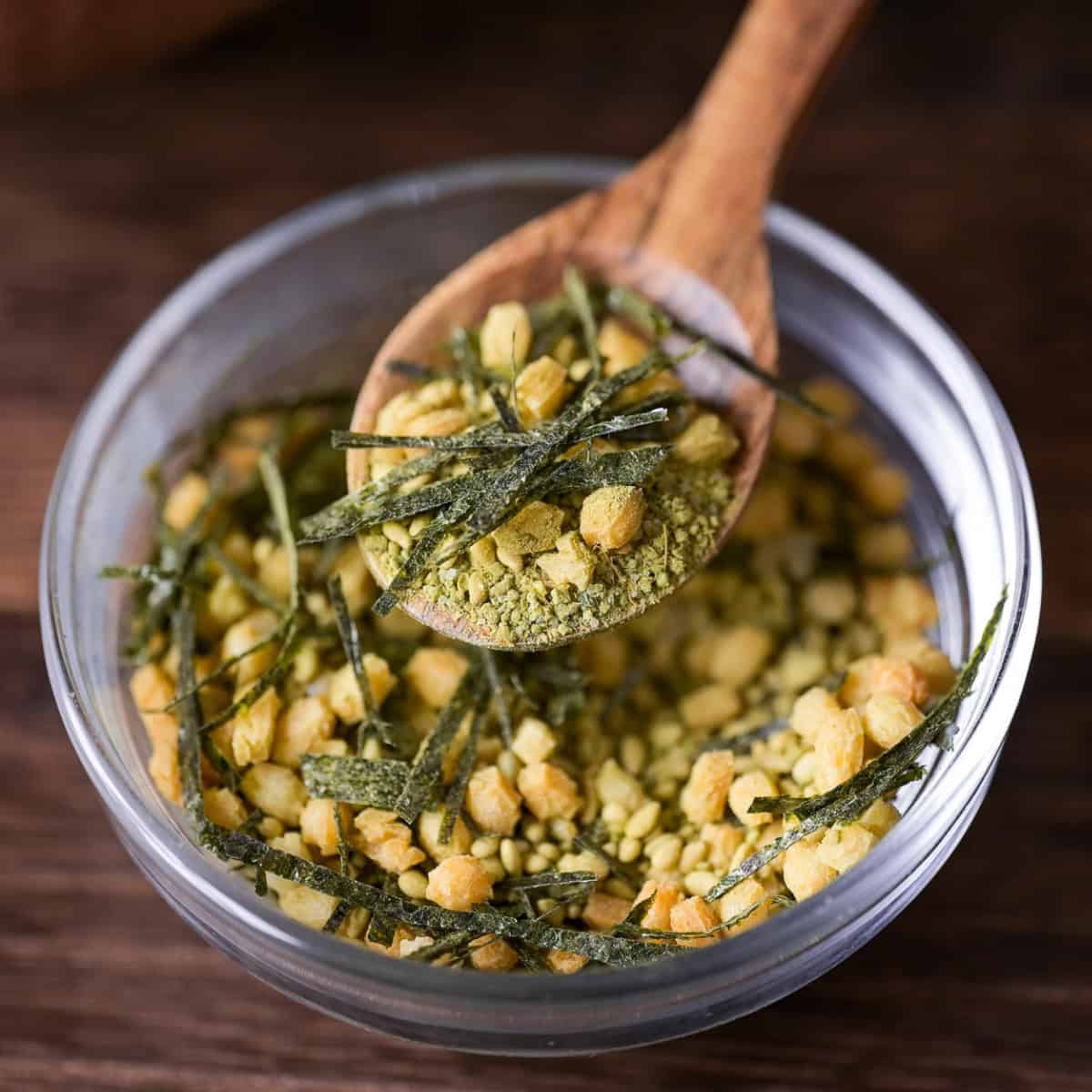
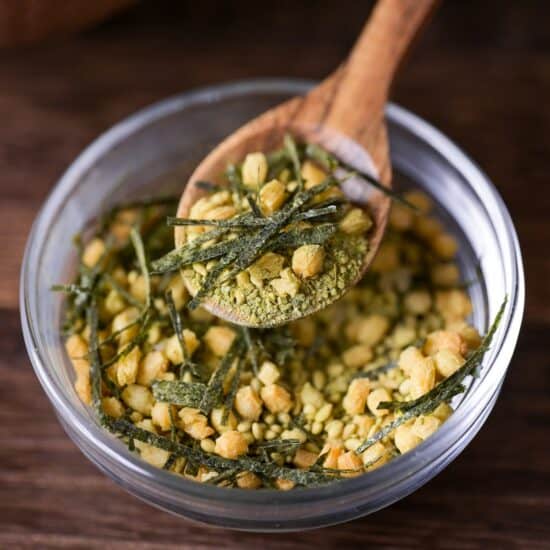
Ochazuke Seasoning
Recipe Snapshot
- What is it? The dry seasoning base that turns a plain bowl of rice into ochazuke the second boiling water lands on it. Powdered green tea, salt, sugar, and a fish and kelp umami layer, with nori and something crunchy scattered on last. The tea is already in the powder, so what goes in the bowl is plain water. Easy.
- Flavor profile: Dashi arrives first, then a smoky bonito umami rides in on the steam, and a salty depth sits under both of them. The tea comes through as color and aroma rather than taste, and the crackers hold their crunch only briefly once the hot water is in.
- Why this recipe works: A jar that is going on a shelf splits in 2, the 5 dry ingredients inside it and the nori, sesame, and crackers in their own bags. The crunchy layer then meets hot water for the first time in your bowl rather than sitting in the powder and going soft before it ever gets there.
- Must-haves: Japanese dashi granules and bonito flakes for the 2 sources of umami and matcha for the color and tea aroma.
- Skill level: Beginner. About 5 minutes to build the jar, and under 2 minutes to put a bowl together once it is sitting on your shelf.
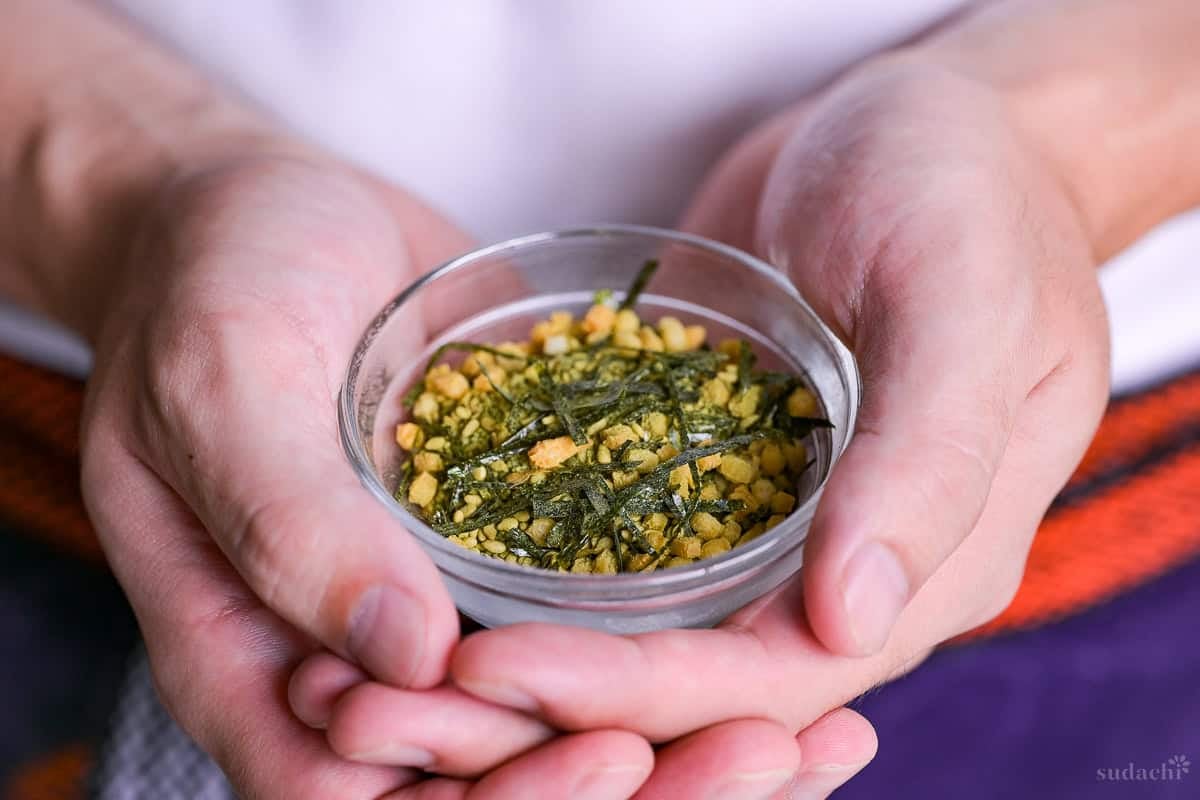
What Is Ochazuke Seasoning Mix?
Rice with tea poured over it is rare worldwide. Rice with hot water poured over it is not, and that is where ochazuke (お茶漬け) starts. The old telling puts it in the Heian period (794-1185), hot water over cold rice, before inventions that could keep the rice pot warm. No-one wants cold rice at the end of a long day, hot water was the saviour. Tea came later, in the mid 1700s, once green tea reached ordinary kitchens.
The version most Japanese households know arrived in 1952, when Nagatanien folded the seasoning into a sachet. You pour boiling water over it, since the tea is already in the powder. It set the shape ochazuke takes at home.
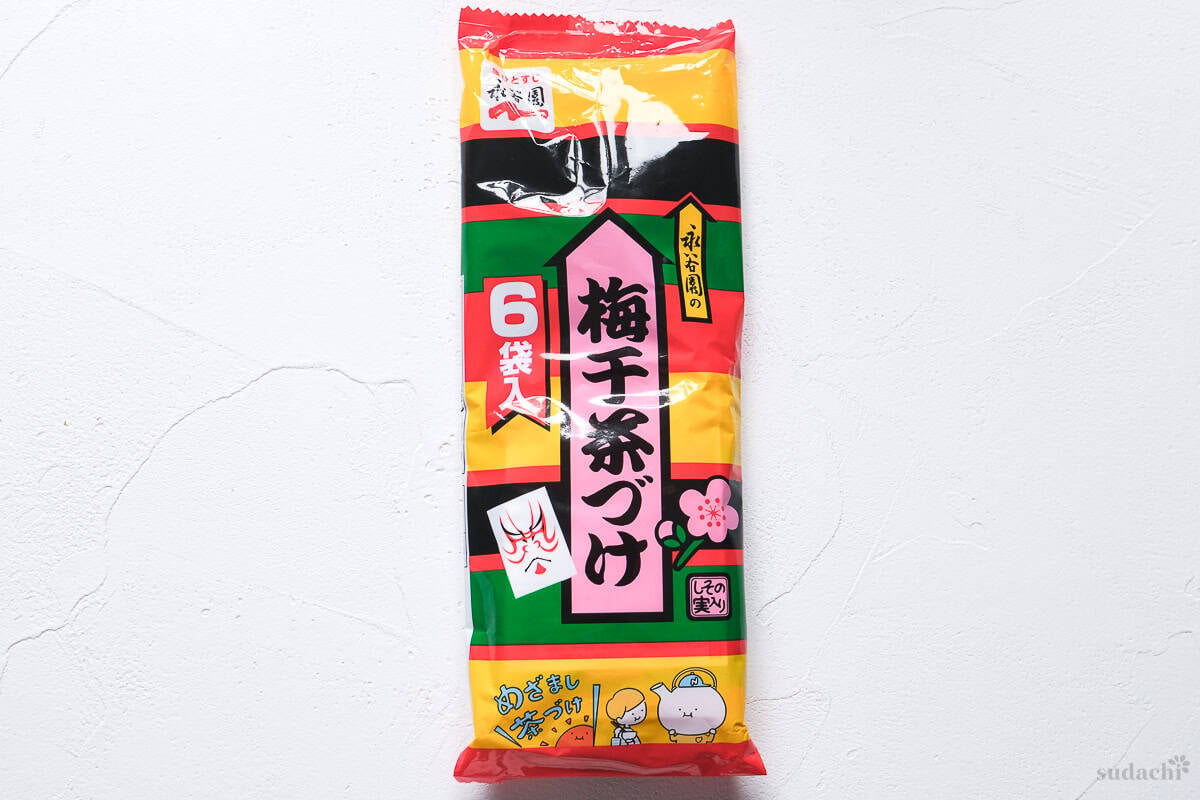
In my version, 5 dry ingredients live in a single jar, and the nori, sesame, and rice crackers stay in their own bags until the bowl. A box asks you to want ochazuke 6 times. A jar asks for a spoon. Mixing is the only step, and anything that broke it never made the list.
Ochazuke Seasoning Mix Ingredients
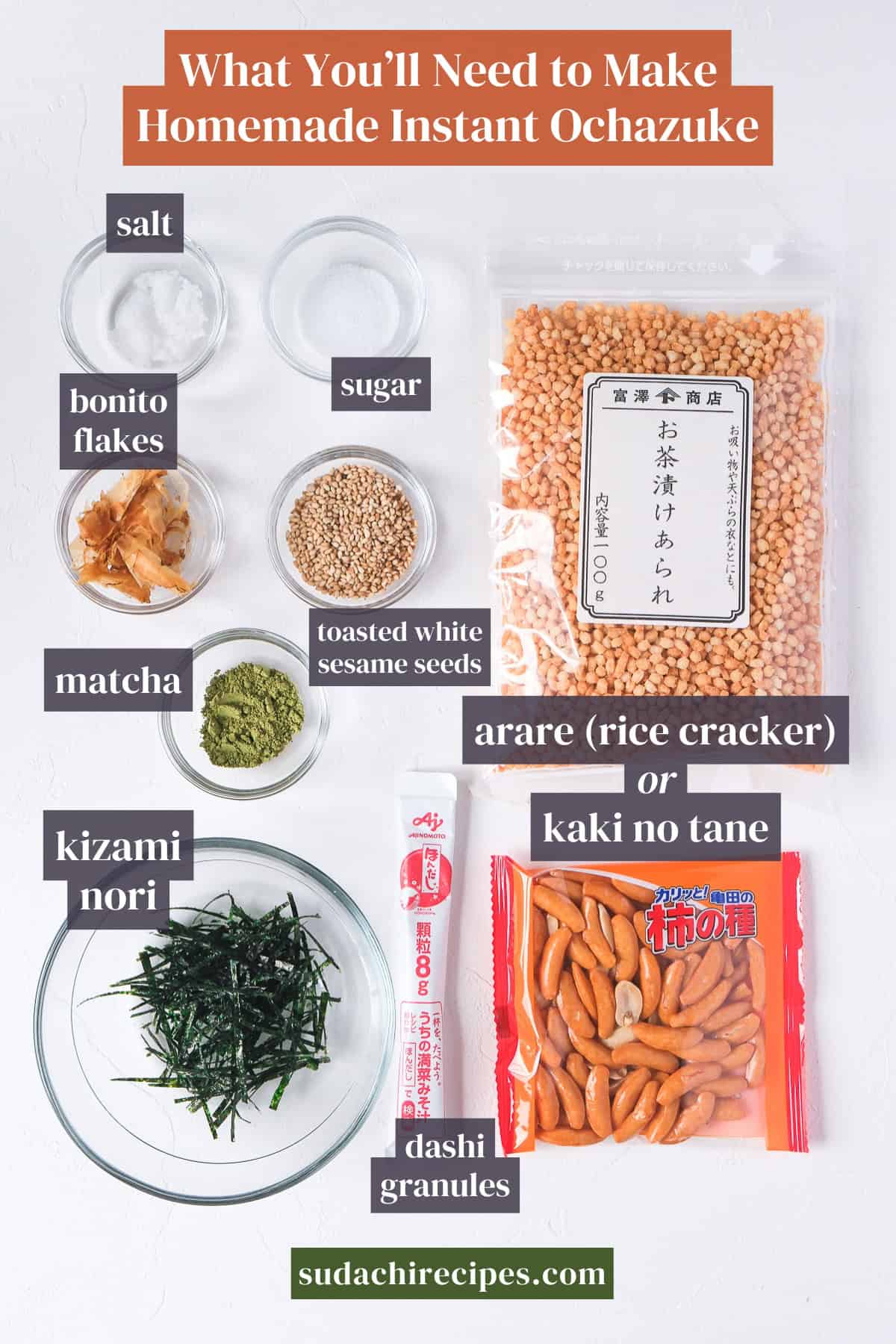
- Dashi granules: Granules are the only form of dashi that stays a powder on the shelf and then dissolves the second boiling water hits the bowl, which is what keeps this a mix-and-store job instead of a cooking job.
- Bonito flakes: The second umami line, and the one you smell before you taste anything. Powdered (crushed) katsuobushi brings the smoke and the sea that granules alone do not reach, and it is the reason the steam coming off the bowl smells like a fish market at 6 in the morning.
- Matcha: This is the color and the tea aroma. It is not the flavor backbone, and the ratio is where that shows. It stands level with the salt here, because it has to color and scent a whole cup of water rather than season a single bite.
Substitution Ideas
- Dashi granules and bonito powder → Kombu powder and dried shiitake: Taking the fish out means rebuilding both umami sources at once, and kombu, which is dried kelp, does it alongside dried shiitake mushroom. Grind dried shiitake to dust in a spice mill, or buy a labeled vegan dashi powder and read the label for bonito extract before you trust it.
- Matcha → Any powdered green tea, genmaicha, or hojicha: Matcha holds the color best, genmaicha (the one with toasted rice in it) leans nutty, and hojicha, the roasted one, turns the bowl brown and smells like a winter afternoon. The catch is that the last 2 are more often sold as loose leaf and teabags rather than as powder, so look for the word powder on the package, or grind the leaf to dust yourself in a spice mill.
- White sesame seeds → Raw sesame seeds you toast yourself: Raw seeds cost less and smell better 3 minutes after they hit a dry pan. Shake the pan until the first seed pops, then tip them straight out onto a plate so they stop cooking.
My line here is how long the crunch holds up against the hot water, and arare, the peppercorn-sized crackers made for this bowl, holds out the longest.
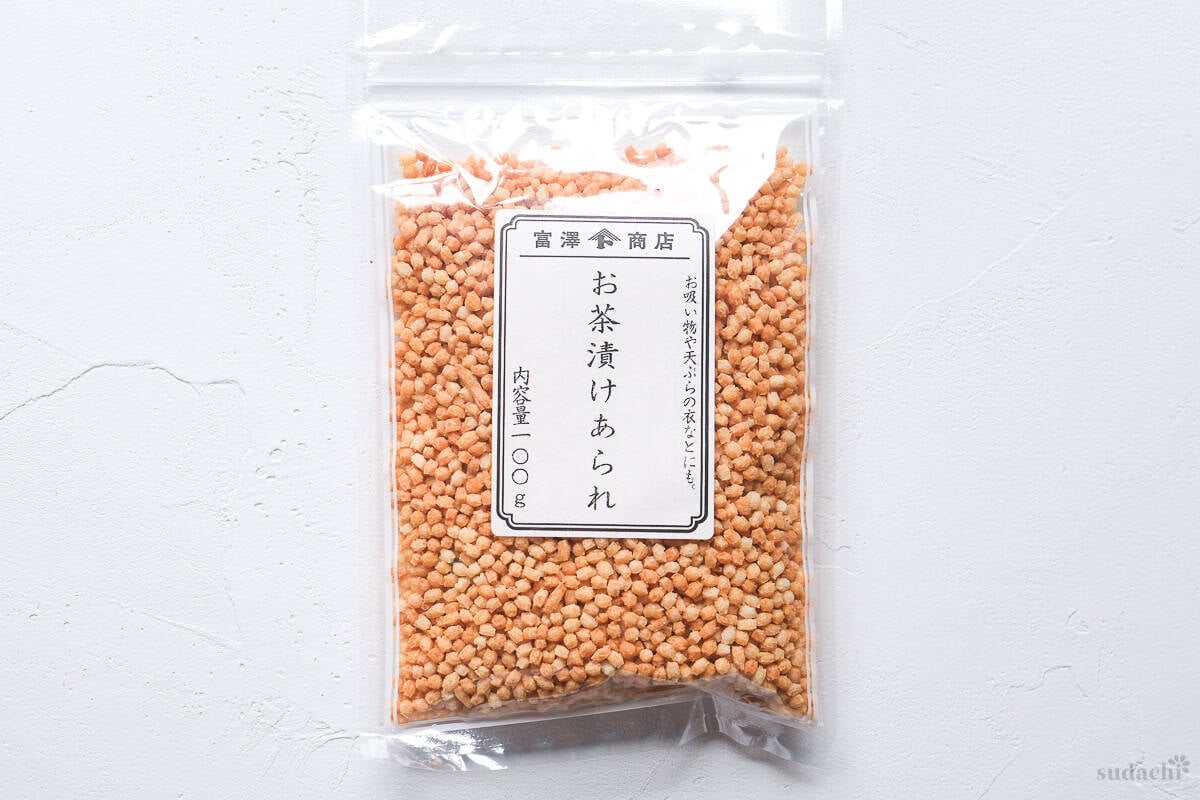
The other 3 sit level with each other, so crush whatever your shop stocks, whether that is the chili and peanut crackers, a plain flat rice cracker, or plain puffed rice.
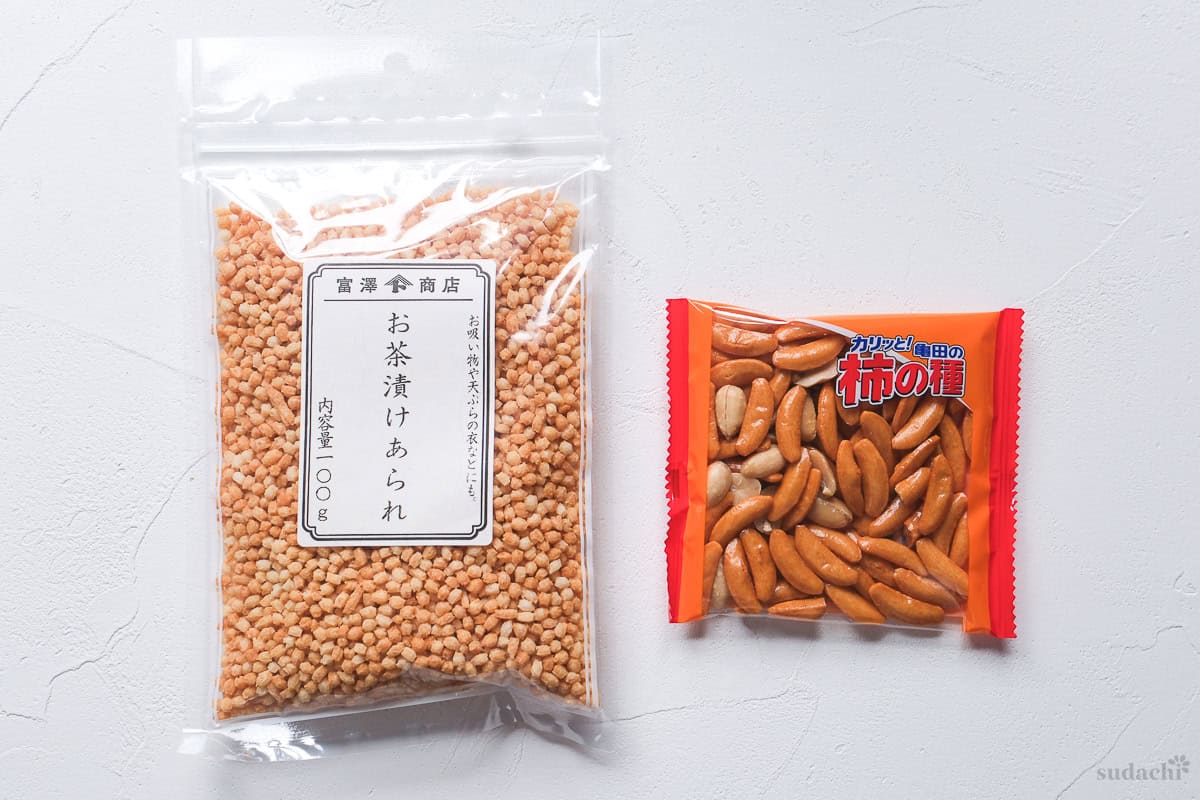
With puffed rice, buy the plain savory kind rather than the sweetened breakfast sort. Crushed pieces sit looser in the spoon than arare does, so use roughly double the volume.
Have trouble finding Japanese ingredients? Check out my ultimate guide to Japanese ingredient substitutes!
How to Make My Homemade Ochazuke Seasoning Mix
i. Put the bonito flakes, the salt, the sugar, and the dashi granules in the mortar and grind until the flakes have disappeared into the salt and the whole lot moves as a single loose, even powder.
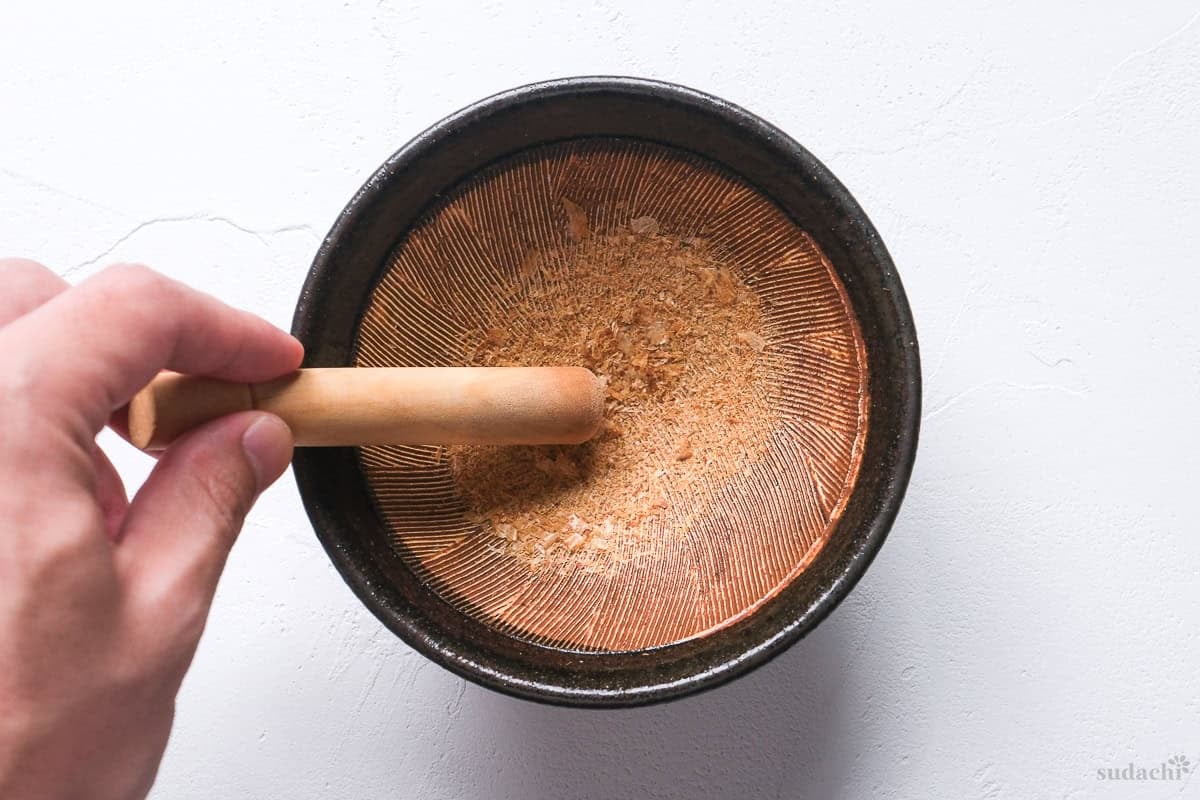
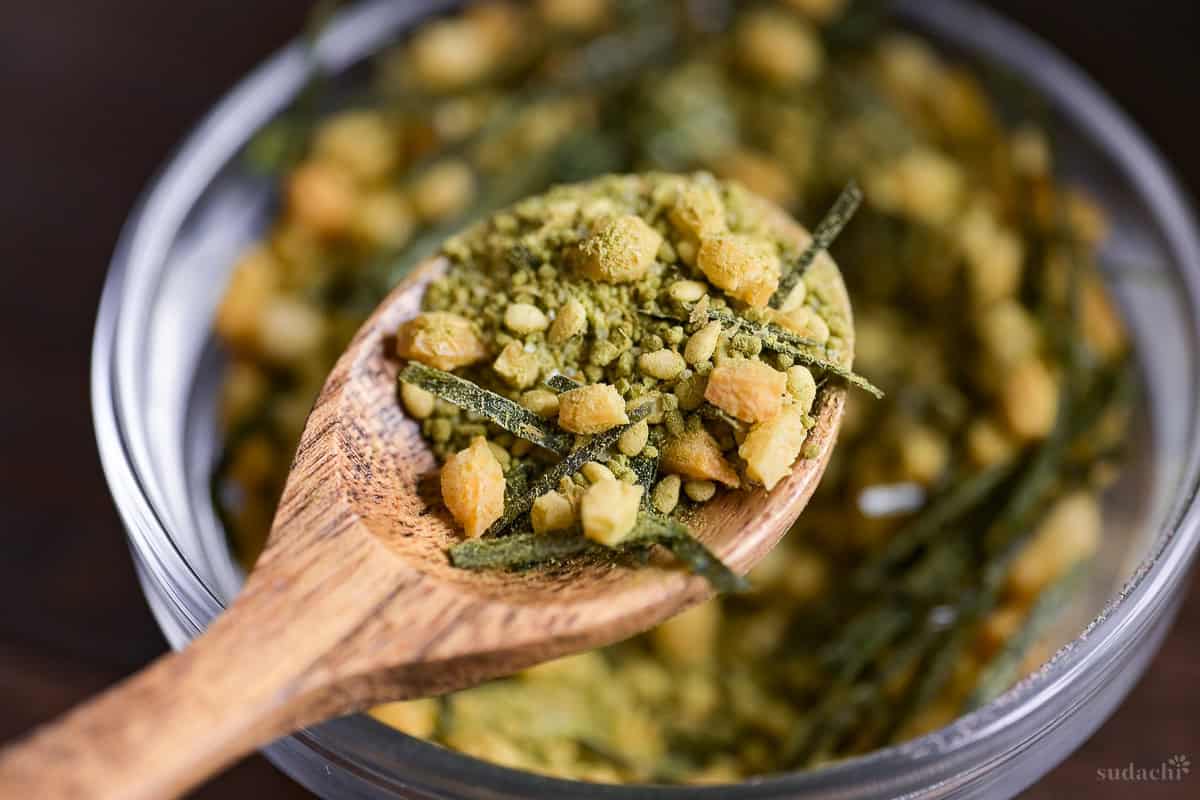
ii. Add the matcha and work it through until the green stops moving in streaks and everything settles into a single flat, dusty green.
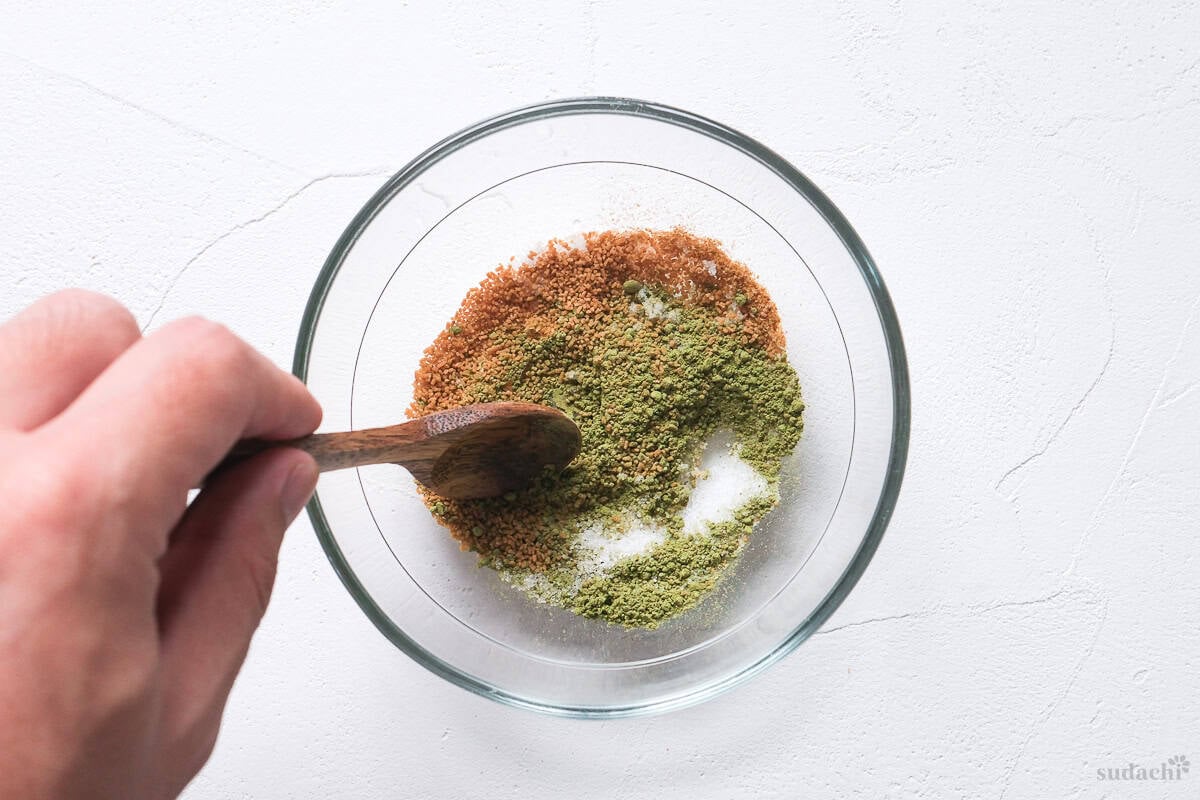
The mortar is there for the coarse things. Bonito flakes are shavings, salt and sugar are crystals, and dashi granules are granules, so all 4 have to come down to the same size before they can act like a single seasoning in your bowl. Matcha is already the finest thing on your counter and has nothing left to break, so sending it in early just means grinding what is already ground.
i. Eating it today? Add the shredded nori, the white sesame, and the arare into the bowl and fold them through the powder. If the jar is going on a shelf instead, scrape the powder into the dry jar and bag the other 3 separately, this prevents them from turning stale.
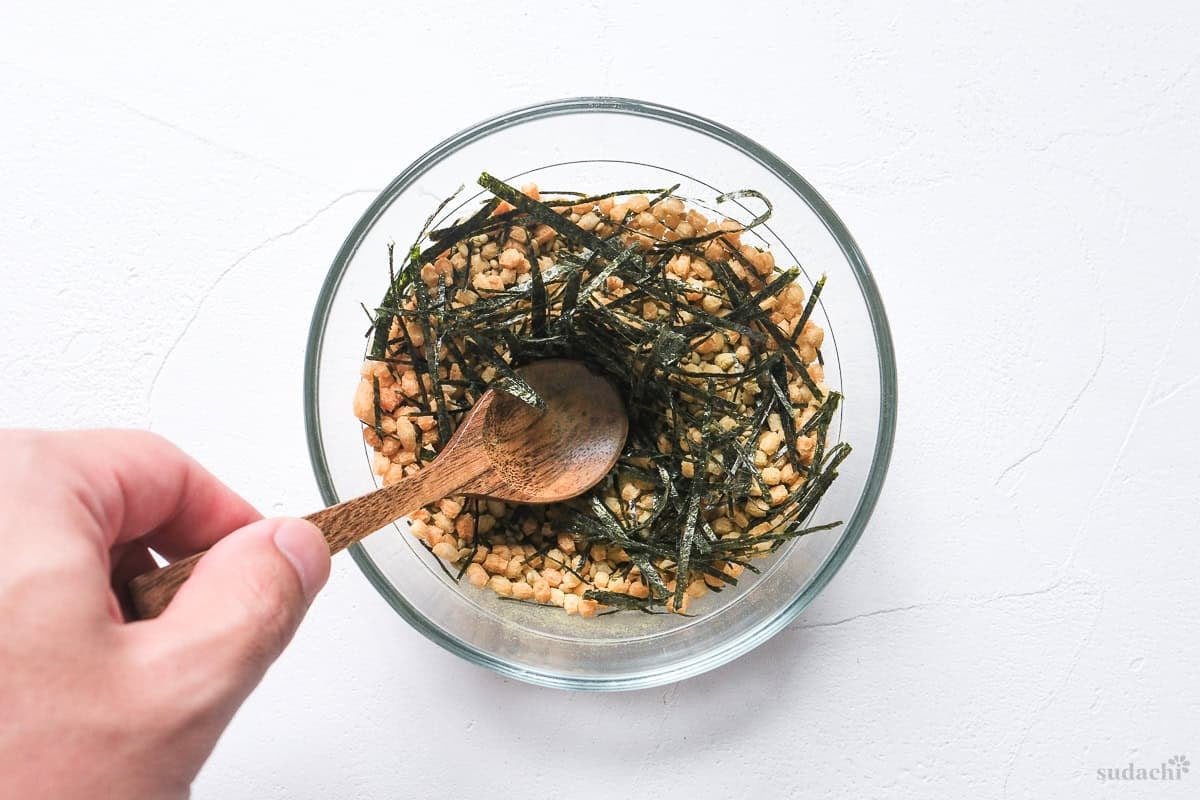
ii. If you are using crushed rice crackers instead of arare, the same timing rule applies to them. Crush them just before you eat rather than in advance, and stop while the pieces still look like gravel. The first time you crush a bag of rice crackers you will go too far and end up with sand. Everyone does.
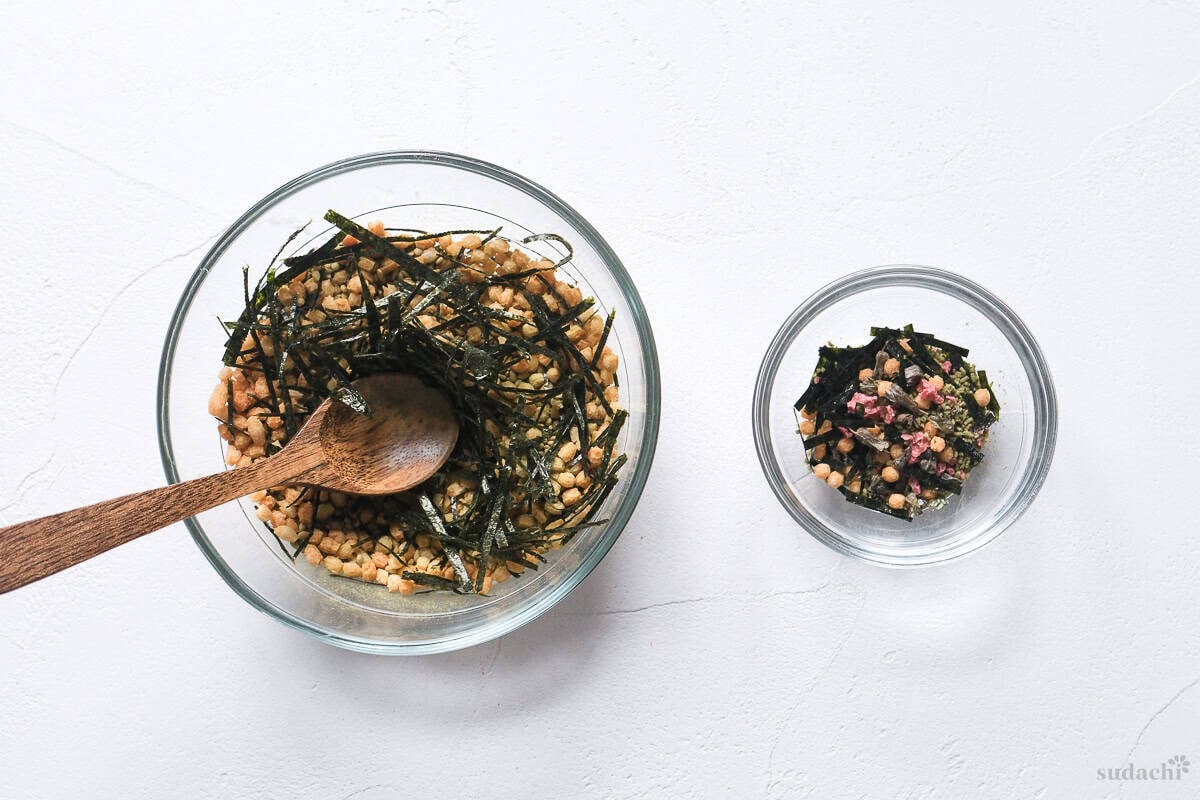
i. Put the cooked short-or-medium-grain rice in a bowl and spoon half of the mix over the top of it.
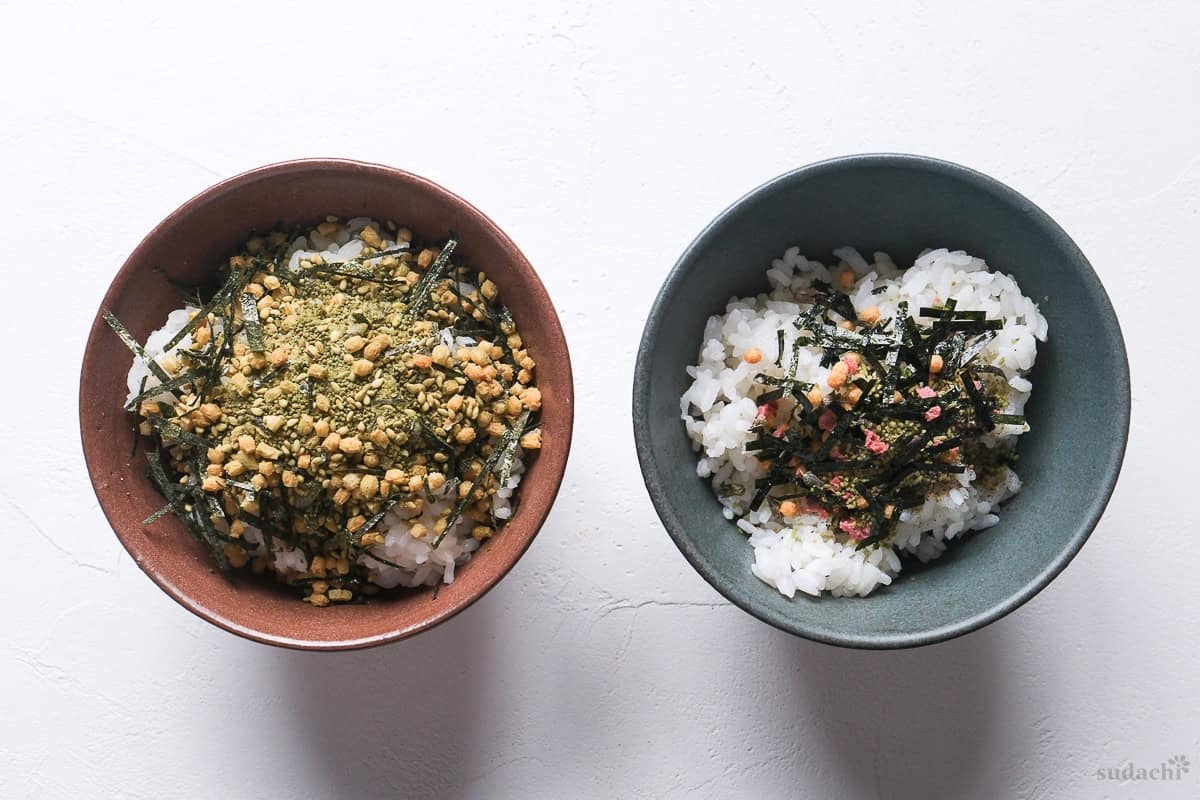
ii. If the nori, the sesame, and the arare are in their own bags, scatter them over the mix now (a chopstick moves the nori around better than a spoon does). If they went into the jar, they came over with the mix and there is nothing left to scatter.
iii. Pour boiling water down the side of the bowl, not straight onto the pile.
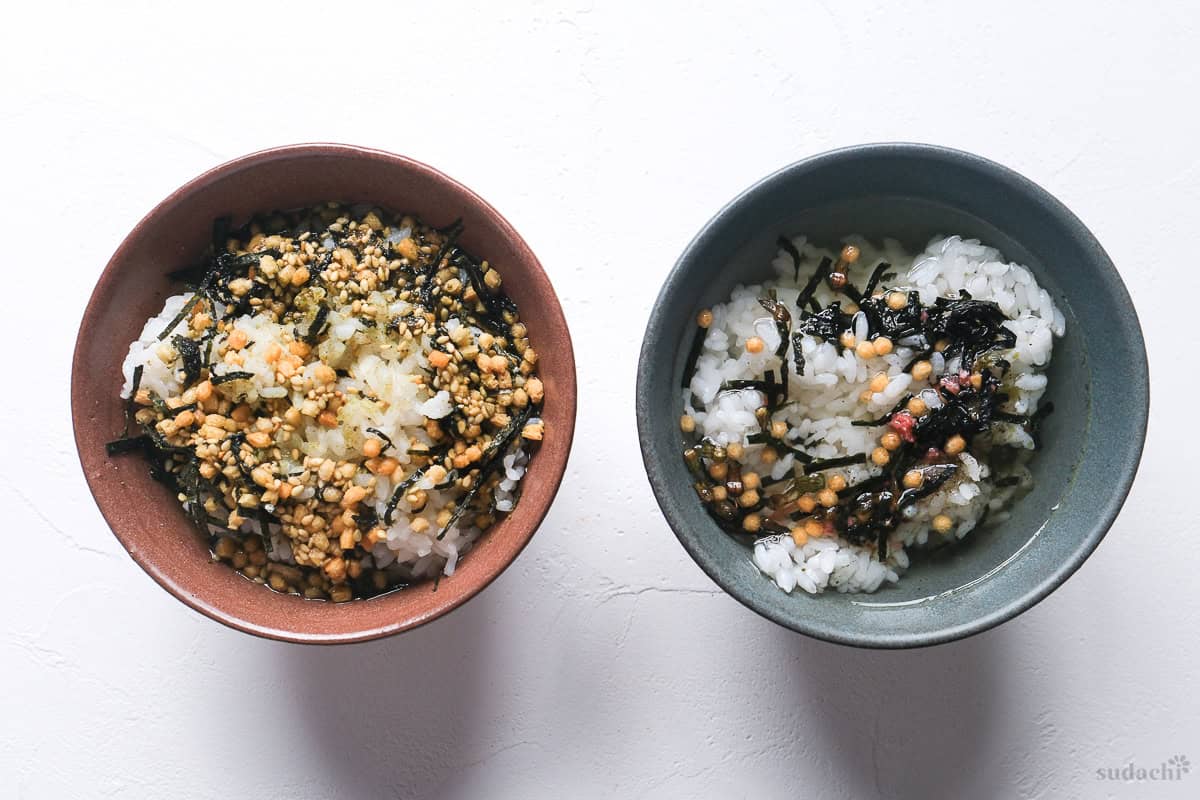
iv. Eat it right away
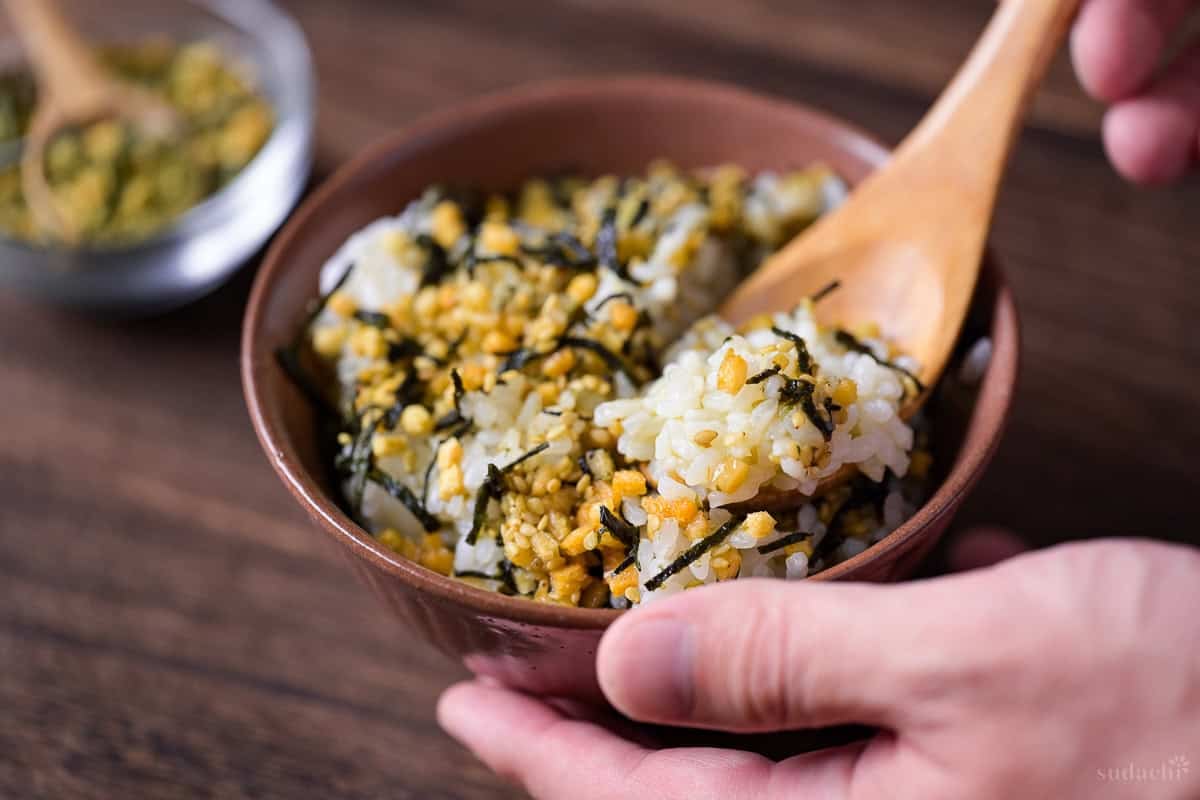
The beauty of ochazuke is the contrast. Bites of tender rice grains between slurps of savory dashi-tea. Every second the rice sits in the liquid, it’s absorbing it, swelling and turning into a bowl of mush. Sit down, pour and eat it right away before the tea disappears into the rice.

Tips for the Best Ochazuke Seasoning Mix
- If you’re swapping arare (rice crackers) for a crushed substitute, use more. Arare grains are small and uniform enough to pack a spoon solid, while anything you crush yourself lands as loose, uneven pieces with air sitting between them. Scoop each with the same spoon and the crushed version arrives short, even though the spoon looked identical both times.
- Keep the mix away from moisture. Any steam or humidity turns fine powder into lumps, and it’s a pain to break them up once they’re in the bowl. Make sure to use a clean, thoroughly dry spoon while mixing and portioning.
- Mix up the flavors. For the tea, I use matcha in my recipe, but any powdered green tea works great. Hojicha, genmaicha, etc. Just stick to the powders so you mix them in. This also applies to the dashi granules, you can opt for plant-based if you like.
Every one of these is about the spoon rather than the mixing, because the spoon is the part you come back to on every bowl.
What to Serve With Ochazuke Mix
- Umeboshi (Homemade Pickled Plums)
- Salmon Flakes
- Takuan (Yellow Daikon Pickles)
- Wasabi Cucumber Pickles
Ochazuke Seasoning Mix Troubleshooting
Rescue the bowl in front of you first. Pour in another splash of boiling water, drop in a little more warm rice, then stir and taste again before you add anything else. The cause sits further back. Granule brands are not seasoned to the same level, so the same spoonful lands harder out of some jars than others. For the next jar you mix, pull the granules back a touch and leave the salt where it is.
The bowl grew and the spoon did not. A taller mound of rice, or a pour of water that kept going after the bowl looked full, spreads the same amount of mix thinner. Add mix a little at a time rather than more water, stir, and taste between each addition. Match the mix to how much rice is actually in the bowl and the problem does not come back.
The jar sorts itself out again while it sits, and the finest powder works its way down through the coarser grains. The color you see on top is no longer the color of what is underneath. Put the lid back on, shake, and scoop. Do that before every scoop, not only on the day you mixed it.
More Japanese Rice Recipes
Once the jar is on your shelf, my Japanese rice recipe collection is where the rest of the bowls live.
Did You Try This Recipe?
I would love to hear your thoughts!
💬 Leave a review and ⭐️ rating in the comments below. 📷 I also love to see your photos – submit them here!
Homemade Ochazuke Seasoning Mix

Ingredients
Mixed first
- ½ tbsp dashi granules not a flavored soup base
- 1 tsp bonito flakes (katsuobushi) measure the flakes first, then grind them
- ½ tsp salt sea salt is what I test with
- ½ tsp sugar
- ½ tsp matcha powder
Added last
- 1 tbsp arare tiny baked rice crackers about the size of a peppercorn, or 2 tbsp crushed kaki no tane, senbei, or plain savory puffed rice
- 1 tbsp kizami nori (shredded nori)
- 1 tbsp toasted white sesame seeds
To serve
- 250 g cooked Japanese short-grain rice
- 250 ml freshly boiled water
The ingredient brands and tools I trust are in my Japanese pantry guide and my cooking tools guide.
Can’t find certain Japanese ingredients? See my substitution guide here.
Instructions
- Grind ½ tbsp dashi granules, 1 tsp bonito flakes (katsuobushi), ½ tsp salt, and ½ tsp sugar together using a mortar and pestle.

- Pour the mixture into a small bowl and add ½ tsp matcha powder. Mix until combined.
- Right before you use it, add 1 tbsp arare (or a crunchy substitute), 1 tbsp kizami nori (shredded nori), and 1 tbsp toasted white sesame seeds and mix until evenly distributed.
- Divide 250 g cooked Japanese short-grain rice between serving bowls. Spoon the ochazuke mixture over the top.
- Prepare 250 ml freshly boiled water and pour it down the side of each bowl rather than directly on top.
- Serve immediately and mix gently. Enjoy!

Leave a rating and a comment