



Featured Comment
Wow, this was so easy to make and absolutely delicious!
★★★★★
– Kelly
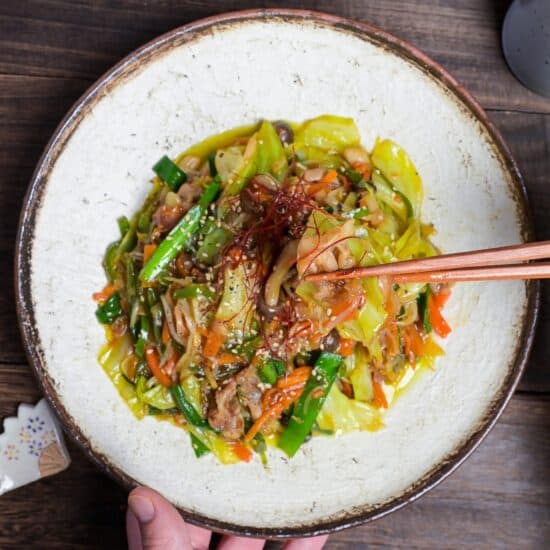
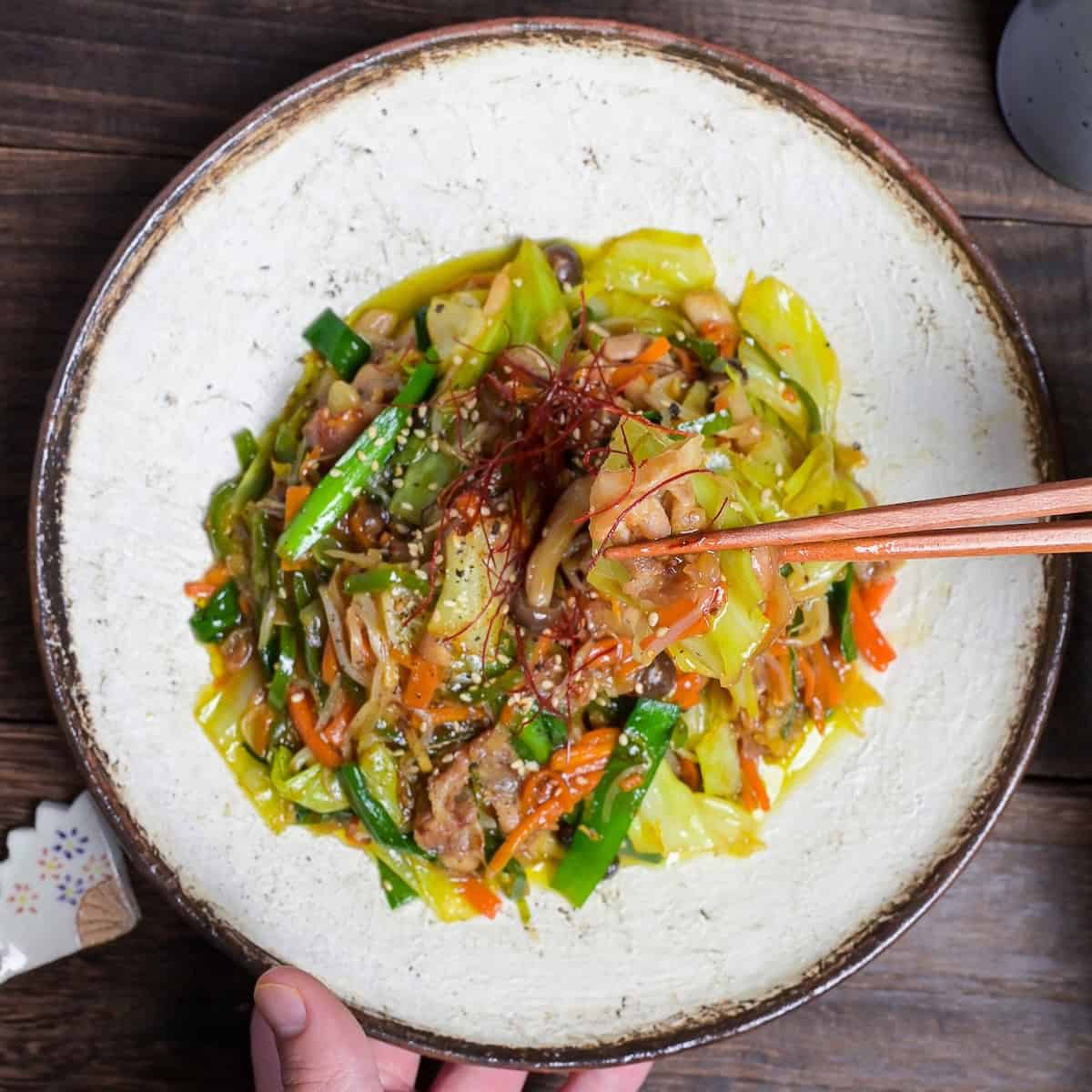
Half a cabbage, three soft carrots, bean sprouts going nowhere, sound familiar? This yasai itame recipe welcomes any fridge stragglers and finishes with a savory, glossy soy-umami hit using humble pantry staples.
I use this recipe almost every week to “empty my fridge” for the following week. Ready to empty yours too?
Yasai Itame
Recipe Snapshot
- What is it? The ultimate 20-minute “fridge rescue” meal. A sizzling stir-fry that turns wilting leftovers into a crunchy, restaurant-quality dinner everyone will actually eat.
- Flavor profile: Salty-umami-light sweet, aromatic garlic + ginger, with savory depth from oyster sauce + shoyu and pork fat.
- Why you’ll love this recipe: This yasai itame is built for flexibility! Swap any vegetables, adjust quantities freely, and still achieve that satisfying crunch and rice-ready seasoning every time.
- Must-haves: Large skillet or wok, any mix of vegetables, potato starch or cornstarch for the glaze.
- Skill Level: Easy
Summarize & Save this content on:
What is Yasai Itame?
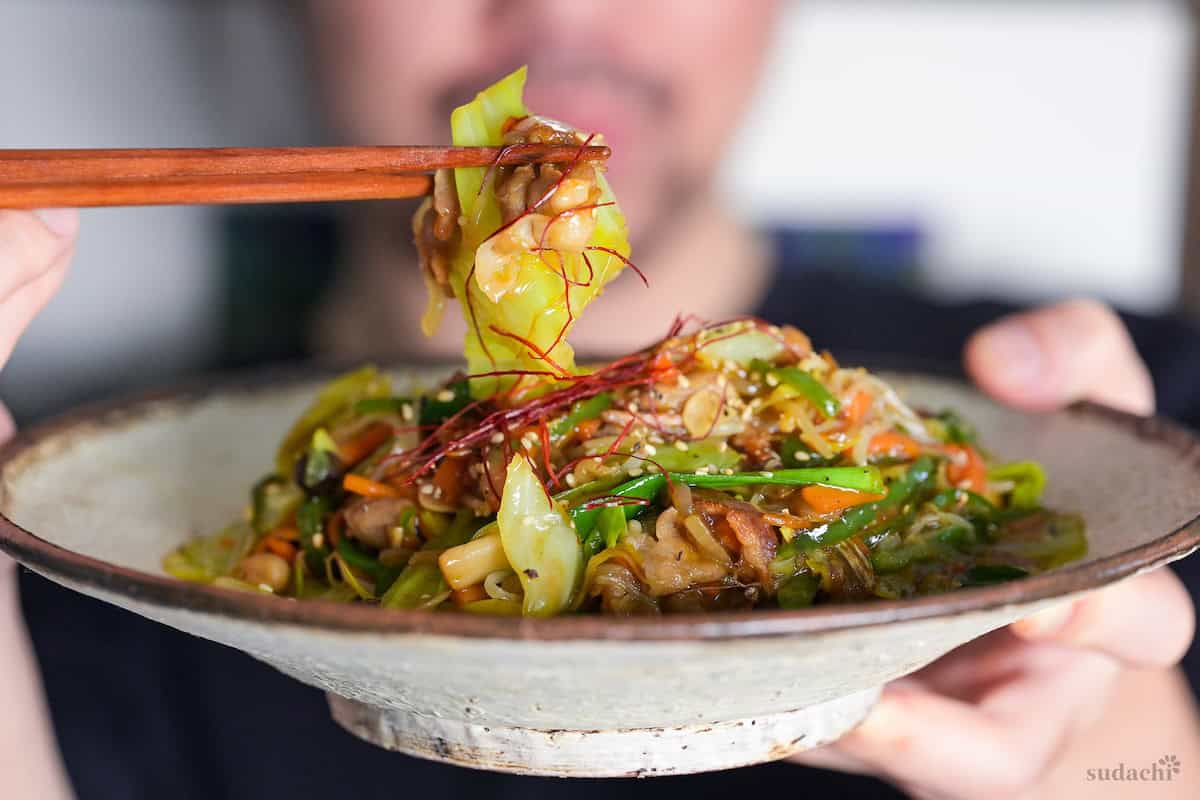
Yasai Itame (野菜炒め) is a Japanese itamemono (stir-fry) made by quickly cooking vegetables (often with a small amount of meat such as thinly sliced pork) in oil over fairly high heat. The defining “itame” method is fast cooking that focuses on evaporation and light surface browning, so the vegetables stay crisp-tender with a hot-pan aroma, and the sauce is typically added at the end to coat rather than stew.
Unlike more structured Chinese-inspired Japanese (chuka) dishes such as chinjao rosu (pepper steak stir-fry) or ebi chili (chili shrimp), yasai itame is remarkably flexible. There’s no fixed vegetable combination or strict seasoning formula.
The dish functions as a versatile weeknight framework: master the sauce ratios and stir-fry timing, and you can adapt it to whatever vegetables and protein you have on hand.
Yasai Itame Ingredients
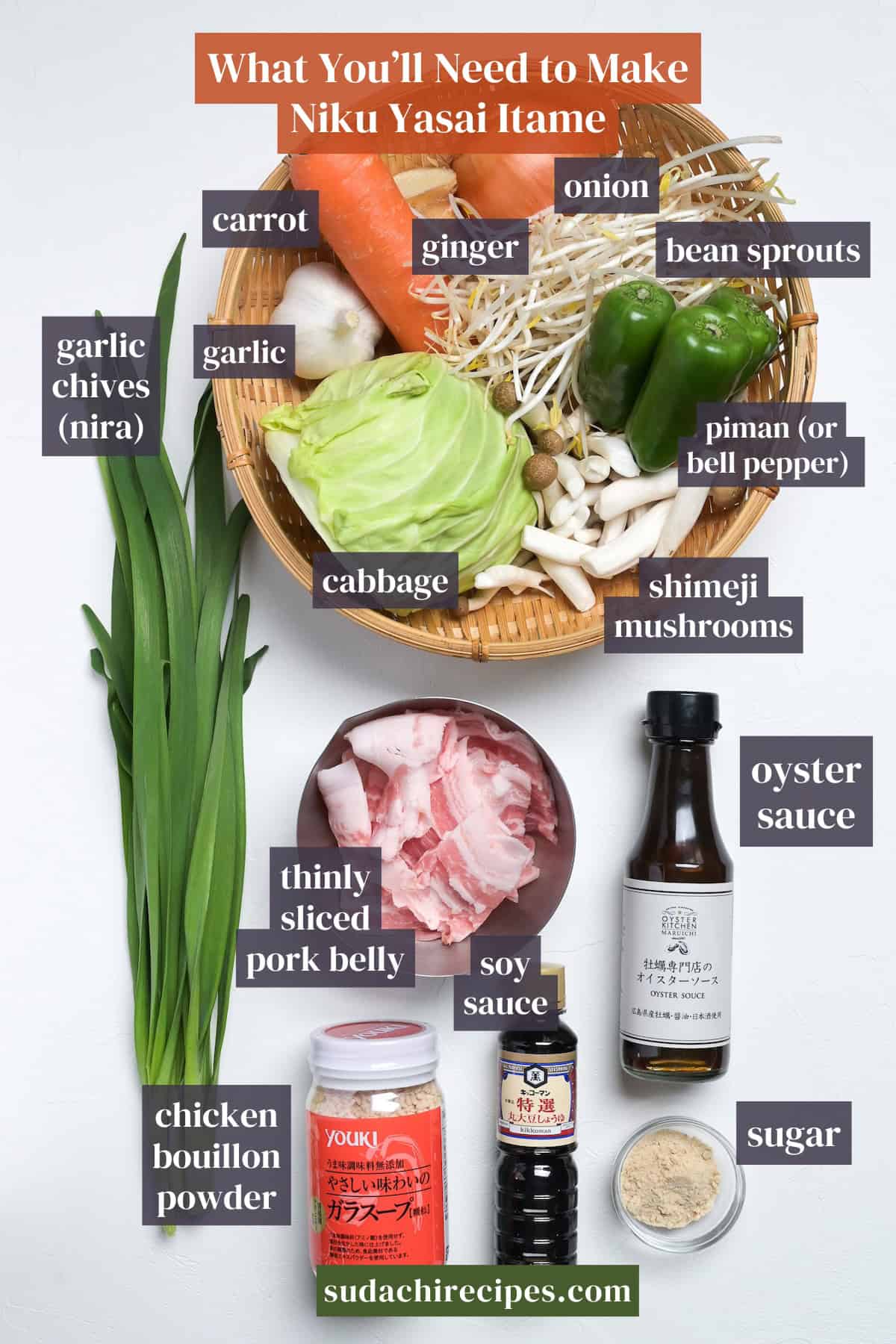
- Thinly sliced pork belly (or your protein of choice): Thin-sliced pork renders its fat as it cooks, creating a savory glaze that coats every vegetable. Look for shabu-shabu or yakiniku cuts at Asian grocers, or ask your butcher to slice pork shoulder thin. Chicken thigh, shrimp, or tofu all work fine here, but just note that beef doesn’t pair as well with this sauce.
- Chinese-style chicken bouillon powder + oyster sauce: This duo is your shortcut to restaurant-depth flavor in seconds. The bouillon adds meaty backbone while oyster sauce brings that glossy, savory-sweet finish. Find both in the Asian aisle of most supermarkets.
- Japanese soy sauce: Koikuchi shoyu (濃口醤油) is the standard all-purpose Japanese soy sauce, deep brown, balanced, and intensely savory. It’s the clean salt-and-umami backbone that makes the stir-fry taste unmistakably like yasai itame.
Substitutions /Variations
- Protein Swap: Chicken thigh, shrimp, or a seafood mix all work beautifully here. Chicken thigh stays juicy and cooks similarly to pork, while shrimp adds a sweet, briny note (just toss it in toward the end so it doesn’t overcook). For plant-based, sliced aburaage or atsuage tofu gives you that satisfying chew without any extra fuss.
- Mushrooms: Use whatever mushrooms you have! Shimeji, cremini, shiitake, oyster, it really doesn’t matter as long as they’re not overwhelmingly funky. They’ll all absorb that savory sauce and add an earthy depth.
- Other Vegetables: This dish is basically designed to absorb your fridge odds and ends, so go ahead and toss in what you’ve got! Bell peppers, snap peas, zucchini, bok choy, you name it. Just avoid building the whole dish from only high-water vegetables like bean sprouts or cabbage, or you’ll end up with a soggy stir-fry instead of a crisp one.
- Plant-Based Version: Swap the chicken bouillon for vegetable bouillon, use mushroom-based “oyster” sauce alternative instead of regular oyster sauce, and add your favorite plant-based protein.
Have trouble finding Japanese ingredients? Check out my ultimate guide to Japanese ingredient substitutes!
How to Make My Buta Yasai Itame
If you prefer to watch the process in action, check out my video of this yasai itame recipe!
To develop this yasai itame recipe, I used a 30cm carbon steel wok.
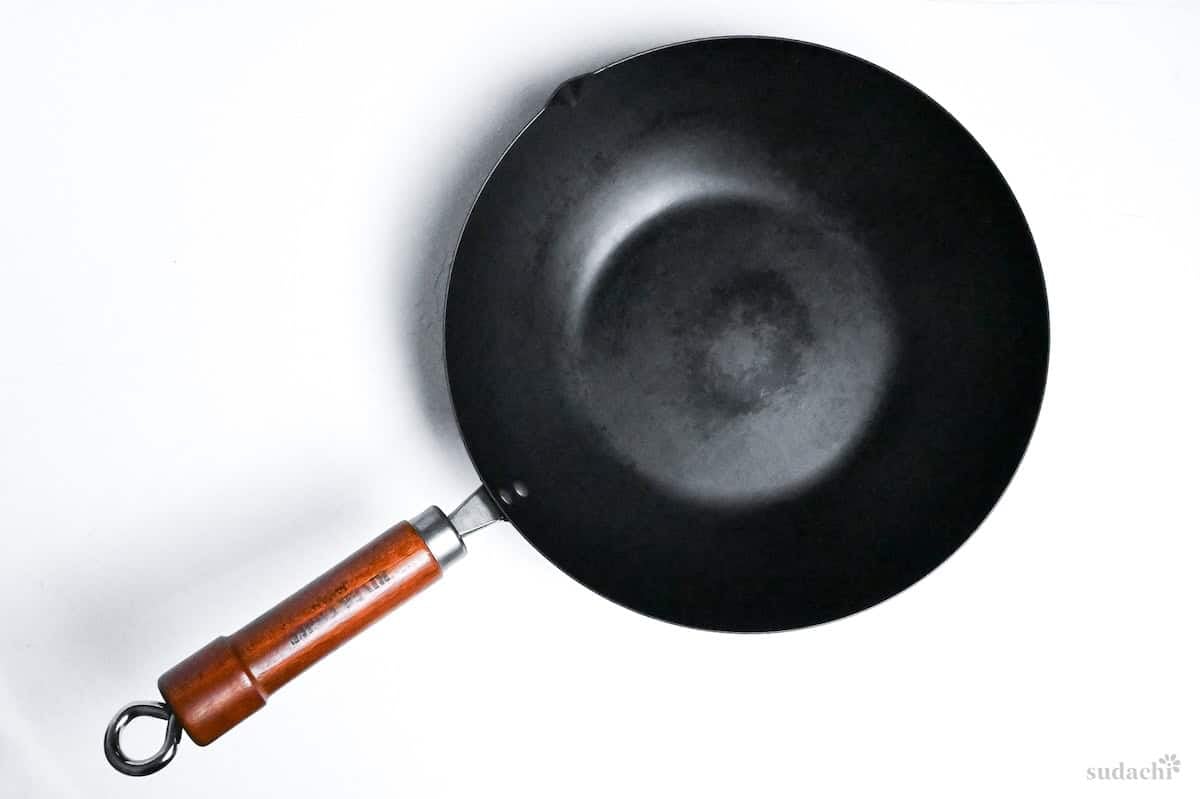
If you don’t own a wok, you can use a large frying pan.
Yasai itame is 80% prep! Stir-frying is time-compressed cooking, high heat, fast action, zero room for searching drawers. Think of mise en place as buying yourself calm: when the cooking sprint begins, you’ll move with confidence instead of panic.
i. The first step is to measure out all of your ingredients and cut them according to the picture below. Generally, the vegetables should be cut small and thin to minimize cooking time. This applies to carrots and onions especially since they take longer to cook.
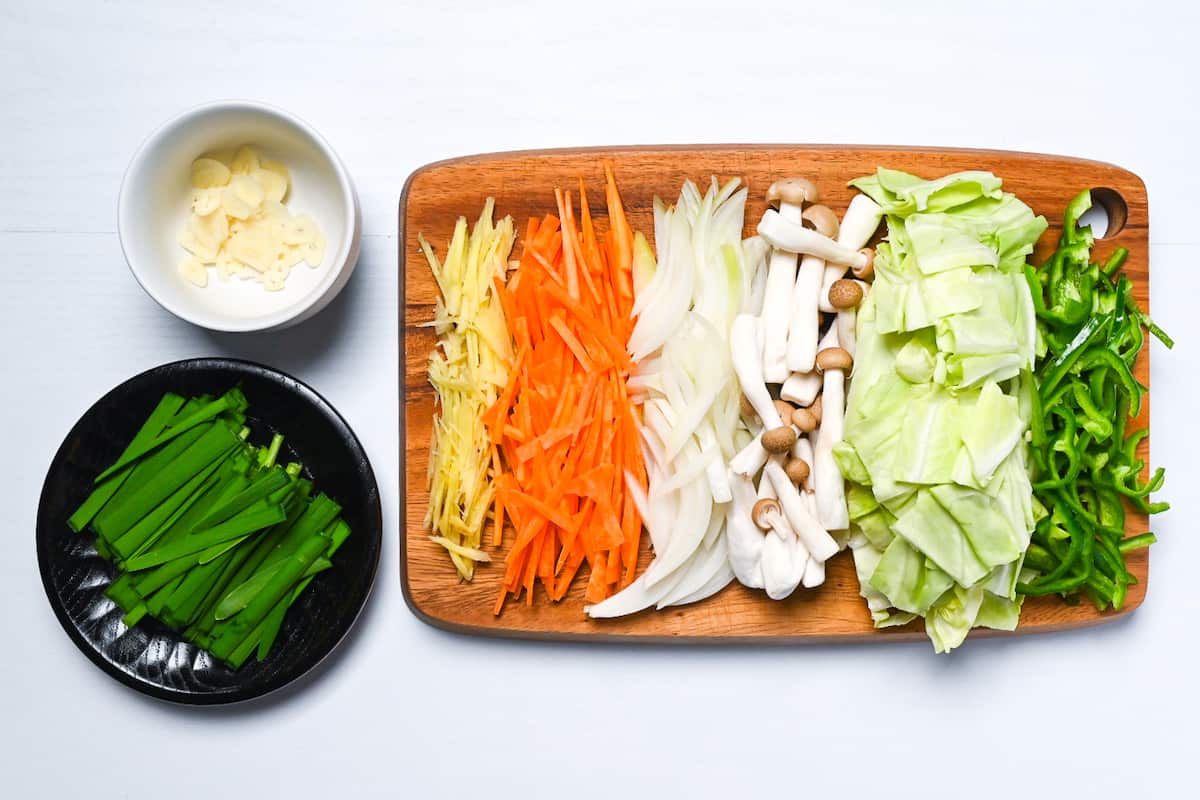
Here is a list on how I cut my vegetables for the quickest cooking time:
- Garlic: thinly sliced
- Chinese chives: cut into 5cm pieces
- Fresh ginger: peeled and julienned
- Carrot: peeled and julienned
- Onion: thinly sliced
- Shimeji mushrooms: whole
- Cabbage: roughly cut bitesize pieces
- Piman/bell pepper: thinly sliced
- Beansprouts: whole
If all your vegetables are cut in all different shapes and sizes, some might quickly become overcooked while others remain raw. It’s important to cut the hard vegetables (like carrots) small and the softer vegetables (like cabbage) bigger so they cook at a similar time. This way, you can avoid burnt or watery/soggy vegetables in your stir fry!
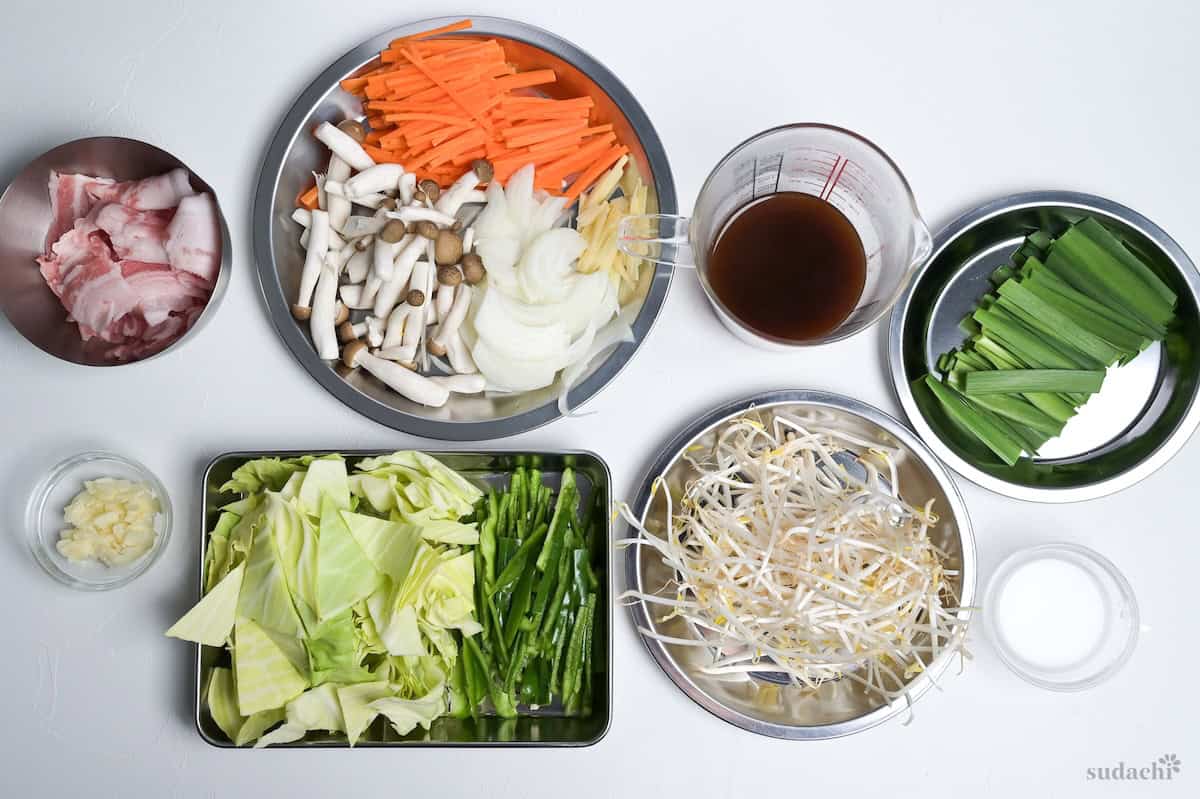
ii. Other preps you need to do at this point are below:
- In a small bowl, whisk stock, oyster sauce, soy sauce, salt, and sugar into one awase sauce.
- Cut your thinly sliced pork belly into roughly 5cm pieces.
- Stir potato starch (or cornstarch) into cold water in a separate small dish until smooth.
i. Heat your pan over medium-high heat until it’s hot, then add neutral oil and swirl to coat. When the oil shimmers and flows like water, add the pork pieces in a single layer, seasoning with a pinch of salt.
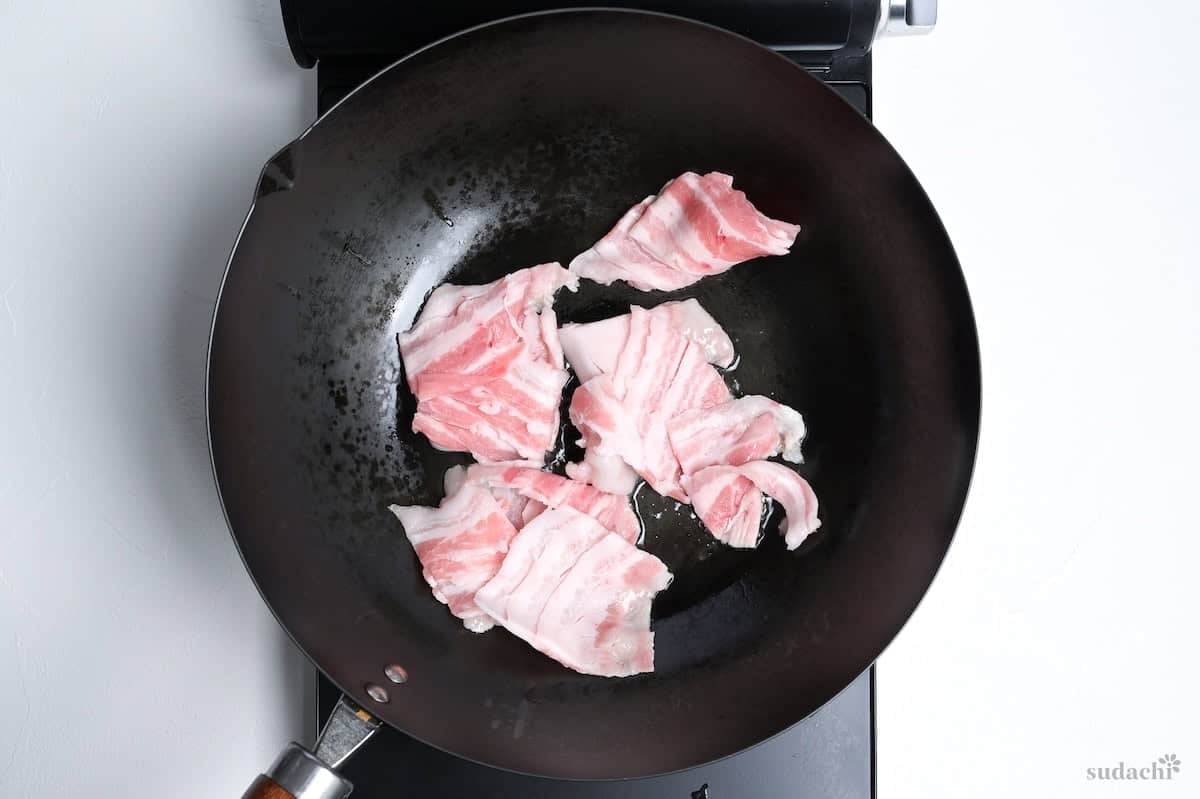
ii. Resist the urge to stir immediately. Let the meat sit undisturbed for 30-60 seconds until the underside turns golden and releases naturally from the pan. Then flip and cook the other side briefly.
iii. Once the pork is browned and a little crispy, stir in your sliced garlic.
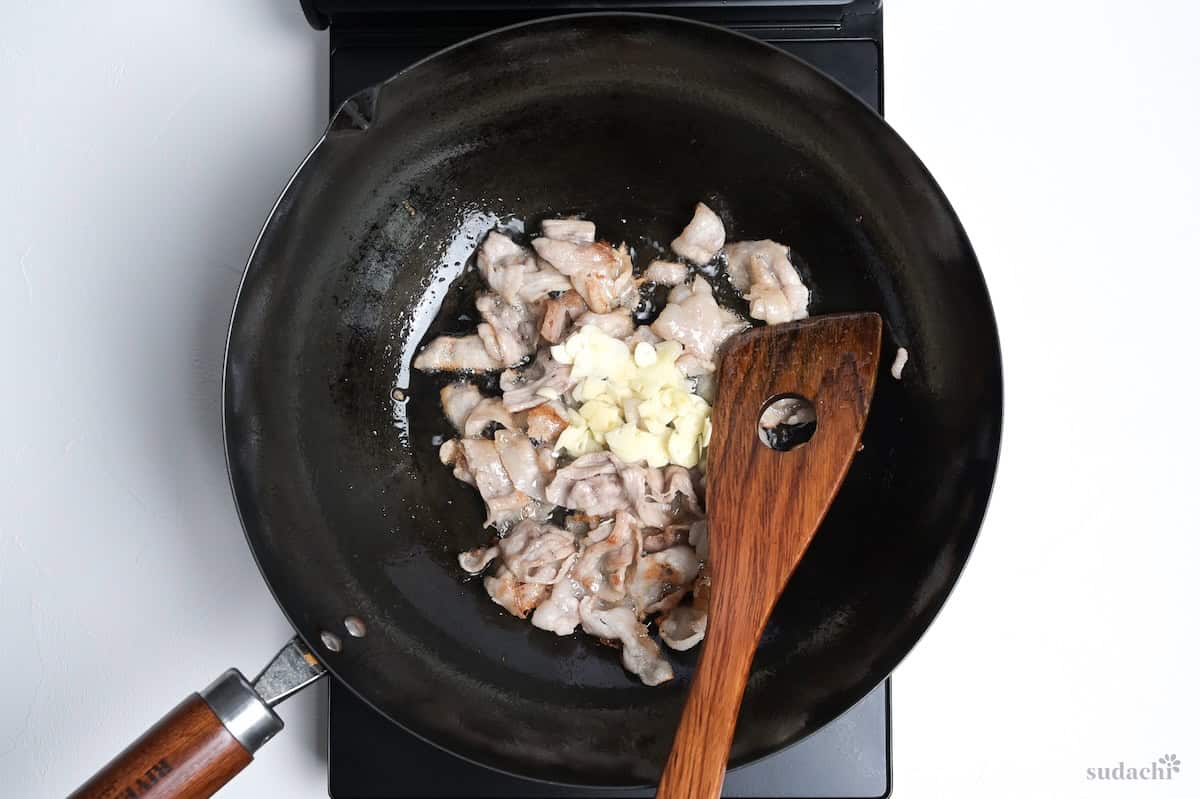
Cooking pork before vegetables serves two purposes: it develops deep, savory Maillard browning without interference from vegetable moisture, and it renders fat that will flavor everything else. If you add vegetables first, their released water drops the pan temperature and prevents proper searing.
i. Add your slower-cooking vegetables to the pan: ginger, carrots, onion, and mushrooms go in first. Toss them through the rendered pork fat, which carries flavor deep into each piece.
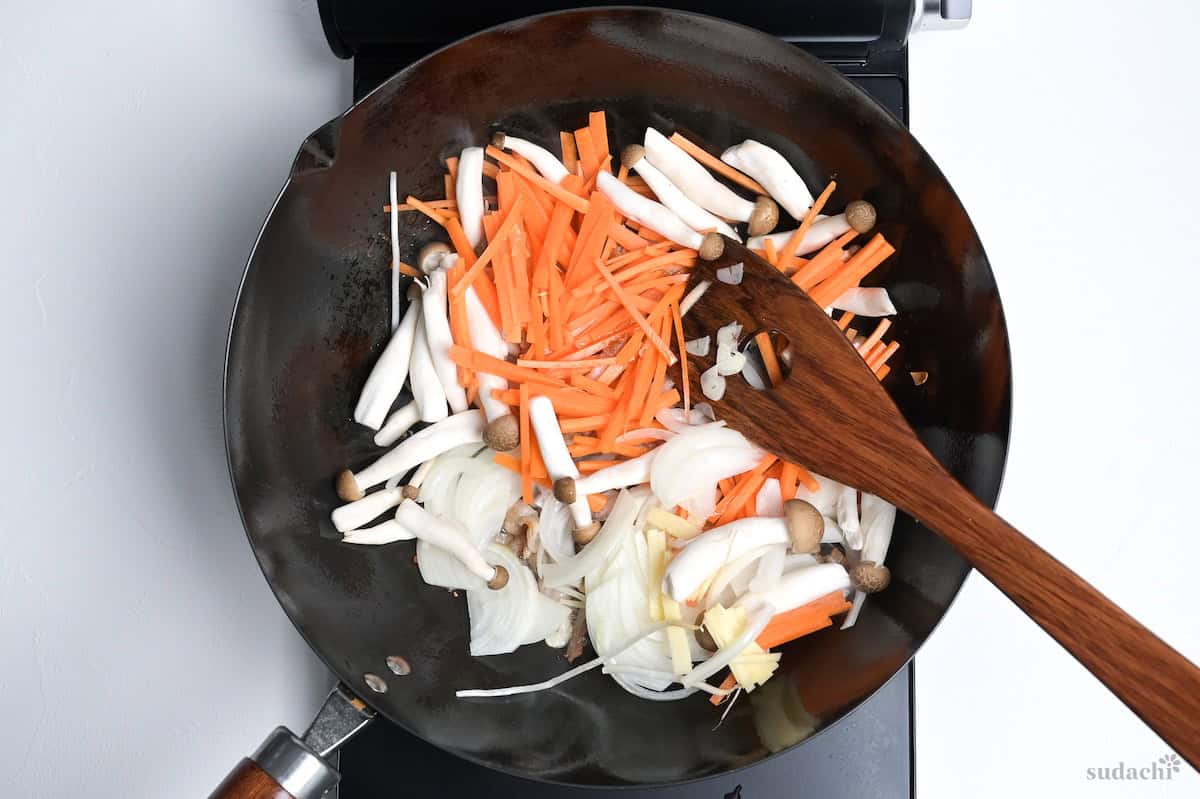
ii. Cook for about 1-2 minutes, stirring occasionally but not constantly, letting vegetables sit briefly on the hot surface develops light browning edges and concentrated sweetness.
iii. You’ll see the onion turn translucent at the edges, and the carrots will begin to bend.
i. Once the the onions look translucent, add the cabbage and bell pepper.
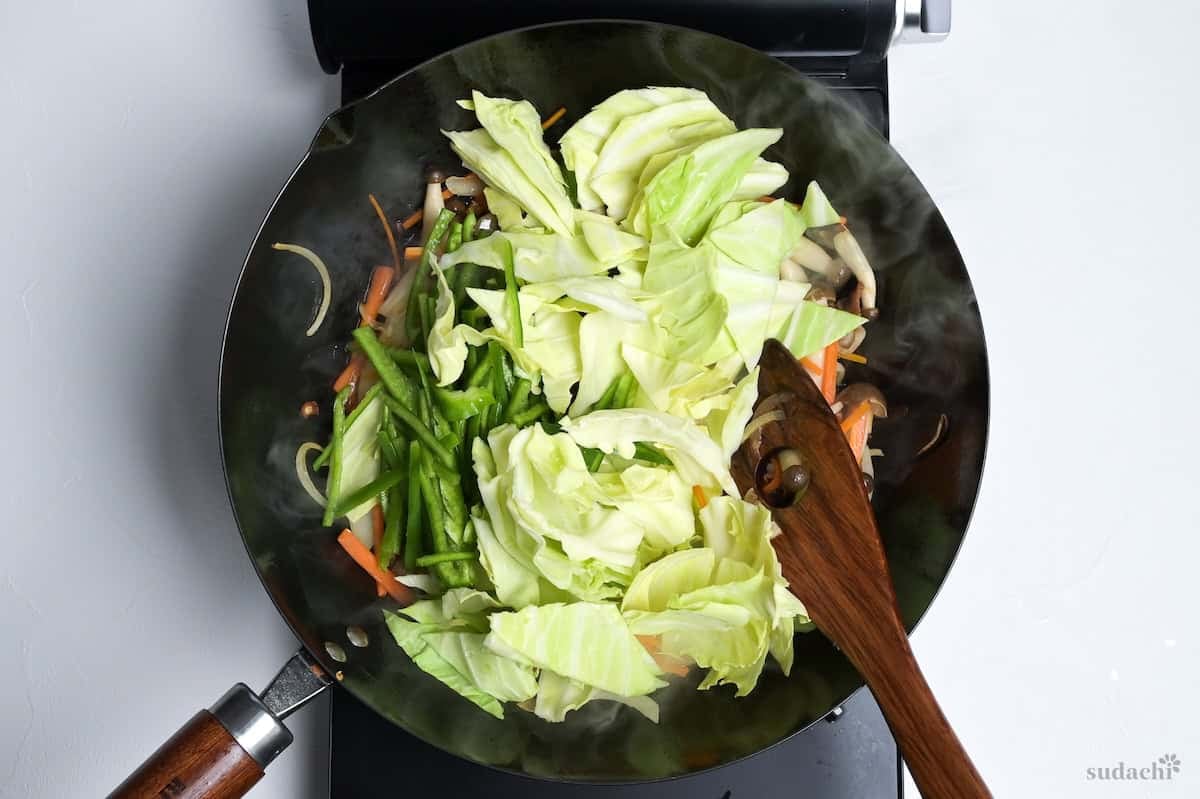
These medium-density vegetables need only 1-2 mins to become crisp-tender. Toss everything together, letting each piece contact the hot pan surface briefly. Watch for the cabbage to brighten in color and soften at the edges while the thick center ribs retain their crunch.
ii. Then add the beansprouts and stir fry for 30 seconds to 1 minute.
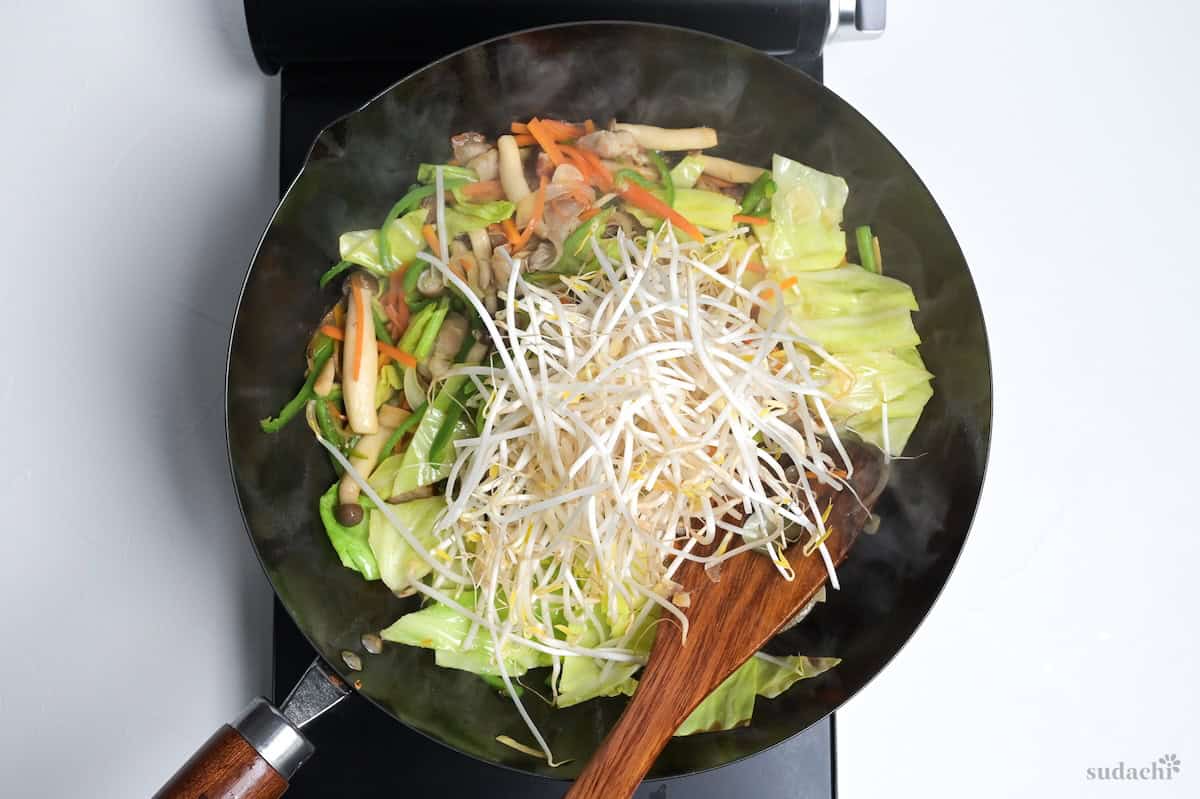
Bean sprouts contain high water content in delicate cell structures. Prolonged heat ruptures those cells rapidly, releasing moisture that turns your careful stir-fry into a puddle. Add them, toss them, and move immediately to the next step.
i. Add garlic chives to the pan.
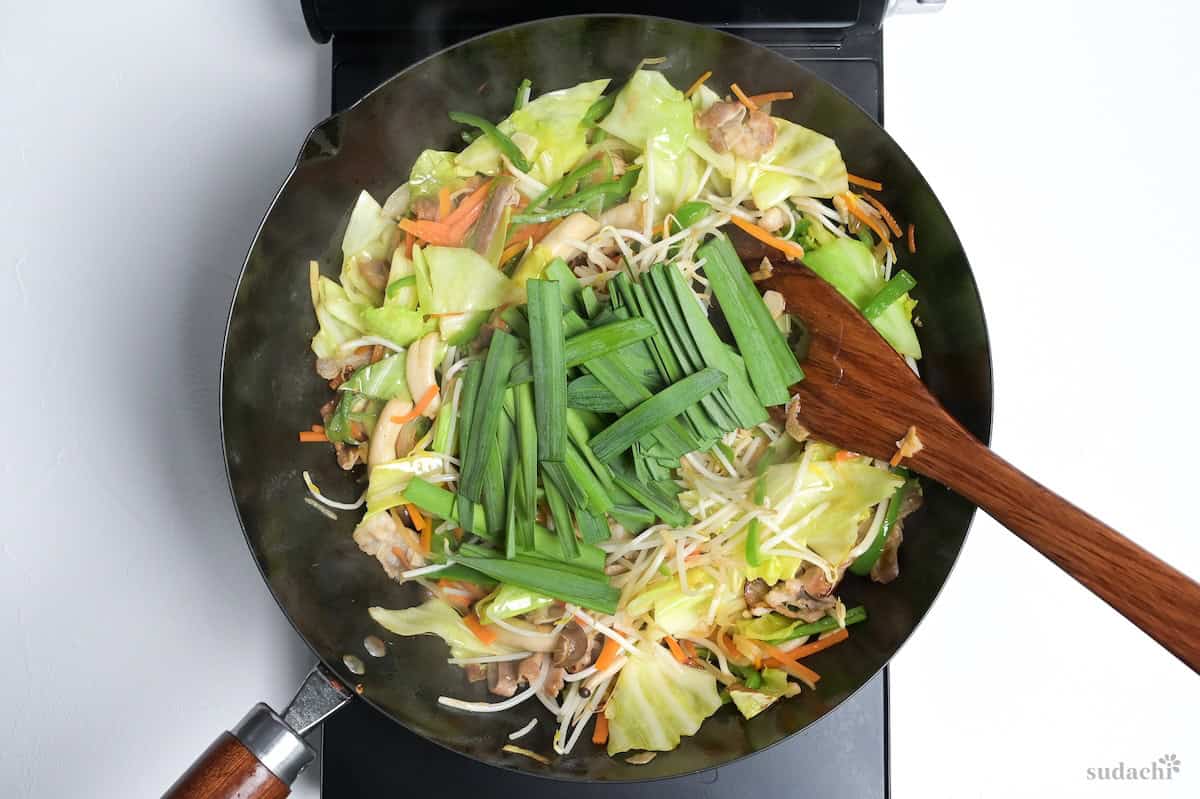
ii. Pour in the premixed sauce straight away and toss to deglaze browned bits (if any), you’ll smell soy and see the vegetables glossy, not swimming.
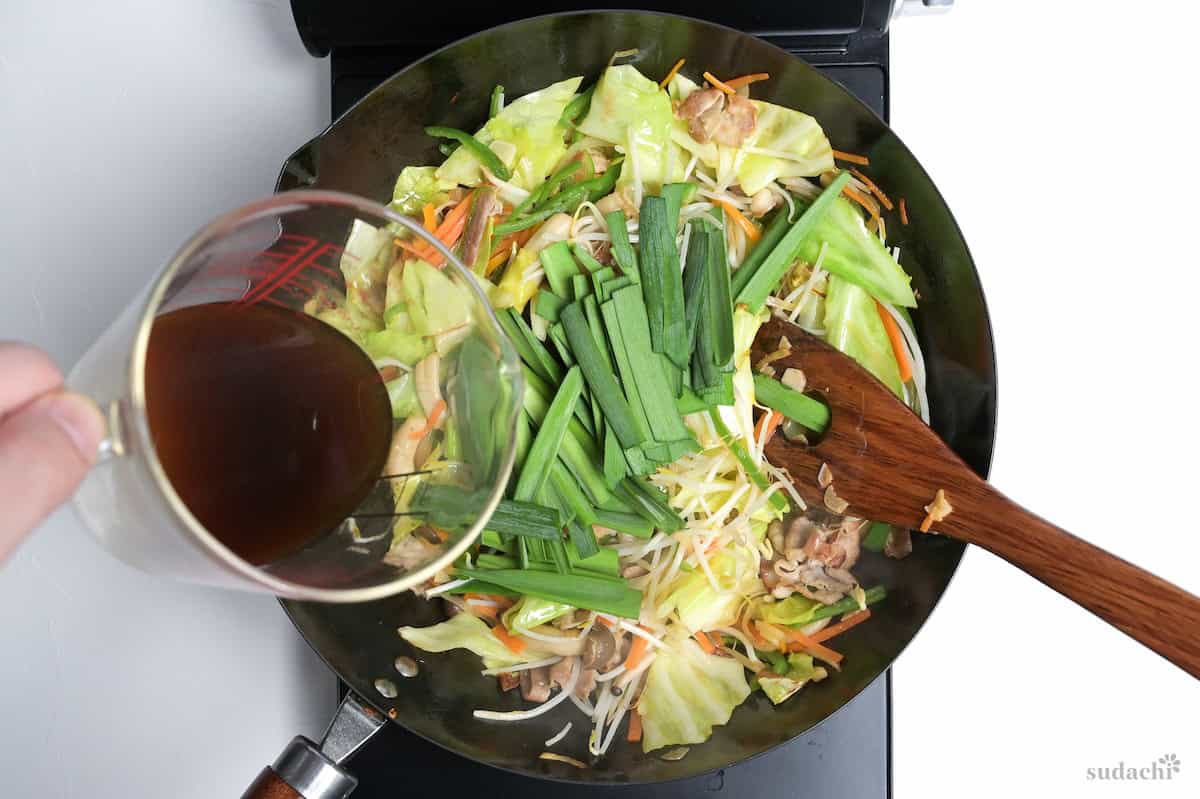
i. Give your starch slurry a quick stir (remember, starch sinks fast), then drizzle it into the pan while tossing constantly.
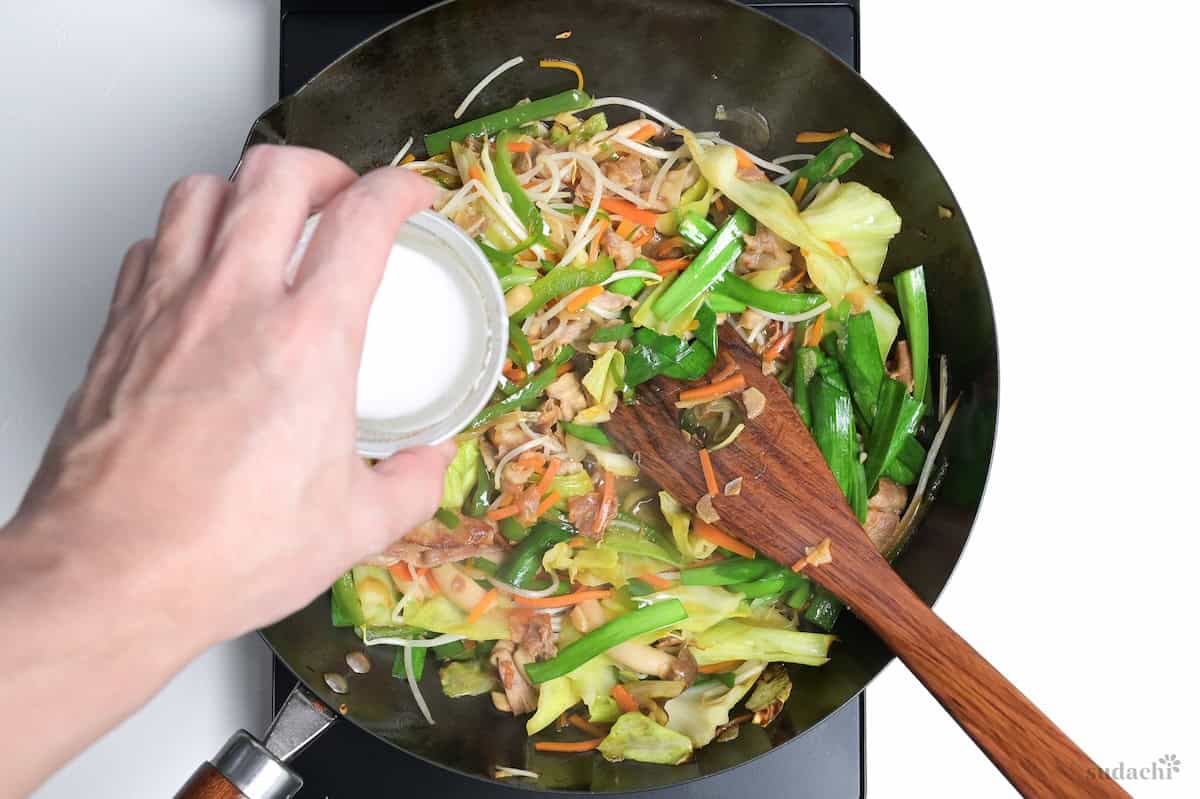
ii. Within seconds, you’ll see the thin, watery juices transform into a glossy, clingy sauce that wraps around every vegetable and piece of pork. Keep the heat at medium and continue tossing. Continue to simmer for 30-60 seconds or until thick and glossy.
iii. Then turn off heat and stir in toasted sesame oil for aroma.
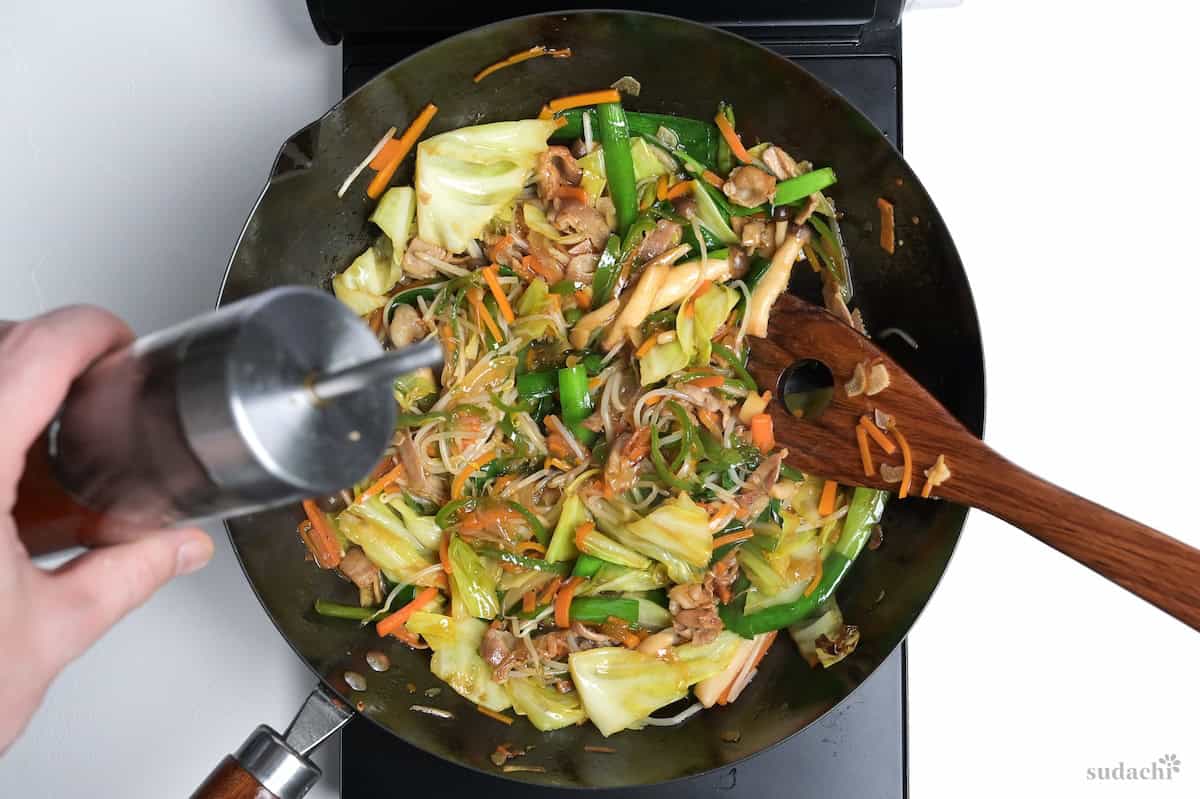
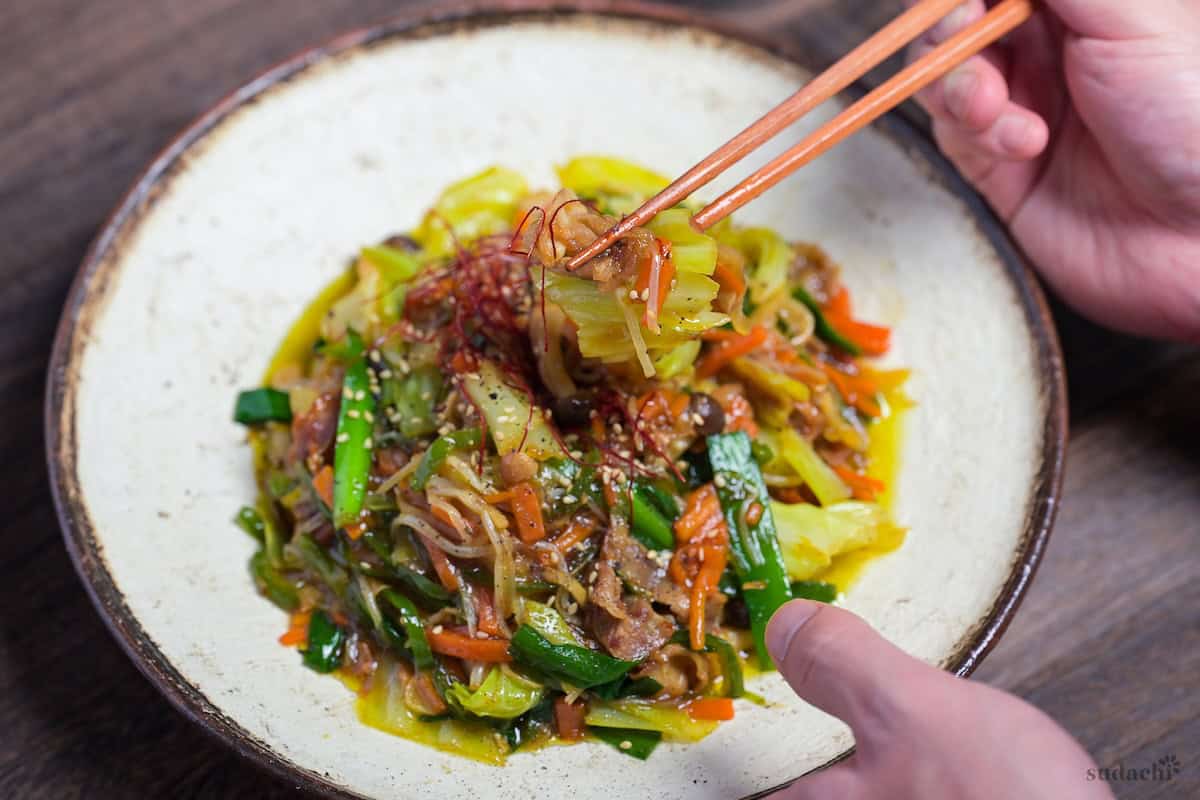
i. Transfer the stir-fry to a serving plate. Optionally, top with a tangle of chili thread and sesame seeds. Serve alongside steaming plain rice and eat immediately.
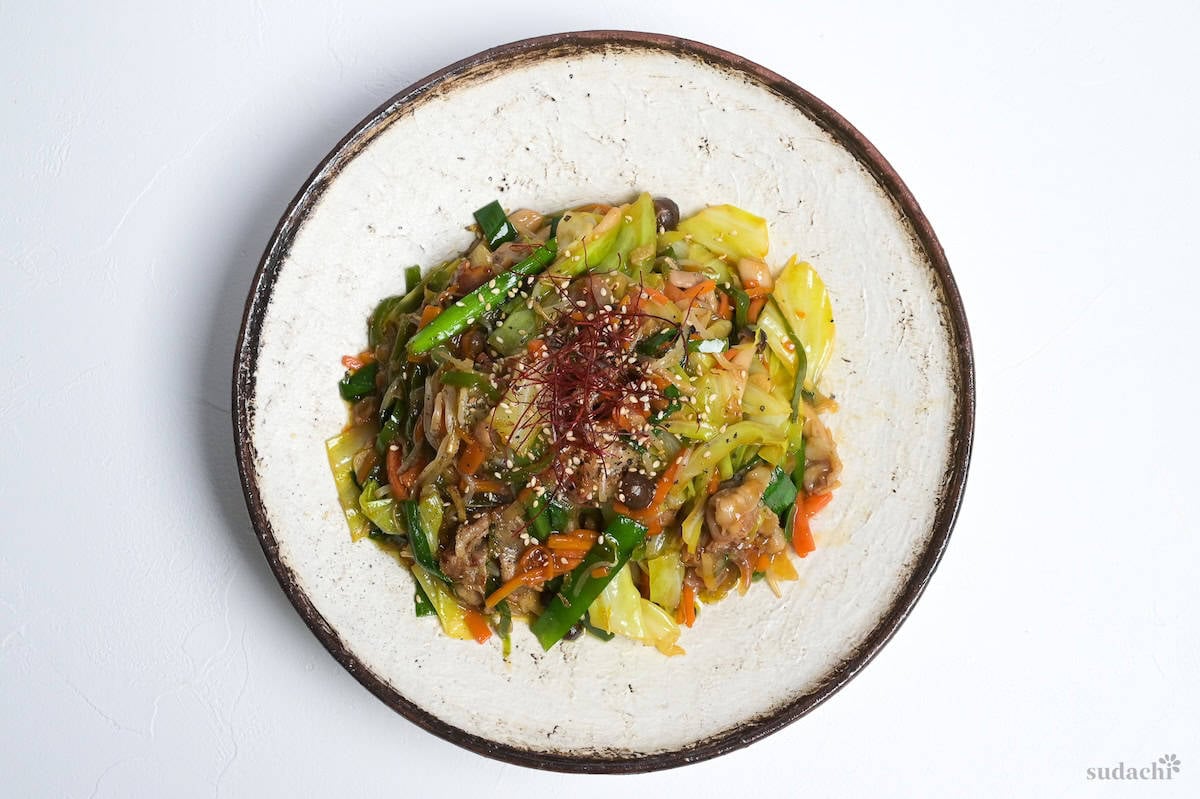
If you follow the default recipe, it will yield 2 main servings, or 4 side servings.

Essential Tips & Tricks
- Cut vegetables with purpose (thin carrots/onion, bigger cabbage, leave beansprouts whole) so they cook evenly fast, otherwise you’ll get raw centers plus mushy leaves.
- Dry washed vegetables aggressively (spin/pat, drain sprouts) so the pan can fry and evaporate moisture.
- Cook in batches if your pan is more than 1/2-2/3 full (especially true if you don’t use a wok), so temperature rebounds and you get sizzling aroma.
- Add sauce late, and pour it around the hot pan edge so it flashes, deglazes, and coats quickly.
- Re-stir the slurry and drizzle it in while stirring, then let it bubble briefly for a smooth gloss.
With these simple tips in mind, you’re set for success every time you make yasai itame.
Storage & Meal Prep
Fridge: Store leftovers in a shallow, airtight container for up to 2-3 days. The vegetables will soften and a little liquid will collect as condensation and moisture migration continue. Let it cool uncovered first, then seal.
Freezer: Not recommended, freezing punctures vegetable cell walls, so yasai itame thaws limp and watery, and any glossy starch-thickened sauce can separate or weep.
Meal Prep: Cut and dry all vegetables up to one day ahead, storing them in separate airtight containers lined with paper towels to absorb excess moisture, pre-mix the sauce base and prepare the starch slurry (keep slurry refrigerated and re-stir before use).
Reheating: Reheat in a hot skillet with a small drizzle of oil over high heat for 1-2 minutes, tossing constantly.
What to Serve With This Recipe
FAQ
Stir-fry became a popular cooking method in Japanese households during the 1950s and 1960s, particularly during the period of high economic growth. It gained popularity due to the affordability of cooking oil at the time, its ability to satisfy children’s big appetites by adding more vegetables and less meat at a low cost, and its quick and easy preparation. It is also highly customizable and a great way to use leftovers. As a result, yasai itame has become one of the most widely cooked home recipes in Japan.
The 3 main culprits are overcrowding (which traps steam), wet vegetables (which cool the pan instantly), and early salting (which draws moisture out via osmosis). Fix this by cooking in smaller batches if you use a frying pan instead of a wok so every piece contacts hot metal, drying vegetables thoroughly before they hit the oil, and adding the sauce towards the end. If you already see liquid pooling, push vegetables aside and let the liquid boil off before continuing-that moisture contains flavor, so evaporate it rather than draining it away.
The best vegetables are those with varying densities. Cabbage, carrots, onion, bell peppers, and bean sprouts create the classic texture contrast. Frozen vegetable mixes can work, but they shed water rapidly and will soften faster than fresh, so thaw and drain them thoroughly first, cook in smaller batches than you would fresh vegetables, and accept a slightly less crisp result.
More Quick Japanese Recipes
Short on time but craving authentic flavors? My quick and easy Japanese recipes are perfect for busy weeknights when you still want something delicious.
Did You Try This Recipe?
I would love to hear your thoughts!
💬 Leave a review and ⭐️ rating in the comments below. 📷 I also love to see your photos – submit them here!
Buta Yasai Itame (Japanese Vegetable Stir Fry with Pork)

Ingredients
- 50 g carrot peeled and julienned
- 15 g ginger root julienned
- 2 cloves garlic thinly sliced
- 50 g onion thinly sliced
- 50 g bell pepper thinly sliced
- 100 g green cabbage roughly chopped
- 30 g garlic chive(s) cut to 5cm in length
- 50 g shimeji mushrooms or any sliced mushroom of your choice
- 100 g bean sprouts
- 1 tsp cooking oil neutral, high smoke point
- 100 g thinly sliced pork belly shabu-shabu/yakiniku cut; or chicken thigh
- 1 pinch salt
Sauce
- 1 tbsp cold water to make slurry
- 1 tbsp potato starch (katakuriko) or cornstarch, to make slurry
- 1 tsp Chinese-style chicken bouillon powder or vegetable bouillon
- 100 ml hot water
- 2 tsp oyster sauce or mushroom "oyster" sauce alternative
- 1 tsp Japanese soy sauce (koikuchi shoyu)
- ½ tsp salt
- 1 tsp sugar
Garnish (optional)
- toasted sesame oil
- toasted white sesame seeds
- chili threads
The ingredient brands and tools I trust are in my Japanese pantry guide and my cooking tools guide.
Can’t find certain Japanese ingredients? See my substitution guide here.
Instructions
- Before you start, cut the vegetables to maximize efficiency. Peel and julienne 50 g carrot and 15 g ginger root. Thinly slice 2 cloves garlic , 50 g onion, and 50 g bell pepper. Roughly cut 100 g green cabbage, cut 30 g garlic chive(s) into 5cm (2") pieces, leave 50 g shimeji mushrooms and 100 g bean sprouts whole. Mix 1 tbsp cold water and 1 tbsp potato starch (katakuriko) in a small bowl to make a slurry. Mix the rest of the sauce ingredients (1 tsp Chinese-style chicken bouillon powder, 100 ml hot water, 2 tsp oyster sauce, 1 tsp Japanese soy sauce (koikuchi shoyu), ½ tsp salt, and 1 tsp sugar) in a heatproof pourable container. Set everything by the stove for later.

- Heat a wok over medium-high. Add 1 tsp cooking oil, and when it shimmers, arrange 100 g thinly sliced pork belly in a single layer and sprinkle with 1 pinch salt. Once seared, flip and brown on the other side before adding the sliced garlic.
- Once you can smell the garlic aroma, add the ginger, carrots, mushrooms and onions. Stir fry for 1-2 minutes or until the carrots start to bend and onions become slightly translucent.
- Next, add the cabbage and bell pepper. Stir fry for 1-2 minutes, then add 100 g bean sprouts and stir fry for another 30 seconds to 1 minute.
- Add the garlic chives, then pour the premixed sauce around the pan and mix well (deglaze the bottom if neeed).
- Whisk the slurry once more, then pour it into the pan and mix continuously until the sauce becomes thick, glossy, and clings to the pork and vegetables.
- Turn off the heat and drizzle with toasted sesame oil.
- Plate up and sprinkle with toasted white sesame seeds and chili threads. Enjoy with white rice.

Wow, this was so easy to make and absolutely delicious!
Thank you, Kelly!
Loved it, fridge destash was a hit,very versatile tasty recipe
Hi Sally,
Thank you so much for making it! I’m glad you enjoyed the recipe, and even more glad that it helped you use up what was in the fridge 🙂
Yuto