
Buta Yasai Itame (Japanese Vegetable Stir Fry with Pork)
Ingredients
- 50 g carrot peeled and julienned
- 15 g ginger root julienned
- 2 cloves garlic thinly sliced
- 50 g onion thinly sliced
- 50 g bell pepper thinly sliced
- 100 g green cabbage roughly chopped
- 30 g garlic chive(s) cut to 5cm in length
- 50 g shimeji mushrooms or any sliced mushroom of your choice
- 100 g bean sprouts
- 1 tsp cooking oil neutral, high smoke point
- 100 g thinly sliced pork belly shabu-shabu/yakiniku cut; or chicken thigh
- 1 pinch salt
Sauce
- 1 tbsp cold water to make slurry
- 1 tbsp potato starch (katakuriko) or cornstarch, to make slurry
- 1 tsp Chinese-style chicken bouillon powder or vegetable bouillon
- 100 ml hot water
- 2 tsp oyster sauce or mushroom "oyster" sauce alternative
- 1 tsp Japanese soy sauce (koikuchi shoyu)
- ½ tsp salt
- 1 tsp sugar
Garnish (optional)
- toasted sesame oil
- toasted white sesame seeds
- chili threads
Instructions
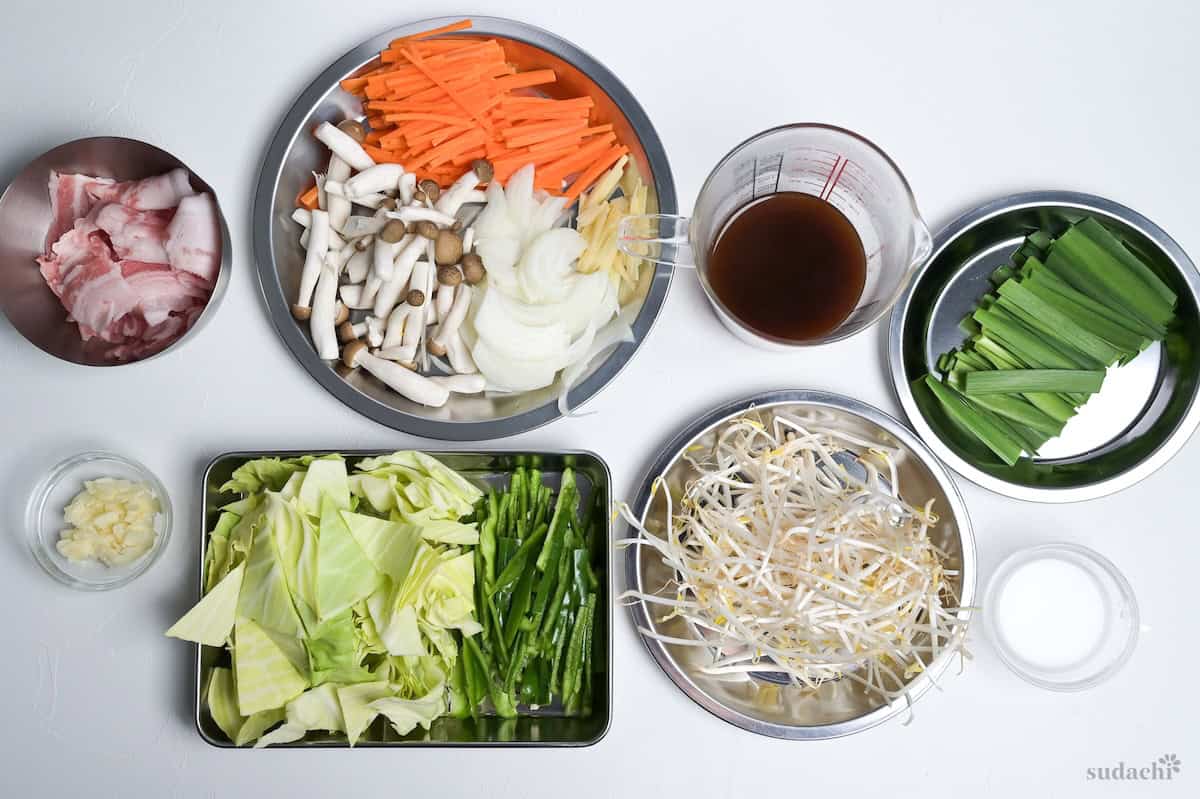
- Before you start, cut the vegetables to maximize efficiency. Peel and julienne 50 g carrot and 15 g ginger root. Thinly slice 2 cloves garlic , 50 g onion, and 50 g bell pepper. Roughly cut 100 g green cabbage, cut 30 g garlic chive(s) into 5cm (2") pieces, leave 50 g shimeji mushrooms and 100 g bean sprouts whole. Mix 1 tbsp cold water and 1 tbsp potato starch (katakuriko) in a small bowl to make a slurry. Mix the rest of the sauce ingredients (1 tsp Chinese-style chicken bouillon powder, 100 ml hot water, 2 tsp oyster sauce, 1 tsp Japanese soy sauce (koikuchi shoyu), ½ tsp salt, and 1 tsp sugar) in a heatproof pourable container. Set everything by the stove for later.
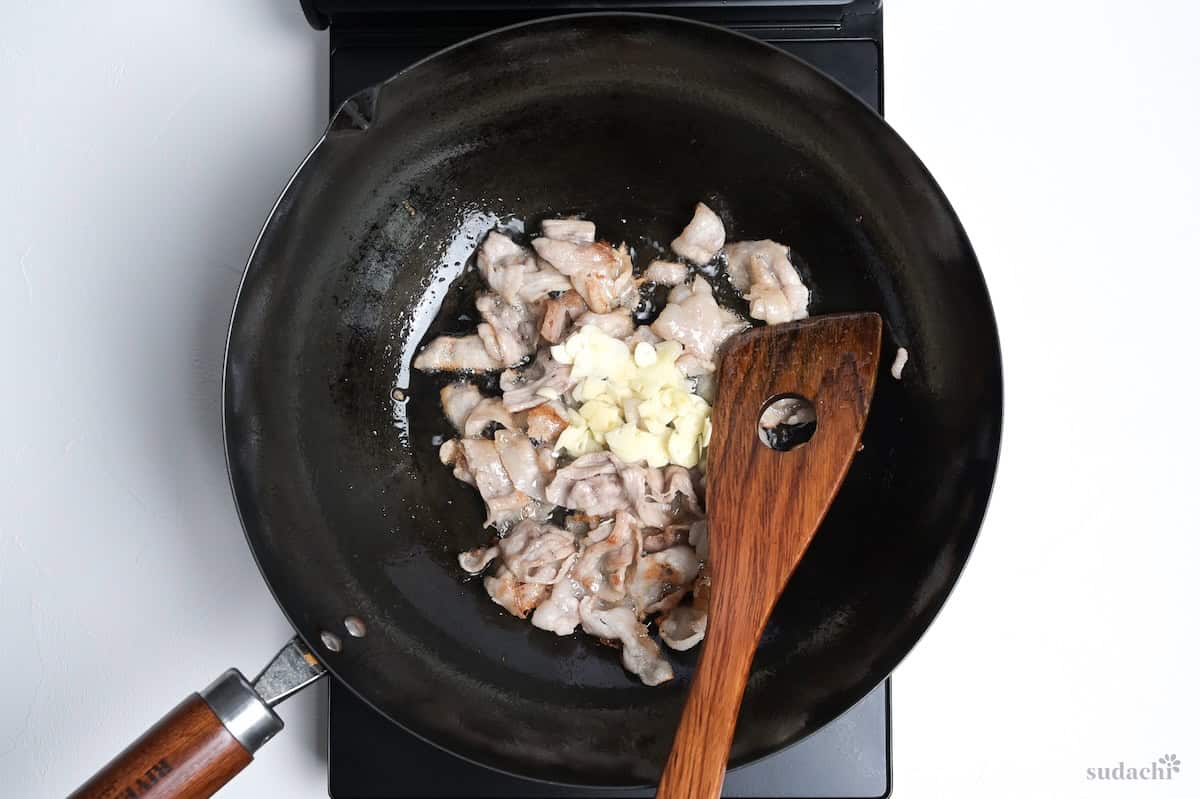
- Heat a wok over medium-high. Add 1 tsp cooking oil, and when it shimmers, arrange 100 g thinly sliced pork belly in a single layer and sprinkle with 1 pinch salt. Once seared, flip and brown on the other side before adding the sliced garlic.
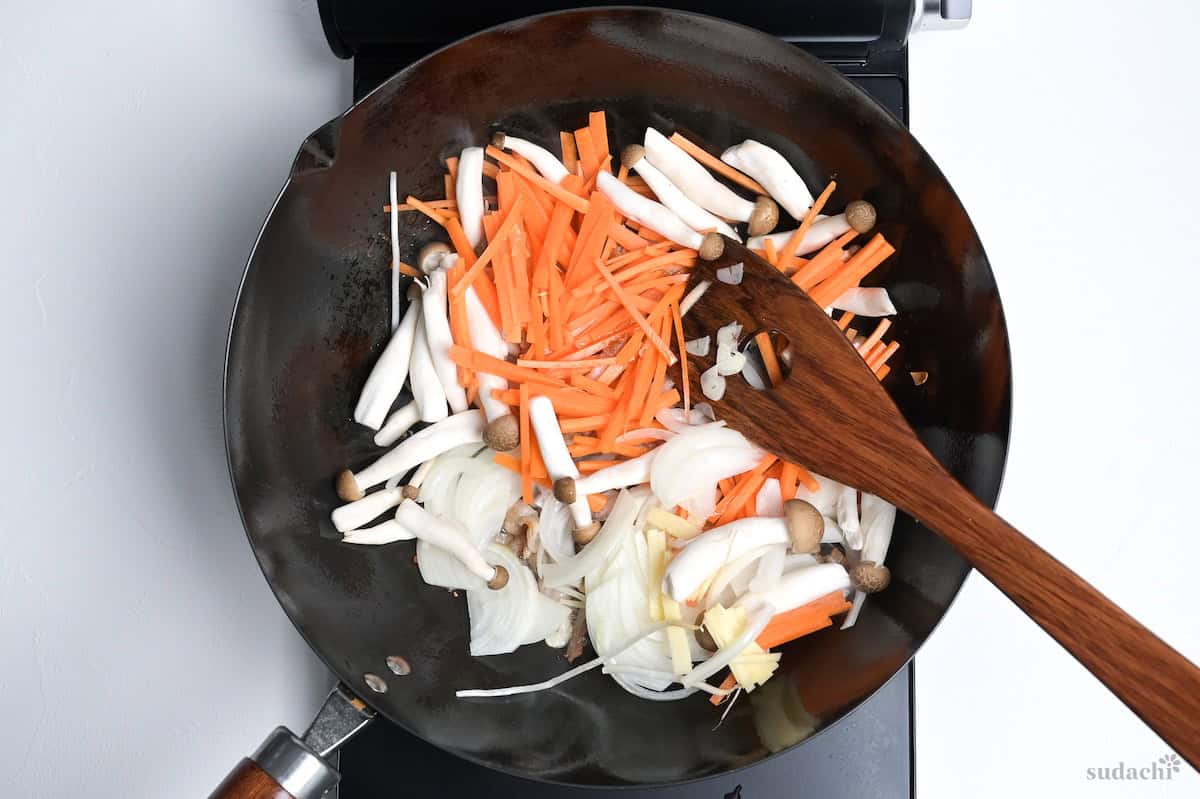
- Once you can smell the garlic aroma, add the ginger, carrots, mushrooms and onions. Stir fry for 1-2 minutes or until the carrots start to bend and onions become slightly translucent.
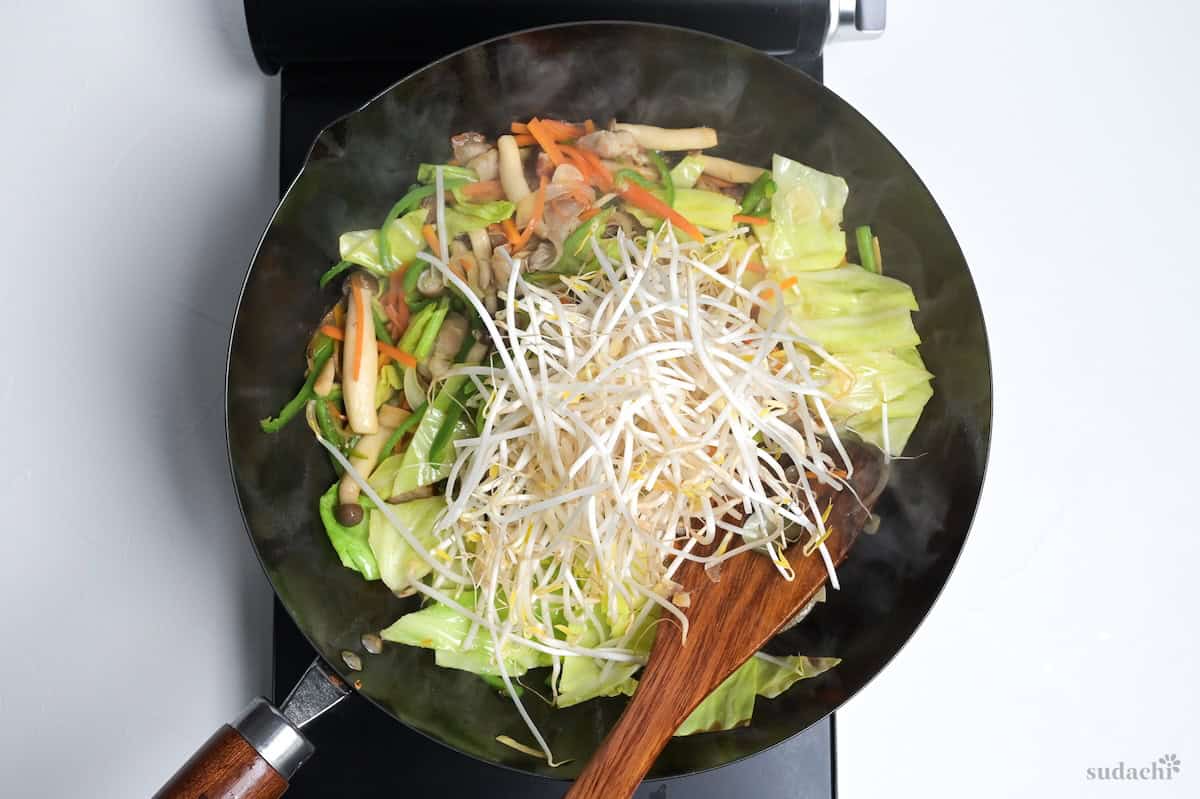
- Next, add the cabbage and bell pepper. Stir fry for 1-2 minutes, then add 100 g bean sprouts and stir fry for another 30 seconds to 1 minute.
- Add the garlic chives, then pour the premixed sauce around the pan and mix well (deglaze the bottom if neeed).
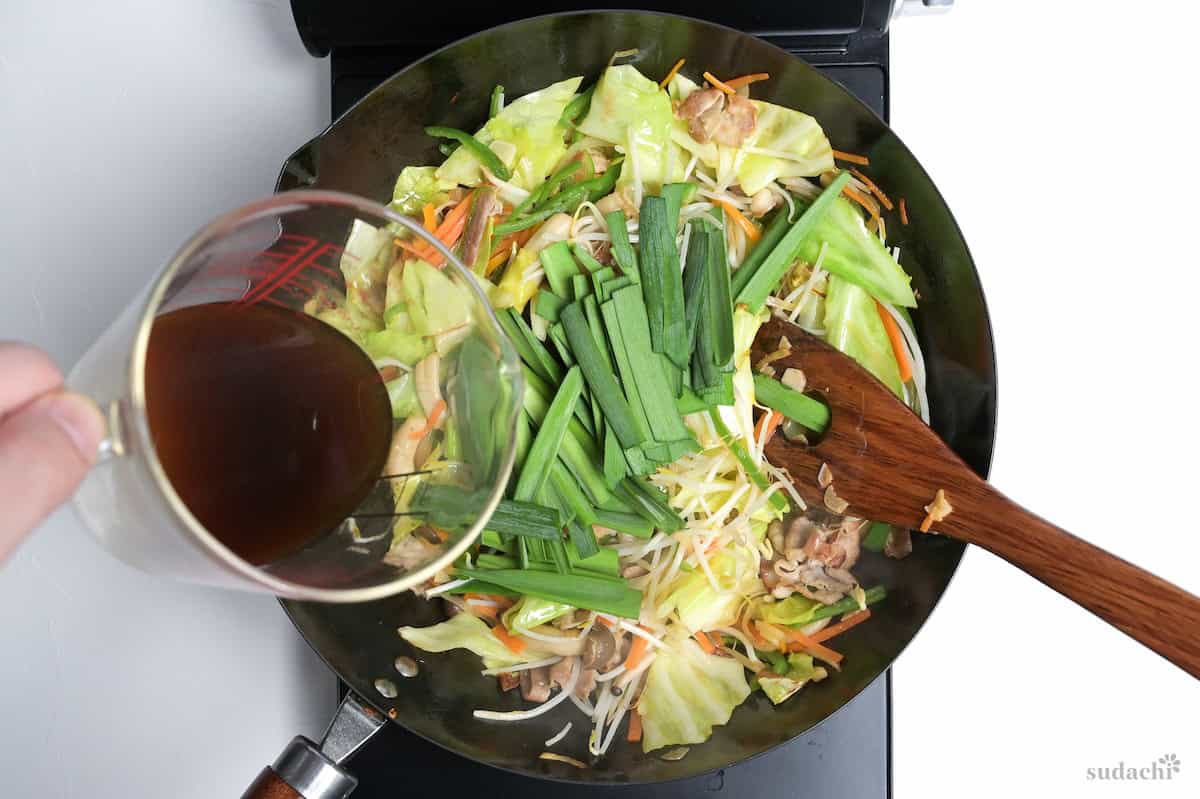
- Whisk the slurry once more, then pour it into the pan and mix continuously until the sauce becomes thick, glossy, and clings to the pork and vegetables.

- Turn off the heat and drizzle with toasted sesame oil.
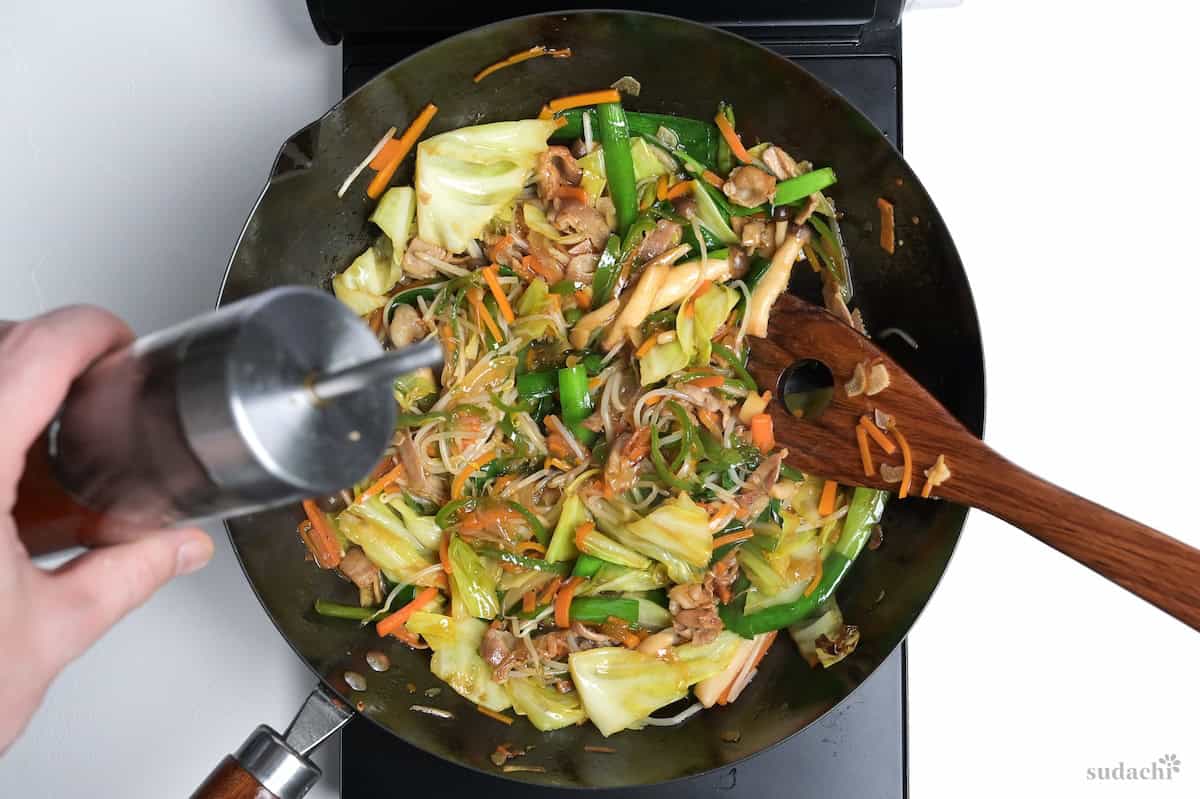
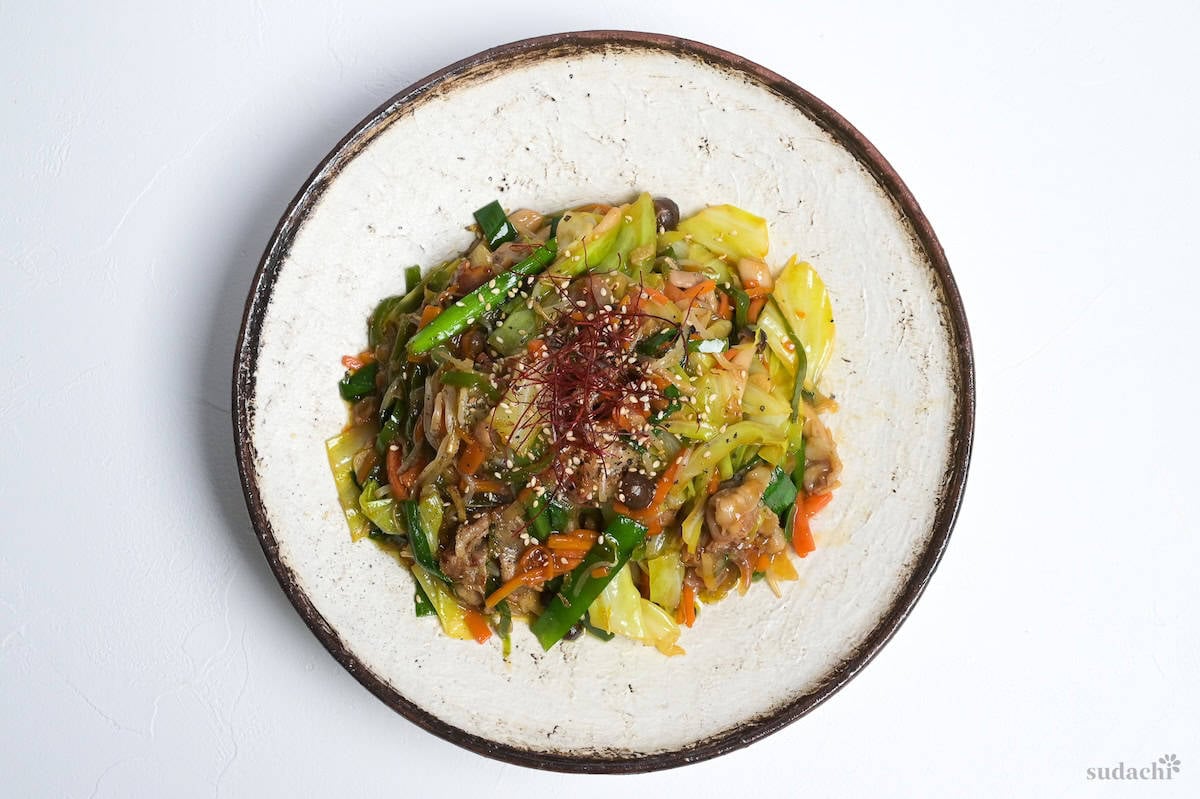
- Plate up and sprinkle with toasted white sesame seeds and chili threads. Enjoy with white rice.
Notes
Protein Swaps: Chicken thigh strips, shrimp, or atsuage tofu/aburaage are excellent protein alternatives.
Treat moisture as the enemy! Spin/pat-dry all washed vegetables, so you hear a steady sizzle (evaporation) instead of wet bubbling (steaming), otherwise yasai itame turns watery and bland from trapped steam.
Respect your pan's capacity: Keep the pan no more than 1/2-2/3 full at any moment so temperature rebounds for light searing and aroma. It's especially important if you don't use a wok.
When adding the sauce, pour it around the sizzling perimeter of the pan rather than directly onto the center of the food. This "flashes" the liquid against the hot metal, caramelizing the sugars and intensifying the savory fragrance.
Re-stir the starch slurry right before using and drizzle it in while stirring.
Bouillon powder brands vary. If yours is stronger than mine (1 tsp per 200 ml water), use a touch less to avoid oversalting.
Full Recipe QR Code↑↑