

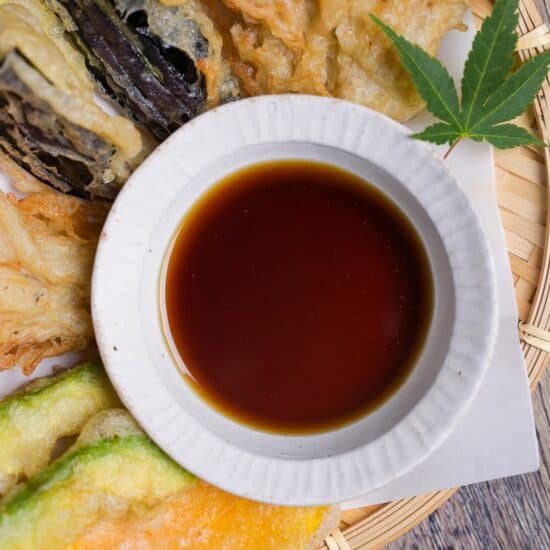


The sauce for my tendon, the tempura rice bowl, is deliberately bold, sweet, and thick. It has to be, because it soaks straight into the rice.
The same tempura eaten with dipping sauce calls for the exact opposite. There the ingredients inside the crisp batter take center stage, so I build the tentsuyu around a gentle dashi base and add just enough soy sauce and mirin to give it a clean outline.
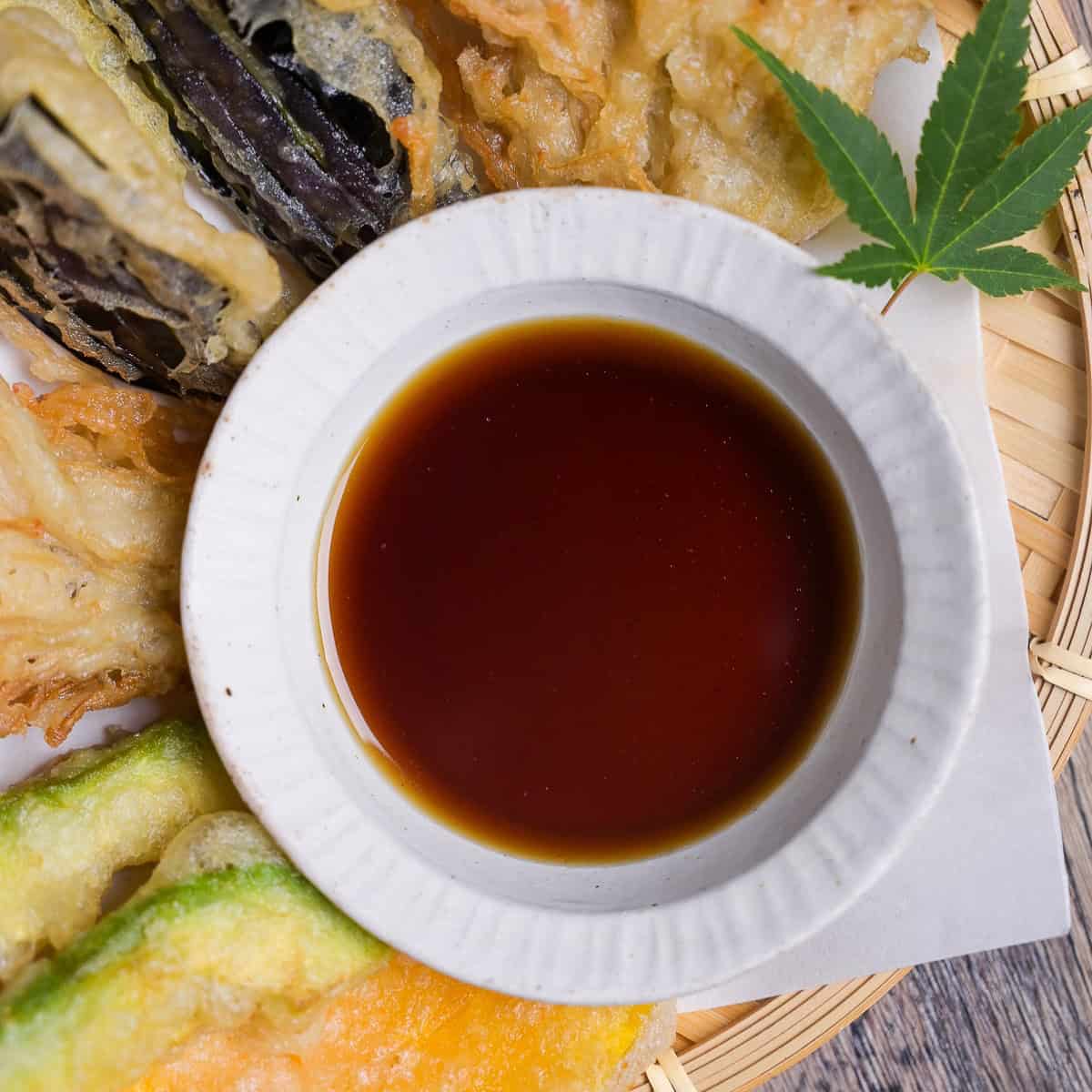
Tentsuyu
Recipe Snapshot
- What is it? The small bowl that comes beside tempura in Japan. Dashi, soy sauce, and mirin, heated once, with grated daikon stirred in. Home kitchens and restaurants both do this.
- Flavor profile: Dashi arrives first, and salt and sweetness trace its outline. Barely warm in the mouth, the grated daikon cuts the oil and your chopsticks reach for another piece.
- Why this recipe works: Once the soy sauce is in, kill the heat and add more bonito flakes (katsuobushi). Dashi heavier than standard keeps it behind the tempura.
- How to make it: Bring the dashi and mirin to a boil, add the soy sauce and let it boil briefly, then strain. No special equipment. Grate the daikon right before you eat.
- What to expect: With dashi ready, 10 minutes takes you from stove to bowl, and it makes 2 small dipping bowls. The stumbling point is reheating too far and softening the coating.
Summarize & Save this content on:
What Is Tentsuyu?
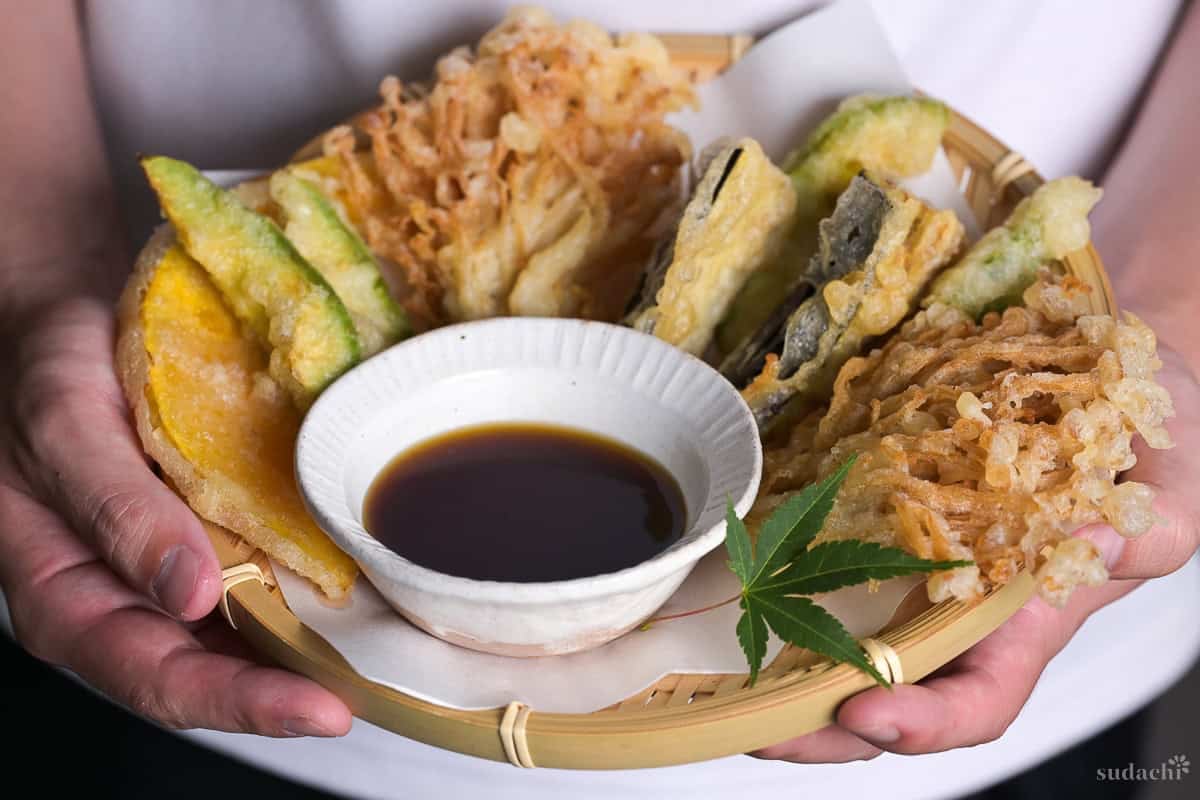
Tentsuyu is a light Japanese dipping sauce made for tempura. It is mostly dashi with only a small amount of soy sauce and mirin. The thinness is intentional so the sauce does not overpower the delicate flavor of the ingredients inside the batter.
It is easy to confuse with the mentsuyu that sits on the same supermarket shelf, but that one is much stronger and saltier because it is meant for noodles. Tentsuyu is heated only once for a short time, so its concentration stops right there.
Tentsuyu began as street food. In the second half of the Edo period (1603-1868), rapeseed oil became cheap and plentiful, so tempura stalls popped up all over Edo. Vendors deep-fried small pieces of seafood on skewers in oil. Customers ate them standing up. A skewer cost about ¥100 in today’s money. There was no individual bowl of sauce. A single large bowl sat on the stall. People dipped their skewer in, added grated daikon, and ate. The thick, dark, heavy batter from the stall fire needed cutting, so the light dashi-forward broth and sharp daikon did exactly that. The character of tentsuyu was set right there.
My ratio is 5 parts dashi to 1 part mirin to 1 part koikuchi soy sauce. That is 1 extra measure of dashi compared with the common 4-1-1 standard. More dashi lowers the relative strength of the soy sauce and mirin. I never add sugar. The natural sweetness of mirin is enough, and extra would push sweetness forward. I also skip citrus. 2 strong aromas would fight and the dashi would lose. In Kansai some cooks blend in light-colored (usukuchi) soy sauce, but I stick to dark only. Of course you can use the light-colored kind if you prefer. My last step is to drop in a small handful of bonito flakes after I remove the pot from the heat. The flakes give aroma without clouding the broth or adding any sourness.
Tempura Dipping Sauce Ingredients
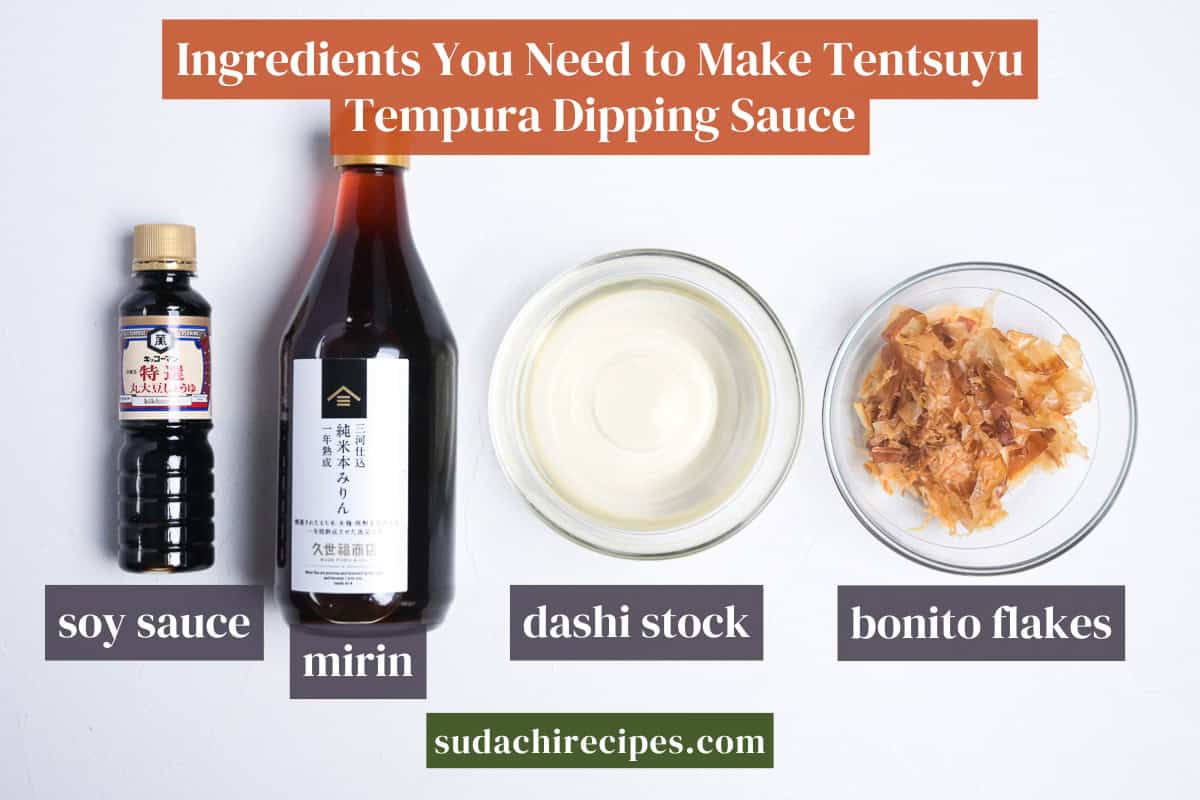
- Dashi: Dashi is what this sauce tastes of. The soy sauce and the mirin go in at fixed amounts, so when the dashi is weak the whole bowl comes out thin. For tempura, dashi drawn from kombu and bonito flakes (katsuobushi) is where you feel the difference most. I usually lean away from dashi granules for this, but if granules are all you have, don’t let that stop you from making this recipe.
- Mirin: The sweetness and the shine come from the mirin. Nothing here carries sugar, so this is the only place it can come from. Hon-mirin counts as alcohol, so an Asian grocer may shelve it with the drinks.
- Bonito flakes (katsuobushi): This is the handful that goes in after the heat is off. It is there for aroma alone, and it is the backbone of this recipe. The steep is short, so reach for the thin, wide shavings.
Substitutions & How to Customize
The dashi and the mirin both have swaps, and the heat in the grated daikon moves with whatever you are frying that night.
Substitutions:
- Dashi → Shiitake and kombu dashi: This is the route to a vegan or vegetarian bowl. Dashi drawn from dried shiitake and kombu still stands the umami backbone up properly. Losing the bonito aroma leaves the sauce quieter, with rounder edges.
- Hon-mirin → Mirin-style seasoning: You still get the sweetness and the shine. It carries almost no alcohol, so it does without the part where heating drives the alcohol off and takes the sharp edges with it.
Have trouble finding Japanese ingredients? Check out my ultimate guide to Japanese ingredient substitutes!
How to Customize:
- Momiji oroshi (grated daikon with chili): Poke a hole into the daikon with a chopstick, push a dried red chili into it, and grate the 2 together. The heat rides along and the sauce cuts the oil harder for it. When you want it done fast, stirring ichimi togarashi (ground red chili) into plain grated daikon gets you close.
- Pick the heat by which end of the daikon you grate: A daikon runs hotter toward the tip and sweeter toward the leaves. Grating a different stretch of the same root moves the heat up or down. Work near the leaves on a night of delicate tempura and down toward the tip when the frying is richer.
How to Make My Tentsuyu
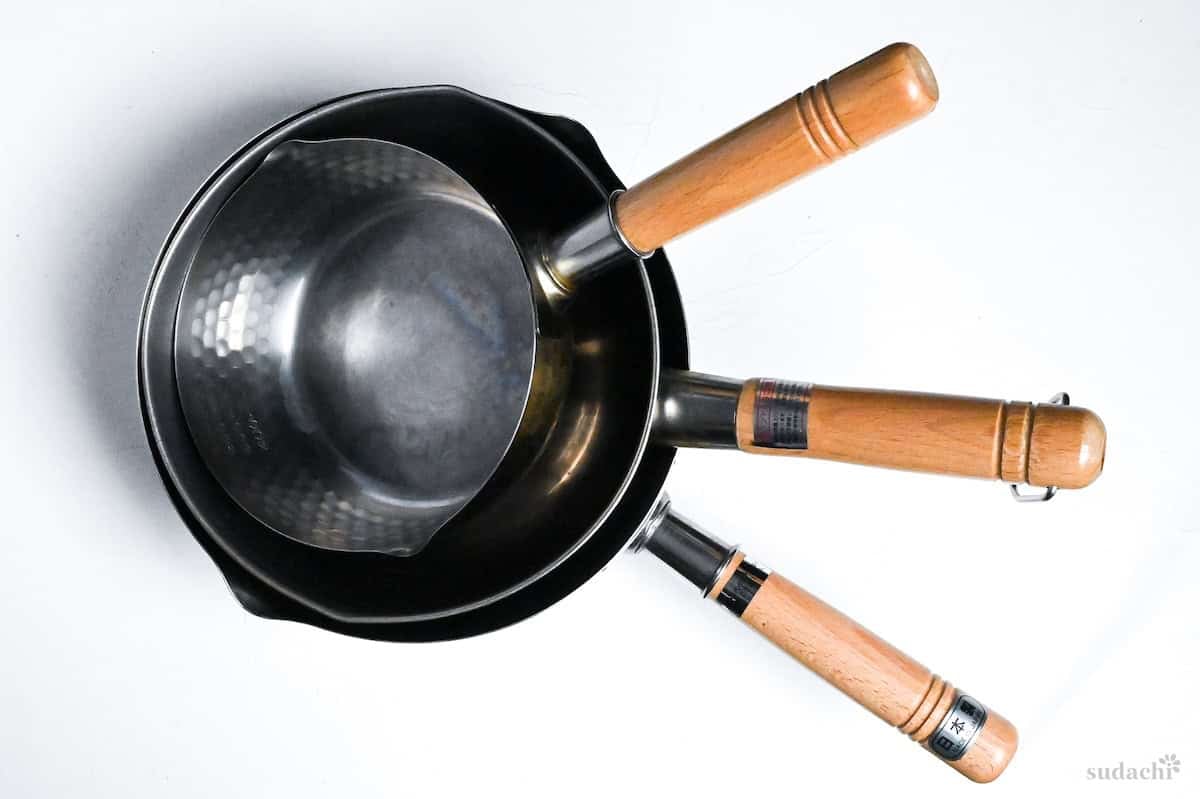
To develop this recipe, I used a yukihira nabe (Japanese single-handed pot).
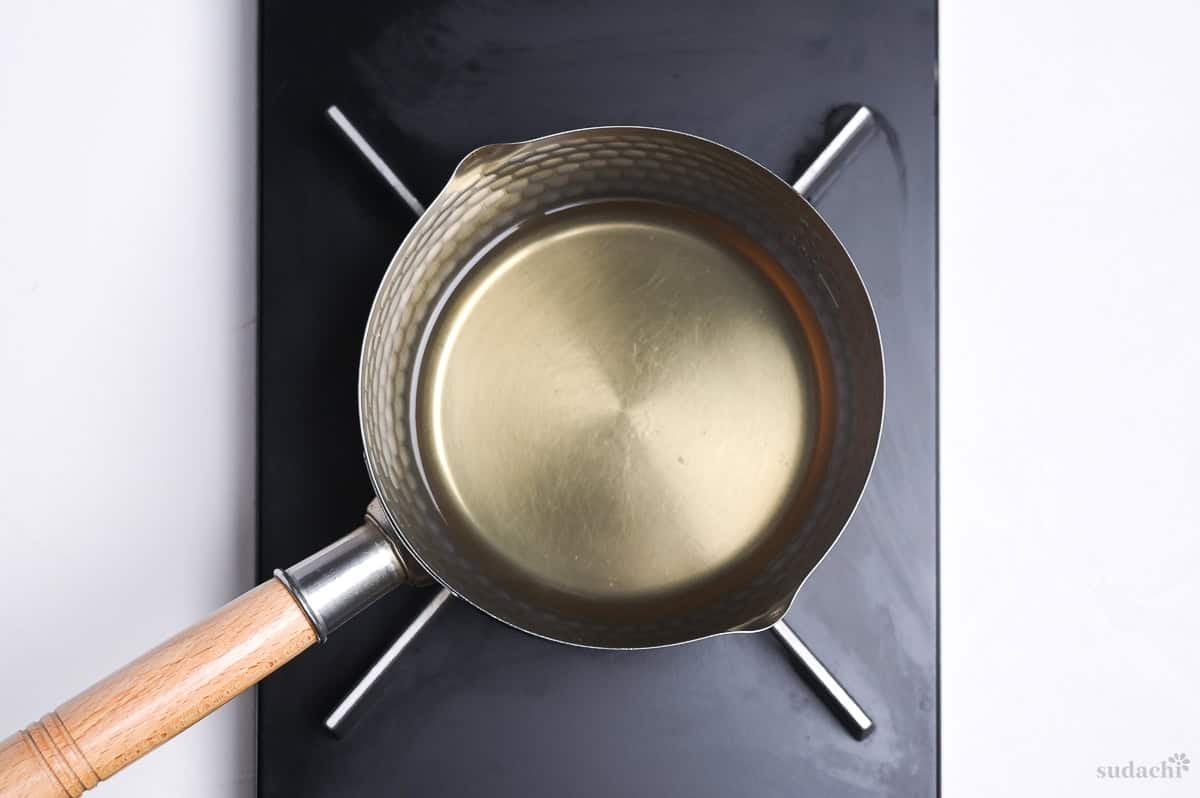
i. Put the dashi and the mirin in a small saucepan over medium heat. Do not warm the dashi ahead of time.
ii. Once it comes to a boil, turn the heat down and hold it there for 1 minute. Be careful not to over-reduce.
iii. Add the Japanese soy sauce. Let it come back to a boil and kill the heat within 10 to 15 seconds.
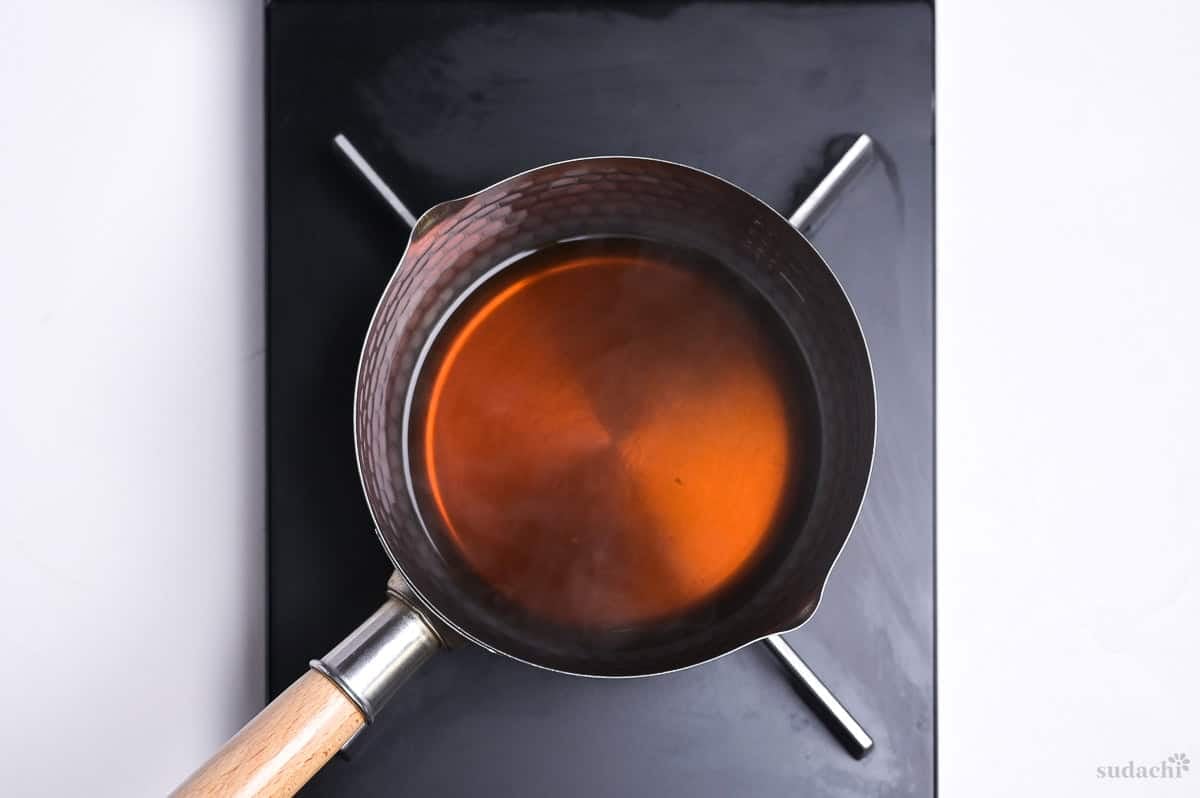
The aroma of soy sauce is built out of parts that leave before the water does. Keep it boiling and the color and the salt stay behind in the pan while the aroma drifts off into the kitchen air. Cutting the heat right after it boils once is what keeps that aroma inside the pan.
i. With the heat off, add the bonito flakes.
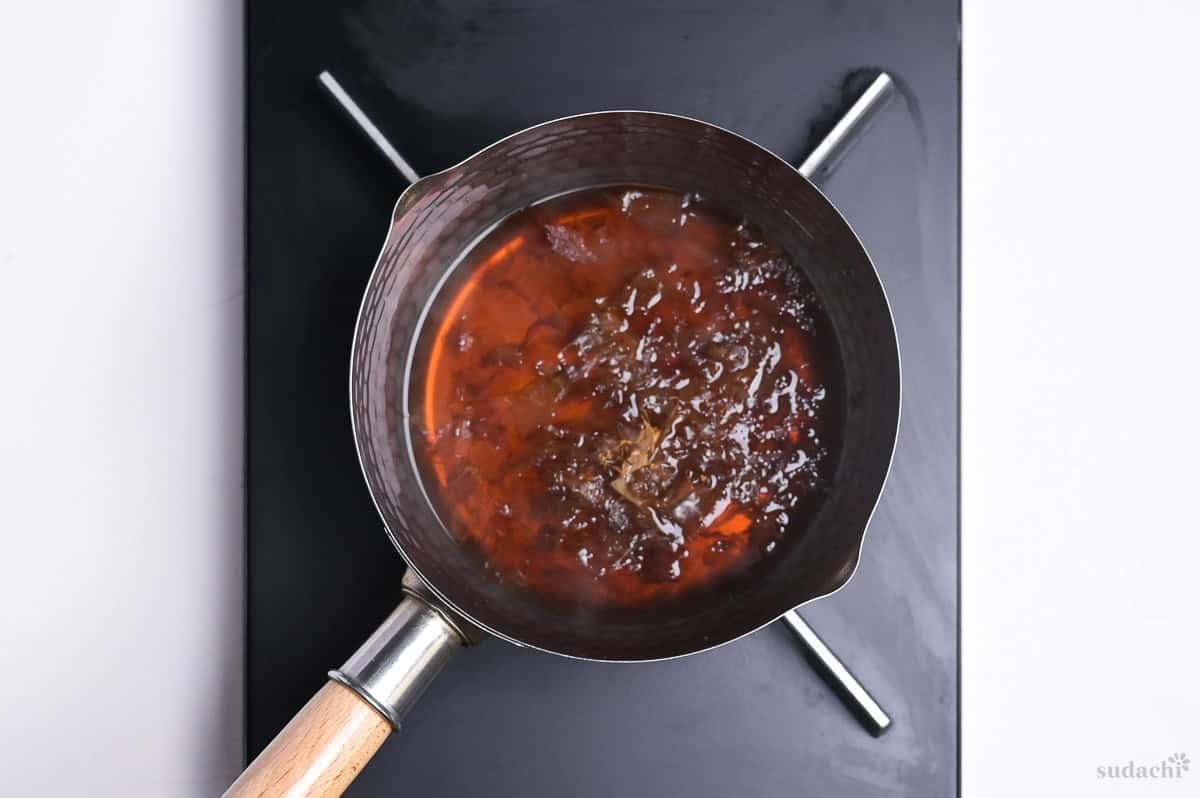
ii. Once the flakes start to sink, strain the sauce gently through a sieve lined with a paper towel, a flannel straining cloth (nel cloth), or cheesecloth.
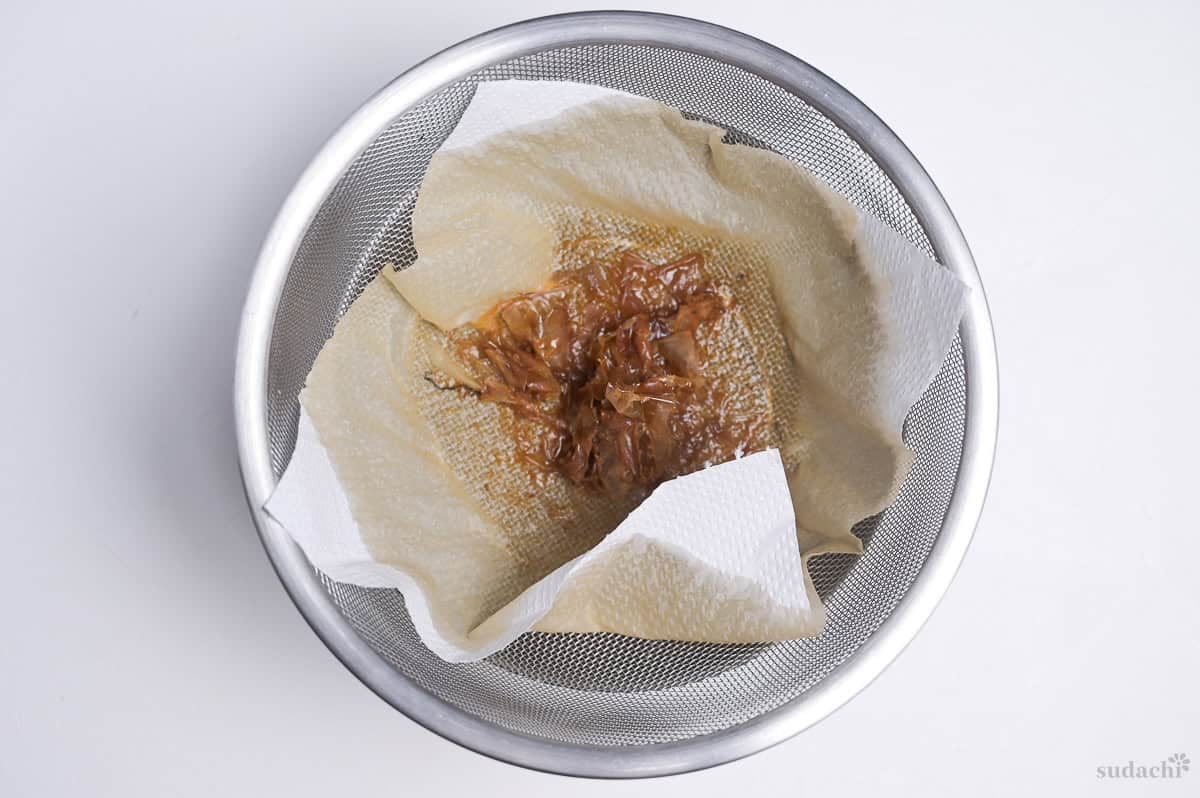
iii. Do not press it. Use only what falls through on its own.
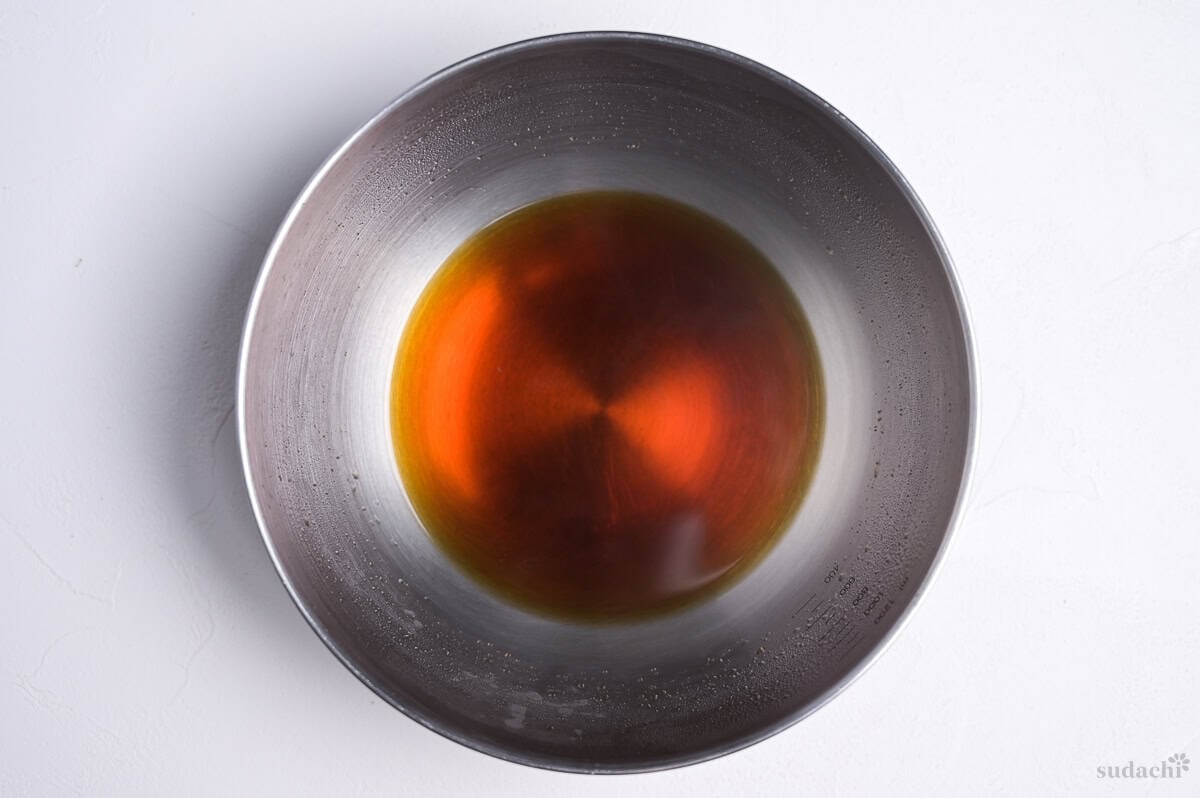
- If you are eating it the same day: leave it in the pan. You set the temperature right before you pour, so there is nothing to keep warm here.
- If you are making it ahead: cool it to a temperature you can touch and get it into the fridge within 30 minutes.
- When you are in a hurry: sit the whole pan in ice water.
Pressing pushes the insides of the flakes out along with the liquid. What comes across that way is cloudiness and a sour edge. Take only what falls on its own and the sauce stays clear.
Oigatsuo is the second handful of bonito flakes you drop in after the dashi is already finished. The word itself means chasing the bonito. Its job is different from the first steep. That first pull spends time moving umami into the water. This one puts aroma on top. Aroma is the first thing heat and time strip away, so the longer the flakes sit the thinner the smell becomes. I add them only after the heat is off and lift them the moment they begin to sink. The umami is already in the pan. What goes in now is the part that reaches the nose.
A nel cloth is cotton flannel, brushed on one side, and in Japan it is what people reach for to strain dashi and coffee. The 3 ways of straining listed in this step land at slightly different levels of clarity. The weave of a nel cloth is fine enough to catch the bonito particles a sieve alone lets through, and the sauce comes out a step clearer for it. Cheesecloth gets close once you fold it over a few times. A paper towel is in every kitchen and strains it plenty clear. Use whichever one you own.
i. Peel it thick, around 2 to 3mm.

ii. Hold the daikon upright and grate it against the fibers on the fine side of the grater, moving in circles.
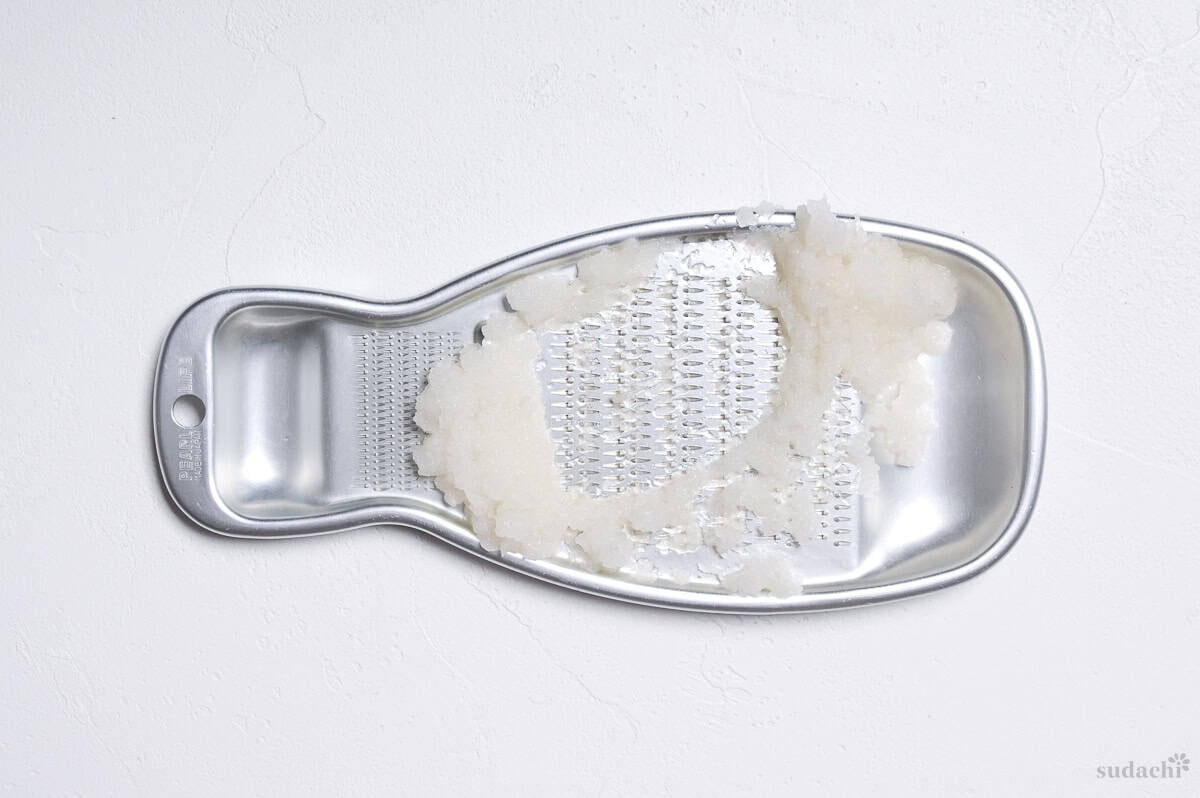
iii. Squeeze the grated daikon lightly. Pinch a little between your fingers and stop at the point where the liquid falls in drops. Squeeze harder than that and you are left with fiber.
The heat is born the moment it is grated and starts falling from there. The rate of loss is fastest right after grating, and the most pungent lower part halves in about 30 minutes.
i. Reheat the tentsuyu and take it off just before the steam rises. Do not let it boil. It should feel warm against your lip with no steam coming off. That is the landing point.
ii. Pour it into a small dipping bowl and stir the grated daikon through.
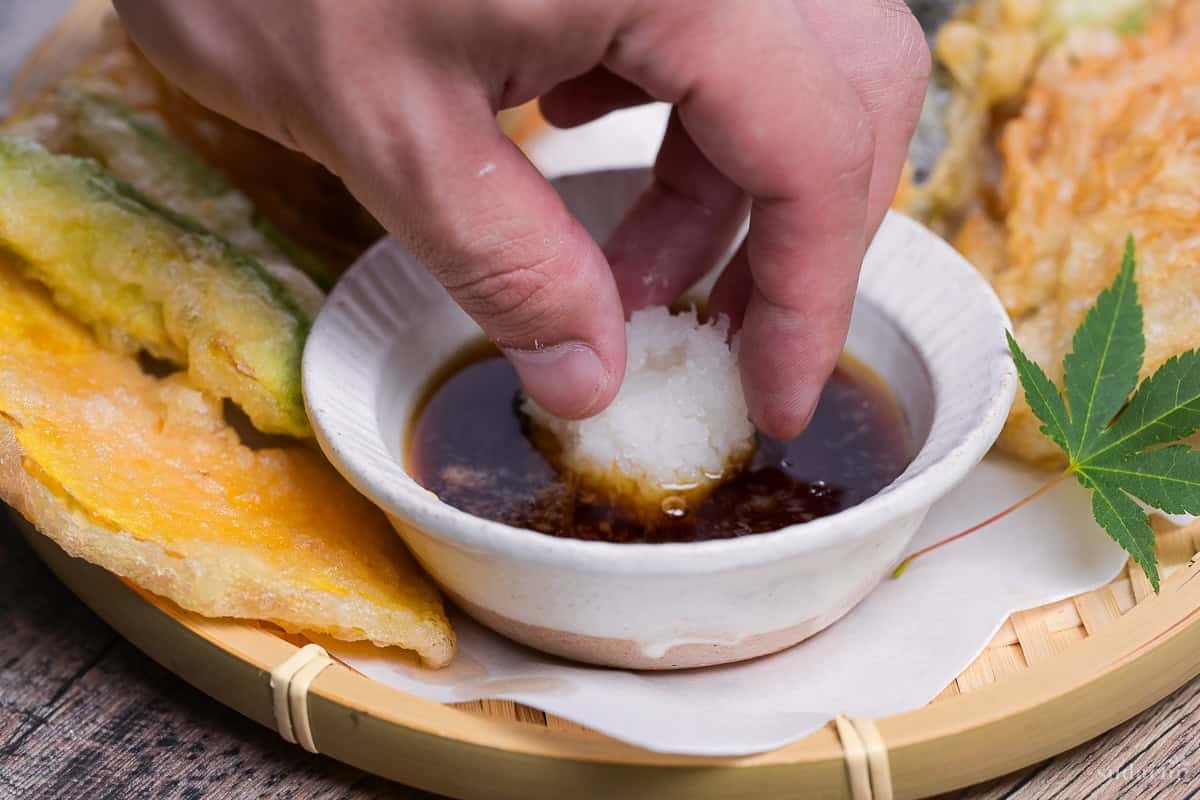
iii. Briefly dip a corner of freshly fried tempura and eat it straight away. Do not let it sit in the sauce.
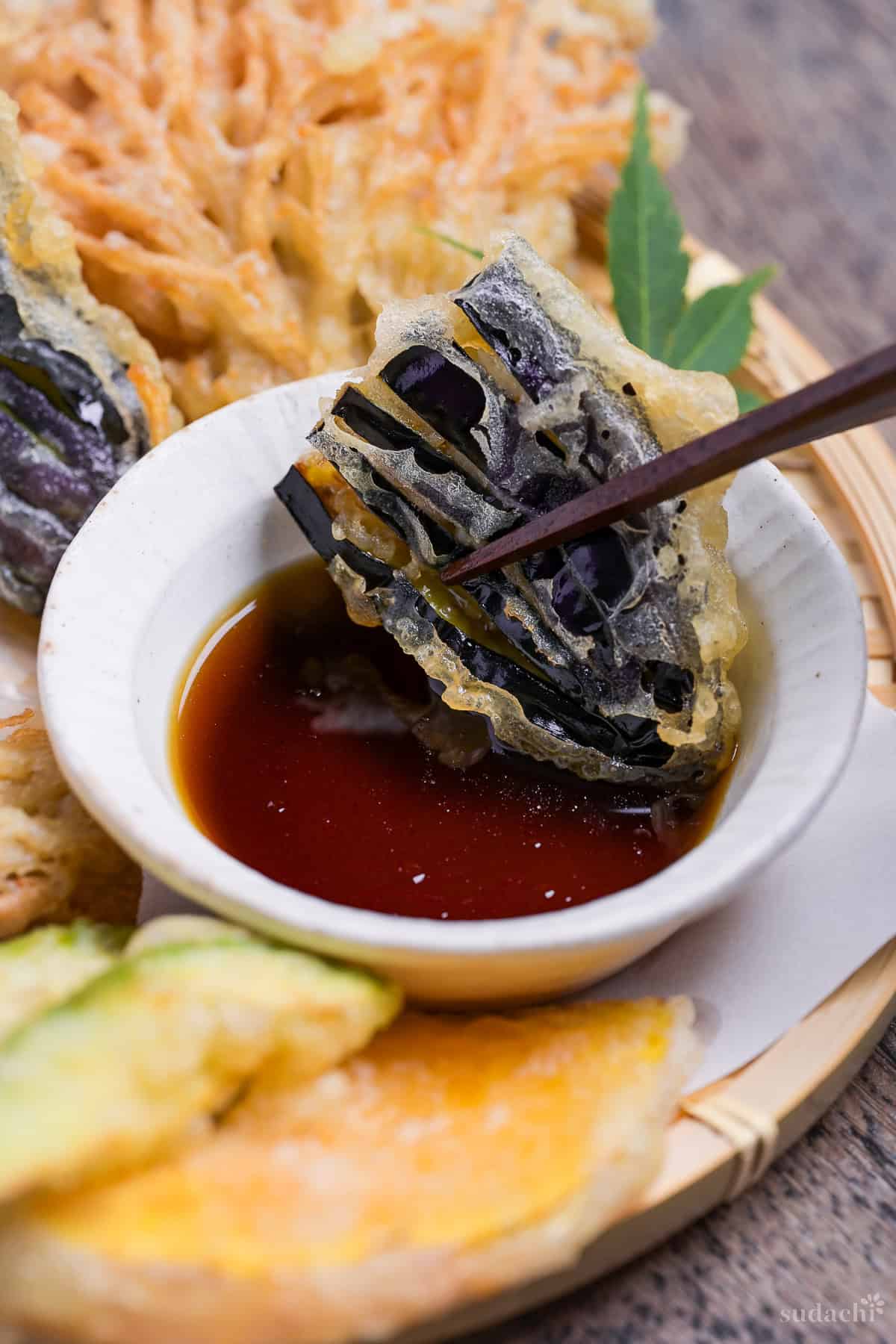
The inside of a fried coating is a mesh of tiny holes left where the water escaped. Those holes are what makes it light, and they pull liquid up just as readily. The hotter the sauce, the faster that happens. Stopping short of the steam lets you finish the piece while the coating still makes a sound.

Tips for the Best Tempura Sauce
- Stop the tsuyu just before the steam rises. The most common tentsuyu mistake gathers right here. The hotter the tsuyu, the faster the fried coating drinks it in and slumps. Aim for a bowl you can lift without seeing steam come off it, and leave the bowl itself unheated.
- When the tsuyu tastes thin, fix it on the dashi side. Tentsuyu stands on its dashi. Reaching for the soy sauce adds color and salt, and it pushes the flavor of the tempura into the background. Brew a stronger dashi and rebuild the tsuyu with it, or brew the dashi stronger the next time you make this.
- Squeeze the grated daikon lightly before you stir it in. An unsqueezed mound carries the water the daikon is holding straight into the bowl, and it thins out the sauce you just built.
The strength you set in the pan gets decided a second time at the bowl, by how hot you pour and how wet the daikon is.
Storage & Meal Prep
Fridge: Keep it in a sealed container in the fridge for 2 to 3 days.
Freezer: Not recommended. The aroma this sauce is built around fades as it freezes and thaws.
Meal prep: The tsuyu itself can be made the day before. Grate the daikon right before serving.
Reheating: Warm it back up to just under the steam. Boiling drives the aroma off.
What to Serve With Tentsuyu
- Kakiage
- Eggless Vegetarian Tempura
- Anago no Tempura (Conger Eel Tempura)
- Shiso Tempura
Tempura Dipping Sauce Troubleshooting
A salty tsuyu comes from over-reducing it or from too much soy sauce, since water leaves the pan over the heat and the salt left behind reads stronger for it. Add more dashi (liquid) to loosen it, and if the sweetness thins out along with it, return a few drops of mirin. A flat tsuyu has a different cause, which is a weak dashi. Brew a stronger one and stir a little of that in, and the tsuyu lifts back up right there in the bowl. From the next batch, drop the heat the moment it boils, count 1 minute, and take the pan off there.
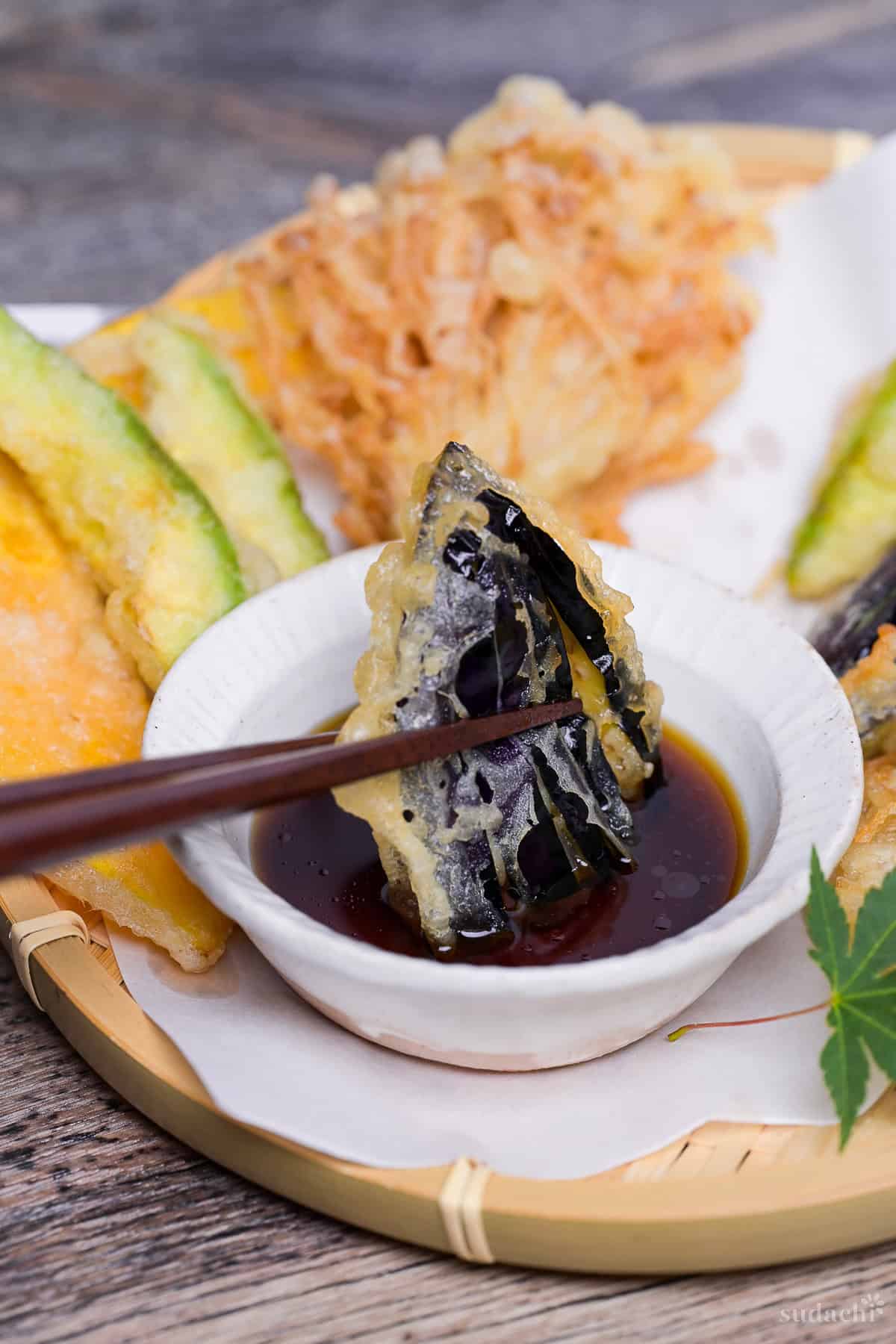
Either the tsuyu was too hot, or the piece of tempura sat in it for too long. The inside of a fried coating is a mesh of fine holes left behind where the water escaped, and those holes pull hot liquid in faster than cool. If the pan is still hot, pour the tsuyu into the dipping bowl and wait until the steam disappears. Dip just the corner of the piece and eat it right away.
The alcohol in the mirin has yet to cook off. If you start counting before the pan is truly boiling, the minute passes without the liquid ever getting there, and the sharp edge of the alcohol stays in the finished tsuyu. To fix the pan in front of you, put it back over low heat and wait until the smell turns sweet, then add dashi to replace what evaporated so the strength holds. Next time, watch for the dashi and mirin to reach a real boil first, then lower the heat and start counting there.
More Japanese Tempura Recipes
With the sauce settled, all that is left is choosing what to dip in it, and the frying method for each piece lives in my tempura recipe collection.
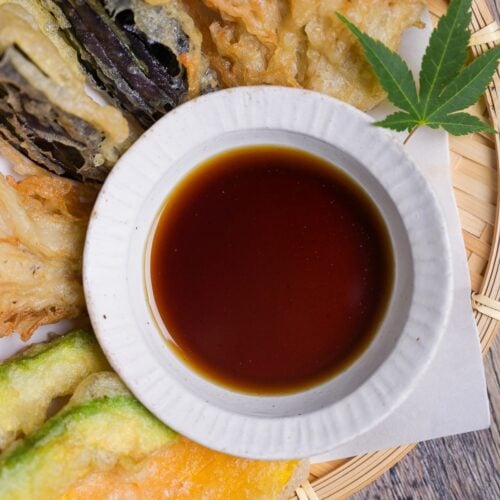
Tentsuyu (Authentic Tempura Dipping Sauce)

Ingredients
- 100 ml dashi stock made with kombu and bonito flakes, or shiitake and kombu dashi
- 4 tsp mirin
- 4 tsp Japanese soy sauce (koikuchi shoyu) or usukuchi shoyu
- 3 g bonito flakes (katsuobushi) a small handful
- grated daikon radish (daikon oroshi) optional, to taste
The ingredient brands and tools I trust are in my Japanese pantry guide and my cooking tools guide.
Can’t find certain Japanese ingredients? See my substitution guide here.
Instructions
- Pour 100 ml dashi stock and 4 tsp mirin into a small saucepan over medium heat. Once it boils, turn the heat down and let it gently simmer for 1 minute.

- Add 4 tsp Japanese soy sauce (koikuchi shoyu). Let it come back to a boil, then turn the heat off after 10 to 15 seconds.
- With the heat off, add 3 g bonito flakes (katsuobushi).
- Once they start to sink, strain the sauce gently through a fine mesh strainer lined with kitchen paper. Do not press the flakes.
- To serve it the same day, leave it in the pan. To keep it, cool it until the pan is comfortable to touch and refrigerate it within 30 minutes. To speed that up, sit the pan in an ice bath.
- Just before serving, peel the daikon radish 2 to 3 mm deep (about ⅛ inch). Hold the daikon radish upright and grate it on a Japanese oroshi grater or star side of a box grater, moving in circles.
- Squeeze the grated daikon radish lightly in your hand. Pinch a little between your fingertips and stop when the liquid falls in drops.

- Pour 50 ml per person into a small dipping bowl and stir in 1 tbsp of the grated daikon radish. Dip a corner of each piece of freshly fried tempura and eat it straight away. Enjoy!


Leave a rating and a comment