

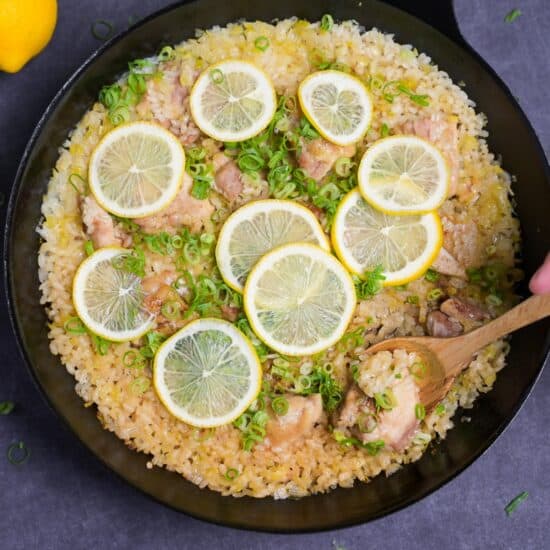


I am starting something new. A “Viral in Japan” series, where I take the recipes everyone here is talking about and remake them my own way, my own version to share with you.
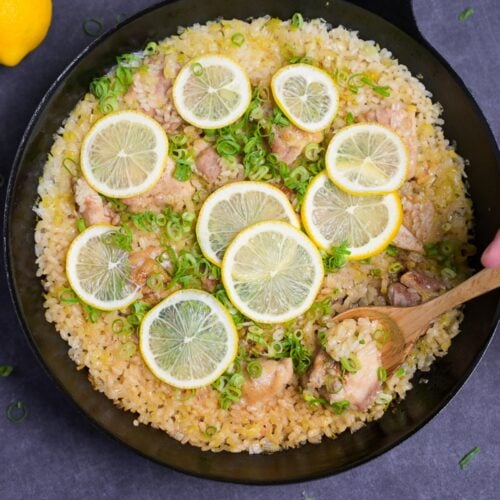
Paella made with Japanese rice? A negi-shio flavor? How does that even work? I promise it does. Come and give it a try.
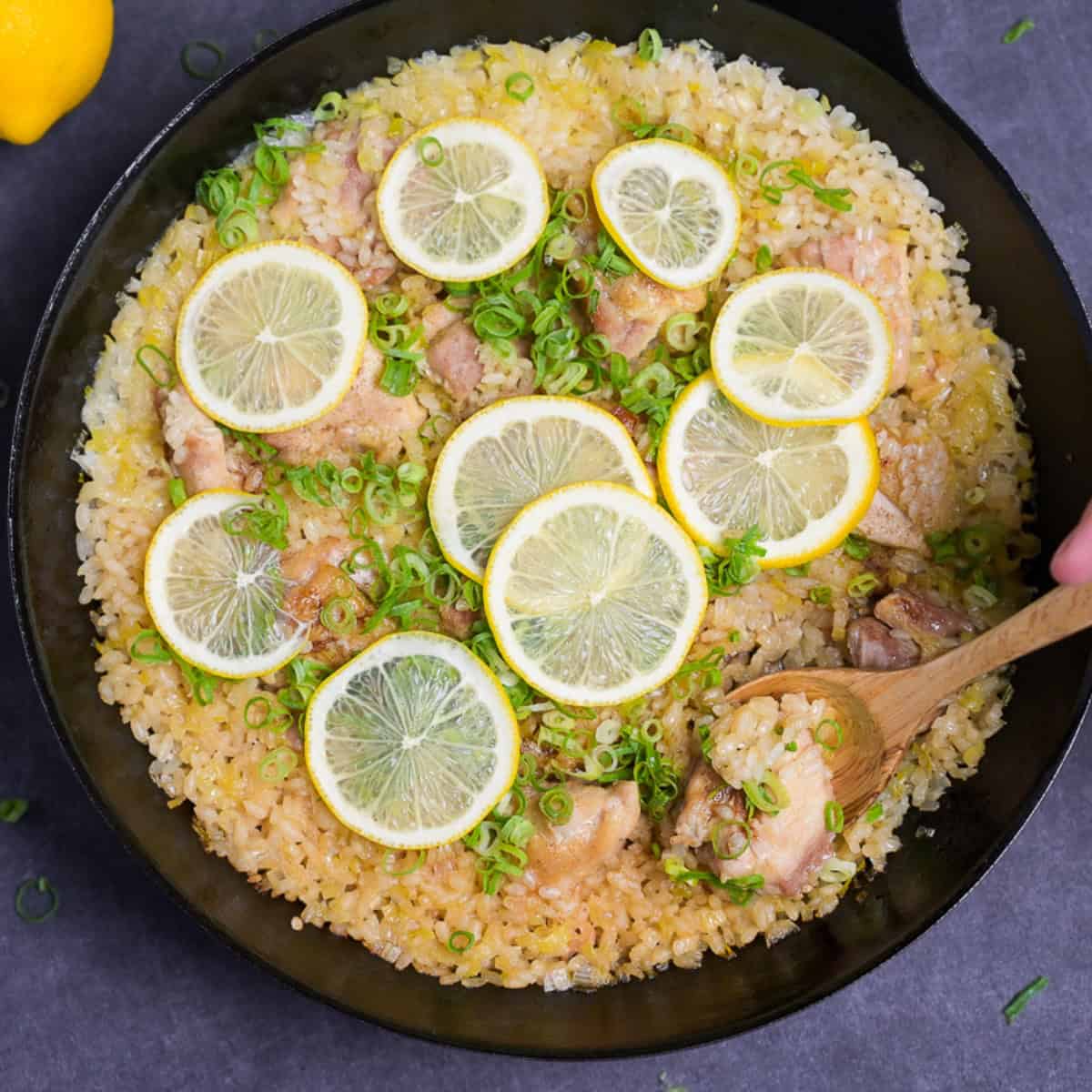
Negishio Paella
Recipe Snapshot
- What is it? A modern Japanese home-kitchen dish gone viral online, borrowing paella’s one-pan rice and crisp bottom but carrying Japanese negi-shio, the leek, toasted sesame oil, and salt flavor. Not traditional Spanish paella.
- Flavor profile: Savory and layered, with sweet softened long onion cooked into the rice and a raw, sharp green bite scattered on top, a nutty toasted-sesame aroma, and a crackly crust underneath.
- Why this recipe works: Unwashed rice goes in dry and drinks up the seasoned broth, then a final blast of high heat toasts the bottom into a crackly crust.
- How to make it: It all happens in a single pan on the stovetop. You sear the chicken, steam it in white wine, toast the rice, simmer, then crisp the bottom at the end.
- What to expect: About 45 minutes in a single pan, serving 2. The crust at the end is the spot to watch, so listen for a crackle and pull it before it scorches.
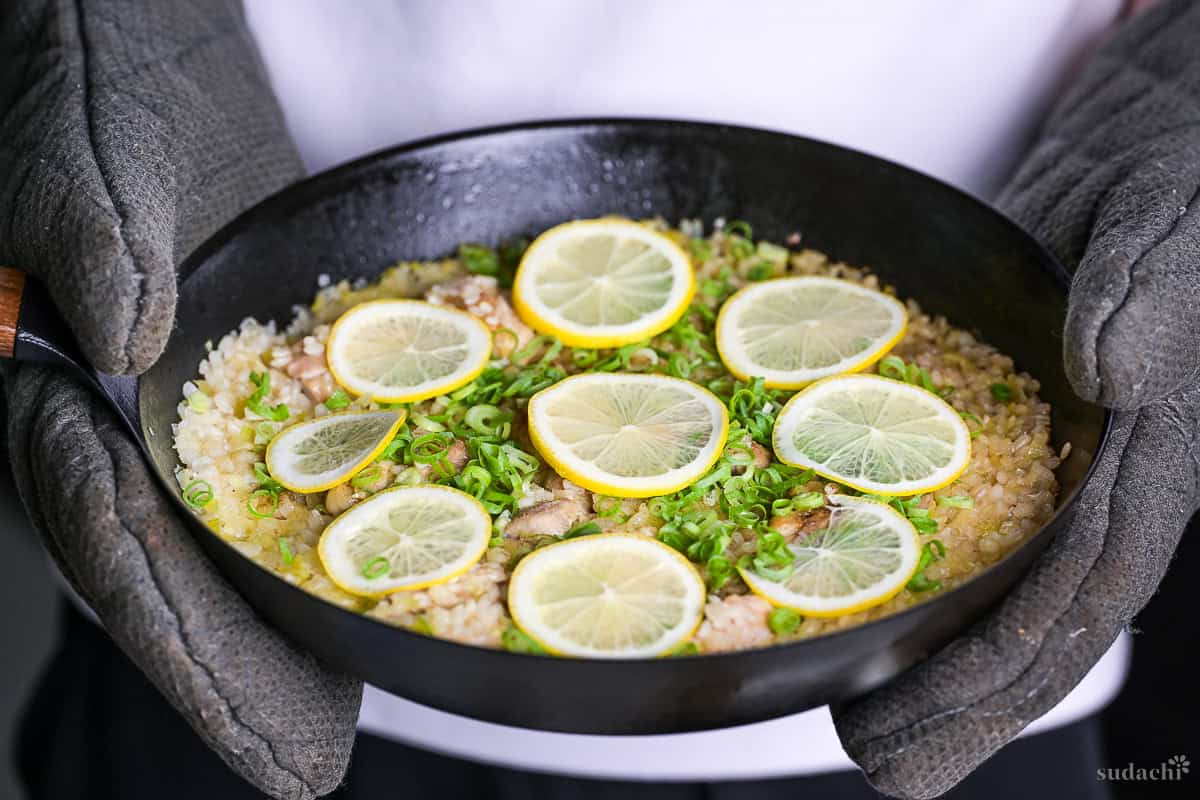
What Is Negishio Paella?
Negi-shio ranks among Japan’s great everyday flavors, the salt-and-sesame dressing you meet on grilled meat and at ramen counters, built on Japanese leek, sesame oil, and just enough salt to make everything taste louder. Put it into a flat pan of rice cooked until the bottom crisps and you have negishio paella, savory and layered rather than tomato-bright, with a nutty aroma and a green onion snap through every forkful.
The dish is genuinely new. It surfaced on Japanese social media, crossed a million views, and reached morning television in 2026, with no single cook you can name as its inventor. That is part of the charm. It is a playful mash-up that spread because it works, not because tradition handed it down.
I built mine to sit squarely between the worlds it comes from, Japanese seasoning meeting a Spanish technique, because leaning too far either way loses what makes the idea fun in the first place. Funny note: I used to work at a Spanish restaurant back in the day.
Negishio Paella Ingredients
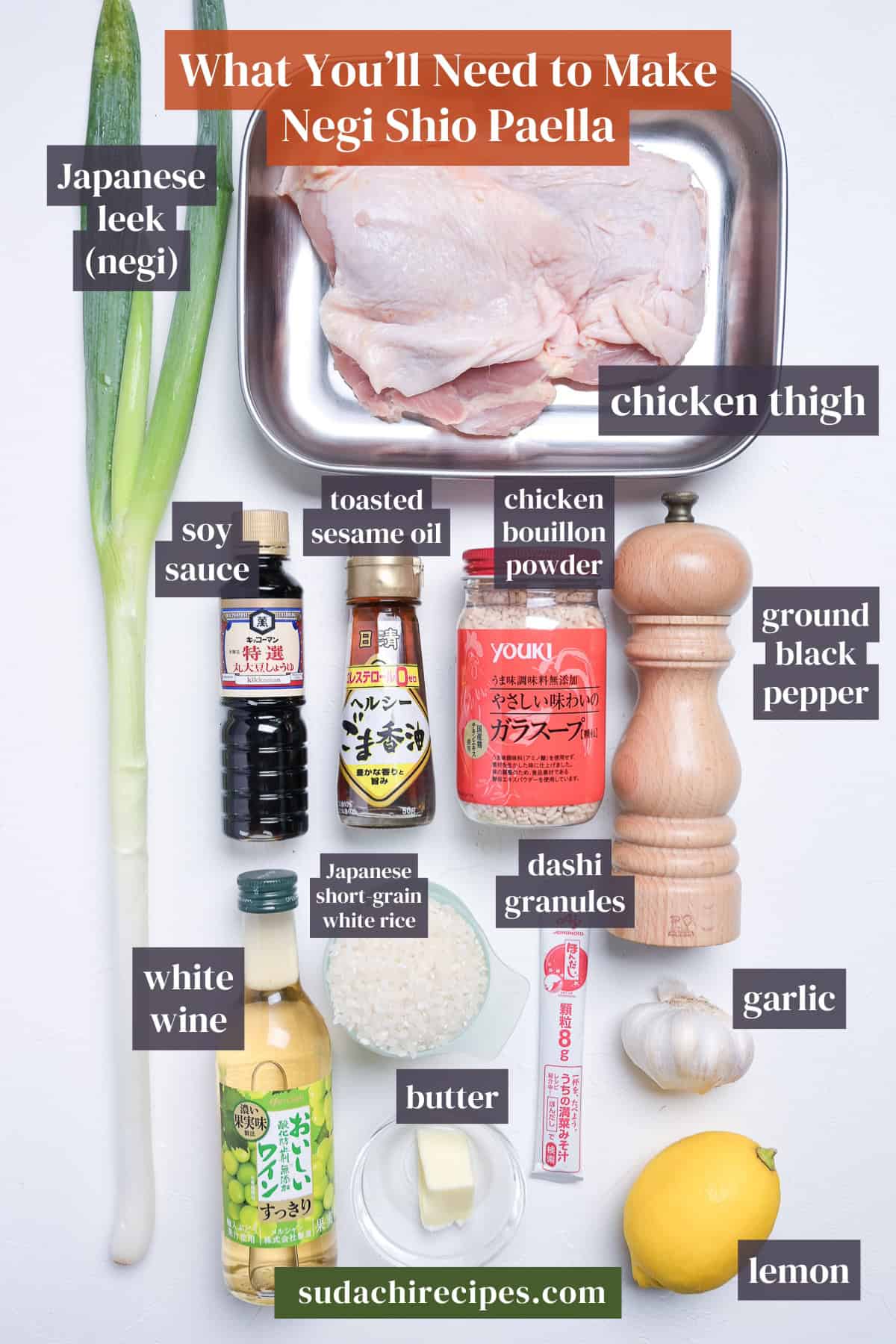
- Unwashed short-grain rice: The rice goes into the pan dry and unwashed, on purpose. Each grain arrives thirsty and drinks in the seasoned broth instead of plain rinse water, and the surface starch stays put to help the grains bind and crisp into a crust. Rinsing would wash that starch away and pre-fill the grain with water, so you would lose both.
- Japanese leek (naganegi): This is the negi in negi-shio, and it pulls double duty. Cooked into the rice it turns soft and sweet and lays down the base.
- Toasted sesame oil: This is what carries the roasted, nutty note through the dish. It goes in right at the end, drizzled around the edge of the pan and left to toast hard against the hot metal to build the crust underneath. Reach for a dark, deeply roasted bottle like Kadoya.
Substitution Ideas
- Toasted sesame oil → dial it back or blend: This is the line that makes negi-shio taste like negi-shio, so use less if the aroma feels strong, but do not reach for a flavorless oil, which leaves you with plain salted rice. The pale, untoasted kind (often labeled light sesame oil) brings none of the roasted scent either.
- Japanese leek (naganegi) → regular leek, large green onion, or scallion: Leek is the closest match for the cooked, sweet base, though it will not give you the raw bite on top. A large green onion or a bundle of scallions covers both jobs when that is all you have.
- Chinese-style chicken bouillon powder → other granules/powder: Any granulated bouillon works, since you only need a small spoonful for depth. Western chicken bouillon or Korean Dasida (beef bouillon powder) both land close.
- Raw rice → bomba or carnaroli, but not long-grain: Spanish bomba or Italian carnaroli drink the stock and hold a gentle bite, so they slot in cleanly. Long-grain or basmati is the boundary, they cook up dry and loose instead of the tender, lightly bound grains short-grain gives you here.
Have trouble finding Japanese ingredients? Check out my ultimate guide to Japanese ingredient substitutes!
How to Make My Negishio Paella
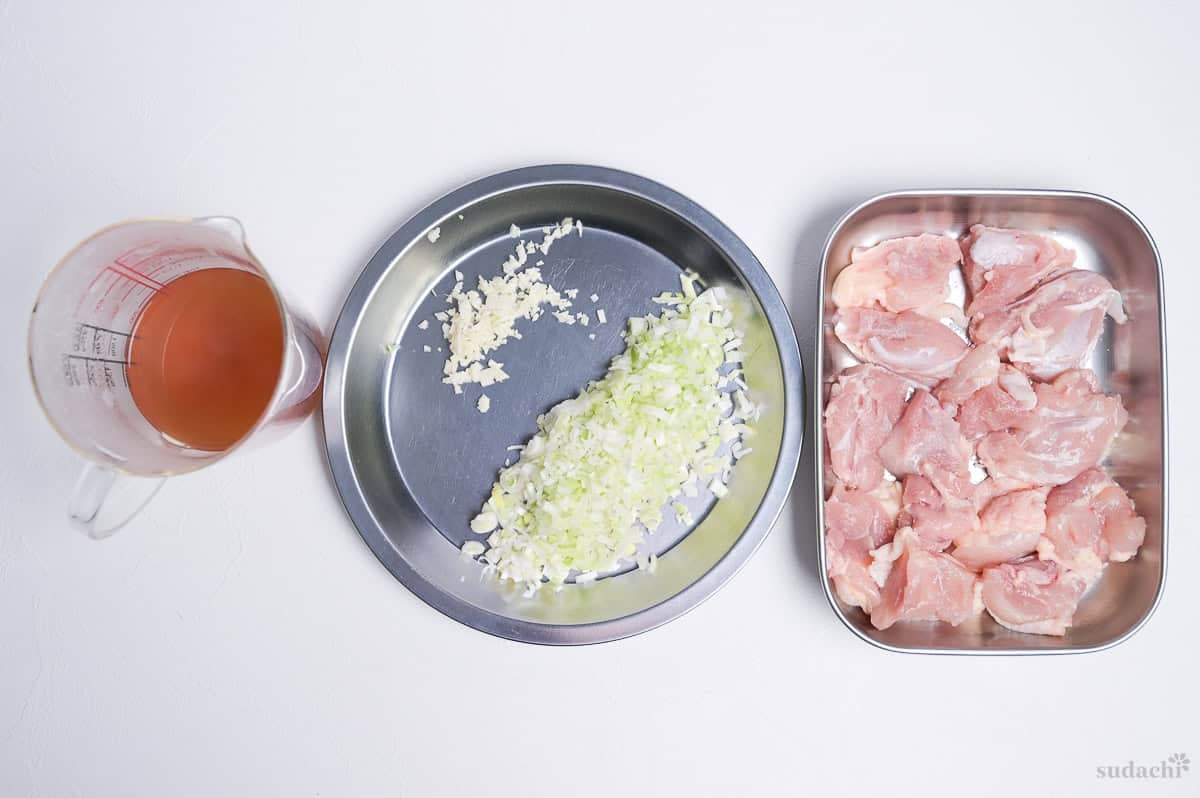
Before you start (Mise en place):
- Coarsely mince the leek. Peel and finely mince the garlic, cutting away the pale green sprout in the center first if there is one, since it can taste bitter.
- Cut the chicken thigh into large bite-size pieces and season it with salt.
- Stir the chicken bouillon powder, dashi granules, soy sauce, and salt into the hot water until everything dissolves. It is fine if it cools down before it goes in the pan.
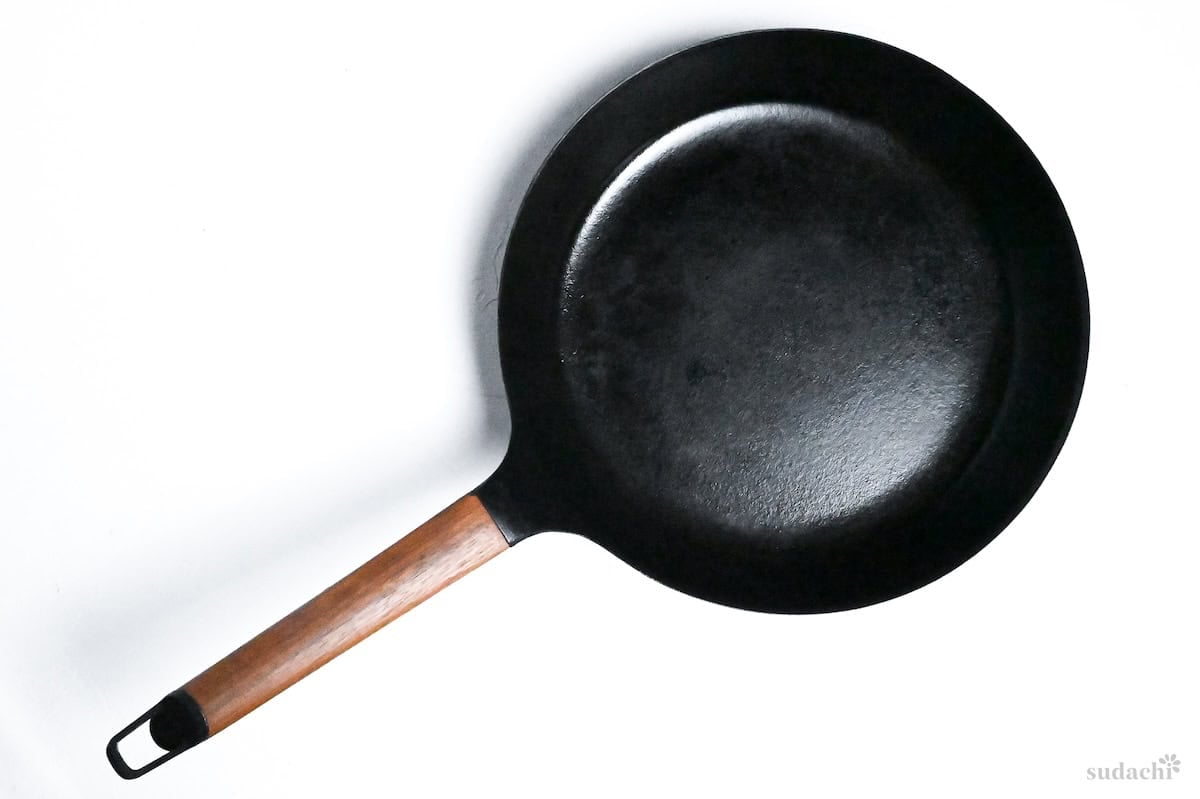
To develop this recipe, I used a 26cm cast iron pan.
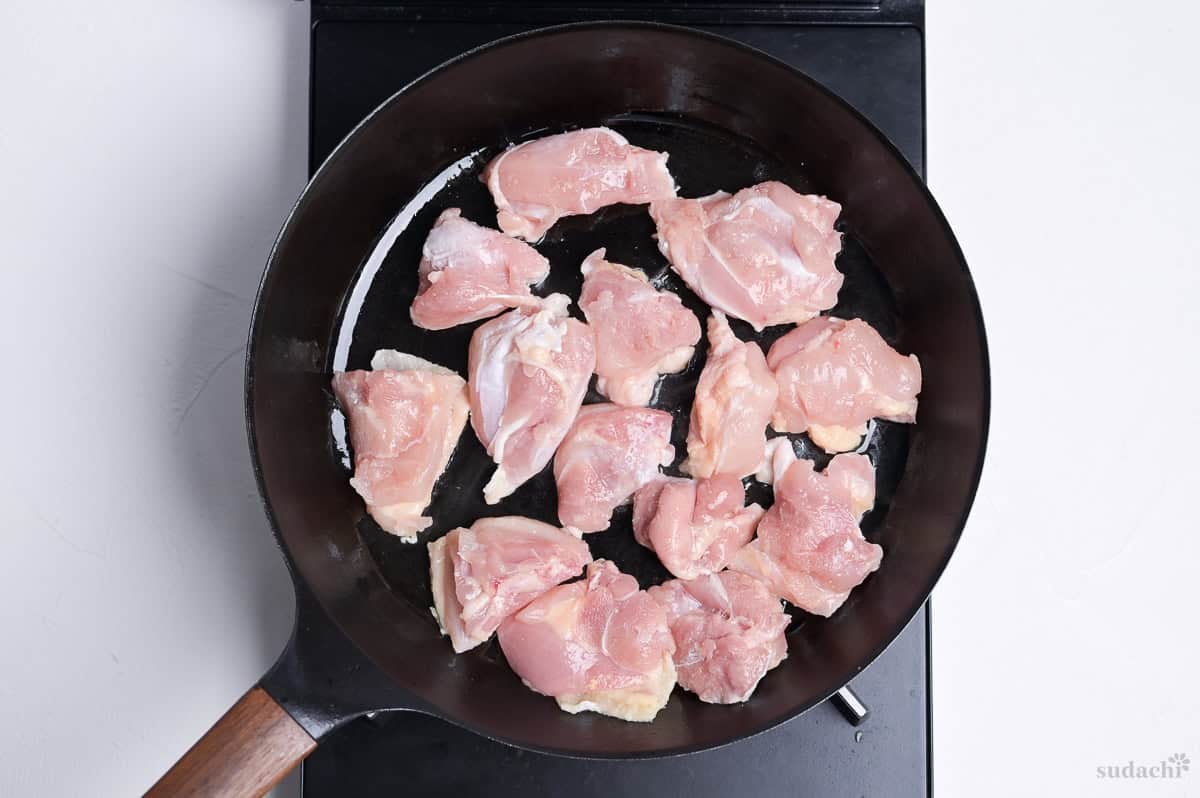
i. Heat the pan over medium with a little oil. Lay the chicken thigh in skin-side down and leave it without moving, until the underside is deeply browned.
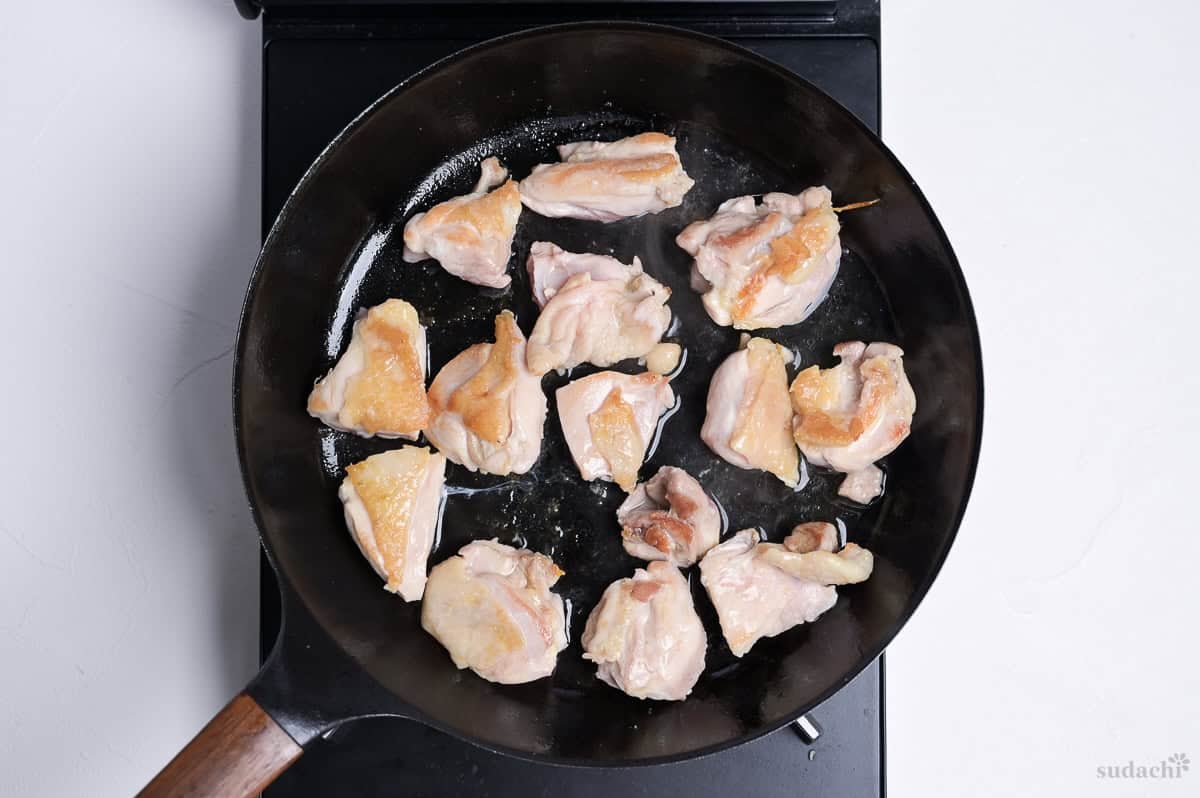
ii. Flip the chicken.
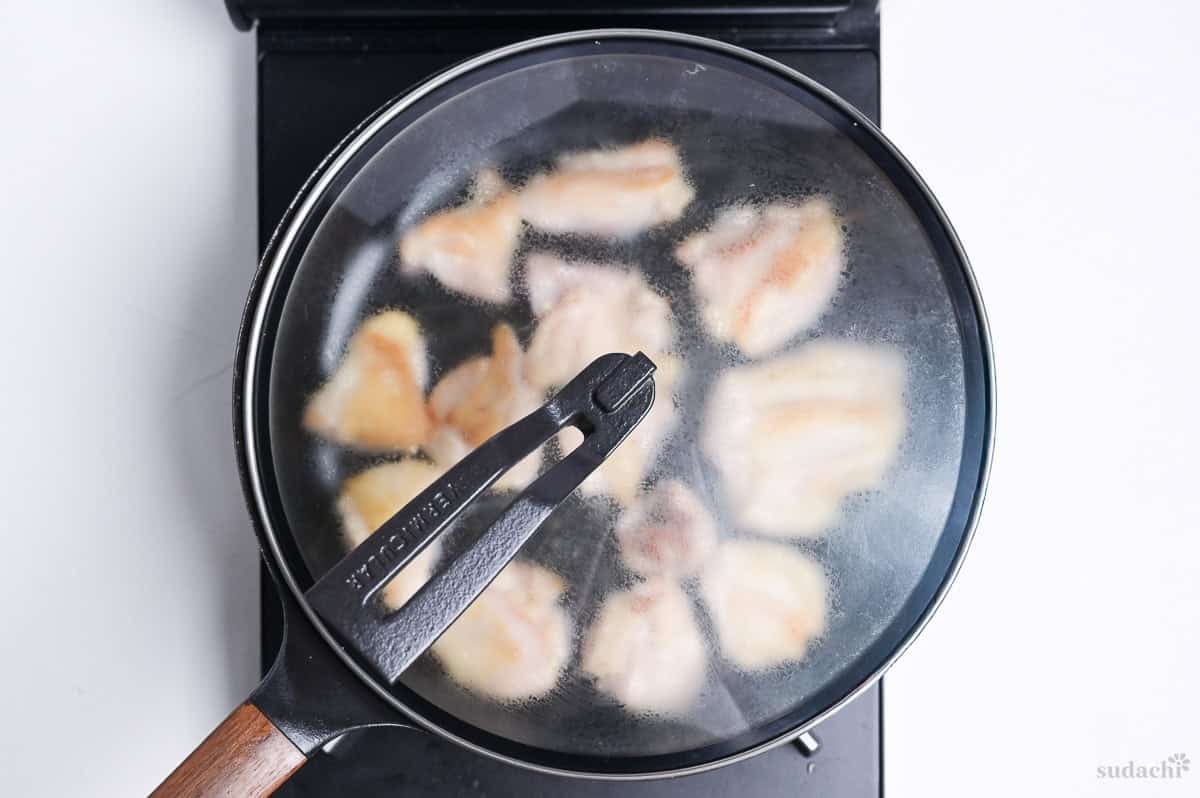
iii. Pour in the white wine, cover, and steam for 3 minutes.
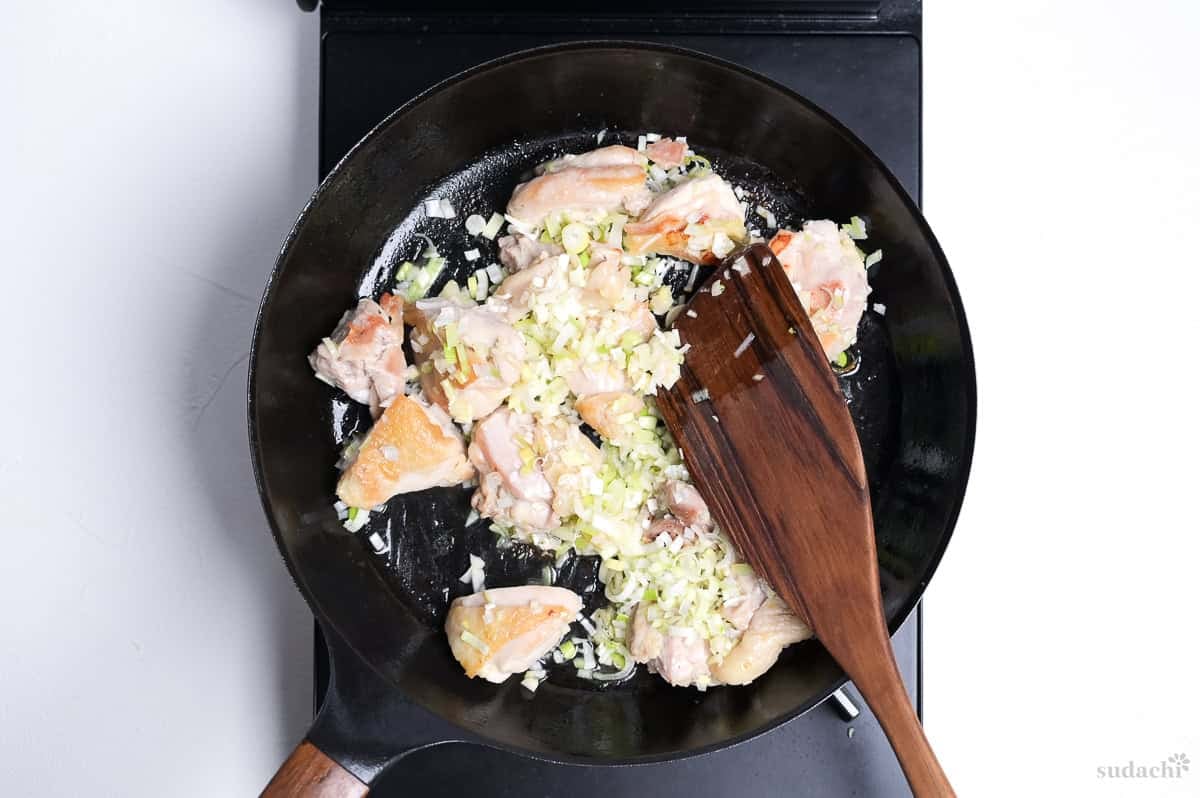
i. Uncover and add the coarsely minced long onion. Stir-fry for 1 to 2 minutes, until it softens and smells sweet, but before it scorches.
ii. Add the raw, unwashed rice and the minced garlic. Stir until every grain is slick with oil. The garlic only touches the hot pan for a minute or so, and the broth going in right after stops it from browning too far.
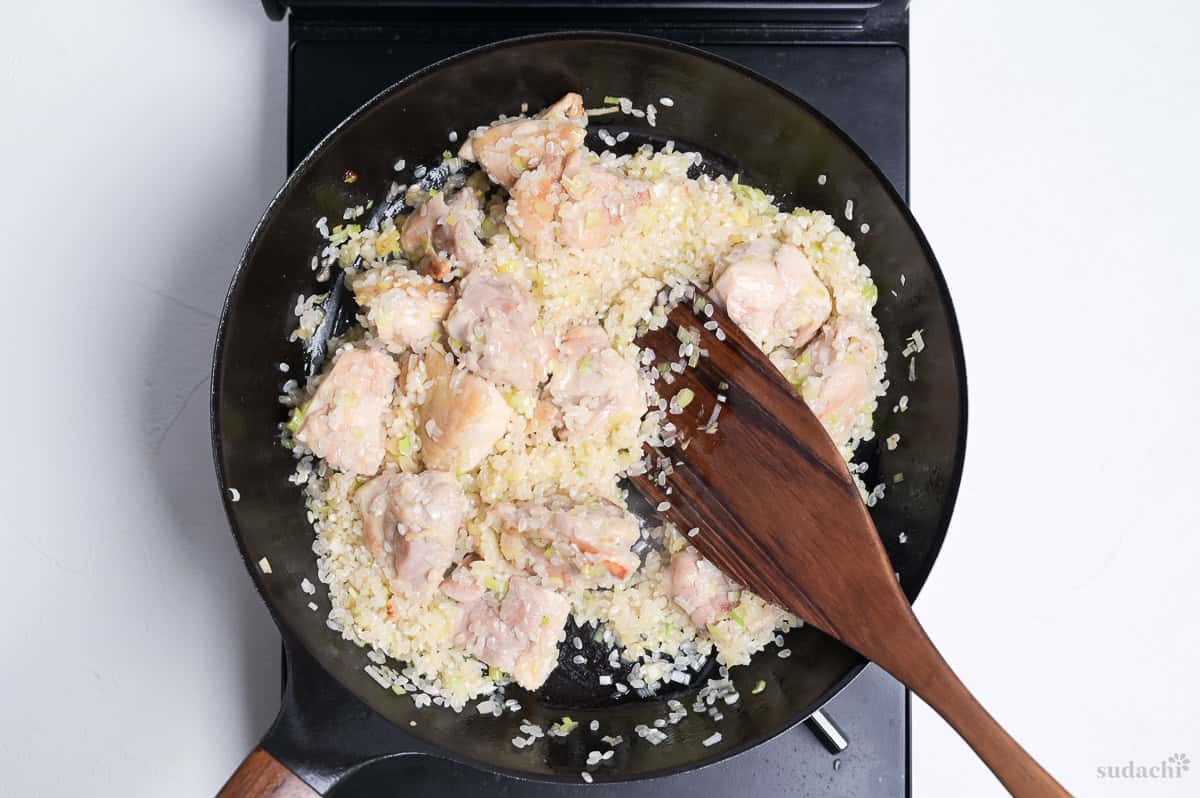
An unwashed grain acts like a dry sponge. It has not drunk any water yet, so when the broth hits, it pulls that flavored liquid deep inside instead of plain tap water. Rinse first and you fill the sponge early and rinse away the surface starch that helps the bottom crisp into a crust.
i. Pour in the broth, bring it up to a boil, and level the rice with the back of a spoon. From here on, do not stir, because stirring drags the starch out and you lose both the clean grains and the crust.
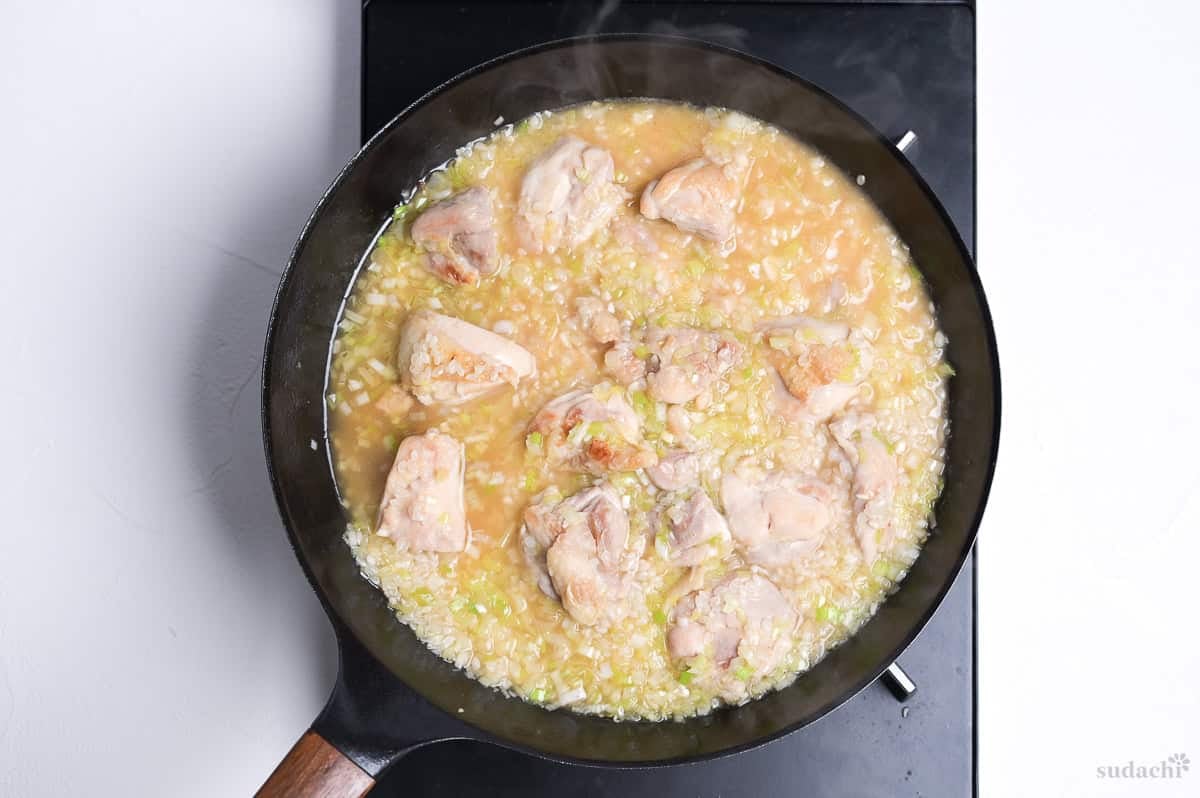
ii. Once it is boiling, drop the heat to low, cover, and cook for 15 minutes.
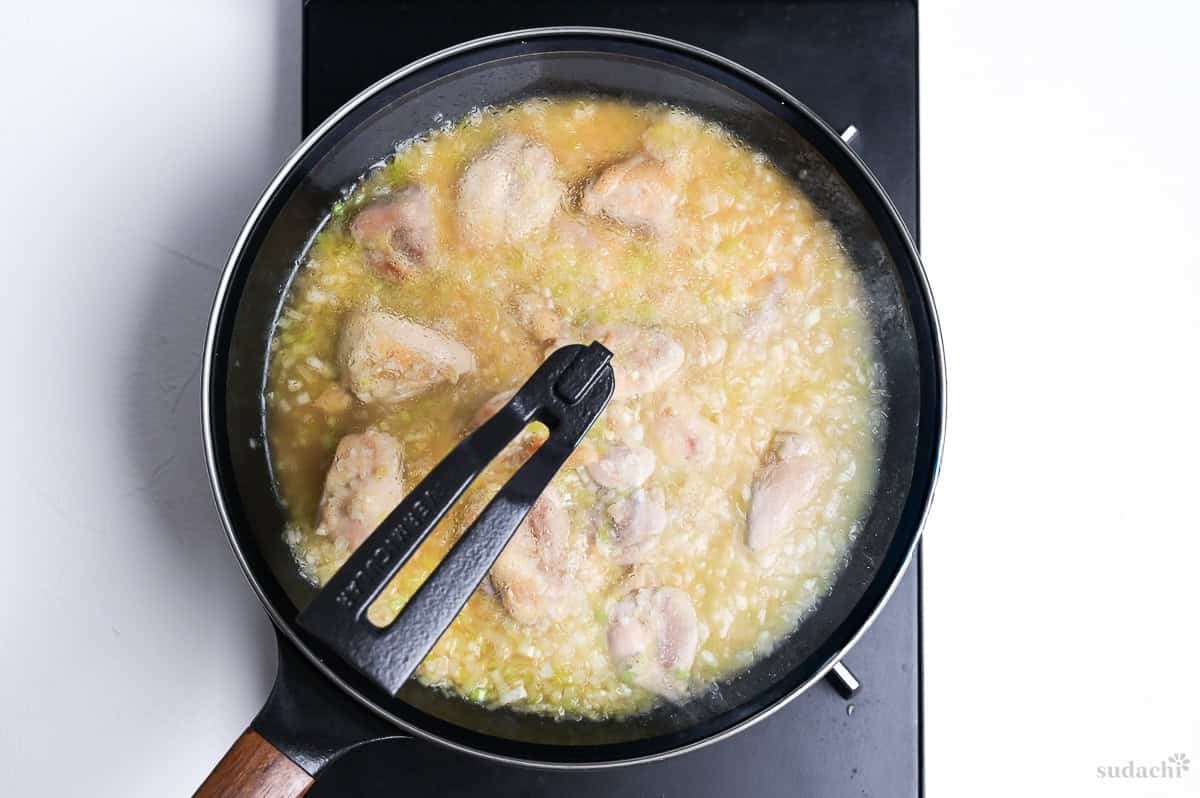
iii. After 15 minutes, turn off the heat and let the pan sit, covered, for 5 to 8 minutes. This quiet stretch is when the salt and umami settle down into the grains.
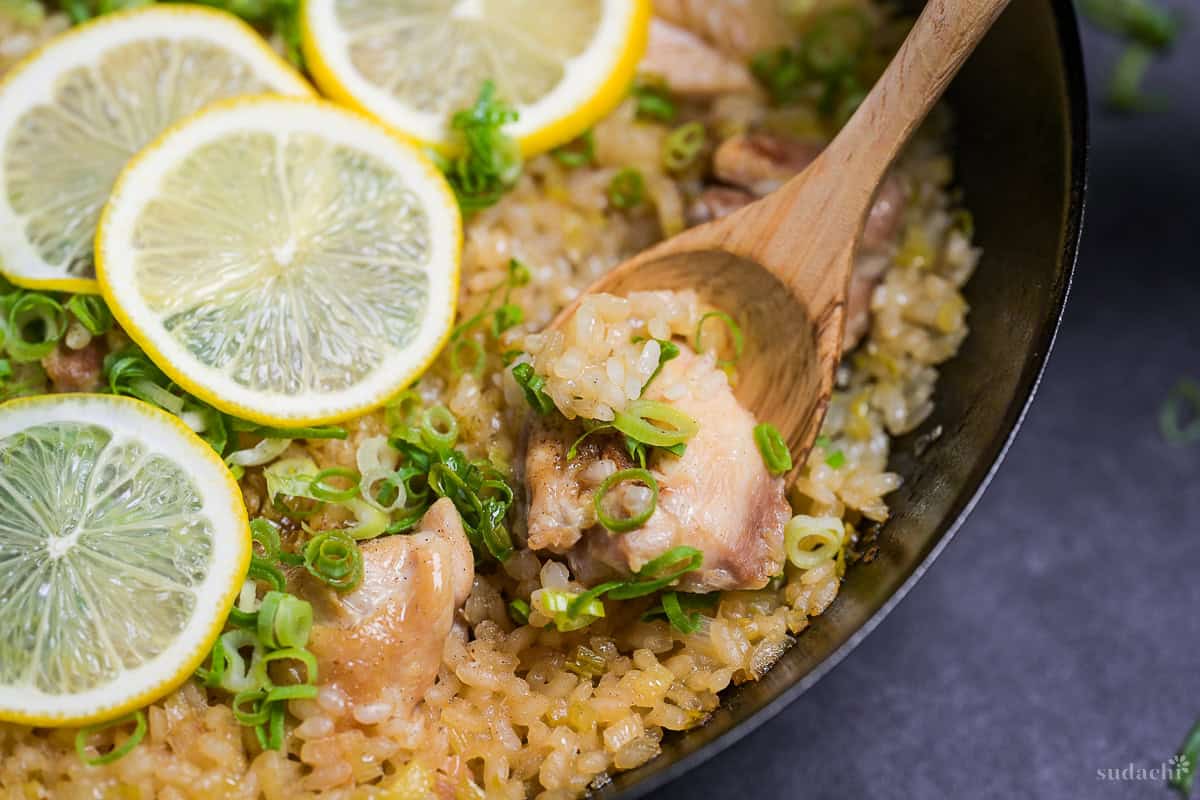
i. Turn the heat back to medium-high and drizzle the sesame oil around the edge of the pan. Without stirring, let it go for 30 seconds to 2 minutes, until you hear a dry crackle and smell toasting.
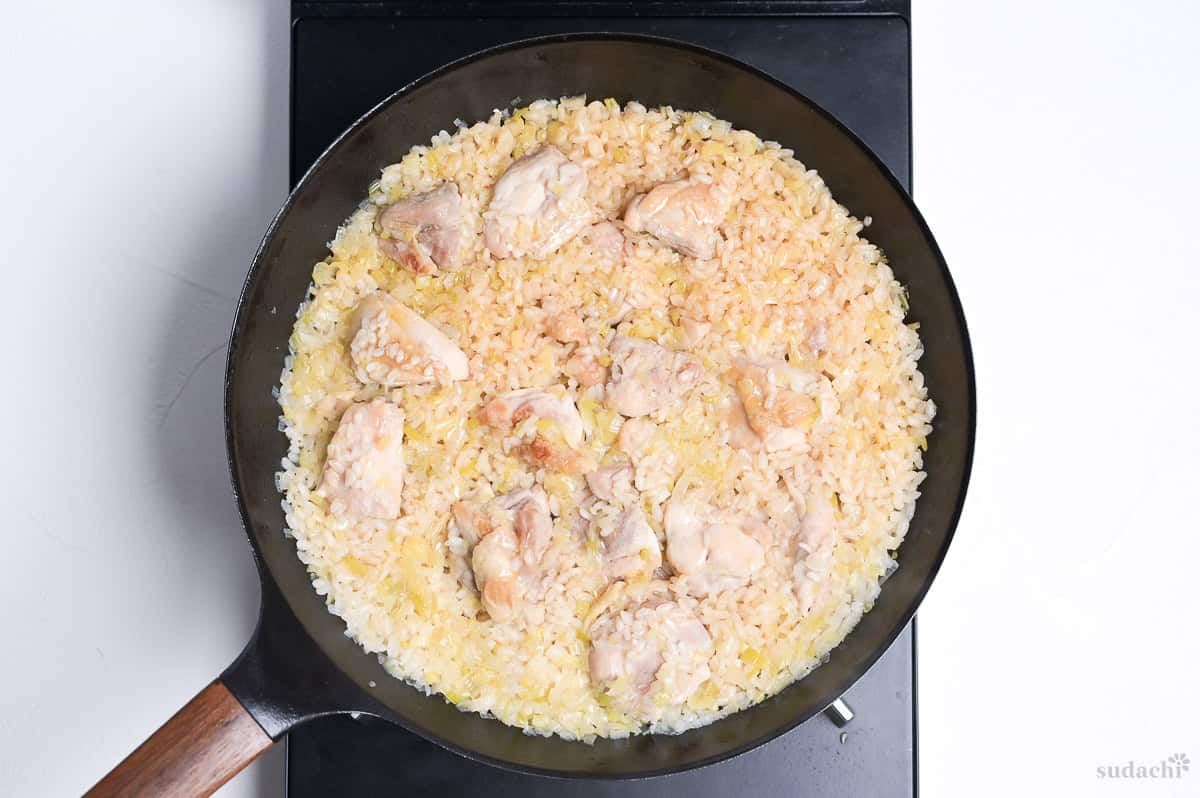
Your ear tells you before your eyes can. This toasted bottom layer is the socarrat, and high heat caramelizes the rice against the pan until it crackles. A dry crackle means it is forming. Pull it the moment the smell turns nutty, because toasted flips to burnt fast.
i. Turn off the heat, taste, and add a pinch of salt if it needs it.
ii. Drizzle over a few drops of soy sauce, then top with the butter, black pepper, the chopped green onion, and the lemon slices. Leave the butter sitting in a few spots so it melts halfway in the residual heat, and do not stir it in.
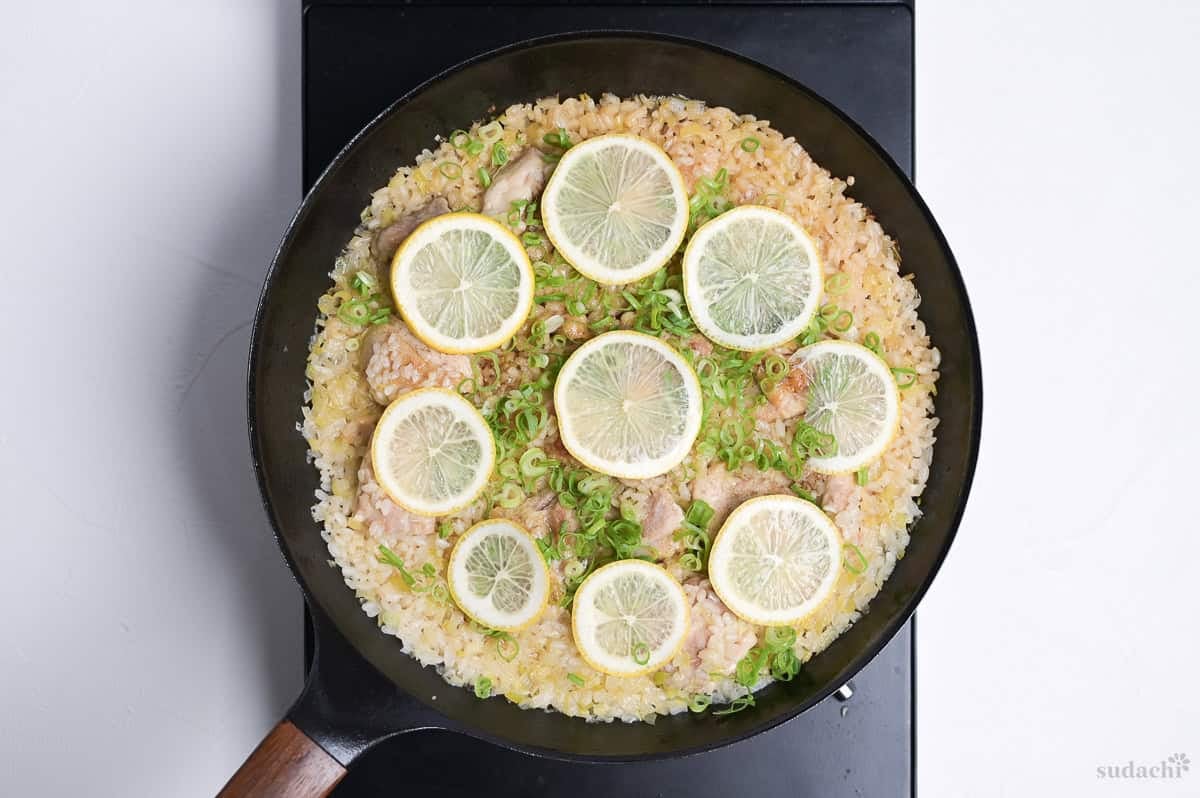
Turn the heat off first. Butter and lemon carry bright, volatile aromas that scatter under high heat, so adding them to a still-hot but quiet pan keeps them on the plate instead of drifting into the air. The lemon’s acid also rounds off the salt, the way a squeeze over fries makes them taste less flat.

Tips for the Best Negishio Paella
- Pick the right pan and spread the rice thin. A wide, shallow pan around 26cm (10 inches) lets the rice sit in a thin, even layer, which is how you get grains that cook at the same rate and a bottom that crisps all the way across. Pile it deep in a small pot and the middle steams while the edges dry out.
- Reach for chicken thigh, not breast. Thigh stays juicy and forgiving through the searing and simmering, while lean breast dries out and turns stringy by the time the rice is done. Give the skin a proper unhurried sear at the start too, since that browned bottom is where a lot of the savory base comes from.
- A nonstick pan gives you a softer crust. The socarrat, that crisp toasted bottom, forms best in stainless steel, carbon steel, or cast iron, where the rice can grip and caramelize against the metal. Nonstick still tastes great (I’ve tried), so if that is what you have, just expect the bottom to come out gentler and give it a little longer.
Get those right and you get distinct, well-seasoned grains under a nutty, crackly bottom, which is exactly what negishio paella should be.
Storage & Meal Prep
Fridge: Cool it fast, then keep it 2 to 3 days in a sealed container. Never leave cooked rice out at room temperature.
Freezer: Freeze flat in a bag for about 1 month. The crust softens, but the negi-shio depth holds to some extent.
Meal prep: Portion into containers once cool for grab-and-go lunches.
Reheating: Warm in a pan with a splash of water to revive the grains, or microwave from frozen.
What to Serve With Negishio Paella
Negishio Paella Troubleshooting
Too much liquid, the wrong rice, or stirring after the broth went in are the usual culprits. Measure the broth exactly and keep your hands off the pan once it boils. If it is already gluey, turn the heat to medium-high and let the bottom cook uncovered for a minute or 2 so at least the base firms up into a crust.
The liquid ran out before the grains finished cooking, usually from heat that was too high or a lid that kept getting lifted. Sprinkle over a tablespoon or 2 of hot water, put the lid back on, and cook on low for another 5 minutes. Rest it off the heat before you check again.
A nonstick pan builds a much weaker crust, and low heat at the end will not toast the rice. Turn the heat up to medium-high, drizzle a little sesame oil around the edge, and listen for a dry crackle. Give it up to 2 minutes and pull it the second you smell toasting.
More Japanese Rice Recipes
Hungry for more one-pan comfort? Explore my Japanese rice recipe collection for your next favorite.
Did You Try This Recipe?
I would love to hear your thoughts!
💬 Leave a review and ⭐️ rating in the comments below. 📷 I also love to see your photos – submit them here!
Negishio “Paella” (Viral in Japan)

Ingredients
- 350 g boneless chicken thigh skin-on, cut into large bite-size pieces
- ¼ tsp salt to season the chicken
- 1 garlic clove minced, green core removed
- 1 Japanese leek (naganegi) coarsely minced
- ½ tbsp cooking oil any neutral oil
- 1 tbsp white wine dry
- 150 g uncooked Japanese rice short-grain, unwashed and not soaked
Broth
- 200 ml hot water
- ½ tbsp Japanese soy sauce (koikuchi shoyu)
- ¼ tsp salt
- ½ tsp Chinese-style chicken bouillon powder
- ¼ tsp dashi granules
Finishing
- ½ tsp toasted sesame oil the dark toasted type, for the crust
- Japanese soy sauce (koikuchi shoyu) to taste, a few drops
- ½ tbsp unsalted butter
- ground black pepper to taste
- finely chopped green onions to taste
- ½ lemon sliced
The ingredient brands and tools I trust are in my Japanese pantry guide and my cooking tools guide.
Can’t find certain Japanese ingredients? See my substitution guide here.
Instructions
- Cut 350 g boneless chicken thigh into large bitesize pieces and sprinkle with ¼ tsp salt. Finely dice 1 garlic clove and the white part of 1 Japanese leek (naganegi). In a heat proof jug, mix 200 ml hot water, ½ tbsp Japanese soy sauce (koikuchi shoyu), ¼ tsp salt, ½ tsp Chinese-style chicken bouillon powder, and ¼ tsp dashi granules until dissolved.

- Heat a pan over medium heat and add ½ tbsp cooking oil. Add the chicken in a single layer with the skin-side facing down and fry until browned.
- Flip the chicken pieces over and pour 1 tbsp white wine into the pan. Cover with a lid and steam-fry for 3 minutes.
- Remove the lid and add the leek. Stir fry until slightly softened, then add the minced garlic and 150 g uncooked Japanese rice. Mix until the rice grains are coated in a thin layer of oil and the garlic is fragrant.
- Pour in the prepared broth and flatten the rice with a spatula until it's level. Bring to a gentle boil, then reduce the heat to low. Do not mix or stir the rice from this point.
- Cover the pan with a lid and cook for 15 minutes over the low heat. Turn off the heat and rest for 5-8 minutes. It's important you do not open the lid before the resting time is over.
- Optional step for crispy base: Remove the lid and heat on medium high. Drizzle ½ tsp toasted sesame oil around the edge of the pan, and cook until it starts to crackle and you can smell the sesame aroma.
- Turn off the heat and add salt if needed. Divide ½ tbsp unsalted butter into small pieces and scatter them on top of the rice. Sprinkle with a few drops of Japanese soy sauce (koikuchi shoyu) and a few cracks of ground black pepper. Top with finely chopped green onions and slices of ½ lemon.
- Serve and enjoy!


This was super easy and my 97 year old father cleared his plate twice.
Hi Karen,
Thank you so much! I’m really happy to hear your 97 year old dad cleared his plate twice, that means a lot to me. And glad it came together easily for you! 🙂
Yuto