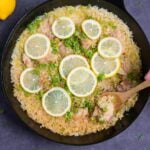
Negishio "Paella" (Viral in Japan)
Ingredients
- 350 g boneless chicken thigh skin-on, cut into large bite-size pieces
- ¼ tsp salt to season the chicken
- 1 garlic clove minced, green core removed
- 1 Japanese leek (naganegi) coarsely minced
- ½ tbsp cooking oil any neutral oil
- 1 tbsp white wine dry
- 150 g uncooked Japanese rice short-grain, unwashed and not soaked
Broth
- 200 ml hot water
- ½ tbsp Japanese soy sauce (koikuchi shoyu)
- ¼ tsp salt
- ½ tsp Chinese-style chicken bouillon powder
- ¼ tsp dashi granules
Finishing
- ½ tsp toasted sesame oil the dark toasted type, for the crust
- Japanese soy sauce (koikuchi shoyu) to taste, a few drops
- ½ tbsp unsalted butter
- ground black pepper to taste
- finely chopped green onions to taste
- ½ lemon sliced
Instructions
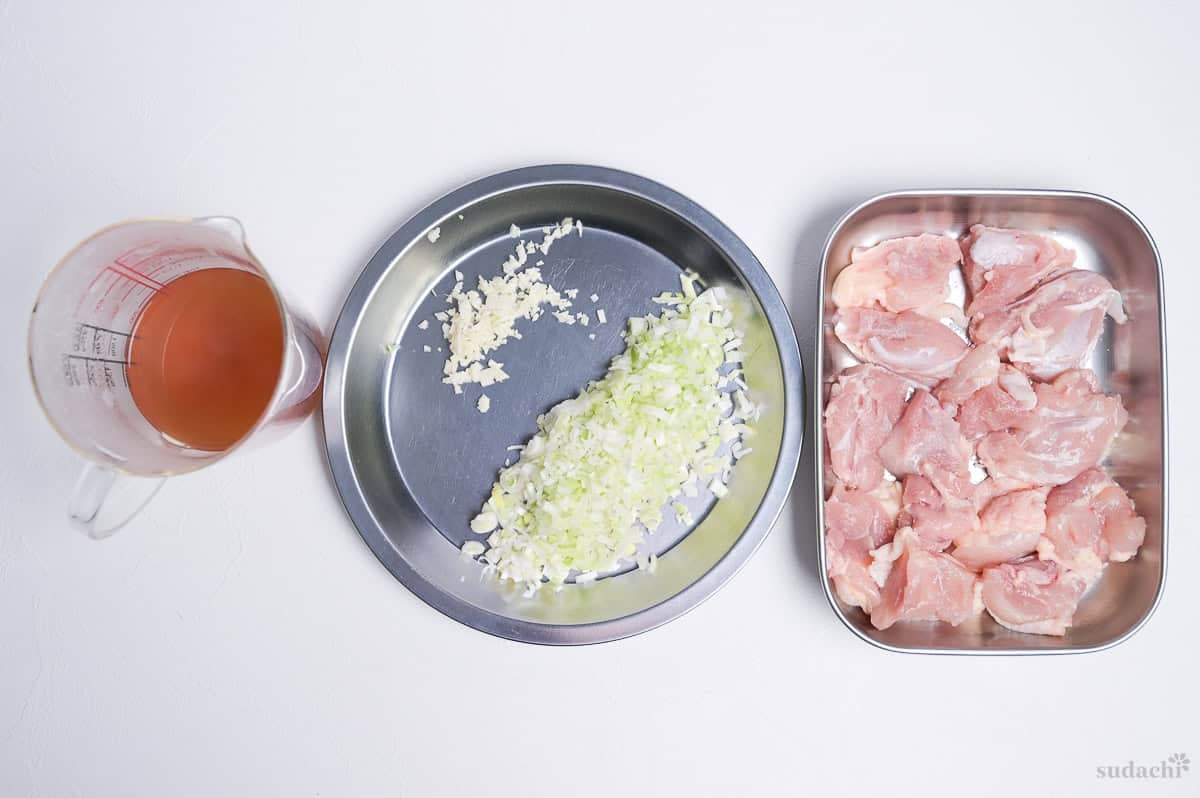
- Cut 350 g boneless chicken thigh into large bitesize pieces and sprinkle with ¼ tsp salt. Finely dice 1 garlic clove and the white part of 1 Japanese leek (naganegi). In a heat proof jug, mix 200 ml hot water, ½ tbsp Japanese soy sauce (koikuchi shoyu), ¼ tsp salt, ½ tsp Chinese-style chicken bouillon powder, and ¼ tsp dashi granules until dissolved.
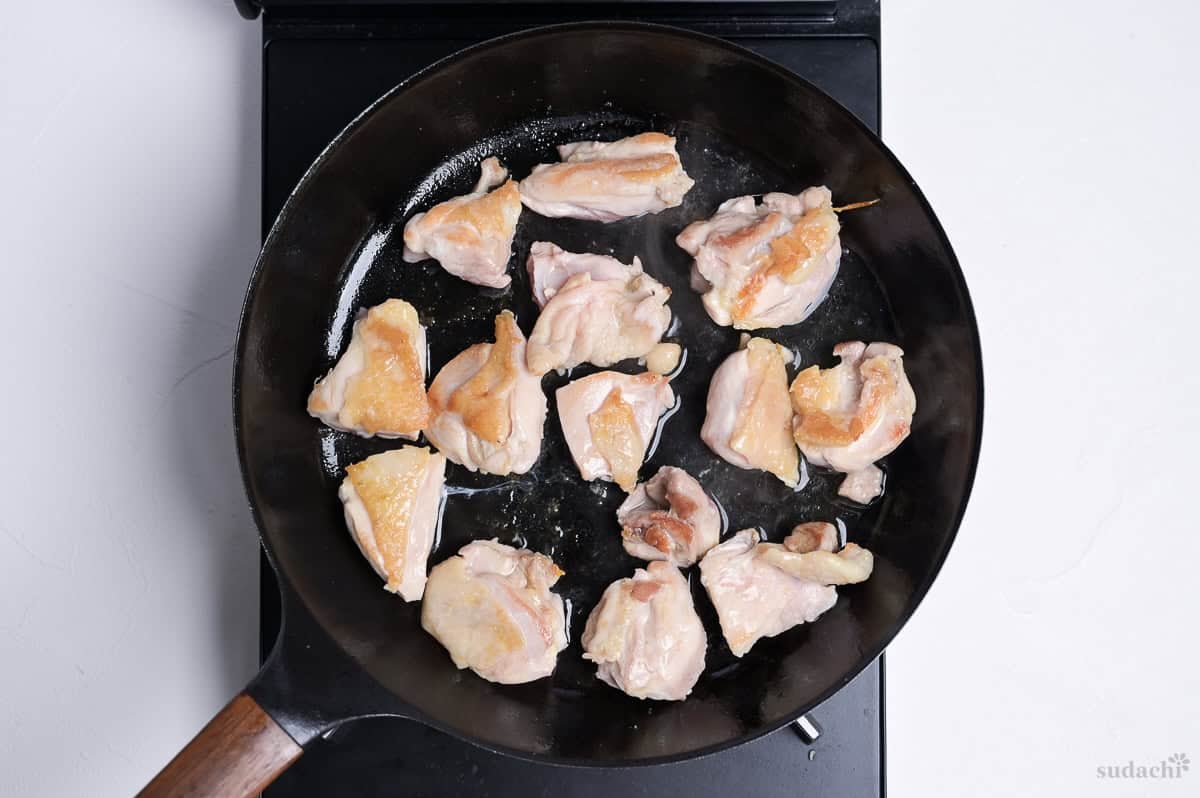
- Heat a pan over medium heat and add ½ tbsp cooking oil. Add the chicken in a single layer with the skin-side facing down and fry until browned.
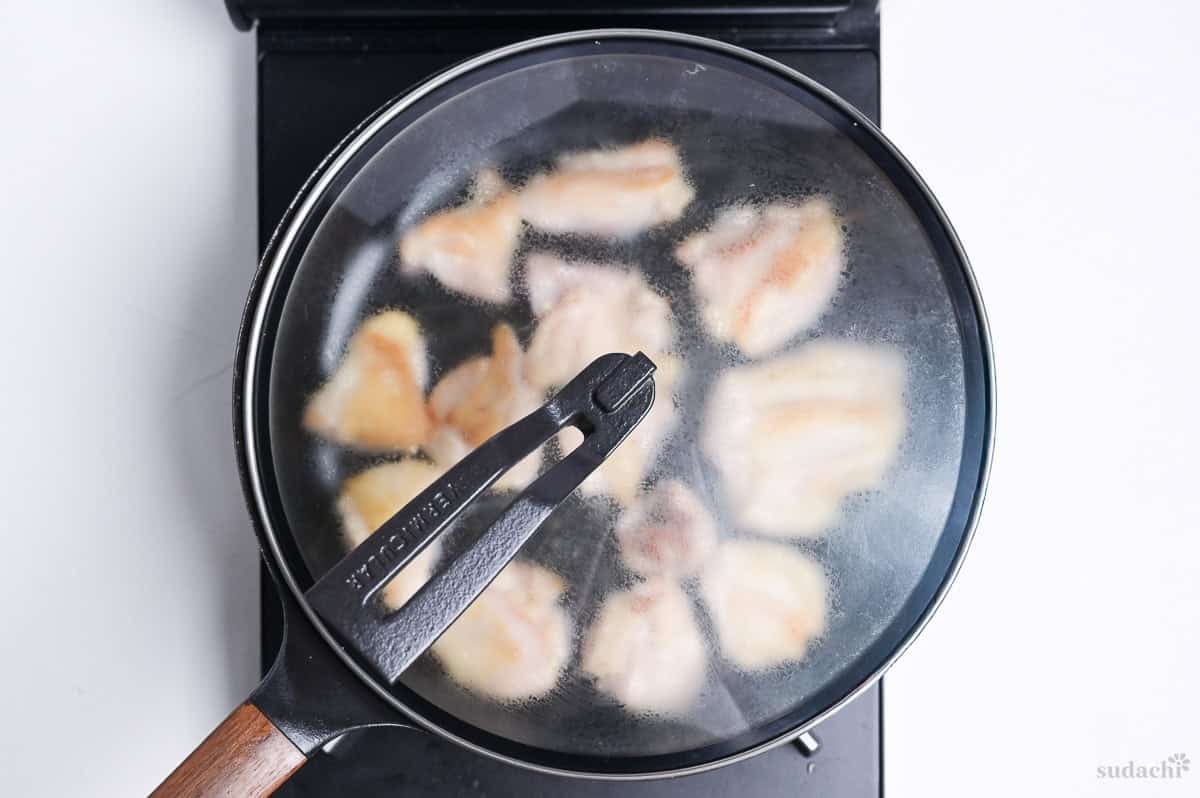
- Flip the chicken pieces over and pour 1 tbsp white wine into the pan. Cover with a lid and steam-fry for 3 minutes.
- Remove the lid and add the leek. Stir fry until slightly softened, then add the minced garlic and 150 g uncooked Japanese rice. Mix until the rice grains are coated in a thin layer of oil and the garlic is fragrant.
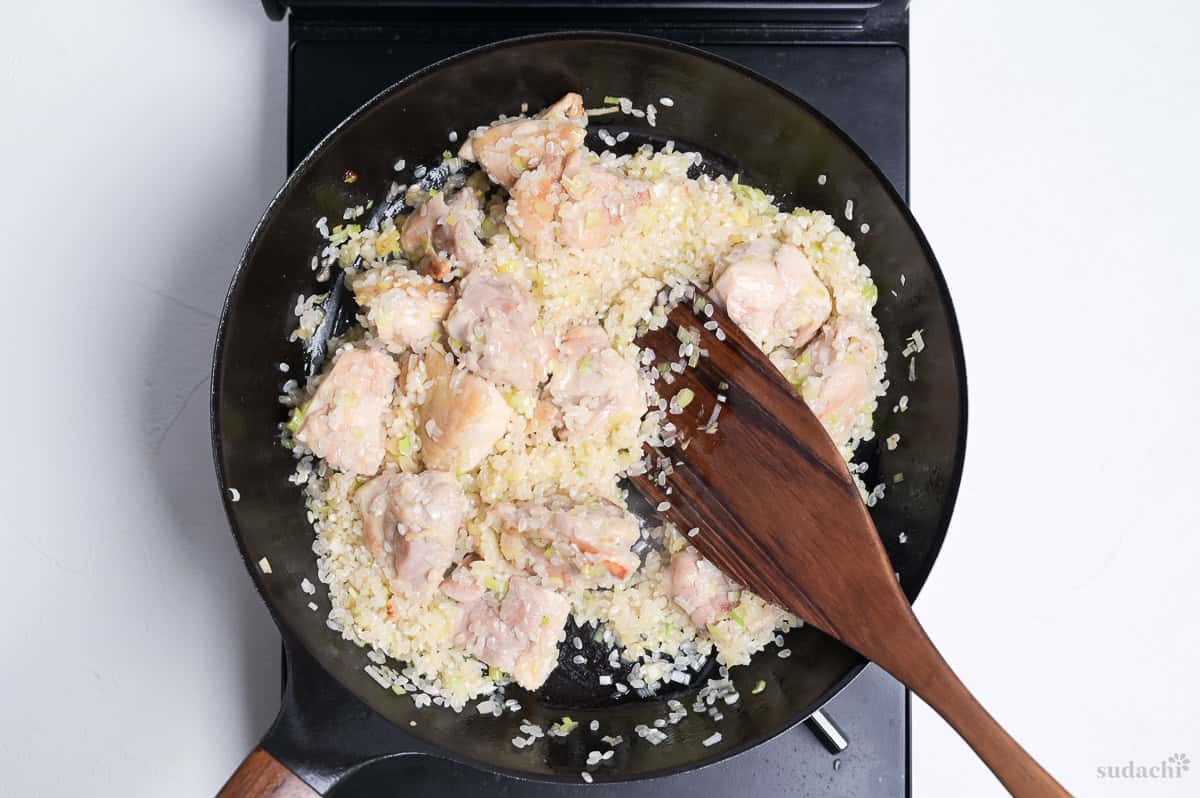
- Pour in the prepared broth and flatten the rice with a spatula until it's level. Bring to a gentle boil, then reduce the heat to low. Do not mix or stir the rice from this point.
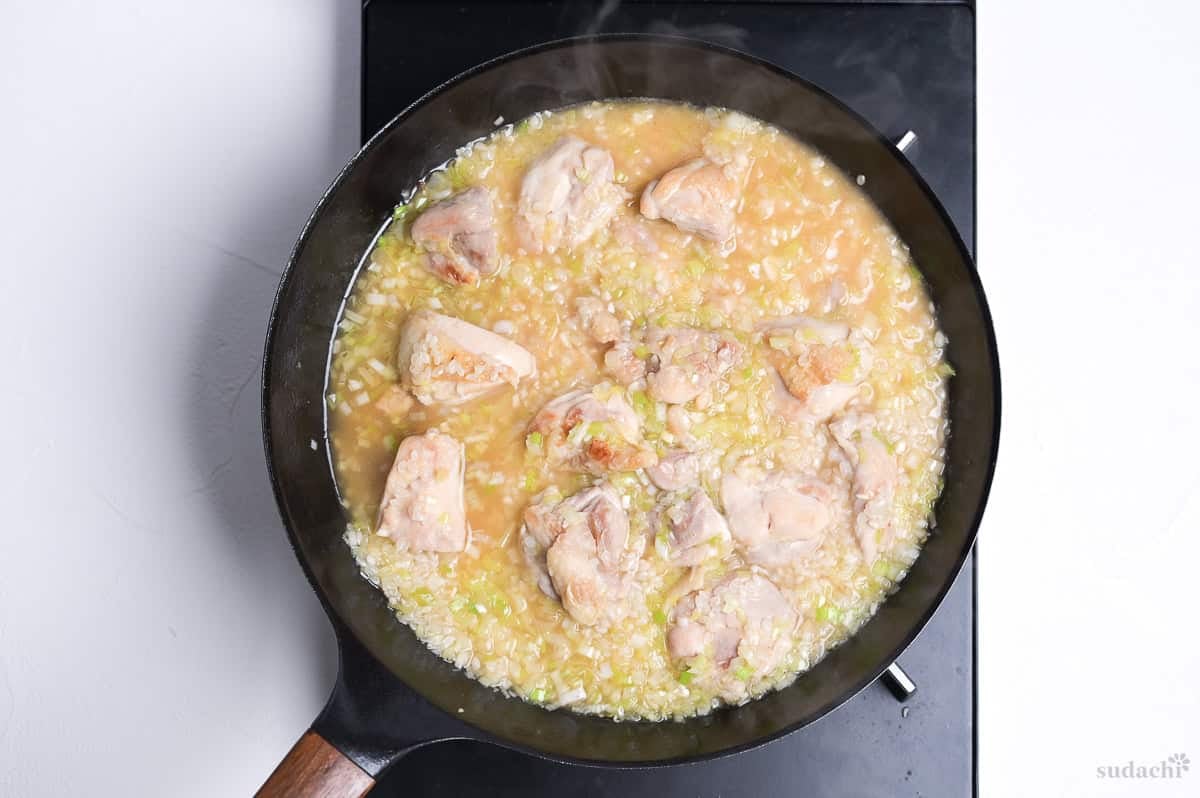
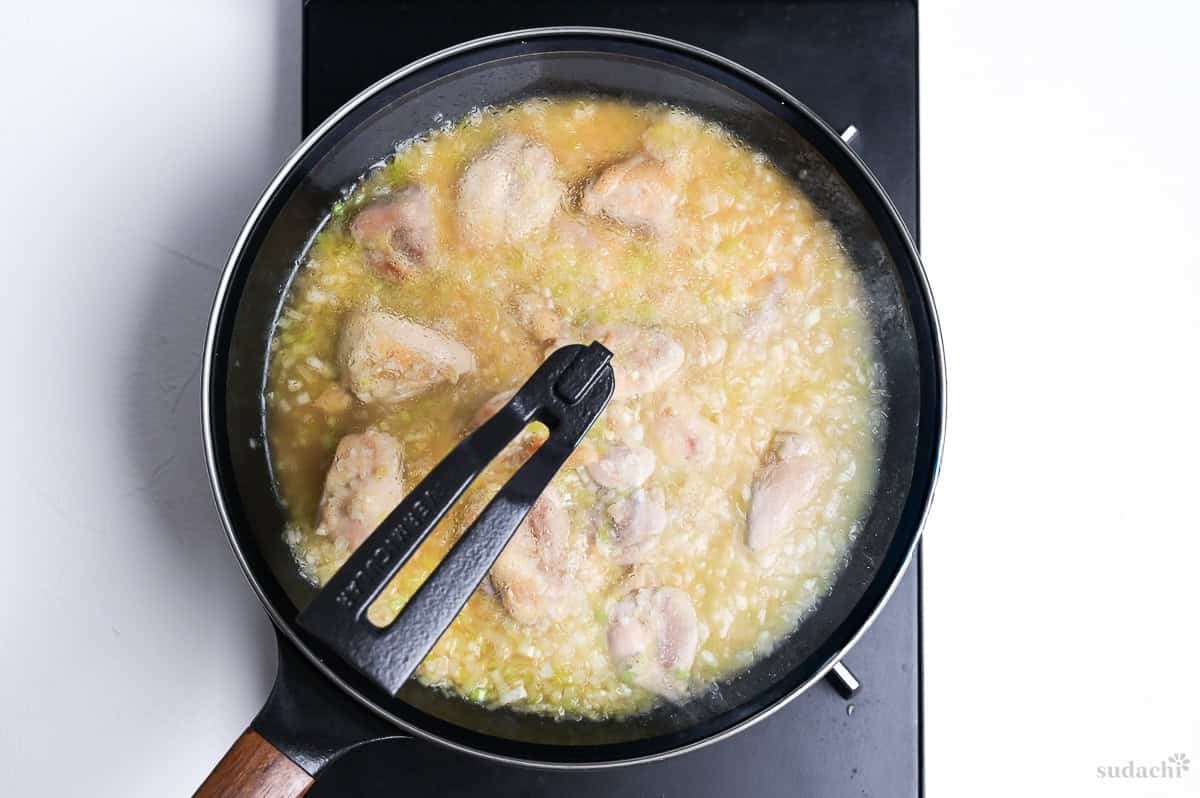
- Cover the pan with a lid and cook for 15 minutes over the low heat. Turn off the heat and rest for 5-8 minutes. It's important you do not open the lid before the resting time is over.
- Optional step for crispy base: Remove the lid and heat on medium high. Drizzle ½ tsp toasted sesame oil around the edge of the pan, and cook until it starts to crackle and you can smell the sesame aroma.
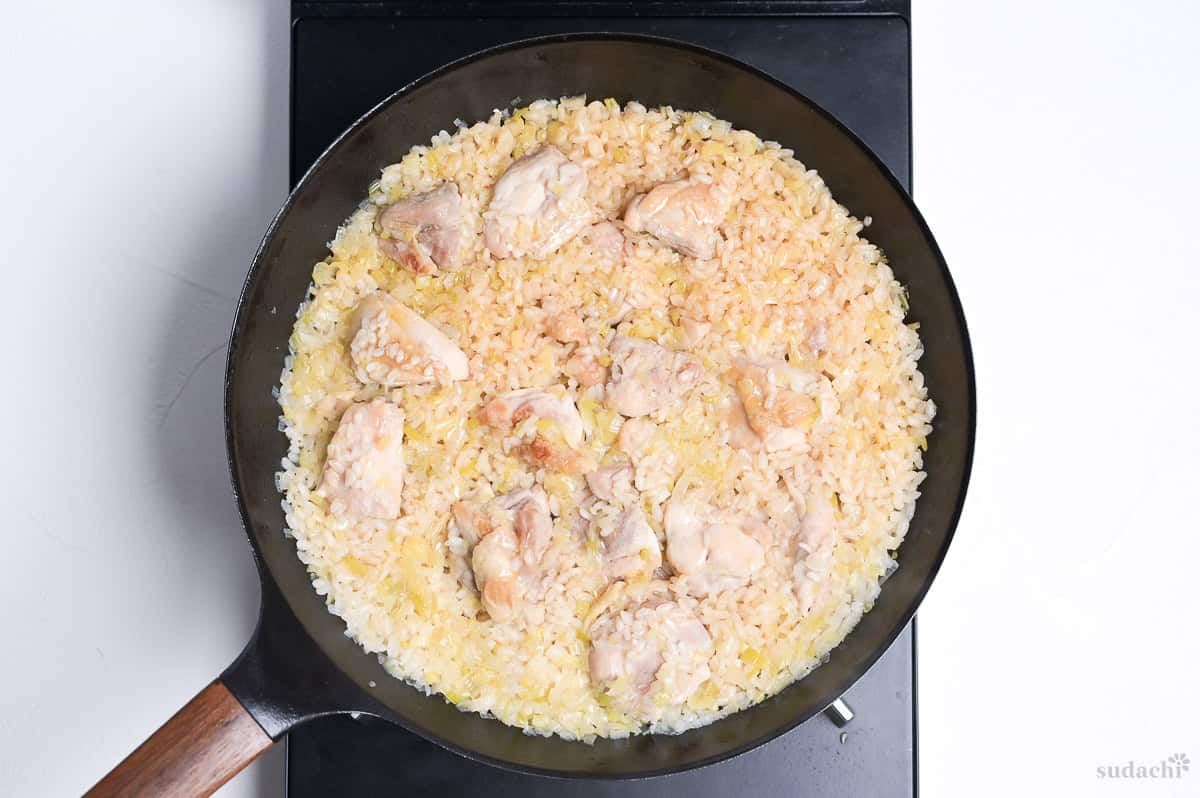
- Turn off the heat and add salt if needed. Divide ½ tbsp unsalted butter into small pieces and scatter them on top of the rice. Sprinkle with a few drops of Japanese soy sauce (koikuchi shoyu) and a few cracks of ground black pepper. Top with finely chopped green onions and slices of ½ lemon.
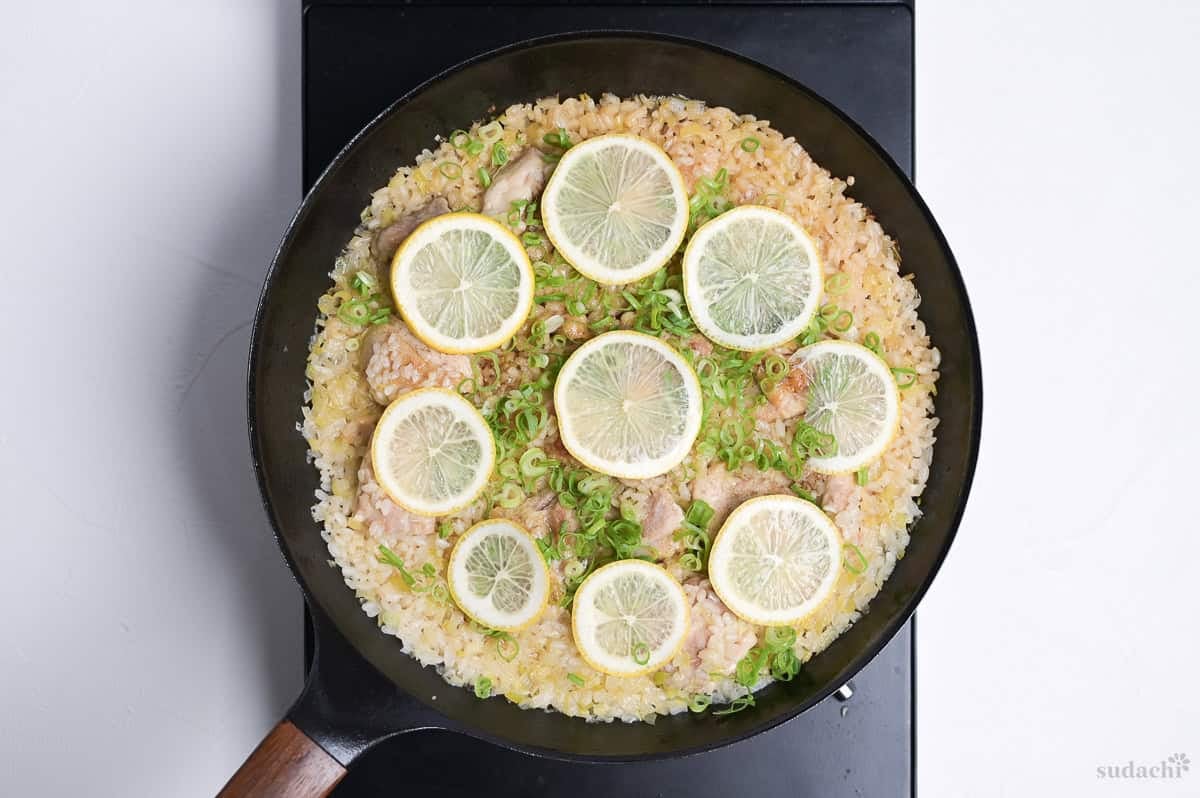
- Serve and enjoy!
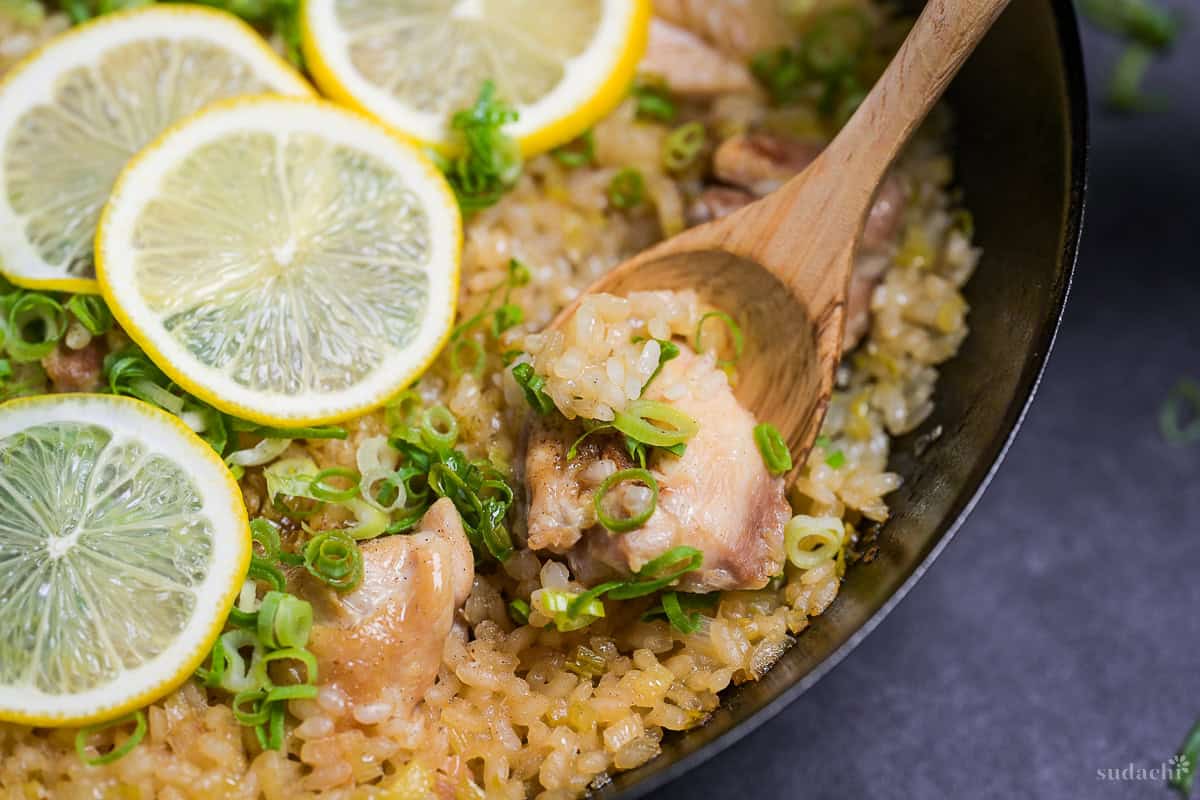
Notes
Stop stirring once the broth is in: Stirring drags the starch out of the grains, which turns the rice gummy and stops the bottom from crisping. Level the rice once, then leave the pan alone.
Use the rice dry and unwashed: Rinsing pre-fills each grain with water and washes off the surface starch, so the rice drinks less flavored broth and cannot form a crust.
Listen for the crust, do not watch for it: During the final high-heat step a dry crackle means the bottom is caramelizing into a socarrat. Pull the pan the moment the smell turns nutty, because toasted flips to burnt fast.
Spread the rice thin in a wide pan: A 26cm pan cooks the base two portions of rice grains evenly and crisps the base all the way across. Piled deep in a small pot, the middle steams while the edges dry out. Nonstick gives a softer crust.
Rice still hard in the middle: Sprinkle 1 to 2 tbsp hot water over the rice, cover, and cook on low 5 more minutes, then rest off the heat before checking again.
The crust step is optional: If you love a crispy okoge bottom, do the final high-heat blast. If not, skip it, since overdoing it is what burns the base. Watch closely if you go for it.
Full Recipe QR Code↑↑