



For most of its history, Japan reached for chili only as an accent, a pinch of togarashi over a bowl or a dab of yuzu kosho on the rim. Building an entire dish around heat is something we borrowed from Sichuan and then made our own. So these recipes are modern and a little rebellious, spicy in the way I like best, carried by umami and depth rather than raw burn.
1. Taiwan Mazesoba

Featured Comment
Absolutely delicious Love noodles and this recipe is quick and easy. I did prep the pork mince the day before though. So putting the dish together took as long as it took to cook the noodles. Might be my go to dish for lunch too.
★★★★★
– Karen
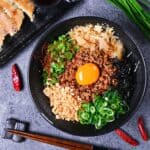
Mazesoba is a soupless bowl, so the flavor sinks to the bottom and the top can taste of plain noodles. My fix has 3 parts, a moist seasoned pork, a pooled tare of soy sauce and sesame warmed by toban djan, and a raw egg yolk. The whole bowl gets dragged up from the base and mixed until glossy.
Even plain udon from the cupboard turns out genuinely good, so you can skip the hunt for the extra-thick restaurant noodle. Any decent ramen from the shelf works just as well. The payoff is a rich, glossy tangle I want most at midnight, when a bowl of noodles feels exactly right.
2. Mapo Tofu (Mabodofu)

Featured Comment
Great recipe! We always bought the ‘CookDo’ Mabo Tofu sauce when we lived in Japan. Needless to say this is WAYYYY better! Thanks for the recipe.
★★★★★
– Spence
As a kid in Japan, mapo tofu was the school lunch I looked forward to most, the one dish on the rotating menu I always hoped would come around. My version keeps that same comfort at its heart, a Japanese take on the Sichuan classic that comes together in under 30 minutes.
Yellow awase miso is the turn that makes it mine, melted in until the sauce runs glossy, velvety, and deeply savory instead of sharp with red oil. Doubanjiang, bloomed in hot oil with garlic, stays my first pick for heat, but the miso is what pulls the whole thing milder, sweeter, and Japanese.

3. Spicy Smashed Cucumber (Pirikara Tataki Kyuri)

Featured Comment
This was fabulous. the leftovers did release water but the cucumber was still nice and crunchy
★★★★★
– Trish
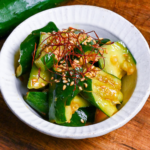
I really wanted this one to have an addictive pull, the kind that keeps a hand reaching back between sips of a cold drink. So I built it for the izakaya table, a snack that lands in under 5 minutes and still tastes like it earned its spot next to the beer.
The move that decides everything here is small, and it is not the smashing. After that, I tear the cucumber apart by hand rather than reaching for a knife, because those rough, torn edges grab and hold the spicy miso sauce where a clean slice would just let it slide right off.
4. Hiyashi Tantanmen

Featured Comment
this is your third recipe I’m trying and a third 5star!!! So delicious! Thank you so much for another great recipe!
★★★★★
– Dee
The summers in Japan run hotter than the ones I grew up with, and by late August the heat flattens my appetite completely. On the worst days I stop wanting anything warm, and cold noodles turn into the one food I can actually finish. This bowl is what I reach for.
The base is unsweetened soy milk, which turns the broth creamy and rich without ever tasting heavy or sweet. And the twist is that the soup and the noodles both arrive icy cold, so a bowl this lush feels like the most refreshing thing on the table. That contradiction is why I keep making it.

5. Karami Chicken (Saizeriya Copycat)
Featured Comment
This is also our favorite side dish from Saizeriya, especially my husband. So much so he wants me to cook it for him. And he was the one who found your page.
★★★★★
– Jeng
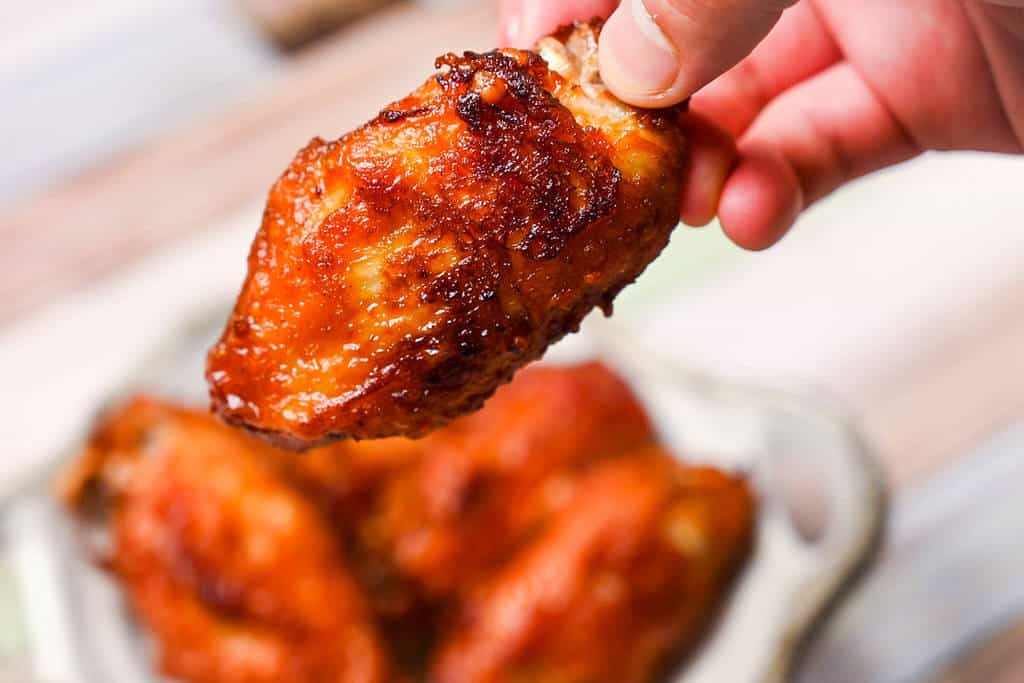
This is the one plate I always order at Saizeriya, and I would guess most people in Japan reach for it too. So I rebuilt it at home, keeping it faithful but crispier by blending flour and starch into the batter, then re-engineering the fry so it works on a regular stovetop.
The name is a bit of a joke. A dish called spicy and dyed chili-red barely bites at all, because the doubanjiang gives it subtle heat and real depth while the oyster sauce carries the umami, all over a rich, tangy ketchup base. It is the rare spicy plate a whole family can share.

6. Ebi Chili (Japanese Shrimp in Chili Sauce)

Featured Comment
We just enjoyed this on fresh udon, it was lovely. As suggested, I took some more toban djan for a stronger kick!
★★★★★
– Peti
My ebi chili chases the glossy, clinging sauce from a good Japanese-Chinese counter, and the real work is understanding why each step earns its place. Once the doubanjiang blooms in hot oil and releases a slick of red, the whole pan turns into something close to liquid silk. Nothing about that shine is luck.
The real surprise sits upstream of the sauce entirely. Those shrimp shells that would usually hit the bin instead turn into a custom umami oil, and that one reclaimed ingredient is where the deep, savory backbone of my ebi chili actually lives. Skip it and the sauce still works, but it never reaches that restaurant depth.

7. Taiwan Ramen (Spicy Nagoya Style Ramen)
Featured Comment
I’ve made this 5 or 6 times now. great for the chilly weather. It tastes better every time I make it. Thank you for creating these recipes, they’re all delicious.
★★★★★
– Edward
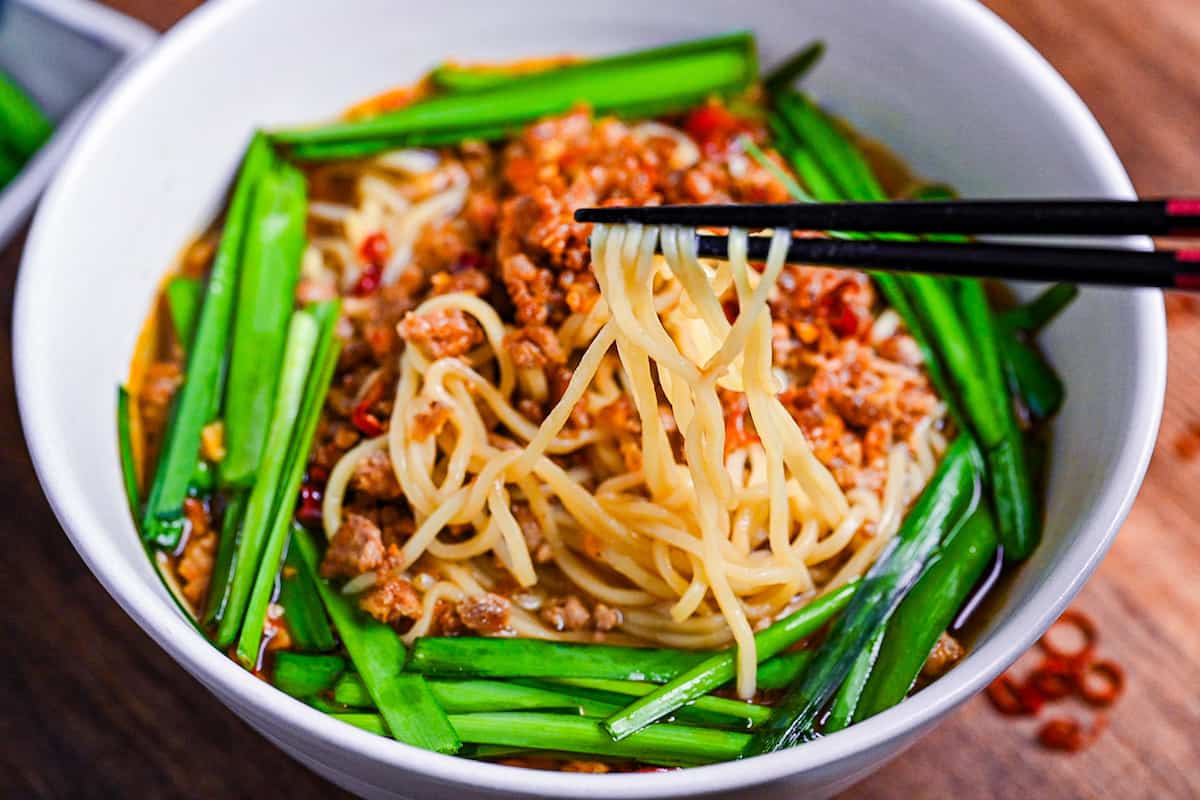
I grew up around Nagoya, and Misen was the spot I kept returning to for this exact bowl. Despite the Taiwanese name, it was actually invented there in the 1970s and tuned for the way we eat at home. Out of every dish I make, this one is my personal favorite.
This is the spiciest bowl in the collection, yet it stays at a Japanese level of heat because I do not chase extreme, scorching intensity. The broth runs thin and light, a dried shiitake and kombu dashi seasoned with soy sauce, then crowned with pork fried in toban djan and dried red chili.
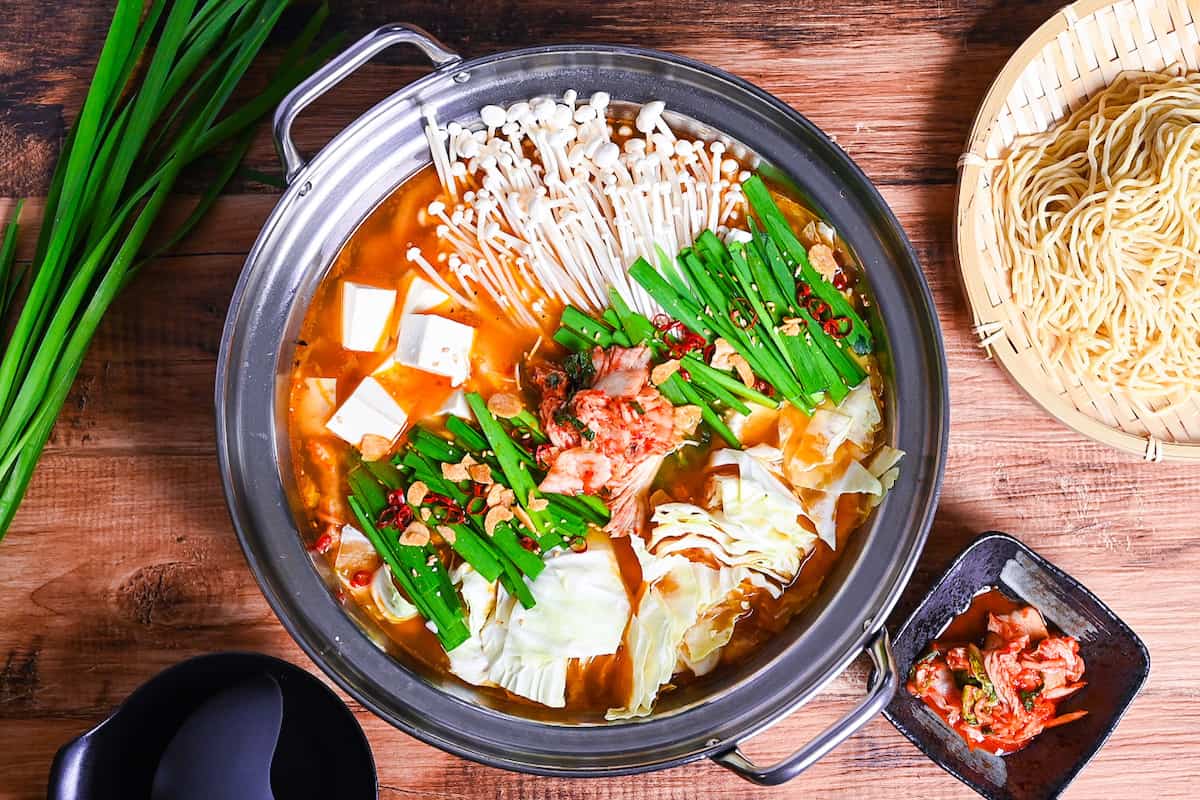
8. Kimchi Nabe
Featured Comment
Made it today as temperatures hit minus in Amsterdam. I don’t really like Kimchi usually but the nabe was so tasty even though I forgot to buy garlic and ginger to put inside. Would make it again
★★★★★
– Sakura
I build this kimchi hot pot from scratch, no instant packet anywhere near the stove. Kimchi, dashi and miso simmer together into a broth that keeps deepening the longer the pot sits over the flame. By the final ladle it tastes layered and alive, a depth the store-bought version never reaches.
Before the pork belly ever meets the broth, I sear each slice under a paper-thin dusting of flour. That coat becomes a micro-barrier, browning the edges golden and crisp while it seals the moisture inside, so the meat carries its richness even after it settles into the simmering pot.

9. Shirunashi Tantanmen (Soupless Tan Tan Ramen)

Featured Comment
I made this recipe and it turned out great! I’m going to try the ramen/soup version next time.
★★★★★
– NG
I am a serious tantanmen lover, so this time I set out to make one with no soup at all. Everything rides on one concentrated sauce that I work evenly through the hot noodles, so the nutty, spicy, creamy character coats every strand instead of thinning out and pooling at the bottom of a bowl.
The surprise is not in the sauce. I fold crushed cashews straight into the seasoned spicy pork, so every few bites give a sudden crunch you do not expect from a noodle bowl. Soy milk and ground sesame carry the creamy side, and that hidden texture is what keeps me coming back.
10. Spicy Beef Gyoza (with Spicy Dipping Sauce)
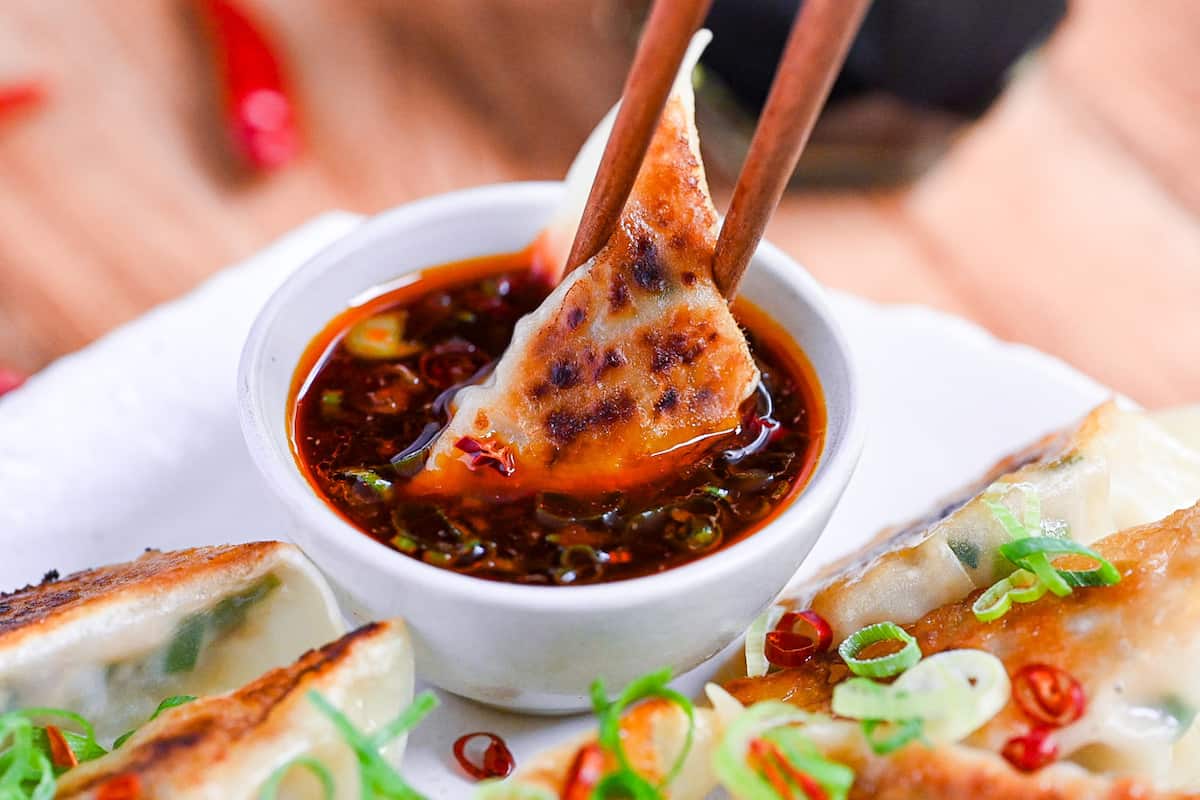
Beef does not belong in Japanese gyoza. I believe that genuinely, which is why I stopped trying to force it into a pork recipe and instead built the entire seasoning around beef from scratch. Warm, aromatic spices catch its iron-rich flavor in the exact places where soy sauce and sesame simply fall flat.
None of the heat actually lives inside the dumpling itself. Every bit of the chili sits in a toban djan dipping sauce alongside, so a single batch feeds the crowd that wants real fire and the crowd that wants absolutely none. That split is the part that caught me most off guard.

11. Vegan Mabo Nasu (Japanese Mapo Eggplant)

Featured Comment
Absolutely delicious!! The whole family raved! i forgot to add the extra water, so it was a little more dry than you intended, but we loved it that way. Definitely will be making this again!
★★★★★
– Sata
Mapo eggplant usually leans on ground pork, but I wanted the eggplant itself to carry the whole dish, so I kept the rest plant-based too. The soy protein mince has a genuine texture that soaks up all of the sauce, and the dish still lands as a true comfort dish over rice.
Mapo tofu tends to lose its texture after time in the freezer, yet this eggplant version keeps its bite completely intact for up to 1 month. That makes it one of the rare dishes you can cook ahead and stash away without any trade-off.

12. Spicy Vegetarian Miso Ramen
Featured Comment
A really great dish, and the most delicious broth I’ve tasted in Ramen. First class Yuto!
★★★★★
– Vincent
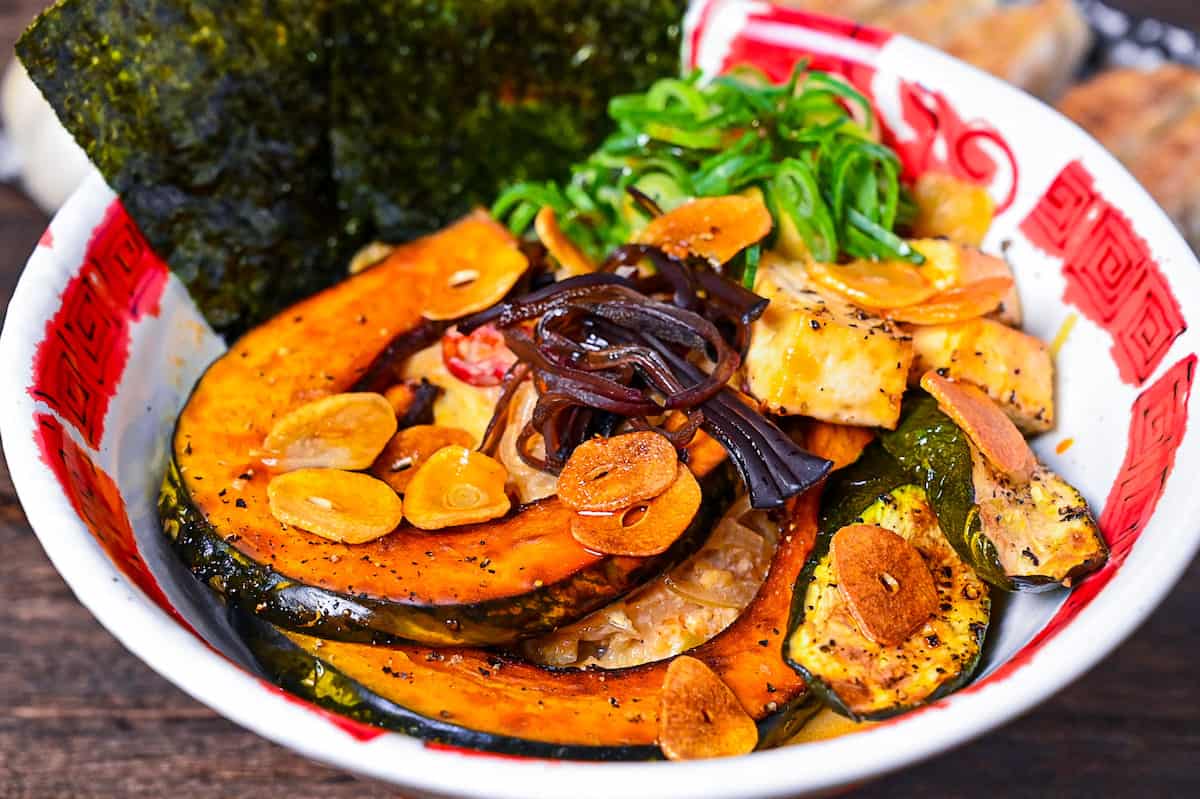
Rebuilding a Japanese classic as something fully plant based is the kind of puzzle I love to sit with. This bowl carries real depth and a creamy body with no dairy and no bone broth, leaning instead on a patient kombu and dried shiitake dashi for its savory backbone, then miso and soy milk for weight.
Roasting the tofu, kabocha and zucchini before they meet any liquid is what keeps this bowl from going soft. The oven hands each piece a caramelized edge and a firm set, so they hold their shape rather than turning to mush once I settle them into the creamy doubanjiang broth.
13. Spicy Negi (10 Minute Ramen Topping)

Featured Comment
This is my third time making this recipe. I make it as a side dish salad because I like it that much.
★★★★★
– Marian
This is the topping I reach for when a pot of ramen is almost ready and I want something with real bite on top. One thick naganegi, 10 minutes on the cutting board, and no stove at all. It turns a plain bowl into the one I keep coming back to.
I slice the naganegi thin along the fibers, with the grain rather than across, so the strands stay long instead of falling apart. A quick soak in ice water keeps them crisp and cold, then half a teaspoon of doubanjiang and a pinch of shichimi turn it bright. Against hot noodles, those long strands are the whole point.

14. Buta Kimuchi Itame (Pork and Kimchi Stir Fry)
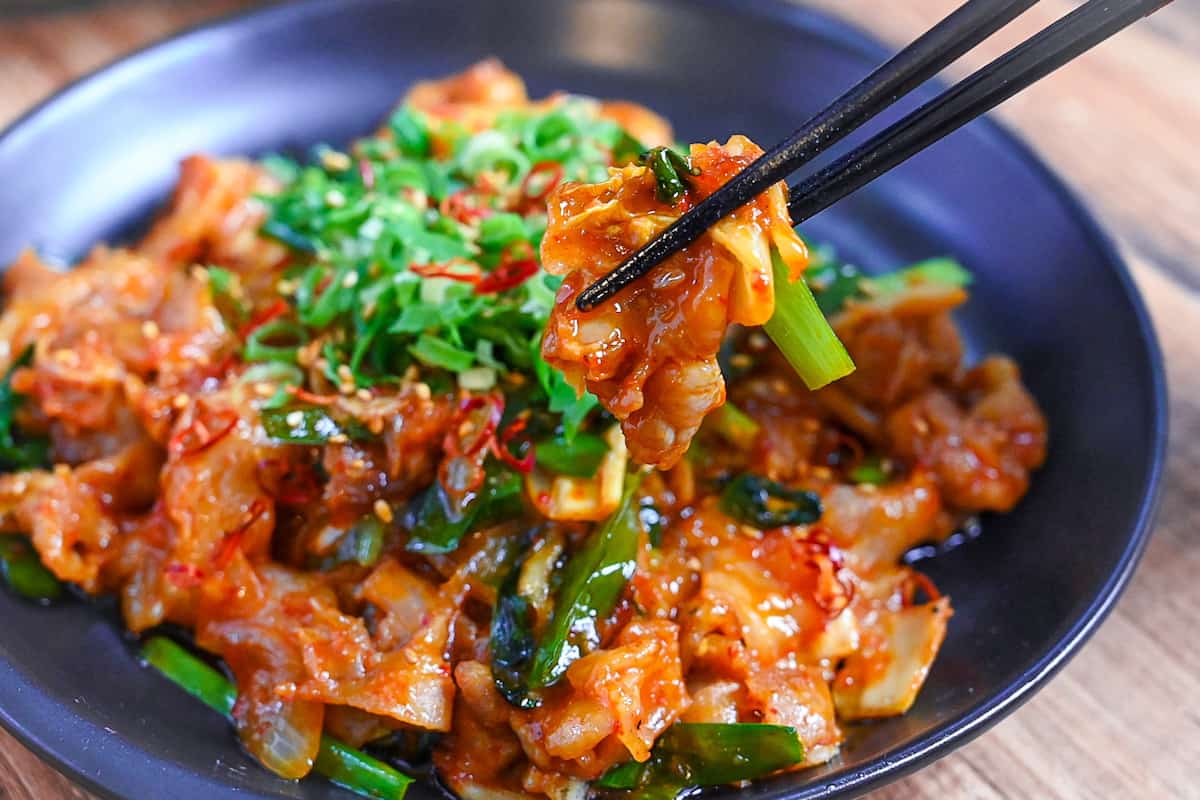
I fold the kimchi in near the end, once the pork has browned and the onion has turned soft. Add it any earlier and the acid and moisture stall that browning cold. What reaches the plate is sharp fermented tang, rounded out by rich pork fat and the onion’s sweetness.
I think of buta kimchi as the Korean-fusion cousin of shogayaki, and I built it in a carbon-steel wok over high heat. Everything happens in a few fast minutes, start to finish, then I pile it straight onto hot rice and eat while it is still steaming.
15. Spicy Tsukemen (Dipping Ramen)

Featured Comment
I keep coming back to this, time and time again, and often freeze it in batches for easy dinners. It also works as a great Udon dipping soup. I have found that using (plain) UK-style pork sausage meat, removed from the skin, gives even more depth.
★★★★★
– Francis
Classic tsukemen leans on a seafood broth that simmers for hours, and I did not want to pour a fortune into stock for a casual bowl at home. This dipping ramen skips that long base and builds a spicy miso dip in 15 minutes, so a weeknight craving never turns into an all day project.
A watery dip is the usual downfall of homemade tsukemen, running back into the bowl before the noodles pick up much flavor. One spoonful of potato starch stirred into the pot changes everything, thickening the dip into something glossy that rides up on every pull of noodles. That texture is the whole reason this bowl works.
16. Tori Chili (Chicken in Sweet and Spicy Sauce)

Featured Comment
This is the first dish I’ve made from Yuto and it didn’t disappoint. Result was excellent. Both myself and my wife thoroughly enjoyed it.
★★★★★
– Gary
When I built this, I refused to just swap chicken into my ebi chili and call it a new recipe. So I rebuilt the sauce to actually suit chicken, and I leaned on a coating trick that keeps lean breast tender rather than dry and stringy. That distinction mattered to me.
The real surprise came from a side, not the sauce. I started serving it over rice with buttery, low and slow scrambled eggs, and that silky richness folds through everything until the whole bowl tastes like comfort food. I keep making the whole dish just to get back to that one bite.

17. Spicy Seafood Yaki Udon

This is a garlicky seafood stir-fry built on chewy udon, and every bite tastes deeply of the sea. Nothing about it feels heavy or dull, just briny, warm and generous. The reserved shrimp shells get fried into the oil first, which carries that seafood flavor through the whole pan.
A spoonful of curry powder goes into the sauce, and no, it does not taste like curry. I reach for it because good curry powder is really a whole spice rack, already toasted and balanced, so that single scoop layers a depth under the chili that no lone seasoning could match.

18. Easy Tantanmen (Tan Tan Ramen)

Featured Comment
This is absolutely the best ramen recipe we have ever tried at home.
★★★★★
– Wayne
This is the tantanmen I reach for when I want restaurant depth on a weeknight. The whole bowl lives or dies on one moment, when the hot soup meets the tare and turns cloudy and creamy instead of splitting into an oily slick. Nail that and the sesame carries the rest.
My secret here is not Japanese at all. I cut the sesame paste with a heaping spoon of peanut butter, and that single swap builds the thick, clingy body most homemade bowls miss. The heat from doubanjiang and rayu sits low underneath, ready to be dialed up bowl by bowl.
19. Spicy Miso Jabara Cucumber (Accordion-Cut)
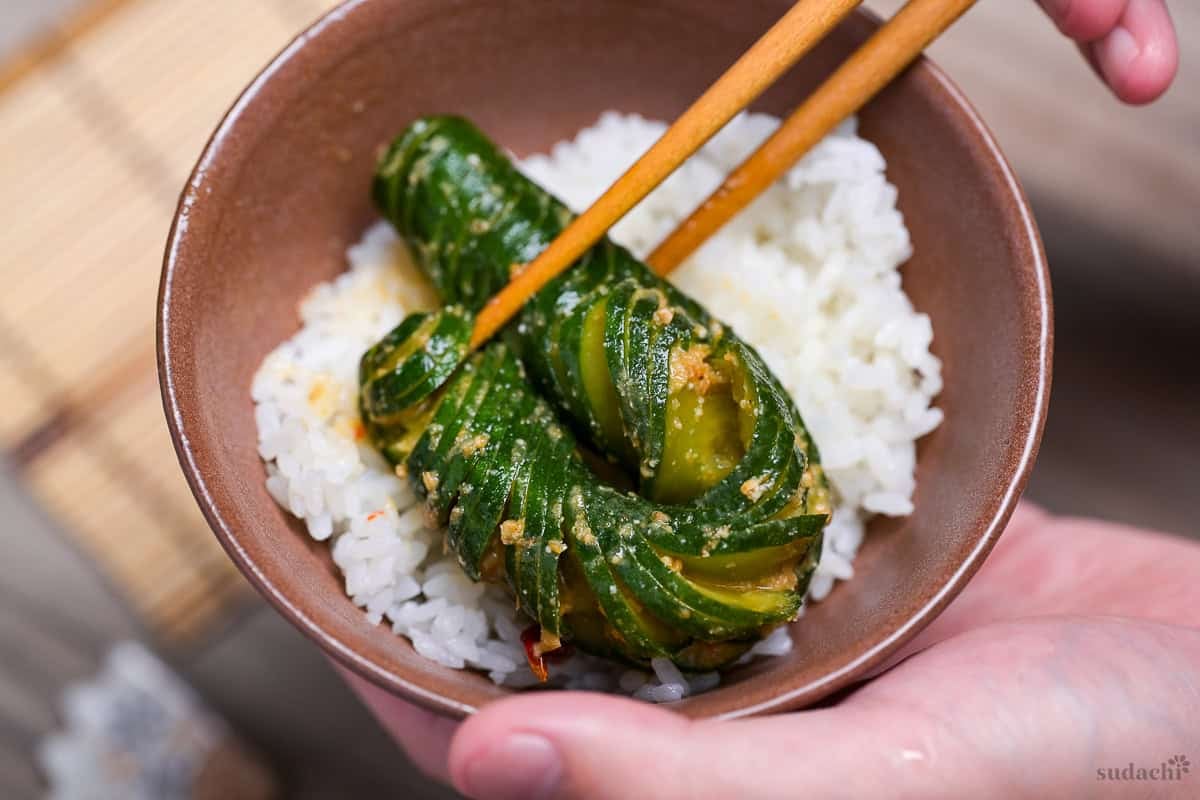
The heat comes from toban djan, so it arrives with fermented depth rather than a flat burn. Chili flakes go in at the very end for a second, sharper edge.
Katsuobushi and a little chicken bouillon powder sit underneath and stop the spice from running the whole dish. I want this spicy miso jabara cucumber to send me back to the rice, not to a glass of water.

Leave a rating and a comment