

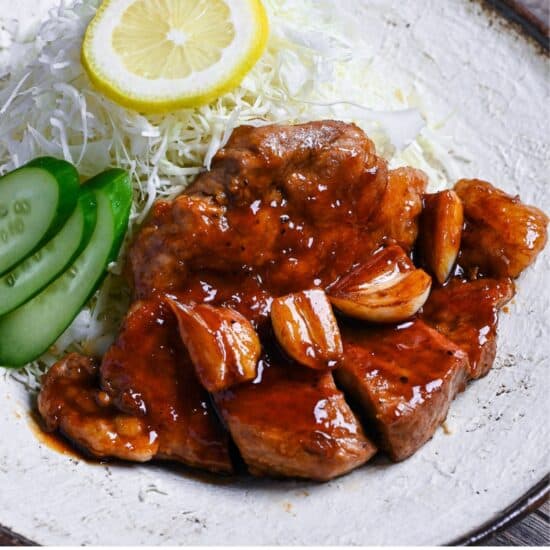


Featured Comment
Wow, wow, wow! I’ve rarely been disappointed by your recipes, and this isn’t an exception! Haha, the choice of going to a proper butcher for this recipe definitely panned out when the pork turned out so easy to chew and slice. I love the sauce and your recipes!
★★★★★
– Trice
Everyone knows teriyaki chicken, but few have met tonteki. Perhaps you might have heard it from Midnight Diner. But if you haven’t made it yet, you’re missing out.
Each slice is coated in that glossy lacquer-like glaze. And there’s a reason this is one my wife’s favorites.
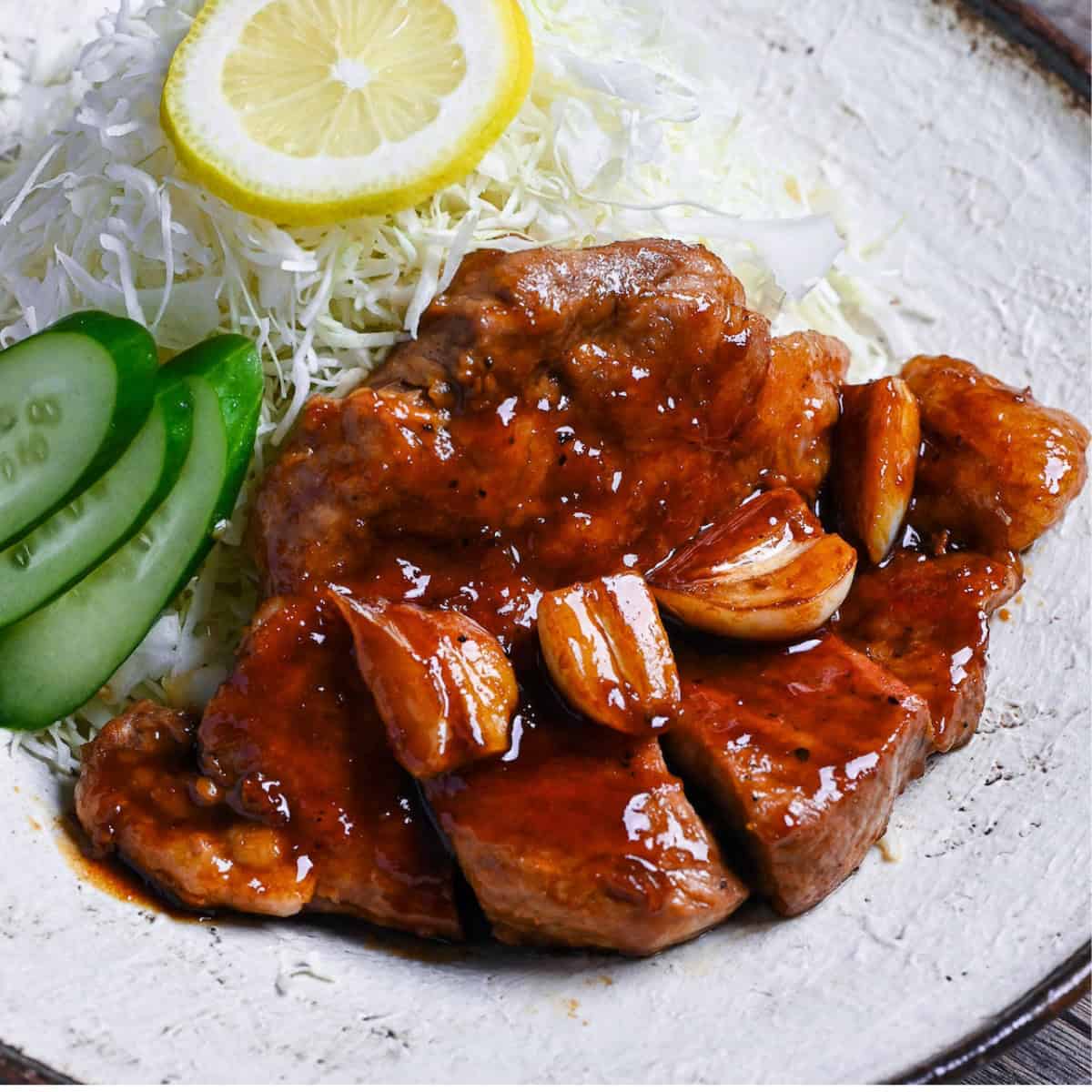
Tonteki
Recipe Snapshot
- What is it? Japanese-style pork steak in thick Worcester-soy glaze.
- Flavor profile: Bold, Sweet-Savory, Garlicky
- Why you’ll love this recipe: It’s the perfect “upgrade” dish. Quick enough for Tuesday, impressive enough for guests, and backed by a clear why behind every step.
- Must-haves: Thick-cut pork, Fresh garlic, Worcestershire sauce.
- Skill Level: Medium
What is Tonteki?
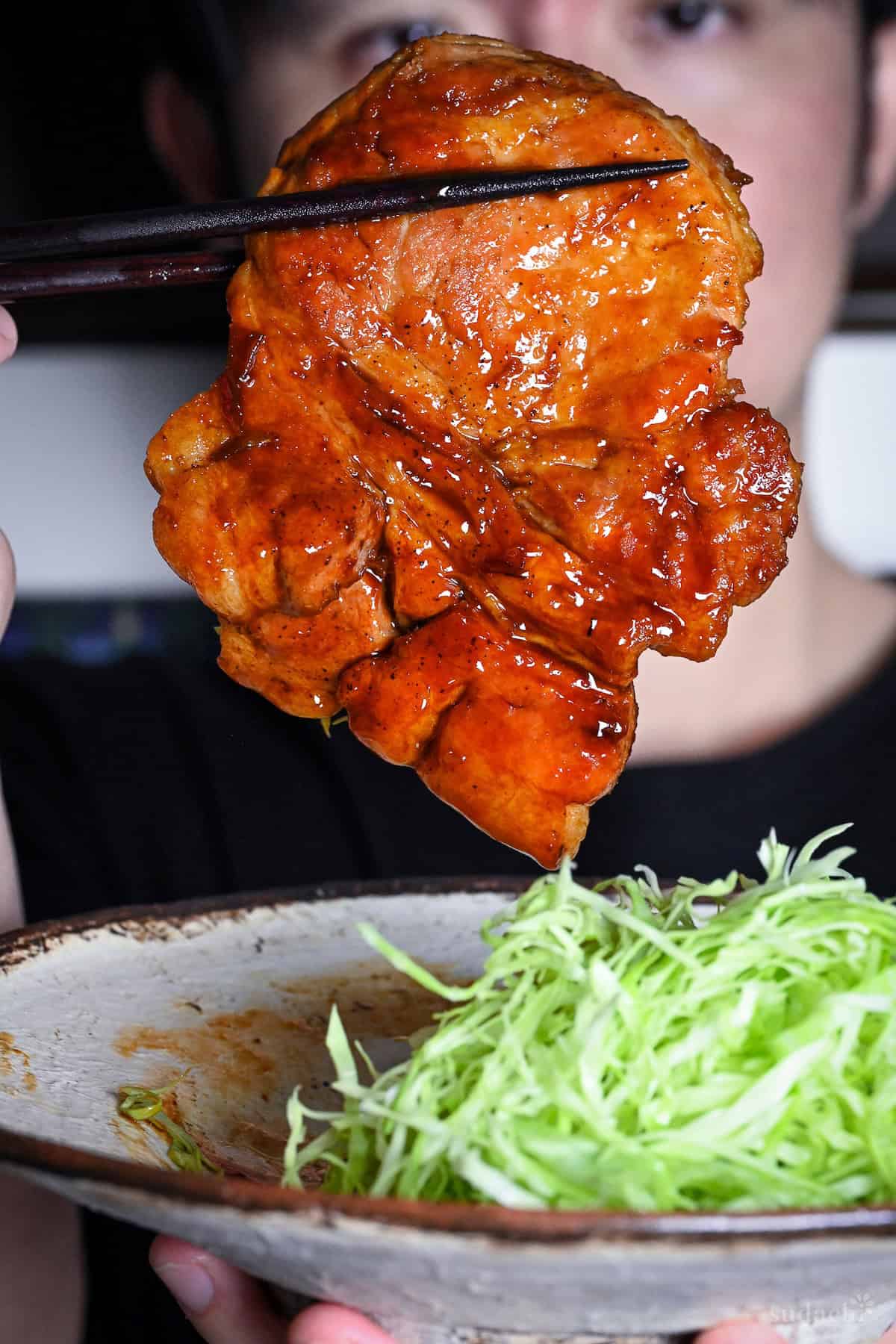
Tonteki is Japan’s answer to a garlic-charged pork steak. Thick-cut pork, pan-seared hard, and lacquered in a dark, glossy soy-Worcestershire glaze. The dish was born in postwar Mie Prefecture as a stamina meal for laborers, but its balance of punchy sauce and tender meat makes it timeless.
Its technique contrasts beautifully with shogayaki, which uses thin slices and a quick sauté. Tonteki, on the other hand, demands a thick-cut loin scored “glove-style” so it cooks evenly and holds that powerful glaze.
It’s the kind of simple, high-impact recipe that rewards precision. Nail your sear and glaze ratio, and you’ve got restaurant-level depth on a Tuesday night.
Tonteki Ingredients
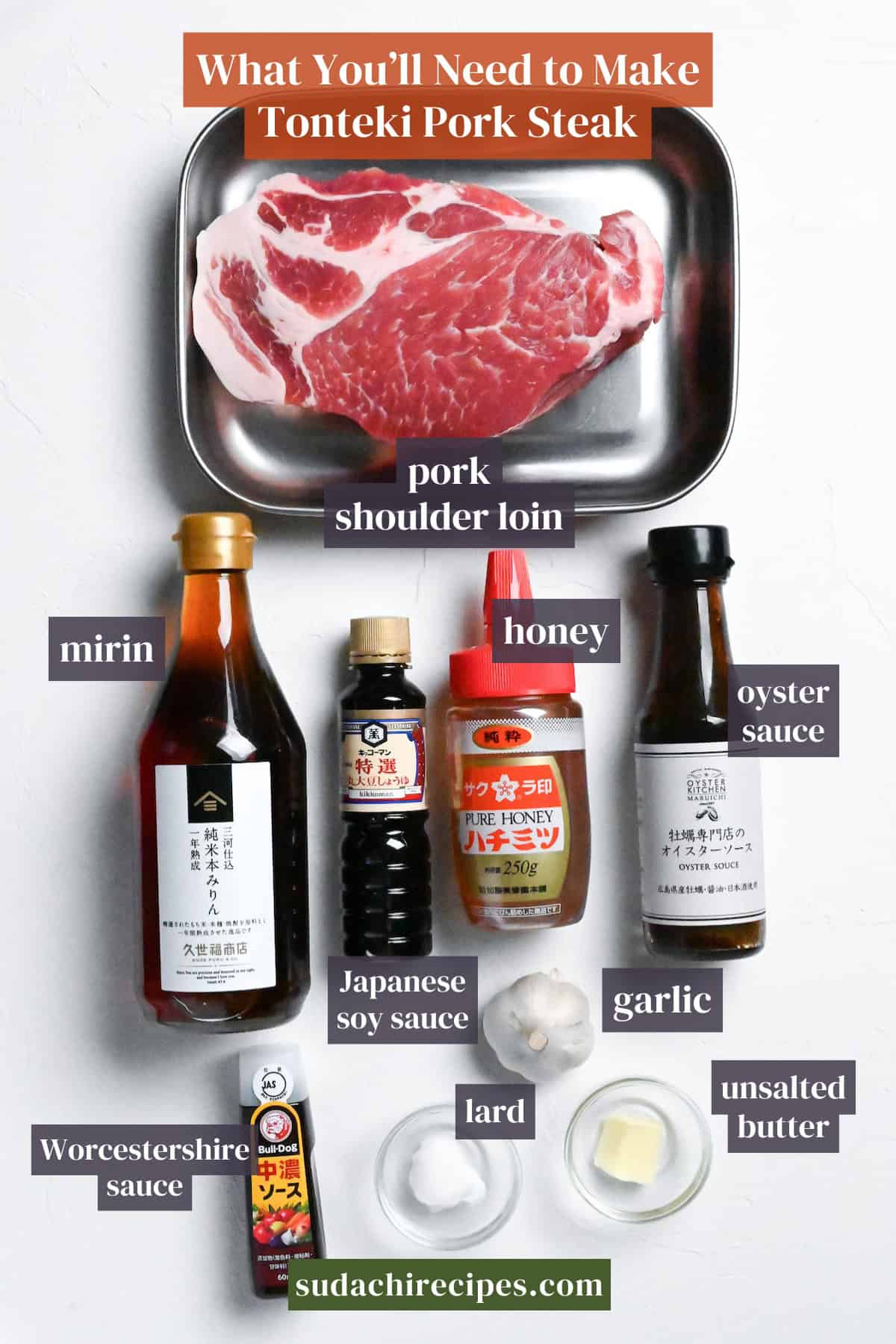
- Pork: Go for pork shoulder (Boston butt in U.S. stores) over loin if you can. It has just enough marbling to stay tender. Look for 1.5-2cm thick or get a block and slice yourself. Loin works too, but it’s leaner, less forgiving, and prone to dry.
- Garlic: Fresh garlic cloves, smashed or roughly chopped, release their punch when you cook them in oil first.
- Worcestershire Sauce: Japanese brands (like Bull-Dog or Kagome) are the traditional choice and brings a sweeter, fruitier funk, but standard Lea & Perrins or any British Worcestershire works perfectly. Just use touch less since it’s more assertive and vinegar-forward.
Alternative Pork Cut Ideas
| Cut Name | Notes | Recommendation |
|---|---|---|
| Pork Shoulder Steak (from Boston Butt) | Well-marbled and forgiving. Top pick. | ★★★★★ |
| Blade Chop | Watch doneness near bone. It will take longer. | ★★★★☆ |
| Rib Chop (Ribeye) | Tender and mild. Straightforward pan-sear. | ★★★★☆ |
| Sirloin Chop | Mixed muscles. Flavorful but slightly chewy | ★★★☆☆ |
| Boneless Center-Cut Loin Chop (New York Pork Chop) | Lean and convenient. | ★★★☆☆ |
| Pork Tenderloin | Very lean and mild. Dries easily. Least “glaze-soaking.” | ★★☆☆☆ |
TL;DR: Get 1.5-2cm thick pork shoulder steak or slice Boston butt into 1.5-2cm.
My readers and social media followers have reported success making this tonteki recipe with the following pork cuts!
- Pork shoulder steaks
- Country ribs
- Spare ribs
If you try this recipe and it turns out well, I’d love to hear which cut you used in the comments!
How to Make My Tonteki
If you prefer to watch the process in action, check out my YouTube video of this tonteki recipe!

Before you start:
- Shred the cabbage as thin as you can and keep it chilled.
- Prep the garlic by either lightly smashing small cloves (skins off) or slice thicker chips. For large cloves, halve them lengthwise, remove the cores, then lightly crush so they perfume the oil without scorching.
- Premix Worcestershire sauce, soy sauce, oyster sauce, mirin, and honey.
A Japanese brand like Bull-Dog is ideal, but a Western brand like Lea & Perrins works too. Just stir in a tiny bit of sugar, ketchup, or unsweetened applesauce to round off its edge and nudge it toward the Japanese style.
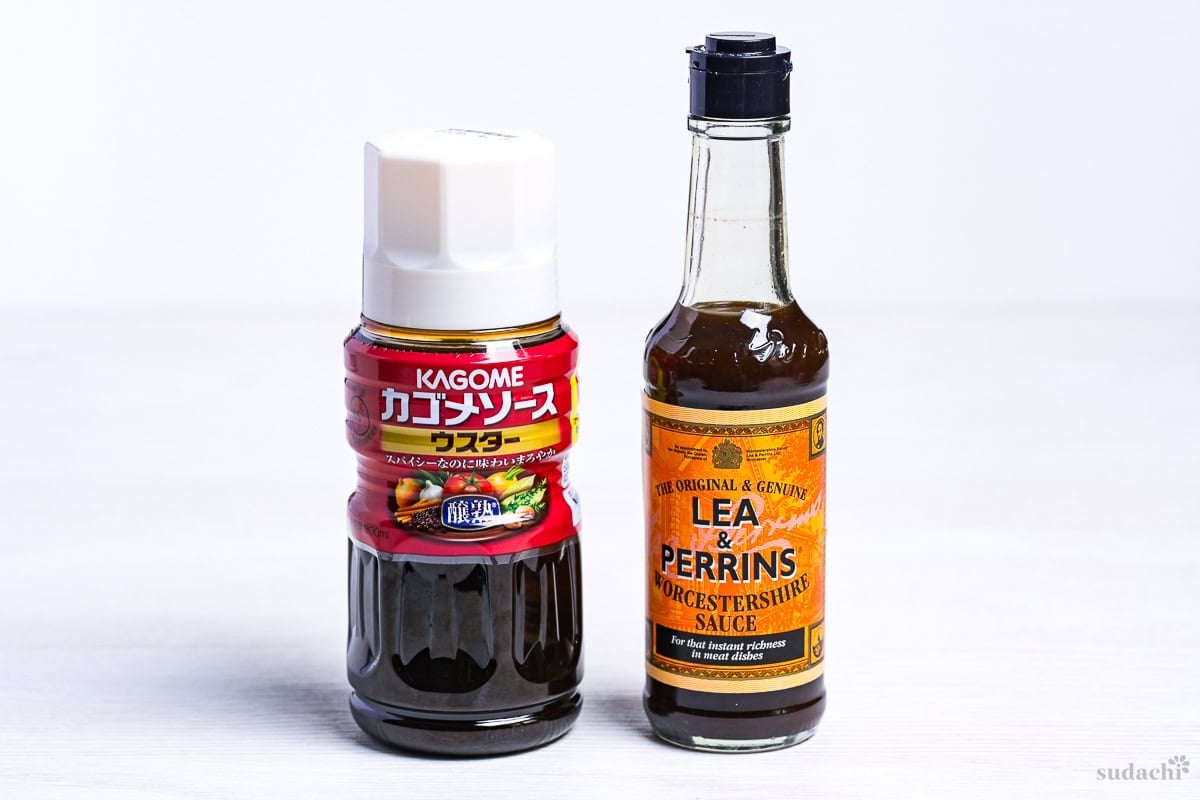
For the full breakdown and my side-by-side cooking tests, see my guide to Japanese Worcestershire sauce.
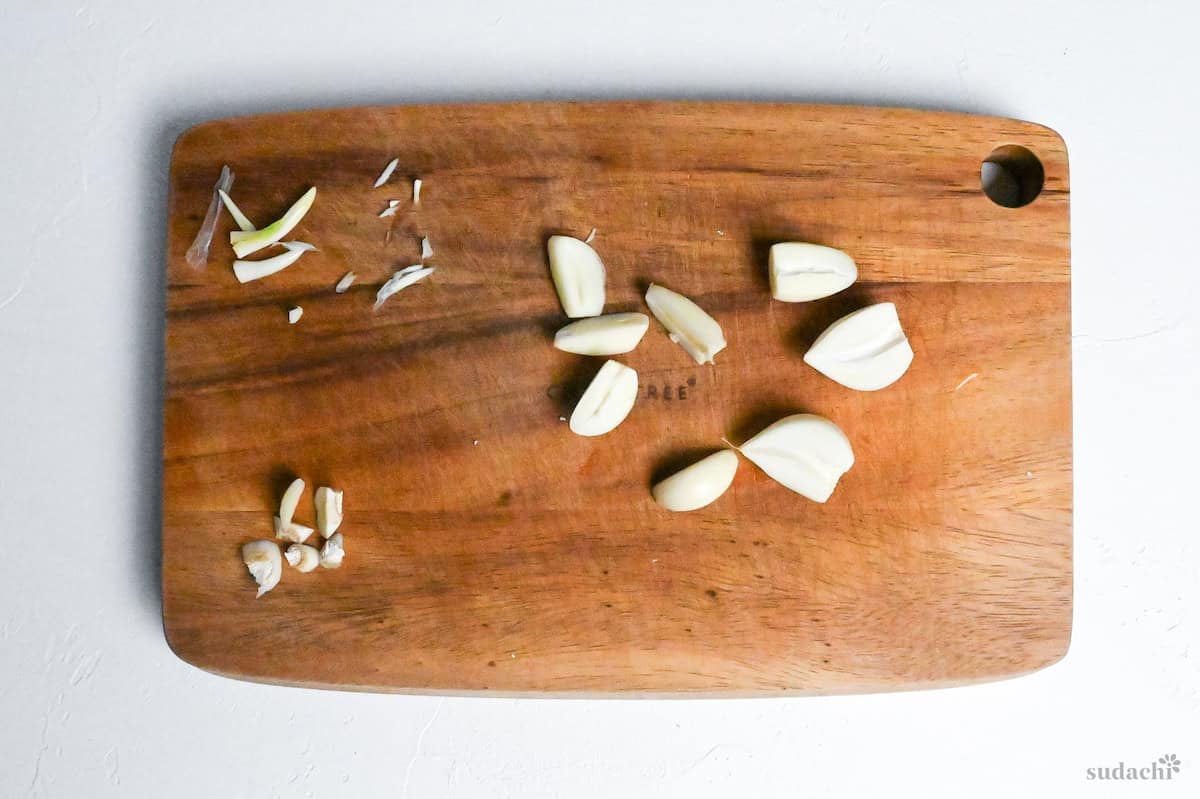

i. If you use a shoulder (Boston butt) block, slice it into 1.5-2 cm thick steak.
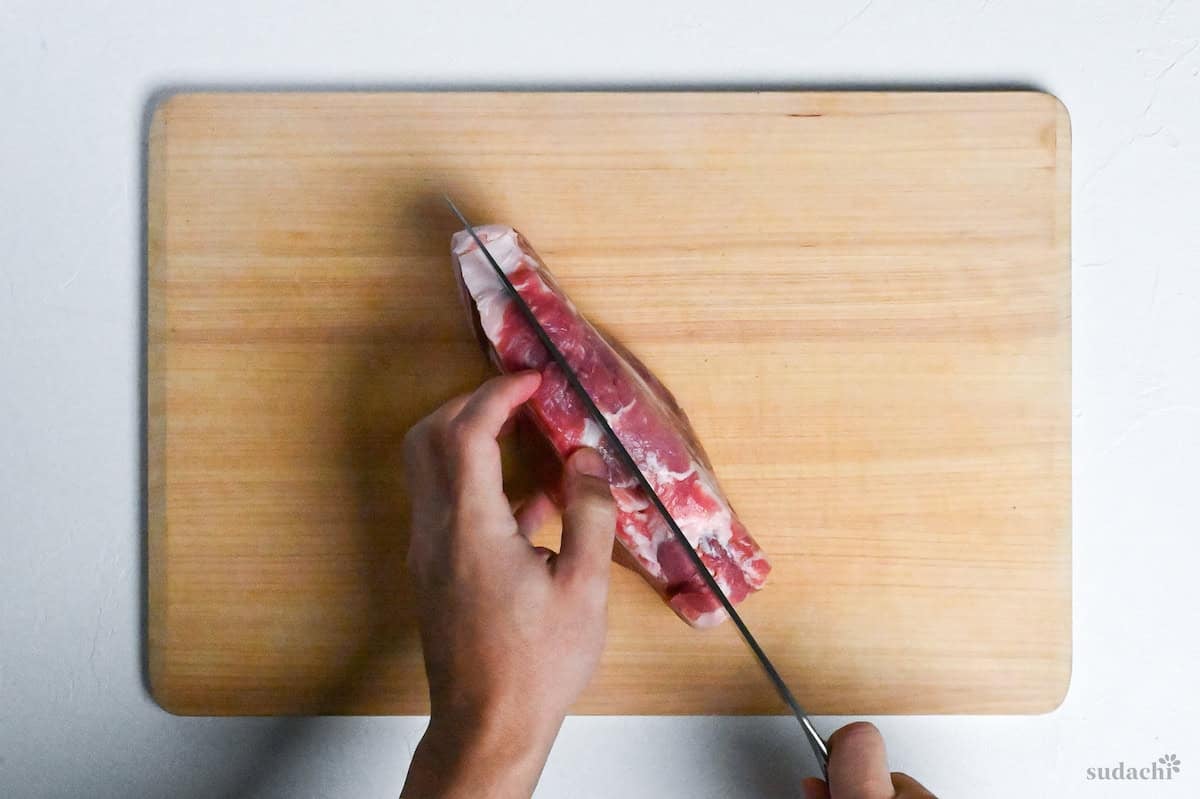
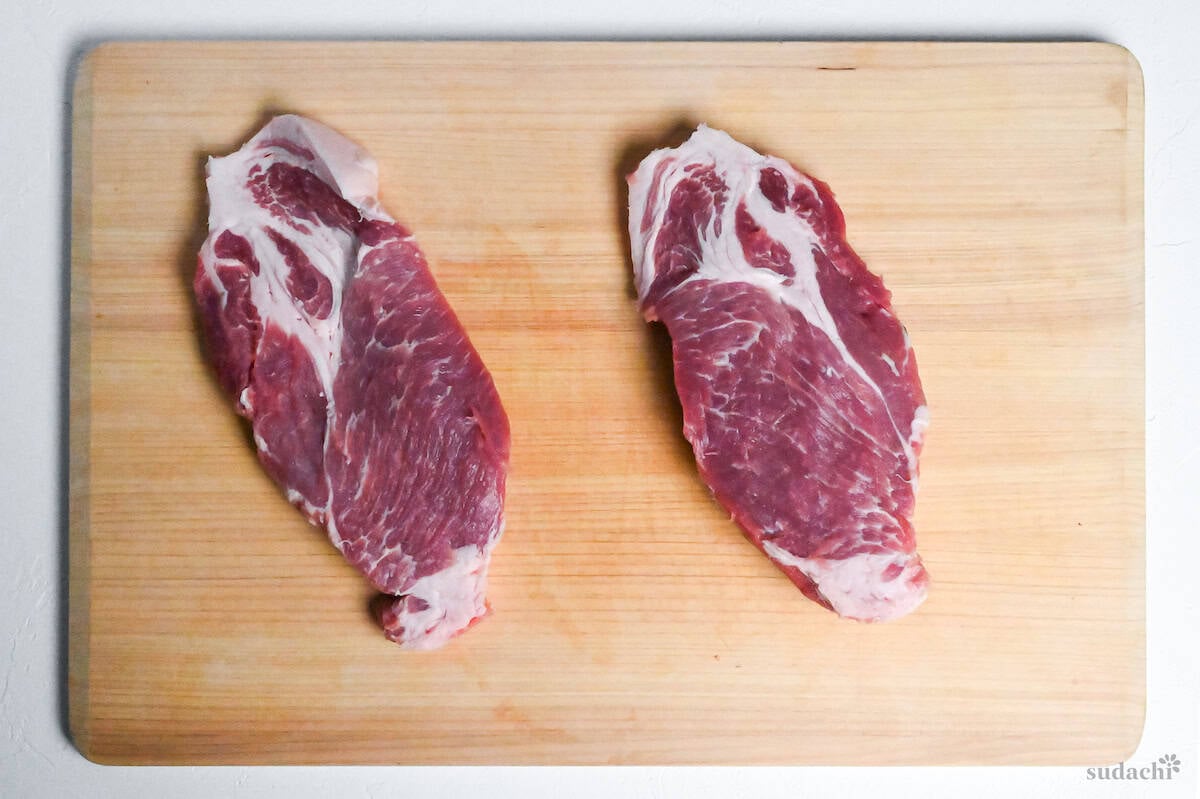
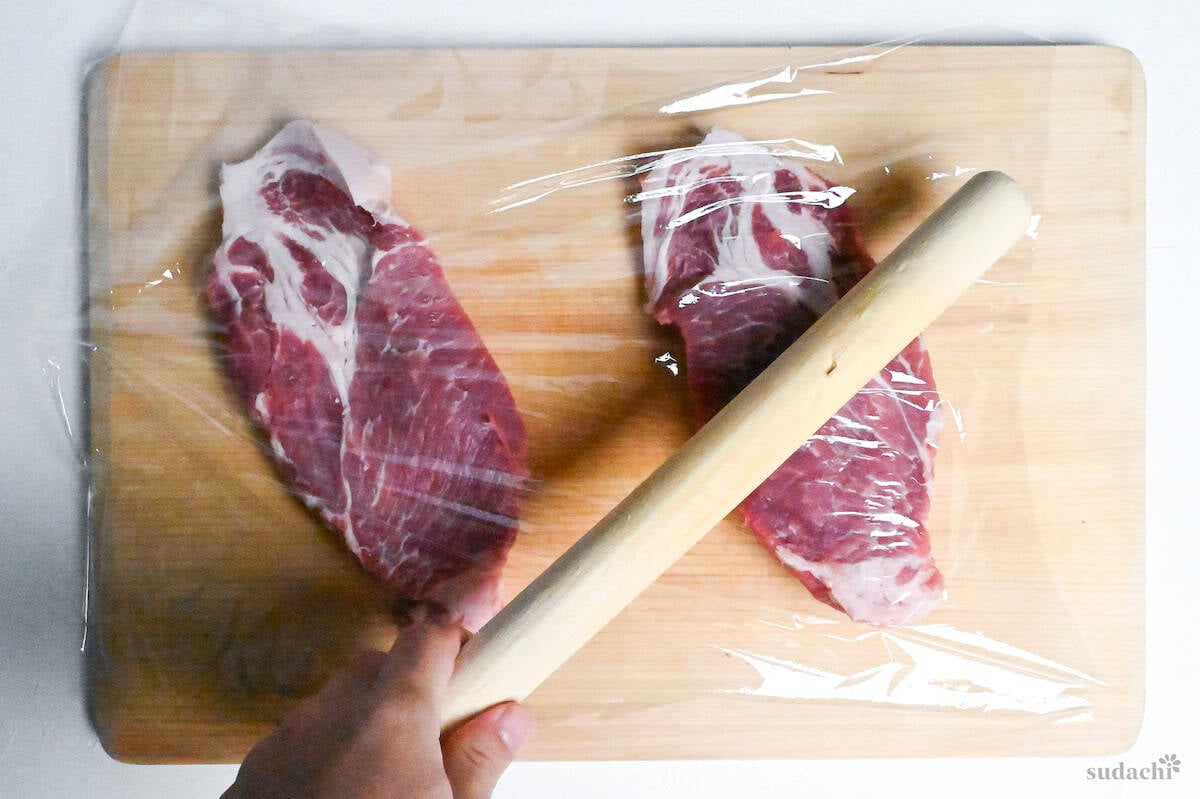
ii. Lightly tap the steak with a meat mallet or something similar to make the slab an even 1.5 cm throughout. This relaxes muscle fibers so the chop sears flat, cooks evenly, and stays tender.
iii. Make 4 shallow slashes around the fat cap and just into the lean, then add glove-style cuts across the meat so it opens like a hand but stays attached by 1-2 cm at the base; this prevents curling, speeds even cooking, and gives sauce more to cling to.
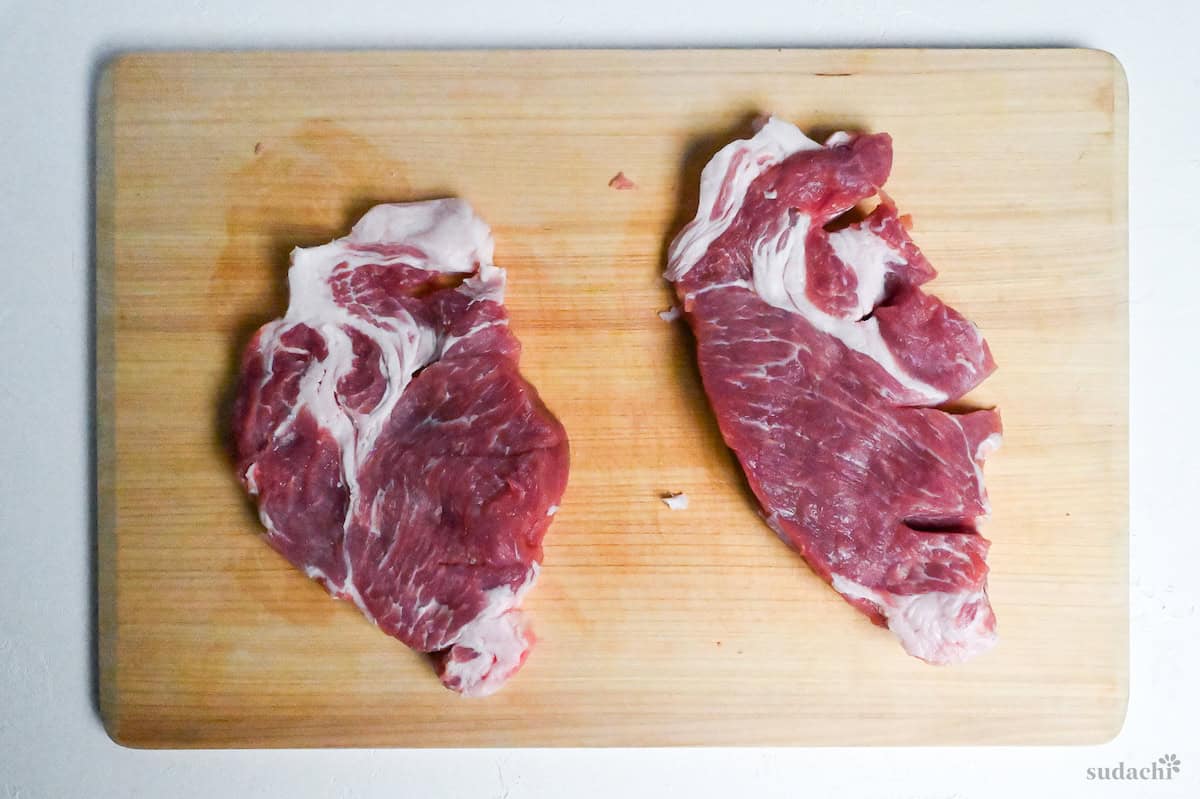
Pork loins curl because muscle and fat layers contract at different rates as they heat. Cutting the connective band between them reduces deformation and helps heat penetrate evenly. This “glove” presentation is a hallmark of Yokkaichi-style tonteki, served thick with garlic and plenty of shredded cabbage.
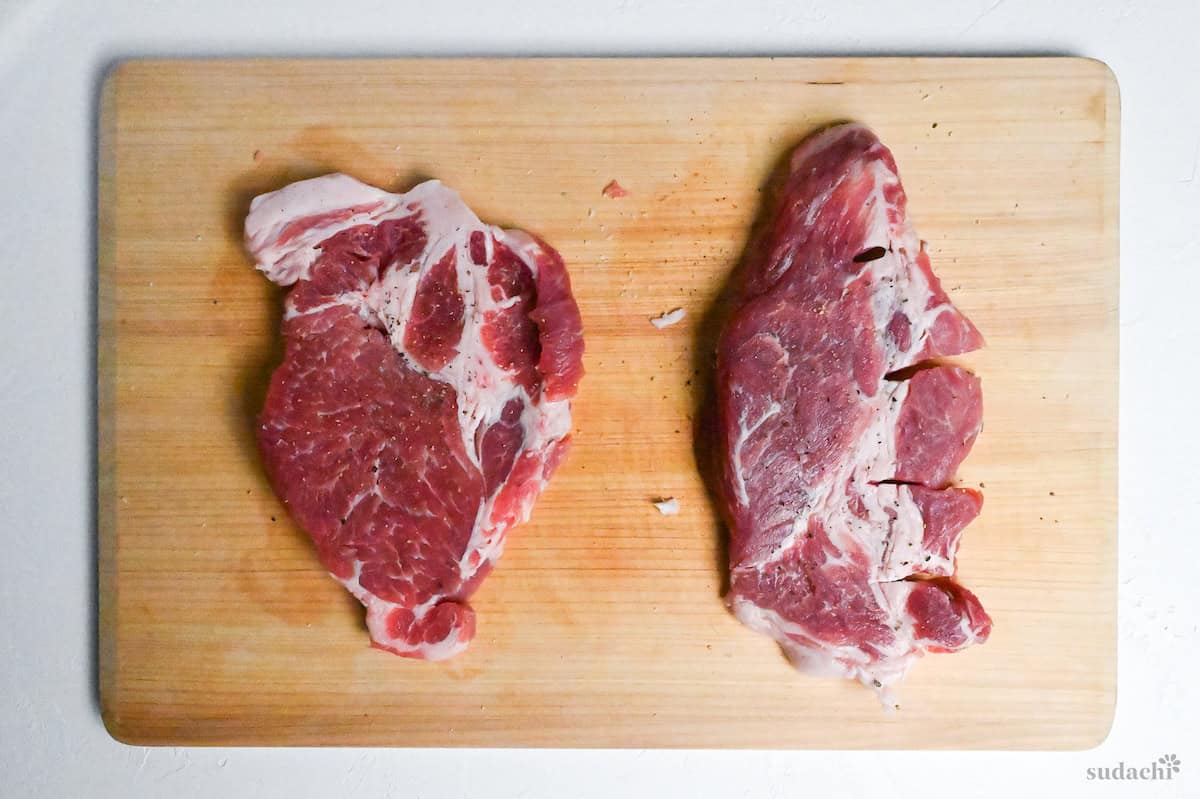
i. Season both sides with a generous pinch of salt and a few grinds of black pepper per side.
ii. Dust very lightly with all-purpose flour, then shake off excess until you can just barely see it.
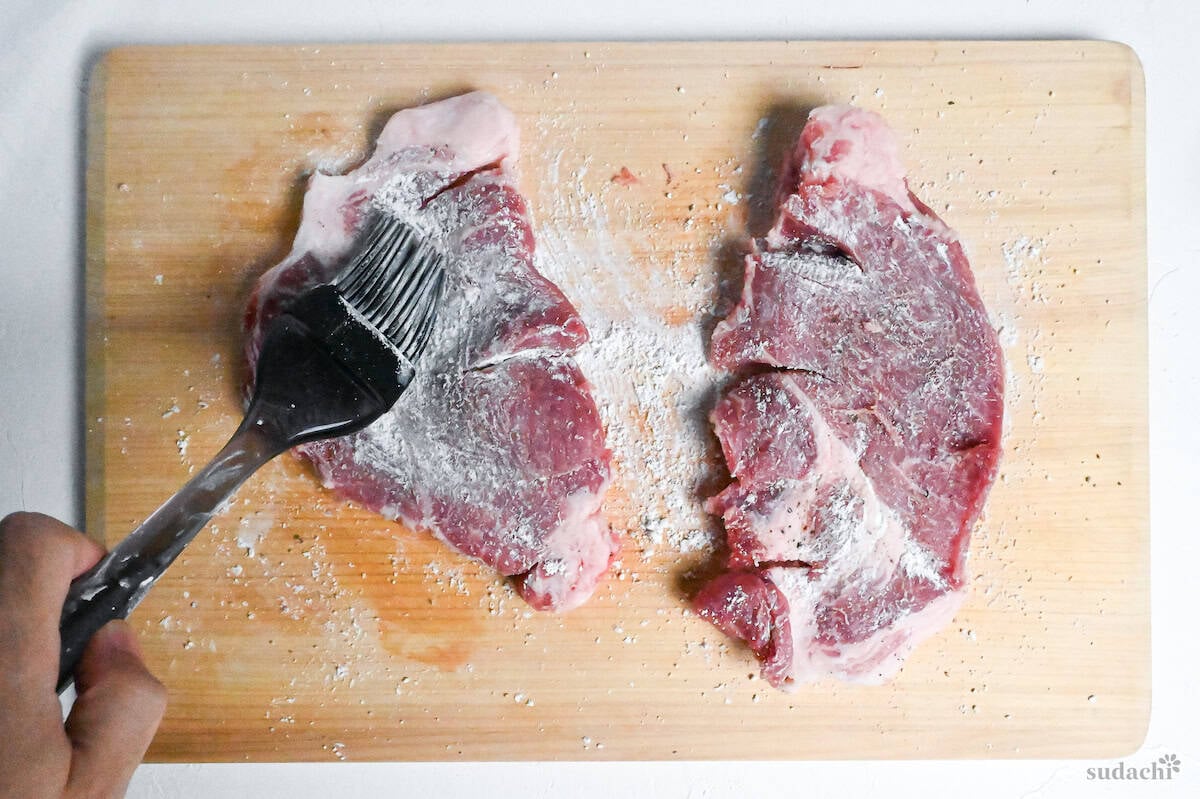
A thin flour veil promotes browning and a cohesive glaze. Too much flour scorches and muddies the sauce texture.
i. Set a heavy-bottomed pan over medium-low heat and add lard (or neutral oil if lard isn’t your thing). Drop in your crushed garlic. You want the garlic to slowly turn translucent, then pale gold, releasing sweet, roasted aromatics into the fat.
ii. Slide the pork into the pan. If your chop has a thick fat cap, stand it upright on that edge first like propping a book on its spine and hold it steady with tongs for 90 to 120 seconds.
iii. Lay it flat and cook over medium heat, flipping every 60 seconds for 4-6 minutes to stack up color without overcooking the band beneath the crust.
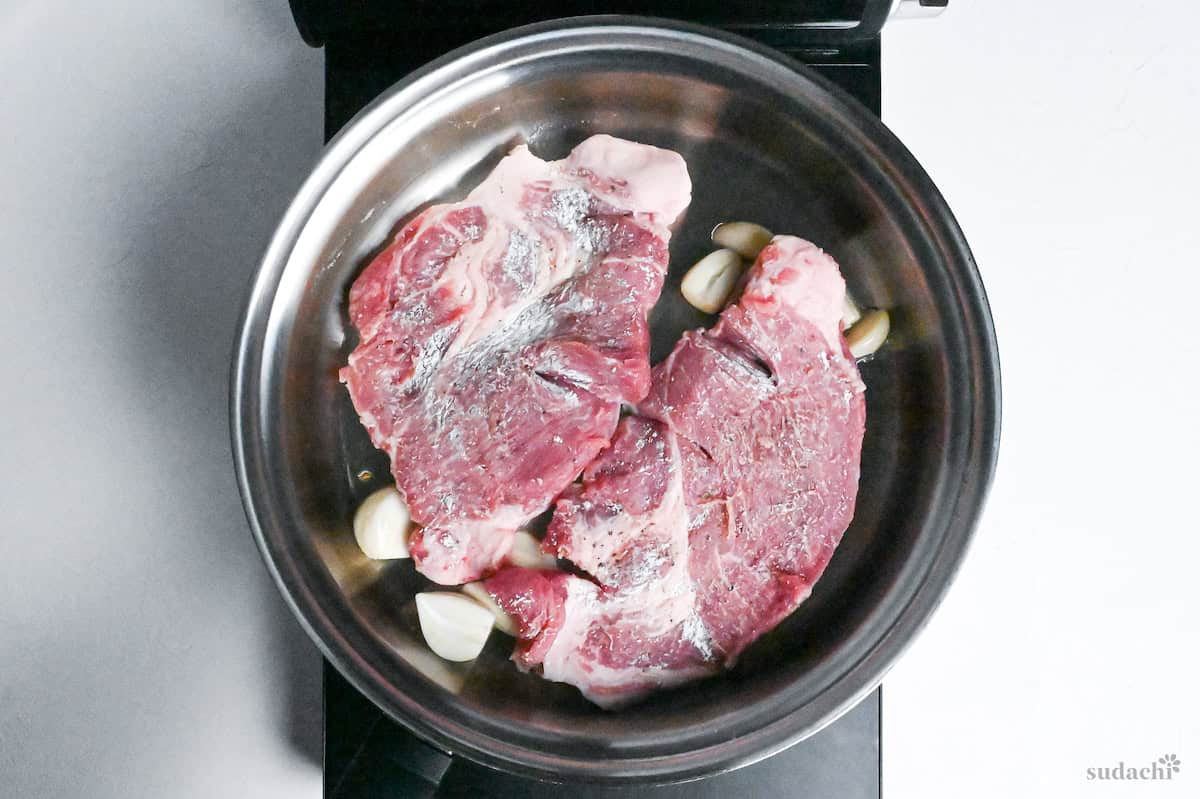
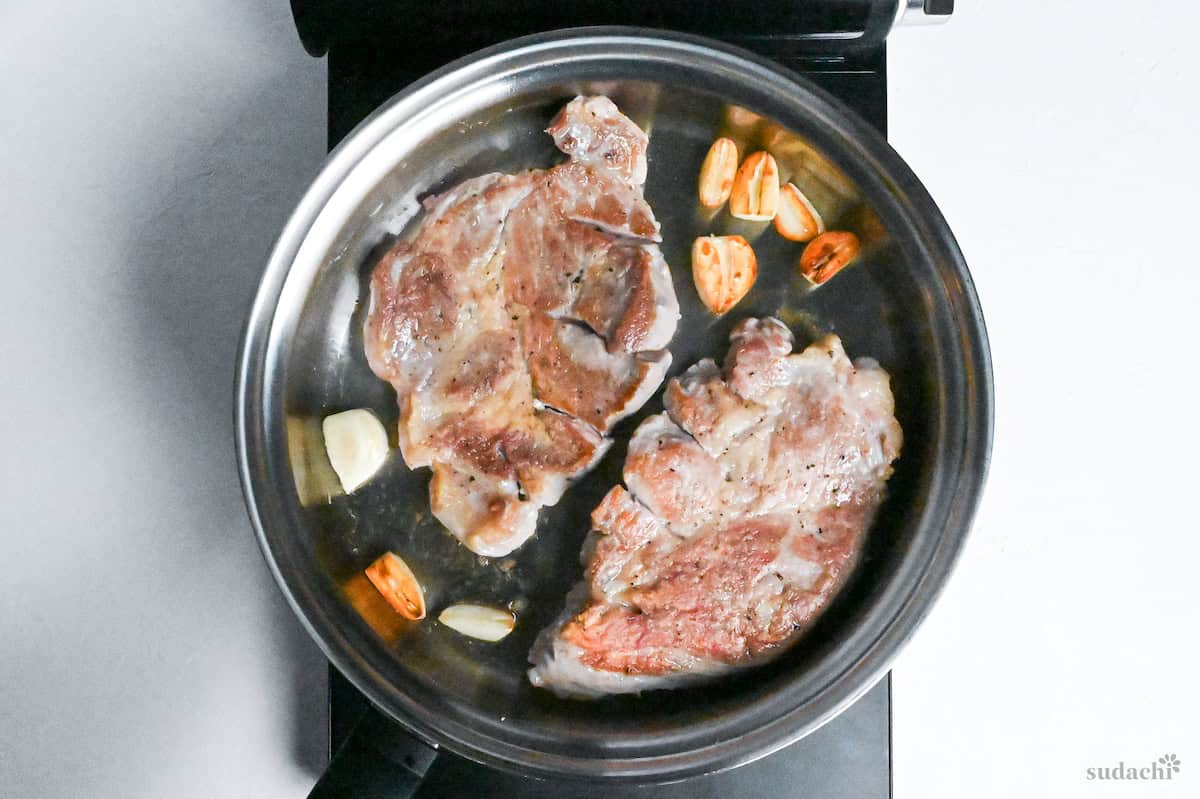
The moment your garlic cloves turn golden, pluck them out of the oil and perch them on top of the pork to keep them safe. You want to avoid burnt garlic at all costs.
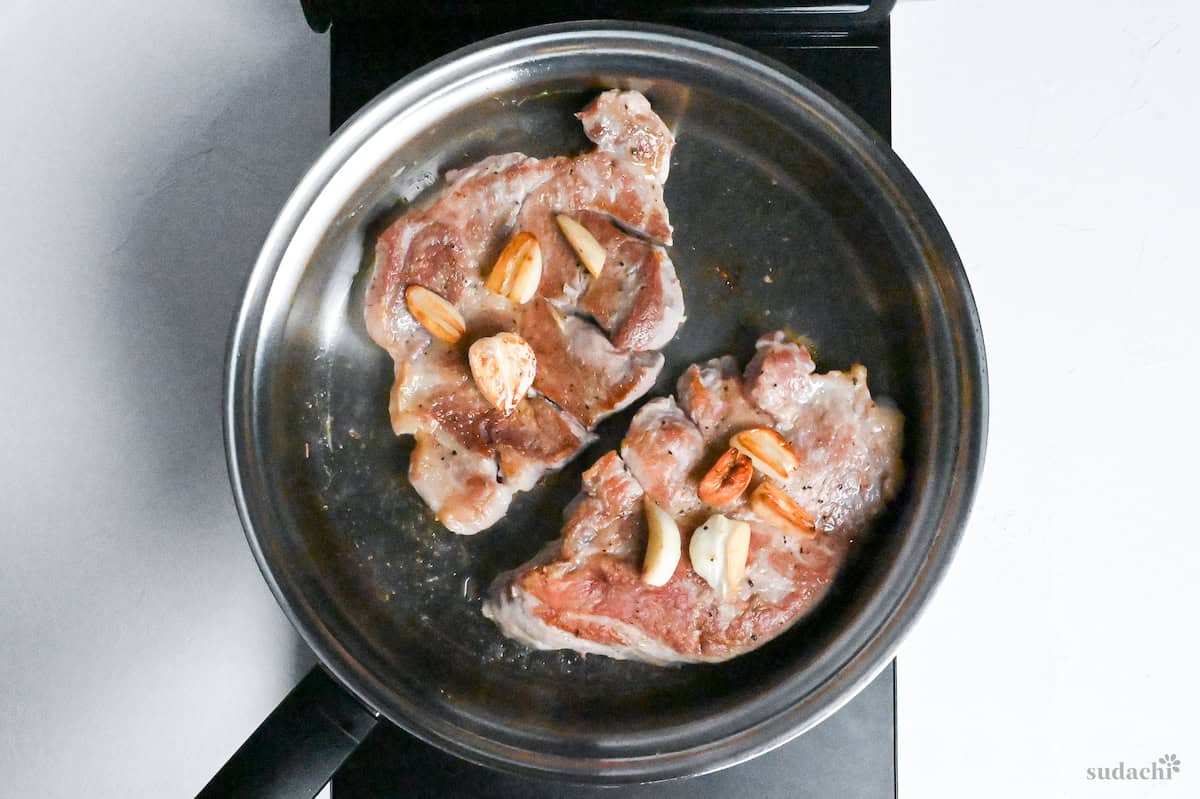
i. Once both sides of the pork have good color, think caramel-brown, not pale beige. Cover the pan with a lid and drop the heat to low. Let it steam-cook for 5 minutes.
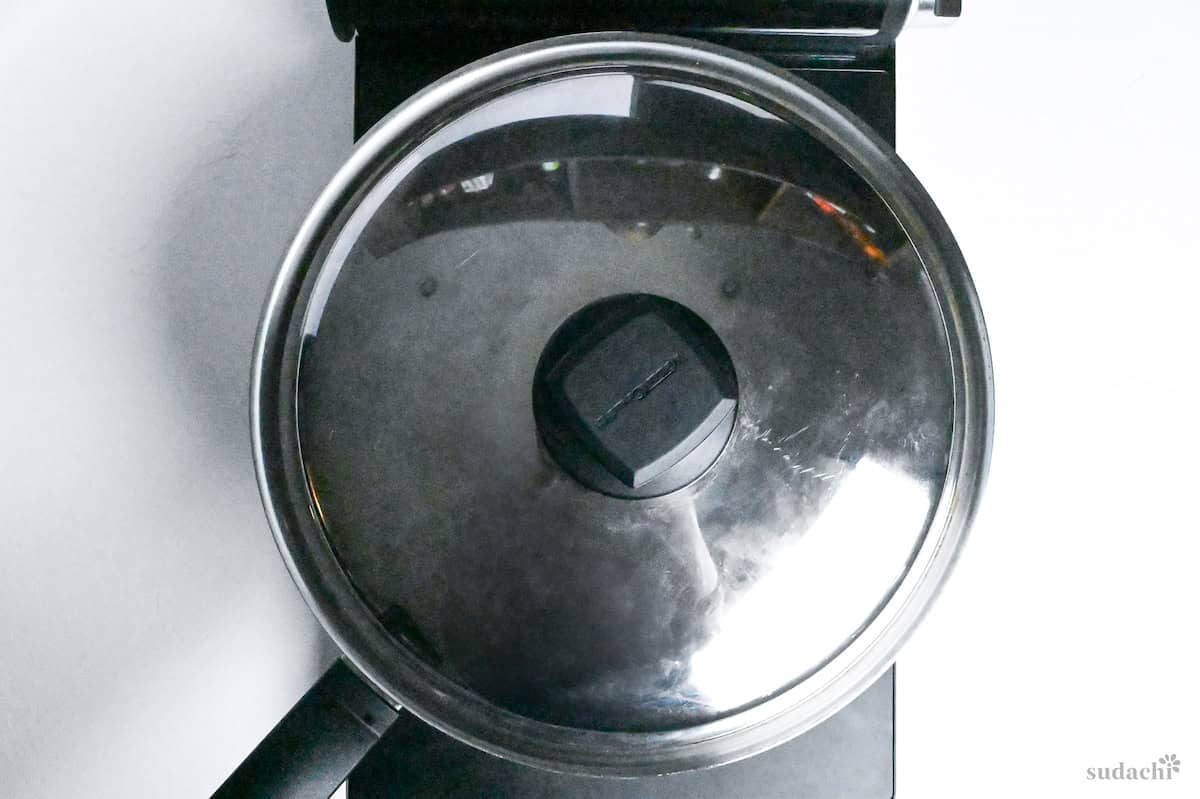
ii. Check the thickest part with an instant-read: target 63℃ (145°F).
i. Tilt out excess rendered fat with a spoon or blot with a wad of paper towel so only a thin shimmer remains. Too much fat will make the glaze greasy and prone to breaking.
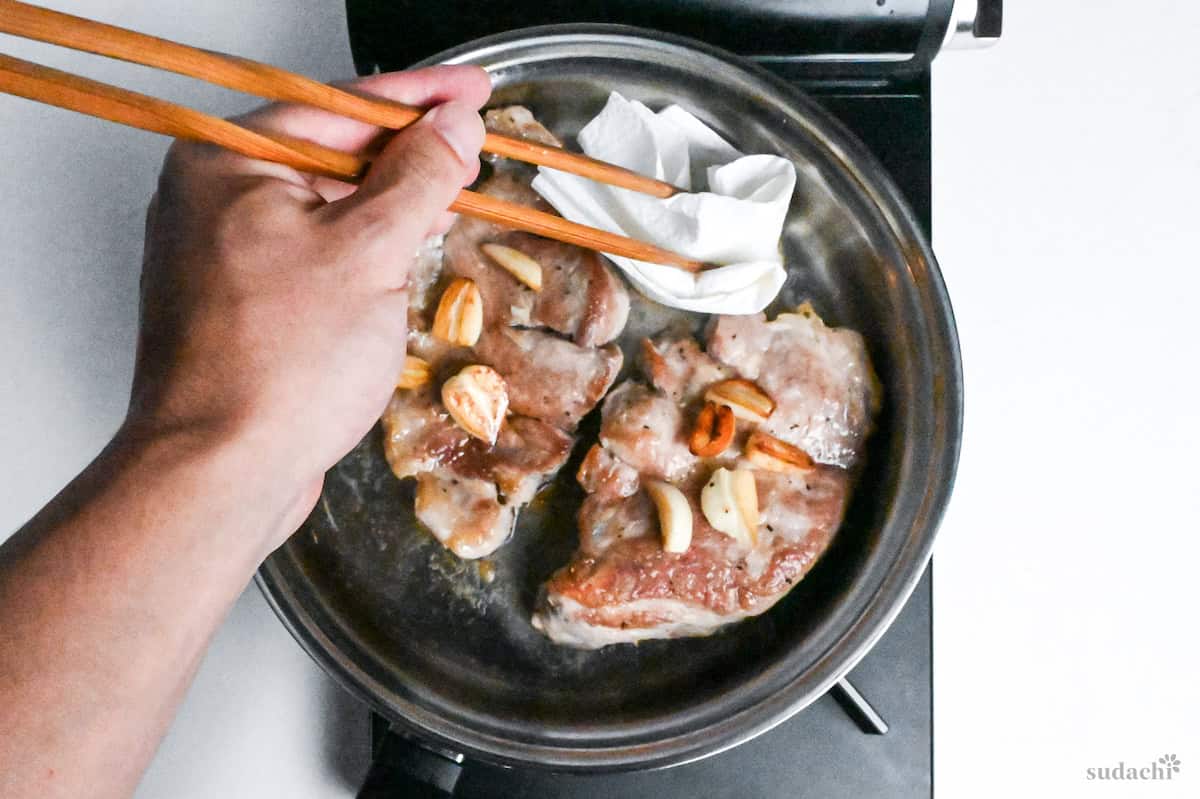
ii. Stir in the premixed sauce, scraping the fond as it simmers. Reduce until syrupy and it clings to a spoon in a glossy sheet. This takes about 1-2 minutes.
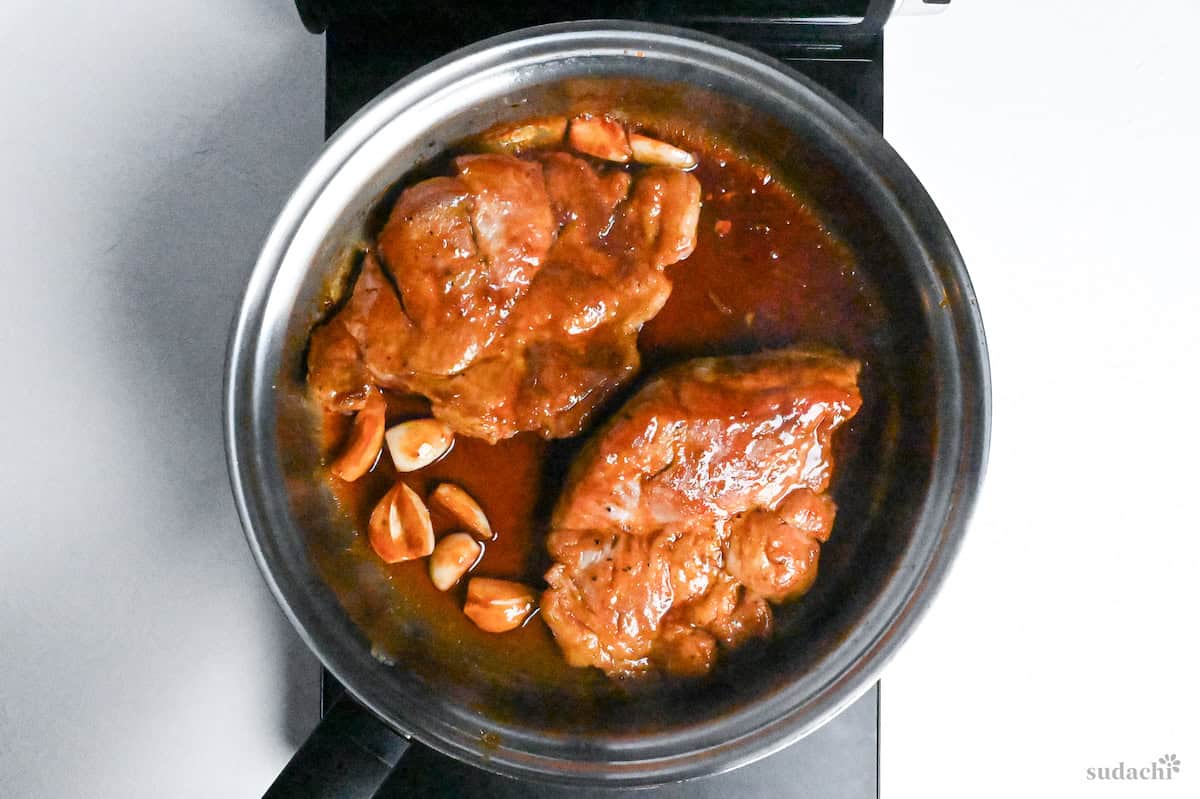
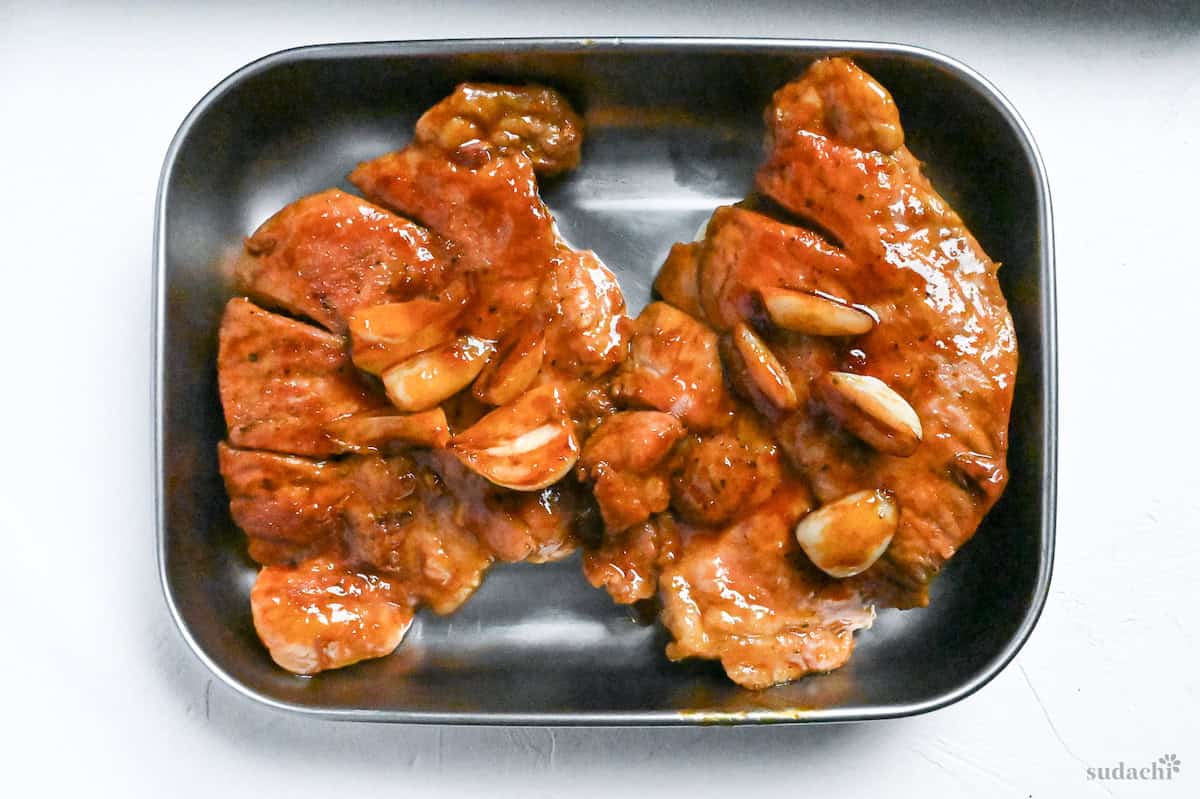
iii. Turn off the heat, set the pork and garlic on a container to rest until serving.
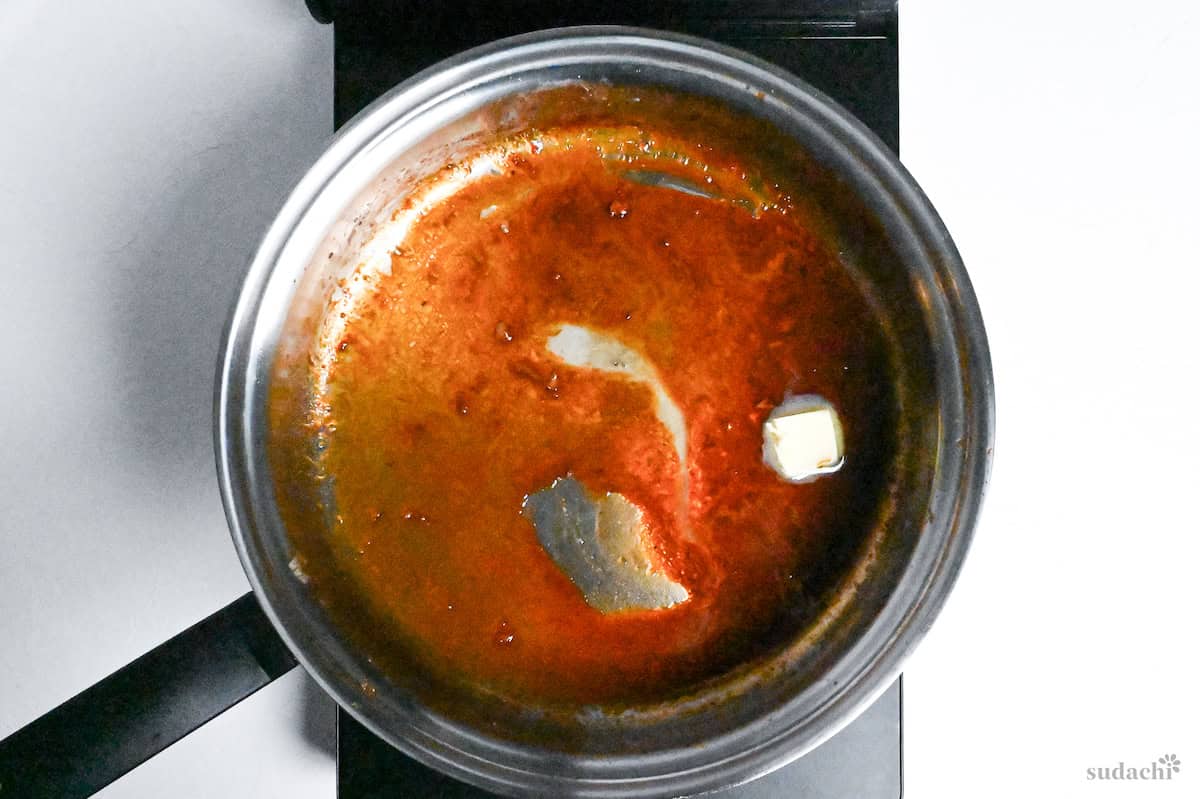
iv. While it rests, drop unsalted butter into the warm glaze remaining in the pan and swirl it in. You’ll see the sauce go from shiny to lacquered, with a luxurious, velvety texture.
i. Mound your shredded cabbage on each plate. Lay the pork alongside it. Spoon the glossy glaze generously over the pork, letting it pool around the base and soak into the cabbage. Crown the meat with your golden garlic cloves, and serve immediately while everything’s still hot.
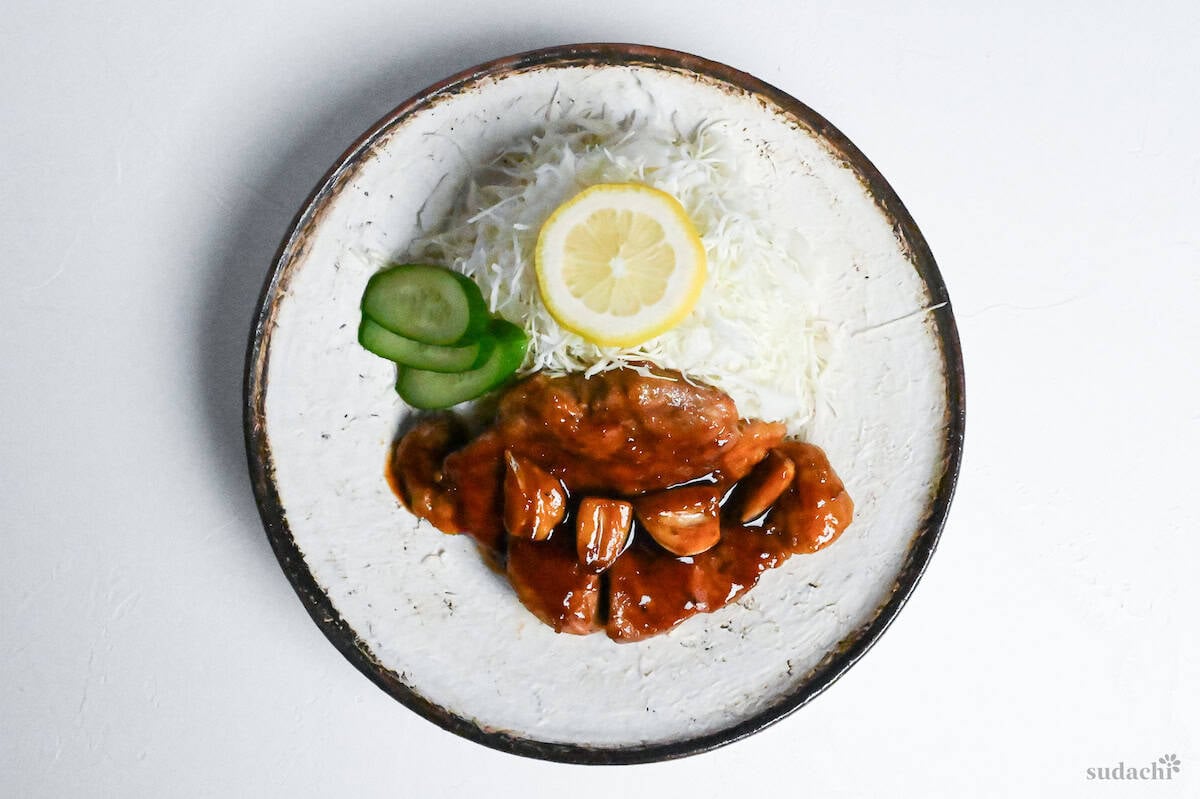
Yokkaichi-style tonteki is defined by thick pork, garlic, a boldly seasoned sauce, and a generous bed of shredded cabbage. No extra dressing needed at all. If you prepare plain cooked Japanese rice, then it’s complete.

Essential Tips & Tricks
- Always score the pork in “glove-style” cuts to prevent curling.
- Rescue the garlic early. The moment your garlic cloves turn golden, move them onto the pork to keep them safe. Burnt garlic tastes bitter and will ruin your glaze.
- Steam-finish under a lid and verify 63 ℃ (145 °F) internal temp, then rest 3 minutes.
- Blot out excess fat before adding sauce to the pan.
- Skip salad dressing. The garlicky tonteki glaze is built to season the cabbage and rice perfectly on its own.
With these simple tips in mind, you’re set for success every time you make tonteki.
Storage & Meal Prep
Fridge: Airtight container with the pork and glaze together, same day or next day maximum.
Freezer: Not recommended, but if you must, airtight container or individually wrapped portions in freezer bags, 2-3 weeks.
Meal Prep: Prep the raw pork through pounding, scoring, and seasoning up to 24 hours ahead, then refrigerate covered and dust with flour right before cooking.
Reheating: Best reheated in a skillet with 1 Tbsp water over low heat, covered for a few minutes to steam through, then uncovered to re-glaze.
What to Serve With This Recipe
Tonteki Troubleshooting
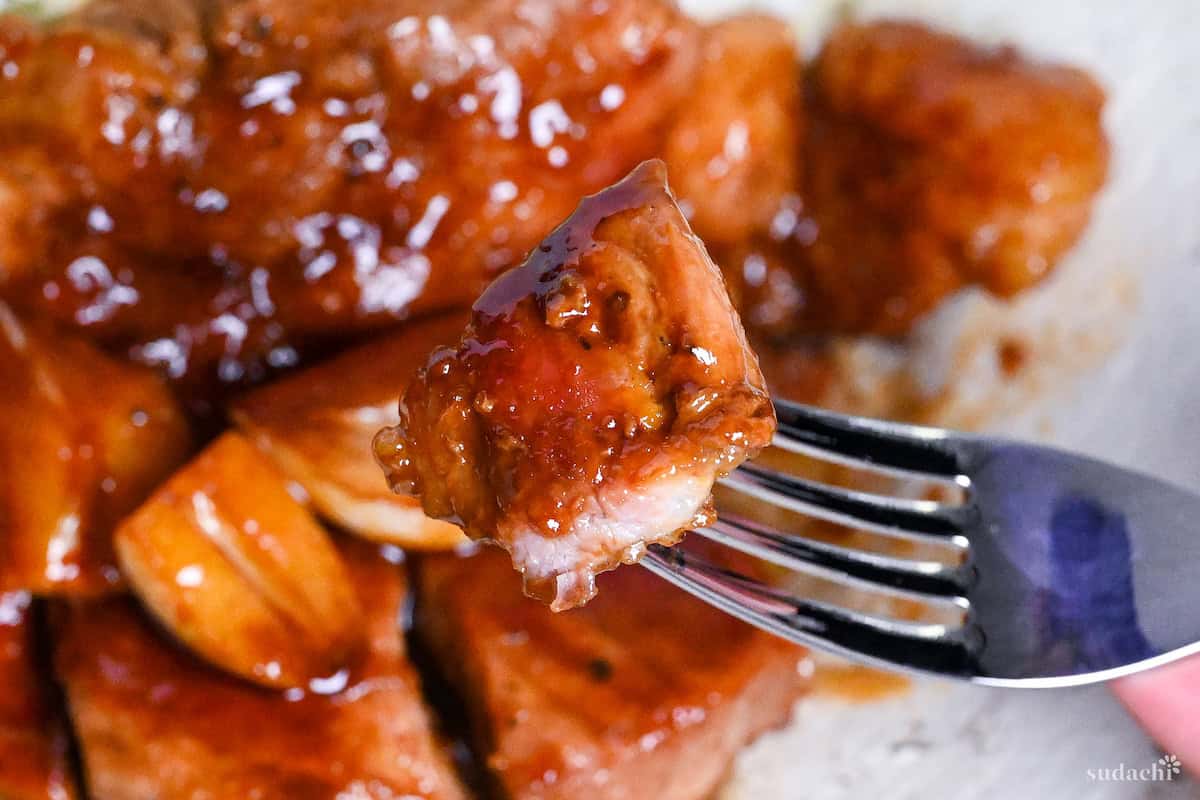
Overcooking or lack of prep is usually the cause. Pork dries out when surface temperatures exceed 60 °C (140 °F) for too long. Always bring meat to room temperature before cooking, make shallow cuts (glove-style scoring) to prevent shrinkage, and cover with a lid on low heat to cook gently.
Sweet sauces with sugar or mirin scorch easily. Keep heat at medium or below once sauce is added, and rely on residual heat to finish thickening.
Too salty or rich? Eat with extra cabbage or milder miso soup to balance. Taste and adjust while reducing.
More Japanese Pork Recipes
- Pork Chop Teriyaki with Lemon
- Subuta (Japanese Style Sweet And Sour Pork)
- Katsudon (Japanese Pork Cutlet Bowl)
- Authentic Gyoza
Looking for more idea? Browse through my roundup of Japanese pork recipes.
Did You Try This Recipe?
I would love to hear your thoughts!
💬 Leave a review and ⭐️ rating in the comments below. 📷 I also love to see your photos – submit them here!
Tonteki (Japanese Pork Steak)

Ingredients
Tonteki Sauce
- 2 tbsp Worcestershire sauce
- 1 tbsp mirin
- 2 tsp Japanese soy sauce (koikuchi shoyu)
- 1 tsp honey
- ½ tsp oyster sauce
- 1 tsp unsalted butter cold, to add after cooking
Tonteki
- 450 g pork shoulder 1.5-2 cm thick
- salt and pepper
- all-purpose flour for dusting
- ½ tbsp lard or neutral oil
- 4 cloves garlic small cloves left whole and lightly crushed, large cloves halved or thickly sliced
- 100 g green cabbage shredded
The ingredient brands and tools I trust are in my Japanese pantry guide and my cooking tools guide.
Can’t find certain Japanese ingredients? See my substitution guide here.
Instructions
- In a small bowl, mix 2 tbsp Worcestershire sauce, 1 tbsp mirin, 2 tsp Japanese soy sauce (koikuchi shoyu), 1 tsp honey and ½ tsp oyster sauce to make the glaze. Set aside for later.

- Cut 450 g pork shoulder into thick steaks about 1½-2 cm (½-¾ inch). Lightly pound each piece until evenly 1½ cm (½ inch) thick, then make a few shallow cuts around the fat cap and a 4 crosswise glove-style slashes around the fatty edge.
- Sprinkle both sides with a few pinches of salt and pepper, then dust with a thin layer of all-purpose flour, shaking off any excess.
- Heat ½ tbsp lard or neutral oil in a heavy skillet over medium-low heat and 4 cloves garlic . Heat them gently to infuse the oil, then once fragrant, increase the heat to medium, push the garlic to the edges and place the pork in the pan. Fry the pork for about 4-6 minutes, flipping every 60 seconds to build a rich brown crust without burning.
- Turn the garlic cloves occasionally, and once golden, immediately lift them out of the oil and perch them on top of the pork to keep them from burning.
- Once both sides of the pork are caramel-brown, cover the pan, reduce heat to low, and steam-cook for 5 minutes.
- Tilt the pan to spoon off excess fat, or use kitchen paper to blot it, leaving just a thin sheen.
- Pour in the premixed sauce, scraping up the browned bits as it simmers. Reduce for 1-2 minutes until glossy and thick enough to coat the spoon.
- Turn off the heat, remove the pork from the pan to rest.
- Swirl in 1 tsp unsalted butter into the pan to enrich and smooth the glaze.
- Divide 100 g green cabbage between serving plates, piling it high and lay the pork alongside. Spoon the warm glaze generously over the steak and let it pool slightly into the cabbage. Top with your golden garlic and serve immediately while sizzling hot. Enjoy!
Video

This was really good! I was out of honey so I substituted ketchup. I’m going to make it again
Hi Kyle,
Thank you for the comment and generous rating! I’m glad you enjoyed the recipe!
Delicious
Thank you Nadine!
I have made this twice now, it’s really very nice. I use pork shoulder steaks, so they always require longer cooking. Around 6 to 7 minutes on each side. The sauce itself is delicious, I would make some just to go on plain noodles or rice.
Hi Lauran,
Thank you so much.
You’re right, thicker steaks need longer cooking but still work perfectly for this dish.
Glad you enjoyed the recipe!
This recipe is **amazing**! So tasty! I learned a lot while preparing this dish, also. Yuto, I swear every recipe of yours I try tastes delicious- especially the sauces! Thank you so much for sharing your recipes with us.
I will probably be making crepes using your recipe next! (And if you are looking for any other ideas, may I politely suggest souffle pancakes?)
Hi Sam,
Thank you so much for trying my tonteki recipe! I’m really happy to hear that you enjoyed it!
For soufflé pancakes, I’ve actually been working on that recipe in the background. I haven’t quite perfected it yet (it’s a very tricky dish to make at home haha), as it still needs a few more tweaks, but I’ll be sure to share it once I’m fully satisfied with the result.
Thank you again for your kind words and continued support! 🙂
Yuto
I made this using “country” rib meat and western Worcestershire Sauce which was all I could get today. The rib meat, which is boneless worked really well. The Sauce was quite vinegary as warned, but I’m a western European and we often have vinegar sauces – think UK’s brown sauce or Germany’s sauerbraten. Nice and easy (and quick) to make – Very tasty!
Hi Chris,
Thank you so much for trying the recipe and for sharing your experience! I’m glad the country rib cut worked well, and it’s great to hear you enjoyed the tangy character of the sauce! 🙂
Yuto
I made this tonight for my wife and myself. We made a special trip to get the right cut of meat.
it turned out FANTASTIC !!!!
Hi Jim,
That makes me really happy to read. Going out of your way for the perfect cut shows real dedication, and I’m happy it delivered such a great result for you and your wife! 🙂
Yuto
Wow, wow, wow! I’ve rarely been disappointed by your recipes, and this isn’t an exception! Haha, the choice of going to a proper butcher for this recipe definitely panned out when the pork turned out so easy to chew and slice
I love the sauce and your recipes!
Hi Trice,
Thank you so much for trying this recipe and for the kind words! So happy to hear that the butcher tip paid off and the sauce hit the spot for you! 🙂
Yuto