

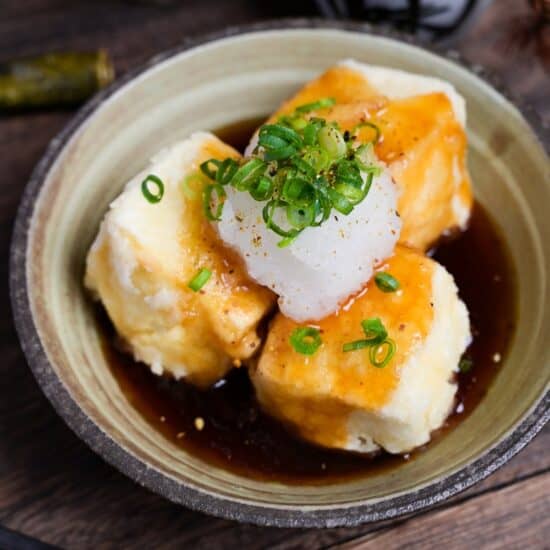


Featured Comment
This recipe makes the most tasty agedashi tofu ever! Thank you for this recipe, I wouldn’t change a thing!
★★★★★
– S Yoshimi
If someone asked me to pick my favorite tofu dish, I wouldn’t even pause. Agedashi tofu, every time. That kind of certainty only comes from one place. Making it over and over until it’s exactly how I like it.
This is the recipe I built to rival what you’d get at any izakaya or Japanese restaurant. That crispy-outside, silky-inside contrast that makes you close your eyes mid-bite? It’s all here.
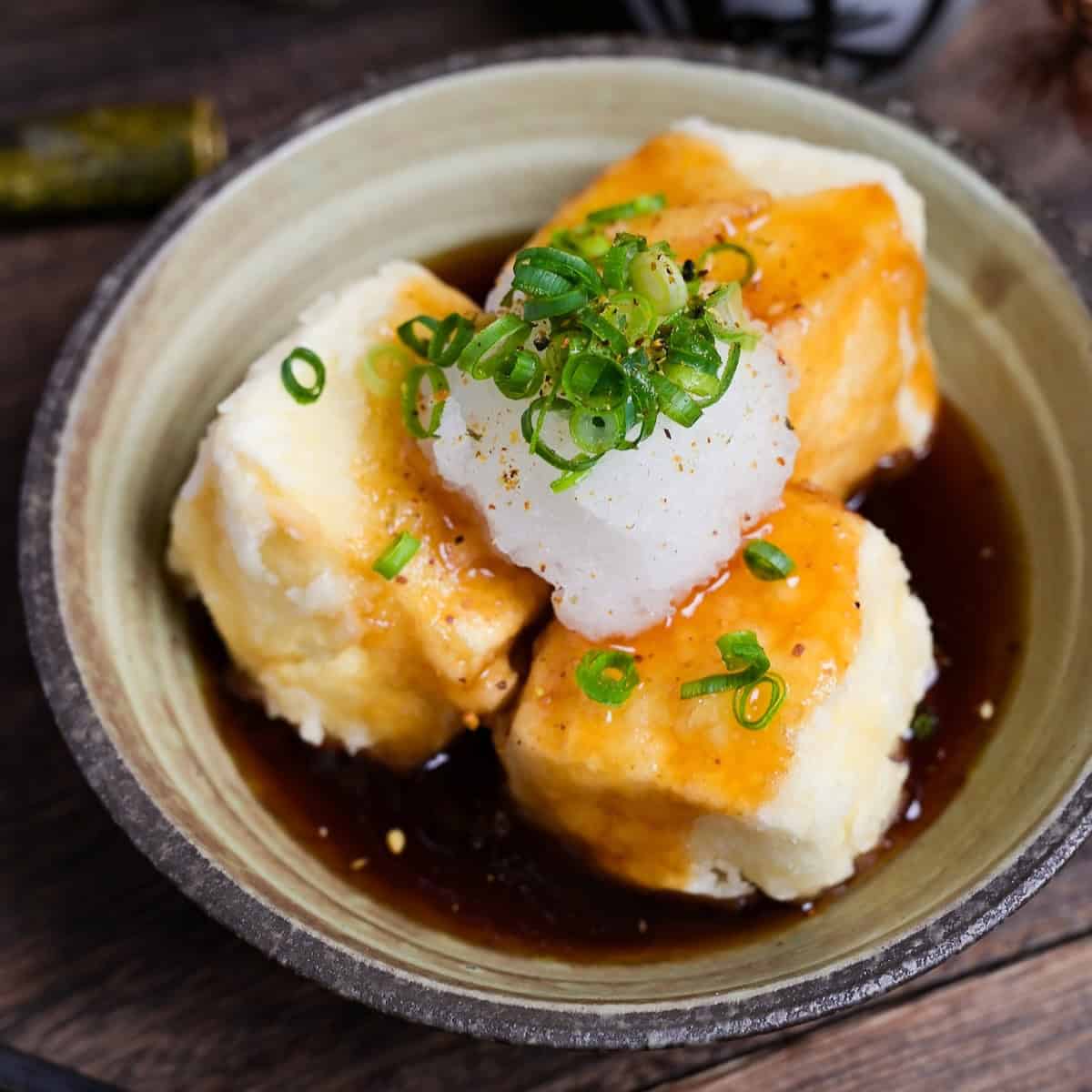
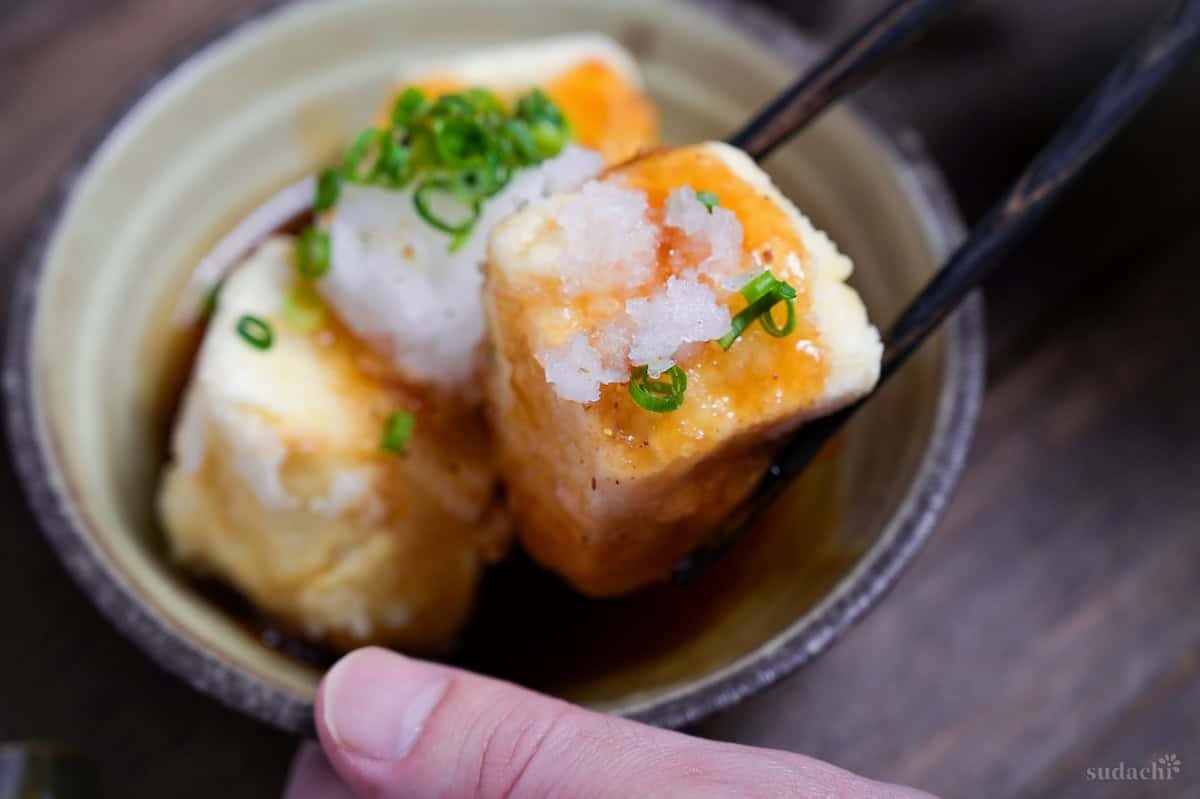
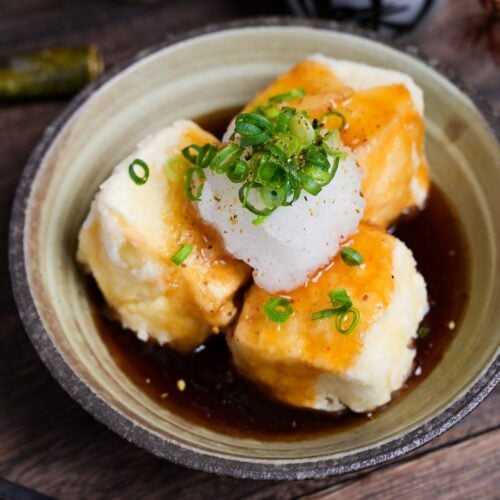
Agedashi tofu
Recipe Snapshot
- What is it? Agedashi tofu is a traditional Japanese appetizer. Golden-fried tofu with a shattering crust, sitting in a pool of warm dashi-based broth.
- Flavor profile: Unseasoned tofu lets the tsuyu do the work. Synergistic umami from kombu and katsuobushi dashi is tempered by mirin sweetness and a clean soy-salt finish.
- Why you’ll love this recipe: The “hailstone” katakuriko (potato starch) method gives you that craggy, one-of-a-kind crust, and a starch-thickened tsuyu keeps it intact instead of dissolving on contact.
- Must-haves: Tofu, Potato starch (or cornstarch), Dashi stock, Koikuchi shoyu
- Skill Level: Moderate: the main skill is moisture control and holding oil at 170 °C. No batter mixing, no tempura technique.
Summarize & Save this content on:
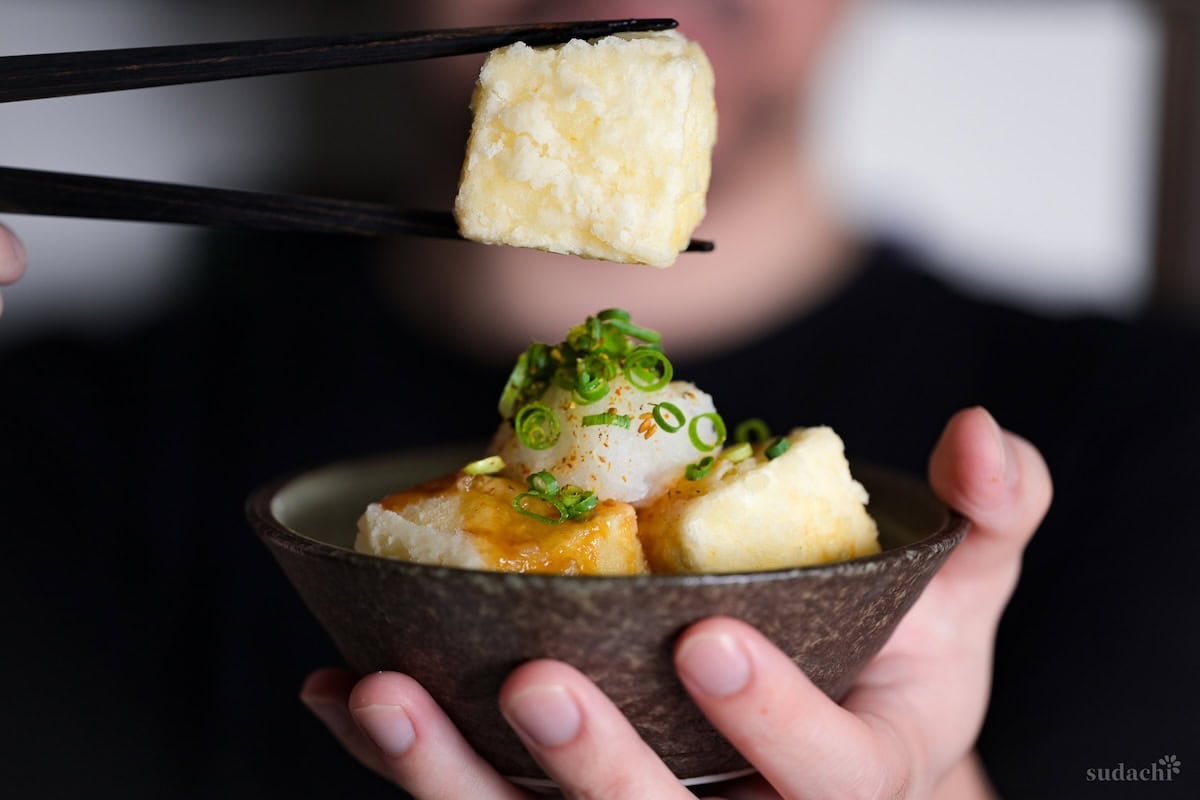
What is Agedashi Tofu?
Agedashi tofu (we call it agedashi dofu) is a Japanese dish in the agemono (fried food) family, where blocks of tofu are lightly dusted with potato starch or flour and deep-fried until crisp, then served in a warm dashi broth seasoned with soy sauce and mirin. The name itself tells the story: age means fried, dashi is the savory broth, and tofu needs no translation.
It is a staple of izakaya (Japanese pub) menus, where it sits alongside small shared plates like karaage, yakitori, and pickles. Agedashi tofu works equally well as an appetizer, a side dish, or a light drinking snack, and its broad appeal has made it one of the most recognizable Japanese tofu dishes worldwide.
Agedashi Tofu Ingredients
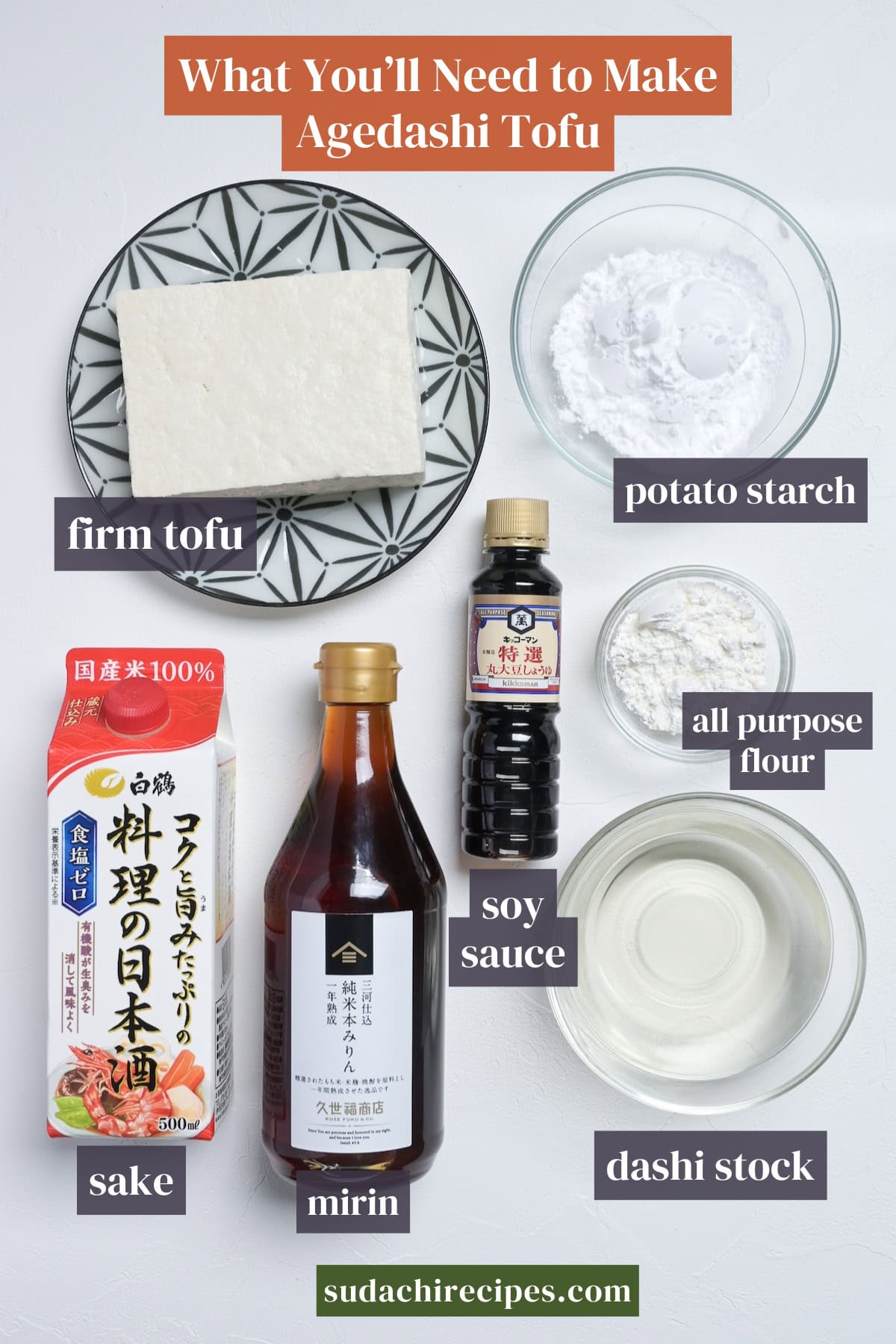
- Firm (momen) tofu: It’s sturdier, holds its shape during coating and frying, and actually has a more concentrated soy flavor than silken tofu. At the store, look for “firm” or “medium firm” and skip anything labeled “extra firm,” which is too dense for this dish. Silken tofu gives you that great custardy center, but it’s fragile enough to crumble during prep.
- Dashi stock: My number one suggestion is homemade dashi packets. You make them once, tuck them away, and for weeks you have the real thing ready to go. If that is more commitment than you want, quality pre-made dashi packets are a respectable option I am happy to endorse. For truly exceptional results, go the extra mile and make authentic dashi from scratch with bonito flakes and dried kelp, it is worth every minute. Dashi powder is something I turn to only when I have absolutely no other choice. For a vegan alternative, kombu and dried shiitake mushrooms produce a gentle, layered plant-based dashi that holds its own.
- Potato starch: This is what gives you that thin, almost glass-like crust that shatters when you bite through it. Cornstarch or tapioca starch works too, though the crust won’t be quite as delicate.
Substitution Ideas
- Potato starch (katakuriko) → Corn starch works perfectly here and you probably already have it. The coating turns out slightly more crunchy than katakuriko’s glassy crispness, but once the tsuyu hits, the difference is subtle.
- Agedashi sauce → Mentsuyu (concentrated noodle sauce) diluted with hot water makes a ready-to-go agedashi tofu sauce in seconds. This is genuinely how many Japanese home cooks make the dish, so don’t feel like you’re cutting corners.
- Deep frying → Pan-frying in a skillet with a shallow layer of oil is a totally valid approach if you’d rather not deep fry. You’ll lose a bit of all-over golden crunch, but the tofu still picks up a great crust and absorbs the tsuyu nicely.
- Plant-base option→ Vegan dashi (kombu and dried shiitake mushrooms) for a fully plant-based version that’s actually rooted in Japanese Buddhist temple cooking, not a compromise.
Have trouble finding Japanese ingredients? Check out my ultimate guide to Japanese ingredient substitutes!
How to Make My Agedashi Dofu
If you prefer to watch the process in action, check out my video of this agedashi tofu recipe!
Before you start (Mise en place):
- Prepare your toppings: Grate the daikon radish, and slice the green onions (negi). Have these ready before you start frying.
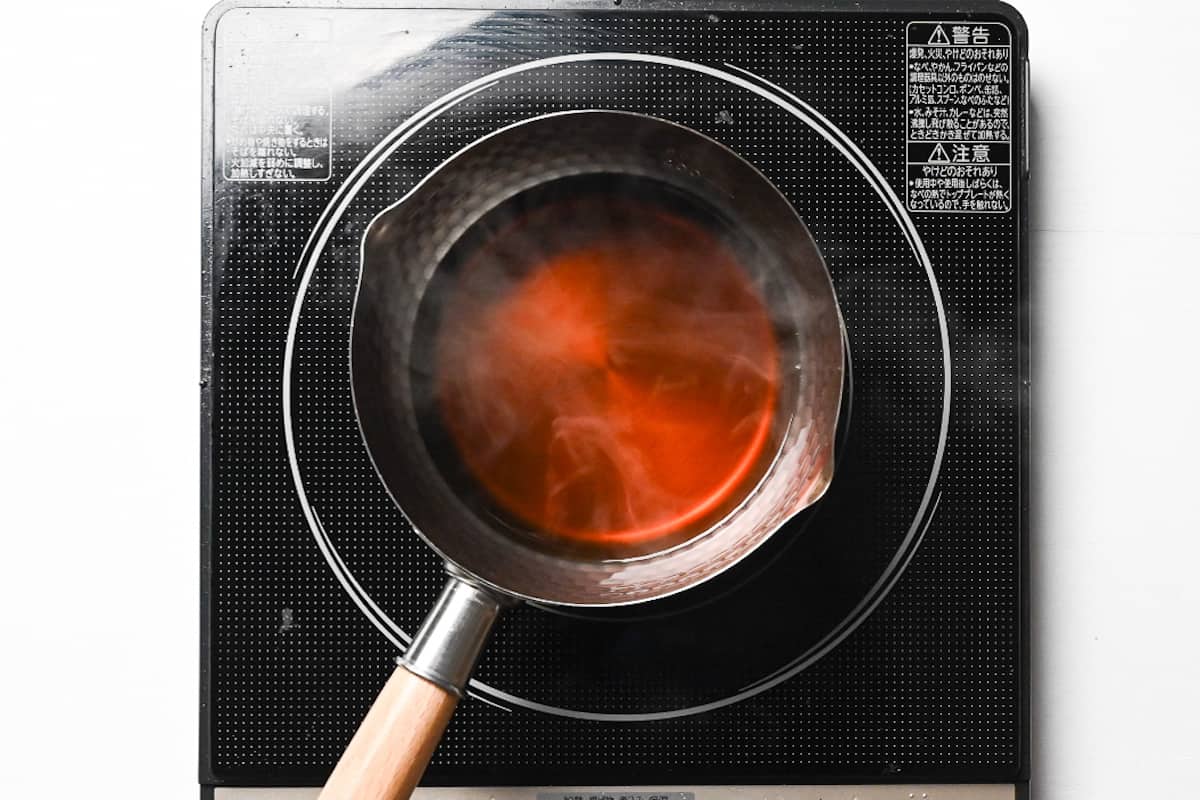
- Make the agedashi tofu sauce: Combine the dashi, soy sauce, mirin, and sake in a small saucepan and bring to a brief boil (about 30 seconds) to cook off the alcohol. Lower the heat, mix up a slurry in a separate bowl (I mix 1 tsp of potato starch with 1 tbsp of cold water), and pour it into the sauce. Mix continuously until the sauce is slightly thickened, and then remove from the heat.
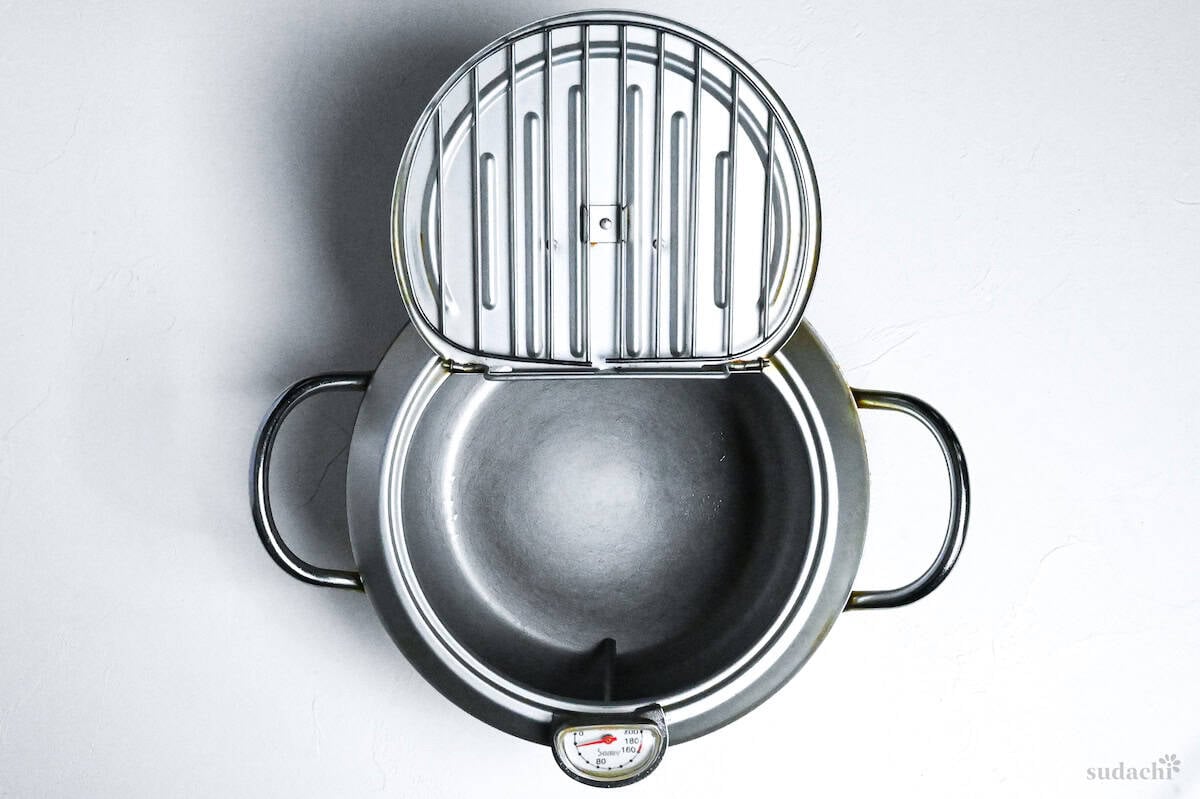
To develop this agedashi tofu recipe, I used a tempura pot with a built-in thermometer and wire rack.
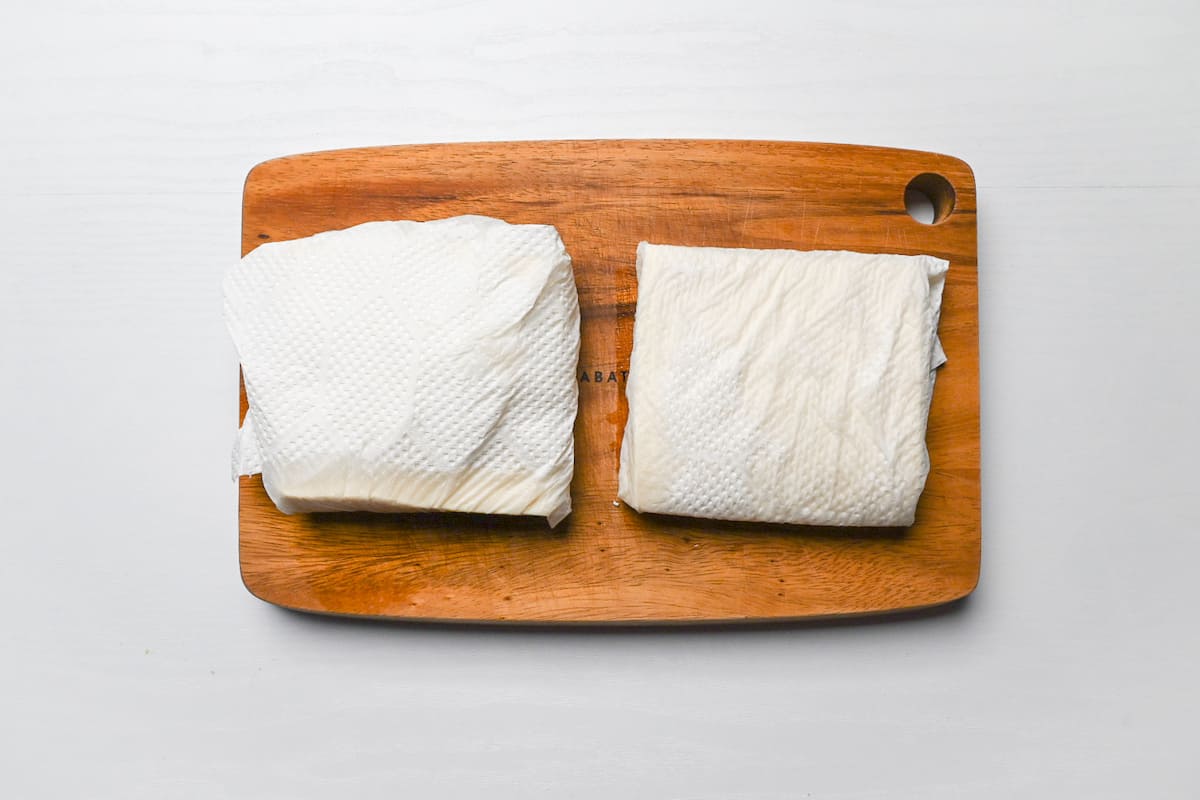
i. Wrap the block of tofu in a double layer of kitchen paper and place it on a microwave-safe plate. Microwave at 600W for 1½ minutes.
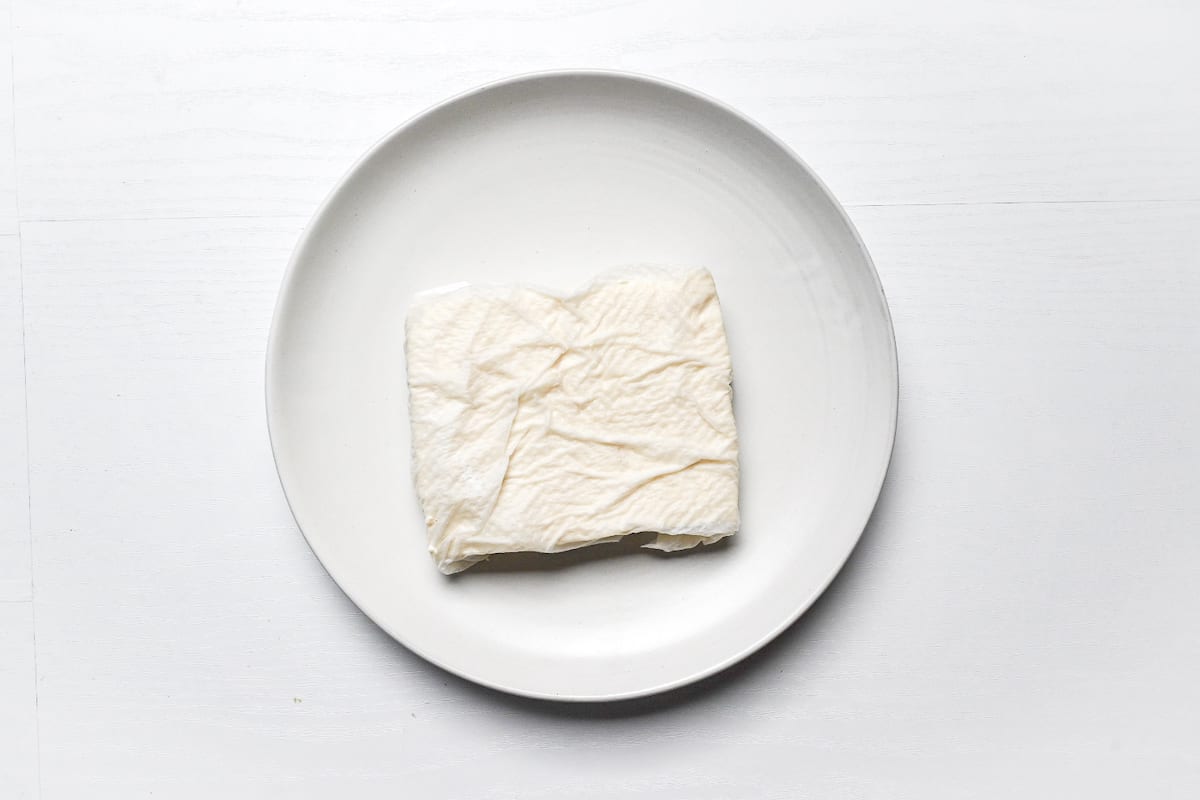
ii. When you unwrap it, the paper should feel damp and the tofu surface should look matte and dry to the touch, not glossy or wet. This quick blast of heat pushes internal moisture to the surface far faster than passive draining.
Pressing with a heavy weight is the classic approach (of course you can take that route if you don’t have one), but it takes 20 to 30 minutes. The microwave method removes roughly the same amount of surface moisture in a fraction of the time while keeping the interior custardy and tender.
I always use this technique when I’m trying to save time (which is always!), and it works like a charm.
i. Pat the drained tofu dry one more time, then cut it into approximately 3 cm cubes. They don’t need to be perfect squares. From the side, mine usually look more rectangular, and that’s completely fine.
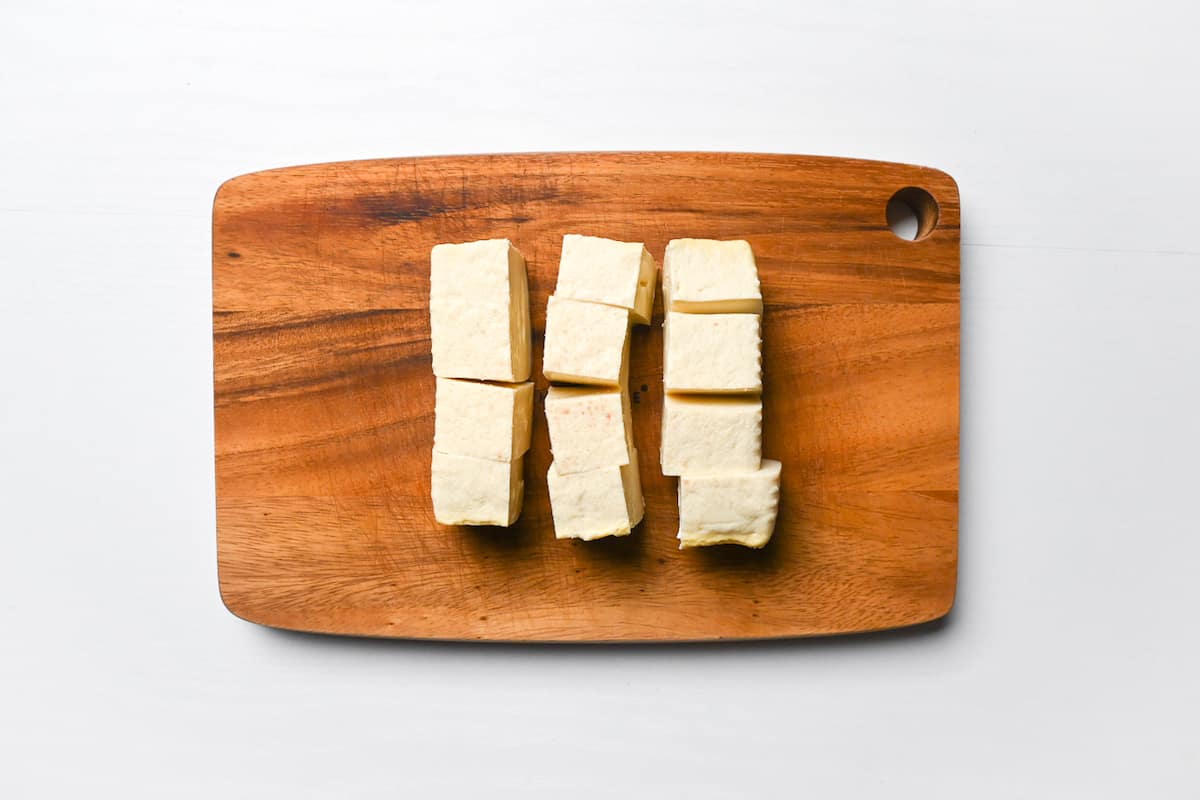
Aim for pieces a little bigger than bite-size so they hold their shape during frying and keep a generous amount of soft interior behind the crust.
ii. Once cut, gently blot each piece with a fresh sheet of kitchen paper and sprinkle lightly with salt on all surfaces.
i. Spread a 50/50 mixture of potato starch and all-purpose flour onto a flat tray or plate. Lay each tofu piece in the mixture and turn gently until all sides are evenly coated.
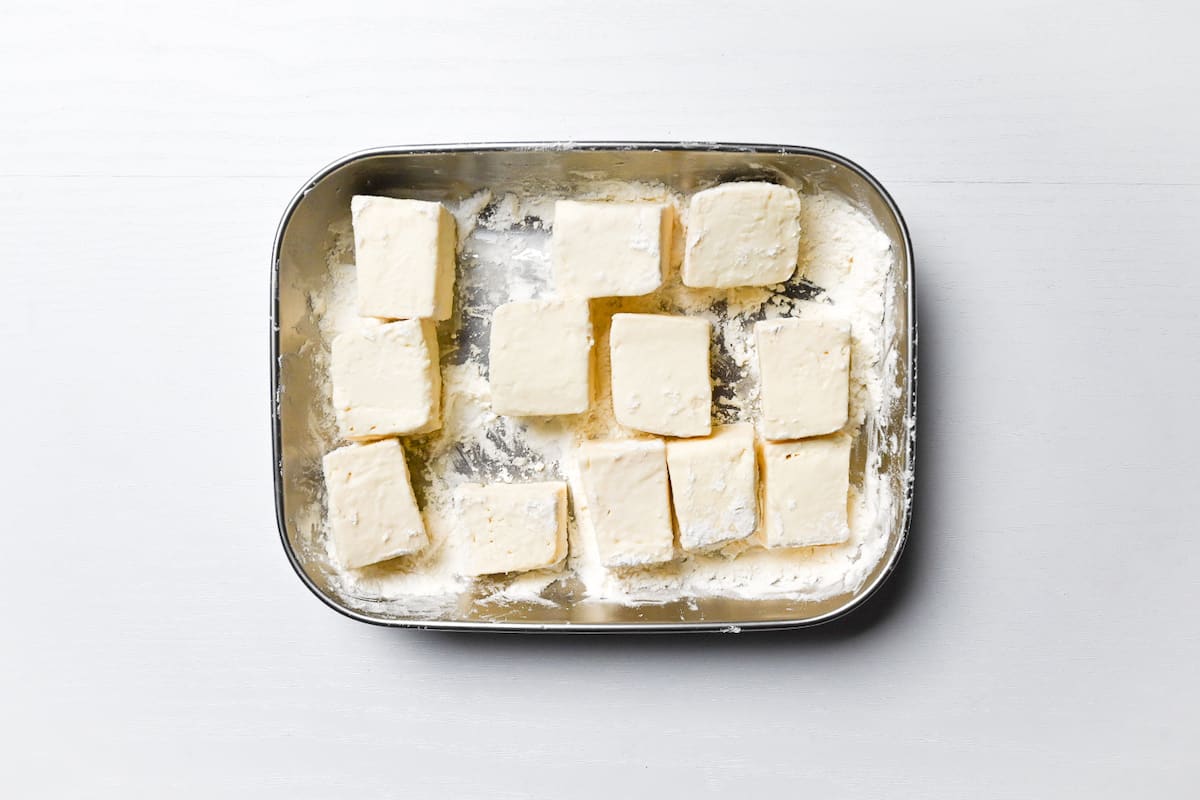
ii. The starch and flour will seem to “disappear” into the surface, and the outside might still feel slightly moist. That’s exactly what you want, because the next layer needs a little tackiness to cling to.
Potato starch alone crisps beautifully but can crack on delicate tofu. Flour fills the micro-gaps, absorbs excess surface moisture, and gives the final coating a more even foundation. When I tested pure katakuriko versus this blend, the 50/50 mix produced a more consistent, less fragile crust every time.
i. Before we make hailstones, pour enough neutral oil with high-smoke point (like rice bran or canola) into your pot to reach a depth of about 5 cm. Heat it to 170°C (340°F).
If you don’t have a thermometer, drop a small pinch of the potato starch mixture into the oil. If it sizzles gently at the surface without sinking, you’re in the zone. If it drops to the bottom and sits there, the oil needs more time. If it pops violently the moment it hits, your oil is too hot.
In a small bowl, mix a very small amount of water into potato starch. You’re not making a smooth slurry here. Instead, use just enough water so the starch clumps together into rough, pebble-like crumbs (I like to call them “hailstones,” my signature move!).
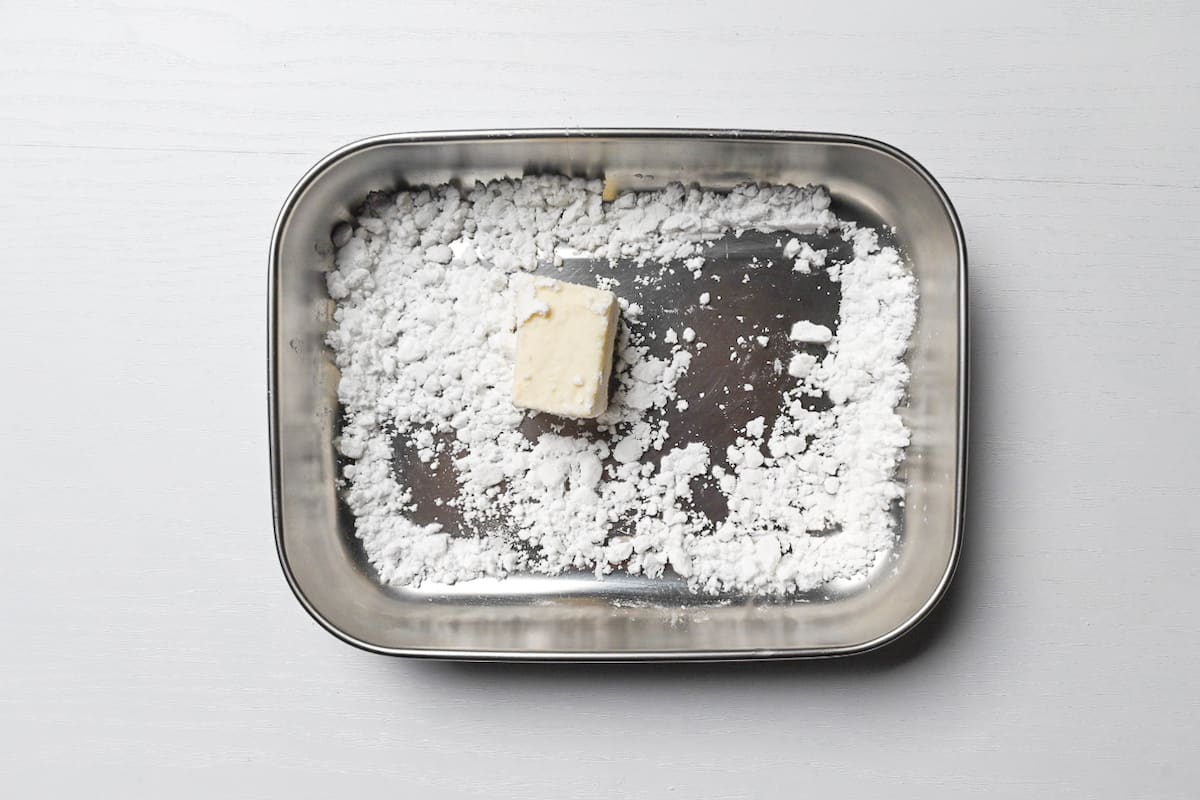
These irregular lumps are what create that shatteringly crispy, craggy texture on the finished tofu.
Have your oil fully preheated before you start rolling the tofu in the hailstones. If the coated pieces sit for even a couple of minutes, the tofu’s moisture dissolves those clumps into a smooth paste, and you lose the crunchy texture entirely. Roll, then straight into the oil. No waiting.
i. Roll each piece of tofu in the hailstones, coating all sides, and lower it gently into the preheated oil.
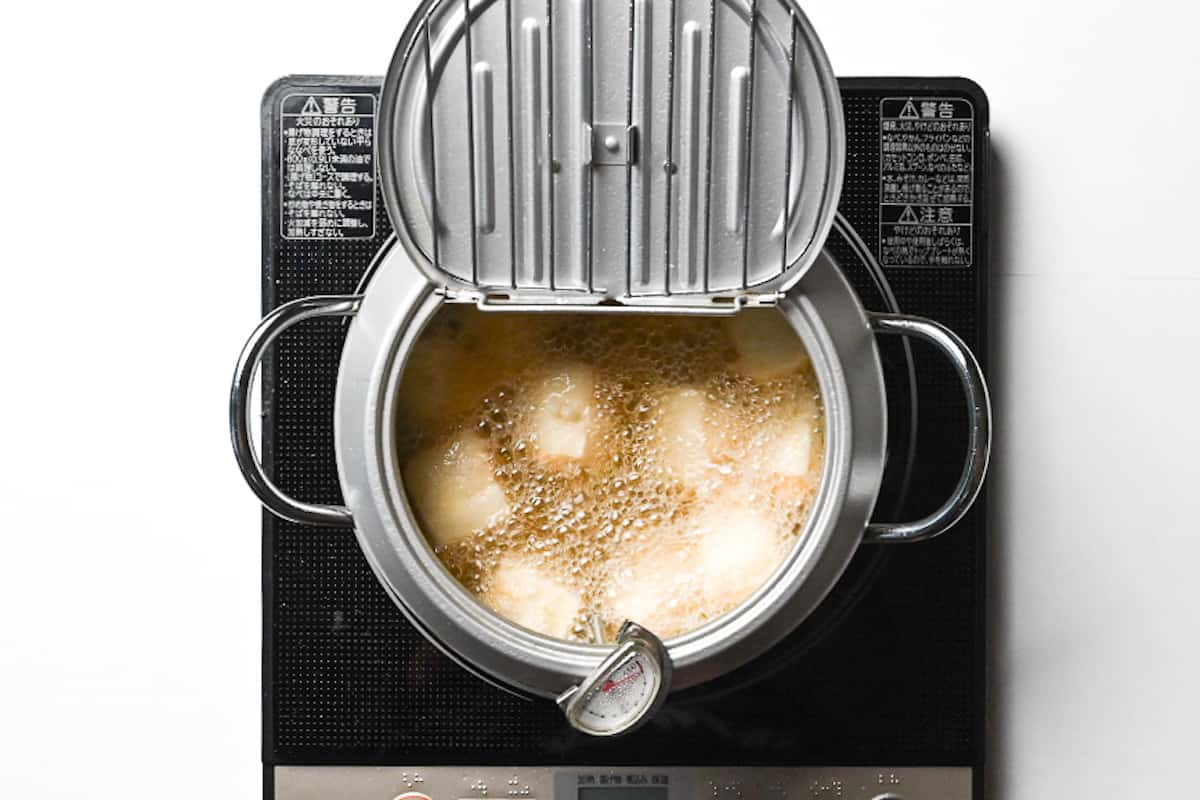
ii. Resist the urge to touch or flip them for the first 2 minutes. It’s chemistry. Riley et al. (2023) showed in potato starch model systems that gelatinization begins within moments of hitting hot oil, then progressively transitions into a rigid, glassy state. Those undisturbed first minutes are when your coating transforms from a soft layer into a crispy shell.
iii. After 2 minutes, turn each piece once and fry for another 1 to 2 minutes until lightly golden all over.
When the tofu first goes in, you’ll hear an aggressive crackle as moisture escapes. As the coating dries and crisps, that sound shifts to a quieter, higher-pitched sizzle, almost like a whisper compared to the initial roar. That shift is your cue.
iv. Once fried, lift the tofu out and place it on a wire rack (not paper towels). A rack lets air circulate underneath, so the bottom stays crisp instead of steaming against a flat surface.
i. Pile the freshly fried tofu into a serving bowl. Pour the warm sauce around (not over) the tofu, filling the bowl to about halfway up the pieces.
ii. Place a small mound of grated daikon (daikon oroshi) on top of the tofu and scatter sliced green onions and shichimi togarashi (optional) over the surface.
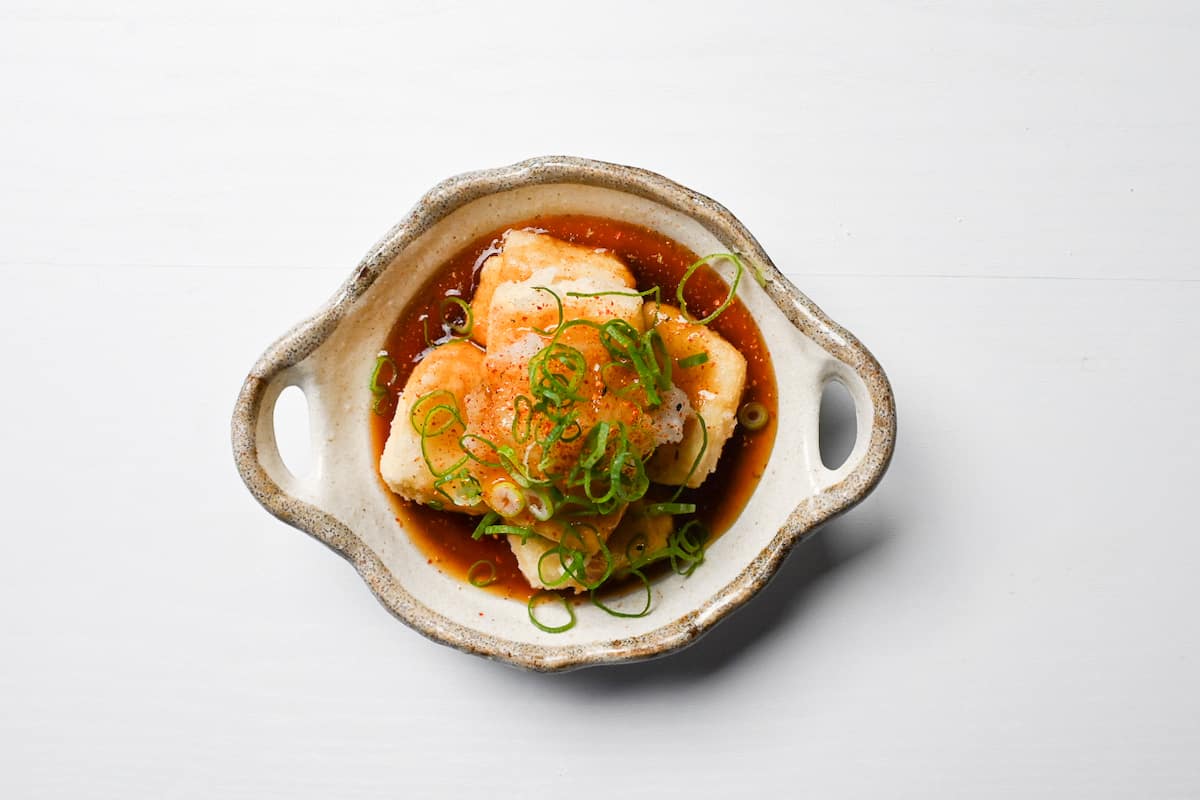
If you follow the default recipe, it will yield 2 large side servings, or 3-4 small side servings.

Essential Tips & Tricks
- Drain the tofu, then pat every surface dry before coating. Surface moisture is the number-one reason starch coatings slide off during frying.
- Have your oil at 170°C (340°F) before you even start coating. The starch must go from dry powder to crisp shell within seconds of contact with hot oil. Every degree below 160°C weakens the steam barrier that keeps oil out of the coating, producing greasy, limp results instead of a light crunch.
- Coat and fry within seconds of each other, never in advance. Tofu is roughly 88% water, and that moisture migrates outward constantly.
- Make the sauce before you fry, and keep it hot until the moment you plate. The broth should be close to 70 to 80°C when it hits the tofu.
- Pour the broth around the tofu (not over it) and serve immediately.
With these simple tips in mind, you’re set for success every time you make agedashi tofu.
Storage & Meal Prep
Fridge: Store leftover fried tofu and tsuyu in separate airtight containers for up to 2 to 3 days. The starch coating will lose all crispness in the fridge as it undergoes retrogradation (the starches re-crystallize into a gummy texture), and the tofu itself becomes drier, so this is really a last-resort option rather than a planned leftover.
Freezer: Not recommended.
Meal Prep: You can make the tsuyu up to 3 days ahead without slurry, drain the tofu, grate the daikon, and slice the green onions, all in advance.
Reheating: Transfer the fried tofu to a toaster oven or regular oven at 200°C (400°F) for about 2 minutes to re-crisp the surface.
What to Serve With This Recipe
Agedashi Tofu FAQ
This almost always comes down to handling. Tofu straight from the fridge is more brittle, so let it come closer to room temperature after draining. When lowering pieces into the oil, use a slotted spoon or spider strainer rather than tongs, which apply pinch pressure and crack the delicate curd. Most importantly, don’t move the tofu for a full 2 minutes after it enters the oil.
The most likely cause is moisture still sitting on the tofu surface when you applied the starch. Even a thin film of water creates a slippery barrier that prevents the coating from gripping. The second common cause is waiting too long between coating and frying. Tofu is about 88% water, so the starch begins absorbing moisture almost immediately. If the coated pieces sat on the counter for a few minutes before hitting the oil, that’s enough time for the powder to turn into a wet paste that won’t crisp.
Not at all. Agedashi tofu is designed to have a texture gradient: crispy above the broth line and silky-soft below it, where the starch absorbs the tentsuyu into a glossy, almost gooey layer. That contrast is the signature of the dish. If the entire coating dissolved into mush, though, the likely culprits are oil temperature that was too low, coating that was too thin, or too much time between frying and serving.
More Traditional Japanese Recipes
Hungry for more? Explore my Japanese home cooking recipe collection to find your next favorite dishes!
Did You Try This Recipe?
I would love to hear your thoughts!
💬 Leave a review and ⭐️ rating in the comments below. 📷 I also love to see your photos – submit them here!
Agedashi Tofu (Japanese Deep Fried Tofu with Homemade Sauce)

Ingredients
Sauce
- 150 ml dashi stock use shiitake and kombu dashi for plant-based diets
- 1 tbsp Japanese soy sauce (koikuchi shoyu)
- 1 tbsp mirin
- 1 tsp sake
- 1 tbsp water cold, for slurry
- 1 tsp potato starch (katakuriko) for slurry
- ¼ tsp salt
Tofu
- 300 g firm tofu not extra firm
- 1 pinch salt
- 2 tbsp potato starch (katakuriko) or cornstarch, for coating
- 2 tbsp all-purpose flour
- 2 tbsp potato starch (katakuriko) or cornstarch, for hailstones
- 1 tsp water cold
- cooking oil neutral, high smoke point
- finely chopped green onions optional
- grated daikon radish (daikon oroshi) optional, about ½ tbsp per portion
- Japanese chili powder (shichimi togarashi) optional
My recommended brands of ingredients and seasonings can be found in my Japanese pantry guide.
Can’t find certain Japanese ingredients? See my substitution guide here.
Instructions
- Take a small saucepan and add 150 ml dashi stock, 1 tbsp Japanese soy sauce (koikuchi shoyu), 1 tbsp mirin, 1 tsp sake and ¼ tsp salt. Mix and bring to a boil over a medium heat. Let it bubble for 30 seconds, then lower the heat. Make slurry in a separate bowl with 1 tbsp water and 1 tsp potato starch (katakuriko). Pour the slurry into the sauce and stir continuously over the low heat until slightly thickened, remove from the heat and set aside.

- Drain 300 g firm tofu and wrap it in kitchen paper. Place it on a heatproof plate and microwave for 1 ½ minutes at 600W.
- Unwrap the tofu and cut into approximately 12 pieces about 3cm/just over 1 inch cubes. Dry the surface of each piece with kitchen paper and sprinkle with 1 pinch salt.
- Preheat your cooking oil (enough to submerge the tofu) to 170 °C (338 °F). Mix 2 tbsp all-purpose flour and 2 tbsp potato starch (katakuriko), roll each piece of tofu in the mixture until coated all over.
- In separate tray, add the other 2 tbsp potato starch (katakuriko) and mix with 1 tsp water to make "hailstones". When the oil is ready, roll the tofu in the hailstones and place them directly into the pot one by one.
- Fry the tofu for 3 mins or until lightly golden, turning half way. Transfer to a wire rack to drain the excess oil. Use this time to reheat the sauce if needed.
- Place the crispy tofu in serving bowls and drizzle the sauce around it, avoid the top if you want to preserve crispiness. Top with finely chopped green onions, grated daikon radish (daikon oroshi) and Japanese chili powder (shichimi togarashi) to taste. Enjoy!

This recipe makes the most tasty agedashi tofu ever! I used to buy the premade agedashi tofu from Nijiya, but making it at home is much better. Thank you for this recipe, I wouldn’t change a thing!
Thank you for trying the recipe and giving such kind feedback, glad you liked it!
Made this for my girlfriend while testing the app. She loved it!!
Hi Philip,
Thank you so much! I’m glad hear she enjoyed it!
Yuto
Best part? No stinkin’ advert bar across the page. Thank you. Now, I’ll try the recipe…
when you say “put something heavy on the tofu”, what range are you using?
Hi Trish,
Thank you for asking! I typically use a weight similar to a heavy hardcover book – I place a plate or a container on the tofu first, then add a full salt or sugar container on top. You want enough weight to gently press the tofu down without crushing it. The pressure should be firm but gentle, just enough to help remove excess moisture. I hope this helps!
Yuto
I just made this and it was delicious!
Hi Cathy,
Thank you so much for making it and sharing your photo! It looks incredible!! It means a lot that you took the time to try it out and share your experience. 🙂
Yuto
Delicious crispy batter! Never tried with 2 separate coatings. No potato starch and used cornstarch, it worked. This is a great dish!
Hi Linda,
So glad you enjoyed it! That crispy batter is one of my favorite parts too. Happy that cornstarch worked well! Thank you so much for trying this recipe too! 🙂
Yuto