

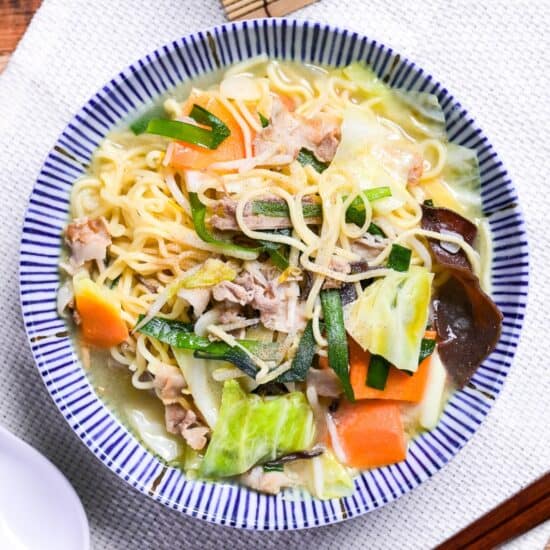


Featured Comment
Highly recommended. Simple, not overly demanding on ingredients either : )
★★★★★
– J
“I love ramen, but there are never enough vegetables in it”. If that quiet complaint sounds familiar, tanmen is your bowl. It piles in so many vegetables you could almost call it a stir-fried-vegetable ramen, and they cook right into the salt broth, so the soup itself ends up tasting of them.
It is quick, too. A shio or shoyu ramen can swallow a whole afternoon of stock, while this one is a weeknight bowl. Come for the mountain of vegetables, stay because dinner is ready fast.
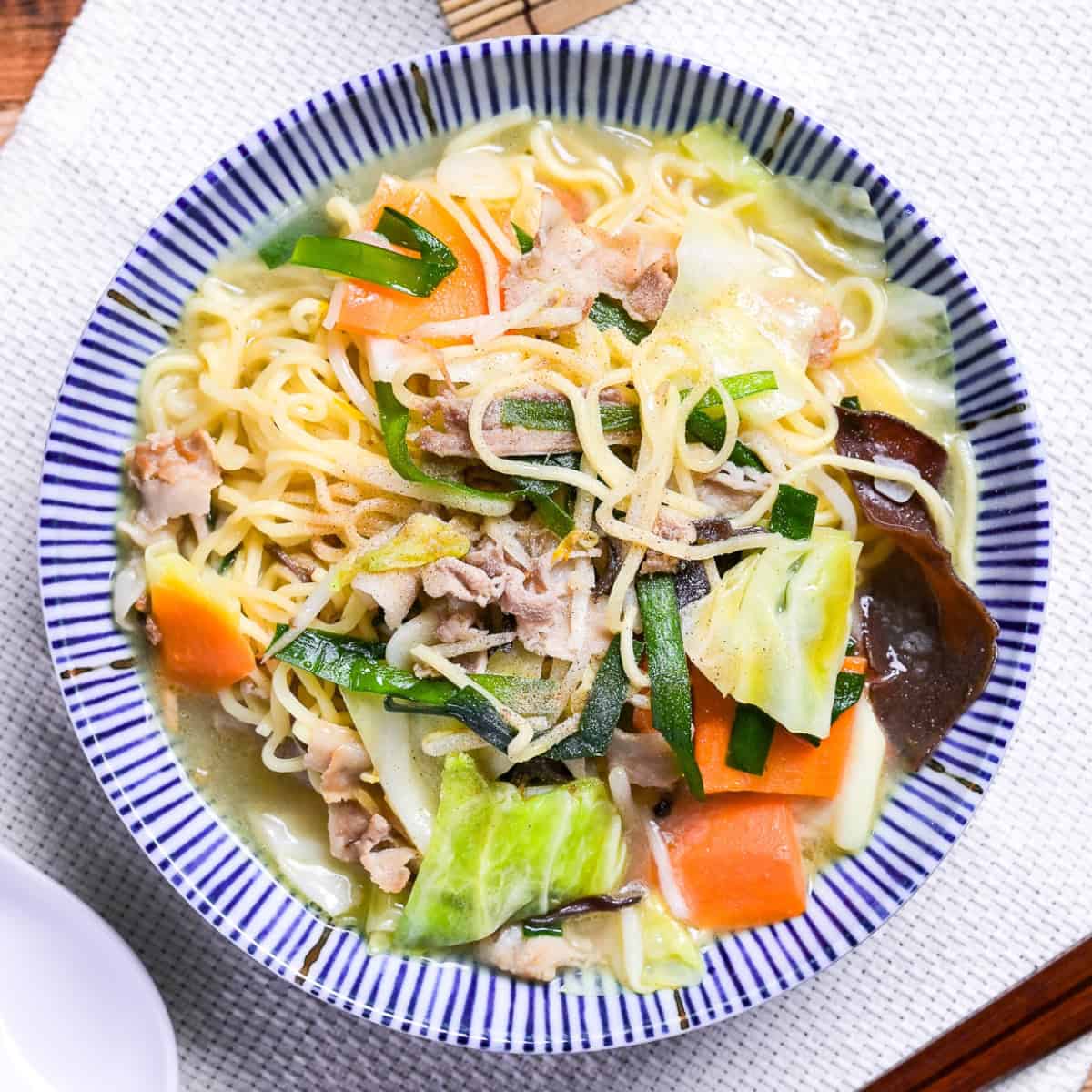
Tanmen
Recipe Snapshot
- What is it? A type of ramen piled high with stir-fried vegetables and pork, cooked together with a shio (salt) base so the broth and the vegetables trade flavor. It is a vegetable-forward bowl, not shio ramen with toppings piled on.
- Flavor profile: Clean and savory, salt-forward from a Chinese chicken bouillon base, with sweet browned vegetables and rendered pork fat giving the broth its body. A drizzle of toasted sesame oil and a heavy crack of white pepper sharpen the finish.
- Why you will love this recipe: If you love ramen but always wish the bowl had real vegetables in it, this is your answer, a full mound of them cooked right into the soup. And unlike a shoyu or shio ramen built on all-day stock, it comes together fast enough for a weeknight.
- Must-haves: Ramen-style noodles, a Chinese chicken bouillon powder to build the broth, thin-sliced pork belly whose fat carries the vegetables, and a milk-and-potato-starch slurry for body.
- Skill level: Easy, and about 30 minutes start to finish. It is a fast stir-fry-and-assemble bowl with no special technique, the kind of thing you can pull off on a weeknight.
Summarize & Save this content on:
What Is Tanmen?
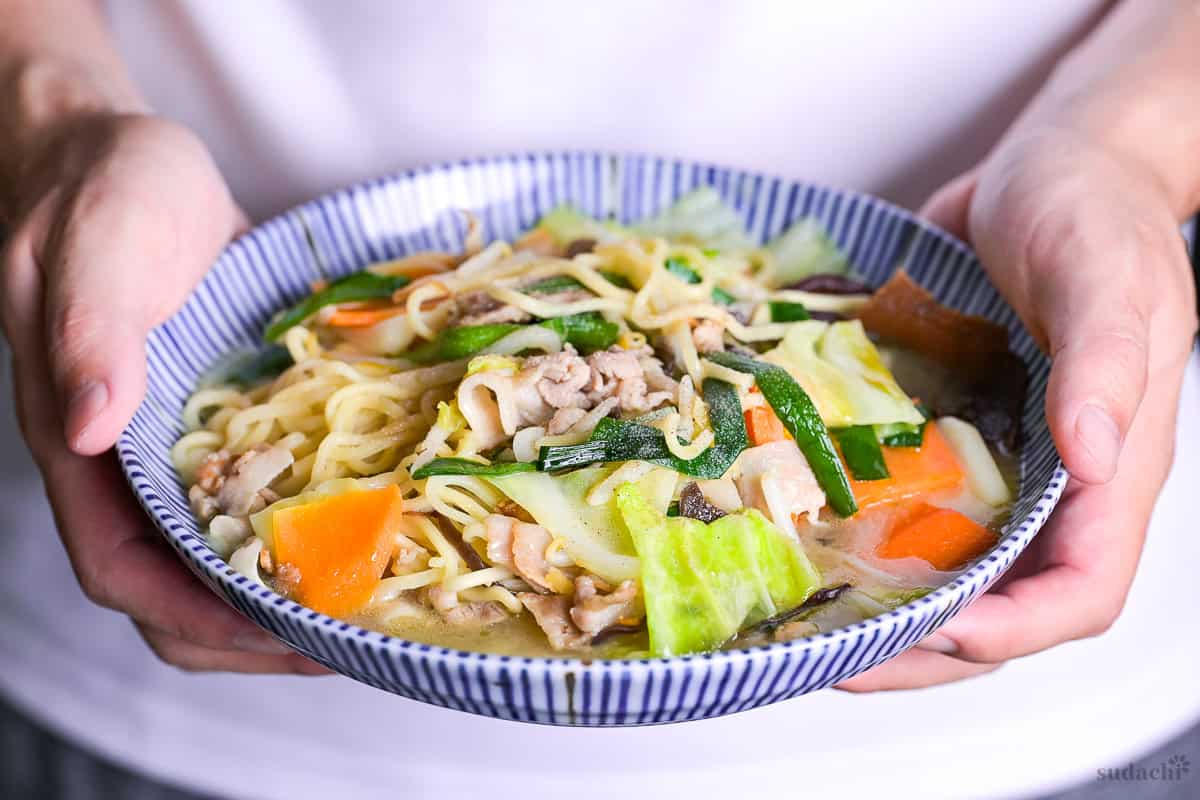
Tanmen (タンメン) is a type of ramen built around a mountain of vegetables, typically served at Chuka restaurants. You stir-fry the vegetables and pork, then cook them together with a salt-based broth so the flavor runs both ways, the broth taking on the vegetables and the vegetables taking on the broth. That two-way cooking, not a scatter of toppings, is what tanmen actually is.
By the way, tantanmen is a completely different dish. They share only a spot in the family of Chinese-influenced Japanese ramen, and past that, nothing in common, no sesame, no chili, no relation beyond the sound of the name.

Tanmen (湯麺) also carries a Chinese name while being a Japanese original, a Kanto dish that stays close to Tokyo and Yokohama and barely turns up further west. Most tellings trace it to a Yokohama counter shop in the 1950s, though that is the story that stuck rather than settled fact.
Tanmen Ingredients
What You’ll Need for TANMEN
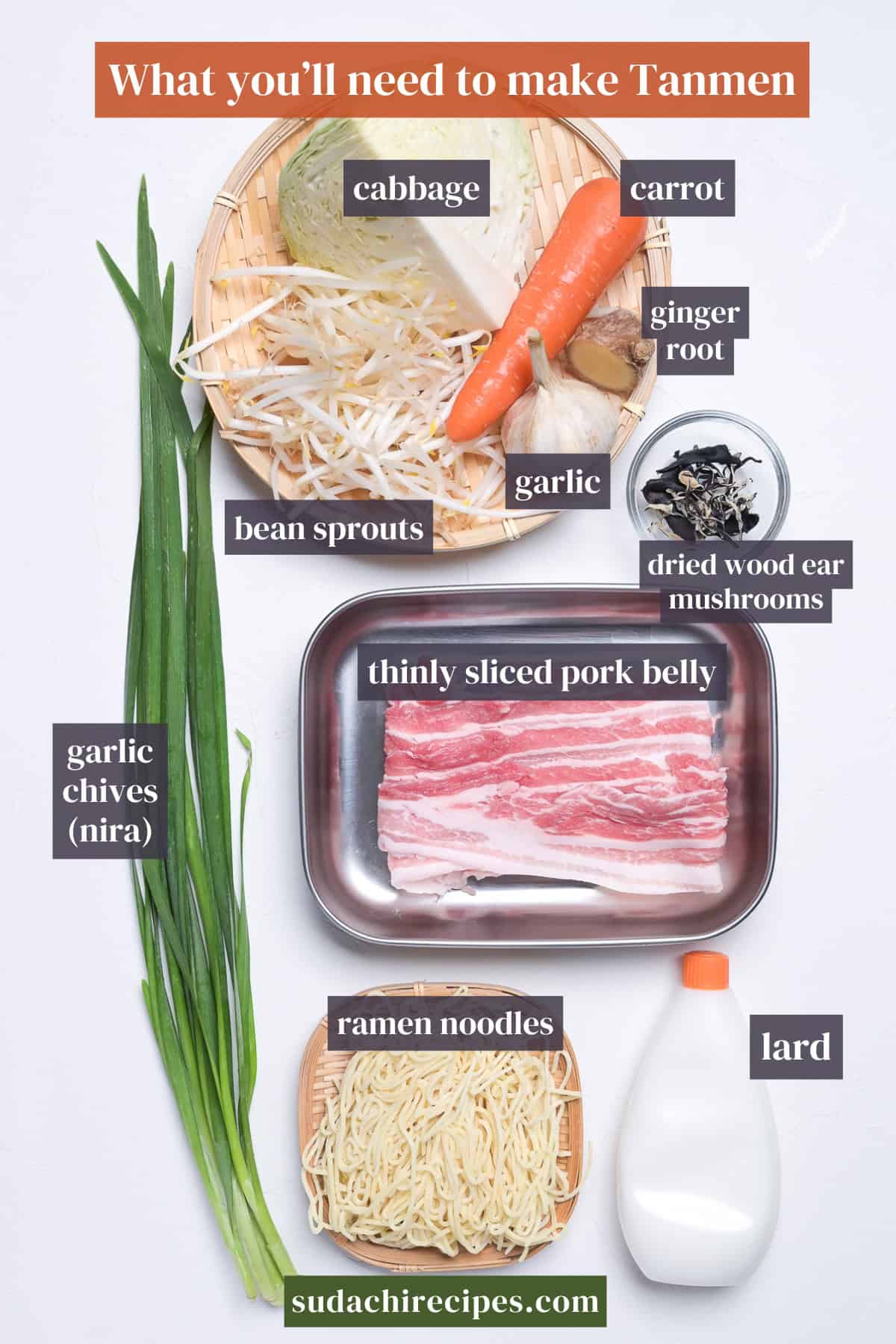
- Pork belly: Thin-sliced pork belly is doing more than adding meat here. As it sears, its fat renders out and coats the vegetables, and that rendered fat is what ties the whole pile together (more on that when we cook). Look for pre-sliced belly at any Asian grocer, or slices labeled for shabu-shabu or Korean samgyeopsal work just as well.
What You’ll Need for TANMEN BROTH

- Chinese chicken bouillon powder: Here it is the backbone of the soup, so check the dilution ratio on your own brand before you season, because every brand is concentrated differently and this is not the spot to eyeball it. The full brand rundown is in my guide, but Youki is my everyday pick and Lee Kum Kee is easy to grab abroad.
- Milk-and-potato-starch slurry: This is the finishing move that gives the soup its body and a soft cling, and it is not optional here, it is the whole character of my bowl.
Substitution Ideas
- Ramen noodles → baking-soda spaghetti, or Sun Noodle for the real thing: Fresh noodles are the target. My homemade ramen noodles covers the from-scratch route if you want it. And abroad Sun Noodle is a good alternative. When you cannot get them, boil dried spaghetti with a spoonful of baking soda in the water, which alkalizes the pasta and gets you close on the yellow color, the aroma, and the springy bite (check out my spaghetti ramen hack).
- Cabbage → napa cabbage: Either works, I just happen to like cabbage here. Swap in hakusai and it finishes a little lighter, while cabbage brings a touch more sweetness, so pick by the bowl you are after.
- Any of the vegetables → whatever is in the crisper drawer: The vegetable side of this is almost completely open. Carrot, cabbage, bean sprouts, nira (garlic chives), and wood ear (look for it labeled black fungus) are my usual crew, but onion, mushrooms, or anything that needs using up all slot in fine.
- Pork belly → thin-sliced pork offcuts, chicken, or even bacon: Any thin pork works, and chicken is fine if that is what you have on hand. Bacon will carry it in a pinch, just know it drags its own smoke into the bowl.
- Lard → neutral oil, or the pork’s own rendered fat: Lard gives the stir-fry a rounder richness, but a neutral high-heat oil does the job cleanly.
Have trouble finding Japanese ingredients? Check out my ultimate guide to Japanese ingredient substitutes!
How to Make My Tanmen
Before you start (Mise en place):
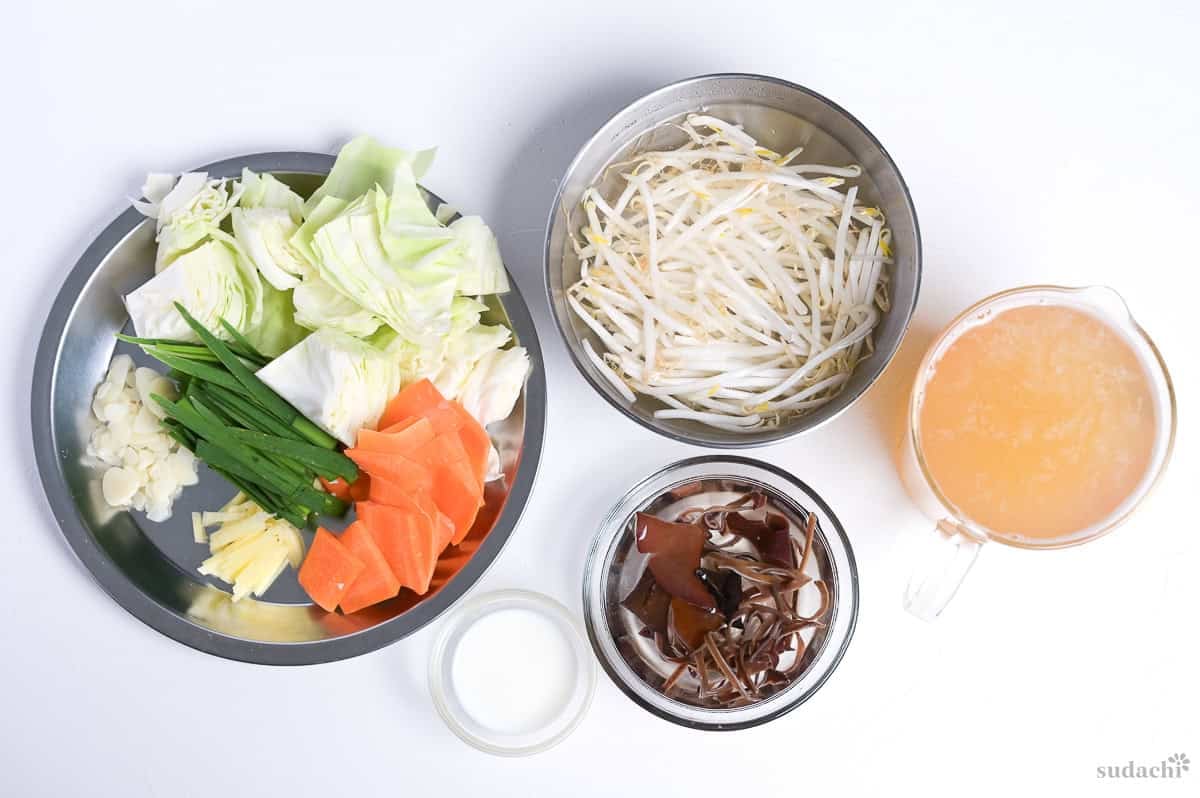
- Vegetables: Cut everything before the pan gets hot, because once it does this moves fast. Slice the carrot into thin rectangles, rough-chop the cabbage along the grain, cut the ginger into fine julienne, and thinly slice the garlic. Cut the garlic chives into 5cm lengths and rehydrate the wood ear in hot water. Drop the bean sprouts into cold water and leave them there, then drain them hard right before they go in.
- Milk-and-starch slurry: Stir the milk and potato starch together in a small cup and set it by the stove, ready to pour without fumbling.
- The soup: Combine the boiling water, chicken bouillon powder, sake, oyster sauce, and salt, and keep it hot until you need it.
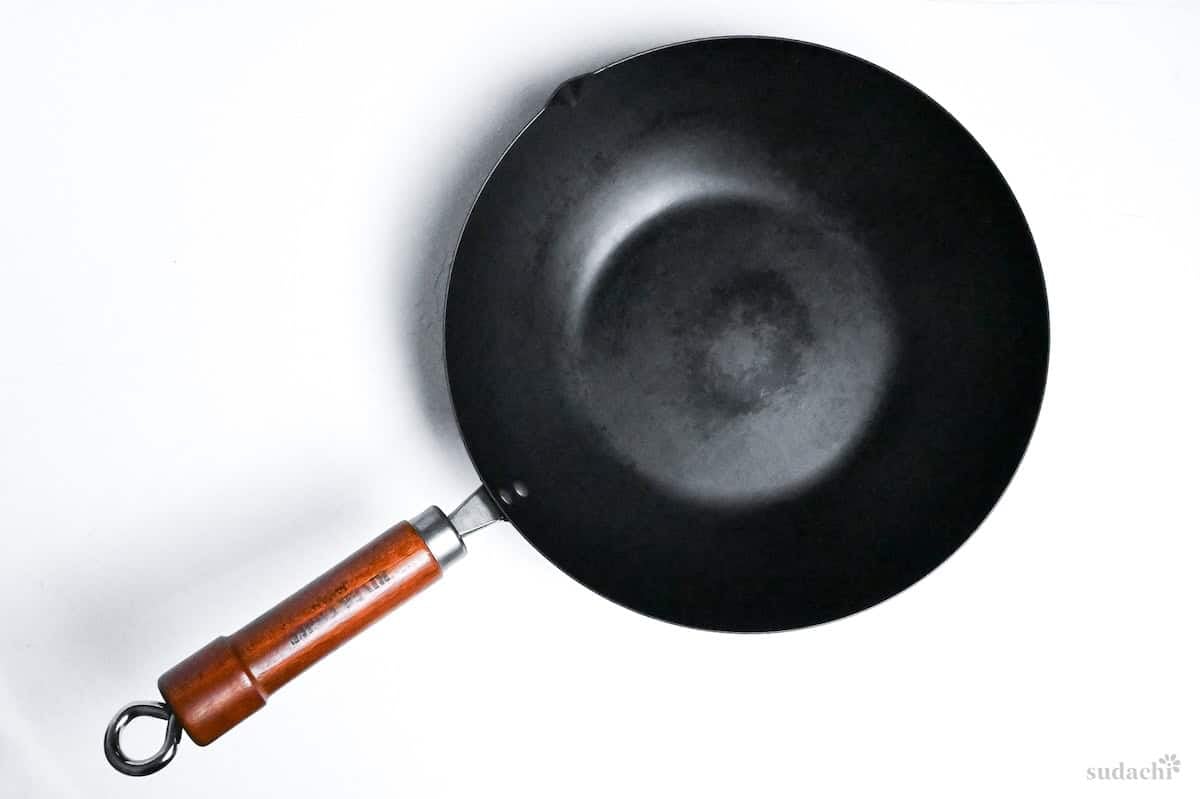
To develop this tanmen recipe, I used a 30cm carbon steel wok.
i. Set a wok or wide pan over high heat and melt the lard until it shimmers.
ii. Season the pork belly with a pinch of salt, spread the slices out in the hot fat, and leave them alone until the edges go crisp and browned.
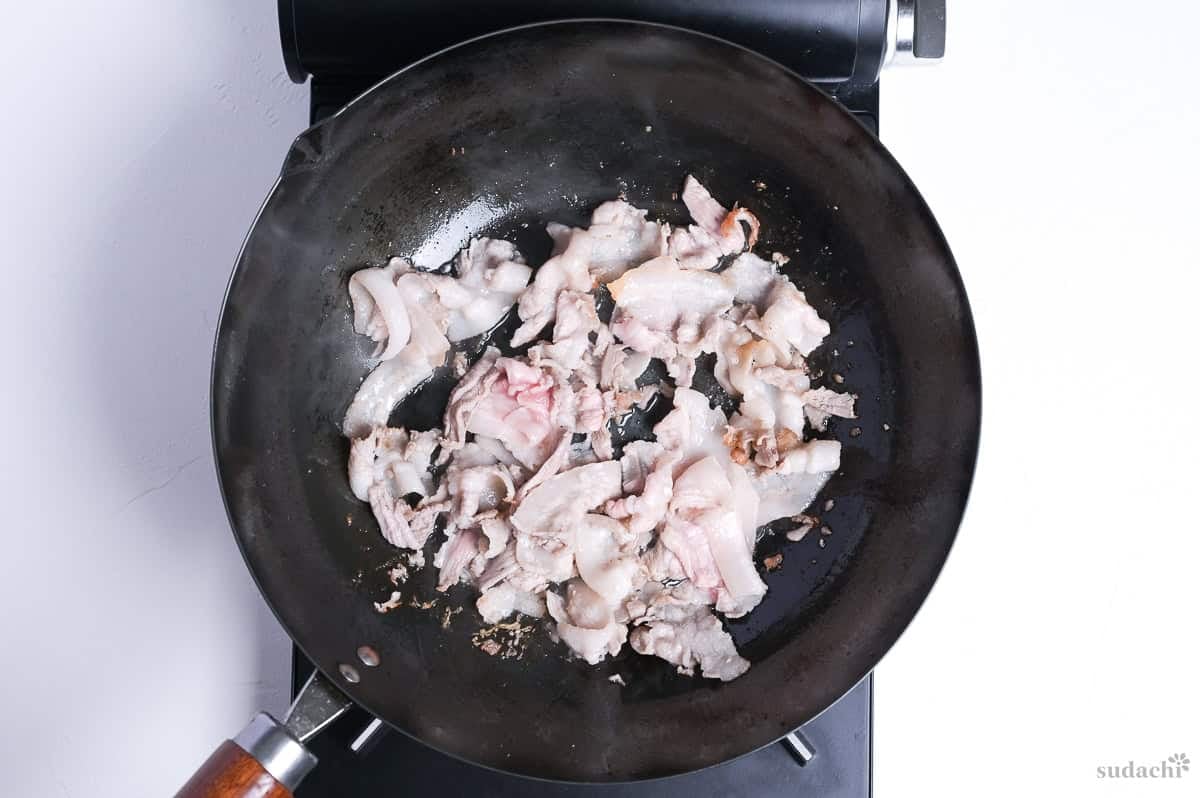
Tanmen looks like a vegetable dish, and it mostly is, but the pork is what holds it together. As the belly sears, its fat renders out into the pan and coats every vegetable that follows. That thin film of rendered fat is exactly what pulls a towering pile of vegetables into a single, coherent bowl instead of a loose, watery heap of stir-fry.
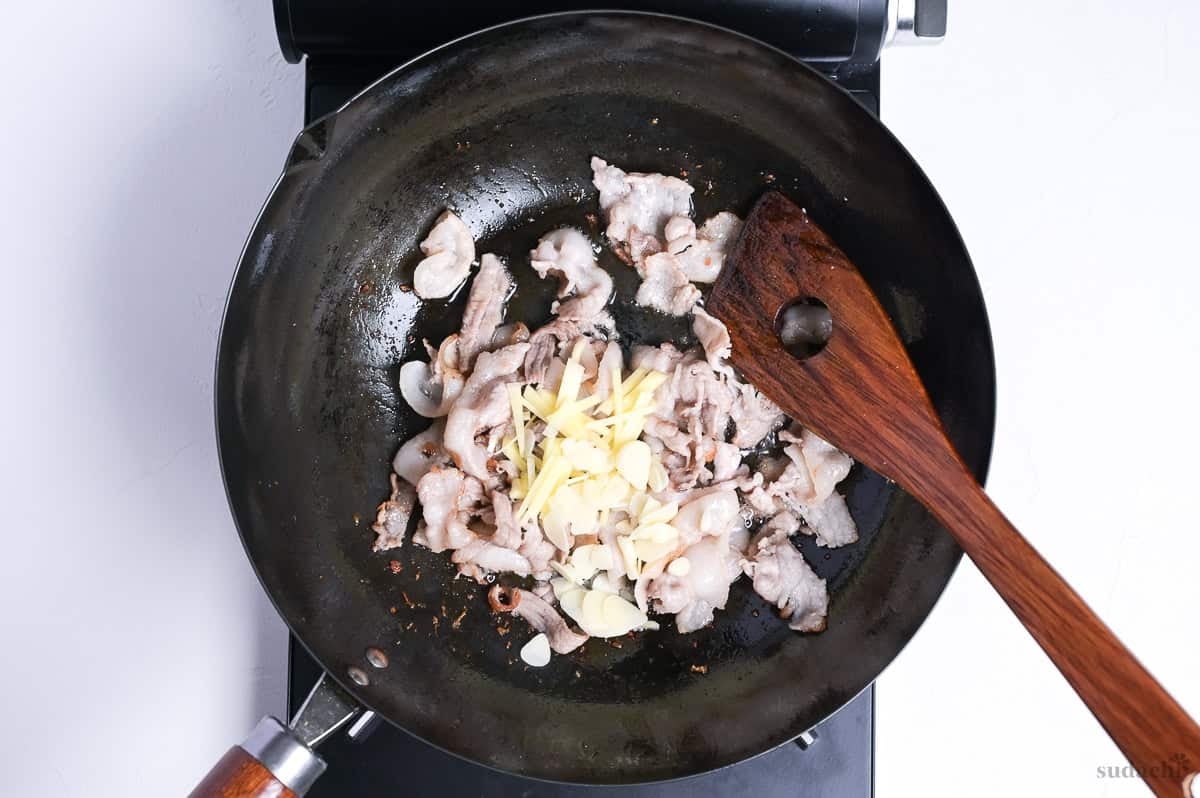
iii. Drop the heat for a moment, add the ginger and garlic, and stir just until they turn fragrant, only a few seconds.
i. Crank the heat back to high. Add the vegetables in order, carrot first, then cabbage, wood ear, nira, and bean sprouts last, and hit them with a pinch of salt.
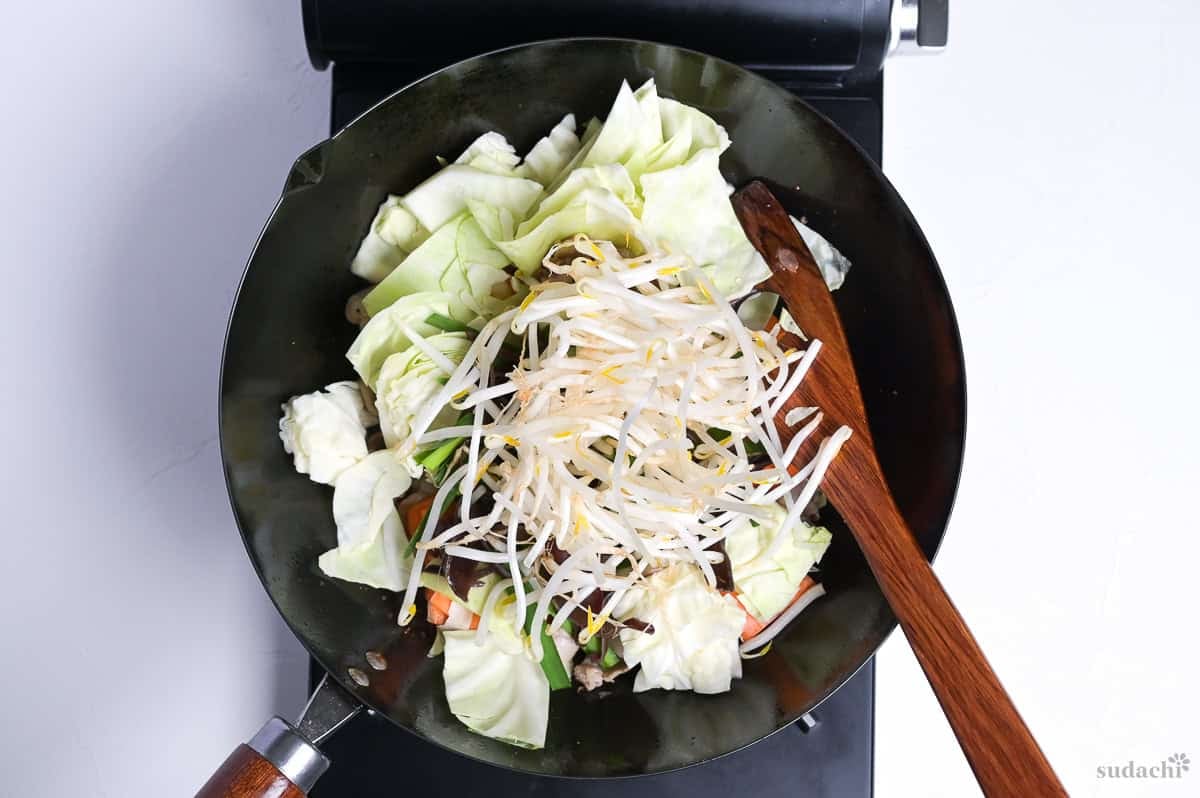
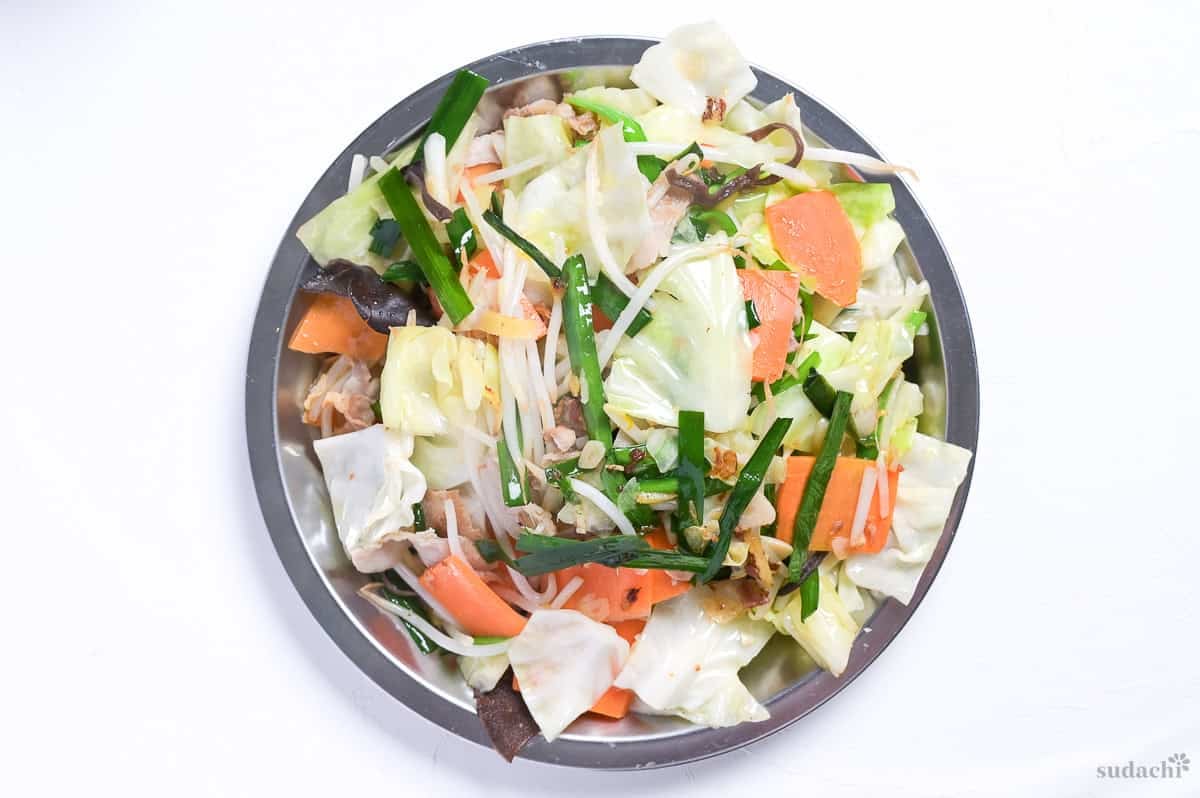
ii. Toss for about 1 minute, just until everything is glossy and tangled together. Keep the heat high the whole time, or the vegetables sweat out their water instead of searing.
iii. The moment they are bright and barely wilted, lift all the vegetables out onto a plate and set them aside. This one move is what keeps them crisp.
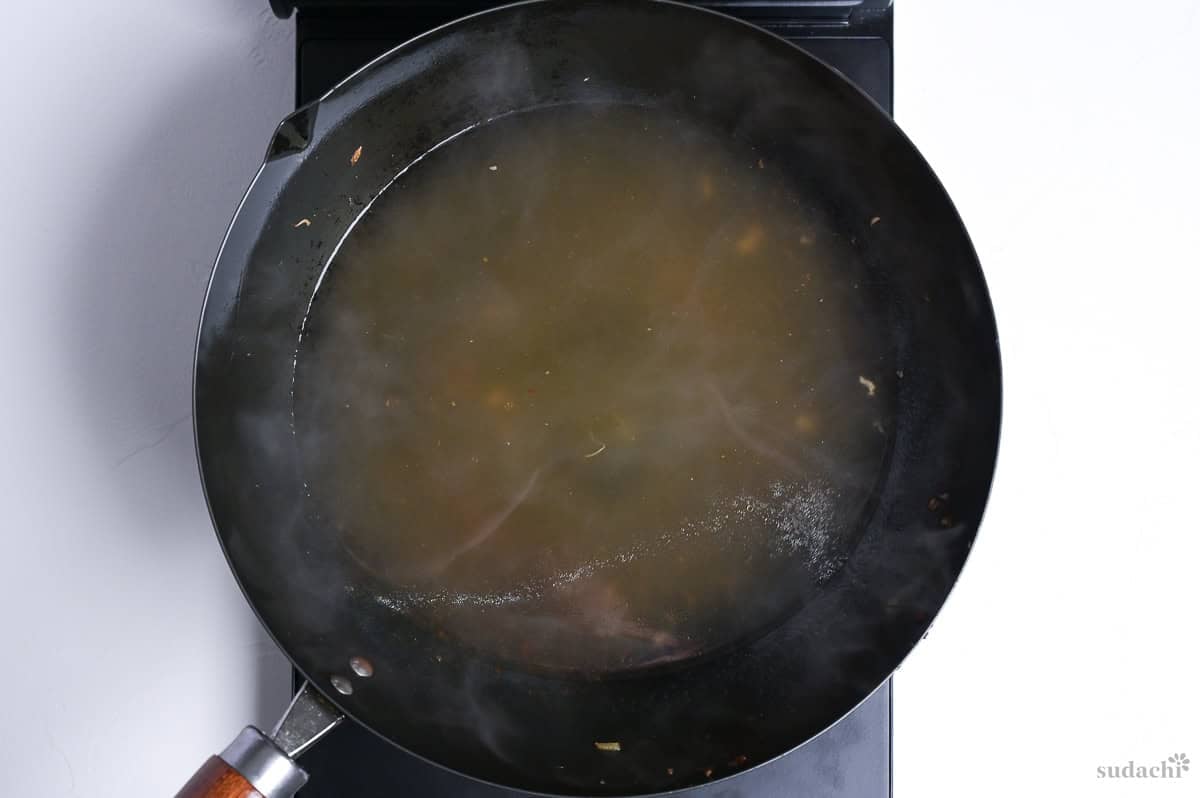
i. Pour the hot soup into the same pan and bring it up to a boil.
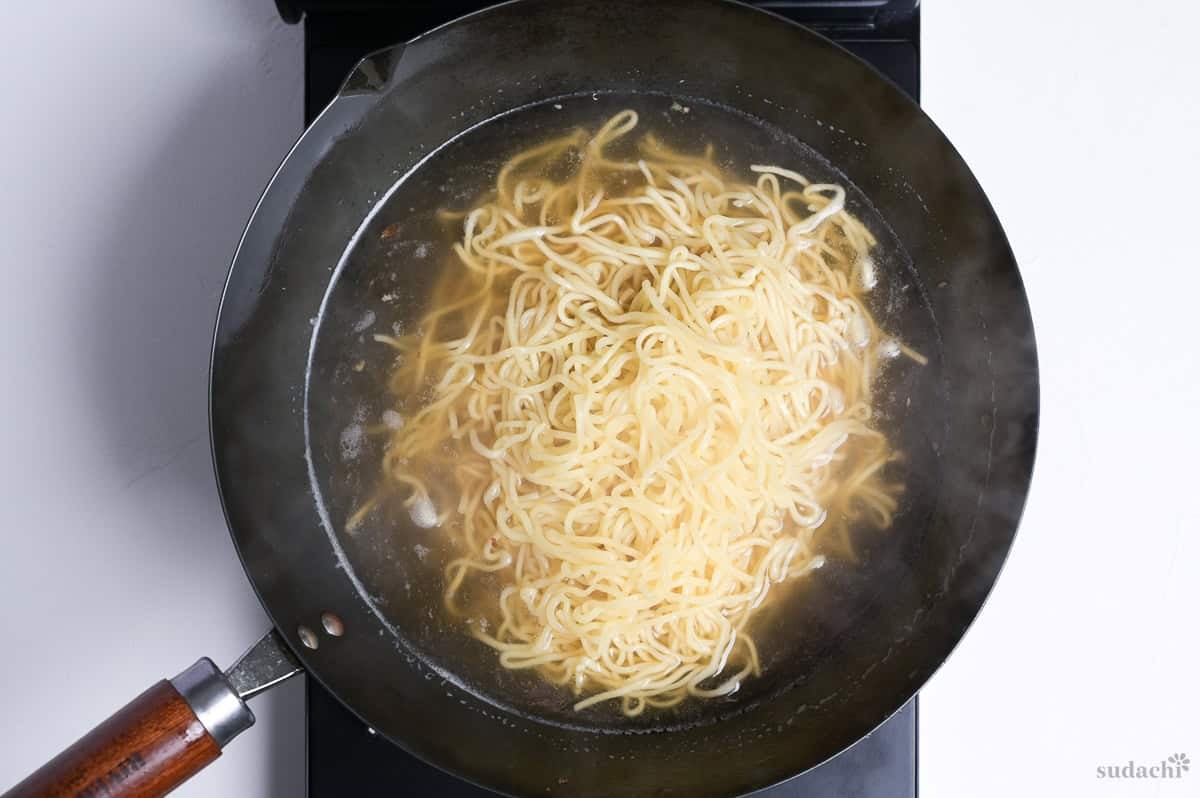
ii. While the soup heats, boil the noodles in a separate pot of plenty of water. Pull them out at half the time listed on the package.

iii. Drain the noodles and slide them into the soup to finish for the rest of the package time.
iii. Return the vegetables to the pan, pour in the milk-and-starch slurry, and stir once more.
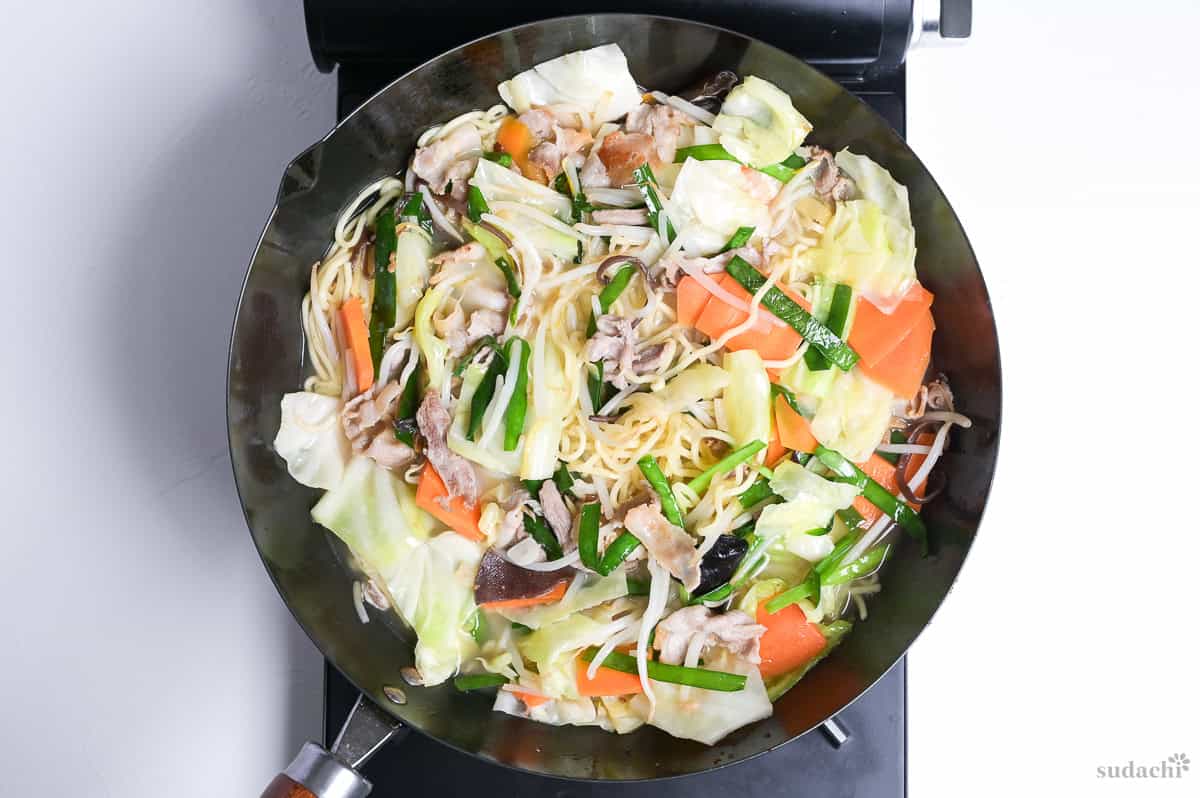
This last pour is where the soup gets its body and that soft cling that grabs the noodles. The starch thickens the broth just enough, and the milk rounds it out so the whole bowl reads fuller without turning heavy. Add it once the soup is off a hard boil and stir gently, so it sets smooth rather than gluey.
i. Divide the noodles, soup, and vegetables between the bowls.
ii. Finish each with a good amount of white pepper and a drizzle of toasted sesame oil, and serve right away.
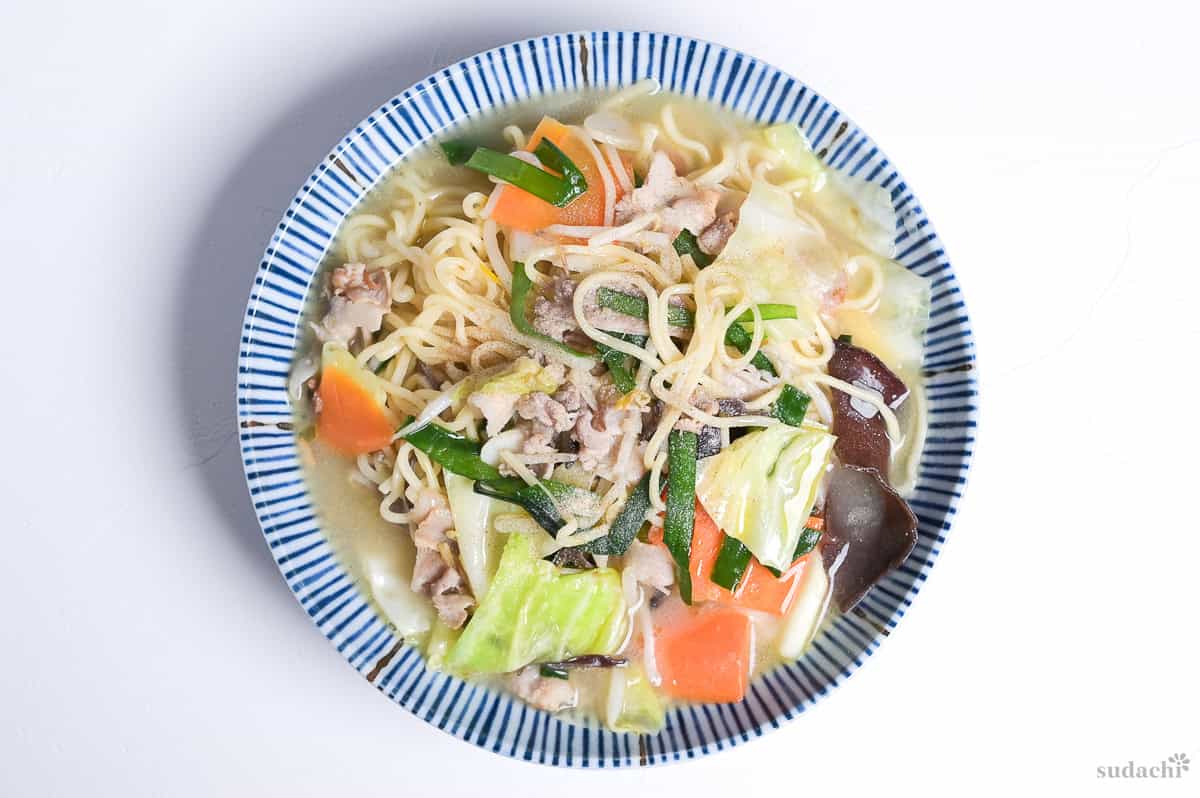
If you follow the default recipe, it will yield 2-3 main servings.

Essential Tips & Tricks
- Pull the vegetables the second they turn glossy, not a moment later. The instant they slump and go limp, the crunch is gone for good, so lift them onto a plate while they still snap and let the carryover heat and the hot soup finish them at the very end.
- Never let the noodles overcook. Boil them a touch under, pull them at half the package time, and let them finish in the hot soup for the rest of the time. Push them past done and they go soft and swollen in the bowl before you even sit down, and unlike a thin broth, a mushy noodle cannot be fixed.
- Keep the soup piping hot before it goes in. Pour cold or even lukewarm broth over the hot vegetables and the temperature crashes, the vegetables weep out their water, and the whole bowl turns thin. Keep the soup simmering in a second pot so it hits the pan hot and everything stays tight when it comes back together.
- Drain the bean sprouts hard right before they go in. They sit in cold water so they stay crisp, but any water still clinging to them lands straight in your soup and loosens it. Shake them out well, because wet sprouts are the quiet way a clean broth turns thin and watery.
With these simple tips in mind, you’re set for success every time you make tanmen.
Storage & Meal Prep
Fridge: This is a make-and-eat-fresh bowl, so I do not store it assembled. The soup comes together in the time it takes to boil noodles, and the milk-and-starch body does not hold once it sits, so there is little to gain from saving a finished bowl.
Freezer: Not recommended.
Meal prep: There is not much real advantage here, since the soup is so fast. If you want a head start, slice the vegetables and measure out the seasonings ahead, then stir-fry and build everything fresh at dinner.
What to Serve With This Recipe
Tanmen Troubleshooting
They overcooked, so they kept releasing water into the pan until the whole pile went soft and weepy. Watery vegetables are a sign they sat on the heat too long, so the move is to pull them out before that water starts escaping, the moment they turn glossy and still have snap. To rescue a batch that is already watery, lift the vegetables out, boil the loose liquid down hard for a minute to tighten it back up, then slide them back in off the heat at the very end.
A flat tanmen broth almost always means it got diluted, either by watery vegetables or by a bouillon that was under-measured for your brand. Taste the broth on its own first, then bring it up with a small pinch of salt or a little more bouillon dissolved in a spoon of hot water, adding a little at a time so you do not overshoot. Check the dilution ratio on your bouillon before you season the next batch, since every brand lands at a different strength.
A home burner cannot always throw the fierce heat a stir-fry wants, and a crowded pan drops the temperature even further, so the vegetables sweat and go soft instead of searing. Cook in two smaller batches rather than one crowded pile, and let the pan get properly hot before anything goes in. A wide skillet or wok that holds its heat helps more here than raw flame does.
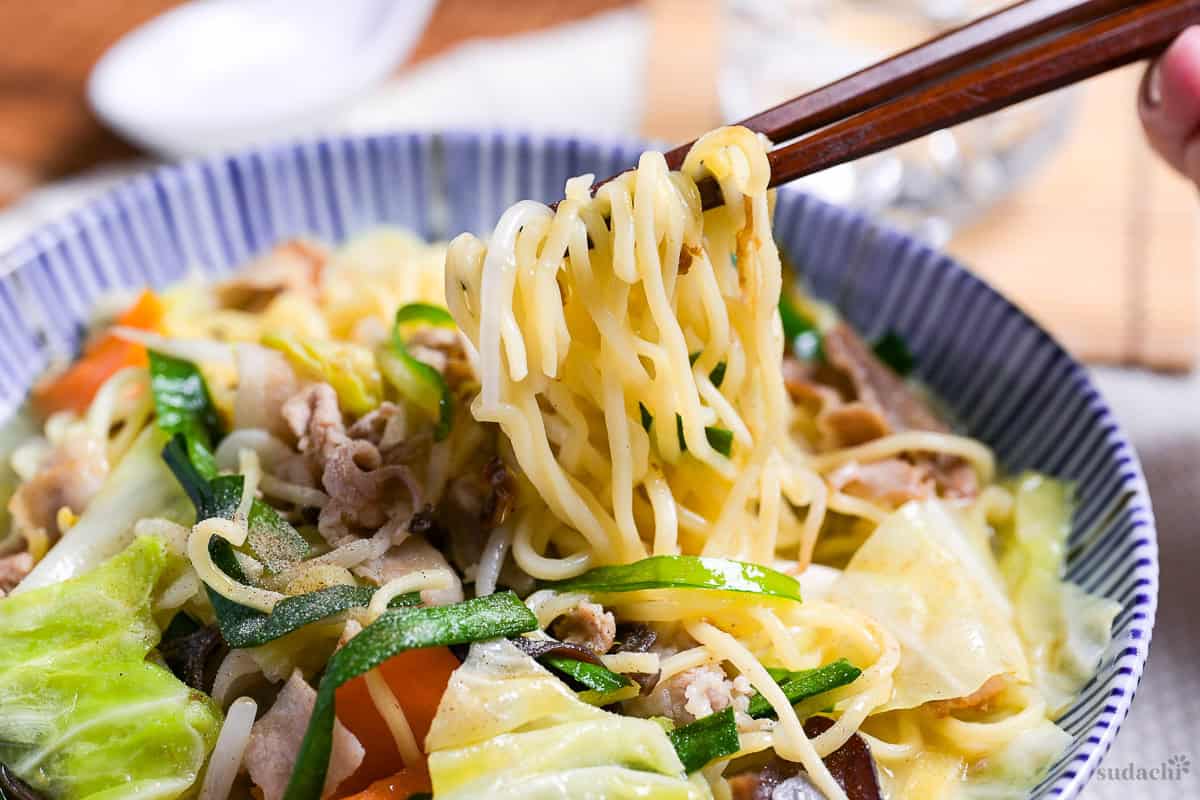
More Ramen Recipes
Hungry for more? Dig into my Japanese ramen recipe collection to find your next bowl.
Did You Try This Recipe?
I would love to hear your thoughts!
💬 Leave a review and ⭐️ rating in the comments below. 📷 I also love to see your photos – submit them here!
Tanmen (Stir-Fried Vegetable Ramen)

Ingredients
- 150 g green cabbage or napa cabbage
- ¼ carrot
- 30 g garlic chives
- ½ tbsp dried wood ear mushrooms black fungus
- 2 cloves garlic
- 10 g ginger root
- 150 g bean sprouts drained well
- 1 tbsp lard or neutral oil
- 150 g thinly sliced pork belly
- 2 pinches salt for the pork and vegetables
- 2 portions ramen noodles
Soup
- 600 ml freshly boiled water
- 1½ tbsp Chinese-style chicken bouillon powder such as Youki, Lee Kum Kee
- 1½ tbsp sake
- ½ tsp oyster sauce
- ½ tsp salt
- 1 tbsp milk
- 1 tsp potato starch (katakuriko)
Toppings
- ground white pepper to taste
- toasted sesame oil to finish
The ingredient brands and tools I trust are in my Japanese pantry guide and my cooking tools guide.
Can’t find certain Japanese ingredients? See my substitution guide here.
Instructions
- Prep your vegetables, broth and slurry first. Roughly cut 150 g green cabbage, cut ¼ carrot into thin rectangles, and cut 30 g garlic chives into 5cm pieces. Thinly slice 2 cloves garlic, and peel and julienne 10 g ginger root. Soak 150 g bean sprouts in a bowl of cold water, and rehydrate ½ tbsp dried wood ear mushrooms in hot water. Mix all of the soup ingredients in a heatproof jug (600 ml freshly boiled water1½ tbsp Chinese-style chicken bouillon powder, 1½ tbsp sake, ½ tsp oyster sauce, ½ tsp salt). In a small bowl mix 1 tbsp milk and 1 tsp potato starch (katakuriko), set everything by the stove for later.

- Heat a wok or wide skillet over high and melt 1 tbsp lard. Add 150 g thinly sliced pork belly and sprinkle with 2 pinches salt. Fry until the edges crisp and turn brown.
- Reduce the heat to medium and add the ginger and garlic. Stir fry for a few seconds until fragrant.
- Increase the heat back to high and add the carrots, cabbage, wood ear mushroom, garlic chives, and beansprouts in that order. Sprinkle with a pinch of salt and stir fry for 1 minute or until tender-crisp.
- Transfer the contents of the wok onto a heatproof plate.
- Return the wok to the stove, pour in the jug of soup from step 1 and bring to a boil.
- While you wait, boil a separate pot of water and cook 2 portions ramen noodles for half the time stated on the packaging.

- When the timer sounds, drain the noodles and drop them into the hot broth. Cook them in the soup for the other half of the cooking time, but stop cooking a minute early so they can finish cooking in the bowl.
- When the soup comes back to a boil, add the vegetables and meat back to the wok and pour in the slurry. Mix until slightly glossy.
- Divide the contents of the pan between serving bowls and top with ground white pepper and a drizzle of toasted sesame oil. Enjoy!

Ça a l’air appétissant. Je ferai le bouillon sans la poudre de poulet
Highly recommended. Simple, not overly demanding on ingredients either : )
Thank you so much, J! 🙂