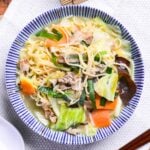
Tanmen (Stir-Fried Vegetable Ramen)
Ingredients
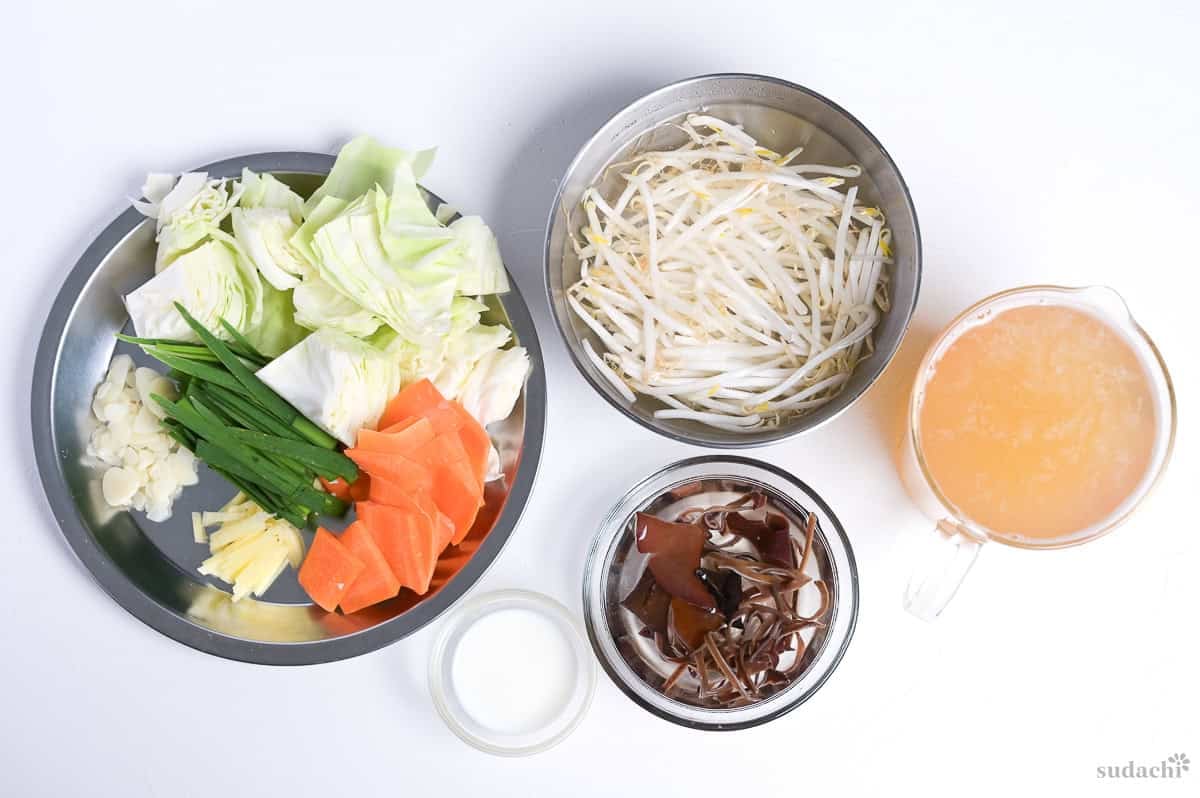
- 150 g green cabbage or napa cabbage
- ¼ carrot
- 30 g garlic chives
- ½ tbsp dried wood ear mushrooms black fungus
- 2 cloves garlic
- 10 g ginger root
- 150 g bean sprouts drained well
- 1 tbsp lard or neutral oil
- 150 g thinly sliced pork belly
- 2 pinches salt for the pork and vegetables
- 2 portions ramen noodles
Soup
- 600 ml freshly boiled water
- 1½ tbsp Chinese-style chicken bouillon powder such as Youki, Lee Kum Kee
- 1½ tbsp sake
- ½ tsp oyster sauce
- ½ tsp salt
- 1 tbsp milk
- 1 tsp potato starch (katakuriko)
Toppings
- ground white pepper to taste
- toasted sesame oil to finish
Instructions
- Prep your vegetables, broth and slurry first. Roughly cut 150 g green cabbage, cut ¼ carrot into thin rectangles, and cut 30 g garlic chives into 5cm pieces. Thinly slice 2 cloves garlic, and peel and julienne 10 g ginger root. Soak 150 g bean sprouts in a bowl of cold water, and rehydrate ½ tbsp dried wood ear mushrooms in hot water. Mix all of the soup ingredients in a heatproof jug (600 ml freshly boiled water1½ tbsp Chinese-style chicken bouillon powder, 1½ tbsp sake, ½ tsp oyster sauce, ½ tsp salt). In a small bowl mix 1 tbsp milk and 1 tsp potato starch (katakuriko), set everything by the stove for later.
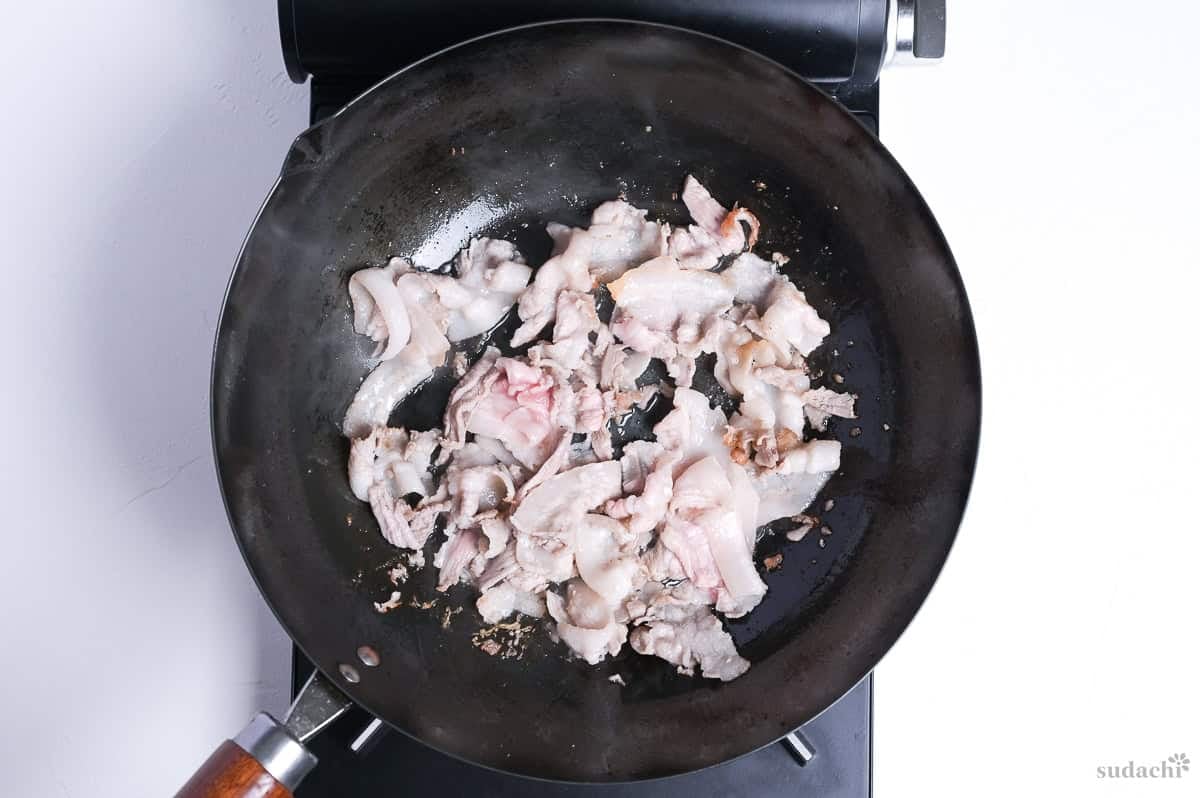
- Heat a wok or wide skillet over high and melt 1 tbsp lard. Add 150 g thinly sliced pork belly and sprinkle with 2 pinches salt. Fry until the edges crisp and turn brown.
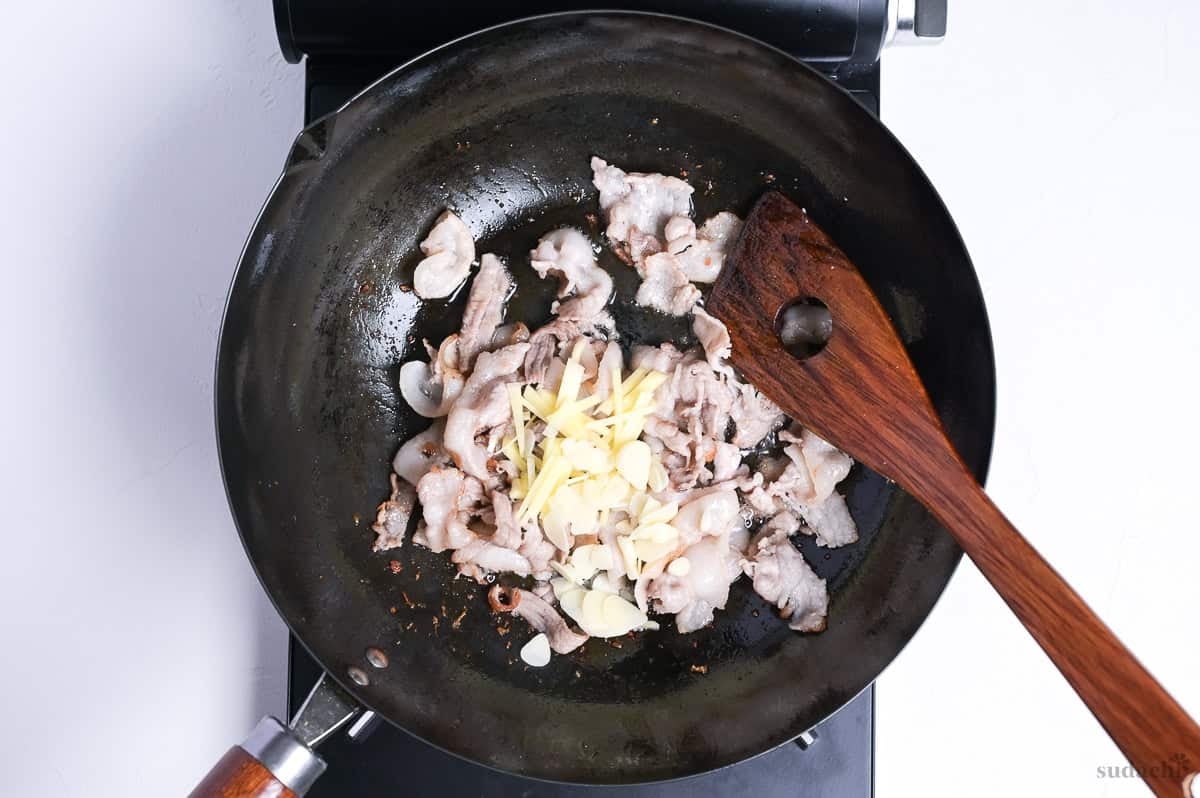
- Reduce the heat to medium and add the ginger and garlic. Stir fry for a few seconds until fragrant.
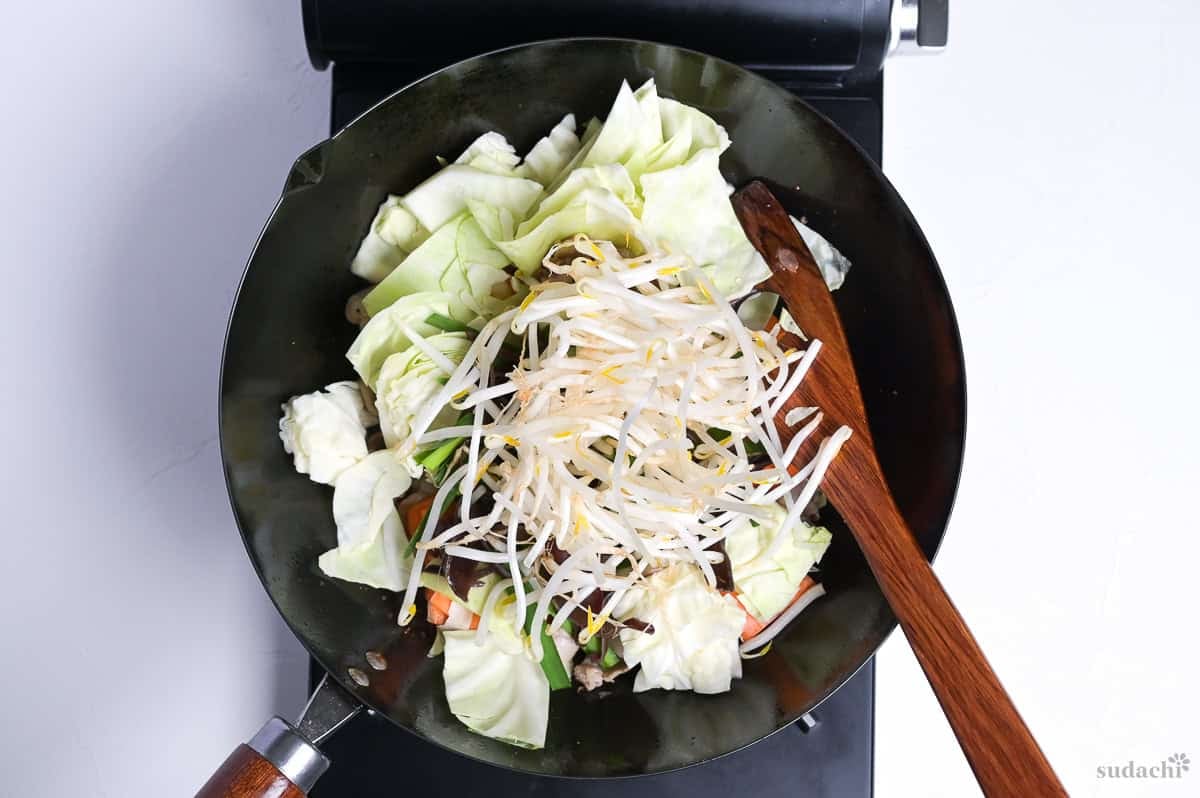
- Increase the heat back to high and add the carrots, cabbage, wood ear mushroom, garlic chives, and beansprouts in that order. Sprinkle with a pinch of salt and stir fry for 1 minute or until tender-crisp.
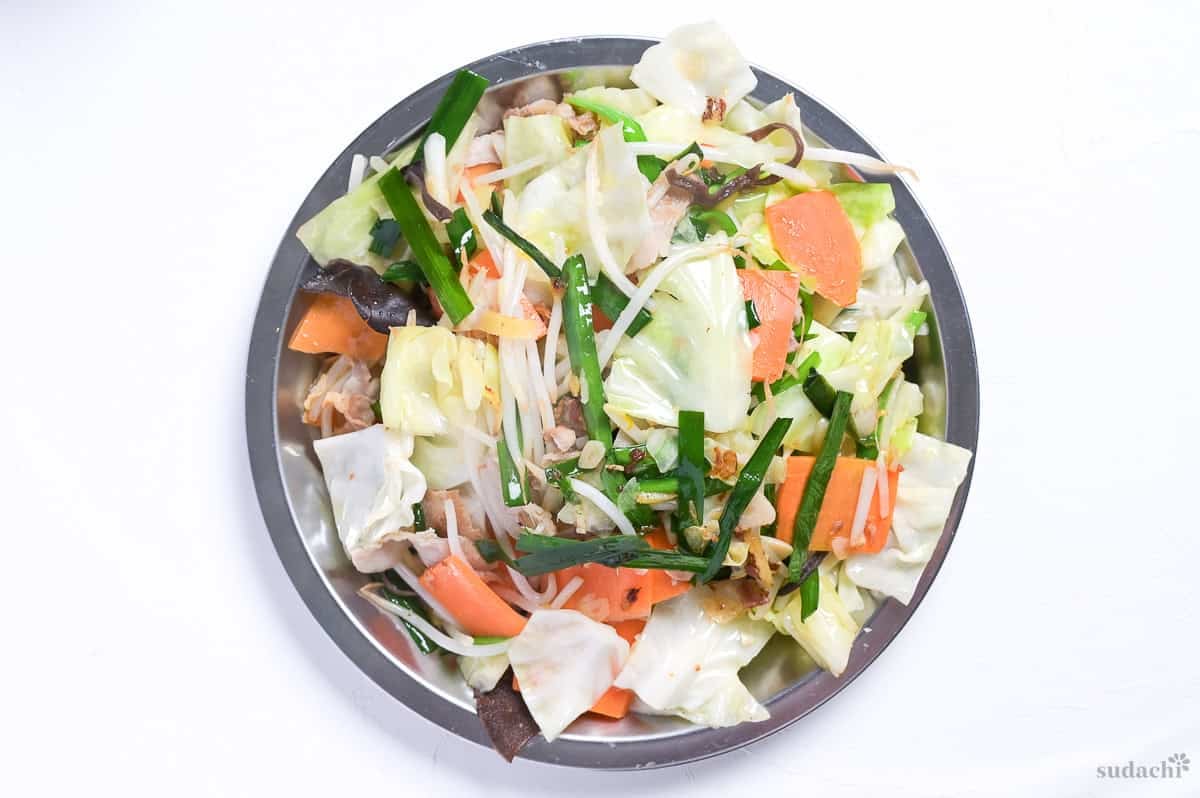
- Transfer the contents of the wok onto a heatproof plate.
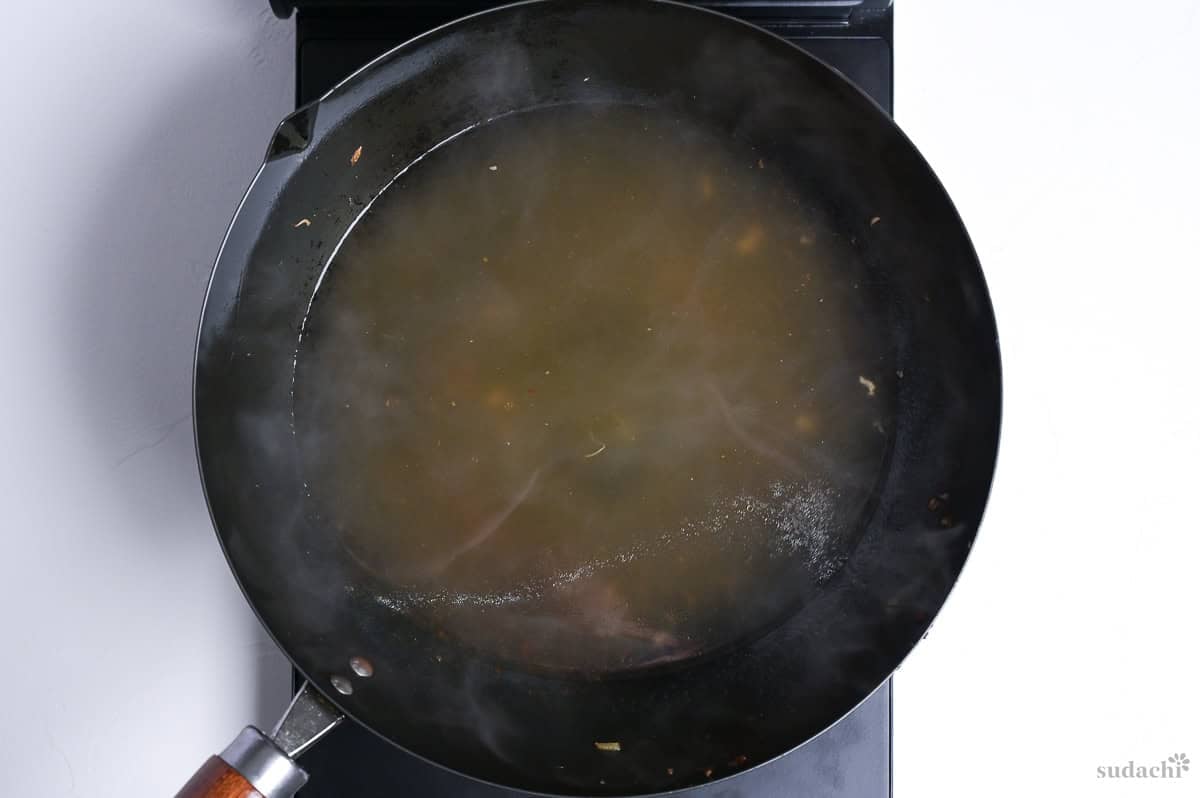
- Return the wok to the stove, pour in the jug of soup from step 1 and bring to a boil.
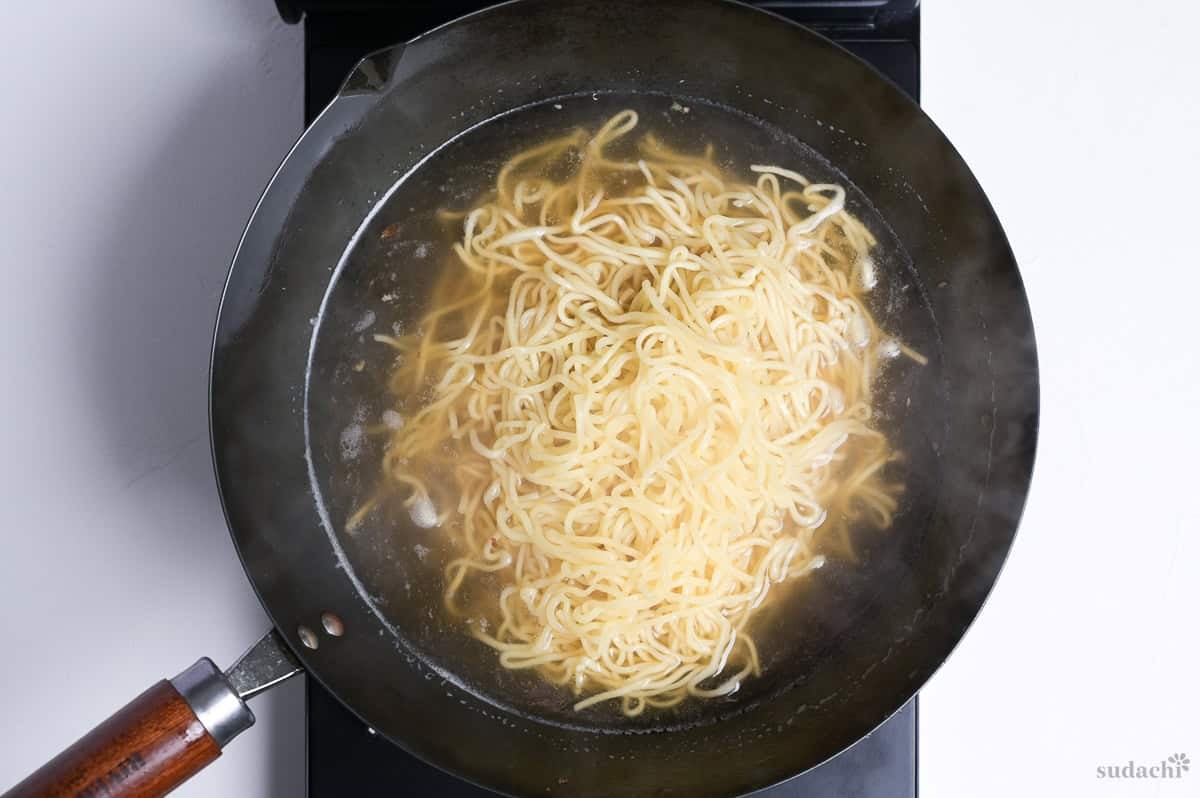
- While you wait, boil a separate pot of water and cook 2 portions ramen noodles for half the time stated on the packaging.

- When the timer sounds, drain the noodles and drop them into the hot broth. Cook them in the soup for the other half of the cooking time, but stop cooking a minute early so they can finish cooking in the bowl.
- When the soup comes back to a boil, add the vegetables and meat back to the wok and pour in the slurry. Mix until slightly glossy.
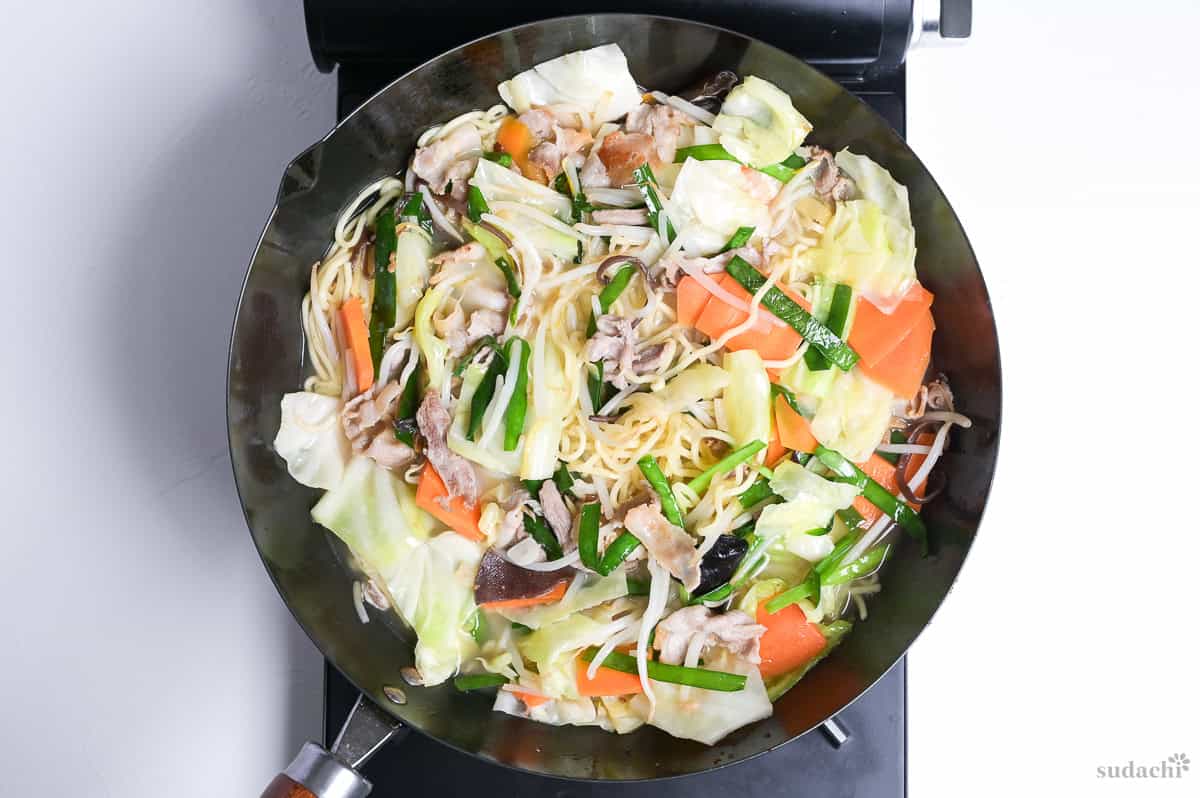
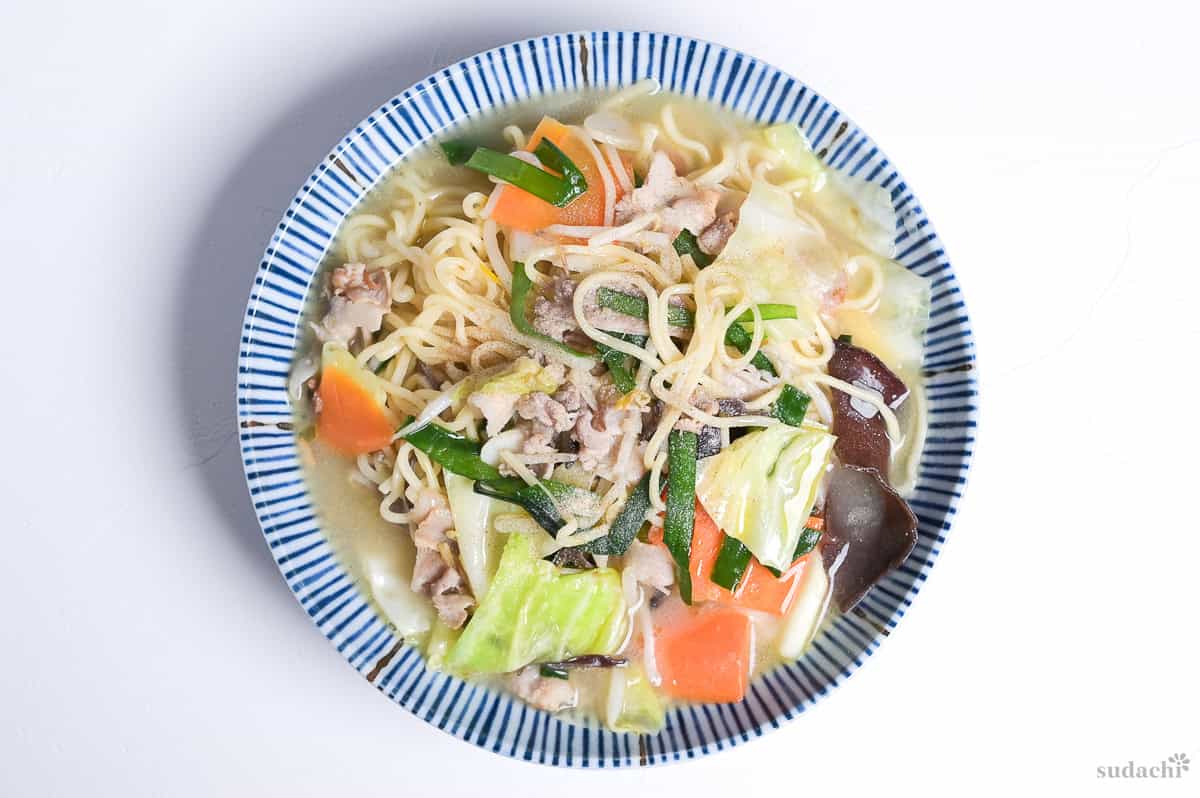
- Divide the contents of the pan between serving bowls and top with ground white pepper and a drizzle of toasted sesame oil. Enjoy!
Notes
Pull the vegetables before they wilt: Lift them onto a plate the moment they turn glossy and barely tender. Once they slump they are done for, and the carryover heat plus the hot soup finish them at the very end.
Pour the soup in hot: Cold or lukewarm broth on hot vegetables crashes the temperature, so they weep water and the bowl turns thin. Keep it simmering in a second pot until the moment the other ingredients go in.
Do not overcook the noodles: This is the one mistake you cannot walk back. Pull them at half the package time and finish them in the hot soup, or they swell soft in the bowl before you sit down.
Add the milk-and-starch slurry off a hard boil: Stir the milk and potato starch in together once the soup drops from a rolling boil. On a hard boil it turns gluey instead of setting into a smooth, light body.
Calibrate the bouillon to your brand: The soup rides on the chicken bouillon powder, and every brand is concentrated differently. Check the dilution on your jar first, since mine builds broth at 1 tsp per 200 ml.
A note on the nutrition figures: In Japan, the broth of a noodle soup like this is not finished to the last drop, so the numbers here assume you drink only about 30 percent of the soup, in line with measured Japanese consumption studies. Finish the whole bowl and the figures, sodium above all, will run considerably higher.
Full Recipe QR Code↑↑