



Featured Comment
The broth is amazing, I used frozen gyoza but I will try to make them myself next time
★★★★★
– Sally
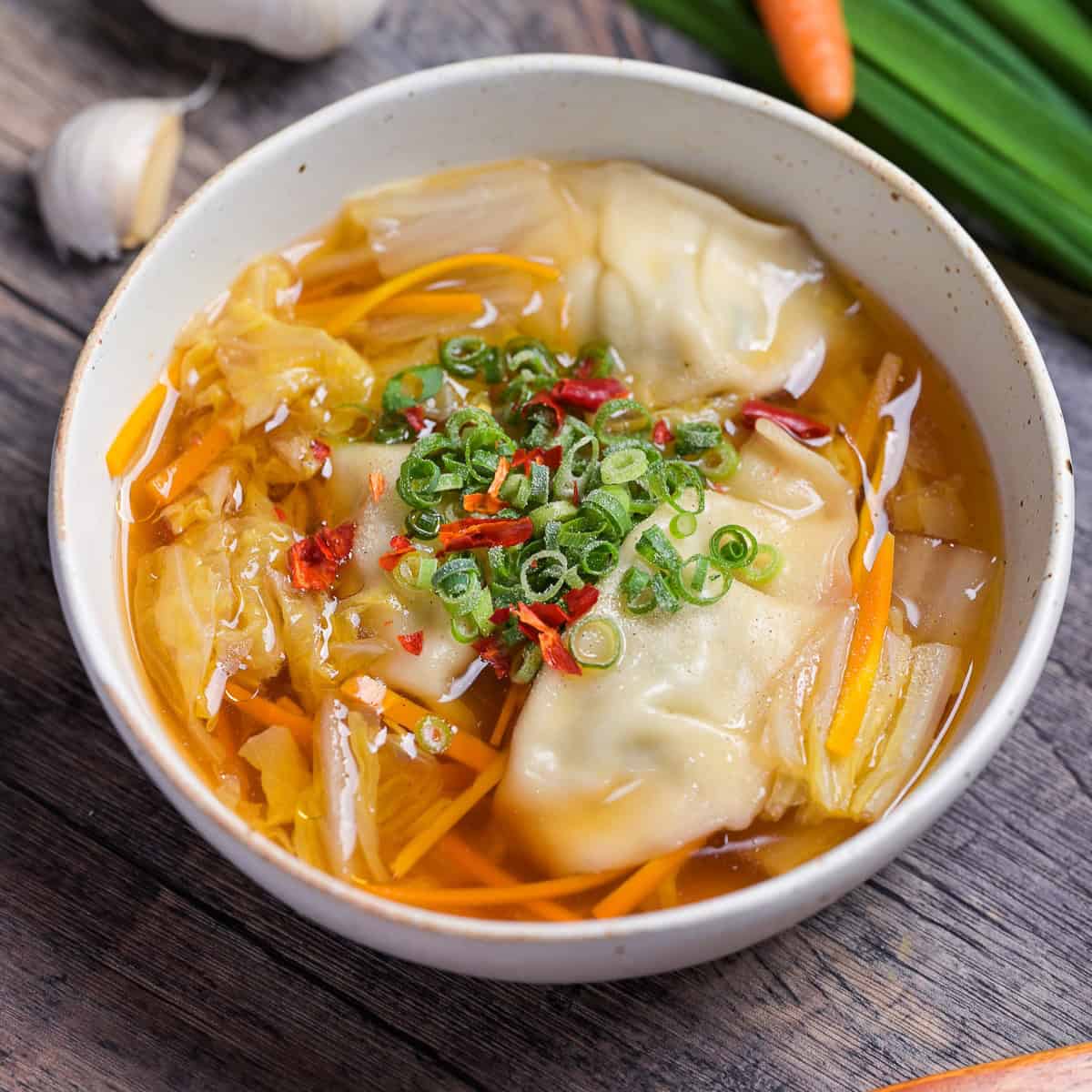
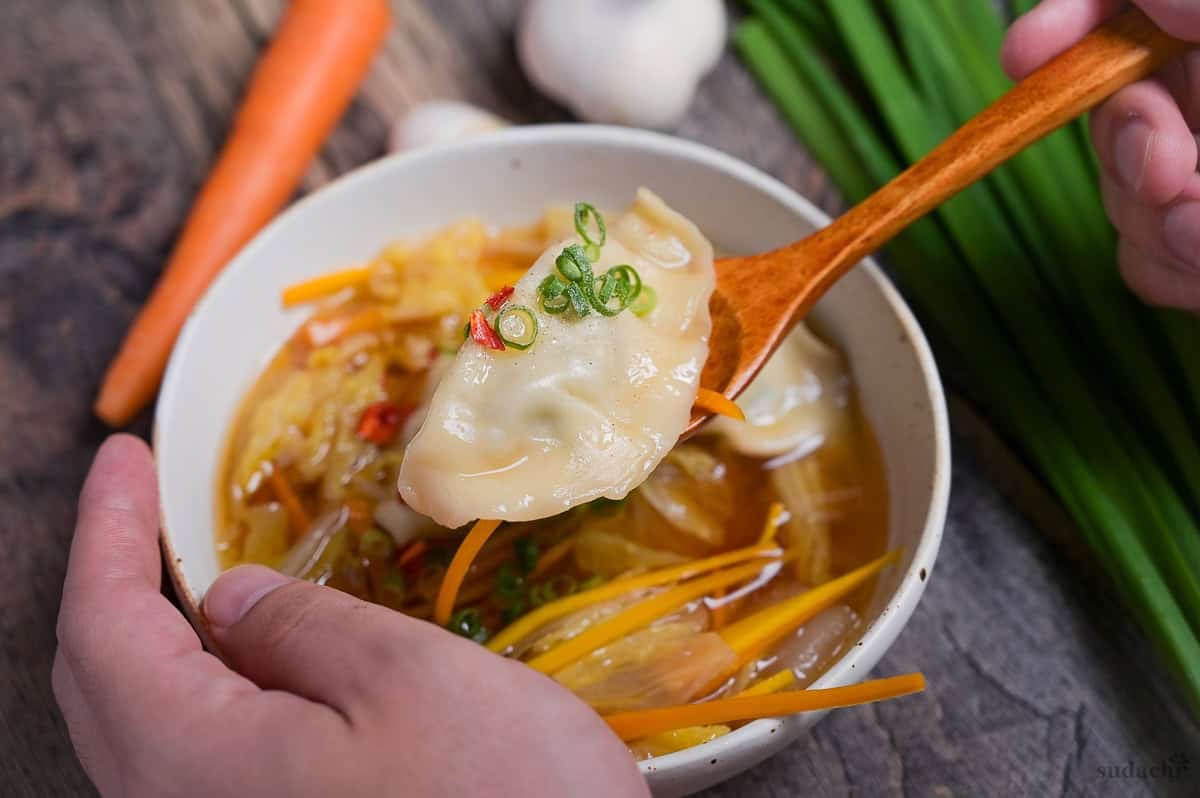
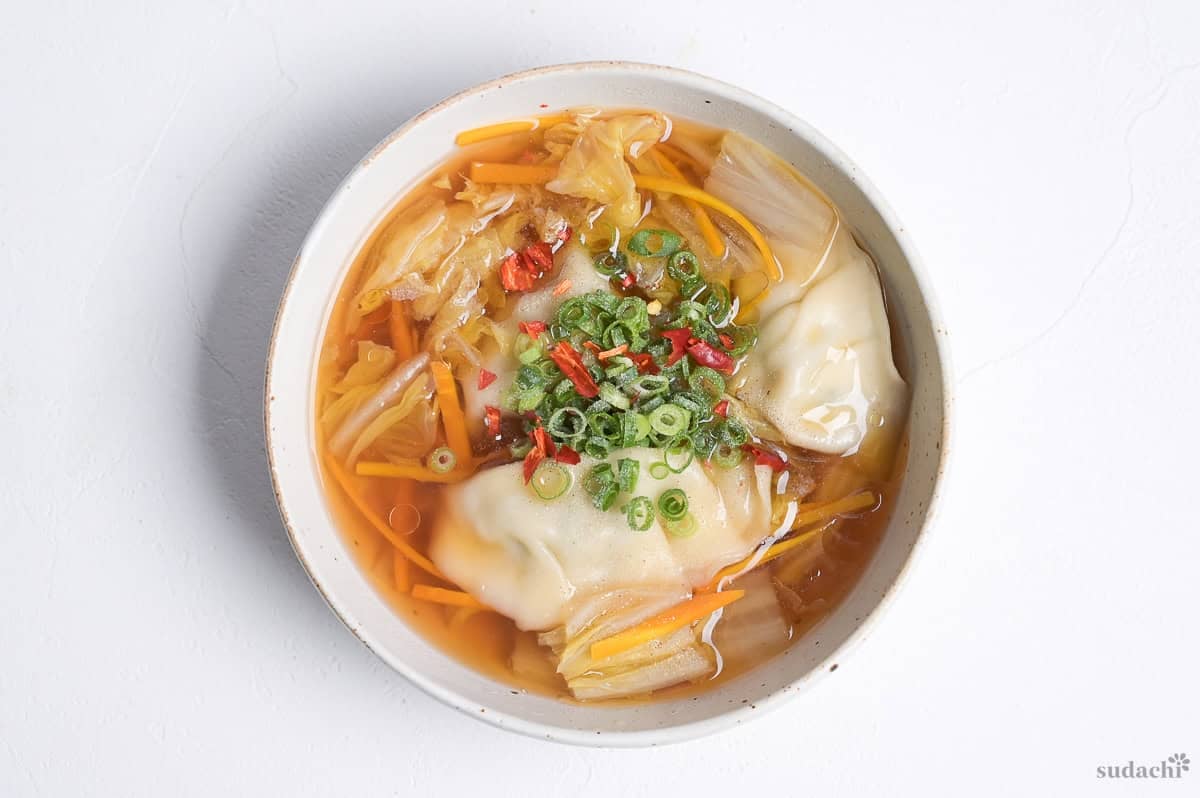
The spoon comes up with a dumpling and a broth that holds onto it, a little thick, sliding slowly down the side. I had just remade my gyoza wrapper dough and wanted to put the water-gyoza ratio to work, so this bowl happened.
The broth clings, and coats your tongue. The flavor lands harder, and the seasoning stays simple while the dumpling does the talking. This is not a case of soup vs. dumplings fighting for the spotlight, but two pieces of the puzzle working in perfect harmony.
Gyoza Soup
Recipe Snapshot
- What is it? A Japanese home-style gyoza soup where water dumplings simmer in a deliberately light broth. My own turn on it, a Japanese awase dashi floor with a Chinese-style chicken bouillon base layered on top.
- Flavor profile: A quiet, rounded broth that clings to the tongue a little, savor from the chicken base sitting over the calm of the dashi, with the soy, ginger, and sesame of the dumpling itself carrying the front of the bowl.
- Why you will love this recipe: The broth stays understated on purpose so the dumpling leads, and a slightly clinging soup puts more flavor on your tongue at a lighter seasoning. A weeknight bowl you build from a pot and 10 dumplings.
- Must-haves: A Japanese awase dashi paired with a Chinese-style chicken bouillon powder, gyoza wrappers (or frozen gyoza).
- Skill level: Easy. The whole job is stovetop-simple, and the one bit of discipline is holding the pot just under a boil for the 5 minutes the dumplings simmer so the wrappers stay whole.
What is Gyoza Soup?
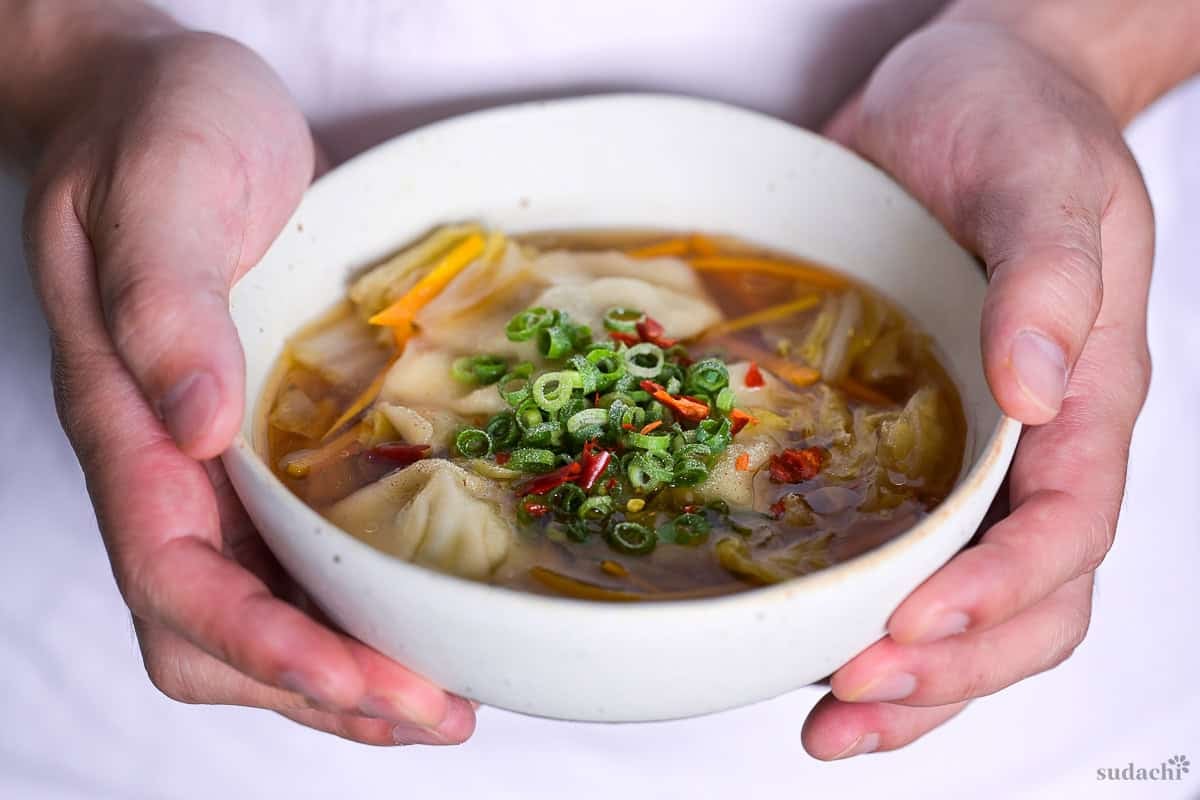
Gyoza soup (餃子スープ) is everyday home cooking in Japan, the kind of thing that lands on a weeknight table rather than a fixed, traditional dish with rules. Dumplings go into a seasoned broth and simmer until they float. That is the whole shape of it. It sits in the same casual family as a quick noodle bowl or a small pot of wonton soup, the kind of dinner you build on a tired evening from a few things you already have.
In my version, I run Japanese-Chinese flavors together on purpose. A Japanese awase dashi underneath for its quiet, rounded floor, and a Chinese chicken base layered on top of it for savor and pull. The dumpling already carries soy, ginger, sesame, so the broth is not trying to steal the limelight.
Gyoza Soup Ingredients
What You’ll Need for Gyoza
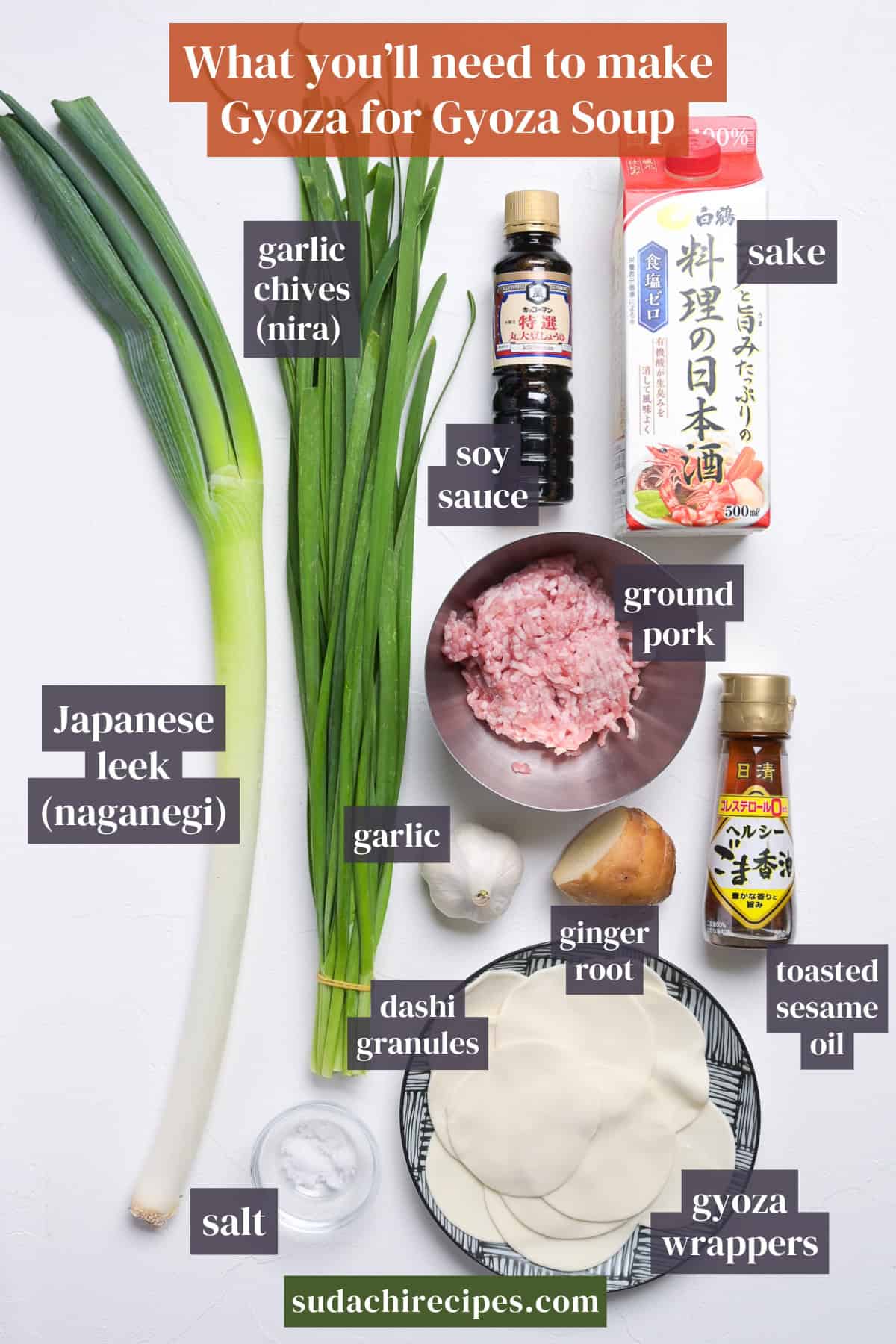
- Gyoza wrappers: If possible, reach for the ones labeled for water gyoza (水餃子), thicker and with more chew. The thin wrappers built for yaki gyoza go soft and tear in the pot, and even when they hold, they go limp enough that you barely register the skin at all. The thicker kind stays put through the simmer and gives you something to bite. If you are making your own, check out my homemade gyoza wrapper recipe.
- Ground pork: A 70/30 pork is what I want here, fattier than you might reach for. The soup is holding up the vegetable side, so the dumpling gets to lean on meat and fat for its share of the bowl, and the halves meet in the middle. The fat is also what keeps the filling juicy once it simmers.
- Garlic chives: These bring the signature aroma that reads as gyoza the second you smell it. Worth seeking out, though not the end of the world if you cannot find them.
What You’ll Need for The Broth
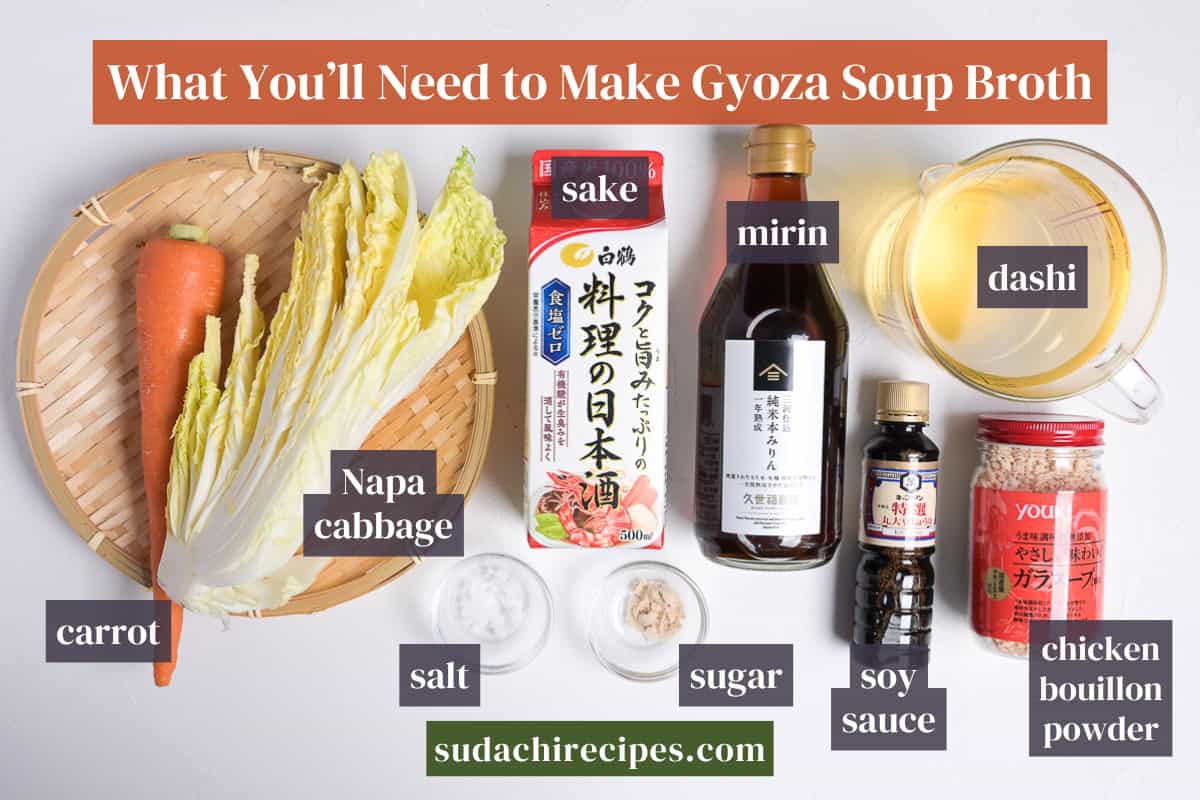
- Dashi and chicken bouillon powder: This pair is the one thing I will not move off. A Japanese awase dashi for the subtle base, a Chinese chicken stock flavor layered on top for savor. Drop either side and the bowl turns into a different soup. The brands are wide open, the pairing is not.
- Napa cabbage and carrot: The soup carries the vegetables so the dumpling does not have to. Both go in at the start and contribute their own water into the broth as they soften, which is part of how the base rounds out. That released moisture matters more than it looks like it should.
Substitutions & Variations
Here is the honest truth about this bowl. Almost all of it bends. The one thing I hold onto is the broth pairing itself: a Japanese awase dashi and a Chinese chicken-bone base, run together. That pairing is my recipe. But which brand you reach for, which vegetables, which wrapper, how you fill it, all of that is open.
Substitutions:
- Chinese chicken bouillon granules → Lee Kum Kee Chicken Bouillon Powder: The granular kind you see in Japan is hard to find abroad, but Lee Kum Kee Chicken Bouillon Powder at any Asian grocer covers it cleanly.
- Garlic chives (nira) → Regular chives or scallion greens: Nira can be tough to source outside Japan. Plain chives are fine, and scallion greens work too. You lose a little of the signature aroma, so lean a touch harder on the garlic to make up the difference.
- Napa cabbage → Regular cabbage: They trade off freely. Regular cabbage runs firmer and a little sweeter, napa softer and wetter. Both release their water into the broth, which is the part you actually want.
Have trouble finding Japanese ingredients? Check out my ultimate guide to Japanese ingredient substitutes!
Variations:
- Frozen gyoza, easy mode: Drop in store-bought frozen gyoza straight from the freezer, never thawed, and give them a couple of extra minutes in the pot. Thawing first makes them weep and tear on the way in.
- Standard mode: Make your own filling and wrap it in store-bought wrappers. Reach for the water-gyoza kind if your store stocks them, if not, regular kind.
- Hardcore mode: Make the wrappers from scratch too, with a water-gyoza dough, and your own filling. More work, and the skin is the payoff.
How to Make My Gyoza Soup
If you prefer to watch the process in action, check out my video of this gyoza soup recipe!
Before you start (Mise en place):
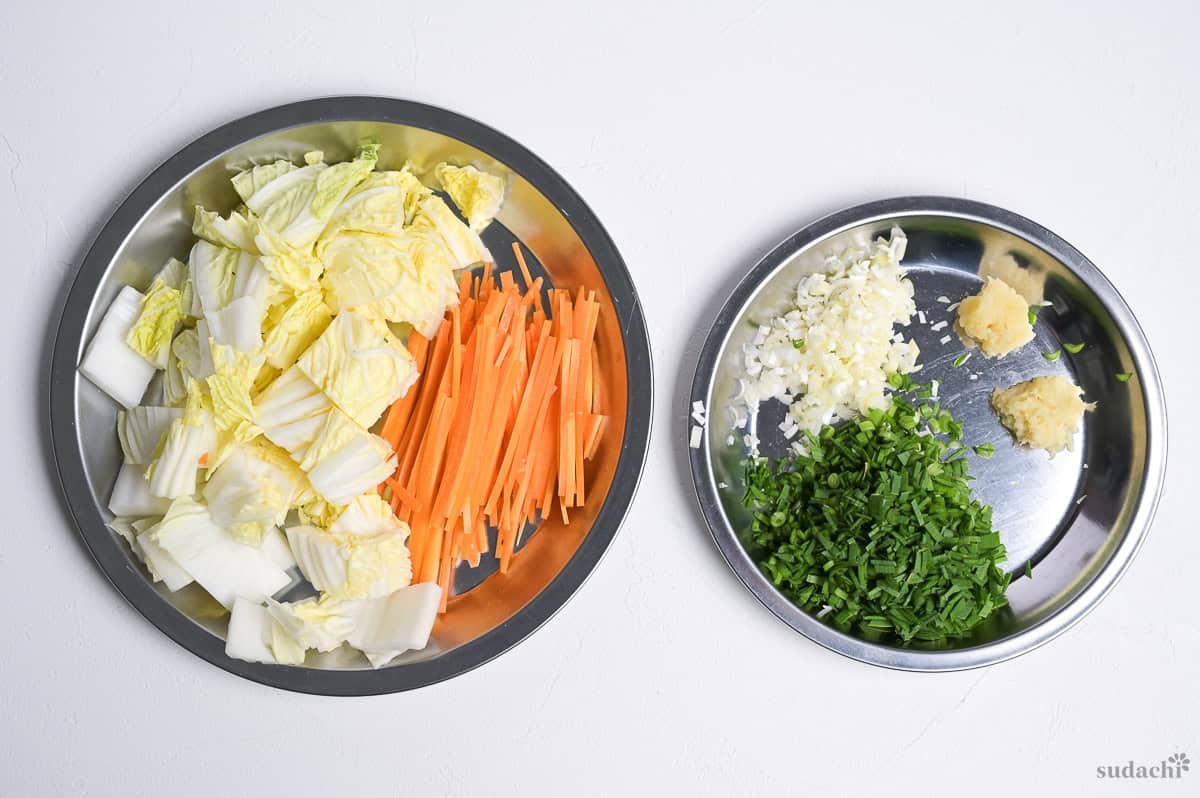
- Finely chop the white part of the Japanese leek.
- Thinly slice the garlic chives crosswise.
- Grate the ginger and the garlic.
- Make or pull together your dashi, whichever way you like to get there.
- Cut the napa cabbage into rough bite-size pieces.
- Julienne the carrot.
To develop this gyoza soup recipe, I used a 20cm yukihira nabe.
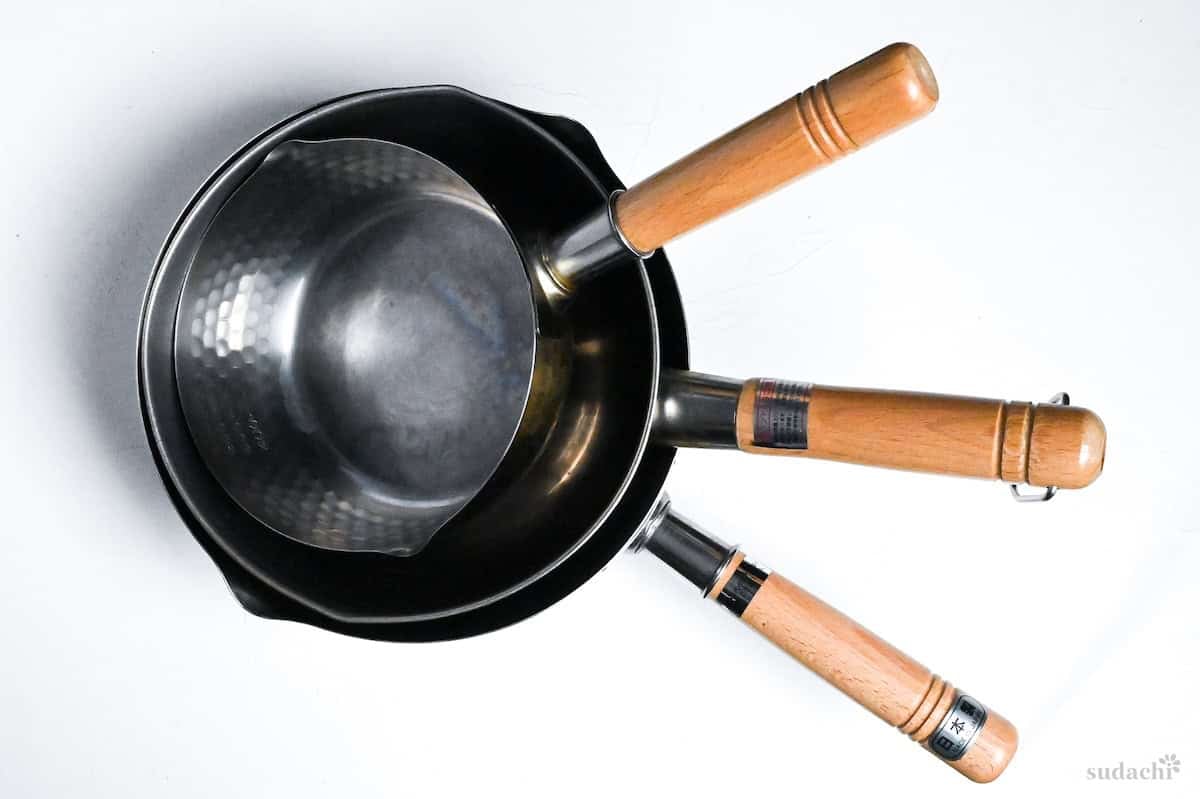
For 10 dumplings to swim without crowding, set out a medium pot, at least 20 cm across.
i. Put the ground pork and the salt in a bowl, and knead. Just the meat and the salt, before anything else goes in. Work it until it turns pale and a little fluffy and gets noticeably sticky, around 60 to 90 seconds.
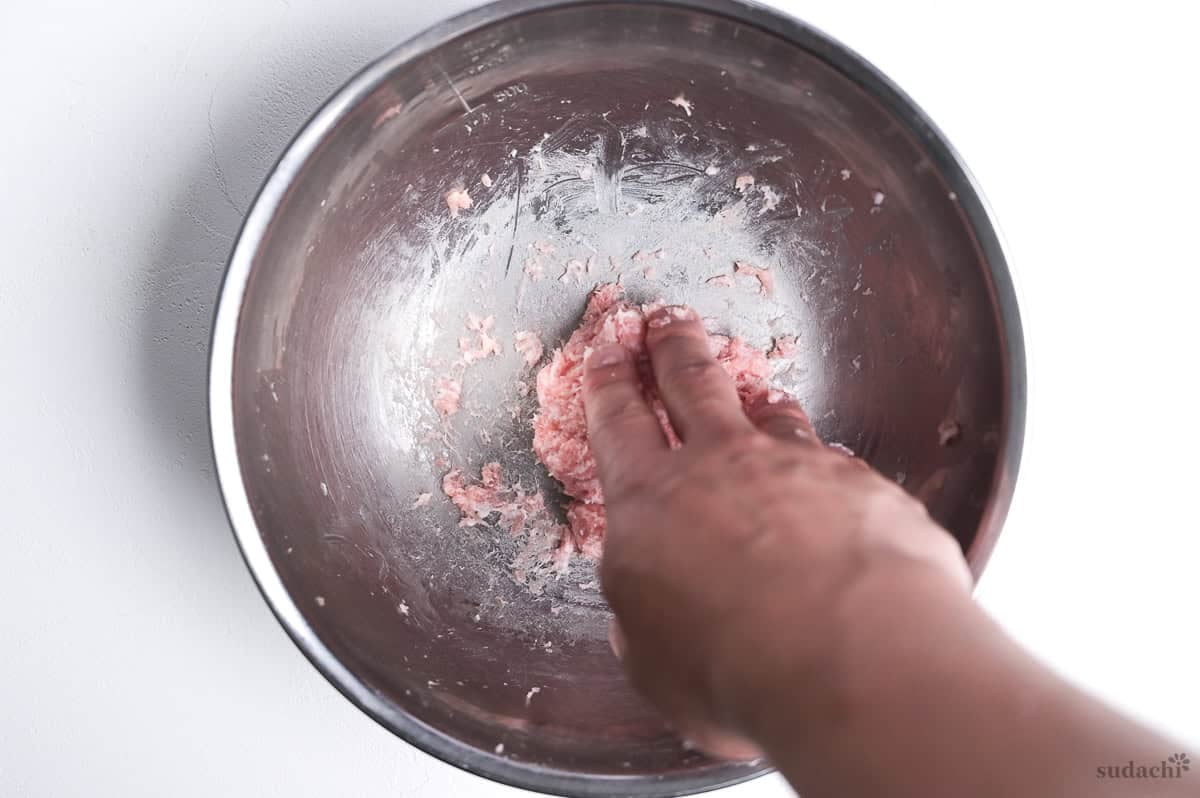
Salt pulls the proteins in the pork into a loose web before the other ingredients show up. That web is what holds the filling together instead of a loose crumble, and it traps fat and juice inside through the simmer. Add the salt late and you never quite get that bind.
ii. Now add the grated ginger & garlic, soy sauce, leek, garlic chives, toasted sesame oil, and sake. Mix lightly, just enough to bring it together.
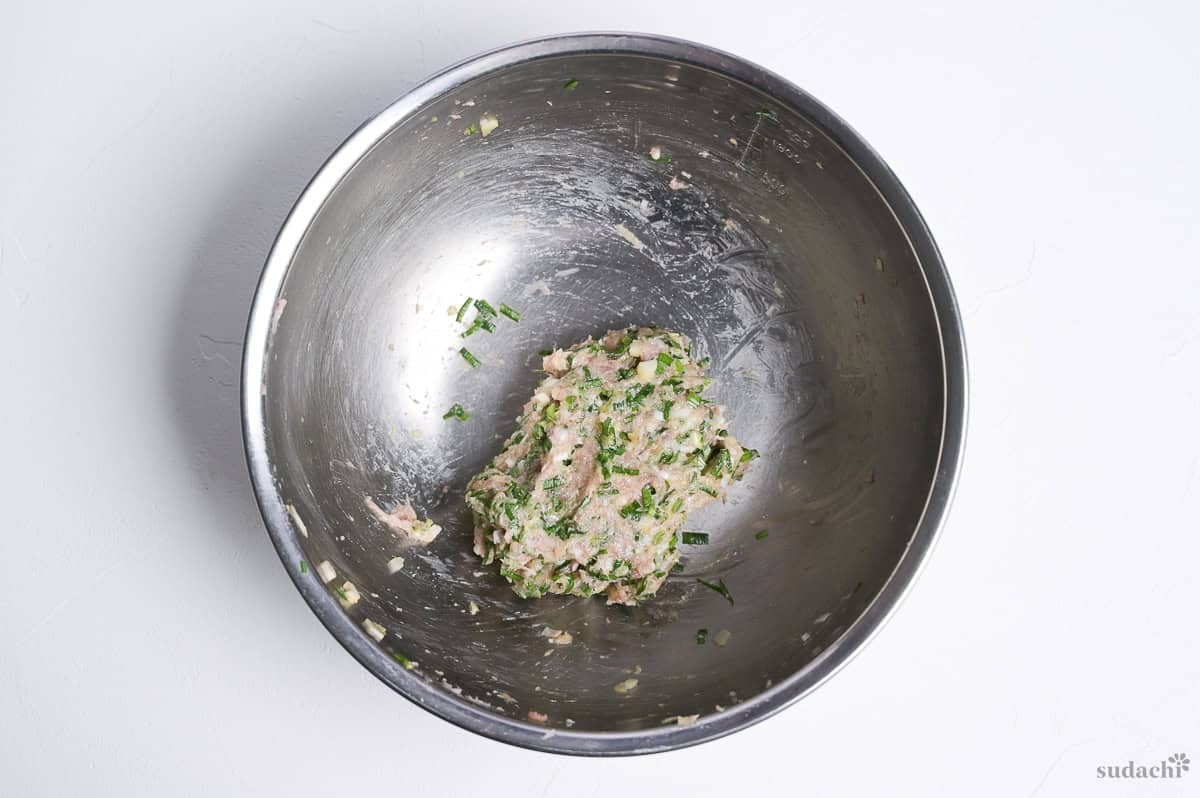
iii. Wrap the filling in your wrappers, about 10 of them. If you have the time, let them rest in the fridge for 15 minutes. (Skip this step if you use frozen gyoza)
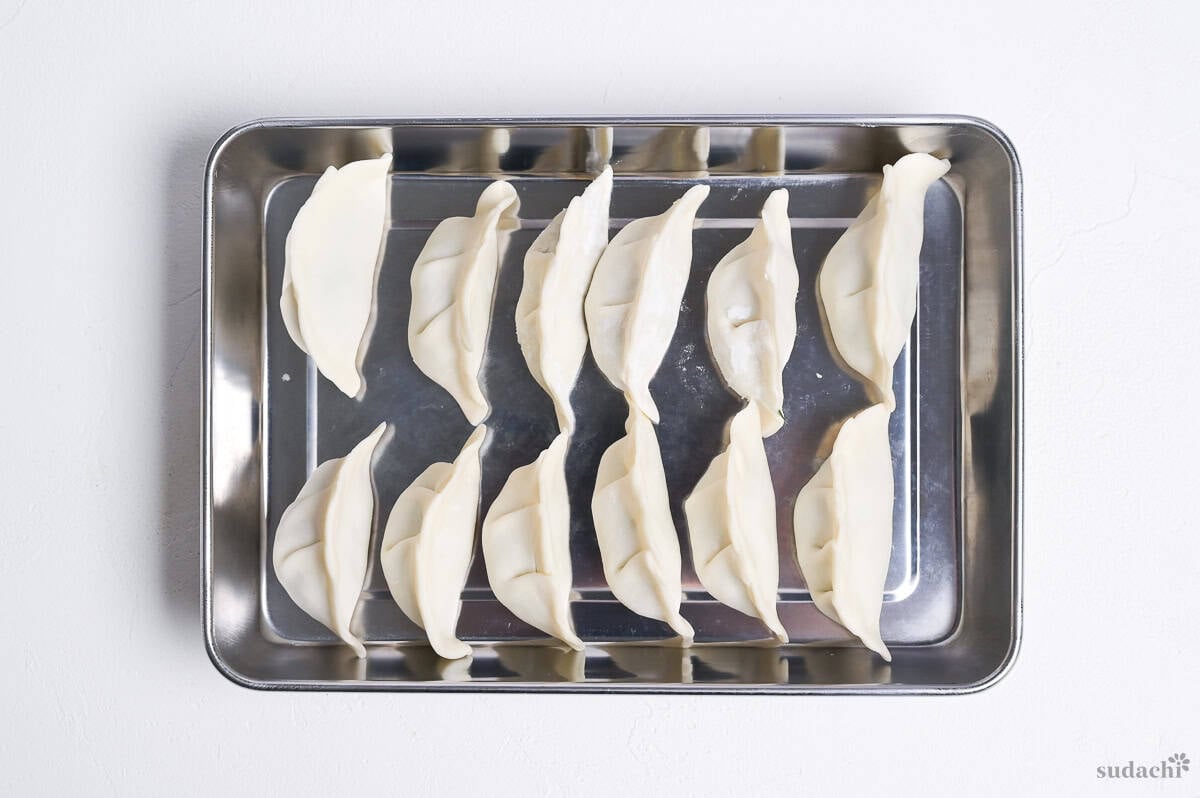
Got filling left over? Roll it into little meatballs and simmer those right in the soup too. Nothing wasted.
i. Put the dashi, sugar, mirin, soy sauce, chicken bouillon powder, napa cabbage, and carrot all into the pot.
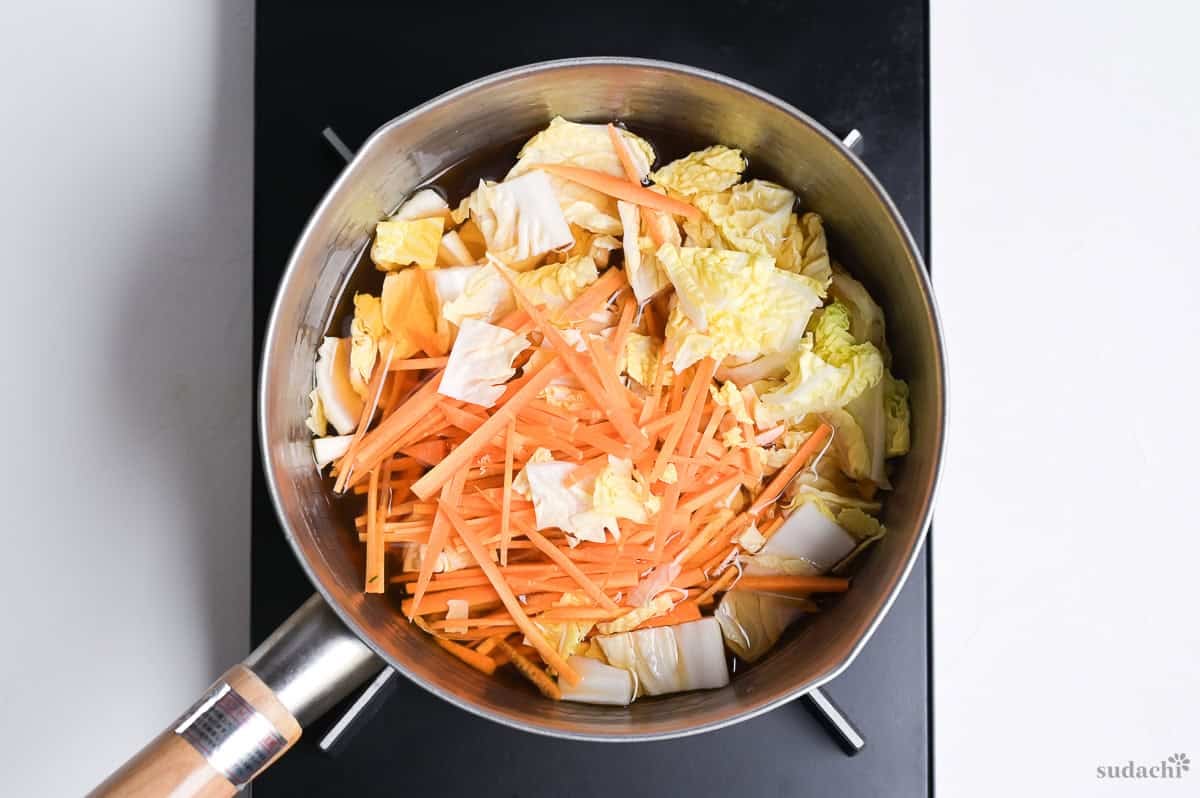
Chicken bouillon powder varies by brand. My brand is 1 tsp per 200 ml, so check the label and if yours is more concentrated (e.g., 1 tsp per 300 ml or 1 cup), use touch less to avoid oversalting, If it’s less concentrated, use a little more and adjust to taste.
ii. Bring it up to just below a boil, until small bubbles line the edge of the pot, around 90°C (194°F).
As the cabbage and carrot soften, they release their own water into the pot, and that moisture is doing quiet work on the base. Do not drain it off or rush it. Let the vegetables give it up on their own time.
i. Once it reaches that point just below boiling, drop the heat to low.
ii. Slide the dumplings in one at a time, with chopsticks or a spoon. Easing them in gradually keeps them from clumping and tearing on the way apart.
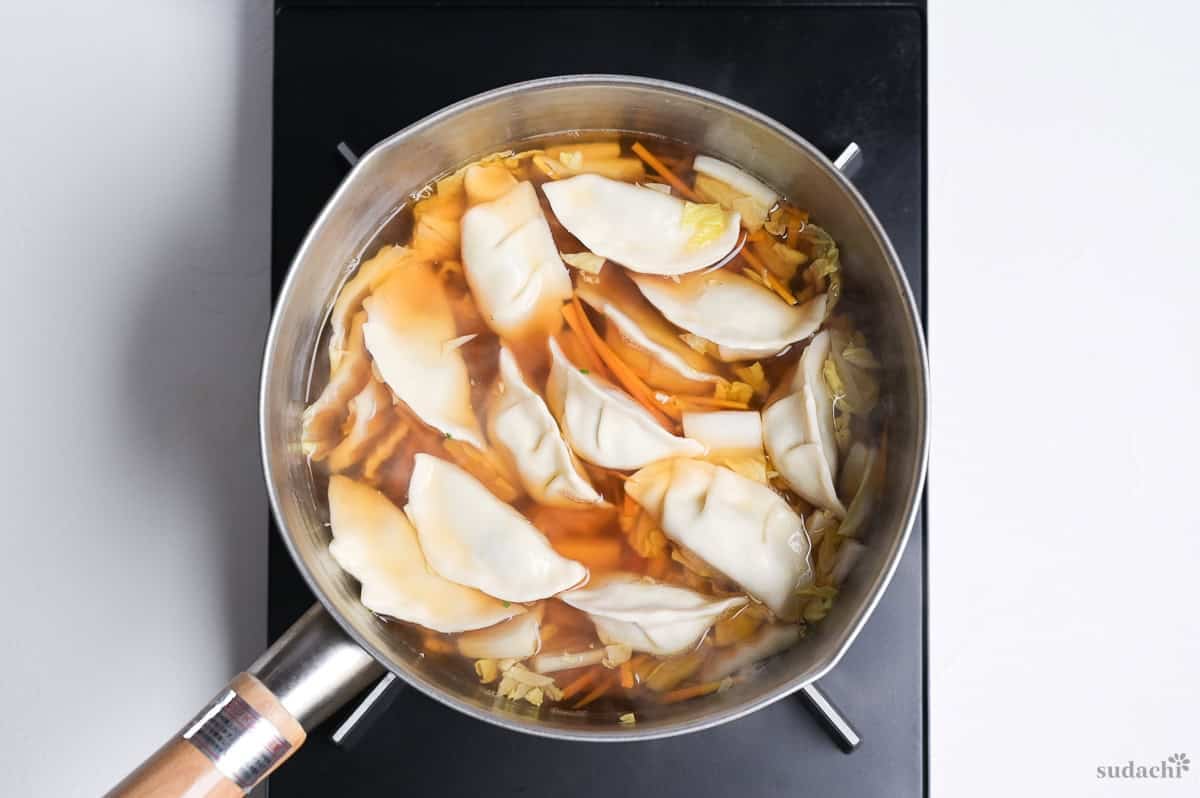
iii. Keep it on low, cover, and let it simmer gently for 5 minutes, until the wrappers float up and turn translucent. The floating is your timer, not the clock.
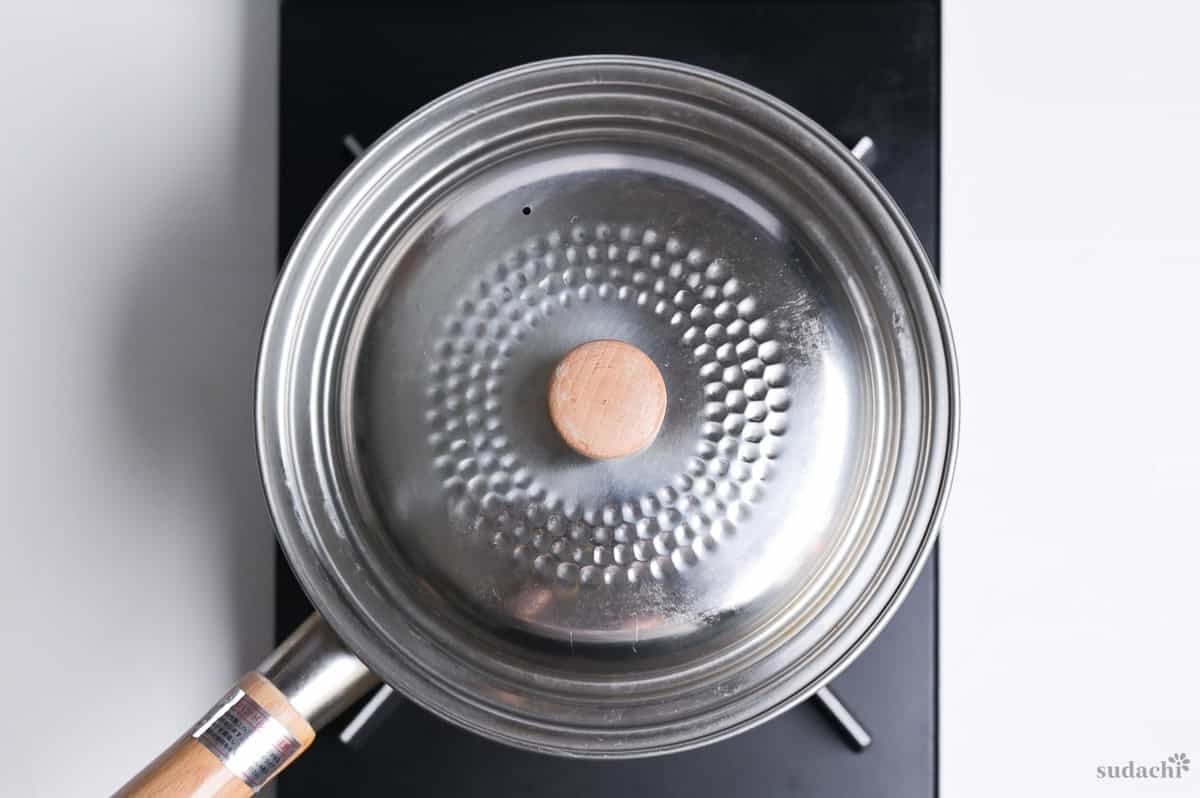
The wrapper is mostly wheat, gluten and starch. Under a hard, rolling boil, the rough current knocks the dumplings around and the surface starch turns sticky before the skin sets, so they grab each other and split when you pull them apart. Held at 85 to 95°C (185 to 203°F), the water moves gently, the skin holds, and the filling inside warms through evenly and stays juicy.
i. Cut the heat and ladle it into bowls.
ii. Top with a drizzle of toasted sesame oil, chopped green onions, white pepper, and chili flakes. The sesame oil goes on last so its aroma is still bright when the bowl reaches the table.
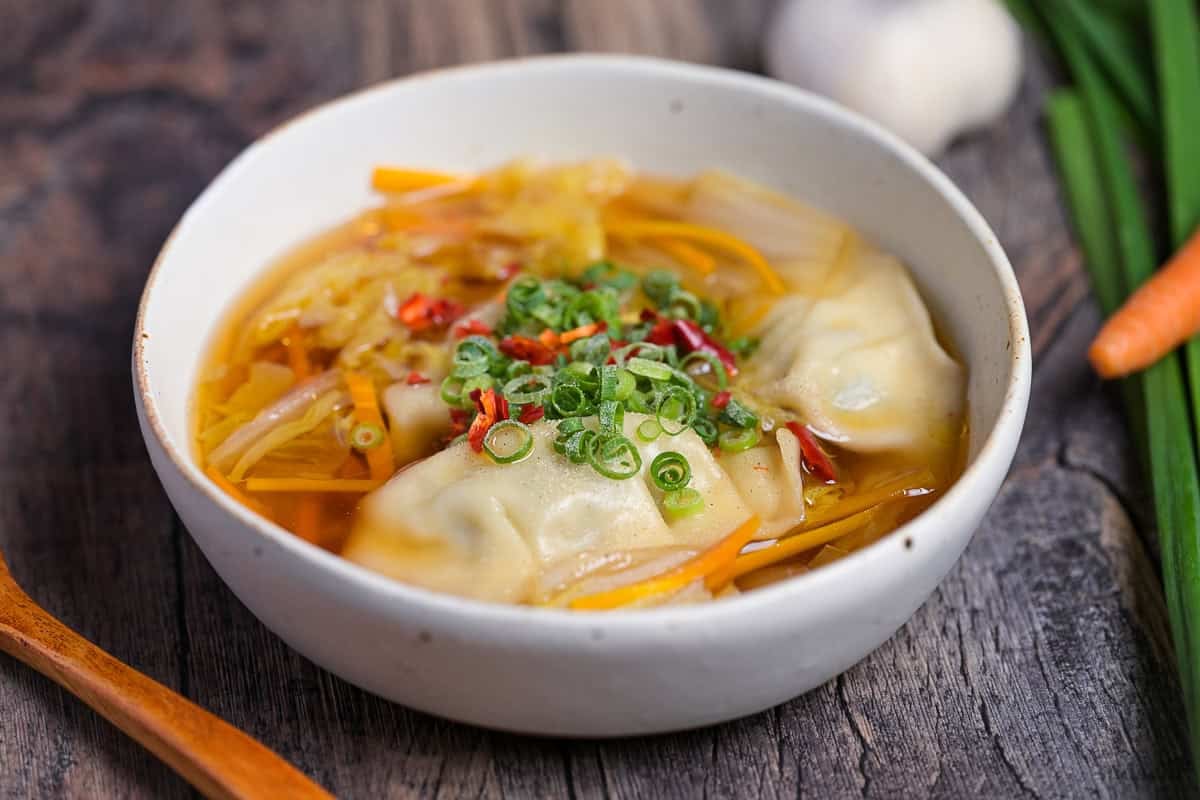
If you follow the default recipe, it will yield 4-5 servings.

Essential Tips & Tricks
- Salt the pork by itself before anything else goes in. Put the ground pork and the salt in the bowl alone and work it until it turns pale and tacky. The salt loosens the proteins into a web that grips the fat and juice, so the filling cooks as a single piece instead of a dry crumble.
- Seal every wrapper like you mean it. A lazy seal opens in the pot, and once the seam splits, the juice you just worked so hard to lock in leaks straight into the broth. Press the edge firmly, pinch out any trapped air, and run a wet fingertip along the rim if the dough feels dry. A dumpling that holds its seam is a dumpling that stays juicy.
- Keep the pot under a boil the whole time the dumplings swim. Drop the heat to low before the gyoza go in and hold it at a lazy 85 to 95°C (185 to 203°F) where only a few bubbles break the surface. A hard boil knocks the dumplings around and tears the seams open before the skin has set. Gentle heat lets them float up on their own time, and the float is your signal they are done.
Get these 3 right and the rest of the bowl forgives almost anything else.
Storage & Meal Prep
Fridge: This bowl is built to be finished fresh, so I do not plan it as a fridge dish. If you have a little cooked soup left over, keep the broth and the dumplings in separate containers for up to 1 day. Left sitting together, the wrappers keep drinking the broth and turn bloated and soft.
Freezer: Freeze the raw dumplings, not the soup. Lay them out on a tray with a little space between each dumpling, dust them with a touch of starch, and freeze until solid, then bag them. They keep about 1 month and go straight into the pot frozen, never thawed.
Meal prep: The most worthwhile make-ahead part is the dumplings. Wrap a batch, freeze them raw, and you are most of the way to dinner on a tired night. Dashi can be prepared and refrigerated for up to 5 days ahead, but the rest of the broth is quick enough that there is no reason to make it in advance.
Reheating: Bring the broth back up to a gentle simmer first, then add the dumplings. Frozen raw ones need about 4 to 6 minutes until they float and turn translucent.
What to Serve With This Recipe
Gyoza Soup Troubleshooting
Once a skin tears in the broth, there is no patching it mid-cook, so this is about not letting it happen again. The usual culprits are a hard boil that batters the dumplings, thin pan-fry wrappers that are not built for liquid, or a seam that was not pressed shut. Hold the pot at a gentle simmer below boiling, reach for water-gyoza wrappers, and seal each dumpling firmly with the air pinched out. Get those lined up and the skins hold.
Stuck dumplings cannot be pulled apart cleanly without tearing, so the fix lives at the moment they go in. They clump when you tip a whole batch into the pot at once and the surface starch glues them together before the skins set. Slide them in 1 at a time with chopsticks or a spoon, giving each dumpling a second of space, and keep the heat low so the water moves gently.
Not at all, and honestly this is the version I am after. The cloudiness is starch from the wrapper surface loosening into the broth, and a little body here is welcome. It helps the soup cling to your tongue and pushes the flavor forward. If you specifically want a clear broth instead, boil the dumplings in a separate pot of plain water and move them over in the last minute or so.
More Japanese Gyoza Recipes
Hungry for more? Explore my homemade gyoza recipe collection to find your next favorite.
Did You Try This Recipe?
I would love to hear your thoughts!
💬 Leave a review and ⭐️ rating in the comments below. 📷 I also love to see your photos – submit them here!
Easy Gyoza Soup (Japanese Dumpling Soup)

Ingredients
Soup
- 500 ml dashi stock
- ½ tsp sugar
- 1 tbsp mirin
- 1 tbsp Japanese soy sauce (koikuchi shoyu)
- ¼ tsp salt
- ½ tsp Chinese-style chicken bouillon powder
- 100 g Napa cabbage regular cabbage works, firmer and sweeter
- 30 g carrot about ¼ of a carrot
Gyoza
- 10 gyoza wrappers soup gyoza type if possible, about 9 cm, thicker with more chew so they hold through the simmer
- 100 g ground pork preferably 70/30 fat
- ¼ tsp salt
- 1 tbsp Japanese leek (naganegi) white part, or regular leek
- ½ tbsp grated ginger root
- 1 clove grated garlic
- 25 g garlic chives regular chives or scallion greens sub in
- 1 tsp Japanese soy sauce (koikuchi shoyu)
- 1 tbsp toasted sesame oil
- 1 tsp sake
Finishing (optional to taste)
- chopped green onions scattered over the bowl at the end
- toasted sesame oil drizzled off the heat at the very end
- chili flakes
- ground white pepper
The ingredient brands and tools I trust are in my Japanese pantry guide and my cooking tools guide.
Can’t find certain Japanese ingredients? See my substitution guide here.
Instructions
- Roughly cut 100 g Napa cabbage and julienne 30 g carrot, set it aside for the soup later. Finely chop 1 tbsp Japanese leek (naganegi) and 25 g garlic chives, prepare ½ tbsp grated ginger root and 1 clove grated garlic, and place them together on a plate for the gyoza filling.

- Place 100 g ground pork in a bowl and sprinkle in ¼ tsp salt. Knead for about 1 minute until sticky.
- Add the leek, garlic chives, ginger and garlic to the bowl along with 1 tsp Japanese soy sauce (koikuchi shoyu), 1 tbsp toasted sesame oil and 1 tsp sake. Lightly mix until evenly distributed.
- Wrap about 1 tbsp of filling in each gyoza wrapper, making sure to seal firmly. Line them up on a tray and refrigerate for about 15 minutes.
- Pour 500 ml dashi stock into a pot and add ½ tsp sugar, 1 tbsp mirin, 1 tbsp Japanese soy sauce (koikuchi shoyu), ¼ tsp salt, and ½ tsp Chinese-style chicken bouillon powder. Give it a mix, then add the prepared napa cabbage and carrot. Heat over medium until it reaches a gentle simmer, but not boiling.
- Carefully slide the gyoza in one at a time. Avoid letting them touch for the first few seconds to prevent clumping together. Bring the soup back up to a simmer, then reduce the heat to low.
- Cover with a lid and gently simmer for 5 minutes, or until the gyoza float and turn slightly translucent.
- Divide the soup and gyoza into bowls and sprinkle with chopped green onions, chili flakes and ground white pepper. Finish with a drizzle of toasted sesame oil, and enjoy!

The broth is amazing, I used frozen gyoza but I will try to make them myself next time
Thank you so much, Sally! I’m glad you enjoyed it! I hope you will enjoy making the homemade gyoza version next time too! 🙂
Yuto
I want to make this for 2 people. 4 cups of liquid? Recipe is not specific.
I’ve cooked several of your recipes now and they are all easy and very tasty.
Txs.
Hi Richard,
Thank you so much, I’m really happy you’ve been enjoying different recipes! And sorry, I forgot to add the US measurement conversions to this recipe. I’ve just added them. The full recipe serves 4 and uses 2 US cups of dashi. For 2 people that would be 1 cup, but unless your pot is quite small, the gyoza might not float in that little broth, so I’d personally recommend making the full 4 servings if possible 🙂
Yuto