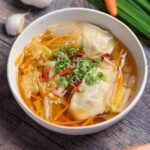
Easy Gyoza Soup (Japanese Dumpling Soup)
Ingredients
Soup
- 500 ml dashi stock
- ½ tsp sugar
- 1 tbsp mirin
- 1 tbsp Japanese soy sauce (koikuchi shoyu)
- ¼ tsp salt
- ½ tsp Chinese-style chicken bouillon powder
- 100 g Napa cabbage regular cabbage works, firmer and sweeter
- 30 g carrot about ¼ of a carrot
Gyoza
- 10 gyoza wrappers soup gyoza type if possible, about 9 cm, thicker with more chew so they hold through the simmer
- 100 g ground pork preferably 70/30 fat
- ¼ tsp salt
- 1 tbsp Japanese leek (naganegi) white part, or regular leek
- ½ tbsp grated ginger root
- 1 clove grated garlic
- 25 g garlic chives regular chives or scallion greens sub in
- 1 tsp Japanese soy sauce (koikuchi shoyu)
- 1 tbsp toasted sesame oil
- 1 tsp sake
Finishing (optional to taste)
- chopped green onions scattered over the bowl at the end
- toasted sesame oil drizzled off the heat at the very end
- chili flakes
- ground white pepper
Instructions
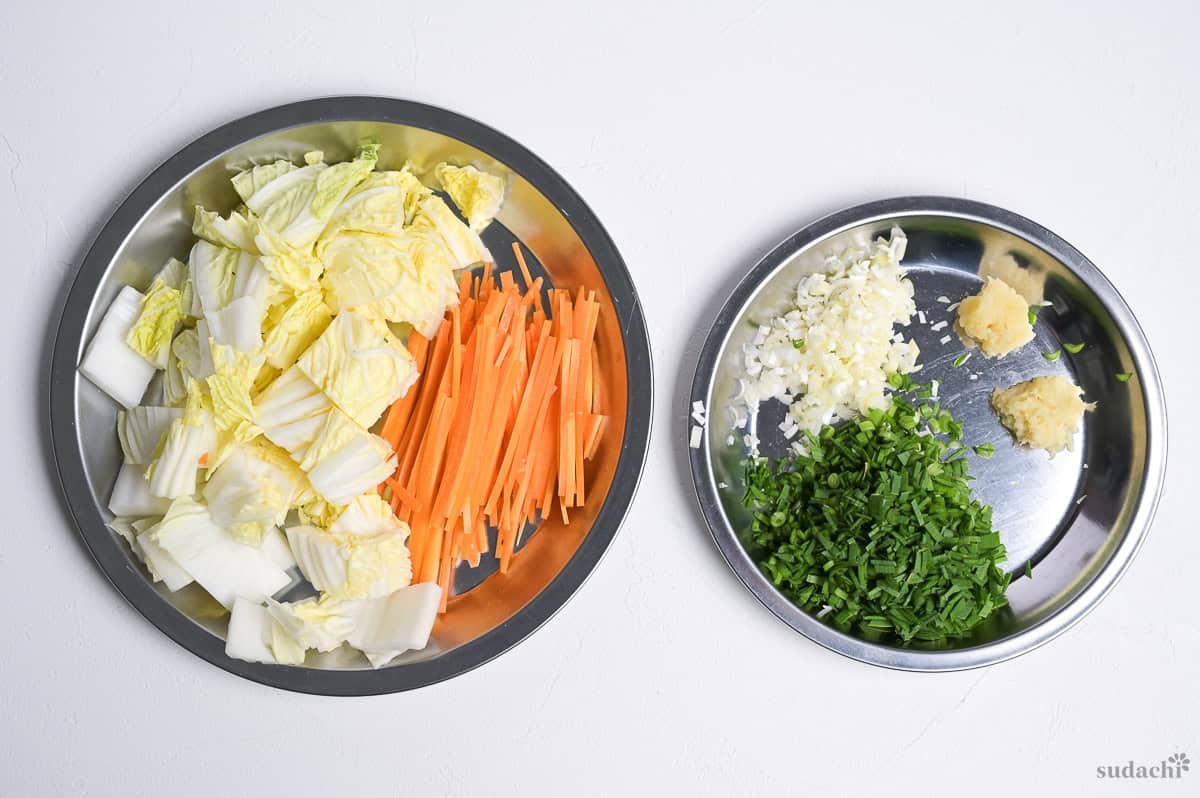
- Roughly cut 100 g Napa cabbage and julienne 30 g carrot, set it aside for the soup later. Finely chop 1 tbsp Japanese leek (naganegi) and 25 g garlic chives, prepare ½ tbsp grated ginger root and 1 clove grated garlic, and place them together on a plate for the gyoza filling.
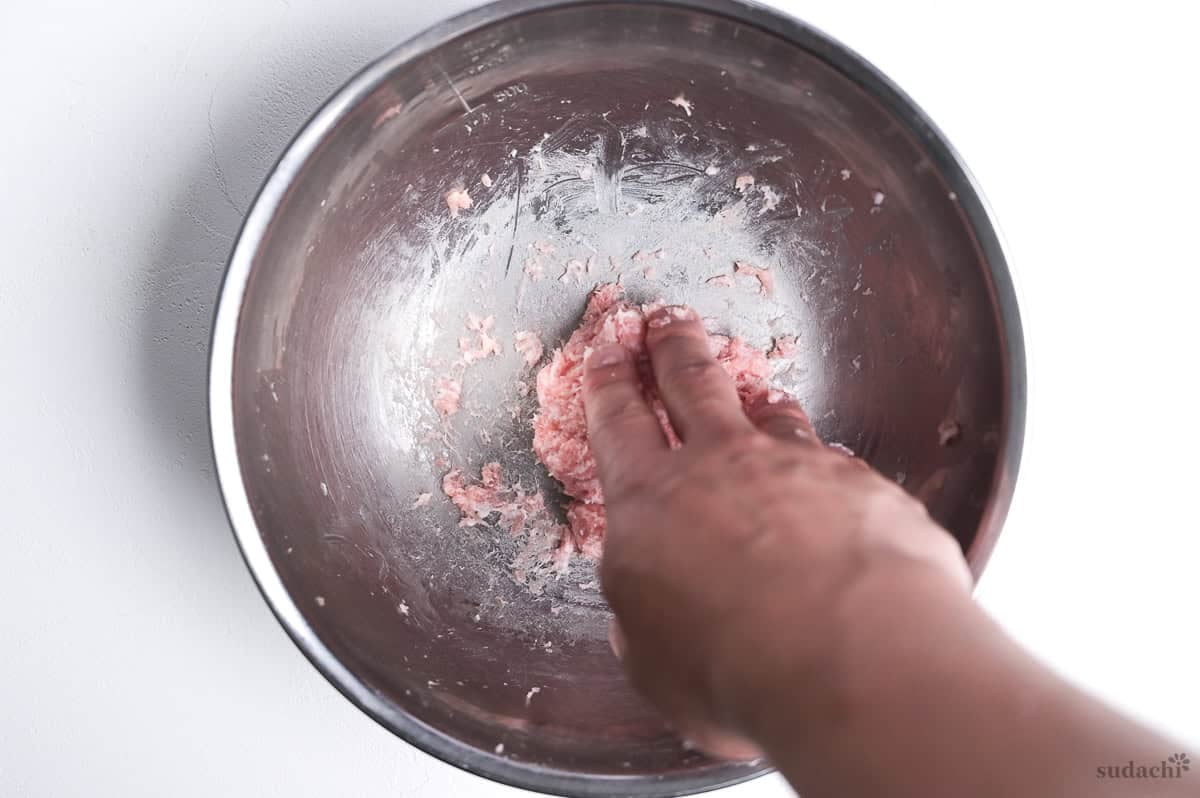
- Place 100 g ground pork in a bowl and sprinkle in ¼ tsp salt. Knead for about 1 minute until sticky.
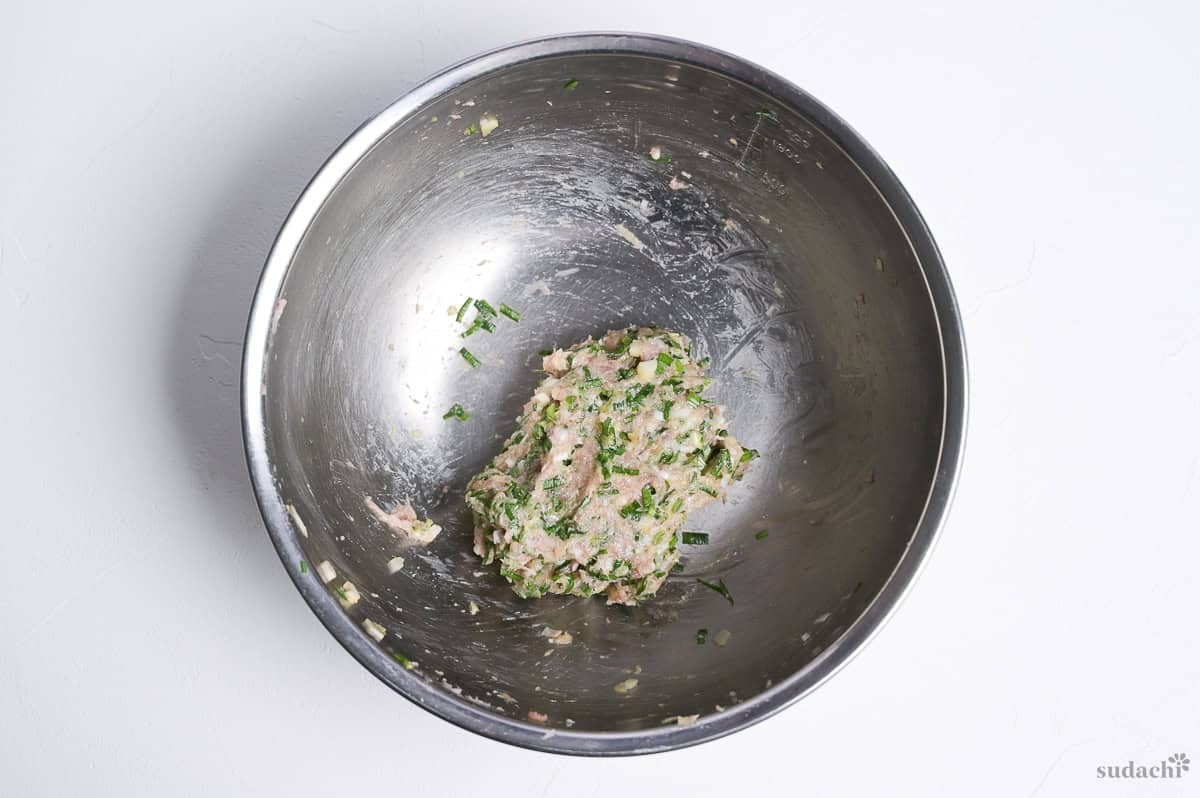
- Add the leek, garlic chives, ginger and garlic to the bowl along with 1 tsp Japanese soy sauce (koikuchi shoyu), 1 tbsp toasted sesame oil and 1 tsp sake. Lightly mix until evenly distributed.
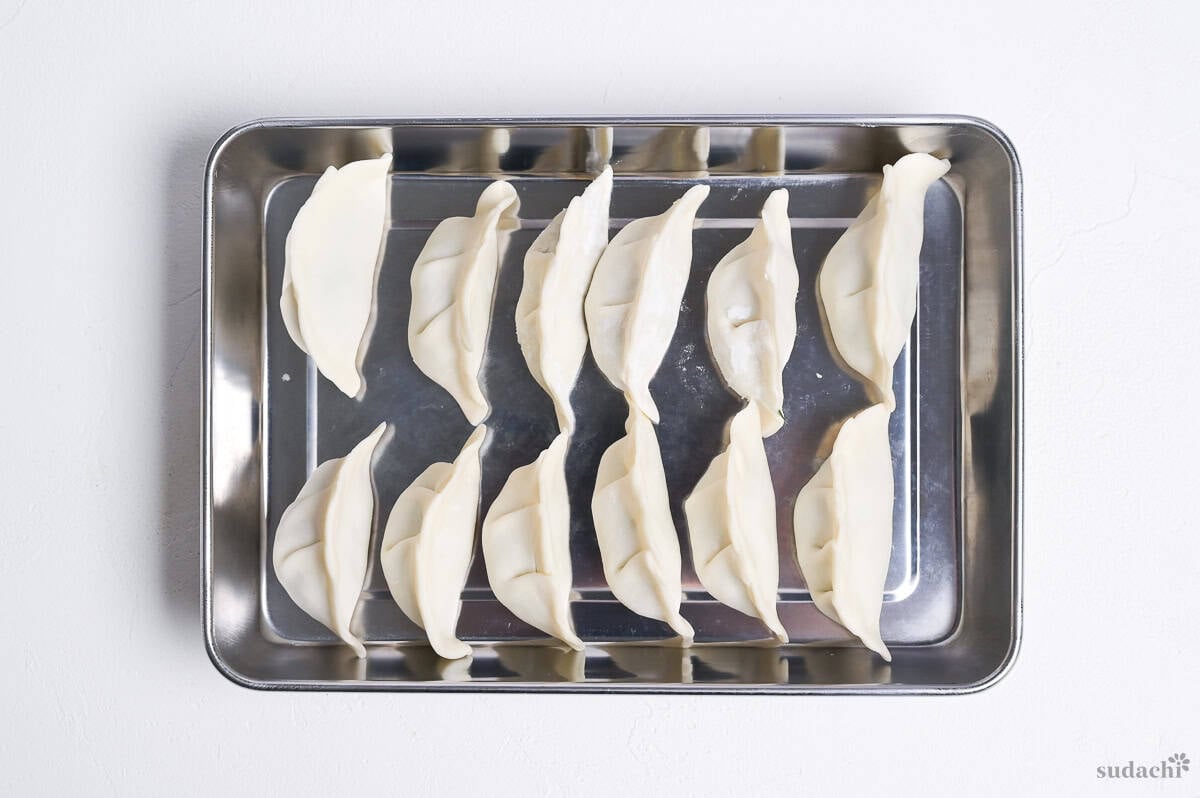
- Wrap about 1 tbsp of filling in each gyoza wrapper, making sure to seal firmly. Line them up on a tray and refrigerate for about 15 minutes.
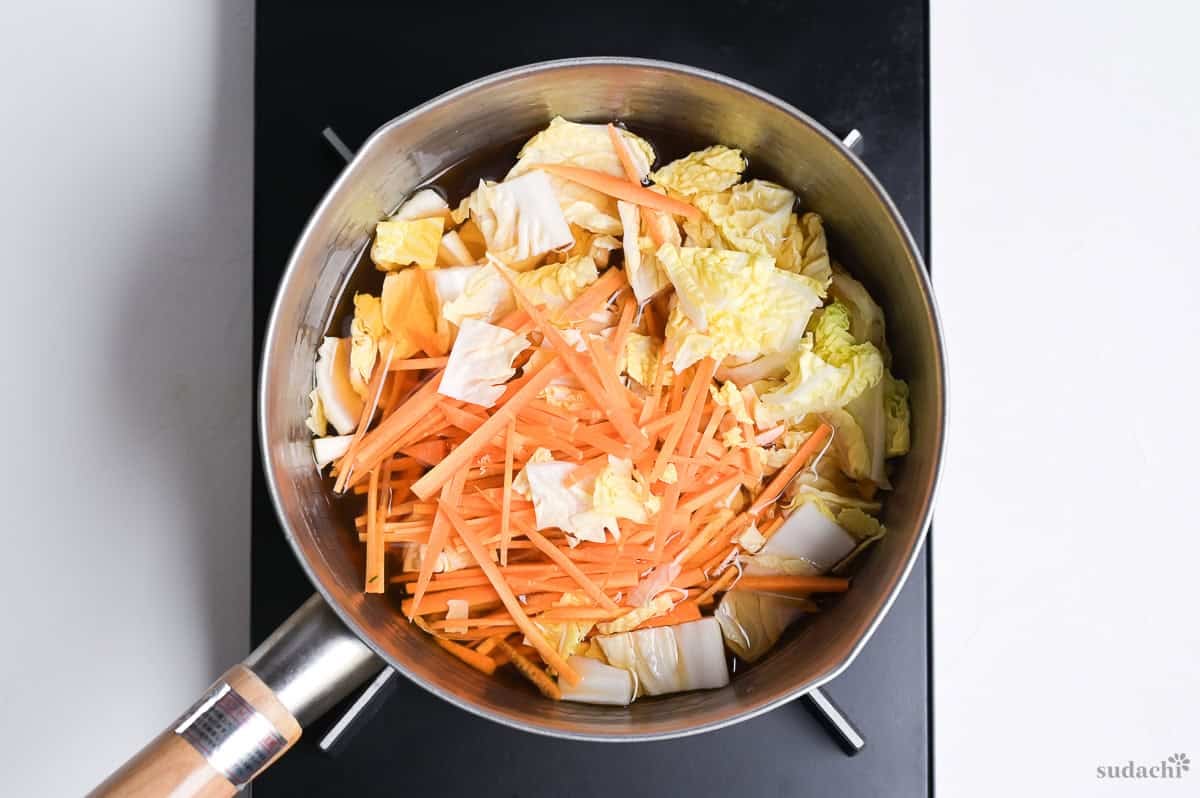
- Pour 500 ml dashi stock into a pot and add ½ tsp sugar, 1 tbsp mirin, 1 tbsp Japanese soy sauce (koikuchi shoyu), ¼ tsp salt, and ½ tsp Chinese-style chicken bouillon powder. Give it a mix, then add the prepared napa cabbage and carrot. Heat over medium until it reaches a gentle simmer, but not boiling.
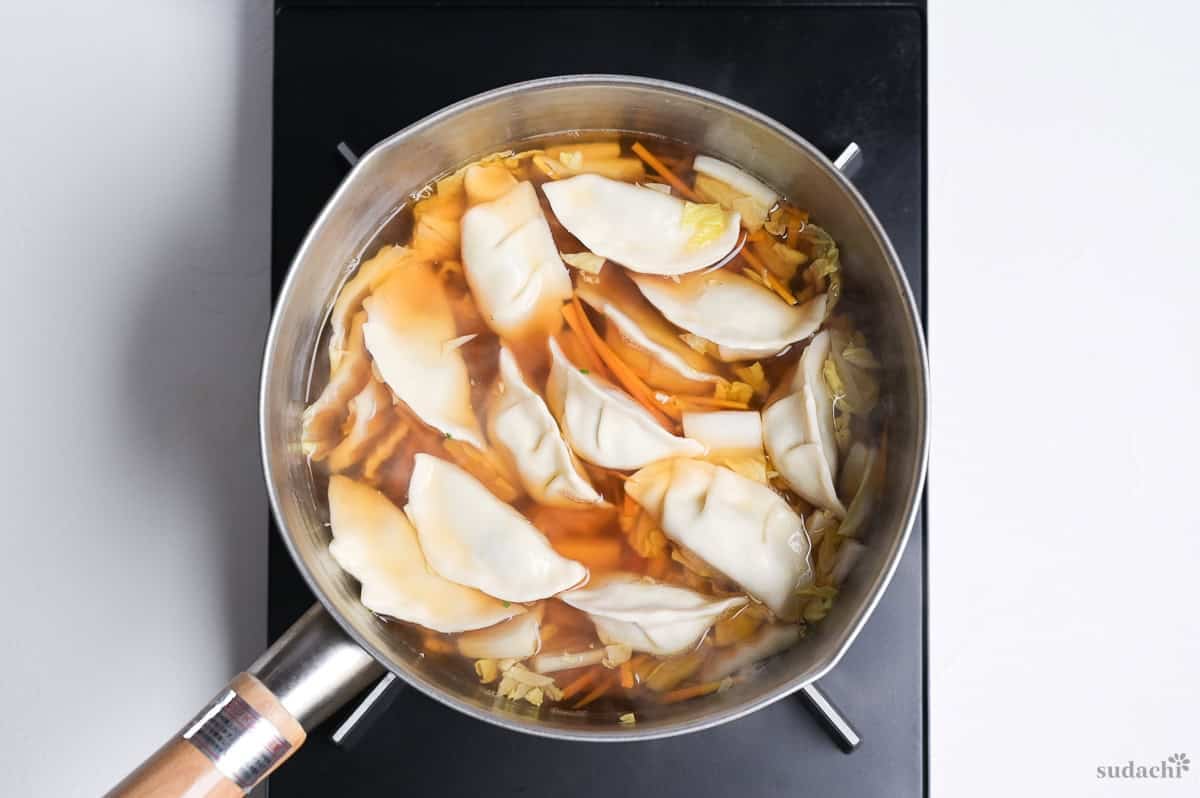
- Carefully slide the gyoza in one at a time. Avoid letting them touch for the first few seconds to prevent clumping together. Bring the soup back up to a simmer, then reduce the heat to low.
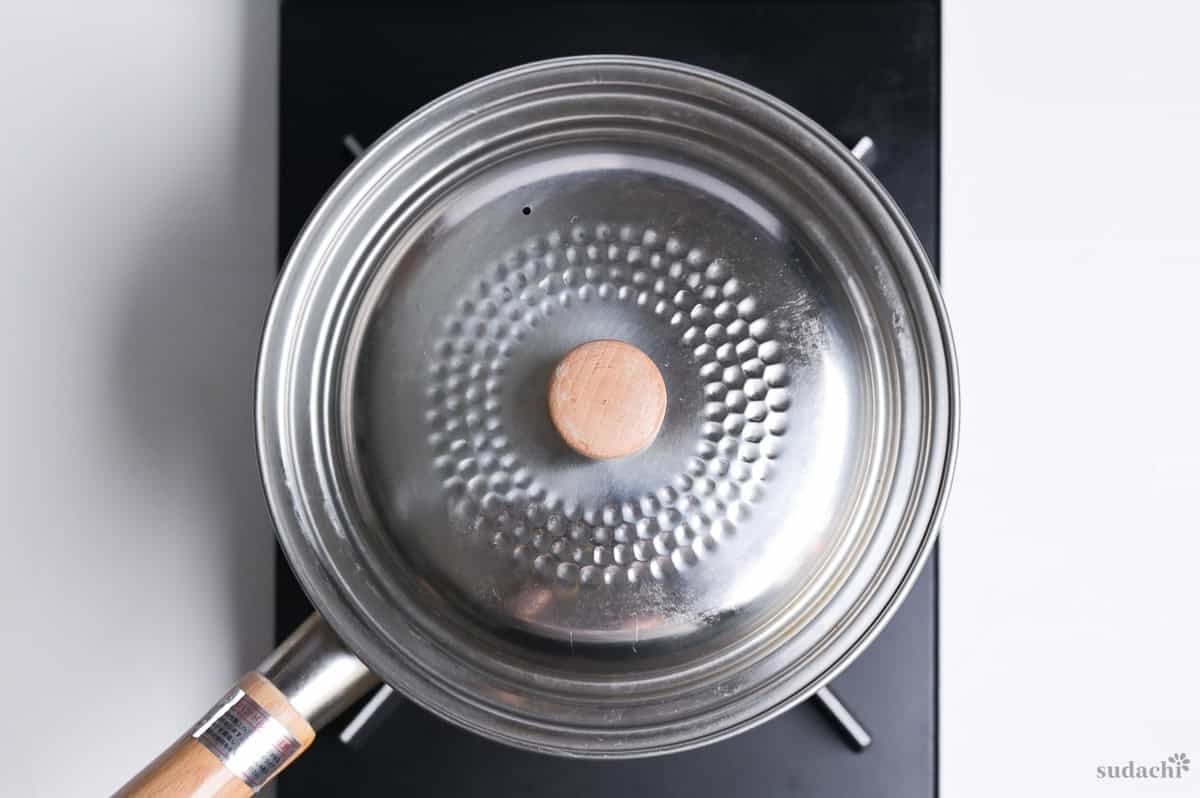
- Cover with a lid and gently simmer for 5 minutes, or until the gyoza float and turn slightly translucent.
- Divide the soup and gyoza into bowls and sprinkle with chopped green onions, chili flakes and ground white pepper. Finish with a drizzle of toasted sesame oil, and enjoy!
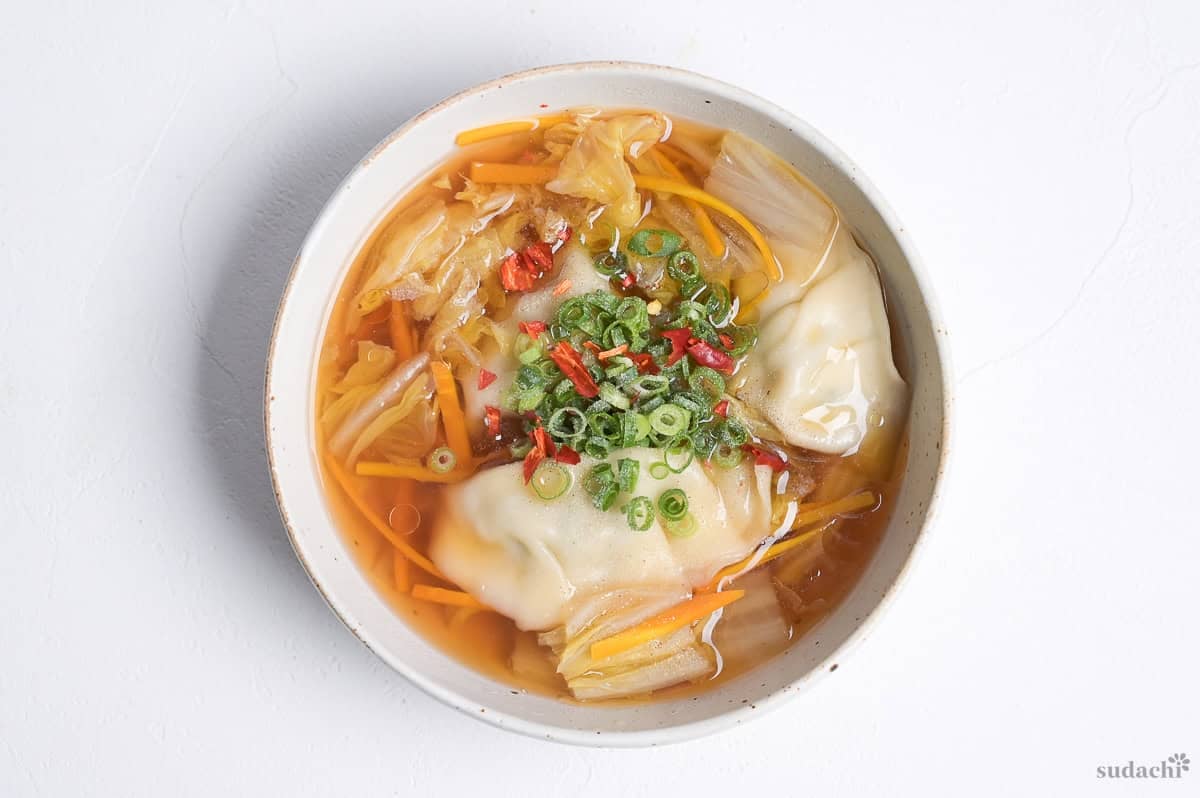
Got leftover filling? Roll them into small meatballs and cook them in the soup so nothing gets wasted!
Notes
*Chicken bouillon powder varies by brand. My brand is 1 tsp per 200 ml, so check the label and if yours is more concentrated (e.g., 1 tsp per 300 ml or 1 cup), use touch less to avoid oversalting, and if it's less concentrated, use a little more (and adjust to taste).
Reach for soup-gyoza wrappers, not pan-fry if possible: Thin wrappers built for pan-frying tear and go limp in the broth. The thick, chewy water-gyoza kind hold through the simmer and give you a skin to bite.
Hold the pot under a boil the whole time: Keep it at a lazy 85 to 95°C (185 to 203°F) where only a few bubbles break the surface. A rolling boil is likely to break the gyoza skins.
Slide the dumplings in one at a time: Tip a whole batch in at once and the surface starch glues them into a lump before the skins set.
Add frozen gyoza straight from the freezer, never thawed: Thawing first makes them weep and tear on the way into the pot. Drop them in frozen and give them a couple of extra minutes.
Full Recipe QR Code↑↑