



Featured Comment
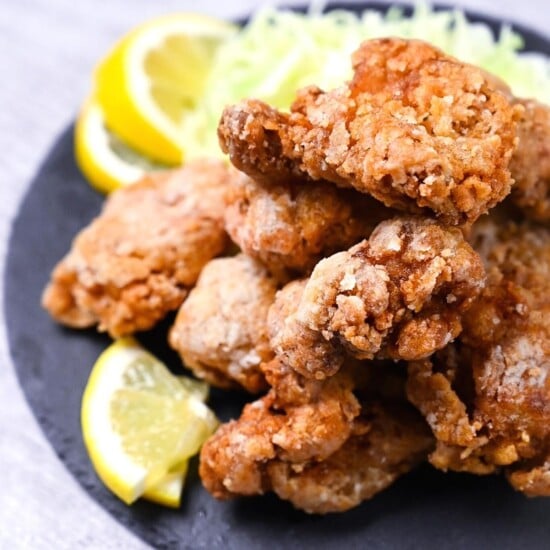
Great recipe. Made this again tonight. Always a hit! Using chicken thighs is the key. I only had rice flour tonight but was just a crispy. There was nothing left after 24 hours. 😉
– Garry (from Facebook)
Sick of soggy “karaage” that tastes nothing like the real thing?
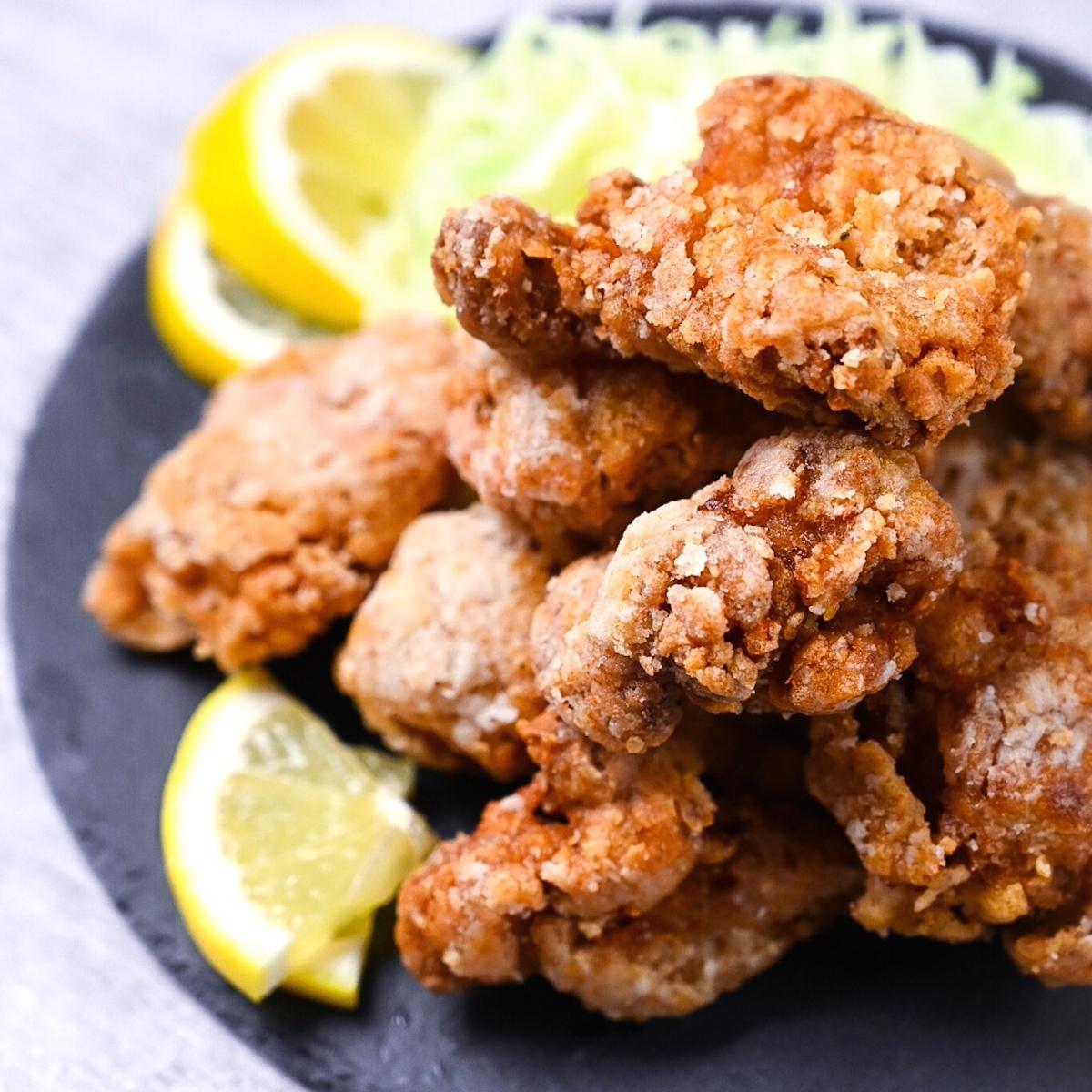
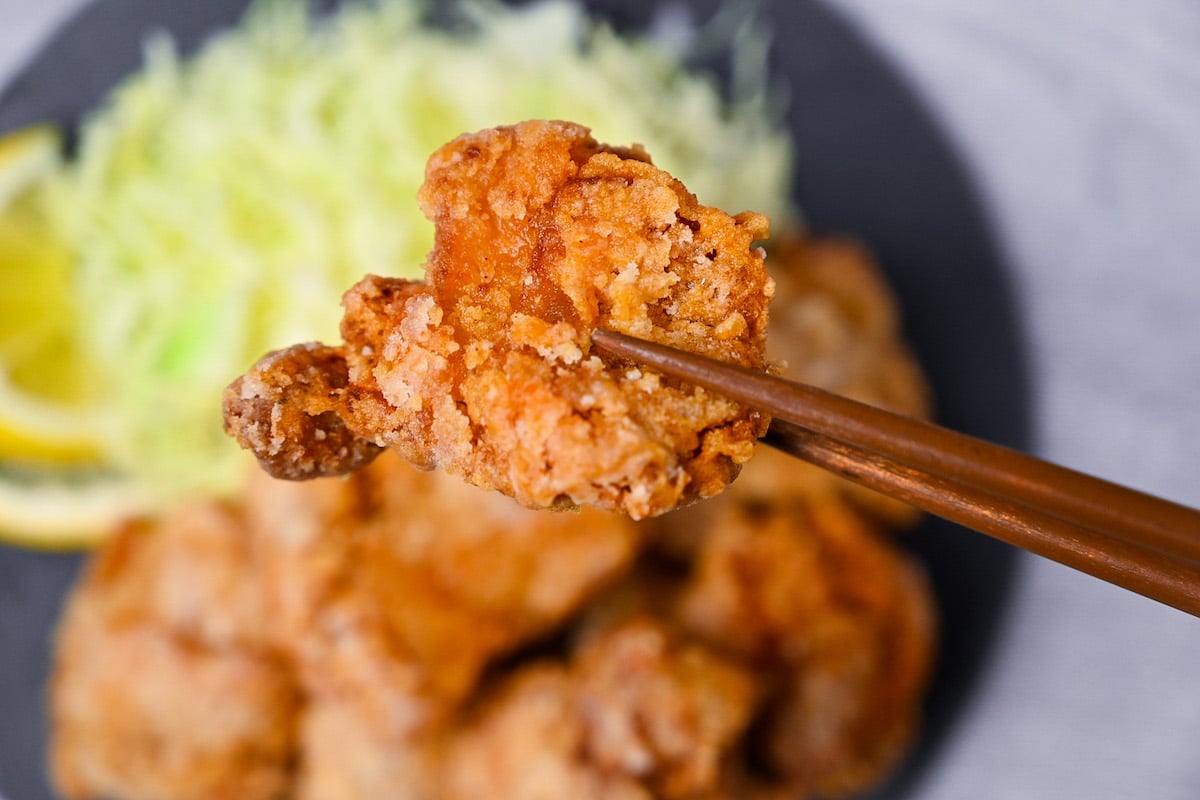
This crispy tatsuta-age keeps the skin shatteringly light, the meat juicy, and gives you no-sauce-needed, with minimal amount of ingredients.
Tatsuta Age
Recipe Snapshot
- What is it? Shatter-Crisp Skin, Juicy Thigh Tatsuta-Age
- Flavor profile: Savory, Garlicky, Ginger-forward
- Why you’ll love this recipe: This recipe delivers that shatter-crisp, juicy fried chicken, but with clear steps that make frying feel surprisingly manageable at home.
- Must-haves: Boneless chicken thighs (skin-on), Fresh ginger, Potato starch
- Skill Level: Medium
Summarize & Save this content on:
What is Tatsuta Age?
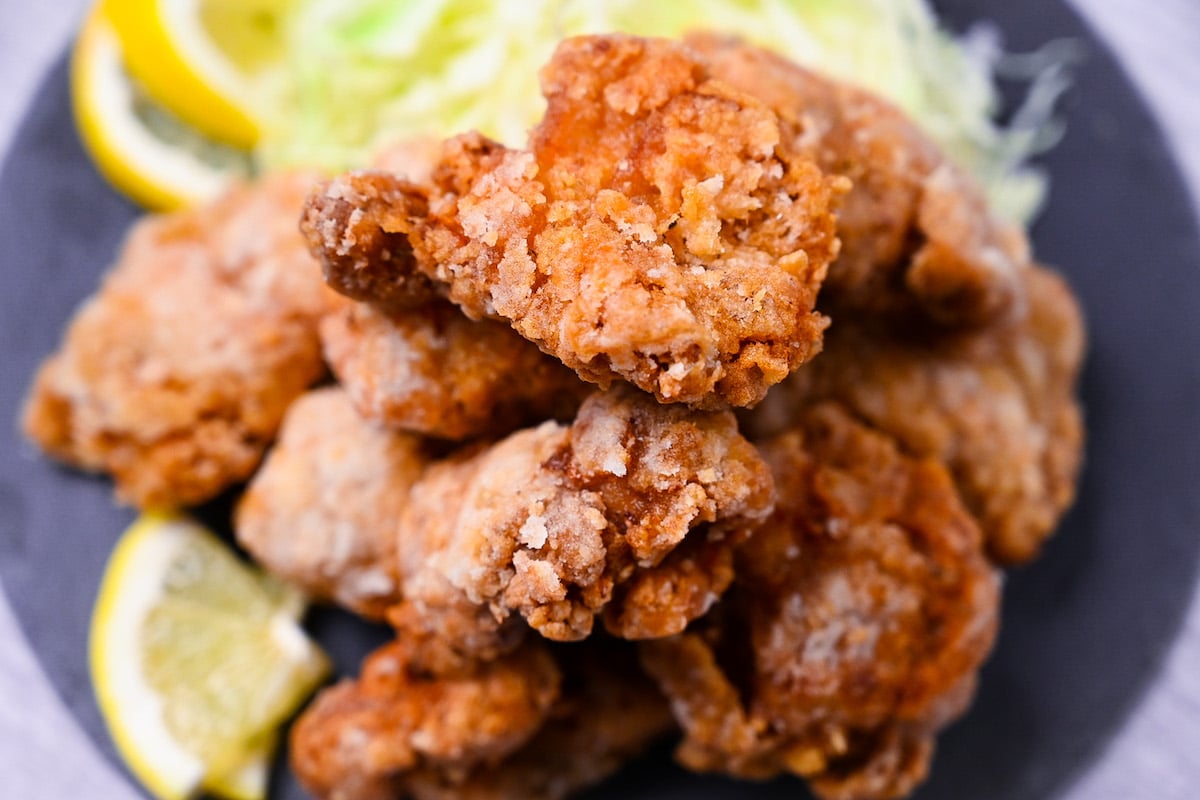
Tatsuta-age (竜田揚げ) is a style of Japanese fried chicken known for its shatteringly crisp exterior and juicy interior. The chicken is marinated in soy sauce, sake, and ginger, then coated in potato starch, which gives it that signature crackle.
Compared to traditional karaage, which often uses a blend of flour and starch, tatsuta-age leans fully into potato starch for a lighter, glassier crunch. It’s a great upgrade if you love clean and defined textures.
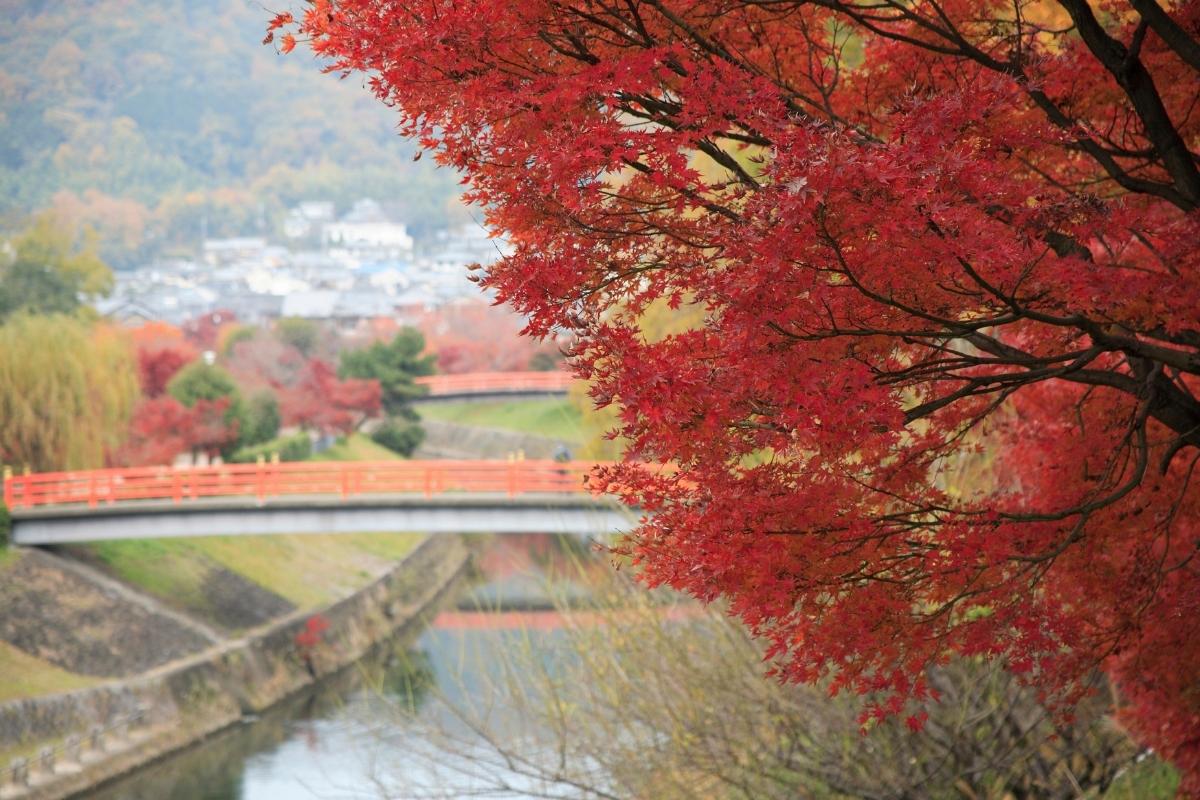
The name comes from the Tatsuta River in autumn! The fried reddish-brown chicken with pops of white starch was said to resemble floating fall leaves.
Tatsuta Age Ingredients
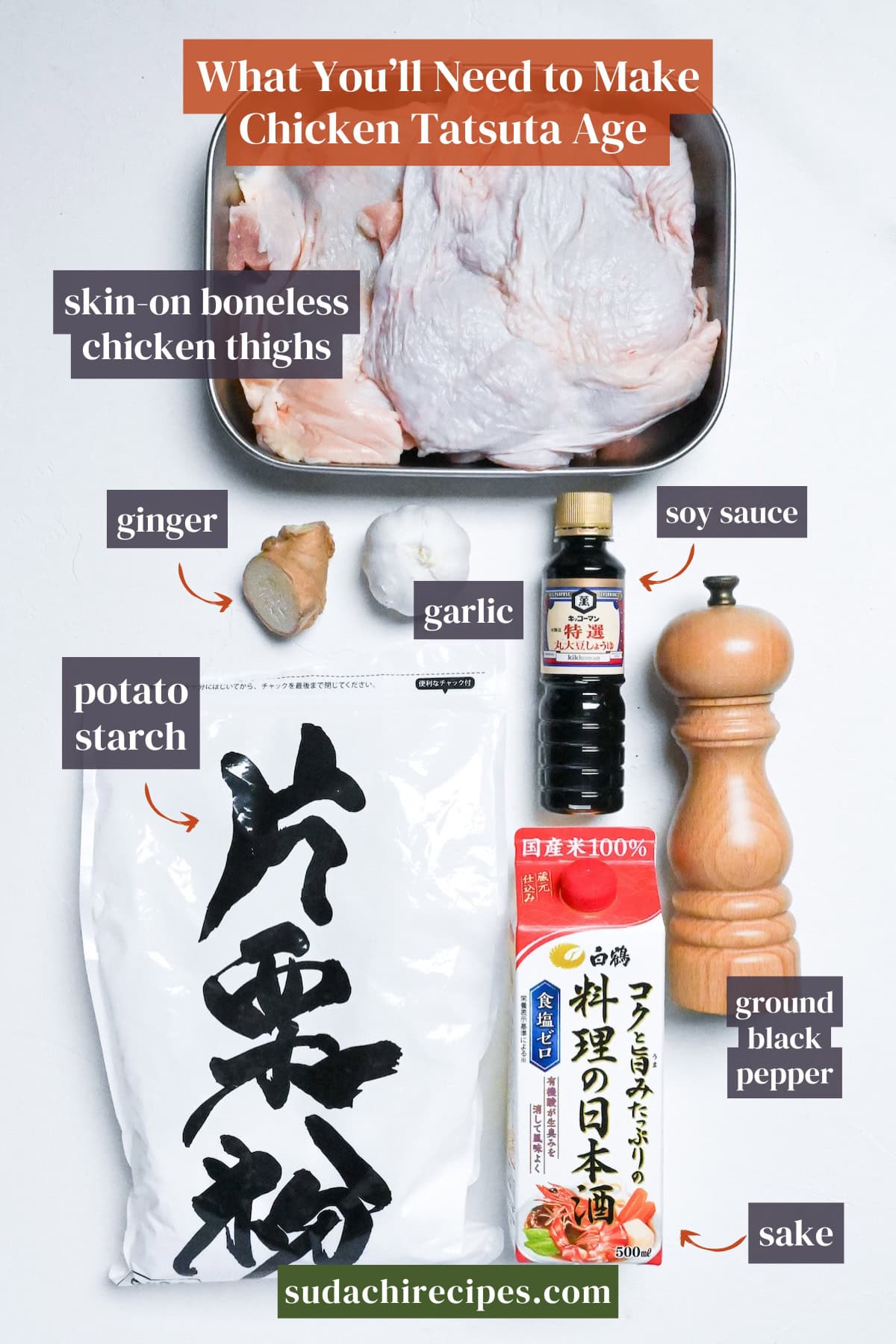
- Boneless chicken thigh (skin-on if possible): Juicy dark meat that stays tender and gives you that crackly, savory bite. Wings can work as a sub, but I don’t recommend using breast meat for this recipe as the coating can slip easily.
- Sake (Japanese rice wine): Adds a clean, gently fruity aroma and helps the meat turn silky as it marinates. Check the sake shelf at liquor stores, larger supermarkets, or Asian groceries. Choose a basic drinking sake rather than salted “cooking sake.” If you don’t have sake, dry white wine or dry sherry keeps the vibe.
- Potato starch (katakuriko): This is your shatter-crisp coat, lighter and glassier than flour so the crunch pops. It’s often stocked in Asian markets and the gluten-free/baking aisle at big supermarkets. Cornstarch will still crisp but with a more powdery bite, tapioca starch fries up extra light yet a touch chewier.
Substitution Ideas
- Boneless chicken thighs: Chicken wings (check out my yamachan wings recipe for the cooking process).
- Potato starch: Cornstarch or tapioca starch.
- Sake: Dry sherry, dry white wine, or kombu dashi (non-alcohol option).
- Japanese soy sauce: Chinese light soy sauce.
Have trouble finding Japanese ingredients? Check out my ultimate guide to Japanese ingredient substitutes!
How to Make My Tatsuta Age
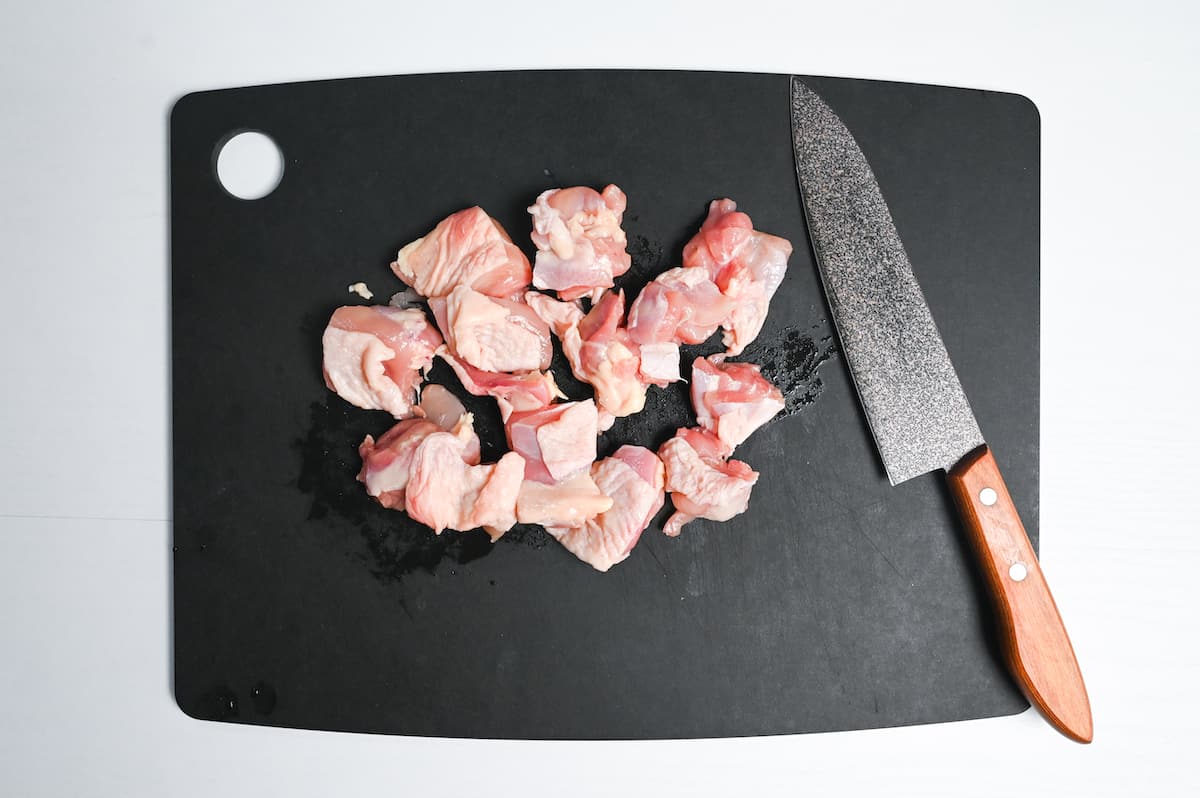
Before you start: Trim excess fat, then cut boneless thighs into uniform, two-bites-size pieces about 5 cm (a bit more than 1½ in). Even sizing keeps the cook time consistent, so every piece turns out crispy outside and tender inside.
i. In a clean container/bowl/sealable bag, combine soy sauce, sake, grated garlic, grated ginger, and a pinch of black pepper. Whisk until the aromatics smell bright and the liquid looks slightly opaque from the ginger juice.
Many karaage recipes include mirin, but I personally avoid it. After testing it many times, I found that the natural sugars in mirin make the chicken brown too quickly, sometimes before the inside is fully cooked. I also don’t think the distinct mirin-style sweetness adds much to fried chicken.
Instead, I prefer using sake, which keeps the flavor cleaner and lets the garlic, ginger, and soy sauce shine.
ii. Add the chicken to the bowl and toss until every surface is coated, then cover and chill for 30 minutes.
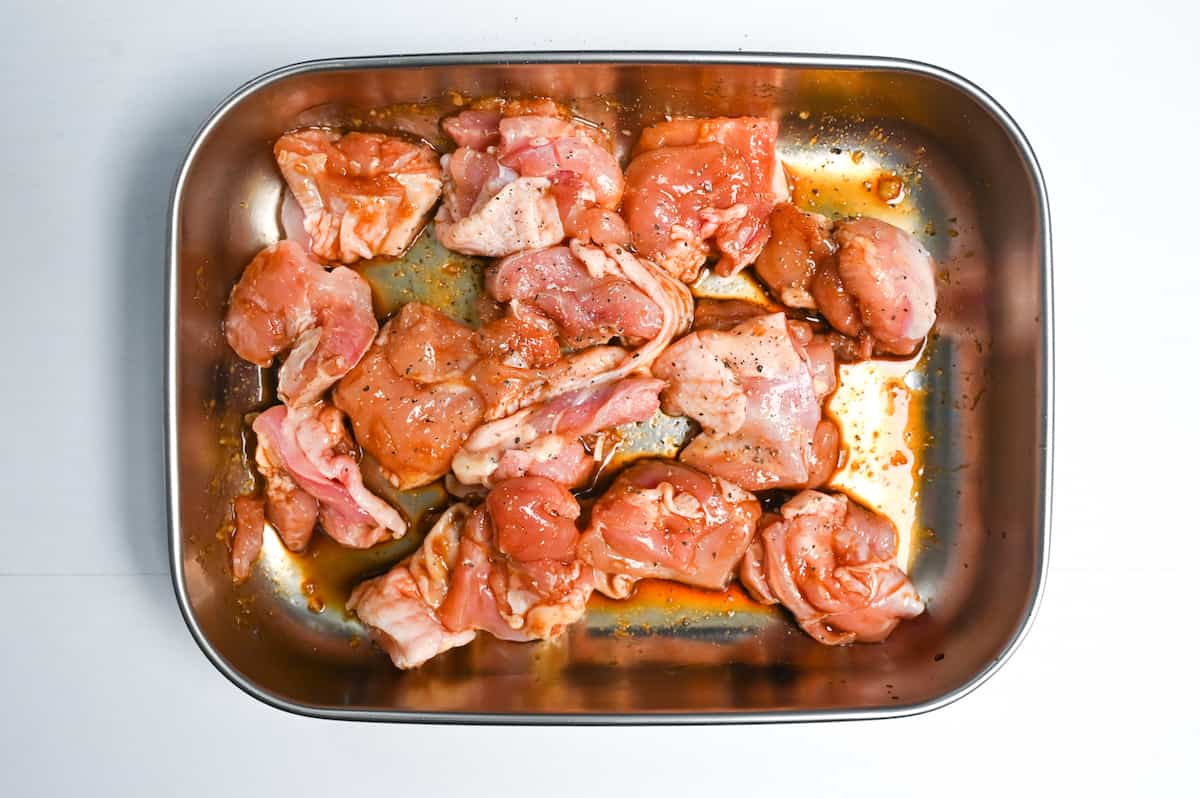
I tested 15, 30, 90 mins, and even an overnight marinade, and I kept coming back to 30 mins as the sweet spot. It’s tempting to think “longer is better” when it comes to marinating, but once you go past about 90 mins, the chicken can start to taste too salty and lose some of its juiciness. Push it too far and the texture can even turn a little dry.
i. Pour neutral oil (my personal go-to is rice bran) into a wide skillet to a depth of about 3 cm (just over 1 in) and heat to 160℃ (320°F). A wide pan prevents crowding so the temperature doesn’t crash, which keeps the crust light instead of greasy. Hold this temperature steady before you start frying.
i. Add potato starch to a shallow container. Lift each piece from the marinade, let excess drip off, then roll in starch until fully white and evenly coated. Press lightly so the starch adheres. A thorough coat forms the signature crackly shell that stays crisp.
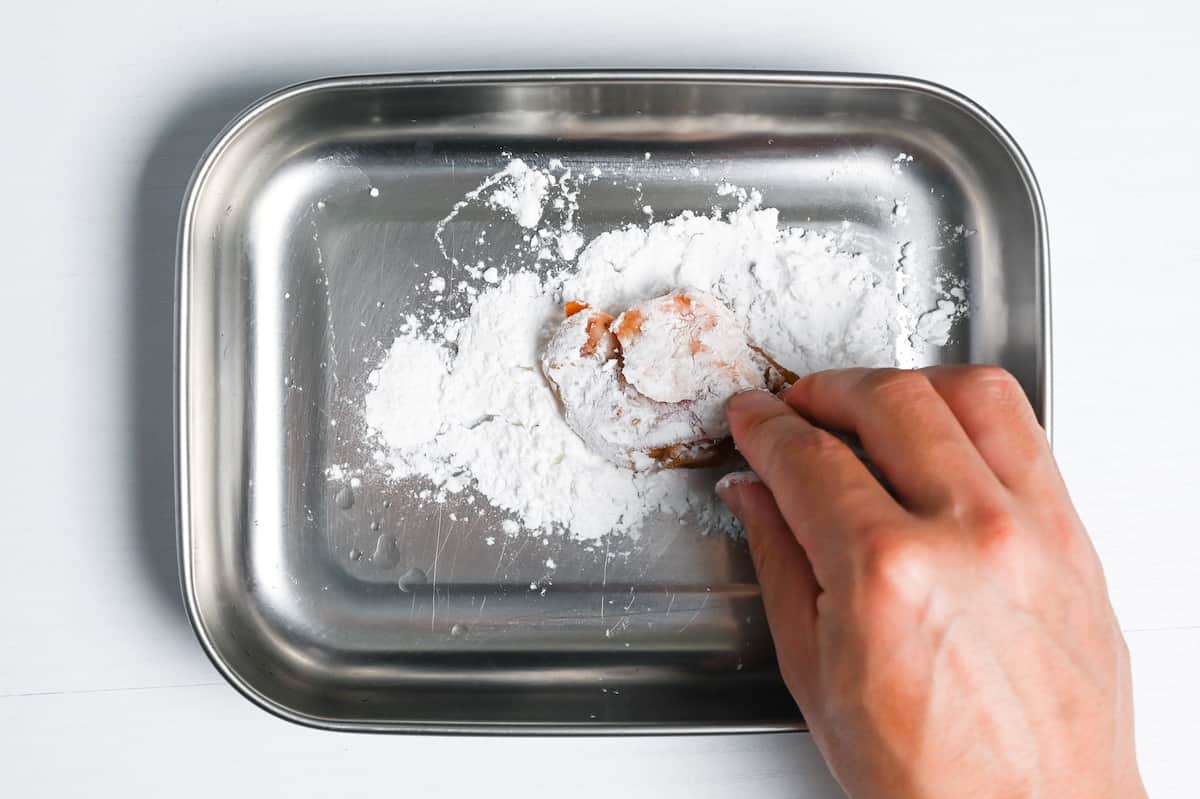
Potato starch (katakuriko) fries up extra-crisp and shatters cleanly. Cornstarch is an acceptable stand-in with a slightly less glassy crunch. For a thicker shell, a light second dredge works well too.
ii. Slide coated chicken into 160℃ (320°F) oil in a single layer and fry about 3 minutes per side. You’re aiming for pale blond, not dark brown. If pieces brown quickly, lower the heat slightly and give them a little more time.
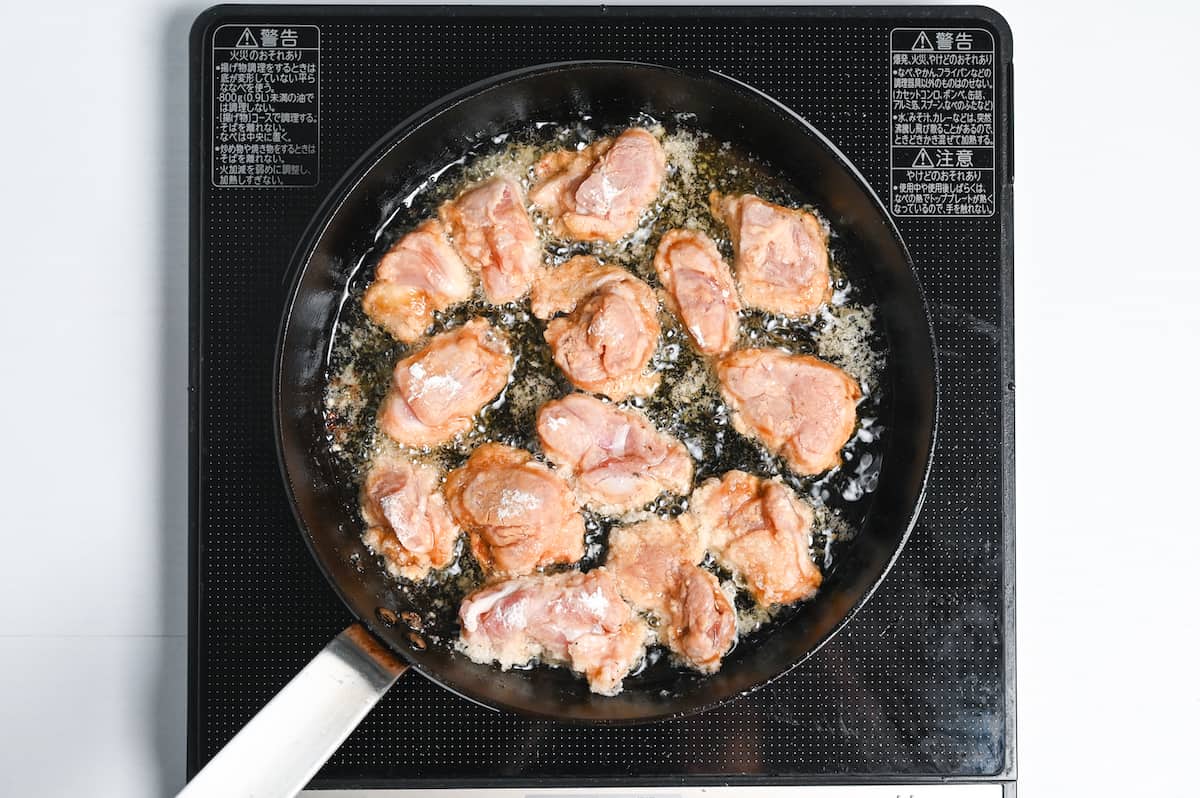
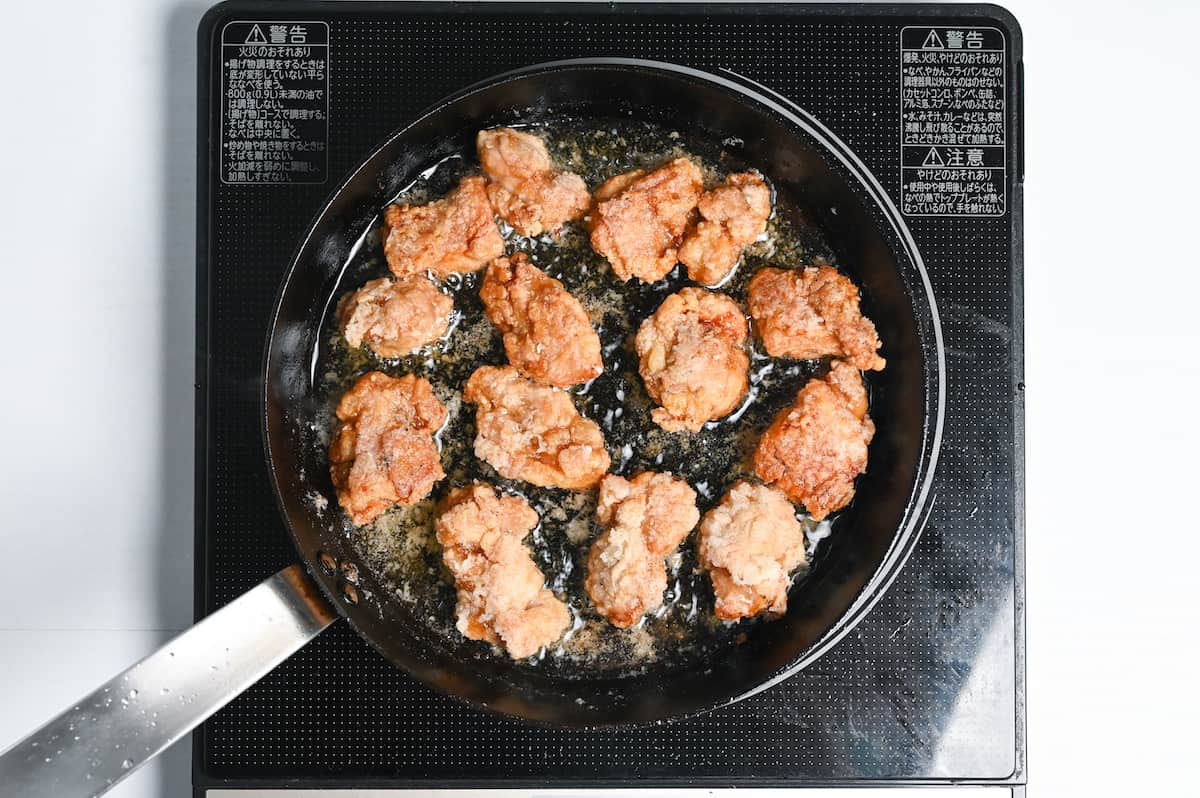
iii. Increase the oil to 190℃ (374°F) and return the chicken, frying about 1 minute per side until deep golden with sharp, glassy edges. The sizzle will sound brighter and the pieces will feel lighter when lifted with tongs.
i. Transfer the chicken to a wire rack set over a sheet pan and rest 2-3 minutes. The rack keeps steam from softening the crust, and resting equalizes juices so the meat stays tender.
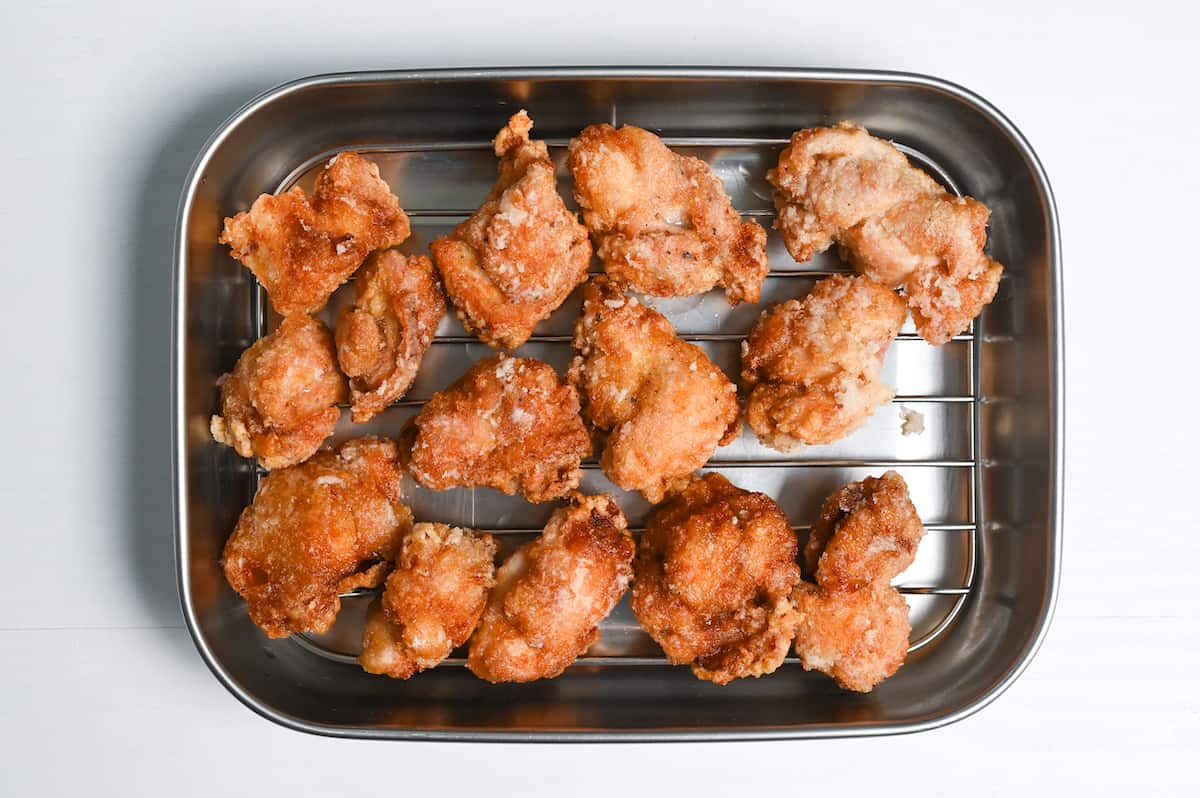
Paper towels can trap steam against the crust; a rack lets air circulate so the exterior stays crunchy from first bite to last.
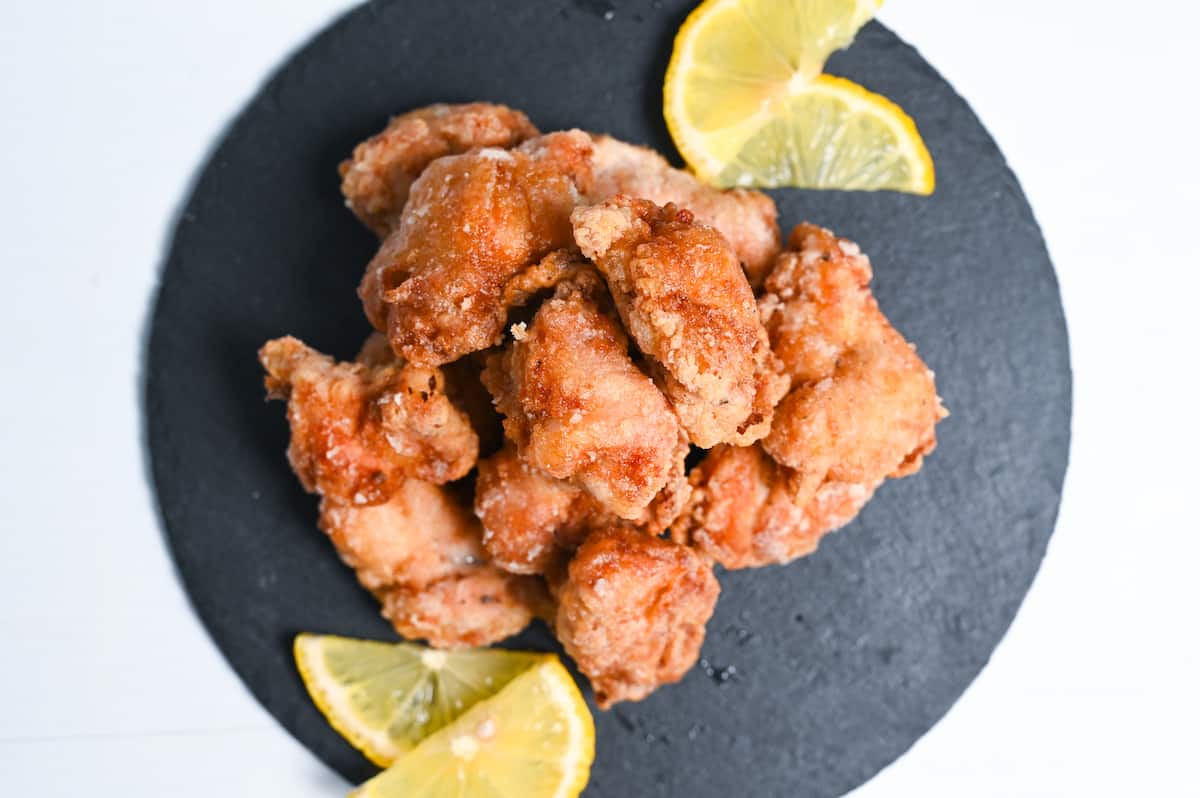
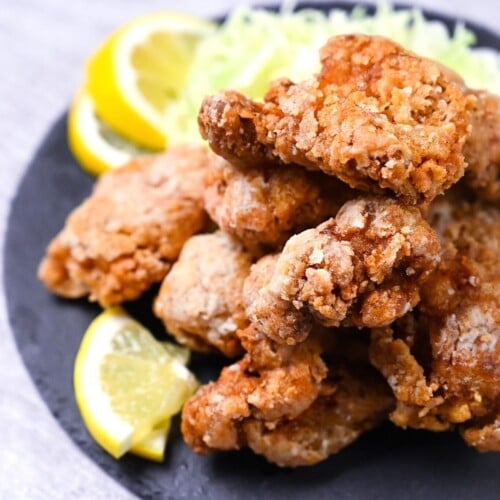
ii. Pile onto a platter and finish with a squeeze of lemon.

Essential Tips & Tricks
- Stick to about 30 minutes of marinating for the best balance of flavor and juiciness.
- Let excess marinade drip off and coat each piece thoroughly in potato starch so the crust adheres well and fries up extra crisp.
- Fry in batches and avoid crowding the pan.
- Drain the fried chicken on a wire rack instead of paper towels.
With these simple tips in mind, you’re set for success every time you make tatsuta age.
Storage Guide
Fridge: Store completely cooled tatsuta-age in an airtight container for 1-2 days.
Freezer: Freeze completely cooled pieces in a single layer on a tray, then transfer to an airtight container or freezer bag once solid. They will keep for up to 1 month.
Reheating: Reheat chilled or thawed pieces in a 180℃ (356°F) oven or air fryer for 5-10 minutes, until the center is hot and the surface re-crisps.
What to Serve With This Recipe
Tatsuta Age FAQ
Karaage is a broad Japanese term for deep-fried foods and can use various coatings such as flour, potato starch, or a mix, sometimes even egg. Tatsuta-age, on the other hand, is a specific style within the karaage family: the meat is marinated in a soy-based seasoning and coated only with potato starch, giving it a lighter, crispier, more delicate crust.
Its signature comes from a soy-based marinade plus a pure potato-starch coating. This combination produces a thin, ultra-crisp shell that stays light, unlike heavier flour coatings. And the iconic orange color is inspired by the Tatsuta River in Nara, a famous spot for autumn foliage.
McDonald’s Japan’s “Chicken Tatsuta” is a seasonal burger featuring chicken marinated in a signature ginger-soy sauce, coated in a light, crispy shell inspired by traditional tatsuta-age, and served on a soft, airy bun. First released in 1991, it has since become one of Japan’s most anticipated limited-time menu items, returning almost every year to the excitement of dedicated fans.
More Japanese Chicken Recipes
Looking for your next go-to dinner idea? I’ve curated the best Japanese chicken recipes!
Did You Try This Recipe?
I would love to hear your thoughts!
💬 Leave a review and ⭐️ rating in the comments below. 📷 I also love to see your photos – submit them here!
Chicken Tatsuta Age (Shallow-fried)

Ingredients
- 350 g boneless chicken thigh skin-on
- 1 tbsp Japanese soy sauce (koikuchi shoyu)
- 1 tbsp sake or dry sherry/white wine
- ¼ tsp ground black pepper or white pepper
- 2 tsp grated garlic or garlic paste
- 1 tsp grated ginger root or ginger paste
- 5 tbsp potato starch (katakuriko) or cornstarch/tapioca starch
- cooking oil for shallow frying, I use rice bran
- lemon wedges optional
My recommended brands of ingredients and seasonings can be found in my Japanese pantry guide.
Can’t find certain Japanese ingredients? See my substitution guide here.
Instructions
- Cut 350 g boneless chicken thigh into bite size pieces. (Approx 50g, 1.7 oz per piece)

- Add 1 tbsp Japanese soy sauce (koikuchi shoyu), 1 tbsp sake, ¼ tsp ground black pepper, 2 tsp grated garlic and 1 tsp grated ginger root to a sealable container. Mix until combined, then add the chicken pieces and mix until evenly coated. Marinate in the fridge for 30 mins.After about 25 minutes, start preheating a pan of cooking oil to 160 °C (320 °F). It should be about 3cm deep (just over 1 inch) for shallow frying.
- Sprinkle about 5 tbsp potato starch (katakuriko) onto a plate. Shake the excess marinade off each chicken piece before rolling it in the starch.

- Once the oil is hot, place the chicken pieces in the pan and shallow fry at 160 °C (320 °F) for 3 minutes on each side.
- Increase the heat to 190 °C (374 °F) and fry for 1 minute on each side.
- Transfer to a wire rack or absorbent kitchen towels to allow the excess oil to drip off.
- Serve with a squeeze of lemon wedges and enjoy.

Lovely recipe. What can I use instead of Sake?
Thank you! You can either use white wine, dry sherry, or kombu dashi! You can omit it if you prefer too!