

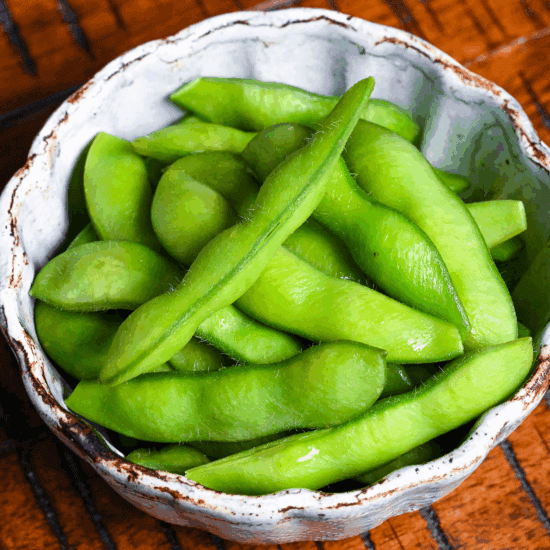


Salt boiled edamame turns up everywhere, often out of nowhere. Every izakaya serves it. That’s the standard I aim for at home. No, scratch that. I’m aiming higher.
Bring a piping-hot pod straight from the colander to your lips. First comes the salt on its surface. Then, as you bite, the beans pop into your mouth with that salt. Let me show you how to boil edamame just like that.
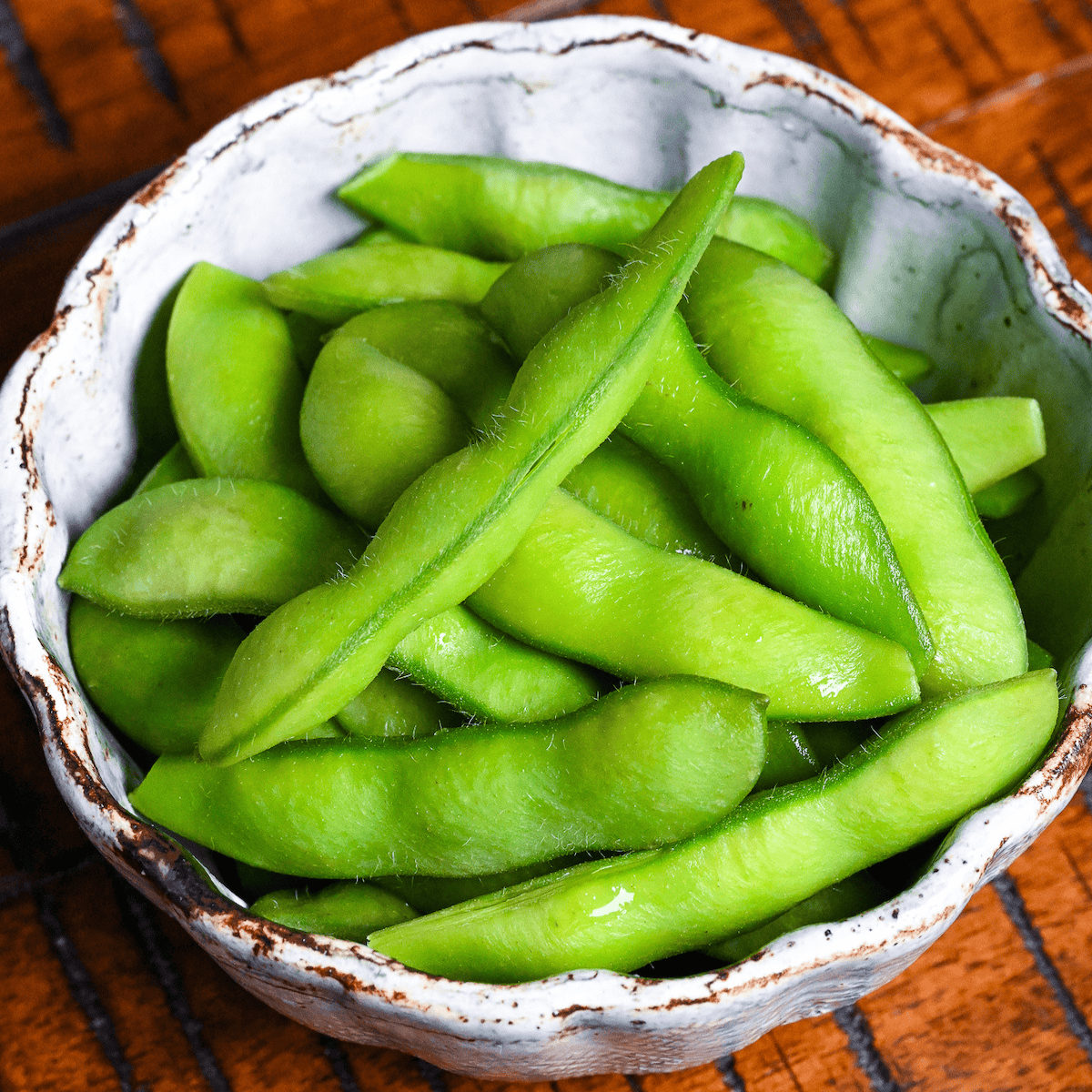
Salt boiled edamame
Recipe Snapshot
- What is it? Salt boiled edamame, a traditional Japanese snack served with drinks, is unripe soybeans cooked in their pods in salted water. Squeeze out the beans to eat them.
- Flavor profile: Lift a piping-hot pod to your lips and the salt on it hits first. Bite, and salty juice bursts out, with the sweetness of the beans right behind.
- Why this recipe works: Coarse salt removes the fuzz and joins the cooking water without being rinsed off. Strongly salted water and no cold rinse leave the pods salty.
- How to make it: Salt-rub the pods, then trim both ends as the water heats. Give them a short boil in well-salted water, drain without rinsing, and cool with a fan.
- What to expect: Allow about 10 minutes altogether. Timing matters, so bite into a pod at roughly 3 minutes, and drain the batch while the beans are still slightly firm.
What Is Salt Boiled Edamame?
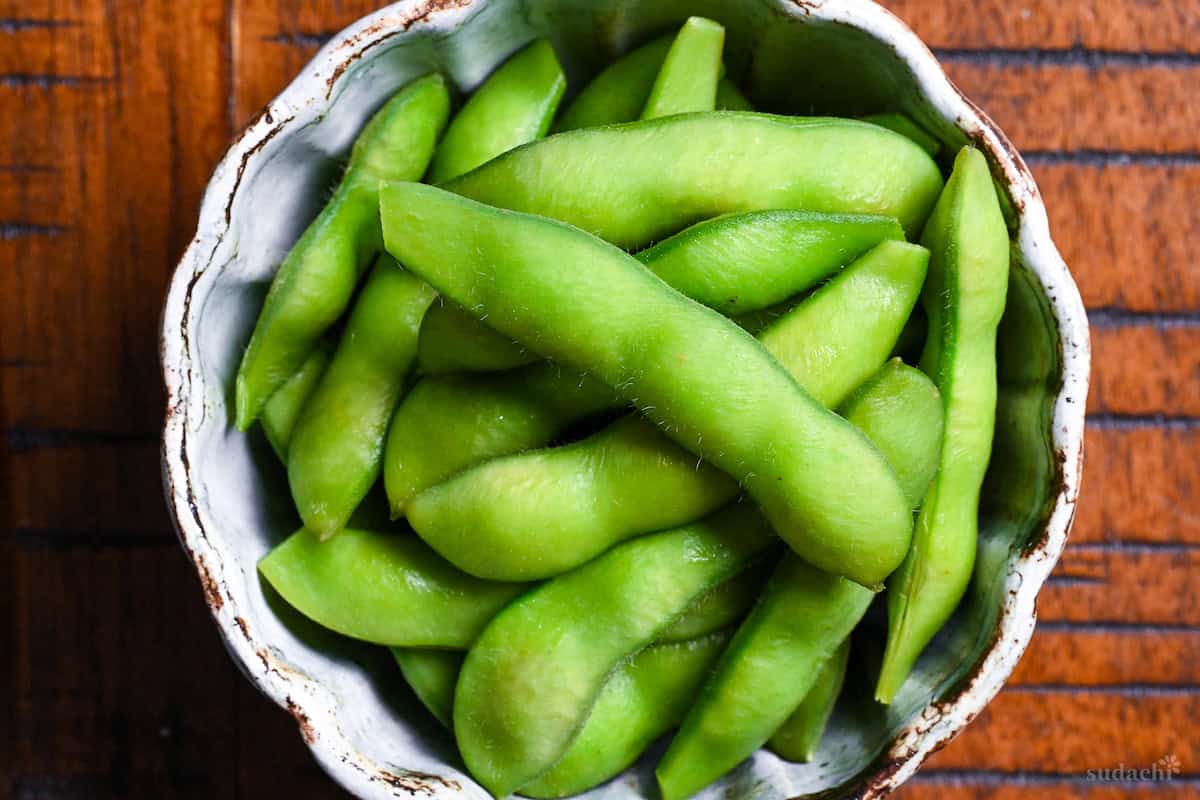
Salt boiled edamame (枝豆の塩ゆで) is a classic Japanese snack of young soybeans boiled, pods and all, cooked in salted water. The salt goes into the cooking water rather than onto the drained pods. In Japan, ask what goes with an evening drink and edamame belongs on the list alongside karaage fried chicken and yakitori skewers. It’s a choice everyone here agrees on.
The name edamame translates literally as branch beans. They’re soybeans harvested green on the branch before they ripen, from the very same plant that produces soybeans used to make tofu, soy milk, natto and more.
Salted Edamame Ingredients

- Fresh edamame in the pod: Choose pods with plump, evenly sized beans, bright green skins, and fine fuzz that still stands up. Flat pods contain beans that haven’t developed fully. At the other extreme, skip pods packed so full that the sides look straight, with no dips between the beans. Those are overgrown. Avoid yellow pods and those with browning at the stem joint. Once picked, edamame begins losing sweetness, especially in warm conditions. Buy it on the branch when possible and boil it the day you buy it. In the US, the fresh season runs from midsummer into September, depending on the state. Look at farmers markets or Asian grocery stores.
- Coarse salt: Use this to rub the pods. Its large grains scrub away the fuzz, while the salt left clinging to the surface gives the pods their initial seasoning.
- Fine sea salt: Save this salt for the cooking water. Sea salt is what I use to develop and test all my recipes.
Building up your Japanese pantry? My Japanese pantry guide covers the brands I trust and the ones Japanese people living abroad swear by.
Substitution Ideas
- Fresh edamame → US supermarket frozen edamame: Many US supermarket bags contain plain soybeans with little or no added salt. Cook the pods from frozen in water with the same salt concentration you’d use for fresh ones, following the package’s boiling time. Then spread them in a colander and fan them without rinsing.
- Fresh edamame → Japanese frozen edamame: Most Japanese frozen edamame comes already boiled and salted, so it only needs reheating. Check the bag to be sure. Thaw and cook it as the package says, usually through boiling or microwave steaming.
- Coarse salt → Fine sea salt: Only have fine sea salt? It works for rubbing the pods, too.
- Fine sea salt → Diamond Crystal kosher salt: This is the easiest one to find, since ordinary US supermarkets carry it. It contains no anti-caking agent. The weight per tablespoon differs, however, so don’t substitute 3 tablespoons of it for the 3 tablespoons of fine sea salt. Check my salt guide for the amount to use.
- Fine sea salt → Celtic Sea Salt: For the closest flavor match, I’d choose this salt. As with kosher salt, the grain size affects the weight of a tablespoon.
Substitutions that I don’t recommend:
- Shelled edamame instead of edamame in the pod: In this recipe, it’s the pods that get salted rather than the beans. Biting into a pod brings its salt into your mouth with the beans, and enjoying the salt that way is the whole idea. Without pods, you lose that experience, so keep shelled edamame for salads or stir-fries. Boil shelled beans this way and the salt hits them directly, so they come out far too salty, with the wrong texture.
How to Make My Salt Boiled Edamame
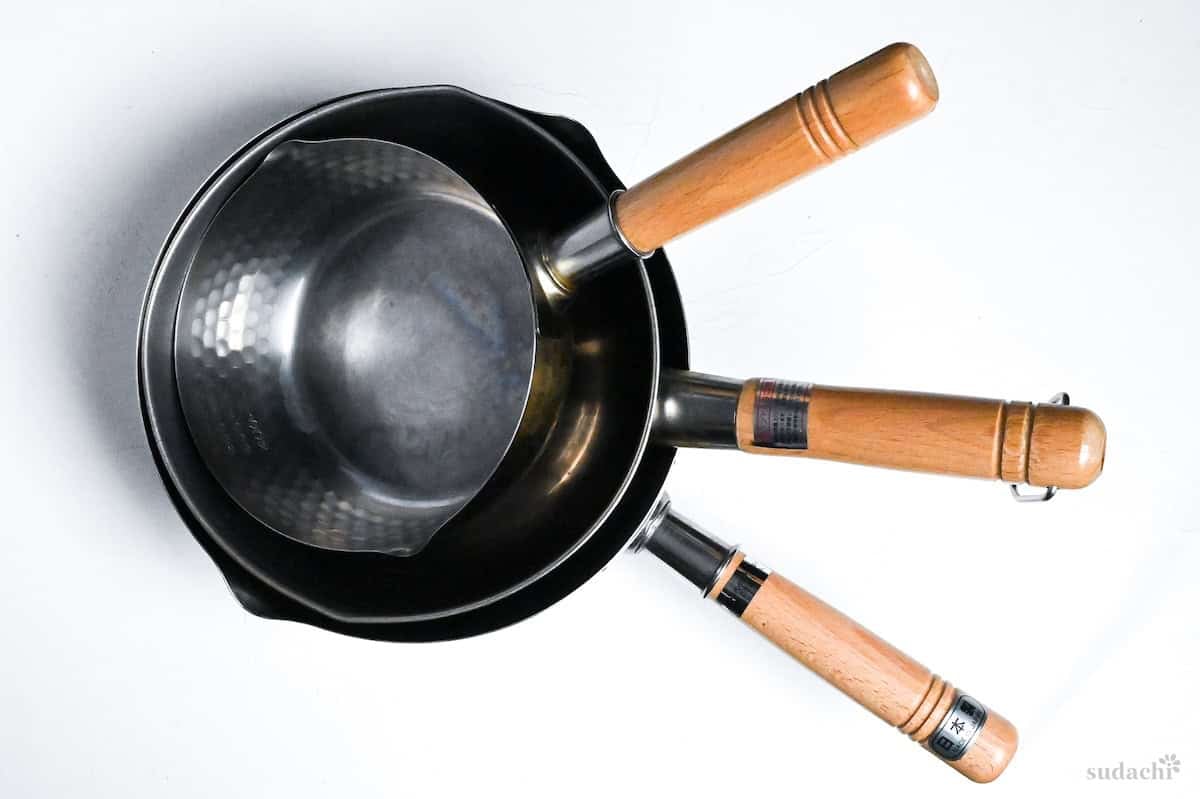
To develop this recipe, I used a 20 cm stainless steel yukihira pot.
i. Rinse the edamame briefly under running water, then transfer it to a bowl.
ii. Add the coarse salt. Rub firmly with both hands, working the pods against one another.


This removes the fuzz so the pods feel smooth on your lips. Leave the salt on. No rinsing.
i. Put a pot of water on the heat.
Note: Keep the rubbed pods sitting in their salt as the water heats to a boil. This gives the salt time to settle onto them.
ii. Use kitchen shears to trim 1 to 2 mm from each end of every pod while the water heats.

These openings help heat reach the beans. There’s no need to worry about snipping the beans inside.
i. At a full boil, stir in the sea salt until dissolved.
ii. Add the entire batch of edamame, including the salt used for rubbing.

iii. Raise the heat to return the water to a boil. Then lower it just enough to prevent a boilover while maintaining a vigorous rolling boil.
iv. Stir at 30-second intervals to help the pods cook evenly.

You might think, “This seems like a lot of salt!” But just as properly cooking pasta takes generous salting, this is no place to hold back. These pods boil for just a few minutes, so the water needs plenty of salt to leave them thoroughly salted in that short time.
i. Around 3 minutes into cooking, take out a pod, run it under cold water to cool it, and bite into it to test the softness of the bean.
Overcooking is the enemy. More time in the pot means softer beans and duller green pods. Carryover heat keeps cooking them in the colander, too, so drain them while the beans still have a little bite. For large, sturdy pods, allow about 5 minutes.
ii. Drain immediately in a colander, then shake well to remove the water.

Don’t put the cooked batch in cold water or an ice bath. The beans and pods absorb water and become soggy, while the salt and flavor from cooking wash off.
i. Spread the pods across the colander. Fan for 10 to 20 seconds with a hand fan or similar.

Fanning releases heat without adding water and keeps the residual heat from overcooking the beans.
Note: To serve them cold, continue fanning until they’re at room temperature, then refrigerate.
ii. Transfer to a serving bowl while still piping hot.
iii. Try one and add an extra light sprinkle of coarse salt if needed.

If you follow the default recipe, it will yield 6 servings.

Tips for the Best Salted Edamame
- Keep the rubbing salt for the boil. That leftover salt goes into the pot and helps salt the pods along with the cooking water. Rinse it off and you end up with less salt in the pot and less salty pods.
- Check a pod at 3 minutes and drain while slightly firm. Bite into one to judge the texture. If you wait for the beans to feel perfectly cooked, their remaining heat keeps cooking them in the colander, leaving them a little softer by the time you eat.
- Sprinkle extra coarse salt on while the pods are hot. On cooled pods, added salt stays on the surface without reaching the beans, whereas hot pods gradually take it in as they cool. The large coarse grains don’t penetrate far, so you can brush any excess off with your fingers.
Get both moments right, when you add the salt and when you take the pot off the heat.
Storage & Meal Prep
Fridge: Fan cool and dry, then seal in a container. 2 to 3 days.
Freezer: Bag in the pod so the beans stay moist, press out the air, freeze flat. 1 month. Don’t refreeze.
Meal prep: Boil peak-season batches slightly firm and freeze in portions.
Reheating: Add frozen pods to boiling water, lift out once it reboils.
What to Serve With Izakaya Edamame
- Creamy Japanese Potato Salad
- Salt-Grilled Mackerel (Saba no Shioyaki)
- Chilled Tofu with Toppings (Hiyayakko)
- Octopus and Cucumber Sunomono
Boiled Edamame Troubleshooting
Cold water after boiling washes off the salt, and rinsing away the rubbing salt reduces the amount that reaches the pot, leaving the pods less salty. A little coarse salt sprinkled on while they’re hot can restore that saltiness. Older pods also lose sweetness and taste weak even with more salt, so boil your next batch on the day you buy it.
Larger pods filled with plump beans need extra cooking time. Return them to the water for a little longer before tasting another pod. Expect large ones to take about 5 minutes.
If only the outside tastes salty, you probably added too much finishing salt. Brush the coarse grains off with your fingers. If the first bite is overpoweringly salty, the cooking water was probably too salty. Brands differ in how much a tablespoon weighs, so use fine sea salt for measuring next time, or consult my salt guide for the appropriate amount.
Many frozen pods sold in the US contain hardly any salt, so simply heating them doesn’t season them. For your next batch, follow the frozen option in Substitution Ideas. Salt the water just as you would for fresh pods and boil them for the time on the bag. Even some pre-salted bags are only lightly seasoned, so give those a small sprinkle of salt after heating, while still hot.

More Japanese Summer Recipes
- Spicy Miso Accordion Cucumber
- Hiyashi Chuka Cold Noodle Salad
- Sashimi Salad with Japanese Dressing
- Unagi Kabayaki Grilled Eel
Keep a bowl of edamame on the table while you pick your next plate from these Japanese summer recipes.
Did You Try This Recipe?
I would love to hear your thoughts!
💬 Leave a review and ⭐️ rating in the comments below. 📷 I also love to see your photos – submit them here!

Izakaya Style Salt Boiled Edamame
Ingredients
- 200 g edamame fresh, in pods, bright green with dense fuzz
- 1 tsp coarse salt for rubbing pods
- 1000 ml water for boiling
- 3 tbsp sea salt fine, for boiling
The ingredient brands and tools I trust are in my Japanese pantry guide and my cooking tools guide.
Can’t find certain Japanese ingredients? See my substitution guide here.
Instructions
- Rinse 200 g edamame with fresh water and place them in a bowl. Sprinkle 1 tsp coarse salt over the top and massage thoroughly to remove the fuzz.

- Heat 1000 ml water in a pot. While you wait for it to boil, use kitchen scissors to cut 1 to 2mm off of the ends of each edamame pod.
- When the water is boiling, add 3 tbsp sea salt and mix until dissolved. When it comes back to a boil, add the edamame to the pot all at once, along with the rubbing salt left in the bowl. Reduce the heat slightly so the water continues to boil without spilling over.
- After around 3 minutes, take one edamame out and rinse it under cold water to cool it quickly. Test the softness. The beans should be soft enough to bite but slightly underdone. Larger pods might need closer to 5 minutes.
- Pour the pods through a colander over the sink to drain, and shake off the water without rinsing. The residual heat will finish cooking them.
- Spread the pods in the colander and fan them for 10 to 20 seconds. To serve them cold, keep fanning until they reach room temperature, then chill them in the fridge. Sprinkle with coarse salt if you like, and enjoy!


Nice
Thank you, Tuyet!