

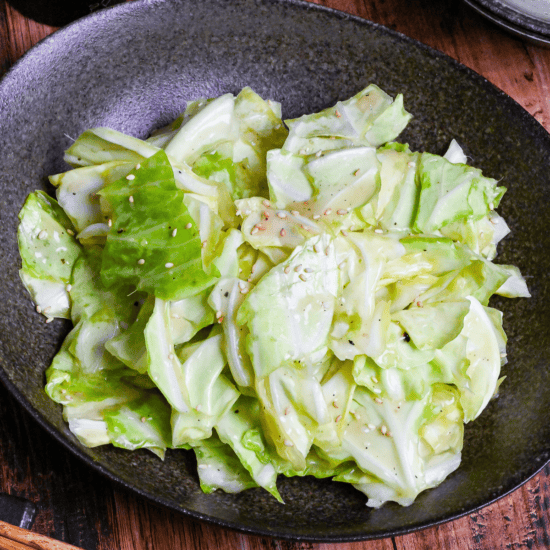


This started as the sauce for my negi shio butadon. I was making a batch, looked at the cabbage sitting in the fridge, and thought it would taste good poured straight over the leaves. It did.
Now it is how the leftover cabbage disappears at my place. Pour it hot, let it cling to every leaf, and see how long the bowl lasts.
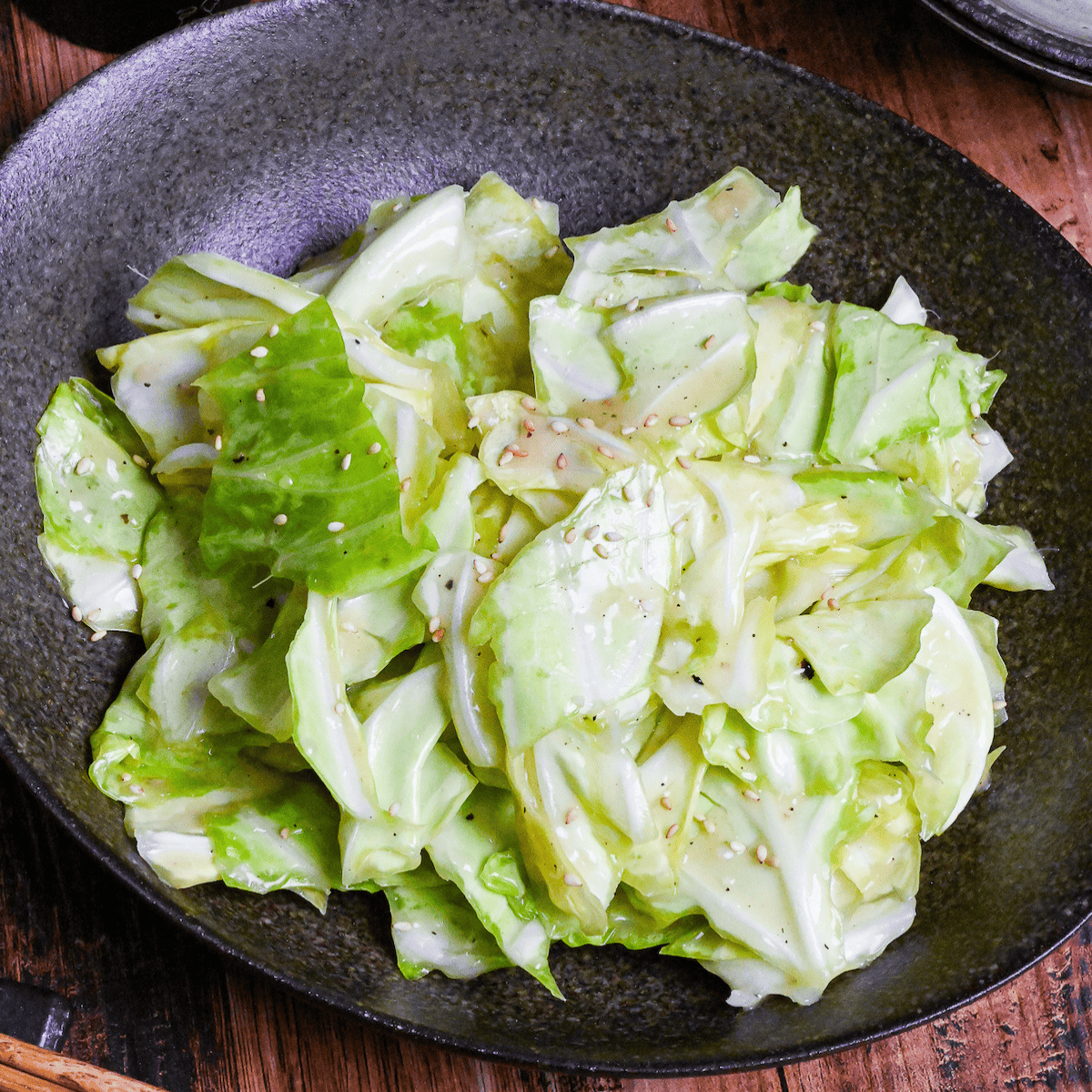
Shiodare Cabbage
Recipe Snapshot
- What is it? A salt-sauce cabbage side from the yakiniku counter, torn leaves dressed with sesame oil, grated garlic, and chicken bouillon powder.
- Flavor profile: Clean and salty up front, with a deep savory pull from the bouillon, nutty warmth from toasted sesame oil, and a bright squeeze of lemon that keeps it from turning heavy.
- Why you will love this recipe: A warm, starch-thickened sauce clings to every leaf instead of pooling at the bottom of the bowl. It turns a half cabbage going soft in the fridge into a side you keep reaching for.
- Must-haves: Toasted sesame oil for the signature aroma, the bouillon for the umami that tips it into addictive, and a soft-leaf cabbage such as spring or sweetheart that gives under the hot sauce.
- Skill level: Beginner-friendly, and about 15 minutes start to finish plus an optional 30-minute chill.
Summarize & Save this content on:
What Is Shiodare Cabbage?
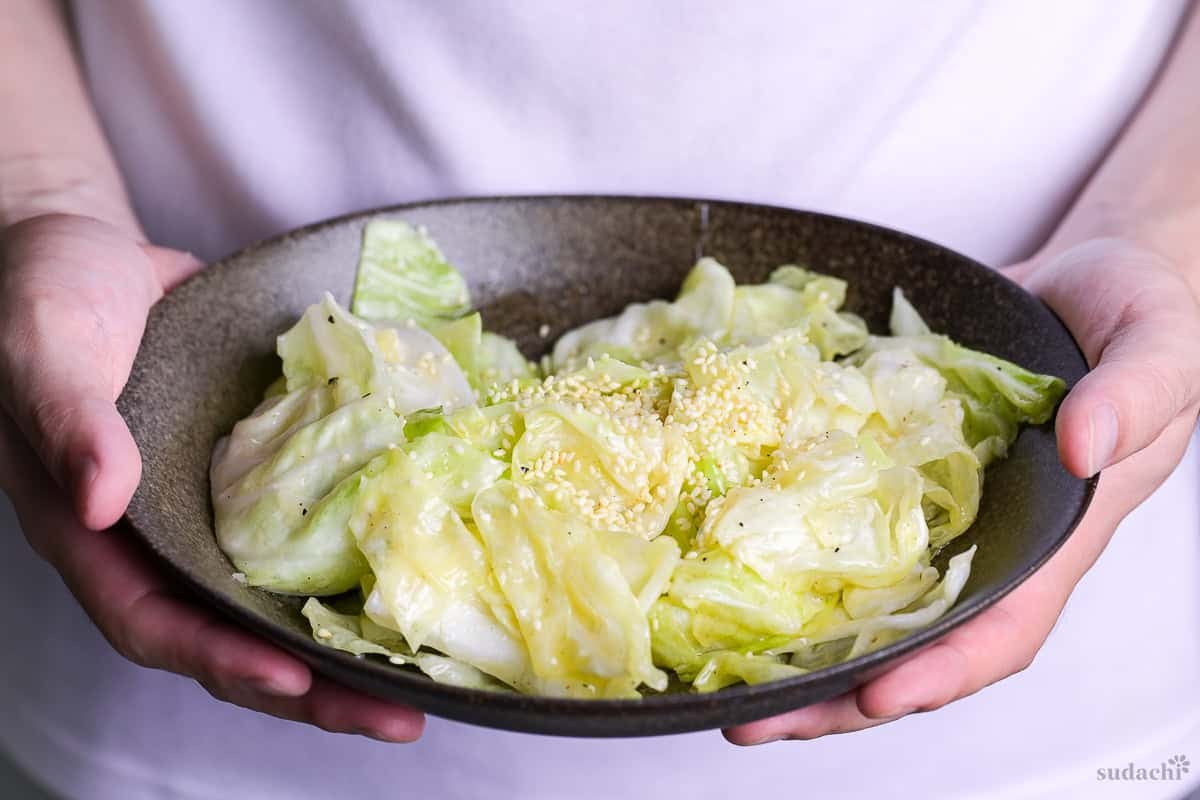
Shiodare cabbage (塩ダレキャベツ) is a Japanese cabbage side dish, hand-torn leaves coated in a salt-based sauce (the shiodare) built on toasted sesame oil, raw garlic, and Chinese-style chicken bouillon powder. That granulated bouillon is the quiet engine, the reason it tastes like far more than salted cabbage. It is not coleslaw, and it is not a pickle. It is eaten fresh.
At home, it is the descendant of the yakiniku-restaurant side known as yamitsuki (addictive) cabbage, the plate people keep reaching for between bites of grilled meat. It spread through the mid-2010s boom in mugen (infinite) vegetable recipes that swept across home kitchens. You will still find it among the izakaya nibbles that vanish before the drinks land.
In my version, I warm the sauce and thicken it with a little starch, then pour it hot over the raw cabbage so the leaves wilt just slightly. That gentle wilt is the whole point.
Shiodare Cabbage Ingredients
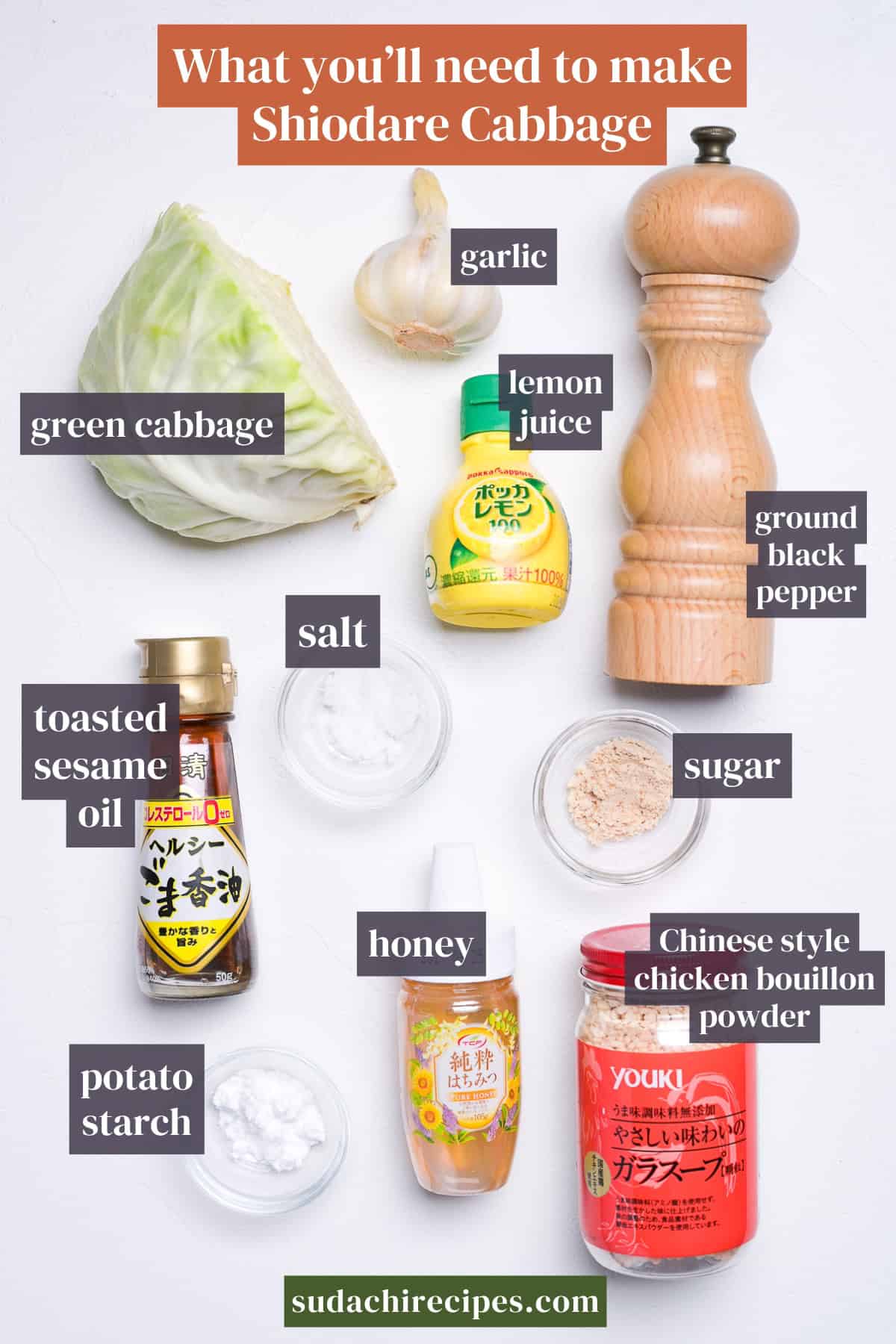
- Green cabbage: Reach for a soft-leaf head here, spring cabbage or sweetheart (also sold as pointed or hispi). The trick of this recipe is pouring hot sauce over raw torn leaves so they wilt just a little, and soft leaves give in to that heat. Firm winter cabbage and thick napa cabbage stay almost raw under the same warm sauce, so they miss the mark.
- Toasted sesame oil: This is the aroma that makes shiodare smell like shiodare, nutty and deep before you even taste it. There is no true substitute for it, so this is not the spot to reach for a neutral oil. Look for the dark, toasted kind rather than the pale raw-pressed one. I break down how to pick a bottle in my toasted sesame oil guide.
- Chinese-style chicken bouillon powder: This is the one move I refuse to skip. It is the granulated umami that turns plain salted leaves into something you cannot stop eating, and without it the bowl just tastes flat. Just a touch carries the whole batch. There is more on brands and sourcing in my Chinese chicken bouillon powder guide.
Substitution Ideas
- Lemon juice → Leave it out: The lemon is a small brightener, not a backbone. Skip it and the sauce still tastes great.
- Potato starch → Cornstarch: Cornstarch thickens just as well and gives you the same glossy coat. Use the same amount.
- Vegan version: Swap the chicken bouillon powder for a Chinese-style vegetarian stock powder, or lean on a pinch of kombu-based dashi umami instead. Everything else stays the same.
- Make it spicy: Finish with a drizzle of chili oil (rayu) or a pinch of shichimi togarashi (Japanese 7-spice) for a warm kick.
Have trouble finding Japanese ingredients? Check out my ultimate guide to Japanese ingredient substitutes!
How to Make My Shiodare Cabbage
Before you start (Mise en place):
- Tear the cabbage by hand into large bite-size pieces and pile it into a big mixing bowl with room to toss. Hand-torn beats knife-cut here because the rough, ragged edges grab more sauce.
- Stir the potato starch and water together in a small bowl to make the slurry, but do it right before you need it. Starch settles to the bottom fast, so give it another stir before it goes in.
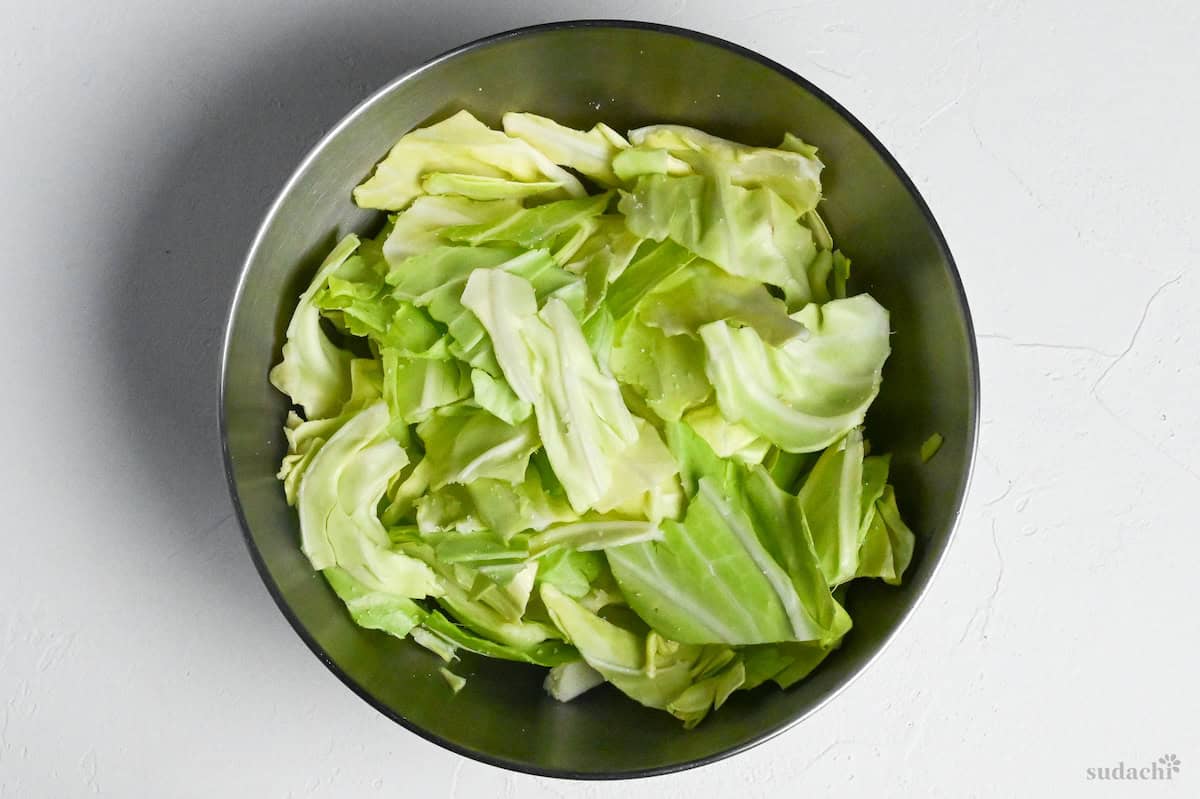
i. Combine the water, toasted sesame oil, Chinese-style chicken bouillon powder, honey, sugar, salt, lemon juice, grated garlic, and black pepper in a small saucepan.

ii. Stir it well, set it over low heat, and let it come to a gentle simmer for a couple of minutes, just long enough for everything to melt together into a smooth sauce.
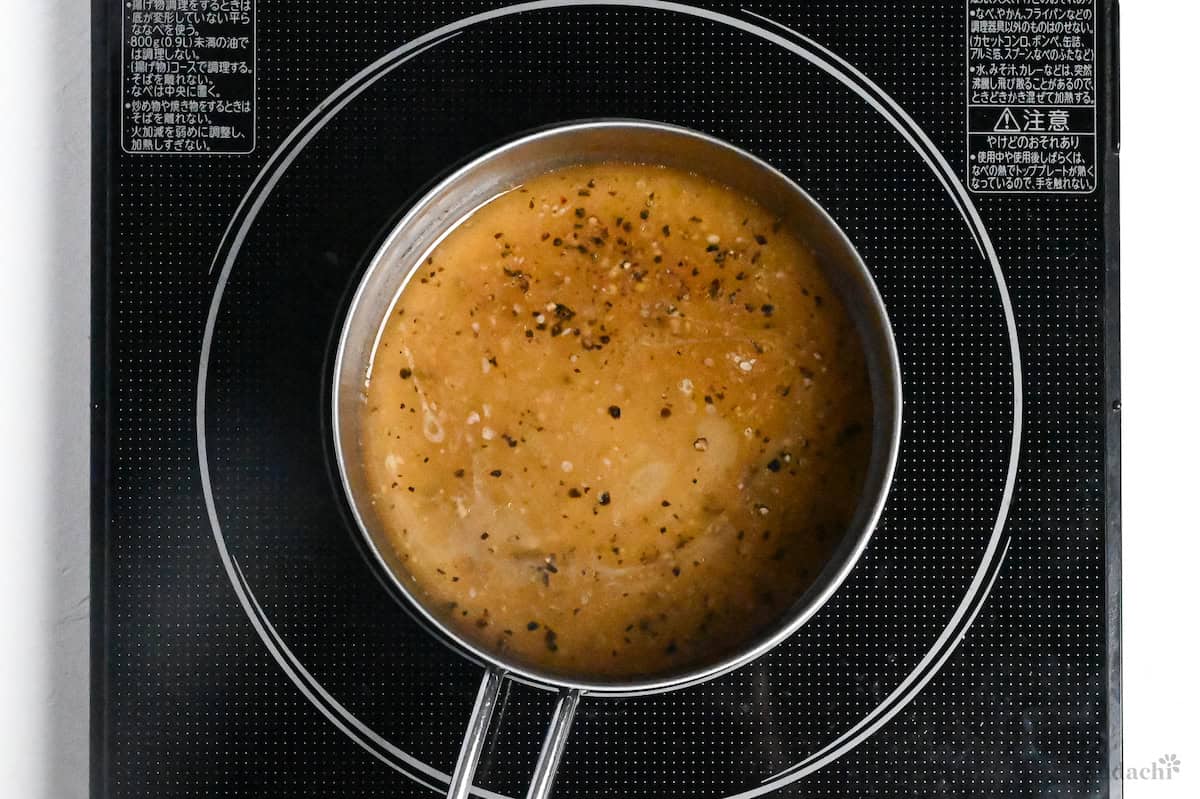
i. Give your starch slurry a final stir.
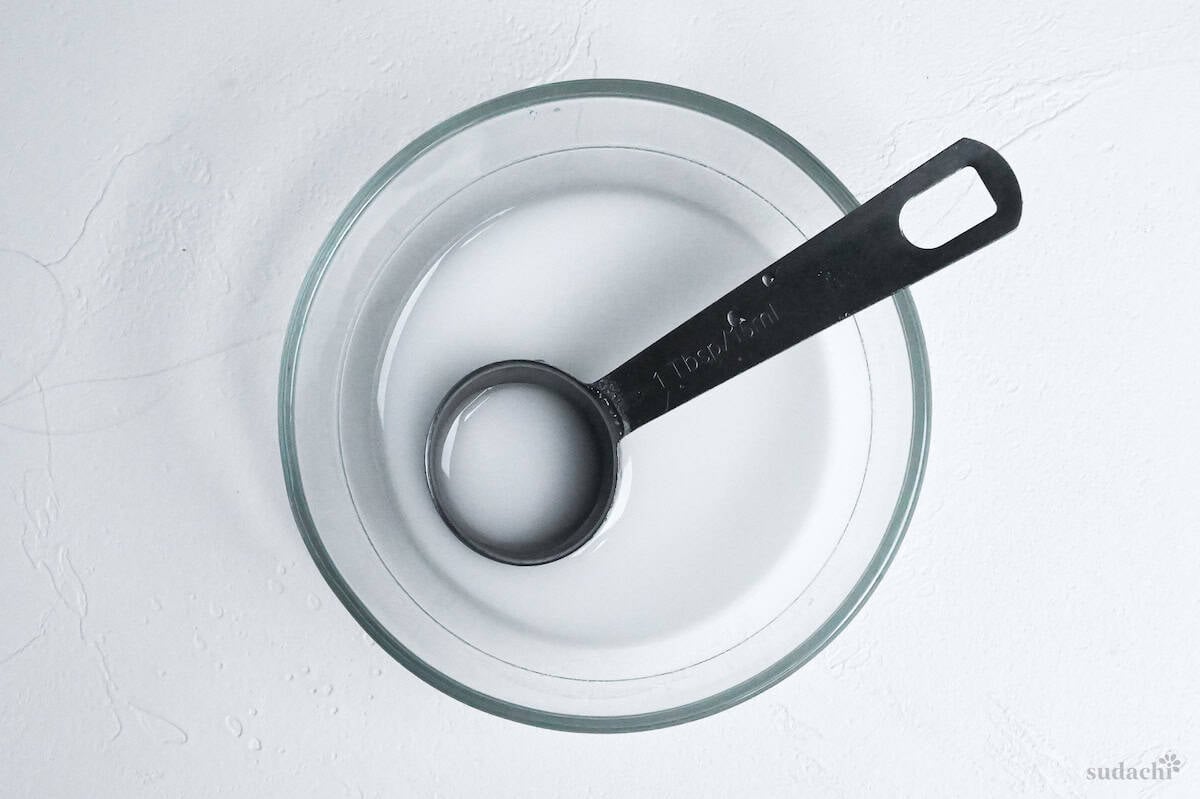
ii. Then pour it into the simmering sauce while whisking without stopping.
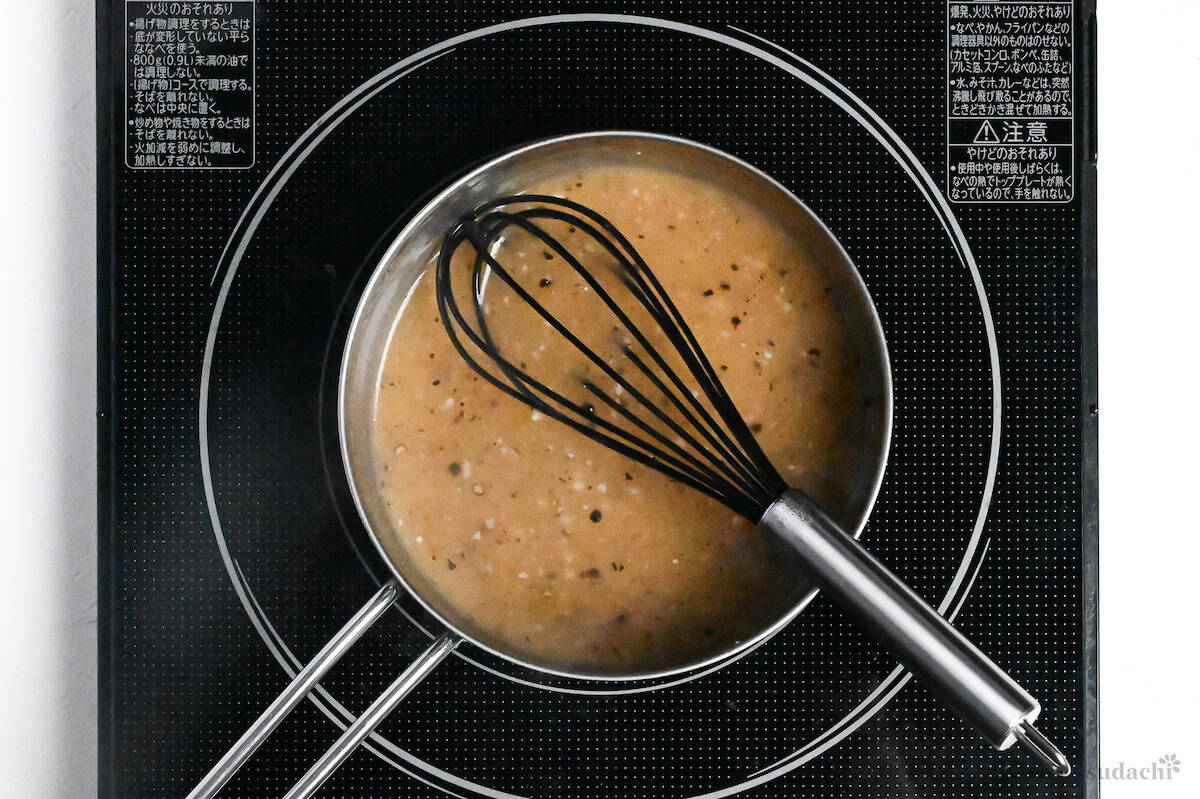
iii. Keep stirring until the sauce thickens and turns glossy, right about the consistency of maple syrup. That is your cue to pull it off the heat.
Left thin, the sauce would just slide to the bottom of the bowl and leave the leaves bare. The starch turns it into a light glaze that grabs onto every piece, so each bite carries the same hit of sesame and umami.
i. Take the pan off the heat and pour the hot sauce straight over the torn cabbage.
Pouring it on hot is the whole trick. The warmth wilts the raw leaves just enough to pull the coating in, so you land between crisp and cooked, tender but still with a little snap.
ii. Toss until every piece is glossed and coated. The heat wilts the raw leaves just slightly as you go, softening them without cooking them through. Let the bowl cool.
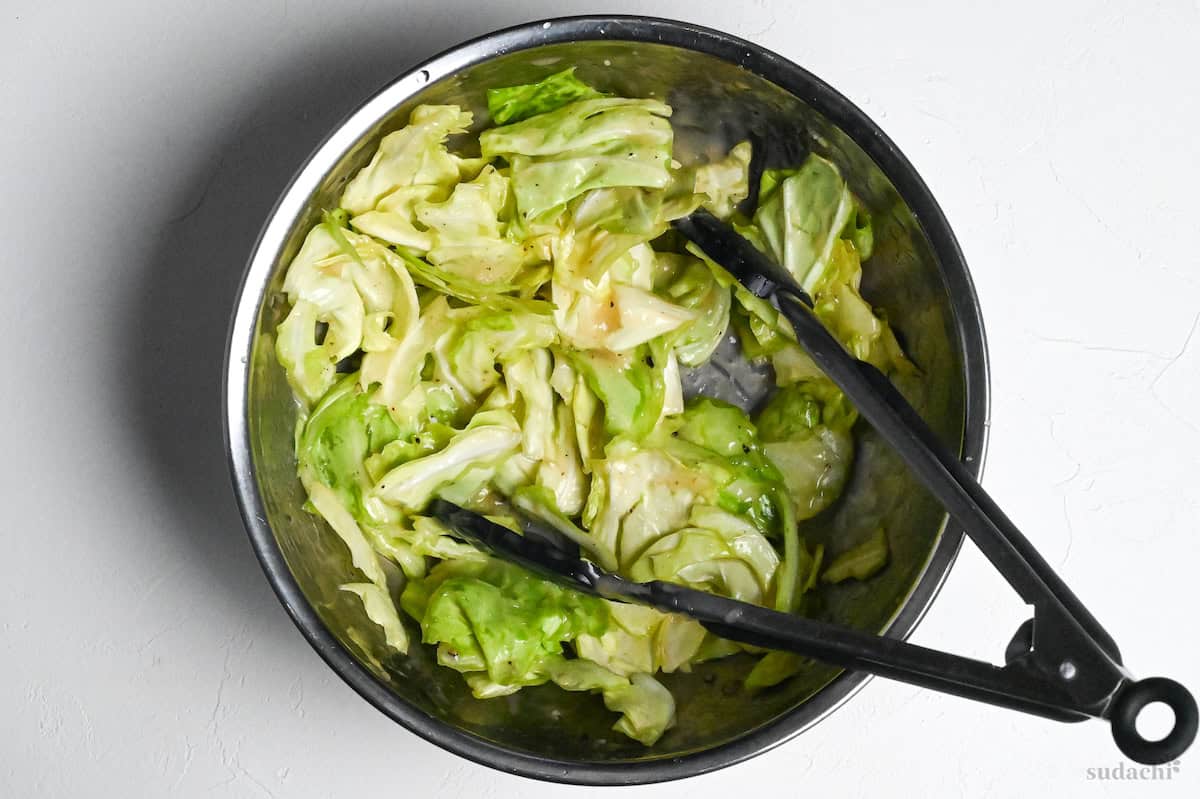
iii. If time allows, cover and chill it for 30 minutes to let the flavor settle in, then sprinkle the toasted white sesame seeds over the top right before serving.
If you follow the default recipe, it will yield 6 side servings.

Essential Tips & Tricks
- Dry the cabbage before it ever meets the sauce. Water still clinging to washed leaves is what turns this dish watery, because it thins the glaze the moment they touch and the sauce slides off instead of gripping. Spin the leaves, pat them, or let them drain in a colander before you tear them. The drier the leaf, the harder the sauce holds on.
- Check how strong your Chinese-style chicken bouillon powder is before you measure. Brands are not built to the same strength, and this powder is the thing carrying the whole bowl, so guessing here is how you land on cabbage that tastes sharply of salt instead of savory. My spoon is set to a 1 teaspoon per 200 ml ratio, so if yours runs more concentrated, use a lighter hand and keep tasting the warm sauce before it goes on. Aim for savory, not salty.
- Do not reach for a firm winter head or thick napa cabbage. The whole trick is warm sauce softening raw leaves just enough, and a dense leaf shrugs that heat off and stays stubbornly raw. Soft spring or sweetheart cabbage gives under the warmth the way this dish needs.
Get a dry leaf and the right amount of bouillon, and the sauce does the rest while you watch the bowl empty.
Storage & Meal Prep
Fridge: Keep leftovers in an airtight container for 1 to 2 days, though this one is genuinely at its best the day you make it. The cabbage keeps giving up water as it sits, so the longer it waits, the softer and wetter the bowl gets.
Freezer: Not recommended.
Meal prep: Make the sauce ahead and keep it apart from the cabbage. Tear and dry the leaves fresh, warm the sauce, and toss them together right before you eat so nothing sits around drawing water.
What to Serve With This Recipe
Shiodare Cabbage Troubleshooting
The bouillon powder might be stronger than the recipe assumed, or a little too much of it went in. Toss more torn cabbage through the bowl to spread the sauce thinner and pull the salt back.
The cabbage went in with water still clinging to it, and that surface moisture thinned the glaze on contact. Drain and pat the leaves dry before you tear them, and give the sauce a full minute to thicken to a maple-syrup gloss before it comes off the heat. A dry leaf and a properly set glaze are what make the coating cling.
Cut cabbage keeps releasing water the longer it rests in the sauce, so an overnight wait leaves a pool at the bottom of the bowl. Drain off the liquid, add a handful of fresh torn cabbage, and toss to freshen the whole thing back up. For make-ahead, keep the sauce and the leaves separate and combine them right before eating.

More Japanese Salad Recipes
Craving more sides that disappear before the main dish? Browse my Japanese salad recipe collection for your next favorite.
Did You Try This Recipe?
I would love to hear your thoughts!
💬 Leave a review and ⭐️ rating in the comments below. 📷 I also love to see your photos – submit them here!
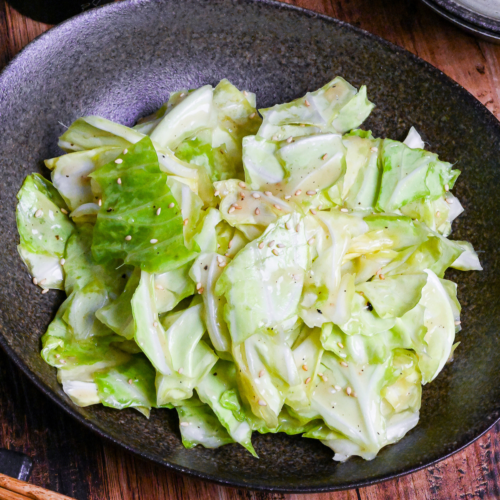
Shiodare Cabbage (Cabbage Salad with Addictive Salt Dressing)

Ingredients
- 300 g green cabbage soft leaf such as spring or sweetheart
For the sauce
- 4 tbsp water
- 1 tbsp toasted sesame oil the dark toasted type
- 1 tsp Chinese-style chicken bouillon powder
- 1 tsp honey
- ½ tsp sugar or light brown sugar
- ½ tsp sea salt fine
- ½ tsp lemon juice optional, a small brightener
- ½ tsp garlic paste or a little bit less of grated garlic
- ¼ tsp ground black pepper
For the slurry
- 1 tbsp water
- 1 tsp potato starch (katakuriko) or cornstarch
To garnish
- toasted white sesame seeds
The ingredient brands and tools I trust are in my Japanese pantry guide and my cooking tools guide.
Can’t find certain Japanese ingredients? See my substitution guide here.
Instructions
- Tear 300 g green cabbage into large bite-size pieces and place them in a large heatproof bowl.

- In a small saucepan, add 4 tbsp water, 1 tbsp toasted sesame oil, 1 tsp Chinese-style chicken bouillon powder, 1 tsp honey, ½ tsp sugar, ½ tsp sea salt, ½ tsp lemon juice, ½ tsp garlic paste, and ¼ tsp ground black pepper. Mix well, heat on low and gently simmer for about 2 minutes.
- In a small bowl, mix 1 tbsp water and 1 tsp potato starch (katakuriko) together to make a slurry.
- Pour the slurry into the saucepan while whisking, and continue to heat until it thickens to the consistency of maple syrup.
- Take it off the heat and immediately pour the hot sauce over the cabbage and toss until every piece is coated, then leave to cool.
- If time permits, cover and chill in the fridge for 30 minutes. Sprinkle with toasted white sesame seeds before serving.

Do you need to rinse the salt off the cabbage before adding to sauce?
Hi Sine,
No need to rinse it, I’ve updated the recipe to make that clearer.
Thank you for pointing it out and I hope you enjoy the recipe!
Yuto
Another winner! I used Taiwanese (flat) cabbage. A little fresh ginger might be nice here.
Hi Christina,
Thank you so much for trying this recipe too, and for the photo! And knowing Taiwanese flat cabbage does the job here is genuinely useful, since I can’t check what is on the shelves outside Japan. A little fresh ginger would be a good call! 🙂
Yuto