

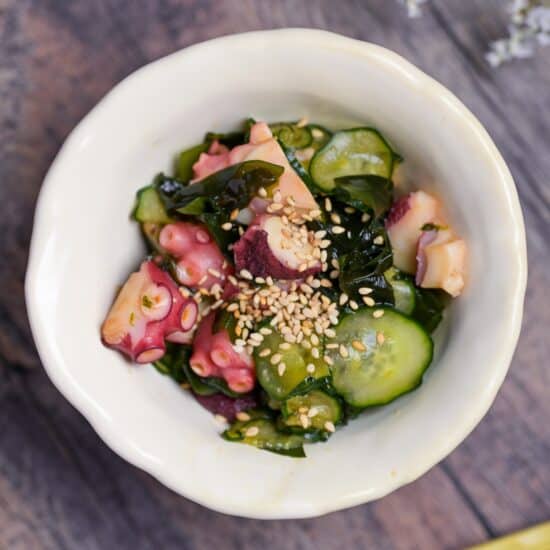


Featured Comment
Delicious and easy to make. Very fresh, great mix of textures, and perfect dressing. Thanks.
★★★★★
– John
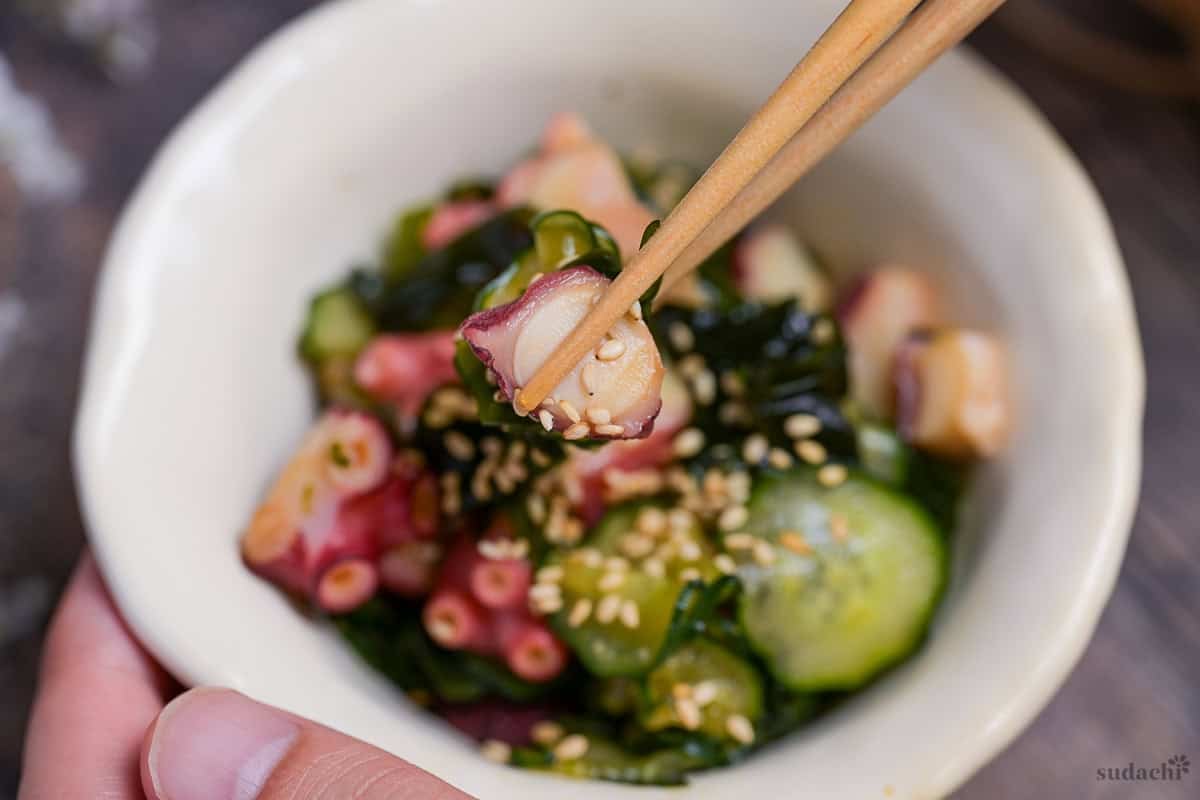
A good octopus salad is the coldest, cleanest thing on a Japanese summer table. Springy octopus, cucumber that still snaps, and a sweet-sharp vinegar dressing that resets your mouth between richer bites.
This is tako to kyuri no sunomono, and little beyond a quick simmer to settle the dressing.
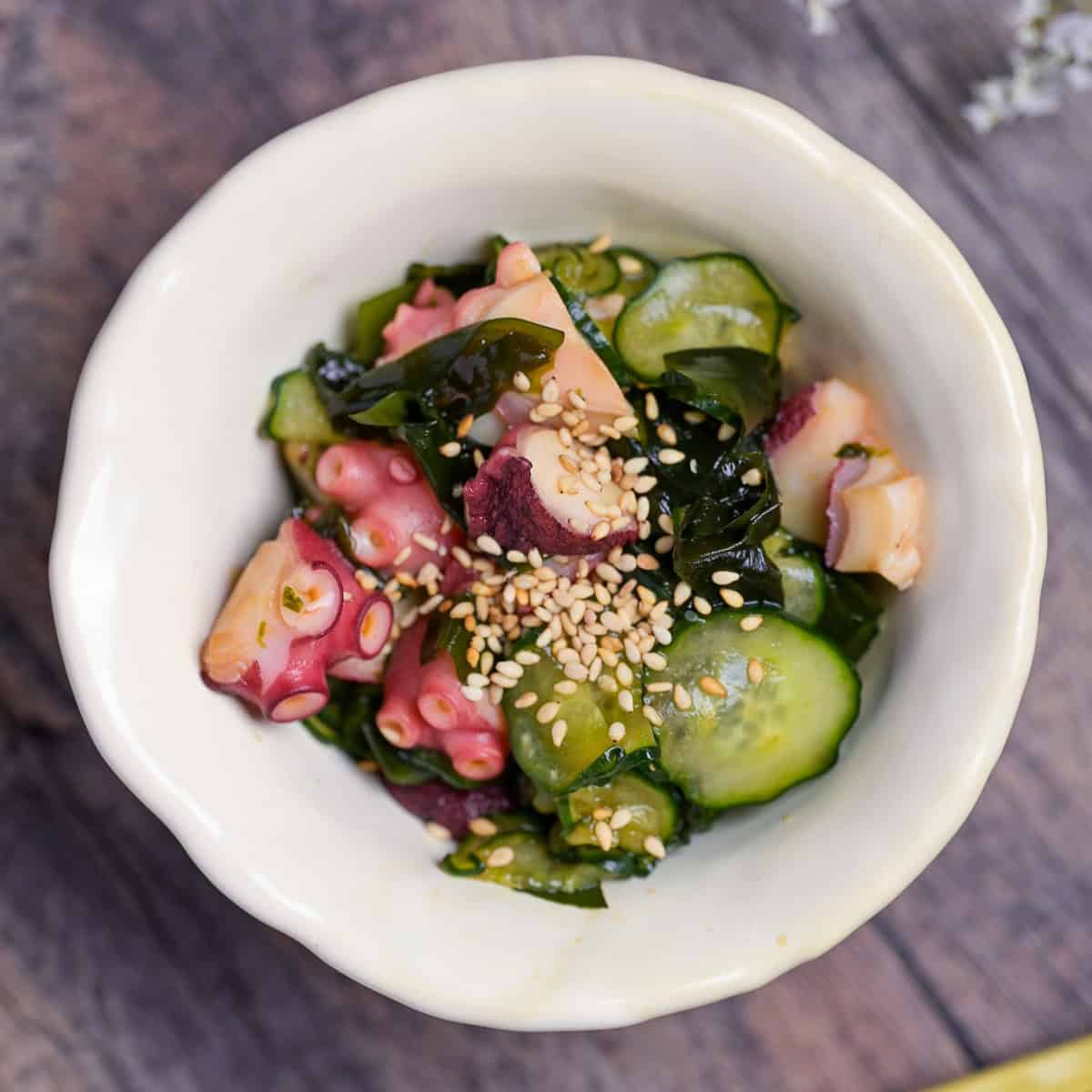
Octopus Salad
Recipe Snapshot
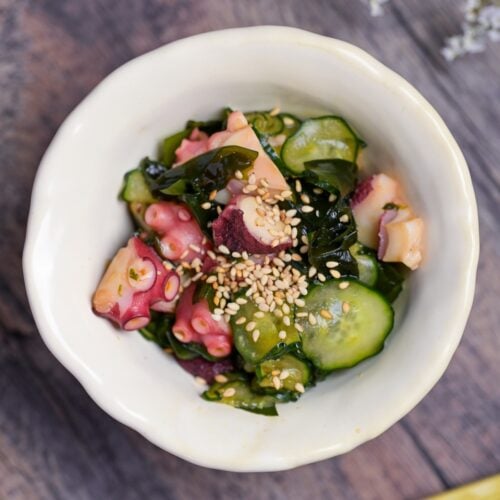
- What is it? A cold Japanese vinegared dish that pairs pre-boiled octopus with salt-wilted cucumber and rehydrated wakame in a mellow rice vinegar dressing.
- Flavor profile: Bright and clean, with a sweet-sharp rice vinegar edge that resets the palate, springy octopus, crisp cucumber, and a soft slip of wakame underneath. Tuned a little gentler on the sour side than the puckering grandmother version.
- Why you will love this recipe: The whole thing comes together in about 15 minutes. Salt and squeeze the cucumber hard, then dress at the very last second.
- Must-haves: Ready-to-eat boiled octopus, unseasoned rice vinegar, and a cucumber you are willing to salt and wring out hard.
- Skill level: Easy. The only heat is a 1 minute simmer for the dressing, and the whole thing is ready in about 15 minutes.
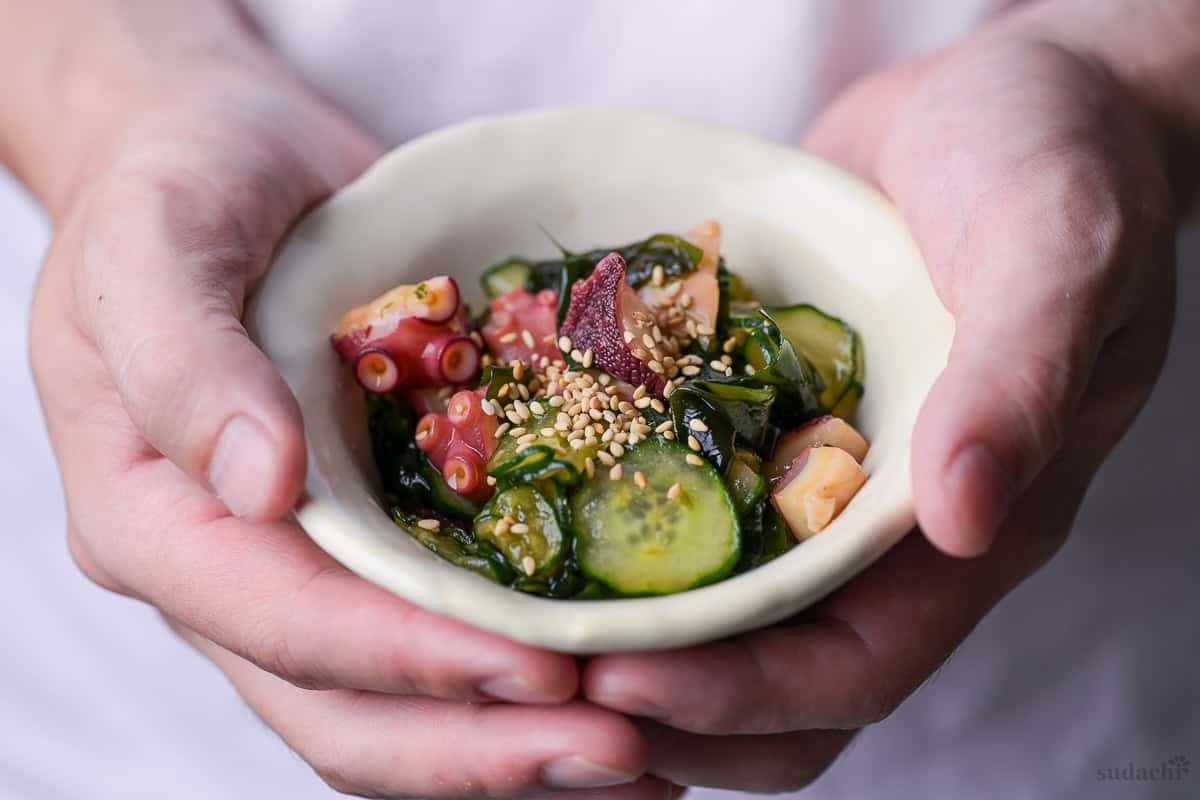
What Is Octopus Salad (Tako to Kyuri no Sunomono)?
Octopus salad, tako to kyuri no sunomono, is a quiet summer side dish that lands on family tables all over Japan. Boiled octopus, thin cucumber, a splash of sweet-sharp vinegar, and little else. On a sticky August evening it is the cool thing you reach for between richer bites, and it resets your whole mouth in a single bite.
Japan’s octopus country is the west, around Kansai and the Seto Inland Sea, where strong currents make the catch famous. It is home cooking, the kind a parent throws together because the cucumbers are cheap and the heat is brutal.
For this recipe, I want to be honest about where my version comes from. I grew up eating this at my grandmother’s house, and hers leaned hard into the sour side. Even then it was a little too strong for me, so I have pulled the vinegar back a little. Still bright, still with an edge that wakes you up, just not the kind that clenches your jaw on the first bite.
Dish Name Ingredients
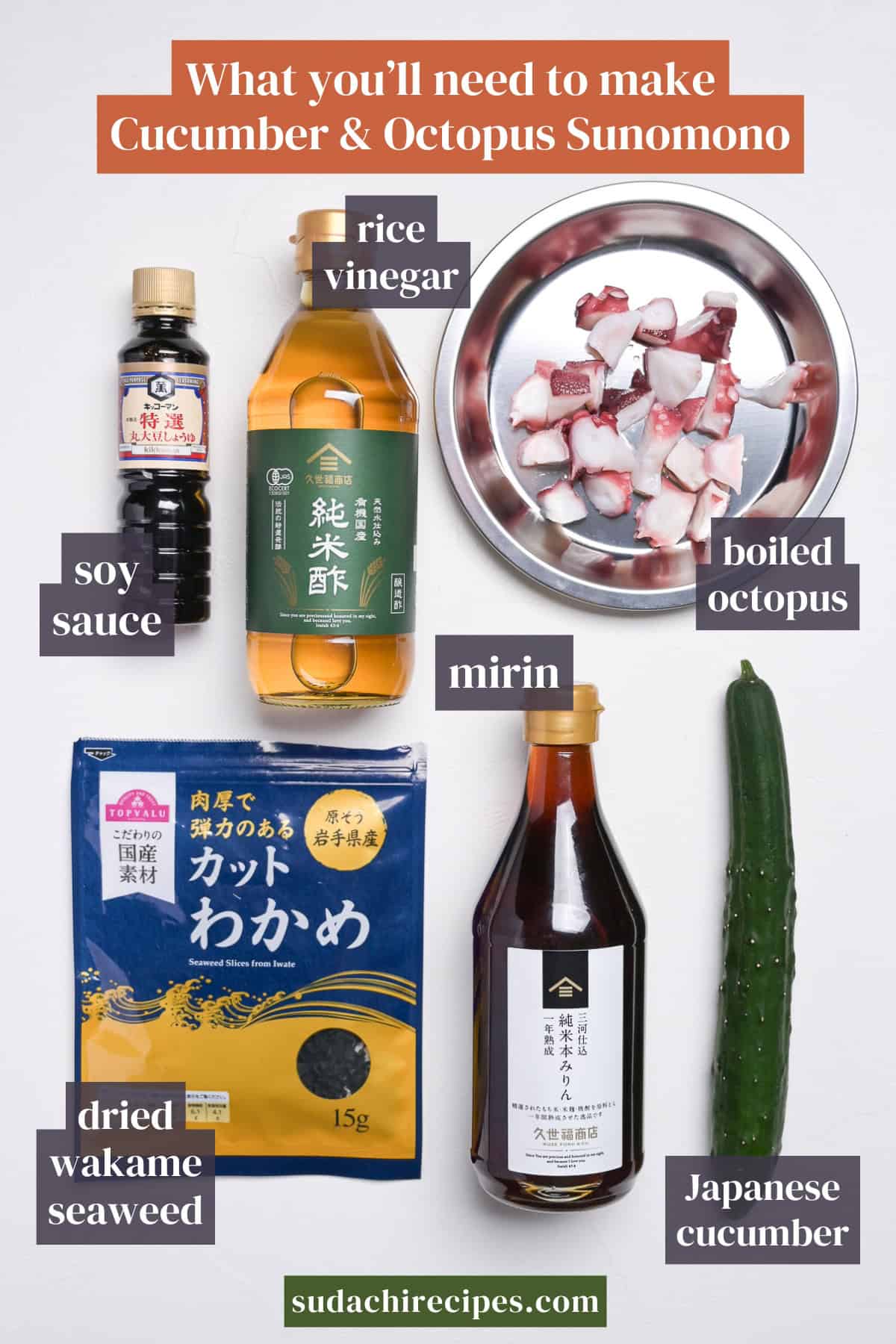
- Boiled octopus: Buy it already cooked if you can. In Japan you basically never see raw octopus in a regular store. Even the stuff labeled for sashimi has already been boiled or steamed before it reaches the case. So look for ready-to-eat boiled octopus (yudedako). If your octopus is not labeled sashimi-grade, give it a quick blanch and move on.
- Japanese cucumber: Slim, thin-skinned, fine-seeded. If you cannot find the Japanese kind, reach for Persian or mini cucumbers, which are right there at most North American stores now and are the closest match in skin and seed. Whatever you use, the cucumber is going to get salted and squeezed before it ever meets the dressing, so do not panic about the variety. What matters is pulling the water out, and we get to that in the steps.
- Unseasoned rice vinegar: This is the soul of the whole thing, so do not swap it out. We will talk substitutes in a minute, but rice vinegar is the one line I will not cross. Its acidity is mellow and faintly sweet, and that gentleness is exactly what lets the octopus and cucumber stay the stars.
Substitution Ideas
- Boiled octopus → squid, shrimp, or imitation crab: You can do it, and the dish is still recognizably sunomono. I want to be straight with you though. Without the octopus it changes quite a bit, so think of these as “this works” rather than “this is better.” Squid gives you a crunchier bite instead of the springy one. Shrimp comes out sweeter and softer. Imitation crab is the no-cook, budget-friendly route, just shred and go. All of them make a real dish.
- Japanese cucumber → Persian, mini, or English cucumber: Persian and mini are the closest stand-ins and the easiest to find. English cucumber works too, just halve it, scoop the seeds, peel it, then salt and squeeze. The big American garden cucumber is the last resort, thick skin and big seeds and a lot of water, and if it is all you have, peel it, seed it, and salt it harder than you think you need to.
- Japanese soy sauce → tamari (for gluten-free): The dish is almost gluten-free already. The one hidden wheat is the soy sauce. Swap in tamari, which is traditionally just soybeans and salt, and check the label to be sure, because some tamari sneaks wheat back in.
Have trouble finding Japanese ingredients? Check out my ultimate guide to Japanese ingredient substitutes!
How to Make My Octopus Sunomono Salad
If you prefer to watch the process in action, check out my YouTube video of this octopus salad recipe!

Before you start (Mise en place):
- Pull the boiled octopus out of the fridge. If it is frozen, thaw it slowly in the fridge or under cold running water, never in the microwave, and slice it while it is still a little firm. If you start with raw, make sure to boil/steam, cool beforehand.
- Have a small pan ready for the dressing, a bowl of cold water ready for the wakame, and a bowl ready for salting the cucumber.
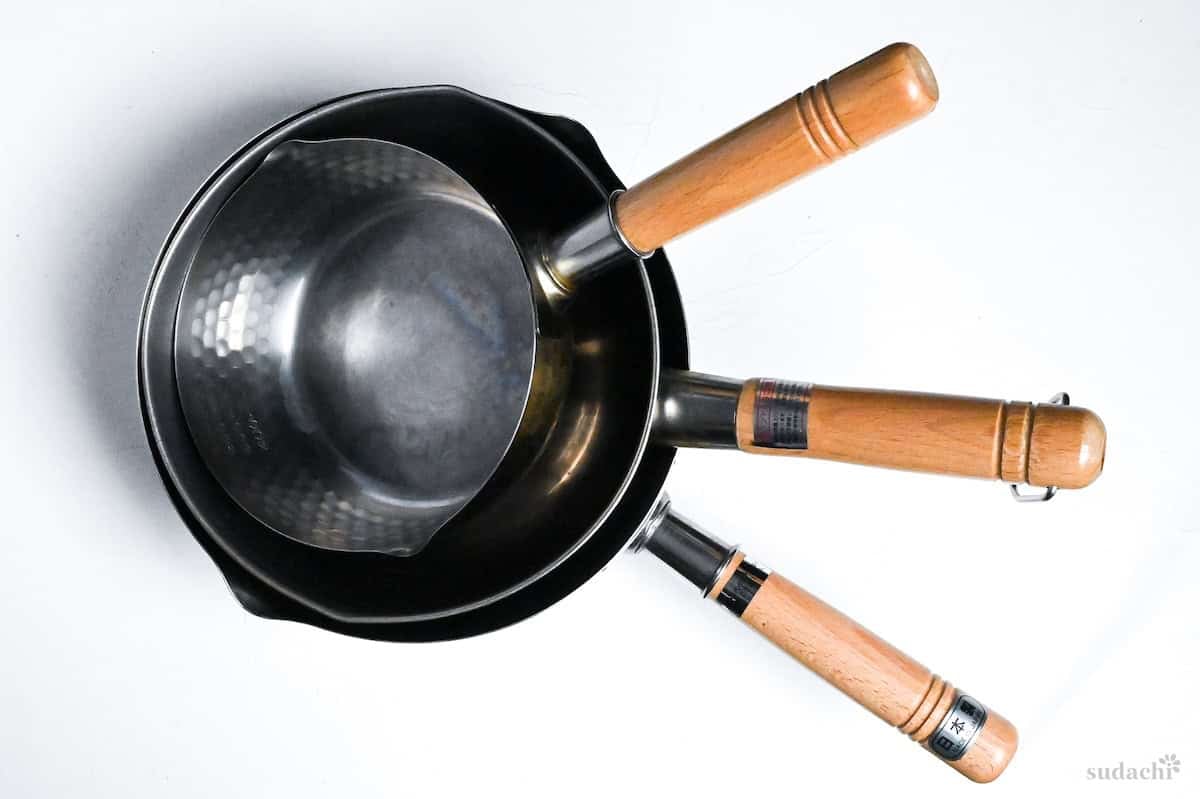
To develop this octopus salad recipe, I used a 16cm yukihira nabe.
i. Add the soy sauce, mirin, and rice vinegar to a small pan and set it over medium heat.
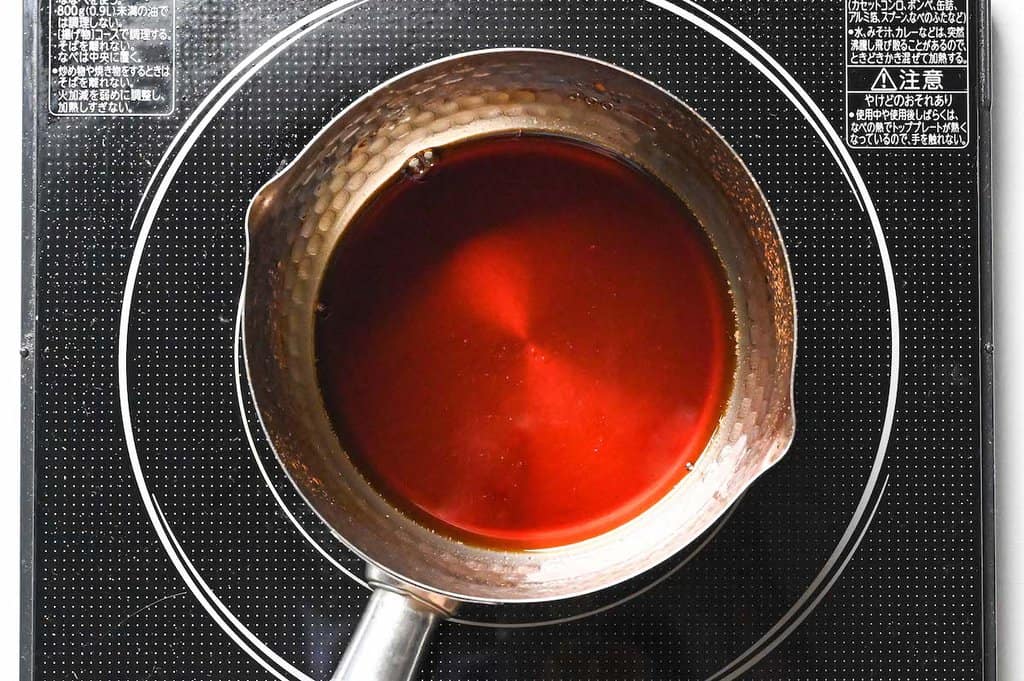
ii. Let it bubble for 30 seconds to 1 minute to cook off the raw alcohol, then pull it off the heat and leave it to cool.
A warm dressing on cold octopus is a small sad thing. Cooling it now, while you handle everything else, keeps the chill and the snap intact when the dressing and the octopus finally meet. Give it that head start.
i. Drop the dried wakame into a bowl of cold water and let it sit for a few minutes to rehydrate.
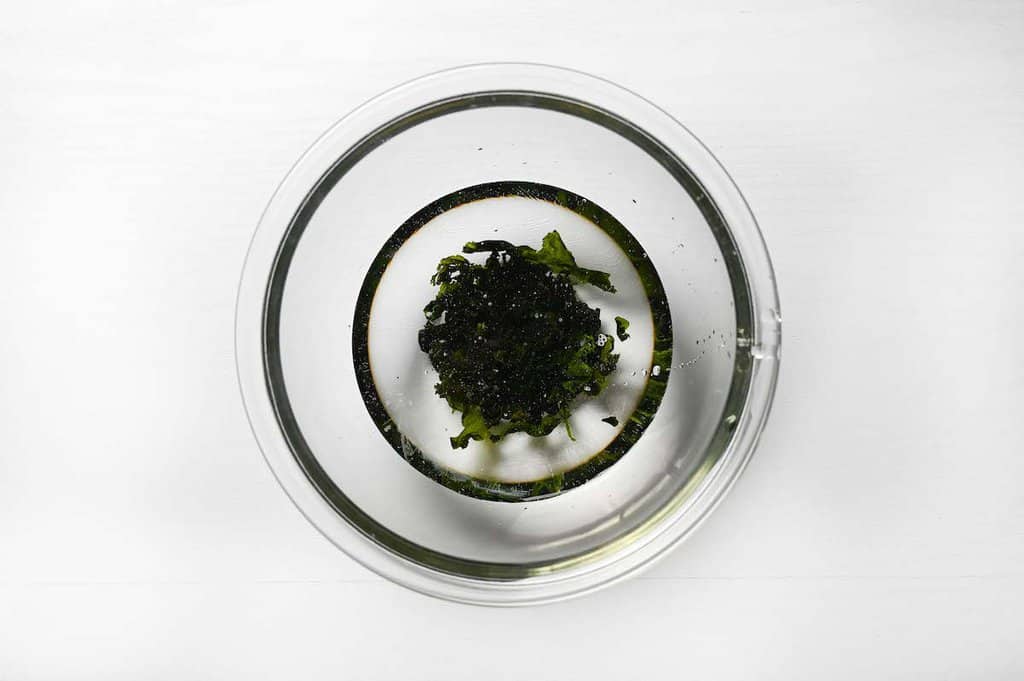
That is the entire instruction. You soak it, you do not cook it. I know that feels too easy, and every cook learning this dish stalls right here, wondering if they are missing a step. You are not. Cold water, a few minutes, done.
i. Slice the cucumber thin and put it in a bowl. Add the salt and rub it gently over the slices with your hands, then leave it for 5 minutes.
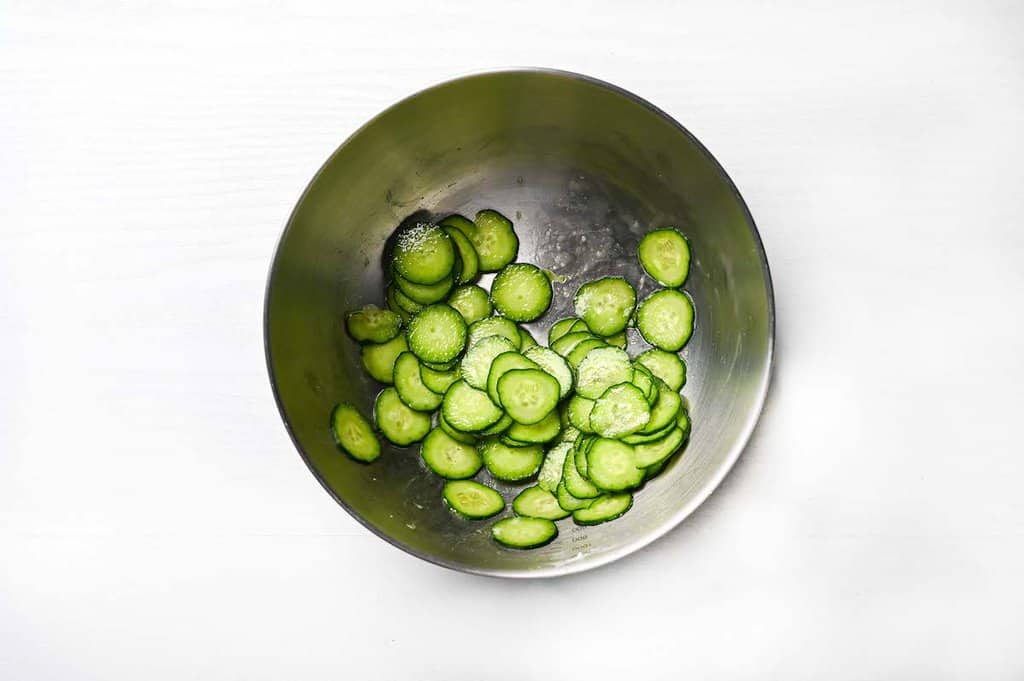
Cucumber is about 95 percent water. Skip this step and toss raw cucumber straight into the dressing, and the slices keep weeping until your beautiful sharp dressing turns into a watery puddle within minutes. That diluted, blurry result is the single biggest reason a homemade version disappoints. So the salt is not really seasoning here. It is a tool. It pulls the water out by osmosis and gives you that crisp, clean snap instead of a soggy one.
i. Cut the boiled octopus into small bite-size pieces, or slice it thin with your knife laid almost flat.
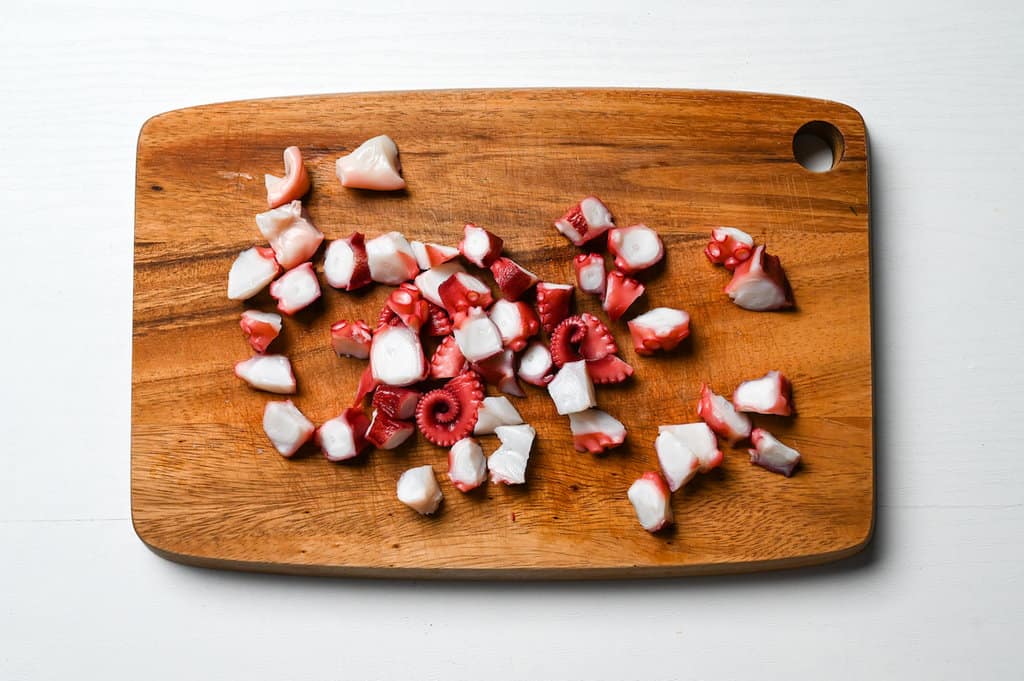
i. Rinse the salted cucumber under cold water and then squeeze the liquid out thoroughly with both hands. The real test is simple, when no more water drips out, it is ready. Drain the wakame and give it a squeeze too.
ii. Put the cucumber, wakame, and octopus together in a bowl.
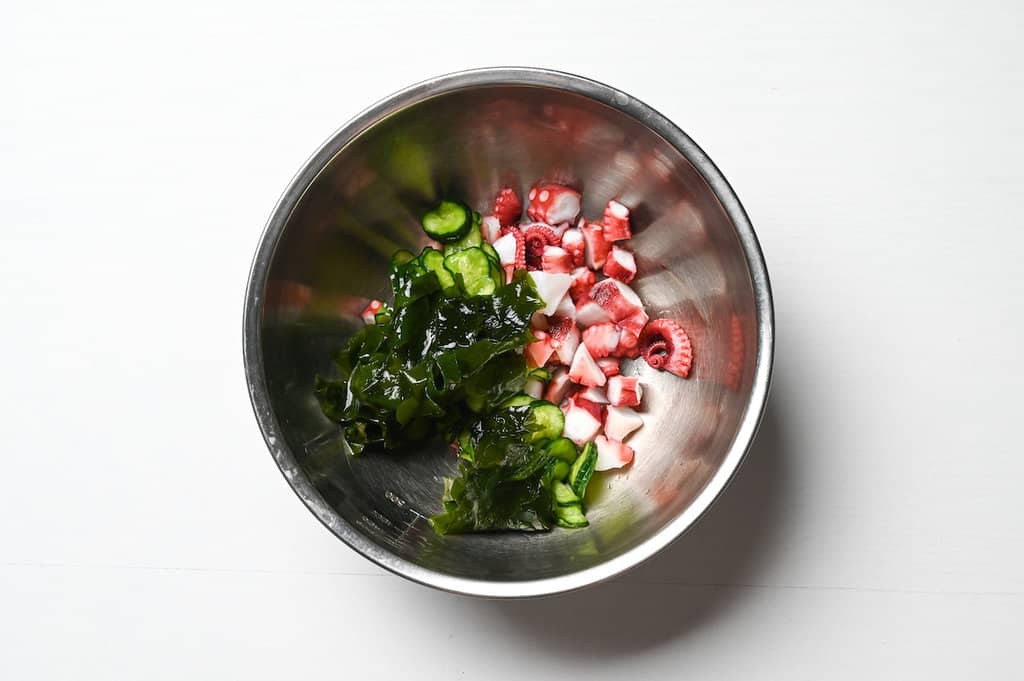
i. Pour the cooled dressing over everything and mix well so each piece gets a coat. And then serve it right away.
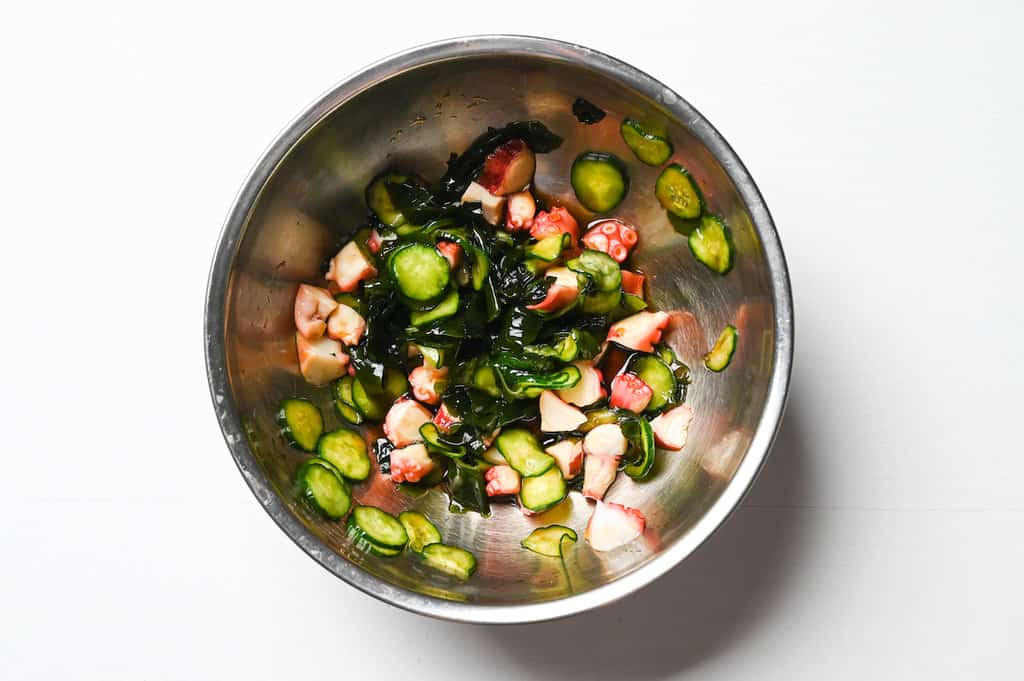
The salt and vinegar in the dressing never stop pulling water out of the cucumber, so the longer the dressed salad sits, the more it weeps and the more the flavor goes blurry and flat. Dressed and eaten in the same few minutes, it is crisp and bright. If you are making this ahead, keep the squeezed cucumber, the octopus, the wakame, and the dressing all separate, and bring them together only when you are about to eat.
i. Dish it up and scatter the toasted sesame seeds over the top if you are using them.
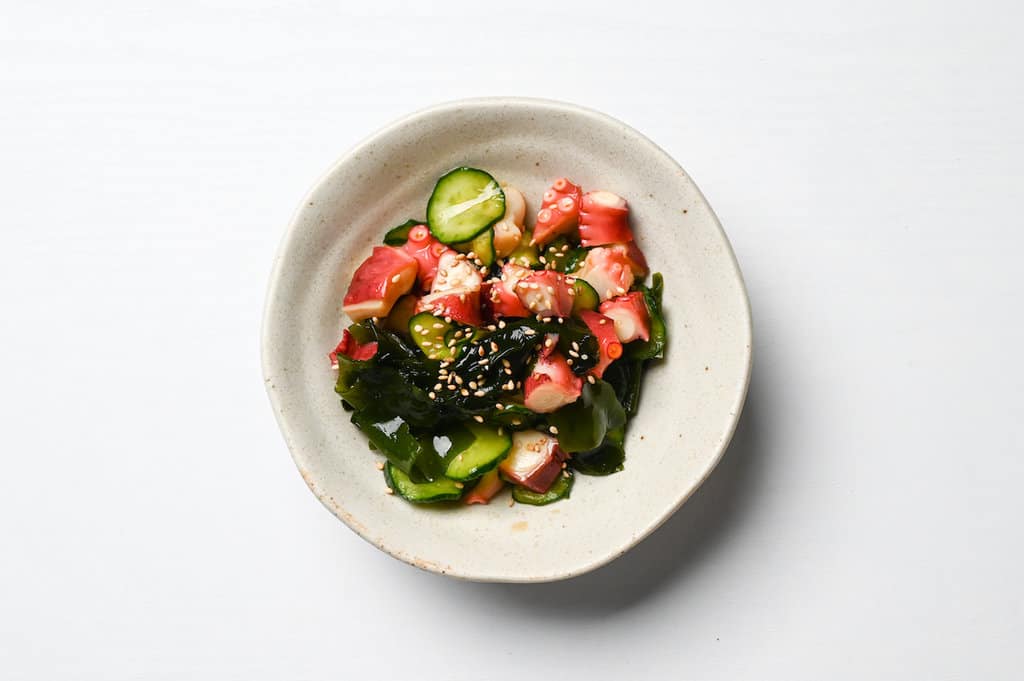
If you follow the default recipe, it will yield 4 side servings.

Essential Tips & Tricks
- Reach for unseasoned rice vinegar. This is the one line that decides whether you get sunomono or a Western pickle salad wearing a Japanese name. Apple cider and wine vinegars have loud fruity aromas and take the whole plate over, while rice vinegar stays quiet and lets the octopus and cucumber shine.
- Salt the cucumber and wring it out thoroughly. Cucumber is about 95 percent water, and skipping this is the single biggest reason a homemade plate turns into a watery, blurry puddle. Salt the slices, give them 5 minutes, rinse, then squeeze with both hands until no more water drips out.
- Dress it at the very last second. The salt and vinegar in the dressing never stop pulling water out of the cucumber, so a salad dressed and parked for an hour weeps and goes flat. Bring the squeezed cucumber, wakame, octopus, and cooled dressing together only when you are about to eat, and you keep the crisp, bright version.
With these simple tips in mind, you’re set for success every time you make octopus salad.
Storage & Meal Prep
Fridge: This is an eat-fresh dish, so plan to enjoy it the day you make it. If you have leftovers, keep them cold in a sealed container with the surface covered, where an assembled salad holds best the same day and stays acceptable for 1 to 2 days.
Freezer: Not recommended.
Meal prep: Prep the parts ahead, not the finished salad. Salt and squeeze the cucumber, slice the octopus, rehydrate and squeeze the wakame, and mix the dressing, then keep each one refrigerated and separate. Bring them together only just before serving. This protects the texture and keeps the cucumber from sitting in vinegar and weeping.
What to Serve With This Recipe
- Shogayaki (Ginger Pork)
- Saba no Shioyaki (Salt-Grilled Mackerel)
- Homemade Miso Soup
- Perfect Japanese Rice
Octopus Salad Troubleshooting
This is the most common stumble, and it usually means the dressing is leaning on straight vinegar with too little to round it, or you reached for a sharp grain vinegar instead of mellow rice vinegar. Pull it back by stirring in a little more mirin, a pinch of sugar, or a small spoon of kombu or katsuo dashi, which nudges the dressing toward tosazu and softens the edge.
Either the salting was too brief, you used too little salt, or you did not squeeze hard enough, and dressing the salad too far ahead makes it worse. Salt the thin slices, give them a full 5 minutes until they go floppy, rinse, then wring them out with both hands until no more water drips. The honest test is the drip, not the timer. Then dress as close to serving as you can, because the vinegar and salt in the dressing keep pulling water out the longer it sits.
A flat salad usually means the dressing got diluted by cucumber water, or it simply needs a touch more brightness. If the cucumber wept into it, you can lift the whole thing with a few more drops of rice vinegar to pull the sharpness back, then taste and balance with a little mirin or salt. Chase the line where the sour, the sweet, and the salt all sit together. If the dilution came from under-squeezed cucumber, fix that next time at the squeezing stage rather than drowning the salad in more dressing.
More Japanese Salad Recipes
- Wakame Salad (Seaweed Salad)
- Japanese Sesame Spinach Salad
- Yamitsuki Shio Cabbage
- Japanese Potato Salad (Izakaya Style)
Hungry for more cool, crisp plates to round out the table? Explore my full collection of Japanese salad recipes.
Did You Try This Recipe?
I would love to hear your thoughts!
💬 Leave a review and ⭐️ rating in the comments below. 📷 I also love to see your photos – submit them here!
Japanese Octopus Salad (Tako to Kyuri no Sunomono)

Ingredients
- 2 tsp Japanese soy sauce (koikuchi shoyu)
- 2 tsp mirin
- 2 tsp unseasoned rice vinegar (komezu) not seasoned "sushi" vinegar
- 1 tbsp dried wakame seaweed
- 1 Japanese cucumber Persian or mini cucumber is the closest stand-in
- ½ tsp salt
- 80 g boiled octopus preferably buy it pre-boiled, or shrimp/imitation crab
- toasted white sesame seeds optional garnish
The ingredient brands and tools I trust are in my Japanese pantry guide and my cooking tools guide.
Can’t find certain Japanese ingredients? See my substitution guide here.
Instructions
- Add 2 tsp Japanese soy sauce (koikuchi shoyu), 2 tsp mirin and 2 tsp unseasoned rice vinegar (komezu) to a small pan and heat on medium. Let the mixture bubble for 30 seconds to 1 minute to burn off some of the alcohol, then remove from the heat and leave to cool. Once cool, chill in the fridge.

- Submerge 1 tbsp dried wakame seaweed to a bowl of cold water and soak it for a few minutes to rehydrate.
- Cut 1 Japanese cucumber into thin slices, place them in a bowl and sprinkle ½ tsp salt. Rub the salt over the cucumber until evenly covered and rest for 5 minutes.
- Cut 80 g boiled octopus into small bitesize pieces, or thinly slice according to preference.
- Wash the salted cucumber sliced under cold water and thoroughly squeeze out the excess liquid. Squeeze the wakame too, and add everything to the bowl with the octopus.
- Pour in the chilled sauce and mix well.
- Transfer to serving bowls and sprinkle with toasted white sesame seeds. Enjoy!

Delicious and easy to make. I couldn’t find fresh octopus today, but I used a small jar of marinated baby octopus cut in small chunks. Not as good as boiled octopus as in the recipe but did the trick. Very fresh, great mix of textures, and perfect dressing. Thanks.
Hi John,
Thank you for trying this recipe! I’m happy to hear you enjoyed this! 🙂
Yuto
I’m having a blast cooking your Japanese recipes! They’re so simple and the prep is a breeze. I picked up some octopus sashimi at the market, gave it a quick re-boil and an ice bath, and prepped the dish a few hours early. It turned out absolutely delicious.
Hi Elle,
That makes me really happy to read. I really appreciate you taking the time to share your experience! The octopus prep sounds spot-on, and I’m happy it turned out great for you. Thanks for cooking along with me! 🙂
Yuto