


I grew up eating soba for every occasion, from New Year’s Eve toshikoshi soba to quick lunches. These buckwheat noodles carry a nutty, earthy flavor that is unmistakably Japanese. This collection covers all the ways I love to eat them: hot, cold, simple, and topped with crispy tempura or rich duck.
1. Homemade Soba Noodles
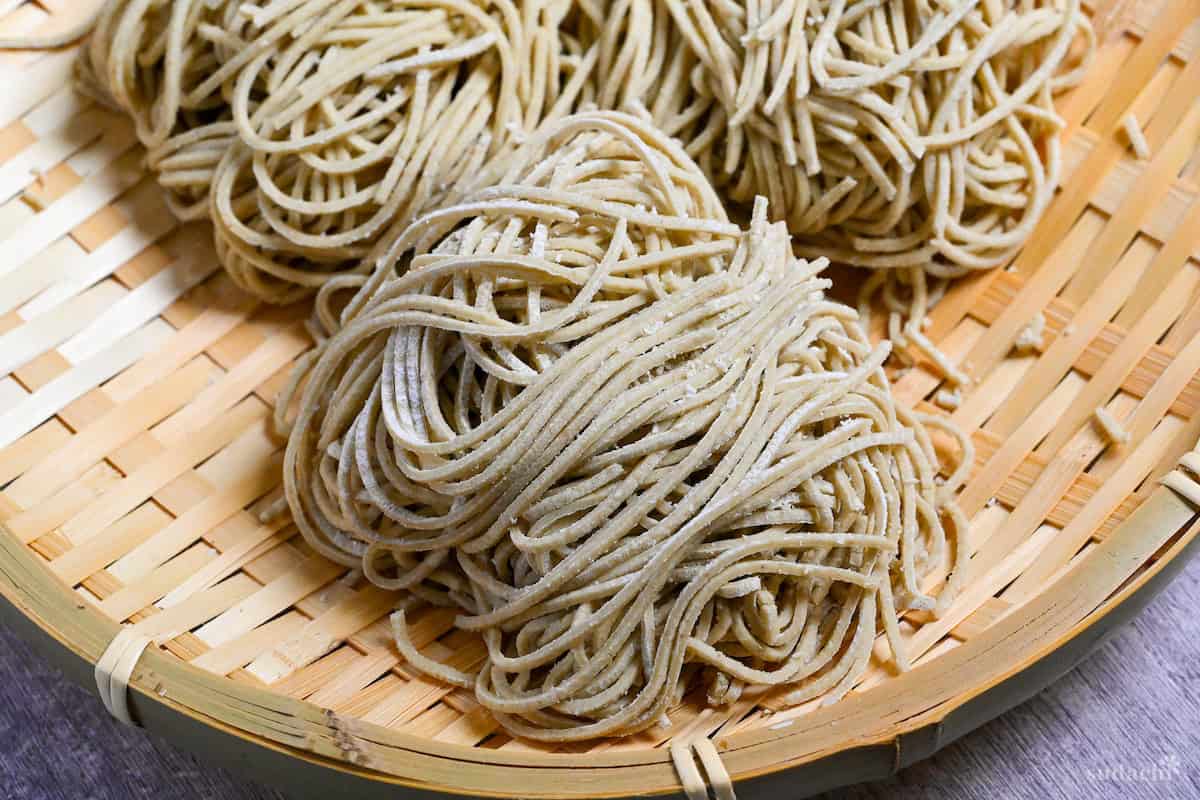
Most people buy soba dried, and there is nothing wrong with that. But rolling and cutting your own buckwheat noodles changes your entire understanding of what soba can taste like.
The real challenge is the dough. Buckwheat has no gluten, so the mixing stage demands patience and precision that wheat noodles never require. My guide walks through every ratio and pitfall, so you can skip the failures I went through to get here.

2. Kake Soba (Hot Soba Noodle Soup)

This is the bowl I reach for when I want soba at its most honest. Buckwheat noodles sit in a dashi broth seasoned with kaeshi, a soy and mirin blend that soba shops in Japan age for weeks. My version shortcuts the aging but keeps the depth.
There is a small timing trick with the kaeshi that separates a flat broth from one you will want to sip on its own.

3. Tempura Soba
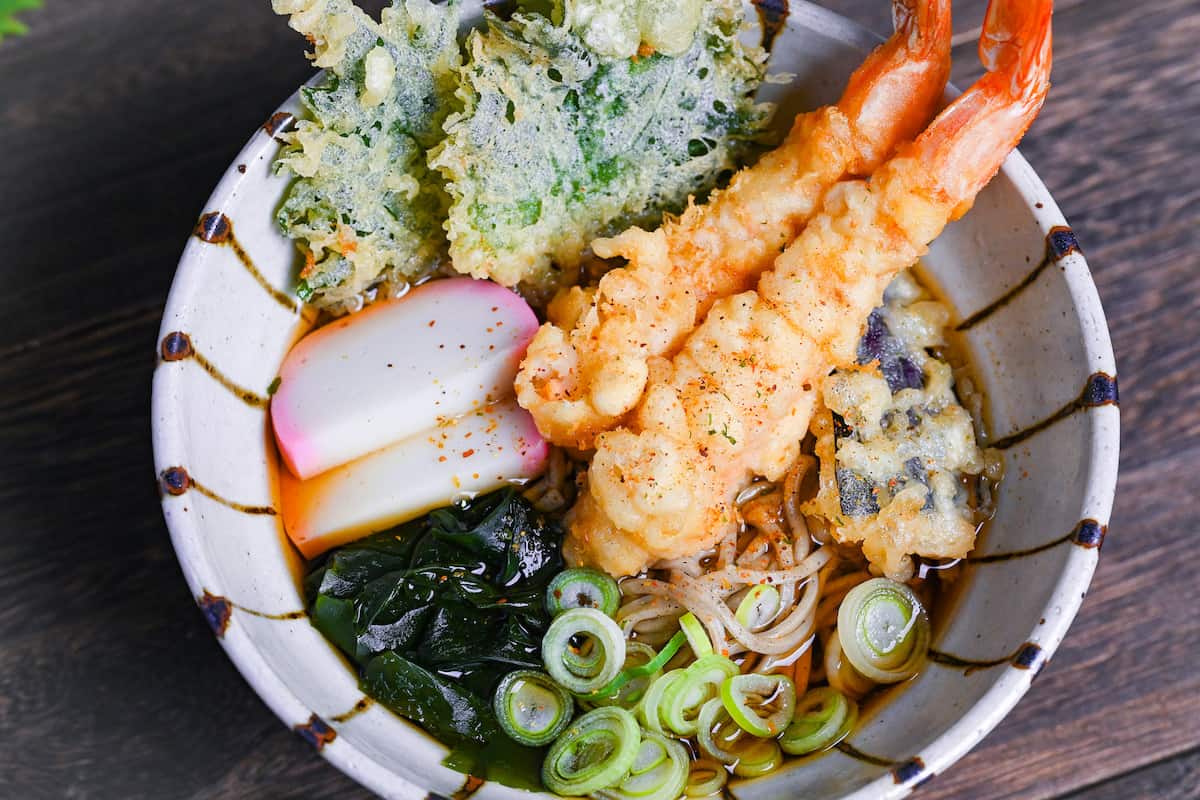
Crispy tempura on top of hot soba broth is one of those combinations that feels like it should not work this well. The batter softens slowly as it soaks, creating layers of crunch and silk in the same bite.
I save every piece of tempura batter that breaks off during frying. In Japan we call these “tenkasu,” and they become toppings for future noodle bowls.
4. Duck Soba (Kamo Nanban)

Duck is rare in Japanese cooking, which is exactly what makes this bowl feel special. Rendering the fat from a scored duck breast and then building the broth in that same pan creates a richness that no other soba soup comes close to matching.
This recipe ranks in my personal top 10 creations. The charred naganegi cooked in duck fat alone are worth making the dish for, but I will let you find out what happens when that fat hits the dashi.

5. Nikutama Ankake Soba (Beef and Egg)
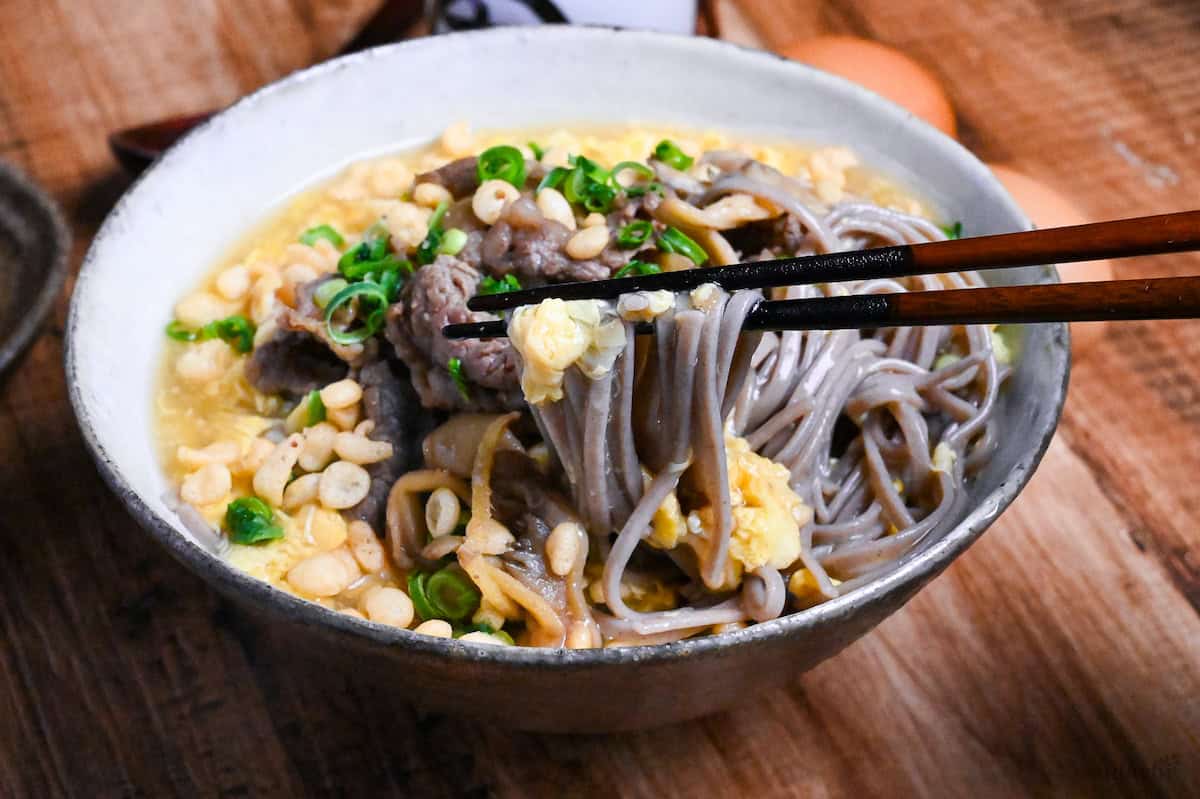
This is soba wearing a completely different outfit. A ginger-spiked, starch-thickened beef and egg sauce clings to every strand instead of pooling at the bottom. The texture is closer to a gravy than a broth, and it stays hot far longer than regular soup.
I was inspired by a limited-edition udon dish from Marugame Seimen but switched to soba because the nutty buckwheat plays off the rich ankake sauce in a way that surprised me. The trick to silky egg ribbons instead of scrambled chunks is simpler than you think.

6. Zaru Soba (Cold Dipping Noodles)

Zaru soba strips buckwheat noodles down to their purest form. Cold, firm, and served on a bamboo tray with a mentsuyu dipping sauce on the side. Every flaw in the noodle is exposed, and every strength is amplified.
You might wonder why I rinse these noodles in ice water even though they are already meant to be served cold. The answer involves a starch reaction that changes both the texture and the flavor of the finished noodle. Once you understand it, you will never skip the rinse.
7. Hiyashi Kitsune Soba (Cold Tofu Noodles)
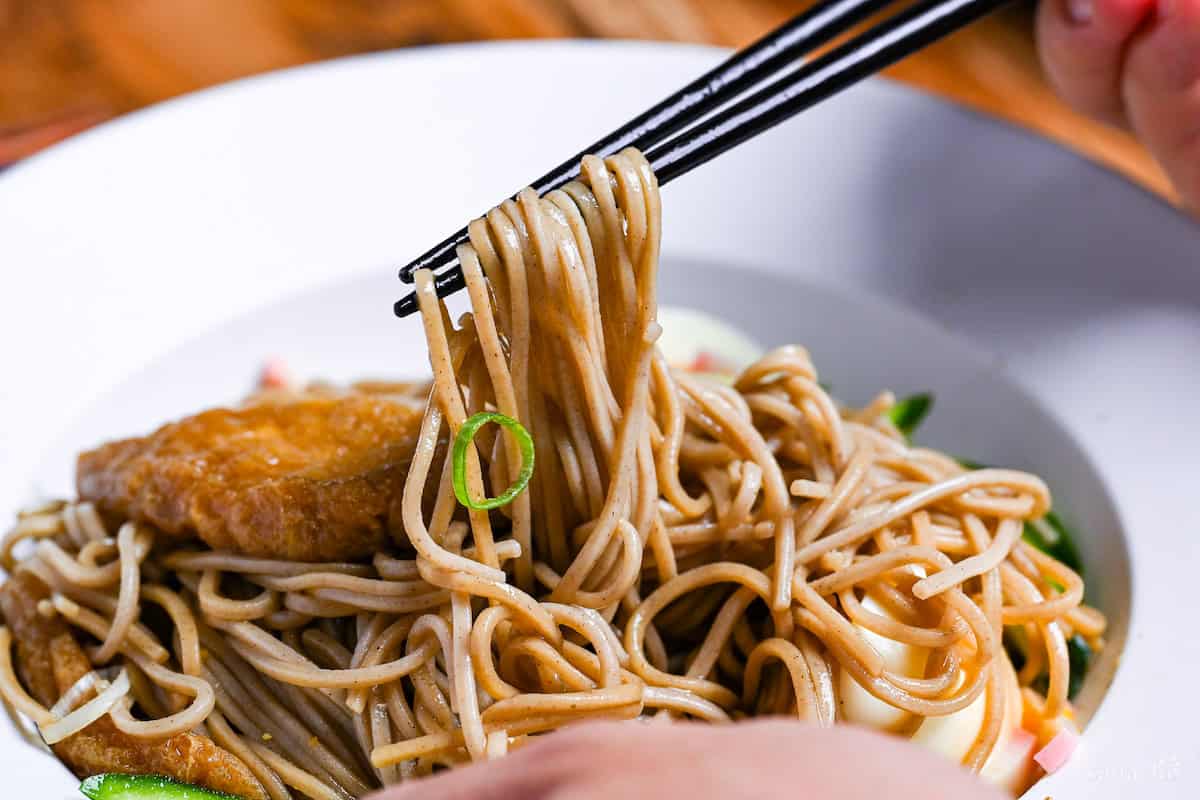
Summer in Japan means too many cold noodle options and not enough appetite to decide. This version solves the problem with sweet, marinated fried tofu that soaks overnight in a soy and dashi bath until every bite bursts with seasoning.
The aburaage needs exactly one night in the fridge. Less than that and the flavor sits on the surface. More than 24 hours and the texture collapses. That narrow window is the difference between good kitsune and the kind that makes you close your eyes while eating.

8. Summer Soba with Miso Meat Sauce
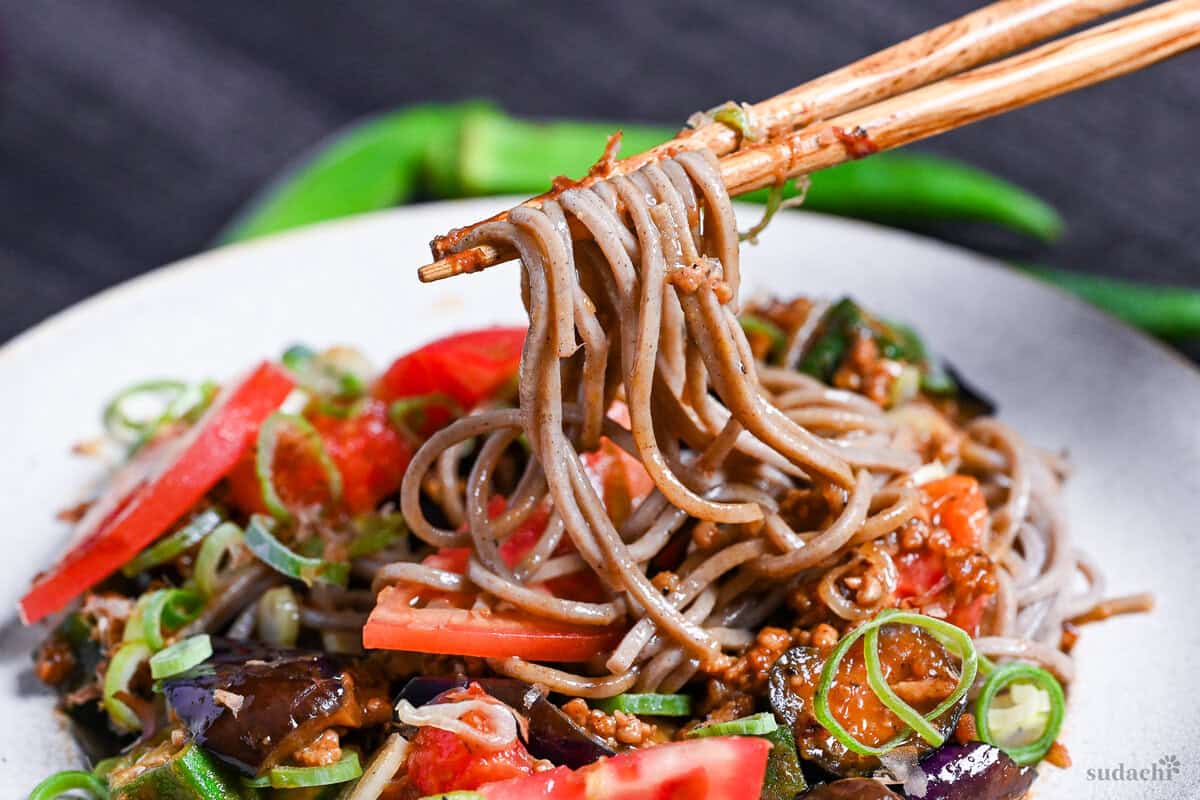
Miso and cold soba sounds like an odd pairing until you taste it. Garlicky pork cooked down with eggplant, tomatoes, and yellow miso creates a warm sauce that hits chilled buckwheat noodles with a temperature contrast that wakes up every sense.
Half the tomatoes go into the sauce for sweetness. The other half stay raw for brightness. This hot-cold, cooked-raw duality in a single bowl is what makes the dish impossible to put down once you start.


Leave a rating and a comment