



Featured Comment
I’ve been making these dangos since I first discovered the recipe in 2021 and it’s my go-to recipe! the texture is perfect and they’re so tasty~ thanks 🍡🍡
– @rose_shimmerling (from YouTube)
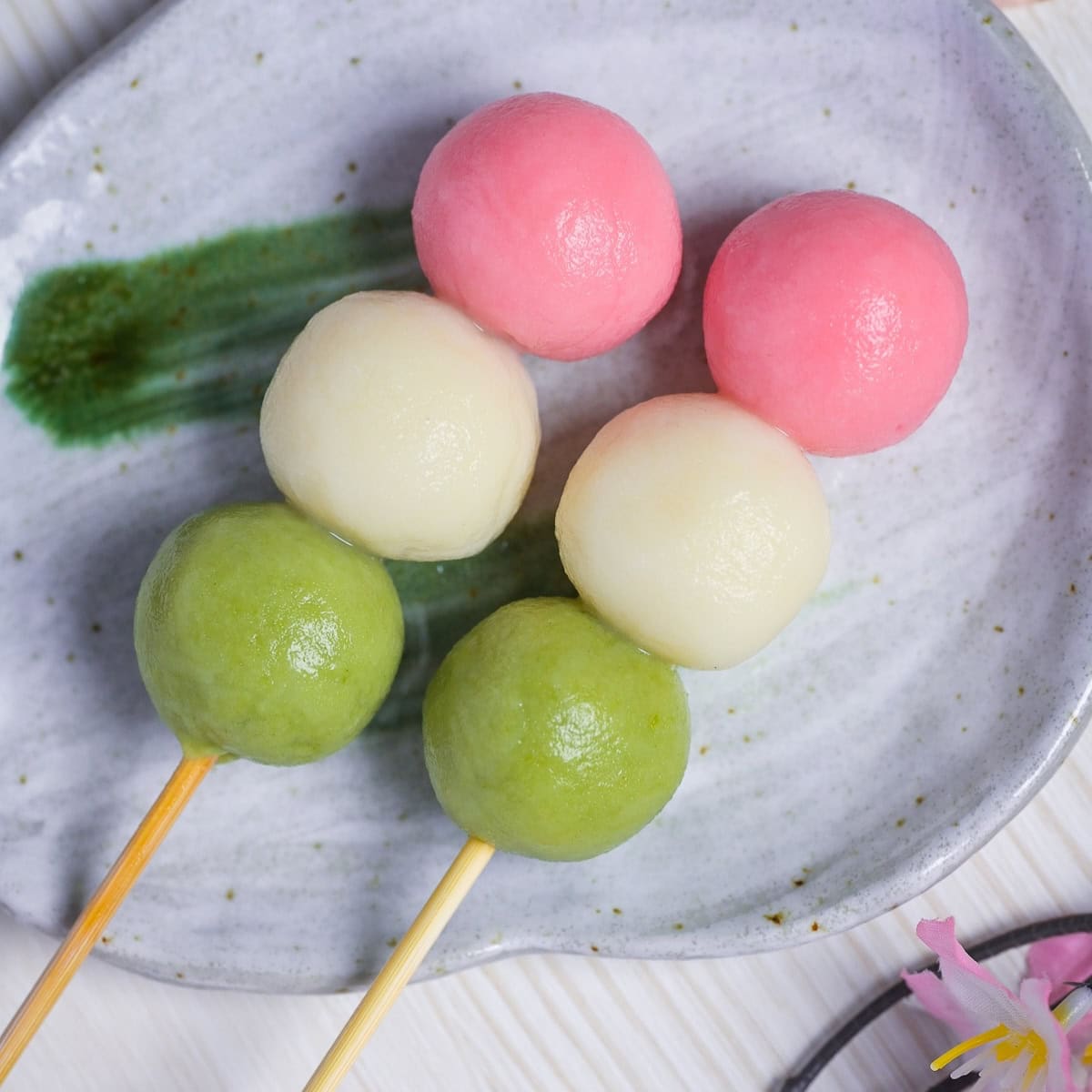
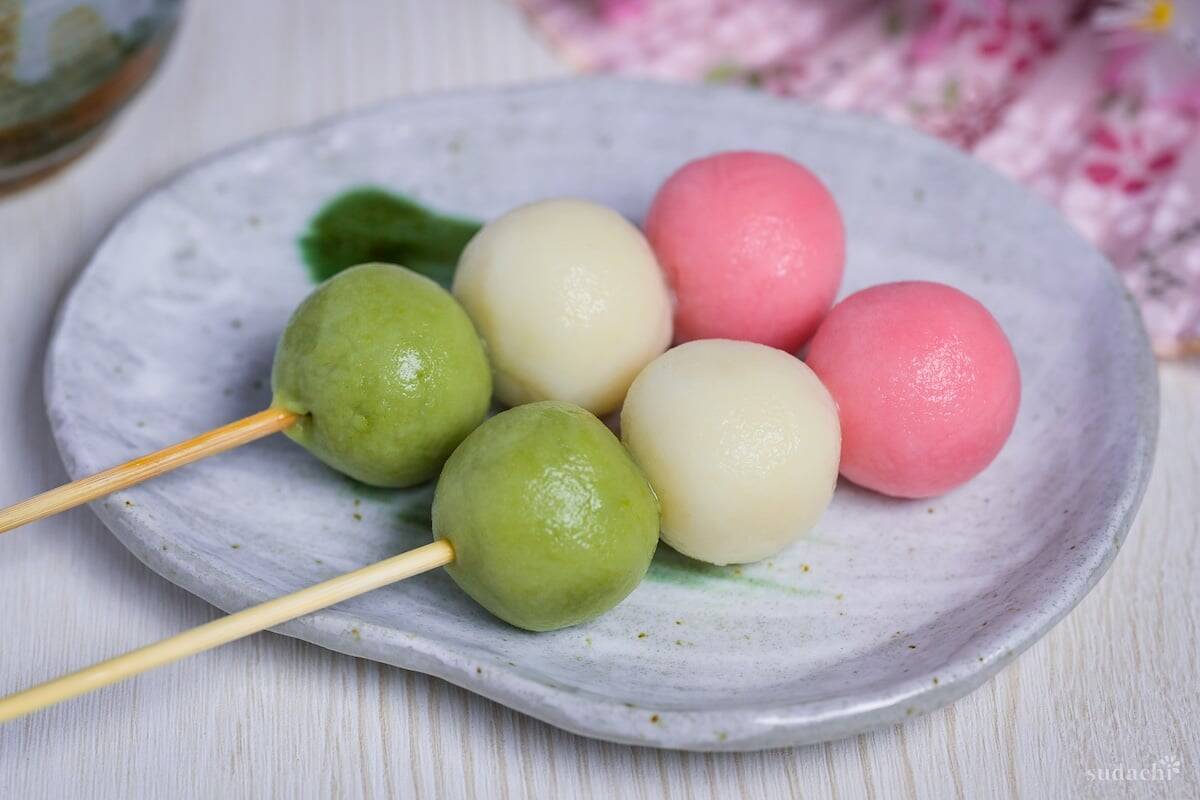
Ever seen those pink-white-green dumplings and wondered what they taste like? That’s hanami dango, Japan’s iconic springtime treat.
My silken tofu version is delightfully chewy, lightly sweet, and seriously fun to shape and color. With just a few ingredients, I’ll show you how to mix, shape, cook, and skewer, so you can make them picture perfect every time!
Tofu Hanami Dango
Recipe Snapshot
- What is it? A traditional, mildly sweet, tri-color rice dumpling served on a skewer and enjoyed during the spring cherry blossom season.
- Flavor profile: Lightly sweet, delicate, rice-fragrant.
- Why you’ll love this recipe: It’s quick and approachable (about 30 minutes) but still gives you that irresistibly chewy texture that makes hanami dango so addictive. The dough is easy to work with, and it’s great fun for kids!
- Must-haves: Glutinous rice flour, rice flour and bamboo skewers.
- Skill Level: Easy
- Freezer Friendly: Yes!
Disclaimer: This post may contain Amazon affiliate links. Sudachi earns a small percentage from qualifying purchases at no extra cost to you. See disclaimer for more info.
What is Hanami Dango?
Dango (団子) is a type of traditional Japanese confection (wagashi) made up of sweet rice dumplings. They are usually made from rice flour and water, and sometimes sweetened with sugar. Most dango are subtly sweet with a simple fragrant rice flavor, and are loved for their wonderful chewy mochi mochi texture.
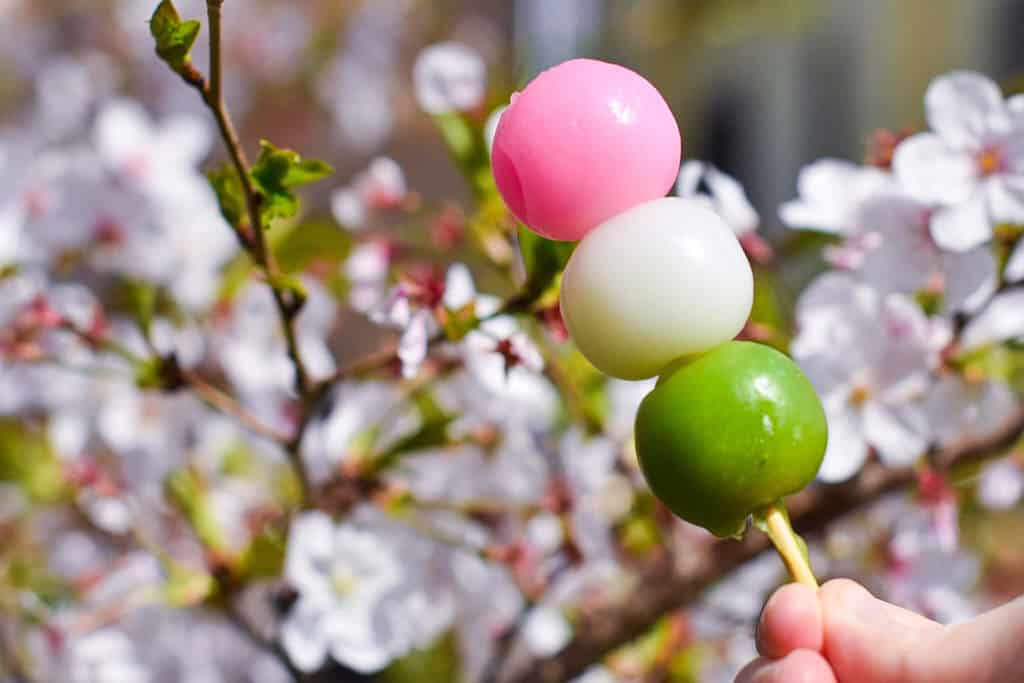
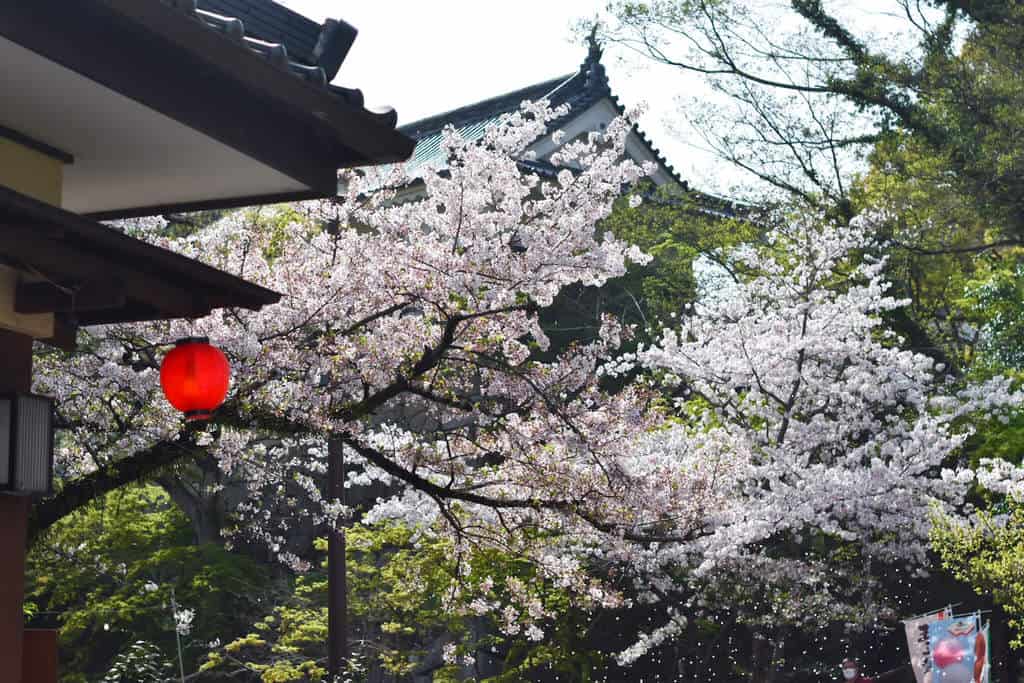
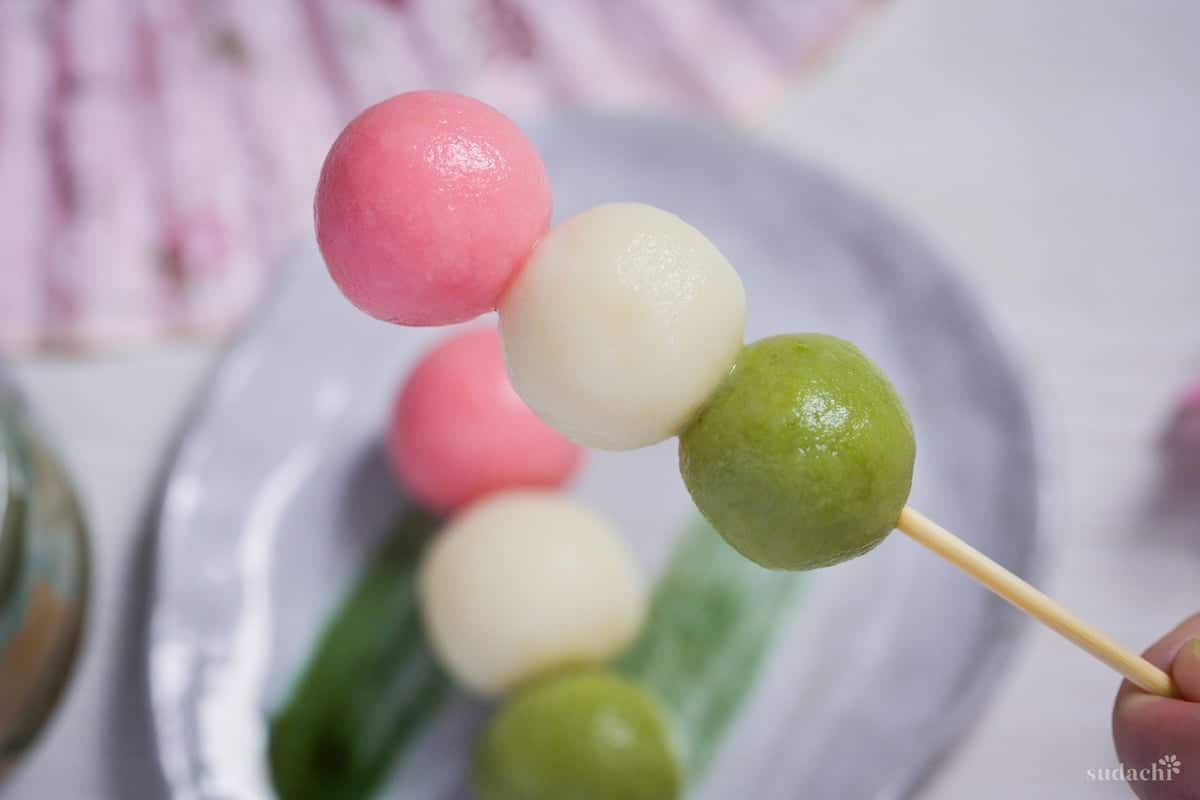
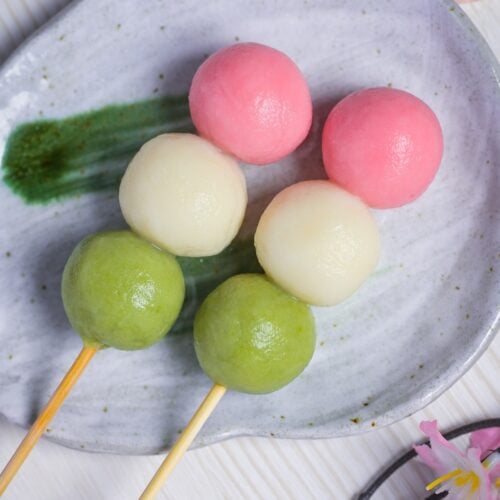
One of the most famous types of dango is the tri-colored Hanami Dango (花見団子) instantly recognized by its pink, white, and green dumplings. Hanami (花見) means cherry blossom viewing in Japanese, and the sweet is traditionally associated with springtime festivities. Even so, it is one of Japan’s most loved sweet snacks and you can find hanami dango year-round in many supermarkets and convenience stores throughout Japan.
Types of Dango in Japan
There are many different kinds of dango and some of them are eaten at special times of the year. Here are a few of the most popular dango varieties.
- Kushi Dango (串団子) A general term for any dango served on a skewer. Hanami dango is a type of kushi dango.
- Mitarashi Dango (みたらし団子) Simple plain rice dumplings that have been lightly charred and coated in a sweet soy glaze, then served on a skewer.
- Shiratama Dango (白玉団子) Small rice dumplings usually served in desserts such as anmitsu (traditional dessert made of agar agar jelly, red bean and fruits) or kakigori (shaved ice).
- Tsukimi Dango (月見団子) A pyramid of 15 rice dumplings displayed during the Autumn full moon.
- Anko Dango (餡子団子) Rice dumplings served on a skewer and coated with red bean paste.
- Goma Dango (ごま団子) Chinese style deep fried rice dumpling covered in sesame seeds and filled with red bean paste.
Outside of the cherry blossom season, hanami dango is sometimes known as “sanshoku dango” (三色団子) however, this simply means “tri-colored” dango and could technically be any three colors. Another example of a tri-colored dango is the yellow, white, and green sanshoku dango that appears around the moon gazing season (tsukimi) in September and October.
The Meaning Behind Hanami Dango’s Colors
Many people believe that the colors of Hanami Dango represent the seasons in some way and there are various theories circling this idea.
Some say that the pink dango represents cherry blossoms blooming in spring, white is winter’s snow and green is the summer leaves. If you’re wondering why Autumn is missing, there’s a supposed reason for that too.
In Japanese, the phrase “akinai” (飽きない) means to never get bored of something. As a play on words, this sounds similar to “aki ga nai” (no autumn). In other words, there is no autumn because you never get bored of Hanami Dango!
Another theory says that Hanami Dango represents spring alone. Again, pink is the cherry blossoms, white is the “shirozake” (white sake) often served during “Hinamatsuri” (girl’s day in March) and green is the Japanese mugwort called “yomogi” that grows in spring.
The final theory claims that each color represents each stage of the cherry blossoms’ growth with pink being the bud, white as the full bloom, and green as the leaves that show after the flowers have fallen. This theory also explains the order of the colors and why pink is always at the top, white in the middle, and green at the bottom.
Tofu Hanami Dango Ingredients
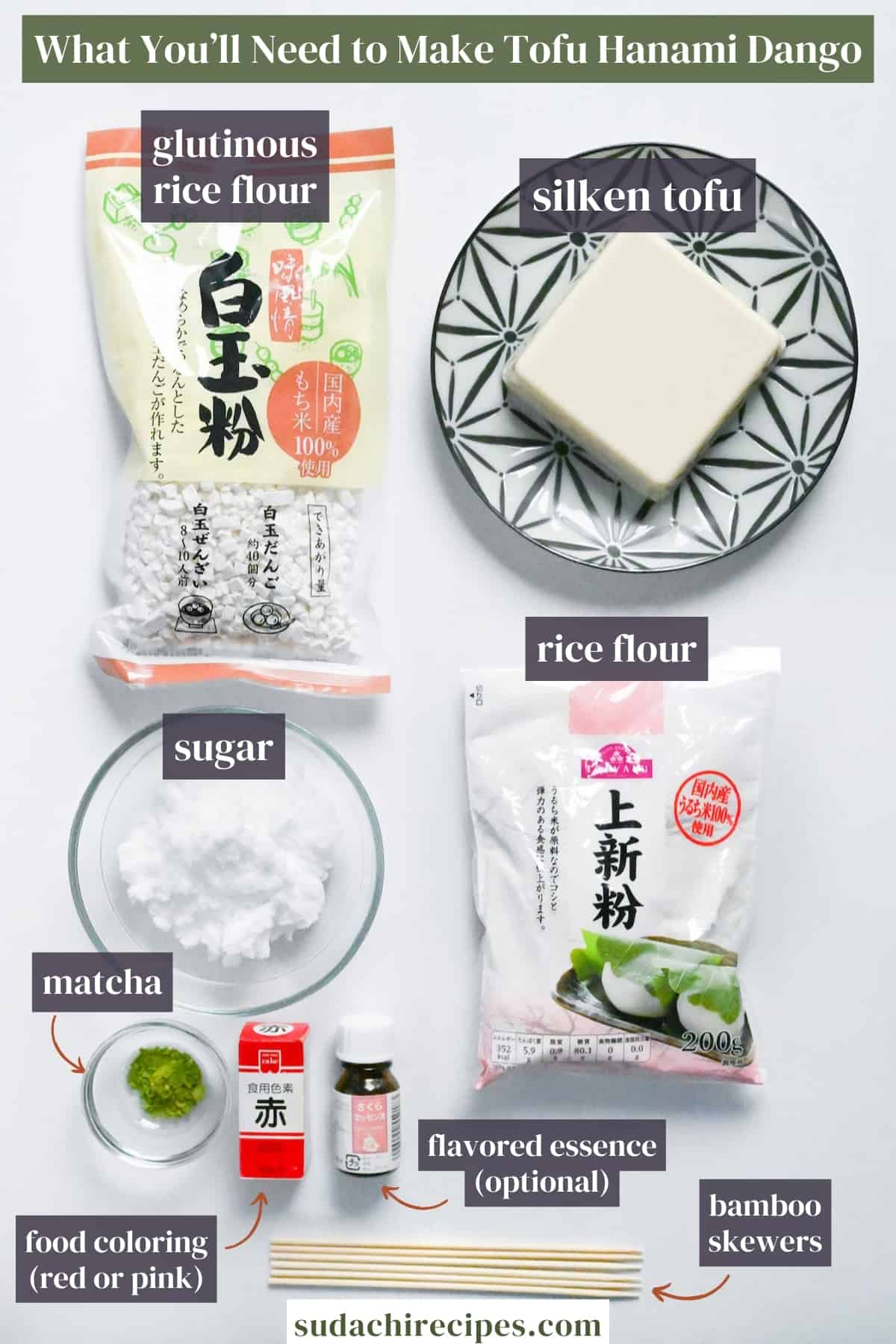
Making hanami dango at home requires a few specific ingredients:
- Glutinous rice flour (shiratamako or mochiko) – Interestingly, glutinous rice flour is not a traditional ingredient used in dango. However, these days, it’s often added for a softer and stretchier texture. I usually opt for shiratamako but mochiko is cheaper and works fine too.
- Rice flour (joshinko) – Rice flour is made from regular rice (Japonica rice or “uruchimai”, not mochi rice) and makes the dango firmer and chewier. This is another key ingredient for hanami dango and can’t be substituted. Traditional recipes only use joshinko.
- Sugar – Required for sweetness, I recommend using white granulated or caster sugar to keep a clean color.
- Silken tofu – Using tofu is not traditional for hanami dango, but I really enjoy the texture it brings to dango. It is important to use silken tofu (not firm tofu) due to its high water content. If you prefer not to use tofu, you can substitute water instead. I’ve tried this recipe with both and tofu always wins for me!
- Matcha powder – Traditionally hanami dango’s green comes from Japanese mugwort called yomogi which adds a herbal taste. It can be hard to find yomogi outside of Japan, so I use matcha in my recipe. It’s a small amount and doesn’t make a significant change to the flavor so if you prefer to use green food coloring, that is also fine.
- Pink food coloring – Used for the pink dango. If you want to avoid food coloring, make them pink by using things like powdered berries or beetroot juice.
- Cherry blossom extract (optional) In the spirit of cherry blossom viewing, I add a small amount of cherry blossom extract. This is also not traditional and purely optional. Feel free to add other flavorings of your choice, just make sure to only add a few drops. It should be a subtle hint and not overpowering!
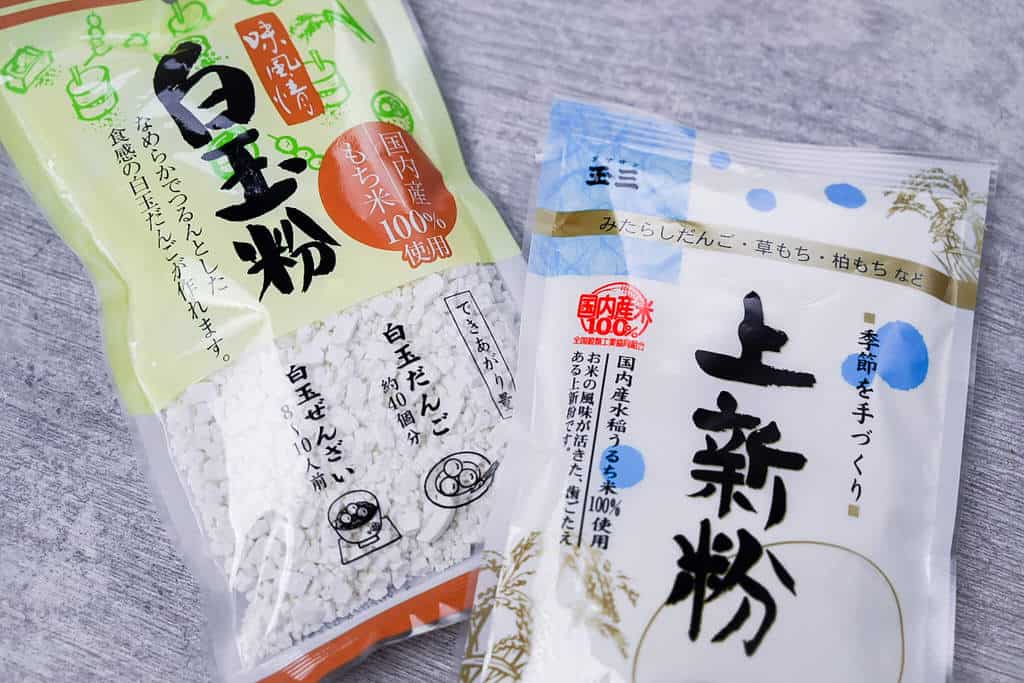
Dangoko (だんご粉) is a premixed blend of mochiko and joshinko (glutinous rice flour and rice flour). The ratio of mochiko to joshinko varies and results in different textures depending on the brand. If you use mochiko and joshiko separately you will have more control of the texture and can adapt it to suit your preferences. Dangoko usually features instructions on how to make dango using their product on the back, so I recommend following those instructions rather than using it to make this recipe.
How to Make My Tofu Hanami Dango
If you prefer to watch the process in action, check out my YouTube video of this recipe for a complete visual walkthrough!

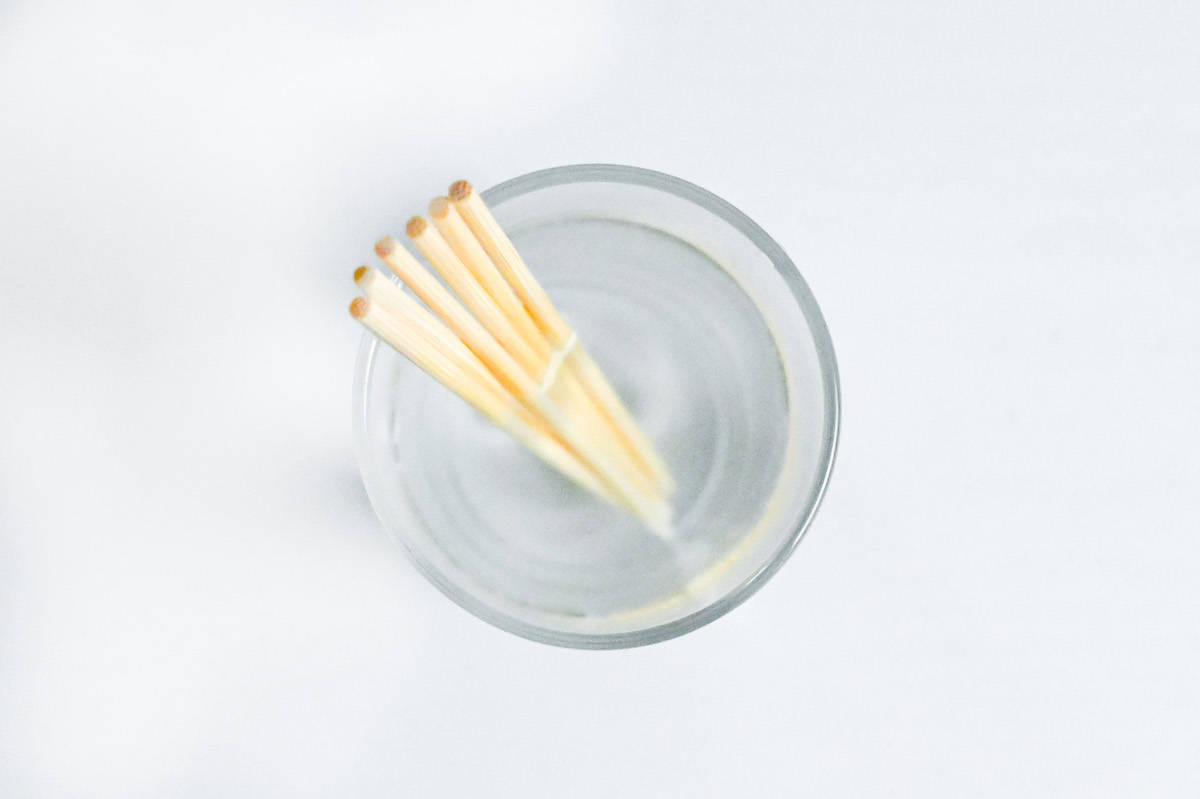
Place the bamboo skewers in a tall glass of water and let them soak while you make the dango. This will make it easier to slide the dango on later.
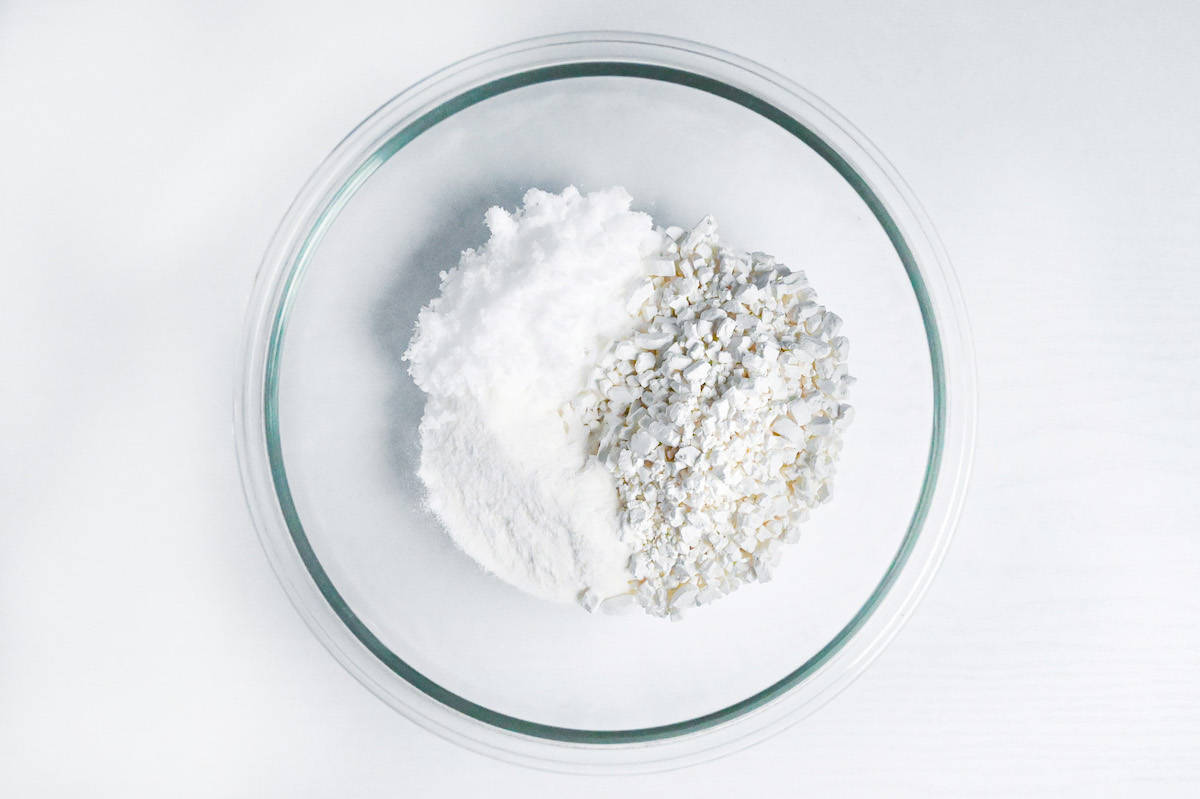
Add the glutinous rice flour (shiratamako or mochiko), rice flour (joshinko), and sugar to a bowl and mix until evenly distributed.

Add the silken tofu one-third at a time and mix thoroughly. Once all of the tofu is mixed in, the mixture should resemble scrambled eggs.
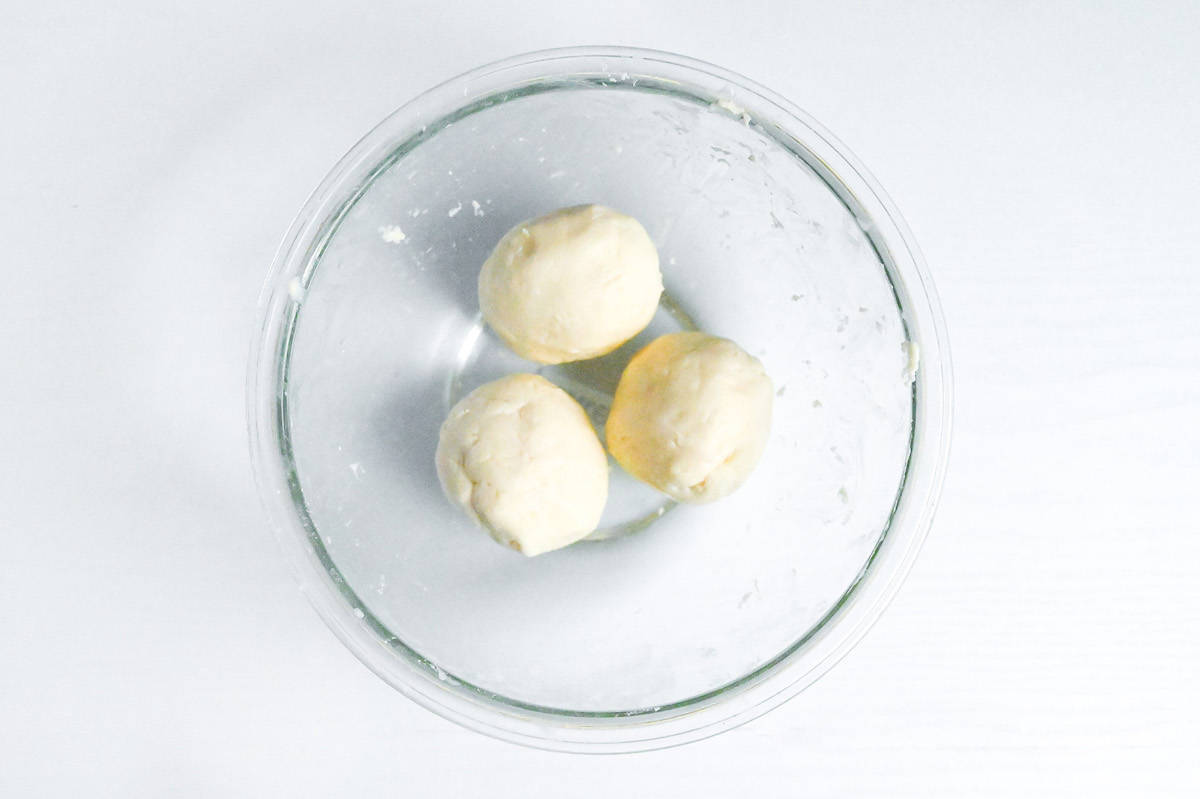
Use your hands to squeeze the crumbs together and form a dough. Gently knead until the texture feels like play dough. If it feels too dry, add a little more tofu or sprinkle water. (Be careful to add only a little at a time as the dough shouldn’t be too wet.)
In Japanese, we often say that the dough should have the softness of an earlobe!
Once smooth, divide it into three equal pieces. For perfectly uniform dango, use scales weigh it and divide into three.
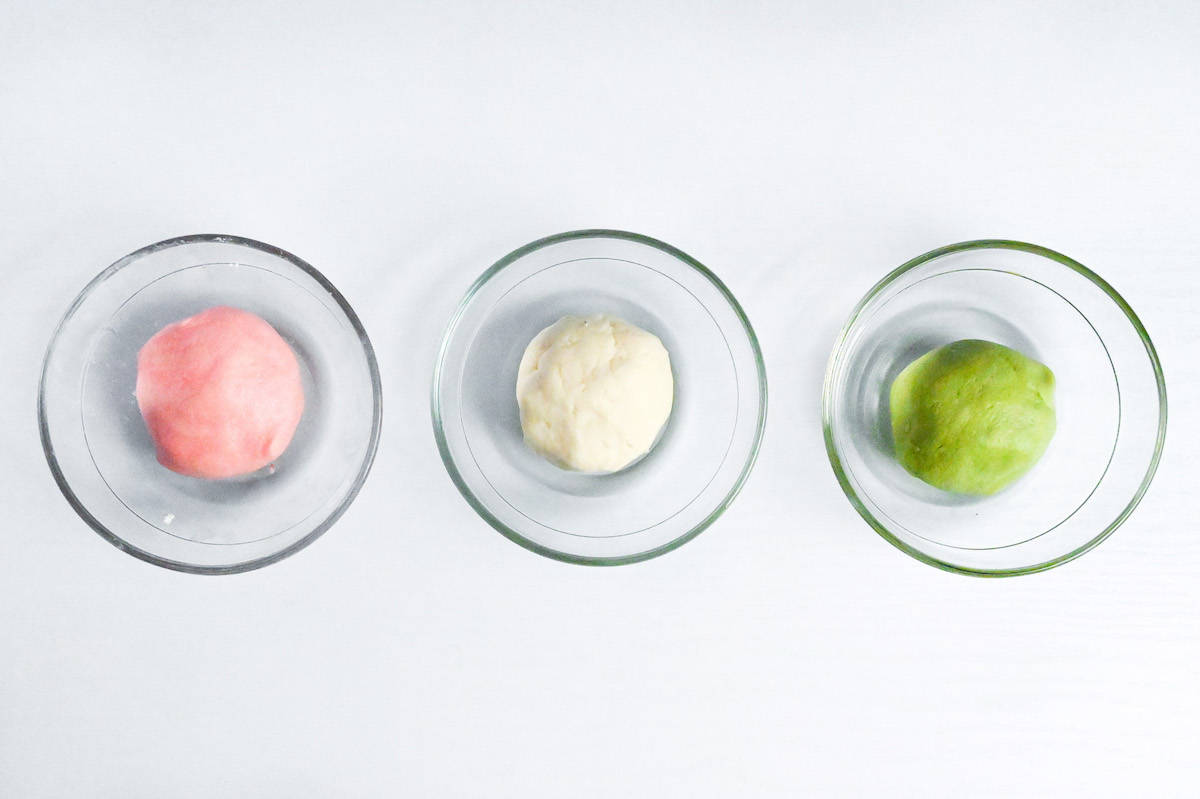
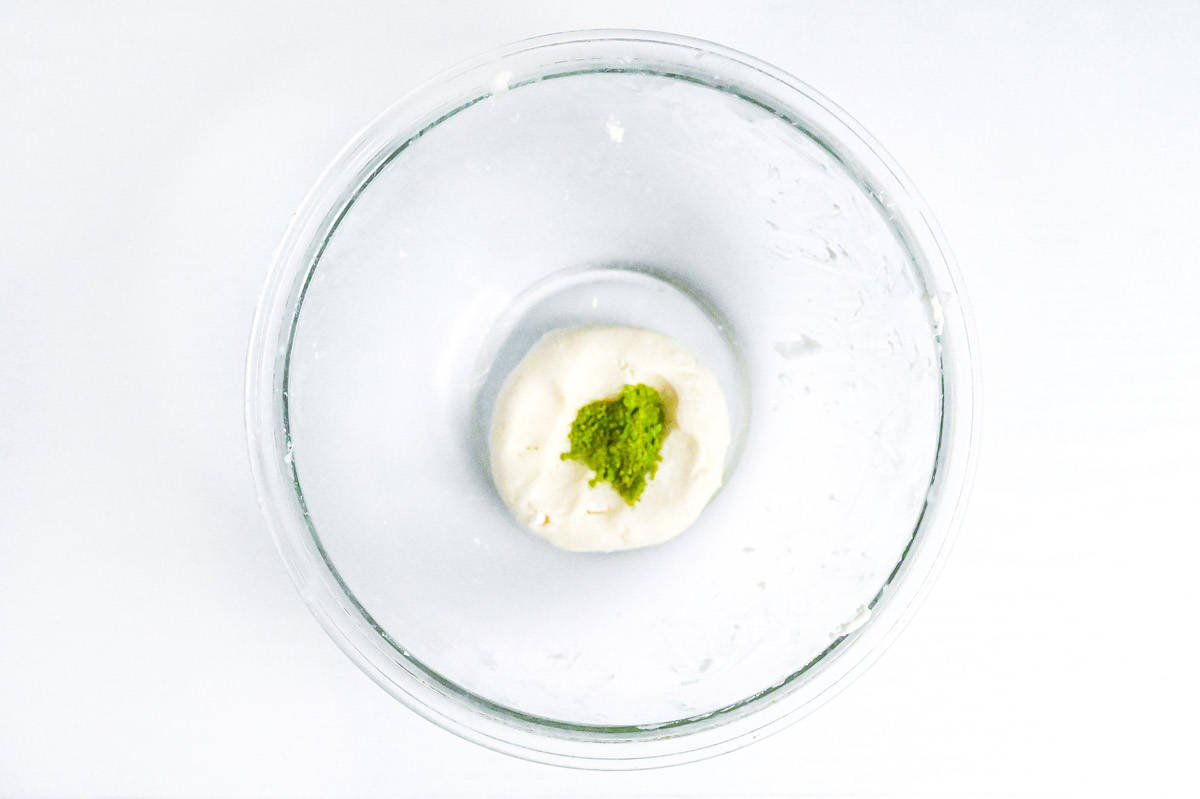
Start boiling a large pot of water. While you wait, place each piece of dango dough in a separate bowl. Leave one white, then add matcha to one bowl and pink food coloring (and cherry blossom extract) to the other. Knead until each dough is evenly colored.
This will prevent specks or muddled colors, keeping the appearance clean and vibrant.

Divide each color into an equal number and roll into balls. I usually aim for 15g per ball or 6 balls of each color.
To save time, I often roll the white balls and add them to the boiling water first. I roll the other colors while I wait for the white ones to cook.
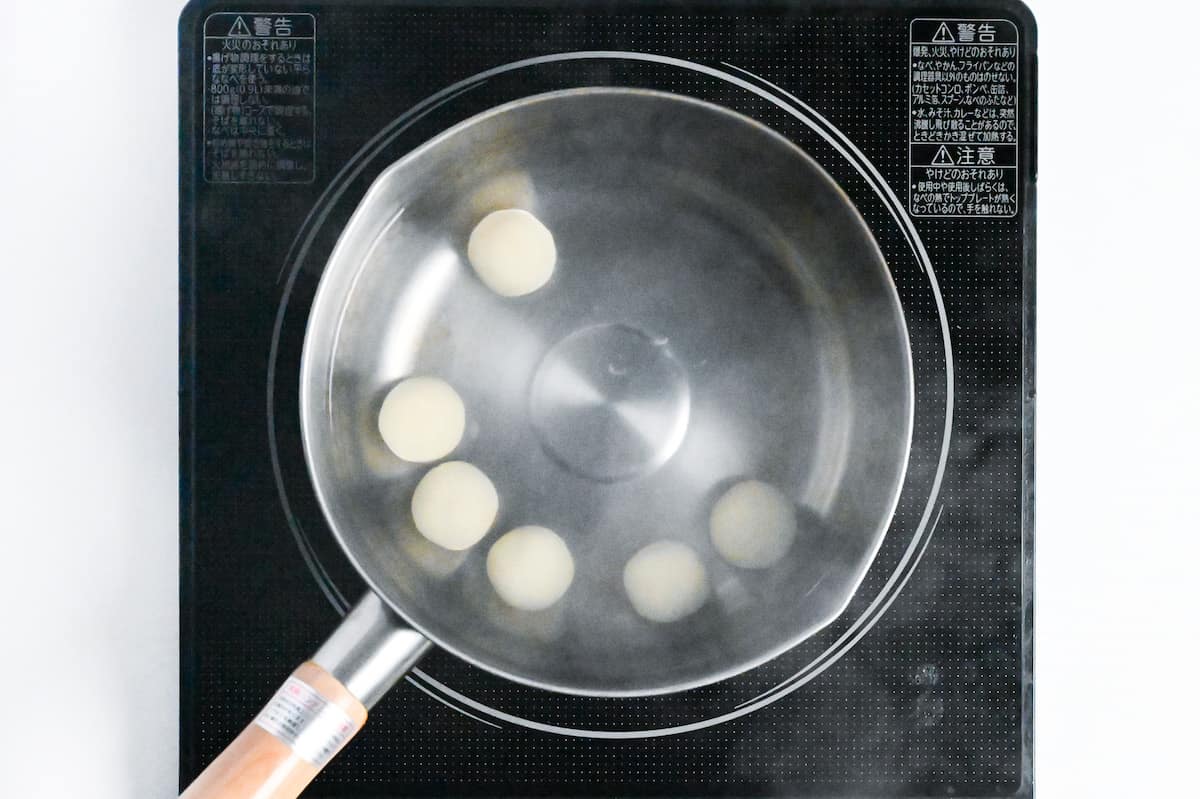
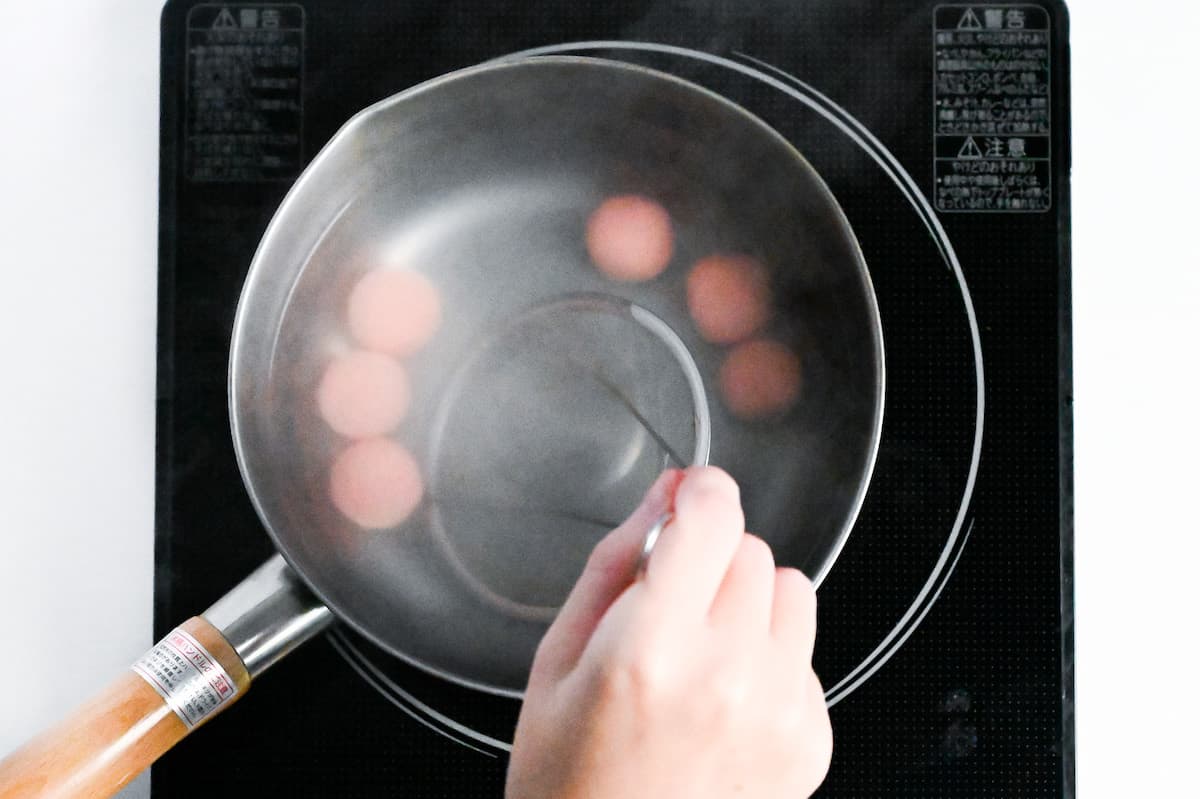
Once the water is boiling, add the white dango and gently mix them to stop them from sticking to the bottom of the pot. Boil until they start to float (about 5-7 minutes) and then set a timer for 2 minutes.
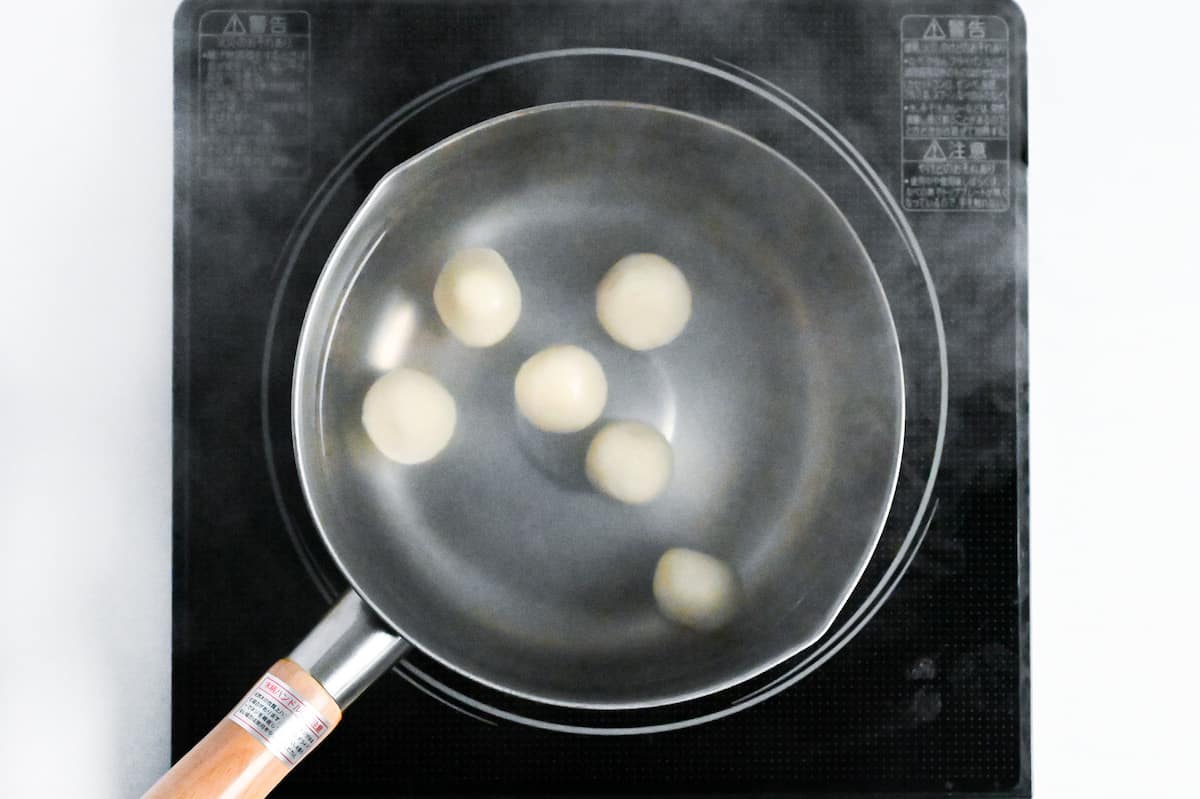
Avoid discoloring by boiling each color separately! Start with white first, then pink, and lastly green.
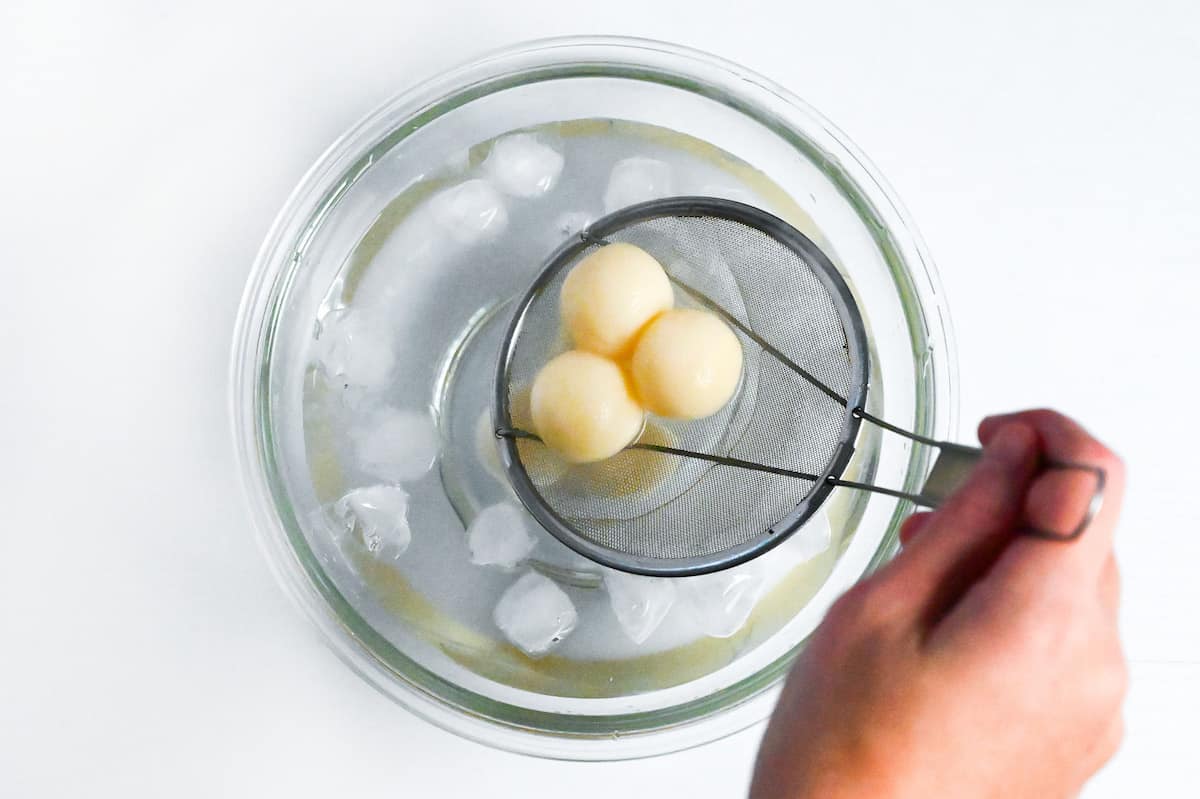
Prepare a bowl of ice water, and once the dango have been floating for 2 minutes, use a slotted spoon to transfer them to the bowl. This will halt the cooking process and stop them from sticking together or becoming misshapen.
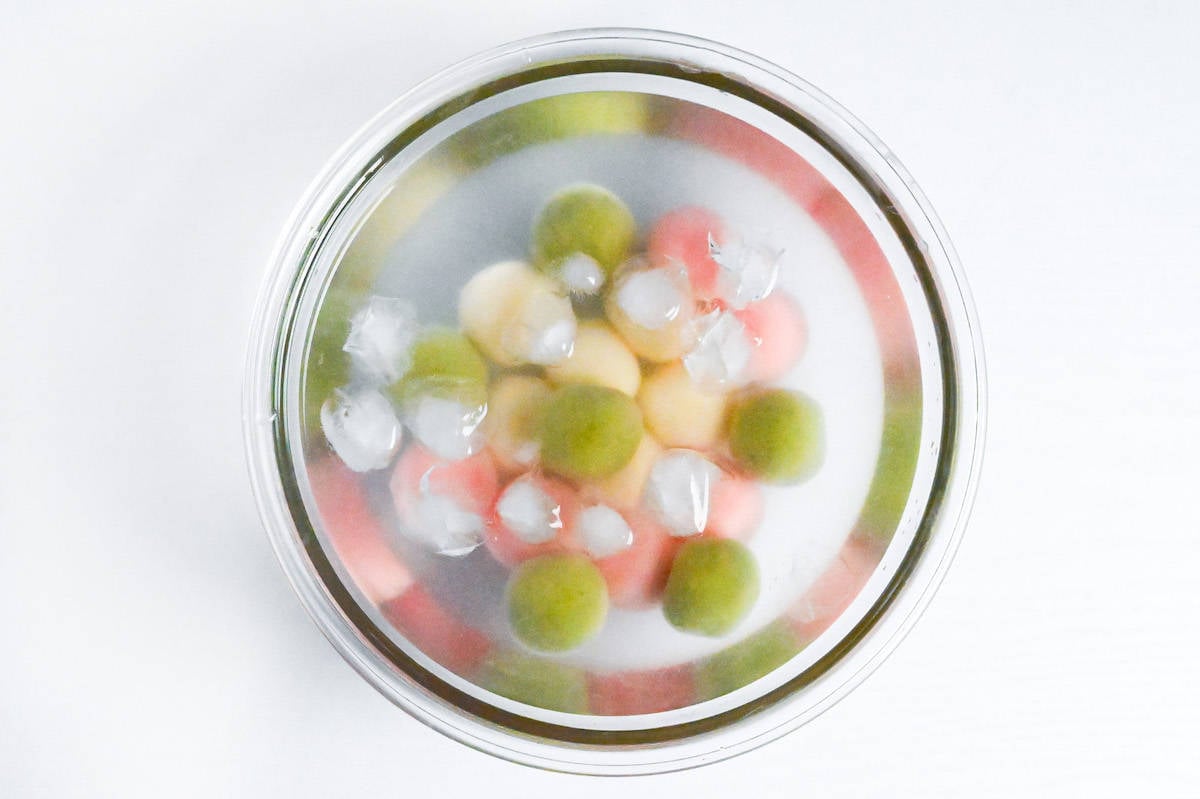
Repeat until all the colors are cooked.
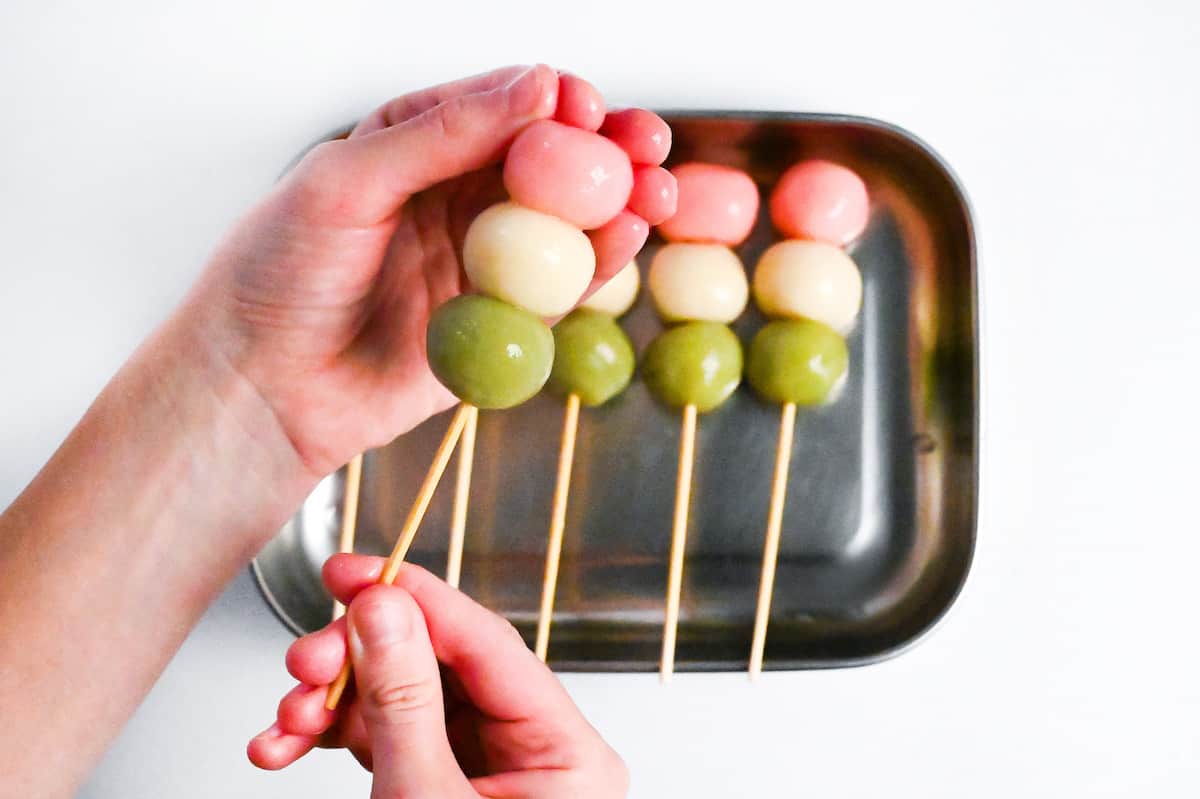
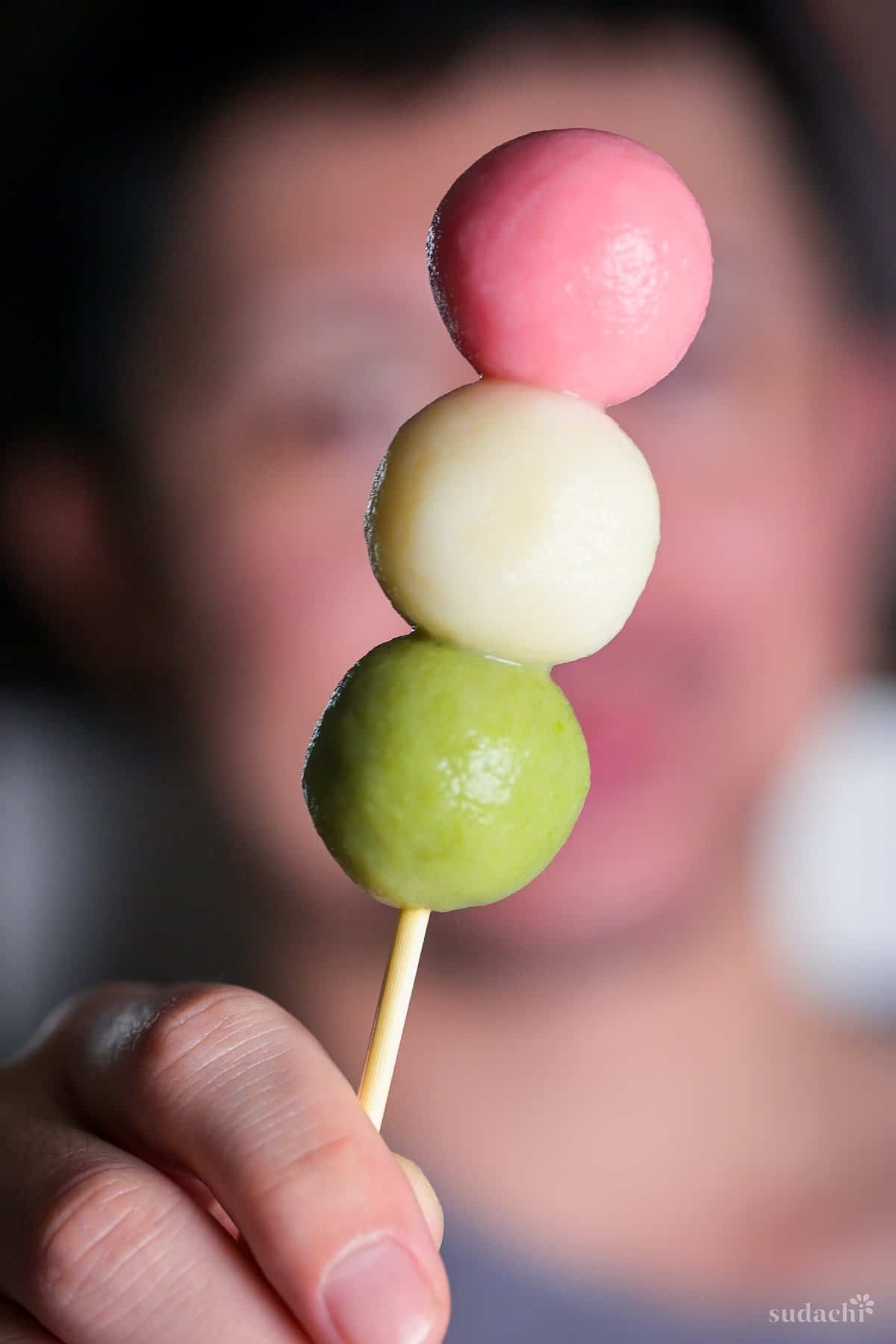
Once the dango have cooled, push them onto the soaked bamboo skewers. Add green first so that it’s at the bottom, then white and finally pink.
Enjoy!

Essential Tips & Tricks
- Knead the dough until soft like an earlobe. If it feels dry or crumbly, sprinkle with water or add a little more tofu and knead again. I sometimes spritz my hands with a spray bottle to add moisture without overdoing it.
- Wash your hands between handling each color to prevent specks or muddied colors.
- Boil each color in separate batches to keep the colors clean and vibrant.
- Eat the same day, or freeze for up to one month. If freezing, wrap with parchment to stop them from sticking together, and store them in an airtight container or sealable freezer bag to protect them from freezer burn.
With these simple tips in mind, you’re set for success every time you make my tofu hanami dango recipe.
Storage
Room Temperature: Store in an airtight container and eat on the same day.
Refrigeration: Not recommended. Since dango are made from rice (flour), chilling will dry them out and make them hard.
Freezer: If you don’t plan to eat everything the same day, wrap each dango with a piece of parchment paper to stop them from sticking together, then place in a sealable freezer bag or lidded Tupperware. Freeze for up to 1 month and thaw at room temperature.
Hanami Dango FAQ
The word “hanami” (花見) means “flower viewing” and occurs around late March and early April when the cherry blossoms are in full bloom. Many people gather with friends and family, any enjoy picnics under the beautiful cherry blossoms trees. There are often hanami festivals where food stands are lined up along the trees so you can walk and eat delicious Japanese street food, it’s a great experience!
Hanami Dango was traditionally colored using red Perilla leaves (shiso) and Japanese mugwort (yomogi) that gave them a herby flavor. However, hanami dango these days are plain and do not have a distinct flavor, they essentially taste like sweet rice. You can add powders or extracts to flavor them, but this is not traditional or typical of hanami dango.
Glutinous rice flour (shiratamako or mochiko) and rice flour (joshinko) can sometimes be found in well-stocked Asian supermarkets or Japanese specialty food stores (although it is not guaranteed). Since they are dry shelf stable ingredients, it is safe to buy them online too.
This recipe doesn’t work with other kinds of tofu, only silken. If you can’t get silken tofu, I recommend gradually adding water instead.
Unfortunately you can’t make dango with wheat flour, only rice/glutinous rice flour.
More Wagashi Recipes
- Ichigo Daifuku (Strawberry Mochi)
- Sakura Mochi (Cherry Blossom Rice Cake)
- Mitarashi Dango (Dango with Sauce)
- Tsukimi Dango (Moon Gazing Dango)
If you enjoyed these recipes, be sure to check out my Japanese Dessert Roundup Post for even more delicious sweet treat ideas to try!
Did You Try This Recipe?
I would love to hear your thoughts!
💬 Leave a review and ⭐️ rating in the comments below. 📷 I also love to see your photos – submit them here!
Tofu Hanami Dango (Cherry Blossom Dumplings)

Equipment
Ingredients
- 6 bamboo skewers
- 100 g glutinous rice flour shiratamako or mochiko
- 20 g rice flour (joshinko)
- 45 g granulated sugar
- 120 g silken tofu
- ¼ tsp matcha powder
- 1 drop pink food coloring or small amount of red
- 1 drop cherry blossom extract or flavoring of your choice (optional)
The ingredient brands and tools I trust are in my Japanese pantry guide and my cooking tools guide.
Can’t find certain Japanese ingredients? See my substitution guide here.
Instructions
- Soak 6 bamboo skewers in a glass of water.

- Pour 100 g glutinous rice flour, 20 g rice flour (joshinko) and 45 g granulated sugar into a bowl and mix until well incorporated.
- Place 120 g silken tofu into the bowl one third at a time, thoroughly mixing with a spoon or spatula between each addition until the texture resembles scrambled eggs.
- Use your hands to knead the mixture into a smooth dough with a texture similar to play dough. If it's dry or cracks, add a small amount of water (a sprinkle) or extra tofu (about 1 tsp at a time). Divide it into three equal pieces, use scales for accuracy.
- Place each piece in a separate bowl. Leave one plain, add ¼ tsp matcha powder to one and 1 drop pink food coloring and 1 drop cherry blossom extract to the other.
- Knead until the color/flavor is evenly distributed throughout the dough. Wash your hands between kneading each color.
- Start heating a pot of water to a rolling boil. While you wait, divide the dough into 15g pieces. Roll the white pieces into balls first, and cover the pink and green ones with a damp tea towel to stop them from drying out.
- Once the water is boiling, add the white balls and boil until they start to float (about 5 minutes). While you wait, prepare a bowl of ice cold water and roll the other colors.
- When they start to float, set a timer for 2 minutes. Once the timer is up, transfer the dango to the ice water to halt cooking and cool them quickly.
- Repeat with the pink and green dango, cooking each color in separate batches. I usually do pink second, and green last. Top up the water in the pot if needed.
- Transfer to the ice water and add more ice if necessary.
- Once cooled, push the dango onto the soaked skewers. Start with green, then white and lastly pink. Your dango should have green at the bottom and pink at the top. Enjoy the same day.
Video
Notes
- Use berry powder or a few drops beetroot juice as a natural substitute for red/pink food dye.
- If you use mochiko instead of shiratamako, the texture will be slightly firmer.
- Cover the dango dough with a damp tea towel to stop it from drying out.
- If the dough becomes dry, sprinkle your hands with water and knead again to add a small amount of moisture back in.
- Wash your hands each time you handle a different color to prevent mixing colors.
- Boil each color separately to prevent mixing colors.
- If you want to eat it the next day, wrap it in baking parchment and store in an air tight container in the freezer. (Do not store in the fridge, this will make them hard.)
- Freeze for up to one month. Thaw at room temperature (about 30 mins to 1 hour) and enjoy!

I’ve been making this many times now. Easy to make and delicious dessert. I love it!! Thank you very much for sharing the recipe
Hi Elvira,
That makes me so happy to hear! I’m really glad you’ve been enjoying it — thank you for the kind words!
Yuto