Disclaimer: This post may contain Amazon affiliate links. Sudachi earns a small percentage from qualifying purchases at no extra cost to you. See disclaimer for more info.
Doubanjiang reads as a Chinese ingredient, and it is, so it is fair to ask why it shows up so often in Japanese home cooking. The honest answer is that Japan had chili, but it lived at the table as a finishing condiment, a thing you sprinkled on at the last second rather than cooked into a dish.
There was no homegrown tradition of building a meal’s heat from a fermented chili paste over a flame. When Sichuan home cooking settled into Japanese kitchens, that empty seat was waiting, and doubanjiang slid into it and stayed. Understanding why turns this jar from a mystery into a map.
Quick Snapshot
If you have 30 seconds before you reach the front of the aisle, here is the path.
Doubanjiang is fermented broad beans, chili, and salt, so it carries heat, savory depth, salt, and red color all at once.
For Japanese cooking, Lee Kum Kee Toban Djan is the safe first pick. It is on shelves worldwide and runs milder, which is actually ideal for chuka dishes.
Gochujang is not a clean swap. It is sweeter, less salty, and points in a different flavor direction.
Start with the thing most people get backward. Doubanjiang is not a spicy sauce. It is a paste closer to miso with chili stirred through it.
The base is fermented broad beans, the fava kind, salted and aged with chili and a little wheat. That fermentation is the whole point. Strip the chili away and you are left with something structurally in the same family as the miso (味噌) in your soup, a salt-driven, savory, aged bean paste. Add the chili back and you get doubanjiang, or in Japan simply tobanjan (豆板醤).
The version most cooks buy is the spicy one, but the word itself describes the broader paste, and in China a non-spicy kind sits on the same shelf. La-doubanjiang is the chili-laced kind, so if you’re not sure, check the label for 辣 (la), the character for spicy, that will tell you which jar you are holding.
This matters because it sets the expectation right. A hot sauce delivers one thing, heat, usually with vinegar behind it. Doubanjiang delivers four things at once: heat, savory depth, salt, and a deep red color. The paste is salt-forward and barely sweet, with an earthy, fermented backbone that comes from the beans rather than the chili.
That fourfold nature is what sets doubanjiang apart from a simple hot sauce, and it runs quietly under everything that follows.
Why a Chinese Paste Became Japan’s Default Heat
Here is the question that brings most people to this page. If doubanjiang is Chinese, why does it live in so many Japanese kitchens, and is that even authentic? The answer is a piece of food history worth telling in full, because once you see it, the question dissolves on its own.
Japan has had chili for centuries. It arrived sometime in the 16th or 17th century, the exact route still argued over, and it spread. But look at where it landed. It became shichimi togarashi, the seven-spice blend you shake over noodles. It became ichimi, plain ground chili. It became yuzu kosho, that bright paste of chili and citrus peel from Kyushu. Every one of these is a finishing condiment, a yakumi 薬味 you add at the table, on top of a finished dish, at the last moment. The heat sits on the surface and announces itself, then fades.
What Japan never developed was the other thing: a mainstream tradition of building a dish’s heat during the cooking process. That kind of cooking, where chili is a base layer rather than a final flourish, simply was not part of the home repertoire. Speaking honestly as someone who grew up with this food, I am not especially good with raw heat, and a trip to Thailand once made that humblingly clear to me, where the chili was woven into everything and I was completely out of my depth.
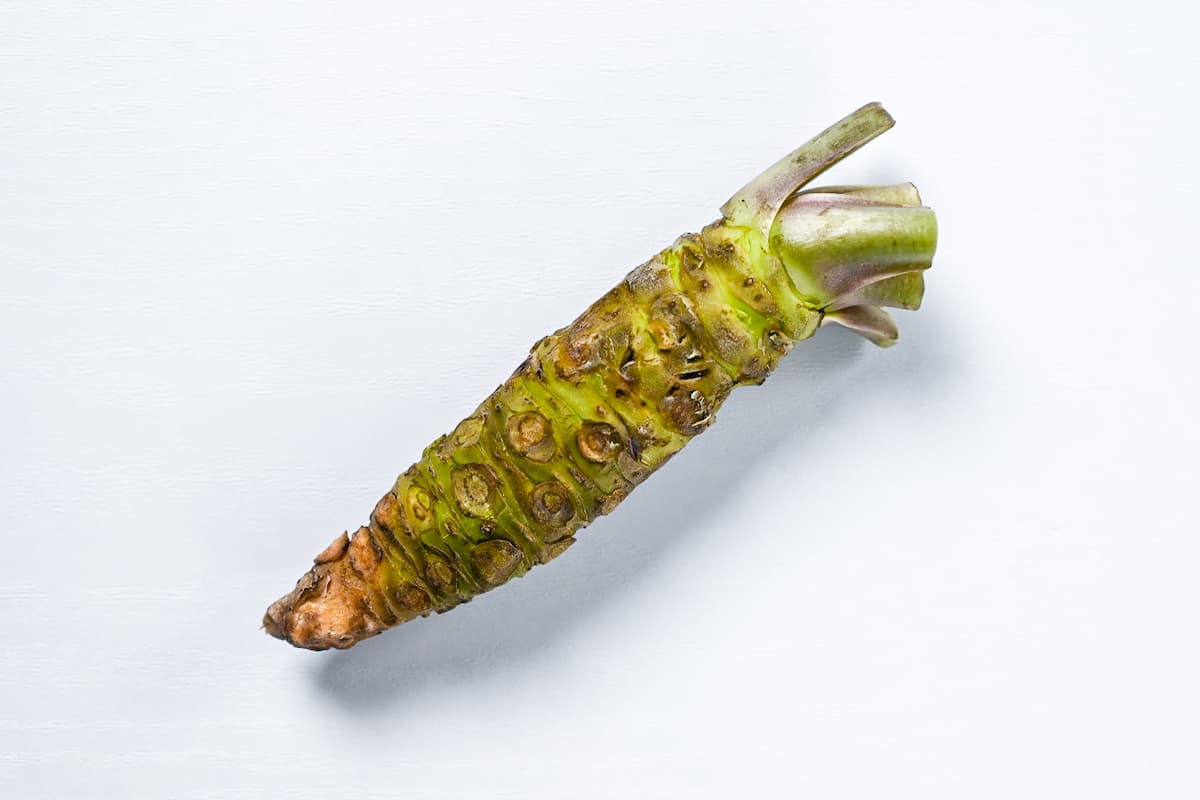
Yet I can take wasabi that would make most people weep, because that is the kind of sharpness my palate was raised on. The two are not the same sensation, and that distinction is not just personal taste. It is chemistry.
Wasabi root
Two kinds of sharp. Wasabi and karashi get their kick from allyl isothiocyanate, a volatile compound that shoots up into the nose, peaks fast, and clears just as fast. Chili gets its heat from capsaicin, which is oil-soluble, settles on the tongue, and lingers. They act on different nerve channels entirely. A palate trained on the fleeting nasal hit of wasabi is simply tuned to a different signal than the slow, oil-borne burn of chili.
So when did the chili-in-the-pan style arrive? Chinese home cooking took root in Japanese kitchens through several channels at once. Repatriates returning from the continent opened small, cheap Chinese eateries, the kind of neighborhood spots that became known as machi-chuka. Television cooking programs put Sichuan-style dishes in front of millions. And in 1971 an instant mabo dofu sauce hit supermarket shelves and sold by the tens of millions, putting the flavor into ordinary homes that had never cooked it before. Out of all this grew a whole genre with its own name, chuka ryori, Japanese-adapted Chinese food, distinct from what you would eat in China.
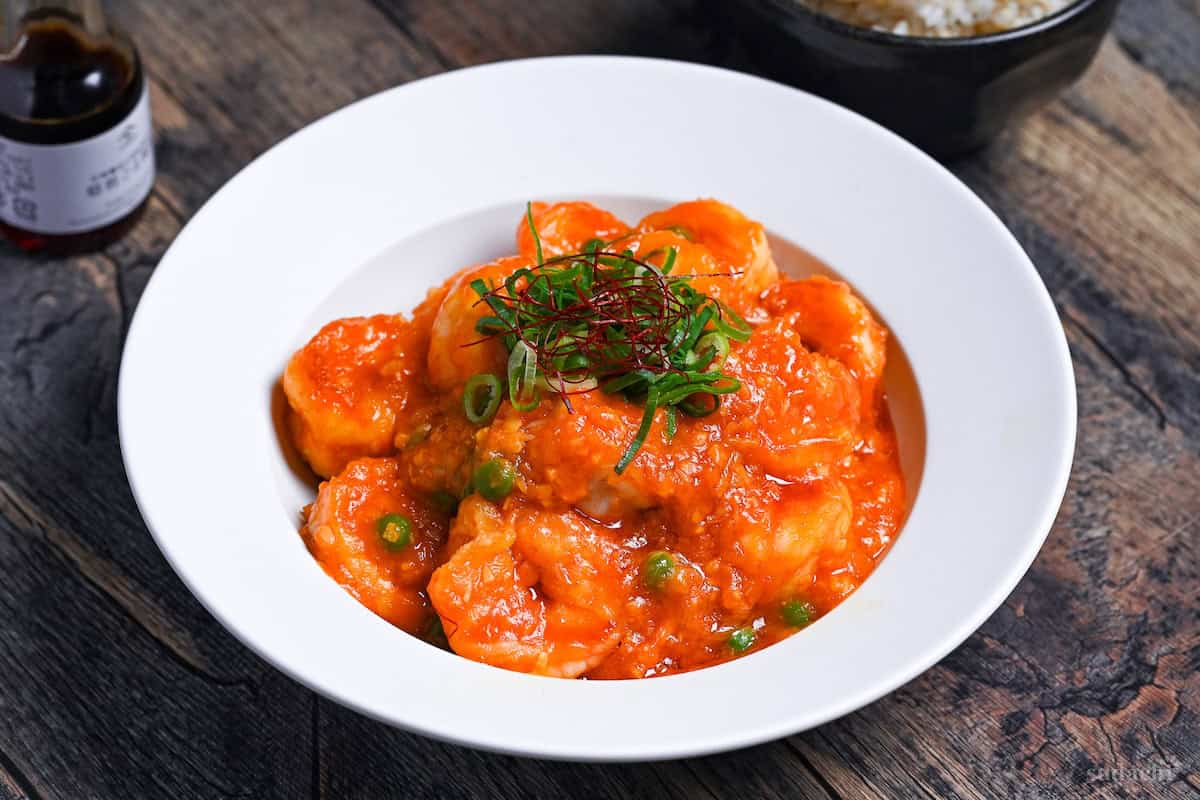
One lineage runs through much of it. A Sichuan-born chef named Chen Kenmin (陳建民) settled in Japan and opened the country’s first Sichuan restaurant, Sichuan Hanten (四川飯店), in 1958. He did not simply transplant Sichuan cooking. He reshaped it for Japanese palates, dialing the heat down and the savory depth up, and in the process he invented dishes that exist nowhere in China. Ebi chili, the sweet-spicy shrimp now found on every Japanese-Chinese menu, is his adaptation.
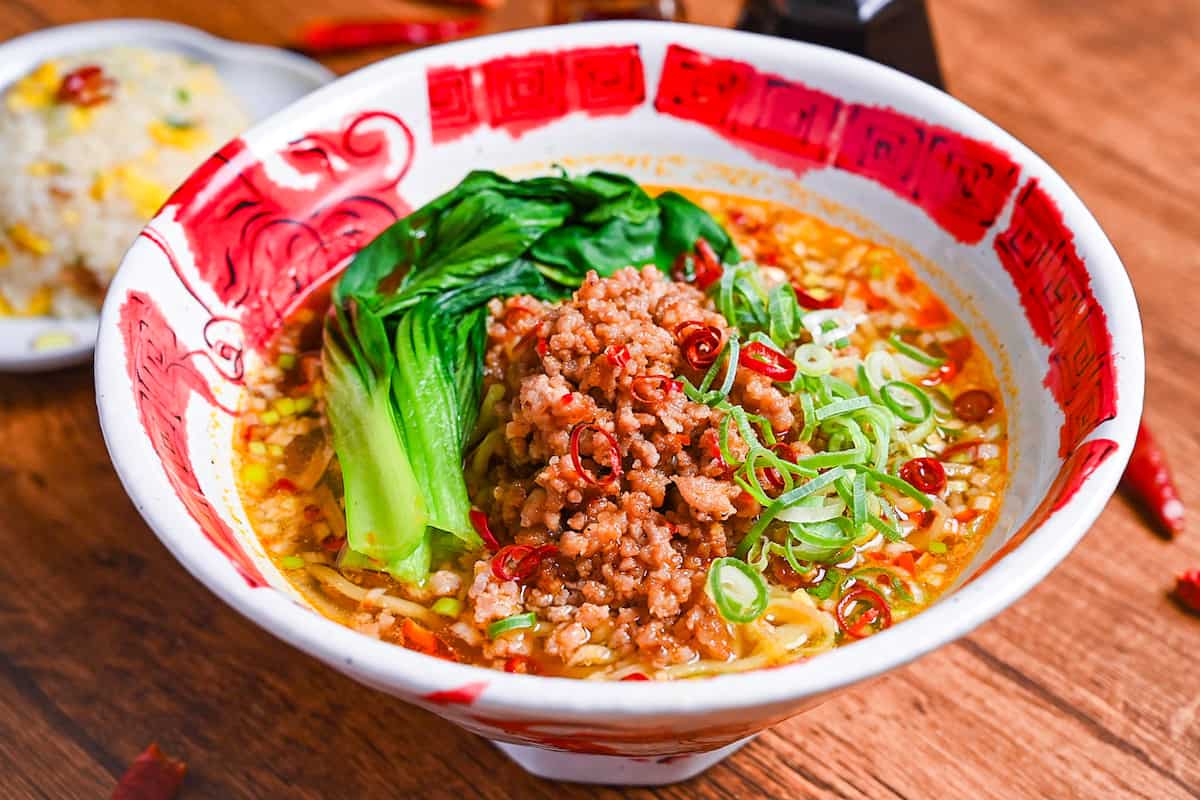
The soup-style tantanmen that Japan loves is his too. So much of what Japan thinks of as Chinese food traces back through this kind of careful adaptation, and nearly all of it leans on doubanjiang for its heat and its depth.
That is the empty seat, and that is what filled it. The mapo tofu, the ebi chili, the tantanmen, the twice-cooked pork that settled into Japanese homes all needed something to carry warmth and savory depth into the pan, and the fermented chili paste already perfected for exactly that job was doubanjiang.
It did not displace shichimi or yuzu kosho. Those are still the finishing condiments they always were. Doubanjiang took the seat no one had been sitting in. So the next time someone suggests that a Japanese recipe has no business calling for a Chinese paste, you can simply tell them the longer story. It is not a borrowing that needs defending. It is just how the food actually came to be.
What It Does in the Pan
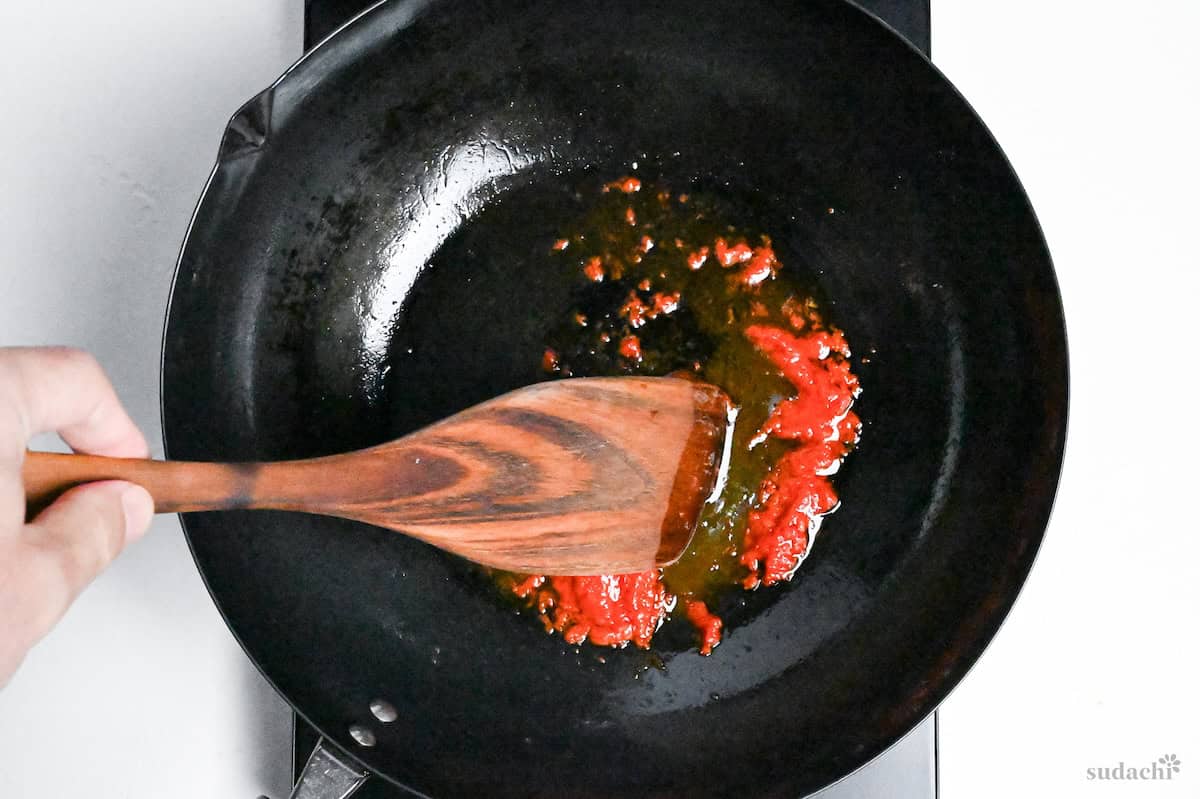
Nearly every recipe that uses doubanjiang opens the same way: a little oil, the paste, and a low flame, before anything else goes in. That step is not a formality. It is doing real chemical work.
Why you bloom it in oil first. Capsaicin and the deep red pigment in the chili are both oil-soluble, so gentle heat pulls them out of the paste and into the fat, staining the oil red and carrying the heat through the whole dish. At the same time the heat coaxes out roasted, savory notes from the fermented beans. The result is that the paste hands the dish heat, savory depth, salt, and color all at once. That is why no simple chili sauce can stand in. Push the heat too far and you scorch it, and the whole thing turns bitter.
Think of that bloomed oil as the flavor base the rest of the dish is built on. By the time the tofu or the pork or the noodles arrive, the heat is already dissolved through the fat and ready to coat everything evenly, rather than sitting in raw stripes of paste.
Which Doubanjiang to Buy
Standing in front of five jars with different labels is its own kind of paralysis, so let me make this simple.
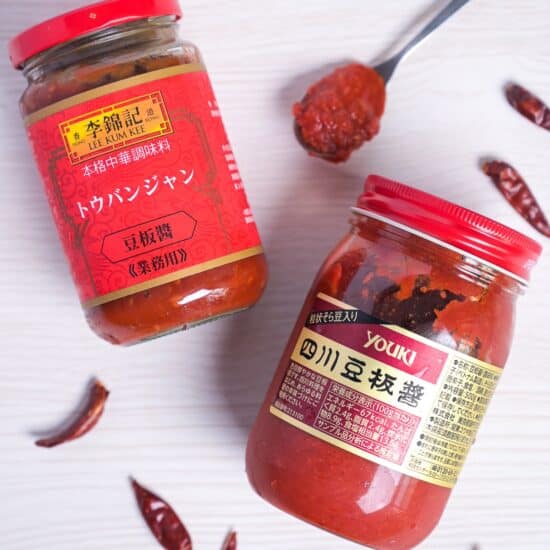
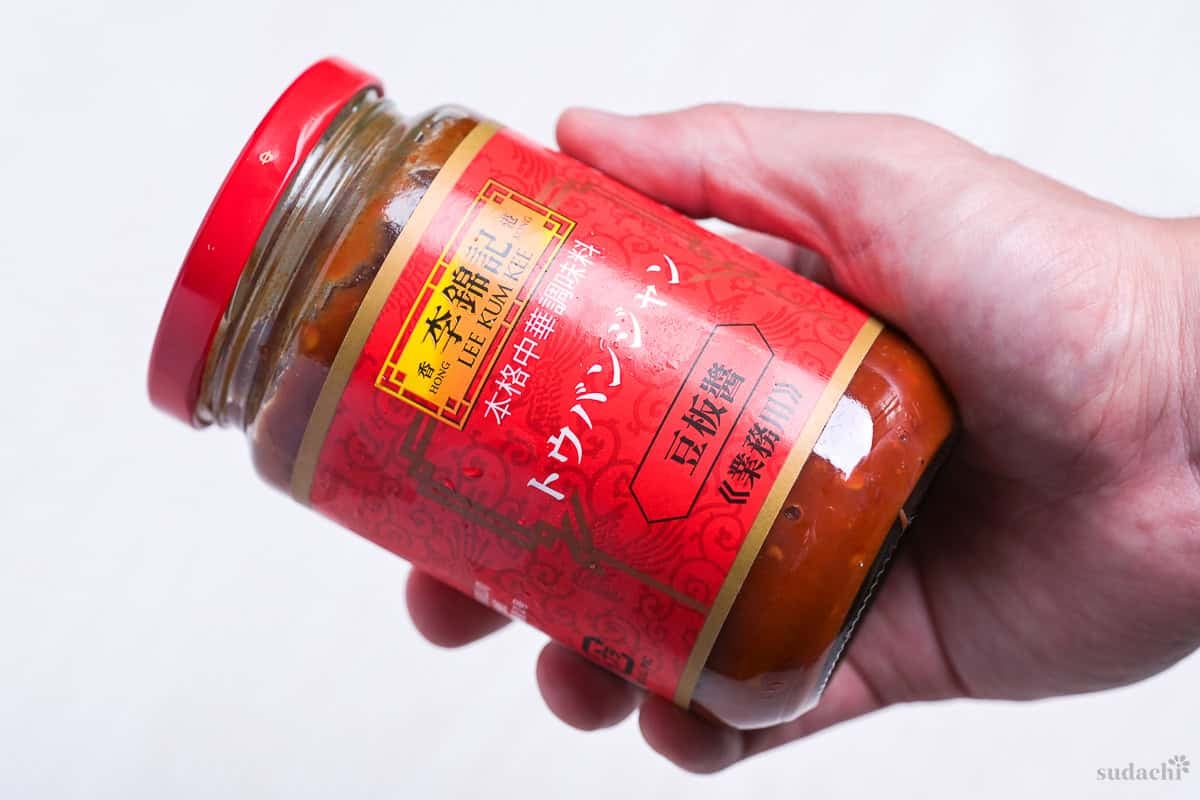
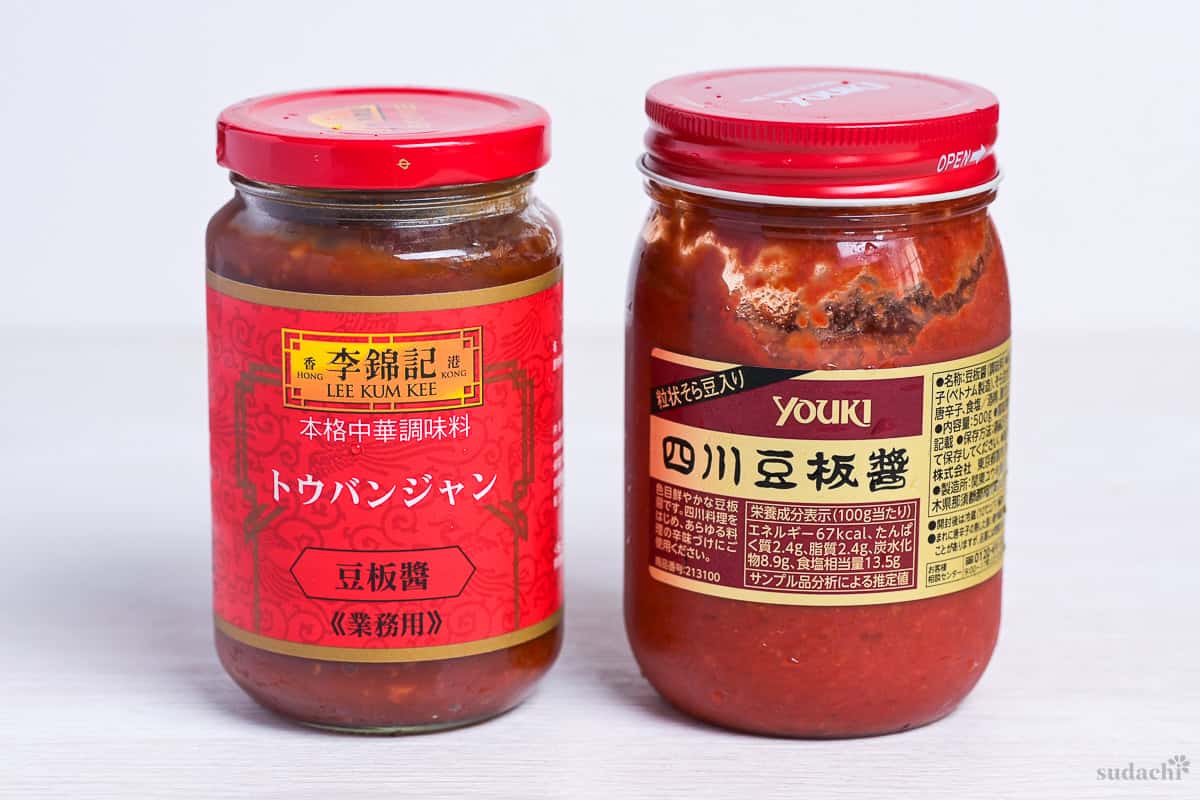
Lee Kum Kee Toban Djan is the one I recommend to almost anyone. I have used it since my years in England, and it is stocked just about everywhere in the English-speaking world. Recommending it is a bit like recommending Kikkoman for soy sauce: it is not the rarest or the most artisanal option, but it is reliable, available, and exactly right for the job most people are doing.
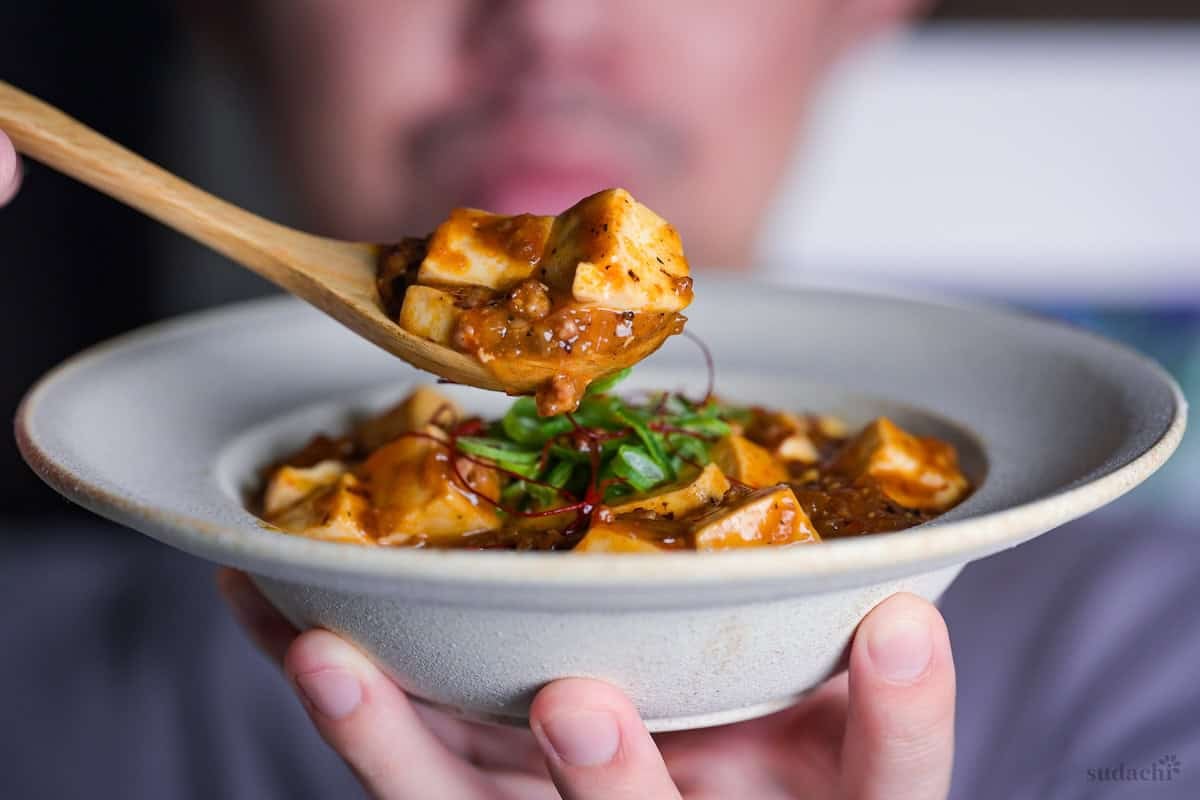
It runs smoother and milder than a hardcore Sichuan paste, and for Japanese cooking that mildness is not a compromise, it is the point. Japanese-style mapo tofu is meant to be gentler than its Sichuan ancestor, so a milder paste lands you closer to the target, not further from it.
I learned this the direct way. I once made a dish using a proper Sichuan-style Pixian paste in place of my usual jar, and the heat jumped a full step or two beyond where I wanted it. The dish was good, but it was no longer the mild, savory, family-table version I was after. That experience is exactly why I point people to Lee Kum Kee for Japanese cooking rather than the more authentic Sichuan jars. Mildness is an ideal feature here.
That said, when the paste is genuinely the star, a real Pixian doubanjiang is a step up worth taking. Look for Juan Cheng (鹃城), the benchmark Pixian brand, when you are making a serious mapo tofu where the doubanjiang itself is meant to lead. It is chunkier, funkier, more deeply aged, and it dyes the dish a darker red. It is more paste than most Japanese-style cooking calls for, but for the dishes where doubanjiang is the headline rather than the support, it rewards you.
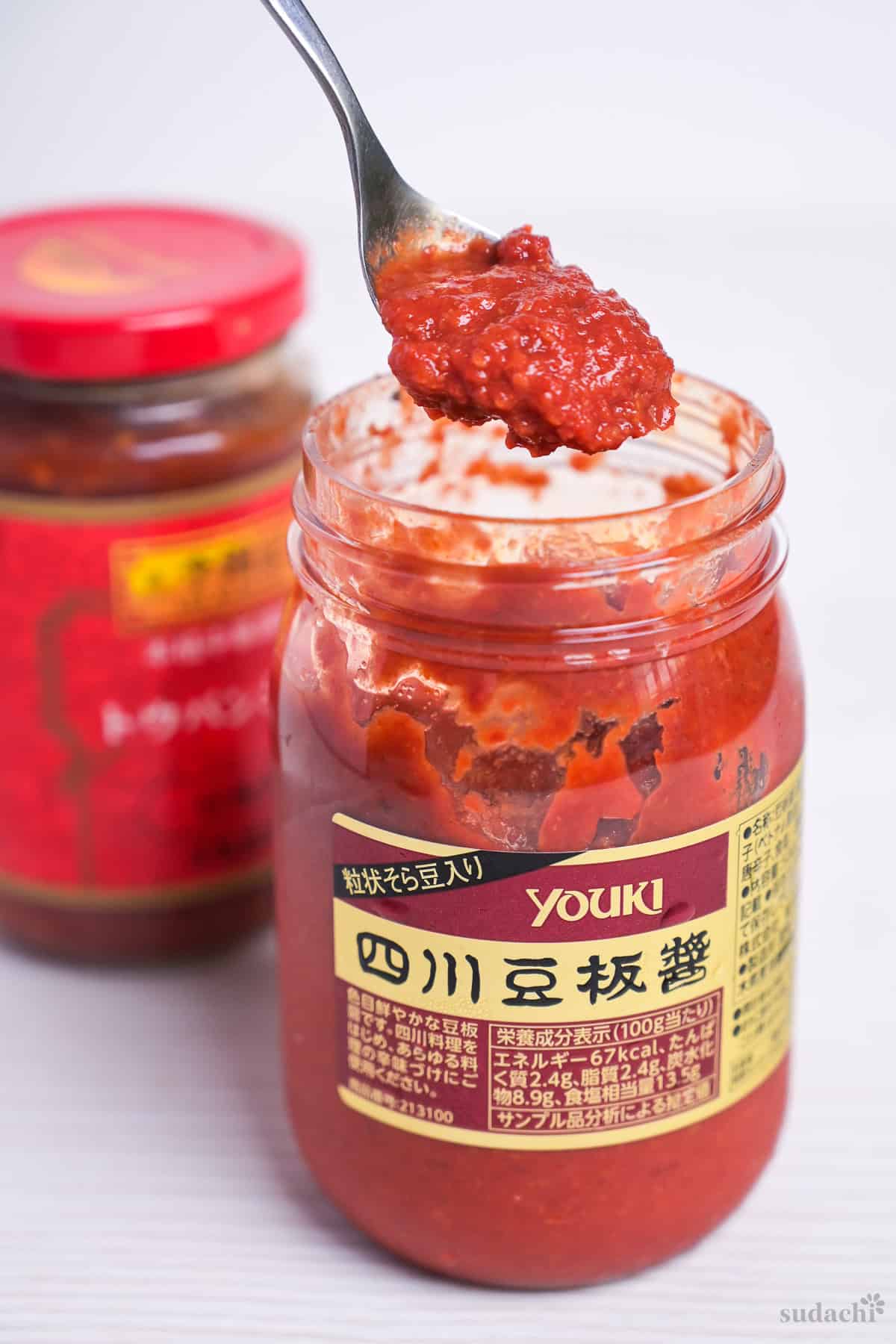
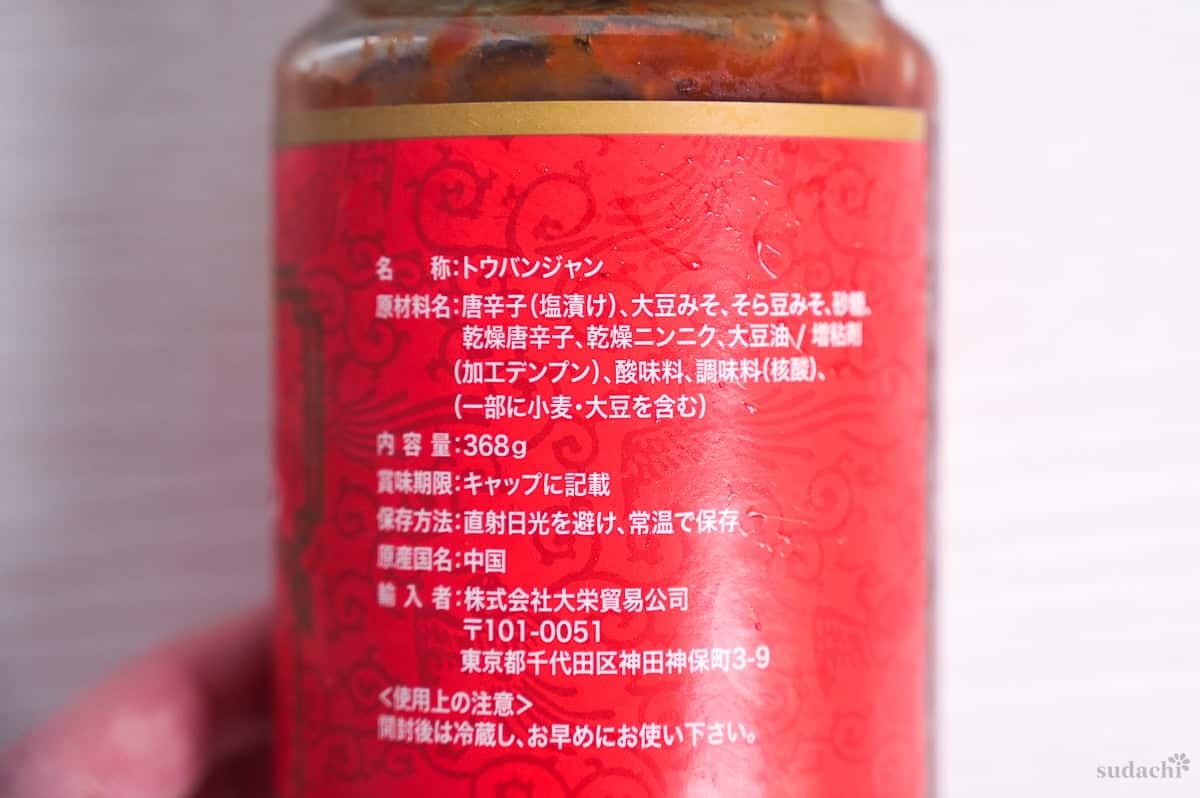
A couple of label tips for the aisle. The character 辣 (la) marks the spicy version, which is the one you almost certainly want, and 蚕豆 (broad bean) in the ingredient list confirms you are holding the real fava-based paste rather than a soybean stand-in. If you want it milder still, the Taiwanese brands Lian How and Ming De run gentler, and if gluten is a concern, Youki is the one made without wheat.
Gochujang and Other Substitutes
The question I hear most is whether the gochujang already in the refrigerator can do the job. It is an understandable hope, since both are red, fermented, and spicy. But they are not interchangeable, and it is worth knowing exactly why before you commit a dish to the swap.
Gochujang is built on a different base: soybeans and glutinous rice, where doubanjiang is built on broad beans. That rice is the key divergence. It makes gochujang noticeably sweeter, smoother, and less salty, where doubanjiang is salt-forward, coarser, and carries that earthy, fermented-bean depth that the rice paste simply does not have. The flavor points in a different direction, and that is the honest summary of it. Gochujang will give you red and it will give you some heat, but the savory backbone lands somewhere else entirely.
One jar tends to last a long time, so the fear of buying something you will use once is misplaced.
Keep it refrigerated after opening, and always reach in with a clean, dry spoon, since stray moisture is what invites trouble. You may see a layer of oil rise to the surface. That is a protective seal, not a defect, so just stir it back in before you use the paste.
Stored this way, an opened jar holds its quality for a year, often two or more. If you ever spot a thin pale film on top it is usually harmless and can be scraped off, though you should discard the jar if you find deep green or black mold. For practical purposes, treat doubanjiang as a long-haul pantry staple. Buying it for a single recipe is the opposite of a waste.
Toban Djan FAQ
Which doubanjiang should I buy?
For Japanese chuka cooking, Lee Kum Kee Toban Djan is the easy, reliable, milder pick, and it is on shelves almost everywhere. Step up to a Pixian paste like Juan Cheng when the doubanjiang itself is the star of the dish. Look for 辣 on the label for the spicy version and 蚕豆 to confirm it is broad-bean based.
Can I use gochujang instead?
In a pinch, and only in forgiving dishes like braises or marinades. Gochujang is sweeter, less salty, and lacks the earthy fermented-bean depth, so for backbone dishes like mapo tofu it changes the character. If you must swap, cut any added sugar and lean on extra chili for heat. For a closer match, use 1 tbsp red miso + 1 tsp soy sauce + 1 tsp chili powder + ½ tsp sesame oil for every 1 tbsp of doubanjiang.
My dish came out too salty or too spicy. What do I do?
Pull back on other salty seasonings like soy sauce, stretch the dish with more stock, tofu, or vegetables, and balance with a touch of sugar or vinegar. A practical trick for mapo tofu is to combine a non-spicy doubanjiang with the spicy one so you control the heat directly.
I’m the recipe developer and creator of Sudachi. Author of "Japan: The Ultimate Cookbook". You can find over 400 recipes that allow you to recreate the authentic flavors of Japan in your own kitchen!





Leave a rating and a comment