

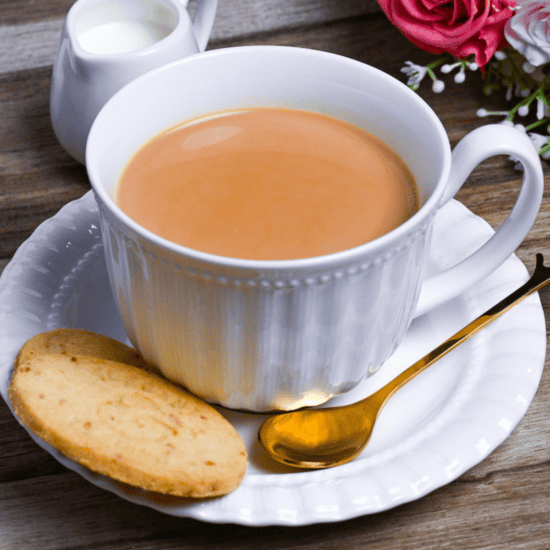


Japan runs on tea. Green tea comes with most meals and a matcha latte is a café staple, but one milky black tea has a following all its own. Royal milk tea. It comes bottled in every convenience store and even turns up as a flavor in cakes and cookies.
What sets it apart is the milk ratio. With at least half milk, the tea comes out thick and creamy, and my method ensures the tea flavor is always bold and rich. All you need is 10 minutes and three ingredients.
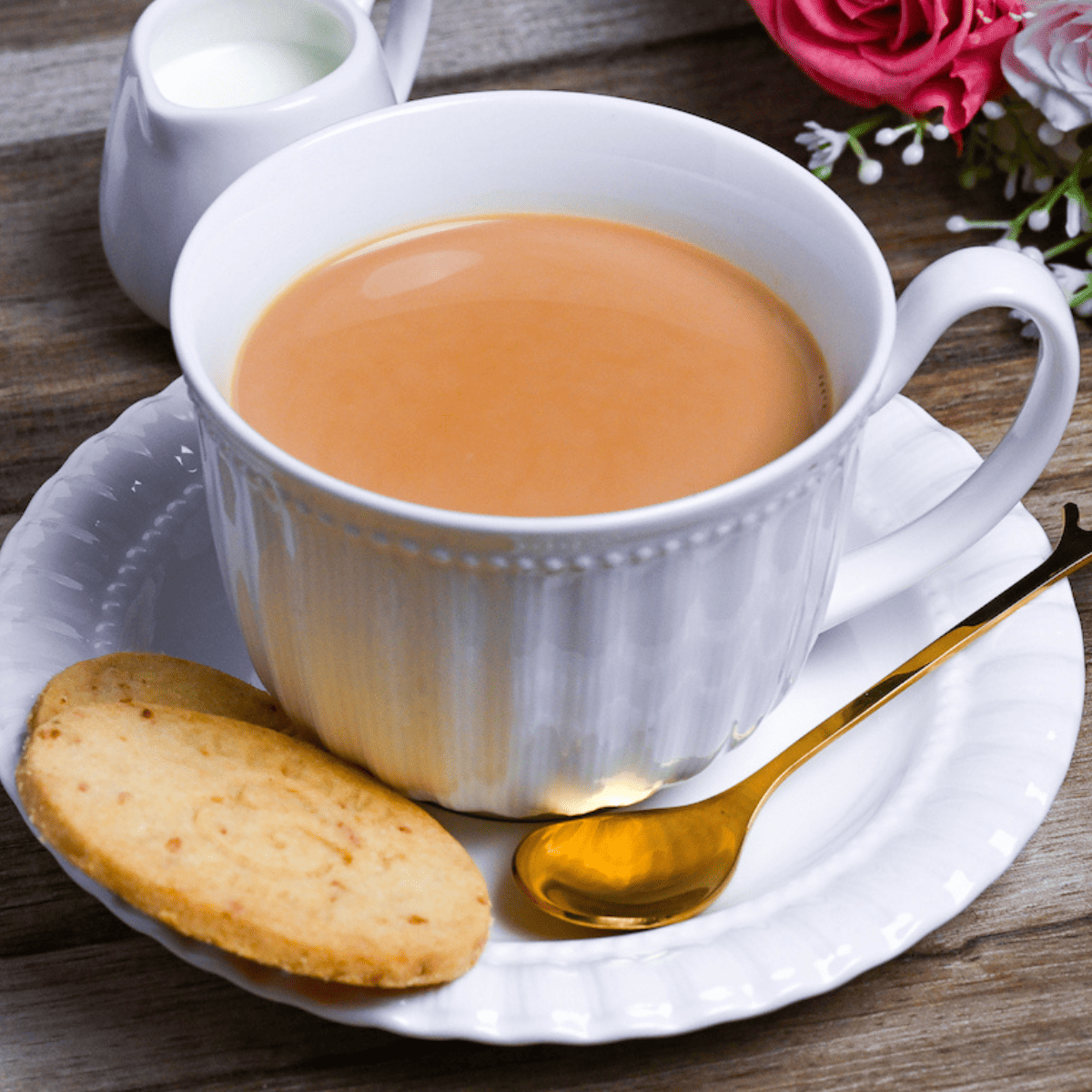
Royal milk tea
Recipe Snapshot
- What is it? A rich Japanese drink made by brewing strong black tea in hot water and milk until creamy. It’s a cozy, cafe-style cup you can make at home in 10 minutes or less.
- Flavor profile: Creamy, malty, sweet.
- Why you’ll love this recipe: Three ingredients and one small saucepan give you a thick, cafe-style milk tea in 10 minutes. Steeping the leaves in water first, then milk, keeps the tea bold without any bitterness.
- Must-haves: Strong black tea (Assam works best), whole milk or creamy oat milk to make it plant-based, a small saucepan with lid, and a tea strainer.
- Skill Level: Easy

What is Royal Milk Tea?
Royal Milk Tea (ロイヤルミルクティー) is a popular Japanese drink of strong black tea made with a higher ratio of milk than water, brewed until smooth, creamy and bold. It can be served both hot or cold, and it is the perfect tea for morning or afternoon. It goes especially well with desserts and sweet snacks, and you can even find Royal Milk Tea flavored snacks!
While quick and convenient instant powders exist, it’s easy to make Royal Milk Tea from scratch at home with just tea leaves, milk and sugar. I hope you give this simple yet luxurious recipe a try!
Black tea with milk, what’s special about it? You might be wondering how Royal Milk Tea is different from your standard British brew. A regular black tea with milk (known in Japan as milk tea) is made by steeping black tea leaves in hot water, then adding a splash of milk at the end.
Royal Milk Tea is made with a higher milk percentage, usually at least 50% milk, often more. Simply adding this much milk would make the tea cold and dilute its flavor, so instead, the tea leaves are simmered together with the water and milk in a saucepan. The method is similar to making chai without the spices.
Milk tea has a clean tea flavor with a hint of creaminess, while Royal Milk Tea is thick, rich and creamy. Milk Tea vs Royal Milk Tea
Since Royal Milk Tea contains considerably more milk than your average tea, you need a strong and bold leaf to that stands out against it, weak teas will be lost in the creaminess.
To create an authentic Royal Milk Tea, I recommend Assam, which is most often used due to its rich, full-bodied flavor. In fact, because it has such a rich flavor, it is commonly used for other strong teas such as Indian Masala chai and British breakfast tea.
I include other black teas you can use in the substitutions section later.
The best royal milk tea pulls as much flavor from the leaves as possible without drawing out bitterness or astringency. That’s why I start the leaves in a little freshly boiled water. Tea extracts best at 90 to 100°C (194 to 212°F), a heat milk can’t reach without scalding, so the hot water gives the leaves a head start.
Then I add cold milk and warm it slowly on low, stopping as soon as small bubbles appear around the edge. The gentle heat keeps drawing flavor from the leaves without scalding the milk, and a few minutes under the lid off the heat lets the tea fully infuse it.

Royal Milk Tea Ingredients

- Tea leaves: I used loose Assam tea leaves, which are most commonly used for Royal Milk Tea as they are known for their strong, bold, and malty flavor with a rich color. Assam is often used in breakfast blends so if you can’t find Assam on its own, breakfast tea is a good substitute. For more information on the types of tea used in Royal Milk Tea, check out the section below.
- Milk: Whole milk is most common and works best for this recipe due to its rich, creamy mouthfeel. See substitutions about plant-based alternatives.
- Water: Not essential, but if you can, soft water is best for brewing tea. This is because there are fewer minerals to interfere with the tea’s extraction, allowing its natural flavor to shines more brightly.
- Sugar: Royal Milk Tea is nearly always sweetened. White, light brown or even dark brown sugar all taste delicious in this recipe.
Substitutions
- Assam tea → other bold black teas: Breakfast tea blends often contain Assam leaves, so a standard breakfast tea is a great substitute. Darjeeling is also commonly used for a lighter flavor and color, and Ceylon works well too. If you’re into floral teas, Earl Grey or Lady Grey are perfect for mixing things up.
- Milk → Barista style oat milk: If you want to make it plant-based, barista-style oat milk works best for its creamy texture and mild flavor. I find soy milk, almond milk and coconut milk can overpower the flavor of the tea.
- Sugar → sweetener of choice: Condensed milk adds an extra creaminess that really compliments the flavor of the tea leaves. Honey will add a floral note to the tea. For a flavored royal milk tea, try kuromitsu (dark sugar syrup) or caramel syrup!
How to Make My Royal Milk Tea Recipe
First, boil water using your preferred method. You will need enough water to brew the tea (80ml per cup) plus extra to warm your cup(s).
Fill the serving cups with the boiling water. Heating your cup(s) will stop your tea from cooling too quickly upon serving.

Pour 80ml of freshly boiled water into your pot and add 5g of loose Assam tea leaves for each portion. Stir, then cover with a lid and steep/steam for 1-2 minutes.

If using tea bags, you can drop them in for convenience, or open the bags and pour the loose leaves into the hot water for maximum flavor extraction. Most teabags hold approx 3g of tea, so each portion would use 1½-2 teabags-worth of tea.

It is not recommended to boil the tea leaves. Freshly boiled water extracts the maximum flavor from the tea leaves, but boiling them will over-extract, creating bitter notes and astringency.
Once 1-2 minutes have passed, remove the lid and add the milk. I use 160ml per serving. Heat on low uncovered, and slowly bring to a very gentle simmer. Turn off the heat when small bubbles form around the edge of the pot.
Be careful not to heat it too quickly, as this can cause the milk to curdle. It is also important not to boil the milk which can form a skin on the surface and make it taste unpleasant.
If you have a thermometer, you can check the temperature and make sure it doesn’t exceed 70℃ (158℉).

You can add sugar or your choice of sweetener here if you’re making one portion.
Turn off the heat and place a lid on top. Steep/steam for 3-5 minutes depending on how strong you want it to be.
This allows the tea leaves to fully infuse the milk.

The best temperature to brew black tea is between 90-100℃ (194-212℉) and milk cannot reach this temperature without scalding or curdling. We need to steep the tea in hot water first and add the milk later for the best flavor and mouth-feel.
Dump the hot water from your warmed teacup and pour the tea through a tea strainer to catch the tea leaves.

Tip: If your tea cooled more than you’d like during the steeping step, you can reheat once more after straining.
If you haven’t added your sweetener yet, add it now. I use 2 tsp of condensed milk or sugar per 240ml cup to make it taste like the royal milk tea you get in Japan, but you can add more or less to taste.

Enjoy!

Tips for the Best Royal Milk Tea
- Warm your serving cups with hot water so that your tea doesn’t cool down too quickly.
- For best results, use loose Assam tea leaves.
- Avoid boiling once the tea is added, since this can make it taste too strong/astringent.
- Don’t heat the milk past 70℃ (158℉), doing so can cause a skin to form on top and alter the flavor.
- Experiment with sweeteners, sugar for simplicity, condensed milk for creaminess, honey for floral sweetness.
- Reheat right before serving if you like your tea piping hot.
Follow these tips for perfect royal milk tea every time!
How to Store
You can serve royal milk tea hot and freshly made, or chilled. Keep in mind that chilled versions might need more sugar.
Fridge: For chilled or large batches, cool it and keep it in a sealed container in the fridge. It’s best consumed within a few hours but can be kept for up to 2 days.
To reheat: Warm in a pot on the stove or the microwave to your preferred drinking temperature, be careful not to let it boil.

More Japanese Drink Recipes
If you’re interested in trying more Japanese drinks, check out some of my other recipes:
Did You Try This Recipe?
I would love to hear your thoughts!
💬 Leave a review and ⭐️ rating in the comments below. 📷 I also love to see your photos – submit them here!

Japanese Royal Milk Tea

Ingredients
- 80 ml water plus extra to warm the cup
- 2 ½ tsp Assam tea loose, approx 5g per cup (see note)
- 160 ml milk I recommend whole milk or a creamy plant-based alternative like oat milk
- 2 tsp sweetener of your choice use more or less to taste, I like to use condensed milk for an extra creamy flavor
The ingredient brands and tools I trust are in my Japanese pantry guide and my cooking tools guide.
Can’t find certain Japanese ingredients? See my substitution guide here.
Instructions
- Boil water using your preferred method. For each serving you will need about 80ml to brew the tea and 240ml to warm your serving cup.

- Pour 80 ml water into a saucepan and add 2 ½ tsp Assam tea. Stir, then cover with a lid and steep for 1-2 minutes.
- Remove the lid, add 160 ml milk and give it a stir. If you are making one portion for yourself, you can also add your sweetener here. Heat on low until small bubbles appear around the edges, then turn off the heat. Do not let it boil.
- Cover with a lid once more, and steep for 3-5 minutes.
- Pour the hot water out of the serving cup, then pour the tea through a strainer and into the cup.
- If you didn't add your sweetener earlier, you can add it now and adjust the sweetness according to your preference. Enjoy!

Leave a rating and a comment