

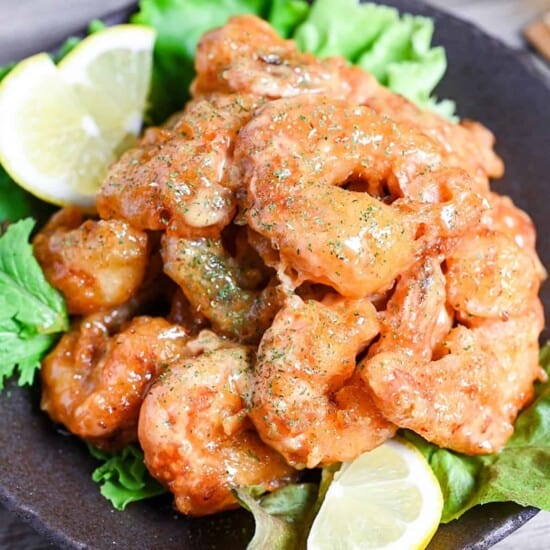


Featured Comment
I love this recipe–way better than a restaurant dish. I added some cubed avocado and it was even more amazing!
★★★★★
– Mary
What if I made ebi mayo with beer batter? Actually, how could that go wrong? Maybe even a version beyond anything I’d made before. All from one simple question.
I took the beer batter from fish and chips in the UK, where I lived for many years, and stirred paprika into the sauce. A quick toss, then straight to the table. First comes the crunch, then the creamy mayo, then plump, springy shrimp. It turned into the best batter I’ve ever made. This ebi mayo is all mine.

Ebi mayo
Recipe Snapshot
- What is it? A favorite in both home kitchens and Japanese-style Chinese restaurants, ebi mayo pairs battered, fried shrimp with a sweet, creamy mayonnaise sauce.
- Flavor profile: Bite through a delicate, crackling shell into rich mayo with the gentle sweetness of condensed milk, followed by the plump, springy snap of the shrimp.
- Why this recipe works: Carbonation gives the fish-and-chips-style beer batter its lightness. Tossing just before serving preserves the crunch. The beer batter and the paprika in the sauce are my own touches.
- How to make it: Chill the flour mix in the freezer while you clean and dry the shrimp. Dip in cold-beer batter, fry in hot oil, drain on a rack, toss with the sauce.
- What to expect: Allow about 30 minutes for this fried dish. The main thing to watch is the timing. Wait until you’re ready to serve before adding the sauce.
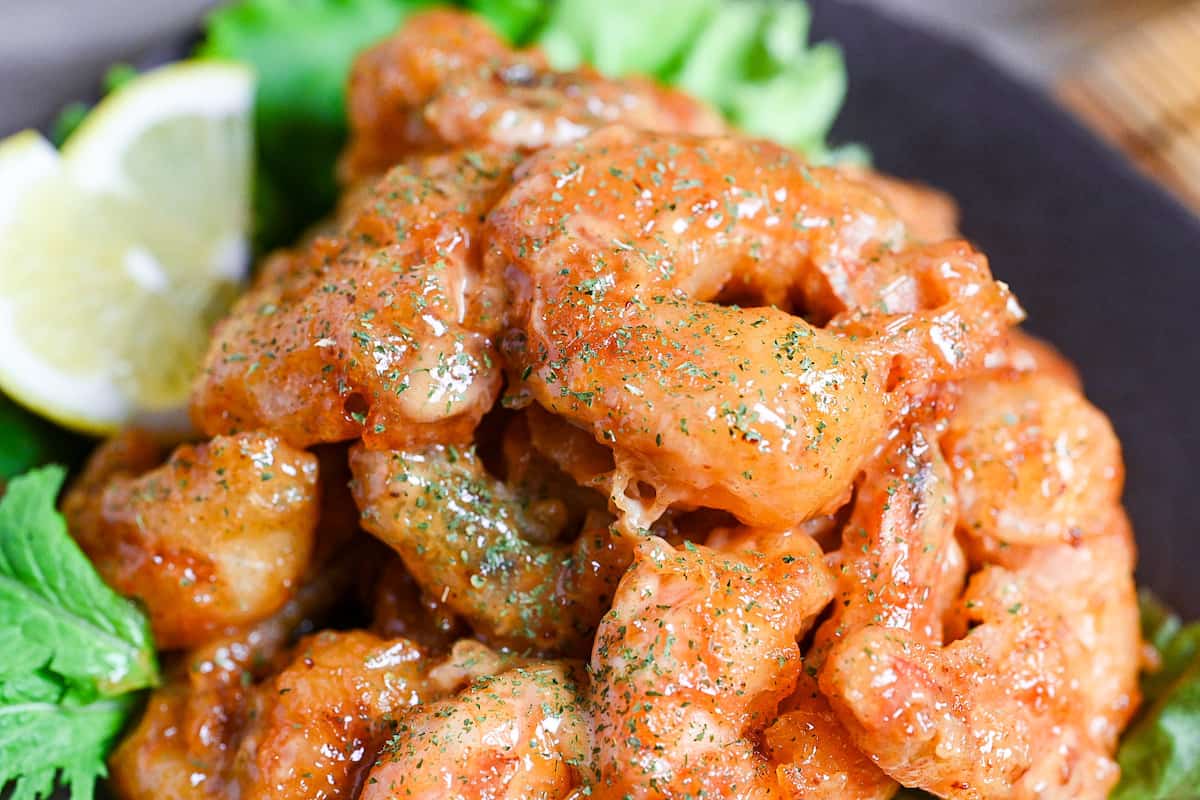
What Is Ebi Mayo?
Ebi mayo (エビマヨ) is fried shrimp coated in mayonnaise sauce, a Japanese-style Chinese dish that’s a sure hit at home and in restaurants. The name is short for the Japanese phrase meaning shrimp dressed in mayonnaise.
At some restaurants, the shrimp are deep-fried in a batter of egg and potato starch. Home cooks often take a simpler approach, dusting the shrimp with potato starch before frying them in a skillet. For a US comparison, think of honey walnut shrimp. The sauce and cooking method are similar, but ebi mayo has no candied walnuts.
There are 2 stories about where ebi mayo was born. In one, the dish began in Hong Kong, where a chef remembers eating it as a new creation in the 1980s. Mayonnaise mixed with condensed milk and gin was said to be the usual sauce, although no menu from that period has been found. The second story traces it to the US. Shu Tomitoku, a Chinese chef born and raised in Yokohama’s Chinatown who later competed as a challenger on the Japanese TV show Iron Chef, is said to have encountered shrimp with aurora sauce in America during the 1980s and adapted the dish. In Japan, aurora sauce means the pink blend of mayonnaise and ketchup. Los Angeles is named in some versions of the story, San Francisco in others, and nothing in his own words names either city. No one knows for sure which story is true.
I have just one requirement for my recipes. They have to taste right as Japanese cooking. Beyond that, I’m happy to mix influences. Ebi mayo brings Japan and China together already, so I brought in the UK, where I used to live. My coating is a beer batter inspired by fish and chips, something you don’t find on ebi mayo in Japan. I wanted to make this dish my own and get as much crunch as I could. Paprika is my other addition. It rarely goes into ebi mayo sauce, and when it does feature in the dish, it’s only a final sprinkle on top. Mixing it through the sauce gives me the flavor I’m after.
Shrimp Mayo Ingredients
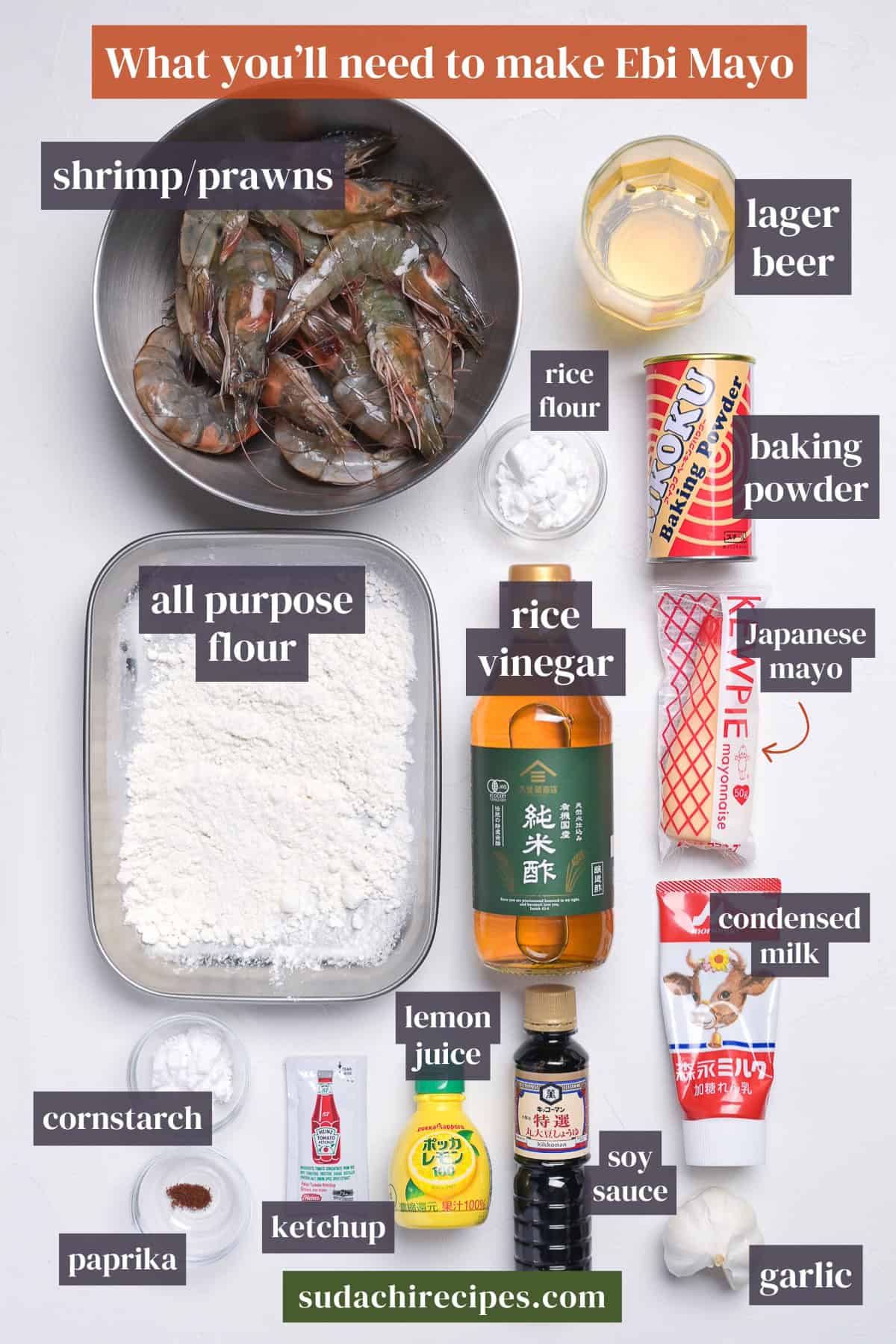
- Shrimp: Choose a larger variety, such as black tiger shrimp. The dish depends on a plump, springy bite, and black tigers have the thickness and snap to deliver it while striking a good balance between affordability and availability. A bag marked 16/20 contains 16 to 20 shrimp per pound. Even under a layer of batter, shrimp this size give you a substantial bite. Asian grocers are likely to stock peeled shrimp labeled black tiger or tiger shrimp.
- Beer: Get it thoroughly chilled. An ordinary lager, such as a German-style lager, is the simplest choice, with carbonation that makes the coating light and crisp. Want an even more British take? Try ale. Your call.
- Sweetened condensed milk: This ebi mayo staple brings sweetness and a silky consistency to the sauce. Look for cans labeled sweetened condensed milk in the US. Evaporated milk is a separate product, concentrated with no added sugar, so check before you buy.
Building up your Japanese pantry? My Japanese pantry guide covers the brands I trust and the ones Japanese people living abroad swear by.
Substitution Ideas
- Beer → Soda water: You will keep the light batter and lose the malty taste. Chill the soda water just as thoroughly as the beer.
- Beer → Non-alcoholic beer: This is another choice if you’d prefer less alcohol. In the US, a can labeled non-alcoholic may still hold less than 0.5% alcohol by volume.
- Black tiger shrimp → Whiteleg shrimp: These are more affordable and more widely available, with thinner, softer flesh. A US bag may be labeled simply shrimp, but the name white shrimp refers to a different species.
- Japanese mayonnaise → Regular mayonnaise: It can go straight into the sauce instead of Japanese mayonnaise. Taste and adjust afterward.
- Japanese mayonnaise → Homemade Japanese-style mayonnaise: With a little time, you can make the mayonnaise yourself.
- Cake flour → Plain flour: For cooks in the UK and Australia, an equal amount of plain flour is the simplest alternative. Plain flour gives a slightly thicker coating, and that’s the only difference.
- Cake flour → Korean Beksul cake flour: In North America, the strongest choice is Beksul from a Korean grocer, which costs roughly half the price of Japanese imports and gives an almost identical fried result.
- Cake flour → Pastry flour: Follow the recipe card’s note and select a low-protein flour to replace cake flour. Both people we surveyed in Toronto and Vancouver buy cake and pastry flour. Pastry flour also serves as a cake flour substitute for some Japanese cooks living abroad.
- Cake flour → All-purpose flour + cornstarch: Whisk 4 parts all-purpose flour with 1 part cornstarch until the mixture is free of lumps. It’s a useful everyday backup that gets close to cake flour without being an exact match.
- Rice flour → Cornstarch: Use the quantity of rice flour given on the recipe card.
- Cornstarch → Potato starch: No change in quantity is needed.
- Rice vinegar → Apple cider vinegar: Several people who answered our survey find Marukan, Kikkoman, or Mizkan rice vinegar at local stores. If you can’t find any, an equal quantity of apple cider vinegar comes closest, adding a subtle apple flavor.
Substitutions that I don’t recommend:
- Evaporated milk instead of sweetened condensed milk: Evaporated milk contains more water and no added sugar, leaving the sauce without its sweetness.
- Bleached cake flour instead of unbleached cake flour: Chlorinated flour retains water, making it harder to get a crisp coating.
- Self-rising flour instead of cake flour: It already contains baking powder, so you’d be doubling up on the baking powder in the batter.
- Pancake mix instead of cake flour: Its sweetness and excessive browning make it unsuitable here.
- Argentine red shrimp instead of black tiger shrimp: Cooking tends to leave these shrimp soft and watery.
- Chinese lao chou instead of soy sauce: This thick Chinese soy sauce would make the sauce too dark and too sweet.
- Sushi vinegar instead of rice vinegar: Its added sugar and salt would upset the sauce’s balance.
How to Make My Ebi Mayo
If you prefer to watch the process in action, check out my YouTube video of this ebi mayo recipe!

Before you start (Mise en place):
- Remove the shrimp shells and veins.
- Refrigerate the beer until thoroughly cold.
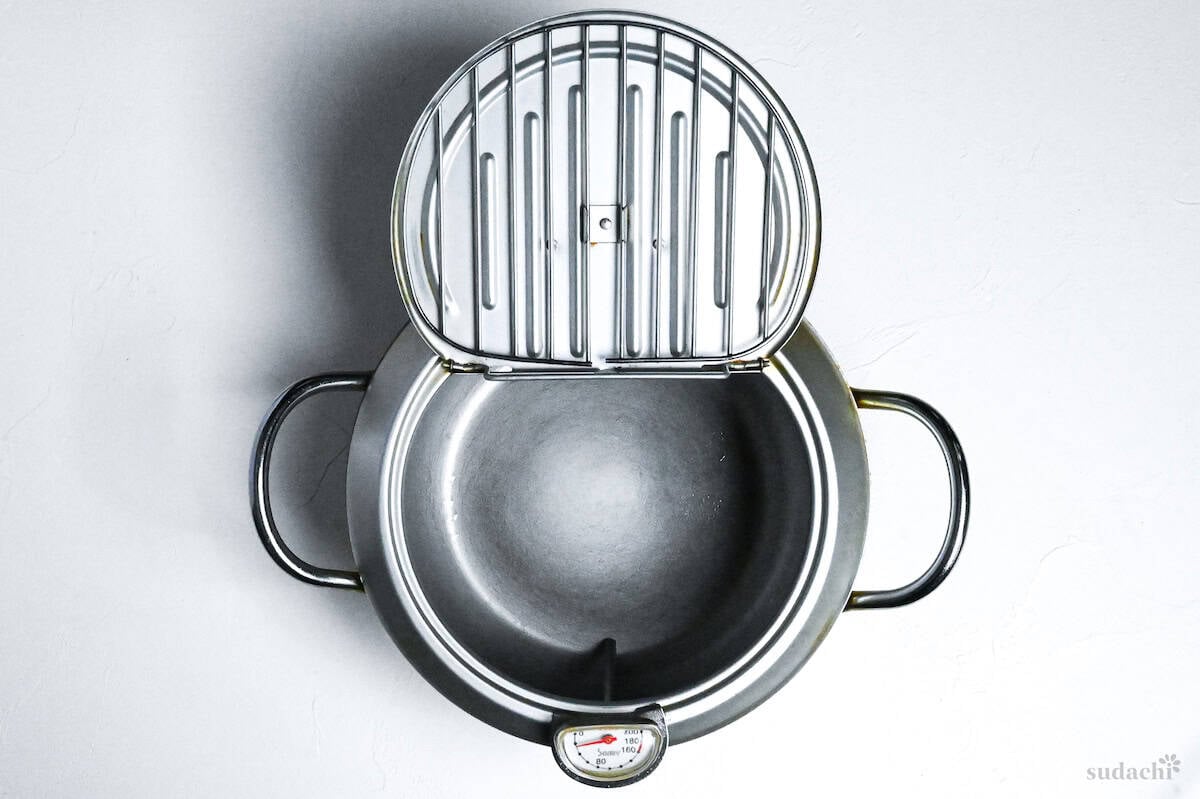
To develop this recipe, I used a tempura pot with a thermometer and draining rack.
i. Combine the cake flour, rice flour, baking powder, salt, and pepper in a bowl. Put the bowl in the freezer and leave it there until you need the mixture. Don’t add the beer yet.
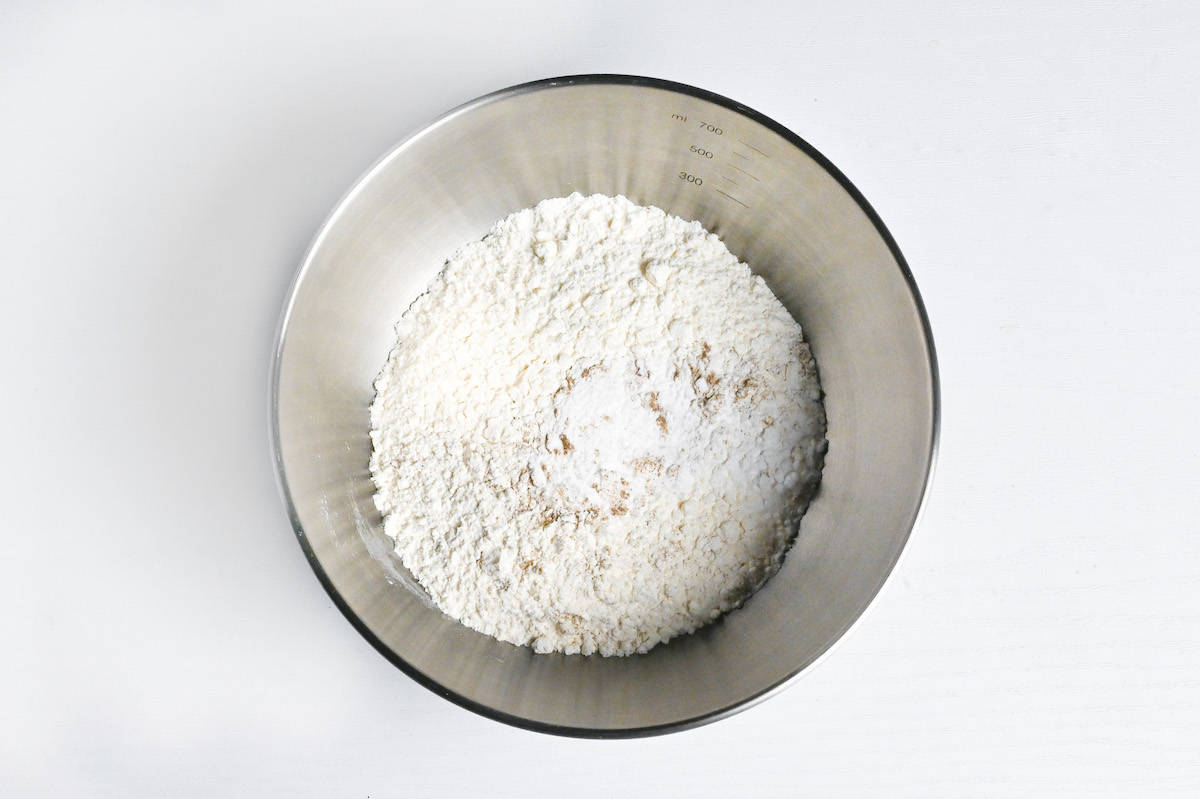
Keeping the flour cold limits gluten formation when you mix in the beer.
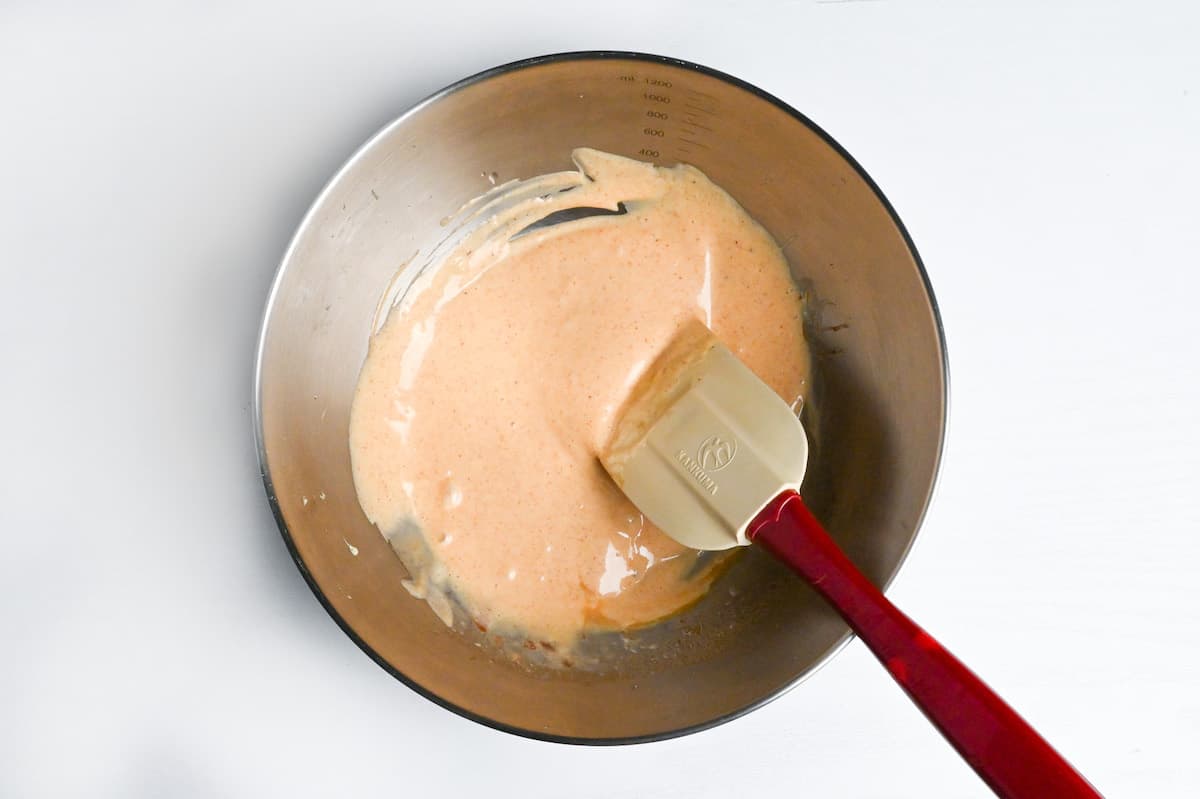
ii. In a wide bowl, blend the mayonnaise, sweetened condensed milk, ketchup, rice vinegar, soy sauce, lemon juice, and paprika until smooth. Set the sauce aside.

i. Place the shrimp in a bowl and scatter cornstarch and salt over them. Massage gently for 30 seconds to 1 minute.
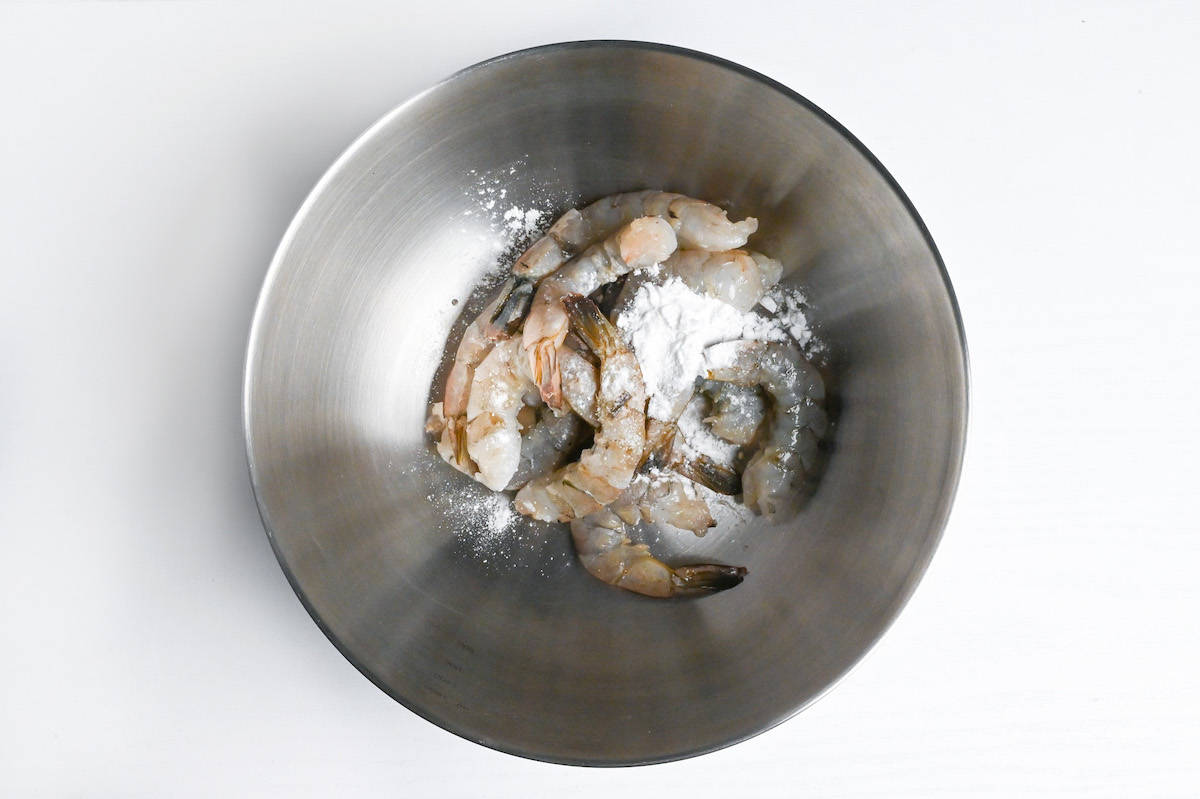
The starch lifts grime from the shrimp. It’s a small extra step, but they taste better for it.
ii. Rinse with cold water, then use paper towels to pat the shrimp completely dry.
i. Add oil to a pot, then place it over the heat.
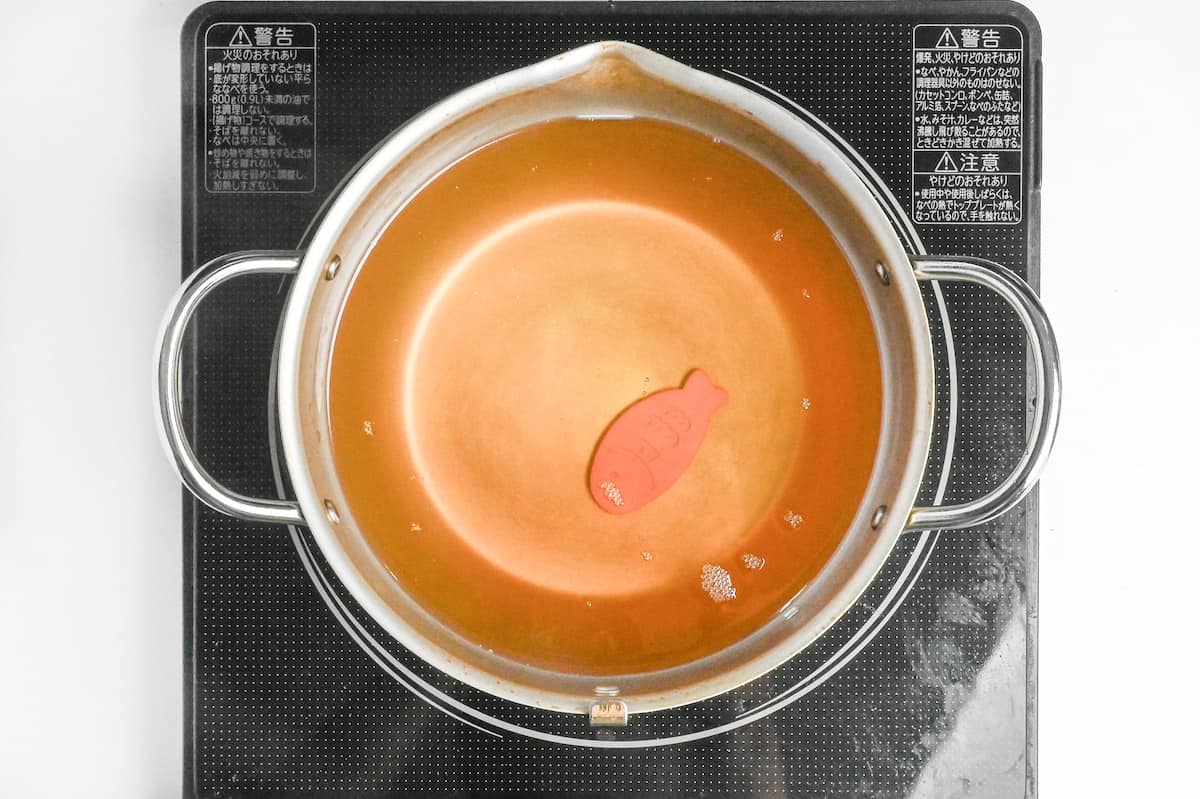
ii. Add the peeled garlic as the oil heats to give it flavor. Remove the garlic when it is deep brown.
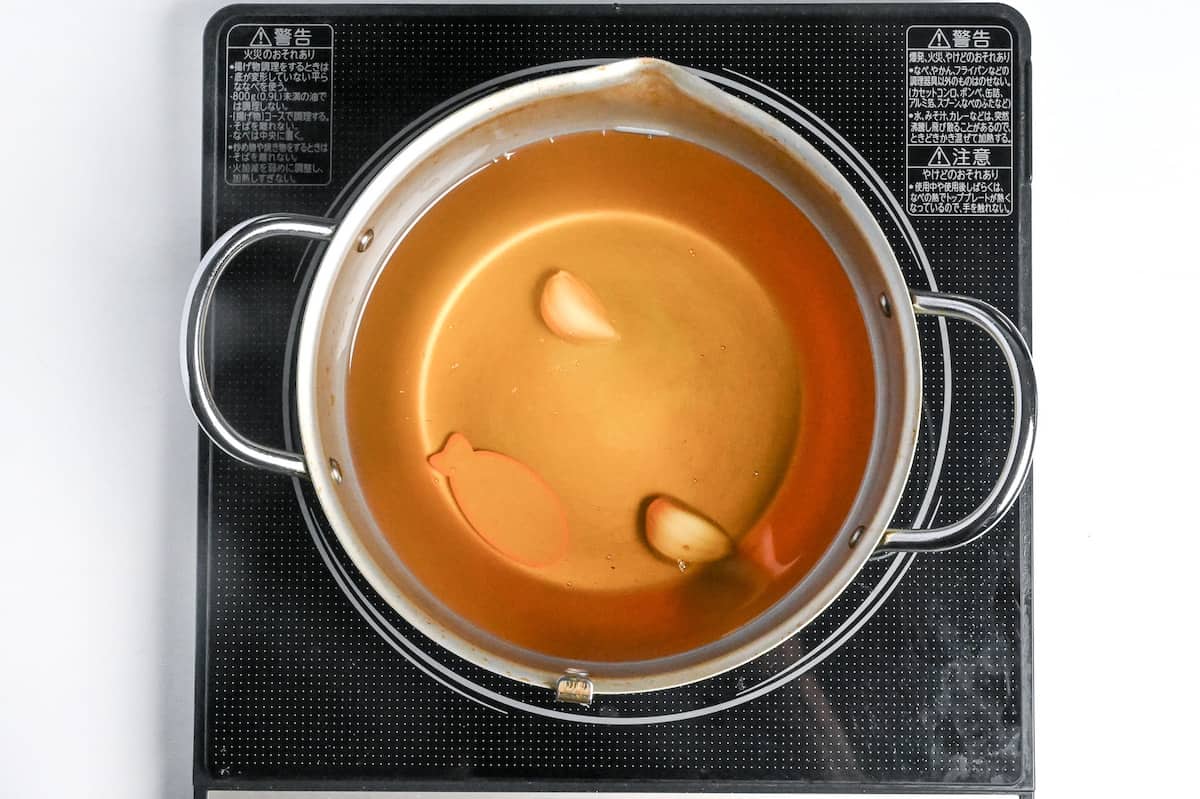
iii. Bring the oil to 190°C/374°F.
Tip: An infrared thermometer gives a quick reading in any pot. It is designed to measure surface temperature, so the number is for the top of the oil.
i. Just before you fry, give the shrimp a light dusting of cornstarch to help the batter stick.
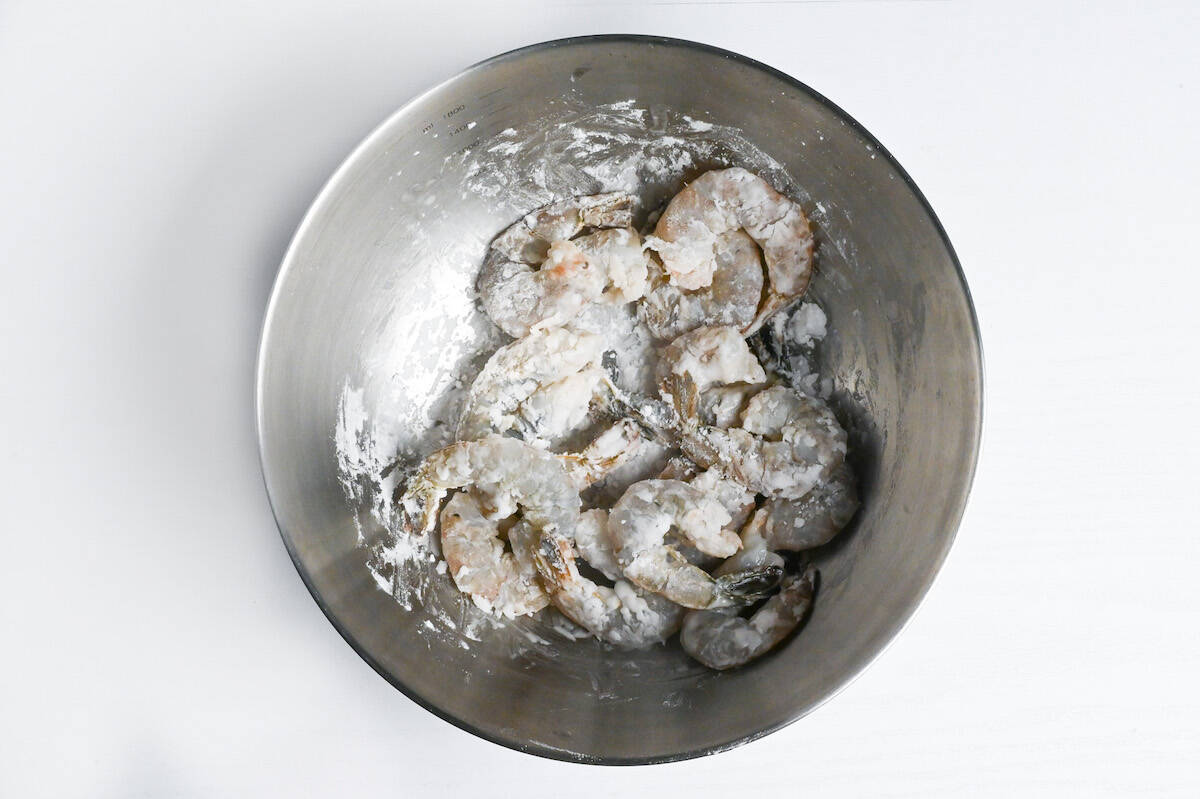
ii. Retrieve the flour mixture from the freezer and add the ice-cold beer. Mix briefly. A few lumps are fine.
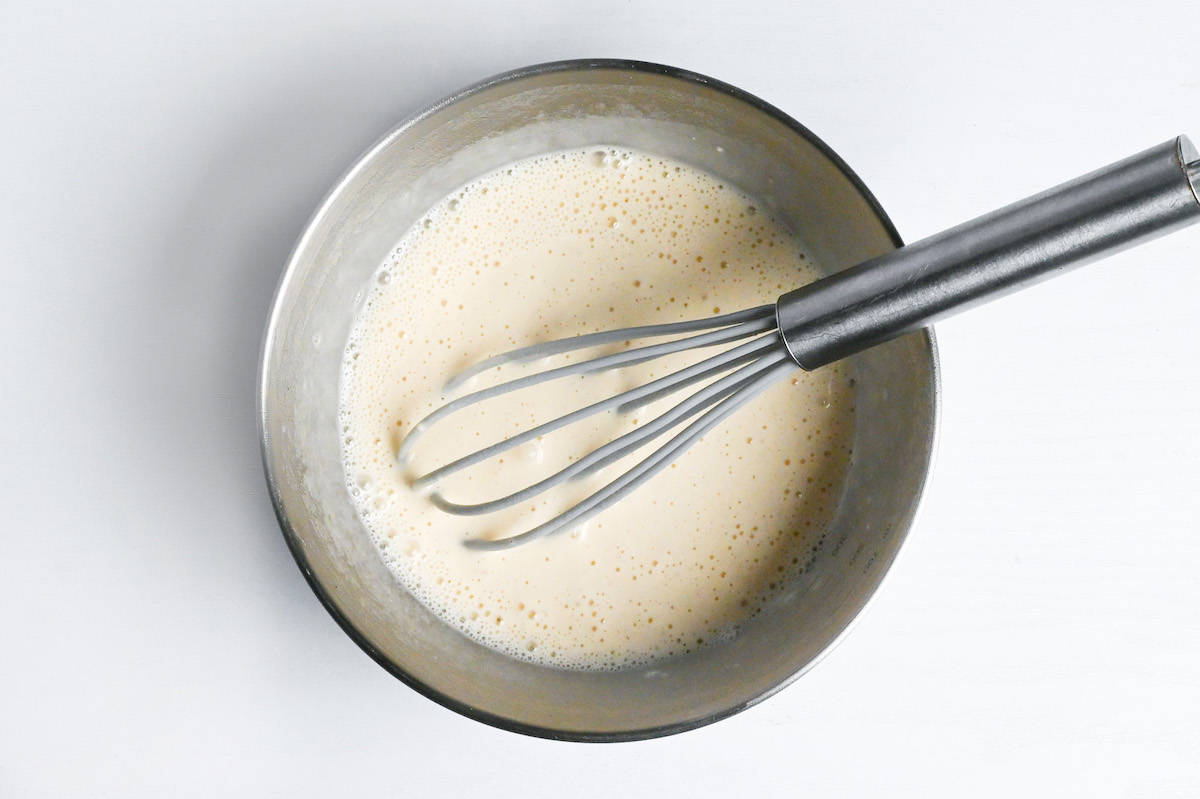
Too much stirring develops gluten, which makes the coating tough.
iii. Test the consistency on the back of a spoon: the batter should cover it, pause briefly, then run off. Loosen a thick batter with an extra splash of cold beer, or stir a little flour into one that’s too thin.
Beer carbonation creates tiny air pockets throughout the batter, giving the fried coating its lightness and crunch. Just as a refrigerated can of soda keeps its bubbles, cold beer retains its fizz longer, so leave it chilled until you’re ready to pour. Alcohol also plays a part. In the hot oil, it evaporates faster than water and leaves a drier, crisper coating than batter made with water. Soda water supplies the bubbles too, but contains no alcohol.
i. Coat the shrimp in batter and lower them into the hot oil. Fry them into 2 batches to avoid crowding the pot.
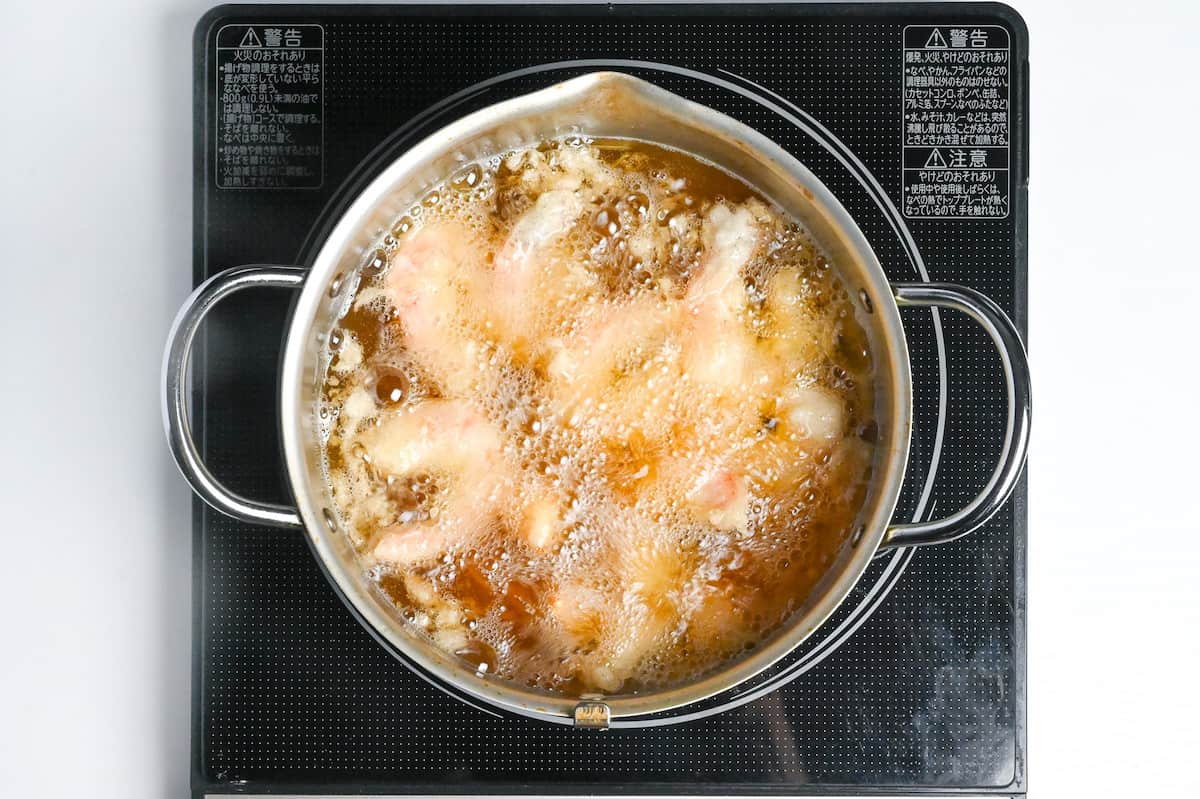
ii. Cook for 2 to 3 minutes, stopping at a pale golden color. The bubbling around the shrimp eases as they approach doneness.
iii. Transfer the shrimp to the rack and let the oil drain away.
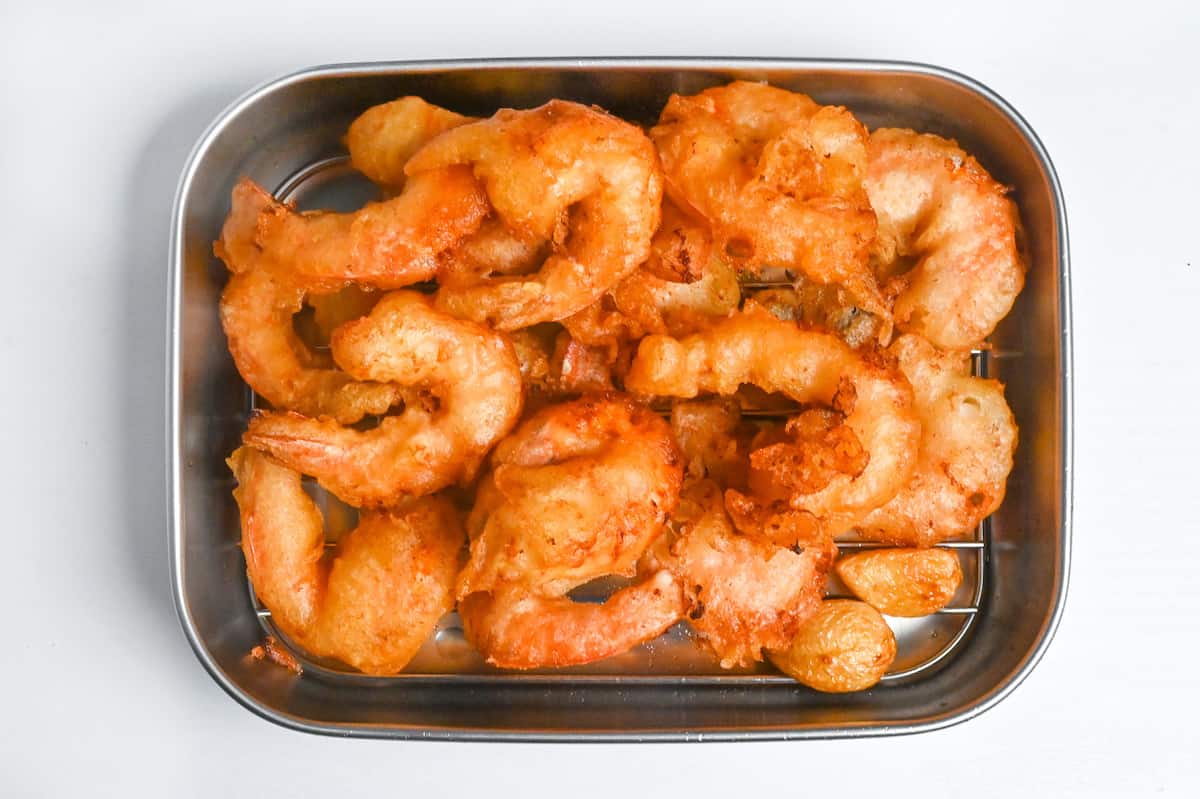
I use a rack rather than paper towels to keep steam from collecting underneath the shrimp.
i. When all the shrimp are fried and you’re ready to serve, put them into the sauce bowl together.
ii. Use a silicone spatula to fold gently, lifting the sauce and shrimp from the bottom of the bowl.
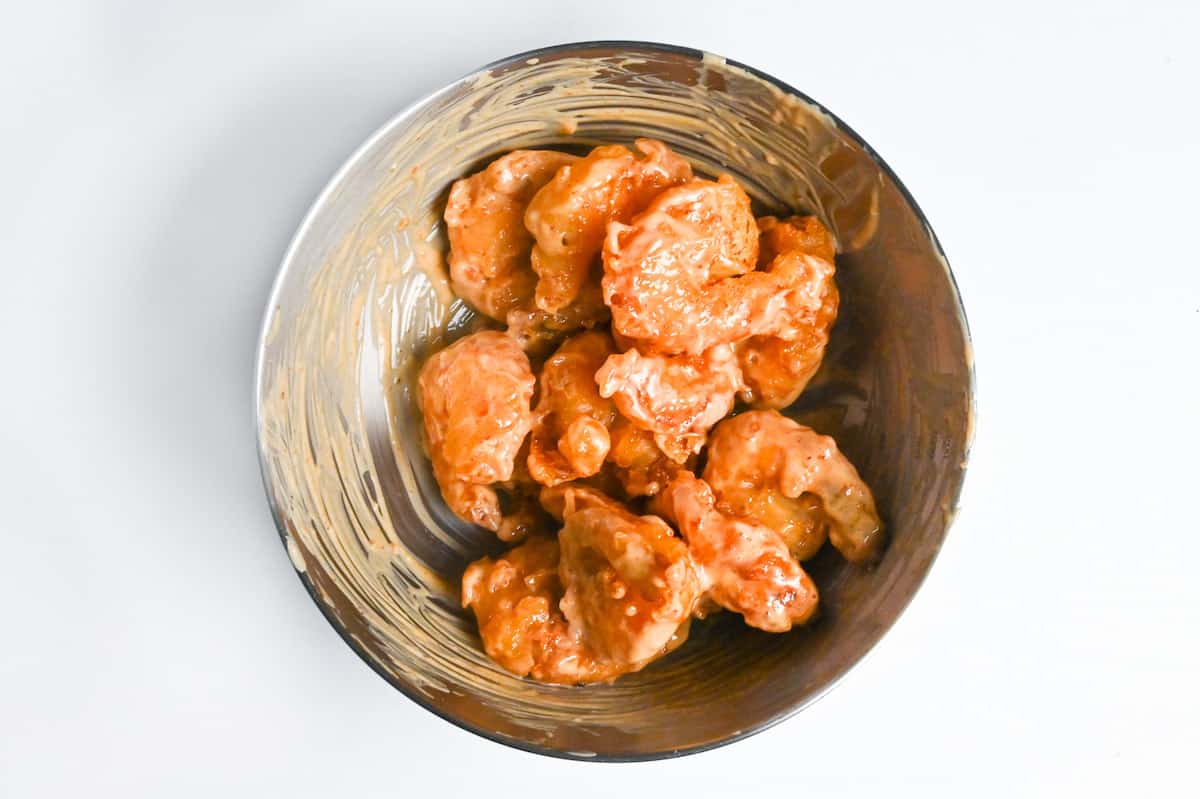
Moisture from the sauce softens the batter, so tossing too soon costs you crunch.
iii. Transfer to a plate immediately and finish with a sprinkle of dried parsley.
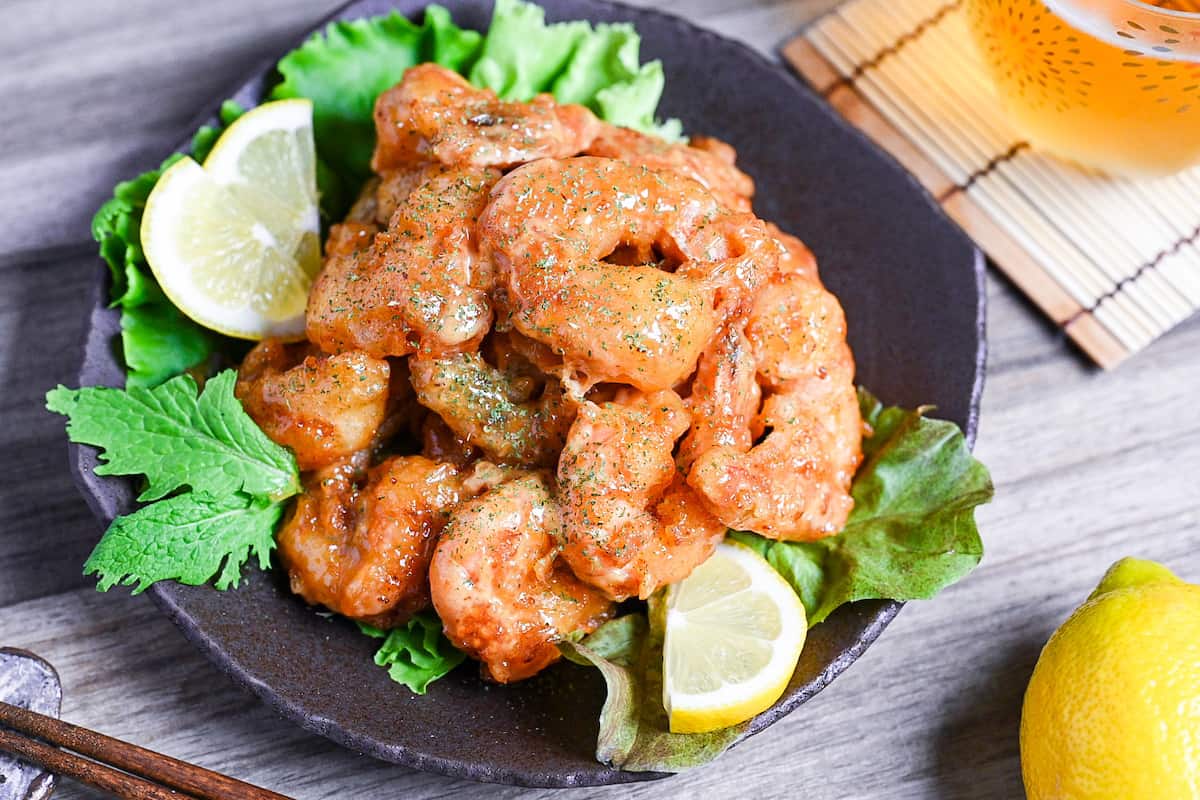
Note: For dipping, put the sauce in a small bowl alongside the shrimp.

Tips for the Best Mayo Shrimp
- Wait until serving time to add the sauce. Contact with the sauce softens the batter almost immediately, so this dish isn’t suited to making ahead. There’s enough sauce for one toss, so when the final batch has finished frying, fold all the shrimp through it together and serve immediately.
- Have everything ready before you add the beer. Put the dry mixture in the freezer in its bowl, and prepare the sauce. Heat the oil, dust the shrimp, and tap off the extra cornstarch before pouring the cold beer into the chilled bowl. If I’m cooking several dishes, I work out the sequence before I start. That has never been about skill, only about thinking it through.
- Let the batter set before moving the shrimp. After the coating firms up in the oil, use chopsticks to move the shrimp around.
If, to my taste, a recipe doesn’t beat what most restaurants serve, I throw it out, and this ebi mayo cleared that bar and stayed.
What to Serve With Ebi Mayo
- Chahan Fried Rice
- Kakitamajiru (Japanese Egg Drop Soup)
- Yamitsuki Shio Cabbage (Izakaya Salted Cabbage)
- Creamy Potato Salad (Potesara)
Mayonnaise Shrimp Troubleshooting
Batter that’s too runny won’t cling, and an insufficient dusting underneath can also let the coating slip off. Lightly dust the unfried shrimp with cornstarch again. Check the batter too, and if it still looks thin, mix in a little flour before cooking those shrimp.
Overmixing or beer that has lost its chill can leave you with a heavy coating. You can’t make the cooked batch lighter, but you can adjust how you handle the next one. Stop stirring. If the batter has thickened, loosen it with a little cold beer.
Oil that’s too cool lets the coating absorb oil rather than become light and crisp. Adding too many shrimp at once also lowers the temperature. Before frying another batch, let the oil return to 190°C/374°F. Keep each batch to no more than a third to half of the oil’s surface.
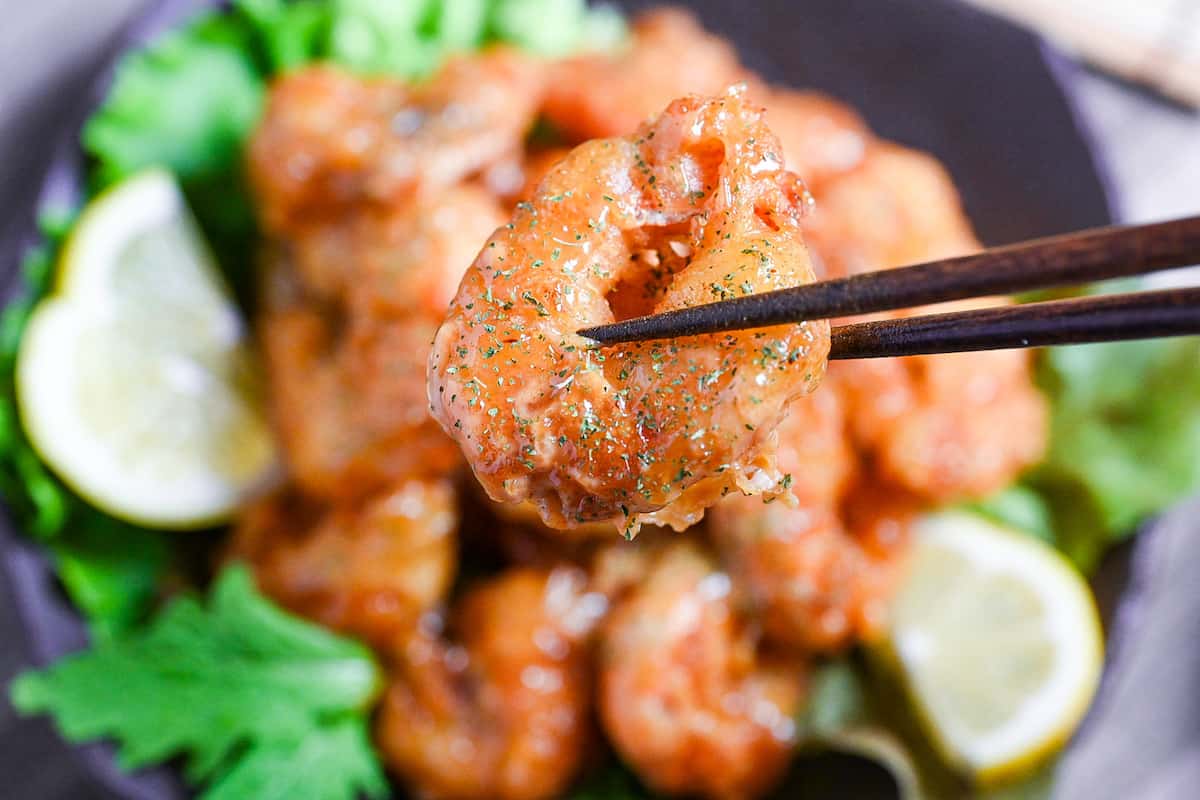
More Japanese Tempura Recipes
- Crispy Ebiten Shrimp Tempura
- Kakiage Vegetable Tempura
- Oita-Style Toriten Chicken Tempura
- Anago Conger Eel Tempura
Now that you have the hang of beer batter, choose what goes into the pot next from my Japanese tempura recipes.
Did You Try This Recipe?
I would love to hear your thoughts!
💬 Leave a review and ⭐️ rating in the comments below. 📷 I also love to see your photos – submit them here!
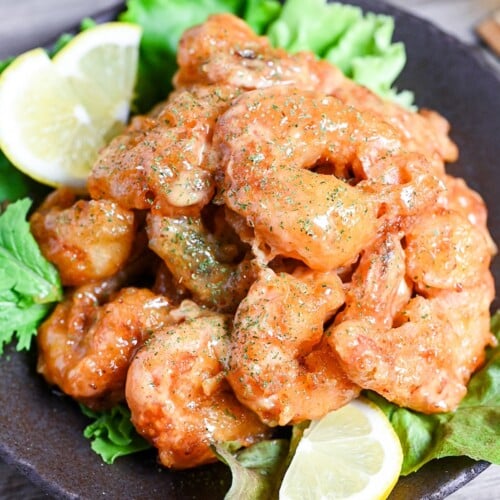
Ebi Mayo (Fried Shrimp in Mayonnaise Sauce)
Ingredients
Batter
- 70 g unbleached cake flour plain flour in UK/AU
- 1 tbsp rice flour or corn starch
- ½ tsp baking powder
- 1 pinch salt and pepper
- 100 ml lager beer or soda water, must be very cold
Mayonnaise Sauce
- 4 tbsp Japanese mayonnaise
- 1 tbsp condensed milk sweetened, not evaporated milk
- 1 tsp tomato ketchup
- 1 tsp unseasoned rice vinegar (komezu)
- ½ tsp Japanese soy sauce (koikuchi shoyu)
- ½ tsp lemon juice or lime juice
- ½ tsp paprika powder regular or smoked
Ebi Mayo
- 250 g shrimp medium to large size, deshelled and deveined, black tiger or whiteleg shrimp
- 1 tsp cornstarch for cleaning
- 2 pinches salt for cleaning
- 3 tbsp cornstarch or potato starch
- 2 cloves garlic peeled, whole
- cooking oil neutral with high smoke point
- dried parsley to garnish
The ingredient brands and tools I trust are in my Japanese pantry guide and my cooking tools guide.
Can’t find certain Japanese ingredients? See my substitution guide here.
Instructions
- Start by mixing the dry ingredients for the batter (70 g unbleached cake flour, 1 tbsp rice flour, ½ tsp baking powder and 1 pinch salt and pepper) Mix well and place them in the freezer until just before using. Don't add the beer yet.

- Next, take a large bowl (or small bowl if you prefer dipping) and add all of the sauce ingredients. (4 tbsp Japanese mayonnaise, 1 tbsp condensed milk, 1 tsp tomato ketchup, 1 tsp unseasoned rice vinegar (komezu), ½ tsp Japanese soy sauce (koikuchi shoyu), ½ tsp lemon juice, ½ tsp paprika powder) and mix well. Set aside for later.
- Next, place 250 g shrimp in a bowl and rub with 1 tsp cornstarch and 2 pinches salt. Once evenly coated, rinse with cold water and dry with kitchen paper.
- Heat your oil to 190 °C (375 °F) and drop 2 cloves garlic into the pot while it's heating up. This will add extra flavor to the shrimps, remove and discard once they turn dark brown.
- Add 3 tbsp cornstarch to the prawns and coat them. This will help the batter stick better.
- Take your dry batter from the freezer and add 100 ml lager beer (chilled). Mix briefly, leaving a few lumps.
- Coat each prawn in the batter and drop them straight into the oil in batches, be careful not to overcrowd the pot. Fry for approximately 2-3 minutes or until pale golden.
- As each batch is complete, transfer the prawns to a wire rack to let any excess oil drain off.
- When all the prawns are fried and you're ready to serve, place them in the bowl of sauce and gently mix to coat. Alternatively, serve the sauce in small bowls on the side for dipping.
- Dish up, sprinkle with dried parsley and enjoy!


The dressing is delicious with the shrimp. I added Furakaki and used Korean Fry mix for the batter (because I had it in the pantry and I wanted to try it). The beer was a wonderful idea. My husband and kids loved the recipe!
Hi Colette,
Thank you for your kind words and generous rating.
Furikake and Korean fry mix, sounds delicious! I’m happy you and your family enjoyed the recipe 🙂
I love this recipe–way better than a restaurant dish. I added some cubed avocado and it was even more amazing!
Hi Mary,
Thank you so much for trying my ebi mayo recipe! I’m really happy to hear it beat the restaurant version and the avocado addition sounds amazing! 🙂
Yuto
Hi Sudachi, I’m loving all your recipes, at least the ones that I’ve tried!
Just a general question regarding any recipe really: When you state Soy sauce in a recipe, can I assume that you always refer to dark soy sauce, unless you say otherwise?
Hi Vincent,
Thanks so much, glad you’re enjoying them! Great question. Whenever I say “soy sauce” in a recipe, I’m referring to Japanese dark soy sauce (koikuchi shoyu), unless I specifically mention otherwise. The only exception is when I call for Japanese light soy sauce (usukuchi shoyu) by name. One thing to keep in mind though, Japanese dark soy sauce is completely different from Chinese dark soy sauce, which is thick and sweet. Japanese dark soy is basically just the standard, everyday Japanese soy sauce you’ll find in most stores.
I hope this helps!
Yuto