


Disclaimer: This post may contain Amazon affiliate links. Sudachi earns a small percentage from qualifying purchases at no extra cost to you. See disclaimer for more info.
If you have ever scrolled through a Japanese recipe and paused at the words “Worcestershire sauce,” you are not alone. The label is the same, but the bottle in a British pantry and the bottle in a Japanese kitchen are kind of two different products, with different ingredients, different textures, and different jobs.
Back during my England days, I remember using Lea & Perrins and wondering why it tasted a little different. It took me a while to realize the sauce I had grown up calling Worcester sauce (ウスターソース) was not quite the same thing.
This guide covers the questions I get asked most:
- What exactly is Japanese Worcestershire sauce?
- How does it differ from British Lea & Perrins?
- How do the different Japanese sauces (usuta, chuno, tonkatsu, okonomi) relate to each other?
- Which sauce goes on which dish?
- What can you substitute when you cannot find the Japanese version?
Let’s start with the bottle itself.
What Is Japanese Worcestershire Sauce?
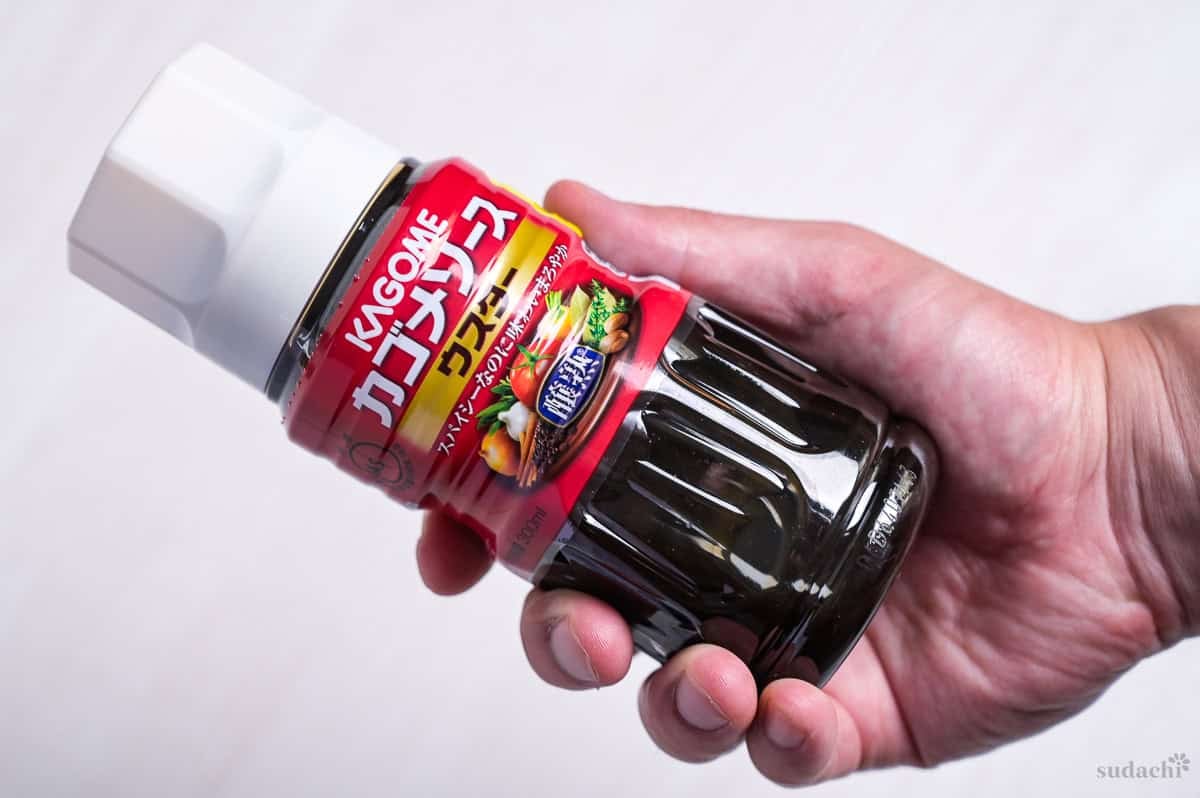
Japanese Worcestershire sauce, usually what we simply call ソース (so-su, “sauce”) or more specifically ウスターソース (usuta sauce), is a dark brown, tangy-sweet, fruit-and-vegetable-based condiment. Its texture ranges from thin and pourable to thick and spoonable depending on the variety. In its thin form it has a bite of vinegar and spice, but the base flavor is noticeably fruity and mellow compared to its British ancestor.
If you pick up a bottle at a Japanese grocery store, you will almost certainly see one of a handful of makers on the label. Bull-Dog Sauce is the national workhorse. Kagome, better known for tomato products, also makes a widely distributed tonkatsu sauce with a cleaner fruit profile. Kagome is actually more well-known in my region than Bull-Dog.
The important thing to know up front: when a Japanese recipe says “Worcestershire sauce,” it almost always means this sauce, not Lea & Perrins. Same English name, different condiment category. Confusing!
Japanese vs British Worcestershire Sauce
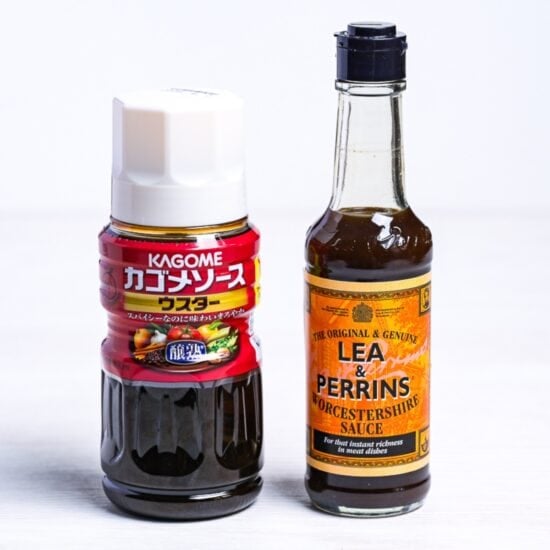
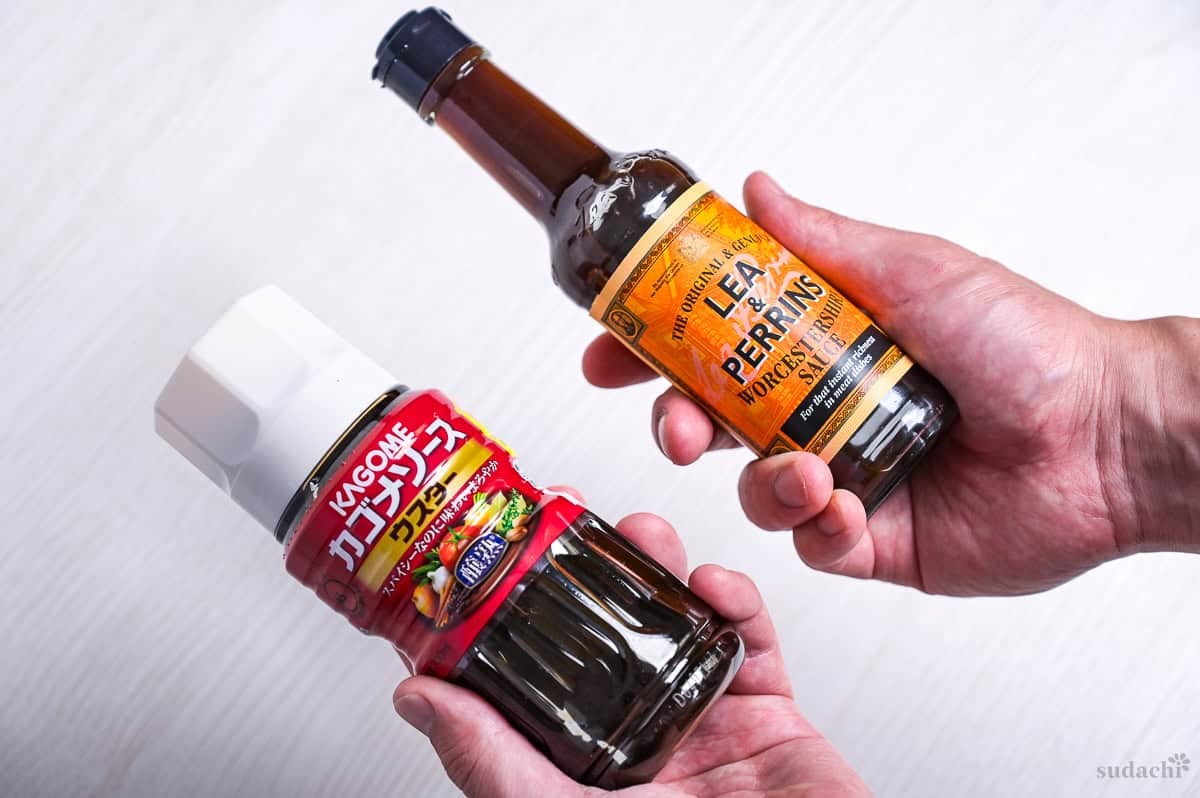
Here is the side-by-side. These are the two bottles you are comparing:
| Feature | Lea & Perrins (UK) | Bull-Dog Usuta Sauce (Japan) |
|---|---|---|
| Sweetness | Molasses, modest | Sugar plus fruit sugars, noticeably sweet |
| Umami source | Anchovies fermented 2 years | Niboshi (dried sardine) extract, yeast extract |
| How it is used | A few drops at a time as an accent | Spoons at a time, poured over food |
| Base | Malt vinegar, spirit vinegar | Apple, tomato, onion, prune, carrot, lemon |
| Souring agent | Tamarind | Brewed vinegar, lemon |
| Texture | Thin, pourable liquid | Thin but thicker and smoother |
| Aging | Up to 3 years in tanks | Cooked, blended, bottled (no long fermentation) |
- Lea & Perrins is a thin, sharp, fermented anchovy sauce.
- Japanese usuta sauce is a fruit-and-vegetable condiment.
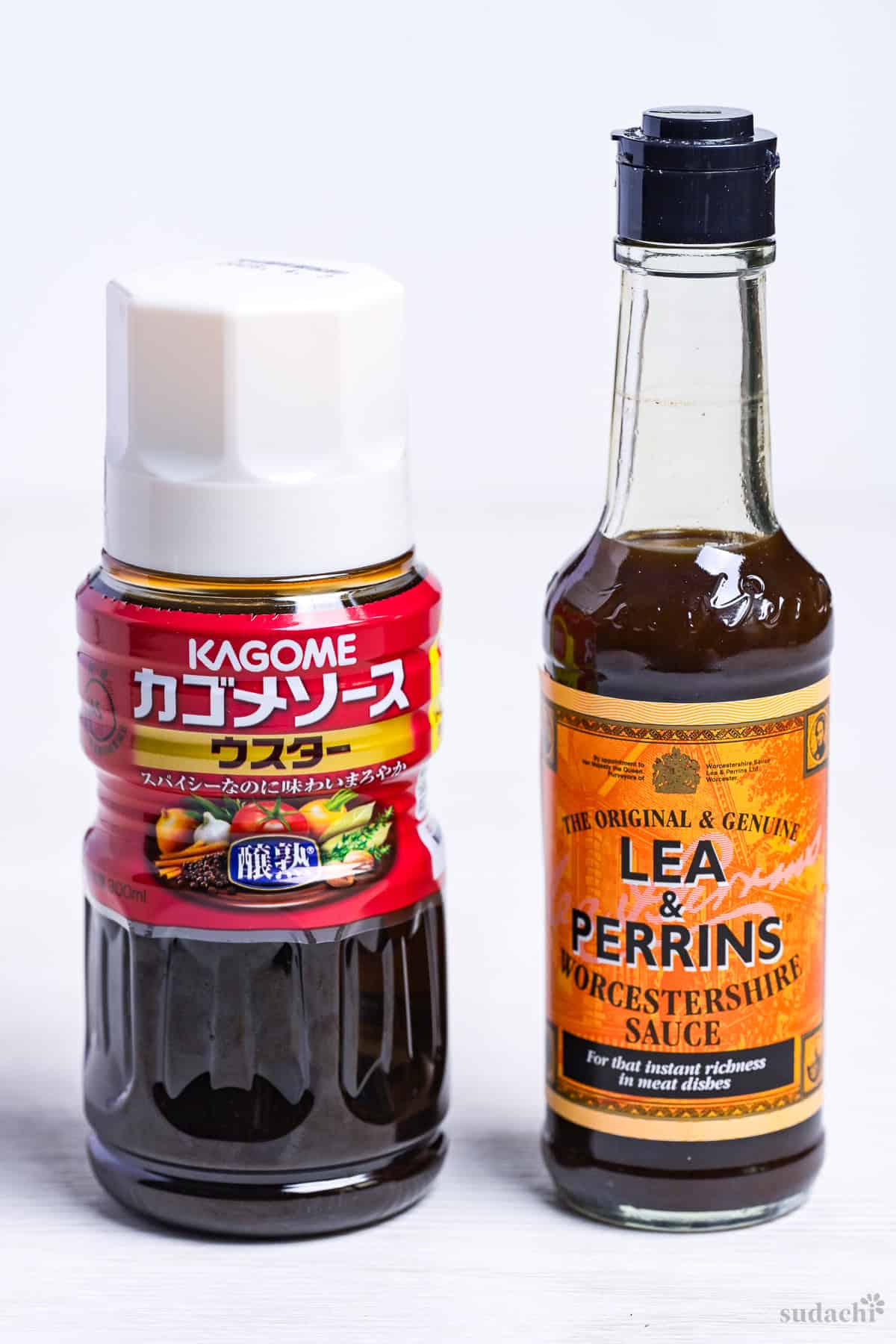
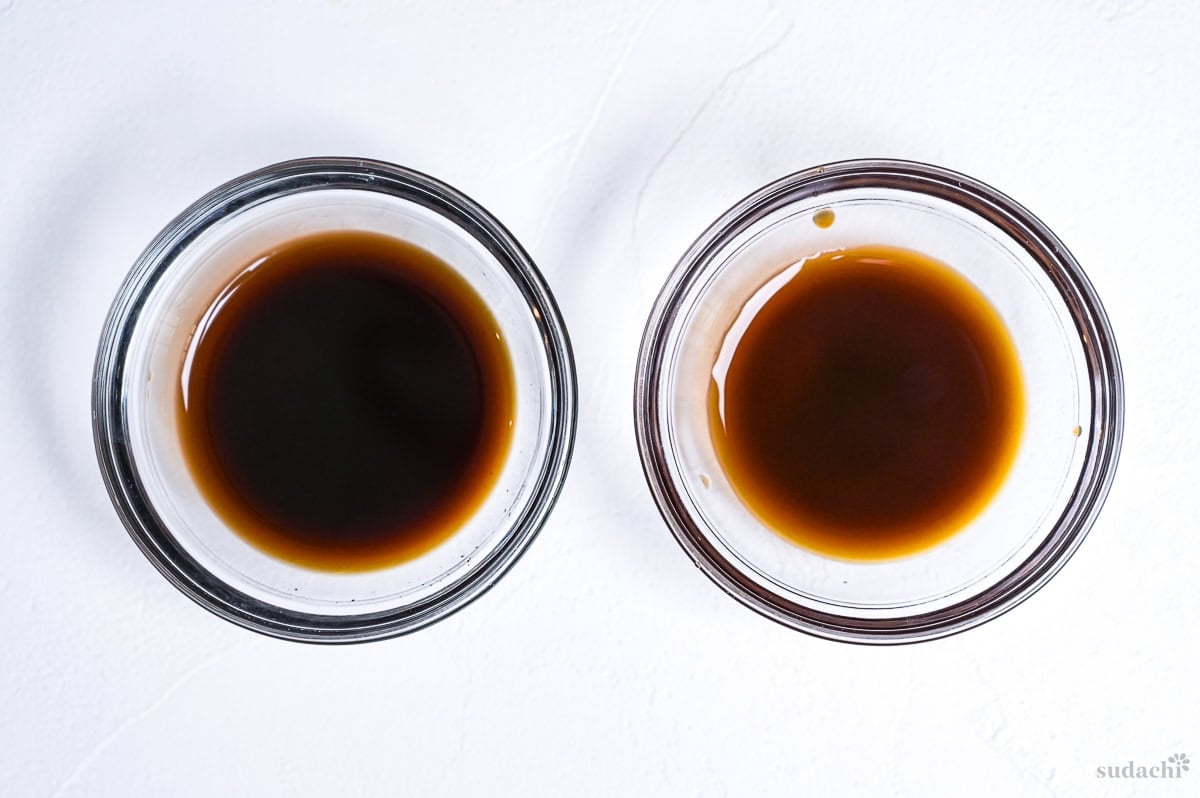
I did not want to take the chart’s word for it, so I lined up a bottle of Kagome against my Lea & Perrins. Kagome is the Japanese bottle I actually keep, since it is more common than Bull-Dog where I live. The difference shows up before you taste anything:
- Lea & Perrins: paler, and it runs loose and watery off the spoon.
- Kagome: darker, with more body, the kind of weight that thinly coats the spoon instead of sliding off.
Then I tasted them on their own:
- Lea & Perrins: sharp, sour in a few directions at once, with a faintly spicy edge on the finish.
- Kagome: sweetness first, with a savory booster tucked behind it that rounds the whole thing out, so it lands soft and full rather than pointed.
Side by side, they were different enough that I could not really call them similar. Clearly cousins, not the same bottle twice.
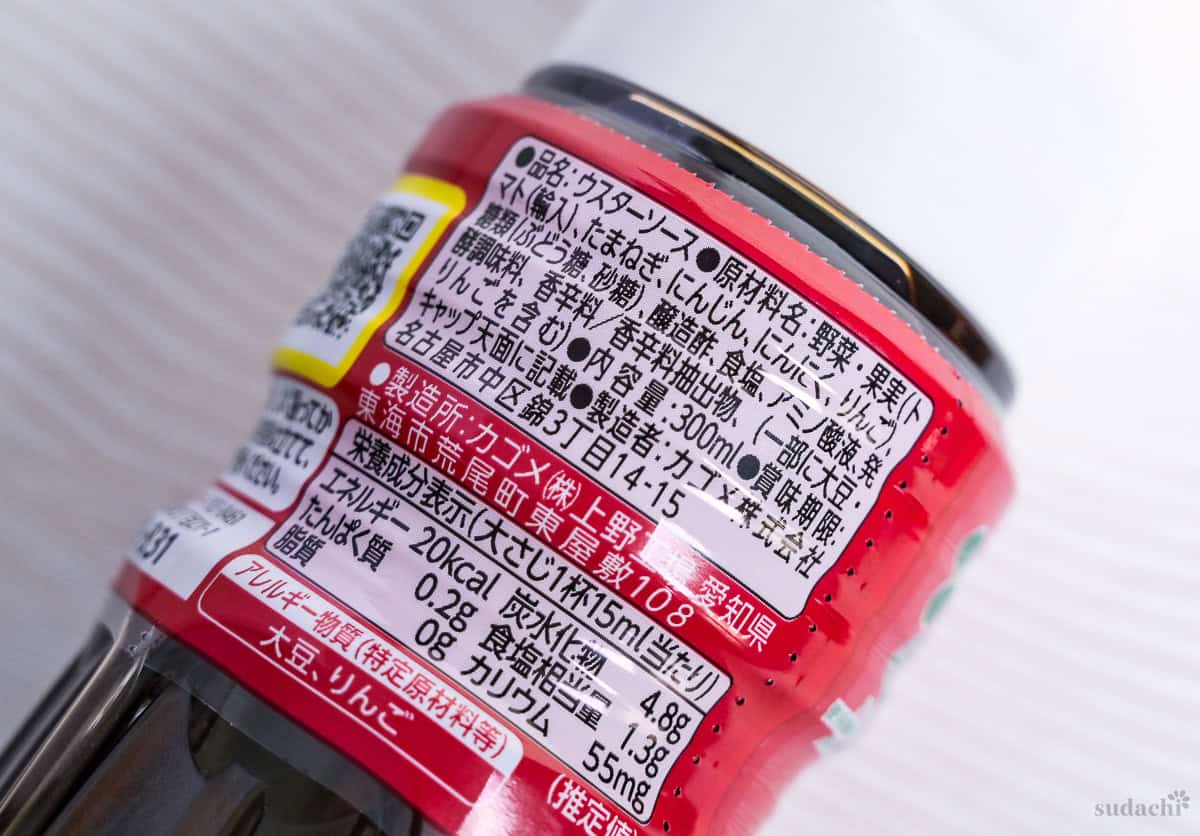
That savory rounding is no accident. The Kagome ingredient list carries an amino acid liquid and a fermented seasoning alongside the apple, tomato, onion, carrot, and spices. That is the kind of thing that fills in the back of a sauce like this.
So how did 2 products end up with the same name? Japanese sauce makers in the late 1800s tried to reproduce British Worcestershire sauce, then quickly decided the original did not suit the Japanese palate. The tamarind felt too aggressive, the anchovy funk too strong. The British sauce was built to be used by the drop, but Japanese diners wanted to pour it over food the way they poured shoyu.
So companies like Ikari (Osaka, 1896), Hinode (Kobe, 1900), and Bull-Dog (Tokyo, 1905) rebuilt the recipe around apples, prunes, and tomatoes, dialing back some of the sourness, and swapping the fermented anchovies for dried sardine extract and vegetable umami.
That reinvention took root. The sauce has been made and eaten in Japan for more than 120 years now, and you will find a bottle in almost every home cupboard and on the table of almost every teishoku (定食) diner, right next to the soy sauce and the shichimi. It is simply part of the everyday Japanese pantry.
The Japanese “Sauce” Family
Japanese Worcestershire sauce is not a single product. It is a family of related sauces that fan out from the original usuta sauce, and once you see the structure, the supermarket shelf stops looking confusing.
From thinnest to thickest, the main members are:
- Usuta sauce (ウスターソース): the thinnest and sharpest. The closest to the British idea of Worcestershire, but sweeter and fruitier.
- Chuno sauce (中濃ソース): medium-thick, balanced sweet and tangy. This is the everyday all-rounder in eastern Japan.
- Tonkatsu sauce (とんかつソース): thick, sweet, and fruit-forward. Purpose-built to cling to breaded pork cutlets (tonkatsu) without running off.
- Okonomi sauce (お好みソース): even thicker and richer than tonkatsu sauce, with dashi-like depth from kombu, shiitake, and oyster extract. Made for griddled savory pancakes (okonomiyaki).
- Takoyaki sauce: a close cousin of okonomi sauce, slightly thinner and sweeter, for octopus balls.
- Yakisoba sauce: tuned specifically for stir-fried wheat noodles.
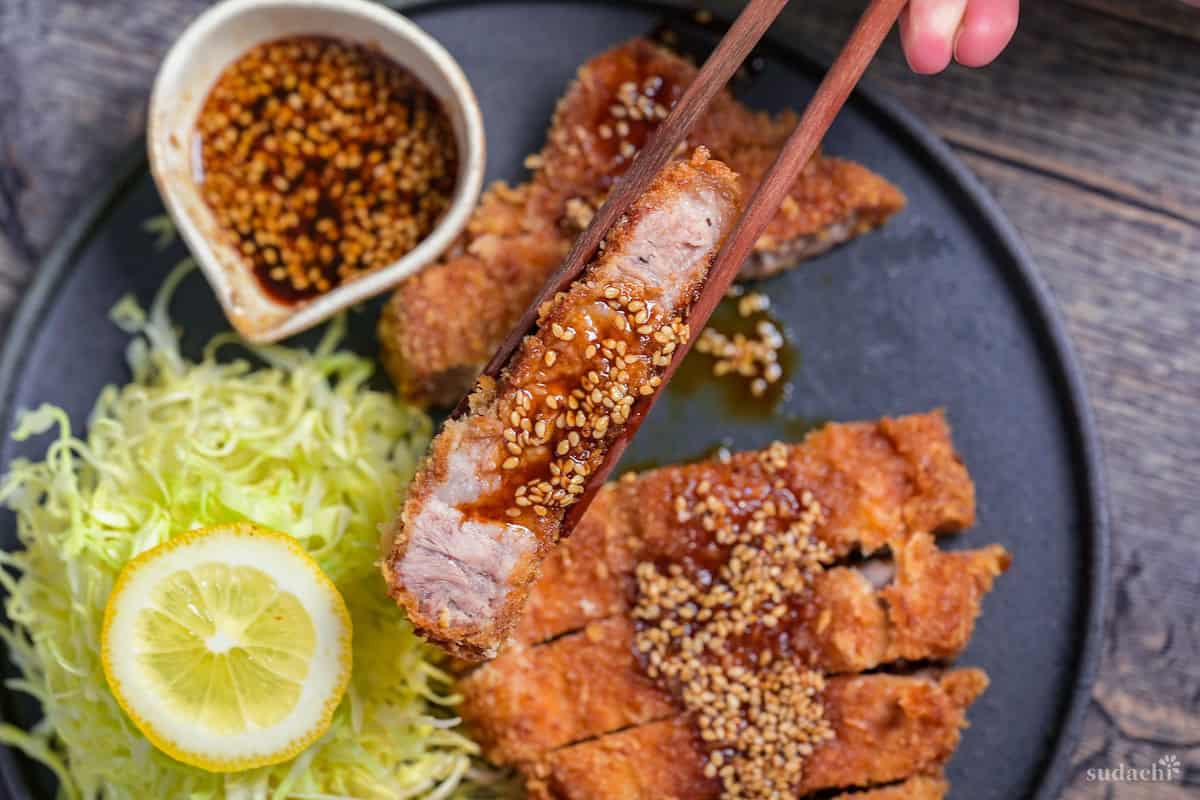
Japan’s agricultural standards (JAS) classify all Worcestershire-type sauces into three official tiers by viscosity alone: thin (under 0.2 Pa·s), medium (0.2 to 2.0 Pa·s), and thick (2.0 Pa·s and above). Tonkatsu sauce, okonomi sauce, takoyaki sauce, and yakisoba sauce are all technically “thick sauce” under JAS, but they are marketed under dish-specific names because each is tuned for a particular application. Think of the three JAS tiers as a ladder that every bottle sits on, and the dish-specific names as the flavor tuning that happens on the top rung.
Regional preferences matter, too. In Kanto (eastern Japan), chuno sauce is the default at home and in restaurants. In Kansai (Osaka, Kobe, Hiroshima), thinner usuta sauce is more common on the table, and okonomiyaki culture runs so deep that okonomi sauce is a daily pantry item. Hiroshima has its own thicker, date-sweetened okonomi sauce style, largely because Otafuku built a whole industry around it after the war.
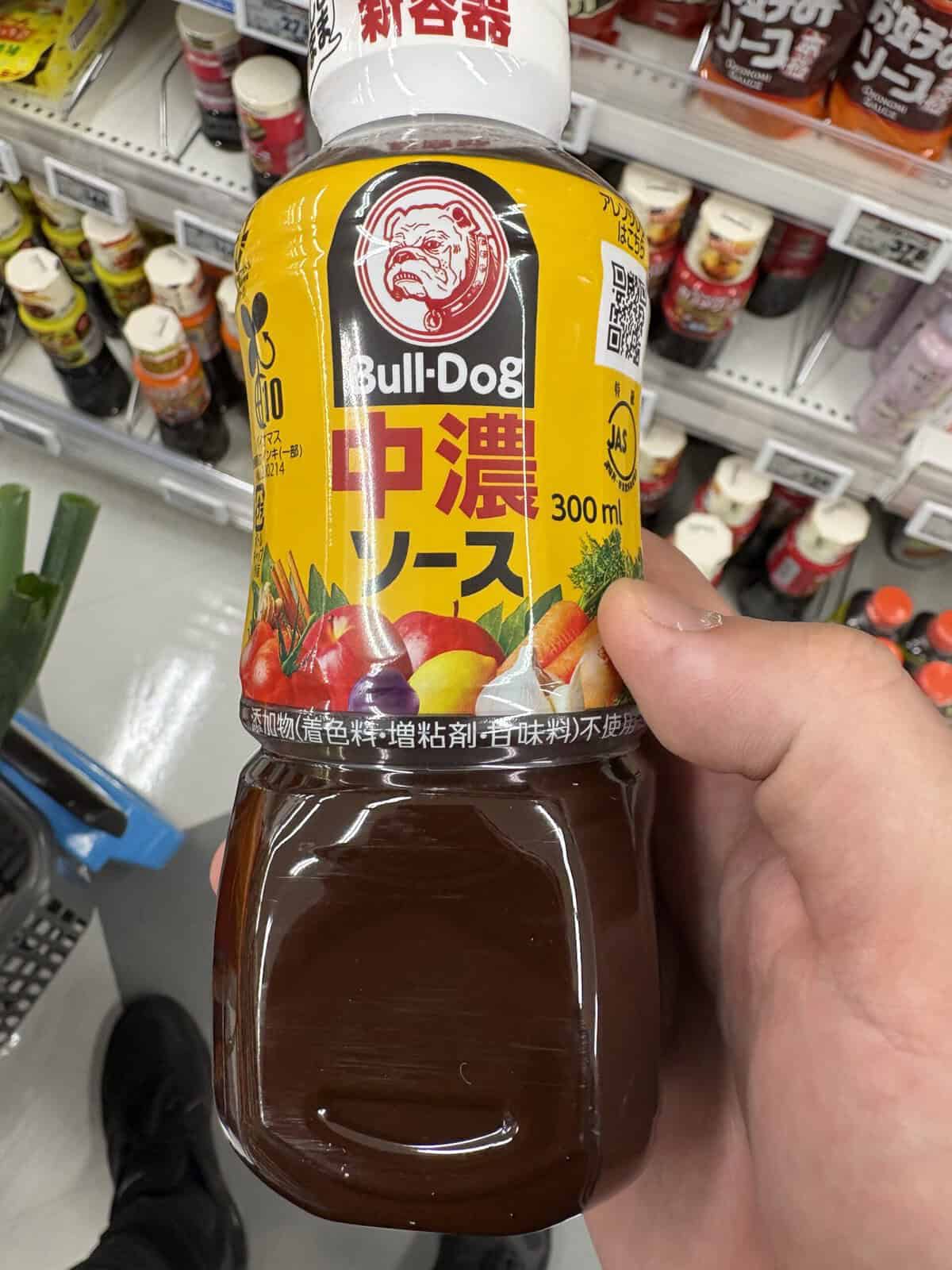
Can You Substitute Japanese Worcestershire Sauce?
This is the question I hear the most from readers cooking Japanese food outside Japan. The short answer is yes. And you have more room than you think.
For years my recipes simply called for “Worcestershire sauce,” and home cooks across the English-speaking world made them with whatever bottle was in the cupboard. I never heard of a single ruined dish. So I finally stopped guessing and ran the test myself.
The setup was simple:
Yakisoba Experiment
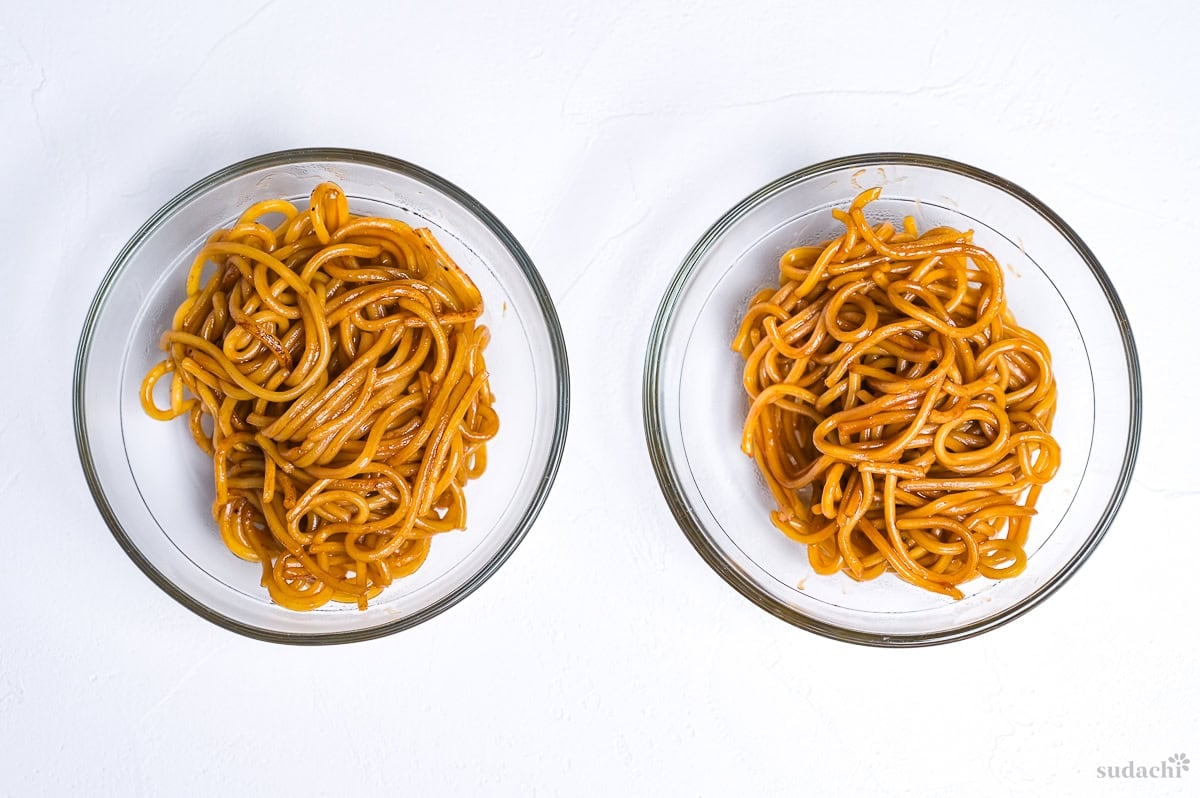
Honestly, the difference was slight. I will be straight with you: in the moment I half wondered whether the Lea & Perrins version tasted a little better. I would not lean on that too hard, though, because my yakisoba sauce runs light on the Worcestershire to begin with, so the soy sauce and oyster sauce around it probably soaked up most of the gap before it reached my tongue.
Tonteki Experiment
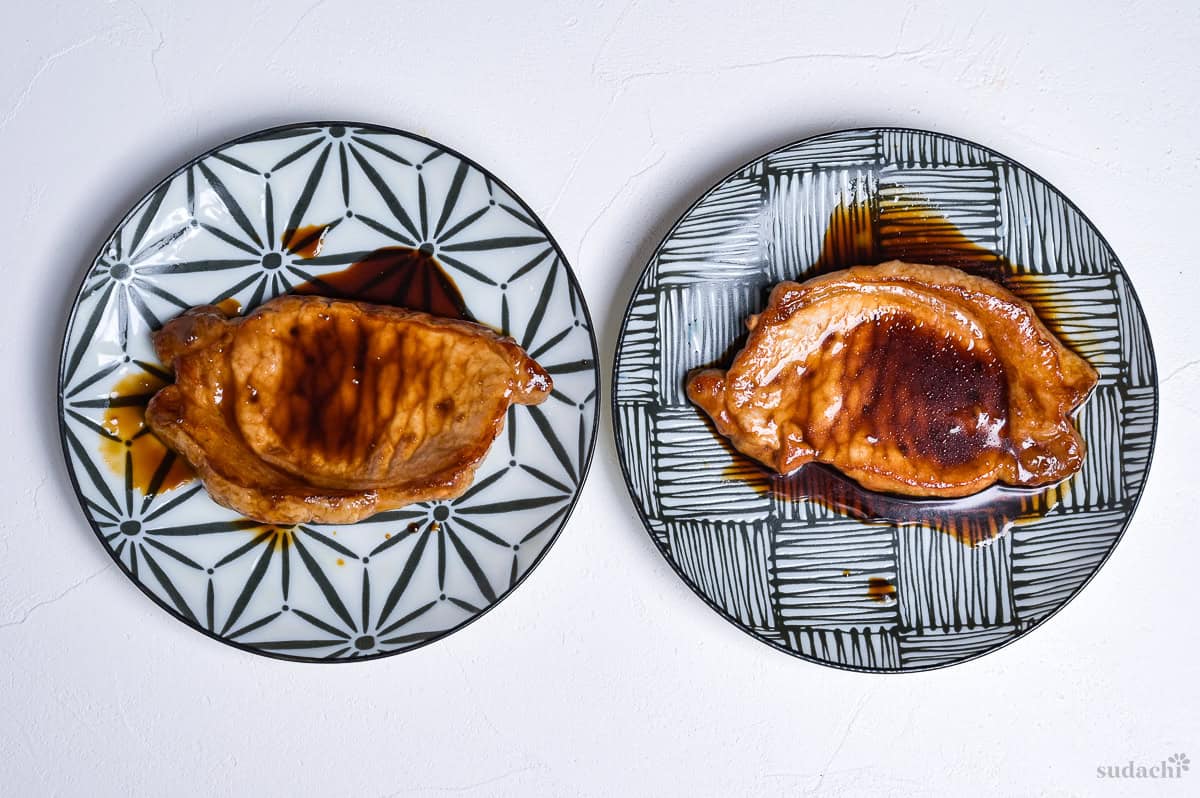
Next, a genuinely Worcestershire-forward dish where the sauce is the largest part of the glaze and has nowhere to hide. Here the difference showed up. The Japanese version came out fruitier and sweeter, with that savory booster trailing behind. The Lea & Perrins ran less sweet and sharper across the board. The surprising part: swapping in Lea & Perrins never broke the dish. Slightly different, yes. But not wrong.
Then came the twist, and this is the part I keep thinking about.
Why the spicy note flipped
Tasted on their own, Lea & Perrins was the spicier one on the finish. That tracks with the bottle, since it lists chili pepper extract and cloves. You would assume that heat carries straight into the food. It did not.
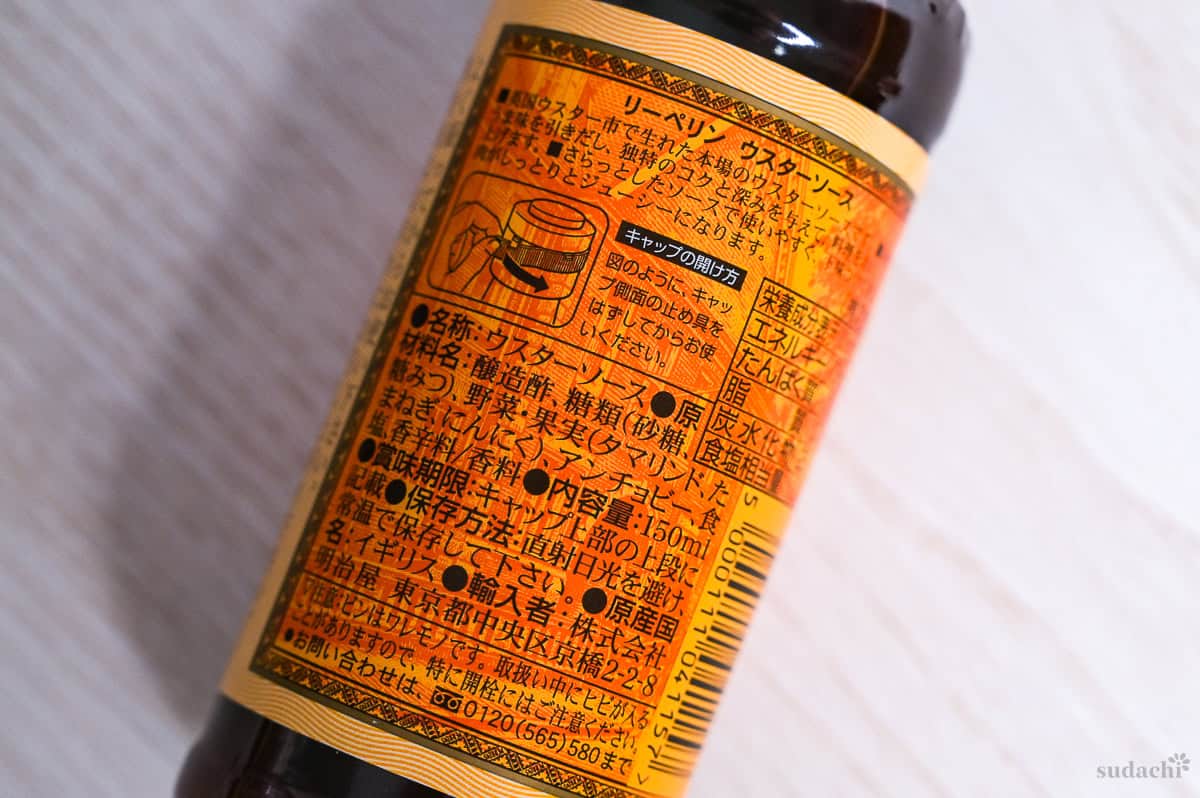
In both the yakisoba and the tonteki, the sauce that left the first spicy note on my tongue was the Kagome. My best guess is that it is the tail end of that flavor booster showing up once the sauce hits heat and the other ingredients, but I am genuinely not certain of the mechanism. I just know the order flipped once the sauce was cooked.
The blind tasting drove it home. My wife is English, raised on Lea & Perrins, so she went into it fully expecting to nail the pick. She hunted for the Lea & Perrins in each dish, and she missed on both the yakisoba and the tonteki. The reason was exactly that reversal. She was chasing the spicy finish she has known her whole life, sure it meant Lea & Perrins, and it kept leading her to the Kagome instead.
One more thing caught me off guard.
The salt paradox
Straight from the spoon, Lea & Perrins read as the saltier sauce. But check the labels and the Japanese bottle is the one carrying more salt per spoonful.
The trick is that the sourness of tamarind in Lea & Perrins enhances the salt, and you read it as salty. Kagome buries the same salt, and more of it, under sweetness and fruit, so you don’t notice it much at first. Salty to the tongue and salty on the label turned out to be 2 different measures.
So where does that leave you. Once the sauce is in the food, the gap is small, and Lea & Perrins will not let you down:
- Japanese bottle: pulls a dish toward fruity sweetness, held together by that savory booster.
- Lea & Perrins: runs more acidic, and its strength is the clean, sharp edge it brings.
2 good options, tuned a little differently.
How to Nudge Lea & Perrins Toward Japanese Sauce
Still, some of you will want to close that last bit of distance, and you can. The move is tiny. Take your tablespoon of Lea & Perrins, hold back the tiniest bit, and stir in a small touch of one fruity, sweet thing. That is the whole move. No measured ratio, no second mixing bowl.
Pick whichever one is already open in your fridge:
- A pinch of sugar: the bare-cupboard option. It does not really sweeten the sauce so much as round off its sharp edge, the way a pinch of sugar calms a tomato sauce.
- Ketchup: brings tomato and a little sweetness, the same fruit-and-acid rounding the Japanese bottle gets from apple and tomato in its base. The easiest fix, since it lives in almost every kitchen.
- Unsweetened applesauce: the Japanese bottle literally starts from apple pulp, so this gets you closest in character. Keep it unsweetened so it rounds the sauce without tipping it toward candy.
- Grated apple: the same idea, one step fresher. Use the fine side of a grater, and skip tart apples like Granny Smith, which push the acidity the wrong way.
Japanese Worcestershire Sauce FAQ
No. They are different products in different categories. Japanese sauce is sweeter, thicker, fruit-based, and designed to be used as a seasoning just like soy sauce. Lea & Perrins is thin, fermented, anchovy-forward, and designed to be used by the drop. That said, when I cooked the same dishes with each, the gap on the plate was smaller than the gap on the spoon, so do not panic if Lea & Perrins is all you have.
Because Japanese makers rebuilt the recipe around fruit purees (apple, prune, date, tomato, peach) during the Meiji era, replacing tamarind and anchovies with ingredients that suited the Japanese palate better. The fruit brings natural sugars, a smoother acidity, and pectin-based thickness at the same time.
Both are thick sauces in the same JAS tier, but okonomi sauce contains dashi-like ingredients (kombu, shiitake, oyster extract, meat extract) that give it a deeper, rounder umami, and it is usually a touch sweeter with almost no spiciness. Tonkatsu sauce is the broader, more spice-forward flavor. You can sub one for the other in a pinch, but okonomi sauce is the better match for okonomiyaki, takoyaki, and yakisoba-style dishes.

Leave a rating and a comment