



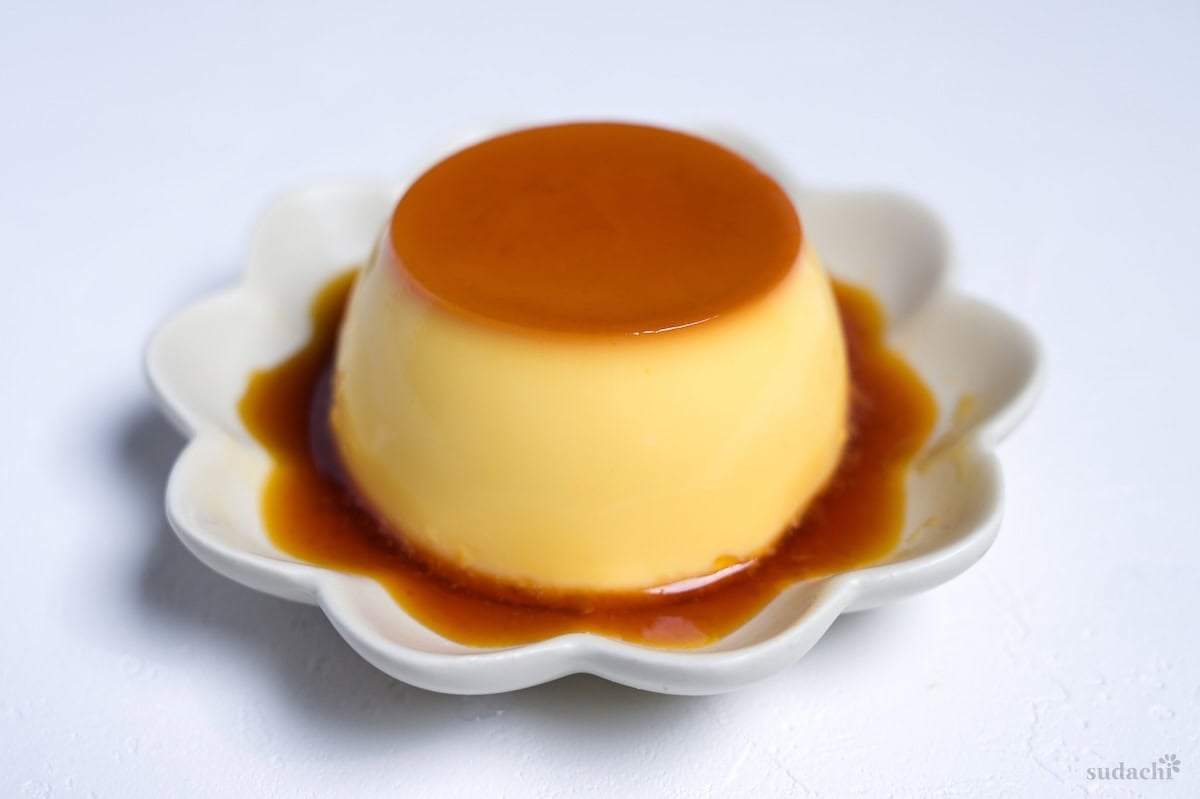
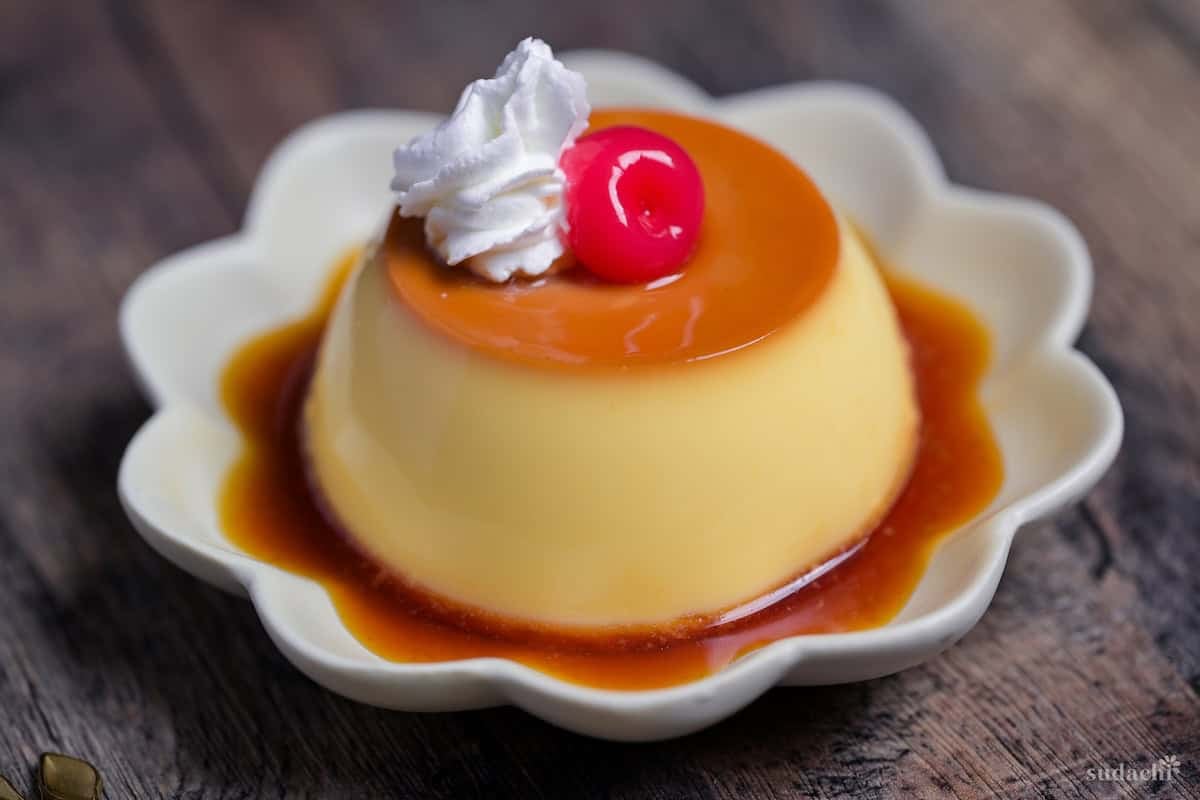
Soft, silky and melt-in-your-mouth, this oven-baked purin is the kind of dessert that disappears in minutes.
Gentle water-bath baking delivers that creamy, only just set custard with zero bubbles, finished with a glossy homemade caramel that cuts through with a subtle bittersweet edge. My in-depth steps and simple tips will help you nail it every time.
And if you prefer to skip the oven, check out my super easy no-fuss no-bake nameraka purin made with gelatin!
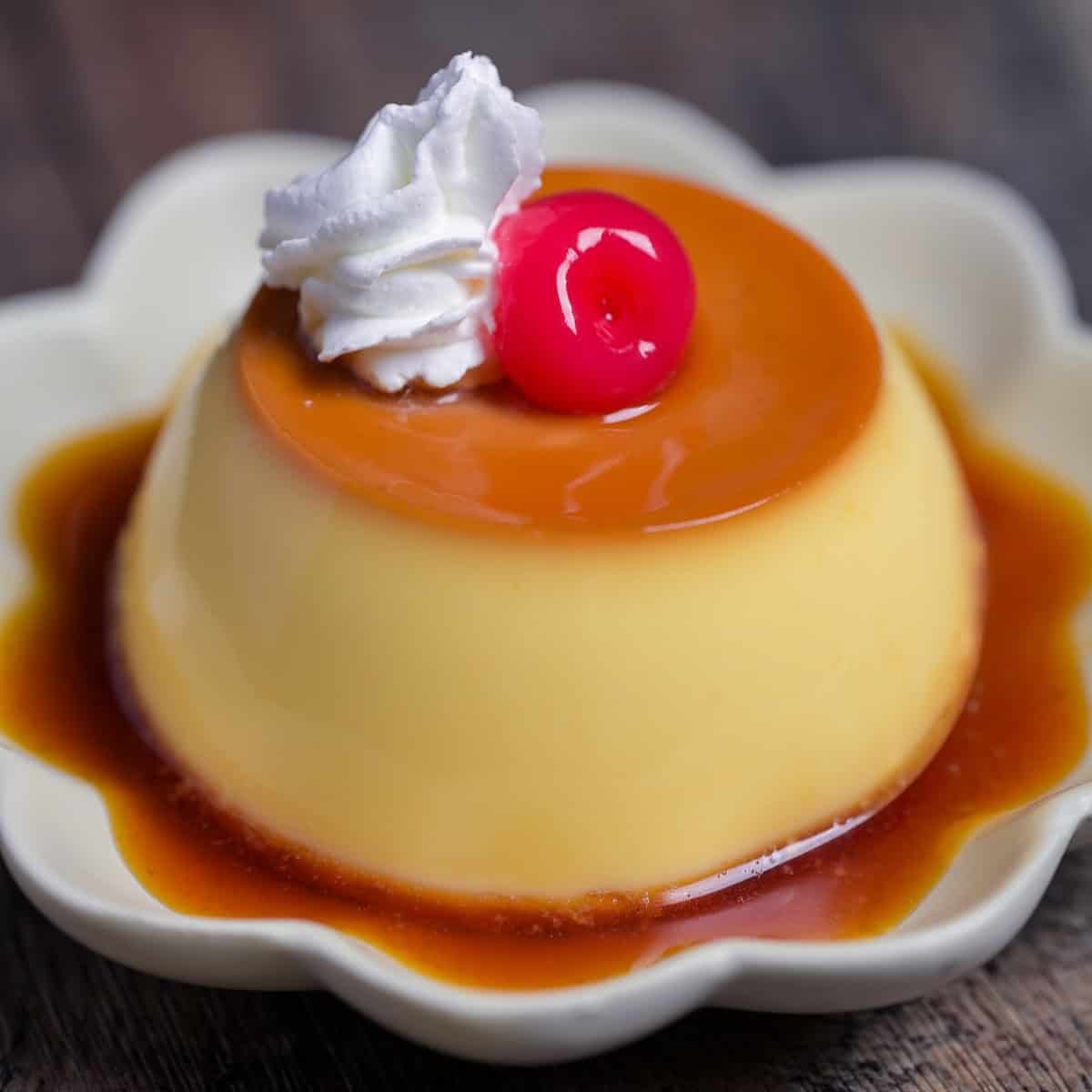
Oven Baked Purin
Recipe Snapshot
- What is it? A classic Japanese-style baked custard pudding, gently set in a bain-marie and topped with a glossy and bittersweet homemade caramel.
- Flavor profile: Creamy, vanilla-kissed, bittersweet caramel.
- Why you’ll love this recipe: It delivers extra smooth, soft-yet-set texture and no bubbles thanks to the gentle water-bath cooking method. The caramel has a subtle bitter edge that balances the custard’s richness, making every bite feel both light and luxurious.
- Must-haves: 4x150ml heatproof purin cups (preferably glass), a light colored saucepan, deep cake pan for water bath.
- Skill Level: Medium
- Freezer Friendly: Not recommended.
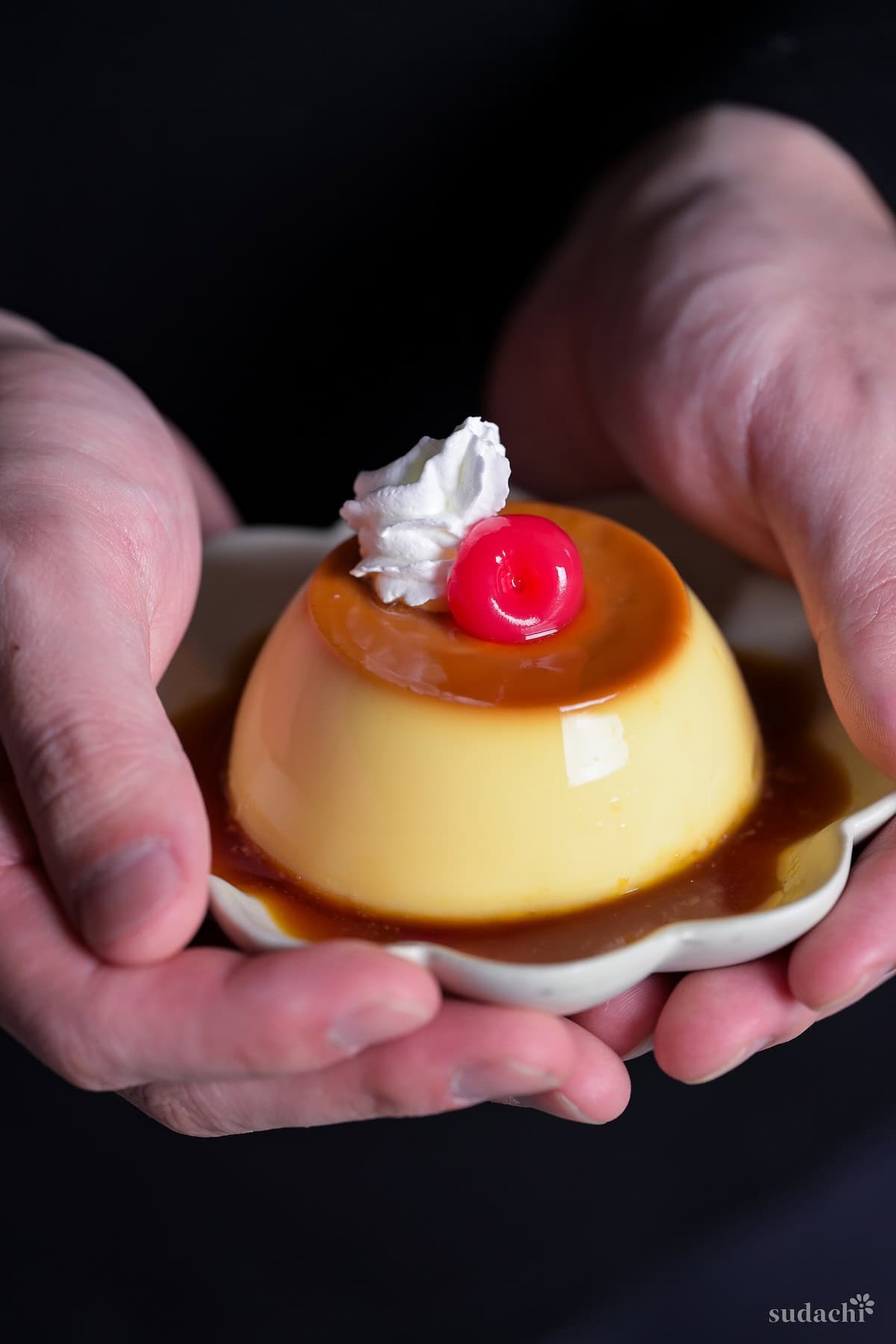
What is Purin?
Purin (プリン) is Japan’s beloved caramel custard pudding. It’s silky, gently set, and served chilled with a glossy caramel sauce. It’s one of the most nostalgic everyday desserts in Japan, sold everywhere from old-school kissaten cafes to family restaurants, supermarkets and convenience stores. It’s so popular, that even Sanrio’s golden retriever character Pompompurin is named after it.
Purin vs Flan vs Crème Caramel
You might be wondering what’s the difference between purin and flan. They’re all close cousins with a custard base made with eggs, milk and sugar. Flan is a broad name and includes Spanish or Latin American versions that might be richer and sometimes contain condensed milk. The classic French style creme caramel is closer to Japanese purin, but is always baked in a bain marie and turned onto a plate.
Japanese purin is more commonly served in individual molds, and is prized for its extra silky texture. There are many types of Japanese purin, cooked in different ways or infused with unusual flavors.
Yaki Purin (焼きプリン): Yaki is the Japanese word for bake or grill, and similar to creme caramel, yaki purin is baked in a hot water bath in the oven. Although this recipe is one version of yaki purin, there are a few different baking methods that produce different looks and textures. For example, yaki purin baked uncovered or with an open flame is also popular, this method creates a unique browned top, firmer texture and slightly charred flavor.
Mushi Purin (蒸しプリン): Mushi means “steamed” in Japanese, and this version is cooked with steam either in a steaming basket over a pot of simmering water, or even in a frying pan on the stove top. When done right, this method can produce an extremely silky texture, but precision is needed to keep the heat low enough. Mushi purin is prone to “su”, the bubbles that appear from overheating custard.
Gelatin Purin (No-bake): This is the purin that is most commonly found in Japanese convenience stores and supermarkets. One of the most famous brands is Pucchin Purin, easily recognised by its flower shaped packaging and innovative tab that you can break back to release the purin from its mold. Making gelatin purin is super easy (almost foolproof), but requires pasteurized eggs since it’s not thoroughly cooked. Check out my nameraka purin recipe for more info.
Unusual flavors: While custard purin is the most common, you can also find other flavors like matcha, hojicha, or in fall, sweet potato and kabocha purin.
Why Bake Purin in a Water Bath?
Baking purin in a hot water bath (bain-marie) keeps the custard’s heat gentle and steady. The water can’t get much hotter than its boiling point, and this protects the custard from the oven’s direct dry heat, helping it cook slowly and evenly. That controlled temperature prevents the eggs from over-coagulating, leaving you with a smooth and silky set purin without curdling, cracks, or those tiny bubbles caused by overheating.
Oven Baked Purin Ingredients
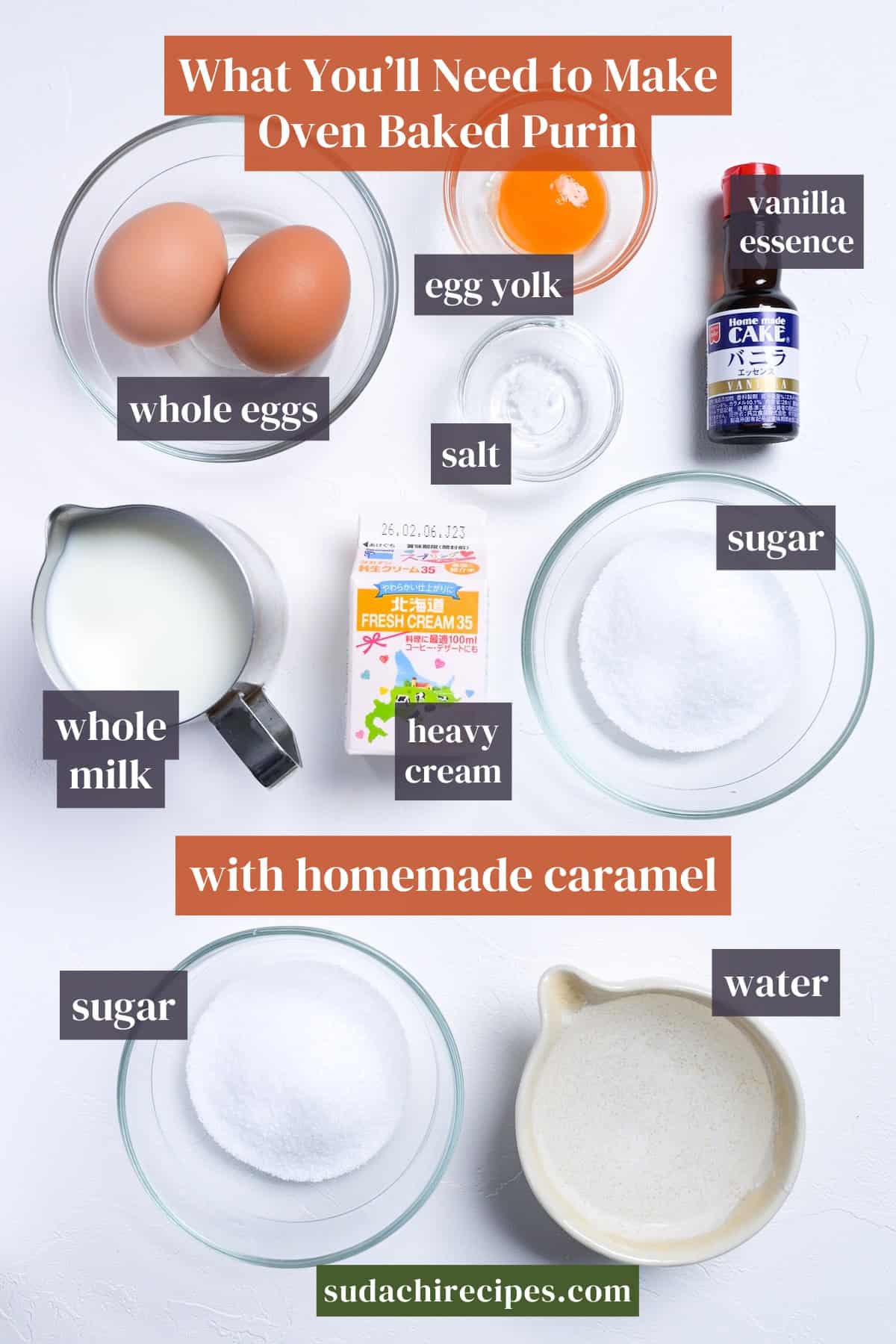
- Eggs: I use large eggs, about 50g with the shell on. I reduce the egg whites in my recipe for a softer and creamier texture.
- Milk: Use whole cow’s milk for the best aroma and silkiest mouthfeel. If you switch to semi-skimmed or skimmed, the flavor might become slightly watery, and the texture will be tighter and more “set”.
- Heavy cream: While you can make this recipe with milk alone, cream softens the protein network, making the final texture extra luxurious. My cream is 35% milk fat percentage.
- Vanilla: I use essence, but you can use half the amount of vanilla extract, or vanilla pods. If using the pods, scrape them into the milk/cream when heating for maximum flavor extraction.
How to Make My Oven Baked Purin (Water Bath Method)
Before you start the recipe, bring your eggs to room temperature. If you’re in a rush, place the whole eggs with shells in warm (not hot) water for 5 minutes to take the chill off.
This recipe uses 4x150ml purin cups. They spread slightly when turned onto a plate so use containers taller than you want the final purin to be.
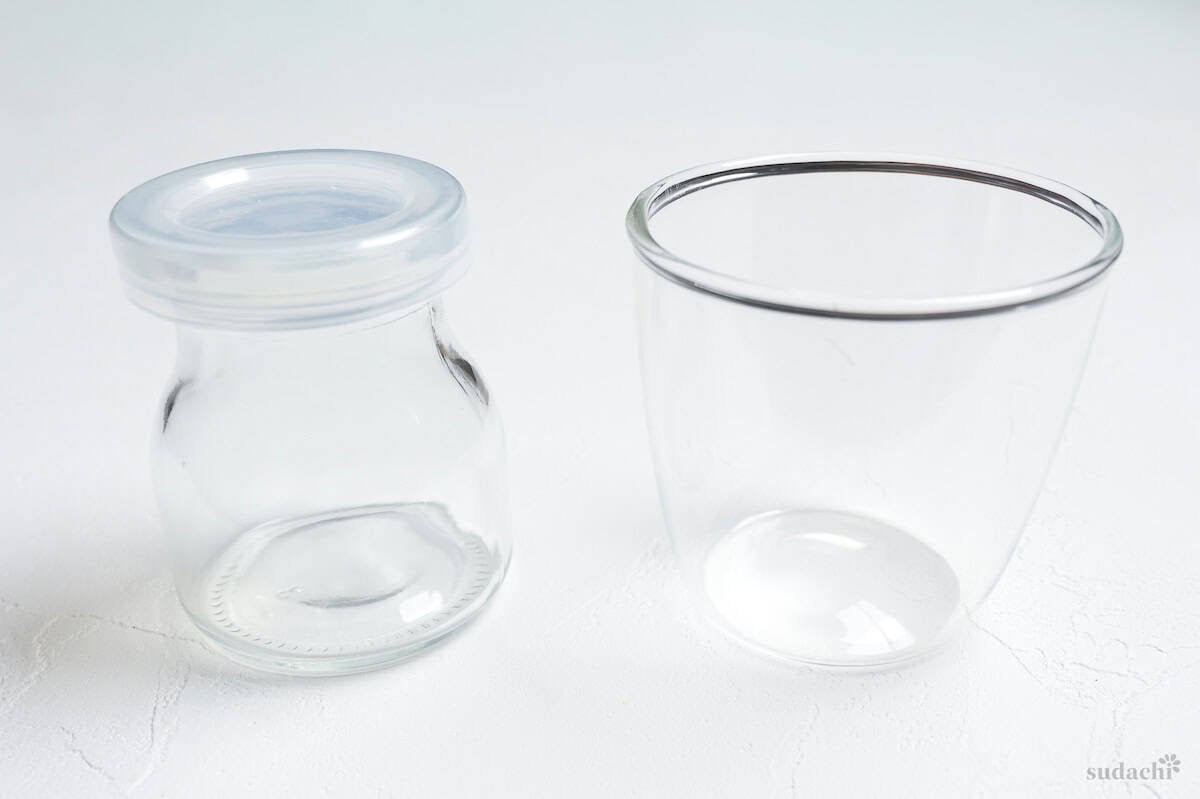
Aluminium cups can be used, but will likely require less cooking time. Ceramic ramekins also work, but baking time might be longer due to the thickness of the material.
If you plan to serve them inside the cup, you can use the glass milk bottle-shaped purin cups. If they come with lids, make sure the lids are oven-safe, or remove them when baking.
Preheat your oven to 140℃ (285℉) and grab a deep cake pan, big enough to fit the purin cups. I used an 20cm (8 inch) square pan.
I use a fan assisted oven, but if you’re using a conventional oven, the purin will likely take longer to cook. If you want to speed up cooking time, try increasing the heat to 150-160℃ (300-320℉) for conventional ovens.
i. Grab a saucepan and add sugar and a little water. Use a silver or light colored pan so that you can see clearly when the caramel starts to change color. Heat on medium or medium low, and swirl the pan occasionally for even heating.
Avoid mixing as this can cause the sugar to crystallize.
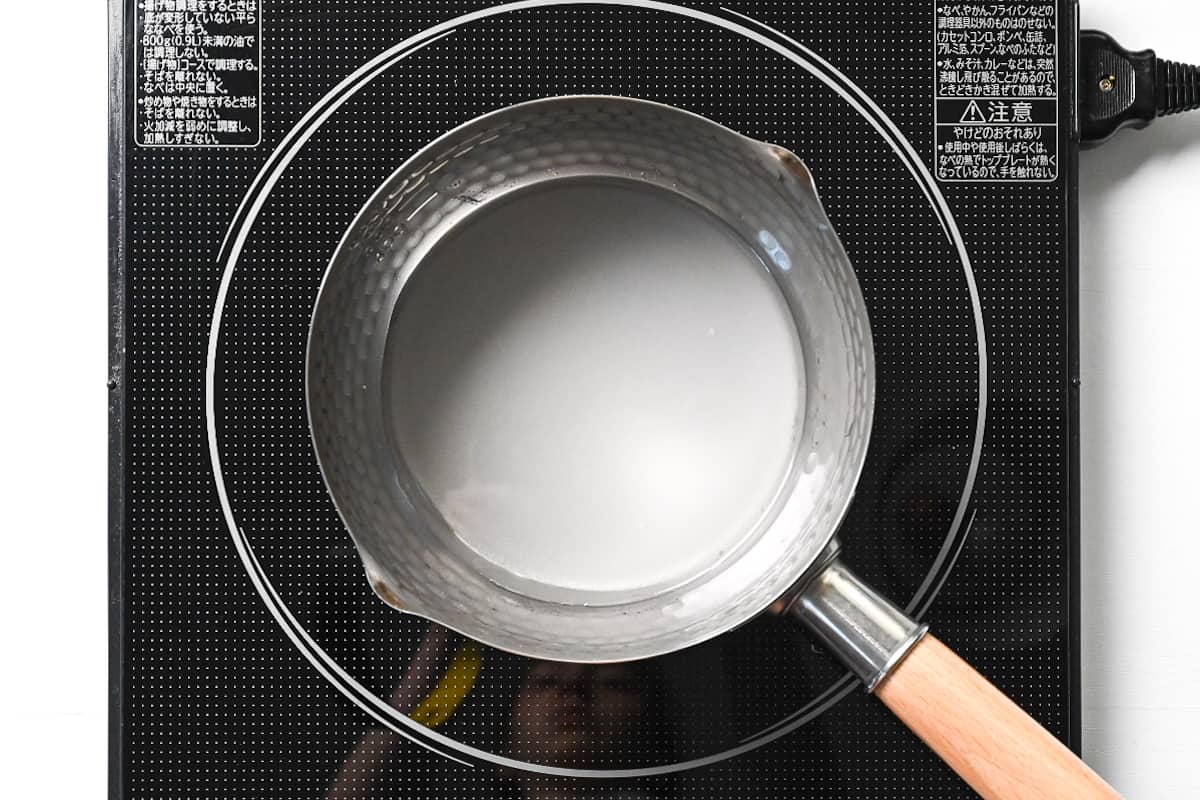
ii. When it starts to turn golden, add a splash of hot water.
Tip: The caramel will splash and sizzle violently when you add water, so stand back and wear protective gloves/eyewear if possible. Using hot water will soften the reaction.
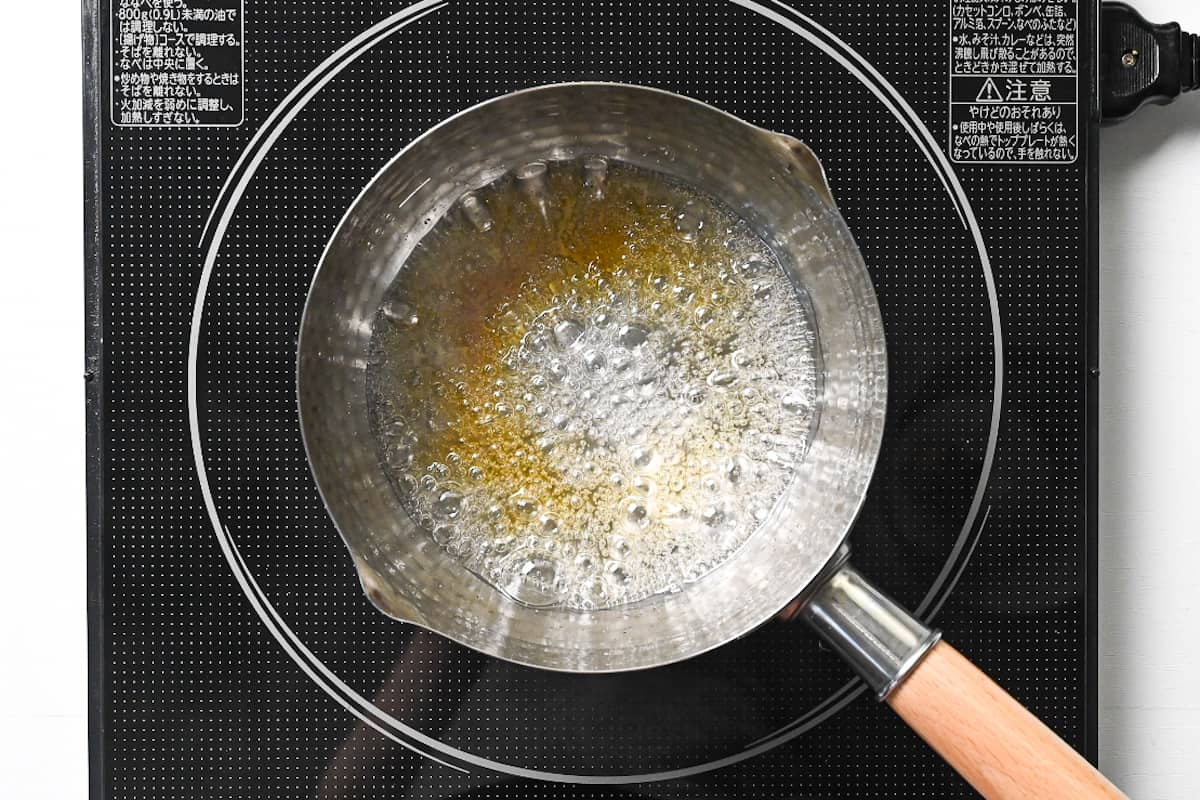
iii. Swirl the pan to incorporate the water, then continue to heat until a deep amber color. Keep in mind that the darker the caramel, the stronger the bitterness. Heat to your preference, golden for sweeter, dark amber for more bitter caramel notes.
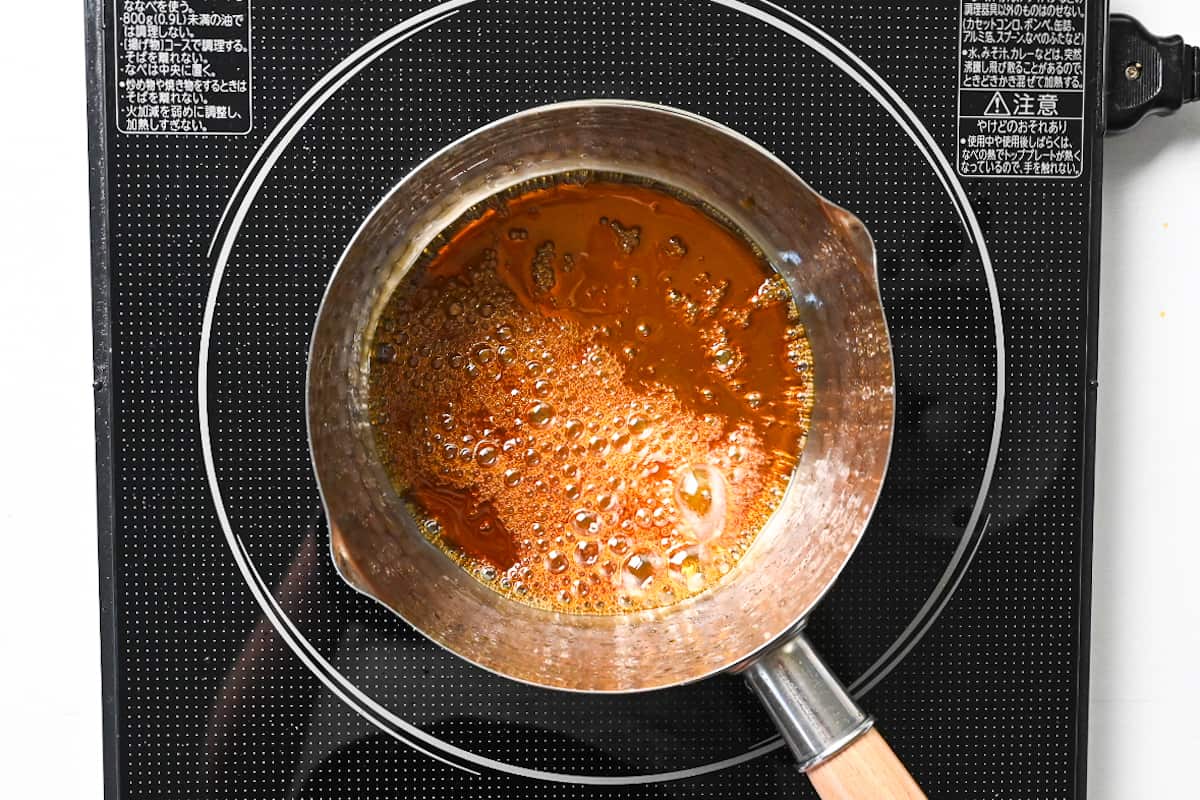
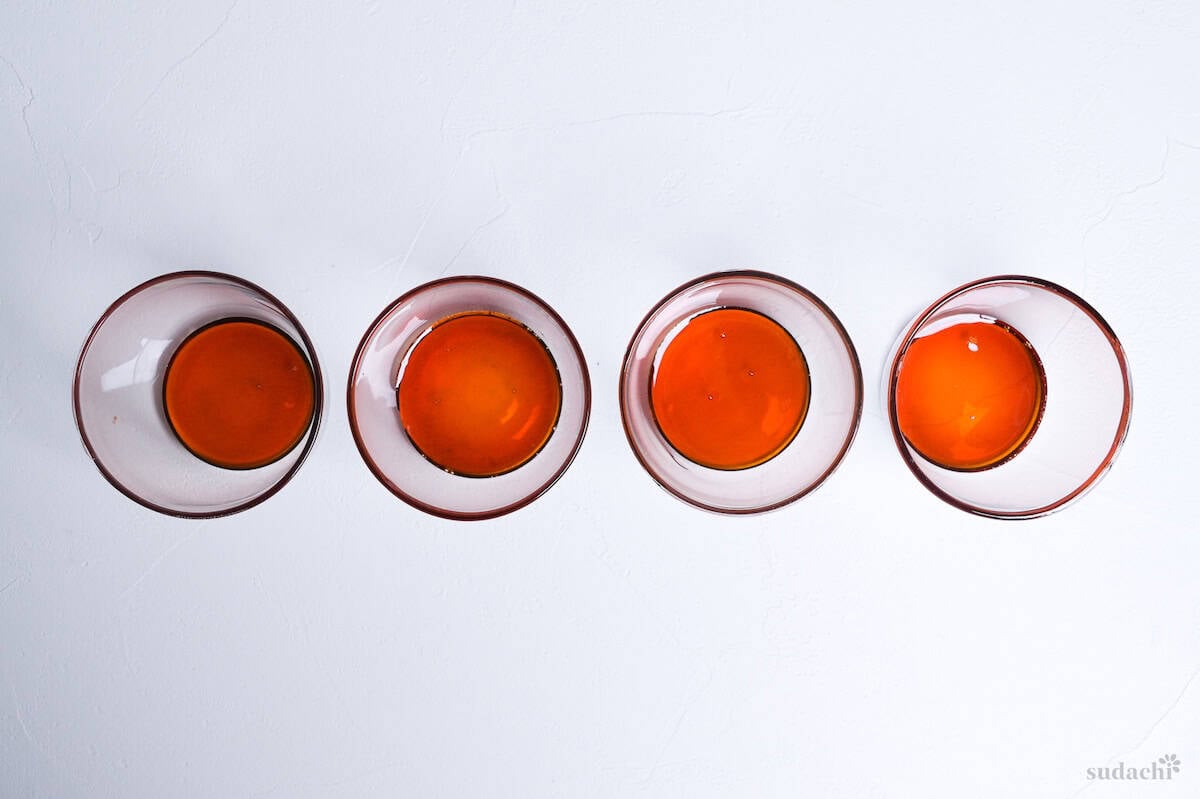
iv. Swirl the pan for a minute to cool the caramel slightly, then pour it into your purin cups and place them in the fridge while you make the custard.
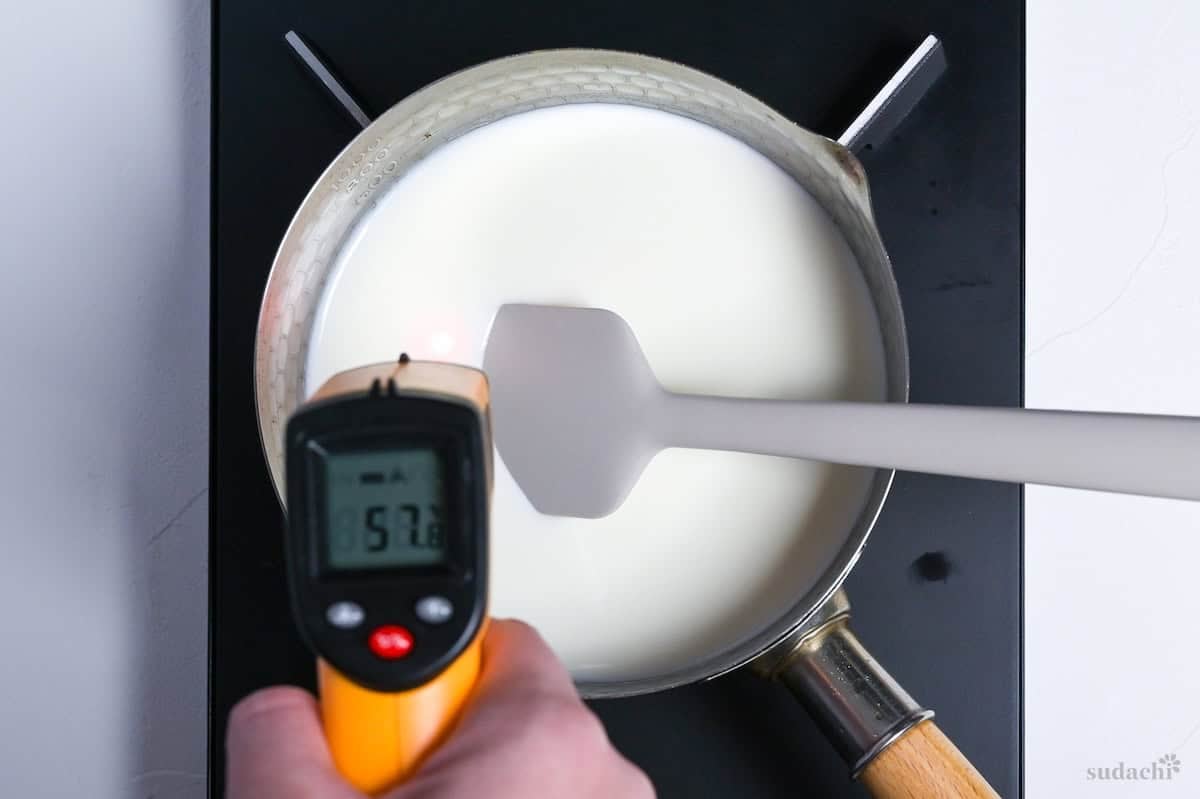
i. Pour the milk and cream into a saucepan and heat on low until it reaches about 60℃ (140℉). Alternatively, heat in the microwave for about 1 minute 30 at 600W, then 20-30 second intervals until it reaches the correct temperature. Stir occasionally to promote even heating and prevent a skin forming.
The gentle heat will prevent splitting or curdling. Be careful not to let it boil. If you don’t have a thermometer, take the pan off the heat when small bubbles appear around the edges.
If you’re using vanilla pods, use ¼ or ½ a pod (approx 1-2 inches/2.5-5cm) and scrape it into the milk before heating.
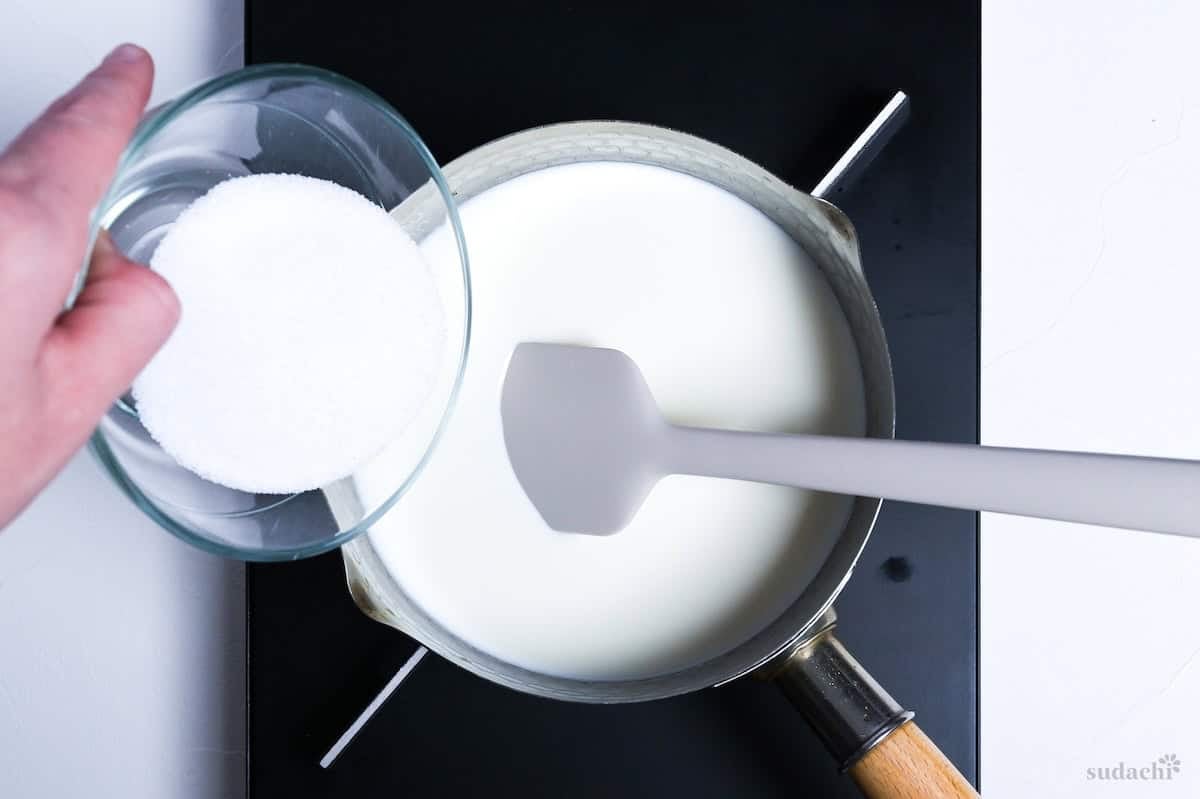
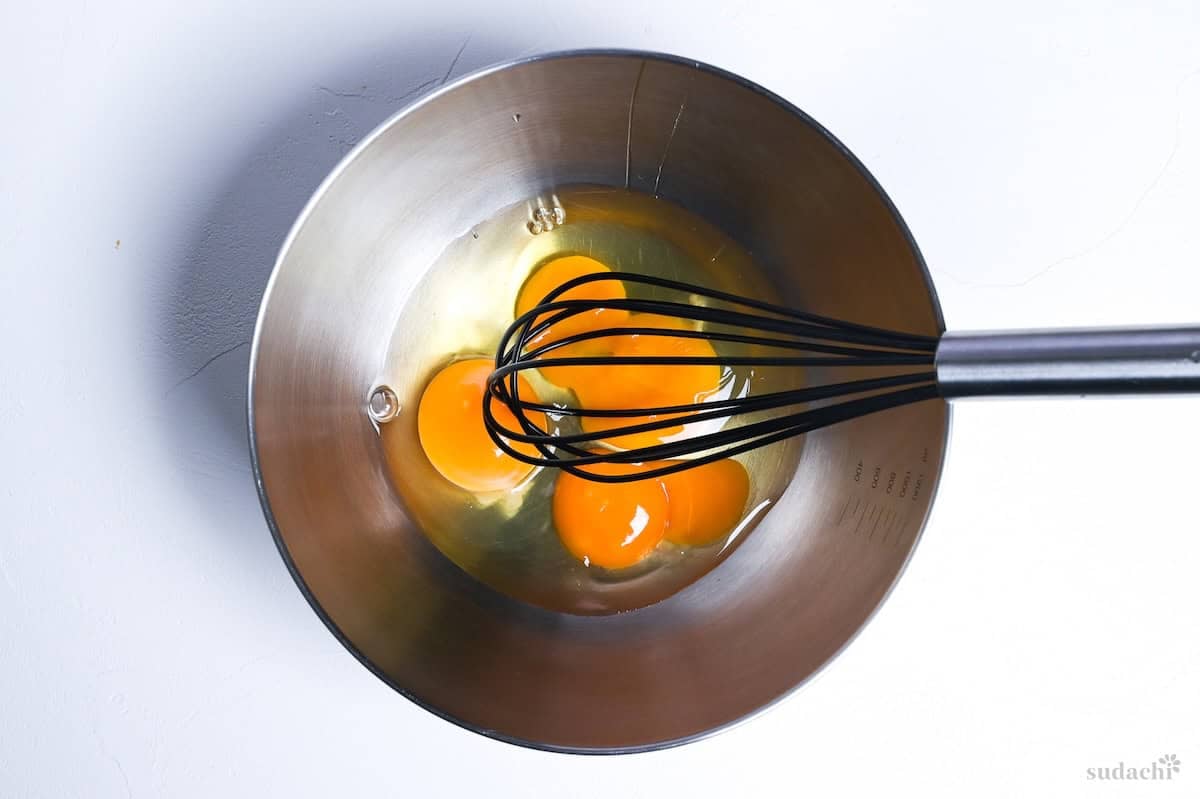
ii. Take the milk & cream mixture off of the heat and stir in the sugar until dissolved. Use a spatula to prevent creating too many air bubbles. In a heatproof bowl whisk the eggs and yolks until combined.
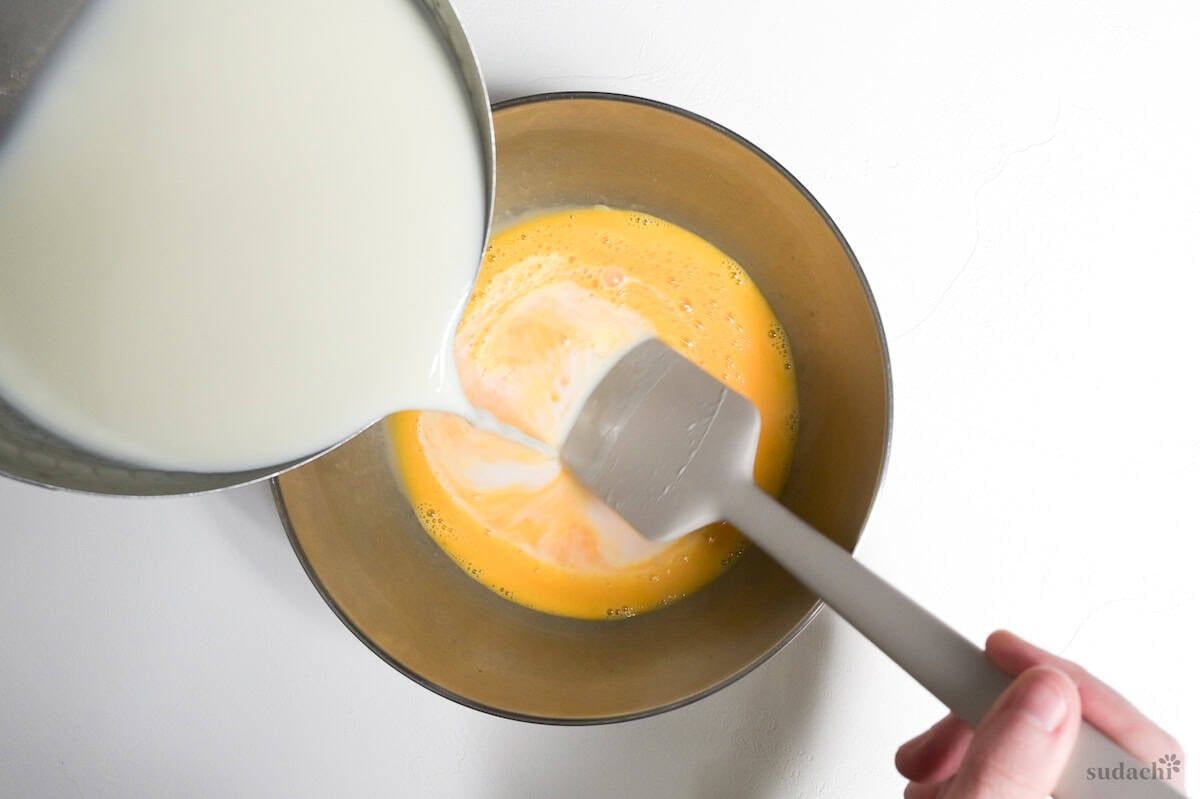
iii. Slowly pour the hot milk & cream mixture into the whisked egg while stirring continuously. This will temper the eggs and help them become silky and smooth, rather than lumpy and scrambled. Use a spatula to reduce air bubbles.
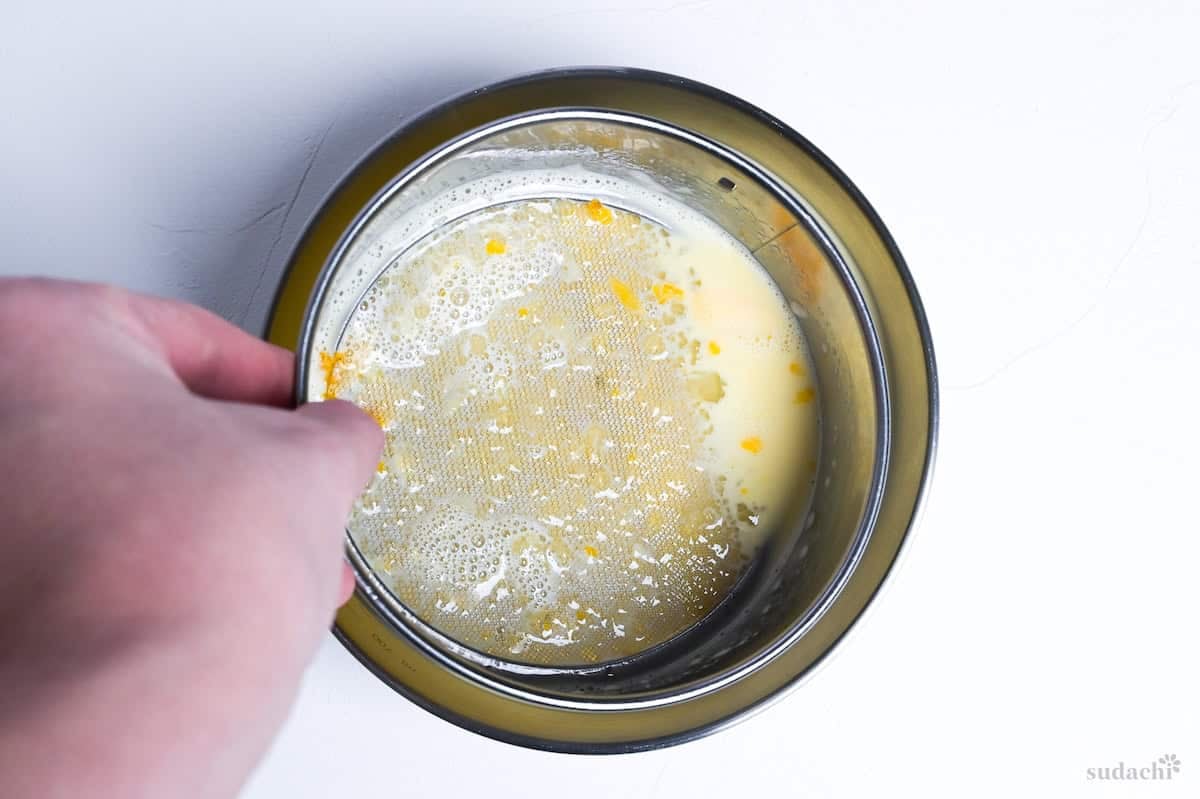
i. Pour the tempered mixture through a fine mesh sieve. This is important for catching bits of stubborn egg whites, and also air bubbles. If you want your purin to be silky and smooth, this step is vital.

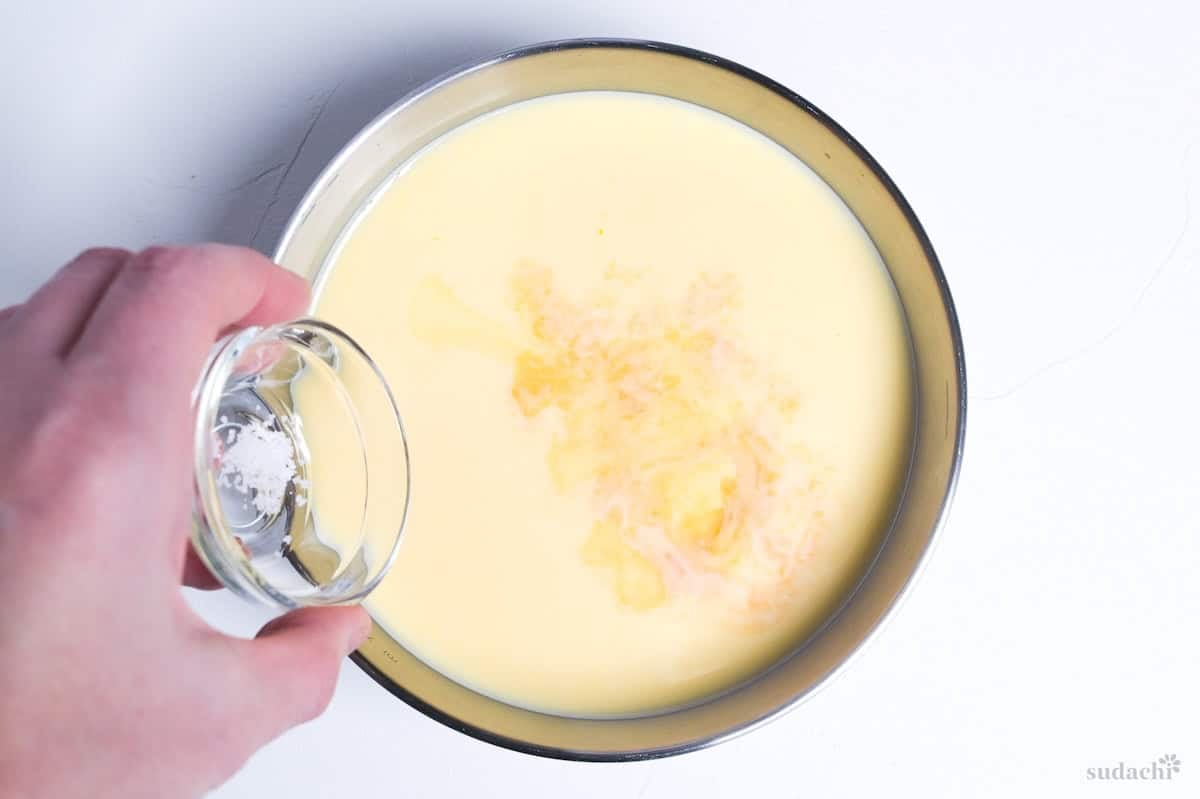
ii. Add a pinch of salt and a splash of vanilla, then gently stir. (If you used vanilla pods, skip the vanilla.)
i. Start heating a pot of water for the bain marie (hot water bath). Once it starts to boil, turn off the heat.
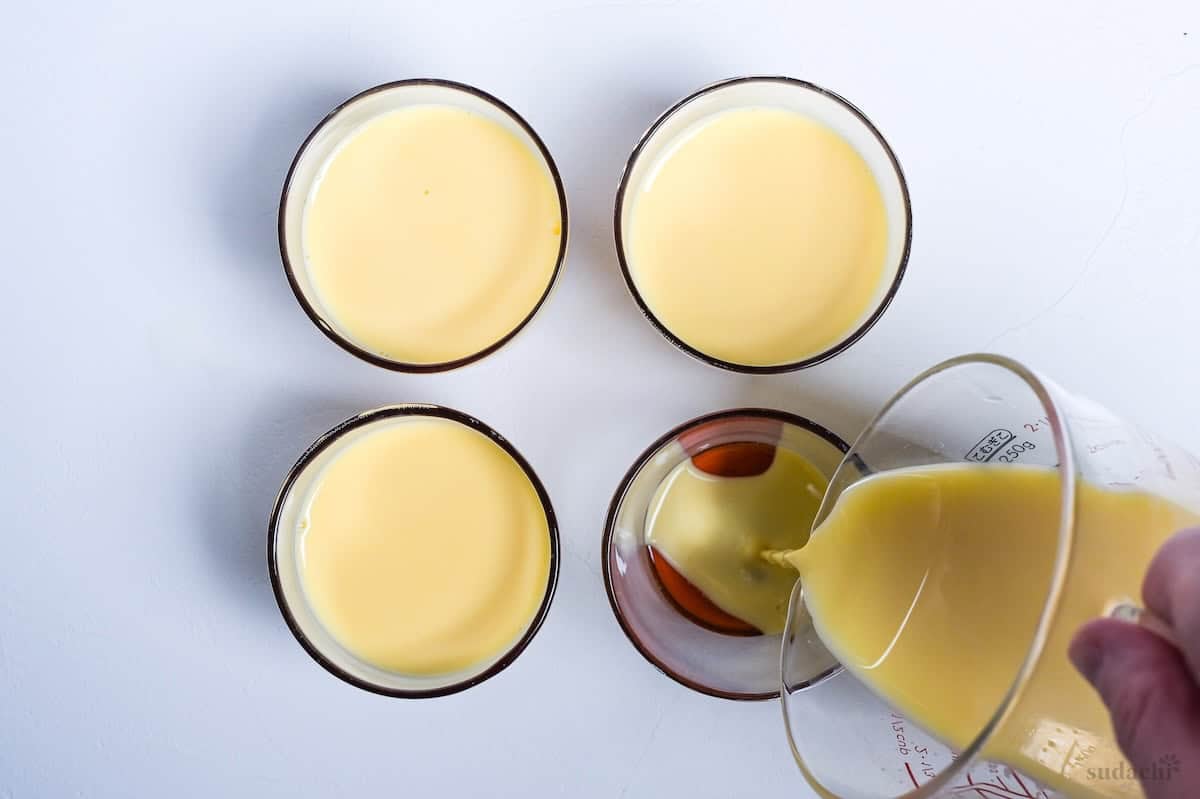
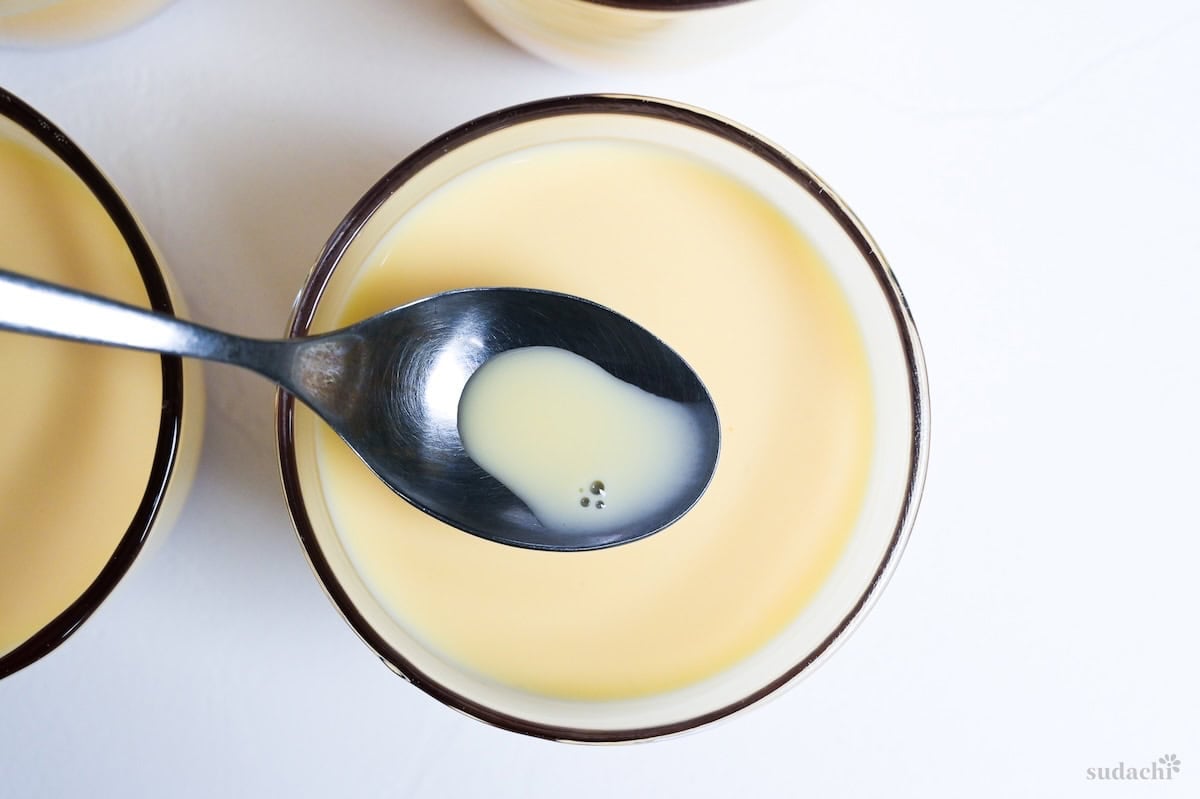
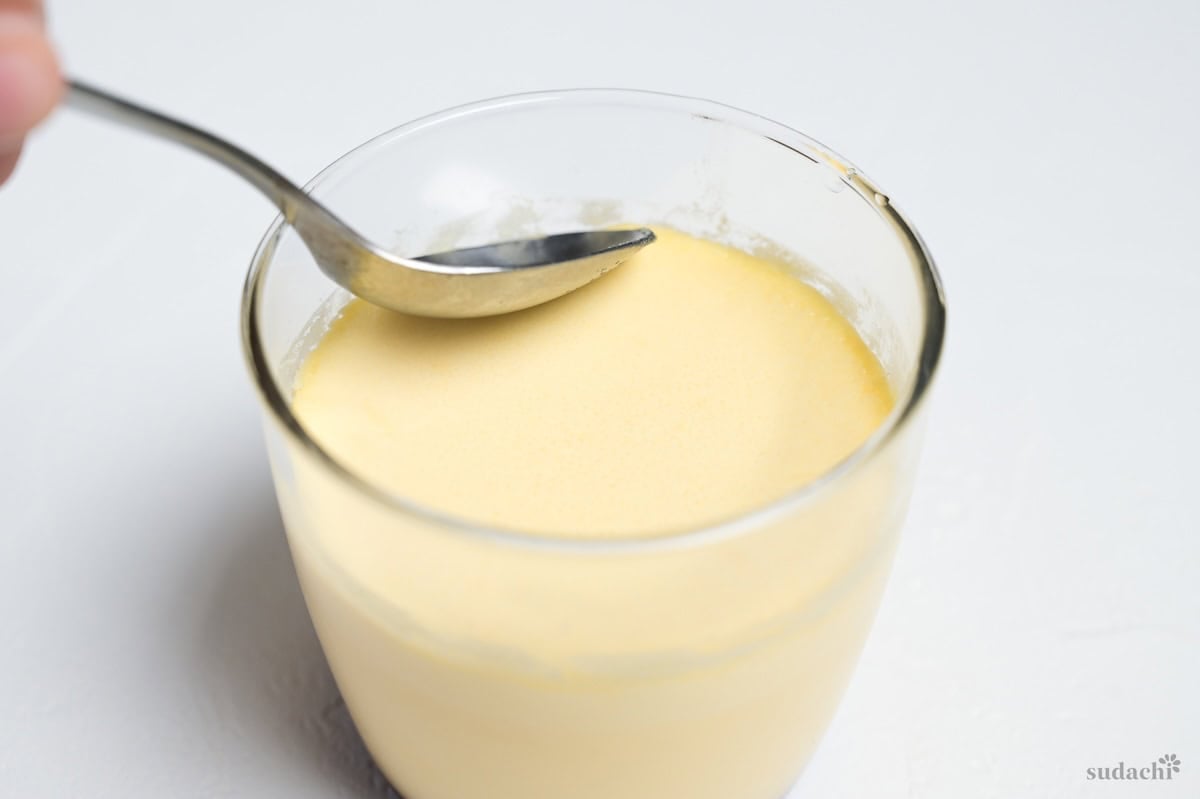
Take the purin cups from the fridge and divide the mixture equally between each cup. Use a spoon to scoop out any air bubbles floating on top.
ii. Cover each cup with foil (this will stop the tops drying out or browning). Scrunch the foil up around the edge so that it doesn’t dip in the water when baking in the water bath.
Place them in the cake pan and pour the hot water around them until filled up about two-thirds of the way. Be careful not to let any hot water get into the cups.
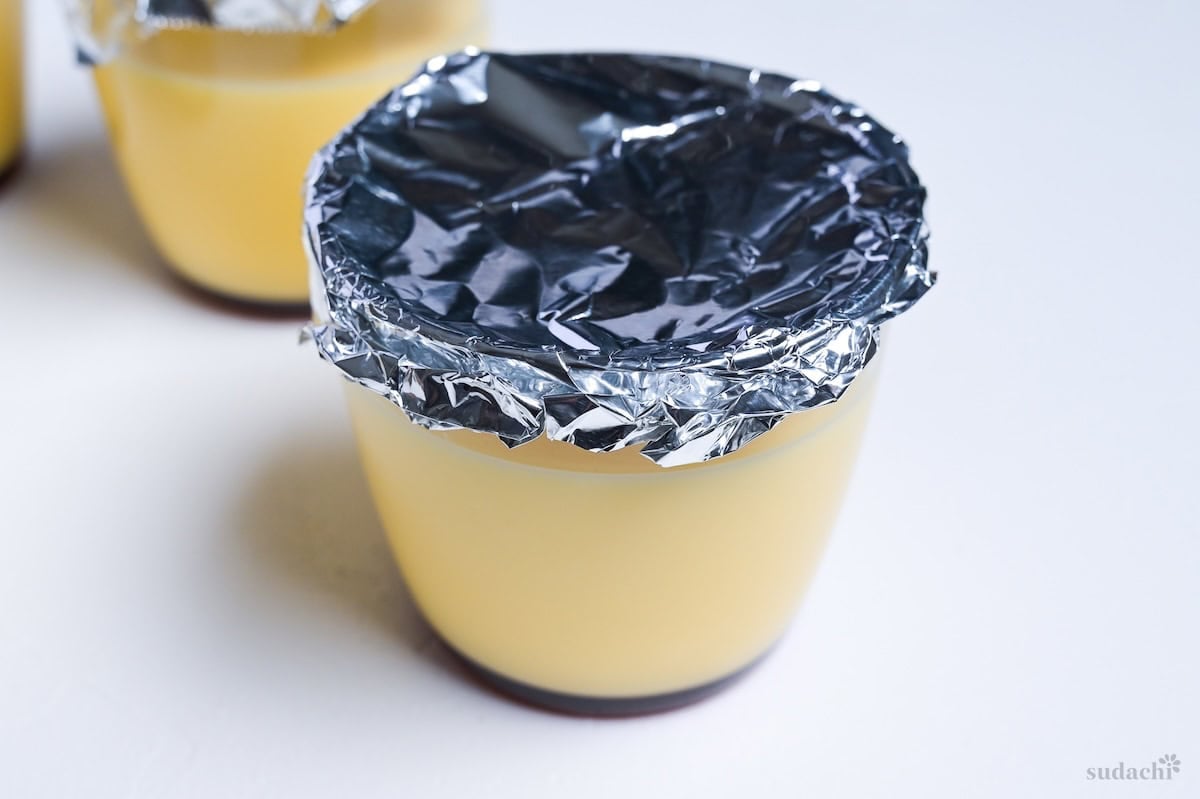
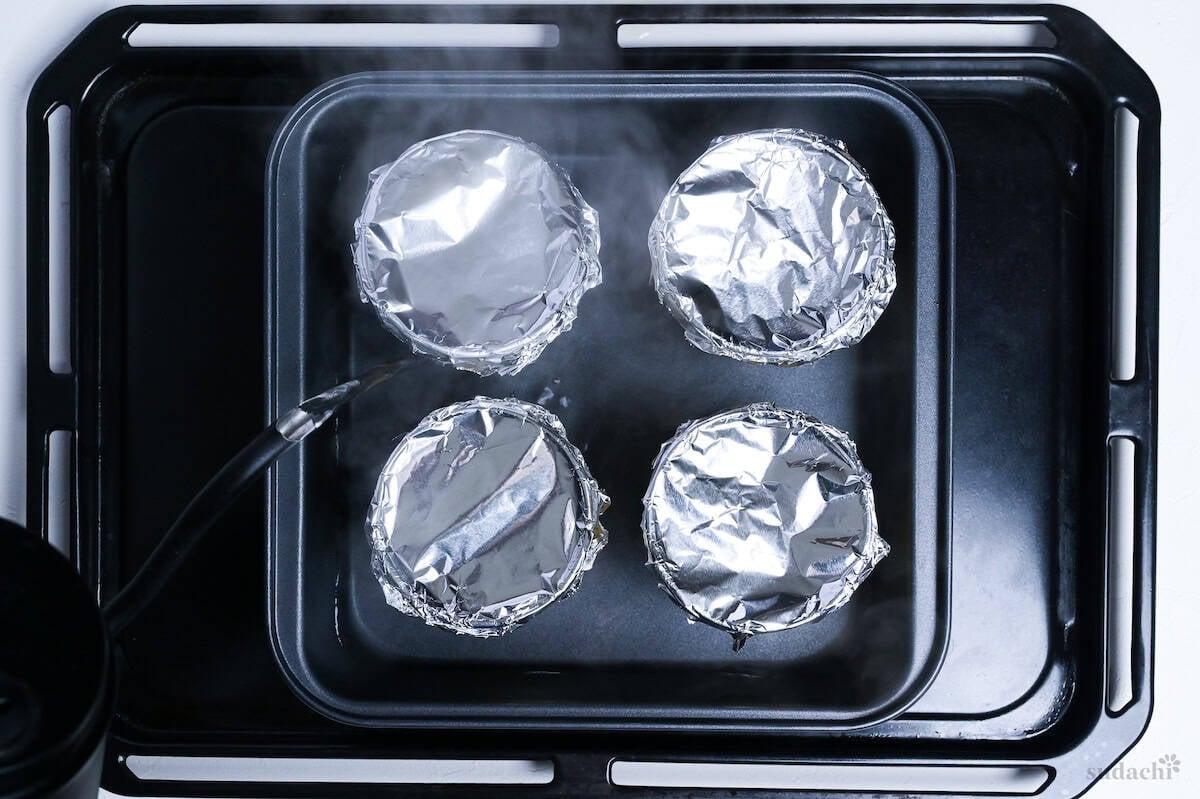
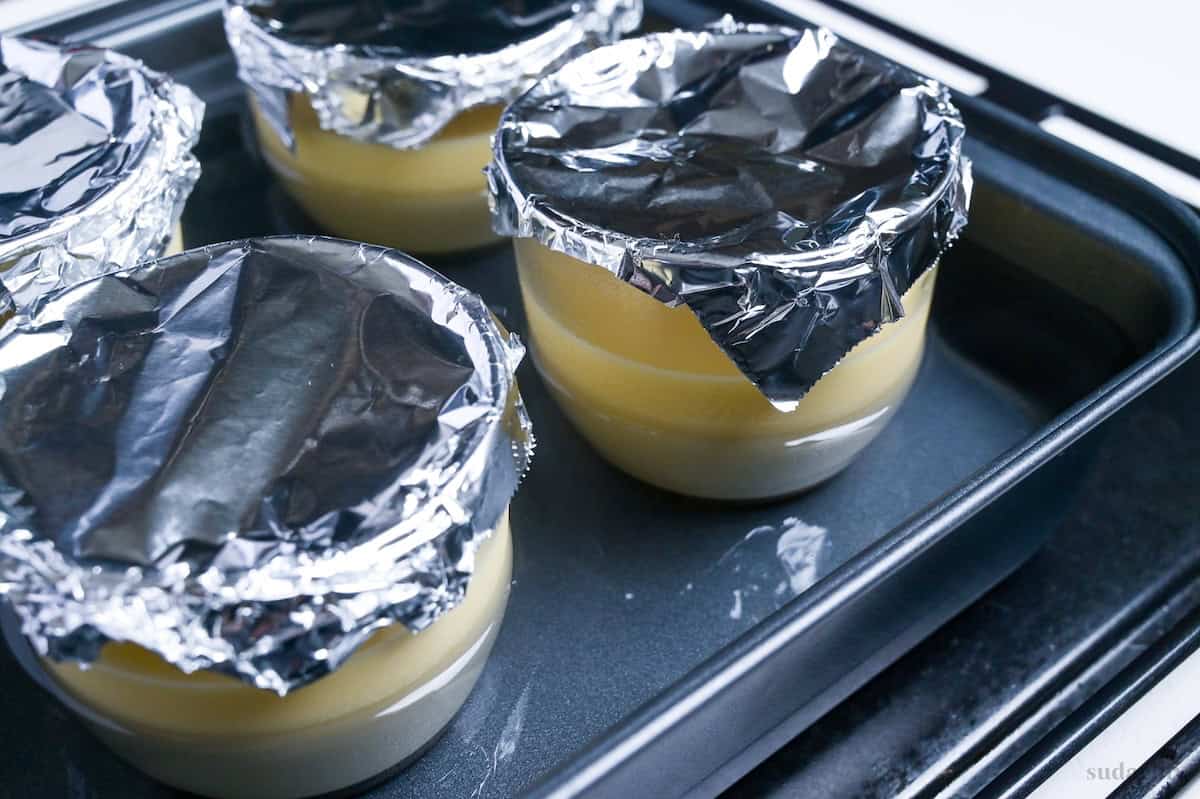
i. Bake for 28-34 minutes, or until the edges are set and the middle is slightly jiggly and sags when tilted. If the center is wet, it needs a bit longer.
Oven note: I use a fan assisted oven which tends to run hot so this is just an estimate time. Base the cook time on the texture, not the timer. If you are using a conventional oven (no fan), consider increasing the temperature to 150-160℃ (300-320℉) if you want it to cook faster.
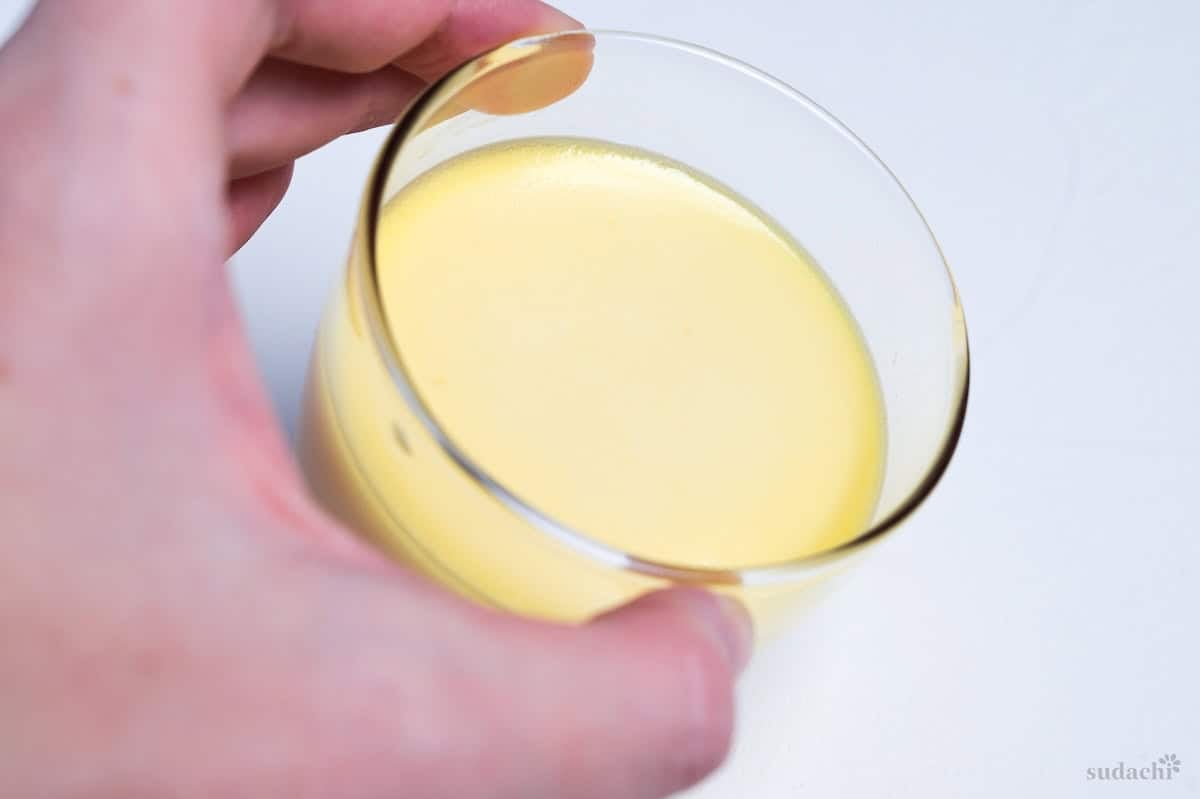
ii. Use tongs to carefully remove them from the bain marie. Remove the foil lids and leave to cool to room temperature.
Important: If you leave the foil on while they cool, condensation will create water droplets that might fall and damage the top of the purin.
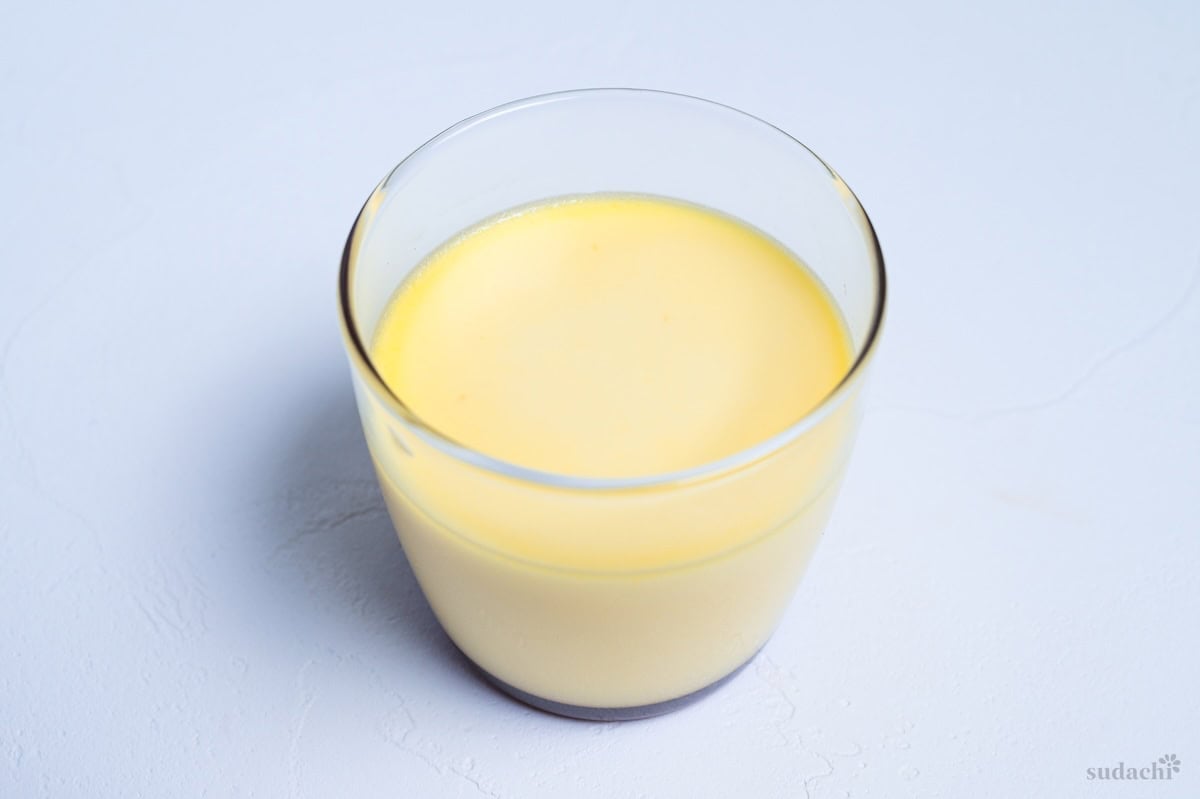
iii. Once cool to the touch, cover (you can reuse the foil) and chill in the fridge for 4-6 hours.
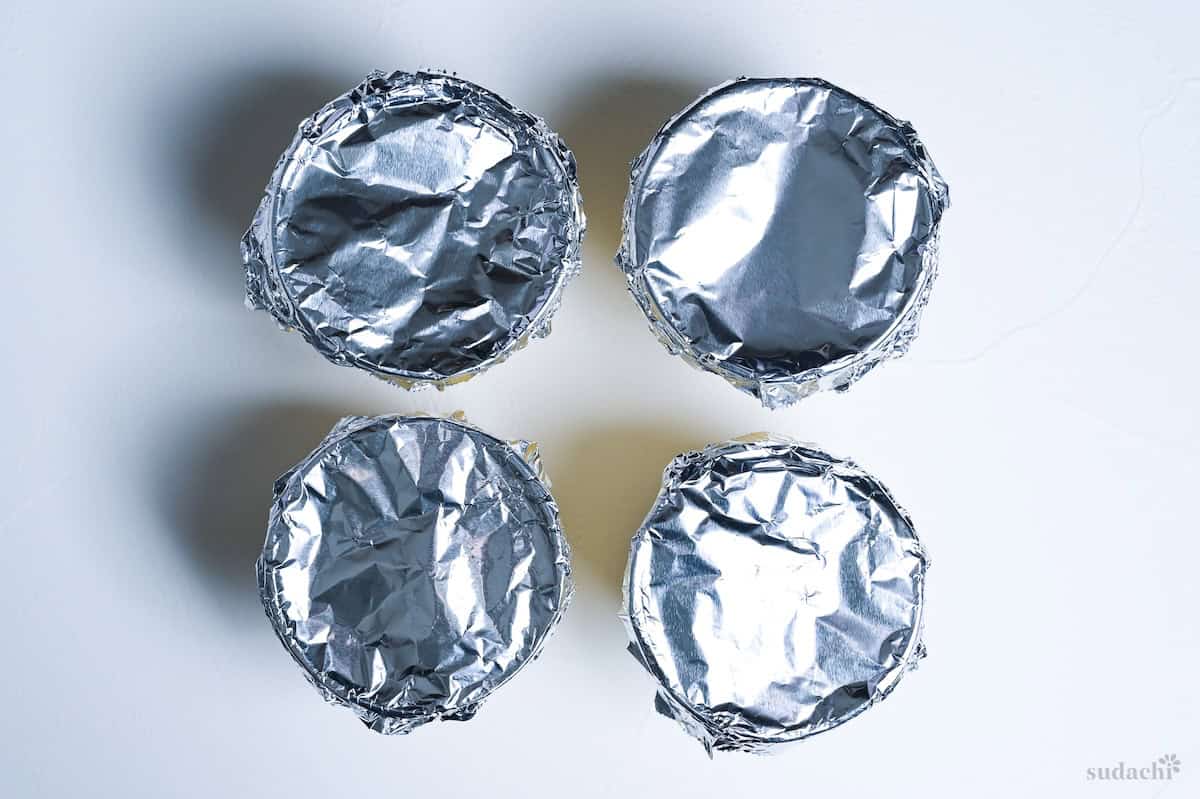
i. Use a spoon or your thumb and press around the edge of the purin to break the seal.
ii. Place a plate on top of the glass and flip it over.
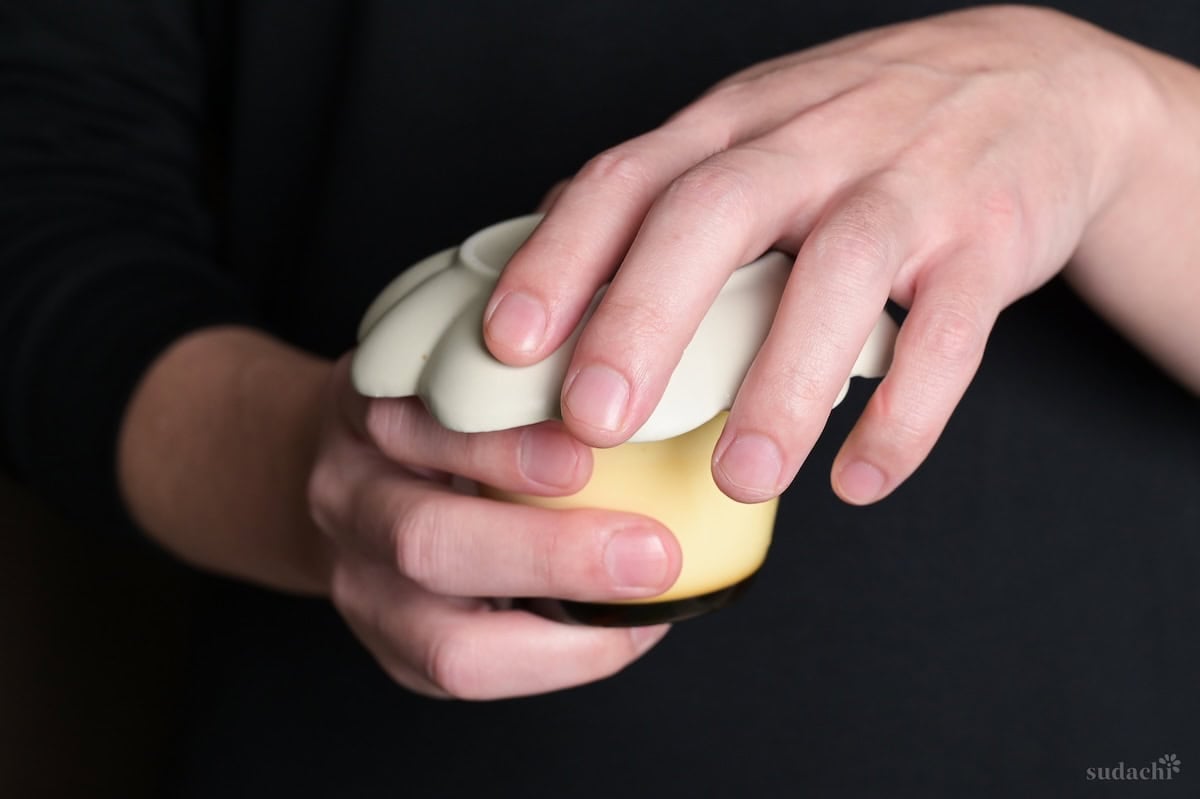
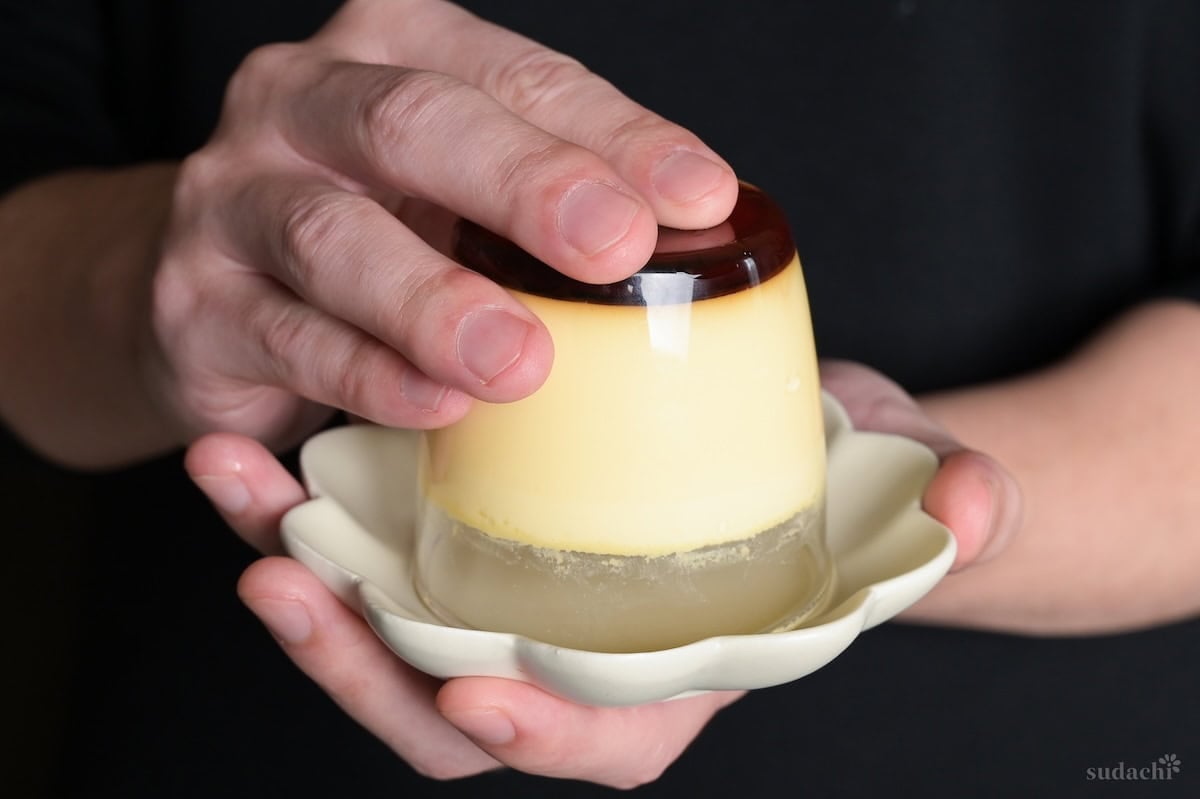
iii. Hold the top tightly, and in a sharp motion, jolt the purin to one side to release it. Avoid shaking it up and down, this won’t release the suction, but is more likely to break the purin.
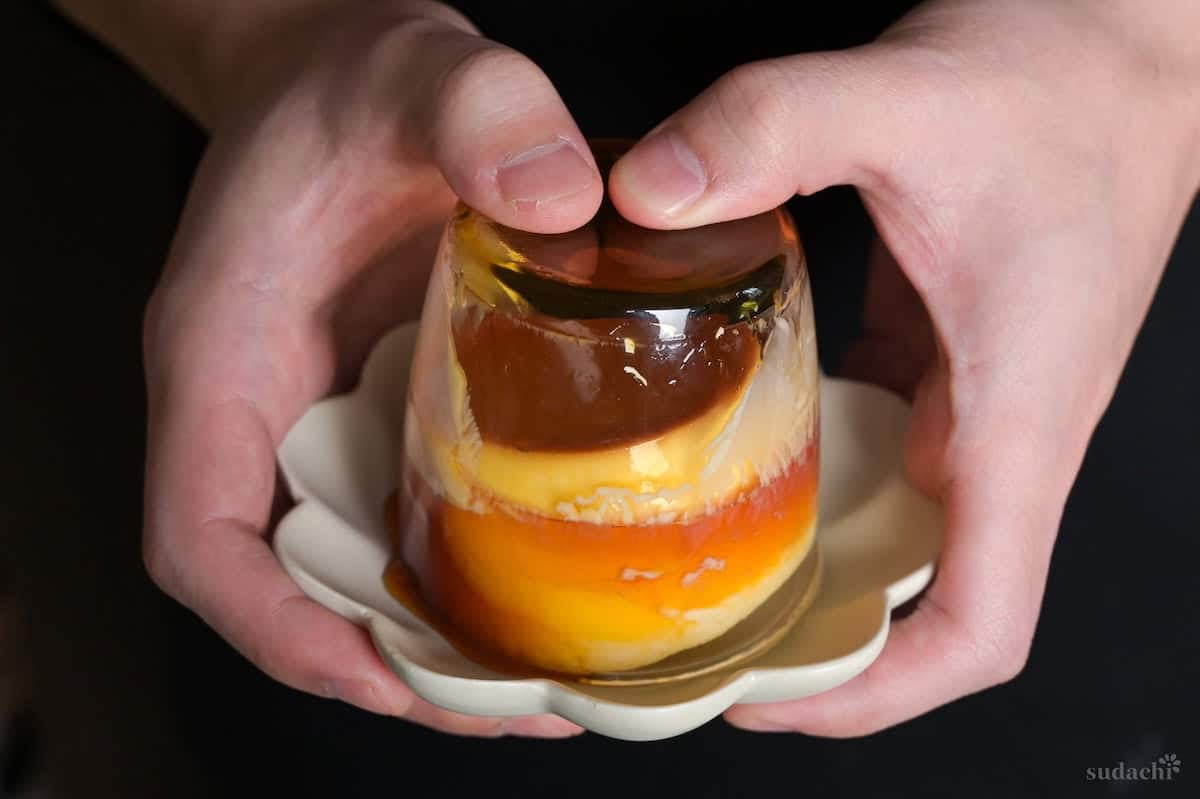
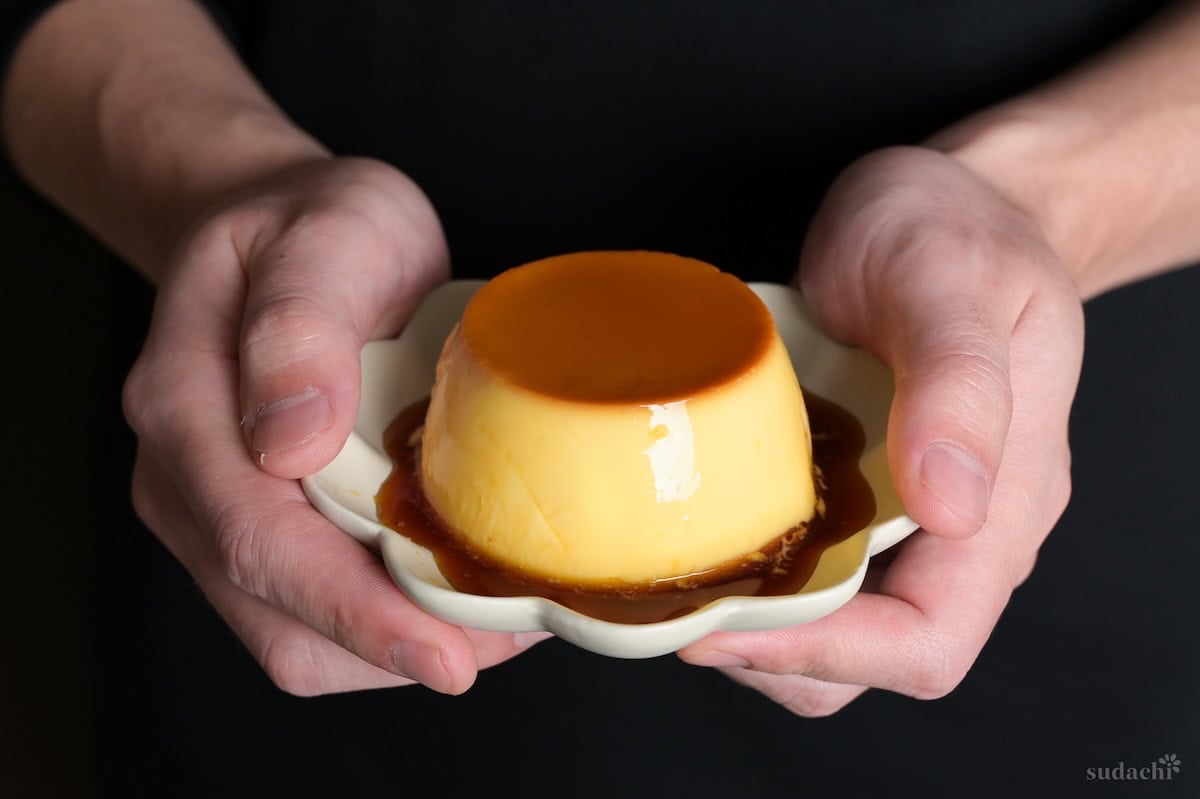
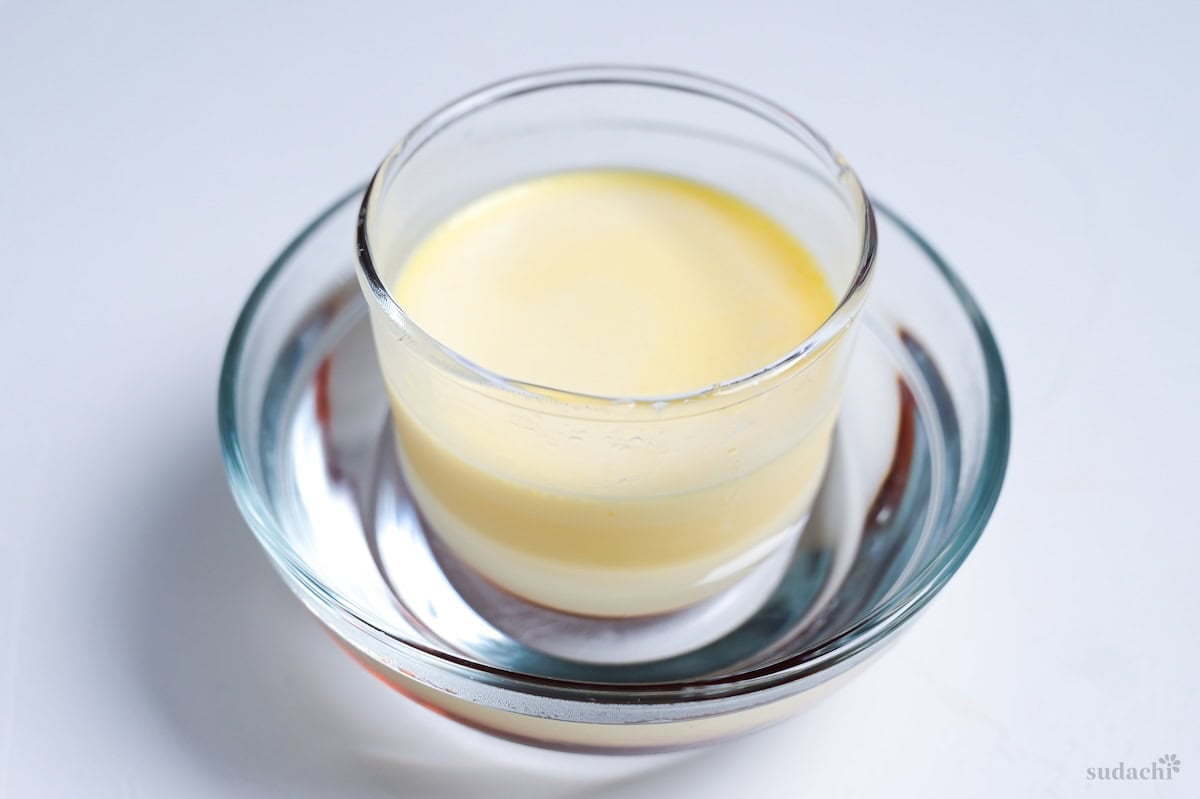
iv. If your purin is very stubborn, try placing it in a bowl of hot (not boiling) water for 20-30 seconds to soften it.
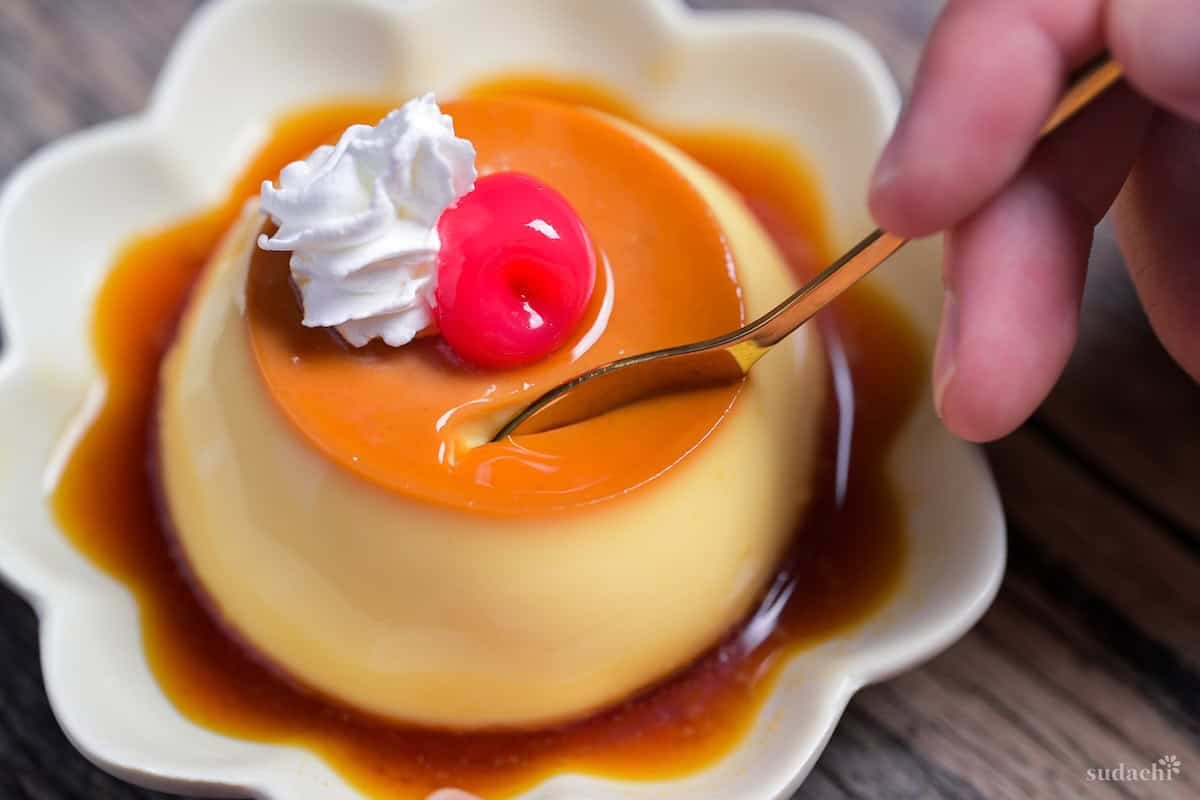
Decorate with whipped cream and a maraschino cherry for a classic Japanese café style look, and enjoy!

Troubleshooting
- Bubbly texture: Prevent bubbles by mixing with a spatula, straining with a sieve and baking at a low temperature in a hot water bath. Vigorous whisking, over-baking and too high heat can cause bubbles.
- Cracks: High oven temperature can cause cracks, or overcooked edges with undercooked centers. If this happens, your oven might run hot so try reducing the oven temperature.
- Watery: If the foil (or lids) aren’t wrapped tightly enough, condensation might form and drip onto the custard, making it watery. Wrap tightly during baking, then remove the lids while the purin cools to prevent water drips.
- Rubbery: Be careful not to bake for take long, over-baked purin might set too much and feel rubbery. Take them out when the top edges are set, but the center still jiggles or sags slightly when tilted.
- Too Soft/Breaks easily: This is usually down to under-baking the purin, make sure it’s not liquidy when you take it out of the oven.
- Lumpy or seized caramel: Make sure your pan is clean, avoid stirring (swirl the pan while it cooks) and add hot water instead of cold.
- Takes too long to cook: I used a fan assisted oven to develop this recipe, so my cooking time was relatively short even at 140℃. If you are using a conventional oven without a fan, the purin can take longer to set. If you want it to cook faster, consider increasing the oven temperature to 150-160℃ (300-320℉) if you are using a conventional oven and check the condition regularly to avoid over-baking.
With these simple tips in mind, you’re set for success every time you make oven baked Japanese purin.
How to Store
Fridge: Store in an airtight container to protect them from absorbing fridge odors, and chill for up to 3-4 days.
Freezer: Not recommended.
Serving suggestion: Serve chilled and unmold right before serving.
Oven Baked Purin Q&A
If there are bubbles around the edges, this is usually down to heating too quickly (high oven temperature). Using the hot water bath method should prevent this. If the bubbles are inside the purin, they might have become trapped before baking (through vigorous whisking). Mix gently and strain through a fine mesh sieve to reduce air bubbles.
Cracking occurs if the purin is overcooked or baked at a too-high temperature. Using a hot water bath should prevent this.
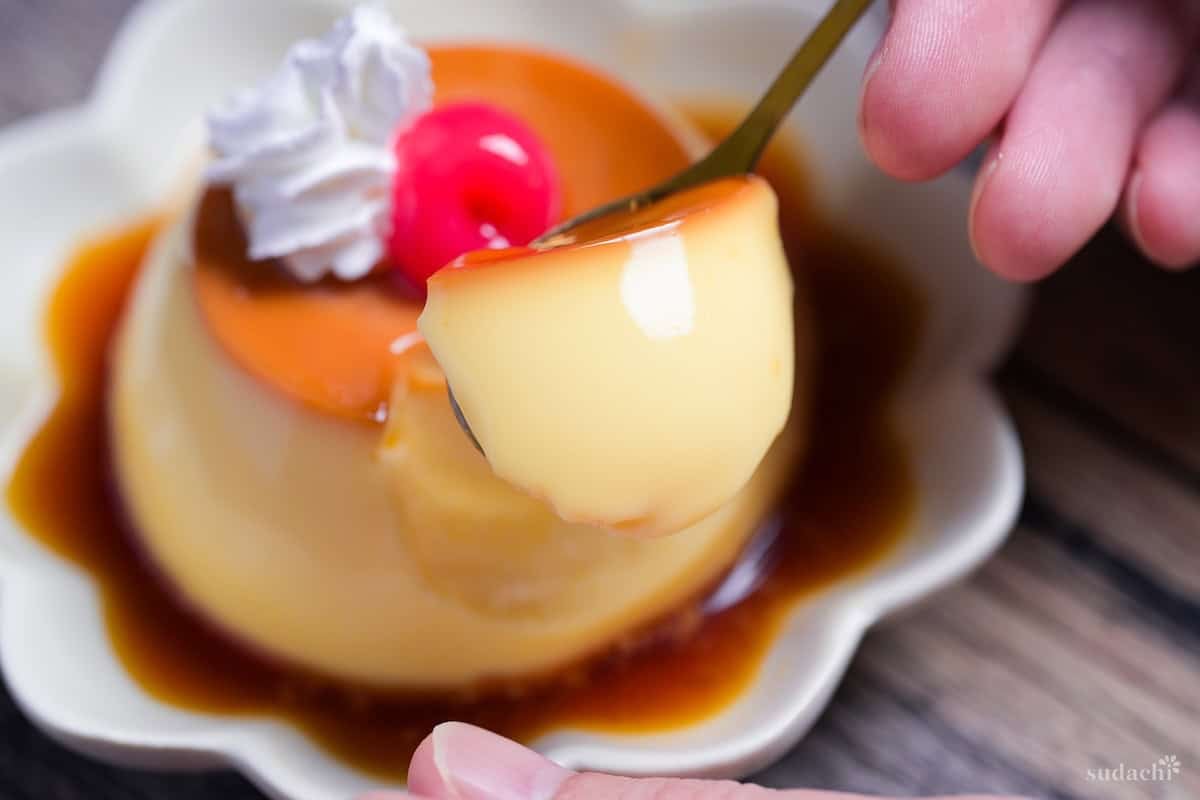
The top should be set and not liquidy, with slightly darker edges and a softer center that jiggles or sags slightly when tilted.
You can make it with milk only, but it will be firmer and more-jelly like.
This is very common, the texture of purin creates a vacuum which makes it difficult to remove from the mold. Press the edges at the top to break the seal slightly, place a plate on top, flip it, then hold tightly and jolt to one side to help break the suction and release it. Alternatively, place the purin cup in hot (not boiling) water for 20-30 seconds to help soften it before turning it out.
This means your purin was underbaked so it didn’t have the stability to hold its shape. If this happens, serve them in cups this time and try baking it for a few minutes longer next time.
Oven temperatures vary greatly so my suggested cooking time is a guideline. If your purin is not set, it needs to cook for longer. If you are using a conventional oven, then you can try increasing the temperature to 150-160℃ (300-320℉) to speed things up.
More Japanese Dessert Recipes
Looking for more inspiration? Explore my Japanese dessert collection to find your next favorite sweets!
Did You Try This Recipe?
I would love to hear your thoughts!
💬 Leave a review and ⭐️ rating in the comments below. 📷 I also love to see your photos – submit them here!
Japanese Purin (Water Bath Method)
Equipment
- 8" (20cm) Square Cake Pan
- 150ml Purin Cups
Ingredients
Caramel
- 50 g granulated sugar
- 60 ml hot water
Custard Purin
- 300 ml whole milk
- 100 ml heavy cream 35% milk fat
- 50 g granulated sugar
- 2 whole eggs room temperature, approx 50g each with shell
- 1 egg yolk room temperature, approx 17g
- ½ tsp vanilla essence or half extract, or vanilla pod (see note)
- 1 pinch salt
- whipped cream optional
- Maraschino cherries optional
My recommended brands of ingredients and seasonings can be found in my Japanese pantry guide.
Can’t find certain Japanese ingredients? See my substitution guide here.
Instructions
- Pour 50 g granulated sugar into a light-colored saucepan. Measure 60 ml hot water and add one-third of it to the pan, keep the rest in arms reach. Heat on medium/medium-low and swirl the pan occasionally to help the sugar cook evenly. Avoid mixing.

- Stand back and wear long sleeved clothing to protect yourself from splashes. When the sugar starts to turn golden, add another third of the hot water and swirl the pan to evenly distribute.
- Continue to heat until deep amber. The darker the color, the more bitterness. Carefully pour in the last third of hot water, swirl until distributed and take the pan off the heat.
- Divide evenly into 150ml heatproof glass purin cups and place them in the fridge to set.

- Start preheating your fan assisted oven to 140 °C (284 °F). If using conventional, consider increasing the temperature to 150 °C (302 °F) (see note).Pour 300 ml whole milk and 100 ml heavy cream into a saucepan. If using vanilla pods, add it now. Heat on low until it reaches 60 °C (140 °F), or when small bubbles appear around the edges (do not boil). Mix occasionally to heat evenly and prevent a skin forming.
- Take the pan off the heat and pour in 50 g granulated sugar. Mix until dissolved.
- In a heatproof bowl, whisk 2 whole eggs and 1 egg yolk until combined. Slowly pour the hot milk/cream into the eggs while mixing continuously with a spatula.
- Pour the mixture through a fine mesh sieve to strain and catch air bubbles and stubborn egg whites, then stir in ½ tsp vanilla essence and 1 pinch salt.
- Start heating a pot of water and turn off the heat as soon as it comes to a boil. Take the purin cups from the fridge and pour the custard mixture over the caramel. Scoop out any air bubbles on top with a spoon.
- Cover the top of each purin cup with foil. Scrunch the edges so they won't touch the water when in the bain-marie.
- Place the foil covered cups in a deep cake pan or similar, then pour the hot water two-thirds of the way up. Place them on a baking tray and bake on the middle shelf for 28-24 minutes, or until the edges are set and the middles are slightly jiggly. Check at the 25 minute mark, be careful not to overbake.
- Carefully remove the tray from the oven, and use tongs to lift the purin cups out of the bain-marie. Remove the foil and let them cool to room temperature.
- Once cool, cover again and chill in the fridge for 4-6 hours.
- To unmold, press around the edges with a spoon to break the seal. Place a plate on top, flip, then hold it tightly and jolt to one side to release it.
- Top with whipped cream and Maraschino cherries if you like. Serve immediately and enjoy!

Un postre cotidiano, tradicional, que hay que tratar de hacerlo.gracias!
Exceptional in detail and education for both Japanese cuisine but also overall alternative methods of cooking that could be applied to all world cuisines !
Hi Stu,
Thank you so much for your thoughtful words. I’m so happy to hear that the article was helpful! 🙂
Yuto
tase was spot on , but I needed a longer baking time of 60 min in the water bath for mine to set
Hi Ken,
Thank you for trying the recipe, I’m glad you enjoyed the taste! What kind of oven were you using? I use a small fan assisted oven which tends to cook things faster, but if you used a conventional oven you might need to increase the temperature by 10-20℃ (up to 25℉) if you want to speed up the cooking time. I’ll update the recipe with this info, thank you for your feedback!
Yuto