Wafu Butter Shoyu Pasta (Japanese Style Spaghetti)
Ingredients
Main Ingredients
- 100 g Oriental spinach cut into bitesize pieces, or whole leaves of baby spinach
- 4 fresh shiitake mushrooms about 100 g, sliced ¼-inch thick
- 50 g bacon with visible fat, cut into short strips
- 1 garlic clove finely diced
Sauce and Seasoning
- cooking oil only if bacon is lean
- 1 tbsp sake or dry sherry/wine
- ⅛ tsp dashi granules
- 1 tbsp Japanese soy sauce (koikuchi shoyu) divided (2 tsp for the first stage, 1 tsp for the second stage)
- ½ tbsp mirin
- 4 tbsp pasta water reserved from cooking
- 1 tbsp unsalted butter at room temperature
Garnish
- lemon juice a few drops
- kizami nori (shredded nori) optional
- chopped green onions to taste
- shiso leaves optional, sliced thin
- ground black pepper to taste
Instructions
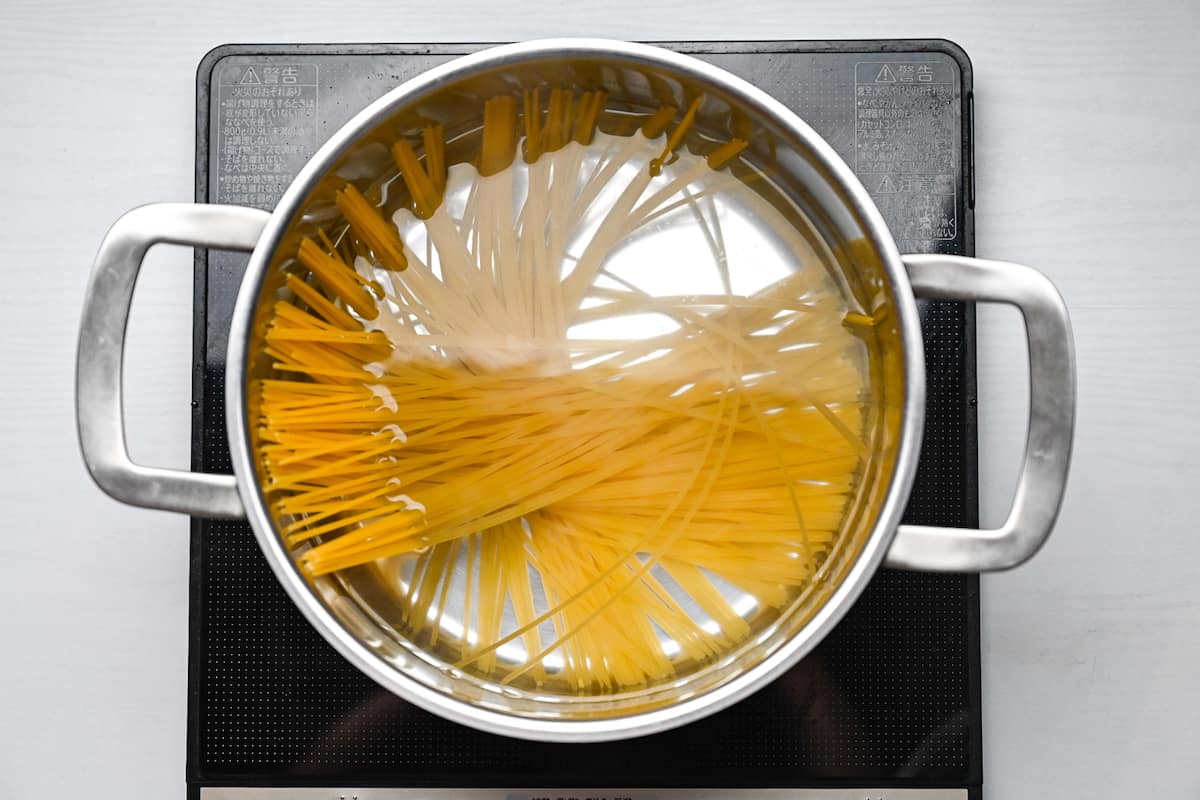
- Fill a pot with 1600 ml water and bring to a rolling boil. Add 1 tbsp salt, give it a stir and then drop in 180 g dry spaghetti. Boil for 1 minute less than the packaging states.
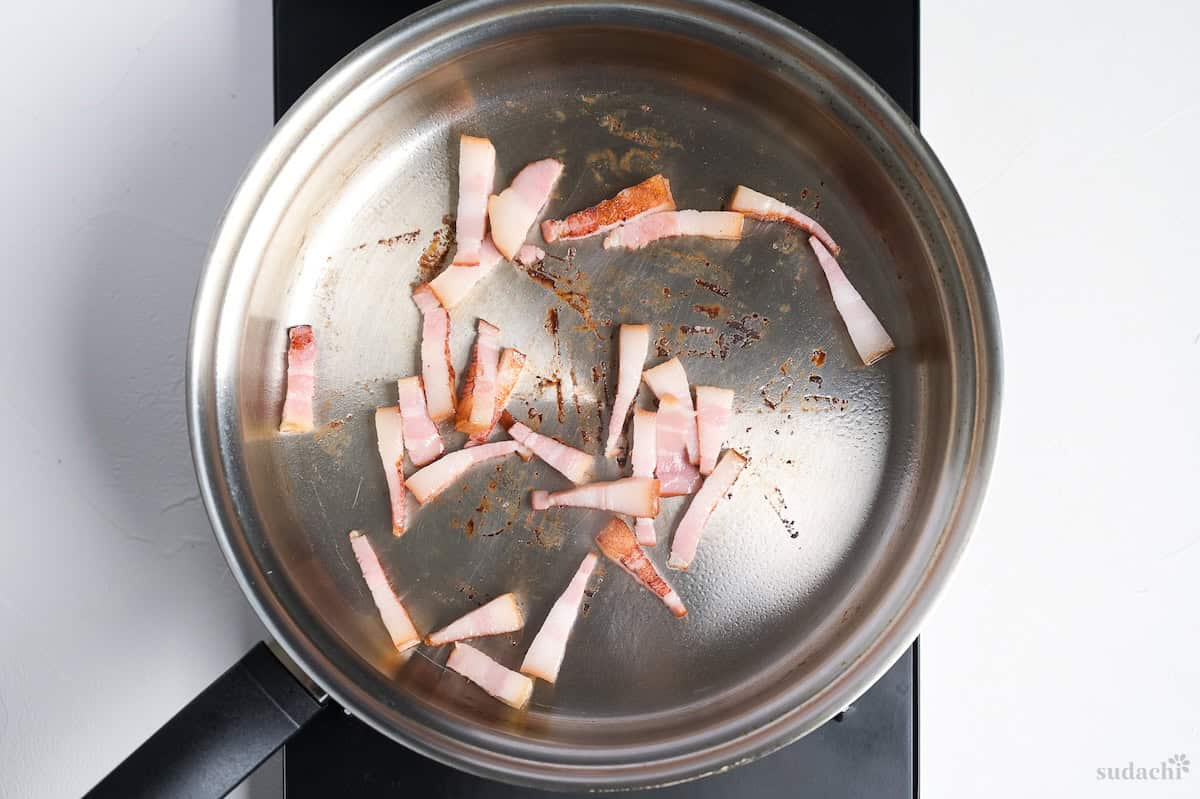
- While you wait, heat a large skillet over medium-low. Add 50 g bacon in a single layer and fry gently to render the fat. If using leaner bacon, add a splash of cooking oil.
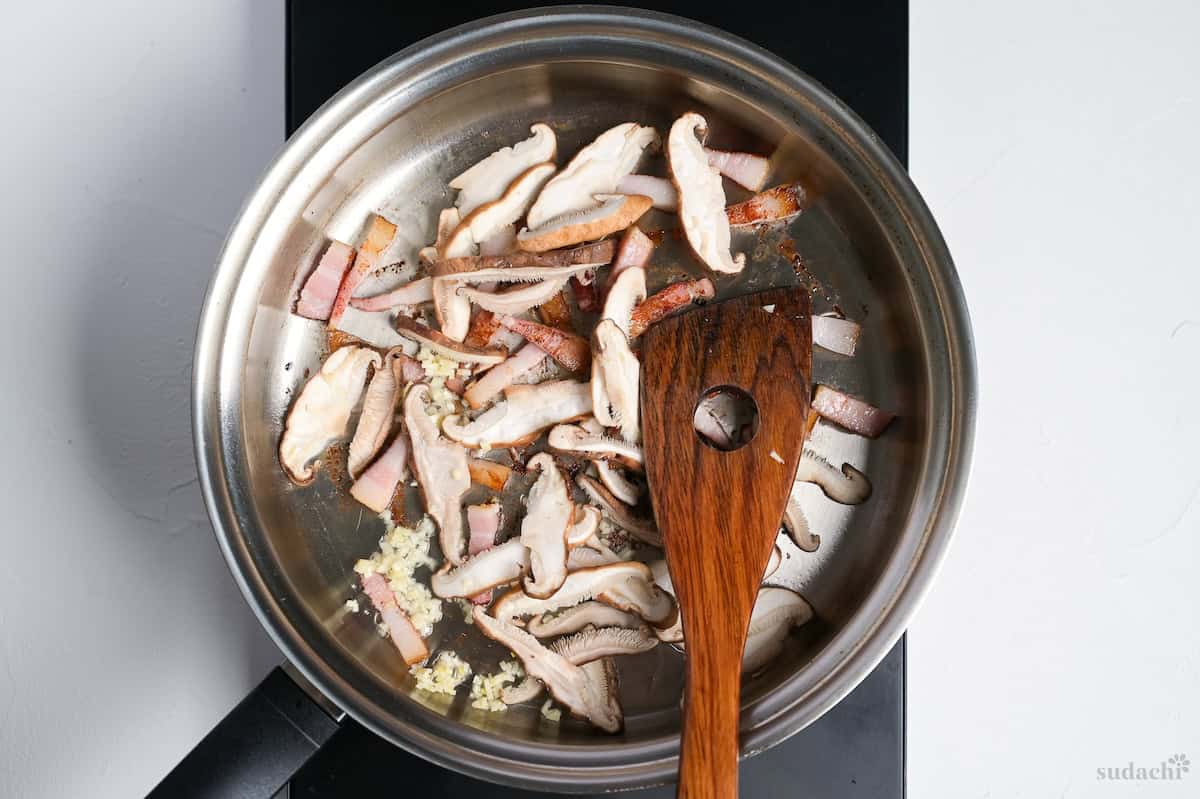
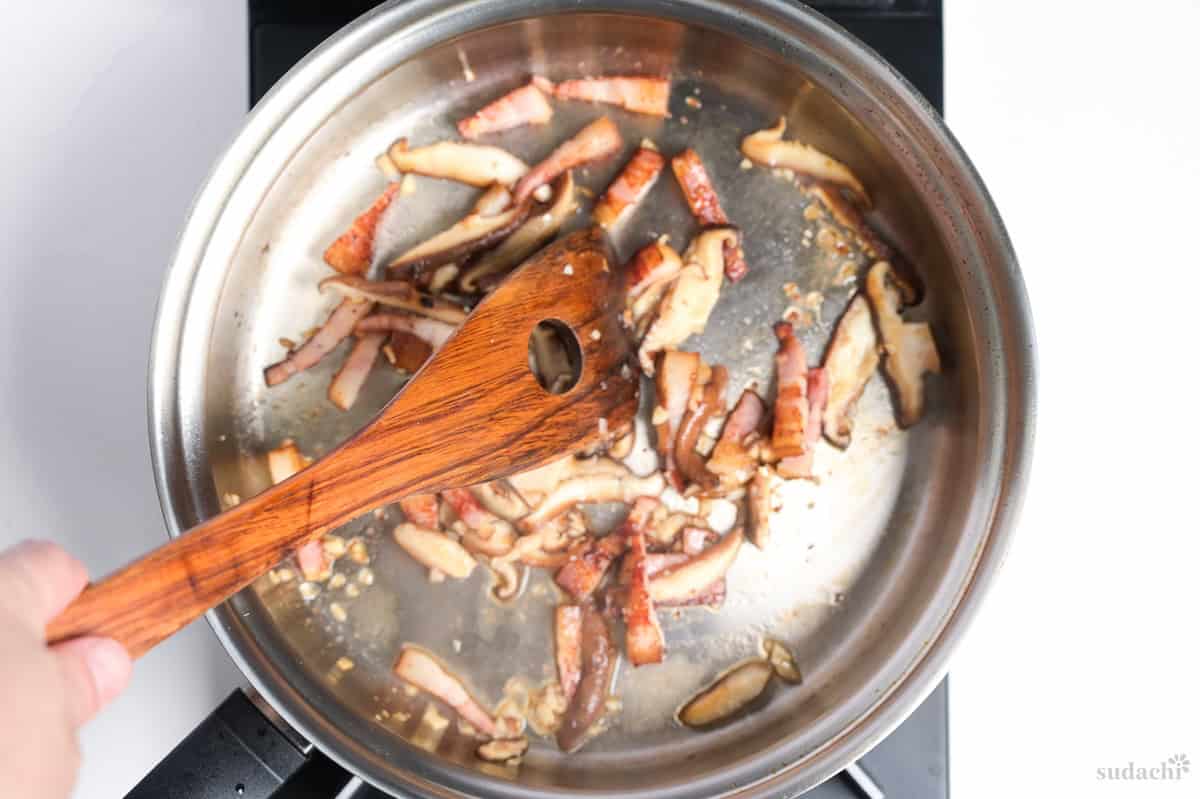
- Once the bacon is lightly browned and the fat has rendered out, add 4 fresh shiitake mushrooms and 1 garlic clove. Fry undisturbed for 2-3 minutes, or until the garlic is fragrant and golden.
- Pour 1 tbsp sake into the pan along with ⅛ tsp dashi granules. Scrape the bottom of the pan to lift the caramelized bits off of the surface, and mix it into the other ingredients.
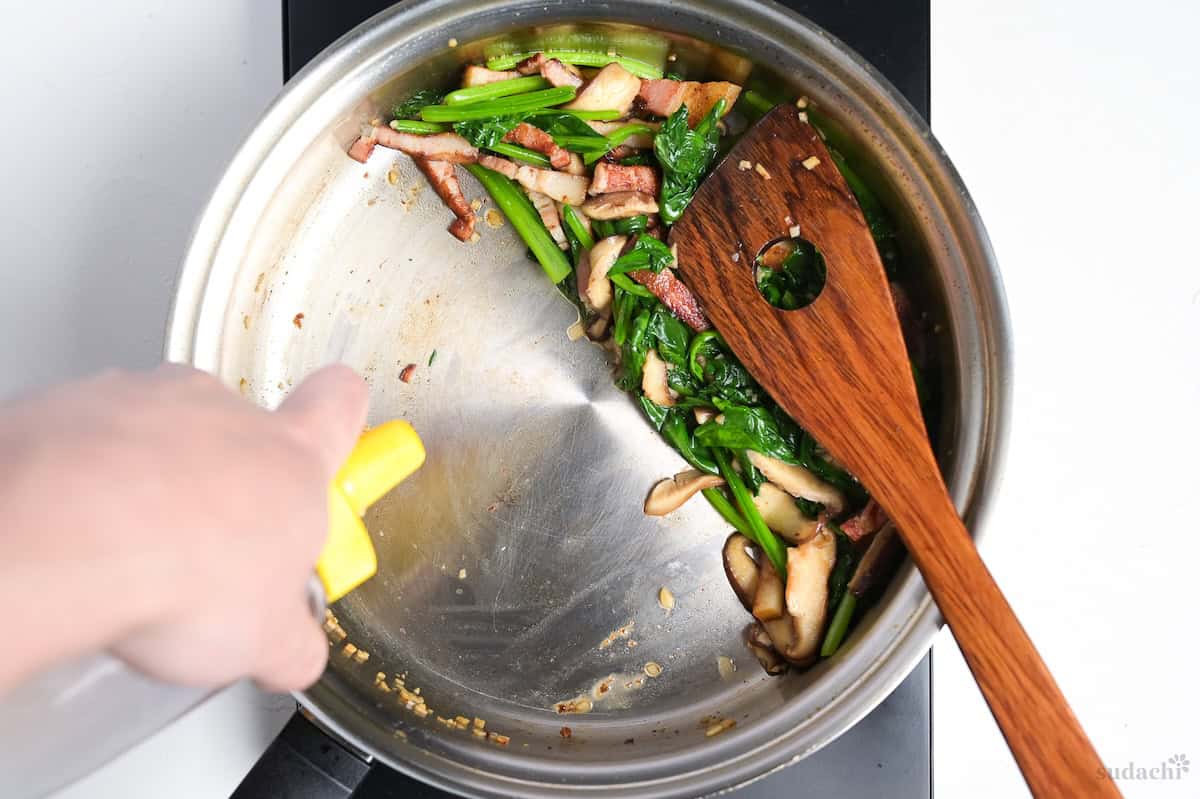
- Add 100 g Oriental spinach and stir for 15-20 seconds until wilted. Then, push everything to one side and pour ½ tbsp mirin into the empty space. Let it bubble for 10 seconds, then mix it with the rest of the ingredients.
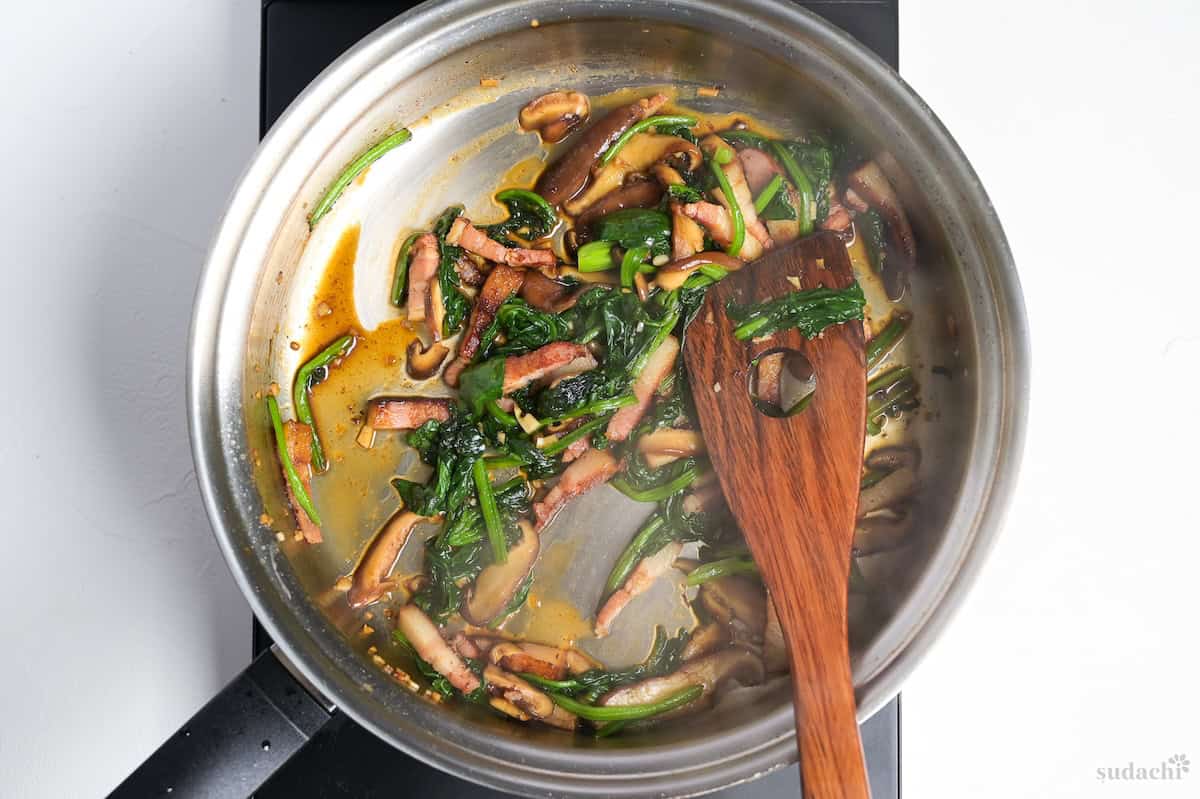
- Push everything to one side once more. Measure out 1 tbsp Japanese soy sauce (koikuchi shoyu), then add two-thirds of it directly to the pan. Let it sizzle for 10 seconds and stir everything together, then reduce the heat to the lowest setting. If the pan seems too dry, add a splash of pasta cooking water to prevent sticking.
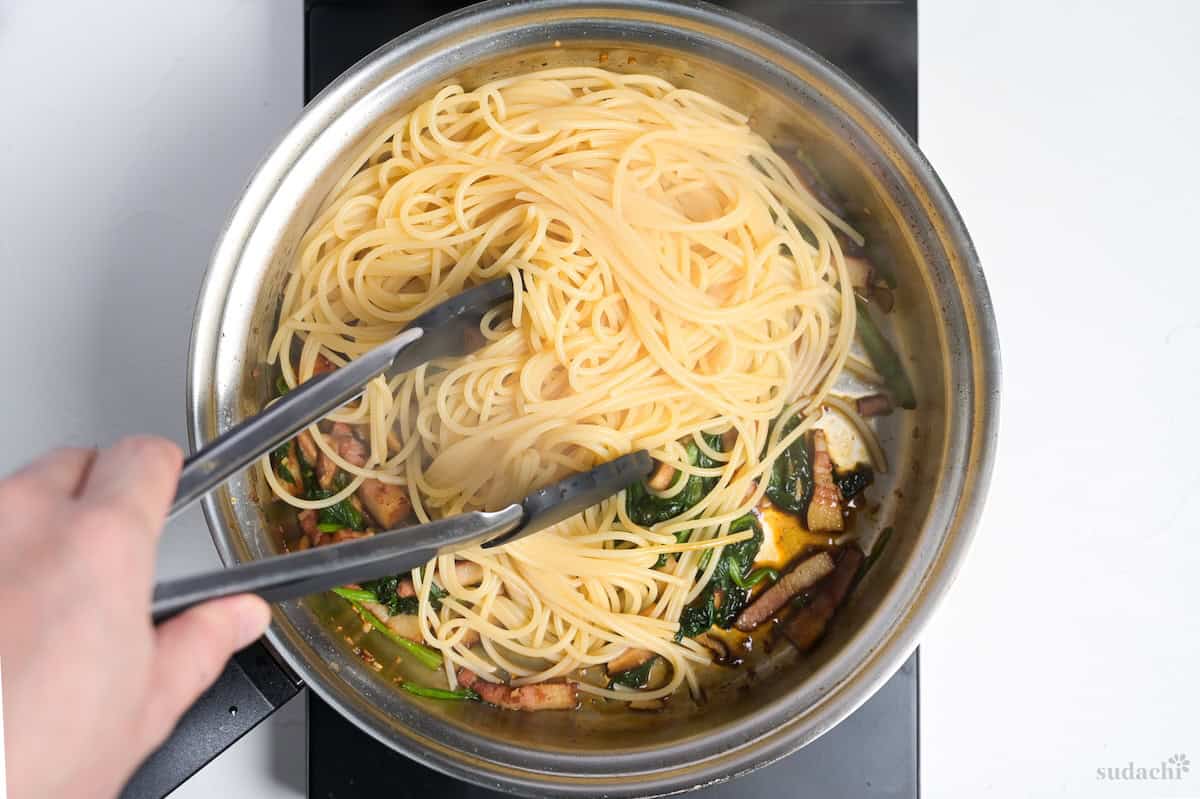
- Reserve 4 tbsp pasta water, then use tongs to lift the al dente spaghetti out of the pot and into the pan. Add the reserved pasta water a little at a time and mix thoroughly until it reaches your desired consistency (slightly glossy), you might not use all of it.
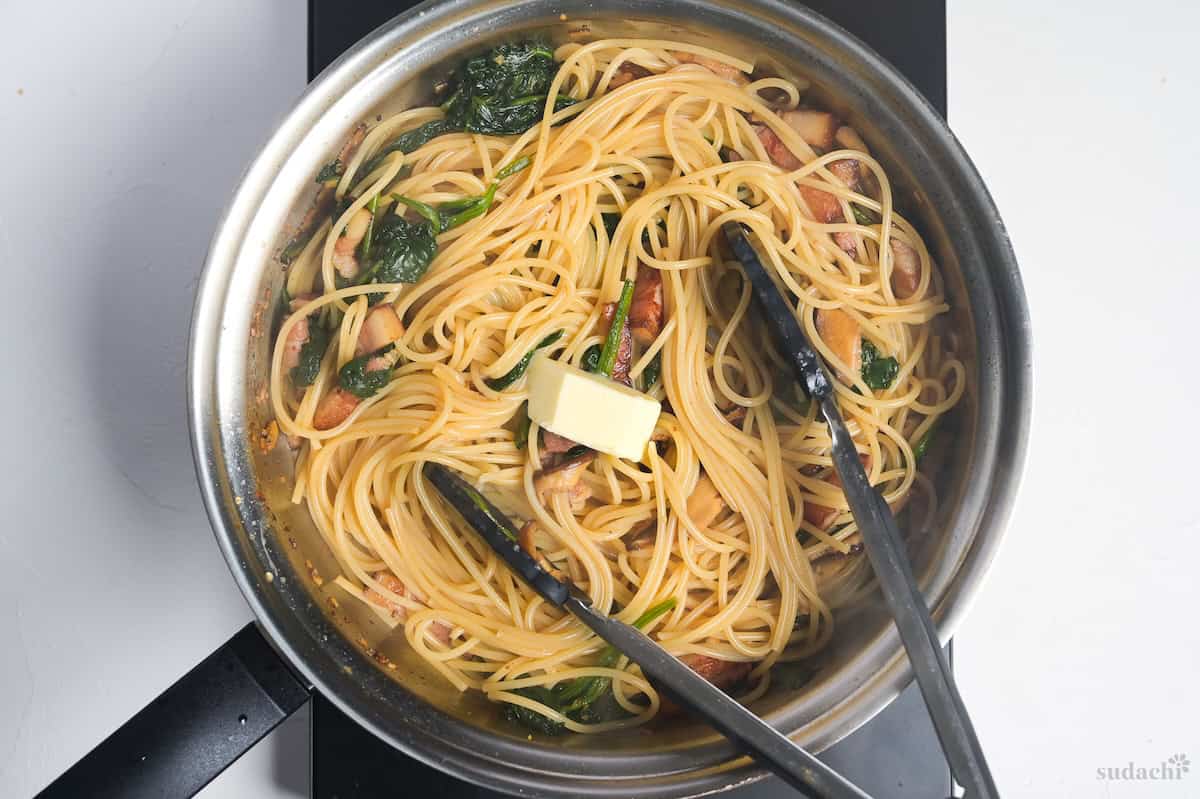
- Turn off the heat, and stir in 1 tbsp unsalted butter and the rest of the soy sauce until evenly distributed.
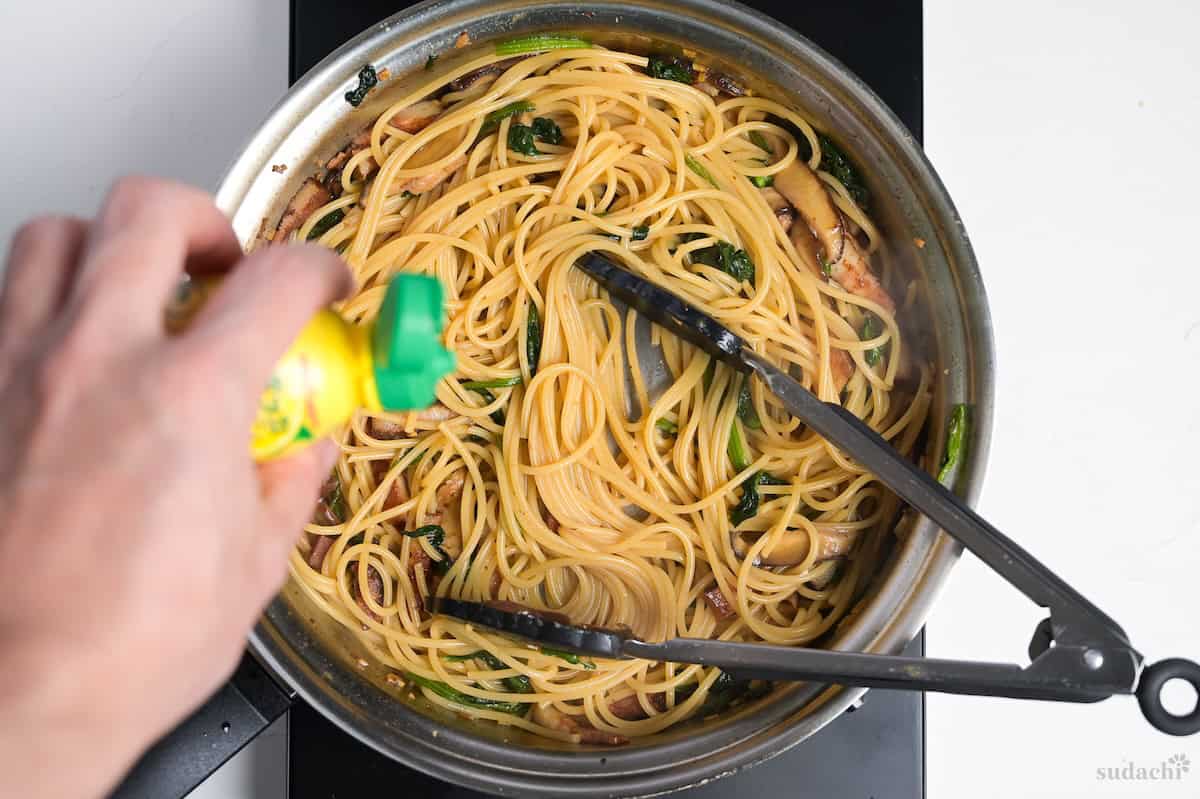
- Squeeze a few drops of lemon juice over the pasta and mix once more.
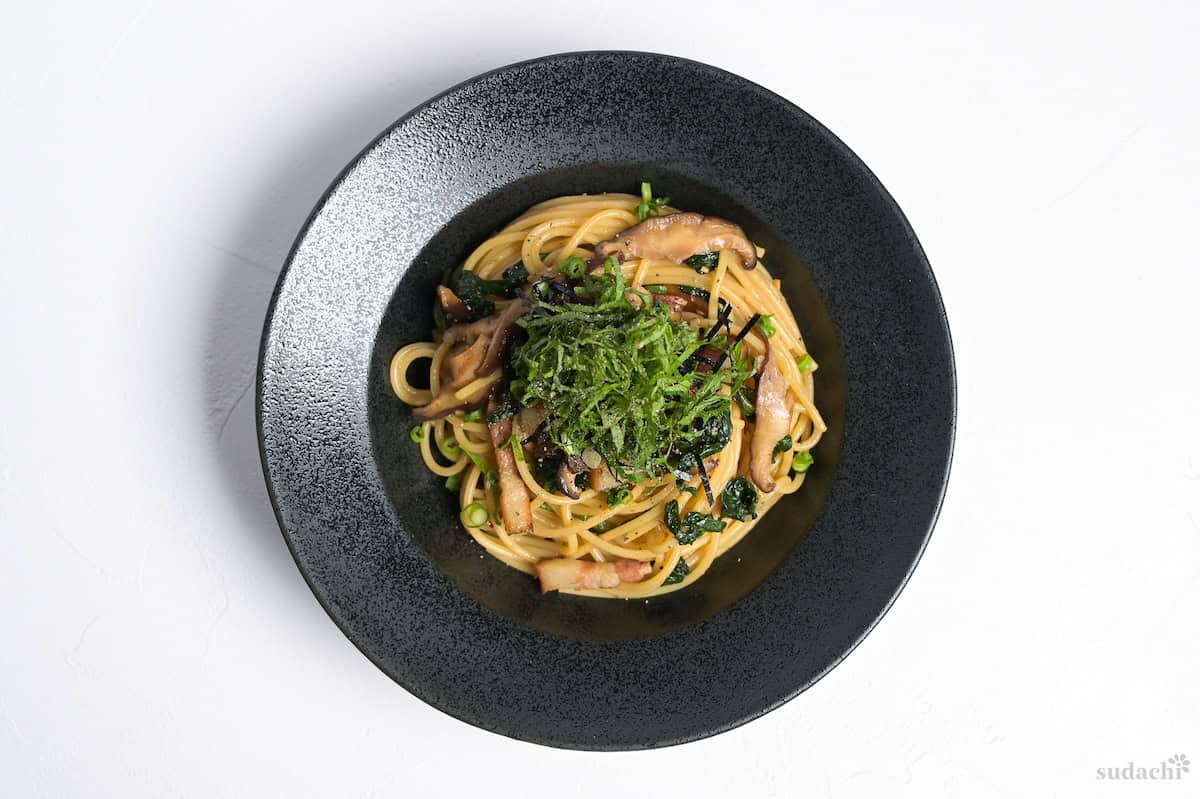
- Divide into serving bowls and top with kizami nori (shredded nori), chopped green onions, shredded shiso leaves, and ground black pepper to taste. Enjoy!
Notes
Two Stages of Soy Sauce: The soy sauce is split for a reason. The first two teaspoons hit the hot pan surface, where the heat triggers Maillard reactions that produce a deep, roasted aroma. The remaining one teaspoon goes in off-heat at the very end, preserving the bright, fermented complexity that cooking would destroy.
Save Your Pasta Water: The starchy cooking water is the only thing that holds the butter-soy sauce emulsion together. Scoop out a generous amount before draining. If the sauce breaks (oily slicks separating from thin liquid), pull the pan off the heat, add a small splash of cold pasta water, and toss aggressively. Plain water will not work.
Taste Before the Final Seasoning: The bacon, first-stage soy sauce, and dashi have already added salt. Before pouring in the second portion of soy sauce, taste a strand. If it is already well-flavored, use less. A few drops of lemon juice at the end also shifts the perception toward "bright and balanced."
Full Recipe QR Code↑↑