



Featured Comment
I did some batch production on the salad chicken, and it’s perfect every single time. Very forgiving recipe if you don’t follow 1:1 in quantities etc.
★★★★★
– Isa
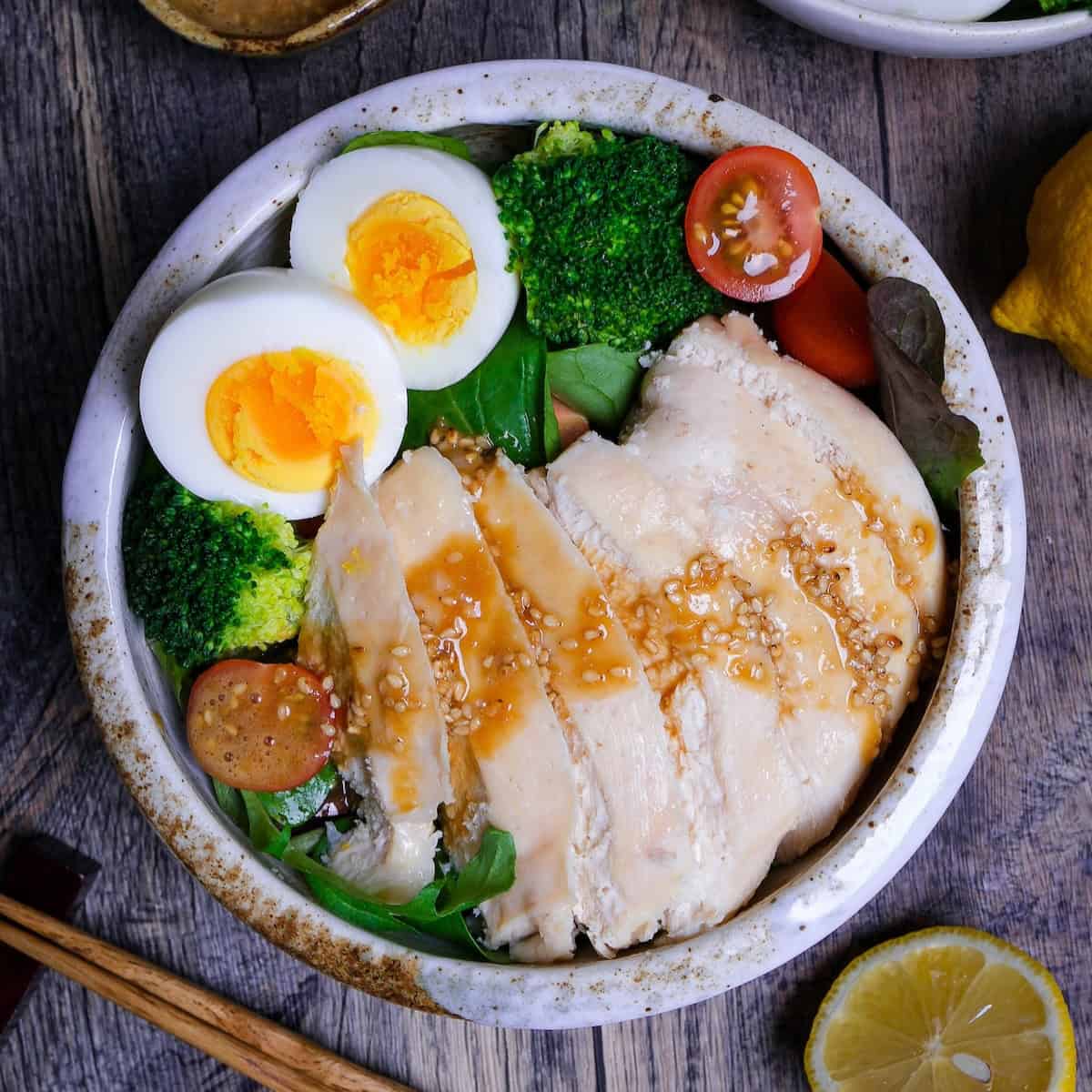
A salad you could eat every day and never get tired of. Unlikely? Maybe, but this Japanese chicken salad is exactly that kind of recipe.
I’ve made this more times than I can count. Tender salad chicken, fresh vegetables, and a wafu dressing that pulls the whole thing together.
Japanese Chicken Salad
Recipe Snapshot
- What is it? Japanese chicken salad with steamed sarada chicken and a soy-based wafu dressing.
- Flavor profile: Clean umami from shoyu and mirin, brightened with toasted sesame, finished with a gentle garlic warmth from the wafu vinaigrette.
- Why you’ll love this recipe: Homemade wafu dressing built from real Japanese pantry staples replaces bottled shortcuts, and the microwave salad chicken method keeps breast meat tender without poaching or sous vide.
- Must-haves: Japanese soy sauce, mirin, chicken breast.
- Skill Level: Beginner-friendly. Microwave timing and a quick dressing emulsion are the only techniques to manage.
- Suitable for Meal Prep? Salad chicken and wafu dressing store separately for 2-3 days, making this ideal for weekday lunch assembly.
Summarize & Save this content on:
What is Japanese Chicken Salad?
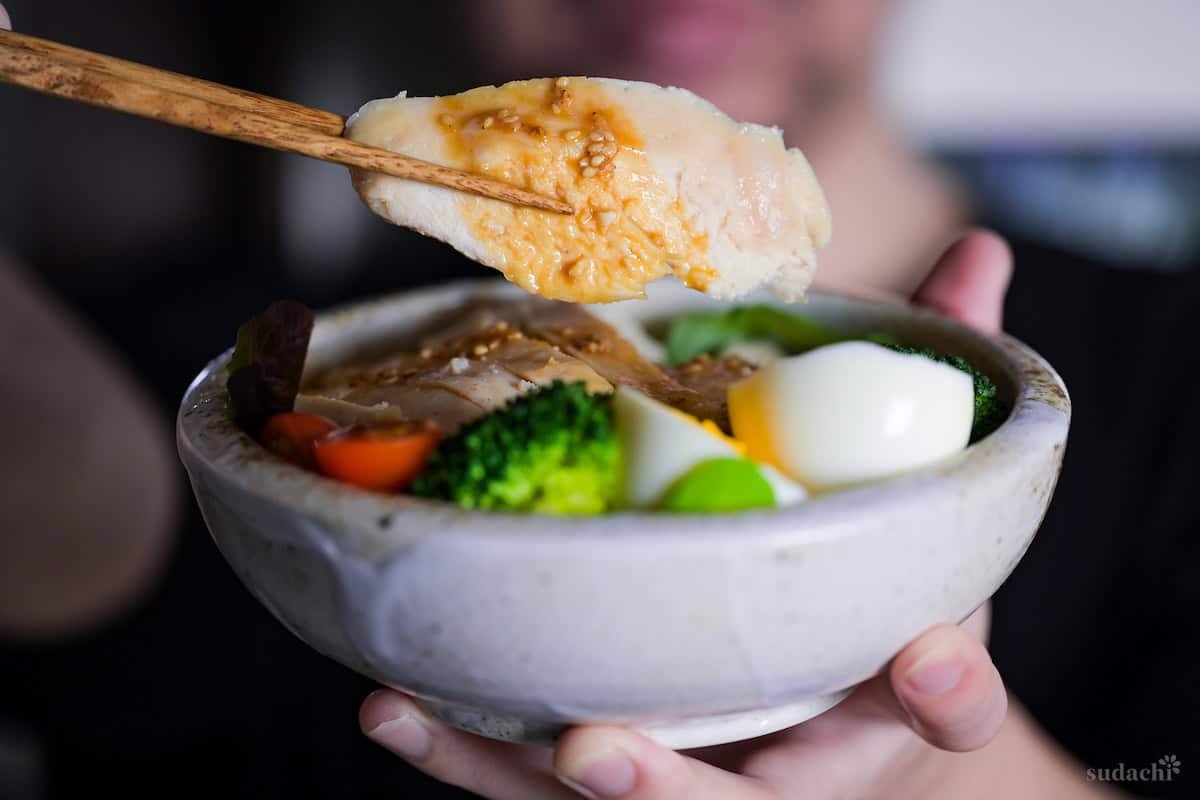
Japanese chicken salad (和風チキンサラダ) is a chilled salad of tender, lightly seasoned chicken breast served over crisp vegetables with a soy sauce and sesame-based wafu dressing. Unlike traditional Japanese dressed dishes such as ohitashi or gomaae, it takes a Western salad format and layers it with Japanese flavor architecture.
The chicken component draws from Japan’s sarada chikin (サラダチキン) culture. Originally a convenience store product, sarada chikin became a national hit by proving that chicken breast could be tender and satisfying when gently cooked at controlled temperatures. My homemade version uses a microwave steaming method common in Japanese kitchens to achieve the same moist, clean-flavored result.
Japanese Chicken Salad Ingredients
What You’ll Need for Chicken Salad
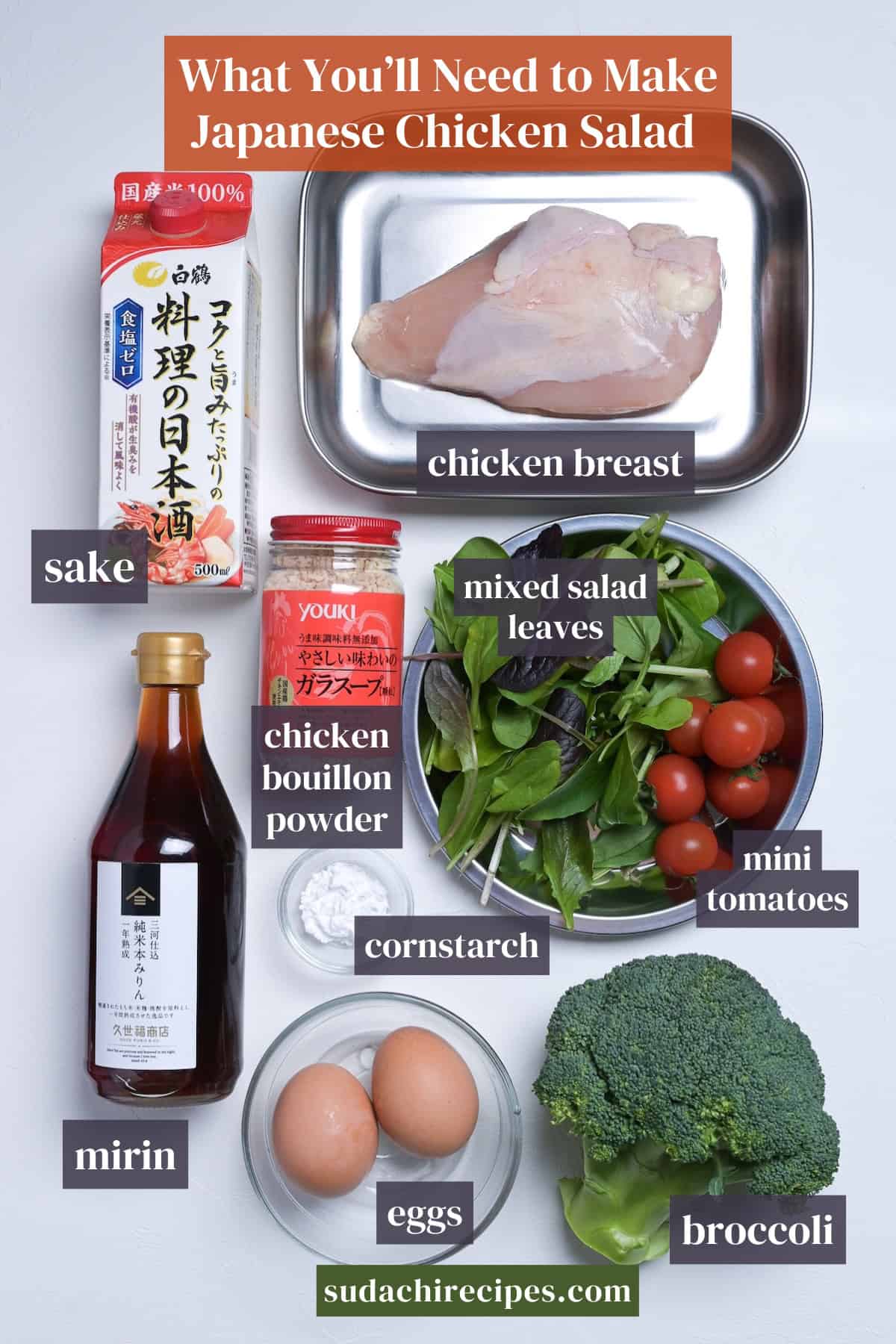
- Chicken breast: Skinless works best here, though skin-on is fine if that is what you have. The breast gets fork-pierced and lightly seasoned before microwave steaming, so removing the skin ensures even seasoning penetration and a cleaner texture when you slice it.
What You’ll Need for The Dressing
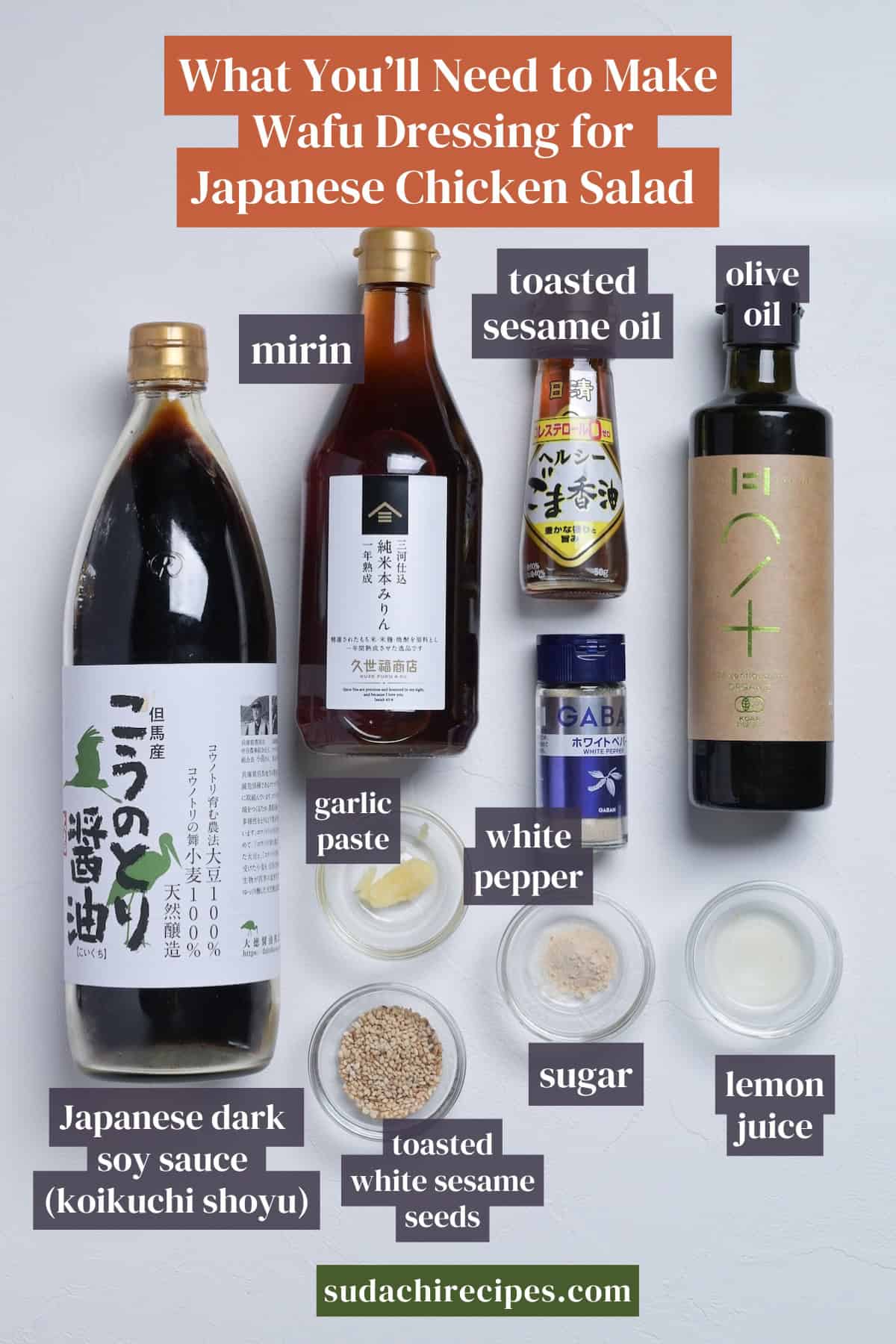
- Japanese soy sauce: Kikkoman is widely available and works well. It is the backbone of the wafu dressing, so using a real Japanese soy sauce rather than a generic brand makes a noticeable difference in umami depth.
- Toasted sesame oil: The aroma and flavor backbone of the dressing. Make sure the label says “toasted” or “roasted.” Untoasted sesame oil from health food stores is a completely different product and will not give you the nutty, aromatic quality this dressing needs.
Substitution Ideas
- Mirin → Dry white/sherry wine with a pinch of sugar gets you close.
- Sake → Dry white wine/sherry is the closest substitute. If using cooking sake, reduce the salt slightly since cooking sake contains added salt.
- Chinese chicken bouillon powder → Regular chicken bouillon powder works fine.
- Cornstarch → Potato starch or tapioca starch.
- Garlic paste → Finely grated fresh garlic works, but use about half the amount.
- Lemon juice → Rice vinegar or yuzu juice if you have it.
Have trouble finding Japanese ingredients? Check out my ultimate guide to Japanese ingredient substitutes!
How to Make My Japanese Chicken Salad
If you prefer to watch the process in action, check out my YouTube video of this Japanese chicken salad recipe!

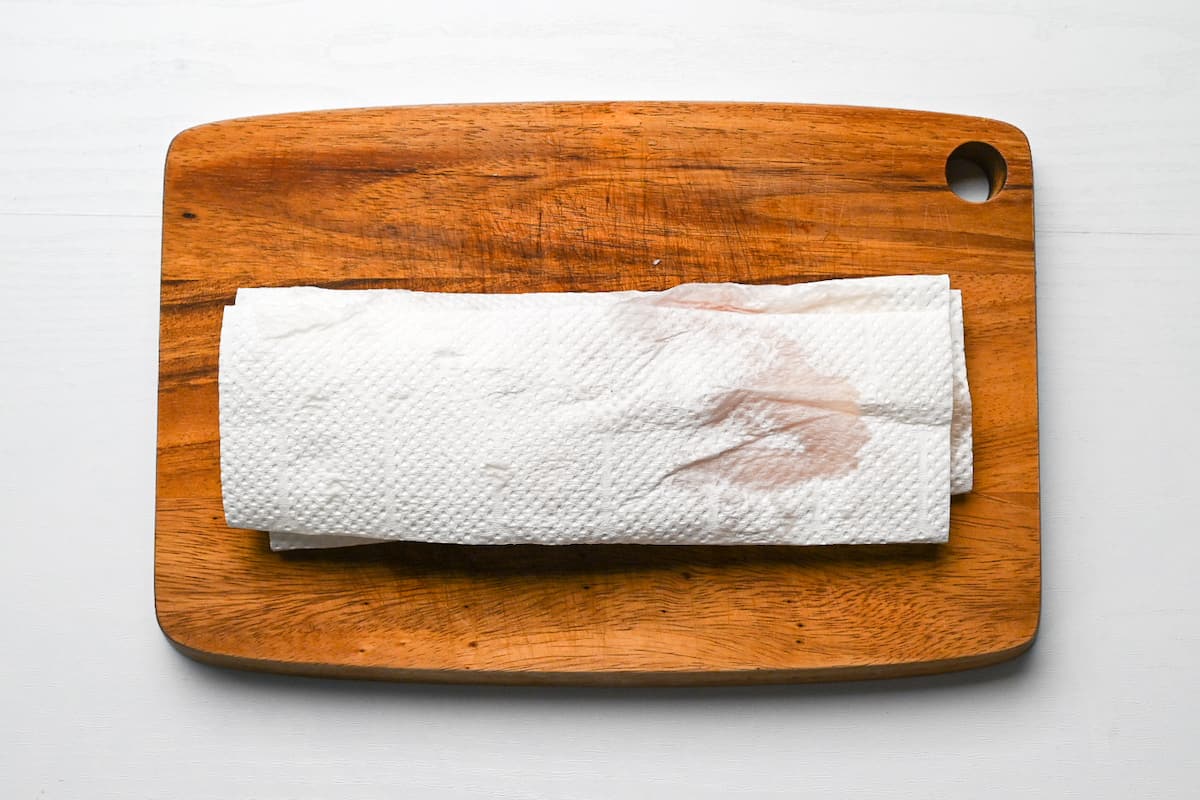
i. Pat your chicken breast dry with paper towels.
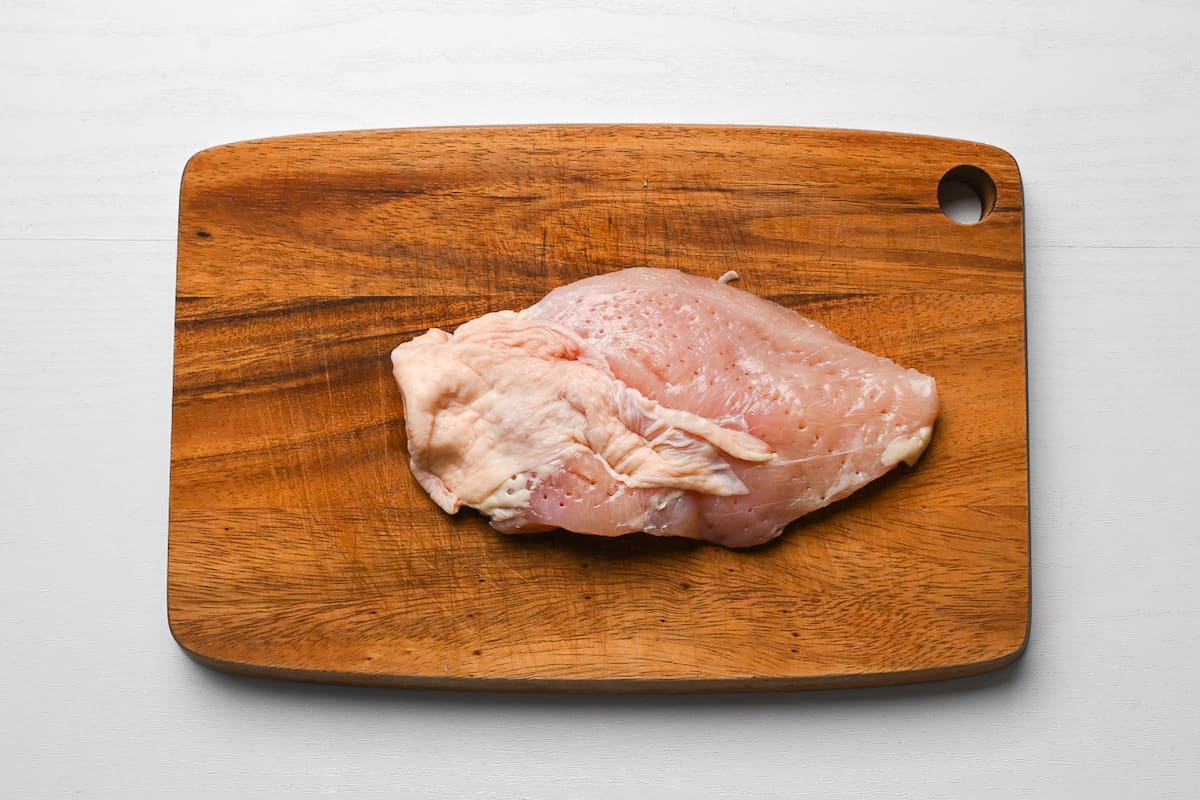
ii. Pierce both sides thoroughly with a fork. These punctures create channels that let seasoning penetrate deep into the meat and allow steam to distribute evenly during cooking, preventing the dry patches that microwave heating can cause.
iii. Sprinkle salt and cornstarch over both sides of the breast. The cornstarch forms a thin moisture-trapping layer on the surface that keeps the chicken juicy as it cooks.
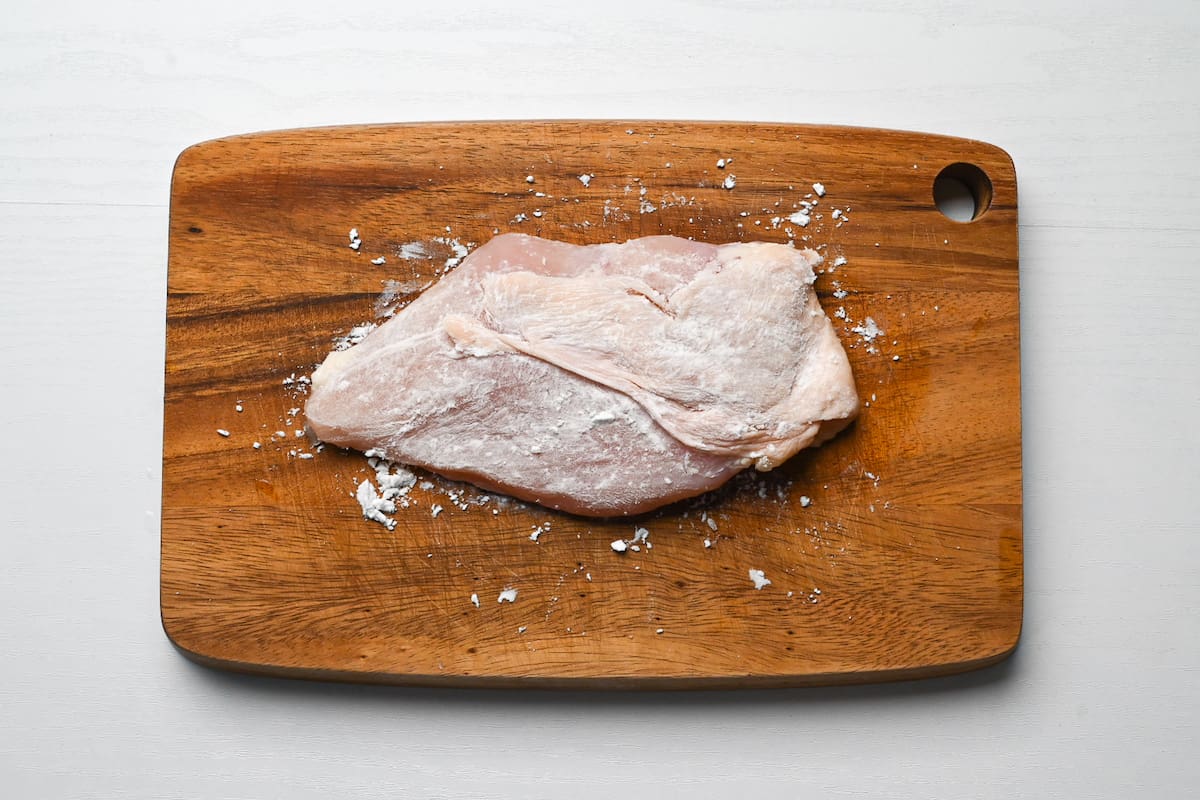
The starch coating gelatinizes during heating, creating a seal that slows moisture loss from the surface. I tested batches with and without cornstarch early on, and the difference was clear. The coated breasts came out noticeably more tender and stayed juicier even after refrigeration.
iv. Mix together the sake, chicken bouillon powder, sugar, mirin, and a pinch of salt to make the marinade.
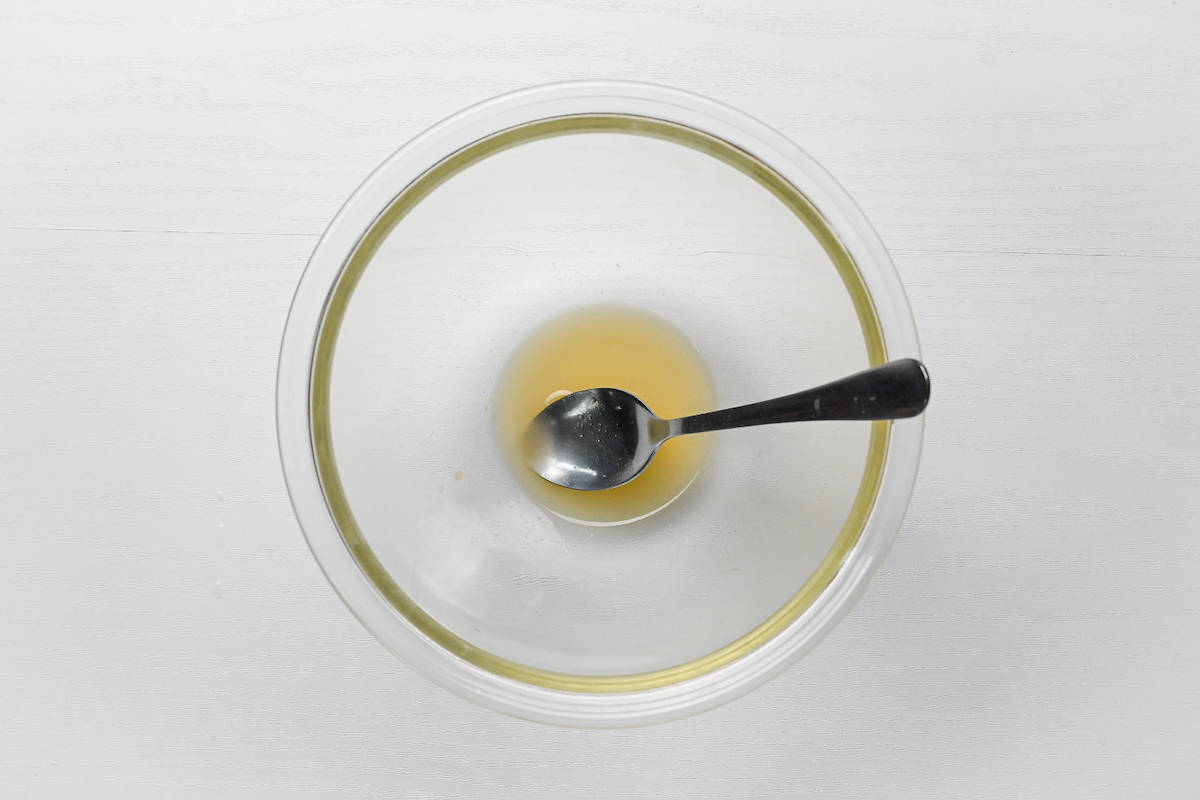
v. Place the chicken in a microwave-safe dish, pour the marinade over it, and cover with a microwave-safe lid or loosely draped plastic wrap. The sake works double duty here, carrying flavor into the meat while neutralizing any raw poultry odor.
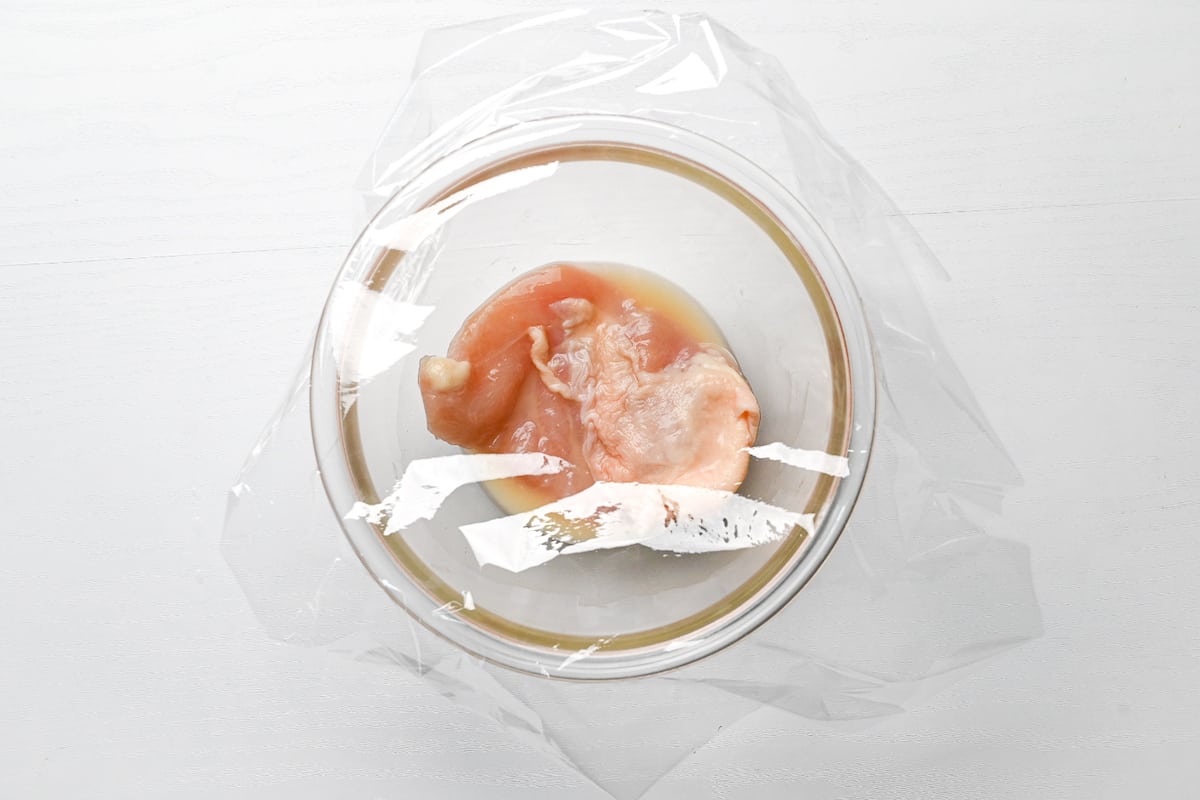
vi. Microwave at 600W for 2 minutes, then flip the breast and microwave for another 2 minutes.
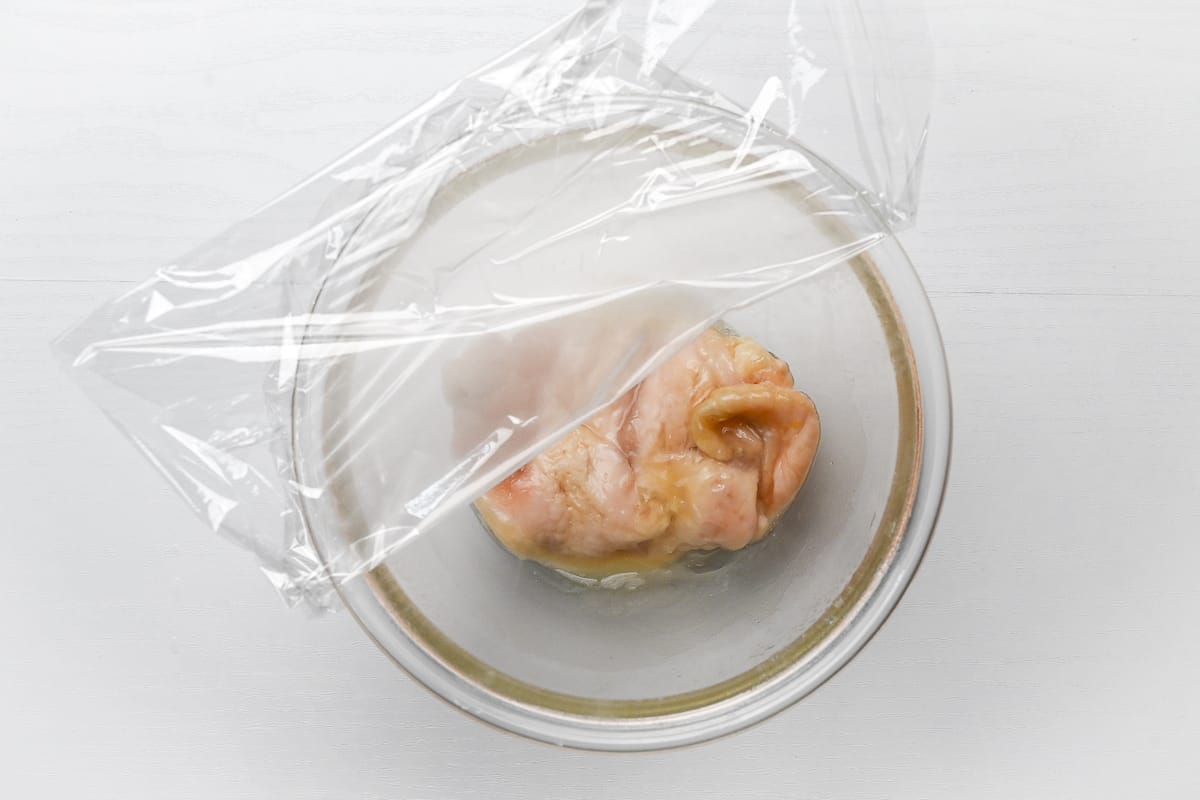
These times are calibrated for a 250g (about 9 oz) breast at 600W. For a larger breast around 300g, add 30 seconds to each microwave interval. For a smaller breast around 200g, reduce each interval by 20 to 30 seconds. If your microwave runs at 700W, reduce total active heating by about 30 seconds. At 500W, add roughly 1 minute total. The rest time stays at 10 minutes regardless of size or wattage.
vii. Now leave the chicken inside the microwave with the door closed for 10 minutes. Do not skip this step. This resting period is where residual heat and trapped steam gently bring the center of the chicken to a safe temperature without overcooking the exterior.
One of my readers kindly shared her alternative stove top method to the microwave approach:
- Poke the chicken and gently pound the thicker parts to even them out.
- Salt the chicken well in advance.
- Pat it dry and let it come to room temperature.
- Place it in a pot filled halfway with cold water.
- Add 1 tablespoon of Asian chicken bouillon powder and a few white peppercorns (optional).
- Slowly bring the water to a boil.
- Once it reaches a full boil, let it boil for about 3 minutes.
- Turn off the heat and let the chicken cool completely in the poaching liquid, keeping the lid closed the entire time.
Thank you, Peti!
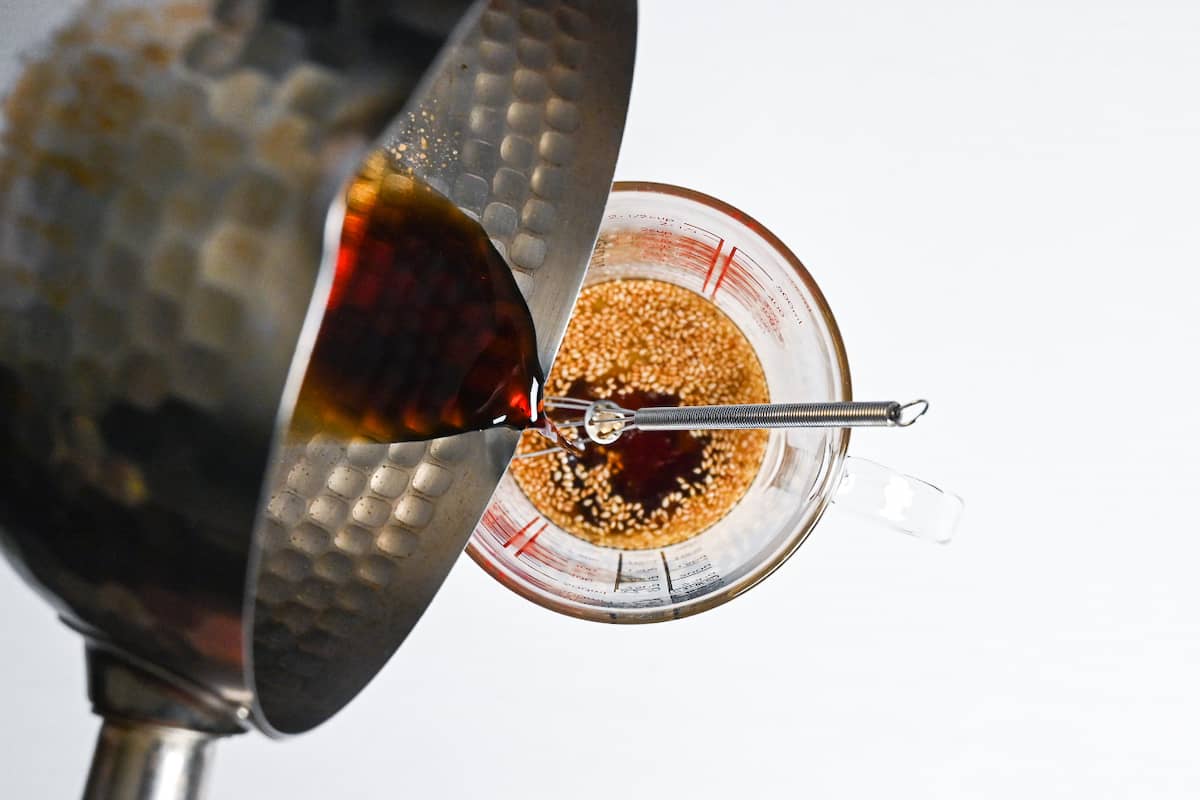
i. Combine the soy sauce, mirin, and sugar in a small saucepan and bring to a boil. Let it bubble for 30 to 40 seconds, just long enough for the alcohol in the mirin to cook off and the sugar to dissolve completely.
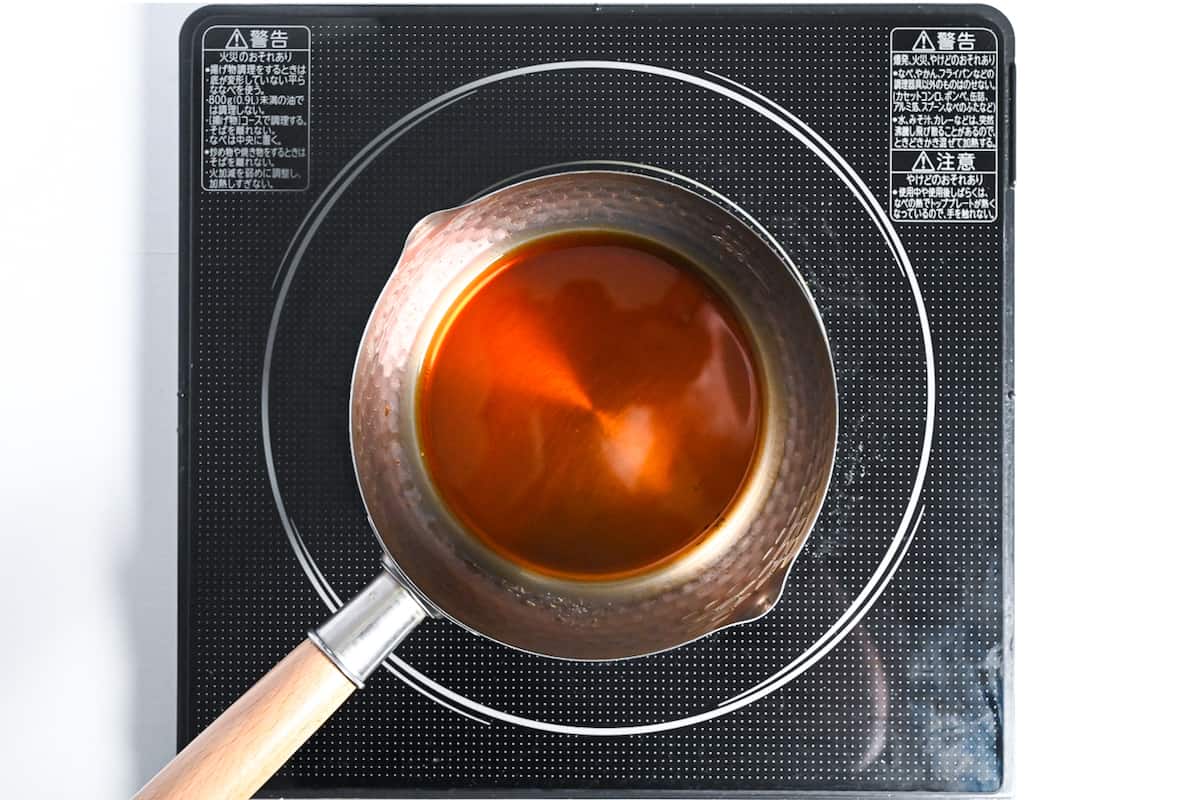
ii. Pour this mixture into a jug or mixing bowl and let it cool briefly.
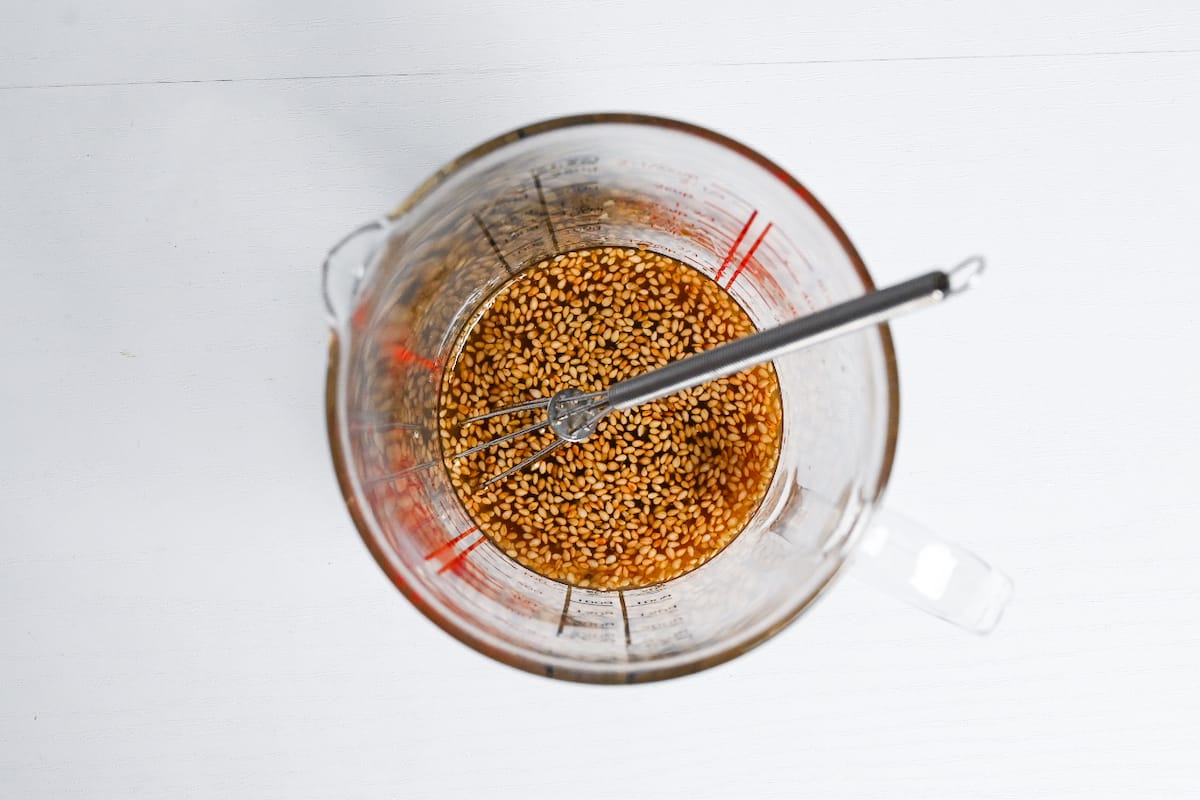
iii. Add the sesame seeds, toasted sesame oil, olive oil, garlic paste, lemon juice, and white pepper to the jug, then whisk everything together.
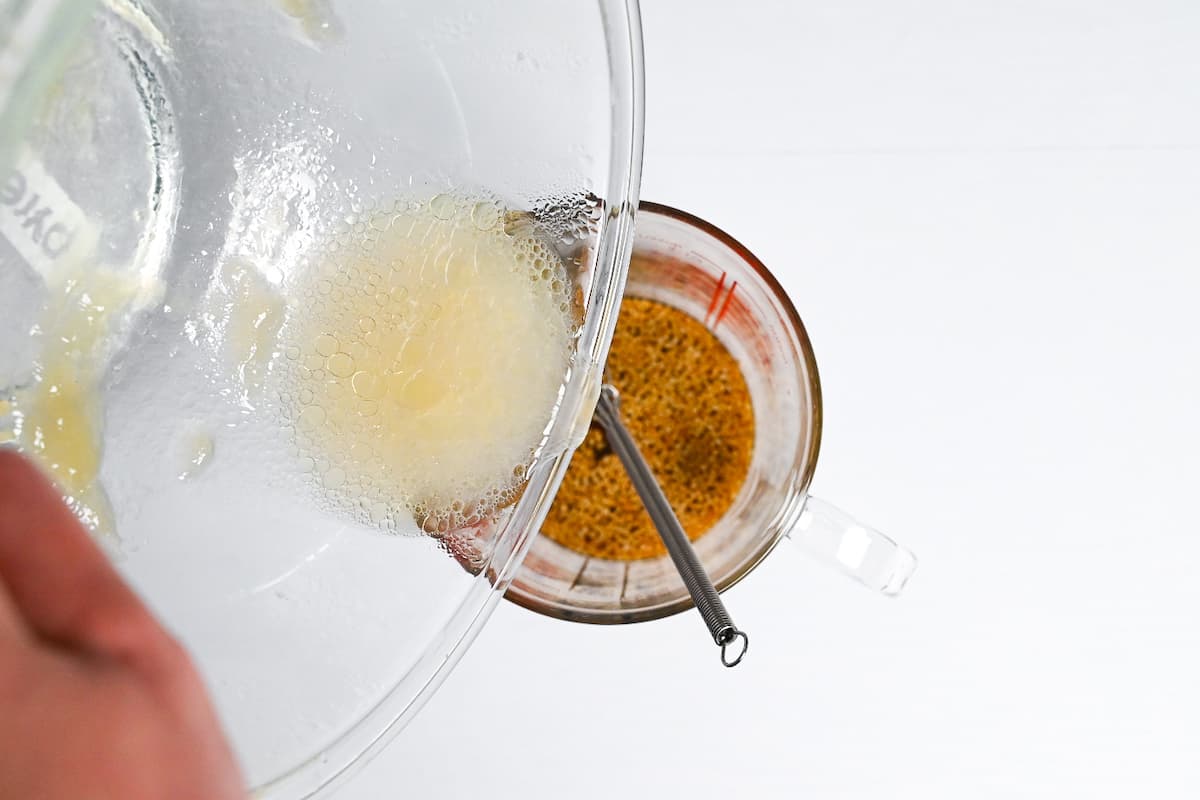
iv. Finally, pour in the chicken juices that collected in the dish during the steaming rest. These juices carry dissolved proteins and seasoning from the chicken itself, adding a savory depth to the dressing that you cannot replicate any other way.
v. Chill the dressing in the refrigerator until you are ready to serve. It will separate as it sits because wafu dressing is a temporary emulsion, not a stable one. This is completely normal. Give it a quick stir or shake before drizzling.
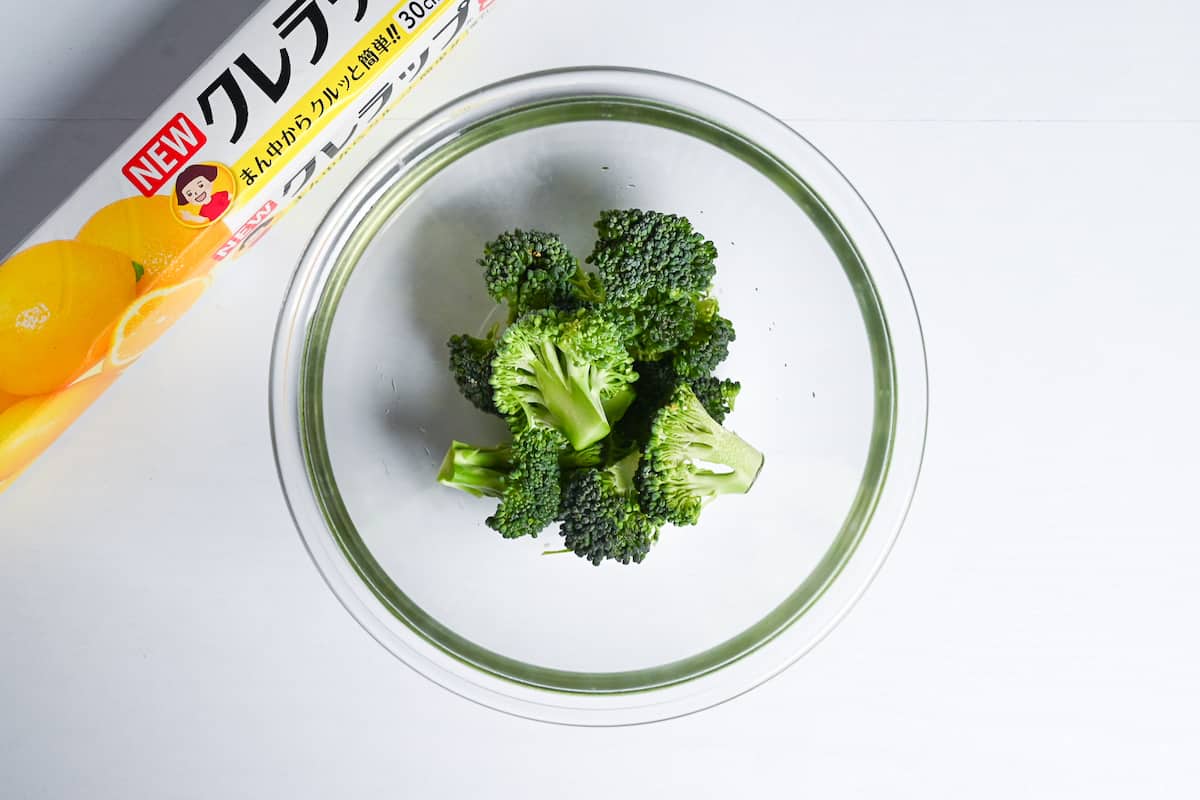
i. Place the broccoli florets in a microwave-safe bowl with 1 tablespoon of water, cover, and microwave for about 3 minutes or until just tender.
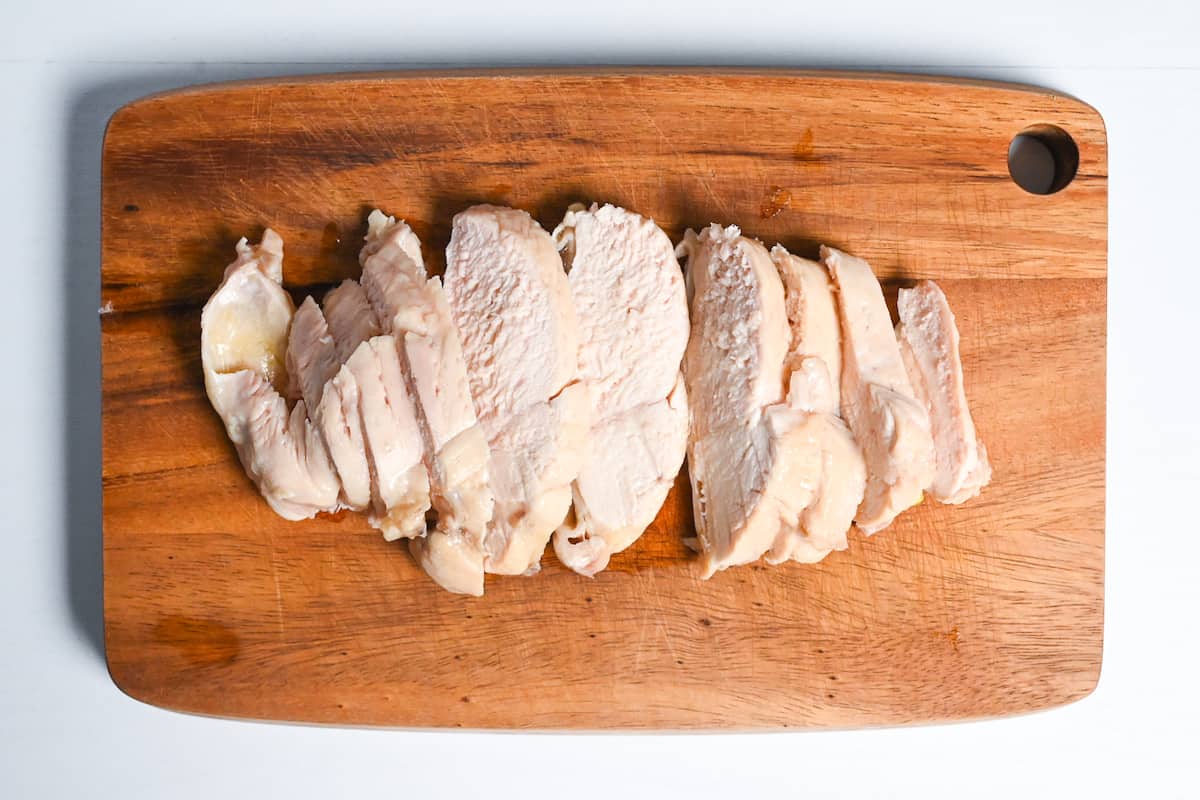
ii. Slice the rested chicken breast against the grain into pieces about 7 to 10mm thick. Cutting against the grain shortens the muscle fibers, making each slice feel tender on the palate rather than stringy. This is also your moment to check doneness. The interior should be white and opaque throughout with clear juices, not pink or translucent.
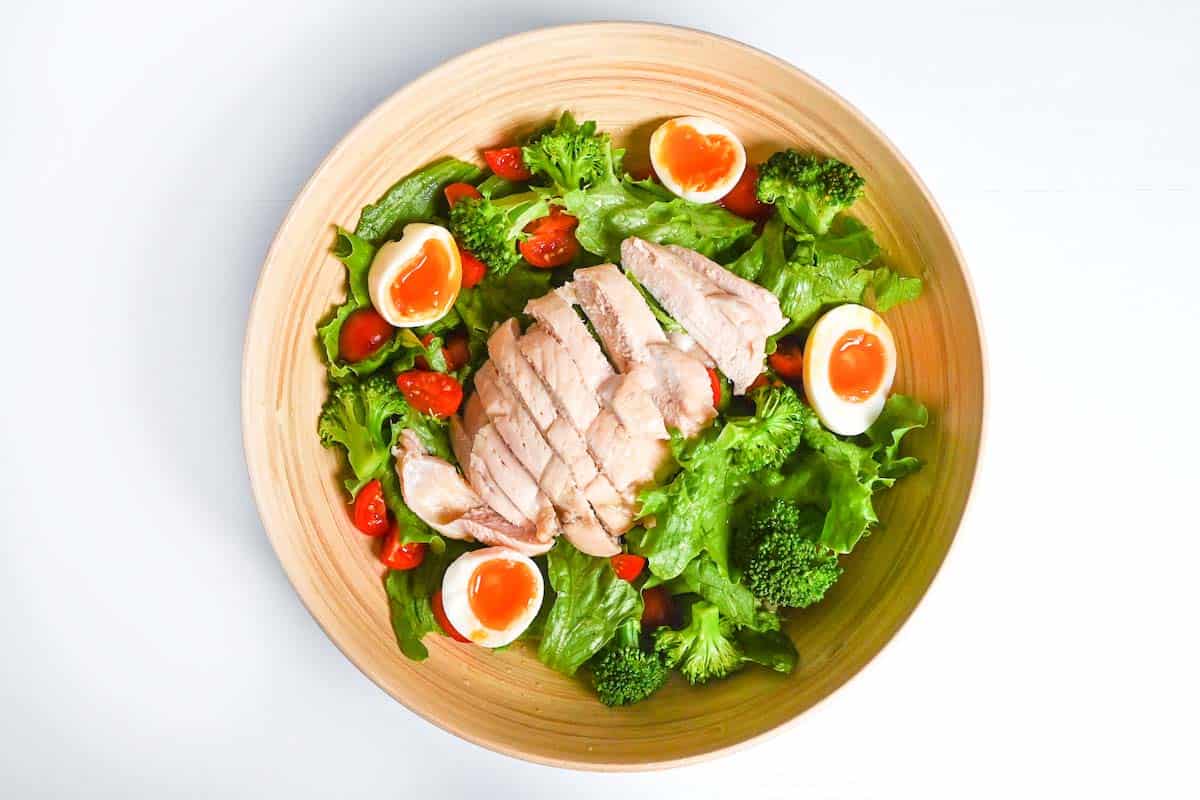
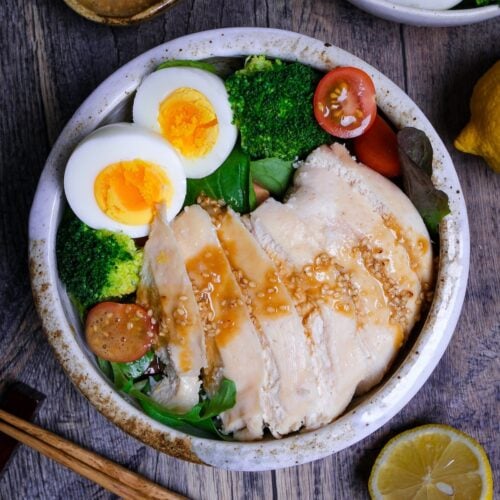
iii.Arrange your salad vegetables on a plate or in a bowl, layer the broccoli over them, then fan the sliced chicken on top.
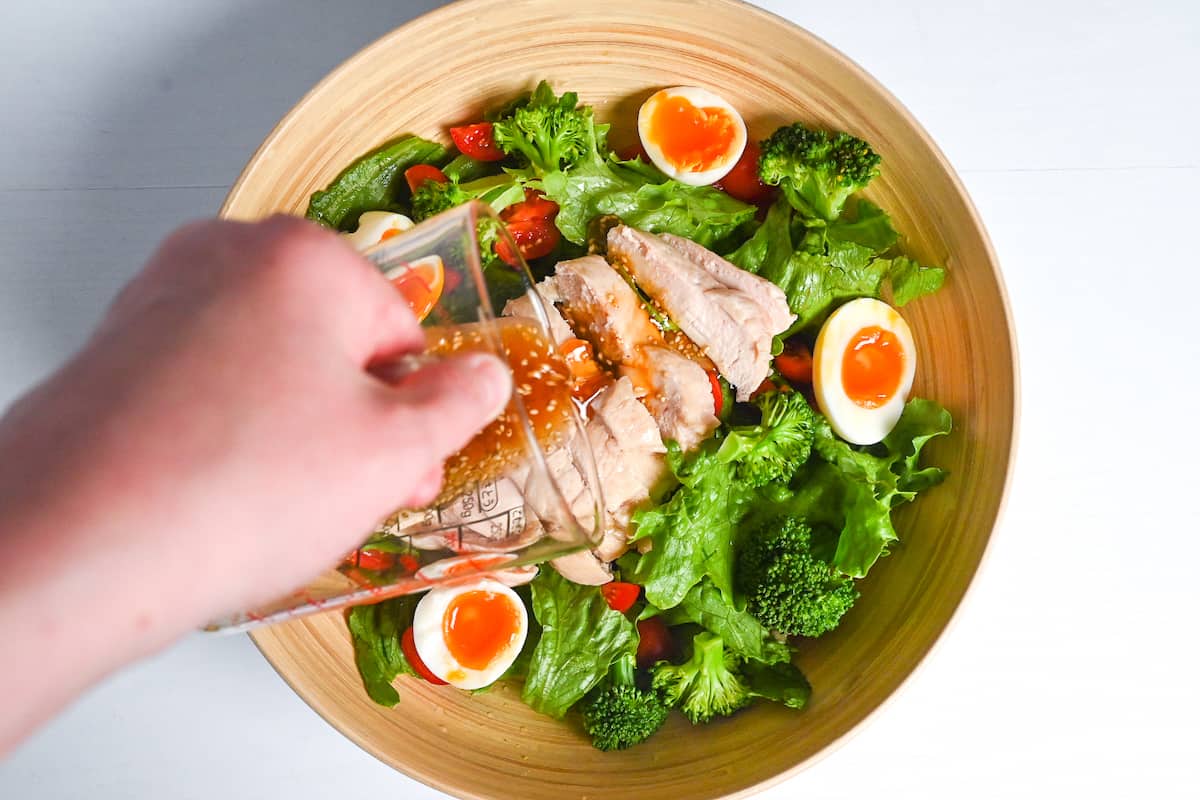
iv. Drizzle the chilled wafu dressing over everything just before serving. Applying the dressing at the last moment keeps the greens crisp.
If you follow the default recipe, it will yield 2-3 main lunch servings, or 4-5 side servings.
Storage & Meal Prep
Fridge: Store the salad chicken unsliced in an airtight container with its cooking liquid for up to 3 days.
Freezer: Cooked salad chicken freezes well for up to 1 month when wrapped tightly and sealed in a freezer bag with the air pressed out. Wipe any surface moisture before wrapping to limit freezer burn. Thaw overnight in the refrigerator, not at room temperature. Previously frozen chicken works best shredded rather than sliced, as ice crystal damage softens the texture.
Meal Prep: Make the salad chicken and wafu dressing up to 3-days ahead and store them separately in the fridge. The dressing actually improves over the first day as the garlic mellows and flavors integrate. Prep vegetables the morning you plan to eat, not days ahead, because cut lettuce and sliced tomatoes lose crispness quickly once refrigerated. Assemble and dress each portion right before eating.
What to Serve With This Recipe
Japanese Chicken Salad FAQ
No. Microwaving frozen chicken creates extreme temperature differentials where the outside cooks while the inside stays frozen. Ice crystals rupture cell membranes during uneven heating, causing significant moisture loss and dry, chalky patches. Always thaw completely before starting the recipe.
Add sugar first, half a teaspoon at a time, and stir until dissolved. Sugar softens perceived acidity without diluting the dressing. If it still tastes sharp, whisk in a small amount of additional oil to round out the mouthfeel, then adjust with a splash of soy sauce to rebalance the umami. Avoid adding more lemon juice thinking it will “balance out.” Sourness needs sweetness or fat as a counterweight, not more acid.
Yes, and it actually improves. The garlic mellows from sharp to rounded over 12 to 24 hours in the refrigerator, and the soy-mirin-lemon flavors integrate more fully. Store in a sealed jar for up to 5 days. The oil will separate as it sits because wafu dressing is a temporary emulsion, not a stable one. Give it a vigorous shake before using.
More Japanese Salad Recipes
Hungry for more? Explore my Japanese salad recipe collection to find your next favorite dishes!
Did You Try This Recipe?
I would love to hear your thoughts!
💬 Leave a review and ⭐️ rating in the comments below. 📷 I also love to see your photos – submit them here!
Japanese Chicken Salad (with Homemade Dressing)

Ingredients
Salad Chicken
- 250 g chicken breast skinless preferred, boneless
- 2 pinches salt
- 1 tsp cornstarch or potato starch
- ½ tbsp sake or dry white wine/sherry
- 1 tsp Chinese-style chicken bouillon powder
- ½ tsp salt
- ¼ tsp sugar
- 1 tsp mirin
Homemade Wafu Dressing
- 1 tbsp Japanese soy sauce (koikuchi shoyu)
- 1 tbsp mirin
- 1 tsp sugar
- ½ tbsp toasted white sesame seeds
- ½ tbsp toasted sesame oil
- ½ tbsp olive oil
- ½ tsp garlic paste or half the amount of grated fresh garlic
- ½ tsp lemon juice
- 1 pinch ground white pepper
- juice from the chicken reserved from steaming
Suggested Salad Ingredients
- 2 boiled egg soft or medium-boiled, halved
- 200 g broccoli cut into bite-size florets
- 150 g mixed leaf lettuce
- 100 g mini tomatoes halved
The ingredient brands and tools I trust are in my Japanese pantry guide and my cooking tools guide.
Can’t find certain Japanese ingredients? See my substitution guide here.
Instructions
- Dry the surface of 250 g chicken breast with a paper towel.

- Stab with a fork all over.
- Sprinkle both sides with 2 pinches salt and 1 tsp cornstarch.
- Take a microwave safe bowl and add ½ tbsp sake, 1 tsp Chinese-style chicken bouillon powder, ¼ tsp sugar, 1 tsp mirin and ½ tsp salt. Mix well.
- Place the chicken breast in the bowl, cover loosely with plastic wrap and microwave for 2 minutes at 600W.
- Flip the chicken over (be careful of the steam), wrap the bowl tightly with the plastic wrap and microwave again for 2 minutes 600W. Without opening the door, rest the bowl in the microwave for 10 minutes. The chicken will continue to steam cook with the residual heat.
- White you wait, make the dressing by pouring 1 tbsp Japanese soy sauce (koikuchi shoyu), 1 tbsp mirin and 1 tsp sugar in a small saucepan. Bring to boil and let it bubble for 30 seconds, then remove from the heat.
- Place ½ tbsp toasted white sesame seeds, ½ tbsp toasted sesame oil, ½ tbsp olive oil, ½ tsp garlic paste, ½ tsp lemon juice and 1 pinch ground white pepper in a pourable container. Pour the contents of the sauce pan into the jug and mix vigorously. Store in the fridge until serving time.
- Remove the chicken from the microwave, transfer it to a cutting board and leave to cool for a few minutes. Pour the chicken juices from the bowl into the dressing and mix.
- Once the chicken is cool enough to touch, cut it into slices.
- Arrange your salad vegetables in a large bowl and place the chicken on top.
- Drizzle with sauce just before serving and enjoy!

Perfect, fast & fail proof. Amazing turnout. Juicy, tender, delicious. 5-star.
Hi Isa,
Thank you for leaving a comment on this post too! I really appreciate it! 🙂
Yuto
I did some batch production on the salad chicken, and it’s perfect every single time. Very forgiving recipe if you don’t follow 1:1 in quantities etc. Picture shows chicken w dashi chazuke
Hi Isa,
Thank you for making the salad chicken again! I’m happy to see you’ve been experimenting with different sides – the pairing sounds wonderful!
Yuto
This was today’s perfect light Sunday lunch at 34 degrees C There is no more microwave in the household but here’s my method for best poaching results: poke the chicken, even out thicker parts by pounding it, salt it way beforehand, pat it dry and bring it to room temperature and into an only half-full pot of cold water (with a tbs Youki, I also add some white peppercorns) Slowly bring it to a boil and let it fully boil for about 3 min. Take off the stove and let it cool completely in the poaching liquid, lid closed at any time. It takes a while but works very well and can be done the day before enjoying this beautiful salad.
Hi Peti,
Thank you so much for trying this recipe and I’m happy that you enjoyed it! 🙂 I also really appreciate you posting this alternative method! Love how precise your steps are, definitely a golden tip for anyone who wants to cook chicken without microwave in the future!
Yuto
Hello Yuto, is it possible to scale this recipe up for 2 or even 3 breasts?
Hi Tom,
Thank you for your question! It’s possible to scale up, but I wouldn’t recommend cooking 2 or 3 breasts in the microwave at once. You’ll likely end up with uneven cooking and some raw spots. So for the sarada chicken, I recommend cooking each breast individually! 🙂
Yuto