

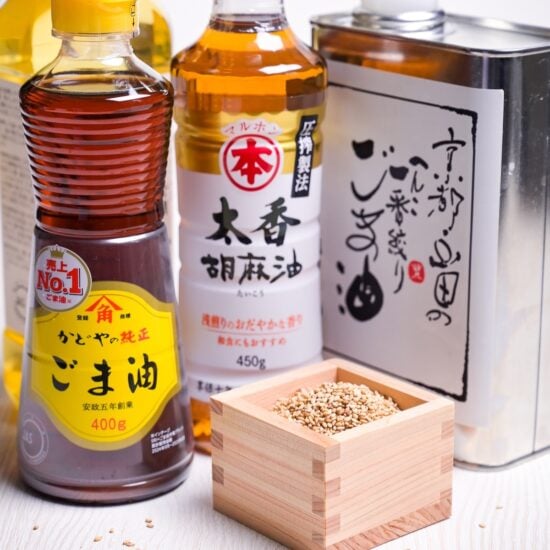

Disclaimer: This post may contain Amazon affiliate links. Sudachi earns a small percentage from qualifying purchases at no extra cost to you. See disclaimer for more info.
There are ingredients you cook with, and then there are ingredients that stop you in your tracks. Toasted sesame oil is the second kind.
Open a fresh bottle and the aroma hits you before you even reach for a spoon. It is warm, deeply nutty, and so unmistakably appetizing that your brain registers “food” before you have consciously processed the smell. I have cooked with hundreds of oils and seasonings over the years, and nothing, not a single ingredient in my kitchen, triggers that instant “I need to eat” response the way toasted sesame oil does.
This is not just another cooking oil. It is a finishing tool, a flavor unifier, and in many Asian/Japanese dishes, the final touch that pulls everything together. In this guide, I want to share why this oil behaves the way it does, how to choose the right one, and most importantly, how to use it so that every drop counts.
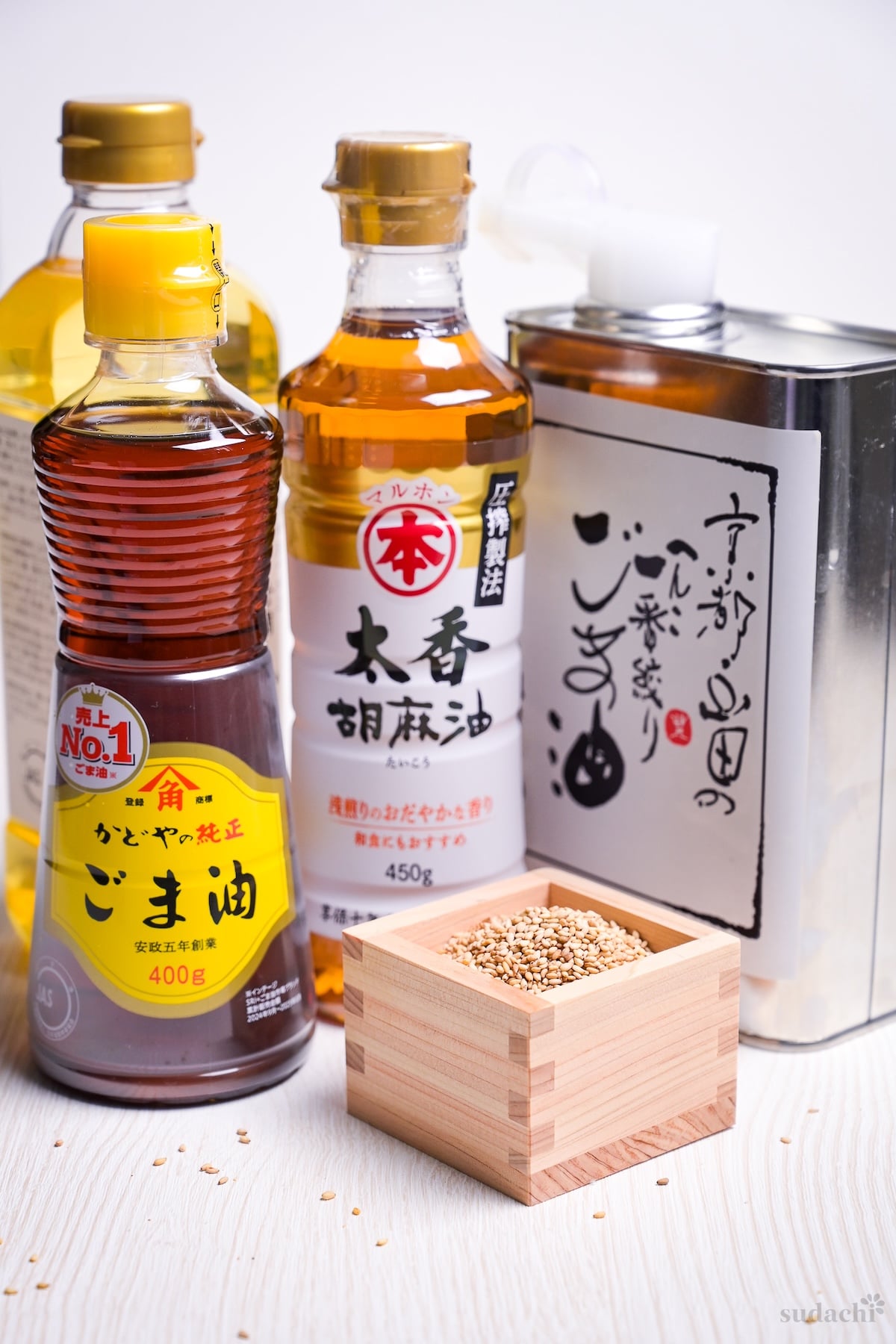
What Is Toasted Sesame Oil?
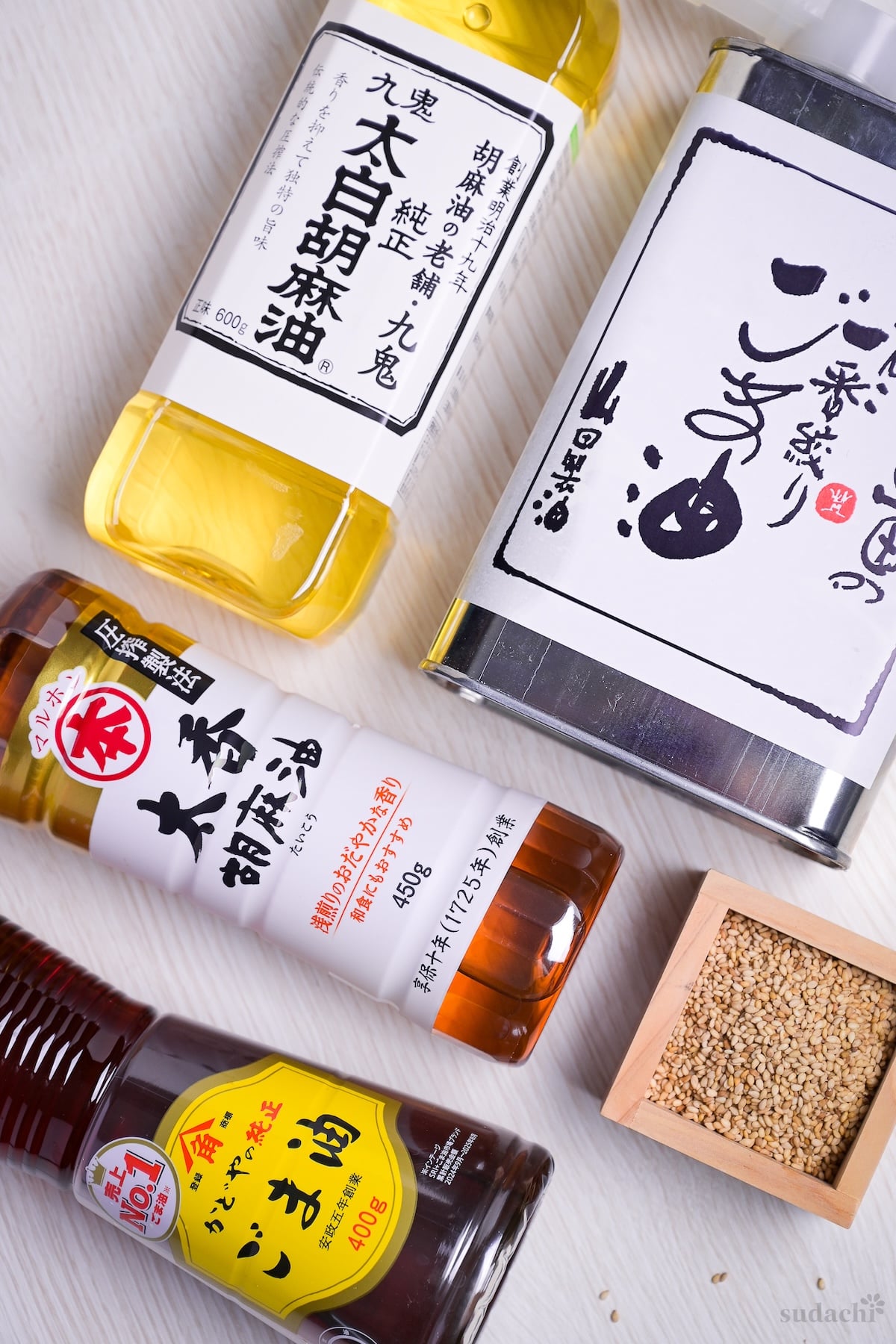
Toasted sesame oil (焙煎ごま油) is made by roasting white sesame seeds at high temperatures (typically 200-230°C / 390-450°F) and then pressing the roasted seeds to extract the oil. The roasting is what gives it that dark amber color and powerful aroma. Without roasting, you get a completely different product: a pale, nearly odorless oil called taihaku (more on that later).
If you have ever been confused by labels, you are not alone. In the US market, many brands simply label their product “Pure Sesame Oil” or “Sesame Oil” without specifying whether it is toasted or not. The easiest way to tell is by looking at the color and smelling it. If it is dark amber to brown with a strong, nutty roasted aroma, it is toasted. If it is pale golden with a mild, almost neutral scent, it is untoasted.
Sesame oil has a remarkably long history in Japan, stretching back over 1,300 years. It was originally so precious that it cost 45 times more than rice and was used primarily as lamp oil for Buddhist temples. It was not until the Edo period (1603-1868), when cheaper rapeseed oil took over the lamp market, that sesame oil found its true calling in the kitchen, as the frying oil that made Edo-style tempura famous.
Why Toasted Sesame Oil Smells So Good
Every article about sesame oil will tell you it tastes “nutty, rich, and aromatic.” But have you ever wondered why?
The answer lies in a chemical process you already know from everyday life. When you roast coffee beans, bake bread, or grill meat, you are triggering what is called the Maillard reaction, a series of reactions between amino acids and sugars that creates hundreds of new flavor and aroma compounds. The exact same thing happens inside a sesame seed during roasting.
Sesame seeds are uniquely loaded with the raw materials for this reaction: 20-25% protein and plenty of free amino acids and sugars. When they hit the roaster at 200°C and above, those amino acids and sugars start combining and breaking apart, producing an extraordinary range of volatile compounds. Researchers have identified 221 distinct aroma molecules in roasted sesame oil.
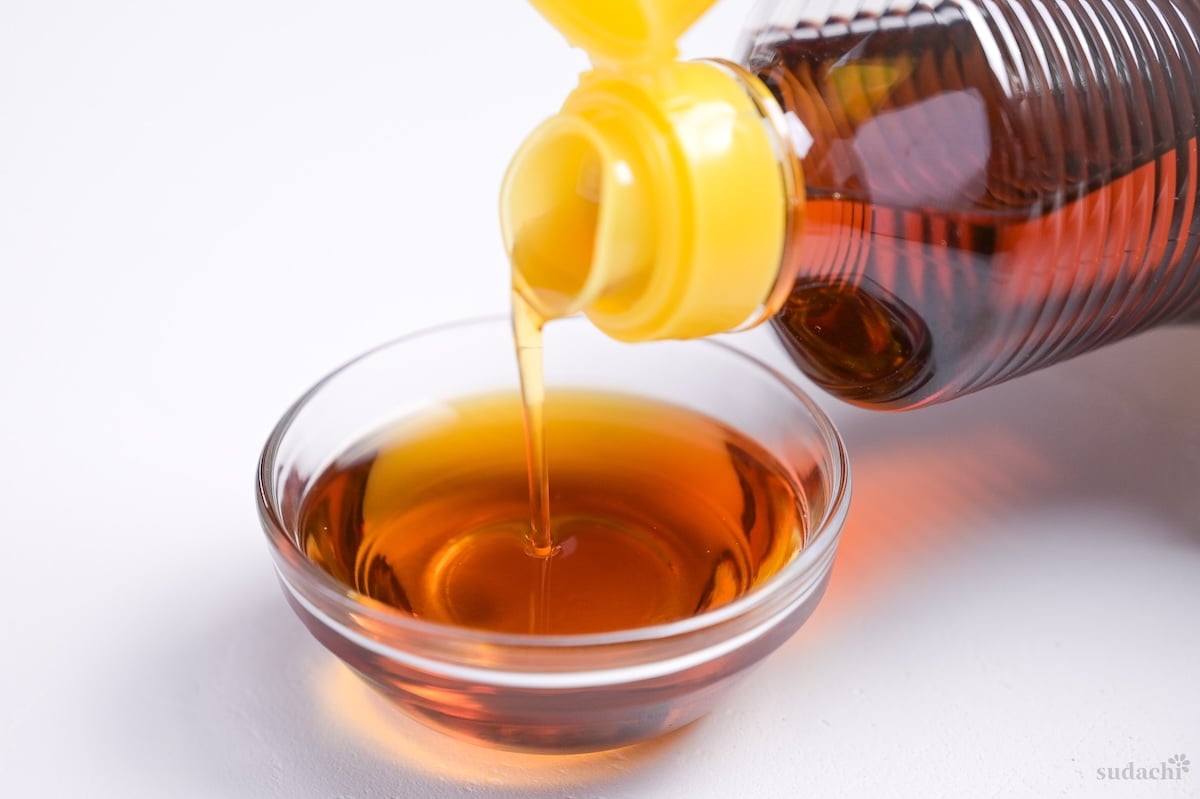
These compounds fall into a few key families, each contributing something different:
- Pyrazines are the most abundant group among the volatile compounds in roasted sesame oil and are responsible for the core roasted, nutty character.
- Sulfur compounds have extremely low detection thresholds, meaning you can smell them at parts-per-trillion concentrations. They add depth and a subtle savory quality.
- Furans contribute sweet, caramel-like, bread-like notes.
- Phenolic compounds bring the smoky dimension.
The roasting temperature matters enormously. Kadoya, Japan’s largest sesame oil producer, states that sesame “doesn’t develop its characteristic aroma below approximately 200°C” and that a 1°C change in roasting temperature significantly affects the finished product.
The Roasting Spectrum
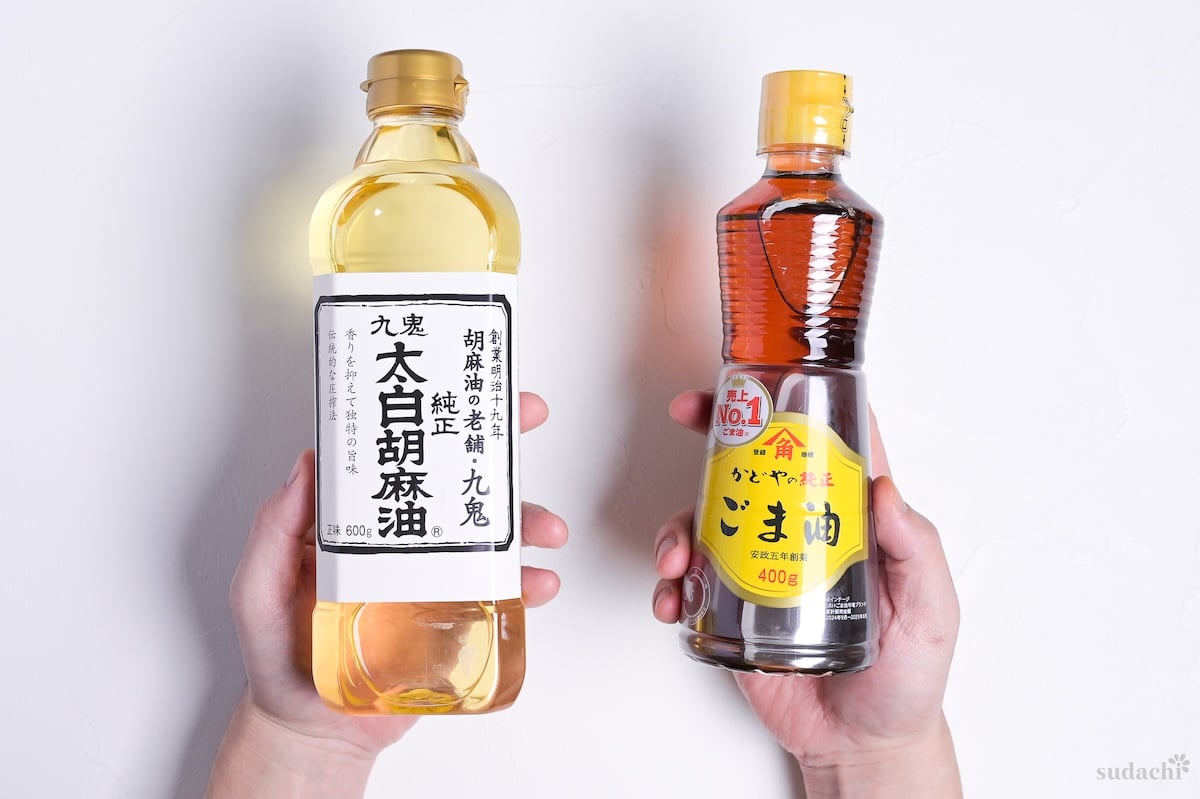
Japanese manufacturers produce a continuous spectrum of roast levels, and understanding this spectrum changes how you shop and cook:
- Taihaku (太白) is completely unroasted. The oil is colorless and essentially odorless. It is the professional standard for tempura frying and is increasingly popular in baking as a butter substitute.
- Low-temperature roast (低温焙煎, 150-160°C) produces a transparent amber oil with soft, sweet, nutty notes. It works beautifully in delicate Japanese dishes, tempura dipping sauce, and light dressings where you want a hint of sesame without it taking over.
- Medium roast (中温焙煎, 170-180°C) gives you a mellow, balanced oil with moderate sesame character. This is versatile enough for simmered dishes, stir-fry finishing, and general cooking.
- Deep roast (高温焙煎, 200-230°C) is the bold, dark, intensely aromatic oil that most people picture when they think of toasted sesame oil. This is the one for Chinese-style dishes, ramen aromatic oil, bold dressings, and finishing.
The practical takeaway? You do not need to limit yourself to one bottle. Matching the roast level to your dish is how professionals in Japan approach sesame oil.
Why a Drizzle at the End Changes Everything
This is the part that I find most exciting: why adding sesame oil at the very end of cooking makes such an outsized difference.
What Heat Destroys
The key aroma compounds in toasted sesame oil, those pyrazines we talked about, have boiling points in the 135-180°C range. At standard wok or pan temperatures (190-230°C), they evaporate almost instantly. In other words, if you cook with toasted sesame oil over high heat, you are literally burning off the very thing you are paying for.
The rule is simple: in many cases, cook with a neutral oil, then drizzle toasted sesame oil after you turn off the heat.
How Fat Unifies Flavor
Here is where things get really interesting. Have you ever noticed how a bland dish suddenly “comes together” when you add a drizzle of sesame oil at the end? That is not just perception. There is a mechanism behind it.
Research in food science has demonstrated that among non-volatile food components, fat is highly efficient at binding volatile aroma molecules. This retention is directly correlated with the hydrophobicity of the aroma compounds.
- The oil dissolves and binds hydrophobic (fat-loving) aroma compounds that are already present in your other ingredients.
- It reduces their vapor pressure, slowing down the rate at which they escape into the air.
- This creates a sustained, gradual release of flavors instead of an immediate burst followed by nothing.
The result is what we experience as “flavor unification.” Tastes that were arriving separately now arrive together, mediated by the oil.
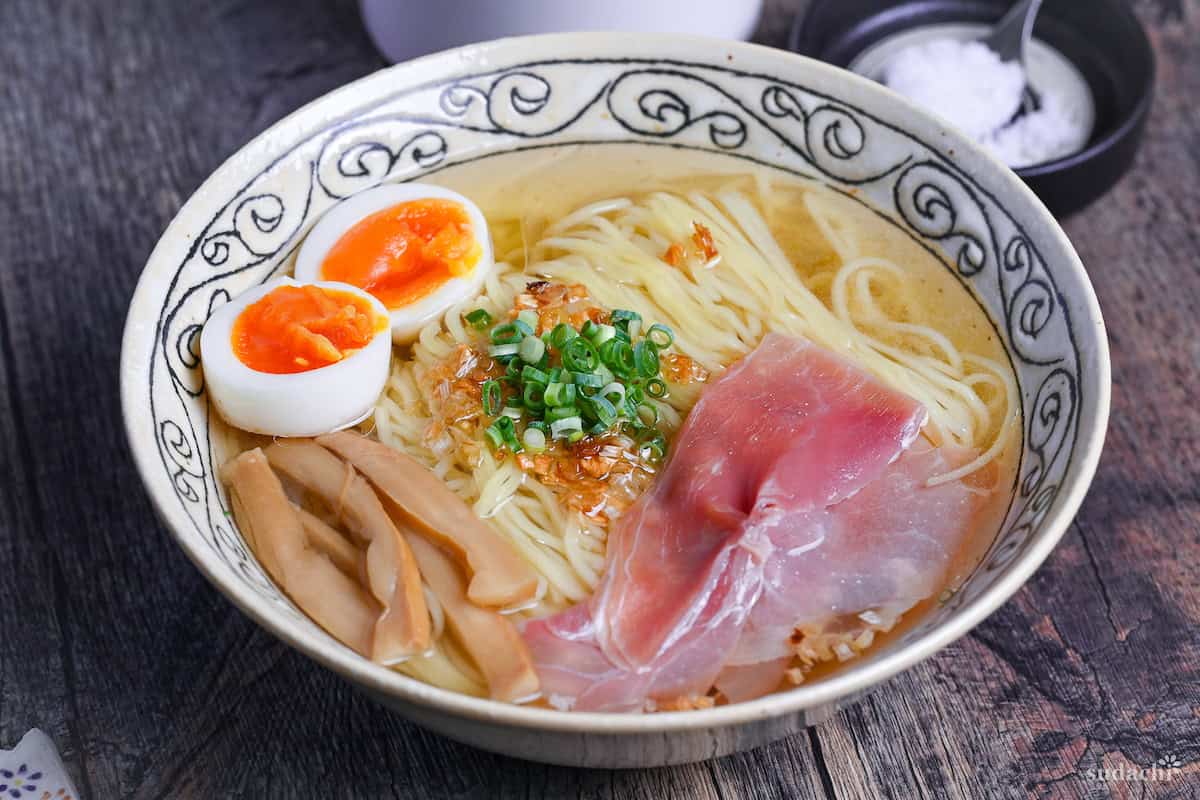
Ramen provides the most vivid example. The aromatic oil floating on the soup surface does double duty: when you lift noodles through the oil layer, they get coated and deliver the aromatic oil’s flavor first. The oil layer also reduces evaporation from the soup, keeping the broth hotter longer. There is a saying in ramen culture: “Those who master oil master ramen“.
The Aroma That Triggers Appetite
There is one more piece to this puzzle, and it is genuinely remarkable.
In 2023, Takemoto Oil & Fat (Maruhon) and NTT Data Institute of Management Consulting conducted what they described as Japan’s first experiment examining the effects of sesame oil aroma on appetite and memory using a neuroscience-informed approach. In their study of 45 participants aged 20-59, those exposed to sesame oil aroma during meals reported the greatest increase in hunger compared to those exposed to olive oil aroma or no cooking aroma.
Why is sesame oil’s effect so much stronger than other oils? They point to the sheer complexity of its aroma profile: over 200 compounds with 30+ contributing to the roasted perception. Your brain interprets pyrazine-rich aromas, the same family shared by coffee, fresh bread, and grilled meat, as signals of cooked, energy-dense food. These are deeply embedded neural responses that evolved long before anyone had a name for the Maillard reaction.

This is what I mean when I say sesame oil is not just another oil. When that aroma hits, something primal responds. Your brain does not analyze it. It just says: eat.
And here is the thing that most might miss entirely. We tend to think of flavor as something that happens on the tongue, but roughly 80% of what we perceive as “flavor” actually comes from our sense of smell, specifically retronasal olfaction, the aromas that travel from the back of our mouth to the nose while we eat. Oil creates a coating on food that acts as a slow-release reservoir for these aroma molecules. Instead of volatiles escaping all at once in a watery medium, the lipid phase gradually releases them during chewing.
That drizzle of sesame oil at the end? It is not just adding flavor. It is extending and deepening your entire experience of the dish.
A Warning About Overuse
More is not better. Toasted sesame oil’s assertiveness cuts both ways. Overuse makes a dish taste only of sesame oil, a one-note experience that drowns out everything else. Phenolic compounds and oxidized lipids can produce bitterness when the oil is overheated or used in excessive quantities. Excess oil also makes dishes heavy and greasy, which is especially problematic in light vegetable preparations.
The Japanese principle is: “even a small amount has powerful presence.” Start with less and adjust.
Best Brands of Toasted Sesame Oil
For daily home cooking, Kadoya delivers reliable, balanced toasted flavor at an accessible price point. It is the safe, solid choice.
Substitutes for Toasted Sesame Oil
I want to be upfront about this: there is no perfect substitute for toasted sesame oil. Its aroma results from the simultaneous interaction of Maillard pyrazines, sesame-specific lignans, and a particular fatty acid ratio. That chemistry is unique to sesame seeds processed at specific temperatures.
That said, here are the closest options, ranked:
- Roasted perilla oil (えごま油) is widely cited as the closest match, sharing nutty, earthy characteristics. However, only the roasted type provides sesame-like aroma. Cold-pressed perilla oil is essentially odorless. Use at the same volume.
- Roasted walnut oil offers nutty depth but trends more “green” and buttery, lacking the smoky complexity. Use at about 3/4 the volume.
- Roasted peanut oil is another reasonable option for stir-fry sauces and noodle dishes, though it lacks the full aromatic range.
Sesame Oil FAQ
In most cases, yes. Many Asian brands (including Kadoya) label their toasted product simply as “Pure Sesame Oil” without using the word “toasted.” Dark amber-to-brown color plus a strong nutty aroma are definitive identifiers regardless of what the label says. Just check the ingredients to make sure it is 100% sesame oil and not a blend.
Japanese cuisine is unique in using both toasted and untoasted sesame oil strategically. Chinese cooking uses sesame oil (香油) primarily as a finishing oil for aroma. Korean sesame oil (참기름) is typically roasted at higher temperatures than Japanese, producing a bolder, smokier flavor. Korean cooking also traditionally blends sesame oil with perilla oil.
Yes. After opening, use within 1-3 months ideally. Signs of rancidity include a paint-thinner-like smell, increased viscosity, or bitter taste. Its natural lignans give it better stability than most unsaturated oils, but it is not immune to oxidation.

Leave a rating and a comment