

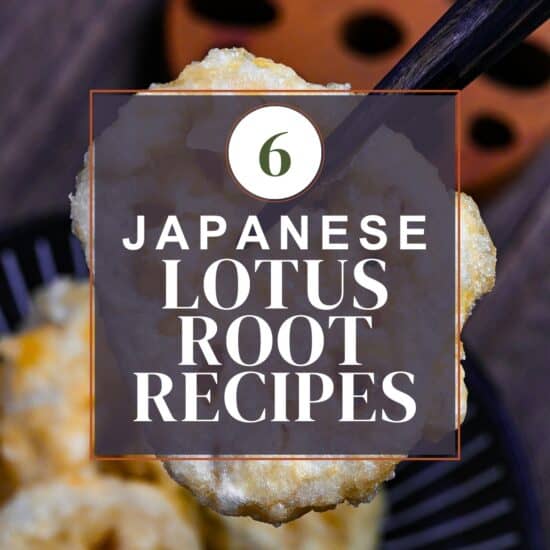

Lotus root doesn’t get the attention it deserves. This root vegetable hides a satisfying crunch and subtle sweetness that works across an incredible range of cooking methods, from deep-frying to simmering to pickling. Here are some of my favorite recipes to cook with it.
1. Lotus Root Tempura

This tempura features thick slices of lotus root coated in a light, crispy batter and fried until golden. The crunch of the root meets the shatter of the batter for a texture combination you won’t find in any other tempura.
Of all the tempura varieties I make, lotus root consistently ranks among my favorites. One bite and you will understand why so many Japanese people name it as their top pick.

2. Japanese Deep-Fried Skewers
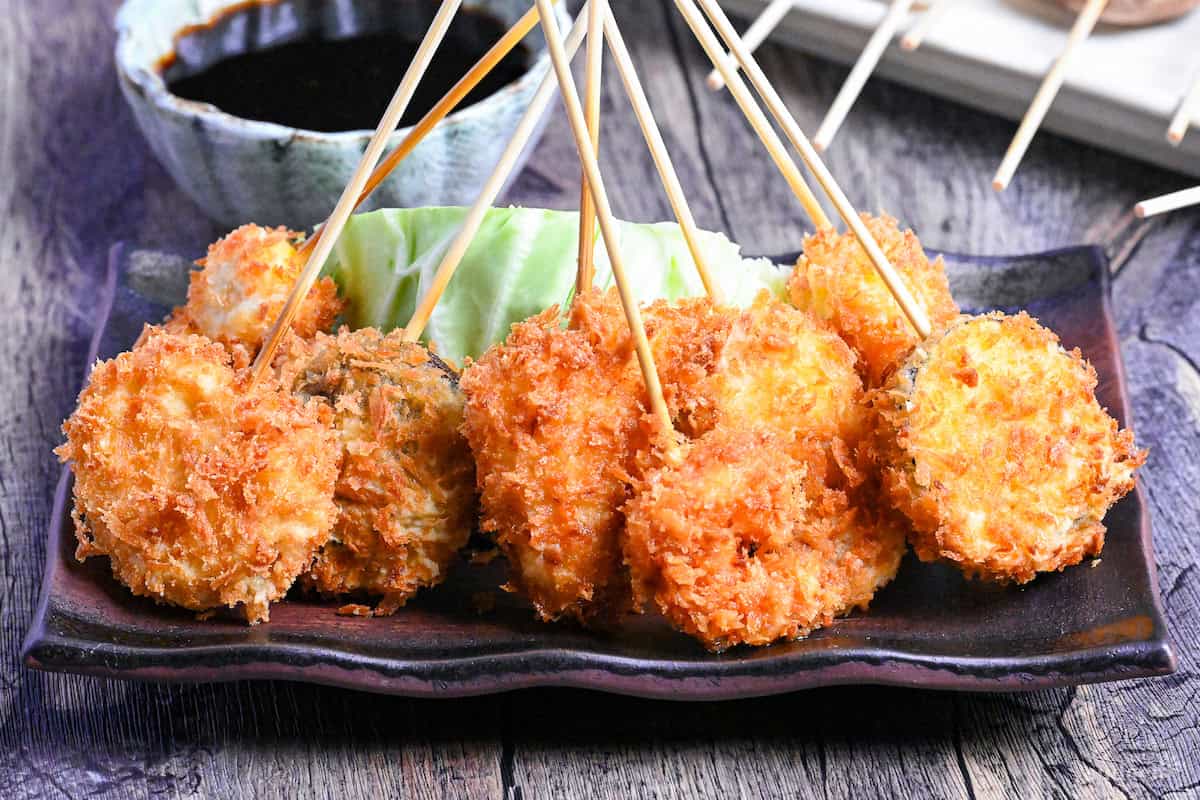
Kushiage takes bite-sized ingredients, skewers them, coats them in batter and panko, and deep-fries them to golden perfection. Lotus root is one of the best candidates for this treatment, with its firm texture holding up beautifully under the crispy shell.
Out of every ingredient I have tried on a kushiage skewer, including meat and seafood, lotus root is my number one. Pair it with the Osaka-style dipping sauce and it becomes something truly special.

3. Black Vinegar Chicken (Ootoya-style)
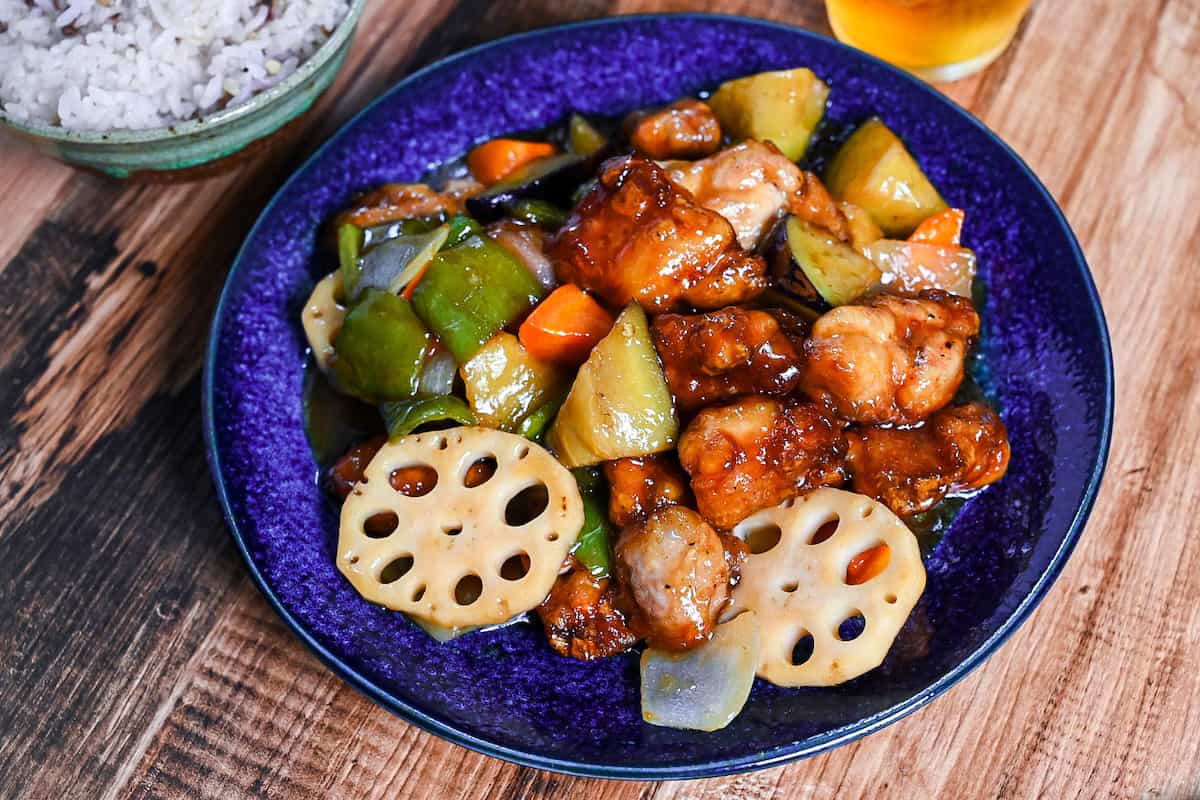
This stir-fry coats fried chicken and vegetables in a glossy black vinegar sauce that balances sweet, sour, and savory in every bite. Lotus root slices add a welcome crunch among the softer vegetables.
If you want lotus root in a stir-fry, this is the recipe. It is inspired by a signature dish from Ootoya, one of Japan’s most popular restaurant chains, where lotus root plays a key supporting role.
4. Chikuzenni
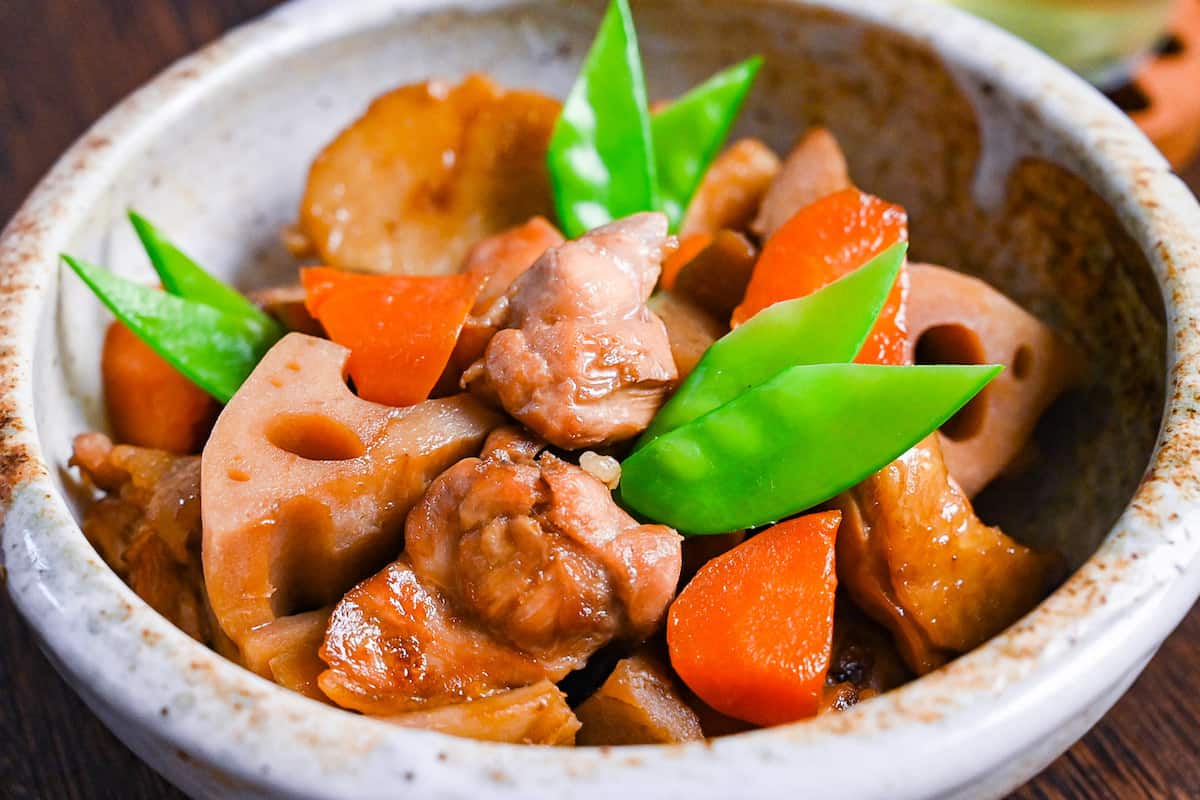
Chikuzenni is a traditional simmered dish from Northern Kyushu that brings together chicken, root vegetables, and konnyaku in a sweet and savory dashi broth.
Lotus root earns its place here by keeping its crunch even after simmering.
5. Chirashizushi (Scattered Sushi Bowl)

Chirashizushi tops seasoned sushi rice with a colorful array of seafood, vegetables, and egg. It is one of the most visually striking dishes in Japanese cuisine, often served during celebrations like Hinamatsuri (Girl’s Festival).
Adding lotus root slices to chirashizushi instantly improves the presentation. In Japanese culture, the holes in lotus root symbolize the ability to see the future clearly, making it a lucky ingredient for festive occasions.
6. Fukujinzuke
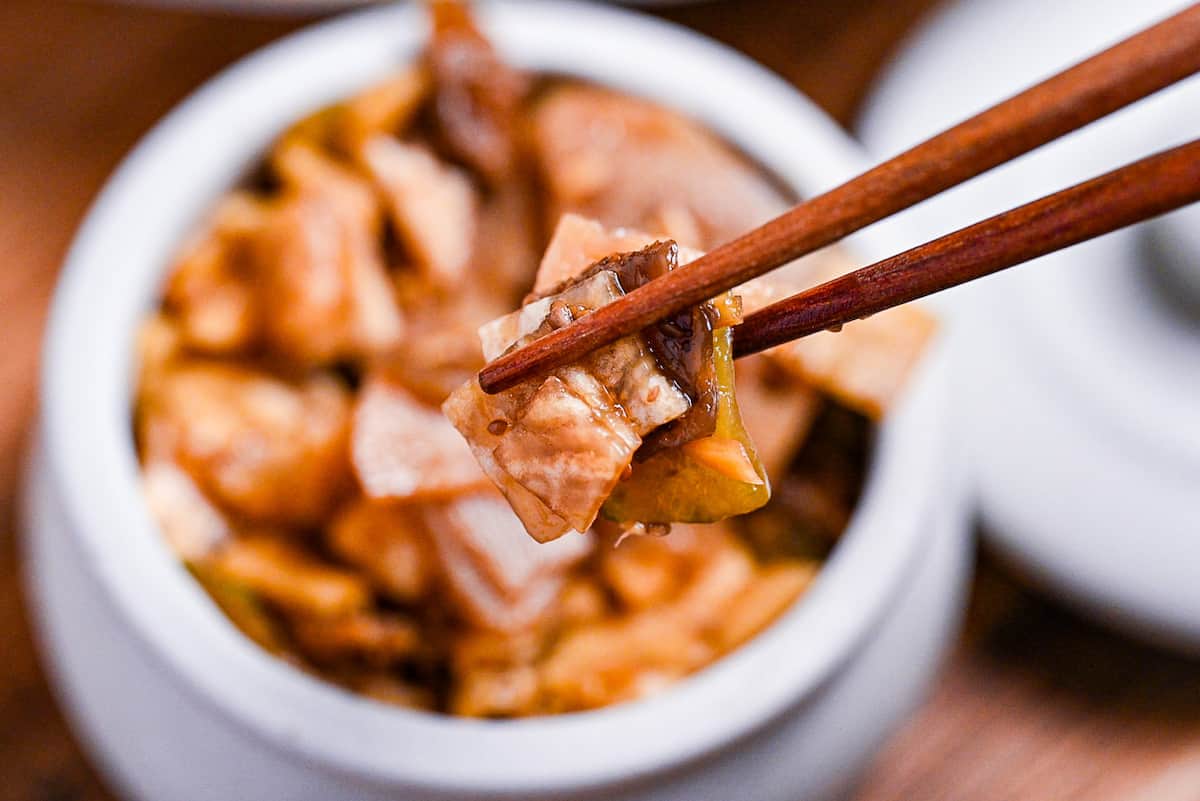
Fukujinzuke is a non-fermented Japanese pickle made with a mix of finely cut vegetables in a soy sauce-based brine. Lotus root is one of the traditional ingredients, contributing crunch and sweetness to the medley.
If you love Japanese curry rice, you need this on the side. The tangy, slightly sweet pickles cut through the rich, spicy curry perfectly.


Leave a rating and a comment