


Disclaimer: This post may contain Amazon affiliate links. Sudachi earns a small percentage from qualifying purchases at no extra cost to you. See disclaimer for more info.
After years of cooking Japanese food at home, I’ve narrowed my kitchen down to just three oils. Here’s why these three cover almost everything you’ll ever need.
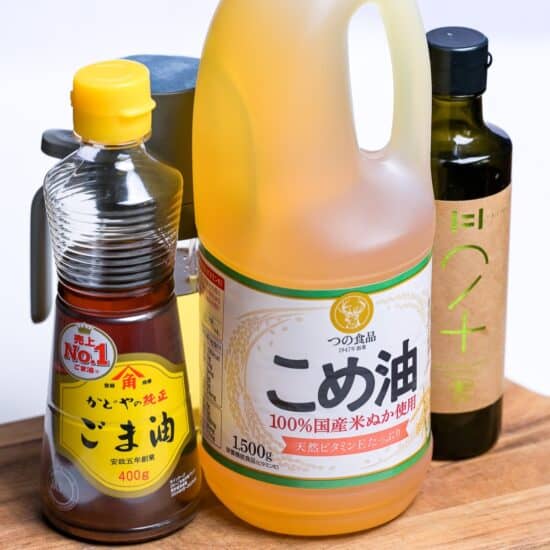
When considering what oil to use for Japanese cooking, I know the conventional answer is canola, or vegetable oil, or whichever neutral bottle the nearest grocery store stocks. You can use any of those without question, and we all do, every day. But I reach for rice bran oil instead, and I have for the past few years, and I keep it alongside toasted sesame and extra virgin olive oil, nothing else.
Three bottles. One for everything that sizzles, one for aroma at the end, one for some yoshoku dishes. That is the whole kitchen shelf I want to hand you today, and the next 6 minutes are the reasoning behind it.
The 3 Bottles I Keep in My Kitchen
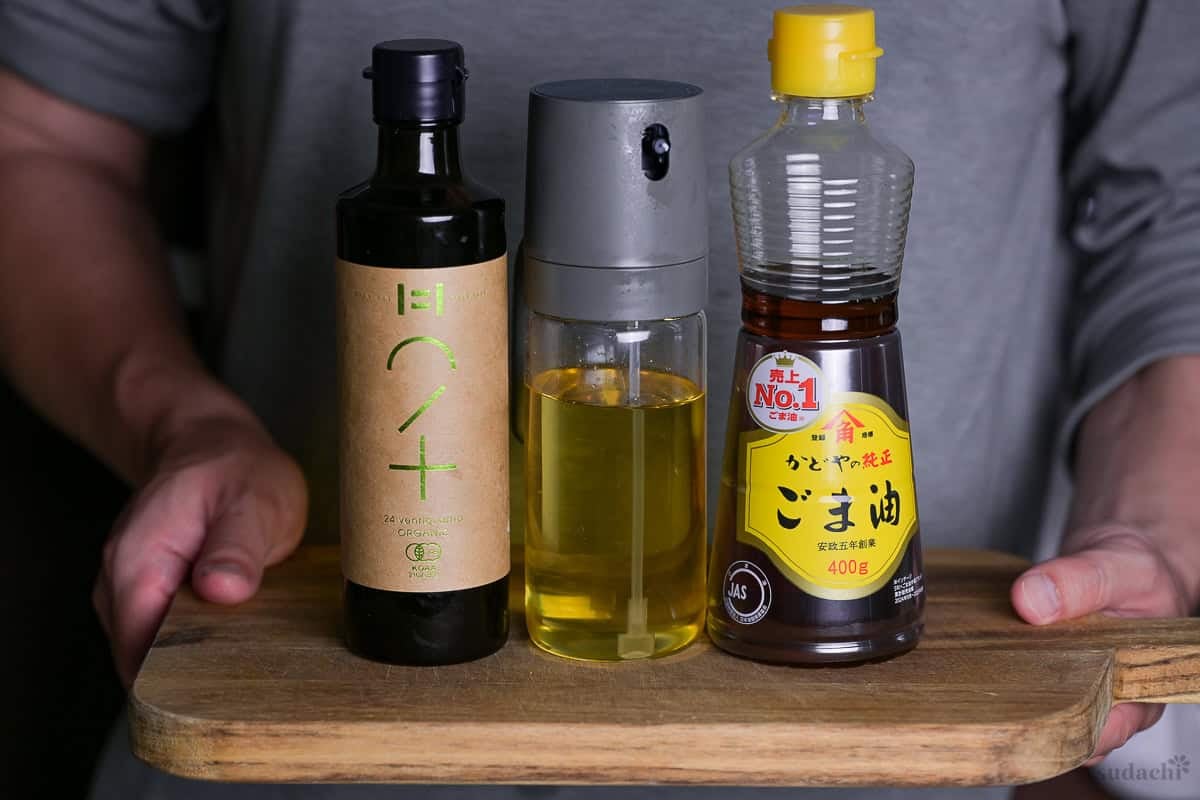
If you only read the next forty words, these are the bottles:
- Rice bran oil: Neutral, high smoke point around 232°C / 450°F. The everyday workhorse. Stir-fries, sautés, tempura, pan-frying.
- Toasted sesame oil: Dark, intensely aromatic, 175°C / 350°F smoke point. I typically use this as a finishing oil.
- Extra virgin olive oil. For Western cooking, yoshoku, finishing salads, pasta night.
That is it. No canola, no vegetable oil, no grapeseed, no peanut, no avocado. If this list already tells you everything you needed, close the tab. If you want the reason behind it, keep going.
Rice bran oil: what it is and why it deserves the everyday slot
Rice bran oil is pressed from the outer bran layer of rice grains, the papery husk that gets removed when brown rice is milled into white. In Japan it is called komeabura (米油). It is produced in large volume domestically, it has sat on Japanese pantry shelves for decades alongside the cheaper vegatable-oil category.
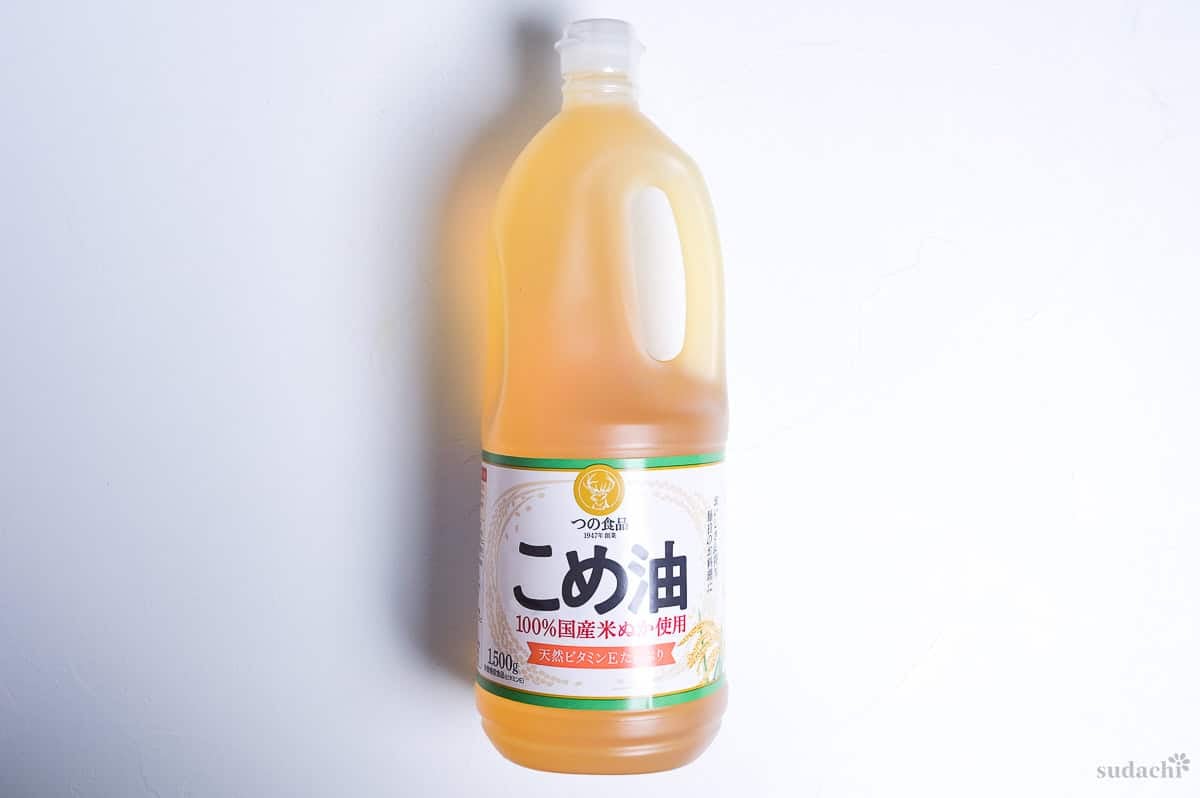
A few facts worth planting, then we move on.
The smoke point sits around 232°C / 450°F for standard refined versions, and premium grades climb to roughly 254°C / 490°F. That is a higher ceiling than almost any supermarket neutral oil in the same price bracket.
What those numbers mean in the pan is three things. Rice bran oil can be pushed to very high temperatures without smoking. It resists oxidation longer than a thinner refined oil, so a half-empty bottle on the counter does not go stale as quickly. And the taste is genuinely neutral in the way the word is meant, which is to say it disappears under the food.
That is what I mean by “neutral.” Not the absence of a label. The absence of interference.
How I Use Toasted Sesame Oil For My Recipes
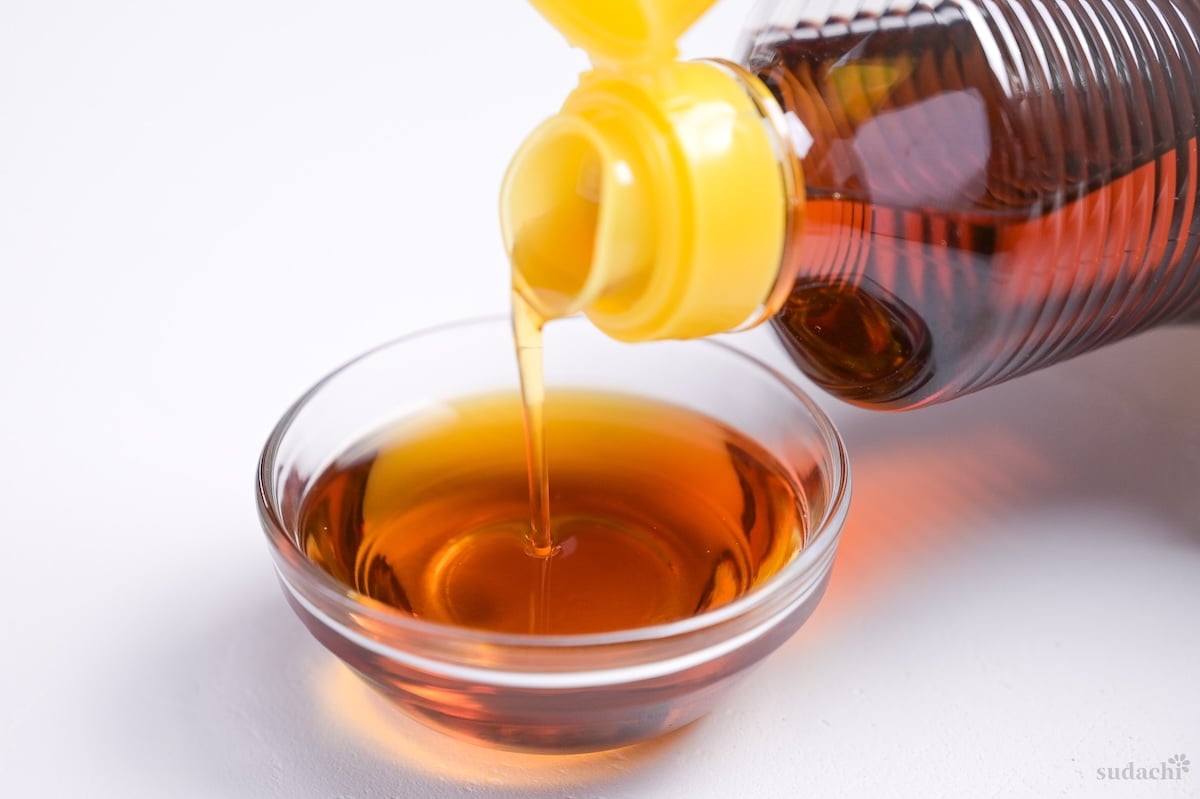
Toasted sesame oil is the bottle I treat with the most restraint, because the aroma is fragile, yet the entire point. The compounds that make it smell the way it does evaporate fast above standard pan temperatures, so cooking with it on high heat burns off most of what you bought the bottle for. The rule I follow is simple. Cook with rice bran oil, turn off the heat, then drizzle the sesame oil in at the end.
Used that way, a small amount goes a long way. A teaspoon to finish a stir-fry, a few drops over rice or steamed greens, a measured pour into a dressing or a dipping sauce. If you want the full picture on roast levels, the chemistry behind the aroma, and the recipes I lean on it most for, I wrote a longer piece here: Toasted Sesame Oil Guide.
How I Use Olive Oil For My Cooking
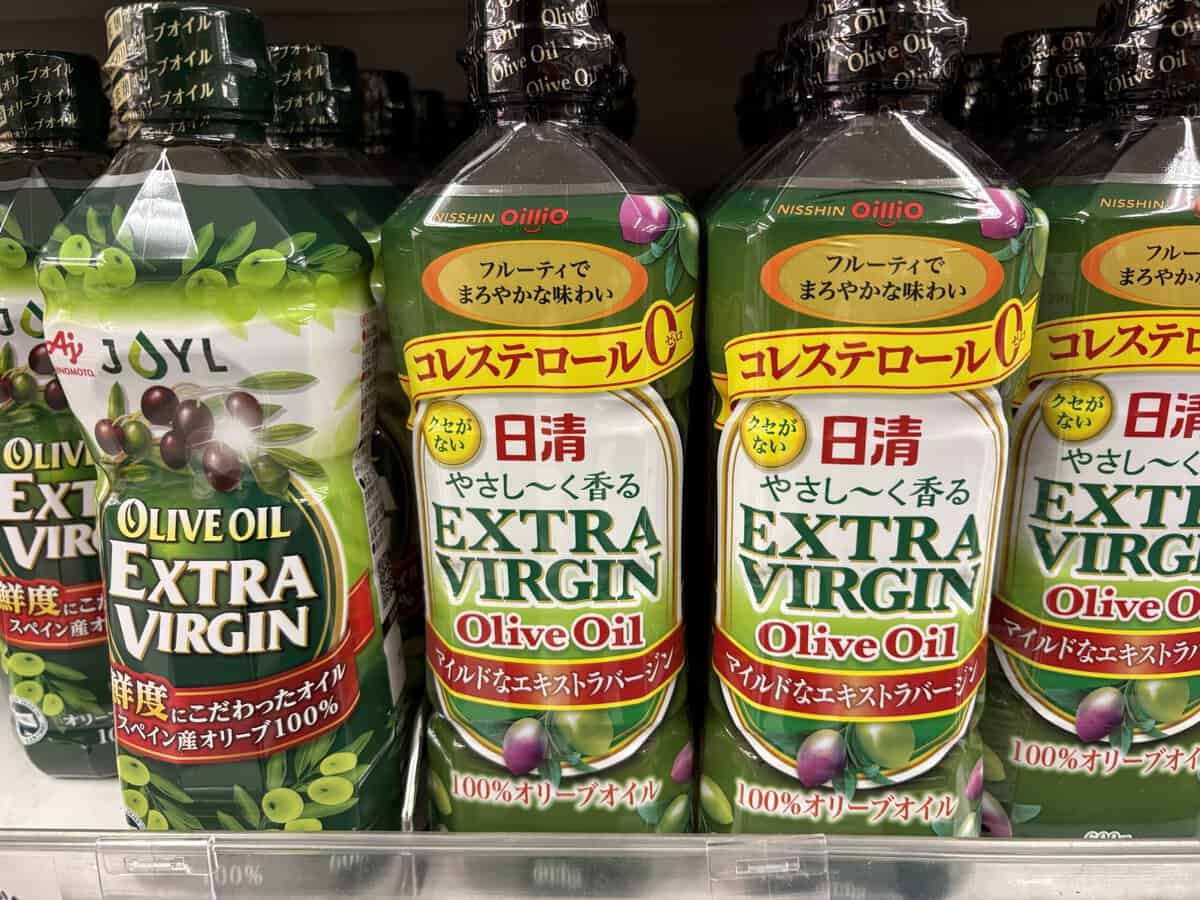
Olive oil shows up in mostly two places on this site. One is the yoshoku side of the menu, the Japanese take on Western cooking where olive oil is often the right call. The other is dressings, including some Japanese-leaning ones, where a small pour of good olive oil gives the vinaigrette a body and roundness that a neutral oil simply does not have.
The honest reason it sits on the shelf, though, is broader than the site. I do not cook Japanese food for every meal. Italian was actually the cuisine I fell for when I first started cooking, and I still cook from the wider Western canon often enough that not having olive oil in the kitchen is not a choice I would ever make.
Why I stopped buying every other neutral oil
For a long time I kept switching which neutral oil I use day to day.
What I noticed, after I started paying attention to what the kitchen actually smelled like after cooking, is that the neutral oils I owned were not all equally neutral. Some left a faint greasy whisper in the air that stayed until the next morning. Some coated the pan in a way that needed more soap to wash off. Some darkened visibly after two weeks in the rack.
Rice bran oil is the one that stopped doing those things for me. It has almost no smell going in and almost no smell coming out. It cooks clean, handles high heat for deep-fried dishes, and stays light on the palate. That is the entire conviction, no larger claim attached. I am not saying it is the best oil in the world. I am saying it is the neutral oil I stopped rotating out of, and I still feel the same way about it after years of use.

The price-to-quality ratio is the other part of the answer. Rice bran oil is mid-priced, not premium, and it performs at the high-heat end of the chart. That pairing is rarer than it sounds.
FAQ
Most Japanese households keep one bottle of neutral oil (often labeled サラダ油 salad oil, which is any refined oil meeting the JAS winterization standard, typically a rapeseed-soybean blend), one small bottle of toasted sesame oil, and increasingly one bottle of olive oil for Western dishes. The three-bottle kitchen is not uniquely mine. It is closer to a contemporary Japanese norm.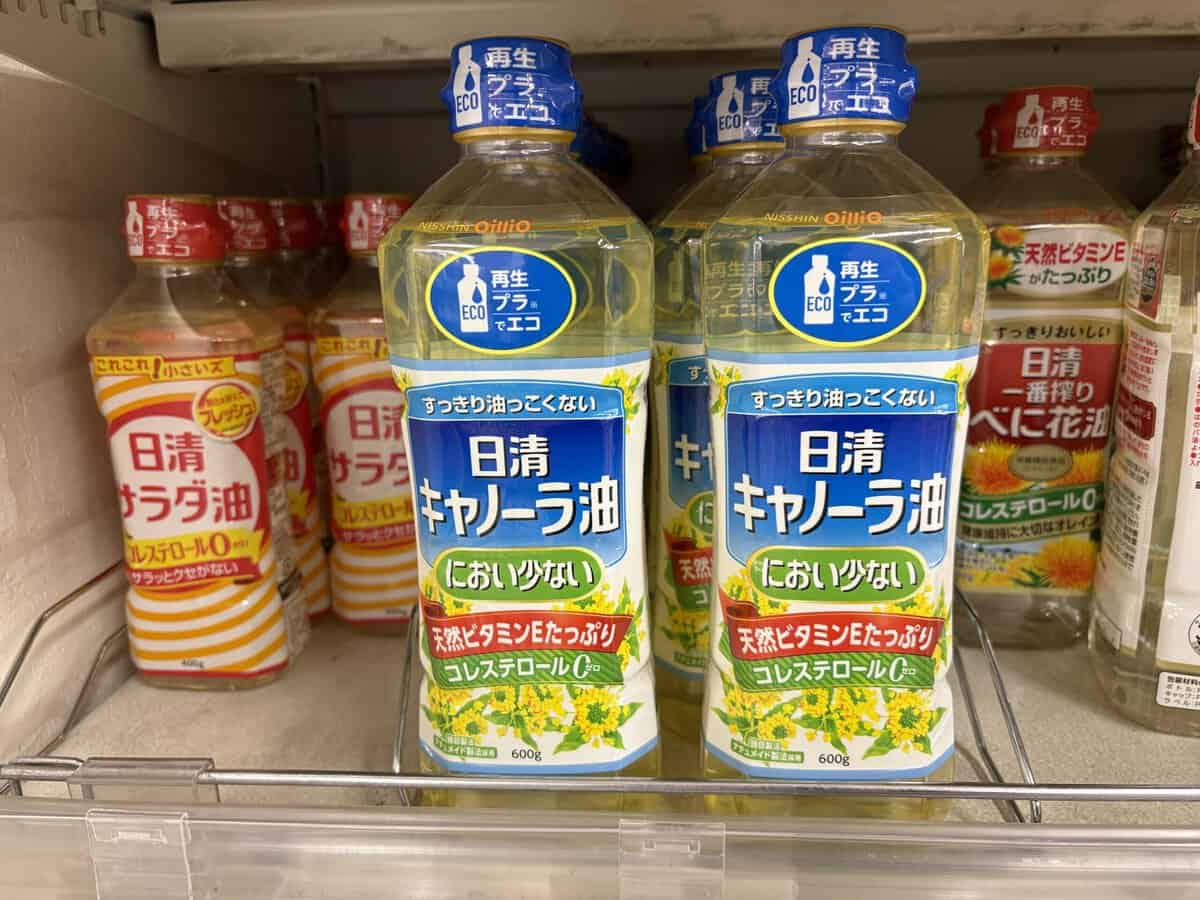
Yes. Every Japanese recipe that calls for a neutral oil works with canola 1:1. It is a smaller-personality oil than rice bran, the smoke point is lower (220°C / 428°F), and it tends to oxidize faster in the bottle, but the food will taste right. If you already own canola, use the bottle you have, and perhaps you can try rice bran the next time you replace it.
Professional tempura counters in Japan often use a custom blend of six oils in specific ratios, sometimes including cold-pressed extra virgin sesame (this is completely different from toasted sesame oil) as a fraction. That blend is a professional signature, not a home recipe, and no home cook I know replicates it. At home, one bottle of rice bran oil does the job.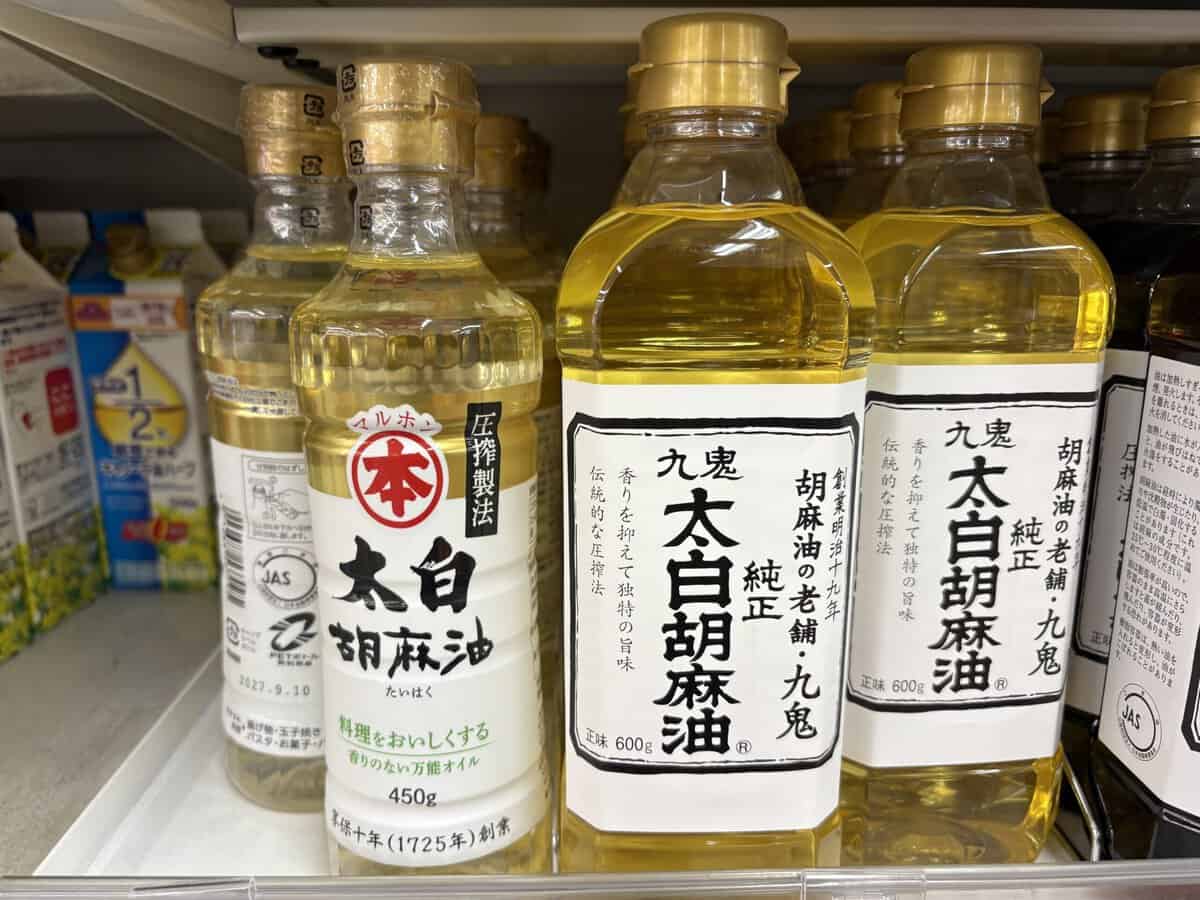

what do you use for your japanese cutting board? refined mineral oil food grade is petroleum, I read that organic coconutoil will not get rancy and is ok for it, other veg. oil not.
Hi Jana,
Thank you for your question!
Short answer is that boards in Japan don’t get oiled. They’re usually hinoki (Japanese cypress), hiba (hiba arborvitae), icho (ginkgo) or yanagi (willow), and those woods generally hold enough of their own resin that oil isn’t part of the routine here. The care is water instead. Wet both sides before you cut, wash it after, then stand it on edge to dry. The heart of it is preventing mold: wipe it dry the moment you’ve washed it, stand it up so air moves underneath, and keep it somewhere shaded and well ventilated, since direct sun causes warping and cracks.
Please note that it’s completely different story if your board isn’t one of those Japanese soft woods. For example, Western hardwood board does need oiling!
Yuto
thank you so much for clarify and your advice. very helpful!
That’s no problem! 🙂