

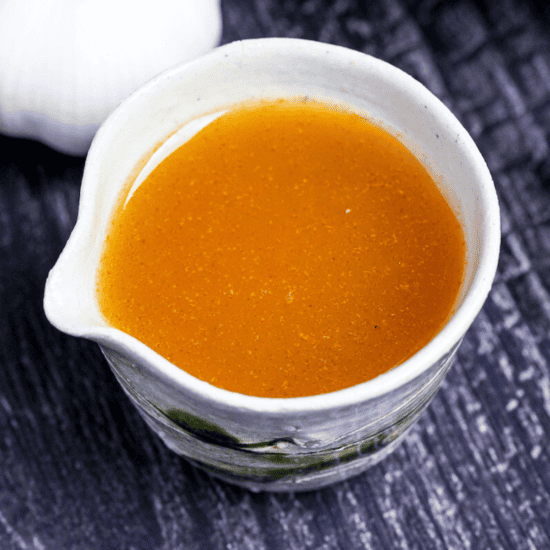


I spotted a bottle like this on a shelf in a Japanese supermarket, and could not stop thinking about it. So I built my own.
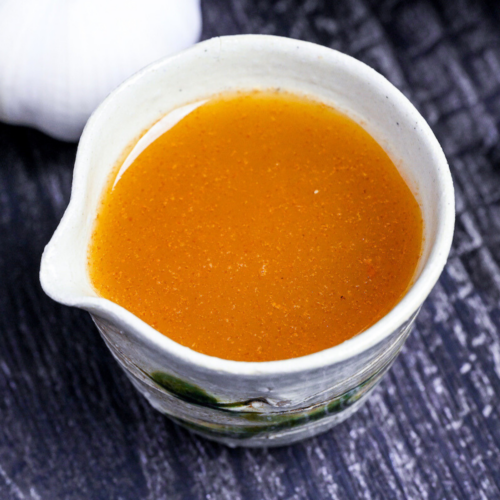
This is a garlic sesame dressing with the volume turned all the way up. Raw grated garlic hitting the senses, toasted sesame oil filling the whole bowl with roasted aroma. Pour it over plain leaves and suddenly the salad is the thing you actually want to eat.

Garlic Sesame Dressing
Recipe Snapshot
- What is it? An everyday Japanese salad dressing built on raw grated garlic and roasted sesame oil, mixed cold in minutes.
- Flavor profile: Bold raw-garlic heat hits your tongue, deep roasted sesame aroma fills the bowl, with salty umami and a bright, mellow lift from rice vinegar.
- Why this recipe works: I cut the sesame oil with a little olive oil so it sits lighter on leaves, and crushed katsuobushi lays a quiet umami backbone under the garlic.
- How to make it: Grate the garlic, then whisk or shake everything together cold in a jar.
- What to expect: It comes together in about 5 minutes and makes a small jar. The one thing to watch is the garlic, since a fierce bulb can overpower the whole batch.
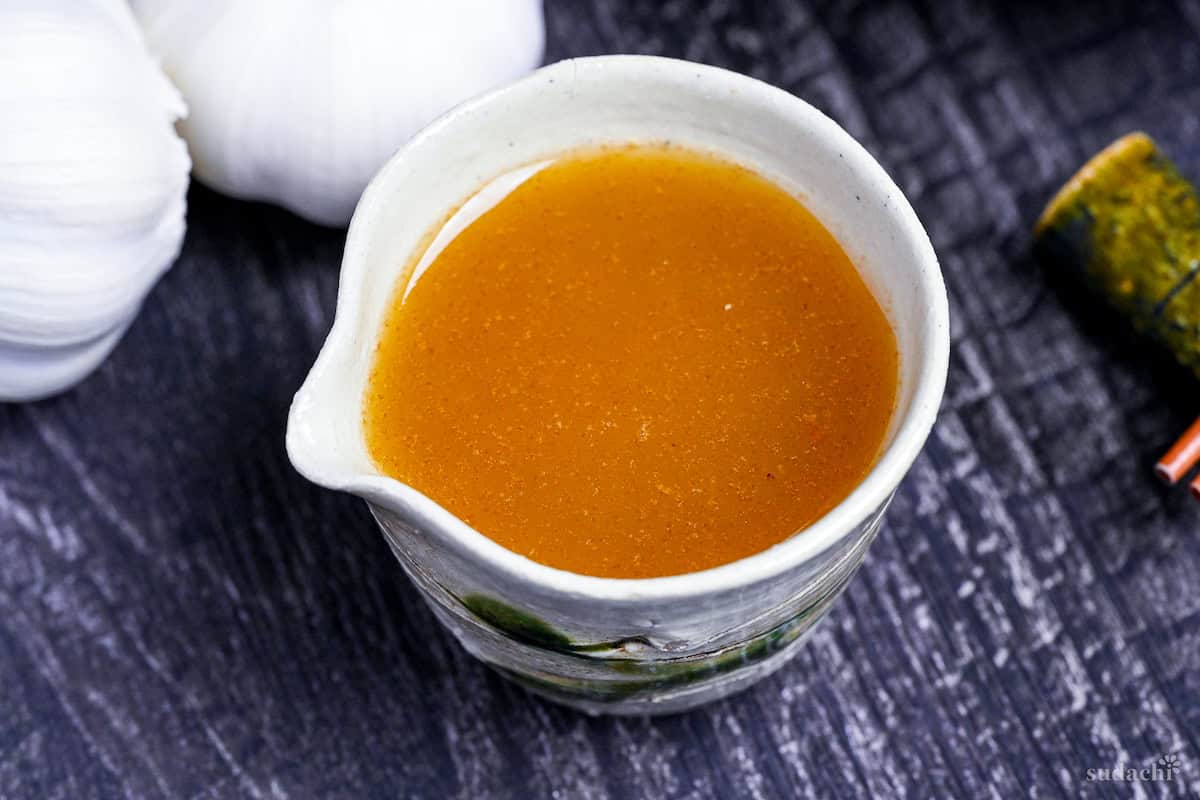
What Is Garlic Sesame Dressing?
Garlic sesame dressing is not a single fixed recipe. It is a category, the everyday condiment you meet on the salad at a yakiniku table, in the cabbage bowl at an izakaya, or bottled on a supermarket shelf. Roasted sesame oil and raw grated garlic sit at the center, and every cook builds out from there.
My version breaks from the standard in 2 ways. I cut the toasted sesame oil with a little olive oil, 1 part to 2, so it sits lighter on the leaves. And I stir in crushed katsuobushi for a quiet backbone of umami under the garlic and aroma.
Garlic Sesame Dressing Ingredients
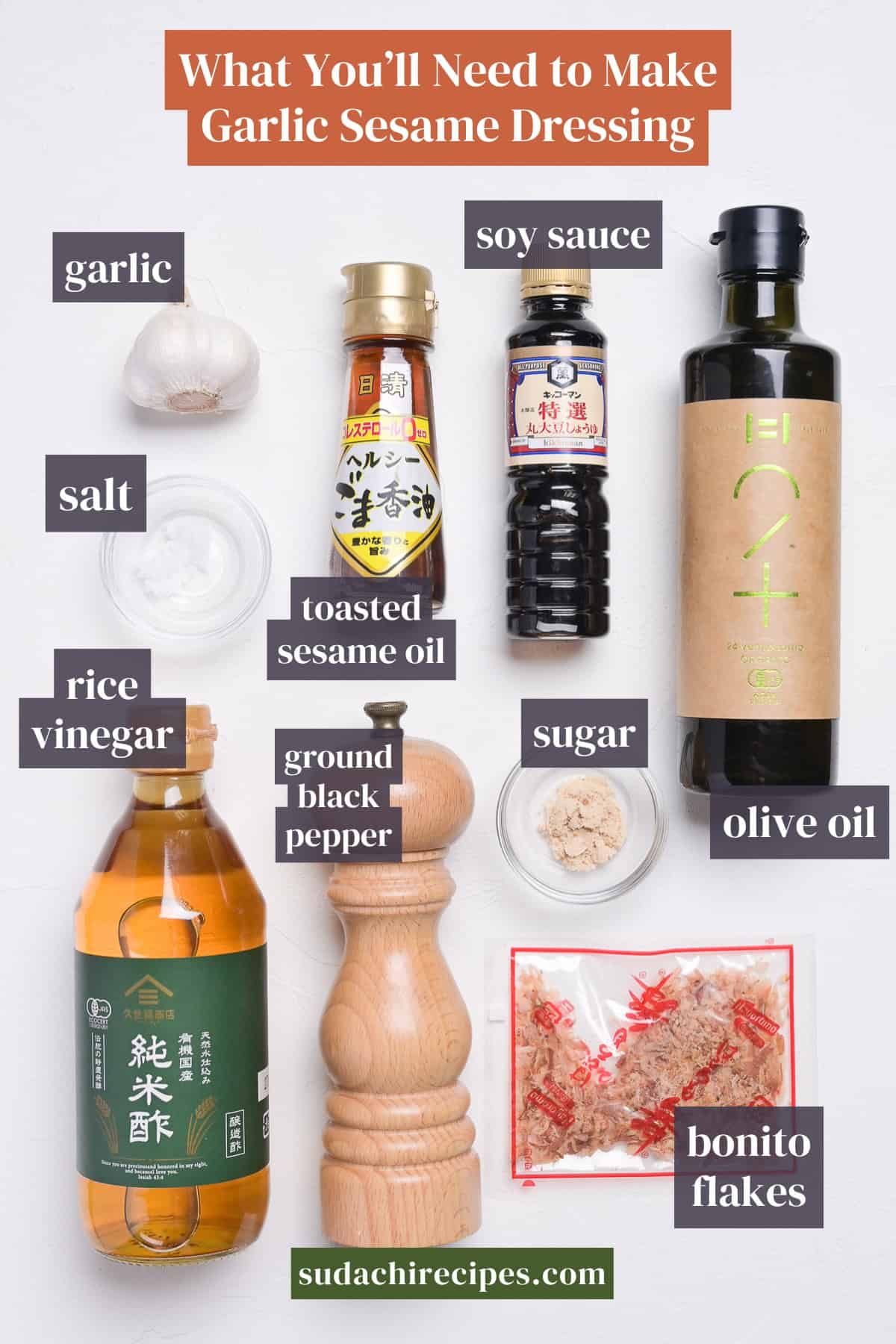
- Toasted sesame oil: This is the hero of the whole dressing, so buy the genuinely toasted kind, not the pale, untoasted sesame oil (often labeled light sesame oil) that is nearly scentless. You can tell with your eyes and nose alone. Dark amber to brown with a strong, nutty roasted smell is the one you want. Open a fresh bottle and the aroma reaches you before you even pick up a spoon (here is how to pick a good toasted sesame oil).
- Olive oil: Blended into the sesame oil, 1 part olive to 2 parts sesame. This is my own move, and it keeps the dressing from sitting too heavy on the leaves.
- Garlic: Fresh, finely grated, and raw. That rawness is where the sharp, spicy punch comes from. Keep an eye on the garlic, since some bulbs run much more pungent than others, so if yours is especially fierce, grate a little less than the recipe says.
Substitution Ideas
- Fresh garlic → Garlic paste: If the raw, spicy edge of fresh garlic is not for you, a squeeze of garlic tube dials it right down. It reads milder and a little softer, which is exactly what some people want here.
- Soy sauce → Tamari: For a gluten-free dressing, tamari steps in cleanly. It is naturally wheat-free and keeps the same dark, savory depth.
- Rice vinegar → Grain, apple, or lemon: Grain vinegar is sharper, so use a touch less. Apple or lemon push it fruitier. All 3 work, they just tilt the brightness in different directions.
- Sugar → Honey or maple: Both round off the acid the same way sugar does, with a little character of their own on top.
Have trouble finding Japanese ingredients? Check out my ultimate guide to Japanese ingredient substitutes!

Tips for the Best Garlic Sesame Dressing
- Mix it until it actually comes together, or it will split on you. This dressing has no egg or emulsifier holding it, so the oil wants to sit apart from the soy sauce and vinegar. A quick stir with a fork is not enough. Seal it in a jar and shake hard, or run a small milk frother through it for a few seconds, and it turns glossy and unified.
- Buy a genuinely toasted sesame oil, not the pale, untoasted kind (often labeled light sesame oil). The whole dressing leans on that roasted aroma, and a clear, nearly scentless untoasted oil cannot carry it. Check it before you pour. You want a dark amber to brown oil that smells nutty and toasted the second you open the bottle. Get this wrong and the result tastes flat no matter what else you do.
- Dry your greens completely before the dressing goes on. Any water clinging to the leaves repels the oil, so the dressing slides straight to the bottom of the bowl instead of coating anything. Spin or pat your vegetables until they are properly dry, then toss. A dry leaf grabs the dressing and holds it, which is the whole point of making a dressing this good.
And dress it at the very last moment, right before it goes to the table, so the leaves stay crisp under all that garlic and aroma.
Storage & Meal Prep
Fridge: Keep it in a sealed container and use within 3 days. Shake or whisk before each use. Do not leave it out at room temperature, since raw garlic in oil is a food-safety risk.
Freezer: Not suitable.
Meal prep: Make it as a small, fresh batch. Grate the garlic fresh each time if you want it to last.
What to Serve With Garlic Sesame Dressing
- Japanese Shredded Cabbage
- Yakiniku Donburi
- Tataki Kyuri (Smashed Cucumber)
- Salt-Boiled Edamame
Garlic Sesame Dressing Troubleshooting
Raw grated garlic releases allicin, the compound behind that sharp, spicy hit on your tongue, and grating it fine or using a fierce bulb makes it stronger. If it is too much, let the finished dressing rest for 10 to 15 minutes so the raw edge settles into the oil. Next time, grate a little less, reach for garlic tube instead, or give the dressing a very short burst in the microwave to calm the bite.
That is completely normal. This dressing has no emulsifier like egg to hold the oil and the water-based soy sauce and vinegar together, so they drift apart as it sits. Just shake it hard in a sealed jar or whisk it right before you pour, and a small milk frother pulls it back together in seconds.
Toasted sesame oil is potent, and a heavy hand buries the garlic and soy sauce underneath it. Whisk in a little more olive oil, rice vinegar, and soy sauce to bring the balance back. Next time, scale the sesame oil down a touch, since you can always add more but you cannot take it out.
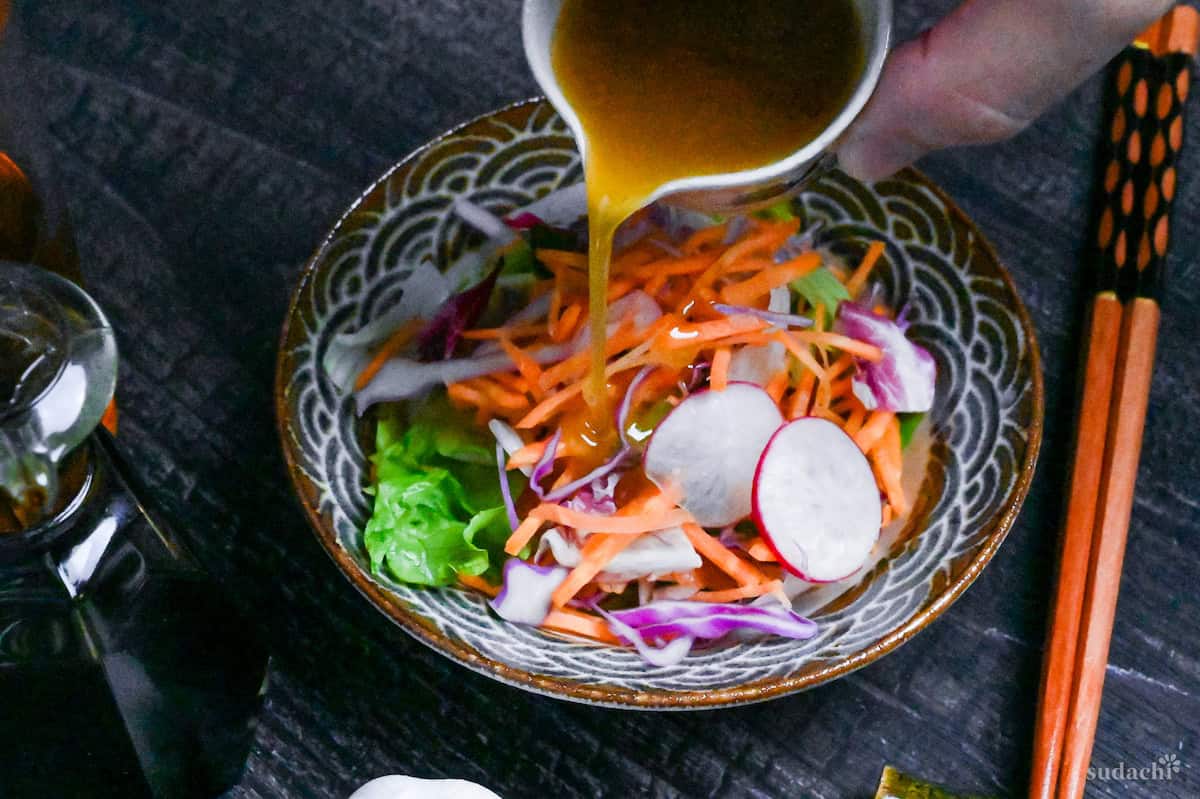
More Japanese Dressing Recipes
For more, see my full collection of Japanese Salad Dressings.
Did You Try This Recipe?
I would love to hear your thoughts!
💬 Leave a review and ⭐️ rating in the comments below. 📷 I also love to see your photos – submit them here!
Garlic and Sesame Oil Salad Dressing

Ingredients
- 1 garlic clove medium size
- 1 tbsp Japanese dark soy sauce (koikuchi shoyu)
- 1 tbsp unseasoned rice vinegar (komezu)
- 2 tbsp toasted sesame oil
- 1 tbsp olive oil
- ¼ tsp salt
- ½ tsp sugar
- ½ tbsp bonito flakes (katsuobushi) crushed into a powder (you can do this by crushing it in your hand)
- 1 pinch ground black pepper
The ingredient brands and tools I trust are in my Japanese pantry guide and my cooking tools guide.
Can’t find certain Japanese ingredients? See my substitution guide here.
Instructions
- Grate 1 garlic clove with a microplane grater or Japanese-style grater (oroshi-gane).
- Place the grated garlic in a bowl and add the rest of the ingredients. Whisk until well combined. Alternatively, put everything in a mason jar and shake vigorously until combined.
- Whisk or shake right before pouring and enjoy with your favorite salad!

Leave a rating and a comment