



Featured Comment
Just made this. Omg soo good and so easy. Thanks for the video!
★★★★★
– @michaelmolina5742 (from YouTube)
I have spent years tweaking different styles of Tenshinhan until it felt just right to me. What I wanted was not a bold, pushy sauce but something more delicate, with a refined savory depth.
I build extra umami by using the shiitake soaking liquid undiluted, stir in vinegar and ginger after cutting the heat, and finish with a small pat of butter melted into the sauce off the stove. That quiet addition softens the aroma, lengthens the finish, and lifts the whole dish to a finer level.
Tenshinhan
Recipe Snapshot
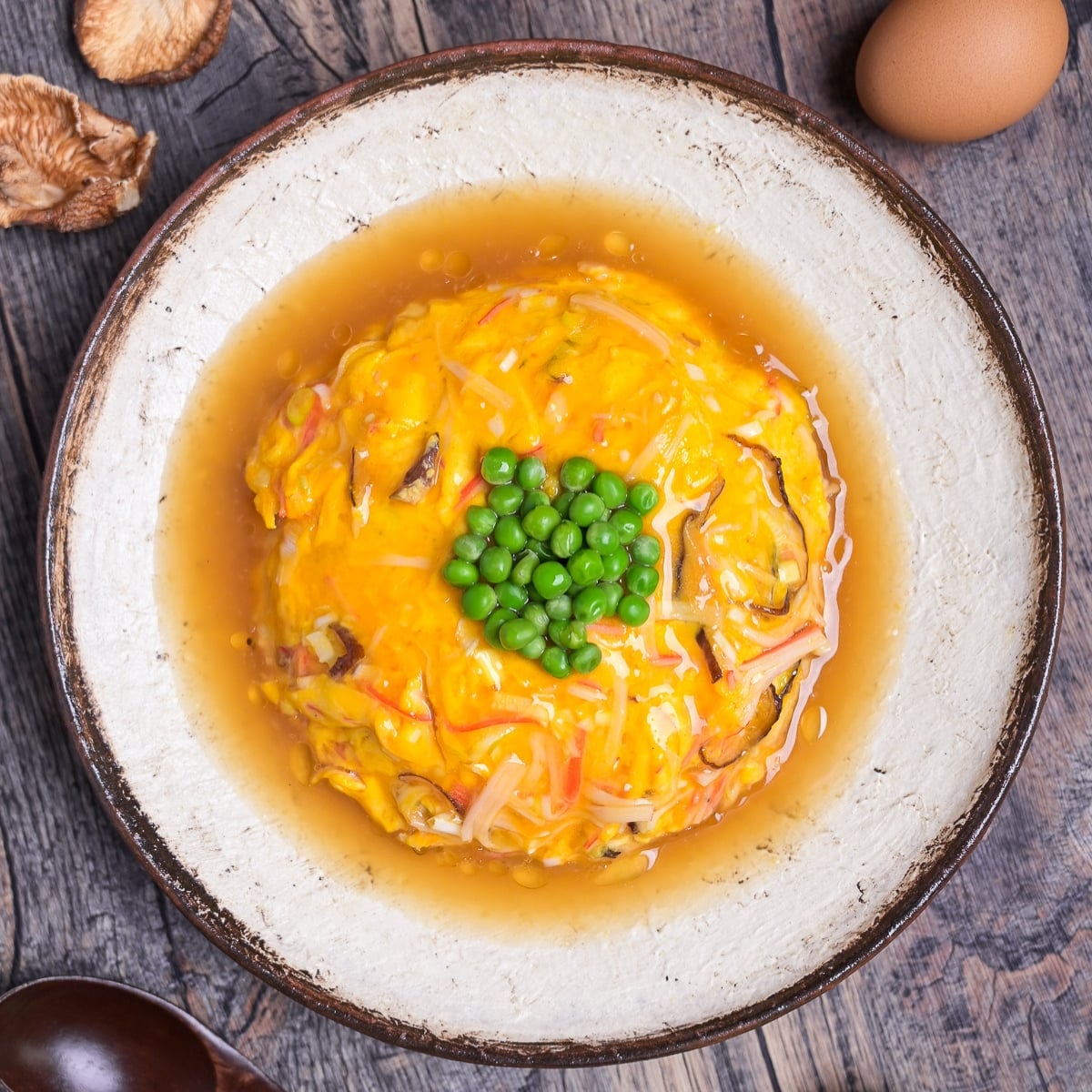
- What is it? A machi-chuka standard born in Japan, soft folded egg set over rice and covered with a glossy sweet-and-sour sauce.
- Flavor profile: The fold-and-melt egg, the sweet-sour gloss, and a fine, elegant umami that arrives a beat after the first bite.
- Why this recipe works: The shiitake soaking liquid goes in undiluted as the entire base of the sauce, so 3 kinds of umami stack at full strength. A knob of butter stirred into the finished glaze off the heat rounds that intensity into something long and gentle instead of sharp and pushy.
- How to make it: 2 tracks of second-by-second heat. You build the sauce first and keep it warm, fry the egg soft in plenty of oil, set it on the rice, and pour the glaze over the top.
- What to expect: It makes 2 portions. The one place people stumble is judging when to stop the egg, and even when it still looks underdone, a lid and a short rest let the carryover heat finish it.
What Is Tenshinhan?
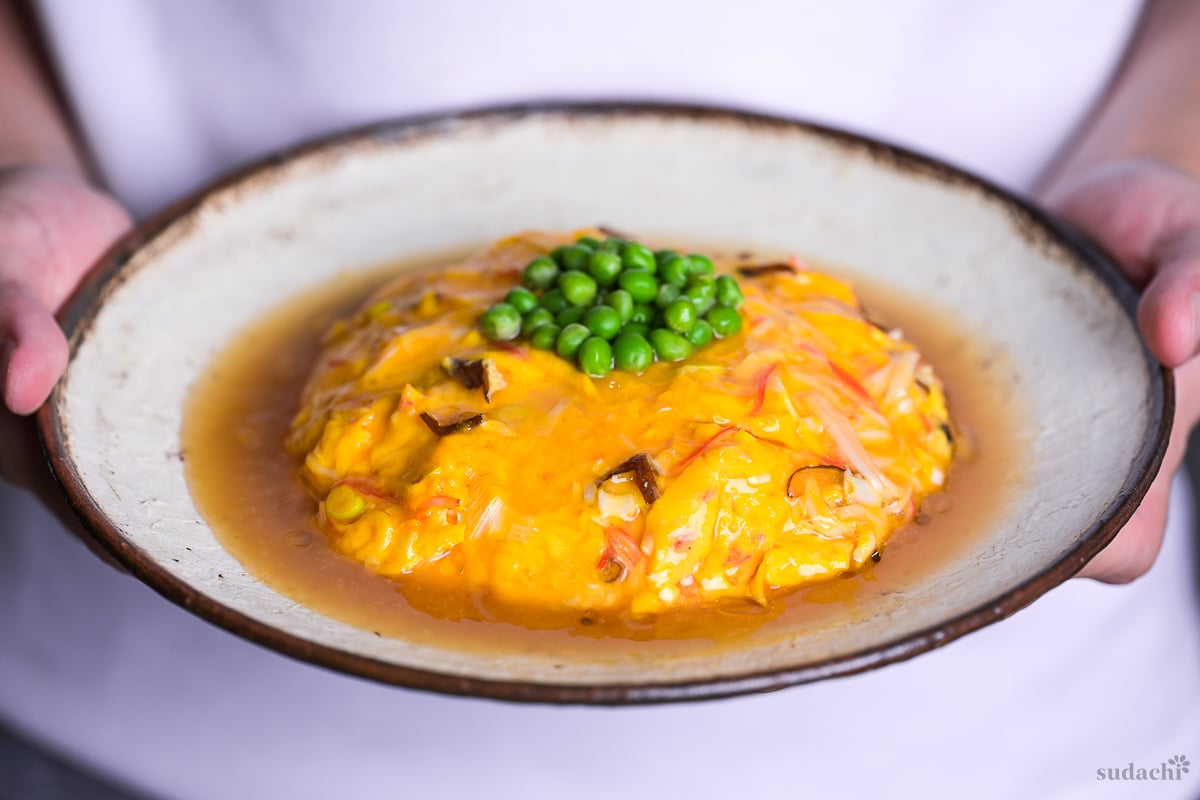
Tenshinhan is a Japanese-Chinese dish of fluffy crab omelette served on a bed of rice and generously covered with a thick sweet-and-sour sauce. It is a classic of what we call “machi-chuka” cooking, the everyday Chinese food that developed in Japan. Although the name includes “Tianjin,” the famous Chinese city, the dish does not exist there. It was born and raised entirely in Japan. Even native Chinese speakers are often surprised when they first encounter it here.
Its exact origin remains unclear. One theory credits Rairaiken (来々軒), a restaurant at the Yaesu exit of Tokyo Station, where a cook sent from Ginza’s Manjuen improvised a fast dish for a customer, and the other credits Taisho-ken in Osaka, opened by an owner from Shandong. There is also a tale that it began with crab omelette served over Tianjin rice, but researchers dismiss this as the true source of the name. What we can say with certainty is that Tenshinhan appeared after the war.
The gentle acidity in the sauce lifts the whole plate, so I go with the Tokyo style and use a good hit of rice vinegar. I keep the shiitake soaking liquid undiluted, and at the very end I drop in a pat of butter. That small layering turns the familiar town-Chinese plate into something surprisingly refined.
Japanese Crab Omelette Ingredients
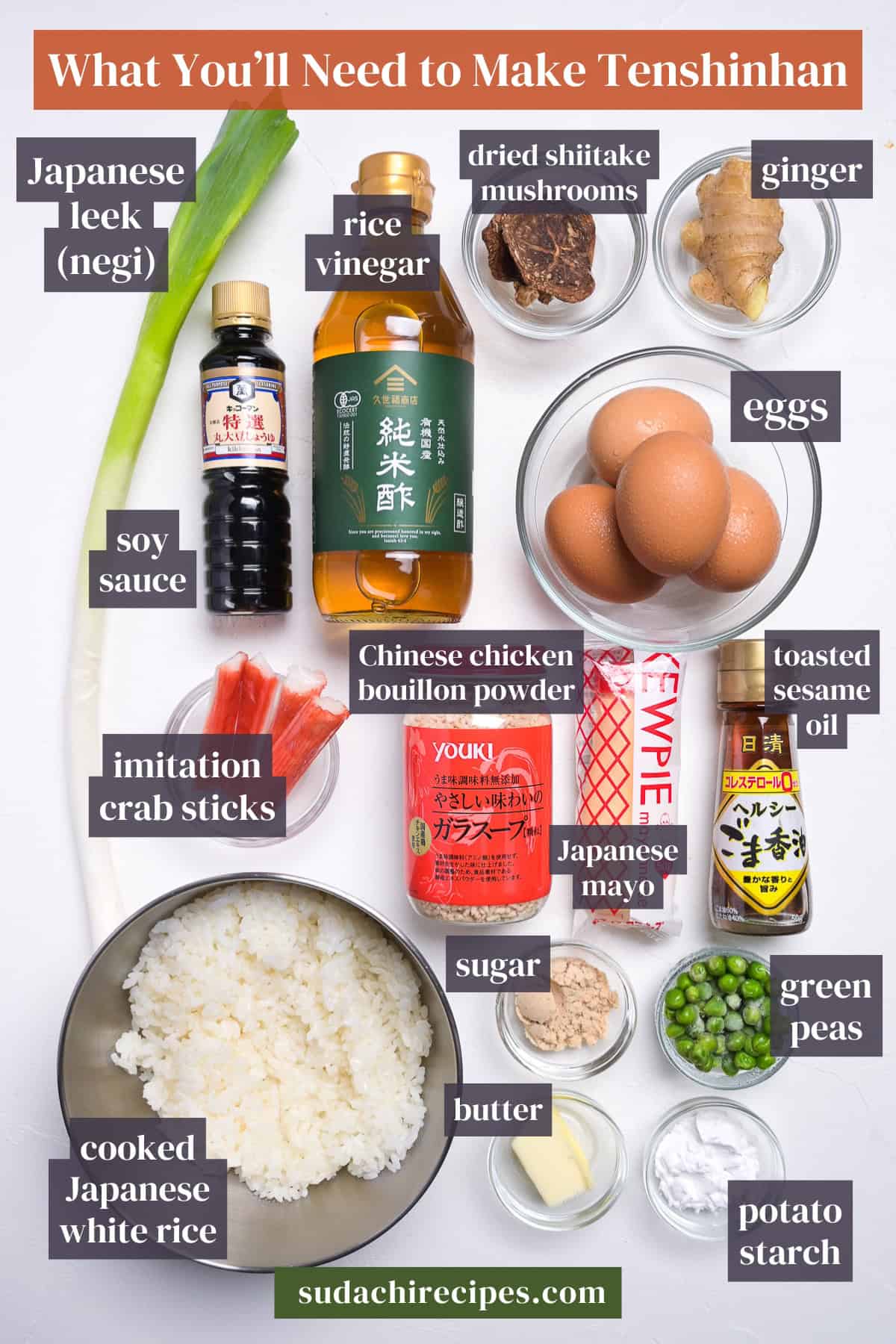
- Imitation crab: For this dish specifically, I would go so far as to say good imitation crab suits it better than real crab. The glaze and the egg carry the plate, so the crab is only there to add a delicate sweetness and a scent of the sea. Reach for the stick type you would happily pull apart and eat straight, the kind that shreds softly when you tease it with your fingers.
- Eggs: The eggs are the backbone, and the fold-and-melt texture, set on the outside and molten in the middle, is the whole point.
- Potato starch (katakuriko): Potato starch does the thickening for the glaze. What it gives you is a clear, glossy, slippery kind of thickness, and that look is the visual core of the dish.
Substitution Ideas
- Imitation crab → Real crab, canned crab, peeled shrimp, or egg only: The crab is an accent, not a structural piece, so it is the easiest thing to swap. Flaked real crab works, canned crab works, blanched shrimp works, and a plain egg-only version with no crab at all is an old and common form of tenshinhan in its own right.
- Potato starch (katakuriko) → Cornstarch: Potato starch is not on every supermarket shelf outside Japan and often runs pricey, so this is the realistic swap. It holds its thickness better once cold, but you lose some of the clarity and it turns a little cloudy, and you need a touch more to hit the same body. Kudzu starch or tapioca starch also stand in.
- Japanese soy sauce → Wheat-free tamari (gluten-free): If you are steering clear of wheat, swap in a wheat-free tamari. The salt and umami land close, and the color goes a shade deeper.
- Rice vinegar → Grain vinegar, apple cider vinegar, or sake: The rice vinegar goes in after the heat is off, so its character carries through into the finished glaze. That means the one you pick shifts the impression a little, but this dish holds up with any of them. Grain vinegar reads sharper and cleaner, apple cider vinegar brings a faint fruitiness.
- Rice → Calrose or other medium-grain rice: Short-grain Japanese rice is the default, but medium-grain Calrose builds a fine mound too. Skip long-grain, which will not hold the dome shape and does not have the right texture.
Have trouble finding Japanese ingredients? Check out my ultimate guide to Japanese ingredient substitutes!
How to Make My Tenshinhan
Before you start (Mise en place):
- Shred the imitation crab with a fork and roughly chop the white part of the Japanese leek.
- Mix the cold water and potato starch into a slurry and set it aside.
- Have the warm rice ready to mold and plate.
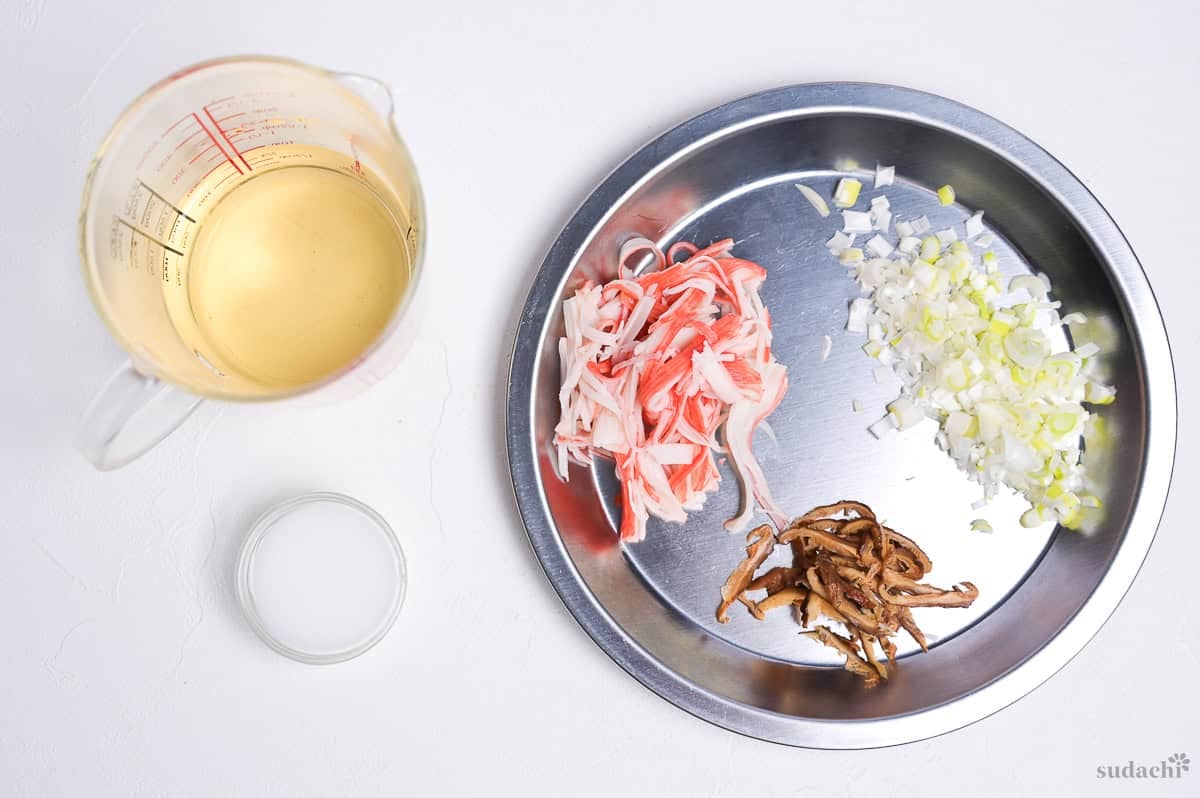
Tip: From here on the cooking moves in seconds. Get everything in reach, the glaze ingredients, the slurry, the fillings, the rice, and the plates, before the pan ever goes on the heat. This is the one place not to cut corners.
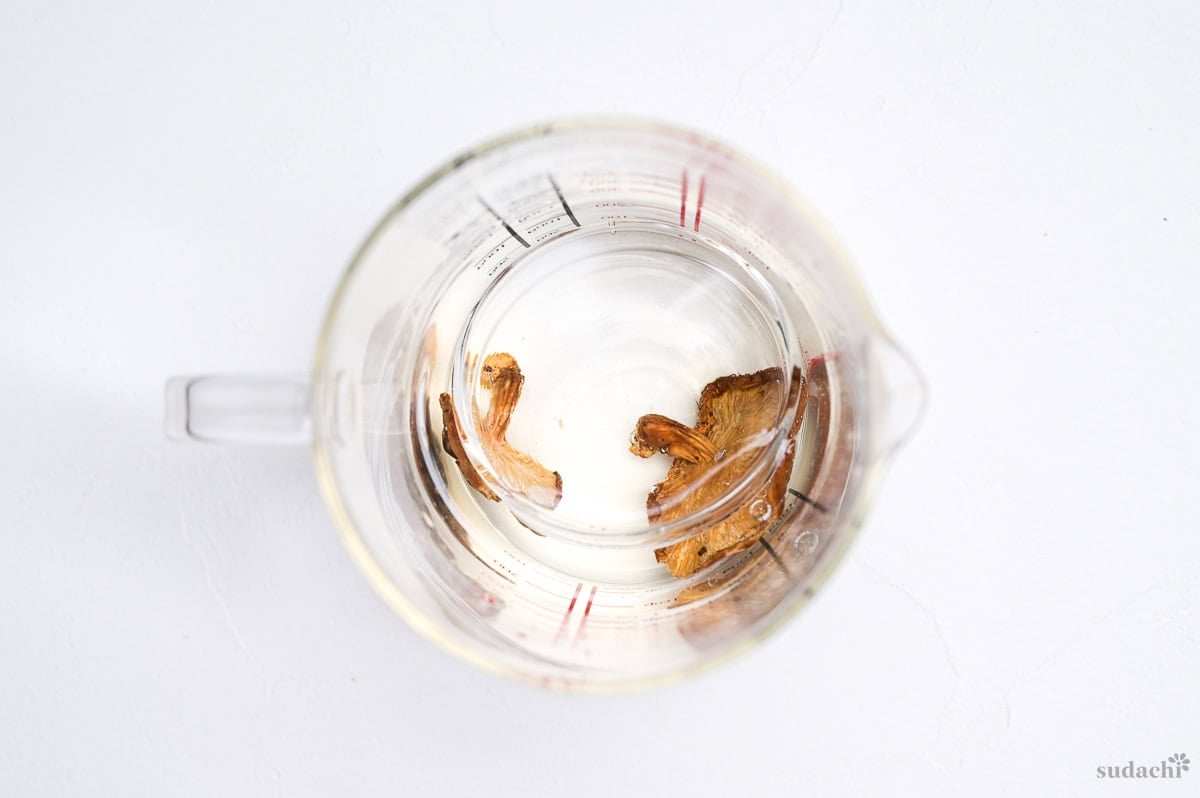
i. Soak the dried shiitake in room-temperature water until rehydrated, 45 to 60 minutes for whole caps and 20 to 30 minutes for pre-sliced. No boiling water.
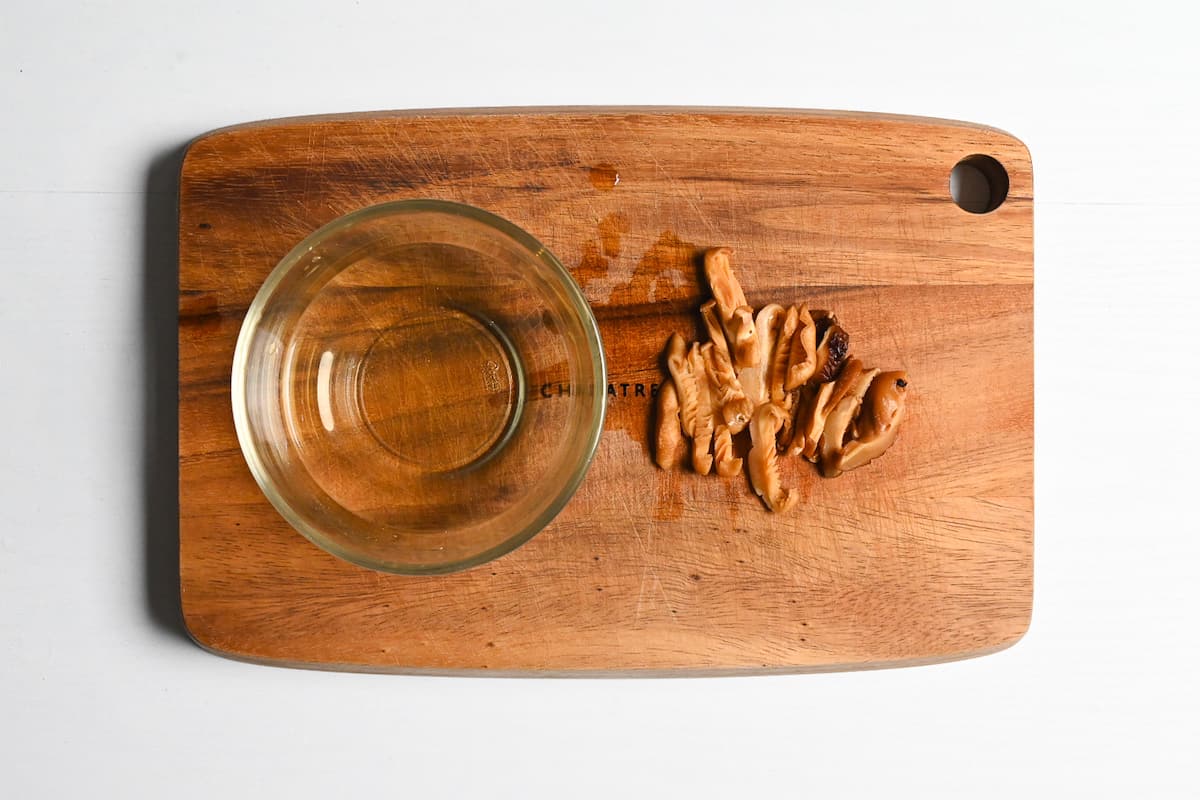
ii. Lift the rehydrated shiitake out, trim off the stems, slice them thin, and pat them dry with paper towel.
iii. Strain the soaking liquid through a tea strainer or similar mesh sieve, measure it, and top up with water if you come up short.
The umami in dried shiitake, guanylate, is not sitting finished inside the dry mushroom. It gets built once the shiitake takes on water and an enzyme breaks down its RNA. That enzyme stops working above 60 to 70°C (140 to 158°F), so a boiling soak saves time but throws the umami away.
i. In a pot, combine the shiitake soaking liquid, the chicken bouillon powder, the Japanese soy sauce, and the brown sugar, and bring it to a boil over medium heat.
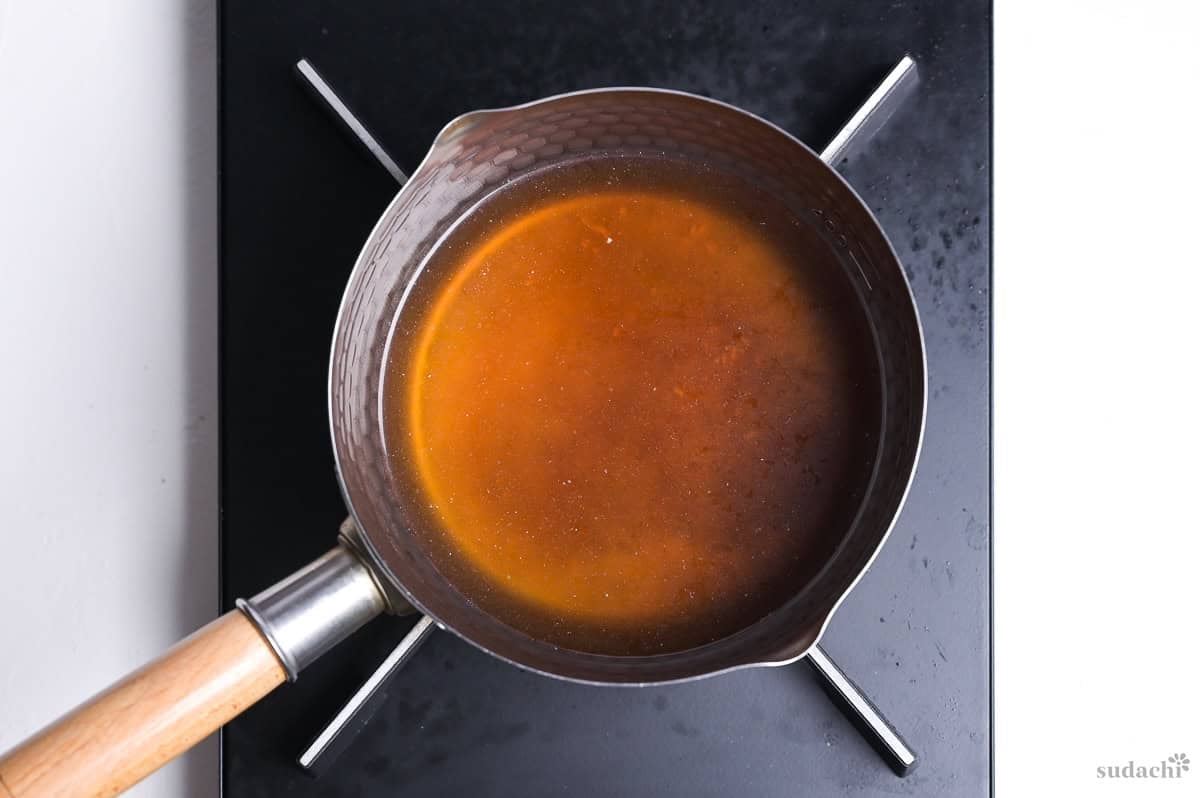
ii. Once it boils, simmer for about a minute, then taste. If it reads thin, add a little more soy sauce or salt in small pinches
Tip: At this stage it should taste a touch strong on its own. It rounds out with the butter later and dilutes further against the rice and egg.
i. Take it off the heat. The slurry settles to the bottom in seconds, so stir it well before pouring it into the pan slowly in a thin stream while stirring.
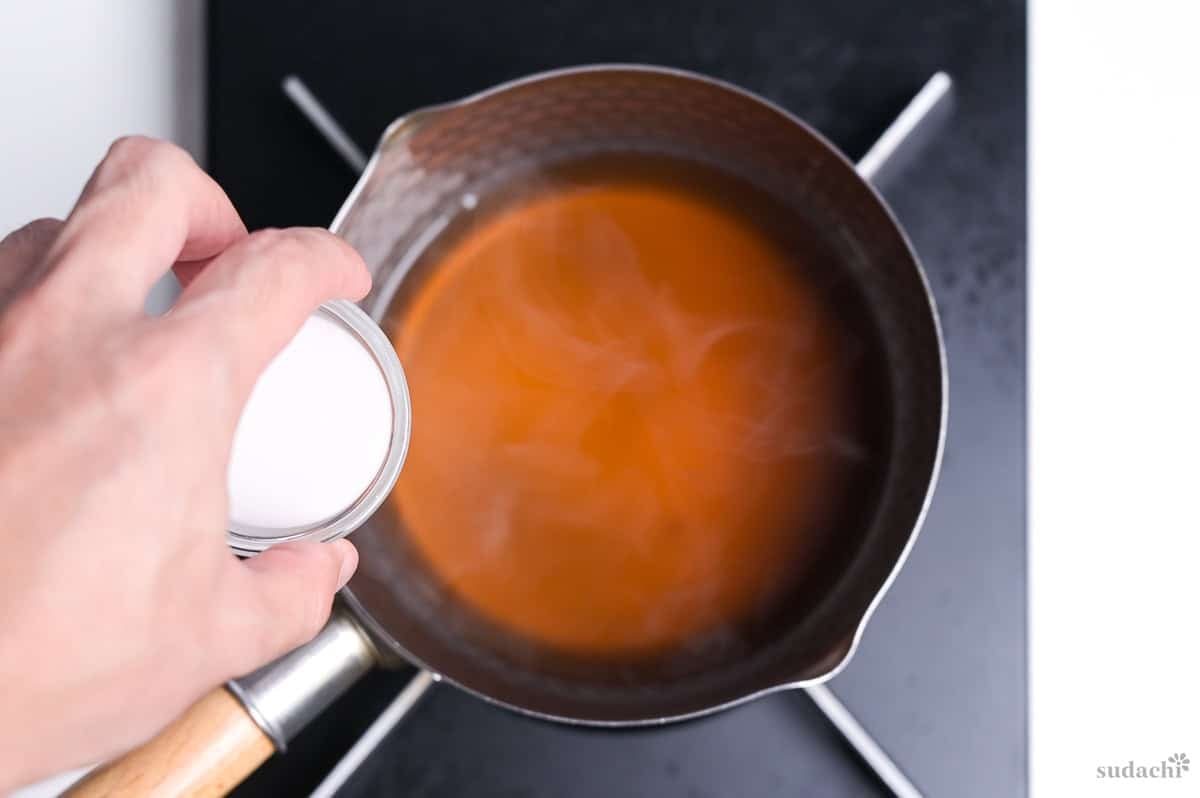
ii. Return the heat to medium-low and hold it at a gentle bubble for 1 minute, stirring the whole time. Once the cloudiness clears to translucent and the surface turns glossy, the starch has gelled. Do not stop the second the thickness appears. Hold it there for the full minute. Push far past that, though, and the swollen starch breaks down and the thickness actually drops.
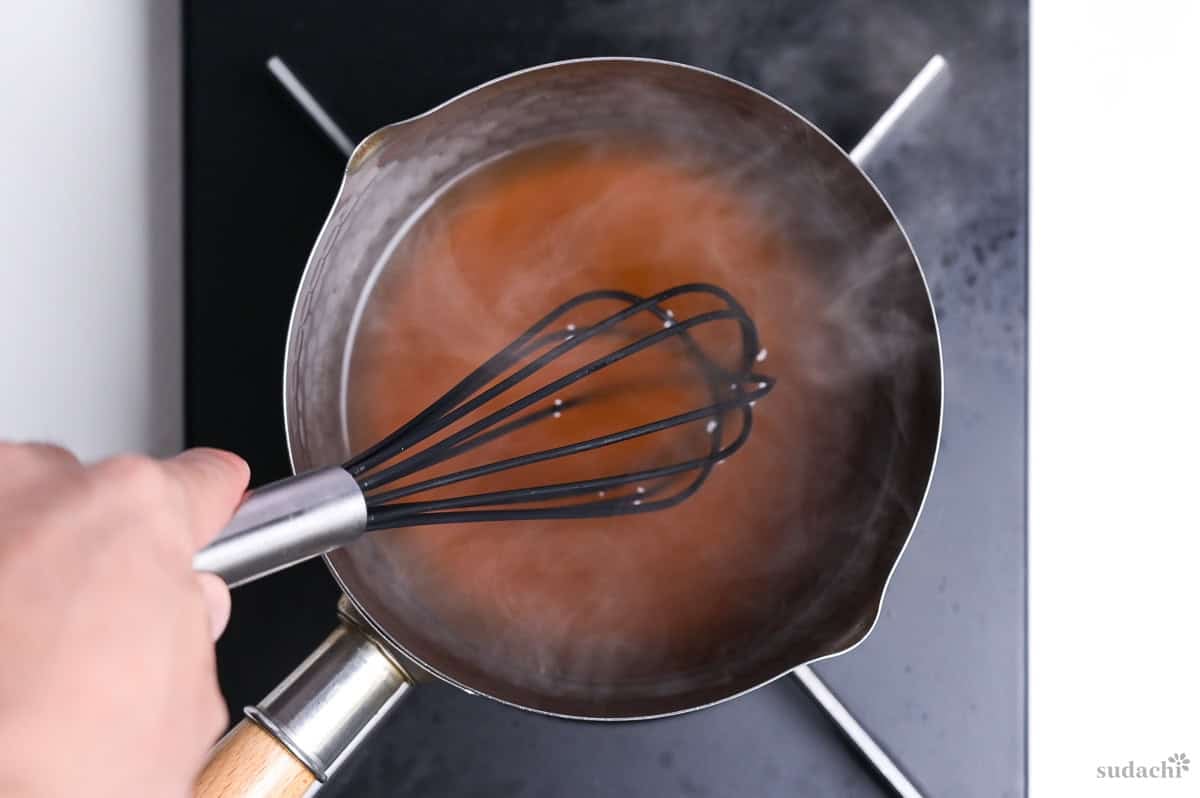
iii. Turn off the heat and cover the pot. The rice vinegar, ginger, and butter do not go in yet.
Pour slurry into boiling liquid and the surface of each grain gels on contact, turning into a skin that will create lumps in the sauce. Turn off the heat, stir the slurry in, then reheat, and the heat reaches every grain evenly for a smooth, clean thickness.
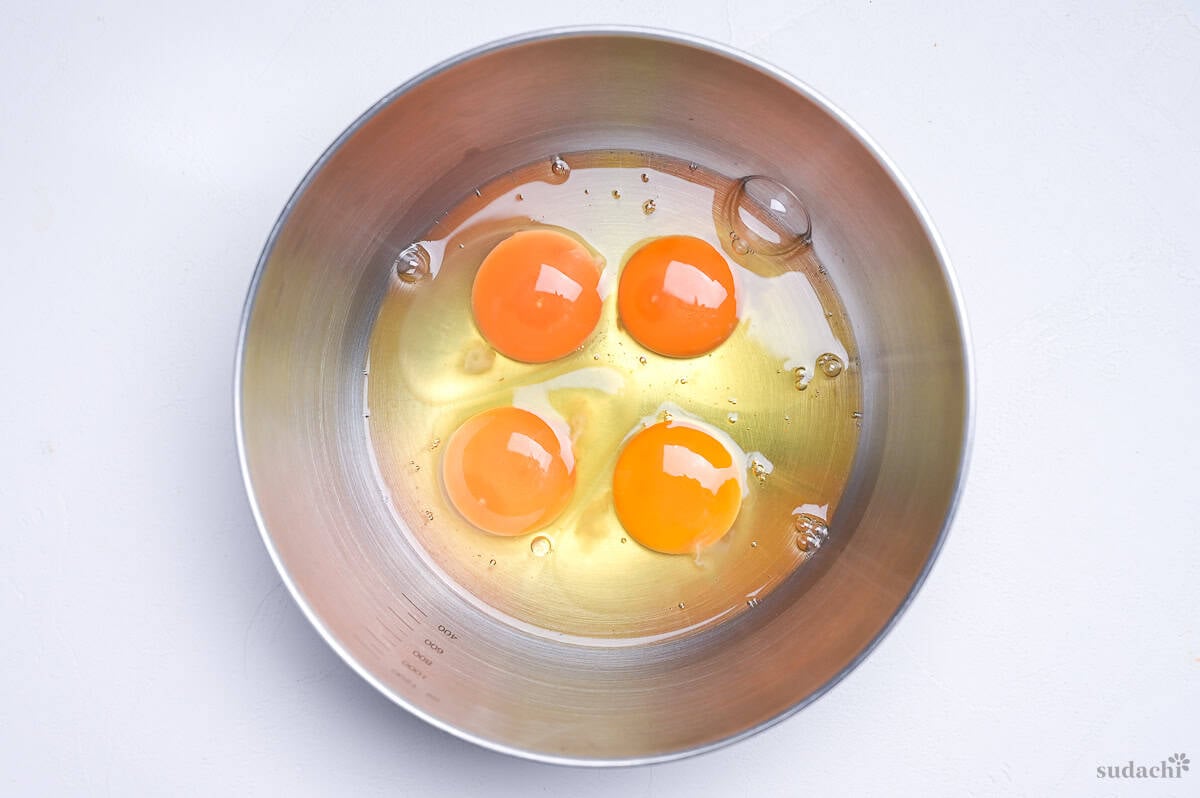
i. Crack the eggs into a bowl and beat them well, then add the salt, the Japanese mayonnaise, the white pepper, and the sake. Mix until the whites lose their body and blend fully into the yolks.
ii. Add the Japanese leek, the sliced shiitake, and the imitation crab, and stir them through.
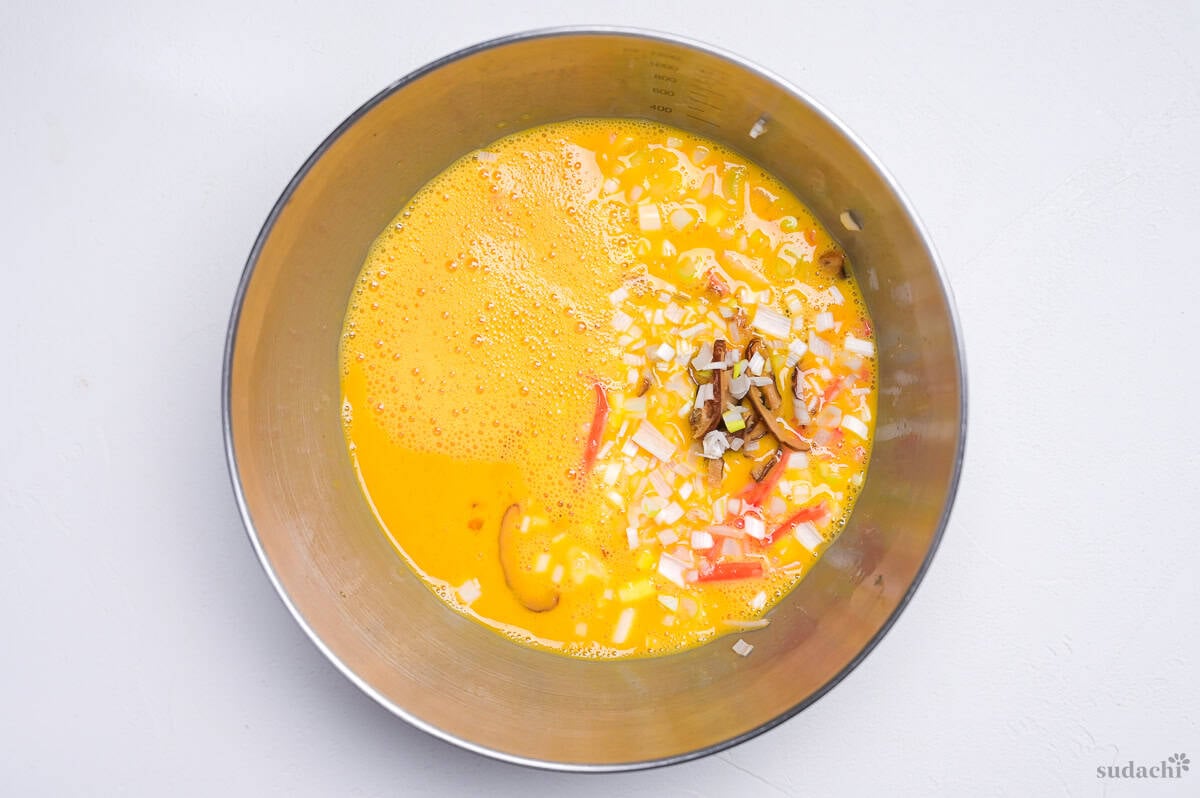
Tip: Be sure to mix well. Under-mix and the different parts set at different temperatures, which leaves the egg grainy.
i. Heat a heavy nonstick pan over high heat and add the cooking oil. It is at a temperature when the oil runs thin and glassy across the surface with a faint shimmer, and a drop of the egg batter whitens at the edge the instant it lands.
ii. Pour the egg in all at once and fold it toward the center just 3 or 4 times with a silicone spatula or cooking chopsticks.
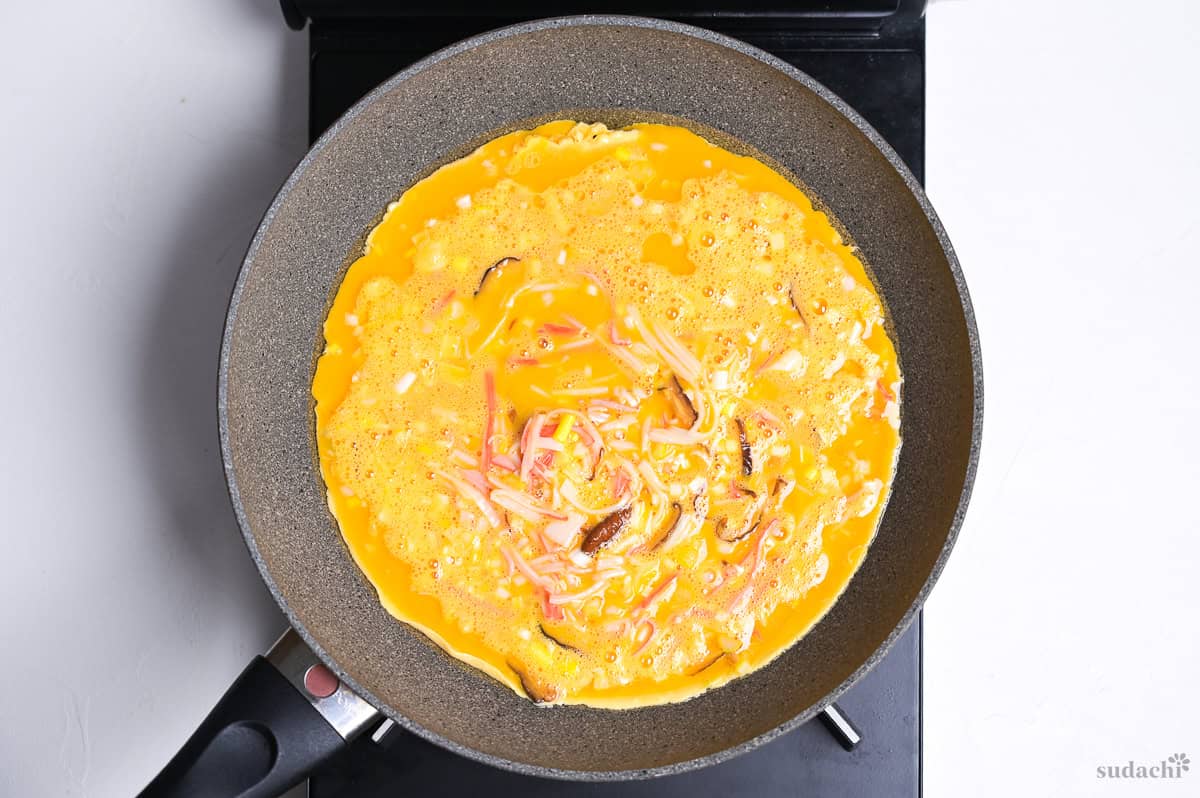
iii. Drop the heat to low, leave it alone, and once the edges have set and only the center is glossy and trembling, turn off the heat.
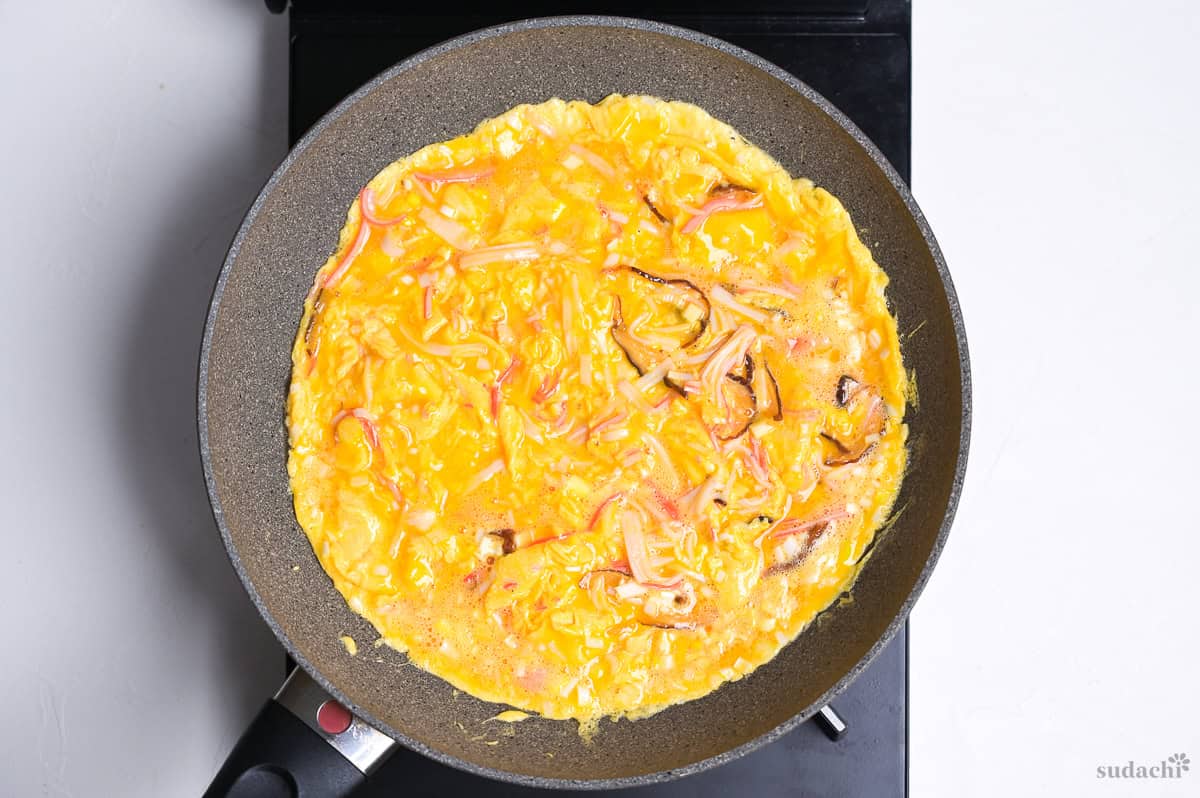
iv. Cover it and leave it a moment, and it comes to where a press with your finger splits it to a molten center.
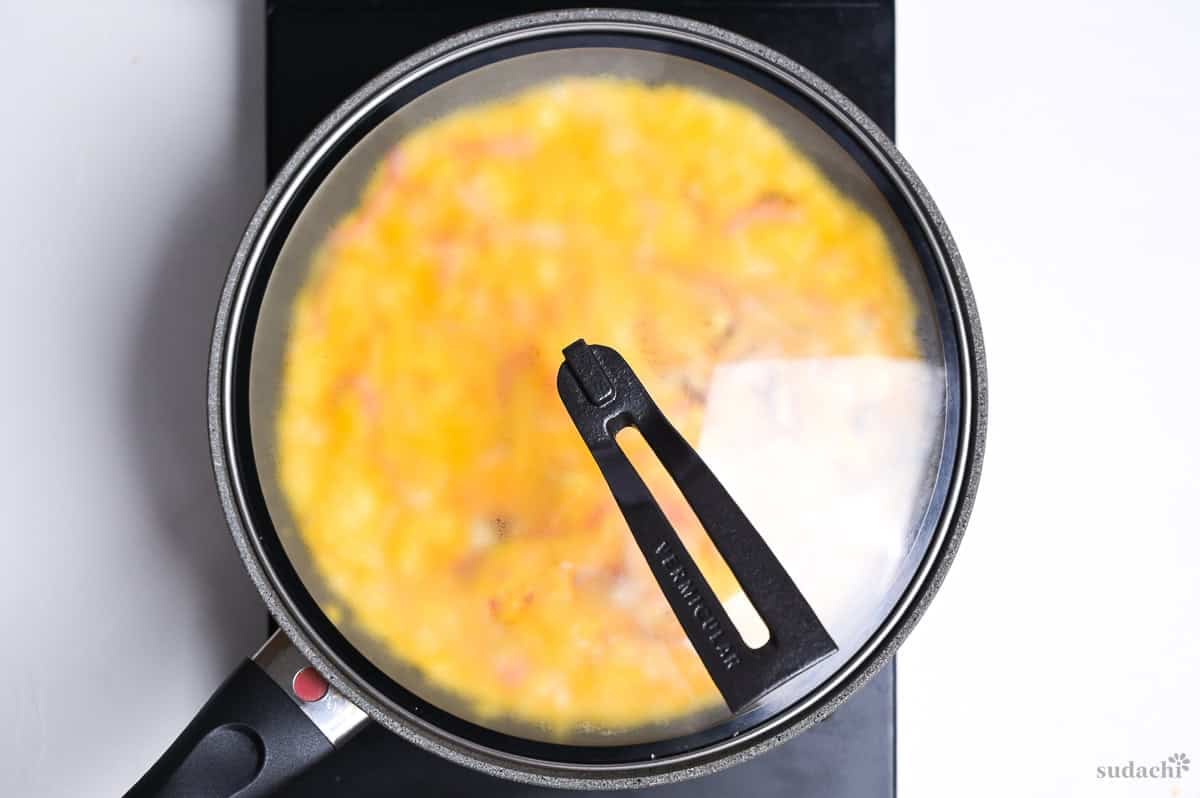
Note: Do not whisk it into small curds. That turns it into a French-style scramble with no outer shell. Rush and fuss with it here and the crisp outside and molten inside collapse and the whole thing is wasted.
The generous oil is not there to deep-fry. It carries heat evenly across the whole base and sets a fast, firm skin on the outside. That skin acts as an insulating layer so the inside stops at soft-set. That is the real source of the crisp-outside, molten-inside texture.
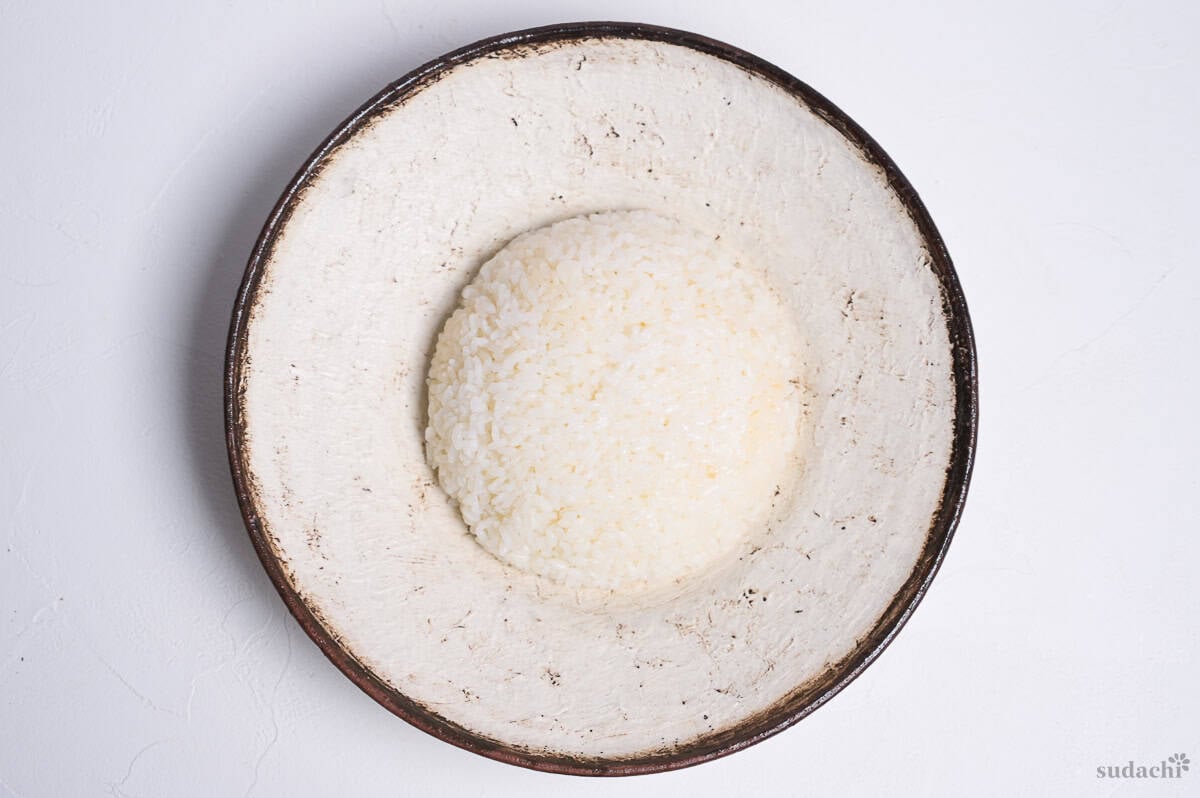
i. Pack the rice into a bowl and turn it out onto the plate to make a mound.
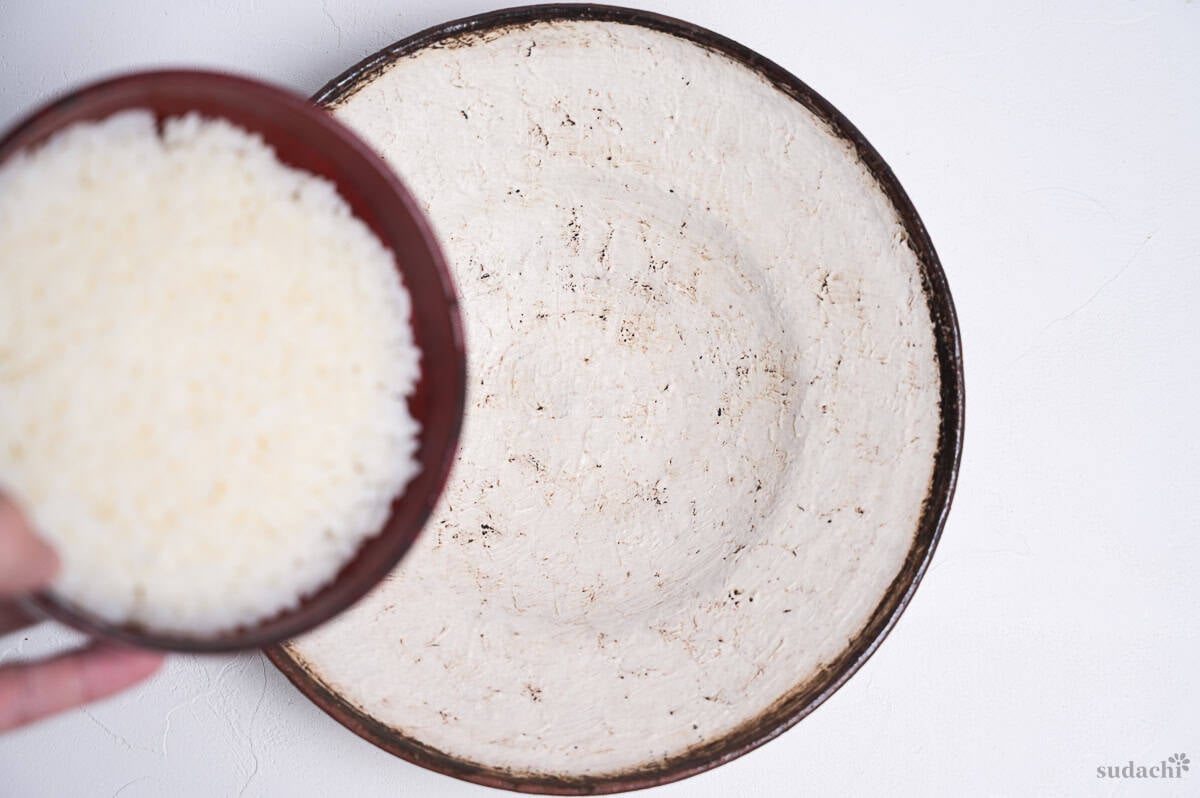
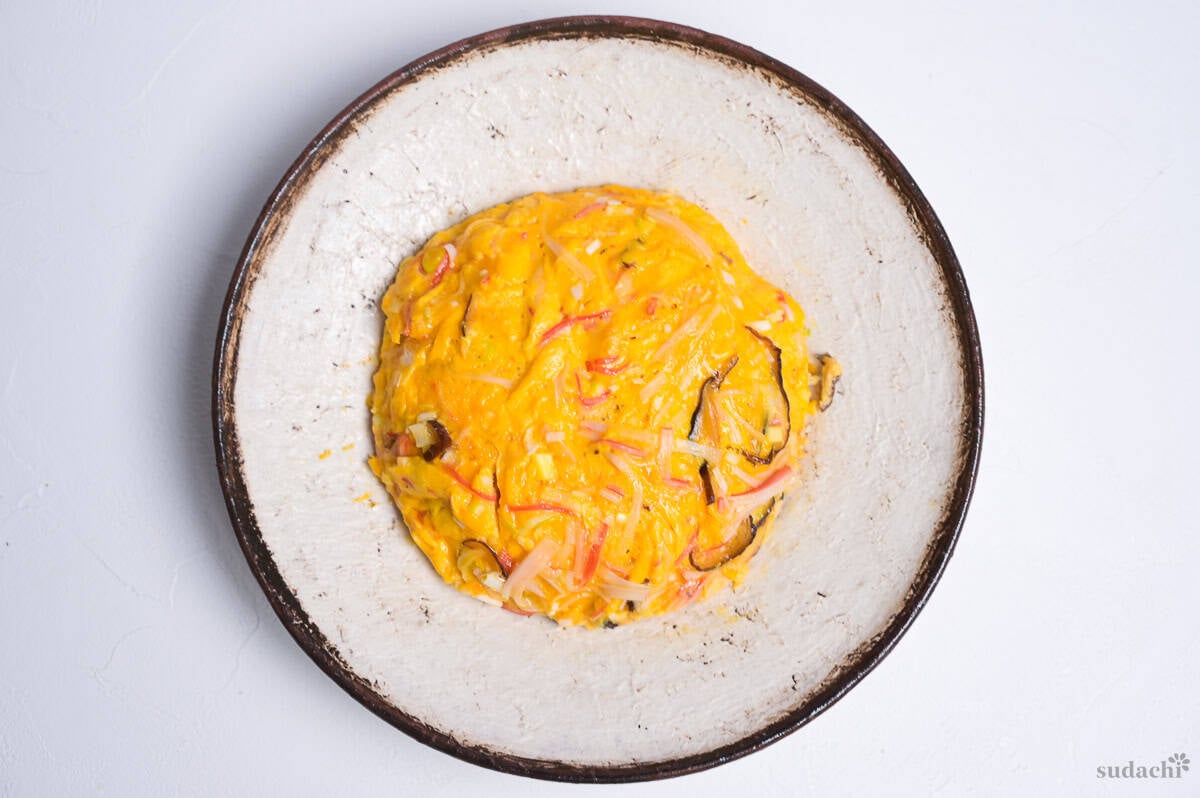
ii. Tilt the pan so the edge of the egg lands on the near side of the rice, then draw the pan back and roll the rest down over it. Serve it whole, or cut it in half with a spatula and split it across 2 plates.
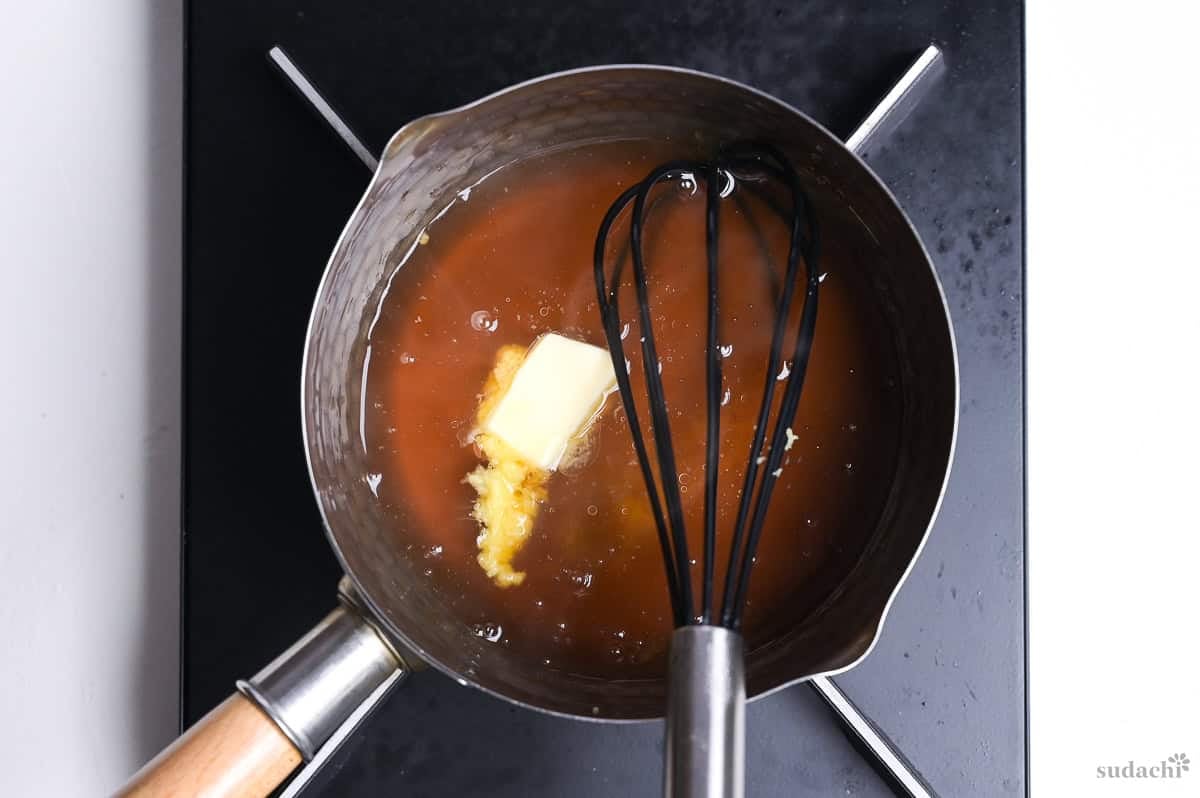
iii. Warm the glaze back up over low heat, kill the heat, and stir in the rice vinegar, then the ginger, then the unsalted butter, in that order.
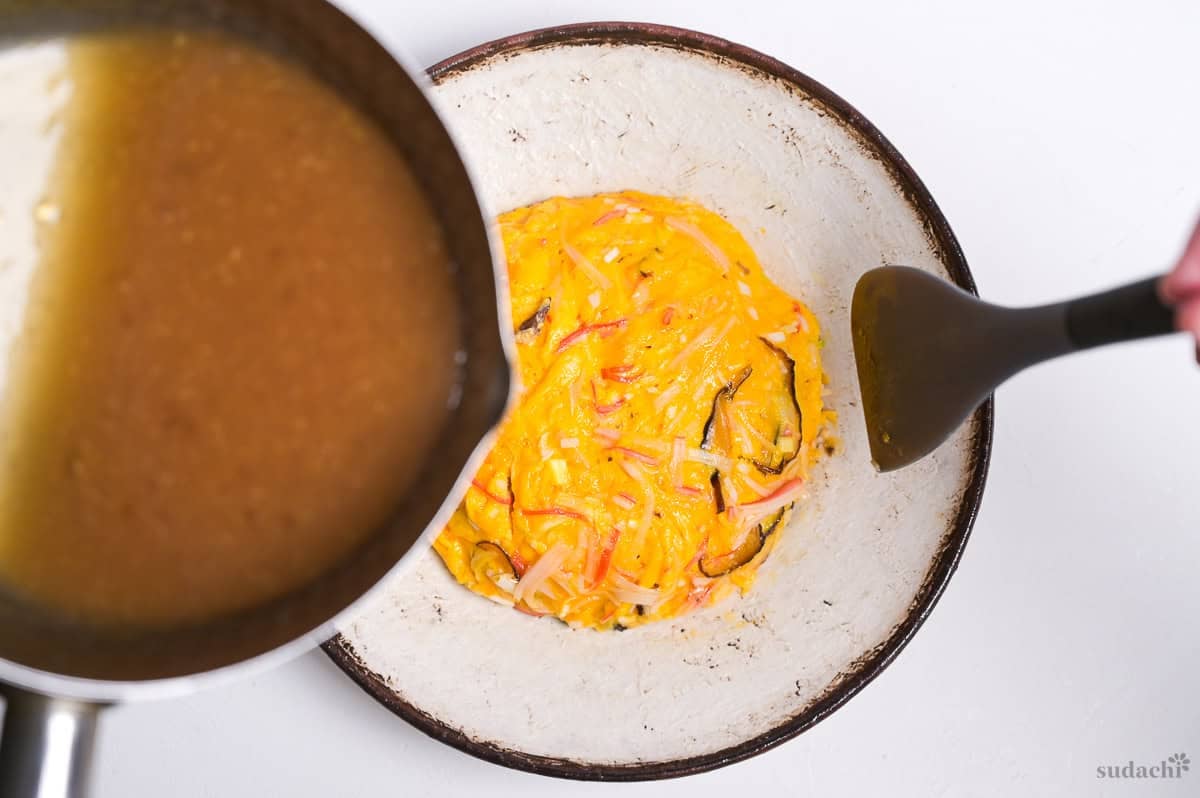
iv. Pour the glaze over the egg, drizzle the toasted sesame oil across the top in a few spots without stirring.
v. Top with the green peas.
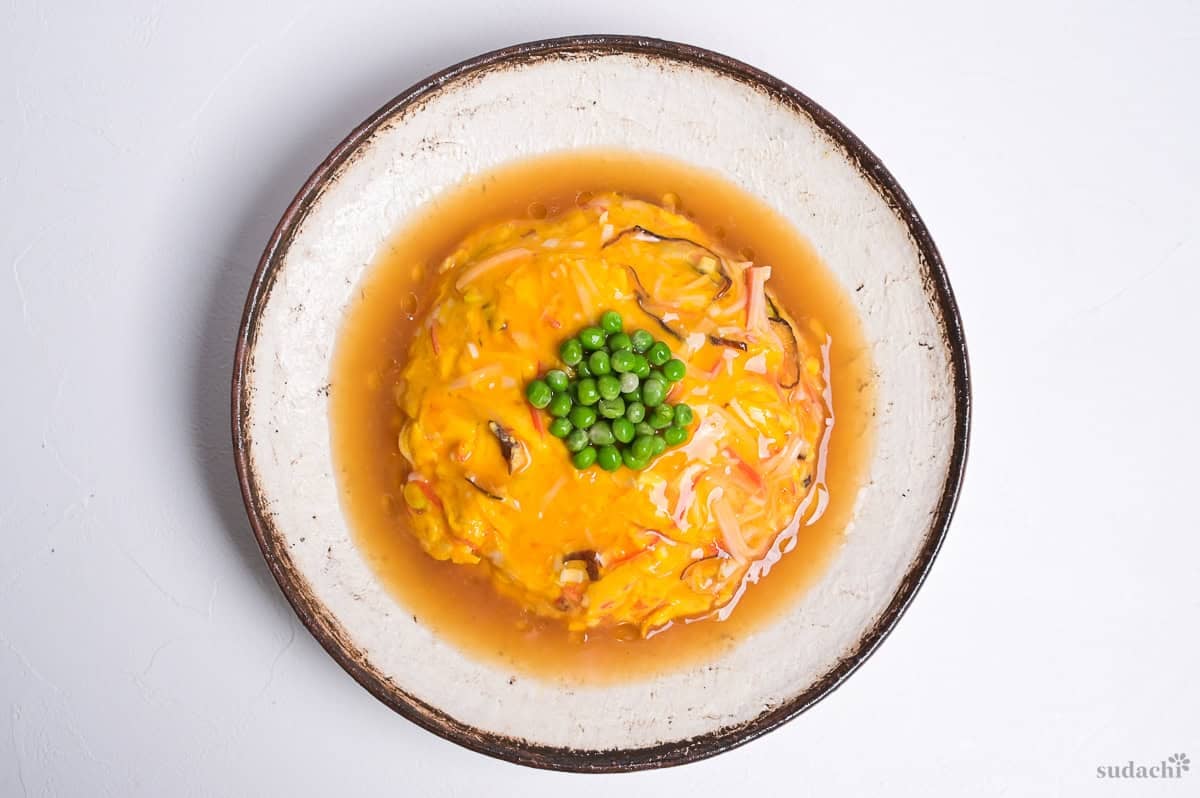
Tip: Molding the rice gives you a repeatable dome that catches the glaze. Left as scattered drops rather than stirred through, the sesame oil releases its aroma in stages with every bite.
If you follow the default recipe, it will yield 2 main servings.
Tips for the Best Tenshinhan
- Do not skimp on the oil for the egg. For 4 eggs (2 servings), 2 tablespoons of cooking oil is the mark, and drop below it and the egg grabs onto the pan and turns into plain scrambled egg. It should feel like slightly too much, and you can tip the leftover oil back out of the pan once the egg is set.
- Pull the glaze off a touch loose. It looks its loosest while it is hot, which is where the nerves kick in, but the glaze tightens as it cools. Chase it with more starch and it sits heavy and gluey on the plate and fights the softness of the egg. If it has gone glossy and translucent, stop there even if it looks a little loose.
- Get the glaze on piping hot. The egg finishes off the heat under a lid, where the residual warmth brings it to soft-set, so the glaze is the topping that carries the heat. Ladle lukewarm glaze over it and the whole plate cools and stiffens, so warm the glaze right before you plate and pour it while it is steaming.
None of these are showy techniques, just small calls about the oil, the stopping point, and the heat of the glaze. That is what separates this plate.
What to Serve With This Recipe
- Japanese Pork Gyoza
- Harumaki (Japanese Spring Rolls)
- Wakame Soup
- Seasoned Bean Sprouts
Tenshinhan Troubleshooting
The usual cause is stopping the heat the second the thickness appeared, before the starch had fully gelled. Put it back on the heat and hold it at a gentle bubble for a full minute until it clears to translucent and turns glossy, and it will set. If it still reads thin, mix up a small amount of fresh slurry, stir it in, and give it another minute of heat.
You can. Pass the glaze through a tea strainer and the lumps come out. They form when the starch hits hot glaze all at once, so next time turn off the heat first, stir the settled powder back up, and pour the slurry in slowly in a thin stream, and they will not form.
That is overcooking or overmixing. Kill the heat while the center is still trembling and cover the pan so the residual heat brings it to soft-set, rather than letting it firm all the way on the burner. An egg that has cooked too far cannot be reversed, so next time lift it off early.
More Japanese Egg Recipes
Hungry for more? Explore my Japanese egg recipe collection to find your next favorite.
Did You Try This Recipe?
I would love to hear your thoughts!
💬 Leave a review and ⭐️ rating in the comments below. 📷 I also love to see your photos – submit them here!
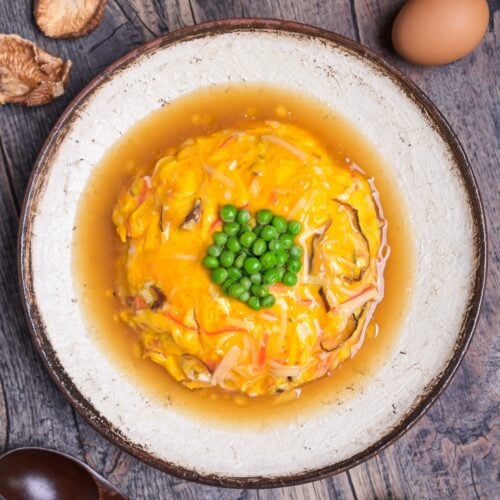
Tenshinhan (Japanese Crab Meat Omelette on Rice)

Ingredients
Prep
- 2 dried shiitake mushroom whole
- 250 ml water for soaking the shiitake
- 300 g cooked Japanese short-grain rice cooked a touch firm
Glaze
- 200 ml shiitake dashi from earlier from the prep, strained
- 1 tsp Chinese-style chicken bouillon powder
- 2 tsp Japanese soy sauce (koikuchi shoyu)
- ½ tbsp light brown sugar or regular sugar
- 2 tsp cold water for the slurry
- 2 tsp potato starch (katakuriko) for the slurry
- ½ tbsp unseasoned rice vinegar (komezu)
- 1 tsp grated ginger root or paste
- 1 tbsp unsalted butter
Tenshinhan (egg)
- 4 eggs
- ⅛ tsp salt for the egg mixture
- 1 tbsp Japanese mayonnaise
- 1 pinch ground white pepper
- ½ tbsp sake or Shaoxing wine
- 3 tbsp Japanese leek (naganegi) white part, roughly chopped
- 50 g imitation crab stick type
- 2 tbsp cooking oil
- 1 tsp toasted sesame oil
- 1 tbsp green peas optional
The ingredient brands and tools I trust are in my Japanese pantry guide and my cooking tools guide.
Can’t find certain Japanese ingredients? See my substitution guide here.
Instructions
- Soak 2 dried shiitake mushroom in 250 ml water, 45 to 60 minutes for whole caps or 20 to 30 for pre-sliced. No boiling water. Use this time to cook your rice, you will need 300 g cooked Japanese short-grain rice.

- Lift the shiitake out, trim the stems, slice the rest thin, and pat dry. Strain the soaking liquid, you should have 200 ml shiitake dashi from earlier. If not, top up with a little water until you have the right amount.

- Shred 50 g imitation crab, finely chop 3 tbsp Japanese leek (naganegi), and mix 2 tsp cold water with 2 tsp potato starch (katakuriko) together in a small bowl to make a slurry.
- In a pot, boil the 200 ml shiitake dashi from earlier with 1 tsp Chinese-style chicken bouillon powder, 2 tsp Japanese soy sauce (koikuchi shoyu), and ½ tbsp light brown sugar over medium heat. Simmer for 1 minute and taste, adjusting with a drop of soy sauce or pinch of salt.
- Off the heat, stir the slurry again and pour it in slowly while stirring. Return the heat to medium-low and gently bubble 1 minute. Do not stop when it first thickens. Once it clears to translucent and glossy, the starch has gelled so you can take it off the heat for now.
- Beat 4 eggs with ⅛ tsp salt, 1 tbsp Japanese mayonnaise, 1 pinch ground white pepper, and ½ tbsp sake, then fold in the leek, sliced shiitake, and crab.
- Heat a nonstick pan on high with 2 tbsp cooking oil. When it shimmers, pour in the eggs and fold to the center 3 or 4 times with a spatula.
- Drop to low for about 45 seconds, or until the edges set and only the center trembles. Turn off the heat, cover, and rest for 30 to 60 seconds. Reheat the sauce if needed. Off the heat, stir in ½ tbsp unseasoned rice vinegar (komezu), 1 tsp grated ginger root and 1 tbsp unsalted butter.
- Press the rice into a bowl and mound onto the plate. Slide the egg over it, whole or split across 2 plates.
- Pour the sauce over the egg, drizzle with 1 tsp toasted sesame oil over the top, and scatter 1 tbsp green peas. Enjoy!

Leave a rating and a comment