



Want tempura made dead easy? Try isobe age. There’s no egg to crack. Just combine equal parts potato starch and cake flour with aonori (dried green seaweed powder), then briefly stir in cold sparkling water. That’s the batter done.
Add the chikuwa fish cakes to the bowl, turn them in the batter, and into the oil they go. Coating them together saves you dipping each piece separately. It’s a far more relaxed fry than tempura.

Isobe age
Recipe Snapshot
- What is it? Isobe age is a Japanese fried dish that uses nori. The name isobe signals nori, and the usual homemade version is chikuwa fish cake coated in an aonori seaweed batter.
- Flavor profile: Fresh from the oil, the seaweed aroma of aonori comes first. Then comes the savory, gently sweet fish cake, with a springy bite beneath a light, crisp coating.
- Why this recipe works: This recipe’s egg-free batter, equal parts potato starch and cake flour, fries light without chilled flour and forgives overmixing. Precooked chikuwa means only the batter fries, 1 minute a side.
- How to make it: Coat the cut chikuwa in a bowl of batter mixed with cold sparkling water. Fry at 180°C/356°F, then drain on a rack. There’s no whisking or dipping each piece.
- What to expect: Allow about 10 minutes from cutting the chikuwa to the last piece out of the oil. Watch the color. Lift each piece once the batter is golden brown.

What Is Isobe Age?
Isobe age (磯辺揚げ) is a type of Japanese tempura with a coating that smells of nori as soon as it comes out of the oil. Its best-known form, and the one we’re making here, is chikuwa fish cake in a batter speckled with aonori seaweed. The name also covers ingredients wrapped in nori or coated with nori flakes before frying.
The word isobe means a rocky seashore. In a dish’s name, it tells you nori is involved. In Japan, isobe age is a standard in school lunches and bento lunch boxes, and it shows up on Japanese izakaya menus too.
The word isobe, meaning a rocky seashore, dates back at least to the Tosa Diary, written in or after 935. In cooking, it describes a family of dishes made with nori. These include isobe yaki, a grilled mochi rice cake brushed with soy sauce and wrapped in nori, and isobe ae, a dish tossed with nori. You may also see the name shortened to iso. What these dishes share is the delicate flavor and aroma of nori.
There are 3 ways to use nori in isobe age. Most often, it’s mixed into the batter as finely crushed toasted nori or the more aromatic aonori. Almost all homemade chikuwa versions use aonori. Another method is to dip the ingredient in batter, then coat it with crumbled toasted nori before frying. A Japanese cooking dictionary describes a coating of flour, egg white and crumbled nori, in that order. The third option is to wrap the ingredient in a nori sheet and fry it, either as it is or with a thin coating of batter. All 3 methods make isobe age.
Proper tempura batter uses egg, which makes a small batch a little awkward to mix. My shortcut for this recipe is a simpler batter. It doesn’t suit every ingredient, but chikuwa handles it with no trouble at all. I also crush bonito flakes (katsuobushi) by hand and add them to the mix. They aren’t usual in isobe age batter, but I added them because they felt right for this version.
Chikuwa Isobe Age Ingredients
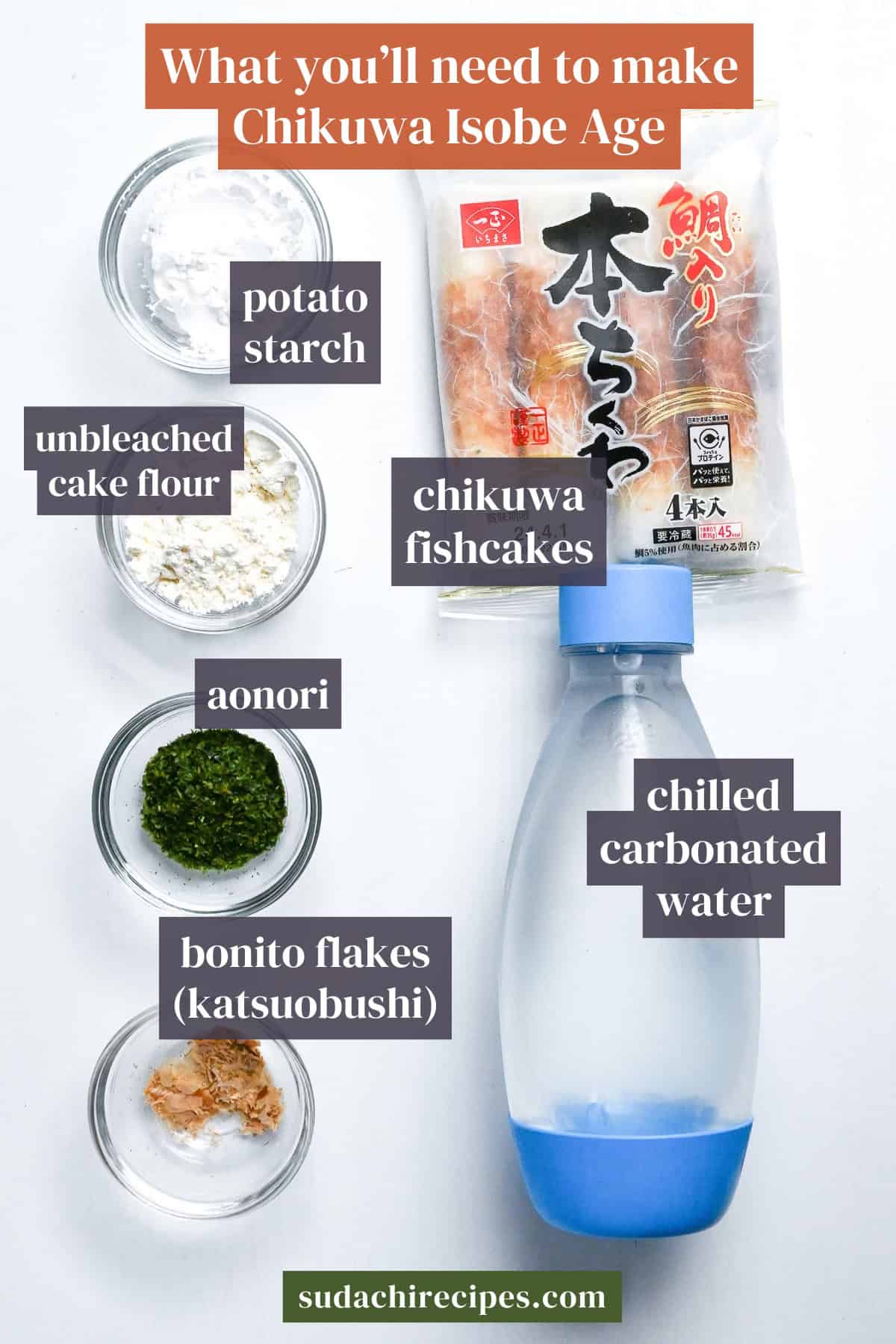
- Chikuwa: These fish cakes are the whole dish here, so choose a kind you already enjoy if you can. Check the package for a named fish followed by a short ingredient list. An evenly browned surface with fine wrinkles also suggests a higher fish content. Both styles sold in Japan, those with pale ends and those browned all over, work here. In the US, look in the freezer section of Japanese or other Asian grocery stores, where chikuwa usually comes in packs of 5. Choose tubes with a hole through the center. The flat Korean fish cake sheets called eomuk are a different product.
- Aonori: This seaweed gives the hot batter its aroma of the sea. Some packages labeled aonori, whether in English or Japanese, actually contain aosa, a milder-smelling seaweed. Once it’s open, refrigerate or freeze it. Heat and moisture knock the aroma right out of it.
- Potato starch (katakuriko): Use as much potato starch as cake flour. With starch making up half the dry mixture, there’s less scope for gluten to develop. That helps the batter stay light without chilling the flour, even if you don’t get the mixing quite right. US stores label it simply as potato starch.
Substitutions & How to Customize
Use these swaps when you can’t get chikuwa or the flours and starches, or try a variation to change the filling, coating or flavor.
Substitutions:
- Chikuwa → Imitation crab (kanikama): Made from the same fish paste, imitation crab is the closest alternative. Fry it at 180°C/356°F for 2 to 3 minutes, until the batter starts to color.
- Chikuwa → Hanpen: This soft, fluffy fish cake is thicker than chikuwa. Give it 2 to 3 minutes at 170°C/338°F, until the outside sets.
- Chikuwa → Boiled octopus: Cut into bite-size pieces and dry thoroughly, then fry at 170°C/338°F for about 3 minutes, until the batter takes on color. Overfrying shrinks the octopus and makes the coating slip off.
- Cake flour → All-purpose flour: Its higher protein content makes the batter turn sticky faster, so mix with an especially light hand. Adding a little more potato starch helps.
- Potato starch → Cornstarch: Substitute an equal amount for a thinner, smoother coating with a slightly softer crunch. When we surveyed Japanese home cooks living abroad, the US respondent said they replace potato starch with cornstarch bought at Walmart.
- Aonori → Aosa: Replace the aonori with an equal amount of this seaweed for a milder sea aroma.
- Aonori → Crumbled nori: Finely crumble toasted nori and stir it into the batter. Expect a darker coating and a gentler seaweed aroma.
- Sparkling water → Cold water: Use an equal amount of refrigerated water. The coating will be a little less light, but the recipe still works.
- Bonito flakes → Leave them out: These are optional and aren’t part of a typical isobe age batter. Omitting them leaves a cleaner flavor with just the aroma of aonori.
Substitutions that I don’t recommend:
- Bread flour instead of cake flour: Its high protein content makes a sticky batter that turns heavy and dense when fried.
- Parsley instead of aonori: It gives the batter a green color but none of the seaweed aroma.
How to Customize:
- Curry powder: Add a little to the batter, either with the aonori or as a replacement for it.
- Red pickled ginger: Chop red pickled ginger (beni shoga) and stir it into the batter.
How to Make My Chikuwa Tempura
Before you start (Mise en place):
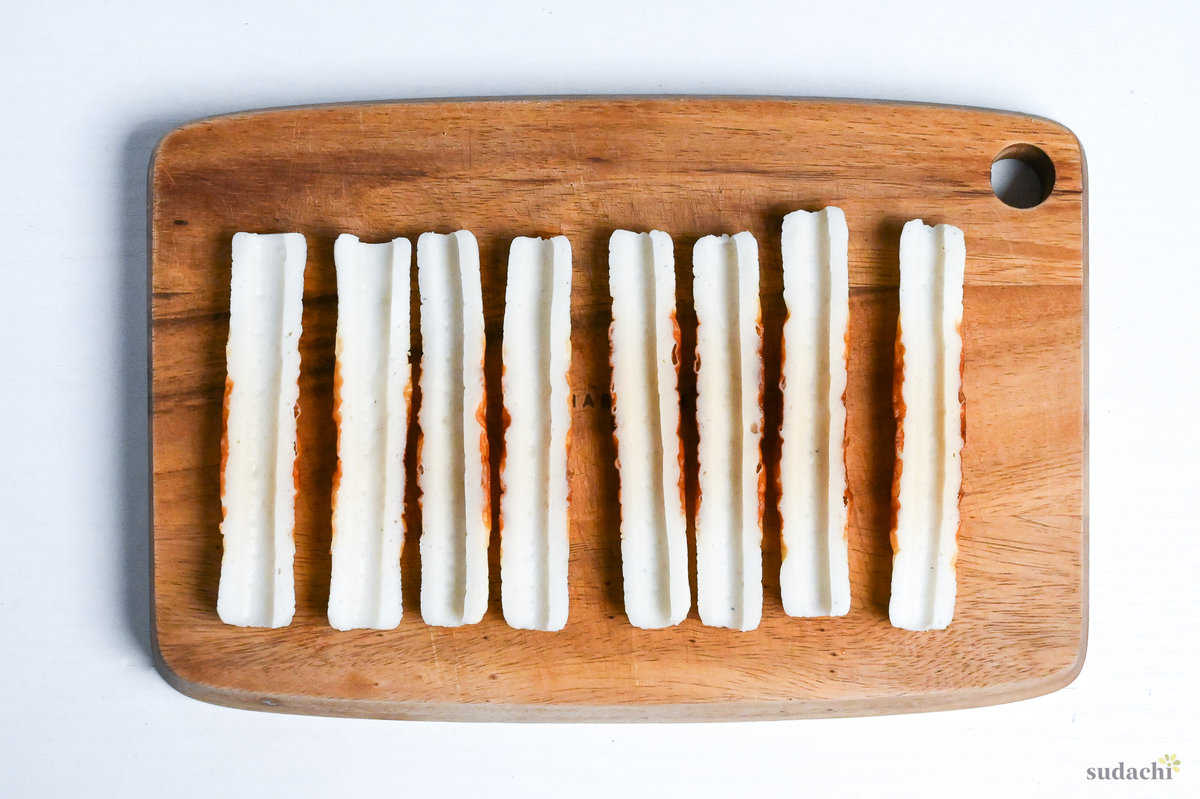
- Halve each chikuwa lengthwise, then cut each half diagonally into 2 pieces.
- You can cut frozen chikuwa straight from the freezer. Wipe away any surface frost afterward so it won’t make the hot oil spatter.
- Crush the bonito flakes to a fine powder by rubbing them between your fingers.

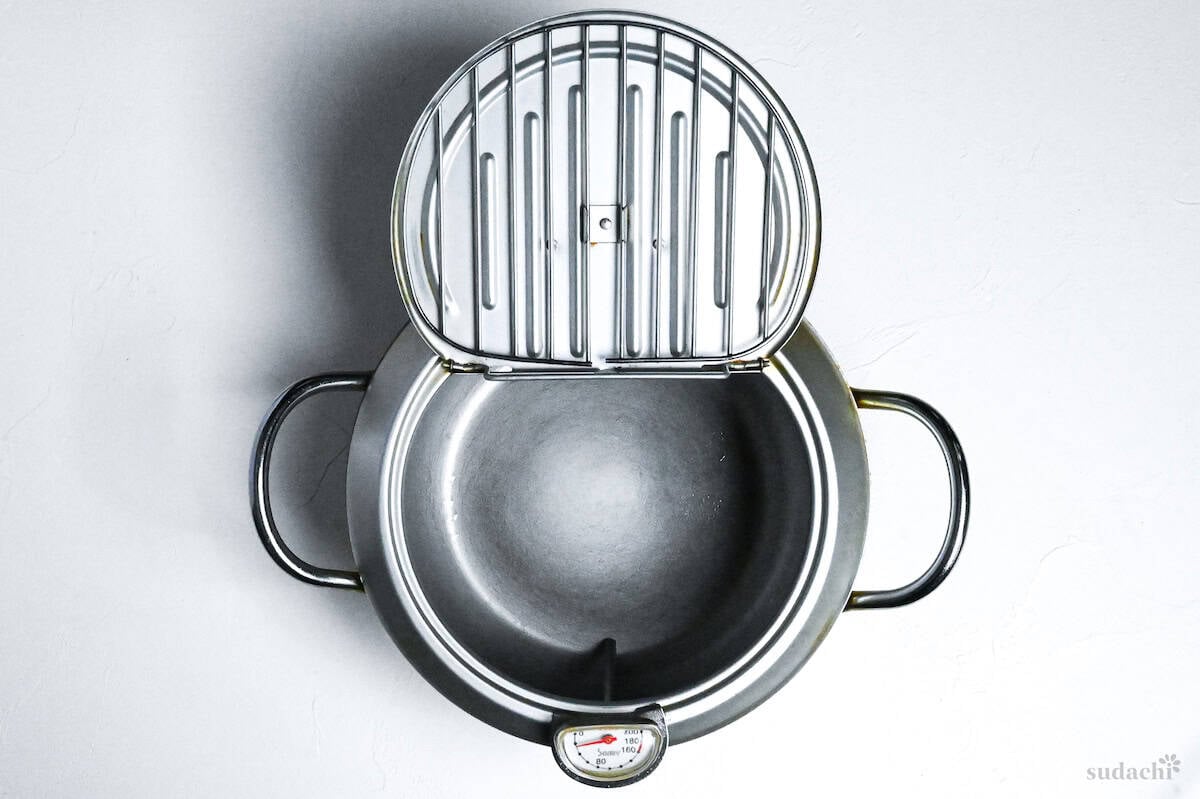
To develop this recipe, I used a tempura pot with a rack and a thermometer.
i. Add frying oil to a pot and bring it to 180°C/356°F. Use a thermometer for a consistent frying temperature.
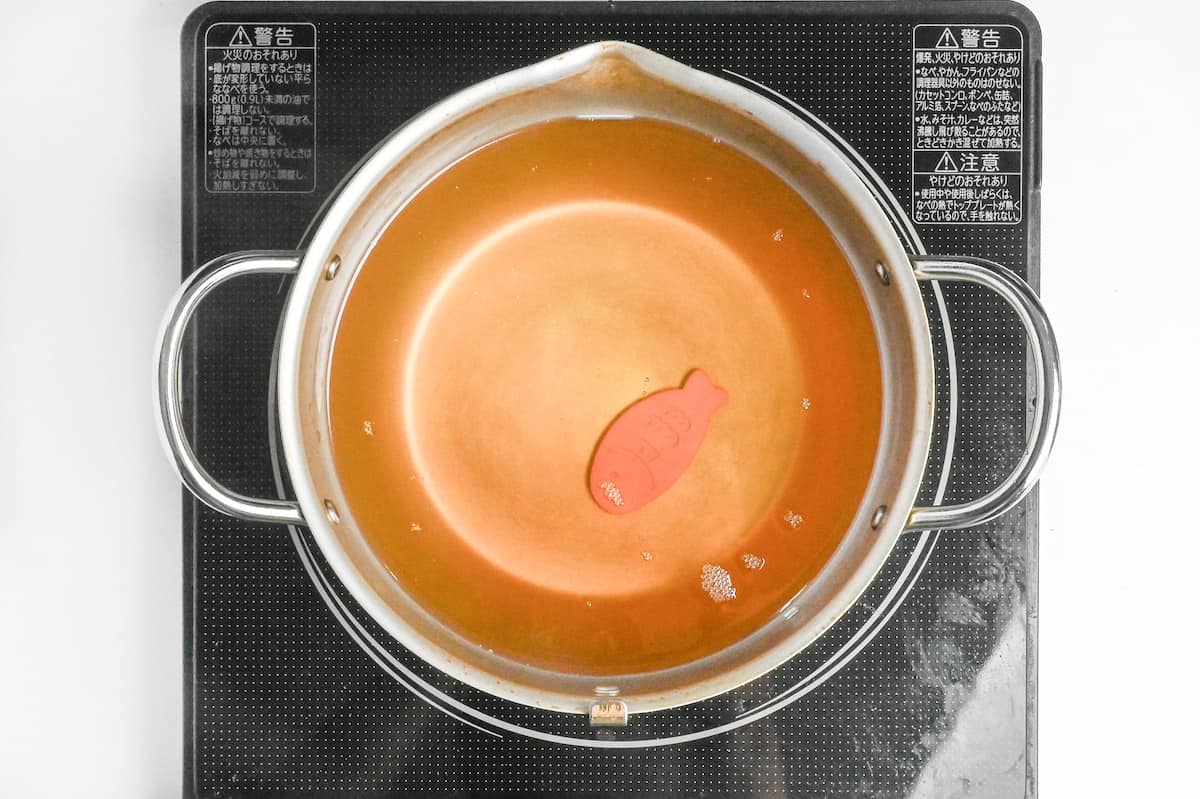
Tip: To check without a thermometer, drop a little batter into the oil. It should sink partway, then immediately rise to the surface.
ii. As the oil heats, combine the cake flour, potato starch, aonori and crushed bonito flakes in a bowl.

iii. Add the cold sparkling water just before you’re ready to fry, stirring briefly to combine.

Don’t worry about a few small lumps. Too much stirring makes the coating heavy.
Tiny gas bubbles from the sparkling water stay in the batter and expand in the hot oil, making the coating lighter. They also work like little chimneys, letting moisture escape as steam. So the coating dries quickly inside and holds its crunch.
i. Add all the cut chikuwa to the bowl and turn the pieces until they’re coated.

ii. Gently lower the coated pieces into the oil, leaving them clear of one another.

Note: Adding too many at once cools the oil and makes the pieces stick together.
iii. Let the coating set on the first side without disturbing it. Once it begins to color, turn the pieces over, allowing about 1 minute for each side.
iv. Remove each piece as soon as the coating is a good golden brown. The fish cake is already cooked, so judge doneness by the batter’s color alone. Transfer to a rack to let the oil drain away.

When you’d rather not use a whole pots worth of oil, cover the bottom of a frying pan with oil and heat over medium heat. Add the coated chikuwa and fry both sides until crisp. The shallow oil heats quickly, so avoid high heat and switch the heat off if you see white smoke.

Tips for the Best Isobe Age
- Watch the batter’s color instead of treating the chikuwa like raw fish. An unfamiliar fish cake can tempt you to give it the long fry you’d give raw fish. Take it out as soon as the coating reaches a good golden brown.
- Wait until frying time to add the sparkling water. The longer a mixed flour batter stands, the less crisp it will be when fried. You can combine the dry ingredients ahead, then stir in the sparkling water when the oil is nearly at temperature.
- Let the oil return to 180°C/356°F between batches. Adding chikuwa lowers the temperature each time. If the oil hasn’t recovered, the coating sets slowly and becomes thick and greasy. Use a thermometer or a drop of batter to check the heat before adding more pieces.
The chikuwa can wait for you, but the batter won’t.
Storage & Meal Prep
Fridge: Eat by the next day, and never leave it at room temperature. The coating softens.
Freezer: Rest on a wire rack to drain off excess oil and cool, wrap and freeze up to 2 weeks.
Meal prep: Cut the chikuwa and combine the dry ingredients ahead. Add sparkling water just before frying.
Reheating: A toaster oven or dry frying pan. Microwaving alone leaves the coating soft. Briefly microwave frozen pieces to thaw, then toast them.
What to Serve With Chikuwa Isobe Age
- Chicken Takikomi Gohan (Japanese Seasoned Rice)
- Pork and Vegetable Miso Soup (Tonjiru)
- Kinpira Gobo (Braised Burdock Root)
- Spinach Ohitashi (Spinach in Dashi)
Chikuwa Tempura Troubleshooting
The chikuwa may have been wet, or you may have moved it before the coating had set. Frost and thawing water prevent the batter from sticking, leaving it to peel away. The fish cake is still good to eat where the batter came off. Leave the remaining pieces undisturbed until their first side sets, and dry the surface before coating them next time.
The oil may be too cool, or the pieces may have too much batter on them. Low heat lets the coating absorb oil before it sets, making it heavy. Let the oil reach 180°C/356°F again before frying another batch, and add fewer pieces. Before lowering each piece into the oil, use the edge of the batter bowl to scrape away the excess coating.
Flour batter keeps its fresh crunch only briefly. Draining it on paper speeds up the softening by trapping steam beneath it. To crisp the pieces again, heat them briefly in a toaster oven or a dry frying pan.
More Japanese Fried Food Recipes
Now that chikuwa has shown you how little a good fry asks of you, pick your next one from my Japanese Fried Food Recipes.
Did You Try This Recipe?
I would love to hear your thoughts!
💬 Leave a review and ⭐️ rating in the comments below. 📷 I also love to see your photos – submit them here!

Chikuwa Isobe-Age (Fishcake Tempura with Aonori Batter)

Ingredients
- 4 chikuwa fishcake
- 2 tbsp unbleached cake flour
- 2 tbsp potato starch (katakuriko)
- 1 tbsp aonori (dried green seaweed powder)
- 1 tsp bonito flakes (katsuobushi)
- 4 tbsp carbonated water chilled
- cooking oil for frying
The ingredient brands and tools I trust are in my Japanese pantry guide and my cooking tools guide.
Can’t find certain Japanese ingredients? See my substitution guide here.
Instructions
- Start heating a pot of cooking oil to 180 °C (356 °F). While you wait, cut 4 chikuwa fishcake in half lengthways, then cut in half again diagonally crosswise.

- Take a large bowl and add the 2 tbsp unbleached cake flour, 2 tbsp potato starch (katakuriko) and 1 tbsp aonori (dried green seaweed powder). Crush 1 tsp bonito flakes (katsuobushi) in your hand to make a fine powder and sprinkle it into the bowl. Mix until all the ingredients are evenly distributed.
- Pour 4 tbsp carbonated water into the dry ingredients and gently stir until combined.
- Add the chikuwa to the bowl and mix until evenly coated.
- Once the oil is hot, add the battered chikuwa in batches, leaving space between the pieces, and fry for 1 minute on each side.
- Transfer to a wire rack and rest for a few minutes to drain any excess oil.
- Serve and enjoy!


Very nice recipe excellent
Thank you so much!