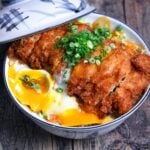
Chicken Katsudon
Ingredients
Chicken Cutlet
- 350 g boneless chicken thigh or chicken breast
- 1 tbsp all-purpose flour plain flour in UK/AU
- ½ tbsp cornstarch
- 60 g panko breadcrumbs or regular breadcrumbs
- 1 egg for batter
- 5 tbsp all-purpose flour plain flour in UK/AU
- 3 tbsp water for batter
- salt and pepper to taste
- cooking oil neutral with high smoke point like rice bran
Katsudon
- 150 ml dashi stock leftover or make quick dashi using dashi granules
- 3 tbsp mirin
- 1 tbsp light brown sugar or little less amount of regular sugar
- 1 tsp Chinese-style chicken bouillon powder
- ½ onion thinly sliced or wedges
- 5 tsp Japanese soy sauce (koikuchi shoyu)
- 3 eggs whites and yolks separated
- 2 portions cooked Japanese short-grain rice or medium-grain (Calrose)
Toppings
Instructions
- Score the flesh of 350 g boneless chicken thigh with the tip of a knife (or scissors) and gently pound until 1-2cm (½-¾") thick.
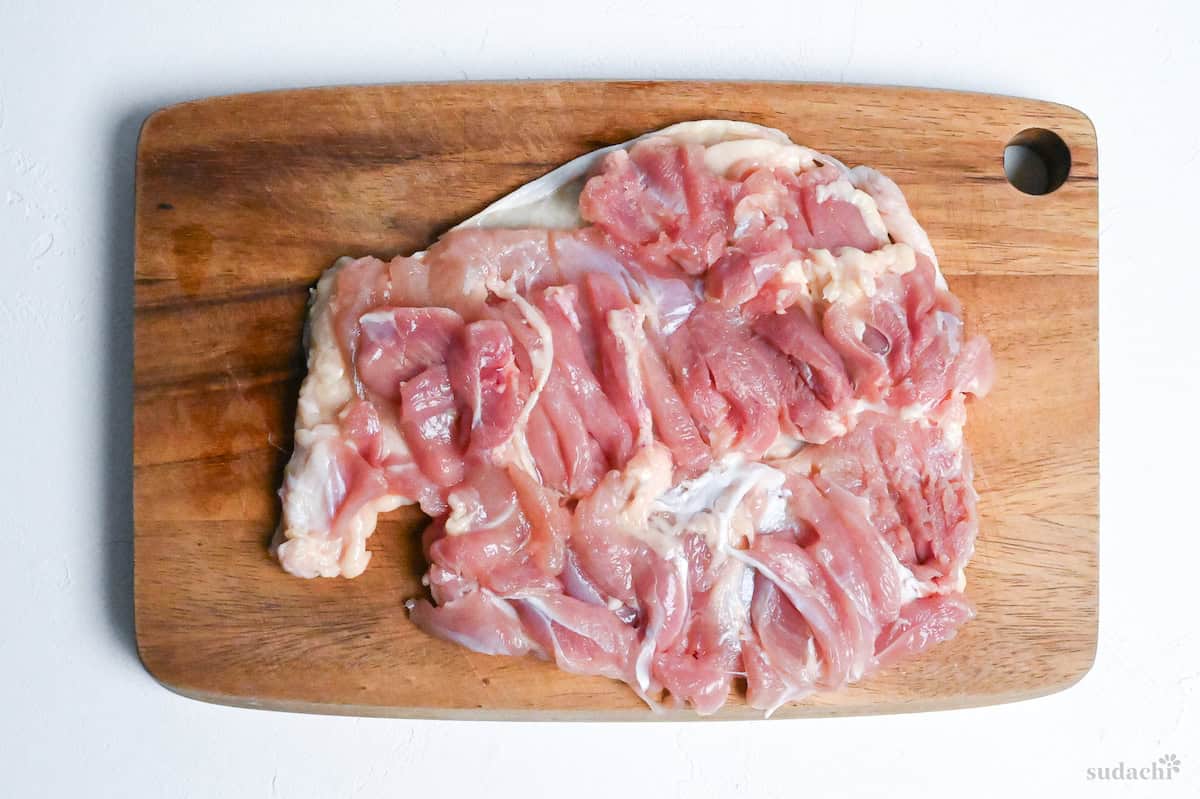
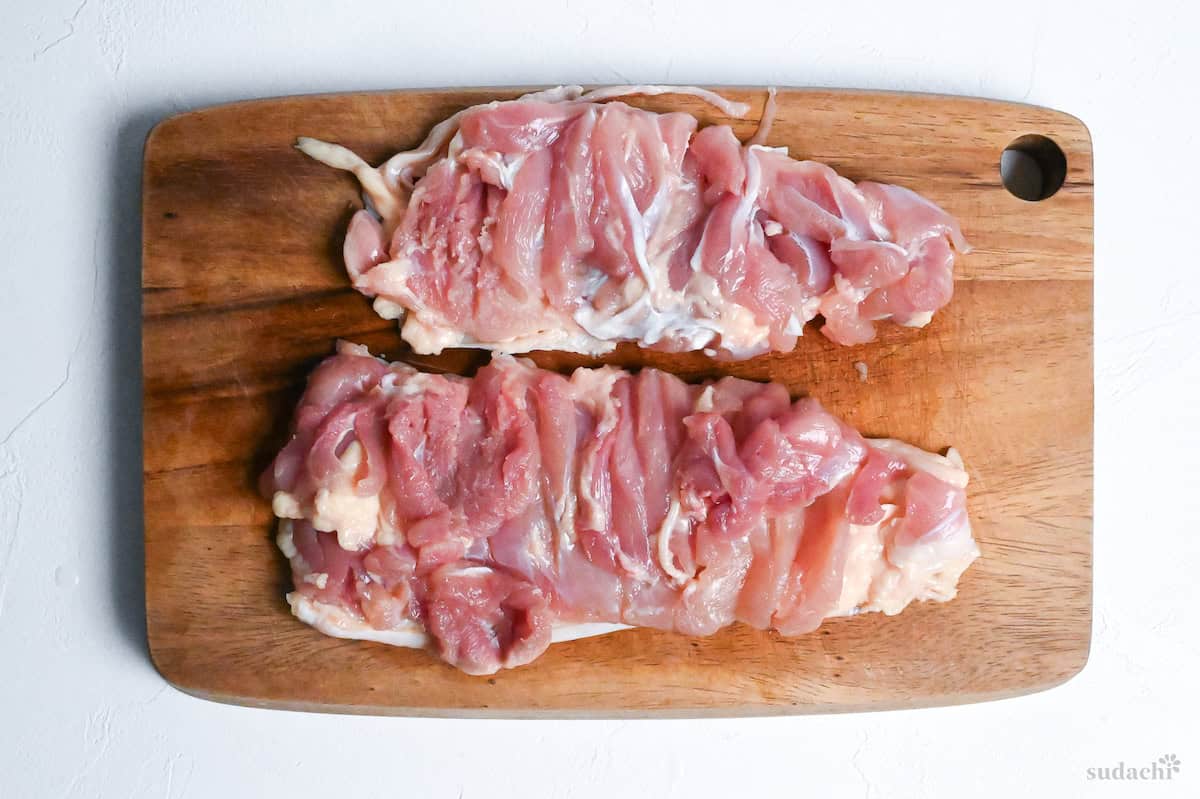
- Cut into equal portions for each serving.
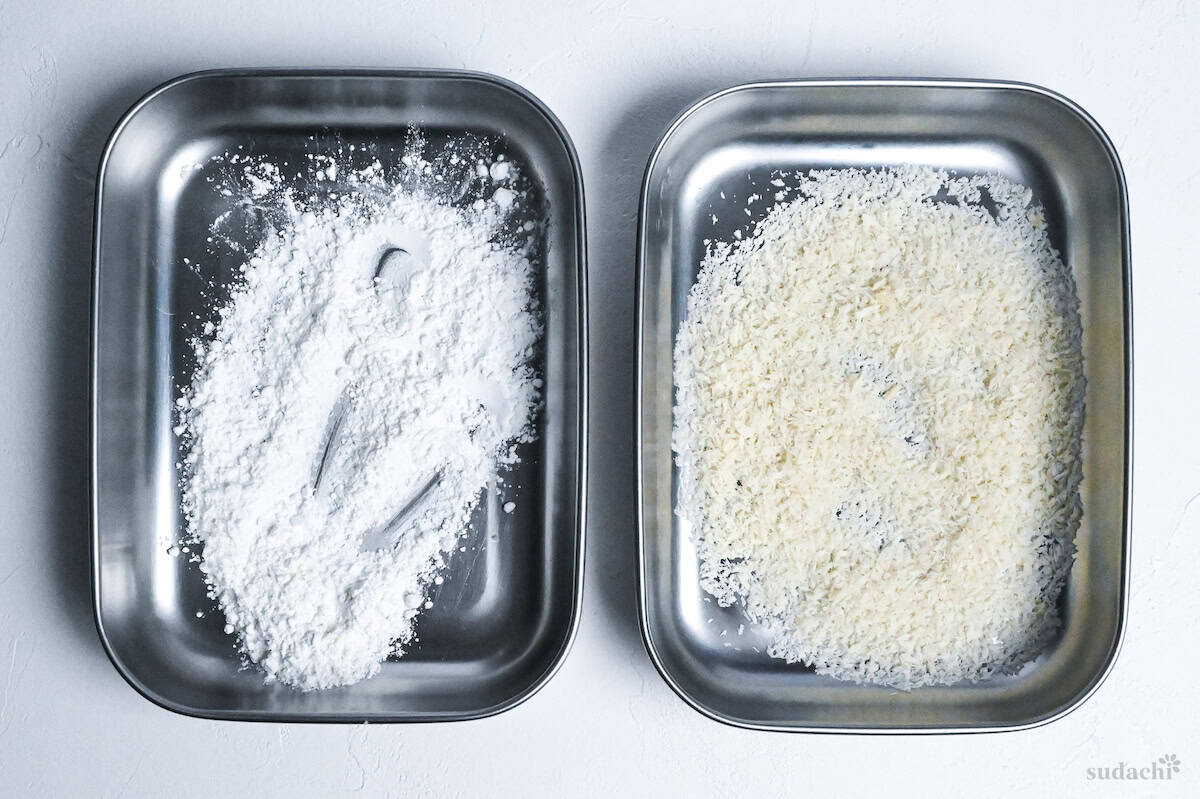
- Preheat your cooking oil for deep frying to 170 °C (338 °F). Prepare two wide containers or plates, one with a mixture of 1 tbsp all-purpose flour and ½ tbsp cornstarch, the other with about 60 g panko breadcrumbs (approx 8 tbsp/ half US cup per cutlet).
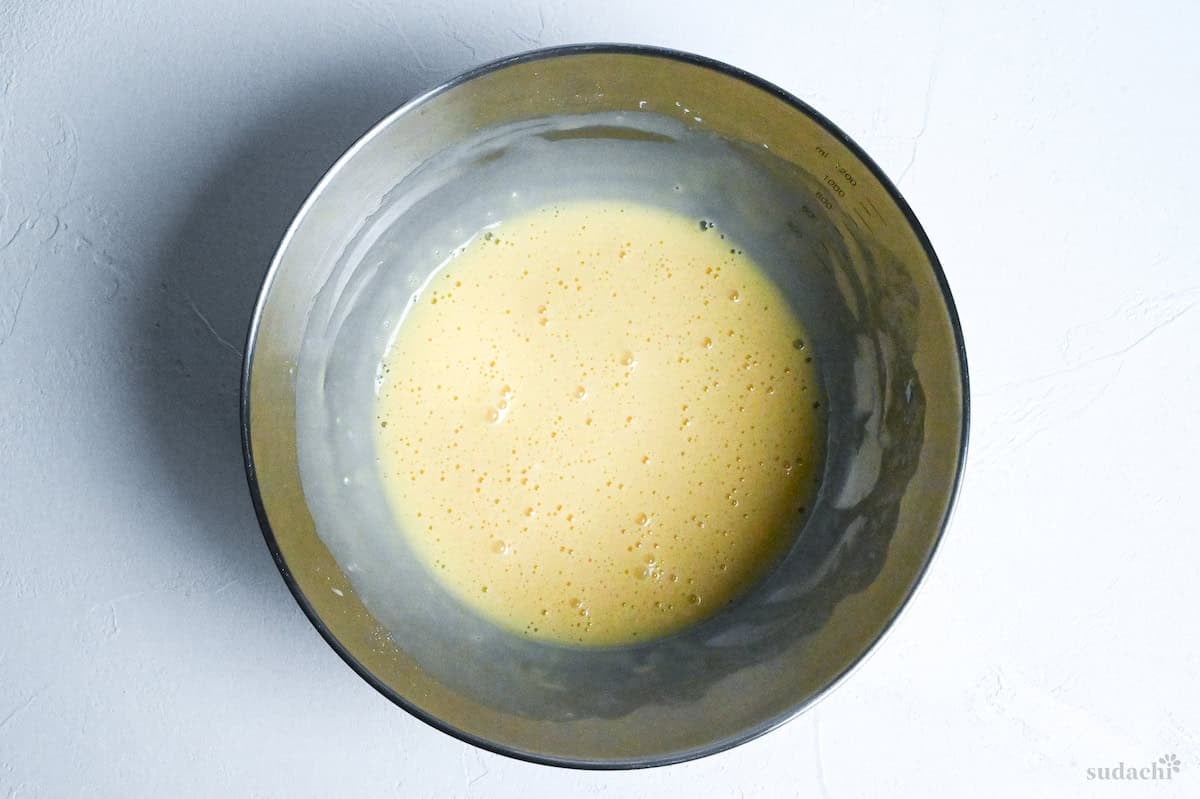
- Crack 1 egg into a bowl and add 5 tbsp all-purpose flour and 3 tbsp water. Whisk until it forms a thick, smooth batter.
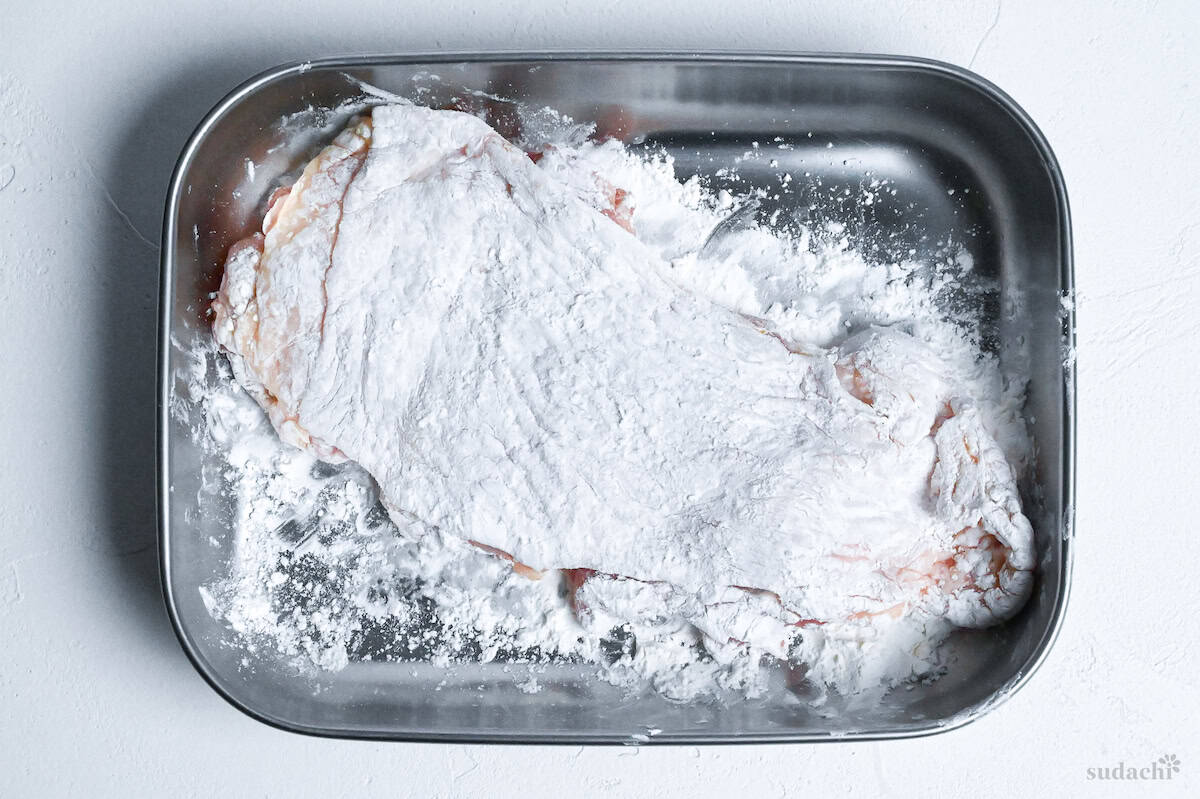
- Sprinkle both sides of each piece of chicken with a pinch of salt and pepper, then place in the flour/starch mixture and rub it all over until evenly covered.
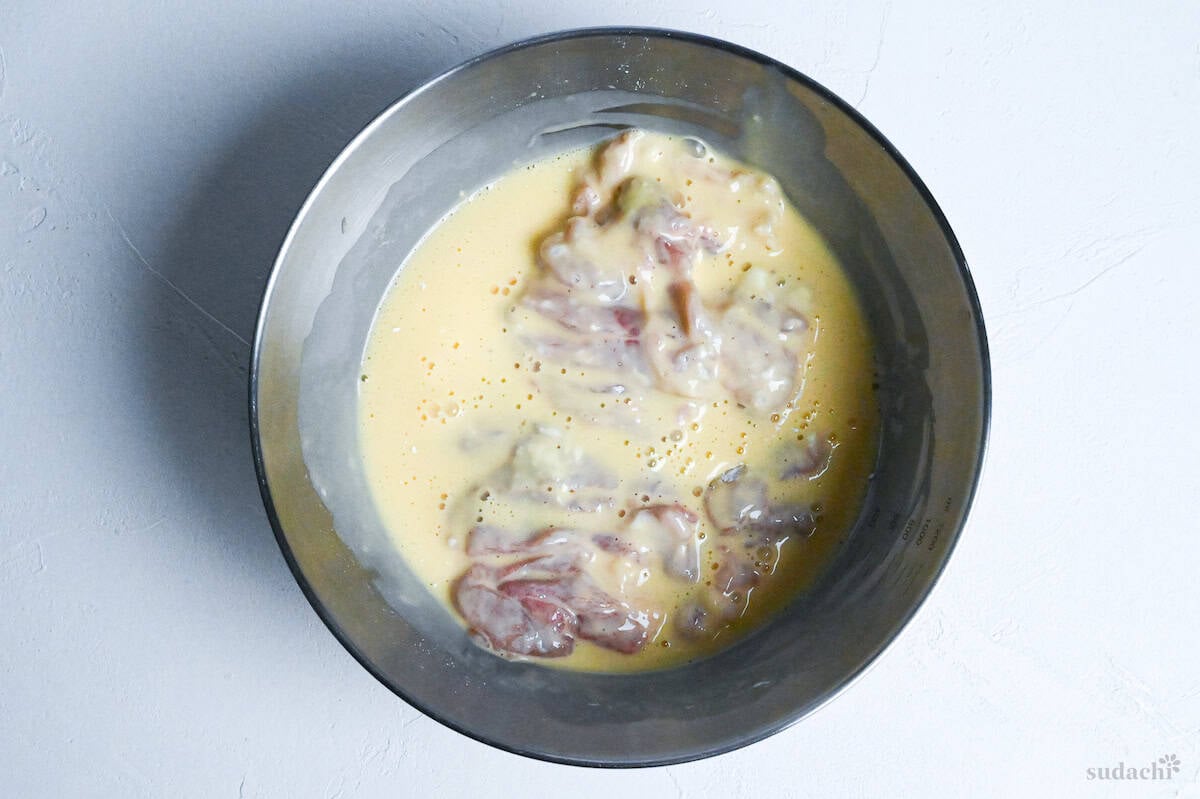
- Lift the chicken and dust off the excess flour, then submerge in the batter.
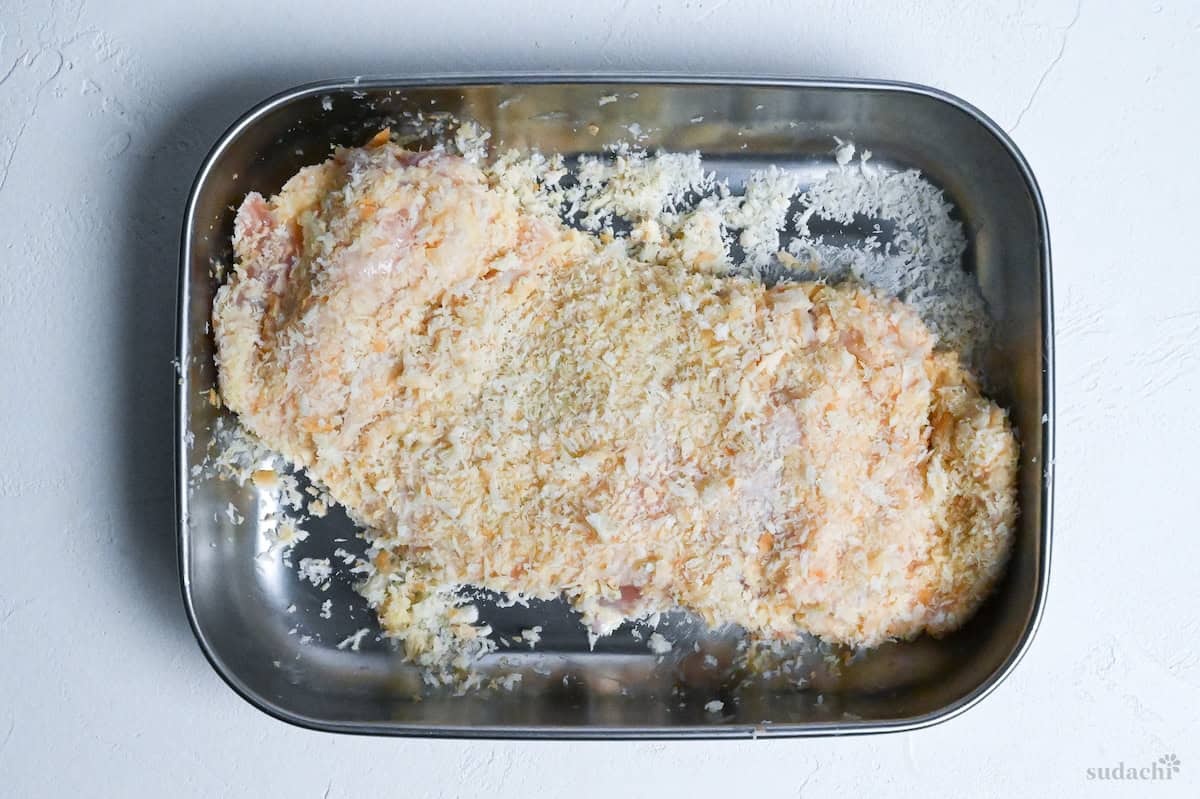
- Lift the chicken and let the excess batter drip off before placing it in the panko breadcrumbs. Press firmly to secure them.
- Once the oil is hot, gently drop the cutlet in the pot and fry for 6 minutes, turning half way through.
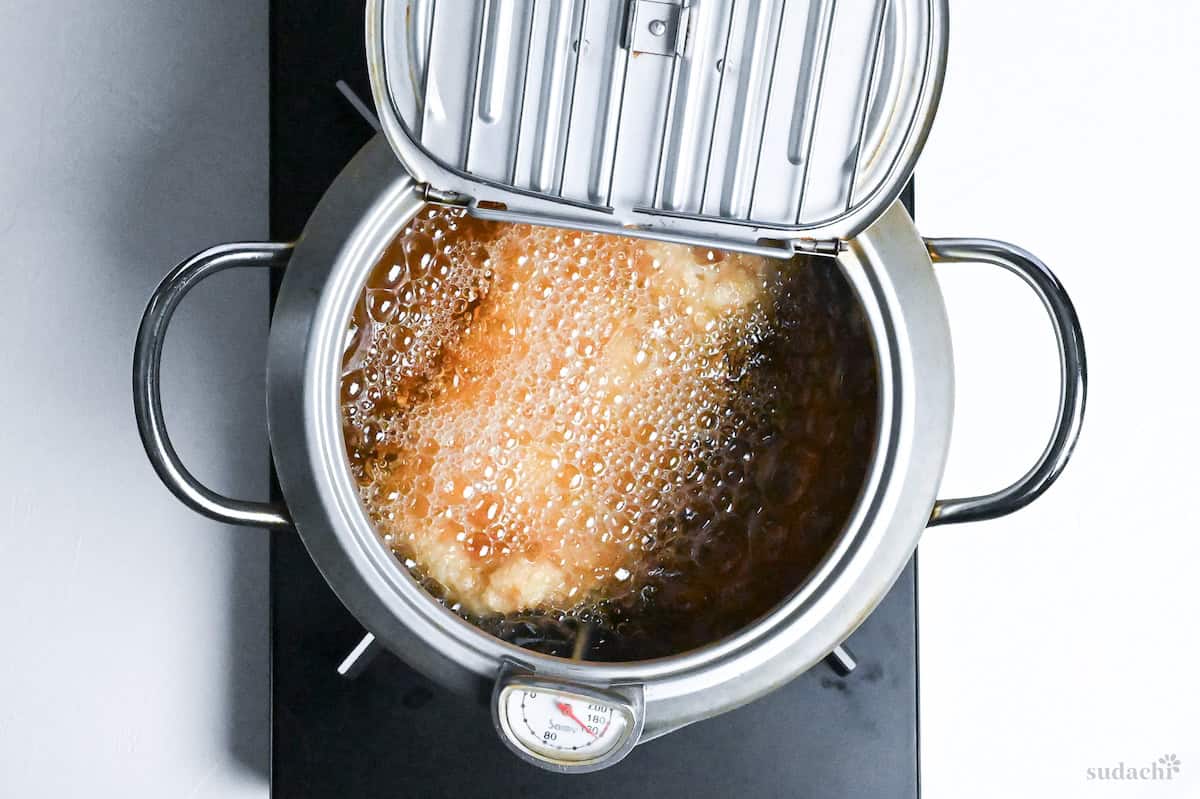
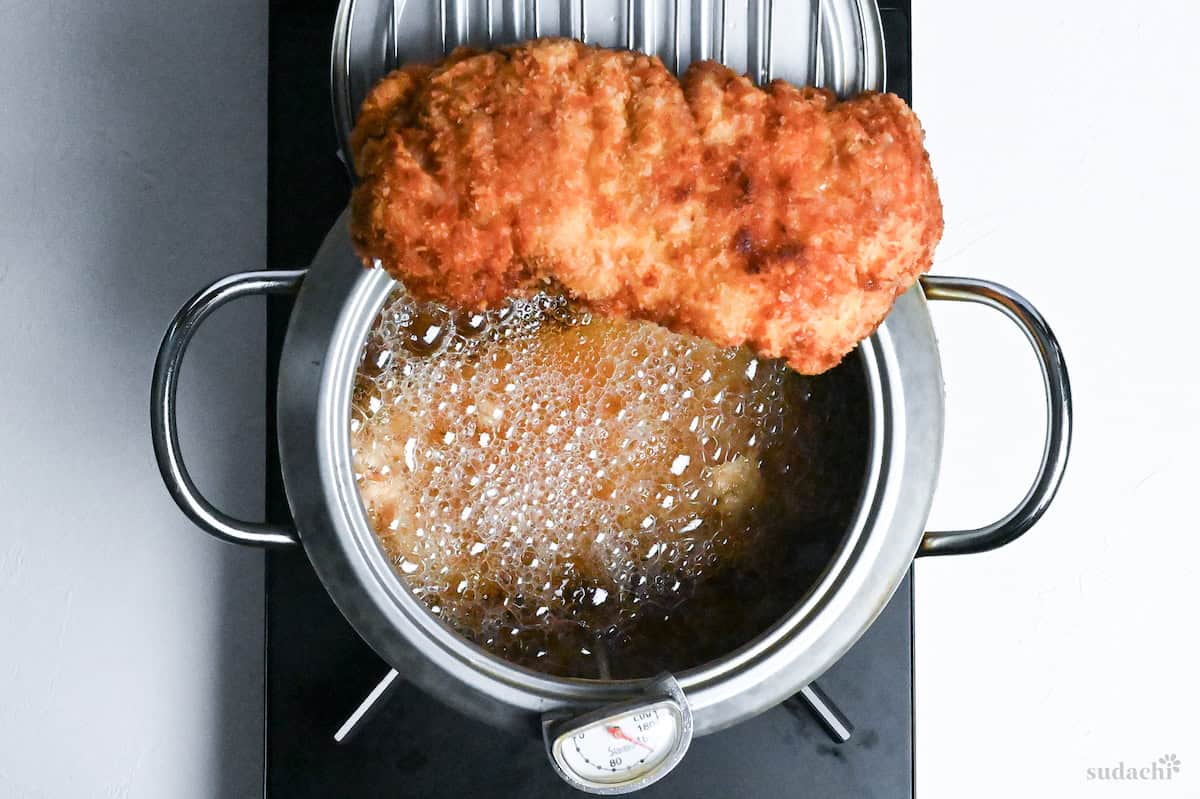
- Rest the cutlets on a wire rack for 2 minutes and increase the oil temperature to 180 °C (356 °F). After 2 minutes, place the cutlets back in the oil for 30-60 seconds and transfer to the wire rack once more.
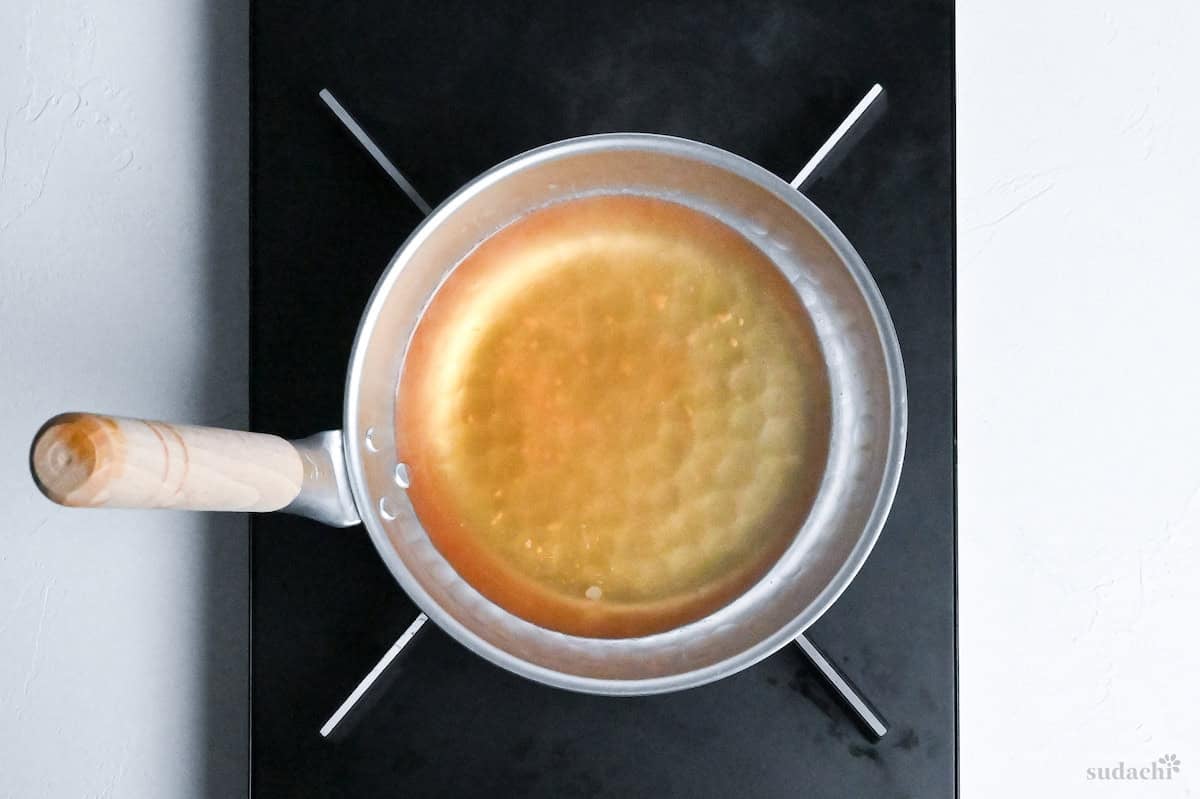
- Pour 150 ml dashi stock into a pan and heat over medium. When it starts to bubble, add 3 tbsp mirin, 1 tbsp light brown sugar and 1 tsp Chinese-style chicken bouillon powder.
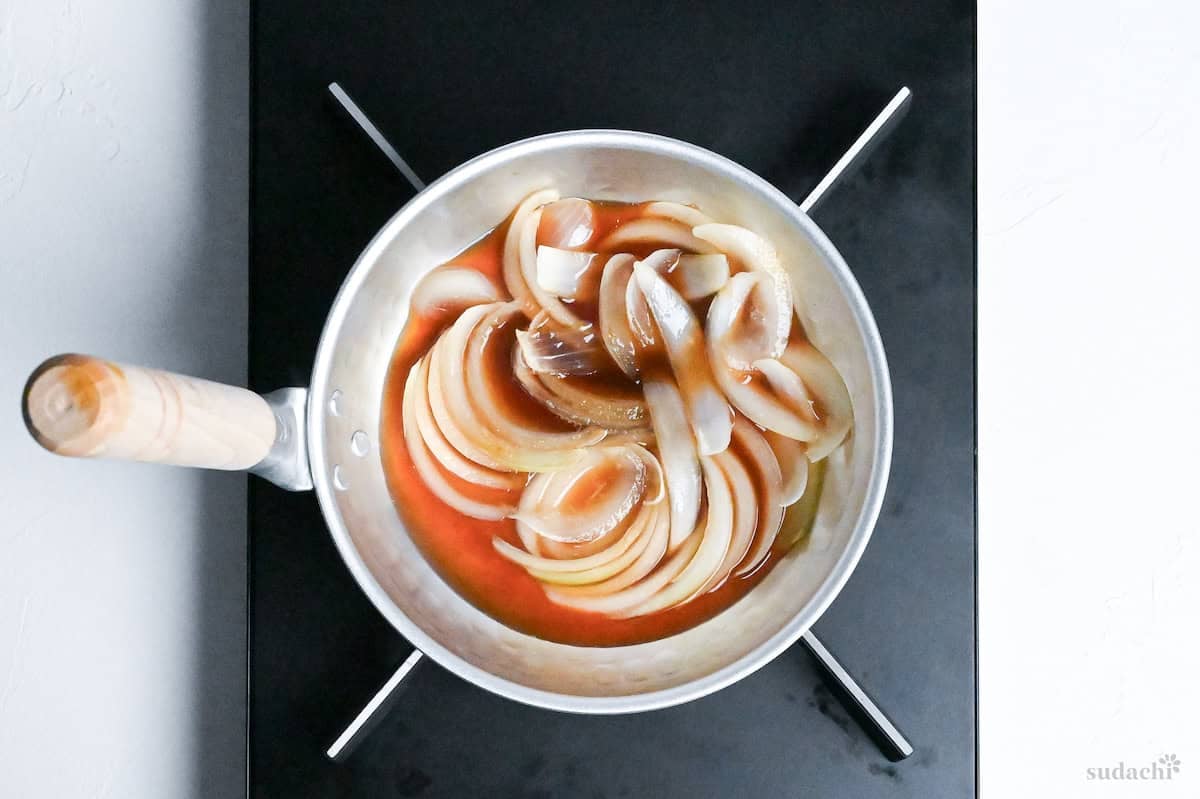
- Stir until dissolved, then add ½ onion (sliced) and simmer until soft and translucent. Pour 5 tsp Japanese soy sauce (koikuchi shoyu) and stir.
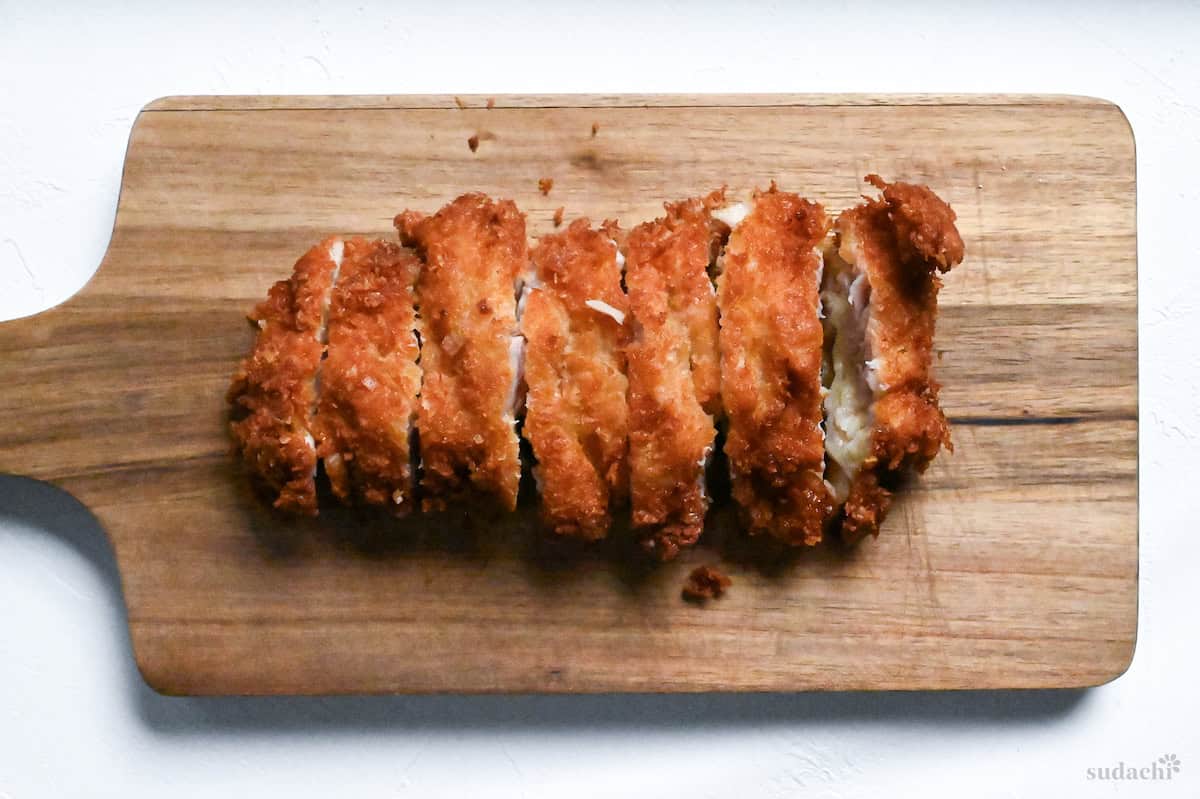
- Cut the cutlet into strips, and set 3 eggs (separated into two bowls) by the stove.
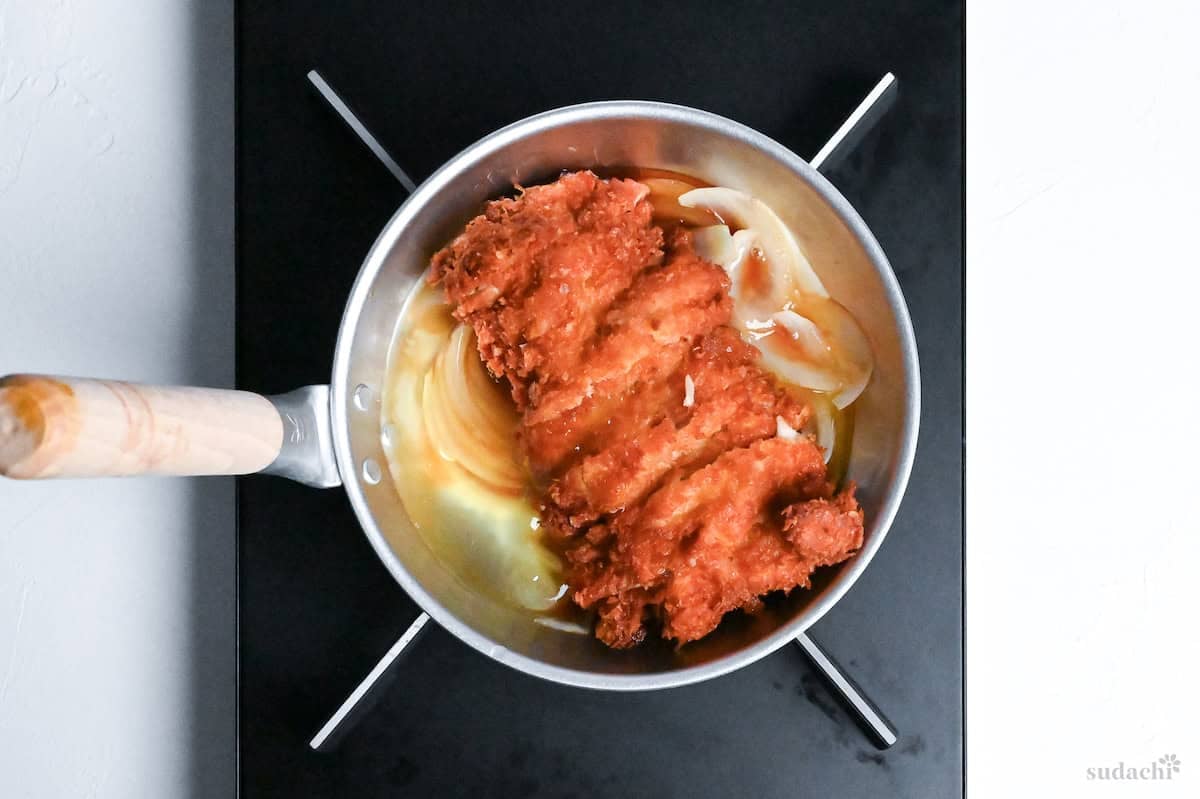
- Lay the strips neatly in the pan and whisk the egg whites before pouring them around the pan (avoid pouring directly over the cutlet).
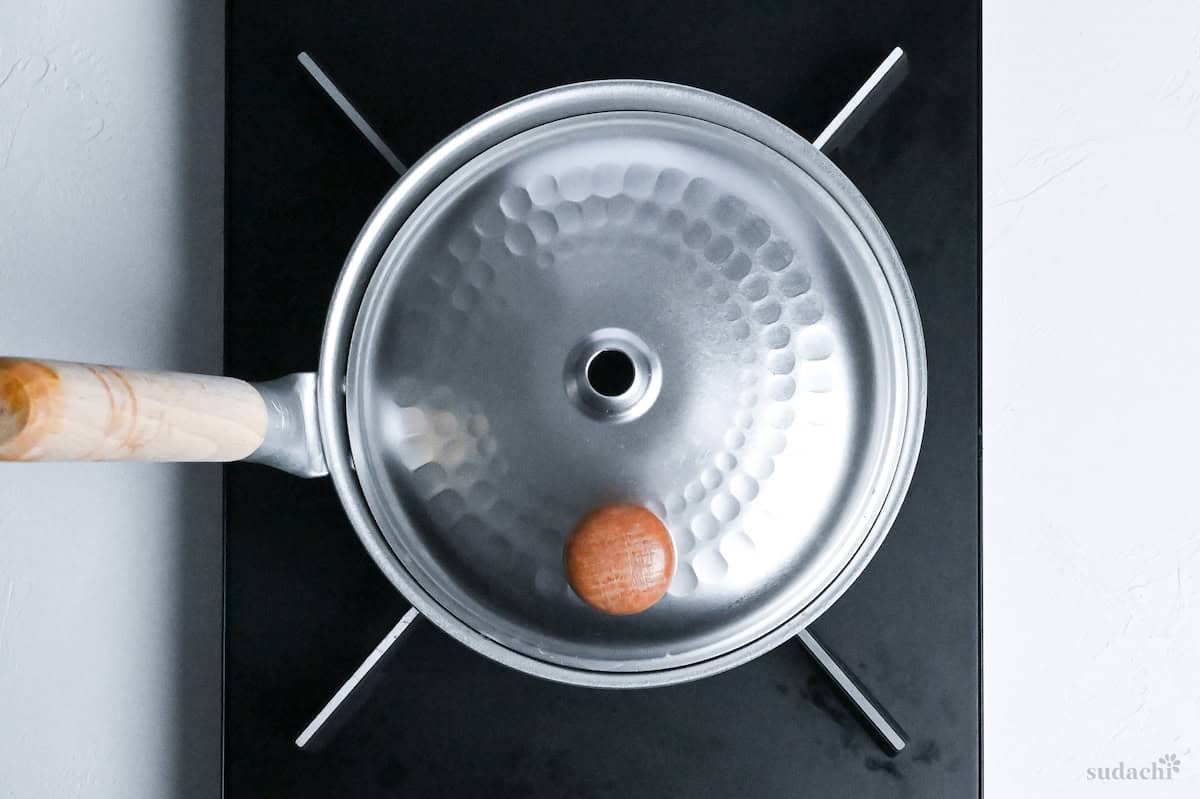
- Cover with a lid and steam the egg whites for about 1 minute or until just before your preferred doneness.
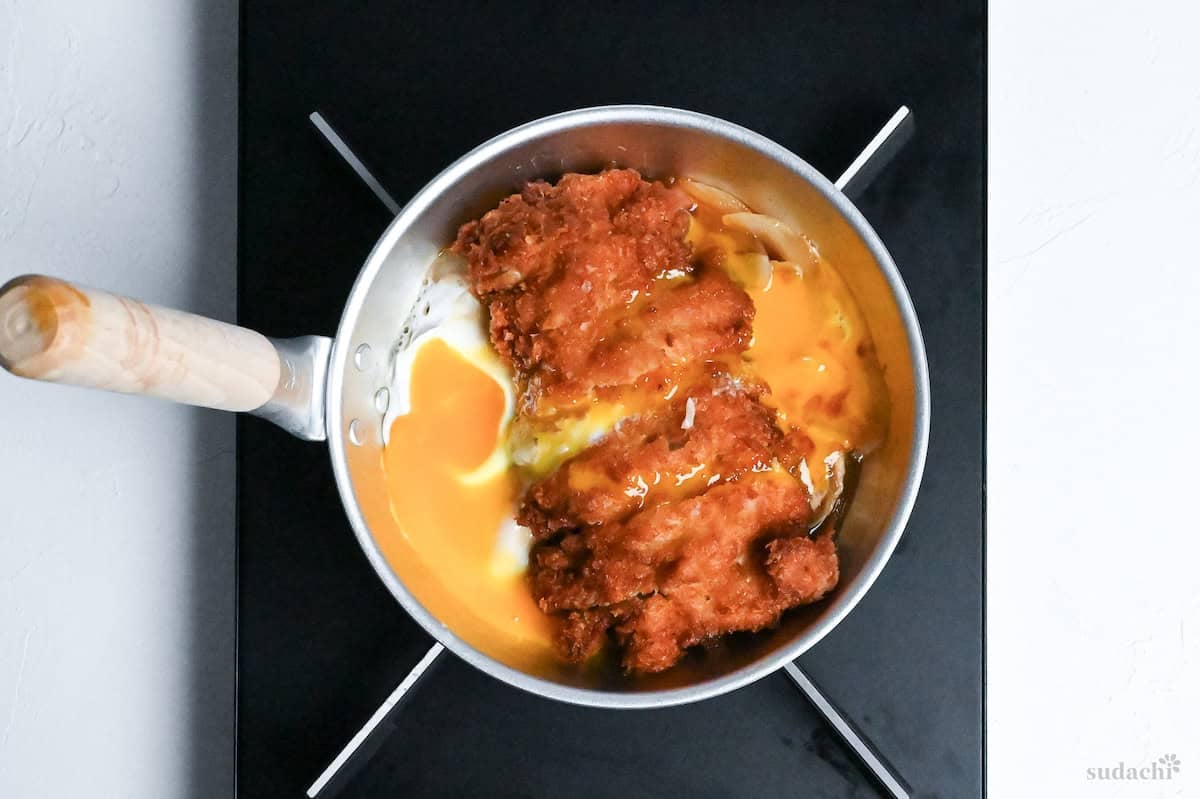
- Remove the lid and lightly beat the egg yolks. Pour the beaten yolks around the pan, then cover once more and turn off the heat. Steam until they reach your preferred doneness (about 60-90 seconds for slightly runny).
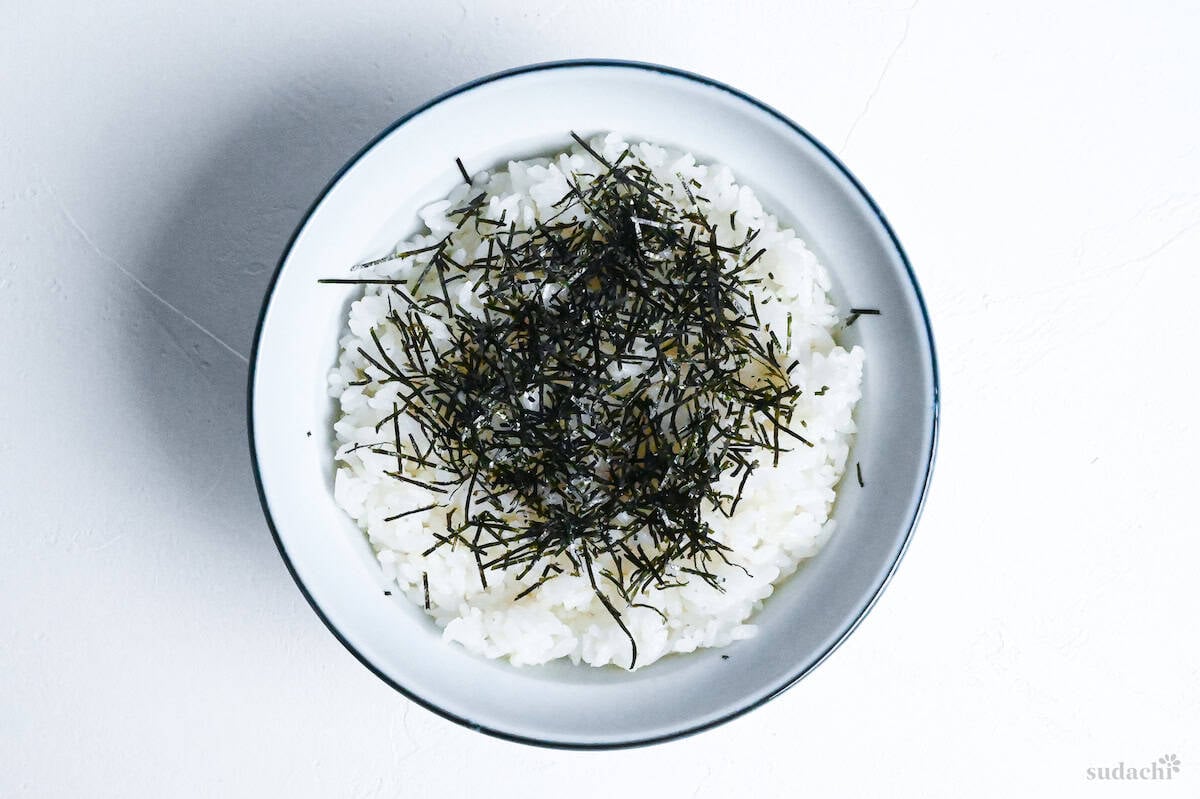
- Prepare large serving bowls with 2 portions cooked Japanese short-grain rice and sprinkle kizami nori (shredded nori) over the top.
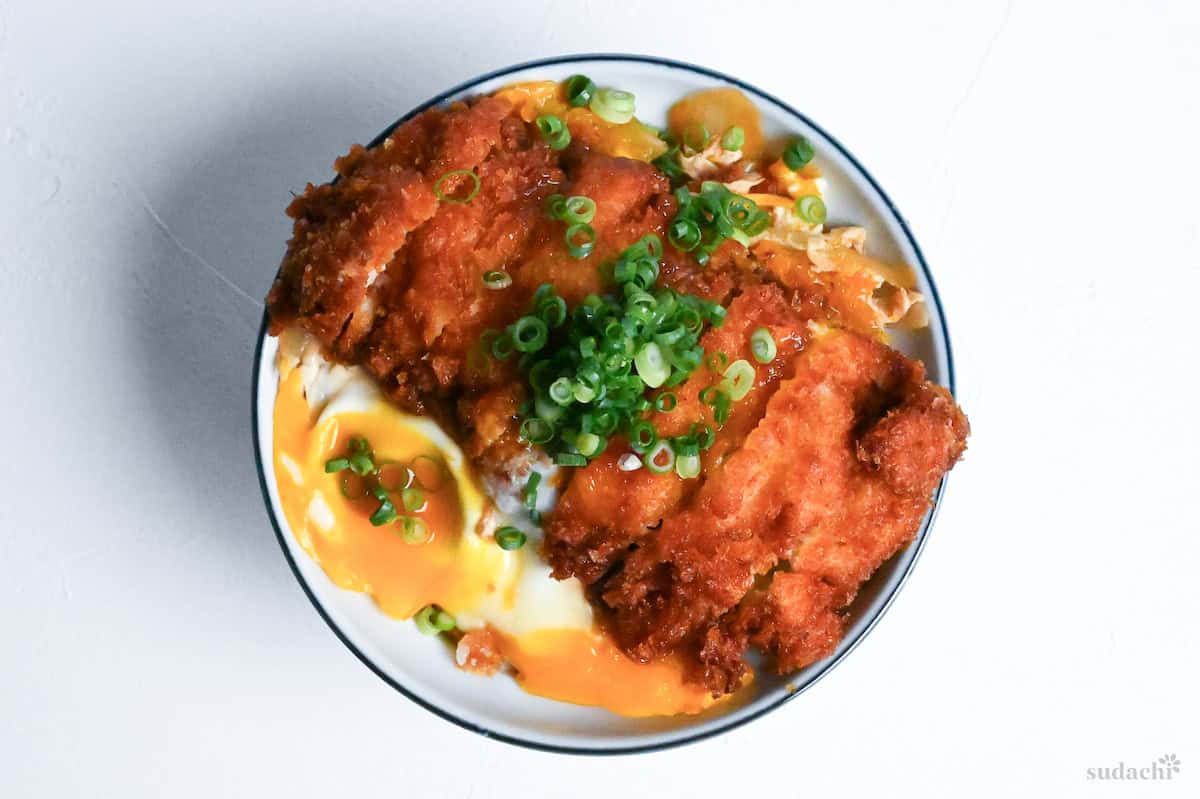
- Carefully slide the eggs and katsu over the rice. Spoon a few tbsp of remaining broth over the top and sprinkle with finely chopped green onions. Enjoy!
Notes
Chicken thigh stays juicier and more forgiving than breast, making it ideal for first-timers. Breast works if you prefer lighter meat, but watch cooking time closely to prevent dryness.
Chicken bouillon powder varies by brand. My brand is 1 tsp per 200 ml, so if yours is more concentrated (e.g., 1 tsp per 300 ml), use less to avoid oversalting.
If you prefer, you can skip deep-frying entirely by using my oven-baked chicken katsu recipe.
For best presentation, divide the dashi and onions into small single-serving pans before adding the katsu and eggs. If making multiple portions in one pan, arrange in a way that is easily divided into equal portions.
Taste the broth before adding eggs and adjust immediately. It should taste slightly too strong on its own as egg and rice will mellow it. Too salty? Add dashi or water. Need salt? Stir in extra soy sauce
For fully cooked eggs, keep heat on low 30 seconds after adding yolks. For molten onsen tamago-like yolks, turn off heat immediately after adding yolks and let residual steam finish cooking.
Store components separately for best results: Fried katsu (unsauced) in an airtight container on a rack keeps 1-2 days refrigerated or 1 month frozen. Never store assembled katsudon.
Serving ideas: Traditional Miso Soup, Spinach Ohitashi Salad, Japanese Pickled Cucumber, Clear Dashi Soup
Full Recipe QR Code↑↑