
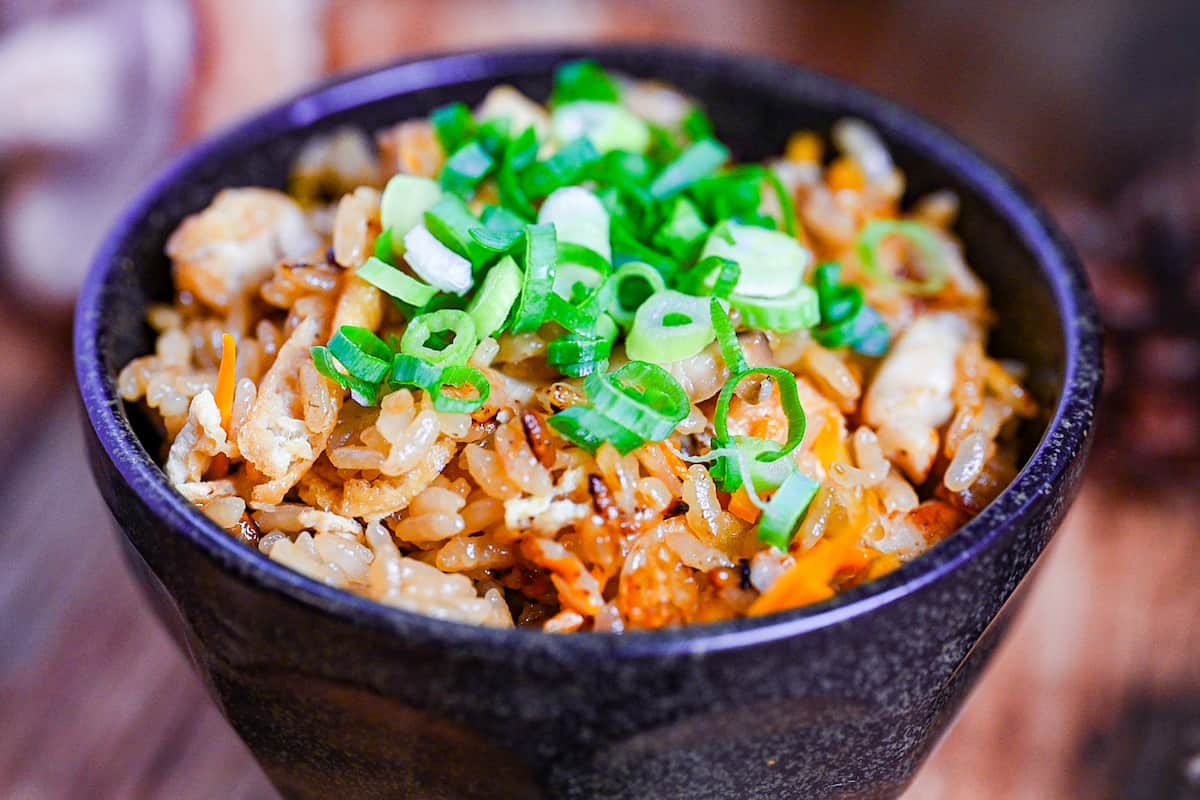
Takikomi Gohan (Japanese Seasoned Rice with Chicken)
Ingredients
- 300 g uncooked Japanese rice short or medium-grain only, basmati or jasmine cook dry and separate and turn this into a different dish
- 2 dried shiitake mushrooms
- 3 g dried kelp (kombu) 3-5g is approx one small sheet
- 300 ml cold water
- 150 g boneless chicken thigh skin on, or skin-on chicken breast
- ½ tsp cooking oil
- 3 small sheets fried tofu pouch (aburaage) approx 12g each, thinly sliced
- ½ carrot peeled and julienned
- ½ thumb ginger root peeled and julienned
- 3 tbsp Japanese soy sauce (koikuchi shoyu)
- 2 tbsp mirin
- 2 tbsp sake
- ¼ tsp dashi granules
- finely chopped green onions
Instructions
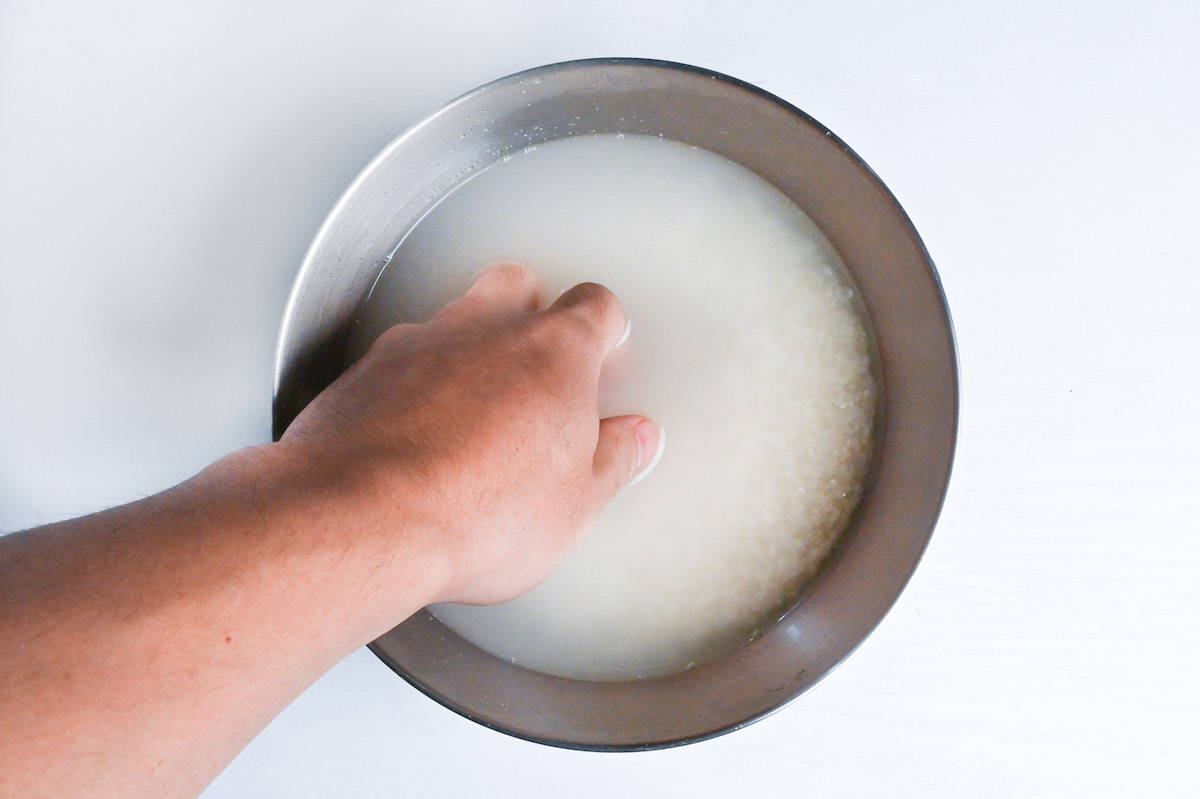
- Pour 300 g uncooked Japanese rice into a bowl and fill it with water. Swish, drain and repeat 3 times to wash it. (It's okay if the water is still cloudy.)
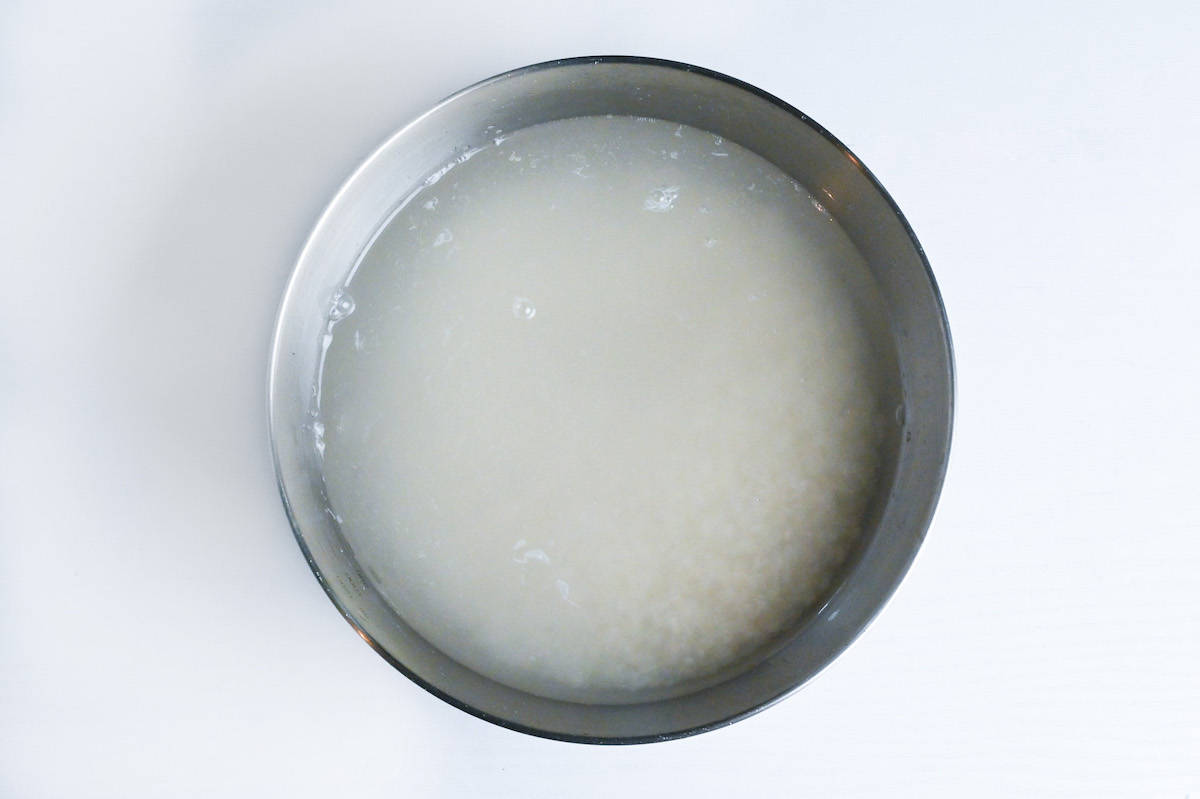
- After the final soak, fill the bowl with fresh water until the rice is covered and soak for 1 hour.
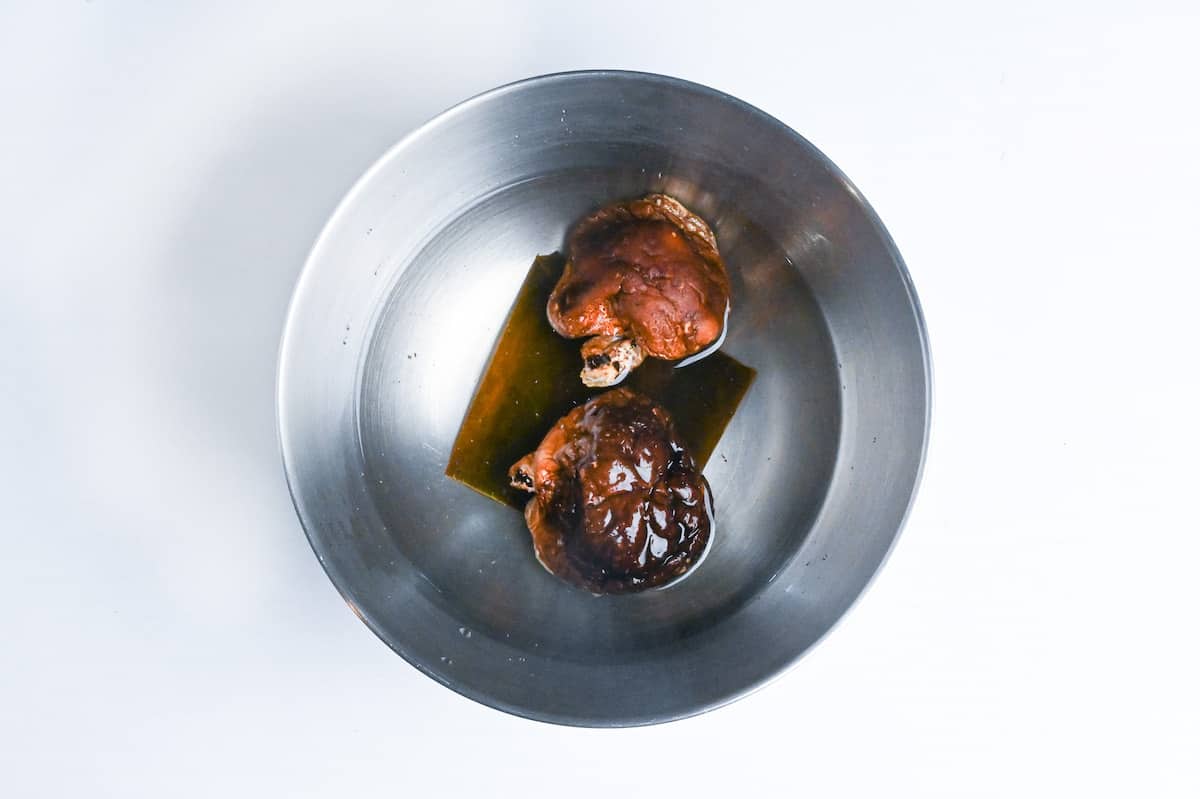
- At the same time, drop 2 dried shiitake mushrooms and 3 g dried kelp (kombu) into 300 ml cold water and soak them for one hour. This makes a shiitake and kombu dashi.
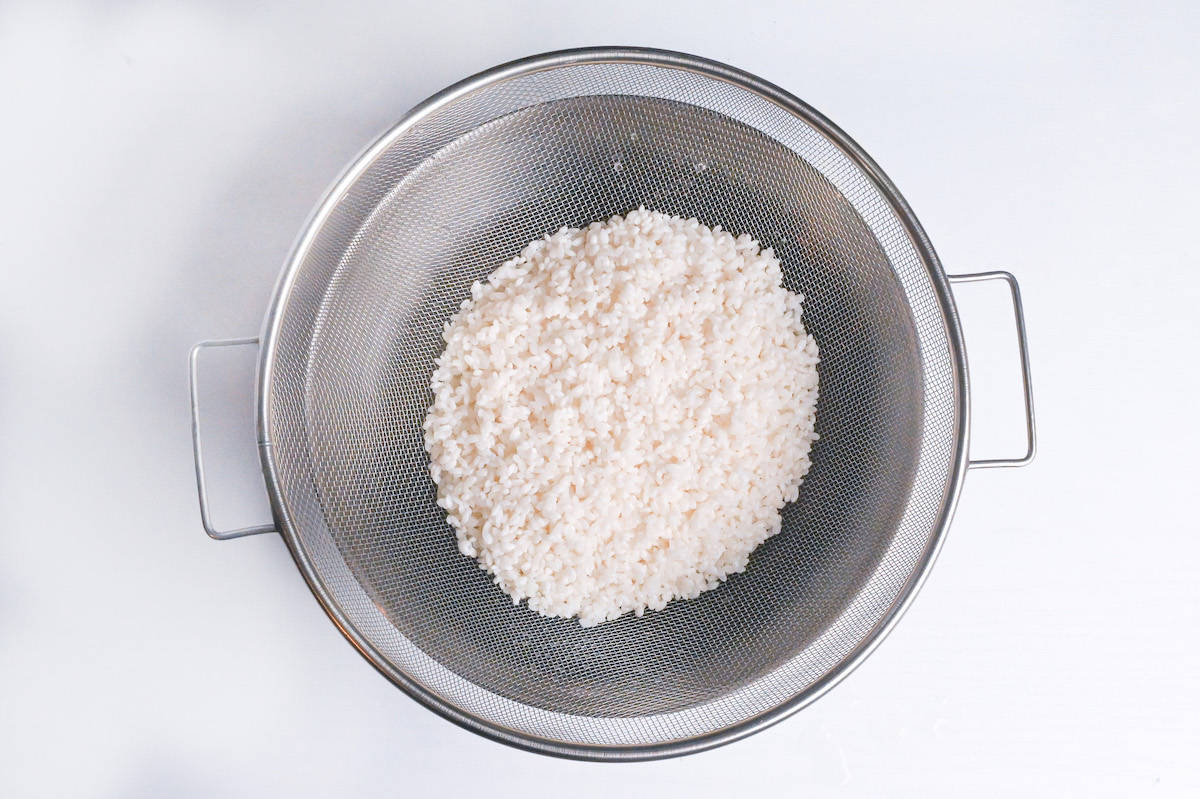
- After one hour, drain the rice with a sieve and place it over an empty bowl to dry until it's time to cook.
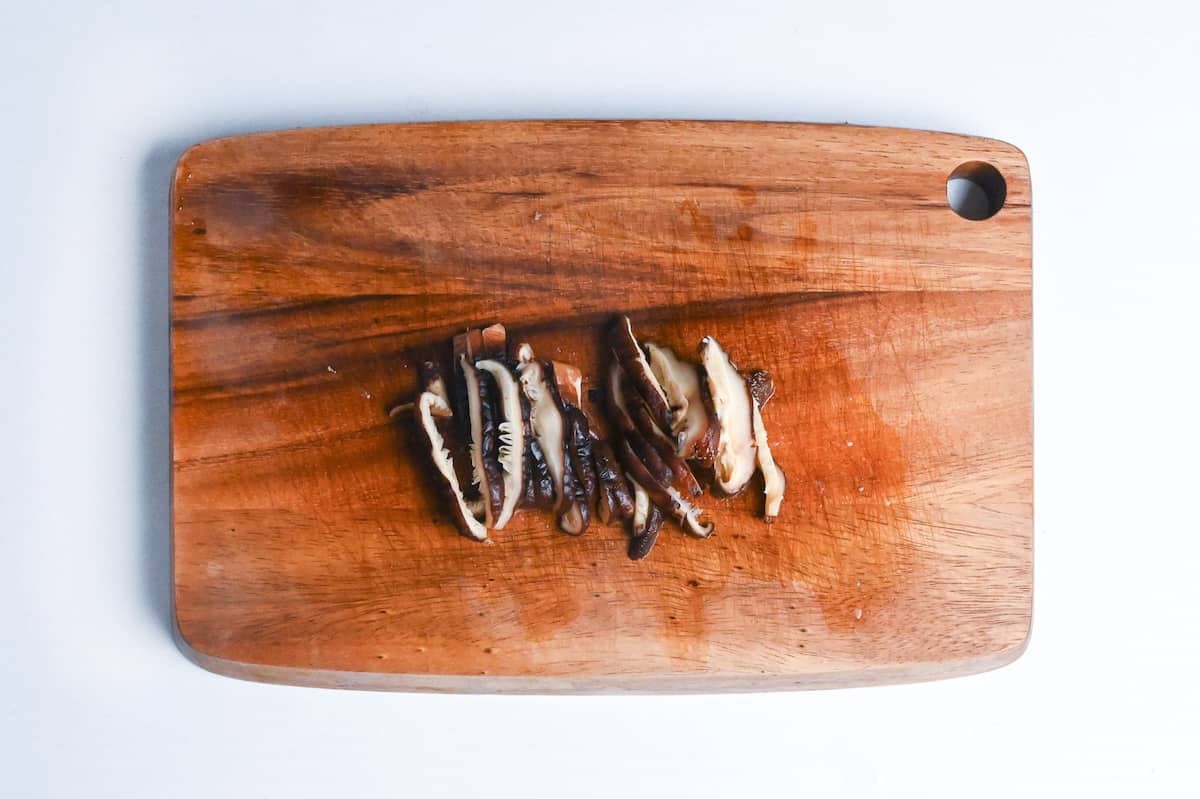
- Remove the shiitake mushroom and kombu from the bowl, the liquid inside is a light dashi that we will use to cook the rice later. Finely slice the rehydrated shiitake mushroom and discard the kombu. (Alternatively, you can use the kombu to make kombu tsukudani rice ball filling.)
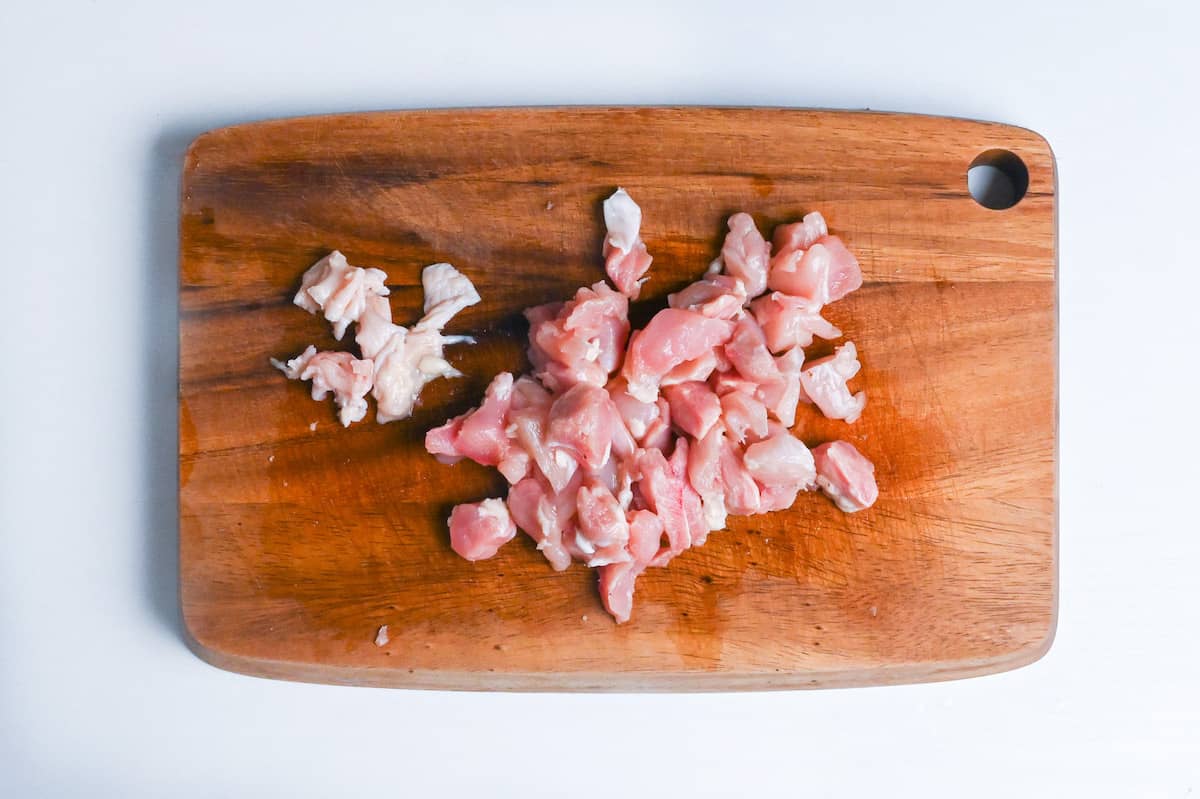
- Peel the skin off of 150 g boneless chicken thigh and cut it into bite-size pieces. Cut the meat into small pieces and set aside.
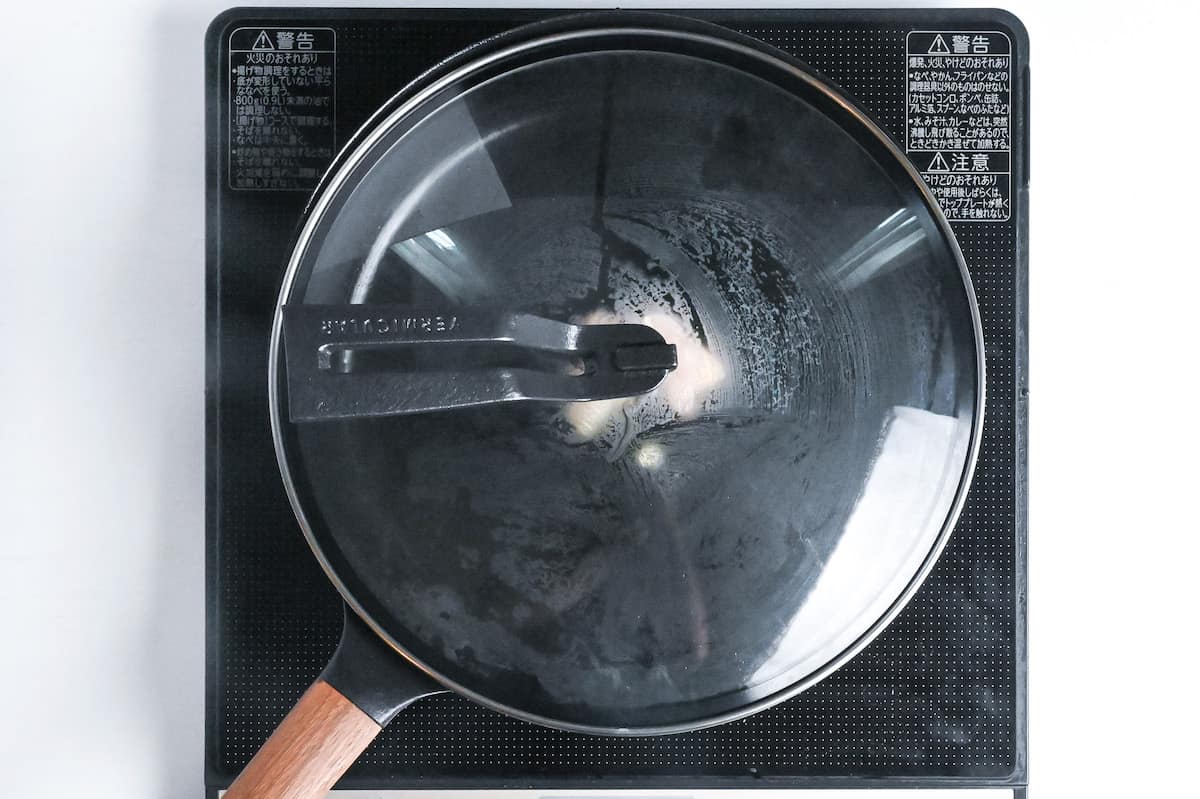
- Heat a small frying pan on medium and once hot, add ½ tsp cooking oil and the chicken skin. Place a lid on to prevent the fat from splashing and fry on both sides until crispy and golden, then rest on kitchen paper and set aside for later.
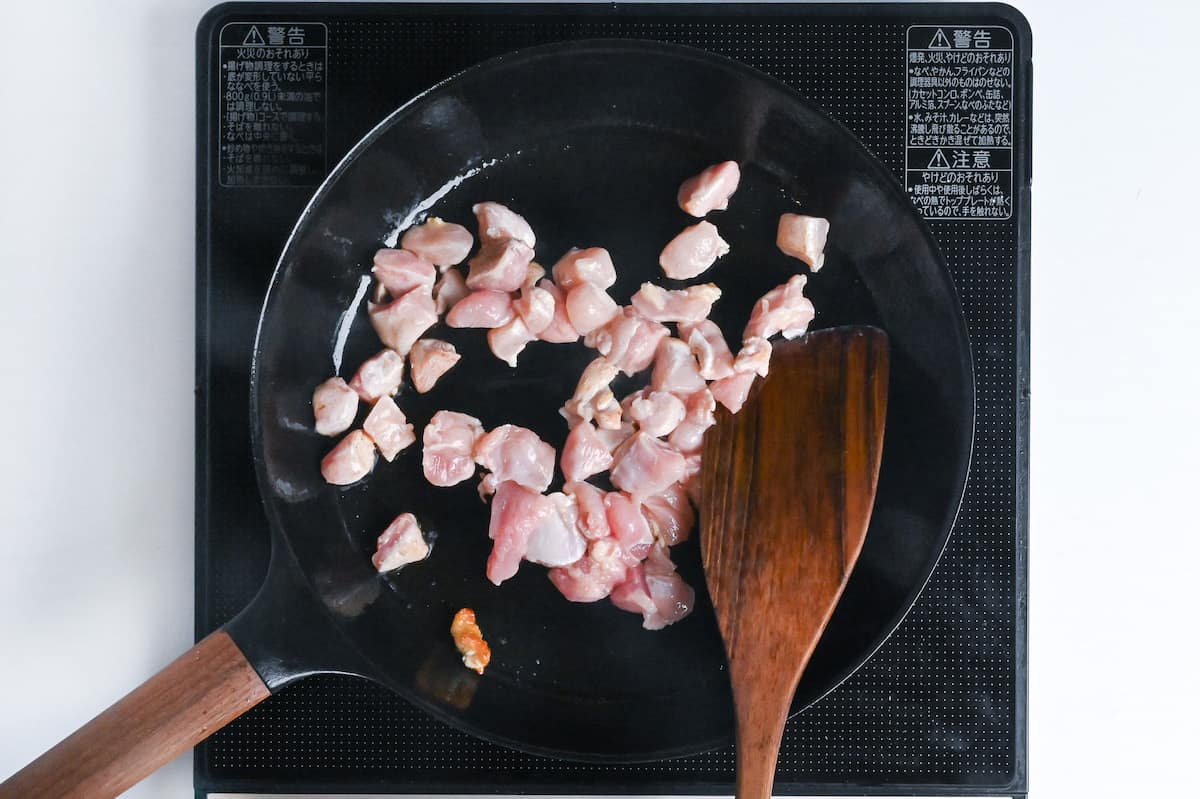
- Reuse the pan, and wipe out the excess rendered fat if needed. Place the chicken pieces in a single layer and sear all over.
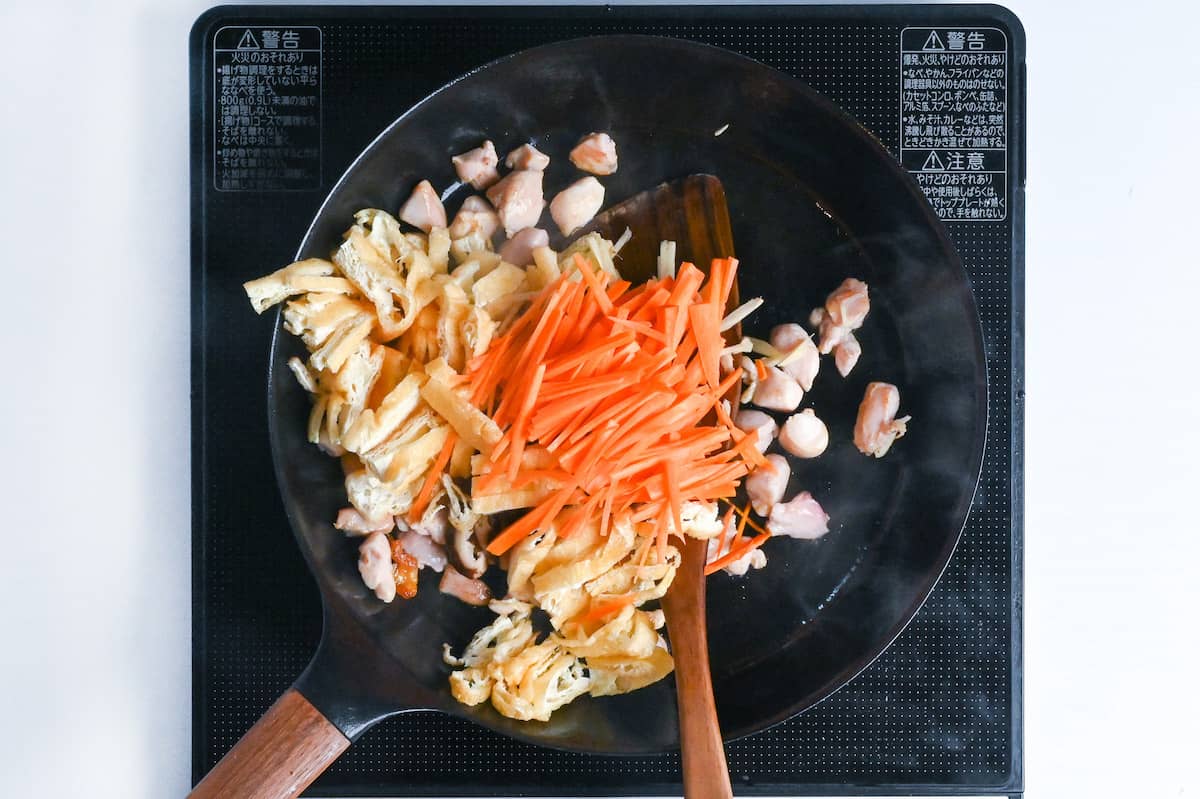
- When the chicken is no longer pink, add the sliced shiitake mushrooms along with ½ carrot, ½ thumb ginger root, and 3 small sheets fried tofu pouch (aburaage). Stir fry for about 1 minute so the ingredients are lightly coated in rendered chicken fat. You do not need to cook them completely as they will cook with the rice later.
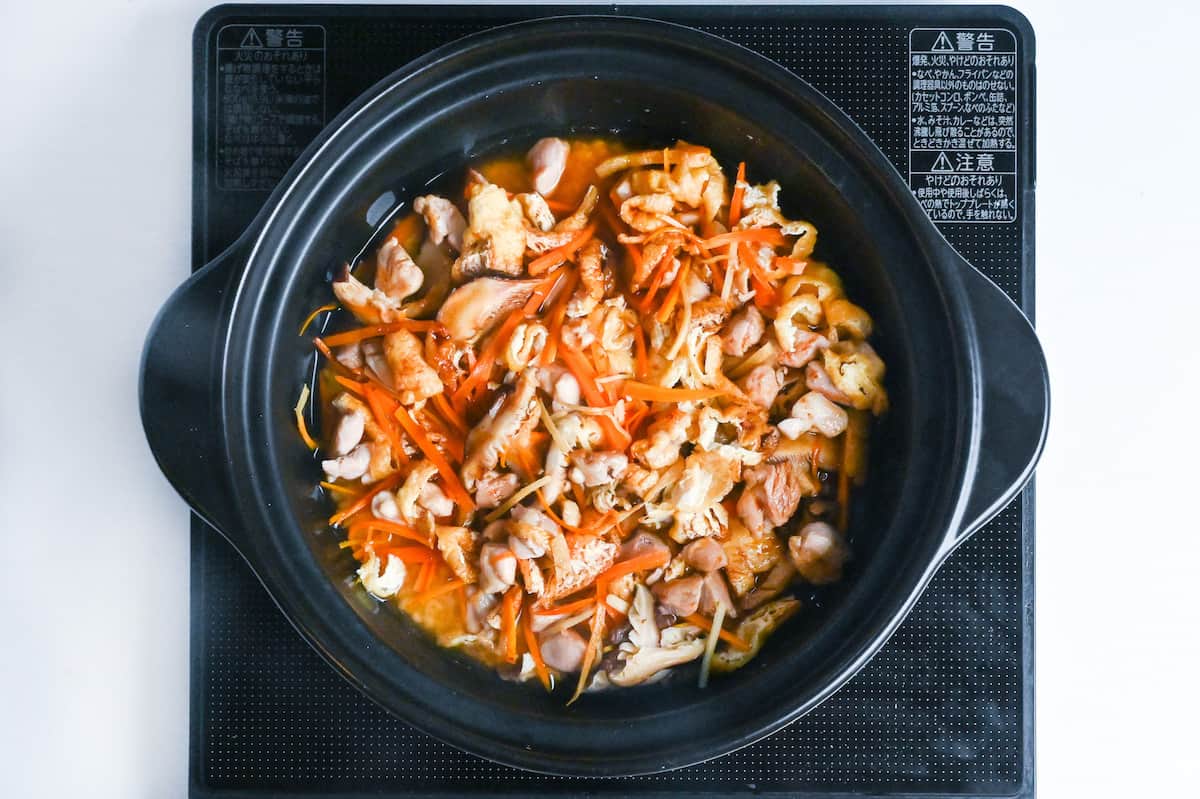
- Transfer the dried rice to a pot (or rice cooker) and pour in the dashi. Empty the contents of the frying pan on top of the rice.Finally, pour 3 tbsp Japanese soy sauce (koikuchi shoyu), 2 tbsp mirin and 2 tbsp sake and ¼ tsp dashi granules into the pot. IMPORTANT: Do not mix! If using a rice cooker, close the lid and set it on a takikomi or regular setting. If using a pot on the stove, see next step.
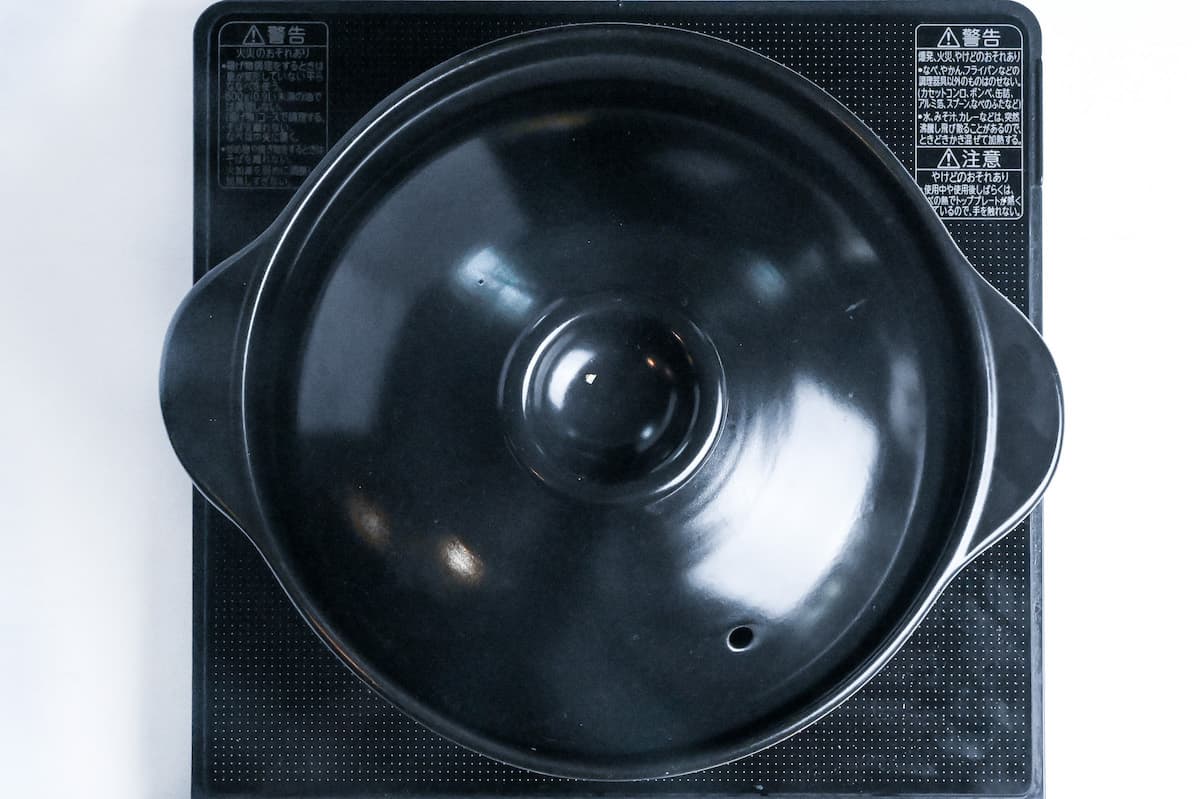
- Place the pot onto the stove with the lid on and bring it to a boil over a medium heat. Listen carefully and try to refrain from removing the lid. Once you can hear it continuously bubbling, set a timer for 2 minutes.After two minutes, reduce the heat to medium low and set a timer for 3 minutes. Turn the heat right down to the lowest setting and set a timer for 5 minutes. Blast the heat for 10 seconds on the highest setting, and then turn it off. Leave the rice pot on the warm stove and allow to steam for 20 minutes.
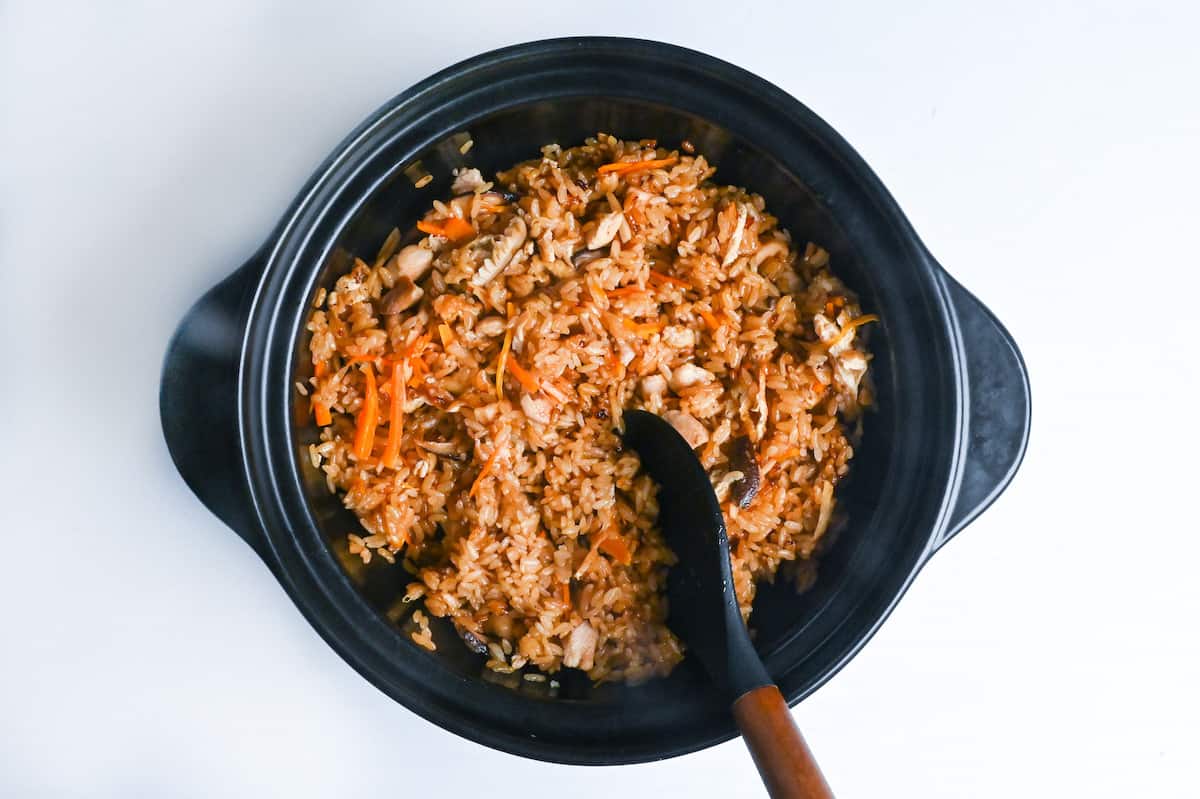
- After 20 minutes of steaming, remove the lid and mix the rice thoroughly using a cut and fold motion with a rice paddle. Be careful not to crush the rice while mixing.
- Divide into serving bowls and sprinkle with the crispy chicken skin from earlier and finely chopped green onions. Enjoy!
Never remove the lid while cooking Japanese rice. Doing so will let too much steam escape, and mess up the temperature and liquid ratio resulting in undercooked rice.
Notes
Soak in plain water, then drain well: The rice has to absorb water to its core during a full hour, with nothing seasoned in the bowl. If you skip the soak or the drain, the center cooks up hard while the outside goes soft.
Add the soy, mirin, and sake last, and never stir: Seasonings poured in early raise the pressure around each grain and stop it absorbing water. Stirring kills the gentle circulation that cooks evenly. Layer everything on top, then run the heat.
Count every liquid, including what the vegetables release: Your total liquid is the dashi plus the soy, mirin, and sake, plus the moisture the carrot and mushrooms give off. Treat it as one pour or the bottom turns soggy.
Fill the pot only half to two-thirds full: A pot crammed to the brim throws off the heat and circulation, and a rice cooker that full can misread its sensor, leaving a hard core. For a crowd, run 2 smaller batches.
Takikomi Gohan freezes well: It's perfect for meal prep. Wrap in individual portions, and don't pack too tightly. Microwave from frozen to reheat.
Full Recipe QR Code↑↑