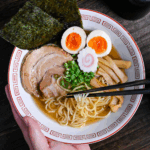
Homemade Shoyu Ramen Noodles (Soy Sauce Flavored Chuka Soba)
Ingredients
Noodles
- 2 portions ramen noodles medium-thin to medium-thick
Soup
- 1000 ml water soft water is preferred
- 10 g dried sardines (niboshi) heads and gut sacs removed
- 5 g dried kelp (kombu) or Korean dashima
- 4 chicken wings scored along the bone on the skinless side, drumettes or wingettes also work
- 2 garlic cloves lightly smashed with the flat of a knife
- 20 g ginger root sliced, not too thin
- 1 Japanese leek (naganegi) green tops only, or leek green tops
- 5 g bonito flakes (katsuobushi)
Aroma oil
- ½ tbsp lard or neutral oil
- 50 g chicken skin or store-bought chicken oil, duck fat, or goose fat (½ to 1 tbsp per bowl)
Tare
- 1 tbsp sake or dry sherry/white wine, same volume
- 1 tbsp mirin
- ½ tsp sugar
- 1 pinch salt
- 3 tbsp water
- 3 tbsp Japanese soy sauce (koikuchi shoyu)
Toppings Suggestions
- pork chashu sliced
- ramen egg halved, or plain soft-boiled egg
- seasoned bamboo shoots (menma)
- narutomaki fish cake sliced
- roasted seaweed for sushi (nori)
- finely chopped green onions
Instructions
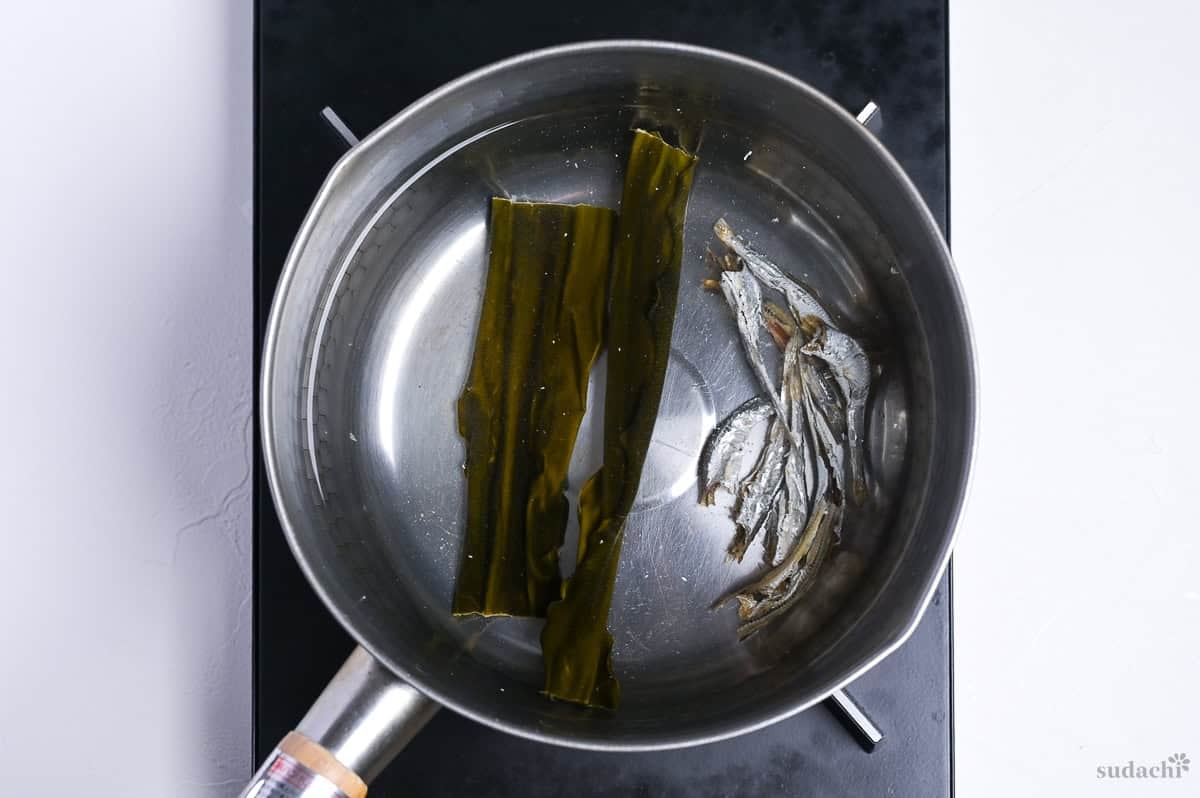
- Take a pot and fill with 1000 ml water. Add 10 g dried sardines (niboshi) and 5 g dried kelp (kombu). Gently heat and hold at 60 °C (140 °F) for 30 minutes to make the dashi base. Make the tare while you wait.
Tare
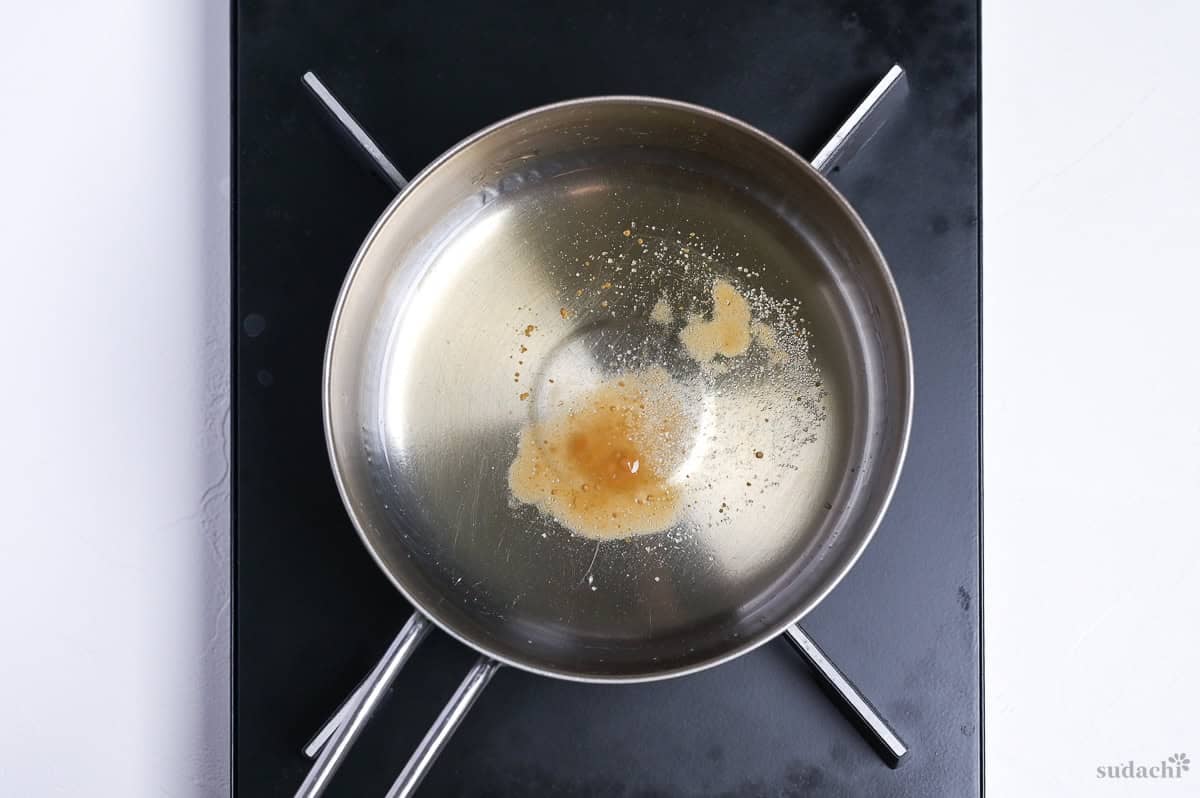
- Grab a small saucepan and add 1 tbsp sake, 1 tbsp mirin, ½ tsp sugar, and 1 pinch salt. Stir and simmer until the salt and sugar have dissolved, the the alcohol smell has burned off.
- Pour 3 tbsp water and 3 tbsp Japanese soy sauce (koikuchi shoyu) into the pan and simmer on low for 5-10 minutes or until slightly thickened (be careful not to over reduce).
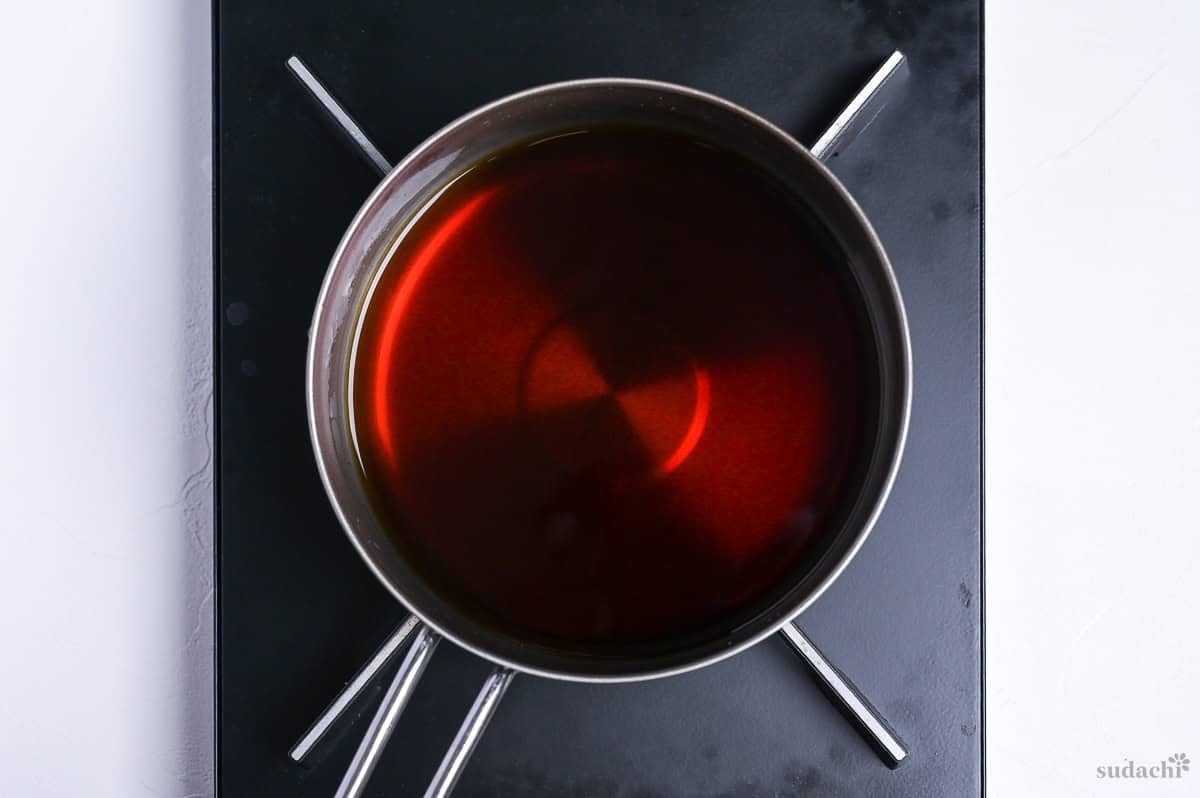
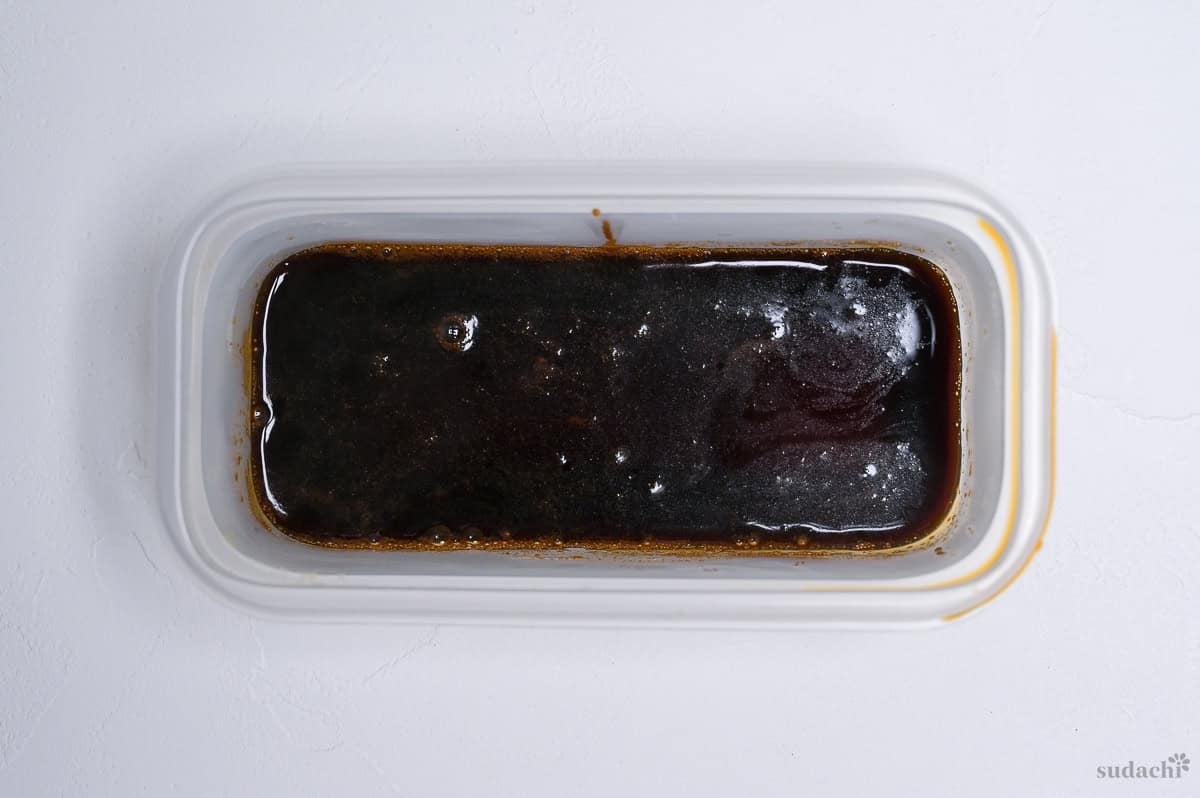
- Transfer to a sealable container, then cool and store in the fridge for later. This is your tare, the base flavor for your ramen.
Broth (part 1)
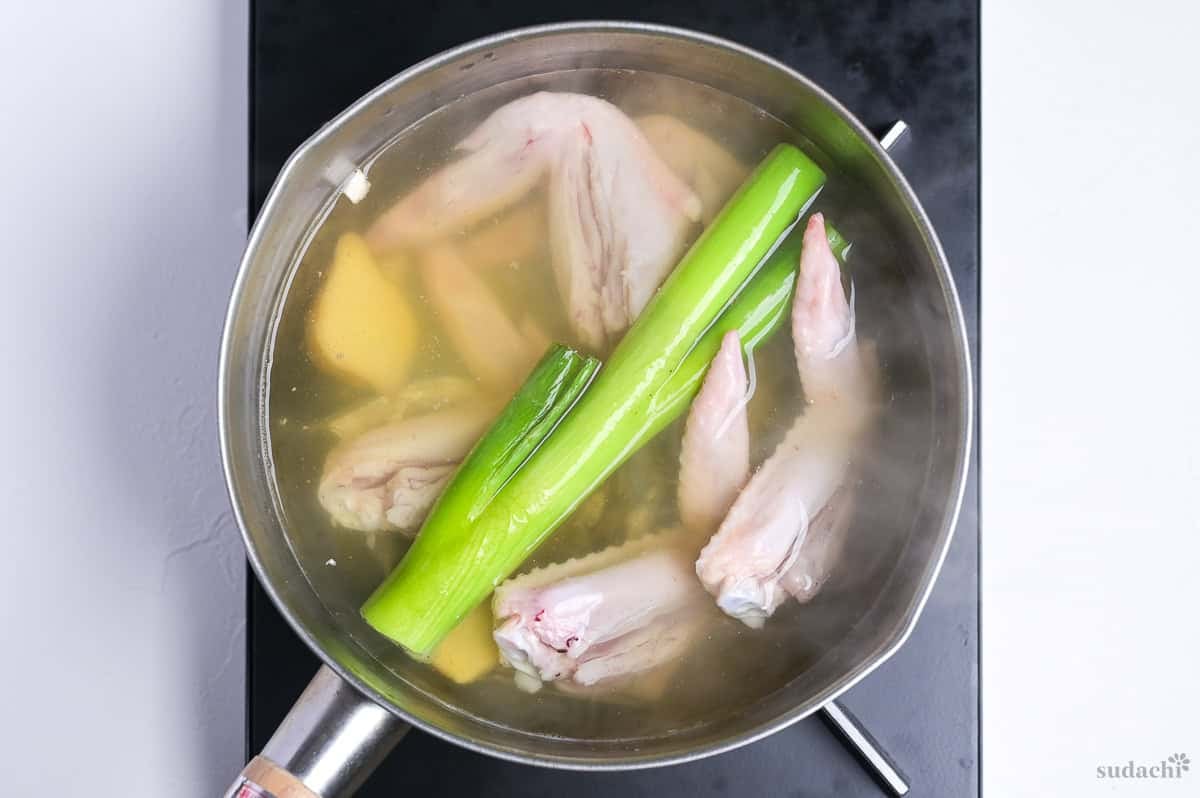
- After 30 minutes of gentle heat, remove the kombu and dried sardines from the pot of dashi. Add 4 chicken wings, 2 garlic cloves, 20 g ginger root, and 1 Japanese leek (naganegi). Heat on medium until small bubbles appear (avoid boiling). Skim any scum that appears at the top for the first 10 minutes, then hold at 80 °C (176 °F) to 85 °C (185 °F) for 40 minutes.
Render Chicken Fat
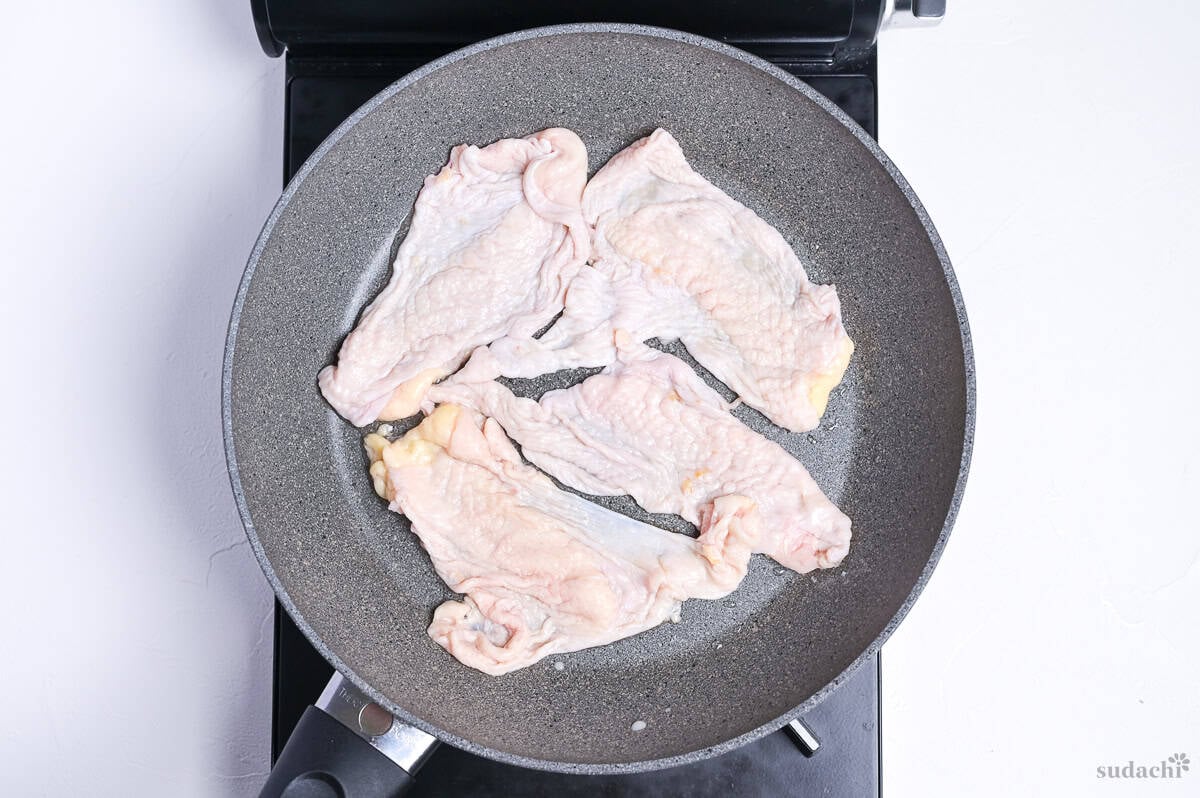
- Heat a large frying pan on low and melt ½ tbsp lard. Spread 50 g chicken skin in a single layer.
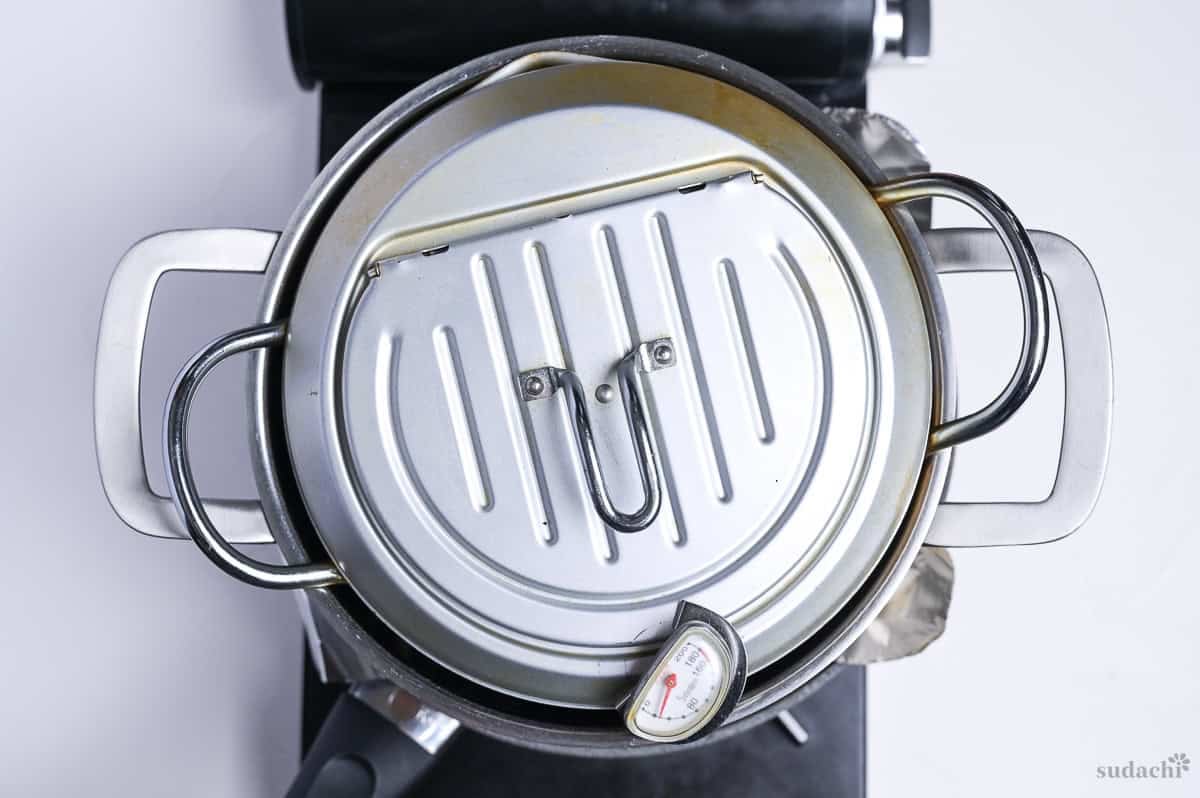
- Cover the top of the skin with foil and a heavy heat-resistant weight (like a smaller pot of water) to flatten it.
- Fry for about 10 minutes on each side, or until the skin is golden on both sides and the fat has rendered out. Pour the fat into a heatproof bowl, and enjoy the crispy chicken skin as a snack, or save as a topping for another dish.
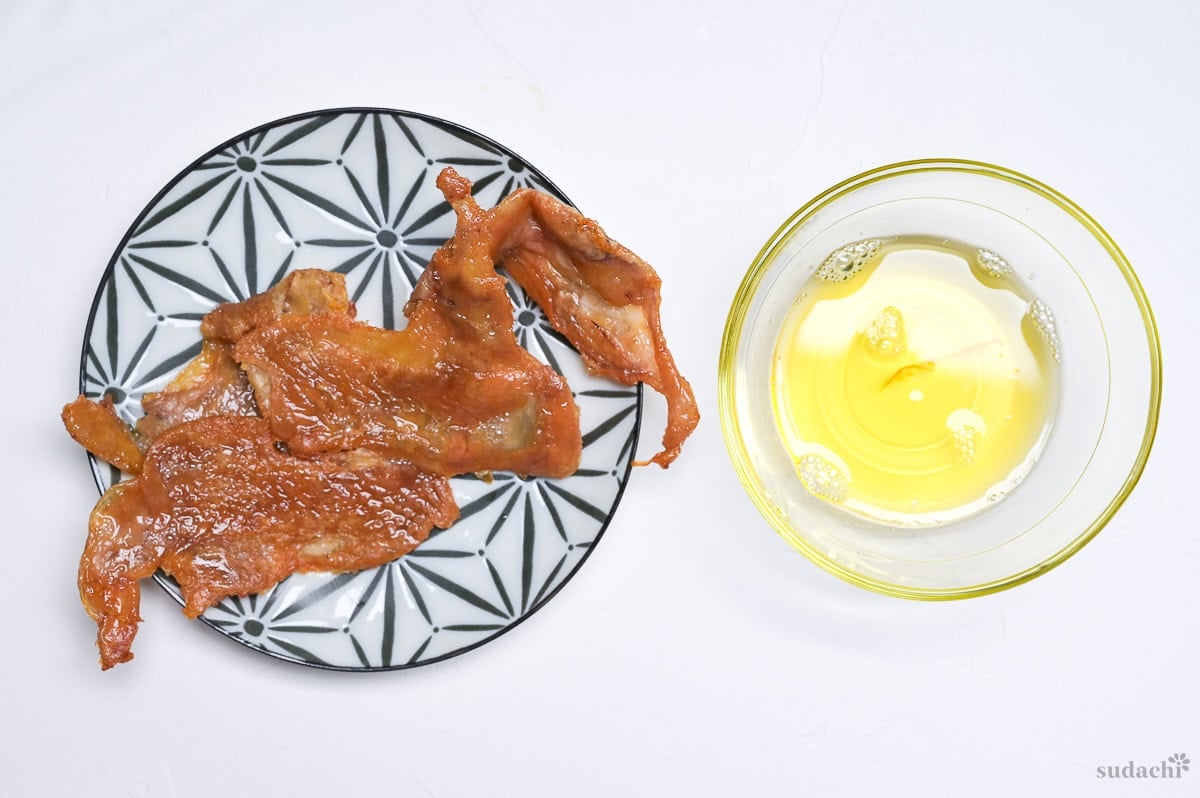
Broth (part 2)
- After 40 minutes, turn off the heat and drop in 5 g bonito flakes (katsuobushi). Steep for 5 minutes.
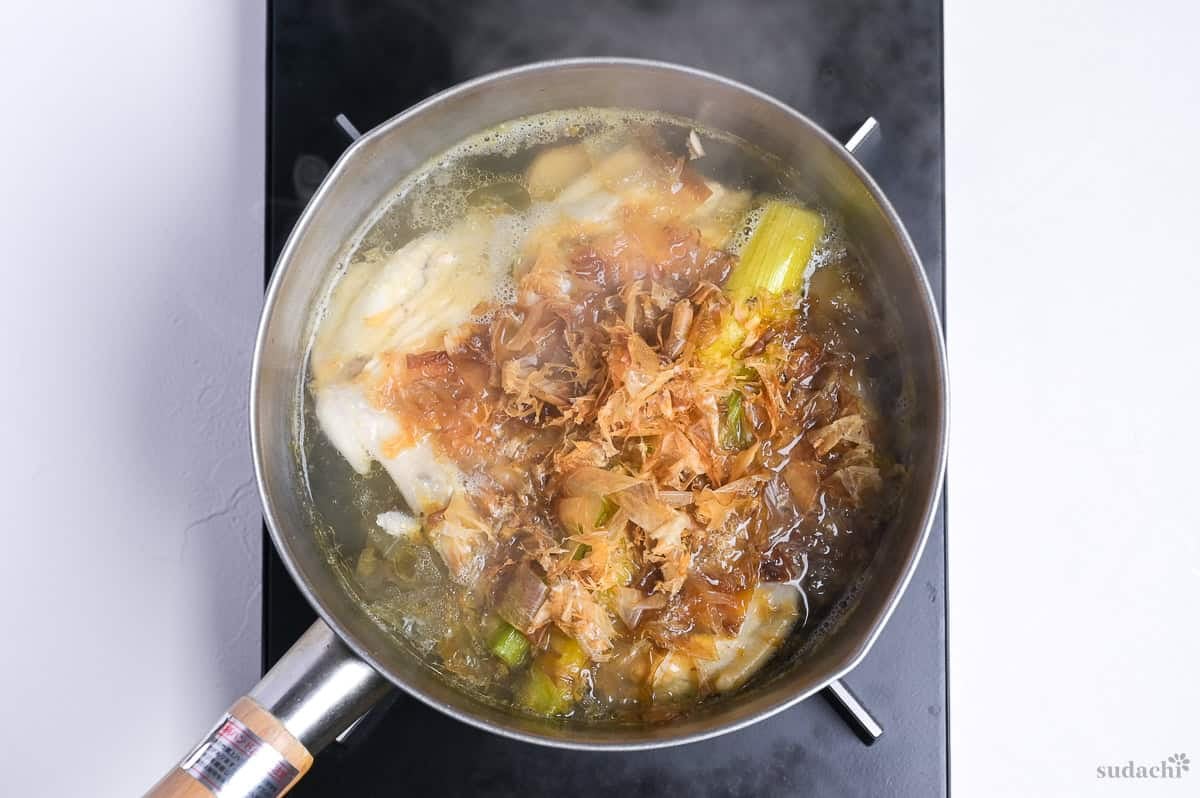
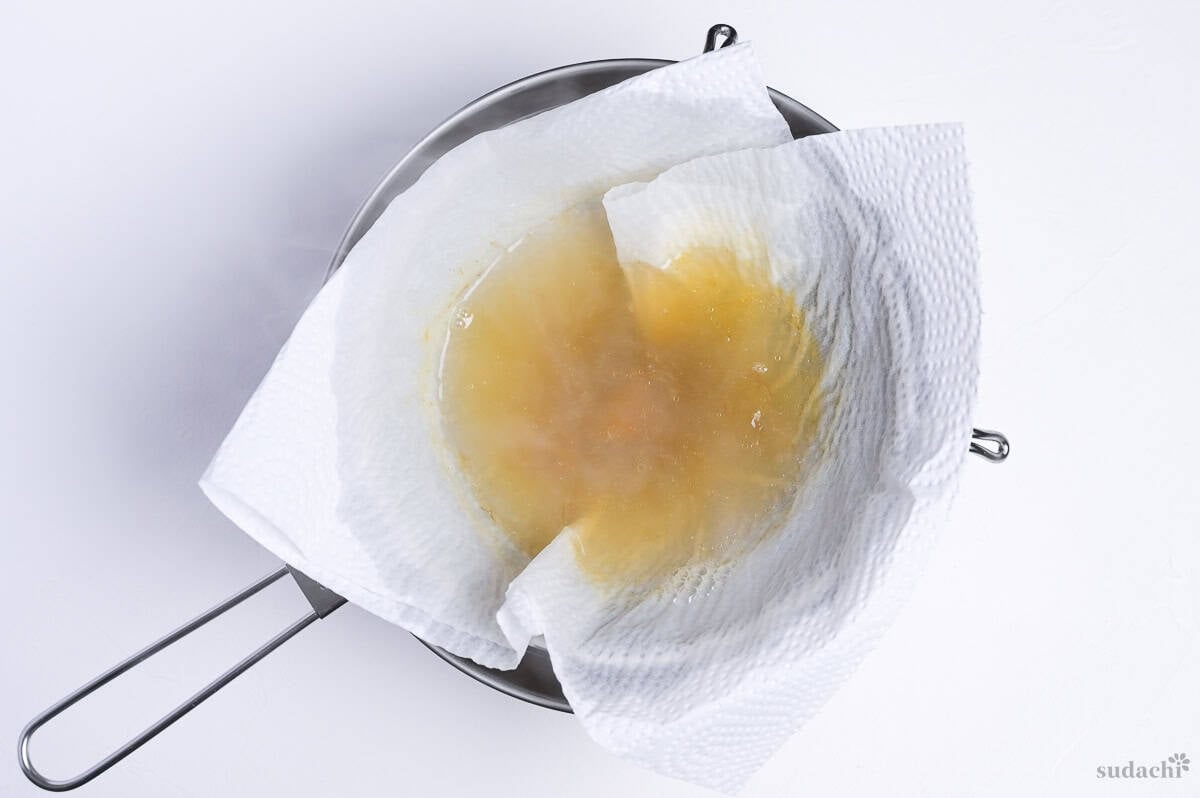
- Set up a fine-mesh strainer or a chinois lined with a paper towel, and set it over a clean bowl or pot. Remove the bulky ingredients, then pour the broth through.
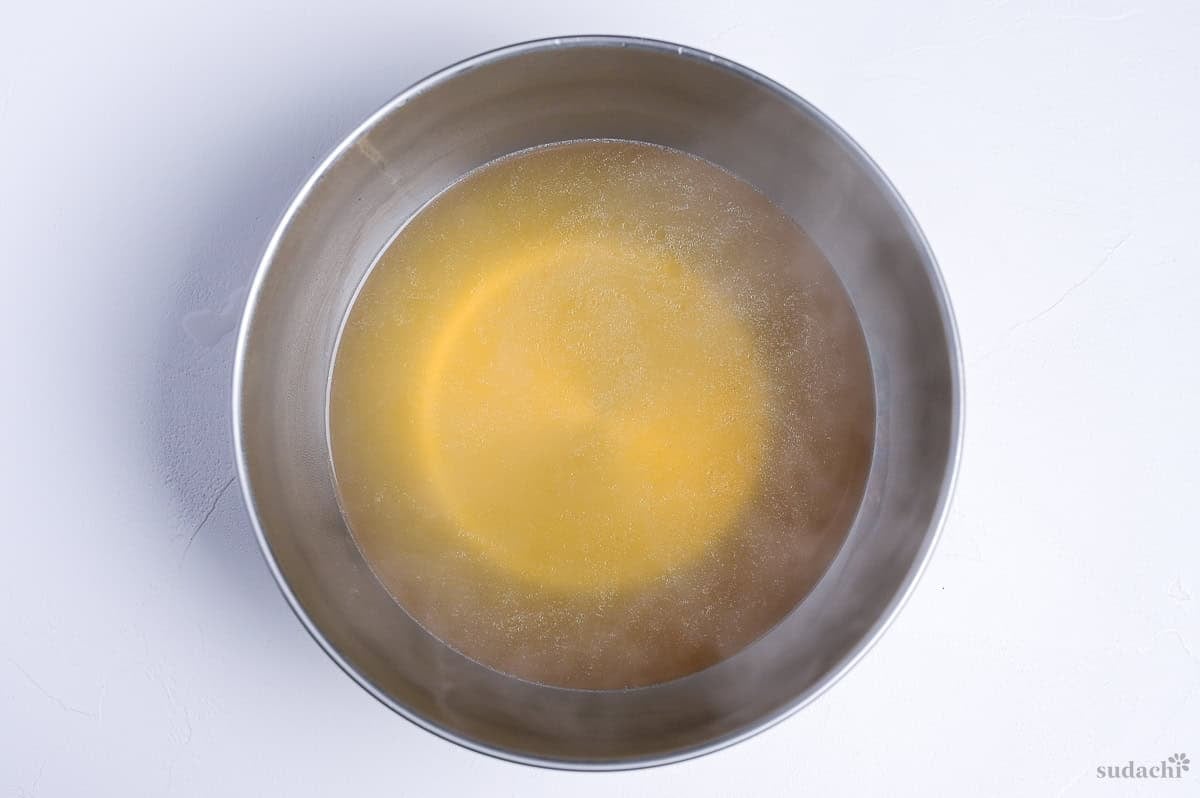
- You should be left with a clear golden broth.
Assembly
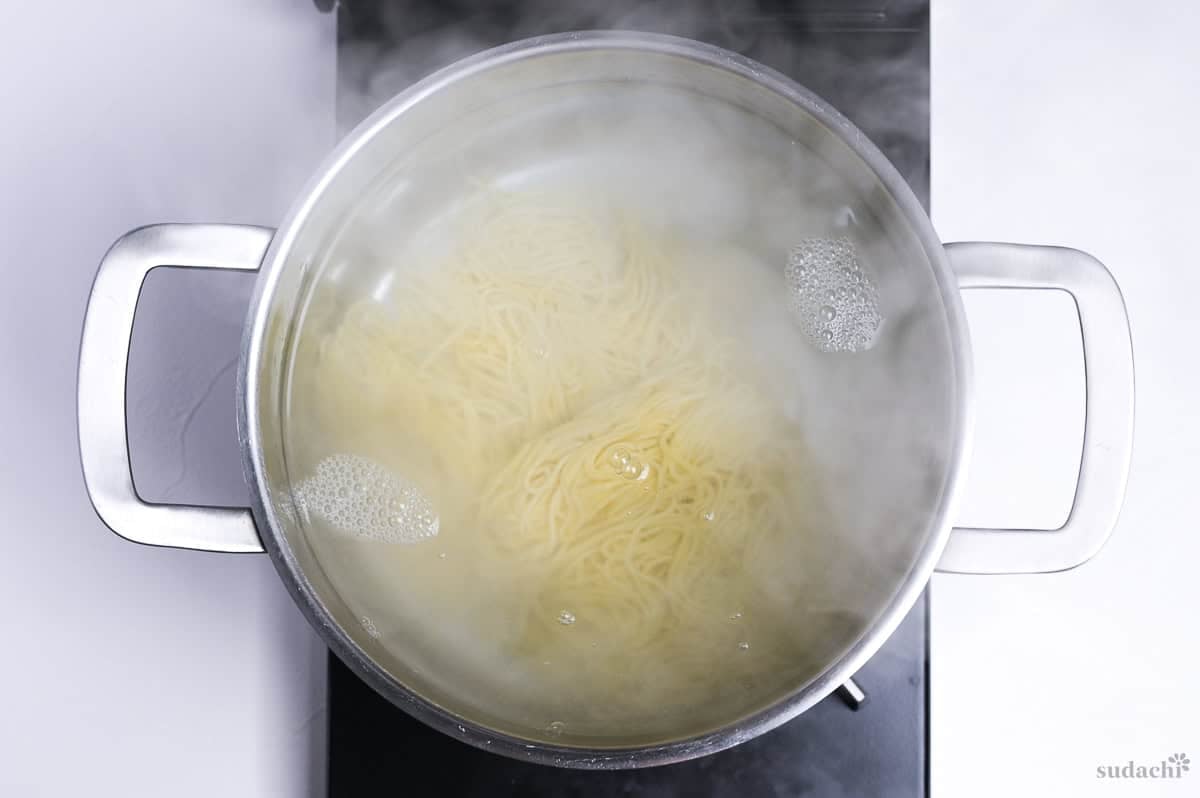
- Cook 2 portions ramen noodles about 20 seconds less than the package instructions say.
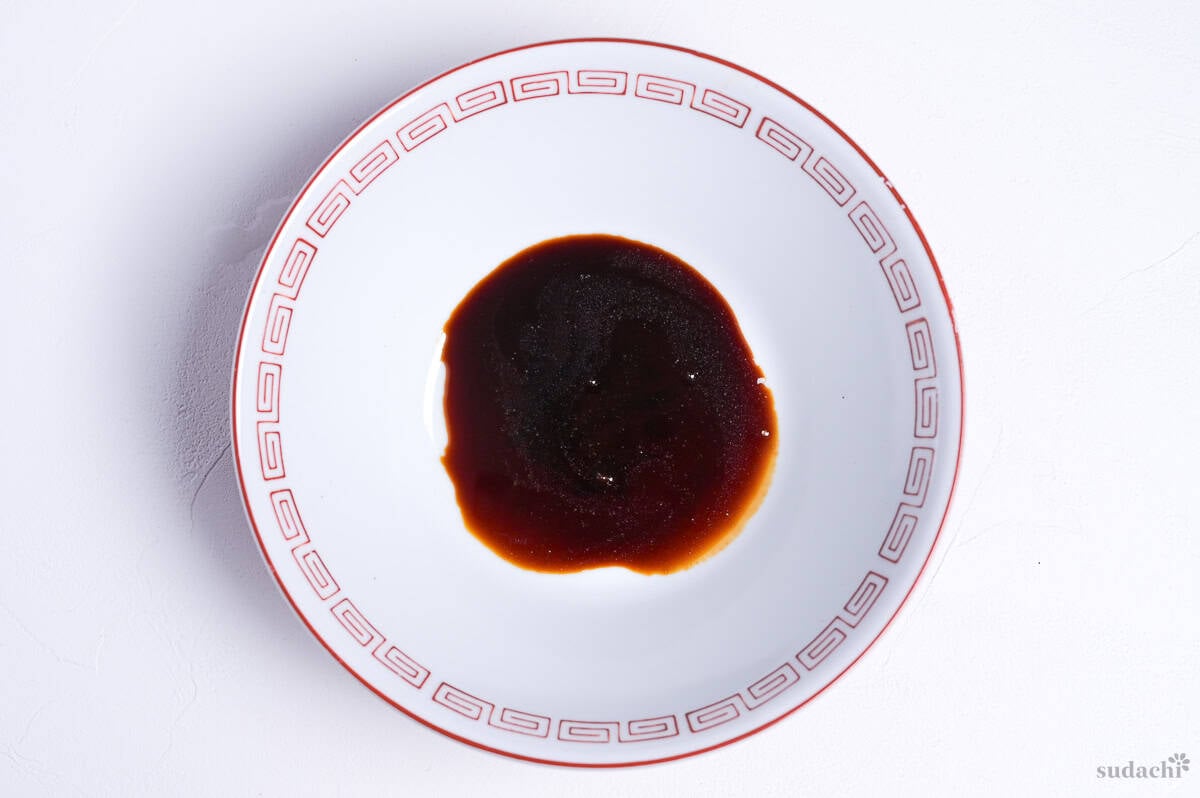
- Warm your serving bowls by filling them with hot water. Pour it out right before the noodles are ready, and divide the tare equally between the bowls.
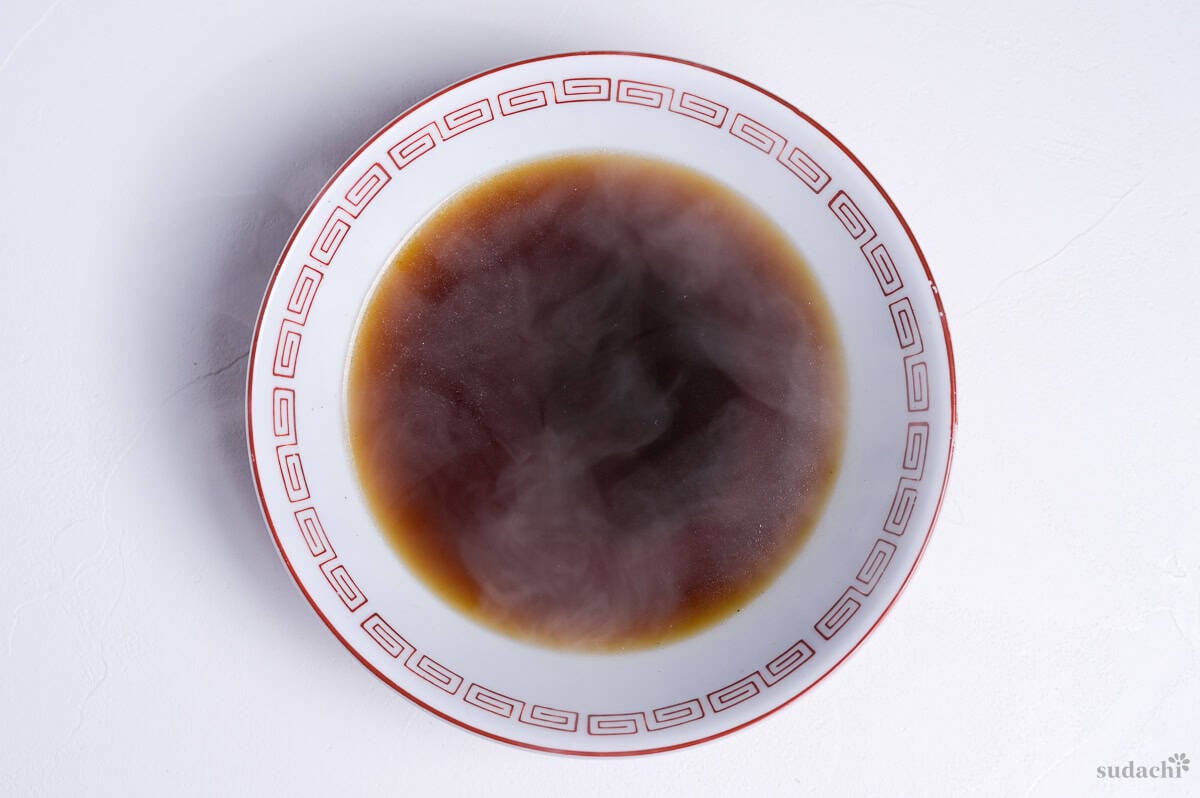
- Pour the hot broth (approx 300ml) into each bowl and stir to evenly distribute the tare. Make sure not to overfill, as you will be adding noodles and toppings.
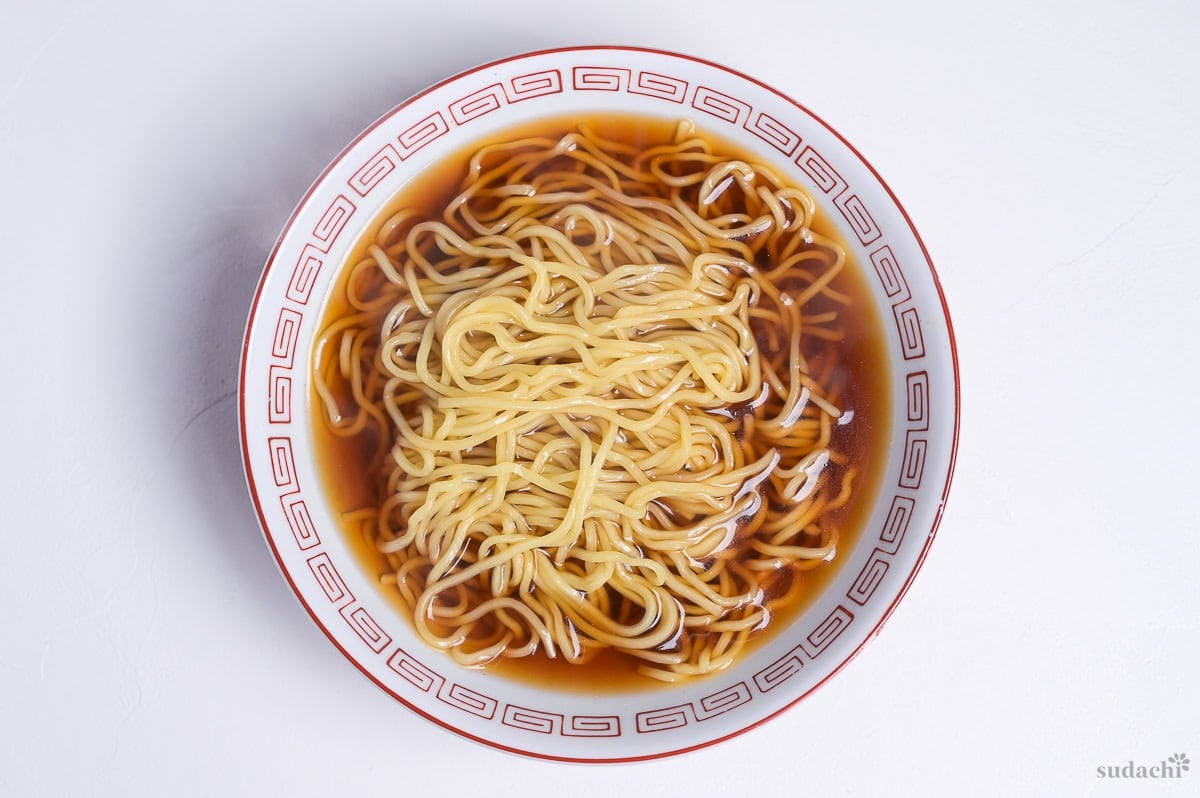
- Drain the noodles and gently lower them into the bowl.
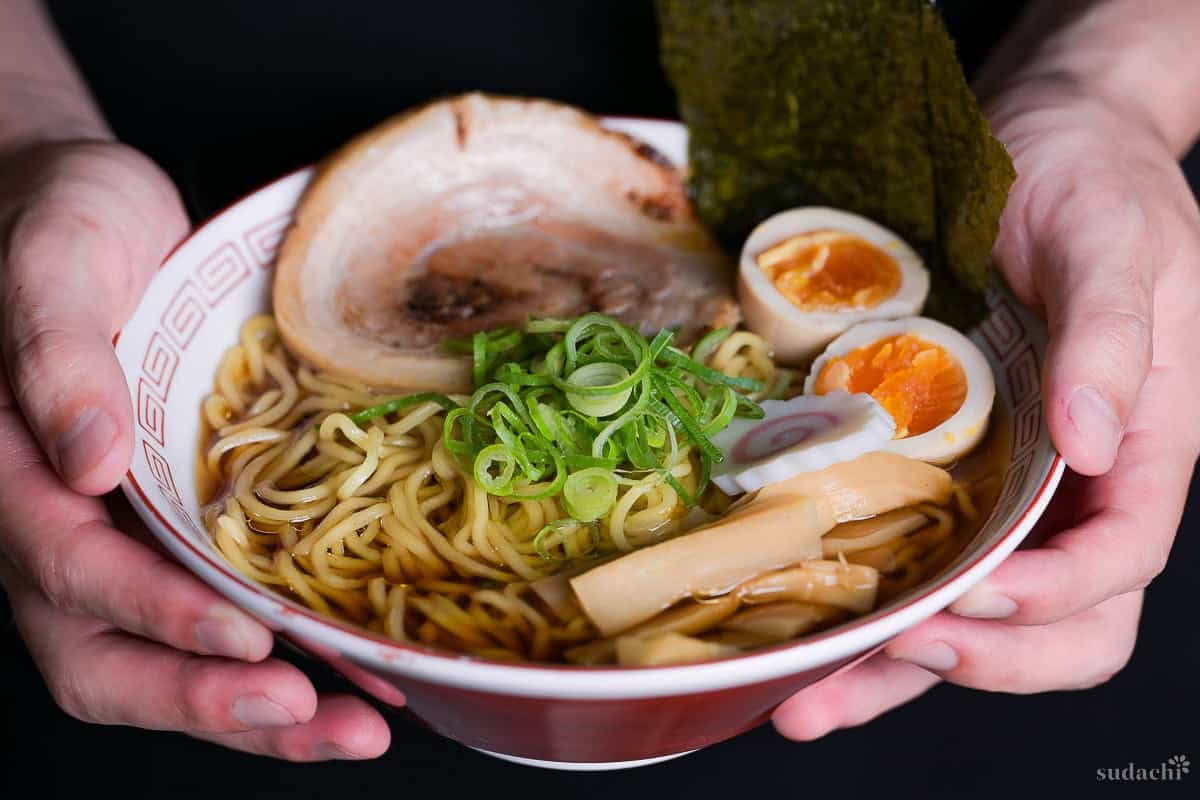
- Drizzle the rendered chicken fat over the top and add your favorite toppings. I opt for pork chashu, ramen egg, seasoned bamboo shoots (menma), narutomaki fish cake, roasted seaweed for sushi (nori), and finely chopped green onions. Enjoy!
If your serving bowls are microwave safe, you can microwave them for 10-20 seconds to warm them instead.
Notes
Build the tare early. When shoyu tare rests overnight in the fridge, the salt edge softens and the sake and mirin esters round out, turning sharp into deep.
The aroma oil is the bowl. Drizzle the rendered chicken oil on at the very end. It floats on the surface and does 3 jobs at once: insulates the soup, carries aroma up to your nose, and gives the first sip its richness.
Hold a sub-boil all the way through. Kombu sits at 60°C, chicken simmers at 80 to 85°C, katsuobushi steeps off the heat. A rolling boil at any stage clouds the broth and drives off the aromatics.
Warm the bowls before pouring. Pouring 90°C broth into a cold ceramic bowl drops the soup by 10 to 15°C on the spot. Pour boiling water in, let it sit 1 to 2 minutes, then pour out. That little move is what separates ramen-shop bowls from home bowls.
Pull the noodles early, drain hard. Cook the noodles in at least 10 times their volume of water, then pull them 10 to 20 seconds before the package time. Carryover heat from the broth finishes them off in the bowl. Drain hard so no water clings and dilutes the soup.
NOTE: The nutritional value is based on when you drink up the soup (we rarely drink up the soup when it comes to ramen)
Full Recipe QR Code↑↑